

The Law Offices of Anidjar and Levine can help you act quickly after a devastating infection by investigating medical records, treatment delays, wound care, and unsafe conditions that may have caused your harm. You can pursue compensation for medical bills, lost income, future care, and pain, but strong evidence and prompt action matter.
An attorney can protect your rights, deal with insurers, and build your claim while you focus on treatment and recovery. If your injuries were caused by medical negligence, an Orlando Medical Malpractice Lawyer may be able to help.
Main Takeaways
- An Orlando necrotizing fasciitis injury lawyer can evaluate whether delayed diagnosis, improper wound care, or unsanitary conditions caused your infection.
- Most lawyers offer free consultations to review medical records, identify liable parties, and explain fees, deadlines, and next steps.
- Strong claims rely on medical charts, lab results, photos, timelines, and expert opinions linking negligence to sepsis, amputation, or other harm.
- Your attorney can preserve evidence, handle insurers, negotiate settlement offers, and file suit if fair compensation is denied.
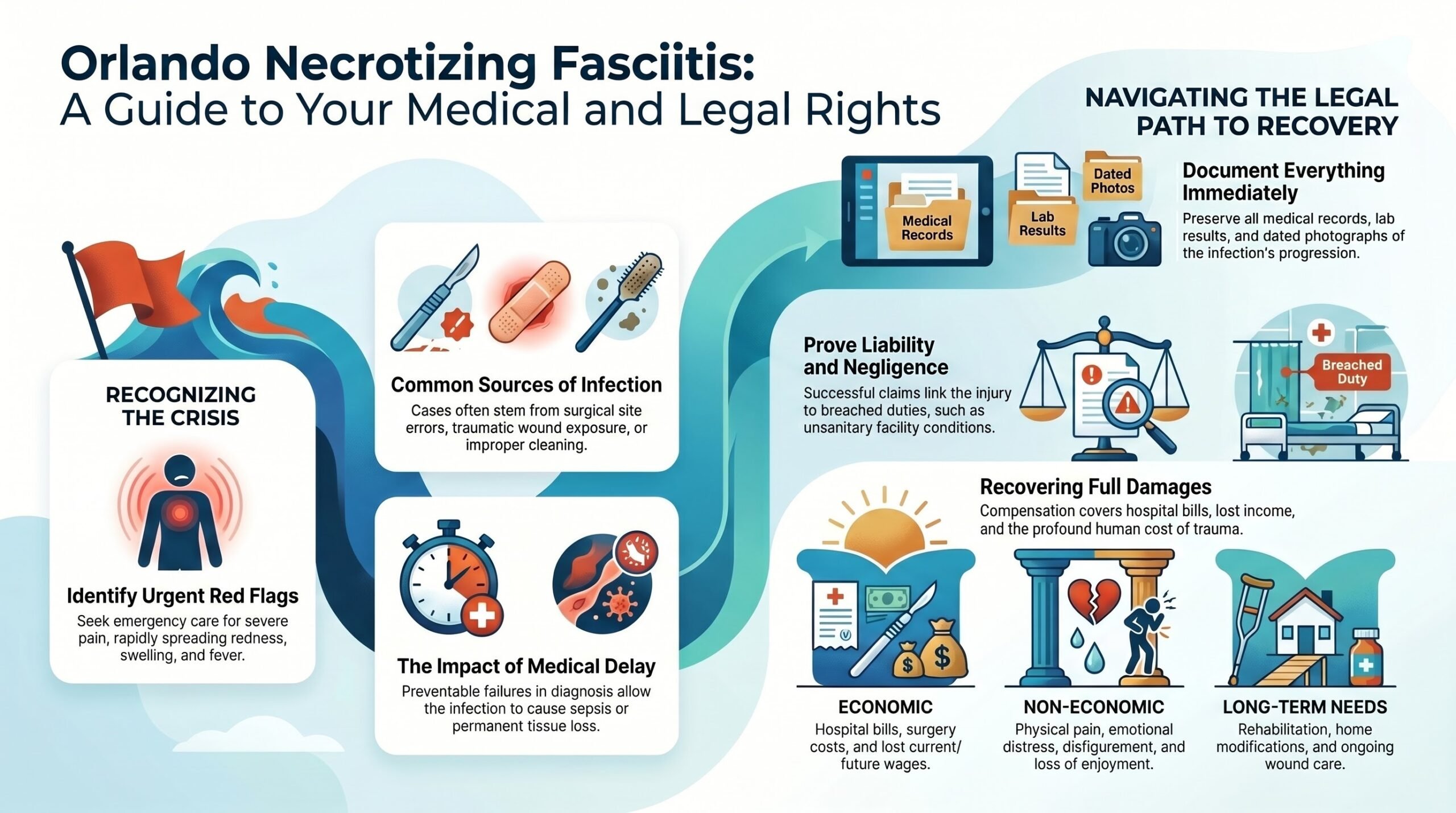
- Seek emergency care immediately for severe pain, rapidly spreading redness, swelling, fever, or skin changes, because early treatment can be lifesaving.


How We Can Help With Your Orlando Necrotizing Fasciitis Injury Claim
When necrotizing fasciitis develops because a healthcare provider, facility, or another party failed to act with reasonable care, you may have grounds for a serious injury claim. Our role is to help you pursue accountability with clarity, discipline, and respect for what you have endured.
You can rely on us to investigate the medical timeline, preserve records, consult qualified experts, and identify where preventable failures occurred. We explain your options plainly, so you can make informed decisions that protect your family and support your recovery.
Through strong Patient advocacy, we address insurers and opposing counsel directly, allowing you to focus on recuperation and serving those who depend on you. We also develop practical Settlement strategies aimed at securing full compensation for medical costs, lost income, future care, and pain and suffering. If resolution is not offered on fair terms, we prepare your claim for litigation and present your case with precision, persistence, and professionalism.
OUR CONSULTATIONSARE FREE
START YOUR FREE CASE REVIEW

Understanding Orlando Necrotizing Fasciitis Injury Cases
Because necrotizing fasciitis can progress with alarming speed, understanding how these injury cases arise is vital to evaluating whether negligence played a role. You may face a claim when Bacterial pathogens enter tissue, infection advances rapidly, and a provider or facility fails to meet the accepted standard of care under the circumstances.
In these cases, you must examine what happened before diagnosis, during treatment, and after complications appeared. Early recognition often matters because delays can allow widespread tissue destruction, sepsis, amputations, or death. You should also consider whether clinicians documented symptoms, ordered appropriate tests, consulted a consultant, and clearly communicated urgent findings.
A strong case usually depends on medical records, expert review, and evidence showing that timely action could have altered the outcome. When you seek accountability, you aren’t only protecting your own future. You are also encouraging safer practices, stronger patient advocacy, and more attentive care for every person who depends on the healthcare system.

Common Causes of Orlando Necrotizing Fasciitis
You may develop necrotizing fasciitis after a surgical site infection or when a traumatic wound exposes deep tissue to dangerous bacteria. Your risk can also increase if you have underlying health conditions, such as diabetes or a weakened immune system, that make it harder for your body to resist infection. When medical treatment is delayed, the infection can spread rapidly, which is why identifying the cause matters in your case.
Surgical Site Infections
Although most surgical procedures are uncomplicated, a surgical site infection can create conditions for necrotizing fasciitis if bacteria enter the wound and spread into the deeper tissues. When providers fail to follow sterile technique, monitor warning signs, or respond promptly to drainage, redness, fever, or severe pain, your risk rises quickly after surgery.
You should know that a delayed diagnosis can allow an infection to progress beneath the skin, damaging the fascia and surrounding structures before obvious symptoms appear. In some cases, antibiotic resistance makes treatment harder and narrows the window for effective intervention.
If you or a loved one develops worsening symptoms after a procedure, timely medical evaluation matters. Careful records, expert review, and decisive legal guidance can help you restore your health, accountability, and future care needs.
Traumatic Wound Exposure
When a cut, puncture, crush injury, burn, or deep abrasion breaks the skin, bacteria can enter quickly and spread into the underlying tissue. If you suffer traumatic wound exposure, even small delays in cleaning and evaluating the injury can increase the danger of necrotizing fasciitis.
Open wounds from falls, vehicle crashes, workplace accidents, or violent incidents may trap contaminated debris, dirt, or foreign material deep inside damaged tissue.
You can protect yourself and those who depend on you by treating traumatic injuries as urgent medical concerns. Prompt irrigation, careful debridement, and close monitoring help reduce bacterial growth before it advances aggressively.
If a provider overlooks signs of infection after traumatic wound exposure, the consequences can escalate fast, requiring extensive treatment, surgery, and long-term recovery support for your family.
Underlying Health Conditions
Certain underlying health conditions can increase the likelihood of developing necrotizing fasciitis and make it more difficult to manage after bacteria enter the body. If you live with diabetes, kidney disease, liver disease, or poor circulation, your body may struggle to control infection before it spreads through soft tissue. Immune disorders and chronic illnesses can also weaken your natural defenses, increasing the danger from even a small cut, insect bite, or surgical incision.
When you care for others, you understand how quickly health challenges can affect daily life and long-term recovery. Conditions that reduce sensation, limit mobility, or impair wound healing may allow infections to worsen without obvious warning signs. Recognizing these added risks helps you protect your health, support your family, and make informed decisions when preventable harm contributes to a serious infection.
Delayed Medical Treatment
Underlying conditions can increase your risk, but delayed medical treatment often gives necrotizing fasciitis the time it needs to spread rapidly and cause severe damage. When you seek care to protect your health and continue serving others, treatment delays can allow infection to move beneath the skin and destroy tissue before doctors intervene.
You may also face diagnostic errors when early symptoms resemble less serious conditions, such as cellulitis or a routine wound infection. If providers dismiss escalating pain, swelling, fever, or discoloration, you can lose critical time that aggressive surgery and antibiotics require.
Prompt evaluation, careful monitoring, and timely expert involvement matter because every hour can affect your recovery. When preventable delays worsen your condition, you deserve answers, accountability, and legal guidance focused on your future and your family.


Legal Rights of Orlando Necrotizing Fasciitis Injury Victims
Protect your rights by understanding that Florida law may allow you to pursue compensation if necrotizing fasciitis developed because of medical negligence, unsafe premises, contaminated products, or another party’s careless conduct. You may seek recovery for medical costs, lost income, pain, disability, and other documented losses.
Strong Patient advocacy helps protect your voice and supports informed legal decisions.
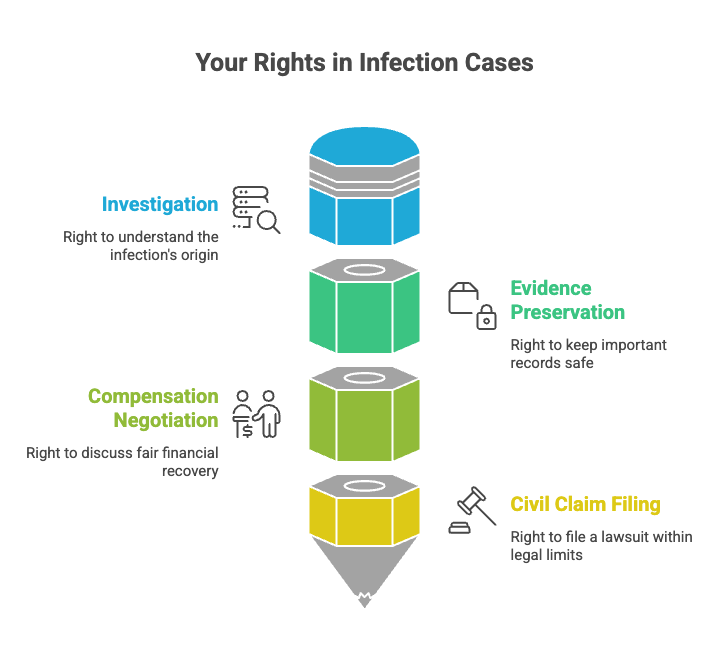
- You have the right to investigate how the infection occurred and who bears responsibility.
- You have the right to demand the preservation of evidence, including records, test results, and product information.
- You have the right to pursue Compensation negotiation with insurers or responsible parties for fair financial recovery.
- You have the right to file a civil claim within Florida’s legal deadlines, subject to case-specific facts.
Steps to Take After an Orlando Necrotizing Fasciitis Injury
After an Orlando necrotizing fasciitis injury, you should seek immediate medical care to safeguard your health and reduce the risk of severe complications. You should also document your injuries and treatment by preserving medical records, photographs, and related expenses, because this information can support your claim. Once your condition is stable, you should contact an injury lawyer who can assess your case and help you protect your legal interests.
Seek Immediate Medical Care
Because necrotizing fasciitis can progress within hours, you should seek emergency medical care as soon as you notice severe pain, rapidly spreading redness, swelling, fever, or skin changes near the affected area. Prompt treatment may protect your life, preserve tissue, and support your ability to continue caring for others who depend on you.
Go to the nearest emergency room or call 911 if symptoms worsen quickly. Ask for an emergency evaluation, and explain when the pain began, how fast the area changed, and whether you recently had surgery, trauma, or an open wound.
Follow medical instructions carefully, including wound cleaning, blood testing, imaging, intravenous antibiotics, or surgery if doctors suspect a deep infection. Early action gives physicians the best chance to control the infection before it causes catastrophic damage or sepsis.
Document Injuries And Treatment
Documenting your injuries and treatment creates a clear record of how necrotizing fasciitis developed, how quickly it progressed, and what care you received at each stage. Keep discharge papers, test results, prescription lists, surgical notes, and follow-up instructions in one secure place. Use wound photography to capture changes in swelling, discoloration, drainage, and recuperation over time. Date each image and note your pain level, fever, mobility limits, and daily symptoms.
You should also track medication adherence, including when you took antibiotics, pain medicine, and other prescribed treatments. Save receipts, appointment summaries, and transportation records related to your care. If family members helped you, ask them to write down what they observed. These details can support accurate medical communication and help others understand the seriousness of your condition and recovery.
Contact An Injury Lawyer
Once you’ve gathered medical records, photographs, and treatment details, the next step is to contact an injury lawyer who can evaluate whether medical negligence, delayed diagnosis, or improper wound care contributed to your necrotizing fasciitis. An attorney helps you understand your rights, preserve evidence, and identify responsible parties.
You should act promptly because filing deadlines can affect your claim, though certain statute exceptions may apply in limited circumstances. During an initial consultation, you can ask how the lawyer investigates complicated infection cases, works with medical experts, and approaches fee arrangements. Choose counsel who communicates clearly and respects your desire to protect others from similar harm.
By obtaining legal guidance early, you strengthen your case, support accountability, and pursue compensation for medical costs, lost income, long-term care, and related damages.
How an Orlando Necrotizing Fasciitis Injury Lawyer Can Help You
When a necrotizing fasciitis injury leaves you facing extensive medical treatment, financial strain, and uncertainty about what comes next, an Orlando necrotizing fasciitis injury lawyer can step in to protect your interests and guide your claim. You need clear counsel that supports recovery, patient advocacy, and access to resources such as post-discharge rehabilitation while preserving crucial evidence.
A lawyer can help you by:
- Investigating medical records, treatment timelines, and facility policies to identify negligence.
- Working with qualified experts to connect errors, delayed care, or unsanitary conditions to your injury.
- Calculating damages, including hospital bills, lost income, rehabilitation costs, and other measurable losses.
- Handling insurers and opposing parties so you can focus on mending and serving your family and community.
Your attorney also manages deadlines, prepares legal filings, and negotiates from a position of strength. If settlement efforts fail, your lawyer can present a persuasive case in court on your behalf.
Long-Term Effects of Orlando Necrotizing Fasciitis Injuries
You may face permanent tissue damage after necrotizing fasciitis, and that harm can limit your mobility, strength, and daily function. You may also experience lasting emotional trauma, as the physical severity of the injury often leads to anxiety, depression, or post-traumatic stress. In many cases, you’ll need ongoing medical care, including surgeries, rehabilitation, and follow-up treatment to manage complications and support recovery.
Permanent Tissue Damage
Permanence often defines the most serious consequences of necrotizing fasciitis, because the infection can destroy skin, fat, muscle, and connective tissue with alarming speed. Even after surgeons remove infected tissue and control the illness, you may face permanent loss of strength, mobility, and sensation in the affected area.
If the infection reaches deeper structures, nerve damage can cause numbness, weakness, burning pain, or reduced coordination. Extensive wounds and skin grafts may also create tight, visible scarring that limits movement and requires ongoing scar management.
You may need reconstructive procedures, physical therapy, assistive devices, and long-term wound care to maintain daily function and continue serving your family or community. These lasting physical changes can affect your work, independence, and overall quality of life for many years ahead.
Lasting Emotional Trauma
Because necrotizing fasciitis is often sudden, disfiguring, and life-threatening, the emotional impact can continue long after your physical wounds begin to recover. You may relive the emergency, struggle with post-traumatic stress, or feel overwhelmed by fear whenever your body changes or pain returns. Those reactions can disrupt sleep, concentration, relationships, and your confidence in public settings.
You may also withdraw from friends, church, work, or volunteer efforts because embarrassment, anxiety, and grief make ordinary interactions feel exhausting. That social isolation can deepen sadness and make it harder to reconnect with the people and causes you value. As you try to rebuild your life, emotional trauma can affect your sense of purpose, independence, and trust. Recognizing these lasting effects matters when you pursue accountability and seek justice fully.
Ongoing Medical Needs
Recovery from necrotizing fasciitis often extends far beyond the initial hospitalization, and the medical demands can remain intense for months or years. You may need repeated surgeries, wound care, infection monitoring, pain management, and physical therapy to restore strength and mobility. If scarring limits function, specialists may recommend reconstructive procedures or assistive devices.
You may also face practical challenges that affect how you serve your family and community each day. Home modifications can improve safety, access, and independence while you recover. Caregiver coordination often becomes vital when multiple providers, therapists, and loved ones must work collaboratively consistently.
You might also require nutritional support, mental health counseling, and follow-up appointments to watch for complications. These ongoing needs can create substantial financial pressure and disrupt every part of your daily life.
Proving Liability in Orlando Necrotizing Fasciitis Injury Cases
When necrotizing fasciitis results from another party’s negligence, proving liability requires clear evidence that the defendant breached a duty of care and that breach directly caused your infection or worsened its progression. You must show what the responsible party should have done, how they failed, and why that failure mattered. Medical records, wound assessments, laboratory findings, and expert testimony often establish when the infection began and whether delayed treatment increased the harm.
You may also need evidence of unsafe environmental exposure, poor sanitation, or failures to follow emergency protocols in hospitals, nursing homes, workplaces, or care facilities. Witness statements, incident reports, maintenance logs, and photographs can help connect the dangerous condition to your illness.
If a provider ignored symptoms, missed warning signs, or delayed surgery or antibiotics, causation becomes central. By documenting each timeline carefully, you strengthen your claim and protect resources that support your recovery, your family, and the people who depend on your service.
Dealing With Insurance Companies After an Orlando Necrotizing Fasciitis Injury
After you’ve gathered evidence that links the infection to negligent care or unsafe conditions, the next challenge is often the insurance company handling the claim. You may face adjusters who seem helpful, yet their role is to protect the insurer’s financial interests. That means you should communicate carefully, keep records of every call, and avoid casual statements that could be used against you later.
You can serve your family and community best by staying organized and focused on the truth. Save medical bills, treatment notes, photographs, and proof of lost income. Watch for insurance delays, repeated requests for documents, or other claim tactics designed to wear you down. If an insurer questions the seriousness of your necrotizing fasciitis injury, respond with clear documentation, not frustration.
Professional legal guidance can help you protect your rights, present your losses accurately, and prevent the insurer from minimizing the harm you have endured and your future care needs.
What to Expect During an Orlando Necrotizing Fasciitis Injury Claim Process
You can expect your claim process to begin with an initial case evaluation, where your attorney reviews the facts of your infection, treatment, and potential liability. From there, you’ll need to gather strong medical evidence to support your damages, while your lawyer handles communications and negotiates settlement offers with the opposing side. If a fair resolution isn’t reached, your attorney may file a lawsuit to protect your rights and pursue the compensation you’re owed.
Initial Case Evaluation
Because necrotizing fasciitis cases often involve urgent medical questions and complex liability issues, the initial case evaluation focuses on determining whether a preventable error, delay, or unsafe condition contributed to your injury. During this stage, you discuss what happened, when symptoms began, and how providers, facilities, or property owners responded.
You can use a free consultation to explain your situation and learn whether your claim appears legally viable. Your lawyer asks targeted questions, identifies potential defendants, and outlines the next steps. If you have confidentiality concerns, you can raise them early, and your attorney should explain how private information remains protected.
This evaluation also helps you understand timing issues, possible sources of accountability, and whether pursuing a claim may support your recovery and your ability to continue serving others.
Gathering Medical Evidence
In this stage, your attorney works to secure the medical evidence that will show how the infection developed, when warning signs appeared, and whether a delay in diagnosis or treatment worsened your condition. You may be asked to authorize access to hospital charts, physician notes, lab records, imaging studies, and medical photographs.
Your lawyer reviews these materials carefully, often with medical experts, to identify missed symptoms, inadequate monitoring, or treatment gaps. You can help by organizing discharge papers, prescription information, and follow-up instructions, then sharing what you observed each day.
This evidence creates a clear timeline of your care and its consequences. It also helps demonstrate the physical harm, additional procedures, and lasting limitations you now face, so your claim reflects the full impact on your life and service.
Negotiating Settlement Offers
Once the medical record establishes how the infection progressed and where care may have failed, settlement negotiations often begin with the insurer or defense counsel reviewing that evidence and weighing the value of your claim. You should expect a careful exchange of demands, documentation, and responses.
Your lawyer will develop an offer strategy that reflects your medical costs, lost income, future care, pain, and the lasting impact on your ability to serve your family and community. Initial proposals may undervalue your losses, so measured counter tactics matter.
You can expect your attorney to challenge weak assumptions, clarify liability, and present stronger proof when needed. Through each round, you remain informed about risks, timing, and realistic outcomes. A disciplined negotiation process can move your claim toward fair compensation without unnecessary delay or pressure.
Filing A Lawsuit
When negotiations don’t produce a fair result, filing a lawsuit allows your attorney to move the claim into court and require the defense to answer the allegations under formal deadlines. Your lawyer prepares the complaint, completes a careful statute review, and files supporting facts that explain how the infection occurred and why the defendant bears responsibility.
After filing, both sides enter discovery, where you exchange records, answer written questions, and give testimony if needed. Your attorney guides you through each step, protects your rights, and keeps the process focused on accountability and service to those harmed.
The court may order mediation, but trial preparation continues through expert review, witness preparation, and a thorough calculation of damages. If the settlement still fails, your case proceeds to trial, where your evidence seeks full and fair compensation.
Compensation for Orlando Necrotizing Fasciitis Injury Damages
Pursue full compensation for every loss necrotizing fasciitis has caused, because these claims often involve extensive medical treatment, prolonged recovery, and lasting physical harm. When you seek accountability, you help protect your family and strengthen standards of care for others in your community. A careful claim connects the infection to negligence, documents your recovery, and shows why substantial financial recovery is justified.
You should expect Compensation timelines to vary because investigations, expert review, and insurer responses can affect progress. Still, prompt action helps preserve records, witness accounts, and medical proof that support your position. During settlement negotiations, your lawyer can challenge low offers, present persuasive evidence, and push for terms that reflect the seriousness of your injuries.
If the insurer refuses to act fairly, litigation may become necessary to pursue the result you merit. Strong preparation often improves leverage and helps you move toward a more stable future with confidence.
Economic vs Non-Economic Damages in Orlando Necrotizing Fasciitis Cases
In an Orlando necrotizing fasciitis case, you may seek economic damages for medical costs and lost wages, which reflect the financial impact of your injury. You may also pursue non-economic damages for pain, suffering, and trauma, which address the personal harm you’ve endured. To recover either type of compensation, you must present clear evidence that proves your damages in court.
Medical Costs And Lost Wages
Beyond the immediate medical emergency, necrotizing fasciitis often creates severe financial losses through hospital bills, surgeries, rehabilitation, prescription medications, and time away from work. You may face emergency transport charges, specialist consultations, wound care, skin grafts, follow-up appointments, and in-home assistance, all of which can strain your finances while you focus on recovery and serving your loved ones.
Lost wages can also become substantial if you cannot return to work promptly or must accept reduced duties. In serious cases, compensation should address diminished Future earnings, especially when lasting limitations affect your ability to provide for others.
A thorough claim can also account for family support costs, including transportation, caregiving, and household help. By documenting every expense and loss of income, you strengthen your position and protect your financial stability going forward.
Pain, Suffering, And Trauma
Suffering from necrotizing fasciitis often extends far past the bills you can total, because the condition may also cause intense physical pain, emotional distress, disfigurement, anxiety, and lasting psychological trauma. You may endure chronic pain, reduced mobility, interrupted sleep, and fear that follows every setback in recovery.
These harms affect how you serve your family, support your community, and carry out daily responsibilities. You may struggle with depression, isolation, or the loss of confidence that visible scarring can bring. When an injury changes your sense of safety, dignity, and independence, those losses matter.
Non-economic damages recognize the human cost of what you’ve endured, including suffering that doesn’t appear on invoices. In a necrotizing fasciitis case, this part of your claim reflects the full weight of the experience.
Proving Damages In Court
When you pursue compensation for necrotizing fasciitis in court, you must do more than describe what happened; you must prove the financial and personal losses the injury caused. You’ll need records showing hospital bills, lost wages, rehabilitation costs, and future expenses related to ongoing treatment or disability. These are your economic damages, and they often require careful documentation and expert testimony.
You may also recover non-economic damages, including pain, emotional distress, disfigurement, and loss of enjoyment of life. To prove them, you should present consistent medical evidence, testimony from loved ones, and your own account of daily limitations.
When you build a clear damages case, you don’t just seek payment for yourself; you help promote accountability and protect others from preventable harm in your community.
When an Orlando Necrotizing Fasciitis Injury Case Goes to Trial vs Settlement
Although many Orlando necrotizing fasciitis injury claims resolve through settlement, some proceed to trial if the insurer disputes liability, the severity of your damages, or the value of future medical care. If that happens, you need a legal strategy grounded in evidence, expert testimony, and a clear account of how the infection changed your life and ability to serve others.
Settlement timing often depends on whether the defense recognizes the strength of your medical proof and the risks of facing a jury. When negotiations produce a fair result, settlement can reduce delay, expense, and stress. However, if the insurer minimizes your losses or refuses to accept liability, a trial may be the strongest course.
Your lawyer prepares for jury dynamics by organizing records, presenting credible witnesses, and explaining intricate medical facts in plain language. That preparation can also improve settlement offers, because insurers often pay more when they see you are ready to present your case persuasively in court.
The Statute of Limitations for Orlando Necrotizing Fasciitis Injury Cases
In Florida, the statute of limitations can determine whether you retain the right to pursue compensation for a necrotizing fasciitis injury in Orlando. If you miss the applicable filing deadlines, a court may dismiss your claim, even when your injuries are severe and your need for accountability is clear. Acting within the required period helps preserve evidence, protect witness memories, and support your efforts to seek justice for those depending on you.
Several factors can affect how much time you actually have. The clock may begin on the injury date, or when you reasonably discovered the harm and its cause. In limited situations, tolling exceptions may pause or extend the deadline, such as cases involving incapacity or concealment.
Claims against government entities may be subject to special notice rules and shorter time frames. Because these rules are strict, you should track dates carefully and keep records that show when symptoms, diagnoses, and related events first occurred.
When to Contact an Orlando Necrotizing Fasciitis Injury Lawyer
Act promptly and contact an Orlando necrotizing fasciitis injury lawyer as soon as you suspect that a delayed diagnosis, surgical error, unsanitary conditions, or other negligent conduct contributed to the infection. You should reach out when medical providers miss early signs, dismiss worsening symptoms, or fail to act with urgency after testing or surgery.
You should also seek legal guidance if your condition rapidly progresses after a hospital stay, wound treatment, or invasive procedure. Careful timing of appointments matters, especially when records, photographs, discharge instructions, and witness recollections can help clarify what happened.
If you are helping a loved one, make contact as soon as concerns arise, because serious infections can escalate quickly and leave families struggling to understand how preventable harm occurred. A timely consultation can help you preserve information, organize questions, and take responsible steps that honor your health, your family, and your commitment to protecting others from similar neglect in the future.
Why You Need an Experienced Orlando Necrotizing Fasciitis Injury Lawyer
Once you’ve recognized the need to seek legal help, the quality of that representation can shape the outcome of your claim. An experienced Orlando necrotizing fasciitis injury lawyer helps you pursue accountability with focus, discipline, and a clear understanding of intricate medical evidence. You need counsel who can identify whether a delayed diagnosis, improper treatment, or hospital negligence supports a Medical malpractice claim.
Experienced representation also protects your ability to serve your family and community after a devastating injury. Your lawyer can calculate long-term losses, secure expert opinions, preserve records, and challenge insurers that minimize the seriousness of your condition. This level of advocacy strengthens your position during negotiations and, if necessary, in court.
A seasoned attorney also supports Risk mitigation by anticipating defenses, avoiding procedural errors, and building a claim that reflects the full scope of your damages. With knowledgeable guidance, you can make informed decisions and seek justice with confidence and purpose.
How to Choose the Right Orlando Necrotizing Fasciitis Injury Lawyer for Your Case
Because your case may involve complex medical records and disputed timelines, you should choose an Orlando necrotizing fasciitis injury lawyer with proven experience handling severe infection and medical negligence claims. Review the attorney’s record with hospital liability, delayed diagnosis, and catastrophic injury cases, and confirm that the firm can work with qualified medical experts.
You should also evaluate communication, compassion, and commitment during Client interviews. Ask how the lawyer investigates infections, preserves evidence, and explains legal options so you can make informed decisions that protect your family and serve your community. Compare Fee structures carefully, including contingency terms, litigation costs, and case expenses. A trustworthy lawyer will explain these terms clearly and in writing.
Finally, choose counsel who responds promptly, treats you with respect, and prepares every claim for trial if necessary. That combination of skill, transparency, and service can strengthen your pursuit of justice and accountability.
About The Law Offices of Anidjar & Levine
Turn to The Law Offices of Anidjar & Levine for legal representation grounded in experience, preparation, and client-focused service.
You need a team that understands the medical, legal, and personal challenges tied to necrotizing fasciitis injuries, and this firm is prepared to respond with urgency and care.
When you work with this firm, you receive direct communication, strategic advocacy, and support designed to help you protect your family and serve those who depend on you.
The Office culture emphasizes respect, responsiveness, and disciplined case preparation, so you can move forward with confidence.
Attorneys and staff pursue evidence, consult qualified professionals, and build claims that reflect the full scope of your losses.
Client testimonials often highlight attentive service, clear guidance, and a strong commitment to results.
If you want representation that values dignity, accountability, and meaningful service, The Law Offices of Anidjar & Levine offers a steady, professional presence during a difficult time for you.

Frequently Asked Questions
Can Necrotizing Fasciitis Result From a Cosmetic or Elective Procedure?
Yes, you can develop necrotizing fasciitis after a cosmetic or elective procedure, though it’s rare. When sterile practices fail, cosmetic infections may spread rapidly into deeper tissue and become life-threatening. You should seek immediate medical care if you notice severe pain, swelling, fever, or skin discoloration after surgery. By recognizing elective complications early and encouraging prompt treatment, you help protect health, support recovery, and serve those depending on your convalescence.
Are Children and Elderly Adults at Higher Risk for Severe Complications?
Yes, you should recognize that children and elderly adults face a higher risk of severe complications. In children, immature immune defenses can allow infection to progress quickly. In older adults, age-related susceptibility and immune senescence often reduce the body’s ability to contain overwhelming infection. If you care for vulnerable people, you should seek urgent evaluation at the first signs of severe pain, swelling, fever, or rapidly worsening skin changes.
Can Necrotizing Fasciitis Develop Without an Obvious Open Wound?
Yes, you can develop necrotizing fasciitis without an obvious open wound. Bacteria may enter through a hidden entry point, such as a tiny cut, an insect bite, an injection site, or even a weakened skin barrier. If you care for others, watch for severe pain, swelling, fever, or rapidly changing skin, because early recognition can save tissue and life. You should seek immediate medical evaluation when symptoms escalate quickly or unexpectedly.
What Specialists Are Usually Involved in Treating Necrotizing Fasciitis Patients?
You’ll usually see a multidisciplinary team treating necrotizing fasciitis. Surgeons handle urgent debridement, while infectious disease experts guide antibiotic therapy and monitor severe infection. Critical care physicians support organ function if sepsis develops. Plastic surgery may help reconstruct damaged tissue after the infection is controlled. You may also work with wound care nurses, rehabilitation specialists, and hospitalists, all of whom serve your recovery through coordinated, time-sensitive, medically necessary treatment.
Are There Warning Signs Doctors May Initially Mistake for Less Serious Infections?
Yes, you may see warning signs that doctors initially mistake for cellulitis, flu, or a minor skin infection. You should watch for unusual fever patterns, severe pain that exceeds the skin’s appearance, and rapidly worsening localized swelling. Early redness and warmth can seem routine, yet rapid progression, skin discoloration, or confusion suggest a more serious emergency. When you serve others, prompt escalation and careful reassessment can protect life and preserve tissue function.
—————————
If you’re facing the effects of necrotizing fasciitis in Orlando, you need clear guidance and prompt legal action.
You can protect your rights by working with a lawyer who understands these intricate injury claims and knows how to pursue full compensation.
The Law Offices of Anidjar and Levine can evaluate your case, explain your options, and advocate for your interests. For help from an Orlando Medical Malpractice Lawyer, act quickly to strengthen your claim and improve your ability to recover the support you need.

