

The Law Offices of Anidjar and Levine helps you determine whether negligence caused or worsened your cardiac emergency, preserve crucial evidence, and build a strong compensation claim.
Your attorney can gather medical records, incident reports, witness statements, and expert opinions to establish liability and document losses, including medical bills, lost income, and ongoing care needs.
They can also handle insurers, protect your rights, and pursue a fair result. For more information, visit Orlando Medical Malpractice Lawyer.
The sections below explain what matters most.
Main Takeaways
- An Orlando heart attack injury lawyer evaluates whether negligence, delay, or unsafe conditions caused or worsened the cardiac event.
- They preserve critical evidence, including medical records, incident reports, witness statements, photos, and electronic data tied to causation.
- A lawyer works with qualified medical experts to connect the heart attack to negligent conduct and build a strong compensation claim.
- They calculate damages for medical bills, lost income, rehabilitation costs, and other losses directly related to the injury.
- They handle insurer communications, negotiate settlements, and prepare the case for trial if a fair resolution is not offered.


How We Can Help With Your Orlando Heart Attack Injury Claim
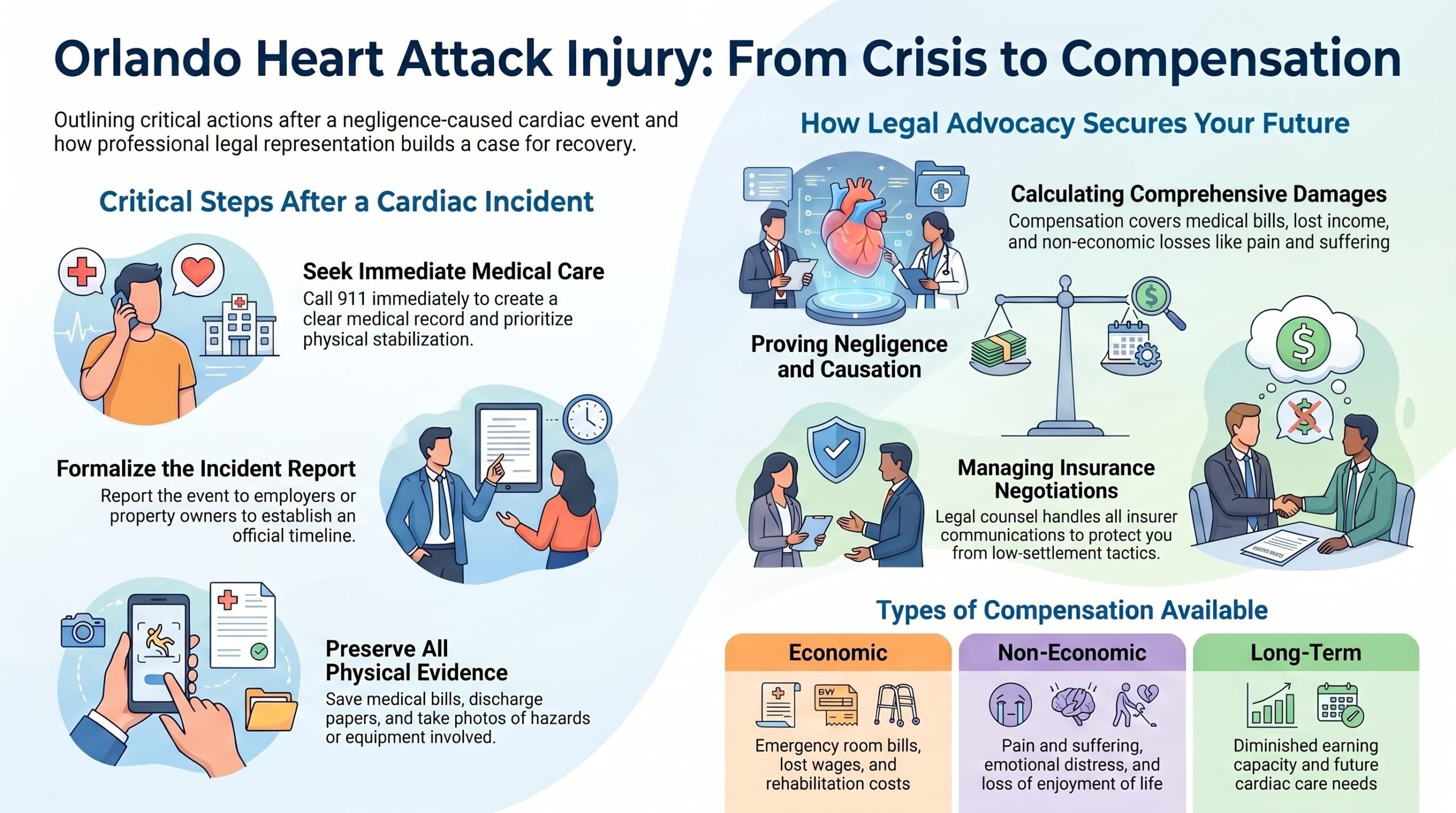
When a heart attack occurs because another party’s negligence contributed to the event or worsened the harm, you need legal counsel that can identify the cause, preserve essential evidence, and present a clear claim for compensation. You merit an advocate who listens carefully, acts promptly, and keeps your well-being at the center of every decision.
We help you investigate records, witness accounts, and timelines to determine whether medical negligence, delayed treatment, unsafe conditions, or a failed emergency response contributed. You can rely on us to coordinate with qualified experts, document losses, and build a focused demand that reflects the full impact on your life and family.
We communicate clearly, protect crucial evidence, and manage insurer contact so you can prioritize recovery and those who depend on your care. With disciplined preparation and steady guidance, you can pursue accountability in a way that honors your commitment to others and secures the support needed for restoration ahead.
OUR CONSULTATIONSARE FREE
START YOUR FREE CASE REVIEW

Understanding Orlando Heart Attack Injury Cases
Because these claims often involve both sudden medical harm and a close review of surrounding conduct, understanding Orlando heart attack injury cases starts with identifying whether another party’s actions, omissions, or delays contributed to the cardiac event or made its consequences more severe.
You need clear proof showing what happened, when it happened, and how the harm unfolded. That often includes emergency records, monitoring data, cardiac biomarkers, imaging results, witness statements, and patient narratives that explain symptoms, warnings, and requests for help. You also need to connect those facts to measurable losses, such as additional treatment, reduced function, pain, or wrongful death.
As you pursue accountability, your role extends beyond your own recovery. You help encourage safer practices, stronger response standards, and greater respect for vulnerable people facing medical crises. A careful legal review can clarify whether the evidence supports negligence, causation, and damages, while protecting your right to seek justice under Florida law for others.
Common Causes of an Orlando Heart Attack
Several factors can place you at greater risk of a heart attack in Orlando, including high blood pressure and coronary artery disease. Your risk can also rise if you smoke or use tobacco, since these habits can damage your blood vessels and strain your heart. In addition, obesity and diabetes can seriously affect your cardiovascular health, making it important for you to understand how these conditions contribute to heart attack cases.
High Blood Pressure
Often, high blood pressure places ongoing strain on your heart and arteries, increasing the likelihood of a heart attack over time. When your blood pressure remains elevated, your heart must work harder to circulate blood, and that added burden can quietly damage your cardiovascular system.
You can reduce this risk by taking practical, consistent steps that protect both your health and your ability to care for others. Limiting salt intake, staying physically active, managing stress, and attending regular medical visits can all support healthier blood pressure levels.
Medication adherence also matters because missed doses can allow pressure to rise without obvious warning signs. If another party’s negligence contributed to conditions that harmed your health, you should understand your legal options and seek guidance promptly from qualified counsel.
Coronary Artery Disease
Coronary artery disease remains one of the leading causes of heart attacks, and it develops when plaque builds up inside the arteries that supply blood to your heart. As those passages narrow, your heart receives less oxygen-rich blood, especially during stress or physical activity. Over time, arterial calcification can harden the vessel walls and reduce healthy circulation.
You may also face danger when plaque erosion or rupture triggers a clot that abruptly blocks blood flow. If you serve others through demanding work, this reduced circulation can limit your stamina and place you at serious risk.
Warning signs may include chest pressure, shortness of breath, fatigue, or pain spreading into your arm, neck, or jaw. Early medical evaluation can protect your health and restore your ability to care for others.
Smoking And Tobacco
Smoking and tobacco use can intensify the same arterial damage that contributes to coronary artery disease and sharply increase your risk of a heart attack. When you smoke, toxic chemicals enter your bloodstream, constrict blood vessels, reduce oxygen, and make dangerous clots more likely. Over time, that strain can weaken your heart and limit its ability to serve your family, work, and community.
You should also recognize that Secondhand smoke can harm your heart even if you do not smoke yourself. Regular exposure may damage blood vessels and trigger cardiac events in vulnerable people. Smoking cessation is one of the most effective steps you can take to protect your health, improve circulation, and reduce future risk. Seeking medical guidance early can support lasting change and protect others.
Obesity And Diabetes
Because excess body weight and uncontrolled blood sugar place constant stress on your cardiovascular system, obesity and diabetes are major contributors to heart attacks in Orlando and elsewhere. These conditions often damage arteries, raise blood pressure, and increase inflammation, which can quietly reduce blood flow to your heart over time.
If you serve others each day, protecting your own health helps you remain strong for your family and community. You can lower your risk by pursuing regular exercise, Nutritional Counseling, and careful Insulin Management under qualified medical guidance. Regular checkups also help you identify dangerous changes before they become emergencies.
When obesity or diabetes worsens because of negligent medical care, delayed diagnosis, or improper treatment, you may face devastating consequences. Understanding these risks can help you seek accountability and safeguard your future.


Legal Rights of Orlando Heart Attack Injury Victims
When a heart attack results from another party’s negligence, you may have the right to pursue compensation for the harm you’ve suffered. Florida law protects your Patient Rights, including proper diagnosis, timely treatment, and respect for Medical Consent before procedures or medication changes occur.
If a provider, employer, or property owner failed to act reasonably, you may seek damages that support your recovery and help your family continue serving others.
- You may recover compensation for medical expenses, lost income, reduced earning capacity, pain and suffering, and other losses tied to the injury.
- You have the right to hold negligent parties accountable when their actions, omissions, or unsafe conditions contributed to your heart attack or worsened its effects.
- You may also pursue answers, transparency, and justice, which can encourage safer practices and protect other people in your community from similar harm.
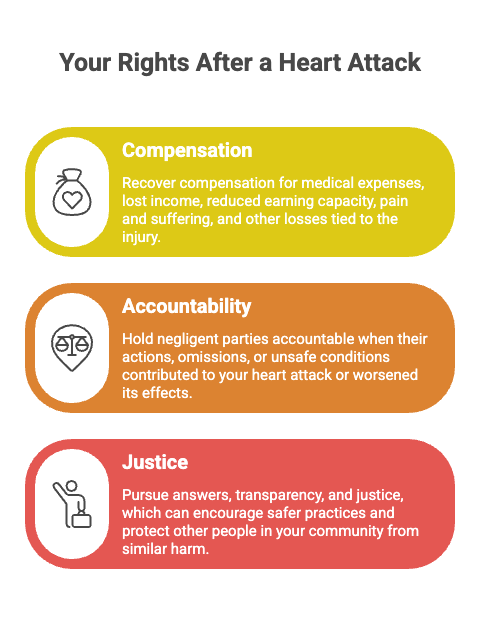
These rights exist to restore stability, uphold dignity, and recognize the full impact of preventable injury.
Steps to Take After an Orlando Heart Attack Injury
After an Orlando heart attack injury, you should seek immediate medical care, because prompt treatment protects your health and creates a clear record of your condition. You should also report the incident as soon as possible, since an official report can help establish when, where, and how the event occurred. Finally, you should preserve essential evidence, including medical records, witness information, and scene documentation, so you don’t weaken a potential claim.
Seek Immediate Medical Care
If you experience symptoms of a heart attack after an injury in Orlando, seek immediate medical care without delay. Call 911, describe your symptoms clearly, and follow the dispatcher’s instructions. Early intervention can protect your heart, reduce complications, and strengthen your ability to continue caring for others who depend on you.
Do not attempt to drive yourself unless no safer option exists. Emergency responders can begin treatment en route to the hospital and monitor any dangerous changes in your condition. If symptoms seem uncertain or delayed, a telemedicine consultation may help you decide your next medical step, but it should never replace emergency care during a crisis. Prompt evaluation creates a clear medical record, supports accurate diagnosis, and gives you the best chance to stabilize, recover, and return to service safely.
Report The Incident
As soon as your condition allows, report the incident to the appropriate party, whether that’s a property owner, employer, supervisor, or law enforcement officer. Prompt reporting creates an official record and helps responsible parties respond appropriately. When you explain what happened, stick to clear facts, including where the event occurred, what you were doing, and when symptoms began. Ask that the report be documented in writing, and request a copy for your records.
If others observed the event, identify them so witness statements can be obtained through proper channels. In workplace settings, timely notice may trigger required internal investigations and safety reviews that protect others from similar harm. By reporting the incident promptly and accurately, you support accountability, encourage corrective action, and strengthen the foundation for any future claim or legal review.
Preserve Critical Evidence
Because evidence can disappear quickly, you should preserve every item and record connected to the incident and your medical emergency as soon as you’re able. Keep discharge papers, prescriptions, bills, diagnostic results, and any communication with employers, property owners, or insurers in one secure place.
Take photographs of the location, hazards, equipment, and visible injuries before conditions change. Save clothing, medication containers, receipts, and electronic data that may show timing or causation. Write down your recollection while details remain fresh, and include names, job titles, and contact information for witness identification.
Ask trusted family members to help gather records if you’re recovering. Careful chain preservation strengthens credibility, supports those advocating on your behalf, and helps your lawyer connect the event to the harm you suffered and the losses.
How an Orlando Heart Attack Injury Lawyer Can Help You
When a heart attack occurs after another party’s negligence, an Orlando heart attack injury lawyer can help you determine whether you have a valid legal claim and what compensation may be available. You need clear guidance, prompt action, and informed patient advocacy to protect your rights and support your recovery.
Your lawyer examines medical records, incident reports, and witness statements, then identifies where standards of care failed and whether preventative measures were ignored.
- Your attorney investigates liability, consults qualified experts, and builds a persuasive claim supported by credible evidence.
- Your attorney calculates damages, including medical costs, lost income, and other losses tied directly to the negligent conduct.
- Your attorney manages communications, negotiates with insurers, and prepares your case for court if a fair settlement is not offered.
Long-Term Effects of Orlando Heart Attack Injuries
After a heart attack, you may face lasting cardiac complications that affect your strength, stamina, and overall health for years. You may also need ongoing rehabilitation, follow-up treatment, and lifestyle changes to manage symptoms and reduce the risk of future problems. In addition, you can’t overlook the emotional and cognitive impact, because anxiety, depression, and memory or concentration issues can alter your daily life and recovery.
Lasting Cardiac Complications
Although a heart attack may seem to end once emergency treatment is complete, the damage it causes can continue to affect your health for years. You may face chronic arrhythmias that disrupt your heartbeat, reduce stamina, and increase the risk of sudden cardiac events. In some cases, cardiac fibrosis develops as scar tissue forms within the heart muscle, limiting efficient contraction and weakening circulation.
These lasting complications can affect how you serve your family, support your community, and meet daily responsibilities. You may also experience reduced pumping function, recurrent chest discomfort, or fluid buildup that strains your heart and lungs. Because these conditions often require careful medical oversight, they can shape your future health, your ability to work, and the level of assistance you may need from others.
Ongoing Rehabilitation Needs
Because heart damage can limit strength, endurance, and circulation long after the initial event, many people need structured rehabilitation to regain as much function as possible. You may require supervised cardiac therapy, medication management, nutritional guidance, and gradual exercise plans that protect your health while rebuilding daily capacity.
As you continue recovery, your care team may recommend adaptive equipment to improve safety, conserve energy, and support independence at home or work. If your former duties became too physically demanding, vocational retraining can help you shift into a role where you can still contribute meaningfully and serve others. Consistent follow-up appointments also help monitor progress, address setbacks early, and adjust treatment as your condition changes. These ongoing services often represent a significant part of your long-term recovery needs.
Emotional And Cognitive Impact
While physical recovery often receives the most attention, a heart attack can also disrupt your emotional stability and cognitive function for months or even years. You may experience anxiety, depression, irritability, memory lapses, or difficulty concentrating, especially when you’re trying to care for loved ones and continue serving others.
These changes can affect your relationships, job performance, and confidence in daily decisions. You may need counseling, medication management, or cognitive therapy to rebuild focus and restore a sense of control. Support groups and structured routines often strengthen emotional resilience, helping you process fear and uncertainty with greater steadiness.
If another party’s negligence contributed to your injury, these lasting emotional and cognitive effects matter in a legal claim. They reflect real harm that merit careful documentation, professional evaluation, and meaningful compensation for your future.
Proving Liability in Orlando Heart Attack Injury Cases
When a heart attack injury claim turns on negligence, proving liability requires clear evidence that another party’s conduct directly contributed to the medical emergency or worsened its outcome. You must show duty, breach, causation, and damages through records, witness statements, policies, and timelines that reveal what happened and when it happened.
In many cases, medical causation is the central issue. You need to connect the negligent act, such as delayed treatment, unsafe conditions, or ignored warning signs, to the heart attack or to a more serious outcome afterward. Expert testimony often explains how a prompt response could have reduced harm or prevented complications.
You may also rely on employment records, surveillance footage, maintenance logs, or emergency response reports to support your account. By organizing persuasive evidence and presenting it with care, you strengthen your ability to hold the responsible party accountable and pursue resources that help you continue serving your family and community with stability.
Dealing With Insurance Companies After an Orlando Heart Attack Injury
Strong evidence of liability often shapes what happens next with the insurance company, since insurers usually examine the same records, timelines, and medical opinions to limit or deny payment. You should expect close scrutiny of your statements, treatment history, and work limitations, especially when an insurer questions whether negligence worsened your cardiac event or resulted in losses.
As you respond, protect both your recovery and your ability to serve your family and community. Provide accurate information, but do not guess, exaggerate, or accept blame. Insurers may rely on common adjuster tactics, including recorded statements, selective reading of medical records, and quick settlement offers that undervalue long-term harm. Careful documentation strengthens your position during claim negotiations and helps prevent misunderstandings.
Keep copies of bills, physician recommendations, employer communications, and any correspondence from the carrier. When communication becomes difficult or pressure increases, legal guidance can help you stay focused, organized, and prepared to address unfair insurer conduct effectively.
What to Expect During an Orlando Heart Attack Injury Claim Process
You can expect the claim process to begin with filing the initial claim and establishing the facts surrounding your heart attack injury. From there, you’ll need strong medical evidence to support causation and damages, while your attorney handles negotiations with insurers on your behalf. If a fair settlement isn’t reached, your case may move toward resolution through further negotiation, mediation, or litigation.
Filing The Initial Claim
Getting the initial claim underway begins with gathering medical records, employment information, and incident details that link your heart attack to the workplace event or conditions at issue. You then notify the appropriate insurer or agency, complete the required forms, and submit a clear account of what happened and when it occurred.
As you file, you should expect deadlines, confirmation requests, and questions about your job duties, schedule, and the circumstances surrounding the event. Your attorney helps you organize the claim timeline, avoid preventable errors, and present facts in a disciplined manner.
This early stage also shapes your settlement strategy, because each statement and document can influence how the opposing side evaluates responsibility, damages, and credibility. Filing promptly and accurately protects your ability to pursue support for yourself and those who depend on your service.
Gathering Medical Evidence
Once the claim is on file, the focus shifts to building a medical record that shows how the workplace event or conditions contributed to the heart attack and the harm that followed. You should gather medical records from emergency responders, hospital stays, cardiologists, primary care physicians, and rehabilitation providers. These documents help trace symptoms, treatment, and lasting limitations.
You may also need imaging studies, lab results, medication histories, and physician notes that link physical stress, exertion, or workplace exposure to the cardiac event. If you serve others in a demanding role, your duties, schedule, and strain can matter greatly. Your attorney may request expert review to clarify causation and address preexisting conditions fairly. By organizing complete evidence early, you strengthen the factual foundation of your claim and support a clear timeline.
Negotiating With Insurers
As negotiations begin, insurers often push back on causation, the severity of your condition, or the value of your losses. You should expect detailed questions, repeated requests for documents, and efforts to shift responsibility away from the negligent party. During policy negotiation, you need to stay organized, measured, and consistent, because every statement can affect how your claim is evaluated.
You may also encounter settlement tactics designed to minimize medical damages, lost income, or future care needs. Insurers often rely on timing, pressure, and selective interpretations of records to reduce exposure. By responding with clear evidence, accurate timelines, and respectful persistence, you strengthen your position. This disciplined approach not only protects your interests but also supports accountability, which can help promote safer conduct and better care for others in your community.
Resolving The Case
When negotiations produce meaningful progress, your claim moves toward resolution through settlement or, if necessary, litigation. You and your attorney review the evidence, evaluate damages, and measure offers against your medical needs, lost income, and future care. This stage often includes careful attention to settlement timelines, because prompt action can protect both your recovery and your ability to provide for others.
If the insurer resists a fair result, your attorney may recommend mediation strategies that encourage compromise without sacrificing accountability. During mediation or pretrial preparation, you can expect organized document exchange, witness coordination, and a clear explanation of risks and options.
If a trial becomes necessary, your lawyer presents your case with precision and purpose. Throughout the process, you remain informed, prepared, and positioned to pursue a just outcome.
Compensation for Orlando Heart Attack Injury Damages
Often, compensation for heart attack injury damages in Orlando extends far beyond the initial hospital bill, because these cases can involve substantial medical costs, lost income, reduced earning capacity, pain and suffering, and other losses tied directly to the incident. You may need ongoing treatment, rehabilitation, medication, transportation, and in-home support, all of which can place serious pressure on your family and your ability to serve others.
As you pursue a claim, you should document every expense, every missed workday, and every way the event changed your daily responsibilities. Strong records help show the full impact on your health, finances, and future stability. Compensation may also reflect the cost of preventive measures your doctors recommend, as well as necessary lifestyle adjustments that support recovery and reduce further risk.
When you work with an Orlando heart attack injury lawyer, you place yourself in a stronger position to seek fair accountability and secure resources that help you move forward with dignity and purpose.
Economic vs Non-Economic Damages in Orlando Heart Attack Cases
When you pursue a heart attack injury claim in Orlando, you may seek both economic damages, such as medical bills, lost income, and future care costs, and non-economic damages, including pain, suffering, and reduced quality of life. You must also show how these losses affect your daily life, your ability to work, and your long-term recovery. To recover fair compensation, you need clear evidence that proves the value of each category of damage.
Economic Damage Categories
Distinguishing between economic and non-economic damages helps you understand the full value of an Orlando heart attack injury claim. Economic damages cover the measurable financial losses you can document through records, bills, and employment information. These categories often include medical expenses for emergency care, hospitalization, cardiac treatment, rehabilitation, medications, and follow-up visits.
You may also recover lost wages if your condition kept you from working during treatment or recovery. If the heart attack caused lasting limitations, you can pursue diminished earning capacity for income you likely won’t earn in the future.
Other economic losses may include transportation to appointments, in-home assistance, and necessary medical equipment. By carefully identifying each category, you strengthen your claim and protect the financial stability you need to continue serving your family and community well.
Non-Economic Losses
Financial records show only part of the harm a heart attack can cause, because many losses don’t appear on a bill or pay stub. You may endure ongoing pain, anxiety, sleep disruption, and fear about your future. These harms can limit your independence and strain your closest relationships.
Non-economic losses address the human impact of the event, including emotional distress, loss of enjoyment, and changes in your quality of life. If you once cared for others, volunteered, or supported your family in active ways, those losses matter when your condition prevents that service.
Pain valuation also considers physical suffering, mental anguish, and the daily frustration of living with new limitations. In serious heart attack cases, these damages recognize that your injury affects far more than income, invoices, and treatment schedules over time.
Proving Damage Value
Because every heart attack claim includes both measurable costs and deeply personal losses, proving the value of damages requires more than submitting medical bills and wage statements. You must connect each financial loss to the cardiac event, including treatment expenses, rehabilitation, reduced income, and future care needs.
You also need to show how pain, anxiety, loss of independence, and diminished quality of life affect your daily ability to care for others and fulfill responsibilities. Strong damage valuation often depends on organized records, physician opinions, vocational analysis, and expert testimony from economists or life care planners. These professionals help translate long-term limitations into credible figures.
When you present both economic and non-economic damages clearly, you strengthen your claim and support a recovery that reflects not only what you paid, but also what this injury has taken from your life.
When an Orlando Heart Attack Injury Case Goes to Trial vs Settlement
While many Orlando heart attack injury claims resolve through settlement, some cases move to trial when the parties can’t agree on liability, causation, or the full value of your damages. If insurers dispute what happened, minimize your losses, or question medical proof, a trial may become necessary.
Your lawyer evaluates evidence, witness credibility, and Jury dynamics to decide whether presenting your case in court serves your interests and protects those who depend on you.
Settlement timing also matters. You may receive meaningful offers after discovery clarifies the facts, expert opinions, and future care needs. A fair settlement can provide faster compensation, reduce stress, and let you focus on recovery and supporting others.
However, if the defense refuses to accept responsibility or undervalues your claim, a trial can create accountability. In court, you ask a judge or jury to weigh the evidence and determine proper compensation. That choice depends on risk, cost, delay, and the strength of your case overall.
The Statute of Limitations for Orlando Heart Attack Injury Cases
Although your medical recovery may take priority after a serious cardiac event, Florida law still imposes strict deadlines on when you can file an Orlando heart attack injury claim. If you wait too long, the court may bar your case, regardless of how serious the harm was. That is why understanding filing deadlines matters as you seek accountability and protect your family’s future.
In many injury cases, Florida’s statute of limitations begins when the injury occurs. However, some claims involve delayed symptoms, hidden negligence, or medical complications that are not immediately clear. In those situations, discovery tolling may affect when the clock starts running, depending on the facts and the type of claim involved.
You should also remember that claims against certain parties may carry shorter notice requirements or different procedural rules. By keeping records, preserving evidence, and tracking important dates, you place yourself in a stronger position to pursue a timely claim.
When to Contact an Orlando Heart Attack Injury Lawyer
Filing deadlines matter, but timing also affects how effectively you can build your case, which is why you should contact an Orlando heart attack injury lawyer as soon as you suspect negligence contributed to the event. Early action helps preserve records, witness accounts, and essential details about treatment, workplace conditions, or delayed responses that may otherwise disappear.
You should also reach out when medical staff, employers, or insurers start asking questions, requesting statements, or discussing blame. A prompt consultation helps you understand Emergency timelines, protect important evidence, and respond carefully without undermining your claim. If your loved one suffered a fatal heart attack, contact counsel after Family notification and once immediate medical needs are addressed.
Doing so can help your family organize documents, identify responsible parties, and make informed decisions that honor your loved one while pursuing accountability. Acting promptly serves both your household and the broader goal of encouraging safer conduct in your community.
Why You Need an Experienced Orlando Heart Attack Injury Lawyer
Because heart attack injury claims often involve disputed medical timelines, overlapping legal duties, and aggressive insurance defenses, you need an experienced Orlando heart attack injury lawyer who can identify the strongest theory of liability and support it with credible evidence.
Your lawyer helps you pursue accountability when a preventable cardiac event harms your ability to care for others, support your family, or continue meaningful service. If medical malpractice contributed to a delayed diagnosis, improper discharge, or ignored warning signs, skilled legal counsel can connect records, expert opinions, and causation. If workplace stress, excessive demands, or unsafe conditions played a role, your lawyer can evaluate employer responsibility and available compensation.
Experience matters because these cases require disciplined investigation, careful analysis of damages, and persuasive advocacy. You need someone who can challenge insurers, address disputed facts, and present your losses with clarity. With strong representation, you can seek justice, protect your future, and reinforce standards that help safeguard others in your community.
How to Choose the Right Orlando Heart Attack Injury Lawyer for Your Case
When choosing the right Orlando heart attack injury lawyer for your case, start by looking for an attorney who has direct experience handling claims involving delayed diagnosis, negligent cardiac care, workplace-related cardiac events, or other medically complex injury matters. You need counsel who understands both medicine and liability, and who can explain each step clearly.
Use Attorney interviews to assess communication, courtroom readiness, and commitment to your goals. Ask how the lawyer investigates records, works with medical experts, and approaches settlement versus trial. Review past case results, but also consider whether the attorney listens well and treats you with respect.
You should also compare Fee structures carefully, including contingency percentages, litigation costs, and how expenses are handled if your claim doesn’t succeed. A strong lawyer will provide transparent answers, realistic expectations, and a strategy tailored to your circumstances. That careful selection helps you pursue accountability, protect your family, and serve others by encouraging safer conduct.
About The Law Offices of Anidjar & Levine
Choose a firm that combines responsive client service with focused injury advocacy, and The Law Offices of Anidjar & Levine stands out for doing both.
When you need guidance after a heart attack injury, you can turn to a team that values communication, preparation, and practical support throughout your claim.
You benefit from a firm with a history of representing injured Floridians with diligence and professionalism.
The attorneys and staff work to keep you informed, answer your questions promptly, and pursue compensation that can protect your health, finances, and family responsibilities.
If you care deeply about serving others, you understand how an unexpected injury can disrupt your ability to help those who depend on you.
Client testimonials often reflect the firm’s commitment to accessibility, compassion, and results-driven representation.
You can expect clear direction, steady advocacy, and legal counsel designed to reduce burdens while you focus on recovery, medical treatment, and restoring stability in your daily life.
Frequently Asked Questions
Can I Switch Lawyers During My Orlando Heart Attack Injury Case?
Yes, you can switch lawyers during your case if your current representation no longer serves your best interests. You should review your fee agreement, request your file, and confirm whether any costs remain owed. Before you change counsel, consider conflict resolution if communication problems might be repaired. If not, new counsel can protect your rights, maintain deadlines, and help you pursue accountability in a manner that serves others and justice.
Will My Medical Records Remain Private During a Heart Attack Injury Claim?
Yes, your medical records usually remain private during a heart attack injury claim, but limited disclosure may be necessary. You can expect patient privacy protections under state and federal law, while records access is generally restricted to information relevant to your case. Your attorney can help you safeguard sensitive details, challenge unnecessary requests, and make certain disclosures stay narrow. That protection helps you pursue accountability while respecting your dignity and service to others.
Do Pre-Existing Heart Conditions Affect My Injury Claim?
Yes, your pre-existing heart condition can affect your injury claim, but it doesn’t bar recovery. You must show how the incident aggravated your condition or caused additional harm. Insurers may argue comparative liability or claim your damages stemmed from a prior illness. Strong medical evidence and timely mitigation measures can clarify causation, protect credibility, and support fair compensation. By documenting changes carefully, you strengthen your claim while promoting accountability and responsible care.
Can Family Members File a Claim if the Victim Dies?
Yes, you can file a claim if your loved one dies from accident-related injuries. You may pursue a wrongful death action through the estate, and eligible relatives may also seek survivor benefits for lost support and services. You should act promptly, because deadlines apply and crucial evidence can fade. By taking timely legal steps, you help protect your family’s rights and hold the responsible party accountable for the harm caused.
How Are Attorney Fees Typically Structured in Heart Attack Injury Cases?
Attorney fees in heart attack injury cases are usually structured through a contingency percentage, which means you don’t pay unless your case succeeds. You and your attorney review a written fee agreement that explains the percentage, case costs, and when payment becomes due. This structure lets you pursue accountability while protecting your resources. You should ask for clear terms, because careful review helps you serve your family and community responsibly.
—————————
If you suffered a heart attack injury in Orlando because of another party’s negligence, you should act promptly to protect your claim.
You can strengthen your case by seeking medical care, preserving evidence, and consulting counsel as soon as possible.
An experienced Orlando Medical Malpractice Lawyer can assess liability, calculate your damages, and pursue the compensation you are entitled to.
Law Offices of Anidjar and Levine can provide the focused representation and guidance your case requires.

