

The Law Offices of Anidjar and Levine can help if a provider’s delay, missed diagnosis, or lack of follow-up worsened your condition and caused avoidable harm.
An Orlando failure-to-treat injury lawyer can review records, build a treatment timeline, consult medical experts, protect evidence, and handle insurers while you focus on care.
You may recover added medical costs, lost income, and pain and suffering if negligence is proven.
Learn more from our Orlando Medical Malpractice Lawyer.
Main Takeaways
- An Orlando failure-to-treat injury lawyer investigates whether delayed or denied medical care caused avoidable complications, worsening conditions, or prolonged recovery.
- These claims require proof of duty, a breach of accepted medical standards, and evidence that earlier treatment would likely have improved outcomes.
- Lawyers review records, build treatment timelines, consult medical experts, and identify missed warning signs, follow-up failures, or emergency room neglect.
- Compensation may cover added medical costs, lost income, pain, emotional distress, permanent impairment, and other harm caused by delayed treatment.
- Contacting a lawyer early helps preserve evidence, protect deadlines, and clarify whether negligence by providers or insurers contributed to the harm.
How We Can Help With Your Orlando Failure to Treat Injury Claim
Protecting your interests begins with a careful review of what happened, why treatment was delayed or denied, and how that failure affected your well-being. From there, you can work with counsel that listens closely, gathers records, consults qualified medical professionals, and builds a clear account of the harm you experienced.
You are entitled to guidance that reflects both legal skill and a commitment to service. Your attorney can handle communication with insurers and healthcare providers, preserve vital evidence, and identify the full scope of your losses, including added medical costs, lost income, and avoidable suffering. Strong patient advocacy also means keeping you informed, answering your questions promptly, and helping you make decisions with confidence.


As your claim develops, counsel can shape a practical settlement strategy designed to protect your future and pursue fair compensation. With disciplined preparation and focused representation, you can move forward with greater clarity, stability, and peace while continuing to care for others around you.
Understanding Orlando Failure to Treat Injury Cases
OUR CONSULTATIONSARE FREE
START YOUR FREE CASE REVIEW

When a provider fails to diagnose, monitor, or respond to a serious medical condition in a timely way, the consequences can become far more severe than the original injury or illness. In Orlando, to prove failure to treat injury cases, you must show that a medical professional owed you a duty of care and departed from accepted clinical protocols.
You also need to connect that failure to your worsening condition. That often means proving prompt treatment would likely have prevented additional harm, reduced complications, or improved your outcome. These claims fall under medical negligence, and they require careful review of records, timelines, and expert opinions.


As someone seeking justice and accountability, you merit a clear understanding of what the law requires. A strong case focuses on whether the provider recognized warning signs, acted within a reasonable time, and documented appropriate follow-up. When those steps are missing, the legal system can help you pursue answers, responsibility, and resources for recovery.
Common Causes of Orlando Failure to Treat
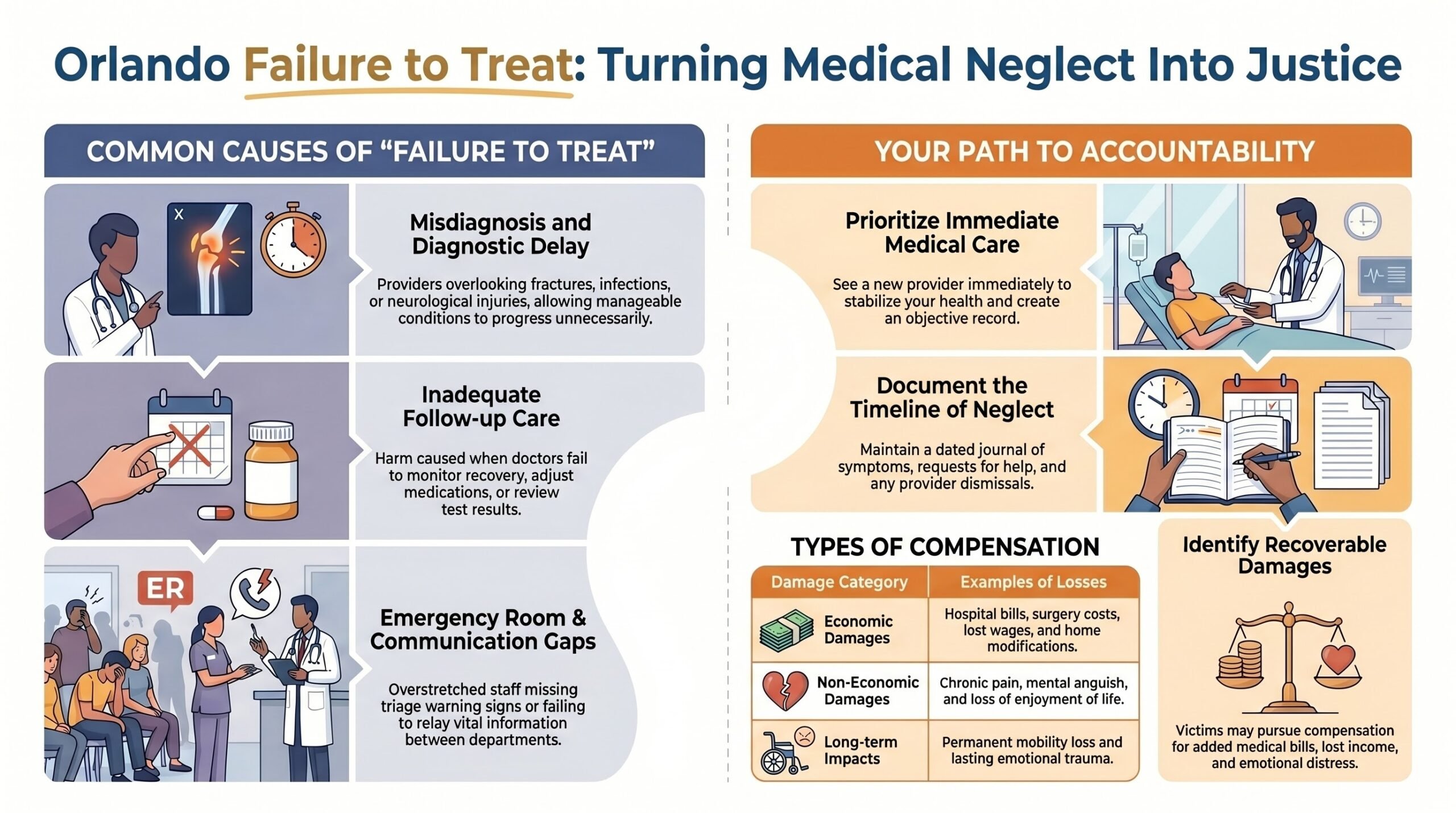
You may face a failure-to-treat claim when a provider misdiagnoses your condition or delays care long enough for your injury to worsen. Your harm can also stem from inadequate follow-up care, when doctors don’t monitor your recovery, adjust treatment, or respond to clear warning signs. In many Orlando cases, emergency room neglect and communication breakdowns between medical providers can leave you without the timely treatment your condition requires.
Misdiagnosis And Delay
Because prompt diagnosis often determines whether an injury recovers or worsens, misdiagnosis and delay remain two of the most common causes of failure to treat in Orlando medical malpractice cases. When you seek care, you trust medical providers to identify the problem quickly and begin appropriate treatment. Diagnostic errors can cause providers to overlook fractures, internal bleeding, infections, or neurological injuries, allowing your condition to progress unnecessarily.
Treatment delays may also occur when providers misread test results, dismiss symptoms, or postpone referrals to a consultant. As someone who values protecting others, you understand how these mistakes can harm not only you but also your family and community. In serious cases, delayed care can increase pain, complicate recovery, and reduce the chance of a full return to health, work, and service.
Inadequate Follow-Up Care
In many Orlando failure-to-treat cases, the problem doesn’t end with the initial diagnosis or the first round of care. Your recovery may depend on careful monitoring, timely referrals, and clear instructions after you leave a provider’s office. When that follow-up breaks down, serious complications can develop.
You may face harm when providers ignore worsening symptoms, fail to review test results, or don’t adjust treatment as your condition changes. Missed appointments may reflect poor scheduling systems, inadequate communication, or a provider’s failure to stress urgency. Medication lapses can also occur when no one reviews side effects, renews prescriptions, or explains proper use. If you sought help in good faith and your care team failed to act responsibly, you may have grounds to pursue accountability and protect others from preventable injury in the future.
Emergency Room Neglect
Often, emergency room neglect begins when overstretched staff miss clear warning signs, delay testing, or discharge patients before their condition is fully evaluated. You may enter seeking urgent help, yet triage delays can leave serious injuries untreated while your symptoms worsen. When providers ignore abnormal critical signs, fail to order necessary imaging, or overlook escalating pain, they place your health at unnecessary risk.
In some cases, emergency room neglect resembles patient abandonment, especially when you are released without stabilization, monitoring, or timely consultant review. That kind of failure can turn a manageable condition into permanent harm. If this happened to you or someone you serve, a careful legal review can determine whether the hospital or its staff breached the duty of care and caused an avoidable injury under Florida law.
Communication Breakdowns
Communication failures also play a direct role in failure to treat cases, especially when vital information doesn’t move promptly between nurses, emergency physicians, authorities, and hospital departments. When records, test results, or symptom updates are delayed, you may not receive timely care, and preventable complications can follow quickly. Breakdowns in patient communication can also leave you uninformed about warning signs, medications, discharge instructions, or needed follow-up treatment.
Strong provider coordination helps guarantee each professional understands your condition, your risks, and the next required step. When that coordination fails, referrals may stall, specialists may not respond, and serious injuries may worsen without proper intervention. If you serve others and your family depends on your strength, these avoidable lapses can disrupt every part of your life and undermine recovery when treatment matters most.
Legal Rights of Orlando Failure to Treat Injury Victims
When a hospital, doctor, or other medical provider fails to diagnose or properly respond to a serious condition, you have the right to seek compensation under Florida law if that failure caused additional harm. Your patient rights protect your dignity, safety, and access to competent medical care. When providers breach that duty, you may pursue accountability for added injuries, prolonged recovery, lost income, and avoidable pain.
Your legal protections matter because they help restore stability and uphold standards that safeguard others in your community. Florida law may provide compensation options that address both financial losses and human suffering.
By asserting your rights, you not only seek justice for yourself but also encourage safer care for future patients.
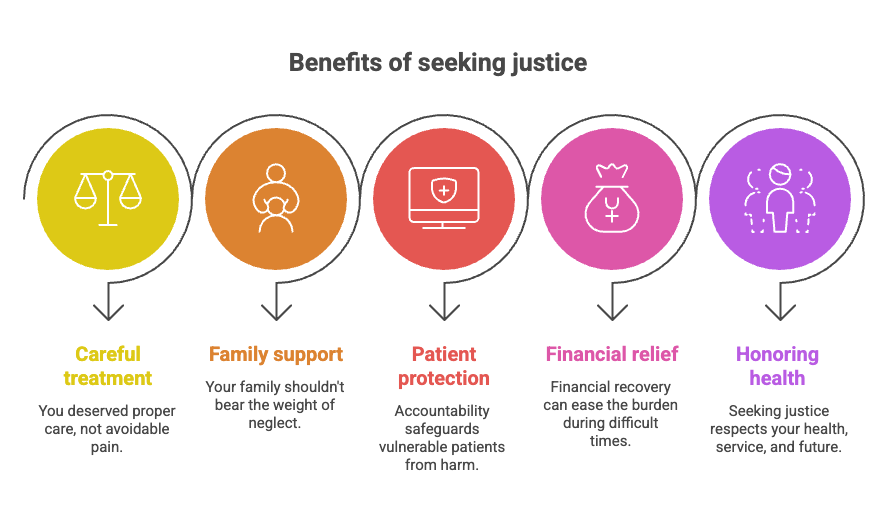
- You merited careful treatment, not preventable suffering.
- Your family shouldn’t carry burdens created by neglect.
- Accountability can protect vulnerable patients from similar harm.
- Financial recovery may relieve pressure during a painful season.
- Seeking justice honors your health, service, and future.
Steps to Take After an Orlando Failure to Treat Injury
After an Orlando failure to treat an injury, you should seek immediate medical care to restore your health and establish a clear record of your condition. You should also document any treatment delays, including missed diagnoses, postponed tests, or gaps in care, because this information may support your claim. Once you’ve addressed your medical needs, you should contact an injury lawyer who can evaluate the facts and explain your legal options.
Seek Immediate Medical Care
Seek medical attention at once, even if a healthcare provider previously dismissed your symptoms or failed to remedy your condition. Your health must come first, because prompt care can prevent complications and protect your ability to keep serving those who depend on you. Go to an emergency room, urgent care center, or another qualified physician for an urgent assessment of your condition.
Tell the new provider exactly what you are experiencing, including pain, swelling, weakness, breathing problems, or changes in mobility. Ask for immediate stabilization if your condition appears serious or rapidly worsening. Follow all medical instructions carefully, attend recommended follow-up visits, and take prescribed medications as directed. By acting quickly, you give yourself the best chance to recover, restore health, and continue supporting your family, work, and community with confidence and renewed purpose.
Document Treatment Delays
Because treatment delays can worsen an injury and obscure what went wrong, you should document every missed appointment, postponed test, unanswered complaint, and gap in care as soon as possible. Keep a dated journal that records symptoms, pain levels, requests for help, and each response you received from providers and staff members.
Gather discharge papers, portal messages, referral notes, prescription records, bills, and voicemail logs. Create clear treatment timelines that show when you sought care, when providers responded, and how delays affected your recovery, daily responsibilities, and ability to serve your family or community. Ask for complete copies of your medical records, and review them carefully for documentation gaps, incorrect dates, or missing complaints. Organized records protect your health, support accountability, and preserve an accurate picture of the care you received or did not receive.
Contact An Injury Lawyer
Once you’ve organized your records and treatment timeline, contact an Orlando injury lawyer as soon as possible to assess whether a provider’s failure to diagnose, monitor, or respond caused additional harm. You need prompt legal guidance to protect evidence, understand deadlines, and determine whether medical malpractice may have worsened your condition.
During client intake, you’ll share treatment details, provider names, symptoms, and the ways delayed care affected your ability to work, care for family, or serve your community. Your lawyer can review records, consult qualified experts, and explain whether negligence likely caused avoidable complications. You should also ask how the firm handles communication, costs, and case timelines. Early action helps your attorney preserve testimony, identify liable parties, and pursue accountability that supports your recovery and protects others from similar harm.
How an Orlando Failure to Treat Injury Lawyer Can Help You
In the aftermath of a serious injury, an Orlando failure to treat injury lawyer can protect your interests by determining whether a medical provider’s delay, misdiagnosis, or inadequate care worsened your condition. You need clear answers, and your lawyer investigates records, consults experts, and identifies signs of medical negligence. Through focused patient advocacy, you gain a professional who speaks for your needs and pursues accountability.
You deserve clear answers when delayed treatment, misdiagnosis, or inadequate care worsened your injury and changed your life.
Your lawyer also calculates damages, manages insurer communications, and builds a claim that reflects the harm you endured. This support lets you focus on recover and serving your family and community while your case moves forward.
- You deserve to be heard when your pain was dismissed.
- You can seek truth when preventable errors have changed your life.
- You may protect your family from added financial strain.
- You honor others by demanding safer care and accountability.
- You gain guidance when the legal process feels overwhelming and uncertain.
Your lawyer stands beside you throughout every step.
Long-Term Effects of Orlando’s Failure to Treat Injuries
When your injuries aren’t treated promptly, you may face chronic pain that disrupts your work, daily routines, and overall quality of life. You could also suffer permanent mobility loss, which can limit your independence and make ordinary tasks far more difficult. Beyond the physical harm, you may experience lasting emotional trauma that affects your mental health, relationships, and sense of security.
Chronic Pain Development
Although some injuries seem manageable at first, delaying proper medical treatment can allow damaged nerves, muscles, or joints to recover improperly and develop into chronic pain. When you postpone care, inflammation may persist, tissue can stiffen, and your body’s Chronic pain mechanisms may become more active, making ordinary tasks harder and more exhausting over time.
If you spend your days helping others, ongoing pain can quietly reduce your strength, focus, and endurance. You may struggle to work, rest, or meet family responsibilities with the consistency you value. Early evaluation, imaging, and follow-up care often prevent these complications and support better recovery. Modern Pain management innovations can also reduce suffering, improve function, and preserve your ability to keep serving your community with steadiness, compassion, and dependable long-term capacity each day.
Permanent Mobility Loss
Persistent pain often signals a deeper problem: untreated injuries can also lead to permanent mobility loss. When damage to bones, joints, nerves, or muscles goes unaddressed, your range of motion may steadily decline. You may struggle to lift, bend, walk, or stand long enough to care for your family, support coworkers, or serve your community effectively.
Delays in diagnosis and treatment often create rehab barriers that make recovery harder and less complete. Scar tissue, instability, weakness, and improper recovery can leave you needing mobility adaptations, from braces and canes to modified work duties and accessible transportation. If a provider failed to respond appropriately, you shouldn’t bear the lifelong consequences alone. A qualified Orlando failure to treat injury lawyer can help you pursue accountability and secure resources for medical care, rehabilitation, and future support.
Emotional Trauma Effects
Even after physical wounds begin to mend, the emotional effects of an untreated injury can continue to disrupt your daily life. You may struggle with anxiety, depression, sleep problems, or post-traumatic stress that makes ordinary responsibilities feel overwhelming. When your pain was ignored, you can lose confidence in your safety, your health, and your future.
These emotional injuries can also affect how you care for others. You may withdraw from family, avoid community involvement, or experience relationship strain that damages trust and communication. Over time, untreated trauma can reduce your ability to work, serve, and remain present for the people who depend on you. Seeking legal guidance can help you pursue accountability, secure treatment resources, and protect your long-term emotional well-being and daily stability.
Proving Liability in Orlando Failure to Treat Injury Cases
When a healthcare provider fails to diagnose, monitor, or respond to a serious medical condition, proving liability requires more than showing that your injury became aggravated. You must establish that the provider owed you a duty of care, breached that duty, and directly caused avoidable harm. In many cases, causation challenges arise because underlying illnesses can worsen naturally, even with proper treatment.
To meet that burden, you often need complete medical records, timeline evidence, and expert testimony from qualified professionals who can explain what competent care is required under similar circumstances. Your attorney will compare the provider’s actions to accepted standards and show how earlier intervention likely would have changed your outcome. You may also need evidence of additional surgeries, prolonged recovery, permanent impairment, or increased suffering caused by the delay. A careful, service-minded legal approach helps you seek accountability, protect your well-being, and encourage safer care for others in your community through responsible legal action.
Dealing With Insurance Companies After an Orlando Failure to Treat Injury
After a failure to treat an injury in Orlando, insurance companies often move quickly to limit what they pay, and they may question whether the provider’s delay actually caused your worsened condition. You should respond carefully, because adjusters often rely on claim tactics designed to reduce responsibility. Keep records of symptoms, appointments, missed work, and every communication, so you can present a clear timeline that supports your position.
You also need to be cautious when giving statements or signing authorizations. Insurers may seek broad access to your history and use isolated details against you during policy negotiation. By staying organized and focused on facts, you protect your ability to secure resources to care for yourself and continue serving others. A lawyer can address misleading questions, challenge unfair evaluations, and communicate with insurers on your behalf. That support helps you avoid missteps and strengthens your position when compensation is disputed or delayed by insurers.
What to Expect During an Orlando Failure to Treat Injury Claim Process
You can expect your claim to begin with an initial case evaluation, where your lawyer assesses the facts, identifies liable parties, and explains your legal options. From there, your attorney will review your medical records to connect the failure to treat your injury with the harm you suffered, then pursue negotiation and settlement with the opposing side. If a fair resolution isn’t reached, you should prepare for a trial process timeline that includes filing deadlines, discovery, court hearings, and, if necessary, trial.
Initial Case Evaluation
Because a failure to treat a claim often turns on subtle medical details and timing, the initial case evaluation focuses on whether a provider’s inaction likely worsened your injury and caused measurable harm. During your initial consultation, you’ll explain what happened, when symptoms changed, and how delayed care affected your health, work, and ability to support others. Your lawyer will ask focused questions to identify crucial timelines, responsible providers, and signs that prompt treatment could have changed the outcome.
You should expect a candid discussion about strengths, weaknesses, and whether the facts support moving forward under Florida law. This early review also helps shape a clear case strategy, including immediate next steps, possible defendants, and the practical goals of your claim. With solid guidance, you can make informed decisions and pursue accountability responsibly.
Medical Record Review
Examine the records closely, and a clearer picture of your claim often emerges. You and your attorney will gather all relevant medical records, including emergency care notes, imaging, prescriptions, nursing entries, and follow-up recommendations. This review helps identify missed symptoms, delayed testing, improper discharge decisions, or gaps in monitoring that may have worsened your injury.
Your legal team may also request a chart audit to compare what providers documented against accepted standards of care. As you move through this step, you can expect careful timelines, provider comparisons, and attention to how untreated conditions affected your daily life and ability to help others. Accurate record review strengthens your understanding of what happened, why it mattered, and which facts may support accountability throughout the claim process.
Negotiation And Settlement
Pursue settlement discussions with a clear understanding of how the delayed or missed treatment affected your condition, your medical expenses, and your long-term recovery. You should expect your attorney to present records, expert opinions, and documented losses that show how the provider’s failure increased harm and burdened your family.
During negotiations, insurers may question causation, minimize future care needs, or press for quick closure. Effective negotiation tactics counter those efforts with organized evidence, credible medical analysis, and a disciplined valuation of your claim. You can support this process by keeping bills, treatment updates, and notes about daily limitations.
Settlement timing depends on your medical progress, the strength of liability proof, and whether future damages can be estimated responsibly. A careful approach helps you seek fair compensation while protecting those who rely on you.
Trial Process Timeline
Although many failure-to-treat claims resolve before trial, you should understand the litigation timeline in case your Orlando case proceeds to court. First, the court sets deadlines for discovery, expert disclosures, and pretrial motions. During this stage, you and your attorney gather records, question witnesses, and prepare to prove how delayed treatment worsened your condition.
As the trial approaches, the judge may hold hearings to narrow issues and encourage a final settlement. If no agreement is reached, the process moves to jury selection, where attorneys question potential jurors for fairness. Next come the opening statements, followed by the presentation of evidence through medical records, expert testimony, and witness accounts. After the closing arguments, the jury deliberates and returns a verdict. If you prevail, the court enters judgment and addresses any post-trial motions promptly.
Compensation for Orlando Failure to Treat Injury Damages
Secure the compensation you earn by holding negligent medical providers accountable when a failure to treat worsens your injury and increases the physical, emotional, and financial burdens you face. When you pursue a claim, you seek resources that help you recover, support your family, and continue serving others despite avoidable harm.
Your compensation should reflect the full impact of delayed or ignored care. That includes medical costs tied to additional treatment, rehabilitation, medications, and future care needs caused by the provider’s neglect. It may also account for lost income, reduced earning capacity, and other documented losses that disrupt your stability. In addition, pain valuation helps measure how prolonged suffering, loss of function, and diminished quality of life affect your daily responsibilities and relationships.
Strong medical records, expert opinions, and clear evidence of worsening symptoms can strengthen your position. With careful legal guidance, you can demand fair compensation and reinforce the standard of care your community earns from every medical professional.
Economic vs Non-Economic Damages in Orlando Failure to Treat Cases
In a failure to treat case, you may recover economic damages for measurable losses such as medical bills, rehabilitation costs, and lost income. You may also pursue non-economic damages for pain, emotional distress, and the reduced quality of life caused by delayed or improper care. To prove what your claim is worth, you’ll need clear records, credible testimony, and evidence that connects your losses to the provider’s failure to treat.
Economic Damage Categories
Distinguishing between economic and non-economic damages helps you understand the full value of a failure to treat claim in Orlando. Economic damages cover measurable financial losses caused by delayed diagnosis, improper monitoring, or a provider’s refusal to address worsening symptoms.
You may recover past and future medical expenses, including hospital bills, surgery, rehabilitation, medication, assistive devices, and follow-up care. If your condition kept you from work, you can also seek compensation for lost wages and diminished earning capacity. In some cases, failure to treat results in additional transportation costs, home modification expenses, or the need for hired assistance while you continue to serve your family or community. If medical neglect damaged personal items during emergency transport or treatment, property loss may apply. Clear records, invoices, and employment documentation help prove these categories with confidence.
Non-Economic Losses
Many of the most serious consequences of a failure to treat injury aren’t reflected on a bill or pay stub. You may endure ongoing physical discomfort, emotional distress, interrupted sleep, anxiety, and the loss of activities that once allowed you to care for your family and community. These harms matter because they change how you live, how you relate to others, and how you fulfill daily responsibilities.
Non-economic losses address those human effects. They include your pain, suffering, mental anguish, disfigurement, and reduced enjoyment of life. In a failure-to-treat case, pain valuation considers how the untreated condition intensified your suffering over time. Life impairment focuses on how your injury limits movement, independence, relationships, and service to others. When your quality of life declines, those losses warrant careful attention under Florida personal injury law.
Proving Damage Value
Establishing the value of your damages requires more than showing that medical negligence occurred; you must also connect the failure to treat to the financial and personal harm that followed.
You should document every economic loss, including added medical bills, rehabilitation costs, lost wages, and reduced earning capacity. Strong records support accurate damage valuation and help show how delayed care worsened your condition. You should also prove non-economic damages, such as pain, emotional distress, disability, and loss of enjoyment of life, through testimony, treatment notes, and daily impact evidence. Experts often compare your losses to settlement benchmarks, but your case still turns on its specific facts.
When you present clear proof, you strengthen your claim and protect the resources your family and community may rely on from future financial strain and hardship.
When an Orlando Failure to Treat Injury Case Goes to Trial vs Settlement
Although most Orlando failure to treat injury claims resolve through settlement, your case may proceed to trial when the parties dispute liability, the extent of your harm, or the value of your damages. In that setting, you need counsel who evaluates evidence carefully, explains trial strategies clearly, and prepares your claim with discipline and purpose.
Settlement can serve your interests when the insurer recognizes responsibility and offers fair compensation without forcing you through prolonged litigation. Your lawyer will assess settlement timing, compare current offers against likely courtroom outcomes, and protect your ability to recover for added medical costs, pain, and lost income. Trial becomes more likely when the defense minimizes delayed treatment, blames prior conditions, or refuses to value how the failure affected your capacity to care for yourself and others.
By building persuasive testimony, medical proof, and damages analysis, your attorney helps you pursue accountability while choosing the path that best supports your recovery and your service to loved ones.
The Statute of Limitations for Orlando Failure to Treat Injury Cases
Whether your claim resolves through settlement or proceeds to trial, Florida’s statute of limitations sets a firm deadline for filing a failure to treat injury lawsuit in Orlando. If you miss that deadline, a court may dismiss your case, even when the harm is serious and the facts are strong. Understanding these statute limits helps you protect your right to pursue accountability.
In many medical negligence matters, Florida law allows a limited period to act, and specific facts can affect that timeline. The date of injury, the date you discovered the injury, and whether concealment occurred may influence filing deadlines. Because these rules can be strict, you should preserve records, document symptoms, and keep track of treatment dates. Careful attention to timing supports your ability to seek resources, uphold standards of care, and advocate for the well-being of those who depend on you. Acting within the legal window protects your opportunity for justice.
When to Contact an Orlando Failure to Treat Injury Lawyer
Recognizing the warning signs early can safeguard both your health and your legal options. You should contact an Orlando failure to treat injury lawyer as soon as you suspect a provider ignored symptoms, delayed testing, or failed to respond to worsening conditions. Prompt action helps preserve records, clarify treatment timelines, and protect your ability to serve your family and community without avoidable setbacks.
You should also reach out when another doctor identifies a missed diagnosis, recommends urgent care that should have been provided earlier, or links your complications to possible medical negligence. If your recovery stalls, your pain increases, or your condition becomes more serious because treatment did not begin on time, legal guidance can help you understand the next steps. Acting early supports a careful review of medical records, communications, and follow-up instructions. It also helps you document how delayed care affected your health, work, finances, and daily responsibilities to others in your life.
Why You Need an Experienced Orlando Failure to Treat Injury Lawyer
Because failure to treat cases often turns on subtle medical facts and strict legal standards, you need an experienced Orlando failure to treat injury lawyer who can identify where a provider’s response fell below accepted care and connect that failure to the harm you suffered.
An experienced attorney helps you build a clear, evidence-based medical malpractice claim. You benefit from careful review of records, timelines, consultations, and testimony needed to show how delayed or inadequate treatment worsened your condition. That level of preparation protects your interests and strengthens your position.
You also need counsel who understands the human impact of preventable injury. When your health, family responsibilities, and ability to serve others are disrupted, a seasoned lawyer can pursue accountability with focus and discipline. Strong advocacy also builds client trust because you deserve honest guidance, consistent communication, and a strategy grounded in facts. With experienced representation, you can seek justice while restoring your future and your community.
How to Choose the Right Orlando Failure to Treat Injury Lawyer for Your Case
When you’re choosing an Orlando failure to treat injury lawyer, focus on proven experience with medical malpractice claims, not just general personal injury work. You need counsel who understands delayed diagnosis, worsening conditions, and the medical records required to prove causation. Review the lawyer’s case results, courtroom background, and ability to work with qualified experts.
You should also look for clear communication, because informed clients make stronger decisions for themselves and those they serve. Ask how the lawyer explains Client rights, evaluates liability, and prepares a claim for negotiation or trial. Discuss Attorney fees early, including contingency terms, litigation costs, and what happens if your case does not recover compensation. A strong lawyer will answer directly, respect your questions, and provide realistic expectations rather than broad promises. By choosing carefully, you protect your interests, strengthen your case, and pursue accountability in a way that honors both justice and the well-being of others.
About The Law Offices of Anidjar & Levine
The Law Offices of Anidjar & Levine represent injured clients in Orlando with a client-centered approach and a clear focus on results. When you need guidance after a failure to treat an injury, you benefit from a team that values service, communication, and accountability. The firm works to understand your circumstances, explain your options, and pursue compensation with diligence and care.
You can draw confidence from the firm’s history of advocating for injured people across Florida and building strong cases through preparation and persistence. The attorneys and staff prioritize responsiveness, so you receive updates, answers, and practical support throughout your claim.
Their commitment to serving clients reflects a broader mission to protect people during difficult moments and help families move forward.
Client testimonials often highlight professionalism, accessibility, and consistent attention to each case. When you choose this firm, you choose advocates who respect your goals and work to secure meaningful results for you.
Frequently Asked Questions
Can I Switch Doctors During a Failure to Treat Injury Claim?
Yes, you can switch doctors during a failure-to-treat injury claim, but you should do so carefully. When changing physicians, protect your records, follow referral requirements, and clearly document your reasons. Continuity concerns can affect treatment progress and how insurers or opposing parties view your claim. You should inform your attorney promptly, because a well-managed changeover helps preserve credibility, supports your recovery, and strengthens your ability to pursue a just outcome.
How Long Should I Keep Medical Records After My Case Ends?
You should keep medical records for at least seven years after your case ends, and longer if the statute of limitations or related claims could still apply. You protect your interests and support others who may rely on accurate documentation. Store records securely during the retention period, including bills, scans, and treatment notes. When that period expires, use careful document disposal, such as shredding or secure digital deletion, to protect privacy and confidentiality.
Will My Employer Learn Details About My Medical Malpractice Claim?
Usually, your employer won’t learn details about your medical malpractice claim unless a specific issue requires employer notification, such as leave requests or wage verification. You still retain important medical privacy protections, and your attorney can limit disclosures to what’s necessary. If your case involves missed work, your employer may receive only narrow information. You should ask your lawyer how records, subpoenas, and workplace communications will be handled throughout the process.
Can Family Members File Claims Related to Failure to Treat Injuries?
Yes, your family members may file claims related to failure to treat injuries in specific circumstances. If the injured person dies, eligible relatives may pursue a wrongful death claim. In some cases, spouses, children, or other dependents may also bring dependent claims for financial losses, lost support, or companionship. You should review the facts promptly, because standing, damages, and filing deadlines vary under state law and can affect your family’s rights.
Are Telemedicine Misdiagnoses Considered Failure to Treat Cases?
Yes, telemedicine misdiagnoses can qualify as failure-to-treat cases when a provider misses symptoms, delays care, or ignores diagnostic standards that should guide competent treatment. You may have a claim if that error worsened the injury and caused avoidable harm. Courts often examine telemedicine liability by comparing the provider’s remote assessment, follow-up instructions, and referral decisions to accepted medical practice. Careful documentation helps you protect patients and pursue accountability.
—————————
If your injury worsened because a medical provider failed to diagnose, monitor, or treat it properly, you should act without delay. You can protect your rights by gathering records, documenting your losses, and seeking legal guidance as soon as possible.
With experienced representation, you can pursue accountability and fair compensation for the harm you’ve suffered. The Law Offices of Anidjar and Levine can evaluate your case, explain your options, and help you move forward with confidence.
For more information, speak with an Orlando Medical Malpractice Lawyer.

