

The Law Offices of Anidjar and Levine can help you gather medical records, organize a clear timeline, and determine whether a doctor missed warning signs, delayed testing, or failed to refer you for proper care.
You must show that the provider departed from accepted medical standards and that the delay caused measurable harm, such as worsened illness, added treatment, or lost income.
Your attorney can manage insurers, experts, and deadlines, and the sections below explain what that process usually involves.
If you need help from an Orlando Medical Malpractice Lawyer, the team at the Law Offices of Anidjar and Levine is ready to assist.
Main Takeaways
- An Orlando failure-to-diagnose injury lawyer reviews records, timelines, and provider decisions to assess whether malpractice caused avoidable harm.
- Strong claims require proof of a breach of the diagnostic standard, a delayed diagnosis, and a direct link to worsened injury or reduced treatment options.
- Critical evidence includes complete medical records, imaging, lab results, discharge instructions, billing documents, and a written symptom timeline.
- Seek prompt medical care, follow treatment recommendations, and document symptoms, prior visits, and communications to protect both health and claim value.
- Attorneys work with medical experts, handle insurers and filings, and prepare cases for settlement negotiations or trial if necessary.
How We Can Help With Your Orlando Failure to Diagnose Injury Claim
When a doctor fails to identify a serious condition in time, you may face worsening symptoms, delayed treatment, and avoidable complications. You merit legal guidance that respects your commitment to others while protecting your own health, finances, and future. Our team helps you gather records, organize timelines, and identify where communication or clinical judgment may have fallen short.
You receive clear advice at each stage, so you can make informed decisions without unnecessary confusion. We work to present the full effect of the missed diagnosis on your recovery, employment, and family responsibilities. Through strong medical advocacy, we communicate with insurers and opposing parties in a focused, professional manner. We also provide emotional support, recognizing that uncertainty and prolonged illness can strain every part of daily life.
By managing the legal burden carefully and efficiently, we help you pursue accountability and secure resources that support restoration, stability, and continued service to those who depend on you.
Understanding Orlando Failure to Diagnose Injury Cases


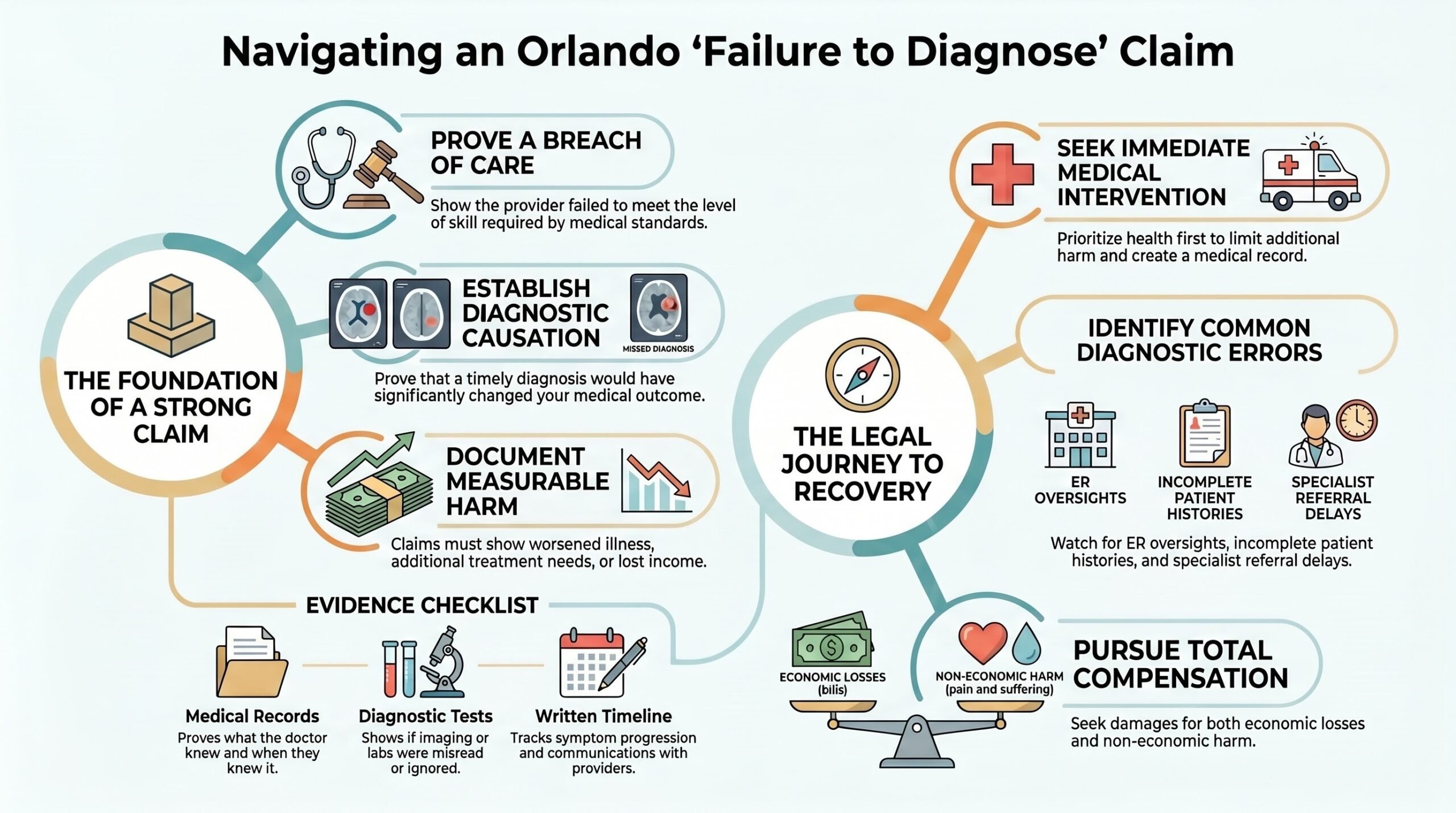
Because a missed diagnosis can alter the course of treatment and recovery, understanding how these claims work is vital if you’re considering legal action in Orlando. In these cases, you must show that a healthcare provider failed to act with the level of skill and attention that accepted medical standards require, and that this failure caused measurable harm.
OUR CONSULTATIONSARE FREE
START YOUR FREE CASE REVIEW

A failure to diagnose claim is a form of medical malpractice, but it focuses on whether timely recognition of a condition would likely have changed your outcome. Courts and insurers often examine records, test results, follow-up instructions, and expert opinions to evaluate diagnostic errors and their consequences. You may need to prove that the delay worsened your injury, increased treatment needs, or reduced your chance of recovery. By understanding these elements, you can make informed decisions, protect your rights, and pursue accountability in a way that honors both your well-being and others’ safety.
Common Causes of Orlando Failure to Diagnose
You may face a failure to diagnose when emergency room oversights cause providers to miss urgent warning signs, or when incomplete patient histories prevent them from seeing the full clinical picture. You can also suffer harm when diagnostic tests are misread, leading to incorrect conclusions and delayed treatment. In many cases, consultant referral delays further prolong the diagnosis, allowing your condition to worsen when timely intervention mattered most.
Emergency Room Oversights


Although emergency rooms are designed to make rapid decisions under pressure, oversights in that setting can still lead to serious diagnostic errors. When you seek help in an emergency room, you trust the staff to identify urgent conditions quickly and act with care. Yet triage failures, rushed evaluations, delayed imaging, and communication breakdowns can leave important symptoms unexplored.
You may see the harm in missed fractures, internal bleeding, infections, strokes, or heart complications when providers focus too narrowly on one complaint. These errors can worsen pain, delay treatment, and increase the burden on families who are trying to protect and serve loved ones. If an emergency room oversight caused a preventable injury, you are entitled to answers, accountability, and guidance about whether negligent medical care contributed to the diagnosis that was missed.
Incomplete Patient Histories
When a provider fails to gather a complete patient history, vital warning signs can be missed before any testing even begins. If you seek care for yourself or a loved one, you trust medical professionals to ask about prior illnesses, medications, allergies, symptoms, family patterns, and recent changes. Incomplete histories can cause providers to overlook serious conditions that require timely attention.
You may also face Cultural barriers that affect communication, especially when language differences, health beliefs, or fear of judgment limit what gets shared. A careful provider should ask clear follow-up questions, listen closely, and verify important details. When that does not happen, your diagnosis may be delayed, your condition may worsen, and your ability to keep serving your family and community can be restored. Accountability helps protect others too.
Misread Diagnostic Tests
Even if a provider gathers a complete history, the next step can still break down if diagnostic tests are read incorrectly. When that happens, you may not receive timely treatment, and your condition can worsen, while others depend on your strength and care. Errors in radiology interpretation can cause fractures, internal bleeding, tumors, or strokes to be overlooked, despite clear warning signs. Lab result discrepancies can also mislead a provider, especially when abnormal values are dismissed, entered inaccurately, or not compared with your symptoms.
You merit careful review of every image, slide, and report. A missed finding is not always a harmless oversight; it can reflect a preventable failure in the diagnostic process. When test results are misread, your health, your family, and your ability to serve others may suffer needlessly and deeply.
Specialist Referral Delays
Because primary care providers often serve as the gatekeepers to advanced evaluation, delays in referring you to a consultant can postpone a correct diagnosis long after serious symptoms appear. When your physician overlooks warning signs, minimizes persistent complaints, or fails to act urgently, harmful referral bottlenecks can keep you from needed testing and treatment.
You may also face problems outside the exam room. Insurance preauthorization rules, incomplete records, and limited availability of specialists can slow the process even when your doctor recognizes the need for expert care. Each lost week can allow an infection, fracture, neurological disorder, or cancer to worsen. If a preventable referral delay caused avoidable harm, you may have grounds to pursue accountability. Taking action can protect your recovery and help promote safer care for others in your community.
Legal Rights of Orlando Failure to Diagnose Injury Victims
Although a missed or delayed diagnosis can leave you facing serious medical and financial consequences, Florida law gives you the right to pursue compensation if a healthcare provider’s negligence caused your injury to deteriorate. You may seek damages for added treatment, lost income, pain, and reduced quality of life.
Your patient rights also include honest communication, access to records, and information needed to evaluate consent issues when pivotal findings weren’t explained.
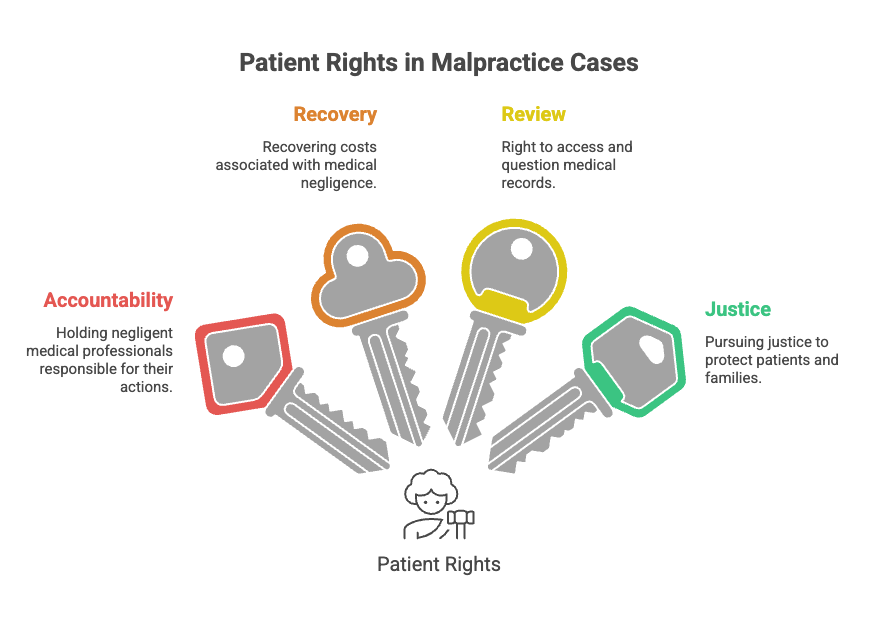
- You can hold negligent doctors, hospitals, or clinics accountable under Florida malpractice law.
- You may recover costs tied to worsening illness, disability, rehabilitation, and future medical care.
- You have the right to review medical records and question whether accepted standards were ignored.
- You can pursue justice in a way that supports your family and protects other patients.
When you assert these rights, you’re not only addressing your own losses. You’re also encouraging safer care, stronger professional accountability, and a healthcare system that better serves the community.
Steps to Take After an Orlando Failure to Diagnose Injury
After an Orlando failure to diagnose injury, you should seek immediate medical care to protect your health and create a clear record of your condition. You should also preserve crucial evidence, including medical records, test results, bills, and any communications with providers, because these materials can support your claim. Once you’ve taken these steps, you should contact an Orlando lawyer who can assess your case and explain your legal options.
Seek Immediate Medical Care
Seeking prompt medical care should be your first priority when a delayed or missed diagnosis has worsened your injury. If your condition feels severe, call 911 or arrange urgent transport to the nearest emergency department without delay. Tell providers about your early symptoms, how they changed, and any treatment you have already received.
You should also follow every medical recommendation carefully, including tests, specialist referrals, medications, and follow-up visits. Prompt attention can limit additional harm, improve your prognosis, and protect your ability to continue serving your family, work, and community. Ask clear questions so you understand your condition, your treatment plan, and warning signs that require immediate return care. When you act quickly and responsibly, you support your recovery and give medical professionals the best chance to stabilize your health and prevent complications.
Preserve Key Evidence
In the hours and days that follow, preserving vital evidence can strongly affect your ability to prove that a healthcare provider missed or delayed a proper diagnosis. Request complete copies of medical records, test results, imaging, prescriptions, discharge papers, and billing statements, then store them securely and organize them by date carefully.
You should also keep a written timeline of symptoms, appointments, advice received, and changes in your condition. Save emails, portal messages, voicemails, photographs, and receipts, because digital preservation helps protect details that might later disappear. Avoid altering original files, and document when and how you obtained each item to maintain a clear chain of evidence. If family members observed your decline or efforts to seek answers, ask them to write factual statements while memories remain fresh and reliable for later review.
Contact An Orlando Lawyer
Once you’ve gathered and preserved the records tied to a missed or delayed diagnosis, you should contact an Orlando failure to diagnose injury lawyer as soon as possible. Early action helps protect your rights, clarifies deadlines, and strengthens your ability to pursue accountability for the harm you’ve suffered.
During a legal consultation, you can explain what happened, share your records, and learn whether negligent medical care likely contributed to your injury. Your attorney can evaluate providers, identify missing tests or referrals, and determine what evidence is still needed. This guidance supports informed medical advocacy, especially when you’re focused on recuperating and caring for others. By seeking prompt legal help, you position yourself to pursue fair compensation, encourage safer practices, and help prevent similar diagnostic failures from harming additional families within your community.
How an Orlando Failure to Diagnose Injury Lawyer Can Help You
Because a missed or delayed diagnosis can worsen your condition and increase the cost of treatment, an Orlando failure to diagnose injury lawyer can help you identify what went wrong, determine whether a medical provider failed to meet the accepted standard of care, and build a claim supported by records, expert review, and documented losses.
An Orlando failure-to-diagnose injury lawyer helps uncover errors, evaluate negligence, and build a claim supported by records and expert review.
Your attorney examines charts, test results, timelines, and provider decisions to assess possible medical malpractice. Through patient advocacy, you gain a voice when hospitals, insurers, and defense teams minimize your concerns. A lawyer also calculates damages, manages deadlines, and prepares a clear case that reflects your service to family and community.
- Reviews records to uncover missed warning signs
- Consults experts to evaluate the standard of care
- Handles insurer communication and claim filings
- Pursues compensation for treatment costs and related losses
With focused legal guidance, you can make informed decisions, protect your rights, and seek accountability in a manner that honors both your recovery and your responsibility to those who depend on you.
Long-Term Effects of Orlando’s Failure to Diagnose Injuries
When a doctor fails to diagnose your injury, you may face lasting consequences that extend far beyond the initial harm. You could develop chronic pain or permanent mobility loss, conditions that can limit your independence and disrupt your daily life. You may also carry significant emotional and financial strain, as ongoing treatment, lost income, and uncertainty continue to affect your recovery.
Chronic Pain Development
If a provider fails to identify an injury promptly, ongoing inflammation, nerve irritation, or structural damage can continue unchecked and turn a treatable condition into chronic pain. When pain signals persist, your nervous system can become more reactive, a process called central sensitization. You may then feel severe pain from minor activity, delayed healing, and fatigue that affects your ability to care for others.
A missed diagnosis can also foster pain catastrophizing, where you expect the worst because answers and relief never came. That pattern can heighten stress, disturb sleep, and intensify your symptoms. Early, accurate diagnosis matters because it helps you protect your health, preserve your daily function, and remain present for the people who depend on your strength, compassion, and service. It also supports timely treatment, better coping, and a clearer path to recovery.
Permanent Mobility Loss
Delayed diagnosis can quietly turn a reversible injury into permanent mobility loss. When you do not receive timely imaging, testing, or a consultant referral, damaged nerves, joints, and soft tissues may not recover properly or at all. Over time, reduced strength and untreated instability can limit how safely you stand, walk, lift, and serve those who rely on you.
You may also face gait deterioration as your body compensates for pain or weakness. What begins as a slight limp can progress into chronic imbalance, falls, and greater joint damage. In severe cases, untreated trauma can lead to wheelchair dependence, especially when spinal, neurological, or orthopedic injuries worsen without intervention. Early recognition protects your independence, preserves function, and helps you continue to support your family, workplace, and community with confidence and safety every day.
Emotional And Financial Strain
Permanent mobility problems rarely affect only your body; they often place lasting pressure on your emotional health and financial stability. When a diagnosis comes too late, you may struggle with anxiety, grief, and isolation while trying to continue caring for your family and serving your community. Your Mental health can suffer as daily routines change, independence declines, and uncertainty grows.
At the same time, delayed treatment often increases medical expenses, reduces income, and forces difficult choices about housing, transportation, and ongoing care. You may face a growing Debt burden from surgeries, rehabilitation, medications, and missed work. These losses can disrupt your plans and limit your ability to help others. A qualified attorney can assess the full impact of these hardships and pursue compensation that supports your recovery and long-term stability.
Proving Liability in Orlando Failure to Diagnose Injury Cases
Because failure-to-diagnose claims often turn on what a competent physician should’ve recognized, proving liability in an Orlando injury case requires clear evidence that a medical provider departed from the accepted standard of care and caused your harm. To do that, you must show what symptoms, test results, or warning signs were present and why a reasonably careful doctor would’ve acted differently under similar circumstances.
Your case also depends on Diagnostic causation, which links the missed diagnosis to the injury you suffered. You need medical records, imaging, lab reports, and timelines that show how earlier detection likely would’ve changed the outcome. Expert testimony is often crucial because qualified physicians explain the standard of care, identify the breach, and connect that failure to your worsening condition. When you present a well-supported claim, you do more than pursue accountability for yourself. You also help protect future patients by encouraging attentive medical care and stronger professional responsibility throughout the community.
Dealing With Insurance Companies After an Orlando Failure to Diagnose Injury
When an insurer gets involved after an Orlando failure to diagnose injury, you should expect close scrutiny of your medical history, the timing of your symptoms, and the extent of your losses. You should respond carefully, because adjusters often look for statements they can use to reduce or deny compensation. Keep records organized, limit direct conversations, and avoid speculation about your condition or recovery.
You can serve your family and community best by protecting the resources needed for treatment and stability. That means approaching claim negotiation with discipline, supported by medical records, billing statements, wage documentation, and expert opinions when necessary. Insurers may raise questions about causation, preexisting conditions, or whether your damages exceed policy limits. You should not accept a quick settlement before understanding the full impact of the diagnostic failure. With informed guidance, you can present a clear demand, protect your rights, and pursue compensation that reflects the harm you have endured.
What to Expect During an Orlando Failure to Diagnose Injury Claim Process
You can expect your claim process to begin with an initial case evaluation, where your lawyer assesses the facts, your injuries, and the medical timeline. Your attorney will then review your medical records to identify missed warning signs and build evidence that the provider’s diagnostic negligence caused you harm. From there, you’ll move toward settlement negotiations, but if a fair resolution isn’t offered, your case may proceed to trial.
Initial Case Evaluation
Although every failure to diagnose claim turns on its own facts, the initial case evaluation usually begins with a careful review of your medical records, treatment timeline, and the harm that followed the missed or delayed diagnosis. During a free consultation, you can explain what happened, when your symptoms appeared, and how the delay affected your health, work, and family responsibilities.
Your attorney then uses that information for case screening, identifying whether a provider may have missed warning signs and whether the delay likely caused added injury. You can also expect questions about prior conditions, communications with doctors, and the care you received afterward. This early meeting helps you understand your options, the likely path of the claim, and how pursuing accountability may support your recovery and protect other patients in your community.
Medical Record Review
After that initial evaluation, the next step is a focused review of your medical records to determine what providers knew, what symptoms were documented, and whether the standard of care may have been breached.
Your attorney examines medical charting, test orders, triage notes, consultations, discharge instructions, and follow-up recommendations. This review looks for gaps, inconsistencies, billing discrepancies, note timing issues, and problems with handwritten legibility that may affect how your care was documented. You can expect requests for complete records from every facility and provider involved in your treatment.
As those records arrive, your legal team organizes them into a clear timeline, compares entries across departments, and identifies missing pages or unexplained changes. This careful process helps you understand the course of care and thoroughly prepares your case for the next stage of review.
Proving Diagnostic Negligence
Once the records have been organized, proving diagnostic negligence requires more than showing that a condition was missed. You must demonstrate that a reasonably careful physician, facing the same symptoms and history, would have ordered different testing, recognized warning signs, or made a timely diagnosis under accepted medical standards.
You also need to connect the delay to actual harm through medical causation. That means showing the missed diagnosis allowed the illness or injury to worsen, limited treatment options, or increased pain and disability. Your attorney typically relies on expert testimony from qualified physicians who can explain what should have happened and why the error mattered. By building a clear, evidence-based claim, you help protect your own future while promoting safer care for other patients and the wider community you serve with compassion daily.
Settlement Or Trial
If the evidence shows that a delayed diagnosis caused measurable harm, your claim may resolve through settlement, but you should still prepare as though trial remains possible. Your lawyer will evaluate settlement dynamics by reviewing medical records, expert opinions, damages, and the insurer’s willingness to negotiate fairly.
You should expect candid advice on offers, risks, and timing, so you can choose a path that supports your family and honors the care others depend on you for. Strong trial preparation often improves settlement leverage because the defense sees you’re ready to prove negligence before a jury. If negotiations stall, your attorney will organize witnesses, exhibits, and expert testimony, then present a clear narrative linking the missed diagnosis to avoidable injury. Throughout the process, you remain informed, purposeful, and prepared to pursue accountable results for everyone affected.
Compensation for Orlando Failure to Diagnose Injury Damages
Pursuing compensation for failure to diagnose injury damages in Orlando requires clear proof that a medical provider’s delay or misdiagnosis caused measurable harm. To recover, you must show how a delayed diagnosis, including missed fractures, allowed your condition to worsen and created avoidable complications that changed your treatment course.
Your claim should connect the provider’s error to specific losses through records, imaging, expert review, and testimony from those who witnessed your decline. You can strengthen your case by documenting added procedures, longer recovery, reduced mobility, infection, permanent impairment, and the disruption the injury caused in your daily responsibilities. In serious cases, compensation also reflects the need for continuing care and support when the failure to diagnose leaves lasting limitations. By taking action, you not only protect your own future, but also help promote safer medical practices for other patients in Orlando. A careful legal review can clarify whether your facts support a strong claim.
Economic vs Non-Economic Damages in Orlando Failure to Diagnose Cases
In an Orlando failure to diagnose case, you may seek economic damages for measurable losses such as medical bills, lost income, and future treatment costs. You may also pursue non-economic damages for harder-to-measure harm, including pain, suffering, emotional distress, and loss of enjoyment of life. To recover full compensation, you must show clear evidence of both categories and establish the value of your losses with medical records, financial documents, and credible testimony.
Economic Damages Explained
Consider the financial toll a delayed or missed diagnosis can cause. Economic damages address the measurable losses you sustain when a medical provider’s error worsens your condition. These damages often include additional hospital bills, surgery costs, rehabilitation expenses, medications, diagnostic testing, and transportation for treatment.
You may also recover lost wages if your injury keeps you from working or limits your ability to serve your family and community. When the harm affects your long-term capacity to work, your claim may include reduced future earnings. In many cases, you can seek compensation for in-home care, medical equipment, and other necessary out-of-pocket costs tied to the delayed diagnosis. By documenting these losses carefully, you help your attorney present a clear demand that reflects the full economic impact of the provider’s negligence.
Non-Economic Losses Overview
Justice also requires acknowledging losses that do not appear on a bill or pay stub. When a delayed diagnosis worsens your condition, you may endure ongoing pain, emotional strain, anxiety, and reduced enjoyment of daily life. These harms matter because they affect how you serve your family, care for others, and participate in your community.
Non-economic losses address the human impact of medical negligence. You may face sleep problems, depression, loss of companionship, physical limitations, and profound life disruption that changes routines and relationships. Pain valuation helps describe the seriousness of what you experience, even when no invoice exists. In Orlando, failure to diagnose cases results in recognition of dignity, suffering, and the personal cost of lost independence. They reflect the real burdens you carry beyond financial expense and daily responsibilities.
Proving Damage Value
Because damage claims must be supported with credible proof, you’ll need evidence that shows both what the delayed diagnosis cost you financially and how it changed your daily life. Economic damages usually include medical bills, rehabilitation expenses, lost income, reduced earning capacity, and documented future costs tied to ongoing care. Careful damage quantification often relies on records, invoices, employment data, and expert opinions.
Non-economic damages measure harder-to-price losses, including pain, emotional distress, disability, and loss of enjoyment of life. You strengthen these claims when you present treatment notes, testimony from family members, and your own detailed account of daily limitations. By organizing clear evidence, you help your attorney show how the diagnostic delay harmed your ability to work, care for others, and continue serving your family and community.
When an Orlando Failure to Diagnose Injury Case Goes to Trial vs Settlement
Although many Orlando failure-to-diagnose injury cases resolve through settlement, a claim may go to trial when the parties dispute liability, the extent of harm, or the value of future medical and financial losses. If insurers minimize your suffering or deny causation, trial preparation can strengthen your position and improve your leverage in settlement negotiations.
You should weigh the certainty of settlement against the risks and demands of trial. A fair settlement can provide timely resources for care, protect your family, and let you focus on recovery and serving others. Trial may become necessary when the defense refuses accountability, challenges expert opinions, or ignores the full impact of delayed diagnosis. Your lawyer will assess evidence, witnesses, and jury dynamics to determine whether a courtroom verdict may better reflect your losses. By preparing every case thoroughly, you create pressure for meaningful offers while preserving your right to present the truth before a jury if justice requires it.
The Statute of Limitations for Orlando Failure to Diagnose Injury Cases
Whether your case resolves through settlement or proceeds to trial, filing within Florida’s statute of limitations remains a strict legal requirement. In an Orlando failure to diagnose injury claim, you must track filing deadlines carefully, because missing them can bar recovery entirely, even when the medical error caused serious harm.
Florida law applies specific time limits to medical negligence cases, and those limits may begin when you discovered, or reasonably should’ve discovered, the injury. Certain nuances of the statute can affect that timeline, including delayed discovery, fraud, or concealment. A wrongful death claim may follow different timing rules than an injury claim, which makes accuracy crucial.
If you’re pursuing accountability to protect your family and support others facing similar harm, timeliness matters. Preserving records, documenting symptoms, and understanding how Florida calculates time can strengthen your position. Careful attention to deadlines helps you safeguard your right to seek justice and meaningful compensation under state law.
When to Contact an Orlando Failure to Diagnose Injury Lawyer
Often, you should contact an Orlando failure to diagnose injury lawyer as soon as you suspect a missed, delayed, or incorrect diagnosis worsened your condition. Prompt action helps preserve records, protect your rights, and support early intervention before crucial evidence disappears. If your symptoms progressed, your treatment changed unexpectedly, or another provider identified a condition that should have been caught sooner, you should seek legal guidance without delay.
You should also reach out when medical bills rise, your recovery becomes harder, or your family takes on new caregiving responsibilities because of the diagnostic error. A timely consultation can help you understand whether the delay caused avoidable harm and what documentation may strengthen your claim. By acting promptly, you serve both your own well-being and the needs of those who depend on you. This step also advances patient advocacy by encouraging accountability and helping protect future patients from similar failures within the healthcare system and broader community.
Why You Need an Experienced Orlando Failure to Diagnose Injury Lawyer
Because failure-to-diagnose claims turn on complex medical evidence and strict procedural rules, you need an experienced Orlando failure to diagnose injury lawyer to assess the error, connect it to your worsened condition, and build a claim that can withstand scrutiny. Your attorney reviews records, timelines, consultations, and test results to identify where medical miscommunication or delayed action changed your outcome.
You also need counsel who can work with experts to explain how competent providers should have responded to symptoms, imaging, and lab results, and how they should have applied diagnostic algorithms. That experience matters when insurers dispute causation or argue that your condition would have progressed anyway. A seasoned lawyer can present the full human impact of the delay, including added treatment, disability, lost income, and the ways your injury limits your ability to care for others. By managing deadlines, notice requirements, and evidentiary demands, your lawyer protects your claim and gives you the structure needed to pursue accountability and meaningful recovery.
How to Choose the Right Orlando Failure to Diagnose Injury Lawyer for Your Case
When you’re choosing an Orlando failure to diagnose injury lawyer, focus on experience with medical negligence claims, access to qualified expert witnesses, and a clear record of handling cases involving delayed diagnosis or missed warning signs. You should review results in similar matters and ask how the lawyer builds a claim that protects your family and supports your long-term recovery.
During Client interviews, pay attention to how clearly the lawyer explains strategy, deadlines, and likely challenges. You need someone who listens carefully, answers direct questions, and treats your concerns with respect. Ask who will manage your file, how often you’ll receive updates, and what documentation will strengthen your case.
You should also compare Fee structures before making a decision. Confirm whether the firm works on contingency, what costs may arise during litigation, and how expenses are handled if the case does not succeed. Careful evaluation helps you choose counsel who serves others through diligent, ethical advocacy.
About The Law Offices of Anidjar & Levine
After you’ve considered the qualities that matter in legal representation, it helps to look closely at The Law Offices of Anidjar & Levine and how the firm serves people affected by medical negligence. When you pursue a failure-to-diagnose claim, you need a legal team that values service, responsiveness, and careful preparation. This firm emphasizes direct communication, practical guidance, and advocacy tailored to your circumstances.
As you review the firm’s history, you can see a sustained commitment to helping injured clients seek accountability and financial recovery. You benefit from a team that understands how delayed diagnoses can disrupt your recovery, your family, and your ability to care for others. The firm’s approach focuses on building strong cases, explaining each step clearly, and pursuing fair results through negotiation or litigation.
Client testimonials also offer insight into how the firm treats people with respect, urgency, and professionalism during difficult periods. That perspective can help you make a confident, informed decision.
Frequently Asked Questions
How Much Does a Failure to Diagnose Lawyer Cost Upfront?
Usually, you won’t pay a failure-to-diagnose lawyer an upfront retainer because most work on contingency. You’ll typically receive a clear cost breakdown showing how fees, court costs, medical records, and expert expenses may come from a settlement or verdict. You should ask whether you owe anything if the case doesn’t succeed. That clarity helps you protect your resources while pursuing accountability and support for those harmed by negligence.
Can I Switch Lawyers if I Am Unhappy With Mine?
Yes, you can switch lawyers if you’re unhappy with your current representation. Your client’s rights generally allow you to change counsel at almost any stage, though you should review your fee agreement and case status first. You should also consider how the change may affect deadlines, costs, and continuity. If you proceed carefully, you can protect your interests while choosing counsel better suited to advance your goals and serve others well.
Will My Medical Records Remain Private During the Case?
Yes, your medical records usually remain private during the case, and the law limits record access to relevant information. You can expect medical confidentiality protections, although you may need to share records that relate directly to your injury claim. Courts, insurers, and attorneys must handle that information carefully. If you serve others through this process, protecting your privacy still matters, and your lawyer should work to limit unnecessary disclosure throughout the case.
Can Family Members File a Claim After a Wrongful Death?
Yes, you can often file a claim after a wrongful death if you qualify under state law. You may act as a surviving spouse, child, parent, or estate representative, depending on the circumstances. Your claim can seek bereavement compensation and other losses tied to the death. You must also act within the statute of limitations, because missing that deadline can bar recovery. Prompt legal guidance helps you protect your family’s interests.
Do Most Failure to Diagnose Cases Require Expert Medical Witnesses?
Yes, you’ll usually need expert medical witnesses in failure-to-diagnose cases. They help you show what the standard of care required, how the provider departed from it, and how that failure caused harm. In most situations, medical experts explain intricate records and timelines so a judge or jury can understand them clearly. If you want to serve your family well, strong expert testimony often makes your claim far more credible.
—————————
If a failure to diagnose caused your injury, you shouldn’t have to manage the consequences alone. You need clear guidance, prompt action, and a legal team that understands how to build a strong claim.
By working with an experienced Orlando Medical Malpractice Lawyer, you can protect your rights and pursue the compensation you may be entitled to.
The Law Offices of Anidjar and Levine can evaluate your case and help you move forward with confidence.

