
A Naples car accident fractures and broken bones lawyer can help injured people document how a crash caused their injuries, assess available insurance coverage, and pursue compensation when another party’s negligence was responsible. Fractures may require surgery, rehabilitation, or extended care and can cause lasting pain or reduced mobility. Medical records, imaging, wage documentation, and collision evidence can support a claim. Naples Personal Injury Lawyer services from The Law Offices of Anidjar and Levine can explain your legal options and guide you through the claims process.
Main Takeaways
- A Naples car accident lawyer can assess whether another party’s negligence caused your fracture and identify potentially responsible parties.
- Medical records, imaging, and treatment notes can document the fracture, its severity, recovery, and ongoing limitations.
- Preserve crash evidence, including photographs, witness details, police reports, and vehicle damage records.
- A claim may seek compensation for reasonable medical expenses, lost income, reduced earning capacity, pain, and disrupted daily activities.
- Follow medical advice and keep dated records of treatment, symptoms, work absences, and recovery needs.
How We Can Help With Your Naples Car Accident Fractures & Broken Bones Injury Claim
After a Naples car accident, fractures and broken bones may require extensive treatment and disrupt a person’s ability to work and manage daily activities. Legal support can help an injured person address the practical demands of a claim while focusing on recovery. A lawyer can review available records, identify responsible parties, and explain the steps involved in seeking compensation.
The firm can help gather medical bills, employment documentation, and other records showing how the injury has affected the person’s life. Insurance coordination may include communicating with insurers, submitting required information, and responding to requests for clarification. This organized approach can reduce administrative burdens and help prevent avoidable delays.


Counsel can also support treatment planning by documenting recommended care and related expenses without directing medical decisions. The legal team can assess settlement proposals, explain potential options, and represent the client in negotiations or court proceedings when appropriate. Throughout the process, clear updates and careful preparation can help clients make informed decisions and pursue a fair resolution.
Understanding Naples Car Accident Fractures & Broken Bones Injury Cases
OUR CONSULTATIONSARE FREE
START YOUR FREE CASE REVIEW

Fracture and broken-bone claims arising from Naples car accidents depend on the injury’s severity, its effect on daily functioning, and the evidence connecting it to the collision. Medical records help establish the diagnosis, treatment plan, and expected recovery. Imaging studies and physician assessments may describe the fracture’s location, displacement, and intricacy. Fracture classification can clarify the level of care required and whether surgery, immobilization, or rehabilitation is appropriate.
Bone recovery varies by person and injury. Some fractures resolve with conservative treatment, while others require extended care and may leave lasting limitations. A claim may account for reasonable medical expenses, lost income, and the effect of the injury on ordinary activities. Consistent follow-up care can document progress, complications, and continuing needs. Clear records also help distinguish accident-related harm from unrelated conditions. Careful evaluation supports a fair assessment of the injured person’s needs and helps preserve resources for recovery and family responsibilities.
Don’t Wait. Call Our Florida Personal Injury Lawyers Now!
Common Causes of Naples Car Accident Fractures & Broken Bones


Fractures and broken bones in Naples car accidents often result from the force of high-speed collisions, which can subject occupants to sudden, severe impacts. Side-impact and rollover crashes may also cause serious injuries when vehicles are struck from the side or occupants are thrown against interior surfaces. Pedestrian collisions pose a distinct risk, as people outside a vehicle have little protection from the impact.
High-Speed Collisions
High-speed collisions can place extreme force on the body, making broken bones a common and serious injury in Naples car accidents. High-speed impact forces may cause fractures when occupants strike interior surfaces, are restrained by seat belts, or experience abrupt deceleration. The severity depends on factors such as collision speed, vehicle design, and the occupant’s position and health.
Crash energy transfer helps explain why these injuries occur. During a rapid stop, the vehicle’s motion changes suddenly, and force can pass through the body even when safety equipment reduces the risk of more severe harm. Fractures may affect the ribs, arms, legs, pelvis, or spine and can require surgery, rehabilitation, and extended support. Prompt medical assessment can identify injuries that aren’t immediately apparent and guide treatment and recovery.
Side-Impact Crashes
Side-impact crashes can cause fractures when a vehicle’s side offers limited protection from the force of another car or object. These collisions often occur at intersections when a driver fails to yield, runs a red light, or misjudges another vehicle’s speed. A crash may also happen when a driver turns across oncoming traffic or changes lanes without checking adjacent vehicles.
The impact can push a door inward, creating Door Intrusion that reduces occupant space and increases the risk of broken ribs, arms, hips, or legs. Side Airbags may help cushion occupants, but they cannot prevent every injury, particularly in severe collisions. Prompt medical assessment can identify fractures that are not immediately apparent. Careful investigation may clarify how the crash occurred and help injured people pursue appropriate support and compensation.
Rollover Accidents
Rollover accidents can cause serious fractures when a vehicle overturns, and occupants are thrown against the interior or restrained by seat belts during the crash. These collisions may occur when a driver loses control, a vehicle strikes a curb, or another impact causes it to tip onto its side or roof. The force can break arms, legs, ribs, and other bones. Roof crush may reduce the space available to occupants and increase the risk of head, neck, or spinal injuries, alongside fractures. Seat belts can help keep people inside, but the restraint forces may also cause injuries during violent movement. Ejection injuries are especially severe when occupants are thrown from the vehicle. Prompt medical care can identify fractures, guide treatment, and support recovery after a rollover.
Pedestrian Collisions
When a vehicle strikes a pedestrian, the impact can cause fractures ranging from broken limbs to severe injuries to the pelvis and ribs. These collisions may occur when drivers fail to yield, turn without checking for people crossing, or become distracted by phones and other hazards. Poor lighting, speeding, and impaired driving can further reduce a driver’s ability to detect and avoid a pedestrian. Crosswalk Safety depends on attentive drivers who obey signals, yield at marked crossings, and approach intersections cautiously. Pedestrian Visibility also matters, especially at night or in bad weather, when dark clothing and limited street lighting can make people harder to see. Fractures may require surgery, rehabilitation, and extended care. Prompt medical evaluation and careful documentation can help establish the nature and extent of injuries after a collision.
Legal Rights of Naples Car Accident Fractures & Broken Bones Injury Victims
People who suffer fractures or broken bones in a Naples car accident may have the right to seek compensation from the party whose negligence caused the collision. A claim may address reasonable medical expenses, lost income, reduced earning capacity, and the physical pain and disruption associated with recovery. Available Insurance coverage can affect the sources and limits of compensation, while comparative negligence may reduce recovery if an injured person shares responsibility under applicable law.
Broken bones from a Naples car accident may warrant compensation for medical costs, lost income, and recovery-related pain.
Victims may need to protect their rights while managing treatment and family responsibilities.
A careful review can help clarify the support available:
- Medical records document injuries and the care required to regain mobility.
- Wage records may show how missed work affects household stability.
- Evidence of lasting limitations can explain changes to daily responsibilities.
- Timely legal guidance can help families assess options without overlooking important deadlines.
Each case depends on its facts, available evidence, and applicable law. A qualified attorney can evaluate potential claims, communicate with insurers, and help injured people pursue fair compensation while preserving their ability to focus on recovery and care for those who depend on them.
Why Do Naples Car Accident Fractures & Broken Bones Injuries Happen?
Fractures and broken bones in Naples car accidents often occur when a collision’s force drives occupants against vehicle structures, safety restraints, or other objects. Injury severity and location depend on impact direction, vehicle speed, occupant position, and whether the person was restrained. A side impact may compress the chest or pelvis, while a frontal collision can force knees, arms, or legs into the dashboard or door. Sudden twisting and bracing can also place damaging stress on bones.
Bone density influences how much force a bone can withstand. Older adults and people with certain medical conditions may experience fractures in lower-impact crashes, although serious trauma can break healthy bones as well. Medical providers assess fracture patterns, including the bone affected, the break’s location, and whether fragments have shifted. These details can help explain how the collision’s forces affected the body and guide appropriate treatment. Some fractures involve nearby joints, nerves, or blood vessels, increasing the injury’s complexity.
What Should You Do After a Naples Car Accident Fracture or Broken Bone Injury?
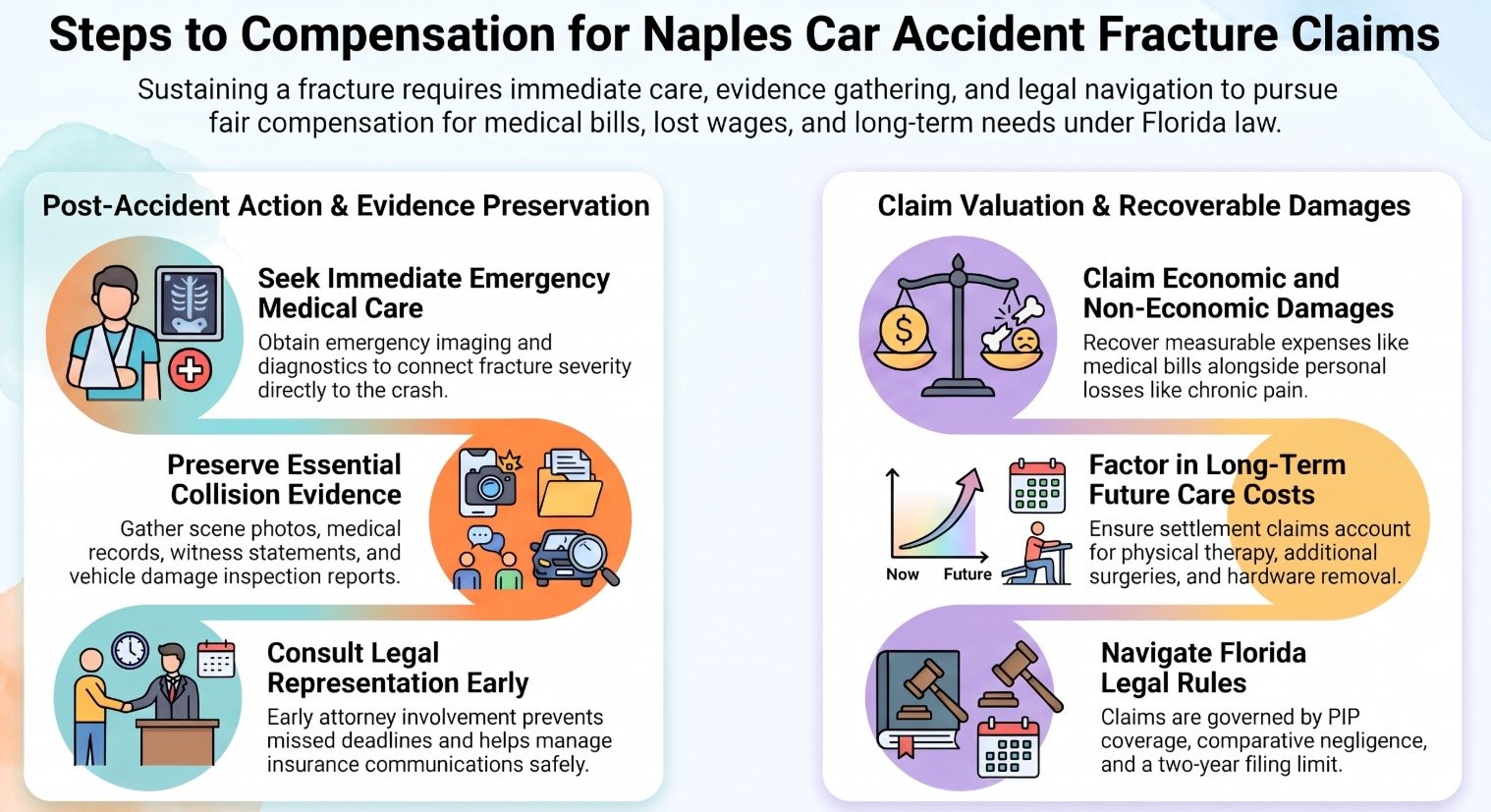
After a Naples car accident causes a fracture or broken bone, the injured person should seek immediate medical care, even if the injury initially seems manageable. They should document the accident by preserving photographs, medical records, and relevant contact information. A lawyer can clarify legal options and protect the injured person’s interests.
Seek Immediate Medical Care
Anyone suspected of suffering a fracture or broken bone in a Naples car accident should seek immediate medical care, even if the injury initially seems manageable. A prompt assessment can identify serious damage that may not be obvious, including internal injuries or complications affecting circulation and nerves. If the injured person has severe pain, visible deformity, heavy bleeding, numbness, or difficulty moving, emergency services should be contacted rather than attempting to transport them without guidance. At the Emergency room, clinicians can examine the injury and use imaging to determine its location and severity. They may provide pain relief, wound care, and fracture stabilization while arranging further treatment. Following medical instructions and attending recommended follow-up appointments can support recovery and reduce the risk of avoidable complications. Medical care should take priority after a collision.
Document The Accident
When it is safe, documenting the accident can help preserve important evidence about how a Naples collision occurred and the resulting injuries. Scene documentation may include photographs of vehicle positions, damage, road conditions, traffic signs, and visible hazards. If the injured person cannot take photographs, a trusted companion can assist without delaying medical care or creating further risk. Also record names and contact details for witnesses, along with the other driver’s information and insurance details. Keeping copies of the police report, medical records, discharge instructions, and repair estimates can help organize relevant information. An incident timeline should note when the collision occurred, what happened beforehand, and when symptoms began or changed. Accurate, dated records may help clarify events and support consistent communication with medical providers and insurers.
Contact A Lawyer
A Naples car accident lawyer can help an injured person understand the legal issues that may arise from fractures or broken bones and identify steps for protecting a potential claim. After obtaining necessary medical care, the injured person may contact an attorney to discuss the collision, treatment, and resulting limitations. Prompt legal guidance can help preserve records, identify relevant insurance coverage, and clarify deadlines that may affect a claim. A lawyer may also communicate with insurers, allowing the injured person to focus on recovery and family responsibilities. During a Free consultation, the attorney can review available information and explain possible next steps without promising a particular outcome. Asking about attorney availability, fees, and experience with serious injury claims can help you determine whether the lawyer can provide responsible, attentive representation throughout the process.
Critical Evidence in a Naples Car Accident Fractures & Broken Bones Injury Case
In a Naples fracture injury case, reliable evidence can help establish how the collision occurred and the seriousness of the harm.
Crucial evidence may include:
- Accident-scene photographs showing the conditions and aftermath.
- Medical records documenting fractures, treatment, and recovery.
- Witness statements describing what they saw.
- Vehicle damage evidence that may help clarify the collision’s force and impact.
Accident Scene Photographs
Photographs taken at the crash scene can preserve evidence that may disappear as vehicles are moved, debris is cleared, and road conditions change. Images of vehicle damage, broken glass, skid marks, traffic signals, and nearby signs may help clarify how a collision occurred. Wide views can establish the vehicles’ positions and the surrounding layout, while close views can document specific damage or hazards. Consistent camera angles and images from multiple distances can make details easier to assess. Photo metadata, including timestamps and location information when available, may help establish when and where images were captured. Photographs should be preserved in their original form, with copies maintained securely. When gathered promptly and carefully, these records can provide a clearer account of the event and help reviewers evaluate the available evidence.
Medical Records
Beyond scene images, medical records can document the nature and extent of fractures sustained in a Naples car accident. Emergency department notes, imaging reports, surgical records, and follow-up evaluations may show when a doctor diagnosed an injury and how treatment progressed. These documents can also connect reported symptoms with clinical findings and explain restrictions, rehabilitation needs, or lasting impairment. Organized records present a clear timeline, including dates of care, providers, diagnoses, and treatment decisions. Consistent records may help insurers, attorneys, and courts evaluate the injury and related losses. If an entry is incomplete or inaccurate, request corrections through the appropriate medical office process rather than altering it yourself. Careful review can help confirm the file reflects the treatment received and supports a fair assessment of the injured person’s needs.
Witness Statements
Witness statements can clarify how a Naples car accident occurred and what happened immediately afterward. Independent observers may describe traffic signals, vehicle movements, road conditions, or actions taken after the collision. Their accounts can help establish how the crash happened and whether the injured person received prompt assistance.
Witness credibility depends on factors such as the observer’s vantage point, ability to recall events, and consistency over time. A careful review can distinguish firsthand observations from assumptions or information learned later. Investigators may also compare accounts with other available evidence, including medical records describing the fractures and treatment.
Statement preservation is important because memories can fade and details may change. Promptly recording each witness’s contact information and account can support accurate review. Ask respectful, neutral questions to preserve reliable information while avoiding pressure or leading suggestions. These steps can help injured people and their families seek a fair, evidence-based resolution.
Vehicle Damage Evidence
When a collision causes fractures or broken bones, vehicle damage can help explain the forces involved and how the impact occurred. Photographs of damaged vehicles may document impact points, intrusion, and the direction of force. These details can help investigators assess whether the collision mechanics match the reported injuries, though vehicle damage alone cannot establish how a fracture occurred.
Vehicle repair estimates, inspection records, and pre-repair photographs can preserve important evidence. Crash data analysis may also reveal information such as speed, braking, or changes in vehicle movement, when data are available and properly interpreted. Collectively, these sources can help clarify disputed accounts and support a careful review of the crash. Promptly preserving vehicles and records can help those evaluating the incident and ensure relevant evidence remains available.
Long-Term Effects of Naples Car Accident Fractures & Broken Bones Injuries
Fractures and broken bones from a car accident may cause effects that persist long after the initial injury has recovered. Chronic pain and reduced mobility can interfere with work, daily activities, and independence. Some individuals also experience lasting complications that require continued medical care or rehabilitation.
Chronic Pain
Chronic pain can persist long after a broken bone from a Naples car accident has mended, limiting movement and interfering with sleep, work, and daily activities. The discomfort may result from nerve injury, changes in surrounding tissue, or complications during recovery. In some cases, pain sensitization causes the nervous system to respond more strongly to ordinary sensations, making symptoms difficult to predict or control. Sleep disruption can further affect concentration, mood, and a person’s ability to meet daily responsibilities. Ongoing pain may require continued medical evaluation, medication, physical therapy, or other treatment tailored to the injury. Accurate records of symptoms, appointments, and treatment recommendations can help explain the condition’s lasting effects. When another party’s negligence caused the collision, documentation may also support a claim for related medical costs and other losses.
Reduced Mobility
Reduced mobility can remain after a broken bone has mended, particularly if the injury affected a joint, required surgery, or led to stiffness and muscle weakness during recovery. A person may have difficulty walking, climbing stairs, lifting objects, or completing routine tasks without assistance. These limits can affect work, caregiving, and participation in community life, making practical support important during rehabilitation. Physical therapy may help restore strength, flexibility, balance, and coordination through exercises suited to the injury and recovery progress. Mobility aids, such as canes or walkers, may provide stability while movement improves. Adaptive equipment, including grab bars or modified utensils, can make daily activities safer and more manageable. With appropriate support, injured individuals can work toward greater independence while respecting their physical limits and medical guidance.
Lasting Complications
Although many broken bones mend with appropriate treatment, some Naples car accident injuries lead to lasting complications. A fracture that damages a joint may contribute to post-traumatic arthritis, causing persistent pain, stiffness, and reduced function. These effects can make routine tasks difficult and may require ongoing medical care, physical therapy, or medication. Nerve damage is another possible consequence, particularly when a bone fragment or swelling affects nearby nerves. Symptoms may include numbness, tingling, weakness, or chronic pain, and their severity can vary. Some people also experience improper bone recovery, limited movement, or lasting changes in strength. Medical evaluations help identify these problems and guide treatment over time. When complications interfere with work, caregiving, or other responsibilities, documentation of symptoms and care may help clarify the injury’s continuing impact.
Proving Liability in Naples Car Accident Fractures & Broken Bones Injury Cases
Proving liability in a Naples car accident case involving fractures or broken bones requires evidence that another party’s negligence caused the collision and the resulting injuries. Relevant evidence may include police reports, photographs, witness statements, traffic camera footage, and vehicle damage records. These details can help establish how the crash occurred and whether a driver failed to follow traffic laws or exercise reasonable care.
Accident reconstruction analysis may clarify vehicle movements, impact points, and contributing conditions when accounts conflict. Medical records, diagnostic images, and treating providers’ opinions can link the collision to specific fractures and document the required care. Promptly preserving evidence is important because physical conditions and witness recollections may change over time.
A comparative negligence strategy may be necessary when each party’s conduct is questioned. Florida’s fault rules can affect recovery if an injured person is found partly responsible. Careful investigation helps distinguish supported conclusions from assumptions and presents a clear account of responsibility. This process can also help protect injured people’s ability to seek fair accountability while supporting their recovery and continued participation in family and community life.
Dealing With Insurance Companies After a Naples Car Accident Fractures & Broken Bones Injury
After a Naples car accident causes fractures or broken bones, insurance companies may request statements, medical records, and other information while evaluating a claim. These requests can involve several insurers, including the at-fault driver’s carrier and the injured person’s own provider. Careful communication helps ensure the information is accurate, relevant, and consistent with the documented injury and treatment.
People may be asked to provide recorded statements soon after a collision, when pain, medication, or uncertainty can affect their recollection. Before responding, the injured person can clarify the request’s purpose and consider seeking legal guidance. Share medical records through appropriate channels, with attention to privacy and relevance. Incomplete or inaccurate symptom descriptions may complicate discussions about the injury.
Coverage coordination can also matter when health insurance, medical payments coverage, or other benefits may apply. Review policy terms and keep copies of correspondence to identify available resources and reduce confusion. Respectful, organized communication supports a fair evaluation while letting injured people focus on recovery and their responsibilities to others.
Don’t Wait. Call Our Florida Personal Injury Lawyers Now!
What to Expect During a Naples Car Accident Fractures & Broken Bones Injury Claim Process
A Naples car accident fractures and broken bones claim typically begins with an initial review of liability, damages, and available insurance coverage. The process then involves gathering medical records and other evidence to document the injury, followed by settlement negotiations with the insurer. If the parties cannot reach an agreement, a lawsuit may be filed, and the claim proceeds toward resolution.
Initial Claim Review
During the initial claim review, a Naples car accident lawyer examines how the collision occurred, the available evidence, and the medical records documenting fractures or broken bones. This review helps clarify potential responsibility, identify relevant insurance coverage, and assess whether the injured person may pursue compensation. Claim eligibility can depend on factors such as how the crash happened, the parties involved, and applicable deadlines. An attorney consultation gives the injured person a chance to explain the circumstances, ask questions, and understand next steps. The lawyer may also discuss general categories of losses, including treatment costs, lost income, and effects on daily activities. At this stage, the review establishes a practical framework for the claim and identifies issues requiring further attention, without guaranteeing an outcome or settlement.
Medical Evidence Gathering
Once the initial review identifies the records needed to evaluate a broken-bone claim, medical evidence gathering begins. The process may include collecting emergency department notes, treatment records, prescription information, and follow-up care documentation. Diagnostic imaging, such as X-rays, CT scans, or MRI studies, can help establish the fracture’s location, severity, and healing progress. Orthopedic evaluations may explain whether surgery, immobilization, or rehabilitation was required and identify any lasting limitations. Physical therapy and other providers’ records can further show how the injury affected daily activities and recovery. The injured person’s consistent attendance at appointments and adherence to medical instructions may also be documented. With appropriate authorization, the claim reviewer can request records from relevant providers and organize them chronologically, helping create a clear account of the injury and its treatment.
Settlement Negotiations
With medical records organized, settlement negotiations can begin by presenting the evidence of the fracture, its treatment, and its effects on the injured person’s daily life. The claim may also account for future care, lost income, and practical support needed during recovery. A Demand strategy should connect documented losses to a clear settlement request, supported by medical opinions, bills, employment records, and evidence of lasting limitations. Insurers may review the materials, question particular costs, or propose a different amount. Careful responses should address those concerns with accurate documentation rather than speculation. Mediation preparation can help the injured person understand the issues, evaluate offers, and communicate priorities through counsel. Negotiations may involve several exchanges before the parties reach terms they consider acceptable. Any proposed agreement should be reviewed for its scope and effect on the claim.
Lawsuit and Resolution
If settlement negotiations do not resolve a fracture claim, the injured person may file a lawsuit in the appropriate court. The complaint identifies the parties, describes the crash and injuries, and states the compensation sought. The defendant may respond, after which both sides exchange records, question witnesses, and gather medical and financial evidence. Courtroom preparation includes organizing treatment documentation, consulting qualified experts, and preparing testimony about how the fracture affects daily activities and future care. If the case proceeds to trial, a judge or jury may determine liability and damages. Some disputes resolve earlier through mediation or a negotiated agreement. After a decision, the parties must follow applicable court procedures and deadlines. Depending on the circumstances, you may have appeal options to challenge certain legal errors, though an appeal does not guarantee a different result.
Compensation for Naples Car Accident Fractures & Broken Bones Injury Damages
A fracture from a Naples car accident can lead to substantial medical expenses, lost income, and lasting limitations. Compensation may cover the documented effects of the injury and support recovery without adding strain on the injured person or family. Relevant damages can include emergency treatment, surgery, hospitalization, rehabilitation, prescription medication, and assistive devices. When a fracture keeps you out of work, records of missed hours and reduced earnings may help establish the financial impact.
Some injuries require continuing treatment or limit daily activities after the bone mends. Future care needs may include follow-up appointments, physical therapy, additional procedures, or accommodations at home and work. Careful financial planning can account for these anticipated needs and help prevent a settlement from overlooking long-term consequences. Medical records, provider assessments, employment documentation, and receipts can help substantiate a claim. A thorough evaluation considers the injury’s course, the treatment already received, and the support likely to be needed. This process helps ensure the injured person’s recovery needs are clearly presented.
Economic vs Non-Economic Damages in Naples Car Accident Fractures & Broken Bones Cases
Economic damages may include medical bills, rehabilitation costs, lost income, and other measurable expenses caused by fractures or broken bones. Non-economic damages address losses that are harder to quantify, such as pain, emotional distress, and reduced quality of life. Medical records, receipts, wage statements, and other supporting documents can help establish the extent of these losses.
Economic Damages
When a Naples car accident causes a fracture or broken bone, the injured person may seek compensation for both financial losses and personal harm. Economic damages address measurable costs and income losses linked to the injury. They may include emergency care, surgery, hospital stays, prescription medication, rehabilitation, medical equipment, and reasonably anticipated future treatment. Records such as bills, payment statements, and medical opinions can help establish these expenses.
Lost wages may also be recoverable when recovery prevents the injured person from working. If the fracture limits the ability to perform a job or reduces future work opportunities, diminished earning capacity may be considered. Pay records, employer statements, and vocational or medical assessments can support these claims. Careful documentation clarifies the financial impact and supports a fair evaluation of the compensation sought for the injured person.
Non-Economic Damages
Beyond documented expenses and lost income, a person with fractures or broken bones from a Naples car accident may seek non-economic damages for the injury’s personal effects. These damages address harms without a fixed price, including physical pain, Emotional distress, and a reduced ability to participate in ordinary activities. A fracture may limit mobility, interrupt family responsibilities, or prevent someone from serving others through work, caregiving, or community involvement. Courts may also consider loss of enjoyment of hobbies, social events, and daily routines when an injury changes how a person lives. Unlike medical bills or missed wages, non-economic losses are evaluated based on the injury’s circumstances and effects rather than a direct calculation. They recognize the human consequences of an accident, not duplicate compensation for financial expenses.
Documenting Your Losses
Careful documentation helps distinguish the financial costs of a fracture from its personal effects after a Naples car accident. Economic losses may include hospital bills, imaging, medication, rehabilitation, transportation, and wages missed during recovery. Expense tracking through organized receipts, invoices, and payment records can show what treatment was required and what remains unpaid. Income documentation, such as pay statements, employer records, and tax documents, can establish lost earnings and support estimates of reduced future earning capacity.
Non-economic damages concern losses that do not have a direct price, including pain, emotional distress, limited mobility, and disruption to family or community responsibilities. A dated journal, treatment notes, and statements from people familiar with the injured person’s daily life may help describe these effects. Collectively, reliable records provide a clearer account of the injury’s financial and personal consequences.
When a Naples Car Accident Fractures & Broken Bones Injury Case Goes to Trial vs Settlement
A Naples car accident claim involving fractures or broken bones may be resolved through settlement or proceed to trial, depending on the evidence, the parties’ positions, and the extent of the injured person’s losses. Settlement can provide a more predictable resolution and avoid the time and demands of a courtroom proceeding. Negotiations may address medical expenses, lost income, pain, and the practical effects of recovery, while allowing the injured person to avoid uncertainty about a verdict.
Trial may become necessary when the parties cannot agree on responsibility or fair compensation. The process may include Jury Selection, presentation of records and other evidence, and Trial Testimony from the injured person, medical providers, and witnesses. A judge or jury then evaluates the evidence and determines the outcome. Preparing for either path requires a careful review of treatment records, financial documentation, and the expected recovery course. The right approach depends on the facts and the injured person’s priorities, and informed guidance can help you make a considered decision.
Florida Laws That May Affect Your Naples Car Accident Fractures & Broken Bones Case
Whether a Naples fracture claim settles or proceeds to trial, Florida law can shape how fault and compensation are determined. Several rules may affect an injured person’s ability to recover damages and the evidence needed to support a claim.
- PIP requirements: Florida generally requires drivers to carry personal injury protection coverage. PIP may pay a portion of medical expenses and lost wages, subject to policy limits and eligibility rules, but serious fractures may require additional recovery.
- Comparative negligence: A claimant’s compensation may be reduced by the claimant’s share of responsibility. Careful investigation can help confirm that fault is assessed fairly, rather than placing an unjust burden on someone already coping with painful injuries.
- Serious injury threshold: Claims for certain noneconomic damages may require proof of a qualifying injury, such as significant and permanent loss of an important bodily function.
- Evidence: Medical records, imaging, and witness accounts can clarify how the collision caused the fracture and what care is needed.
These rules help guide informed decisions and protect the injured person’s interests.
The Statute of Limitations for Naples Car Accident Fractures & Broken Bones Injury Cases
Because Florida law sets firm deadlines for filing injury claims, people with fractures from Naples car accidents should promptly identify the applicable statute of limitations. In many cases, Florida allows two years from the crash date to file a negligence lawsuit. Missing this deadline can prevent an injured person from pursuing compensation in court, regardless of the fracture’s severity or the need for continuing care.
Filing deadlines may differ when a claim involves a government entity, a death, or another legally distinct circumstance. Paying close attention to dates early can preserve options and help families plan responsibly while supporting an injured person’s recovery. Medical treatment and insurance discussions do not necessarily pause the time limit, so the filing date should not be assumed to change.
Exceptions overview: limited circumstances may extend or suspend a deadline, including certain legal disabilities or delayed discovery under applicable rules. These exceptions are fact-specific and should not be presumed. Promptly reviewing the crash date, injury records, and relevant notices can clarify which deadline applies.
Don’t Wait. Call Our Florida Personal Injury Lawyers Now!
How a Naples Car Accident Fractures & Broken Bones Lawyer Can Help You
When a fracture disrupts mobility, work, or daily routines after a Naples car accident, a lawyer can help organize the legal and insurance issues surrounding the injury. Through a case assessment, an attorney can review medical records, crash reports, insurance policies, and documented losses to clarify how the injury affects the claim. Legal strategy planning can identify relevant evidence, assess potential sources of compensation, and address insurer questions without losing sight of the injured person’s needs.
A lawyer can organize medical, insurance, and crash records to clarify how a fracture affects a Naples car accident claim.
A lawyer may help by:
- Gathering records showing the fracture’s severity, treatment, and impact on daily responsibilities.
- Coordinating information from medical providers and other professionals to present a clear account of recovery needs.
- Reviewing wage losses, care expenses, and other documented costs that may support a claim.
- Communicating with insurers so the injured person and family can focus on recuperating and supporting one another.
This assistance can bring structure to a difficult process while protecting the injured person’s ability to pursue a fair resolution.
When to Contact a Naples Car Accident Fractures & Broken Bones Lawyer
Prompt legal guidance may help after a Naples car accident causes fractures or broken bones, especially when treatment is ongoing, work is affected, or an insurer disputes responsibility or the extent of the injury. Early legal consultation can also help preserve relevant records and clarify deadlines before important evidence becomes difficult to obtain. You may contact counsel after receiving emergency care, once immediate medical needs are addressed, or sooner if an insurer requests a recorded statement or makes a settlement decision. There is no need to wait until treatment ends; fracture recovery can involve follow-up visits, rehabilitation, and uncertain future costs. A lawyer can explain your options and what information they may need to assess a potential claim. During an initial discussion, prospective clients can ask about experience with injury claims, communication practices, and attorney fee structures, including whether fees depend on recovery. Timely advice may help injured people make informed choices while they focus on recovery and their responsibilities to family, work, and community.
Why You Need an Experienced Naples Car Accident Fractures & Broken Bones Lawyer
An experienced Naples car accident fractures and broken bones lawyer can help an injured person evaluate a claim while medical treatment and recovery continue. Such injuries may require surgery, rehabilitation, and time away from work, making it important to understand how the crash has affected daily life and future needs.
An attorney experienced with fracture claims can gather medical records, document expenses, and assess how the collision contributed to the injury. This may include reviewing Surgical treatment options and consulting qualified medical professionals to clarify the care required. Understanding fracture recovery timelines can also help establish treatment duration, limitations, and potential lasting effects.
A lawyer can communicate with insurers, respond to evidence requests, and explain how liability and damages may affect a claim. This support lets the injured person focus on recovery while pursuing fair compensation. A carefully prepared claim can account for both current losses and reasonably supported needs arising from the fracture.
How to Choose the Right Naples Car Accident Fractures & Broken Bones Lawyer for Your Case
Choosing the right Naples car accident fractures and broken bones lawyer requires careful consideration of the attorney’s experience, communication, and approach to injury claims. Prospective clients can assess whether the lawyer has handled cases involving fractures, surgery, rehabilitation, and lasting limitations. This background may help the attorney assess medical evidence and explain how an injury could affect daily responsibilities and future needs.
Credentials also deserve review. Board Certification in a relevant area of law can indicate advanced training and demonstrated professional standards, though it should be considered alongside case experience and client service. During an initial consultation, the attorney should answer questions clearly, outline possible steps, and explain who will manage the claim.
A clear Fee Structure helps a client understand financial obligations before deciding to proceed. The lawyer should explain how fees and case expenses are handled and when payment is due. Careful comparison can help injured people choose counsel prepared to pursue fair compensation while respecting their individual circumstances.
About The Law Offices of Anidjar & Levine
For those evaluating legal representation after a Naples car accident, the Law Offices of Anidjar & Levine provides information about its services, attorneys, and approach to injury claims. Its practice includes assisting people injured in collisions, including those facing fractures, broken bones, medical expenses, and interruptions to daily life. The firm’s website describes its legal services and offers information intended to help prospective clients understand possible next steps.
Firm history and attorney philosophy may be relevant considerations when comparing counsel. The firm reports serving injured people and their families in Florida, focusing on pursuing compensation through insurance negotiations or litigation when appropriate. Its attorneys assess each claim’s circumstances, review available evidence, and explain legal options to clients.
For individuals who value service to others, the firm’s stated commitment to helping people after serious injuries may be pertinent. Prospective clients can contact the office to discuss their situation, ask about representation, and determine whether the firm’s approach aligns with their needs and priorities.

Frequently Asked Questions
Can I Recover Compensation if My Fracture Required Surgery or Implanted Hardware?
Yes, an injured person may recover compensation if a fracture requires surgery or implanted hardware and another party’s negligence caused the crash. Recoverable damages may include medical expenses, future treatment, lost income, reduced earning capacity, and pain and suffering. Document surgical recovery costs and possible hardware removal through medical records and expert opinions. The amount depends on liability, injury severity, prognosis, insurance coverage, and applicable deadlines, so prompt legal review can help preserve evidence.
How Are Future Medical Expenses for a Broken Bone Estimated?
Future medical expenses for a broken bone are estimated by reviewing the injury’s severity, treatment history, and likely recovery needs. Physicians may identify future treatment projections, including additional surgery, hardware removal, rehabilitation, medication, or treatment for complications. Medical records and expert opinions help establish the expected frequency and duration of care. Estimates also account for orthopedic follow-up costs and current treatment prices, while recognizing that recovery timelines and needs may change over time.
Can a Fracture Claim Include Costs for Physical Therapy and Mobility Aids?
Yes. A fracture claim may include reasonable, medically necessary costs for rehabilitation and equipment that supports recovery and daily function. Physical therapy expenses can cover prescribed sessions, evaluations, and related treatment needed to restore strength or mobility. Mobility aid costs may include crutches, walkers, wheelchairs, or braces recommended by a provider. Records, prescriptions, and itemized bills help establish these expenses and connect them to the fracture and its expected recovery needs.
What if a Preexisting Condition Made My Fracture More Severe?
A preexisting condition does not automatically prevent recovery if a crash worsened a fracture or increased its treatment needs. Preexisting Condition Impact requires evidence distinguishing the person’s prior health from the harm caused by the collision. Aggravated Fracture Liability may apply when another party’s negligence aggravates an existing vulnerability, though compensation generally addresses the added injury, not unrelated prior conditions. Medical records and expert opinions can help clarify causation, treatment, and resulting losses.
Can Family Members Claim Damages if a Crash-Related Fracture Prevents Me From Providing Care?
Family members may have a claim for measurable losses when a crash-related fracture prevents an injured person from providing necessary care or household assistance. Caregiving replacement costs may include reasonable expenses for hiring help to perform duties the injured person previously handled. Household support losses may cover the reduced value of services, such as childcare, cooking, or transportation. Eligibility and recovery depend on applicable law, evidence of the losses, and the relationship between the claimant and injured person.
—————————
A fracture or broken bone after a Naples car accident can affect your health, work, and daily life long after the collision. Understanding your legal options may help you pursue compensation for medical expenses, lost income, and other documented losses. The Law Offices of Anidjar and Levine can review the circumstances, explain the claims process, and discuss potential next steps. A Naples Personal Injury Lawyer can also help you preserve evidence and protect your interests while you recover.