The Law Offices of Anidjar and Levine can help injured people understand their options after a Naples car accident involving internal injuries, organ damage, or burns. These conditions may appear or worsen after a crash, so prompt medical evaluation and careful documentation are important. Relevant evidence may include imaging, treatment records, photographs, witness accounts, and crash reports. Potential damages may include medical expenses, lost income, pain, and future care, subject to Florida law and insurance terms. Learn more from a Naples Personal Injury Lawyer. The following sections explain legal and recovery considerations.
Main Takeaways
- A Naples car accident lawyer can help investigate liability and pursue compensation for internal injuries, organ damage, and burns.
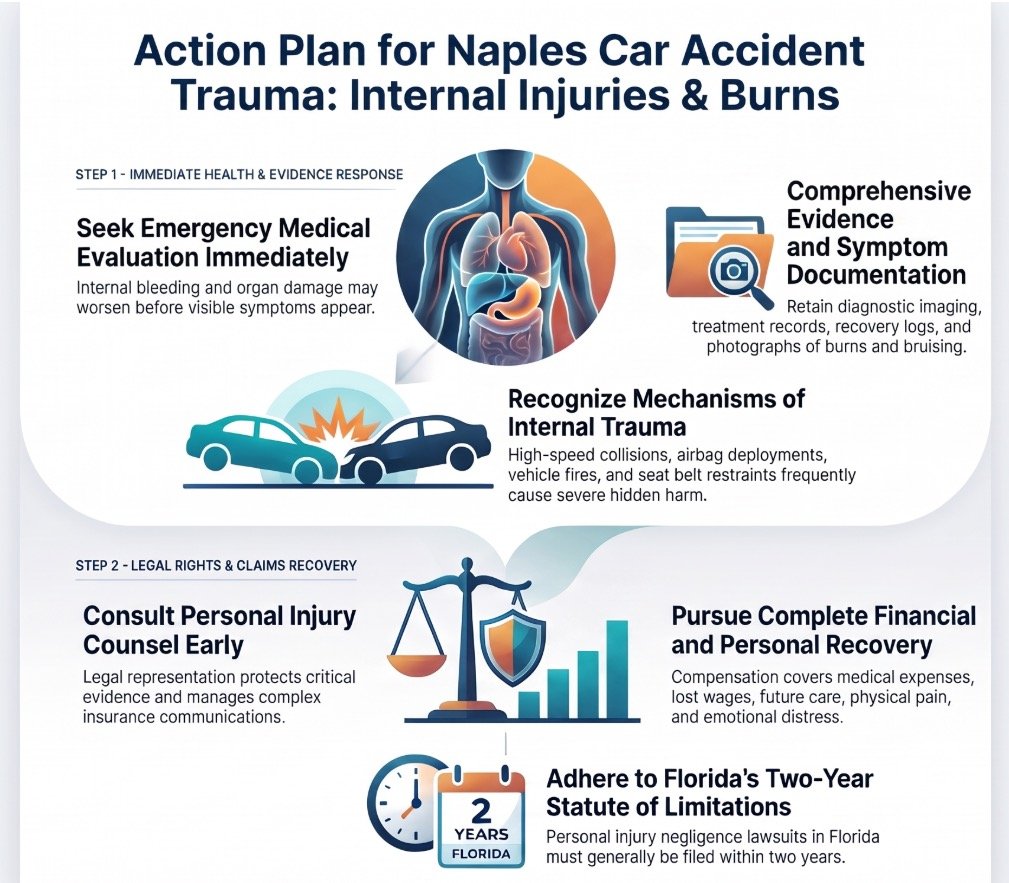
- Seek prompt medical care because internal bleeding and organ injuries may worsen before symptoms become apparent.
- Keep medical records, imaging results, prescriptions, and discharge instructions to document diagnosis and treatment.
- Photograph burns and bruising, and track symptoms, appointments, procedures, and changes in recovery.
- Compensation may account for medical costs, lost income, pain, rehabilitation, and lasting effects, depending on the case.
How We Can Help With Your Naples Car Accident Internal, Organ & Burns Injury Claim
Internal, organ, and burn injuries from a Naples car accident may require extensive treatment and can have lasting effects. A legal team can help injured people and their families manage the claim process while they focus on medical care and daily needs. The first step is a careful Claim Evaluation, which may include reviewing accident records, medical documentation, insurance communications, and evidence of financial losses. This review helps identify questions that need attention and supports an informed assessment of available options.
The team can also assist with Recovery Planning by organizing records, tracking expenses, and considering how ongoing treatment may affect work and household responsibilities. Clear communication helps clients understand each stage and make decisions based on reliable information. When appropriate, attorneys may communicate with insurers, prepare supporting materials, and pursue a resolution consistent with the documented harm. Their role is to provide steady guidance, protect the client’s interests, and reduce avoidable burdens during a difficult period, without making promises about outcomes.
Don’t Wait. Call Our Florida Personal Injury Lawyers Now!
Understanding Naples Car Accident Internal, Organ & Burns Injury Cases


Understanding these cases begins with recognizing that internal injuries, organ damage, and burns may not be immediately apparent after a Naples car accident. Delayed symptoms can emerge hours or days later, making timely medical evaluation important even when initial discomfort seems minor. A physician may use examinations, imaging, and follow-up care to identify injuries and monitor changes. Accurate records of symptoms, diagnoses, treatment, and limitations can help clarify the injury’s progression and support informed decisions about care and recovery.
OUR CONSULTATIONSARE FREE
START YOUR FREE CASE REVIEW

Internal injuries may affect breathing, circulation, digestion, or other vital functions, while organ damage can require specialized treatment and ongoing observation. Burns vary in depth and extent, and severe cases may involve wound care, procedures, pain management, and burn rehabilitation. Recovery can affect mobility, appearance, daily activities, and emotional well-being. Each case depends on the medical findings and the person’s needs. Clear communication among healthcare providers, patients, and support networks can help coordinate treatment and promote a safer, more thorough recovery.
Common Causes of Naples Car Accident Internal, Organ & Burns
Internal, organ, and burn injuries in Naples car accidents may result from high-speed collisions, which can subject occupants to severe impact forces. Vehicle fires and airbag deployment can cause burns, while seat belt trauma may injure the chest or abdomen. The circumstances of each crash help explain how these injuries occur.
High-Speed Collisions


At high speeds, a collision can subject the body to forces strong enough to cause internal bleeding, organ damage, and severe burns. The severity often depends on the vehicle’s speed, the angle of impact, and how quickly occupants are brought to a stop. In a high-speed impact, seat belts and airbags may reduce certain injuries, but they cannot prevent every form of trauma. Collision Dynamics can also cause occupants to strike interior surfaces or experience sudden compression, damaging organs without visible wounds. These injuries may not become apparent immediately, making prompt medical assessment important after a serious crash. Drivers who speed, follow too closely, or lose control may create conditions for devastating collisions. A careful investigation can clarify how the crash occurred and identify responsible parties, helping injured people and their families access appropriate assistance.
Vehicle Fires
When a collision damages a vehicle’s fuel system, electrical components, or engine, a fire may start and expose occupants to burns, smoke, and toxic fumes. Fuel system defects, including damaged lines or leaking connections, can allow fuel to ignite after impact. Electrical shorts and overheated engine parts can also contribute to post-crash fires, sometimes leaving occupants little time to escape. Fire-related injuries can involve deep burns, airway damage, or complications from inhaling smoke. Emergency responders may provide urgent care and help protect those affected, while investigators examine the vehicle and crash circumstances to identify how the fire began. Photographs, repair records, and witness accounts may help document the event. Clear evidence can help establish whether a vehicle defect, collision damage, or another factor contributed to the fire and resulting injuries.
Airbag Burns
Airbag deployment can cause burns even when it helps protect occupants from more severe crash injuries. The rapid inflation process generates heat and may expose skin to hot gases, friction, or heated fabric. These injuries commonly affect the face, arms, hands, and chest, particularly when an occupant is close to the airbag as it opens.
Chemical burns may also occur when residue from the inflator or airbag system contacts the eyes or skin. Redness, irritation, blistering, or persistent pain can signal an injury requiring prompt medical evaluation. Some symptoms may appear or worsen after the collision, so careful assessment is important even when the initial marks seem minor. Medical records and photographs can help document the injury and guide appropriate care. Understanding how airbag burns occur can help injured people seek support and protect their health.
Seat Belt Trauma
Although seat belts reduce the risk of severe injury, the force that restrains a person during a collision can also cause trauma. The belt may bruise the chest or abdomen, injure ribs, and damage internal organs when a person’s body is thrust forward against the restraint. These injuries can occur even when the belt functions as intended and may not be immediately apparent after a crash.
Seat Belt Syndrome describes a pattern of injuries associated with seat belt use, including abdominal bruising and possible harm to underlying organs. Restraint Injuries may also involve the spine or soft tissues, particularly in high-impact collisions. Prompt medical evaluation helps identify internal bleeding or other complications that require timely care. Accurate documentation of symptoms, treatment, and crash circumstances can assist injured people and their families as they seek appropriate support and recovery resources.
Legal Rights of Naples Car Accident Internal, Organ & Burns Injury Victims
Internal injuries, organ damage, and severe burns from a car accident may not be immediately apparent, yet they can require extensive treatment and cause lasting harm. Injured people in Naples may seek compensation when another party’s negligence caused the collision. Their legal rights may include recovering medical expenses, lost income, pain, and future care needs. Preserving records and meeting applicable deadlines can help protect a claim and support fair consideration.
Serious car accident injuries may emerge later, making prompt medical care, careful records, and timely legal action important.
Key rights may include:
- Compensation: Victims may pursue damages for documented losses and continuing effects.
- Comparative negligence: Florida’s rules may reduce recovery when an injured person shares responsibility; the degree of fault matters.
- Uninsured motorists coverage: A policy may provide benefits when the at-fault driver lacks adequate insurance, subject to its terms.
- Representation and information: Victims may consult counsel, review settlement offers, and decline an inadequate resolution.
A person seeking support for an injured family member can help organize records and communicate with insurers, while respecting that individual’s decisions. Legal guidance can clarify available options and preserve the injured person’s ability to pursue a claim.
Why Do Internal, Organ & Burn Injuries Happen in Naples Car Accidents?
Internal, organ, and burn injuries in Naples car accidents often result from the force of impact, direct contact with vehicle components, or exposure to heat and hazardous materials. During a collision, a seat belt or steering wheel can press forcefully against the chest or abdomen, damaging organs and internal tissues even when the skin appears uninjured. Broken glass, sharp metal, and deployed airbags may cause burns, cuts, or other trauma.
Vehicle fires can expose occupants to flames, hot surfaces, smoke, and toxic substances. Chemical exposure may also occur when fuel, battery contents, or cargo leaks after a crash. These hazards can injure the skin, eyes, or respiratory system, sometimes in combination.
Injury severity depends on crash speed, impact direction, occupant position, and vehicle damage. Some internal injuries produce delayed symptoms because bleeding or organ damage may not be immediately apparent. This uncertainty makes such injuries especially serious for occupants and families who depend on them.
What Should You Do After a Naples Car Accident Internal, Organ & Burns Injury?
After a Naples car accident involving suspected internal, organ, or burn injuries, the injured person should seek emergency medical care promptly, even if symptoms initially seem mild. They should document visible injuries, medical treatment, and related expenses while preserving relevant records. Once immediate medical needs are addressed, contacting a Naples lawyer can help clarify legal options and protect potential claims.
Seek Emergency Medical Care
Because internal injuries and burns may be more serious than they initially appear, anyone injured in a Naples car accident should seek emergency medical care without delay. Emergency clinicians can assess injuries that may not cause immediate pain, including internal bleeding, organ damage, and burns that worsen over time. If the injured person is unconscious, confused, having trouble breathing, or unable to move safely, someone should call 911 and avoid moving them unless necessary to prevent further danger. Hospital triage prioritizes urgent conditions, while diagnostic testing can identify injuries that require prompt treatment. Medical staff may provide expert referrals for burn care, surgery, or other follow-up needs. Prompt evaluation supports the injured person’s health and helps caregivers make informed decisions. Even seemingly minor symptoms warrant attention because complications can develop after a collision.
Document Your Injuries
Once immediate medical needs are addressed, documenting injuries can help preserve an accurate record of their severity and progression. The injured person should follow medical instructions and keep copies of examination notes, test results, prescriptions, and discharge papers. These records can clarify how doctors diagnosed and treated internal injuries, organ damage, or burns.
A Symptom Journal can capture pain, dizziness, breathing difficulty, changes in mobility, sleep disruption, and other symptoms. Entries should include dates, severity, duration, and any effect on daily activities. Photographs of visible burns or bruising may also show how injuries change, provided they do not delay care.
A Recovery Timeline can track appointments, procedures, medication changes, and periods of improvement or worsening. Consistent documentation helps patients communicate clearly with healthcare providers and supports coordinated care, especially when symptoms develop or change after the collision.
Contact a Naples Lawyer
When serious internal injuries, organ damage, or burns follow a car accident, a Naples lawyer can explain the injured person’s legal options and help protect important evidence. Prompt legal guidance may help preserve medical records, witness accounts, and crash documentation while the injured person focuses on treatment and recovery. A family member or trusted representative can arrange an Initial consultation if the injured person is unable to do so. During that meeting, the lawyer can review the circumstances, discuss potential deadlines, and explain how communication with insurers may affect a claim. Before choosing counsel, the injured person should review attorney credentials, relevant experience, and the fee agreement. Clear questions about case strategy and costs can support an informed decision. Selecting qualified representation may also help the injured person pursue accountability and fair compensation.
Critical Evidence in a Naples Car Accident Internal, Organ & Burns Injury Case
Essential evidence can help establish the nature, severity, and cause of internal, organ, or burn injuries after a Naples car accident. Relevant records and images may document both the immediate harm and its connection to the collision.
Important evidence includes:
- Medical imaging records
- Emergency treatment documentation
- Accident scene evidence
- Burn injury photographs
Medical Imaging Records
Medical imaging records can provide objective evidence of injuries that are not immediately visible after a Naples car accident, including internal organ damage, fractures, and burns affecting deeper tissue. These records may include X-rays, CT scans, MRI studies, and ultrasound examinations, each documenting specific findings at a particular point in recovery. Radiology reports describe the images, identify abnormalities, and may note whether further evaluation is appropriate. When considered alongside other case evidence, the images and reports can help clarify the nature and extent of an injury without relying solely on visible symptoms. Imaging timelines are also important because they show when a condition was first detected and whether later studies documented changes. Accurate, complete records help evaluators understand the injured person’s needs and the evidence supporting appropriate compensation.
Emergency Treatment Documentation
After a Naples car accident, emergency treatment documentation can establish the injuries identified and care provided during the initial response. Emergency department records may include triage notes, physician assessments, nursing observations, medication details, and procedures performed. Collectively, these entries help clarify the Treatment chronology, including when symptoms were reported, examinations occurred, and care began. This sequence can be important when internal injuries or burns are not immediately apparent or require urgent intervention. Records may also note changes in a patient’s condition and referrals for additional evaluation. Discharge instructions can document prescribed care, warning signs, activity limits, and follow-up recommendations. Consistent attention to these instructions may support recovery and reduce avoidable complications. For those assisting an injured person, preserving complete emergency records can help medical professionals and legal representatives understand the initial response and ongoing needs.
Accident Scene Evidence
When a Naples car accident causes suspected internal, organ, or burn injuries, evidence from the scene can help explain how the collision occurred and the forces involved. Investigators may document vehicle positions, roadway conditions, traffic controls, and visible damage before the scene changes. Skid marks can indicate braking, vehicle movement, or where a driver attempted to avoid impact. Debris patterns may also show where the collision occurred and how vehicles traveled afterward. Photographs, measurements, witness accounts, and available traffic or surveillance footage can preserve details for later review. This information may help connect the crash dynamics to the injuries and clarify disputed accounts. Careful scene documentation supports a fair evaluation of the claim and can help injured people seek appropriate assistance without relying on assumptions.
Burn Injury Photographs
Because burn injuries can change in appearance as they are treated, photographs taken at different stages may help document their severity and progression. Images may show the affected areas, changes in skin condition, and visible effects of medical procedures, providing context for treatment records. Photographs should be taken with the injured person’s dignity and privacy in mind, and should not delay urgent care. Where possible, consistent lighting, distance, and angles can make comparisons more useful. Photo Preservation includes retaining original files, maintaining secure backups, and avoiding edits that could alter the evidence. Image Metadata, such as dates and device details, may help establish when and how images were created. A lawyer can assess how photographs relate to medical records, expenses, and other evidence when evaluating a claim and supporting fair compensation.
Don’t Wait. Call Our Florida Personal Injury Lawyers Now!
Long-Term Effects of Naples Car Accident Internal, Organ & Burns Injuries
Long-term effects of internal injuries may include chronic organ damage that requires ongoing medical care and limits daily activities. Severe burns can leave lasting scars, restricted movement, or persistent discomfort. Survivors may also experience continuing emotional effects, including anxiety or trauma related to the crash.
Chronic Organ Damage
Chronic organ damage can develop after a Naples car accident, even when the initial injuries appear manageable. Blunt force, internal bleeding, or reduced oxygen may impair organs, and symptoms can emerge or worsen over time. Follow-up care helps identify changes before they lead to more serious complications.
Kidney trauma may cause Chronic Kidney disease, affecting the body’s ability to filter waste and regulate fluids. Liver Dysfunction can also follow an impact or loss of blood flow, sometimes requiring ongoing monitoring and treatment. Damage to the lungs, spleen, or other organs may similarly limit daily activities and create continuing medical needs.
For injured people and their supporters, careful records of symptoms, appointments, and expenses can clarify long-term effects. Medical professionals can assess prognosis and recommend care, while legal counsel may explain options for seeking compensation.
Lasting Burn Scars
Burn scars from a Naples car accident may remain after the initial wounds recover, particularly when burns are deep or cover a large area. Scar tissue can differ from surrounding skin in color, texture, flexibility, and thickness. Some scars tighten over joints, limiting movement or making routine tasks more difficult. Others may remain raised, sensitive, or prone to irritation, requiring continued medical attention and careful skin protection.
Treatment depends on the scar’s location, severity, and effect on function. A physician may recommend compression garments, therapy, medication, or procedures such as Scar Revision to improve mobility or appearance. Scar Camouflage may help reduce visible color differences for some patients, though results vary. Ongoing care can involve follow-up visits and additional treatment. Medical records and related expenses may help clarify the lasting effects of burn injuries.
Ongoing Emotional Effects
The effects of a Naples car accident may extend beyond physical injuries, including lasting emotional changes after internal organ damage or severe burns. Recovery can involve anxiety, low mood, sleep disruption, or distress connected to pain, medical treatment, and changes in appearance or daily function. Emotional triggers may include traffic sounds, reminders of the crash, or medical settings, and may interfere with concentration and routine activities. Some injured people experience social withdrawal when they feel self-conscious, exhausted, or misunderstood. These responses can strain family relationships and make it harder to return to work or community life. Consistent support from loved ones and qualified mental health professionals may help address ongoing concerns. When emotional effects persist, documenting symptoms and discussing them with health care providers can support appropriate treatment and recovery planning.
Proving Liability in Naples Car Accident Internal, Organ & Burns Injury Cases
Proving liability in Naples car accident cases involving internal, organ, or burn injuries requires evidence that connects the collision to both the responsible party’s conduct and the resulting harm. A careful review may establish the driver’s legal duty, the specific Duty breach, and how that failure contributed to the crash. Evidence can include police reports, photographs, witness accounts, vehicle data, and available roadway or traffic-camera footage. These records help clarify whether speeding, distraction, impairment, unsafe turning, or another negligent act caused the collision.
Medical documentation is also central. Emergency records, imaging, expert evaluations, and treatment notes can show the nature and extent of internal injuries, organ damage, or burns. A causation analysis considers whether the collision caused or worsened those conditions, while accounting for prior health issues when relevant. In complicated cases, medical or accident-reconstruction experts may explain how the evidence supports the claimed connection. Thorough, accurate documentation helps injured people and their families pursue accountability and access the resources they need for recovery and ongoing care.
Dealing With Insurance Companies After a Naples Car Accident Internal, Organ & Burns Injury
After a Naples car accident causes internal injuries, organ damage, or burns, insurance companies may request statements, medical records, and other evidence while evaluating a claim. Injured people may be focused on urgent treatment and recovery, while family members or caregivers handle practical responsibilities. Clear, organized communication can help protect everyone’s interests.
Before providing Recorded statements, claimants should understand that an insurer may use their words to assess fault, injury severity, or consistency with other evidence. Questions about symptoms can be difficult to answer when internal injuries emerge gradually, or treatment is ongoing. Responses should remain accurate, and do not guess uncertain details.
Medical documentation, photographs, repair records, and correspondence can help explain the accident’s effects and support coverage requests. Policy language may also create coverage disputes, particularly when several policies or exclusions are involved. A qualified attorney can review communications, explain available protections, and address insurer requests while the injured person concentrates on care and recovery.
What to Expect During a Naples Car Accident Internal, Organ & Burns Injury Claim Process
A claim involving internal, organ, or burn injuries generally begins with prompt medical care and documentation of the diagnosis, treatment, and expected recovery. Evidence such as crash reports, photographs, witness accounts, and medical records can help establish how the collision occurred and the extent of the injuries before a claim is filed. The process may then proceed to settlement negotiations, where the available evidence and documented losses inform discussions with the insurer.
Initial Medical Care
Prompt medical evaluation is essential when a Naples collision may have caused internal injuries, organ damage, or burns, even if symptoms initially seem minor. Emergency stabilization may address bleeding, breathing difficulties, shock, or serious burn complications before a patient leaves the hospital. Clinicians may order imaging, laboratory tests, or other examinations to identify injuries that are not immediately visible. Once the patient’s condition stabilizes, experts can refer the patient to trauma surgeons, burn specialists, or other appropriate providers. Follow-up appointments help monitor healing and identify complications that develop after initial treatment. Patients benefit from following medical instructions and promptly reporting new or worsening symptoms. Consistent care supports recovery and helps treating professionals understand the patient’s needs. Timely treatment can also reduce avoidable risks and support a more thorough recovery.
Evidence Collection
Because internal injuries, organ damage, and burns may not be immediately apparent, evidence collection is an important part of a Naples car accident claim. Medical records can document symptoms, diagnostic findings, treatment, and how injuries develop after the collision. Photographs of the vehicles, roadway, visible burns, and other injuries may help preserve conditions before they change. Witness Interviews can provide accounts of the crash, statements made at the scene, and events immediately afterward. Investigators may also review police reports, repair records, and available Vehicle Telematics, such as data showing speed or braking. Preserving relevant evidence can help clarify how the collision occurred and connect it to the reported harm. Careful documentation also supports a fair assessment of the injured person’s needs and helps those assisting with the matter understand the available facts.
Claim Filing
Once you’ve organized the evidence, filing a Naples car accident claim starts with notifying the appropriate insurer and providing information about the collision, injuries, and treatment. The injured person may need to submit claim forms, medical records, bills, and other supporting documents. Accurate, consistent information helps insurers review the reported losses and assess the claim. For internal injuries, organ damage, or burns, medical documentation may develop over time, so records should be updated as treatment continues. Filing procedures vary by insurer and by whether the claim involves personal injury protection or another coverage source. Deadline calculations require attention because policy notice requirements and legal filing limits may differ. Missing a deadline can limit your options. Counsel can clarify applicable requirements, help organize submissions, and protect the injured person’s ability to pursue a claim while focusing on recovery.
Settlement Negotiations
After the insurer reviews the available evidence, settlement negotiations may begin with an offer based on documented injuries, treatment, and other losses. For internal injuries, organ damage, or burns, the full impact may remain uncertain while care continues. A claimant’s legal representative can assess whether the offer accounts for medical expenses, lost income, future treatment, and pain-related effects. A sound Demand strategy relies on medical records, expert opinions, and clear documentation of financial losses. Negotiations may involve counteroffers and requests for additional evidence, with each position evaluated against the claim’s strengths and risks. If discussions stall, mediation tactics may help the parties address disputed issues with a neutral mediator. Carefully review any proposed resolution, since accepting a settlement generally ends the claim and limits later recovery.
Compensation for Naples Car Accident Internal, Organ & Burns Injury Damages
Internal injuries, organ damage, and burns from a Naples car accident may require extensive treatment and lead to lasting health effects. Compensation may address the practical consequences of these injuries and help an injured person obtain appropriate care. A claim may include emergency services, hospitalization, surgery, medication, rehabilitation, and other treatment expenses supported by medical records and bills.
When injuries prevent a person from working, Lost wages may be included for time already missed. Evidence of reduced earning ability may also support a request for compensation when recovery limits future employment. Because severe injuries can require ongoing treatment, medical professionals may consider future care when they identify likely needs and costs.
Burn injuries may call for tailored procedures, scar treatment, or counseling, while organ damage can require continued monitoring. A careful assessment can account for each injury’s documented effects. An attorney may gather records, consult qualified professionals, and present a claim that reflects the person’s needs and supports recovery.
Don’t Wait. Call Our Florida Personal Injury Lawyers Now!
Economic vs. Non-Economic Damages in Naples Car Accident Internal, Organ & Burns Cases
Economic damages may include medical expenses, lost income, and future care costs arising from internal, organ, or burn injuries. Non-economic damages address harm such as pain, emotional distress, and diminished quality of life. Establishing both categories requires reliable evidence linking the injuries to the crash and documenting their impact.
Economic Losses
After a Naples car accident involving internal organ damage or burns, a claim may include both economic and non-economic damages. Economic losses represent measurable financial costs tied to the injury and its effect on a person’s ability to work. They may include emergency care, surgery, hospital stays, medication, rehabilitation, and future treatment recommended by medical providers. Records such as bills, receipts, and treatment plans can help document these expenses.
You may recover lost wages when injuries prevent you from working during recovery. If lasting limitations affect the ability to perform prior duties or earn the same income, a claim may also address diminished earning capacity. Pay records, employer statements, and evaluations of future work restrictions can help establish these losses. Careful documentation supports an accurate assessment of financial needs and the resources required for continued recovery.
Non-Economic Harm
Beyond documented financial costs, a Naples car accident claim involving internal organ damage or burns may account for non-economic harm. These damages cover personal effects without a direct price, including physical pain, lasting discomfort, and limitations on daily activities. Serious injuries may also disrupt sleep, independence, and a person’s ability to participate in family or community life. Emotional distress can include fear, anxiety, or the psychological impact of disfigurement and prolonged recovery. Loss of companionship may reflect changes in a spouse’s relationship and shared activities when injuries alter the injured person’s capacity to provide support or affection. Unlike medical expenses or lost income, non-economic damages do not correspond to bills or wage records. They recognize the human consequences of an injury and may be considered alongside economic losses in evaluating a claim.
Proving Damages
When pursuing a Naples car accident claim involving internal organ damage or burns, the injured person must support both financial losses and personal harm with relevant evidence. Economic damages may include hospital bills, medication, rehabilitation, lost wages, and reduced earning capacity. Treatment records, invoices, pay statements, and employer documentation can help establish these amounts. Physicians and financial professionals may also assess future expenses, such as continuing care, additional procedures, or long-term assistance. Non-economic damages address pain, emotional distress, scarring, and limitations on daily activities. Medical assessments, photographs, and statements from the injured person or those familiar with the changes can help explain these effects. Damage valuation considers the full impact of the injuries, not merely immediate costs. Organized, consistent evidence helps insurers and decision-makers evaluate the claim fairly and accurately.
When a Naples Car Accident Internal, Organ & Burns Injury Case Goes to Trial vs Settlement
A Naples car accident case involving internal injuries, organ damage, or severe burns may settle through negotiation or proceed to trial, depending on the evidence and the parties’ willingness to agree on fair compensation. Settlement can provide a more predictable resolution and avoid the time, expense, and stress of courtroom proceedings. However, assess an offer against documented medical needs, anticipated recovery, lost income, and other supported losses.
Trial may be considered when the parties dispute responsibility, the extent of injury, or the value of a claim. Trial preparation can involve organizing medical records, consulting qualified experts, preparing witnesses, and presenting a clear account of how the injuries affect daily life. Even a well-supported case carries verdict uncertainty because a judge or jury decides the outcome.
A lawyer can explain the practical differences, evaluate offers, and help an injured person make an informed choice. Careful guidance can also support families seeking a fair resolution while focusing on recovery and future needs.
Florida Laws That May Affect Your Naples Car Accident Internal, Organ & Burns Case
Florida law can shape how a Naples car accident claim involving internal injuries, organ damage, or severe burns is evaluated and pursued. Several rules may affect available benefits, responsibility, and proof. Understanding them can help injured people and their families make informed decisions while preserving resources for recovery and continued service to others.
- Florida PIP coverage rules generally require drivers to carry personal injury protection. PIP may pay a portion of medical expenses and lost income, subject to policy limits and eligibility requirements, regardless of fault.
- Comparative negligence standards may reduce compensation when an injured person shares responsibility for the crash. As a result, the allocation of fault can affect the amount recoverable.
- Florida’s no-fault framework includes conditions for pursuing damages beyond PIP benefits, including injury thresholds that may be relevant to serious harm.
- Medical records and expert assessments can document the nature, cause, and lasting effects of internal injuries, organ damage, or burns, supporting a clear evaluation of losses and liability.
The Statute of Limitations for Naples Car Accident Internal, Organ & Burns Injury Cases
Beyond coverage and fault rules, filing deadlines can determine whether an injured person may pursue compensation in court. In Florida, most negligence claims arising from car crashes must be filed within two years of the accident. Missing that deadline can bar recovery, even when internal injuries, organ damage, or burns become apparent only after initial treatment. Prompt medical assessment and careful attention to the filing period help preserve options for addressing serious harm.
Certain circumstances may affect how the deadline applies. Deadline Exceptions can include situations involving fraud, concealment, or a defendant’s absence from the state, but the rules are narrow and fact-specific. Minor Tolling may pause the limitations period when the injured person was under 18 at the time of the crash. Other rules may apply to wrongful death claims or cases involving government entities, which can carry distinct notice requirements and shorter time limits. Because exceptions are limited, an injured person or family should confirm the applicable deadline promptly and avoid assuming that delayed diagnosis automatically extends it.
How a Naples Car Accident Internal, Organ & Burns Lawyer Can Help You
When internal injuries, organ damage, or burns follow a Naples car accident, a lawyer can help investigate the crash, identify potentially responsible parties, and assess the losses supported by medical evidence. This work can help an injured person and family focus on recovery while pursuing accountability through a well-supported claim.
A lawyer may provide assistance by:
- Gathering collision reports, photographs, witness statements, and other records to clarify how the crash occurred.
- Coordinating medical documentation that explains diagnoses, treatment needs, lasting effects, and related expenses.
- Evaluating available insurance coverage and identifying claims involving drivers, employers, or other responsible parties.
- Developing a claim strategy based on evidence, documented losses, and applicable legal standards.
Attorney advocacy can also manage communications with insurers, address disputed facts, and present the documented impact of serious injuries. Counsel may seek compensation for medical costs, lost income, future care, and other legally recognized damages. Clear, careful representation can support fair consideration of the injured person’s needs and help families make informed decisions without overstating what the evidence establishes.
When to Contact a Naples Car Accident Internal, Organ & Burns Lawyer
Prompt legal guidance may help preserve evidence and clarify available options after a Naples crash causes suspected internal injuries, organ damage, or burns. Contacting a lawyer promptly can be important because these conditions may not become apparent until hours or days after a collision. Medical evaluation should come first, and new or worsening symptoms require urgent attention. Once immediate care is arranged, a Legal Consultation can help clarify deadlines, insurance communications, and steps for documenting the crash and resulting harm.
Early contact may also help identify relevant records, photographs, witness details, and vehicle evidence before they become difficult to obtain. A person seeking support for injured family members may benefit from learning how to coordinate legal questions while prioritizing medical care and recovery. Attorney Selection should reflect the specific circumstances of the injuries, the person’s communication needs, and the proposed terms of representation. A consultation doesn’t require an immediate decision; it gives you a chance to ask focused questions and understand your options before deciding how to proceed.
Why You Need an Experienced Naples Car Accident Internal, Organ & Burns Lawyer
An experienced Naples car accident lawyer can help assess claims involving internal injuries, organ damage, or burns, which may require careful review of medical records and crash evidence. These injuries can be difficult to recognize immediately, and their effects may develop or worsen over time. An experienced lawyer can help connect the documented harm to the collision and identify the evidence needed to support a claim.
Such guidance can also help injured people and their families address medical expenses, lost income, rehabilitation needs, and future care. The lawyer may consult medical professionals to clarify diagnoses, treatment, and long-term effects. Expert testimony can explain complex injuries and help establish their connection to the crash. If questions arise about negligent medical care after the collision, Medical malpractice issues may require separate evaluation because they can affect responsibility and damages. By organizing evidence and explaining legal options, counsel can help clients pursue fair compensation while they focus on recovery and supporting those who depend on them.
How to Choose the Right Naples Car Accident Internal, Organ & Burns Lawyer for Your Case
Choosing the right Naples car accident lawyer for a case involving internal injuries, organ damage, or burns requires careful attention to the lawyer’s experience with serious injury claims. A suitable attorney should understand how these injuries may affect long-term health, employment, and daily responsibilities. That knowledge helps the lawyer assess the evidence and clearly communicate the claim’s needs.
Review Lawyer Credentials, including Florida licensure, relevant experience, disciplinary history, and a record of handling complicated injury matters. A consultation can help you determine whether the lawyer listens carefully, explains your options, and treats you and your family with respect. These qualities matter when a legal representative must advocate for someone facing significant medical and financial challenges.
The Lawyer should also explain the fee structure before representation begins. The client should understand how fees and case expenses are handled, when payment is due, and what happens if the claim does not succeed. Clear written terms support informed decisions and reduce uncertainty throughout the legal process.
About The Law Offices of Anidjar & Levine
The Law Offices of Anidjar & Levine represents people injured in car accidents, including those facing serious injuries such as organ damage and burns. The firm helps clients seek accountability and financial recovery after a collision, including those whose injuries require extensive treatment or affect their ability to work.
Firm History provides context for the practice’s focus on representing injured individuals. Its attorneys handle personal injury matters and guide clients through legal procedures, insurance communications, and claim preparation. For people managing painful injuries, this support can help clarify available options and the steps involved in pursuing compensation.
Attorney Values include attention to clients’ concerns, clear communication, and a commitment to service. These principles matter when a person must make difficult decisions while recovering from a serious accident. The firm evaluates each case based on its circumstances, explains potential legal strategies, and works to protect the client’s interests. Its role is to provide informed representation while treating injured people with respect and care.

Frequently Asked Questions
Can I Pursue a Claim if My Internal Injuries Appeared Days After the Crash?
Yes, you may still pursue a claim if internal injuries appear days after a crash. Delayed symptoms do not automatically prevent recovery, but prompt medical evaluation and consistent records are important. Delayed symptom documentation should identify when symptoms began, how they changed, and when you sought care. A hidden injury diagnosis should be supported by medical findings and connected to the collision. Legal deadlines and evidence requirements vary by jurisdiction, so timely guidance can help protect available options.
What if a Pre-Existing Condition Worsened My Injuries?
A pre-existing condition does not automatically prevent recovery if a crash worsened it. Under the Eggshell Plaintiff Rule, a responsible party may be liable for the harm caused, even when the injured person’s vulnerability made the outcome more severe. A pre-existing condition aggravation claim generally requires medical evidence distinguishing prior symptoms and limitations from crash-related changes. Prompt treatment, consistent records, and careful documentation can help clarify the injury’s extent and support a fair assessment.
Can Family Members Bring a Claim if a Crash Caused a Fatal Injury?
Yes, certain family members may pursue a claim when a crash causes a fatal injury. Under Florida wrongful death eligibility rules, the personal representative of the deceased person’s estate generally files the action on behalf of eligible survivors and the estate. A spouse, children, parents, or other qualifying dependents may recover damages, depending on their relationship and circumstances. Fatal crash compensation can address losses such as support, services, medical expenses, and funeral costs.
Will My Health Insurance Need Repayment From My Settlement?
Health insurance may require repayment from a settlement if it paid for crash-related treatment. Health insurance liens and settlement reimbursement obligations depend on the policy, applicable law, and whether coverage came through a private plan, Medicare, or Medicaid. The insurer may claim part of the recovery, but the amount can sometimes be disputed or reduced. Before distributing settlement funds, the claimant should confirm all repayment demands and obtain legal review.
Can I Recover Damages if I Was a Passenger in the Vehicle?
Yes, an injured passenger may recover damages when another party’s negligence caused the crash. Passenger injury liability may involve the driver of the vehicle carrying the passenger, another driver, or multiple responsible parties. Shared fault rules can reduce compensation if the passenger contributed to the accident, though passengers are often not at fault. Recoverable losses may include medical expenses, lost income, and pain and suffering. Liability and available insurance depend on the evidence.
—————————
Internal organ damage and burn injuries after a Naples car accident may require extensive treatment and have lasting effects. Prompt medical care and a careful review of the crash evidence can help protect an injured person’s health and legal options. The Law Offices of Anidjar and Levine can assess the circumstances, explain your options, and pursue a claim when appropriate. Learn more from a Naples Personal Injury Lawyer. Anyone facing these injuries should seek qualified legal guidance before important deadlines affect the case.