The Law Offices of Anidjar and Levine help Orlando car accident victims with internal organ damage or severe burns investigate fault, preserve critical evidence, and pursue compensation. Claims may include emergency treatment, surgery, rehabilitation, future medical care, lost income, disability, scarring, and pain and suffering. Counsel can review insurance coverage, coordinate medical documentation, and address disputed liability or settlement offers. Prompt legal guidance may help preserve evidence and protect your legal rights. For additional support, visit our Orlando Personal Injury Lawyer page to learn more about these injuries, claims, and available legal assistance.
Main Takeaways
- An Orlando car accident lawyer can investigate fault, including distracted driving, speeding, intoxication, reckless conduct, and vehicle defects.
- Internal bleeding, organ damage, and severe burns require prompt medical evaluation and thorough documentation linking injuries to the collision.
- Attorneys can preserve evidence, including crash-scene photographs, vehicle data, witness information, imaging, surgical records, and burn documentation.
- Injury claims may include medical expenses, rehabilitation, future care, lost income, reduced earning capacity, scarring, disability, and pain and suffering.
- Legal counsel can communicate with insurers, challenge low offers or denials, identify all liable parties, and pursue appropriate compensation.
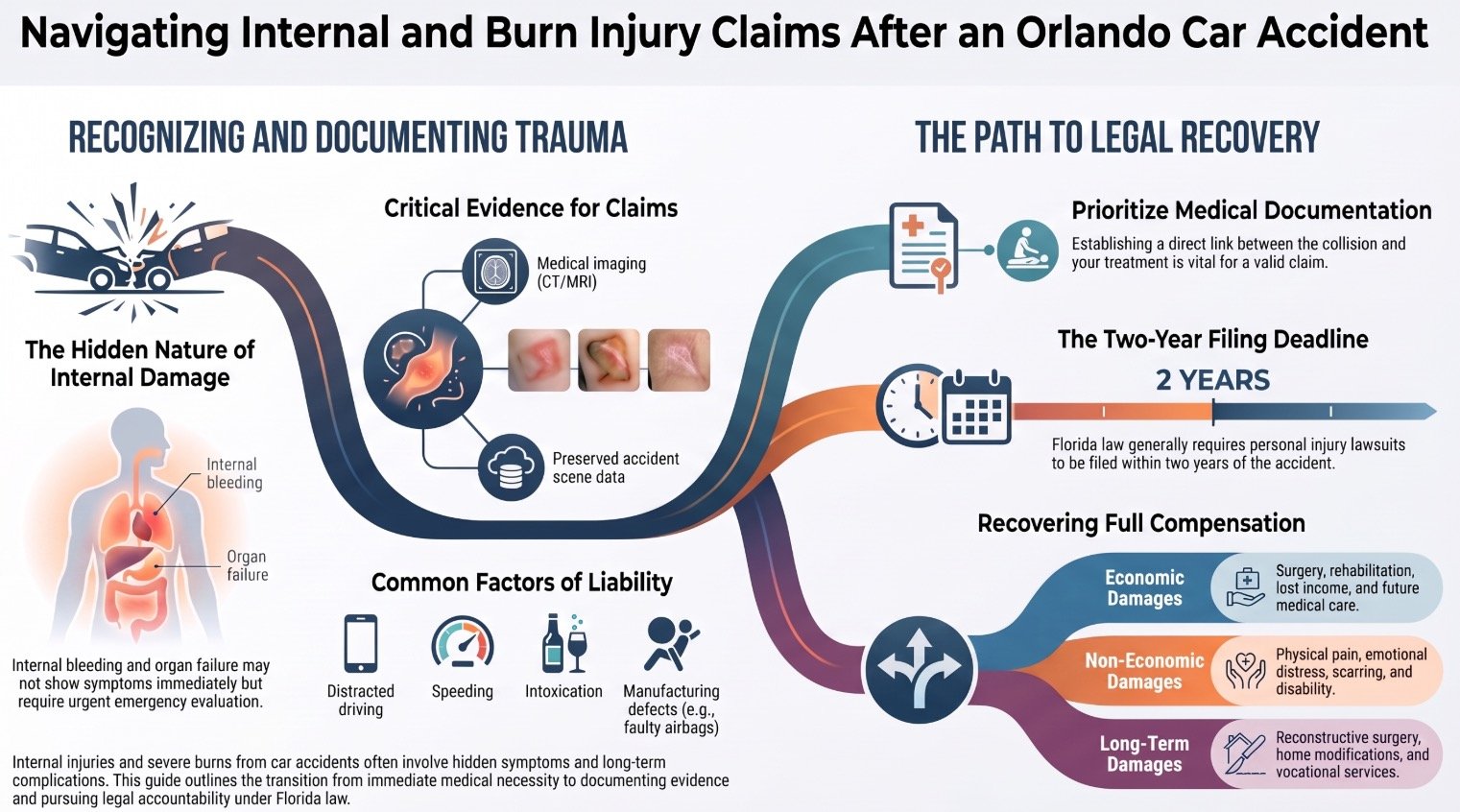
How We Can Help With Your Orlando Car Accident Internal, Organ & Burns Injury Claim
When an Orlando car accident causes internal, organ, or burn injuries, an experienced personal injury lawyer can investigate the crash, identify all liable parties, and pursue compensation for the full scope of the resulting harm. The lawyer may coordinate with medical professionals to document diagnoses, treatment needs, future limitations, and the link between the injuries and the collision. This evidence can establish severe injury proof while preserving an accurate record of the client’s needs.
Legal counsel can also communicate with insurers, review available coverage, and address attempts to minimize or deny a claim. By managing these responsibilities, the lawyer allows injured individuals and their families to focus on medical care and recovery. The firm may pursue Medical Cost Recovery for past and anticipated treatment, rehabilitation, necessary assistance, lost income, and other legally available damages. Throughout the process, counsel can provide informed guidance, protect important deadlines, and seek a resolution that reflects the injury’s documented impact.
Understanding Orlando Car Accident Internal, Organ & Burns Injury Cases


Internal, organ, and burn injuries after an Orlando car accident may involve serious medical conditions that are not immediately apparent. Internal bleeding, damaged organs, and severe burns can require emergency treatment, surgery, hospitalization, and ongoing rehabilitation. Symptoms may develop gradually, making prompt medical evaluation important even when initial discomfort seems limited.
OUR CONSULTATIONSARE FREE
START YOUR FREE CASE REVIEW

Understanding these cases requires reviewing medical findings, treatment decisions, and the injury’s effect on daily responsibilities. Doctor documentation can establish the nature of the condition, connect treatment to the collision, and describe expected recovery needs. Records may include emergency reports, imaging results, surgical notes, photographs, prescriptions, and medical professional evaluations.
A claim may also involve medical expenses, lost income, future care, and nonfinancial harm. The insurance timeline matters because insurers may request statements, records, or settlement decisions before they know the full medical picture. Careful documentation and informed communication can help preserve relevant evidence while allowing injured individuals to focus on recovery and serving their families.
Don’t Wait. Call Our Florida Personal Injury Lawyers Now!
Common Causes of Orlando Car Accident Internal, Organ & Burns


Internal, organ, and burn injuries in Orlando car accidents may result from distracted driving, speeding, reckless driving, or impaired operation. Vehicle defects and mechanical failures can also cause collisions or worsen the severity of resulting injuries. Identifying the contributing cause is fundamental when evaluating liability and available legal remedies.
Distracted Driving
Distracted driving is a major cause of Orlando car accidents, especially when a driver’s attention shifts away from traffic, road conditions, or vehicle control. Common distractions include texting, dialing, reading notifications, adjusting navigation systems, eating, and interacting with passengers. The combination of distracted driving, text messaging, divided attention, and reduced focus can delay braking or cause a driver to overlook pedestrians, signals, and nearby vehicles. Mobile phone distraction remains especially concerning because it can divert visual, manual, and cognitive attention at the same time. Even brief inattention can contribute to collisions that produce internal injuries, organ damage, or severe burns. Drivers must secure devices, stay attentive, and make safe decisions before moving. Understanding these risks can help families, witnesses, and injured individuals pursue appropriate support after an accident.
Speeding And Recklessness
When drivers exceed safe speed limits or operate vehicles recklessly, they have less time to recognize hazards and respond appropriately. Excessive speed can intensify collisions, increasing the likelihood of internal injuries, organ damage, severe burns, and other life-altering harm. Reckless conduct may include aggressive lane changes, tailgating, disregarding traffic signals, or passing where visibility is limited. Investigators may examine speeding evidence such as vehicle data, roadway conditions, skid marks, surveillance footage, and witness accounts. They may also identify reckless driving patterns through prior incidents, traffic citations, or consistent disregard for safety rules. Establishing these factors can help clarify how a crash occurred and whether negligent conduct contributed to the injuries. People affected by these collisions may benefit from prompt medical care, careful documentation, and informed legal guidance when seeking accountability and support.
Drunk Or Drugged Driving
Alcohol and drugs can impair judgment, coordination, reaction time, and the ability to assess roadway hazards, substantially increasing the risk of a serious Orlando car accident. A driver’s intoxication may contribute to collisions that cause internal bleeding, organ damage, or severe burns. Evidence may include officer observations, witness accounts, toxicology results, admission statements, and impaired driving evidence recorded at the scene. Blood alcohol testing can help establish whether alcohol levels exceeded legal limits, while prescription or illicit substances may require additional laboratory analysis. Drugged driving symptoms can include unusual drowsiness, confusion, poor balance, dilated pupils, or delayed responses. Roadside impairment assessments may document unsafe driving and diminished coordination, although formal testing remains important. Prompt medical care and careful evidence preservation can help injured individuals and their families seek accountability.
Vehicle Defects And Failures
Vehicle defects and mechanical failures can cause an Orlando car accident even when drivers follow traffic laws and exercise reasonable care. Manufacturing errors, inadequate maintenance, and overlooked vehicle safety recalls may cause steering, tire, or acceleration problems without warning. Faulty brake systems are particularly dangerous because they can prevent a driver from stopping before a collision. Defective airbags or seat belts may also increase the severity of internal injuries, organ damage, or burns after impact. Determining whether a defect contributed to an accident may require inspection of the vehicle, maintenance records, recall notices, and manufacturer documentation. Preserving the vehicle in its post-crash condition can help protect evidence. A careful investigation may identify responsible manufacturers, distributors, repair facilities, or other parties and support efforts to obtain appropriate assistance for injured individuals and their families.
Legal Rights of Orlando Car Accident Internal, Organ & Burns Injury Victims
Orlando car accident victims who suffer internal organ damage or burn injuries may have legal rights to pursue compensation for medical treatment, lost income, reduced earning capacity, pain and suffering, and other accident-related losses. Florida law may also permit recovery for future care, scarring, disability, and, in qualifying cases, Wrongful death damages for surviving family members.
Victims and families can protect those rights by:
- Seeking prompt medical evaluation and following prescribed pain management plans, while preserving records that connect treatment to the collision.
- Reporting losses accurately and reviewing settlement offers carefully, because insurance retaliation or premature agreements may restrict later recovery.
- Preserving photographs, medical records, witness information, vehicle data, and communications to reduce the risk of evidence spoliation.
A legal representative may investigate liability, identify all responsible parties, communicate with insurers, and calculate present and future damages. Timely advice can help protect statutory deadlines and support informed decisions while victims focus on recovery and vital family responsibilities.
Why Do Orlando Car Accident Internal, Organ & Burns Injuries Happen?
Internal, organ, and burn injuries in Orlando car accidents often result from the intense forces and hazardous conditions created during a collision. A vehicle’s sudden deceleration can compress the abdomen or chest against seat belts, steering wheels, dashboards, or other structures. The trauma mechanism may also cause organs to tear, bleed, or lose function without immediately visible wounds. Burns may occur when fuel ignites, airbags deploy, hot fluids escape, or occupants contact heated surfaces. Unrestrained occupants and those trapped in crushed vehicles face increased exposure to these injuries. Some damage develops gradually as internal bleeding, swelling, infection, or reduced blood flow progresses. Prompt medical evaluation can influence treatment timelines, although the necessary care may remain extensive. Surgical procedures, grafting, rehabilitation, and monitoring may be required to restore function. Tissue scarring can restrict movement or impair organ performance, while psychological effects may persist. These conditions can make long-term recovery intricate and require sustained support from compassionate caregivers.
What Should You Do After an Orlando Car Accident Involving Internal, Organ & Burn Injuries?
After an Orlando car accident involving internal, organ, or burn injuries, the injured person should seek immediate medical care, even if symptoms initially appear minor. Document and preserve medical records, photographs, witness information, and other evidence promptly. Consulting an injury lawyer can help protect legal rights and assess potential compensation.
Seek Immediate Medical Care
Prompt medical evaluation is essential for anyone involved in an Orlando car accident who may have sustained internal, organ, or burn injuries. Some life-threatening conditions remain hidden until symptoms worsen, so an injured person should receive emergency assessment without delay. The First response should include calling 911, keeping the person still, and following dispatcher instructions unless immediate danger requires relocation. Bystanders should provide CPR guidance only when directed by emergency personnel and should avoid moving suspected spinal-injury victims. Do not treat a burn wound with ice, ointments, or household substances. Instead, leave clothing stuck to the skin in place while emergency responders manage cooling and contamination concerns. Professional dressing care is essential because improper coverage can increase infection, bleeding, or tissue damage. Medical staff can monitor organ function, internal bleeding, shock, and respiratory complications.
Document Injuries And Evidence
Once medical care has been obtained, the injured person or a representative should document the injuries and preserve available evidence. Photographs should capture burns, bruising, swelling, surgical sites, visible wounds, damaged clothing, and the accident scene from multiple angles. Images should retain their original photo timecodes and should not be edited or filtered. Organize medical records, discharge instructions, prescriptions, bills, and written symptom descriptions in a secure file. Because internal or organ injuries may develop later, changes in pain, mobility, breathing, or other symptoms should be recorded with dates and times and promptly reported to medical providers. Collect witness statements while memories remain clear, including names and contact information. Also preserve vehicle damage, roadway conditions, traffic signals, and available surveillance footage for those assisting the injured person.
Consult an Injury Lawyer
When internal injuries, organ damage, or serious burns are involved, consulting an experienced Orlando injury lawyer can help protect the injured person’s legal rights and preserve a potential claim. A lawyer can review medical records, accident evidence, and insurance communications to identify responsible parties and assess available compensation. Early legal guidance may also prevent statements or settlements that could undervalue long-term treatment, lost income, rehabilitation, or other damages. Counsel can explain Painful Recovery Options, including ongoing medical care and support services, while coordinating with healthcare providers when appropriate. An attorney can also develop an Insurance Claim Strategy suited to the injury’s severity and projected consequences. Families and caregivers may help by preserving documents, recording symptom changes, and helping the injured person communicate clearly throughout the legal process.
Critical Evidence in an Orlando Car Accident Internal, Organ & Burns Injury Case
Critical evidence can establish the nature, severity, and cause of internal, organ, and burn injuries in an Orlando car accident claim.
Important materials include:
- Medical imaging records and documentation of organ damage.
- Burn assessments, treatment records, and photographs showing injury progression.
- Accident scene photographs, vehicle damage images, and other documentation connecting the injuries to the collision.
Together, these records may help demonstrate the extent of harm and support a legally supported claim for compensation.
Medical Imaging Records
Medical imaging records can provide objective evidence of internal, organ, and burn-related injuries after an Orlando car accident. Emergency physicians may order X-rays, computed tomography scans, magnetic resonance imaging, or ultrasound examinations to evaluate trauma that is not immediately visible. These records can show fractures, fluid accumulation, tissue damage, foreign objects, or other findings requiring urgent care. Preserve radiology reports, image files, and physician interpretations because each may clarify the timing, severity, and progression of an injury. Emergency room notes and medication records can help connect imaging findings with reported symptoms, treatment decisions, and observed physical conditions. Promptly requesting complete copies may help legal representatives present reliable evidence while protecting the injured person’s ability to obtain appropriate medical support and pursue accountability.
Organ Damage Documentation
Organ damage documentation can establish the nature and extent of internal injuries that may not be apparent during an initial examination after an Orlando car accident. Hospital records should identify symptoms, diagnostic findings, treatment decisions, surgical procedures, and restrictions affecting daily activities. Follow-up evaluations can demonstrate whether organ impairment persisted, worsened, or required continuing care. Providers may also document causation by relating injuries to the collision and excluding significant preexisting conditions. Preserve accident-related records, including billing statements, prescriptions, disability notes, and expert opinions. Witness statements can clarify the impact, symptom timing, and visible signs of distress before emergency treatment. Video evidence preservation can protect roadway footage, vehicle cameras, and nearby surveillance showing collision circumstances. Organized documentation assists professionals serving injured individuals while supporting accurate damages assessment.
Burn Injury Evidence
When a collision causes burns, prompt and thorough evidence collection can establish the injury’s severity, source, and lasting effects. Medical records should describe the burn’s location, depth, size, treatment, pain, infection risks, and anticipated scarring. Follow-up evaluations can document grafting, rehabilitation, functional limitations, and psychological effects. Dated burn injury photos, taken throughout treatment, may help show progression, recovery complications, and permanent changes. Prescriptions, treatment invoices, work restrictions, and expert recommendations further connect the injury to financial and personal consequences. Careful witness statement collection can preserve observations about the crash, visible injuries, the victim’s immediate symptoms, and changes in daily functioning. Investigators should also retain clothing or personal items affected by fire, heat, or chemicals when appropriate, while preserving them according to medical and legal guidance.
Accident Scene Photos
Accident scene photographs can preserve critical evidence in an Orlando car accident involving internal organ damage or burn injuries, particularly when road conditions, vehicle positions, and visible hazards may change or disappear. Images should document vehicle damage, deployed airbags, skid marks, broken glass, traffic signals, roadway defects, fire damage, and surrounding lighting. Photographs from multiple angles can help clarify impact points and support reconstruction of how the collision occurred. If the injured person cannot take pictures, a trusted companion or responding professional may document the scene when safe. Investigators may also focus on capturing witness statements before memories fade or witnesses leave the area. Alongside photographs, preserving medical evidence, including diagnostic scans, burn assessments, treatment records, and surgical documentation, can connect visible injuries to the accident and assist those seeking accountability and support.
Long-Term Effects of Orlando Car Accident Internal, Organ & Burn Injuries
Long-term effects of internal, organ, and burn injuries may include chronic pain, permanent disability, and limitations on daily activities. Organ damage can lead to ongoing complications requiring continued medical care, monitoring, or additional treatment. Lasting burn scars may cause physical discomfort, restricted movement, and significant changes in appearance.
Chronic Pain and Disability
Chronic pain and permanent disability can develop after an Orlando car accident causes internal organ damage or severe burns, even when initial treatment appears successful. Persistent pain may restrict mobility, sleep, concentration, employment, and participation in family or community responsibilities. Burn scars can also cause tightness, sensitivity, or difficulty using affected areas, while internal injuries may leave lasting limitations in strength or endurance. Medical professionals can evaluate functional restrictions and recommend Pain management options, including medication, therapy, rehabilitation, and coordinated expert care. Documentation of symptoms, treatment, and lost capacity may help clarify future needs. Long-term disability planning can address workplace accommodations, vocational services, assistive equipment, and continuing medical expenses. A careful legal review may help an injured person pursue compensation that supports independence and dependable care.
Organ Damage Complications
Organ damage complications may emerge after the initial treatment of an Orlando car accident, even when visible injuries appear to have recovered. Internal bleeding, kidney impairment, liver damage, or reduced lung function can develop gradually and require continuing medical supervision. These conditions may restrict employment, daily responsibilities, and the ability to serve family or community members. Organ failure risks can increase when trauma was severe, treatment was delayed, or follow-up care was incomplete. Physicians may recommend imaging, laboratory testing, medication, dietary changes, or future procedures to manage lasting effects. Medical records, expert opinions, treatment bills, and documented limitations can provide evidence for compensation when an injured person pursues a claim. Early legal guidance may help preserve records and identify responsible parties while supporting access to necessary care and services.
Lasting Burn Scars
How can car accident burn treatment affect a person after the wounds have closed? Lasting scars may restrict movement, cause chronic itching or pain, and remain sensitive to sunlight, heat, or pressure. Raised or contracted tissue can also affect facial features, hand function, or other visible areas, creating continuing medical and personal challenges.
Burn scar treatment may include prescription medicines, compression garments, physical therapy, laser procedures, injections, or reconstructive surgery. Treatment plans often require monitoring over months or years, particularly when scars continue changing as tissue heals. Qualified medical professionals can document limitations, recommended procedures, and expected future care.
For an injured person, records of treatment, lost work, emotional effects, and permanent impairment may influence settlement value. Legal counsel can help preserve evidence and present these long-term consequences accurately while seeking resources for continued recovery and service to others.
Proving Liability in Orlando Car Accident Internal, Organ & Burns Injury Cases
In Orlando car accident cases involving internal organ damage or burn injuries, proving liability requires evidence that connects the defendant’s conduct to both the collision and the resulting medical harm. Investigators may examine crash reports, photographs, traffic-camera footage, vehicle data, and witness statements to determine whether speeding, distraction, impairment, or another breach of duty caused the impact. Medical records must then document the injuries, treatment, prognosis, and relationship to the crash.
Expert testimony can clarify accident mechanics, explain how force or fire caused organ damage or burns, and address alternative causes. Physicians may provide causation proof ideas by comparing pre-accident health records with post-accident findings and identifying consistent injury patterns. Establishing liability may also require testimony from engineers, rehabilitation professionals, or vocational professionals regarding functional consequences. A careful presentation should preserve physical evidence, maintain accurate treatment records, and identify every potentially responsible party. These steps help injured individuals pursue accountability while supporting informed service to affected families.
Don’t Wait. Call Our Florida Personal Injury Lawyers Now!
Dealing With Insurance Companies After an Orlando Car Accident Internal, Organ & Burns Injury
When an Orlando car accident causes internal organ damage or burn injuries, dealing with insurance companies requires careful attention to medical evidence, policy requirements, and settlement tactics. Claimants should provide complete records describing surgeries, diagnostic testing, hospitalization, rehabilitation, pain, and anticipated treatment. Photographs of burns, physician opinions, and employment documentation may help establish the injury’s seriousness and financial impact.
Insurers may request recorded statements, broad medical authorizations, or examinations that could affect a claim. A representative can review those requests, protect private information, and address inaccurate interpretations of the medical history. Managing insurance delays may involve documenting every communication, identifying missing materials, and demanding timely responses under applicable requirements.
Because outstanding treatment expenses can complicate recovery, negotiating medical bills may reduce balances and preserve more compensation for necessary care. Settlement discussions should account for ongoing treatment, permanent impairment, lost income, and related household burdens. An attorney can communicate with adjusters while the injured person focuses on medical recovery and supporting family members.
What to Expect During an Orlando Car Accident Internal, Organ & Burns Injury Claim Process
An internal, organ, or burns injury claim typically begins with an initial case evaluation to assess liability, damages, and available legal remedies. The process then involves collecting medical evidence, documenting the injury’s long-term effects, and negotiating with insurance companies based on the claim’s supporting proof. If settlement discussions do not produce a fair resolution, the matter may proceed to trial.
Initial Case Evaluation
During the initial case evaluation, an Orlando car accident lawyer reviews the circumstances of the collision, the available evidence, and the nature of the claimant’s internal, organ, or burn injuries. The discussion typically addresses accident location, vehicle movements, traffic conditions, insurance information, and the claimant’s account of events. Counsel may review photographs, collision reports, vehicle damage, and communications with insurers to identify potential evidence of negligence. Witness statements can help clarify disputed facts, including right-of-way issues, unsafe driving, or roadway conditions. The lawyer also considers applicable deadlines, potentially responsible parties, and whether the circumstances support a viable claim. This evaluation allows the legal team to explain options, identify immediate priorities, and develop a practical plan to serve the claimant’s interests while preserving information for later case development.
Medical Evidence Collection
Medical evidence collection begins with obtaining records that document the claimant’s internal, organ, or burn injuries from the initial emergency response through ongoing treatment. Counsel may request ambulance reports, emergency department charts, imaging studies, surgical notes, medication records, and discharge instructions. Expert evaluations can clarify organ damage, infection risks, scarring, functional limitations, and the anticipated need for future care. A complete Medical timeline connects the collision to reported symptoms, diagnoses, procedures, and recovery progress. The claimant may also gather photographs showing burn severity and repair, along with testimony from treating providers regarding pain, restrictions, and prognosis. Injury documentation should remain organized, dated, and consistent with clinical records. Preserving these materials helps present an accurate account of medical needs while supporting responsible service to the injured individual throughout the claim process.
Insurance Claim Negotiations
When an Orlando car accident claim involves internal, organ, or burn injuries, insurance negotiations typically begin after the insurer reviews the crash evidence and available medical documentation. The adjuster may request additional records, question treatment timelines, or investigate whether prior conditions contributed to the injuries. Address medical documentation questions carefully, with organized records linking the accident to diagnoses, procedures, rehabilitation, and expected care. Insurers may raise denied coverage arguments, comparative-fault allegations, policy limitations, or disputes about injury severity. A qualified attorney can assess these positions, communicate with adjusters, and protect the injured person from statements that could undermine the claim. Effective negotiation tactics may include presenting medical opinions, documenting financial losses, and applying settlement leverage strategies based on liability, damages, and continuing treatment needs.
Settlement Or Trial
Although many Orlando car accident claims involving internal, organ, or burn injuries resolve through settlement, some proceed to trial when liability or the full extent of damages remains disputed. During settlement discussions, the injured person’s attorney presents medical records, treatment projections, lost-income evidence, and documentation of pain, scarring, or disability. Mediation benefits may include a neutral setting, confidential negotiations, and greater control over the outcome without a courtroom verdict. If negotiations fail, litigation may require depositions, expert testimony, and extensive preparation before trial. Trial risks include an uncertain outcome, higher costs, delays, and scrutiny of medical history or personal conduct. A court may also reduce compensation if comparative fault applies. Careful evaluation of evidence, future needs, and the client’s goals helps determine whether settlement or trial better serves recovery.
Compensation for Orlando Car Accident Internal, Organ & Burns Injury Damages
Victims who sustain internal organ damage or severe burns in an Orlando car accident may be entitled to compensation for extensive medical treatment, lost income, ongoing rehabilitation, and pain and suffering. A claim may address emergency services, hospitalization, surgery, prescription medication, follow-up care, and assistive services required during recovery. Internal injuries can require monitoring or future procedures even when symptoms initially appear limited, making complete medical documentation critical. Burn injuries may involve grafting, reconstructive surgery, focused therapy, and continuing dermatological care. Records should identify treatment dates, diagnoses, prognosis, and restrictions affecting daily activities or employment. Documentation may also support projected burn scar costs, including revision procedures, therapeutic garments, and long-term scar management. Family members and caregivers who assist with necessary recovery tasks may help preserve relevant records and receipts. An Orlando car accident lawyer can review available evidence, consult appropriate medical professionals, and pursue compensation that reflects the injury’s continuing consequences for the injured person and those providing essential support.
Economic vs Non-Economic Damages in Orlando Car Accident Internal, Organ & Burns Cases
Economic damages may cover medical treatment, lost income, rehabilitation, and other measurable costs resulting from internal organ or burn injuries. Non-economic damages address less tangible harm, including pain, emotional distress, disfigurement, and diminished quality of life. Burn injury losses must be supported through medical records, expert assessments, employment evidence, and documentation of ongoing physical and psychological effects.
Economic Damages Explained
In Orlando car accident cases involving internal injuries, organ damage, or severe burns, economic damages refer to the measurable financial losses caused by the collision. These losses may include ambulance transportation, emergency treatment, hospitalization, surgery, medications, diagnostic testing, and follow-up care. If recovery continues, documentation can support projected expenses for future rehab, doctor visits, medical equipment, home modifications, and necessary assistance. Economic damages may also include wage loss when injuries prevent a person from working, reduce earning capacity, or require time away for treatment. Records such as pay statements, tax documents, employment evaluations, invoices, and medical opinions can help establish the amount claimed. A careful damages assessment distinguishes accident-related costs from unrelated expenses and accounts for ongoing medical needs, supporting a fair, fully documented request for compensation.
Non-Economic Damages Valued
Beyond documented medical bills and lost income, non-economic damages address the personal effects of internal injuries, organ damage, and severe burns. Injury valuation may consider pain, emotional distress, disfigurement, diminished enjoyment of life, and limitations on relationships or daily activities. Florida law does not provide a universal formula, so the severity, duration, prognosis, and disruption caused by the injuries influence the assessment. Medical proof can support the seriousness and expected persistence of symptoms, while testimony may explain changes in function, confidence, and independence. During a case settlement, insurers may challenge these losses or rely on a liability defense to reduce payment. Careful presentation helps decision-makers recognize harms that lack receipts. Counsel serving injured individuals can organize evidence, address contested assumptions, and pursue compensation proportionate to the person’s lasting experience.
Proving Burn Injury Losses
Burn injury losses require proof of both measurable financial costs and the personal harm caused by the injury. A Burn diagnosis, supported by emergency records, expert evaluations, photographs, and treatment plans, helps establish severity and future medical needs. Economic damages may include hospital bills, medications, rehabilitation, transportation, lost income, reduced earning capacity, and necessary home assistance. Non-economic damages address pain, disfigurement, scarring, emotional distress, limitations, and diminished enjoyment of life. Proving causation requires connecting the burn to the collision through medical opinions, scene evidence, and consistent patient histories. A documentation timeline should begin immediately and continue through recovery, recording symptoms, procedures, expenses, and functional changes. Insurance coverage may affect available compensation, but it does not determine the injury’s full value. Careful records help protect fair recovery and support compassionate advocacy.
When an Orlando Car Accident Internal, Organ & Burns Injury Case Goes to Trial vs Settlement
When an Orlando car accident causes internal organ damage or serious burns, the decision to pursue a settlement or proceed to trial depends on the strength of the evidence, the extent of the injuries, and the parties’ willingness to resolve the claim. A settlement may provide timely funds for medical care, rehabilitation, home assistance, and other documented losses while reducing litigation uncertainty. A carefully supported settlement demand can explain permanent limitations, future treatment, and the personal impact of the injuries. If negotiations stall or the offer fails to reflect the evidence, trial may be appropriate. Medical records, expert opinions, photographs, witness accounts, and employment documentation can provide negotiation leverage and support a persuasive presentation. Trial strategy may address opening statements, witness testimony, cross-examination, and jury selection. Throughout either process, the injured person’s needs and dignity remain central. Counsel can evaluate risks, explain realistic outcomes, and help the family pursue a fair resolution responsibly.
Florida Laws That May Affect Your Orlando Car Accident Internal, Organ & Burns Case
Florida law may affect nearly every aspect of an Orlando car accident claim involving internal organ damage or severe burns, including liability, available damages, insurance coverage, and the time allowed to file a lawsuit.
Several rules may guide how evidence is gathered, claims are evaluated, and injured individuals are supported.
- Comparative Fault may reduce compensation when an injured person is found partially responsible for the collision. Clear medical records, witness accounts, and accident evidence can help establish responsibility accurately.
- Florida’s insurance requirements and applicable policy language may determine which benefits are available, including personal injury protection and coverage for losses caused by an uninsured driver.
- Bad Faith Claims may arise when an insurer unreasonably delays, undervalues, or denies a covered claim. Careful documentation and timely communication can protect the interests of people facing extensive treatment, lost income, and long-term limitations.
Understanding these laws enables responsible advocacy and helps families pursue fair treatment while focusing on recovery, stability, and service to those affected.
The Statute of Limitations for Orlando Car Accident Internal, Organ & Burns Injury Cases
A strict statute of limitations may control how long an injured person has to file an Orlando car accident lawsuit involving internal organ damage or severe burns. In Florida, the deadline can vary according to the claim, the accident date, and the parties involved. Personal injury actions generally must be filed within two years of the crash, although exceptions may alter that period. Wrongful-death claims and cases involving government entities can involve different deadlines and notice requirements.
Prompt attention is important because internal injuries and burns may develop gradually, making Medical Causation difficult to establish after evidence becomes unavailable. Medical records, diagnostic studies, treatment histories, and witness accounts may help connect the collision to the claimed harm. The injured person also generally must prove the Negligence Elements, including a legal duty, breach, causation, and damages.
Missing the applicable deadline can result in dismissal, regardless of injury severity. A qualified professional should evaluate the circumstances promptly so potentially applicable filing periods and preservation requirements are not overlooked.
Don’t Wait. Call Our Florida Personal Injury Lawyers Now!
How an Orlando Car Accident Internal, Organ & Burns Lawyer Can Help You
An Orlando car accident internal, organ, and burns lawyer can help an injured person investigate the collision, identify responsible parties, and pursue compensation for documented losses.
For individuals seeking to serve injured family members or community members, counsel can provide organized guidance while protecting the claimant’s interests.
- The lawyer may examine police reports, medical records, photographs, witness accounts, and vehicle data to clarify how the crash occurred. Investigation can also address negligent maintenance, unsafe roadway conditions, or defective equipment.
- By preserving evidence, counsel can secure surveillance footage, maintenance records, electronic data, and other materials that might otherwise be lost or altered.
- The lawyer can coordinate with physicians and financial professionals to document internal injuries, organ damage, burns, treatment needs, lost income, and related costs. Counsel can then present a reasoned demand and handle communications with insurers or opposing parties.
This support lets an injured person’s supporters focus on recovery and practical care while the legal process is managed with diligence, accuracy, and respect.
When to Contact an Orlando Car Accident Internal, Organ & Burns Lawyer
Prompt legal guidance is often appropriate when a person experiences internal injuries, organ damage, or burns after an Orlando car accident. These conditions may not be immediately apparent, and symptoms can worsen after the initial collision. A person should prioritize urgent medical needs, follow treatment instructions, and keep records of diagnoses, procedures, medications, and expected care.
Contact with an Orlando car accident internal, organ, and burns lawyer may be appropriate after emergency treatment, particularly when injuries require hospitalization, surgery, rehabilitation, or continuing monitoring. You may also consider legal assistance if another driver, a commercial carrier, or a potentially defective vehicle part contributed to the event.
We advise contacting us before giving detailed statements to insurers or signing releases. Counsel can help organize Insurance documentation, including claim forms, correspondence, medical bills, wage records, and accident reports. Prompt communication also helps preserve evidence and ensures changing medical information is recorded accurately while the injured person focuses on recovery and family responsibilities.
Why You Need an Experienced Orlando Car Accident Internal, Organ & Burns Lawyer
When internal injuries, organ damage, or severe burns result from an Orlando car accident, experienced legal counsel can provide essential guidance during a medically and financially complex claim. Such injuries may require prolonged treatment, rehabilitation, reconstructive procedures, and assistance with daily activities. A knowledgeable lawyer can help establish how the collision caused these conditions, document future medical needs, and calculate losses involving income, care, and reduced quality of life.
Experienced representation also helps protect an injured person from insurance denial strategies, undervalued offers, and requests for statements that could weaken the claim. Counsel can coordinate evidence from medical professionals, accident investigators, and financial experts while handling communications that may otherwise burden a recovering individual and family. When a fatal injury occurs, legal guidance may also support surviving relatives pursuing wrongful death claims and related damages. This advocacy allows families, caregivers, and community members to focus on recovery and service while the legal process receives careful, informed attention.
How to Choose the Right Orlando Car Accident Internal, Organ & Burns Lawyer for Your Case
Selecting the right Orlando car accident internal, organ, and burns lawyer requires careful evaluation of the attorney’s experience with catastrophic injuries and complex insurance claims. Prospective clients should examine whether the lawyer understands internal trauma, organ damage, severe burns, long-term treatment, and related financial losses. A qualified attorney should clearly explain potential legal options and show an organized approach to gathering medical records, accident evidence, and expert opinions.
Client fee transparency is also fundamental. The representation agreement should identify contingency percentages, case expenses, responsibility for litigation costs, and circumstances that could affect recovery. Clear communication about these terms helps clients make informed decisions while protecting their families’ interests.
A lawyer’s local case strategy can be equally important. Familiarity with Orlando courts, regional medical providers, insurers, and Florida personal injury procedures may support efficient case development. Carefully review references, professional credentials, disciplinary history, and responsiveness. The selected attorney should show patience, integrity, and a sustained commitment to serving injured clients.
About The Law Offices of Anidjar & Levine
The Law Offices of Anidjar & Levine represents individuals and families pursuing compensation after serious Orlando car accidents, including claims involving internal injuries, organ damage, and severe burns. The firm evaluates how trauma affects medical needs, employment, household responsibilities, and long-term recovery. Its attorneys may investigate crash circumstances, identify liable parties, communicate with insurers, and pursue damages supported by available evidence.
Client consultation steps generally include discussing the collision, reviewing treatment records, identifying witnesses, and explaining potential legal options. Clear communication helps clients understand case priorities and make informed decisions while focusing on recovery and family responsibilities. Evidence preservation tips may include getting prompt medical evaluations, photographing visible injuries and vehicle damage, keeping medical bills, preserving damaged personal property, and avoiding statements that insurers could misinterpret.
The firm’s approach is intended to provide organized representation for people facing significant physical, financial, and emotional consequences. Case outcomes depend on specific facts, applicable law, medical documentation, and the strength of the evidence.
Frequently Asked Questions
Can I Afford Medical Treatment for Internal Injuries Before My Case Is Resolved?
Medical treatment may remain accessible before a case resolves, depending on the patient’s insurance, provider policies, and available payment options. Internal injuries require prompt evaluation, so delaying care for financial reasons can create serious risks. A hospital or urgent care facility can explain costs, insurance coverage, and financial assistance. Some providers may accept liens or deferred payment arrangements, but terms should be reviewed carefully with qualified legal counsel before agreement.
Will My Health Insurance or Medicare Seek Reimbursement From My Settlement?
Health insurance or Medicare may seek reimbursement from a settlement for accident-related medical expenses they paid. This process, known as lien reimbursement, can reduce the net recovery unless the claim is reviewed and negotiated appropriately. Medicare has strict reporting and repayment requirements, while health insurance plans may assert contractual or statutory rights. A qualified attorney can identify outstanding claims, challenge improper charges, and protect the injured person’s settlement while fulfilling required obligations.
Can Family Members File Claims for Emotional Distress After My Serious Injuries?
Family members may file emotional distress claims after a relative’s serious injuries, but eligibility depends on state law and the relationship to the injured person. Courts often require close family ties, direct observation of the injury or immediate aftermath, and severe emotional harm supported by evidence. Physical distress claims may require separate proof. Family member standing can be limited, so legal counsel should evaluate applicable statutes, deadlines, and available damages before filing.
What Happens if My Burns Require Reconstructive Surgery or Cosmetic Treatment?
Burns requiring reconstructive surgery may involve consultations with experts, staged procedures, rehabilitation, and continued monitoring for scarring, contractures, or functional limitations. Insurance responsibility can depend on medical necessity, policy terms, and the injury’s documented cause. Identify covered reconstructive options through medical records and expert evaluations. Cosmetic treatment timelines often extend months or years, so projected future costs and personal impacts may warrant inclusion in a claim.
Can I Change Lawyers if I Am Dissatisfied With My Current Legal Representation?
Yes, an injured person may generally change lawyers if dissatisfied with the representation, but should manage the decision carefully. The individual should review the engagement agreement, particularly its fee contingency provisions, and consult prospective counsel before requesting lawyer dismissal. Outstanding fees, case deadlines, and file transfers may require attention. In some situations, court approval or professional rules affect termination. Prompt legal advice can protect the claim and ensure continuity of service.
—————————
Internal organ and burn injuries after an Orlando car accident may require extensive treatment, prolonged recovery, and substantial financial support. Determining liability, documenting damages, and pursuing available compensation are important steps in protecting an injured person’s rights. Orlando Personal Injury Lawyer services from The Law Offices of Anidjar and Levine can help review the circumstances, explain legal options, and manage communications with insurers and other parties. Prompt consultation with an experienced attorney may help preserve evidence and support a well-prepared claim.