The Law Offices of Anidjar and Levine can help Hialeah property owners review insurance policies, document storm and weather damage, and respond to delayed or disputed claims. Storms may damage roofs, windows, electrical systems, and personal belongings, while hidden water intrusion can worsen over time. Photographs, inspection reports, repair estimates, and timely communications with the insurer can support a claim. Legal counsel can assess coverage terms and exclusions, explain available options, and clarify steps that may strengthen a property owner’s case. Learn more about a related legal service: Hialeah Personal Injury Lawyer. The following sections explain these issues in greater detail.
Main Takeaways
- A Hialeah storm-damage lawyer can review your policy, coverage limits, exclusions, deductibles, and claim deadlines.
- Legal counsel can assess whether documented roof, water, window, or other storm damage may be covered.
- Preserve dated photos, inspection reports, estimates, invoices, claim forms, and insurer correspondence.
- Report damage promptly, follow policy requirements, and take safe, reasonable steps to prevent further loss.
- A lawyer can address delayed or disputed payments and explain options such as appraisal when appropriate.
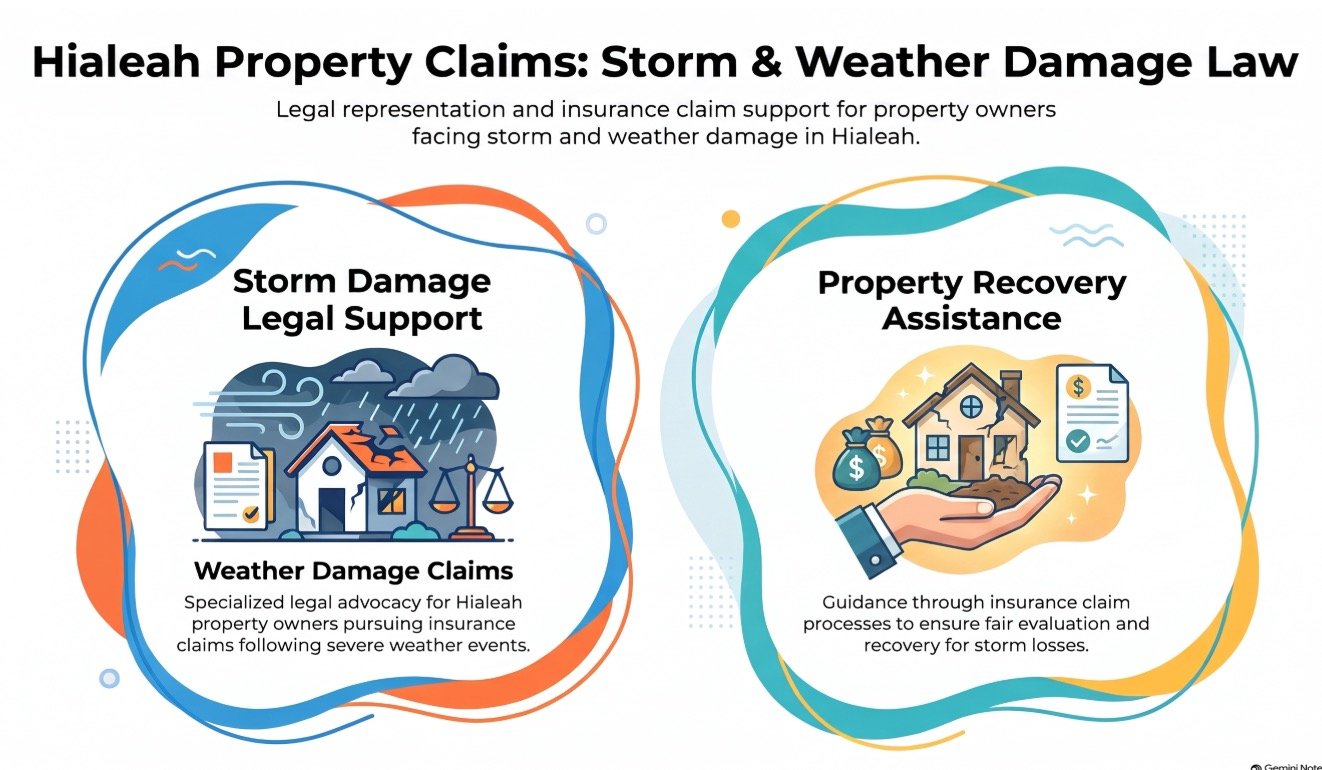
How We Can Help With Your Hialeah Property Claim Storm & Weather Damage Injury Claim
Hialeah property owners facing storm or weather damage may encounter disputes over coverage, repair costs, or delayed payments. A property claim lawyer can help clarify available options and support a fair, timely review of the loss. The work may begin with a careful Policy review to identify relevant provisions, deadlines, exclusions, and documentation requirements. Clear coverage interpretation can help owners understand how the insurer applies the policy to the reported damage and whether its decision aligns with the contract.
Counsel may organize photographs, estimates, invoices, inspection records, and correspondence so the claim is presented accurately. When an insurer requests additional information, legal guidance can help owners respond in an orderly and complete manner. If payment is delayed or disputed, a lawyer may communicate with the insurer, explain the basis for the claim, and seek a reasoned resolution. This assistance can reduce uncertainty for property owners and help them focus on restoring safe, usable homes and businesses.
Understanding Hialeah Property Claim Storm & Weather Damage Injury Cases


When severe weather damages a home or business, a property claim case concerns whether the resulting loss is covered and how the insurer evaluates its scope and cost. The policy establishes the insured property, applicable limits, deductibles, and conditions for submitting a claim. Coverage may depend on the documented damage, the policy language, and whether exclusions or other restrictions apply. Policy exclusions should be reviewed in context because their wording and exceptions can affect which losses qualify for payment.
OUR CONSULTATIONSARE FREE
START YOUR FREE CASE REVIEW

The claim process also considers the insured’s response after damage occurs. Mitigation duties generally require reasonable steps to prevent further harm, while avoiding unsafe repairs or unnecessary expense. Records of temporary measures, communications, and repair estimates can help clarify what was done and why. Insurers may inspect the property, request supporting documents, and compare estimates with observed conditions. A careful, accurate presentation helps the review address the full covered loss. When disagreements arise, the policy and available evidence guide evaluation of the disputed amount and coverage.
Don’t Wait. Call Our Florida Personal Injury Lawyers Now!
Common Causes of Hialeah Property Claim Storm & Weather Damage
Storm-related property claims in Hialeah commonly arise from hurricane winds that damage roofs, windows, and other structural components. Hail and windblown debris can also harm buildings, while heavy rainfall may cause flooding and water intrusion. Lightning strikes and resulting power surges can damage electrical systems and connected equipment.
Hurricane Wind Damage


Hurricane-force winds can damage roofs, siding, windows, and other parts of a property, while wind-driven debris may cause additional impact damage. In Hialeah, strong gusts can lift shingles, loosen roof coverings, and strain connections between structural components. Once the building envelope is compromised, rain may enter and damage ceilings, walls, insulation, and personal property. The extent of loss depends on wind intensity, construction quality, maintenance, and the property’s condition before the storm.
After an event, a careful inspection can help identify visible and concealed damage and document repairs needed to protect occupants. Insurers may assess whether wind caused the reported loss and apply policy terms, exclusions, or deductibles. Hurricane-resistant roof design and wind mitigation inspections can reduce vulnerability and help property owners understand protective features. Accurate records support timely, responsible claim review.
Hail and Debris
Beyond wind damage, hail and airborne debris can leave significant marks on Hialeah properties. Hail may dent metal roofing, crack shingles, damage siding, and break windows, while impacts can weaken materials that appear intact from the ground. Hail impact patterns, including the size, distribution, and direction of dents or fractures, may help establish the event’s cause and extent. During severe storms, branches and other objects can strike exterior surfaces or become lodged in roofs and walls. Debris penetration may create openings that expose interior areas to further damage, making timely inspection important. Property owners who document visible damage and preserve relevant records can support a clear claim review. A qualified professional can assess affected materials, distinguish storm-related damage from prior wear, and explain findings to insurers and property owners.
Heavy Rainfall Flooding
When heavy rainfall overwhelms drainage systems or saturates the ground, water can enter Hialeah properties through roofs, windows, doors, foundations, and low-lying openings. Flooding may damage flooring, walls, insulation, electrical components, and personal belongings, while prolonged moisture can encourage mold growth. Floodwater contamination is another concern, particularly when water carries sewage, chemicals, or other pollutants into living and work areas. Property owners should document visible damage, retain receipts for emergency repairs, and take reasonable steps to limit further loss without risking personal safety. Regular drainage maintenance, including clearing gutters and checking drains, can help reduce exposure but cannot prevent every storm-related intrusion. A careful assessment can identify the source and scope of damage and support an accurate insurance claim, helping affected occupants and property owners pursue appropriate recovery.
Lightning and Power Surges
Lightning can damage Hialeah properties directly or cause power surges that harm electrical systems and connected equipment. Lightning strikes may ignite roofing materials, damage wiring, or travel through utility lines into a building. Resulting surges can damage appliances, disrupt electronic systems, and create conditions that lead to electrical fires. Surge protection devices and properly maintained electrical systems may reduce certain risks, but they cannot prevent all storm-related losses. After a storm, property owners should document visible damage, preserve damaged equipment when safe, and arrange qualified inspections before repairs begin. Records of repair costs and service findings can help clarify the extent and cause of a loss. When a claim is disputed or underpaid, a property claim attorney can review policy terms, evidence, and insurer decisions to help determine available options.
Legal Rights of Hialeah Property Claim Storm & Weather Damage Injury Victims
Hialeah property owners whose homes or businesses are damaged by storms may have legal rights under their insurance policies and Florida law. These rights can help owners seek fair consideration of covered losses while protecting the safety and stability of families, employees, and neighbors who depend on the property. Policy terms, deadlines, and evidence requirements may affect the available remedies, so careful review is important.
Storm-damaged property owners in Hialeah may have insurance rights that help protect their homes, businesses, and communities.
- Insurers must handle claims according to applicable policy language and Florida requirements. Owners may request explanations of coverage decisions and retain relevant claim records.
- Policy exclusions can limit coverage, but an insurer’s reliance on an exclusion should be assessed against the policy wording and documented facts.
- When the amount of a covered loss is disputed, appraisal rights may be available under the policy. This process can help determine value, though it does not resolve every coverage question.
Owners may also consult qualified legal counsel to understand options, preserve rights, and pursue a resolution that supports those affected by storm damage.
Why Do Hialeah Property Claim Storm & Weather Damage Injuries Happen?
Storm and weather damage claims arise when severe conditions harm a property and create losses that may involve several causes. In Hialeah, strong winds, heavy rain, flooding, and lightning can damage roofs, windows, electrical systems, and structural supports. These conditions may also cause injuries when ceilings collapse, debris falls, or water makes walkways unsafe. Poor drainage, aging materials, and inadequate maintenance can increase a building’s vulnerability before a storm arrives.
Building code enforcement helps reduce risks by requiring construction and repairs to meet applicable safety standards. When standards are overlooked, weaknesses may leave occupants and visitors exposed to preventable harm. Emergency preparedness also affects the extent of damage: clear evacuation plans, maintained protective systems, and timely warnings can help people avoid hazardous areas. Property owners, contractors, and public agencies may each have responsibilities related to safe conditions. Identifying how weather, building conditions, and preparedness contributed can clarify why losses occurred and whose conduct may require review.
What Should You Do After a Hialeah Property Claim Storm & Weather Damage Injury?
After a storm-related injury, the affected person should seek prompt medical care and follow the treating provider’s recommendations. They should document property damage and relevant conditions with photographs, receipts, and other records. The insurer should also be notified promptly, and communications and claim details should be kept in writing.
Seek Medical Care
Anyone injured by storm-related property damage should seek prompt medical care, even when symptoms initially appear minor. A fall, impact from debris, or exposure to unsafe conditions can cause injuries that are not immediately apparent. A medical professional can assess the person’s condition, recommend appropriate treatment, and identify warning signs that require urgent attention. For severe pain, difficulty breathing, heavy bleeding, confusion, or suspected head or spinal injury, emergency services should be contacted without delay. For less urgent concerns, Urgent care may provide timely evaluation when a regular provider is unavailable. The injured person should follow clinical instructions and arrange any recommended follow-up visits. Caregivers can support recovery by helping with appointments and symptom monitoring, while allowing the patient to communicate directly with medical staff whenever possible.
Document the Damage
Photograph and record storm-related property damage as soon as it is safe to do so. A careful record can help clarify what occurred and support a complete assessment of the affected home. Capture wide views of each damaged area, then take close-up images of specific problems, including roof openings, broken windows, standing water, and damaged belongings. Note the date, location, and visible conditions, and keep receipts for urgent repairs or supplies. A qualified professional can do moisture mapping to identify hidden water intrusion and help document areas needing attention. Temporary protection, such as tarps or board coverings, may limit further damage, provided it can be installed safely. Preserve damaged materials when practical, and avoid discarding items before photographing and describing them. Organized documentation can help everyone involved understand the property’s condition.
Notify Your Insurer
Once the property is safe and the damage has been documented, the policyholder should notify the insurer promptly through the reporting method specified in the policy. The initial notice should identify the date and apparent cause of the loss, affected areas, and any urgent steps taken to prevent further damage. The policyholder should provide accurate information without guessing about the cause or extent of repairs. A Policy coverage review can help clarify applicable protections, exclusions, deductibles, and required supporting records. The insurer may assign an adjuster or request photographs, receipts, estimates, and access to the property. The policyholder should retain copies of all submissions and record the names, dates, and substance of communications. A claim deadline calendar can help track proof-of-loss requirements, inspections, and other policy deadlines, reducing the risk of missed obligations.
Don’t Wait. Call Our Florida Personal Injury Lawyers Now!
Critical Evidence in a Hialeah Property Claim Storm & Weather Damage Injury Case
Strong evidence can help establish the extent of storm damage, when it occurred, and whether the insurer handled the claim appropriately. Relevant materials may include photographs, repair and inspection records, witness statements, and insurance documents. Organized, dated records can make it easier to assess the property loss and support the claim.
- Photographs: Images taken soon after the storm can document visible damage and changing conditions.
- Repair and inspection records: Estimates, invoices, and professional reports can clarify the damage, necessary work, and repair costs.
- Witness statements and insurance documents: Accounts from people who observed the damage, along with claim forms and insurer correspondence, can help establish the timeline and claim history.
Weather Damage Photographs
Because storm damage can change quickly during cleanup and repairs, clear photographs may provide crucial evidence in a Hialeah property claim. Images should show affected areas from wide angles and close views, including roofs, walls, flooring, belongings, and visible water intrusion. A consistent sequence can help explain the damage’s location and extent to insurers and others evaluating the claim. Photographs taken promptly, when safe, may preserve conditions before debris removal or temporary protection alters the scene. Photo metadata, such as date and time, can help establish when images were captured; retain original files when possible. Image backups stored in a secure location can reduce the risk of losing this evidence. Careful documentation supports a fair review and helps property owners provide accurate information to those responsible for evaluating their losses.
Repair And Inspection Records
Repair and inspection records can help establish the condition of a Hialeah property after storm or weather damage and document the work performed. These materials may clarify when damage was discovered, which areas were assessed, and whether repairs addressed the reported conditions. Dated inspection reports, maintenance logs, and inspection timelines can help show how the property’s condition changed and whether concerns were identified promptly. Contractor invoices, written estimates, permits, and receipts may document the scope, cost, and timing of repair work. Consistent records can also distinguish storm-related repairs from routine maintenance or earlier damage. Property owners and managers who preserve these documents can support a fair review of the claim and help ensure necessary repairs are accurately considered. Organized records may help insurers and other reviewers evaluate losses and determine appropriate next steps.
Witness Statements
Witness statements can provide important evidence in a Hialeah property claim involving storm or weather damage and an injury. People who observed the incident, the property’s condition, or events shortly afterward may help clarify how the hazard developed and affected those present. Their accounts can also identify changes in weather, warnings, maintenance activity, or steps taken to assist an injured person.
Witness credibility depends on factors such as firsthand knowledge, consistency, and the ability to recall events accurately. Statements should distinguish direct observations from assumptions and avoid unsupported conclusions. Prompt statement preservation is important because memories may fade, witnesses may become difficult to locate, and details can change over time. Recording each witness’s contact information, observations, and the date of the account may support later review. Respectful, clear interviews can preserve useful information while recognizing each person’s role in helping others.
Insurance Claim Documents
Insurance claim documents can show how a Hialeah storm or weather-damage injury claim was reported, investigated, and evaluated. Policy declarations identify coverage limits, deductibles, insured locations, and relevant endorsements, helping clarify which losses may fall within the policy. Proof of loss forms record the claimant’s description and valuation of damage, while claim notices, adjuster reports, photographs, repair estimates, and correspondence may show how the insurer responded. Consistency among these records can support an accurate account of when damage occurred, what property was affected, and whether reported injuries relate to the incident. Missing or conflicting information may prompt questions about the claim’s handling or the scope of coverage. Organized copies, including dated submissions and delivery confirmations, can help preserve a clear record for insurers, legal representatives, and others evaluating the claim.
Long-Term Effects of Hialeah Property Claim Storm & Weather Damage Injuries
Storm and weather-related injuries may produce lasting effects, including chronic pain and mobility limitations that interfere with daily activities. Exposure to dampness, mold, or airborne debris can also contribute to persistent respiratory problems. Some individuals experience ongoing emotional distress, which may require continued care and support.
Chronic Pain and Mobility Issues
How long-term injuries affect daily life can become a central concern after storm or weather damage in Hialeah. Persistent pain from falls, impact injuries, or strenuous cleanup may limit a person’s ability to work, care for family, and participate in community life. Stiffness, weakness, or reduced balance can make stairs, household tasks, and travel difficult. A qualified medical provider can assess these limitations and recommend treatment, rehabilitation, or appropriate mobility aids. Consistent Pain management may help preserve function and support recovery, though progress can vary by injury and individual circumstances. When residents face lasting physical challenges, clear documentation of symptoms, treatment, and daily restrictions can help explain the injury’s practical effects. Timely support can also help affected individuals maintain dignity and access services while adapting to changed abilities.
Lasting Respiratory Problems
After severe weather damages a Hialeah property, exposure to mold, dust, or contaminated debris may contribute to lasting respiratory problems. Residents, cleanup workers, and others assisting with recovery may develop persistent coughing, wheezing, shortness of breath, or reduced exercise tolerance. Symptoms can continue after visible damage is repaired, particularly when damp materials or airborne irritants remain. Prompt medical assessment helps identify injury, guide treatment, and document how exposure affects daily activities. Depending on clinical findings, care may include medication, pulmonary rehabilitation, and respiratory monitoring to track lung function and support safe recovery. Property owners and responsible parties may need to address hazards that prolong exposure, while affected individuals should follow medical advice and keep records of symptoms and treatment. Timely attention can help protect health and support informed decisions about ongoing care.
Ongoing Emotional Distress
Severe weather damage to a Hialeah property can cause ongoing emotional distress, especially when displacement, financial uncertainty, or prolonged repairs disrupt daily life. Residents may experience anxiety, sleep difficulties, irritability, or persistent worry about future storms and the safety of their homes. Emotional triggers can include heavy rain, wind alerts, damaged belongings, or reminders of a difficult recovery. These reactions may affect family relationships, work, and the ability to make decisions about repairs or insurance claims.
Coping strategies can include seeking support from trusted people, maintaining routines, and consulting qualified mental health professionals when symptoms persist. A compassionate response from family members, neighbors, and service providers can help residents feel heard without minimizing their concerns. Documenting emotional effects and related treatment may also help when evaluating the broader consequences of storm-related property damage.
Proving Liability in Hialeah Property Claim Storm & Weather Damage Injury Cases
Proving liability in a Hialeah storm or weather damage claim requires evidence that connects the property loss to a covered event and establishes the insurer’s responsibility under the policy. Relevant documentation may include dated photographs, repair estimates, weather reports, and records showing when damage occurred. These materials can help distinguish storm-related harm from preexisting deterioration or unrelated causes.
Responsibility may also depend on who maintained the property and whether preventable conditions worsened the loss. Negligent Maintenance, such as failing to repair a known roof leak or clear blocked drainage, may support a claim when it contributed to damage. Building Code Violations can provide further evidence if an unsafe or deficient structure increased the impact of severe weather. Witness accounts and inspection findings may clarify how the damage developed and whether reasonable precautions were taken.
Careful evidence gathering helps property owners present an accurate account of their losses and pursue fair recovery. Clear records also help those supporting affected residents understand the facts and identify the policy provisions that apply.
Don’t Wait. Call Our Florida Personal Injury Lawyers Now!
Dealing With Insurance Companies After a Hialeah Property Claim Storm & Weather Damage Injury
When a Hialeah property owner reports storm or weather damage, the insurer’s investigation can significantly affect the claim’s outcome. Clear, accurate communication helps the insurer understand the reported loss and supports a fair review. Property owners can preserve photographs, repair estimates, receipts, and records of damaged belongings, while avoiding unsupported statements about the cause or extent of damage.
Policy interpretation matters because coverage, exclusions, deductibles, and notice requirements may shape how a claim is assessed. A careful review of the policy can identify relevant terms and questions that require clarification. During adjuster communications, owners should provide consistent information, keep copies of correspondence, and document inspection dates and requests. If an insurer disputes damage, delays a response, or offers an amount that appears inconsistent with documented losses, the owner may seek guidance from a qualified professional. Respectful, organized dealings can help resolve disagreements while protecting the owner’s ability to pursue appropriate coverage and maintain resources for those who depend on the property.
What to Expect During a Hialeah Property Claim Storm & Weather Damage Injury Claim Process
A Hialeah storm damage claim typically begins with an initial review of the policy, reported losses, and available evidence. The property owner then documents the damage while the insurer investigates the claim and evaluates the supporting information. The process concludes with a resolution, which may include payment or further discussion if the claim is disputed.
Initial Claim Review
During the initial claim review, the insurer examines the reported storm damage, policy terms, and supporting evidence to determine how to investigate the claim and whether coverage may apply. The adjuster may confirm when the loss occurred, identify the property involved, and assess whether the reported event falls within the policy period. Coverage scope depends on the specific provisions, limits, and conditions in the policy. The review also considers policy exclusions that may affect particular types or causes of damage. The insurer may request clarification about the claim or arrange an inspection before deciding. A property owner can benefit from understanding the insurer’s stated concerns and response deadlines. Clear communication at this stage helps the process remain organized and supports a fair, informed evaluation for everyone affected by the loss.
Damage Documentation
After the insurer begins its review, thorough damage documentation can help establish the property’s condition and the apparent effects of the storm. Property owners may record affected rooms, damaged belongings, and visible openings with dated photographs and clear written notes. A simple inventory can identify each item, its approximate age, and the observed damage, while receipts or prior photographs may help show its earlier condition. Moisture mapping can indicate where water has spread beyond visible surfaces and support decisions about drying or repair. In some cases, material sampling may help assess whether building components can be cleaned or require replacement. Records of temporary repairs, protective measures, and related expenses can also preserve a useful timeline. Careful documentation helps those responsible for the property communicate its needs and support an orderly claim process.
Insurer Investigation
Once a storm or weather damage claim is reported, the insurer typically investigates the loss to assess its cause, extent, and coverage under the policy. The process often begins with adjuster assignment, followed by a review of the policy, reported damage, and supporting records. The assigned adjuster may contact the property owner, request photographs or repair estimates, and arrange an inspection. During the visit, the adjuster may examine affected areas, document visible conditions, and ask when the damage occurred. Coverage verification may involve comparing the reported event with policy terms, exclusions, and applicable limits. The property owner can help by providing accurate information and preserving relevant documents. Clear, timely cooperation helps the insurer evaluate the claim, while the owner should keep copies of communications and note any questions requiring follow-up.
Resolution And Payment
The insurer’s decision marks the shift from investigation to resolution, but payment depends on the policy terms, the documented damage, and any applicable deductible or coverage limits. If the claim is approved, the written determination should explain covered losses, exclusions, and the amount offered. The property owner can compare that assessment with repair estimates, receipts, and other supporting records. When the offer does not reflect documented damage, Settlement negotiations may clarify disputed items and support a revised decision.
Once the parties agree, payment timelines depend on policy requirements, claim intricacy, and any outstanding documentation. The insurer may issue funds in stages, particularly when repairs are completed over time or a mortgage company is named on the payment. Promptly reviewing settlement documents and confirming payment instructions can help prevent avoidable delays. Clear communication supports timely repairs and helps restore safe conditions for residents and neighbors.
Compensation for Hialeah Property Claim Storm & Weather Damage Injury Damages
When severe weather damages a Hialeah property, compensation may cover documented repair costs and other losses allowed under the insurance policy and Florida law. Depending on the policy, payment may address necessary work to restore roofs, walls, windows, and other insured structures to their pre-loss condition. Coverage may also include reasonable Temporary housing expenses when storm damage makes a residence unsafe or uninhabitable, subject to applicable limits and requirements.
A claim may account for damaged belongings, such as furniture, clothing, and household equipment, when those items are covered and their loss is properly documented. Photographs, receipts, repair estimates, and inventories can help establish the extent and value of claimed property losses. Insurers may consider depreciation, deductibles, exclusions, and coverage limits when calculating payment. A property owner should review the policy and promptly provide requested records, while keeping copies of all submissions. Careful documentation can support a fair assessment and help preserve resources needed to restore the property and maintain a safe home for its occupants.
Economic vs Non-Economic Damages in Hialeah Property Claim Storm & Weather Damage Cases
Economic losses may include repair costs, damaged belongings, temporary housing, and other expenses caused by storm damage. Non-economic harm can involve disruption to daily life and loss of use of the property, though coverage depends on the policy and applicable law. Clear records, including estimates, receipts, photographs, and correspondence, help document claimed damages.
Economic Losses
Storm and weather damage claims may involve both economic and non-economic losses, but property insurance disputes generally focus on measurable financial harm. Economic losses include the reasonable costs of repairing or replacing damaged structures, personal property, and vital systems. Documentation such as estimates, invoices, photographs, and proof of ownership can help establish the amount and cause of each claimed expense. When damage makes a home or business unusable, temporary relocation costs may include lodging, transportation, and other necessary expenses, subject to policy terms and limits. Business interruption losses may involve documented lost income and continuing operating expenses during a covered closure. Accurate records help distinguish storm-related costs from unrelated spending and support a clear claim presentation. Insurers may review coverage provisions, deductibles, exclusions, and valuation methods when evaluating these financial losses.
Non-Economic Harm
Financial losses such as repair costs and temporary housing expenses can often be documented, while the personal strain of property damage is harder to measure. Non-economic harm may include emotional suffering, disruption to daily routines, and diminished enjoyment of a home that once provided stability and comfort. Storm damage can affect privacy, sleep, family activities, and a resident’s sense of security, particularly when repairs take an extended period. These effects differ from direct financial losses because they concern quality of life rather than bills or replacement costs. Their relevance to a property claim depends on the policy, applicable law, and circumstances of the loss. A careful assessment recognizes the human impact without treating every inconvenience as compensable. This distinction helps claimants and insurers evaluate the full consequences of storm damage fairly.
Documenting Damages
When documenting a Hialeah property claim, separating measurable expenses from personal effects can clarify the scope of the loss. Economic damages include repair estimates, temporary housing, cleanup, and replacement costs for damaged belongings. Receipts, invoices, contractor assessments, and photographs can support these amounts and help establish when expenses were incurred.
An Inventory checklist can record each affected item, its condition, age, and estimated value. For water intrusion, moisture mapping can identify damp areas that may not be visible and guide appropriate inspection or remediation. These records may help connect observed damage to the storm event and provide a clearer basis for communicating with the insurer.
Non-economic effects, such as disruption to daily routines or loss of use, should also be recorded separately. A dated account of these impacts can preserve relevant details while keeping them distinct from documented financial losses.
When a Hialeah Property Claim Storm & Weather Damage Injury Case Goes to Trial vs Settlement
Whether a Hialeah storm and weather damage property claim is resolved through settlement or proceeds to trial depends on the evidence, the extent of the loss, and the insurer’s response. Settlement may provide a more efficient resolution when both sides can agree on the value of repairs, replacement costs, and related losses. A careful settlement evaluation considers whether an offer adequately addresses documented damage and the property owner’s practical needs. If the insurer disputes responsibility, questions the scope of damage, or refuses a fair offer, litigation may become necessary.
Trial preparation involves organizing records, repair estimates, photographs, and qualified assessments to present a clear account of the loss. The property owner may also need to explain how the damage affected the home or business. A judge or jury then evaluates the evidence and determines the outcome. The decision to settle or proceed to trial depends on the claim’s circumstances, available proof, and the owner’s informed priorities.
Florida Laws That May Affect Your Hialeah Property Claim Storm & Weather Damage Case
Florida law can shape how a Hialeah property owner must report, document, and pursue a storm or weather damage claim. Policy terms and state requirements may affect notice, inspections, proof of loss, and how disagreements are handled. Careful compliance can help preserve a clear record and support fair consideration of damage affecting homes, businesses, and the people who rely on them.
- Policy interpretation: Coverage depends on the policy’s wording, exclusions, conditions, and applicable Florida law. Reviewing those provisions can clarify whether specific storm damage may qualify.
- Claim documentation: Photographs, repair estimates, receipts, and inspection findings can help establish the damage and its impact. Prompt, organized records may help insurers and property owners evaluate the loss.
- Dispute procedures: Depending on the policy and circumstances, appraisal or other resolution processes may apply. Appraisal deadlines and procedural requirements should be reviewed carefully to avoid preventable disputes.
These legal considerations can influence claim handling, but outcomes depend on the policy language and facts. Qualified guidance may help owners understand obligations while supporting timely, responsible decisions.
The Statute of Limitations for Hialeah Property Claim Storm & Weather Damage Injury Cases
Although storm damage may be visible immediately, the deadline to file a related legal action can depend on Florida law, the insurance policy, and the claim’s circumstances. For property owners in Hialeah, the statute of limitations sets a legal period for bringing certain court actions, while separate policy requirements may control when a loss must be reported or supporting documents submitted. These deadlines are not interchangeable. A Policy filing deadline may arise from the contract and can be shorter than the time allowed to sue. An appraisal demand deadline may also be specified by the policy or applicable procedures, and missing it could affect access to that process.
The applicable period can depend on the type of claim, the date of loss, and later developments in the dispute. Policy language and Florida law may change, so relying on general assumptions can create risk. Timely attention to each requirement helps preserve resources for households and communities affected by severe weather.
How a Hialeah Property Claim Storm & Weather Damage Lawyer Can Help You
After identifying the applicable deadlines, a Hialeah property claim storm and weather damage lawyer can help a property owner assess the policy, document the loss, and address disputes with the insurer. Policy interpretation clarifies duties, exclusions, deductibles, and notice requirements, while coverage analysis examines how the policy may apply to specific storm damage. The lawyer can organize evidence and present the claim’s basis clearly and with supporting documentation.
- Review policy language and claim correspondence to identify relevant coverage provisions and explain their practical effect.
- Help assemble photographs, repair estimates, inventories, receipts, and other records that show the damage and its financial impact.
- Evaluate the insurer’s investigation and written decision, then identify factual or policy issues that may warrant a response.
This work can help property owners pursue a fair assessment while preserving accurate records and reducing avoidable misunderstandings. Clear guidance also helps owners make informed decisions and maintain the resources needed to protect their households, tenants, employees, or community members affected by the loss.
When to Contact a Hialeah Property Claim Storm & Weather Damage Lawyer
When should a property owner contact a Hialeah property claim storm and weather damage lawyer? A consultation may be appropriate soon after a storm causes damage, particularly when the loss affects a home, business, or the safety of occupants. Early guidance can help the owner understand what information to preserve and how to communicate with the insurer while the claim is being reviewed.
Legal advice may also be useful when an insurer delays its response, questions the cause or extent of damage, offers an amount that appears inconsistent with documented repairs, or denies the claim. These circumstances may involve coverage disputes that require careful review of the policy and claim records. Policy deadlines can affect a property owner’s options, so waiting until a disagreement becomes urgent may create avoidable risks.
Owners serving tenants, customers, or community members should seek guidance when uncertainty about the claim could delay necessary repairs or safe access. Prompt attention supports informed decisions and responsible property management.
Why You Need an Experienced Hialeah Property Claim Storm & Weather Damage Lawyer
An experienced Hialeah property claim storm and weather damage lawyer can help property owners assess coverage, document losses, and respond to insurer decisions. After severe weather, a clear understanding of the policy and evidence of the damage can affect whether a claim is evaluated fairly. Counsel can review repair estimates, inspection findings, photographs, and communications to identify gaps or inconsistencies in the insurer’s assessment.
Policy Exclusions may be complicated, particularly when damage involves multiple causes or develops over time. An experienced lawyer can explain how relevant terms apply and present supporting facts in an organized manner. If an insurer issues Claim Denials or offers less than the documented loss, counsel can examine the stated reasons, preserve important records, and pursue available remedies.
This support can also help owners protect homes, businesses, tenants, and community resources from avoidable financial strain. By managing claim-related requirements and advocating for a reasoned review, legal counsel allows property owners to focus on recovery while seeking an outcome grounded in the policy and evidence.
How to Choose the Right Hialeah Property Claim Storm & Weather Damage Lawyer for Your Case
Choosing the right Hialeah property claim storm and weather damage lawyer requires careful review of the attorney’s experience with property insurance disputes, familiarity with Florida law, and approach to evaluating evidence. A careful selection can help policyholders pursue fair treatment while protecting the resources needed to restore their homes and support their families.
Verify attorney credentials through Florida Bar records, relevant training, and a history of handling property damage claims. The attorney should explain how inspections, photographs, repair estimates, policy language, and insurer communications may affect a claim. Clear answers can help clients understand the process and make informed decisions.
Prospective clients should also ask about the fee structure, including whether fees depend on recovery and whether case costs are separate. Written terms help prevent misunderstandings. During an initial consultation, the lawyer should describe likely steps, possible challenges, and expected communication. A measured, transparent approach allows clients to assess whether the attorney’s experience and working style suit their needs.
About The Law Offices of Anidjar & Levine
The Law Offices of Anidjar & Levine represents individuals pursuing property insurance claims, including disputes involving storm and weather damage. The firm assists property owners seeking answers after hurricanes, wind, rain, or other covered events cause damage. Its attorneys can review policy terms, assess claim communications, and explain available options when an insurer delays, underpays, or denies a claim.
Firm History reflects the firm’s work representing people facing legal and insurance challenges. In property matters, that work may involve gathering records, documenting losses, and communicating with insurers to pursue a fair review. Each claim depends on its facts, policy language, and supporting evidence, so clients can receive guidance suited to their circumstances.
Attorney Values include diligence, clear communication, and attention to clients’ concerns. These principles can help property owners understand the process and make informed decisions while managing the effects of damage. The firm’s role is to provide legal support and advocate for clients seeking an appropriate resolution to their insurance disputes.

Frequently Asked Questions
Does Homeowners Insurance Cover Mold Discovered After Storm-Related Water Intrusion?
Homeowners insurance may cover mold discovered after storm-related water intrusion when the storm caused a covered loss, and the homeowner took reasonable steps to limit further damage. Coverage depends on the policy, the water source, and prompt reporting. Coverage exclusions may apply to flooding, neglected maintenance, or delayed repairs. Mold remediation costs may be covered up to policy limits, so the homeowner should document damage, review policy terms, and contact the insurer promptly.
Can I Stay in My Home While Storm Damage Repairs Are Underway?
A resident may remain in a storm-damaged home only when qualified professionals determine that structural safety is not compromised and necessary utilities are reliable. Exposed wiring, unstable walls, contaminated water, or extensive roof damage may require temporary relocation. The repair contractor and local authorities can assess hazards and advise when utilities are restored. The resident should follow safety instructions, document damage, and coordinate access so repairs proceed without endangering household members or workers.
What Happens if My Mortgage Lender Receives Part of My Insurance Settlement?
When a mortgage lender receives part of an insurance settlement, it may require the check to be endorsed and may hold funds until repairs are documented. The Mortgage endorsement process varies by loan terms and lender procedures. Under escrow disbursement rules, funds may be released in stages after inspections, invoices, or proof of completed work. The homeowner should promptly contact the lender, confirm required documents, and coordinate payments with contractors to prevent avoidable delays.
Can I Choose My Own Contractor for Storm Damage Repairs?
Yes, the homeowner can generally choose a contractor for storm damage repairs, subject to policy terms and any lender requirements. Choosing a Licensed Contractor helps make certain the work meets applicable standards and protects the property’s occupants. Before repairs begin, the insurer may require Contractor Estimate Approval to confirm the proposed scope and cost. The homeowner should review the policy, obtain written estimates, and coordinate with the insurer and mortgage lender to prevent payment delays.
Are Temporary Housing and Emergency Repairs Covered Under Additional Living Expenses?
Temporary housing and emergency repairs may be covered, but coverage depends on the policy’s terms, limits, and the circumstances of the loss. Additional living expenses generally reimburse necessary increases in living costs when covered damage makes the home uninhabitable. Emergency repairs may qualify when they prevent further damage, though documentation and reasonable costs are important. The policyholder should keep receipts, photograph damage, notify the insurer promptly, and obtain approval when practical before arranging substantial work.
—————————
Storm damage can leave Hialeah property owners facing costly repairs, disputed coverage, and strict deadlines. Reviewing the policy, documenting damage, and keeping records of insurer communications can help clarify available options and support a well-documented claim. The Law Offices of Anidjar and Levine can assess the circumstances, explain relevant rights, and discuss appropriate next steps. For additional legal information, see our Hialeah Personal Injury Lawyer page. Prompt legal guidance may help protect a claimant’s interests while the insurer evaluates the loss and determines whether benefits are owed.