Blind spot crashes leave lasting harm. We secure camera footage, vehicle data, and witness accounts to prove what the other driver failed to see — before the evidence disappears.
The Law Offices of Anidjar & Levine helps injured people in Gainesville pursue blind spot car accident claims by preserving evidence, documenting injuries, and holding negligent drivers accountable. These cases often involve unsafe lane changes, poor use of mirrors, distracted driving, or large-vehicle blind spots.
A Gainesville Car Accident Lawyer can review crash reports, photos, video, witness accounts, vehicle damage, and medical records to prove fault and damages.
We also handle insurer communications and evaluate settlement offers against long-term needs.
Below, we explain what matters most next.
Main Takeaways
- A Gainesville blind spot car accident lawyer can evaluate fault using lane-change laws, crash reports, witness statements, and vehicle damage.
- Seek immediate medical care after a blind spot crash to document hidden injuries like concussions, soft tissue damage, or internal trauma.
- Preserve evidence quickly, including photos, skid marks, vehicle positions, nearby cameras, insurance details, and witness contact information.
- An injury lawyer can handle insurance adjusters, protect deadlines, prepare demand materials, and challenge efforts to minimize your injuries.
- Compensation may include medical bills, lost income, chronic pain, emotional trauma, mobility limitations, and other crash-related losses.
How We Can Help With Your Gainesville Blind Spot Car Accident Injury Claim
After a blind-spot collision, we can take immediate steps to protect your claim, preserve critical evidence, and handle the insurance company on your behalf. We review the crash report, secure photos and video, document vehicle damage, and track medical treatment so your losses are presented clearly. Gathering witness statements early can help preserve important details before memories fade or contact information becomes difficult to confirm.


We also evaluate insurance coverage, including liability, uninsured motorist, and personal injury protection benefits, to identify every available source of recovery. Our role is to manage deadlines, prepare demand materials, respond to adjusters, and challenge unfair attempts to minimize your injuries. While you focus on recovery and supporting those who depend on you, we build a claim grounded in evidence, service, and accountability. If negotiations do not produce a fair result, we are prepared to pursue the matter through litigation with care.
Understanding Gainesville Blind Spot Car Accident Injury Cases
OUR CONSULTATIONSARE FREE
START YOUR FREE CASE REVIEW

When a driver changes lanes, merges, backs up, or turns without recognizing a vehicle in a blind spot, the resulting crash can raise complex questions about fault, visibility, and driver conduct. We help you understand how these cases are evaluated, including whether a reasonable driver should have checked mirrors, signaled, adjusted speed, or yielded before moving.
In Gainesville, blind spot injury cases often require careful review of police reports, vehicle damage, roadway layout, witness accounts, and available video. Lane merging laws may shape liability, but each claim depends on the facts and how the collision affected your health, work, and daily responsibilities.


We also explain injury settlement timelines, so you know why treatment progress, medical records, insurance review, and negotiations matter. Our goal is to protect your interests while helping you pursue accountability in a manner that supports recovery, stability, and service to those who depend on you.
Gainesville Blind Spot Accident Statistics: Why Distraction and Lane Changes Are So Dangerous
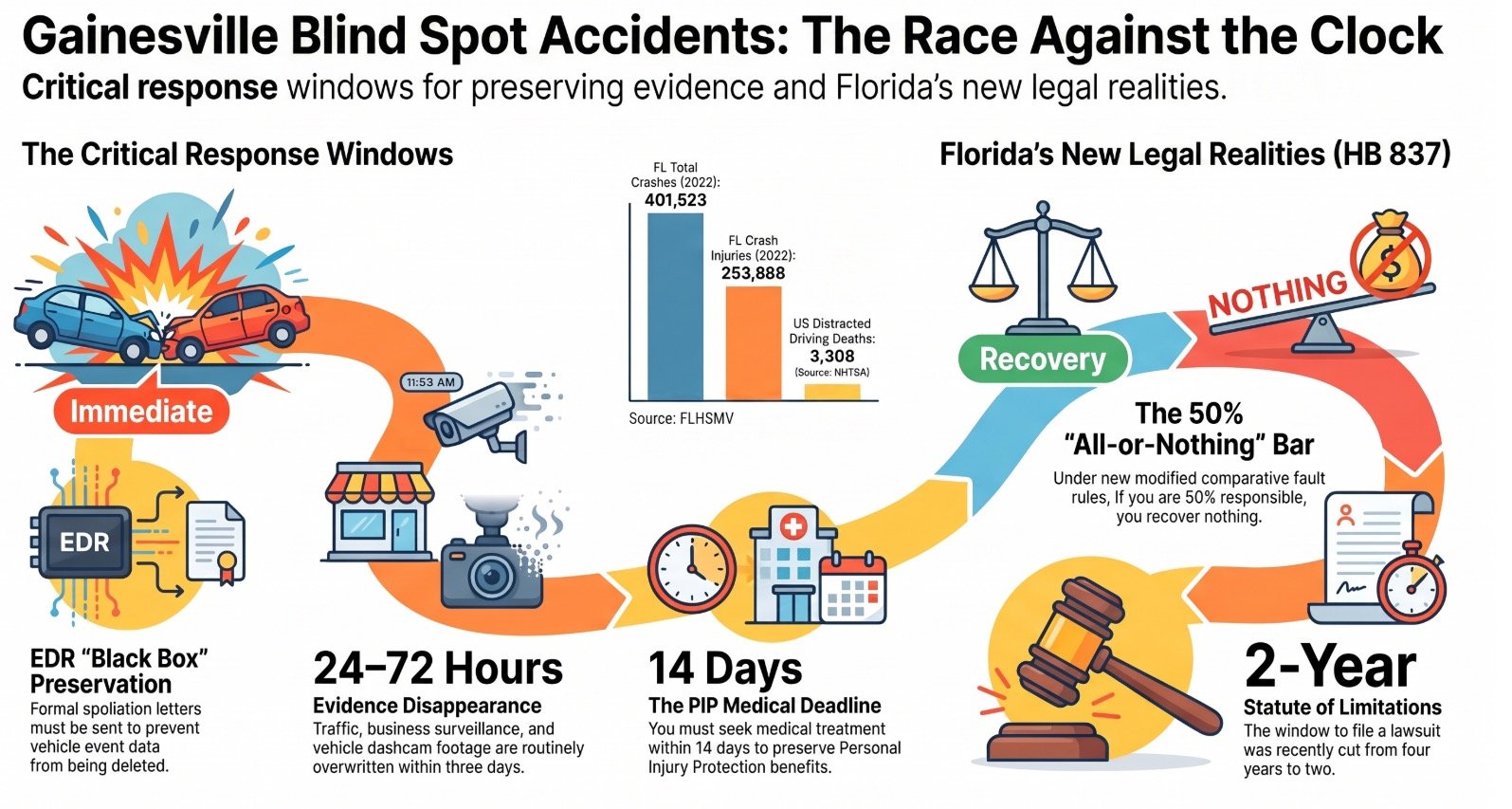
Florida’s crash data shows why blind-spot accidents are among the most preventable — and most serious — on Gainesville’s roads. According to the FLHSMV 2022 Florida Traffic Crash Facts, Florida recorded 401,523 total crashes in 2022, with more than 253,888 documented injuries. A significant share of serious lane-change and merging collisions involve distracted or inattentive driving — the same behaviors that make blind spots deadly. NHTSA data shows 3,308 people died nationally in distracted driving crashes in 2022, and that figure reflects only reported incidents.
In Gainesville, the mix of university traffic, cyclists, motorcyclists, and large commercial vehicles creates a road environment where checking blind spots before lane changes is not optional — it is a legal duty. Under Florida HB 837 (2023), if an insurer argues you were 50% or more responsible for the crash, you recover nothing. Camera footage and vehicle data are the most powerful tools for countering that argument — which is exactly why preserving them within the first 24 to 72 hours is critical.
Florida PIP and No-Fault Coverage After a Blind Spot Accident
Florida is a no-fault state, which means your own Personal Injury Protection (PIP) coverage pays first after a blind spot crash — regardless of who caused it. Florida law requires a minimum of $10,000 in PIP coverage, which covers 80% of reasonable medical bills and 60% of lost wages, up to that limit. To preserve your PIP benefits, you must seek medical treatment within 14 days of the crash. If you wait longer, you may lose access to PIP entirely — even if your injuries were documented at the scene.
For a complete explanation of how Florida’s no-fault system interacts with a third-party claim against the at-fault driver, read: Florida PIP Insurance Explained.
In blind-spot cases involving commercial trucks or other large vehicles, additional commercial policies may stack on top of personal coverage. We identify all applicable policies and ensure that no available recovery sources are overlooked.
Common Causes of Gainesville Blind Spot Car Accidents
We often see Gainesville blind-spot car accidents arise from unsafe lane changes, poor mirror adjustment, distracted driving, and limited visibility around large vehicles. When you share the road with cars, trucks, buses, and commercial vehicles, these risks can turn a routine operation into a serious collision. We examine these common causes so you can better understand how negligence may contribute to your injury claim.
Unsafe Lane Changes
Because lane changes require careful judgment, unsafe movement into another lane can quickly lead to a serious blind-spot collision in Gainesville traffic. We often see these crashes when a driver drifts, merges too soon, or changes lanes without confirming the presence of surrounding vehicles. Lane position matters because even a small miscalculation can place another person in danger, especially on busy roads near schools, hospitals, and service areas. When drivers rush right-of-way decisions, they may cut off motorists, bicyclists, or motorcyclists who have little time to react. We help you understand how an unsafe lane change contributed to your injuries and identify the evidence needed to prove fault. By holding careless drivers accountable, we support safer roads and protect those who serve our community daily.
Poor Mirror Adjustment
Unsafe lane changes often stem from a simple but dangerous problem: poor mirror adjustment. When mirrors point too far inward or outward, drivers lose sight of nearby vehicles, cyclists, and motorcyclists. Poor mirror visibility can turn routine merging into a serious risk, especially on Gainesville’s busy roads and near service-focused areas such as hospitals, schools, and community centers.
We encourage you to treat mirror positioning as a basic duty of care before driving. Proper side mirrors should reduce blind spots, while the rearview mirror should clearly frame the road behind you. When drivers neglect this step, lane change errors become more likely, and innocent people can suffer preventable harm. After a crash, we examine mirror use, vehicle position, and witness accounts to help establish responsibility.
Distracted Driving Habits
Often, distracted driving habits create the split-second inattention that turns a blind spot into a collision. When a driver looks away to read a message, adjust navigation, or respond to a phone distraction, they stop monitoring nearby lanes with the care other drivers deserve. Texting while driving is especially dangerous because it takes eyes, hands, and attention away from traffic at once. In Gainesville traffic, a brief lapse can cause a driver to merge, turn, or drift without noticing a vehicle beside them. We encourage you to pay attention as a duty to everyone sharing the road. After a crash, we examine phone records, witness statements, and roadway evidence to determine whether distraction contributed to the blind spot collision and the resulting injuries.
Large Vehicle Blind Spots
When a commercial truck, bus, delivery van, or large SUV changes lanes, its size can hide nearby vehicles in areas the driver cannot see through mirrors alone. These blind spots can place you, your passengers, and others at serious risk — especially on busy Gainesville roads where traffic shifts quickly. Large vehicles need extra space, careful signaling, and disciplined observation before turning, merging, or backing. Strong driver training helps operators understand no-zone dangers, mirror limits, and the need to check surroundings before moving. Truck safety also depends on proper vehicle maintenance, adjusted mirrors, working cameras, and company policies that prioritize public protection. When drivers or employers ignore these duties, we help identify how the crash happened and pursue accountability for the harm caused.
Legal Rights After a Gainesville Blind Spot Car Accident
After a blind-spot collision in Gainesville, injured people have the right to seek compensation if another driver’s negligence caused the crash. We help you understand those rights, protect your claim, and pursue recovery with purpose and dignity.
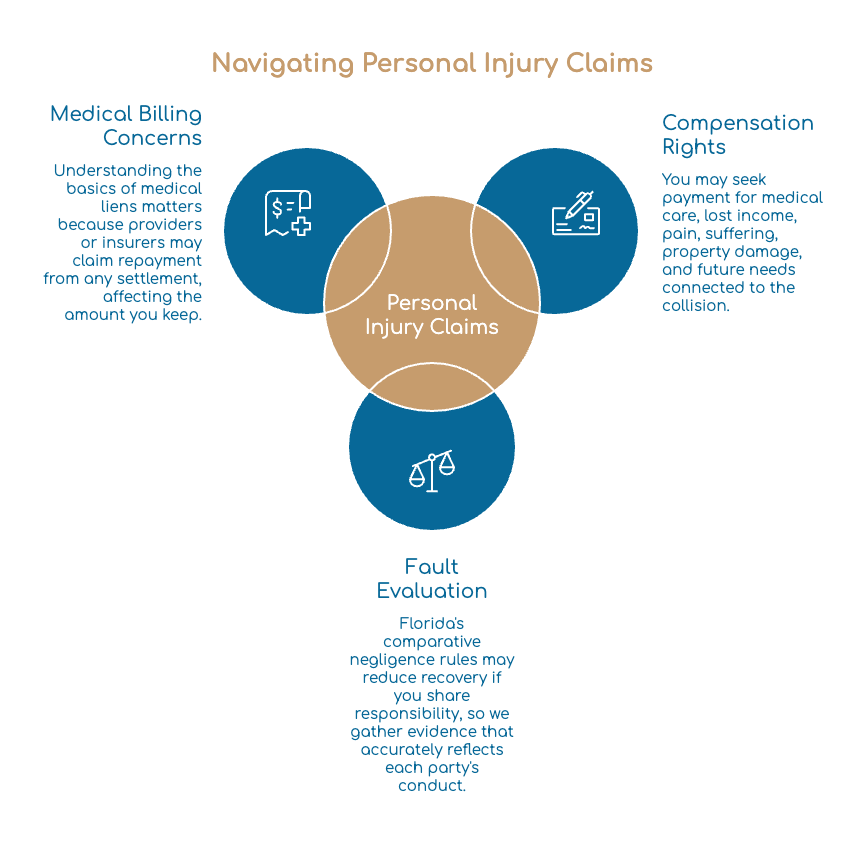
- Compensation rights: You may seek payment for medical care, lost income, pain, suffering, property damage, and future needs connected to the collision.
- Fault evaluation: Florida’s comparative negligence rules may reduce recovery if you share responsibility, so we gather evidence that accurately reflects each party’s conduct.
- Medical billing concerns: Understanding the basics of medical liens matters because providers or insurers may claim repayment from any settlement, affecting the amount you keep.
We know injury claims can affect your health, family, and ability to serve others. By acting promptly, preserving records, and communicating carefully with insurers, we can help you pursue fair compensation while staying focused on recovery.
Why Do Gainesville Blind Spot Car Accident Injuries Happen?
Why do blind spot crashes happen so quickly on Gainesville roads? We see them occur when a driver changes lanes, merges, or turns without confirming that another vehicle, cyclist, or pedestrian is nearby. Blind spots limit what mirrors reveal, and one careless movement can place you in immediate danger.
Traffic congestion often makes this risk worse. When vehicles crowd Archer Road, University Avenue, or I-75, drivers may rush lane changes to keep moving. Poor following distance leaves little time to react when someone enters a hidden area. Speeding also increases impact force, reducing the chance that either driver can avoid harm.
Nighttime visibility creates another serious concern, especially near poorly lit intersections, campuses, and parking areas. Headlight glare, dark clothing, rain, and unfamiliar road layouts can make vulnerable road users harder to detect. When drivers fail to slow down, check carefully, and share the road responsibly, preventable blind-spot injuries occur.
What Should You Do After a Gainesville Blind Spot Car Accident?
After a Gainesville blind spot car accident, we recommend that you seek medical attention immediately, even if your injuries seem minor. We also urge you to document the crash by gathering photos, witness information, and insurance details when it is safe to do so. Once your immediate needs are addressed, we can help you contact a lawyer to protect your rights and evaluate your injury claim.
Seek Medical Attention
If you have been hurt in a Gainesville blind spot car accident, seek medical attention as soon as possible — even when your symptoms seem minor at first. You may want to help others, check on passengers, or return to daily responsibilities, but your health must come first. A prompt medical evaluation can identify hidden injuries, including concussions, soft tissue damage, and internal trauma, before they worsen.
We also rely on timely treatment records as post-accident documentation to show the connection between the crash and your injuries. This medical record can support a later claim and may also assist credibility analysis by aligning reported harm with professional findings. Follow every treatment plan, attend appointments, and protect your recovery.
Document the Crash
While your safety and medical needs come first, you should document the crash as soon as you can. Gather clear photo evidence of vehicle positions, blind spots, skid marks, traffic signals, road conditions, debris, and visible injuries. If it is safe, photograph license plates, driver information, insurance cards, and any nearby cameras that may have recorded the collision.
Also, preserve witness accounts by asking bystanders for names, phone numbers, and brief statements about what they saw. Their observations may clarify whether a driver failed to check a blind spot before changing lanes or merging. Keep damaged property, medical discharge papers, and repair estimates together in one place. Careful documentation helps protect your account, supports fair evaluation, and honors our shared responsibility to seek the truth.
Contact a Lawyer
When should you involve a lawyer after a Gainesville blind spot car accident injury? Contact counsel as soon as urgent medical needs are addressed and the crash is documented. Early legal guidance helps preserve evidence, identify liable parties, and protect your ability to recover losses that affect your work, family, and service to others. A lawyer can manage communication with insurance adjusters, reducing the risk that statements are misunderstood or used against you. We can also review medical records, wage information, repair estimates, and injury documentation so your claim reflects the full impact of the collision. Before accepting any settlement, you should understand future treatment needs and long-term limitations. Prompt action supports a stronger claim and allows you to focus on recovery with dignity.
Critical Evidence in a Gainesville Blind Spot Car Accident Injury Case
We use essential evidence to show how the blind spot crash happened, who acted carelessly, and how the collision harmed you. Key proof may include: 1. police crash reports, 2. vehicle damage patterns, 3. witness statements or camera footage, and 4. event data recorder (EDR) information. When we preserve and analyze this evidence early, we strengthen your injury claim and reduce the risk of disputed facts.
Police Crash Reports
After a blind spot crash in Gainesville, the police crash report often becomes one of the first records insurers, attorneys, and investigators review. We use this report to understand what officers observed, what each driver reported, and whether citations or roadway factors may support driver negligence. For you, it can also help preserve early details before memories fade. We look for diagrams, statements, crash location, time, weather, and listed injuries, because these details may affect insurance coverage and later claim decisions. Police reports also assist in proving medical causation when your treatment history matches the reported collision. Officers may also help gather witness contact information, allowing us to follow up respectfully, verify accounts, and build a clearer record for your injury case.
Vehicle Damage Patterns
Vehicle damage patterns can confirm, clarify, or challenge the details found in a Gainesville police crash report. We examine scrapes, dents, paint transfer, and impact height to understand how a blind spot collision occurred. Where contact began, crushed panels can reveal vehicle angle, speed, and movement. These physical details help us serve you by enabling us to build a clearer, evidence-based claim. We also compare damage patterns with medical findings, photographs, repair records, and roadway conditions. By identifying inconsistencies early, we can protect your case from unfair blame and present the full scope of harm caused by negligent driving in Gainesville.
Witness Statements
Witness statements can shape the outcome of a Gainesville blind spot car accident injury case, especially when the drivers dispute lane position, signaling, speed, or right of way. We look for people who saw the vehicles before impact, observed unsafe lane changes, or heard immediate admissions after the crash. Their accounts can help us serve injured clients by confirming facts that physical damage alone may not fully explain. Witness credibility matters, so we assess each person’s location, attention, relationship to the parties, and ability to recall details. We also compare the consistency of statements across interviews, police reports, and later testimony. When accounts align, they strengthen your claim. When they conflict, we identify the cause and prepare careful responses that protect your position and support fair compensation.
Camera Footage
Camera footage can reinforce or challenge witness statements by showing the moments before, during, and after a collision in a Gainesville blind spot. We look for traffic cameras, dashcams, business surveillance, and residential recordings that may capture vehicle position, speed, signaling, and spacing. This evidence can help you understand whether a driver checked mirrors, drifted across lane markings, or merged without proper care. It may also clarify nighttime visibility, headlight use, weather conditions, and whether surrounding drivers had enough time to react. Because recordings can be overwritten quickly, we act promptly to identify sources and preserve footage. When we review the video carefully, we can serve your claim by building a clearer timeline, addressing disputed facts, and supporting accountability for the harm caused.
Event Data Recorder (EDR) Evidence in Blind Spot Cases
Most passenger vehicles manufactured after 2012 contain an Event Data Recorder (EDR) that captures speed, braking, throttle position, and steering data in the seconds before and during a crash. According to NHTSA, EDR data is especially valuable in blind-spot cases, where insurers routinely argue that the injured driver was speeding or drifting when the collision occurred. The at-fault vehicle’s EDR can confirm whether the driver was accelerating or braking before impact, and your vehicle’s EDR can show whether you were in the lane well before the merge began. We send formal spoliation letters to the responsible driver, their insurer, towing companies, and repair facilities immediately upon retention to prevent EDR data from being overwritten.
For more on how black box data protects claims, read: How Black Box Data Can Help Your Car Accident Case.
Long-Term Effects of Gainesville Blind Spot Car Accident Injuries
We recognize that a blind spot crash can affect you long after the initial impact, especially when chronic pain limits your daily activities. We also consider how lasting mobility restrictions may interfere with work, transportation, and independence. When emotional trauma develops after the collision, we evaluate its role in your recovery and the full value of your injury claim.
Chronic Pain Conditions
Although some injuries seem manageable after a blind spot collision, chronic pain can develop weeks or months later and disrupt nearly every part of a person’s life. We recognize how persistent neck, back, shoulder, or nerve pain can affect your work, caregiving duties, sleep, and your ability to serve others consistently. These conditions often require ongoing treatment, diagnostic testing, medication, therapy, and careful documentation from medical providers.
We build a compensation strategy that accounts for present suffering, future care needs, lost income, and diminished daily functioning. Because chronic pain may not stabilize quickly, settlement timelines can depend on medical progress and evidence of lasting harm. We help you avoid undervaluing your claim before the full impact becomes clear, protecting your right to fair recovery.
Lasting Mobility Limitations
Persistent pain can also lead to lasting mobility limitations after a Gainesville blind spot car accident, especially when injuries affect the spine, hips, knees, shoulders, or nerves. We see how reduced mobility can limit your ability to work, care for family, volunteer, worship, or serve others in meaningful ways. Walking, lifting, driving, and standing may require therapy, assistive devices, or permanent changes to daily routines.
We also understand that these limitations can complicate your claim. Settlement delays can postpone access to treatment, home modifications, and financial support. Video evidence can show the impact of the crash, vehicle positions, and changes in your movement and activity after the collision. We use clear documentation to connect your injuries with the losses you now face and pursue compensation that reflects your actual needs.
Emotional Trauma Effects
After a serious blind spot collision, emotional trauma can continue long after visible injuries begin to heal. We often see anxiety, sleep disruption, irritability, and fear of driving affect daily responsibilities, family roles, and service to others. These effects can weaken confidence, limit independence, and make ordinary travel feel unsafe.
We encourage you to treat emotional recovery as a critical part of restoration, not an afterthought. Counseling, medical evaluation, support groups, and consistent coping strategies can help you regain stability and focus. When trauma interferes with work, caregiving, or community duties, we document those losses carefully. We also consider how emotional distress affects pain management and physical rehabilitation. By recognizing these long-term harms, we help protect your claim and future well-being after a blind-spot crash.
Proving Liability in Gainesville Blind Spot Car Accident Injury Cases
When a blind spot collision occurs, proving liability requires more than showing that one driver failed to see another vehicle. We examine whether the at-fault driver checked mirrors, signaled before changing lanes, maintained a proper lookout, and adjusted to roadway conditions. These facts help us determine whether careless conduct caused your injuries.
We also review physical evidence, crash reports, traffic camera footage, witness statements, vehicle damage, and medical records. If you were riding a motorcycle or bicycle, helmet use may become relevant to injury issues, though it does not excuse another driver’s unsafe lane change. Our role is to connect each fact to the legal duty every driver owes others on Gainesville roads.
We understand that you want accountability that protects not only you but also the community. By building a clear liability case, we help show how responsible driving serves everyone who shares the roadway.
To understand how compensation values are calculated after Florida crashes, read: Average Car Accident Settlement in Florida.
Dealing With Insurance Companies After a Gainesville Blind Spot Car Accident
Insurance companies often move quickly after a blind spot crash, and their early questions can affect the value of your injury claim. We help you protect your words, records, and priorities before adjusters use incomplete details against you. A careful communication strategy limits unnecessary statements, keeps discussions consistent, and allows you to focus on recovery and service to your family, work, and community.
We also stress the importance of claim documentation from the beginning. Medical records, repair estimates, wage information, photographs, and witness details should support the harm you suffered and the responsibility of the unsafe driver. Strong evidence organization helps us respond to challenges with accuracy rather than guesswork.
During settlement negotiation, we measure offers against documented losses and long-term needs — not pressure or convenience. We do not accept quick proposals that ignore treatment, pain, reduced income, or future limitations. Our role is to deal firmly with insurers while keeping your claim orderly, credible, and prepared.
What to Expect During a Gainesville Blind Spot Car Accident Injury Claim Process
We guide you through each stage of a Gainesville blind spot car accident injury claim, beginning with reporting the accident and preserving crucial evidence. We then investigate blind spot fault, connect your injuries to the crash, and document the damages that support your claim. As the process moves forward, we negotiate with the insurance company to pursue compensation that reflects your losses.
Reporting the Accident
After a blind spot crash in Gainesville, reporting the accident promptly creates the official record that can support your injury claim. We encourage you to call law enforcement, seek medical attention, and exchange information while remaining calm and respectful. When officers arrive, provide clear facts, including location, vehicle positions, visible injuries, and any witnesses who stopped to help. We also note seasonal weather factors, such as rain, glare, or fog, because they may affect what drivers could see. Mention traffic signal compliance when relevant, including lights, signs, and lane-control signals. You should not guess or accept blame at the scene. Instead, preserve accuracy by requesting the crash report number and documenting your next steps so your claim begins with reliable information and timely notice.
Investigating Blind Spot Fault
A prompt report provides the investigation with a reliable starting point, but a fault in a blind-spot crash often requires a closer review of how each driver moved before impact. We examine lane positions, mirror use, turn signals, speed, and whether a safe lookout was kept. We also review traffic signal violations, nearby camera footage, witness accounts, and vehicle damage patterns. When pedestrians are involved, the pedestrian right-of-way can clarify whether a driver failed to yield while changing lanes or turning. We gather records promptly because reliable evidence can disappear quickly. As we serve you through this process, we focus on accountability — not assumptions. Our goal is to identify careless conduct, explain how the crash occurred, and build a clear fault analysis for your claim.
Proving Injury Damages
Once the fault becomes clearer, proving injury damages requires careful documentation of how the blind spot crash affected your health, work, and daily life. We help you gather medical records, diagnostic results, treatment notes, photographs, wage records, and personal accounts that show the full impact of your injuries. Short-term damage documentation can explain immediate pain, missed shifts, mobility limits, and the support you needed from family, coworkers, or caregivers.
For guidance on how medical documentation strengthens injury claims, read: Why Medical Records Matter in Personal Injury Cases.
We also look beyond the first weeks of treatment. Future medical treatment planning helps clarify whether you may need therapy, medication, follow-up visits, surgery, or assistive care. By organizing evidence accurately and purposefully, we present your losses in a way that reflects your responsibilities, your service to others, and your need for continued stability.
Negotiating Insurance Compensation
When the insurance claim enters negotiation, we use evidence of fault and damages to demand compensation that reflects the full impact of the blind-spot collision. We present medical records, wage loss proof, repair estimates, and testimony showing how the crash changed your daily life and ability to serve others. Insurers often minimize injuries or dispute liability, so we use targeted negotiation tactics to challenge weak offers and protect your interests. Our settlement strategy accounts for future treatment, reduced earning capacity, pain, suffering, and any lasting limitations. We keep you informed, explain each offer, and advise whether acceptance serves your long-term needs. If the insurer will not act fairly, we prepare to escalate the claim while maintaining steady pressure for a just resolution.
Compensation for Gainesville Blind Spot Car Accident Injury Damages
After a blind spot collision in Gainesville, we can pursue compensation that reflects the full scope of your losses — not just the most obvious repair bills or initial medical expenses. We examine every available source of recovery, including no-fault coverage, liability insurance, and any additional policies that may apply when another driver’s unsafe lane change caused harm.
We also address comparative fault issues, because insurers may argue that you could have avoided the crash. We counter those claims with evidence, witness accounts, vehicle damage analysis, and traffic law violations. Our goal is to protect your claim from unfair reductions and help you secure funds that support your recovery, responsibilities, and service to those who depend on you.
When we build your case, we focus on documentation, deadlines, and strategic communication. You should not have to carry this burden alone while recovering and restoring stability after a preventable collision.
Economic vs. Non-Economic Damages in Gainesville Blind Spot Car Accident Cases
We evaluate economic damages, such as medical bills and lost income, alongside non-economic damages that reflect your pain, emotional harm, and reduced quality of life. In a Gainesville blind spot car accident case, we must connect each loss to the crash through records, expert opinions, and credible evidence. By clearly establishing the damage value, we help you pursue compensation that reflects both financial costs and personal harm.
Medical Bills and Losses
Although every blind spot crash has its own facts, the financial impact often begins with medical bills and extends into losses that do not appear on an invoice. We help you identify economic damages, including emergency care, diagnostic testing, surgery, rehabilitation, medication, assistive devices, and future treatment needs. We also evaluate lost wages, reduced earning capacity, transportation costs, and household services you cannot perform while recovering.
We organize records, review billing, and connect each expense to the collision so insurers cannot minimize what you have carried. Coverage disputes may delay payment, especially when multiple policies or drivers are involved. We monitor the claim timeline, respond to requests, and press for full documentation-based recovery. By providing clear evidence of your losses, we support your efforts to restore stability.
Pain and Emotional Harm
When a blind-spot collision disrupts your well-being, the harm often extends beyond the measurable costs. We understand that pain, anxiety, sleep disruption, and reduced independence can affect how you care for your family, work, and community. These non-economic damages recognize the human impact of an injury — not just its financial cost. After a Gainesville crash, you may need ongoing treatment, trauma counseling, or support for emotional strain tied to driving, movement, or daily responsibilities. We also consider how physical discomfort limits service, relationships, and meaningful routines. Medical documentation can reflect symptoms, treatment plans, and functional limits, but your lived experience matters as well. We help you identify these losses with dignity, so your claim accounts for both bodily pain and emotional harm.
Proving Damage Value
Pain and emotional harm merit recognition, but a Gainesville blind spot accident claim also needs proof that assigns a defensible value to every loss. We help you separate economic damages from non-economic damages, then support both with disciplined evidence. Economic losses include emergency care, follow-up treatment, medication, rehabilitation, lost wages, and reduced earning ability. Medical documentation anchors these figures and connects each cost to the collision.
Non-economic damages require careful presentation because they address suffering, anxiety, inconvenience, and diminished daily function. We listen to how the injury affects your service to family, work, and community, then translate those effects into credible proof. Strong records, witness statements, and consistent treatment history help us pursue compensation that reflects the full measure of your harm.
When a Gainesville Blind Spot Car Accident Injury Case Goes to Trial vs. Settlement
Before a Gainesville blind spot car accident injury case reaches trial, we usually evaluate whether a settlement can fully account for your medical expenses, lost income, pain and suffering, and long-term losses. We also consider whether the insurer recognizes the harm you have endured and the support you will need as you continue serving your family, workplace, and community.
When negotiating settlements, we prepare each claim as if a judge or jury may ultimately hear it. That preparation helps us present clear evidence, address disputed facts, and push for a fair resolution without unnecessary delay. If the other side refuses to value your losses responsibly, we may recommend a trial.
Our trial strategy focuses on proving how the blind-spot collision occurred, how it changed your daily life, and why compensation should reflect both present and future needs. We guide you through each decision, so you remain informed, prepared, and supported throughout the process.
Florida Laws That May Affect Your Gainesville Blind Spot Car Accident Case
Trial and settlement decisions often depend on how Florida law applies to fault, insurance coverage, deadlines, and available compensation. We assess these rules carefully because your recovery may affect your ability to support your family, return to work, and continue serving others.
- Comparative negligence may reduce compensation if an insurer claims you shared responsibility, such as by speeding, drifting lanes, or failing to react safely. Under HB 837 (2023), a 50% or greater finding of fault eliminates all recovery.
- Insurance requirements can shape the early claim process, including coverage available through personal injury protection and any bodily injury or uninsured motorist policies.
- Traffic violation penalties may strengthen liability evidence when a driver made an unsafe lane change, failed to signal, followed too closely, or ignored roadway duties.
We gather police reports, witness statements, evidence of vehicle damage, and medical records to connect your losses to the law. By applying Florida law with precision, we can pursue accountability while protecting your dignity.
The Statute of Limitations for Gainesville Blind Spot Car Accident Injury Cases
When a blind spot crash causes serious injuries, Florida’s statute of limitations sets a strict deadline for filing a lawsuit against the at-fault driver or another responsible party. In most negligence cases, you must file within two years from the crash date under Florida HB 837 (2023). If that deadline is missed, the court may bar the claim — no matter how severe your losses are.
This timeline also affects evidence preservation. Vehicle damage, camera footage, witness recollections, medical records, and roadway details can fade or disappear over time. Acting early helps preserve the evidence showing how the blind-spot collision occurred and who should be held accountable.
The deadline can also influence negotiation tactics. Insurance companies know when time is running short, and they may use delay to pressure injured people into unfair decisions. By understanding the limitation period, we can treat your claim with the urgency, care, and responsibility it merits from the beginning.
How a Gainesville Blind Spot Car Accident Injury Lawyer Can Help You
After a blind spot collision, we can help you identify the cause of the crash, gather the evidence needed to prove fault, and deal with the insurance company on your behalf. We recognize that you may be focused on healing, supporting family, and returning to the work of caring for others — so we shoulder the legal burden with care.
- We investigate driver conduct, vehicle damage, roadway factors, witness accounts, and available camera footage to build a clear liability case.
- We calculate losses, including medical care, lost income, diminished earning capacity, pain, and future needs, while preserving documentation for settlement or trial.
- We review wrongful death eligibility when a family has lost a loved one, and we assess whether reckless conduct may support punitive damages recovery.
Our role is to protect your rights, present your claim with precision, and pursue the compensation the law allows.
When to Contact a Gainesville Blind Spot Car Accident Injury Lawyer
Because evidence can disappear quickly, you should contact a Gainesville blind spot car accident injury lawyer as soon as your immediate medical needs are addressed. Reaching out within days, not weeks, is often essential — especially if vehicles need inspection, witnesses may move, or insurance adjusters begin calling.
After a crash, gather medical records, photographs, insurance details, and any information about nearby cameras or witnesses. Prompt action helps us serve you with care, preserve important facts, and reduce burdens while you focus on recovery and family responsibilities.
Attorney consultation timing also matters when fault is disputed, injuries worsen, or another driver claims you were in their blind spot. An immediate case assessment can identify urgent deadlines, needed documentation, and communication concerns with insurers. If you are unsure whether your situation requires help, we can review the circumstances early on and guide you on your next practical step with professionalism and respect.
Why You Need an Experienced Gainesville Blind Spot Car Accident Injury Lawyer
Early legal guidance matters most when it comes from a lawyer who understands how blind spot crashes happen, how insurers dispute them, and how to prove fault with reliable evidence. We help you focus on recovery while we examine lane changes, mirror use, turn signals, vehicle damage, and witness accounts.
Experience matters because these cases often turn on details that seem minor at first. We understand how blind-spot laws affect duties on Gainesville roads, and we use them to show when a driver failed to exercise reasonable care. We also gather and organize injury evidence, including medical records, treatment plans, photographs, and expert opinions — so your losses are presented with accuracy.
When you serve your family, workplace, or community, an unexpected crash can disrupt many lives. We work to protect your claim, answer insurer arguments, and pursue compensation that supports your recovery and responsibilities with diligence.
How to Choose the Right Gainesville Blind Spot Car Accident Injury Lawyer for Your Case
When choosing a Gainesville blind spot car accident injury lawyer, look for a legal team that understands both the mechanics of these collisions and the practical realities of insurance claims. Ask about experience with lane-change crashes, commercial vehicles, rideshare cases, and disputed liability, since blind spot accidents often involve conflicting accounts.
Evaluate the communication approach before you commit. A lawyer should explain your options clearly, return calls promptly, and keep you informed so you can make decisions with confidence while focusing on recovery and service to your family, work, and community.
It is also wise to compare law firm fees, including contingency percentages, case costs, and payment due dates. Strong representation requires investigation, evidence preservation, expert consultation, and careful negotiation. Choose a team prepared to protect your claim with diligence, respect, and disciplined advocacy from the start.
Real Reviews From Our Clients!
DY Projects ★★★★★
“Anidjar & Levine handled my car accident case with professionalism and efficiency. From the very first call, they made me feel supported and informed. They communicated clearly at every step and worked hard to get me a fair result. I highly recommend them to anyone who needs strong legal representation after an accident.”
Christopher Kull ★★★★★
“I was seriously injured in a car accident and did not know where to turn. Anidjar & Levine took over immediately. They handled all the insurance negotiations, kept me informed throughout the process, and secured a result I was very satisfied with. Their team is knowledgeable, responsive, and truly cares about their clients.”
Maddie Dalby ★★★★★
“Anidjar & Levine went above and beyond for me. They explained every step of the process, were always available when I had questions, and made sure I received fair compensation. I felt like I was in the best possible hands throughout the entire experience.”
About The Law Offices of Anidjar & Levine
Founded in 2005 by Marc Anidjar and Glen Levine, the firm began as a two-person operation working out of a construction office conference room. Over the past 20 years, that modest start has grown into one of Florida’s most recognized personal injury practices — with more than $1 billion recovered in settlements for injury clients across the state. We bring that same determination and depth of experience to every case we handle.
At The Law Offices of Anidjar & Levine, we represent injured people in Gainesville and across Florida with a focus on responsive service, thorough case preparation, and strong advocacy. We recognize that after a blind-spot crash, you may need clear guidance, steady communication, and a legal team committed to supporting your recovery.
Our firm’s history reflects years of service to injured people, families, and communities facing serious disruption. We handle each case with purpose, gather evidence, consult experts when needed, and pursue compensation that accounts for medical care, lost income, and long-term effects.
You deserve attorneys who return calls, answer questions, and treat your case with urgency. When you work with us, we stand beside you, manage the legal process, and help you move forward with confidence. Call us today for a free consultation.
Past results do not guarantee a similar outcome in future cases. Each case is evaluated individually based on its unique facts and circumstances.
Frequently Asked Questions
Can Blind Spot Monitoring Data Help Support My Gainesville Accident Claim?
Yes, blind spot monitoring data can support your Gainesville accident claim by showing alerts, timing, and driver response. We help you preserve vehicle data, dashboard camera footage, and repair records before they disappear. We also send formal notices to prevent spoliation issues and protect critical evidence. When we document this information promptly, you can better serve the truth of your claim and pursue fair accountability for the harm you suffered.
Are Rental Car Blind Spot Accidents Handled Differently in Gainesville?
Yes, rental car blind-spot accidents can differ in Gainesville because liability may involve the driver, the rental company, or another insurer. We help you assess contracts, coverage, and duties while prioritizing evidence collection, including photos, vehicle data, and witness accounts. Officer reports also matter, especially when fault is contested. Insurance disputes often arise quickly in rental car cases, so we guide you through claims with care, discipline, and a service-focused purpose.
What If a Commercial Truck’s Blind Spot Caused My Crash?
If a commercial truck’s blind spot caused your crash, we would quickly examine liability issues because multiple parties may share fault. We would review driver logs, mirrors, training, maintenance, dash footage, and carrier policies to identify truck operator negligence. You should not incur losses due to unsafe lane changes or poor lookout practices. We serve you by preserving evidence, coordinating expert analysis, and pursuing compensation with disciplined, purpose-driven advocacy.
Can Passengers File Claims After a Blind Spot Accident?
Yes, passengers can file claims after a blind spot accident when another party’s negligence caused their injuries. We help you identify liable drivers, carriers, or other responsible parties while carefully preserving evidence. The importance of witness statements cannot be overstated, because independent accounts often clarify fault. We also emphasize medical treatment documentation, since complete records connect your injuries to the crash and support fair compensation for your recovery.
Do Blind Spot Accidents Affect Florida Driving Record Points?
Yes, blind spot accidents can affect your Florida driving record points when law enforcement cites you for an improper lane change, careless driving, or another moving violation. We help you understand how fault, citations, and crash reports may influence points, insurance rates, and accountability. Blind spot camera data may support your position, but evidence preservation is critical from the start.
How Long Do I Have to File a Blind Spot Accident Lawsuit in Florida?
Under Florida’s 2023 tort reform law (HB 837), most personal injury claims must be filed within two years of the crash date. Missing this deadline can permanently bar your right to compensation, regardless of how serious your injuries are. Camera footage, dashcam video, and witness memories disappear quickly — contacting an attorney promptly is essential to protecting your claim and preserving time-sensitive evidence.
How Does Florida’s Modified Comparative Fault Rule Affect My Blind Spot Accident Claim?
Under Florida HB 837 (2023), if you are found 50% or more responsible for the crash, you are completely barred from recovering any compensation. If your fault is below 50%, your recovery is reduced by your fault percentage. In blind-spot cases, insurers often argue that the injured driver should have seen the other vehicle or was traveling too fast to stop safely. We challenge those claims with camera footage, EDR data, damage analysis, and lane-change evidence to protect your right to full recovery.
If you were injured in a blind spot accident in Gainesville, we are ready to protect your rights and pursue the compensation you deserve. These cases often require careful investigation, strong evidence, and experienced legal guidance.
The Law Offices of Anidjar & Levine can handle insurers, prove liability, and support you throughout the claims process.
Contact our Gainesville Car Accident Lawyer today for a free consultation, and let us help you move forward with confidence.