
A Fort Lauderdale nursing home medical neglect and infections lawyer from The Law Offices of Anidjar and Levine can assess whether delayed treatment, poor wound care, or inadequate infection-control practices contributed to a resident’s illness.The review may include medical charts, staffing records, care plans, and infection-control logs, with qualified medical professionals evaluating whether care met applicable standards. Residents or authorized representatives may seek compensation for documented losses when a failure caused harm. Learn more about working with a Fort Lauderdale Personal Injury Lawyer. The following sections explain potential causes, legal rights, and how counsel may assist.
Main Takeaways
- A Fort Lauderdale nursing home neglect lawyer can assess whether missed assessments, poor wound care, or delayed treatment contributed to an infection.
- Seek prompt medical care for suspected infection; call emergency services for severe or rapidly worsening symptoms.
- Preserve medical records, care plans, medication logs, infection-control records, photographs, and dated notes about symptoms and staff notifications.
- Witness accounts and staffing records may help show whether monitoring, hygiene, or care-plan duties were missed.
- A claim generally requires evidence that the facility failed to meet accepted care standards and that this failure caused or worsened harm.
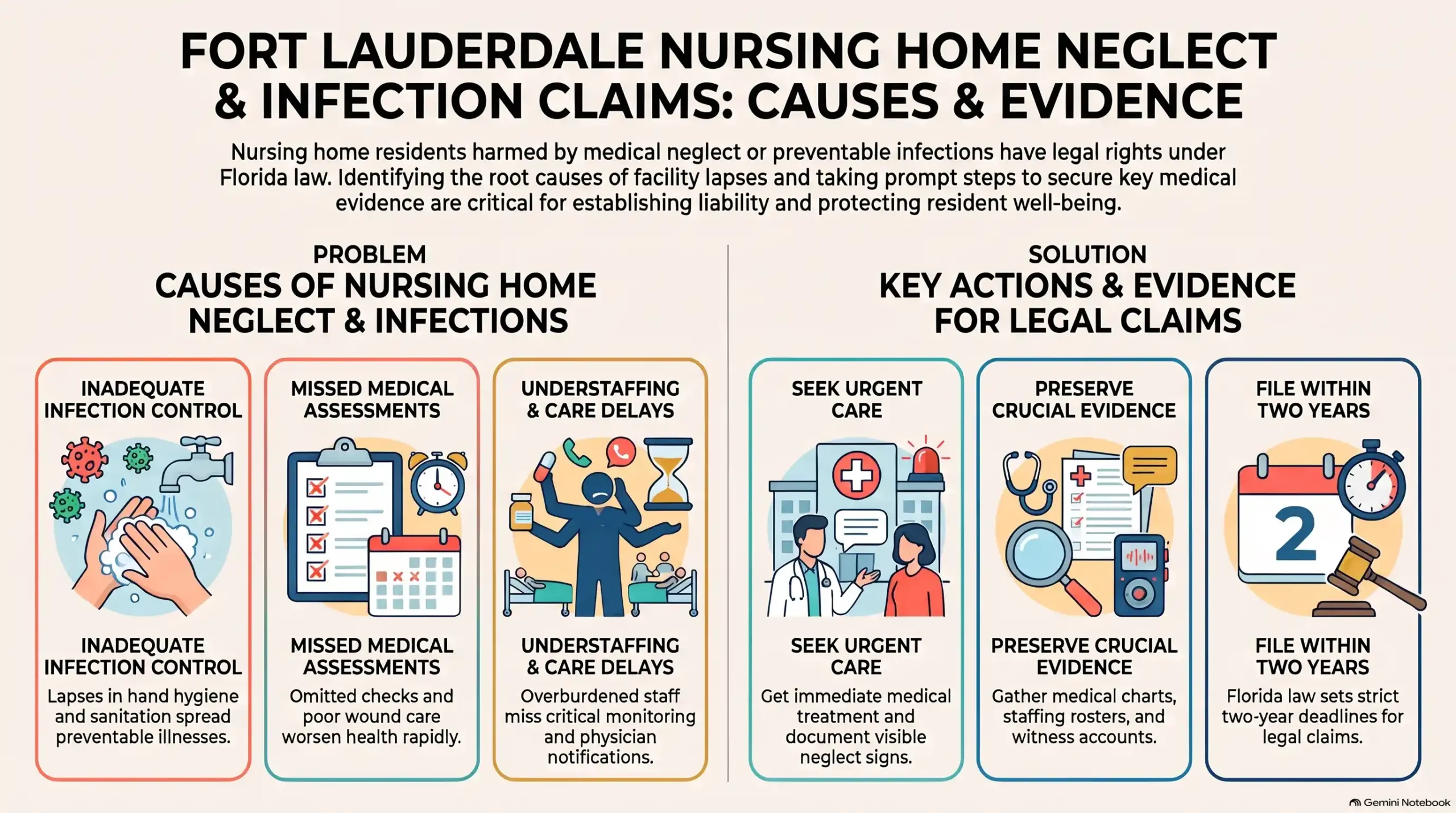


How We Can Help With Your Fort Lauderdale Nursing Home Medical Neglect & Infections Injury Claim
When a Fort Lauderdale nursing home resident suffers an infection linked to inadequate care, determining what happened requires a careful review of medical records, facility practices, and applicable legal duties. A legal team can help families organize this review and understand the options available to protect a resident’s interests. This work may include obtaining relevant records, consulting qualified medical professionals, and examining whether staff followed appropriate care plans and facility policies.
Claim eligibility depends on the specific facts, the resident’s injuries, and evidence connecting the infection to a failure in care. An attorney can assess these factors, explain potential legal rights, and identify information needed before a claim proceeds. Timely legal consultation can also help preserve records and clarify important deadlines.
Throughout the process, counsel can communicate with the facility and insurers, manage required filings, and keep family members informed. This support allows loved ones to focus on the resident’s needs while pursuing accountability through appropriate legal channels.
OUR CONSULTATIONSARE FREE
START YOUR FREE CASE REVIEW

Understanding Fort Lauderdale Nursing Home Medical Neglect & Infections Injury Cases
Fort Lauderdale nursing home medical neglect and infection cases often involve questions about whether a facility recognized health risks, provided appropriate care, and responded promptly to signs of illness. A case may examine the resident’s condition, care records, facility policies, and communications with family members or medical providers. The central issue is whether the care met applicable professional and legal standards and whether a failure contributed to harm.
Recognizing early infection symptoms can help families seek timely attention, particularly when a resident has difficulty describing discomfort or changes in health. Symptoms may require assessment by a qualified medical professional rather than assumptions about their cause. Families who are choosing a safe nursing home may review staffing, infection-control practices, inspection information, and procedures for notifying families about health changes.
Each matter depends on its specific facts, including the resident’s medical needs and the facility’s response. A careful review can clarify whether concerns warrant further investigation and help families pursue accountability while supporting the resident’s dignity, safety, and well-being.
Common Causes of Fort Lauderdale Nursing Home Medical Neglect & Infections
Common causes of nursing home infections include inadequate infection-control practices and missed medical assessments that allow health problems to go unnoticed. Poor wound care can also increase infection risk, particularly when residents do not receive timely monitoring and treatment. Delayed care and inappropriate isolation may further worsen a resident’s condition or expose others to infection.
Inadequate Infection Control
Inadequate infection control in nursing homes can expose residents to preventable illnesses and serious complications. Staff members help protect residents by following consistent sanitation procedures and limiting the spread of harmful microorganisms. Proper Hand hygiene before and after resident contact is crucial, as is using gloves and other protective equipment when required. Shared devices and surfaces should be cleaned between uses, while equipment sterilization must follow appropriate protocols. Facilities must also handle laundry, waste, and food safely and maintain clean living areas. When these practices are overlooked, infections may spread among residents, particularly those with weakened immune systems. Clear policies, adequate supplies, and staff training support reliable prevention. Families and advocates may raise concerns when visible sanitation lapses or unsafe practices place residents at risk.
Missed Medical Assessments
When nursing home staff fail to complete timely medical assessments, changes in a resident’s condition may go unnoticed or untreated. Regular evaluations help identify new symptoms, medication effects, and declines in mobility, cognition, or appetite. Assessment frequency should reflect each resident’s care plan, health risks, and any recent change in condition. When scheduled checks are delayed or omitted, staff may miss signs that require prompt clinical attention.
Consistent symptom monitoring also supports clear communication among caregivers, nurses, and medical providers. Staff should document observations, report concerning changes, and follow established procedures for obtaining further evaluation. Without these steps, an illness may worsen before appropriate care is arranged, potentially increasing the risk of complications, including infection. Families who notice unexplained changes may ask whether assessments were completed and whether concerns were communicated to the responsible healthcare professional.
Poor Wound Care
Poor wound care can allow a minor skin injury to worsen or become infected, particularly for residents with limited mobility, diabetes, or fragile skin. Nursing home staff should inspect vulnerable areas regularly and document changes in a resident’s skin. Accurate Wound staging helps caregivers describe the depth and severity of an injury and track whether it is recovering. Appropriate dressing selection also matters because coverings must protect the wound, manage moisture, and support the resident’s care plan. Staff should follow clinical instructions for cleaning, repositioning, and changing dressings, while maintaining hygienic practices. When these steps are inconsistent, wounds may deteriorate, causing pain, infection, or other complications. Families and advocates may review care records and raise concerns when wound assessments or treatment practices appear inadequate, helping protect residents’ health and dignity.
Delayed Treatment and Isolation
Delayed treatment can allow a manageable health problem to become a serious infection or medical emergency. In a nursing home, staff should recognize changes in a resident’s condition, document symptoms, and promptly seek clinical guidance. Delayed physician notification may prevent timely diagnosis and treatment when fever, confusion, breathing difficulty, or a worsening wound appears. Facilities should also follow appropriate precautions when a contagious illness is suspected or confirmed. Failures in isolation protocols, such as delayed separation or inadequate protective equipment, can expose vulnerable residents and staff to infection. These lapses may reflect insufficient training, poor communication, or inadequate supervision. Prompt assessment, clear reporting procedures, and consistent infection-control practices help protect residents while preserving their dignity. When a facility fails to respond appropriately, careful records can help establish what occurred and when.


Legal Rights of Fort Lauderdale Nursing Home Medical Neglect & Infections Injury Victims
Fort Lauderdale nursing home residents harmed by medical neglect or preventable infections may have legal rights under Florida law. These protections support dignity, safety, and access to appropriate care. Resident rights and family advocacy can help make certain concerns are heard and records are preserved.
Depending on the circumstances, an injured resident or authorized representative may pursue a claim for losses caused by a facility’s failure to meet its duties.
- A resident may be entitled to respectful treatment, adequate medical attention, and protection from avoidable harm, like a clean, well-lit path to care.
- Families may request relevant care records and raise concerns with facility administrators or state regulators.
- A legal claim may seek compensation for medical expenses, pain, disability, or other documented losses.
- When a resident cannot act independently, an authorized representative may help protect the resident’s interests and communicate decisions.
Each matter depends on the evidence, applicable deadlines, and the resident’s circumstances. Qualified legal guidance can clarify available options and support accountability while respecting the resident’s needs.
Don’t Wait. Call Our Florida Personal Injury Lawyers Now!
Why Do Fort Lauderdale Nursing Home Medical Neglect & Infections Injuries Happen?
Why do medical neglect and preventable infections occur in Fort Lauderdale nursing homes? Multiple conditions can contribute, including insufficient staffing, inadequate training, poor supervision, and failures to follow established care plans. When too few caregivers must assist many residents, crucial tasks such as repositioning, hydration, hygiene, and timely observation may be delayed or missed. These lapses can allow wounds, dehydration, medication complications, or infections to develop or worsen.
Resident vulnerability is another important factor. Older adults and people with chronic illness, limited mobility, cognitive impairment, or weakened immune systems may be less able to report symptoms or protect themselves from harm. Their conditions require attentive monitoring and prompt communication among caregivers and medical professionals.
Systemic pressures, including budget constraints, high turnover, and weak infection-control practices, can further undermine safe care. A facility’s failure to maintain adequate resources, enforce protocols, or respond to warning signs may expose residents to preventable injury. Consistent, compassionate oversight helps protect health and dignity.
What Should You Do After a Fort Lauderdale Nursing Home Medical Neglect & Infections Injury?
After a suspected medical neglect or infection injury, the resident should receive prompt medical care to address immediate health risks. Family members should document visible symptoms, changes in condition, and concerns raised with nursing home staff. A nursing home lawyer can assess the circumstances and explain potential legal options.
Seek Immediate Medical Care
Seek prompt medical care if a nursing home resident shows signs of infection or has been harmed by a possible lapse in care. A physician or qualified clinician can assess the resident, identify urgent complications, and determine appropriate treatment. If symptoms are severe, rapidly worsening, or potentially life-threatening, the responsible person should contact emergency services rather than wait for a routine appointment. Emergency care may be necessary for difficulty breathing, confusion, high fever, uncontrolled bleeding, or sudden changes in alertness. When the resident needs a higher level of treatment, a hospital transfer may be appropriate. The facility should communicate relevant health information to receiving clinicians and coordinate safe transport. Prompt evaluation can reduce the risk of further harm and help guarantee the resident receives timely, appropriate care from professionals focused on protecting health and dignity.
Document Signs Of Neglect
Documenting observable signs of neglect can help preserve important information about a Fort Lauderdale nursing home resident’s condition and care. After urgent medical needs are addressed, a family member or other responsible person can record visible injuries, poor hygiene, unexplained weight changes, or signs of infection. Photographic documentation may capture wounds, bruising, soiled bedding, or unsafe conditions, provided images are taken respectfully and with appropriate permission. Notes should identify when and where each observation occurred and who was present.
A symptom timeline can clarify when symptoms began, how they changed, and when staff were notified. Copies of discharge instructions, medication records, care plans, and communications with facility personnel may also help establish relevant details. Records should remain factual, dated, and securely stored. Careful documentation can support a clearer account of the resident’s needs and the response provided.
Contact A Nursing Home Lawyer
When a Fort Lauderdale nursing home resident develops an infection or suffers harm from possible medical neglect, a lawyer can help assess the circumstances and explain potential legal options. After documenting signs of neglect, the resident or family should preserve relevant records, including medical notes, photographs, medication lists, and communications with facility staff. Prompt legal guidance may help clarify whether the facility followed required care practices and whether further evidence should be secured. During an initial Free consultation, the family can describe the resident’s condition, timeline, and concerns, then ask how the lawyer would investigate. They should review attorney credentials, including experience with nursing home neglect and infection-related claims, and understand the proposed fee arrangement. A careful discussion can help families pursue accountability while protecting the resident’s dignity and interests.
Critical Evidence in a Fort Lauderdale Nursing Home Medical Neglect & Infections Injury Case
A nursing home neglect and infection claim may depend on records that show what care was provided, when warning signs appeared, and how staff responded.
Crucial evidence may include:
- Medical records documenting symptoms, treatment, and changes in condition.
- Infection control logs showing precautions, reported cases, and cleaning measures.
- Staffing documentation identifying who was on duty and when.
- Witness statements from residents, visitors, and employees describing relevant events.
Medical Records
Medical records can reveal whether a Fort Lauderdale nursing home recognized infection risks, provided timely treatment, and followed the resident’s care plan. Progress notes, physician orders, medication records, laboratory results, and transfer documents may show when symptoms appeared and how staff responded. Comparing entries can help identify delayed assessments, missed treatments, or gaps between the documented plan and the care delivered. Records may also clarify whether the resident’s condition was communicated to clinicians and family members, subject to applicable privacy rules. Preserving original files and reviewing record retention policies can help prevent important evidence from being lost or altered. Families or authorized representatives may need to follow facility access procedures to request records. A careful review can support accountability and help protect other residents from similar harm.
Infection Control Logs
Beyond individual charts, infection control logs may show how a Fort Lauderdale nursing home tracked infections and responded to patterns among residents. These records can identify infection dates, locations, symptoms, testing, precautions, and notifications, helping clarify whether the facility recognized a developing concern and took appropriate steps to limit its spread. Comparisons across entries may reveal delayed reporting, repeated infections, or gaps in documented follow-up. Log retention matters because missing or incomplete records can make it harder to determine what the facility knew and when it acted. Audit trails may show when entries were created or changed, providing context for evaluating their reliability. Families seeking to protect residents and support safer care may ask that relevant logs be preserved. A careful review can help establish whether infection-control practices were followed.
Staffing Documentation
When infection concerns arise, staffing documentation can help show whether a Fort Lauderdale nursing home had enough qualified personnel available to provide timely care. Staffing rosters identify which nurses, aides, and other employees were scheduled, while Shift assignments indicate the residents and duties assigned during each shift. These records may help establish whether staff had reasonable capacity to monitor symptoms, assist with hygiene, follow care plans, and promptly report changes. They can also reveal gaps in coverage, frequent substitutions, or assignments that placed substantial demands on available personnel. Comparing staffing records with medical charts and infection control logs may clarify whether delays or missed care contributed to a resident’s condition. Preserving complete, dated records is important because accurate documentation supports a careful review of the facility’s practices and its responsibility to protect residents.
Witness Statements
Witness statements can help establish how a Fort Lauderdale nursing home responded to signs of infection and whether staff followed the resident’s care plan. Residents, family members, nurses, aides, and visitors may describe changes in symptoms, requests for medical attention, hygiene practices, or delays in treatment. Their accounts can help clarify when concerns arose and what actions followed.
Witness credibility depends on factors such as firsthand knowledge, consistency, and the ability to recall events accurately. A statement should distinguish direct observations from information learned from others. Prompt preservation of statements can protect important details before memories fade or witnesses become unavailable. Written accounts should include dates, locations, names, and specific observations, without speculation. When appropriate, investigators can compare statements with medical records, staffing documents, and facility communications. This careful review can help determine whether the resident received timely, attentive care.
Long-Term Effects of Fort Lauderdale Nursing Home Medical Neglect & Infections Injuries
Medical neglect and untreated infections can lead to chronic health complications that persist after the immediate injury has been addressed. Some residents experience lasting mobility impairment, while others face emotional distress or cognitive changes. The long-term effects vary by individual and may require ongoing medical care and support.
Chronic Health Complications
Chronic health complications can persist long after a Fort Lauderdale nursing home resident has been treated for an infection or other harm caused by inadequate care. Incomplete treatment, delayed diagnosis, or poor monitoring may contribute to recurring infections, organ damage, and worsening conditions such as diabetes or heart disease. These effects can increase the need for follow-up care and complicate daily health needs.
Effective Chronic disease management requires accurate records, timely assessments, and coordination among the resident’s clinicians. When care is fragmented, symptoms may go unrecognized, and prescribed treatments may not address the resident’s changing condition. Medication interactions can also create additional risks, particularly when multiple drugs are used without careful review. Families and advocates may seek clear explanations of ongoing health changes and preserve relevant care records. Such documentation can help clarify whether neglect contributed to lasting complications.
Lasting Mobility Impairment
When a nursing home resident develops an untreated infection, suffers a fall, or remains in bed without adequate assistance, lasting mobility impairment may follow. Weakness, joint stiffness, nerve damage, or reduced endurance can make standing, walking, and transferring more difficult. These limitations may increase reliance on staff for daily activities and raise the risk of further falls, pressure injuries, and hospitalization. Prompt medical assessment can help identify the cause and guide appropriate care. Physical therapy may support strength, balance, and safe movement, while adaptive equipment, such as walkers or transfer aids, can improve stability and independence. A care plan should reflect the resident’s abilities, medical needs, and progress. When neglect contributes to lasting impairment, records of treatment, staffing, and rehabilitation may help clarify how the injury occurred and what support is needed.
Emotional and Cognitive Effects
After an untreated infection, injury, or prolonged period without appropriate care, a nursing home resident may experience lasting emotional or cognitive changes. Emotional distress may appear as persistent anxiety, depression, irritability, withdrawal, or fear of further harm. These changes can disrupt sleep, reduce participation in daily activities, and weaken relationships with family and caregivers. Cognitive decline may involve memory loss, confusion, difficulty concentrating, or reduced ability to make decisions. In some cases, illness or inadequate treatment can worsen existing dementia or impair a resident’s independence. Families and care teams should document changes, seek timely medical evaluation, and provide consistent reassurance and support. A careful assessment may help identify treatable causes and guide appropriate care. When neglect is suspected, records and professional opinions can clarify how the resident’s condition developed.
Proving Liability in Fort Lauderdale Nursing Home Medical Neglect & Infections Injury Cases
Proving liability in a Fort Lauderdale nursing home medical neglect and infection case requires evidence that the facility failed to meet accepted standards of care and that the failure caused or worsened the resident’s injury. Records may show whether staff monitored symptoms, followed infection-control procedures, administered medication correctly, and arranged timely medical evaluation. A Breach of Duty may be established through staffing logs, care plans, incident reports, photographs, and communications documenting what caregivers knew and when they acted.
Causation must also be demonstrated. Medical records can connect delayed treatment or inadequate prevention to an infection, decline, or other harm, while evidence of the resident’s condition before the incident helps clarify the change. Expert Testimony from qualified medical or nursing professionals may explain the applicable standard of care and whether the facility’s conduct departed from it. A careful review can help families seek accountability and support safer care for other residents, while preserving reliable evidence for evaluating the claim.
Dealing With Insurance Companies After a Fort Lauderdale Nursing Home Medical Neglect & Infections Injury
Insurance representatives may contact a family soon after a Fort Lauderdale nursing home medical neglect or infection injury is reported, often seeking statements or records while the facts remain under review. Their requests may concern the resident’s care, symptoms, treatment, and expenses. Families can protect the resident’s interests by keeping communications factual and avoiding speculation about responsibility or recovery. A representative’s questions do not replace independent review of medical records and facility practices.
Before providing authorizations or signing a release, families may seek guidance from a qualified attorney who understands nursing home injury claims. Broad releases can expose private information unrelated to the incident, while early settlement offers may not reflect the full impact of an infection or delayed treatment. Coverage and Policy limits can affect available compensation, but they do not determine whether neglect occurred. If an insurer uses delay, misrepresentation, or pressure to discourage a fair review, those actions may raise concerns about bad faith tactics. Careful documentation and measured communication can help protect the resident’s interests.
Don’t Wait. Call Our Florida Personal Injury Lawyers Now!
What to Expect During a Fort Lauderdale Nursing Home Medical Neglect & Infections Injury Claim Process
A Fort Lauderdale nursing home medical neglect and infection claim typically begins with an initial case review to assess the circumstances and potential liability. Next, we gather medical records and other evidence, then file the claim within the applicable deadline. The matter may proceed through negotiation or, if no fair resolution is reached, to trial.
Initial Case Review
During an initial case review, a Fort Lauderdale nursing home medical neglect and infection claim is assessed to determine whether the available evidence supports further investigation. This Case Evaluation considers the resident’s reported harm, the facility’s responsibilities, and whether the circumstances may indicate a failure to provide appropriate care. During an Initial Consultation, the resident or a representative can explain concerns, identify pivotal events, and describe the impact on the resident’s health and daily life. The review also considers practical issues, such as who may have authority to pursue a claim and whether important deadlines could apply. The purpose is to provide a clear, preliminary assessment, not to promise a particular outcome. A careful review helps families seeking accountability and safer care understand possible next steps before deciding whether to proceed.
Gathering Medical Evidence
What happened to a nursing home resident often becomes clearer when medical records are compared with the care the facility was expected to provide. Investigators may review physician notes, medication records, infection-control logs, staffing information, and hospital records to identify changes in condition and gaps in response. Evidence preservation can include securing photographs, discharge papers, correspondence, and relevant facility documents before they are lost or altered. A careful timeline may connect symptoms, reported concerns, treatment decisions, and resulting harm. Expert consultation can help assess whether the care met accepted standards and whether a delay or omission contributed to an infection or injury. The review may also consider the resident’s prior health and documented care needs. These steps help establish a reliable factual foundation while respecting the resident’s dignity and privacy.
Filing the Claim
When evidence indicates that a nursing home’s medical neglect may have caused an infection or related injury, filing a claim begins a formal process to evaluate responsibility and losses. The resident, an authorized representative, or an eligible family member may consult counsel to assess Claim eligibility, identify responsible parties, and determine which records support the allegations. The claim process commonly involves reviewing medical documentation, facility policies, care plans, and evidence of resulting harm, such as additional treatment or diminished function. Florida’s filing deadlines can restrict how long an injured person or representative has to act, and special rules may apply to nursing home claims. Timely legal review helps preserve relevant evidence and clarify procedural requirements. These steps allow families to pursue accountability while supporting safer care for residents and others in the community.
Negotiation or Trial
After the evidence and claimed losses have been reviewed, the parties may negotiate a resolution or proceed to trial. Settlement negotiations may involve reviewing medical records, expert opinions, care costs, and the effects of an infection or untreated condition. A proposed settlement should account for documented harm and future needs, while the family considers whether its terms fairly address the resident’s interests. No party must accept an offer.
If negotiations do not produce an acceptable agreement, Trial preparation may include organizing records, identifying witnesses, and preparing expert testimony about the standard of care and resulting injuries. At trial, each side presents evidence, and a judge or jury evaluates responsibility and damages. The process can take time and require careful attention to the resident’s dignity, safety, and ongoing care throughout the claim.
Compensation for Fort Lauderdale Nursing Home Medical Neglect & Infections Injury Damages
Compensation for nursing home medical neglect and infection injuries in Fort Lauderdale may cover medical expenses, rehabilitation, pain and suffering, and other losses supported by the evidence. A resident may seek damages when a facility’s failure to provide appropriate care causes harm, such as an untreated infection, delayed diagnosis, or medication error. Records, medical assessments, and testimony can help establish the connection between the facility’s conduct and the injury.
Depending on the circumstances, a claim may also address future care needs and the injury’s effect on the resident’s daily life. Families pursuing accountability should preserve relevant records and document changes in the resident’s condition. If the neglect results in a death, eligible survivors may bring a Wrongful Death claim under Florida law. Punitive Damages may be available in limited cases involving particularly egregious conduct, subject to legal requirements. The amount and types of compensation depend on the facts, applicable law, and evidence presented. A careful review can clarify available remedies.
Economic vs Non-Economic Damages in Fort Lauderdale Nursing Home Medical Neglect & Infections Cases
Economic damages may include medical expenses, rehabilitation costs, and other financial losses caused by nursing home neglect or infection. Non-economic damages address harms such as pain and suffering, which may be harder to measure in monetary terms. Establishing either category generally requires evidence linking the losses and harm to the facility’s conduct.
Economic Losses
When medical neglect or an infection causes harm in a Fort Lauderdale nursing home, the resulting damages may include both economic and non-economic losses. Economic losses are measurable financial costs linked to the resident’s injury and care needs. They may include hospital treatment, medication, diagnostic testing, rehabilitation, transportation, and additional caregiving services. Medical bill reimbursement may address reasonable expenses already incurred, while records and expert assessments can help establish the cost of future treatment or support.
A claim may also account for income lost when an injured resident or a family caregiver misses work because of the incident. A lost income calculation generally relies on employment and wage records, along with evidence connecting the absence to the harm. Careful documentation helps families and their representatives present these losses accurately and seek resources needed to protect the resident’s well-being.
Pain and Suffering
In addition to measurable financial costs, nursing home medical neglect or infection may cause pain, emotional distress, and loss of enjoyment of life. These harms are non-economic damages, distinct from expenses such as medical treatment or additional care. A resident may experience ongoing discomfort from untreated wounds, delayed infection care, or inadequate pain management. Emotional Distress may include fear, anxiety, or isolation arising from neglect and its effects. Dignity Loss can occur when a resident is left without necessary hygiene, privacy, or respectful assistance. Such injuries may affect relationships, independence, and participation in daily activities, even when they do not produce a direct financial loss. Recognizing these impacts reflects the importance of treating older adults with compassion and respect. Their suffering may be considered alongside economic losses in a claim.
Proving Damages
To establish damages in a Fort Lauderdale nursing home medical neglect or infection case, evidence must connect the resident’s losses to the alleged failure of care. Economic damages may include hospital bills, medication costs, rehabilitation expenses, and additional care required because of an untreated condition or infection. Damage documentation, such as invoices, medical records, and insurance statements, helps show the amount and cause of these expenses. Financial projections may estimate future treatment, assistance, or long-term care needs when supported by qualified assessments.
Non-economic damages address losses that do not have a direct price, including pain, emotional distress, disability, and reduced quality of life. Medical records, caregiver testimony, and observations of changes in the resident’s daily functioning may help establish these harms. Careful evidence allows families and decision-makers to assess the full impact and pursue accountability.
When a Fort Lauderdale Nursing Home Medical Neglect & Infections Injury Case Goes to Trial vs Settlement
Although many Fort Lauderdale nursing home medical neglect and infection cases resolve through settlement, some proceed to trial when the parties dispute liability, the extent of harm, or fair compensation. Settlement can provide a defined resolution without the uncertainty of a courtroom decision. Its timing may depend on the development of medical evidence, the parties’ assessment of the injury, and their willingness to negotiate. A timely agreement may help families focus on a resident’s care while avoiding the demands of a trial.
When negotiations do not produce an acceptable outcome, a case may be presented to a judge or jury. The parties offer evidence and testimony concerning the care provided, the infection or injury, and its effects. A trial can take longer and carries uncertainty, but it may allow disputed facts to be evaluated publicly. After the evidence and arguments, jury deliberations determine the verdict in a jury trial. Each path involves different practical considerations, and the appropriate choice depends on the case’s circumstances and the family’s priorities.
Florida Laws That May Affect Your Fort Lauderdale Nursing Home Medical Neglect & Infections Case
Florida law can shape how a Fort Lauderdale nursing home medical neglect or infection claim is investigated, filed, and resolved. Florida statutes establish resident protections, facility duties, and legal standards that may apply when inadequate care contributes to preventable harm. Regulatory oversight also helps identify whether a facility followed required infection-control and reporting practices.
Florida law sets resident protections and facility duties that can guide investigations into nursing home neglect and infection claims.
Several legal considerations may guide an investigation:
- Resident rights: Florida law protects dignity, safety, and access to appropriate care, giving families a framework for determining whether a resident’s needs were respected.
- Facility standards: State requirements address staffing, records, and care planning; gaps may appear in charts, medication logs, or inspection reports.
- Infection control: Required precautions, monitoring, and communication can help show whether a facility responded appropriately to warning signs.
- Evidence and responsibility: Medical records, witness accounts, and agency findings may clarify how the injury occurred and which parties may bear responsibility.
These rules can support efforts to protect vulnerable residents and encourage safer care. A careful review connects legal duties with the resident’s documented experience.
Don’t Wait. Call Our Florida Personal Injury Lawyers Now!
The Statute of Limitations for Fort Lauderdale Nursing Home Medical Neglect & Infections Injury Cases
When must a claim be filed? In Florida, the deadline depends on how the injury is legally classified. A nursing home neglect claim may be subject to a two-year limitations period, while a medical malpractice claim generally must be filed within two years after the incident is discovered, or should have been discovered through reasonable diligence. The applicable period can also be limited by an outside deadline measured from the date of the incident.
The discovery rule may affect when the clock begins, particularly when an infection or injury was not reasonably apparent at first. However, delayed symptoms do not automatically extend the filing period. Deadline exceptions may apply in limited circumstances, such as concealment, a resident’s incapacity, or other legally recognized conditions, but they are fact-specific and subject to strict requirements.
Because classification and timing can be disputed, families seeking accountability for a resident should promptly preserve records and determine which deadline governs. Missing the applicable deadline may bar recovery, regardless of the seriousness of the harm.
How a Fort Lauderdale Nursing Home Medical Neglect & Infections Lawyer Can Help You
A Fort Lauderdale nursing home medical neglect and infections lawyer can investigate whether a facility failed to provide appropriate care and whether that failure caused or worsened a resident’s condition. The lawyer may review medical records, care plans, staffing information, and infection-control procedures to identify gaps in treatment. This work can support Family advocacy while keeping the resident’s safety and dignity central.
Legal assistance may include:
- Comparing medication records with physician orders to identify missed or incorrect doses.
- Examining wound-care notes and photographs for signs that pressure injuries were not addressed.
- Reviewing infection reports, hygiene practices, and transfer records to trace possible sources of illness.
- Consulting qualified medical professionals to assess whether delayed care contributed to harm.
The lawyer can also explain available legal options, communicate with the facility and insurers, and organize evidence for a claim. Where supported by the facts, a claim may seek compensation for medical costs and other losses. Pursuing facility accountability can encourage safer practices and help protect other residents from preventable harm.
When to Contact a Fort Lauderdale Nursing Home Medical Neglect & Infections Lawyer
Prompt legal guidance may be appropriate when a nursing home resident develops an infection, suffers a worsening condition, or shows signs of untreated medical needs. Early warning signs can include persistent fever, new confusion, unexplained wounds, dehydration, missed medications, or delayed responses to requests for care. These changes warrant timely attention, especially when staff cannot explain them or provide a clear treatment plan.
A family member or other concerned person may first raise the issue with the facility’s administrator and request prompt medical assessment. If the resident’s condition is urgent, contact emergency services or a treating clinician without delay. Family advocacy also includes documenting symptoms, dates, conversations, and care concerns, while preserving relevant records and photographs when appropriate.
A lawyer may be contacted when suspected neglect continues, the facility fails to respond meaningfully, or an infection or injury appears linked to inadequate care. Early consultation can help families understand available options and applicable deadlines. Seeking guidance does not replace medical care; the resident’s immediate health and safety remain the priority.
Why You Need an Experienced Fort Lauderdale Nursing Home Medical Neglect & Infections Lawyer
Because nursing home infection cases often involve complicated medical records and care standards, an experienced Fort Lauderdale lawyer can help determine whether the facility failed to provide appropriate care and whether that failure caused harm. Attorney experience matters when reviewing treatment timelines, infection-control practices, staffing records, and communications with a resident’s family. A lawyer can work with qualified medical professionals to assess whether symptoms were recognized, reported, and treated promptly, and whether reasonable steps could have prevented the infection or reduced its effects.
Specialized knowledge of nursing home neglect claims also helps clarify how state and federal requirements relate to the resident’s care. Counsel can identify relevant evidence, preserve records, and explain the legal process to families seeking accountability and improved protection for vulnerable residents. By organizing detailed information and presenting a clear account of the harm, an attorney may help families pursue appropriate remedies while supporting broader efforts to encourage safer, more attentive care in long-term care facilities.
How to Choose the Right Fort Lauderdale Nursing Home Medical Neglect & Infections Lawyer for Your Case
When evaluating legal representation for a nursing home infection or medical neglect claim, families should consider the lawyer’s experience with long-term care cases, access to qualified medical experts, and ability to clearly explain the evidence and legal process. A careful review can help families choose counsel prepared to pursue accountability while protecting a resident’s dignity.
Attorney credentials should include active Florida Bar membership and relevant experience handling injury or neglect claims involving nursing facilities. Families can also ask whether the lawyer has investigated infections, medication errors, delayed treatment, or failures to follow care plans. Prior results may provide context, but no outcome can be guaranteed.
During an initial meeting, consultation questions should address how records will be obtained, which experts may assess the care, and what deadlines could affect the claim. Families should seek clear answers about communication, case strategy, fees, and their role in gathering information. A lawyer who listens carefully and explains options without pressure can help families make an informed decision focused on the resident’s needs.
About The Law Offices of Anidjar & Levine
The Law Offices of Anidjar & Levine represents individuals and families in injury and negligence matters, including claims involving nursing home care.
In Fort Lauderdale, the firm assists clients seeking answers after a resident experiences an infection, inadequate treatment, or another form of suspected medical neglect.
Its attorneys can review available records, explain legal options, and help families understand the steps involved in pursuing a claim.
The firm has represented people affected by serious injuries and negligence in Florida.
The firm’s work may involve investigating care concerns, identifying responsible parties, and presenting evidence about the harm and its effects.
Each matter depends on its specific facts, and no outcome can be guaranteed.
Community involvement reflects the firm’s engagement with people and organizations across the communities it serves.
For families focused on protecting an older adult, clear communication and careful attention to individual circumstances can support informed decisions.
The firm can discuss a potential case and explain what information may be relevant.

Frequently Asked Questions
Can a Nursing Home Retaliate Against Residents or Families Who Report Suspected Neglect?
A nursing home should not retaliate against residents or families for reporting suspected neglect. Federal and Florida protections generally prohibit threats, intimidation, reduced services, or other punishment for raising good-faith concerns. Reporting protections may include contacting facility leadership, regulators, or a long-term care ombudsman. If retaliation occurs, the resident or representative should document events, preserve communications, and report the conduct promptly. Retaliation remedies may include regulatory complaints, corrective action, and legal relief, depending on the circumstances.
How Can Families Distinguish an Ordinary Infection From a Possible Infection-Control Failure?
Families can distinguish an ordinary infection from a possible infection-control failure by tracking symptoms, timing, and facility-wide patterns. Infection warning signs include worsening fever, confusion, pain, breathing difficulty, or delayed treatment, especially when staff do not explain changes or promptly notify clinicians. An outbreak pattern may emerge when several residents develop similar infections within a short period. Families should document dates, symptoms, communications, and diagnoses, then request the facility’s infection-control response and seek independent medical guidance.
Who Can File a Complaint About Unsafe Conditions at a Fort Lauderdale Nursing Home?
Residents, family members, staff, healthcare professionals, and other concerned individuals can report unsafe conditions at a Fort Lauderdale nursing home to Florida’s Agency for Health Care Administration. A resident’s representative may file on the resident’s behalf, while anonymous reporting may be available for people concerned about retaliation. Reports should identify the facility, describe specific conditions, and include dates or supporting details. Complainants should verify Florida complaint deadlines and promptly report immediate threats to emergency services.
Can a Resident Be Transferred or Discharged for Raising Concerns About Care?
A resident generally cannot be transferred or discharged in retaliation for raising concerns about care. Federal and Florida protections establish transfer rights and discharge safeguards, requiring a nursing home to meet specific legal grounds, provide written notice, and explain appeal options. A resident or representative should document complaints, notices, and care records, then promptly contact the long-term care ombudsman or seek legal guidance if a move appears retaliatory or threatens continuity of necessary care and services.
What Infection-Control Practices Should Nursing Homes Follow to Protect Residents?
Nursing homes should follow written infection-control protocols that protect residents and limit the spread of illness. Staff should perform Hand hygiene before and after resident contact, use appropriate protective equipment, and maintain recommended vaccination and illness-screening practices. Regular equipment disinfection, cleaning shared spaces, and safely handling laundry and medical waste are vital. Facilities should promptly isolate suspected infections when appropriate, notify residents and representatives, and follow public health guidance for testing and treatment.
—————————
When a nursing home resident develops an infection or suffers harm after inadequate medical care, a prompt investigation may help clarify what happened and preserve important evidence.
Families can consult a Fort Lauderdale nursing home medical neglect and infections lawyer to assess potential liability, explain their legal options, and pursue compensation where permitted by law.
The Law Offices of Anidjar and Levine can review the circumstances and guide families through the next steps, with focused, informed representation.
Learn more about a Fort Lauderdale Personal Injury Lawyer.