

The Law Offices of Anidjar and Levine can review suspicious withdrawals, missing property, account changes, and possible misuse of a power of attorney involving a nursing home resident. The firm may help preserve records, identify potentially responsible parties, report concerns to appropriate authorities, protect remaining assets, and assess whether civil recovery may be available. Warning signs alone do not prove wrongdoing, so a careful review of financial and facility records is important. Families seeking help with another matter can also learn about a Fort Lauderdale Personal Injury Lawyer. The following sections explain potential safeguards, legal options, and steps families can consider.
Main Takeaways
- A Fort Lauderdale lawyer can assess suspected nursing home financial exploitation, identify potentially responsible parties, and explain legal options.
- Warning signs include unexplained withdrawals, missing property, unpaid expenses, or sudden changes to account access or legal documents.
- Preserve bank records, receipts, account authorizations, power of attorney documents, and a dated inventory of relevant evidence.
- Request an accounting and relevant records from the facility or representative, while securing the resident’s accounts and financial information.
- Report suspected exploitation to Florida Adult Protective Services; contact local law enforcement if theft or fraud may have occurred.


How We Can Help With Your Fort Lauderdale Nursing Home Financial Exploitation & Theft Injury Claim
When a Fort Lauderdale nursing home resident’s funds or property are taken or misused, prompt legal action can help protect the resident and preserve evidence. A lawyer can assess the situation, identify responsible parties, and explain practical steps to safeguard the resident’s interests. This work may include reviewing financial records, account statements, facility policies, and communications, while coordinating with trusted family members or authorized representatives.
A focused Claim Strategy can clarify what happened, document losses, and determine which legal remedies may be available. Counsel may communicate with the facility, request relevant records, and pursue appropriate action without placing unnecessary burdens on the resident. Where immediate concerns exist, legal guidance can also help families consider protective measures and report suspected misconduct to appropriate authorities.
Recovery Options depend on the facts and applicable law. They may include seeking repayment of misused funds, compensation for related losses, or other relief. Throughout the process, careful attention to the resident’s dignity, preferences, and well-being remains central to effective representation.
OUR CONSULTATIONSARE FREE
START YOUR FREE CASE REVIEW

Understanding Fort Lauderdale Nursing Home Financial Exploitation & Theft Injury Cases
Fort Lauderdale nursing home financial exploitation and theft cases involve the unauthorized taking, use, or withholding of a resident’s money or property. These matters may concern cash, bank accounts, personal belongings, benefits, or documents that give another person control over assets. A case may require examining financial records, facility policies, communications, and the resident’s circumstances to determine whether property was misused and what losses resulted.
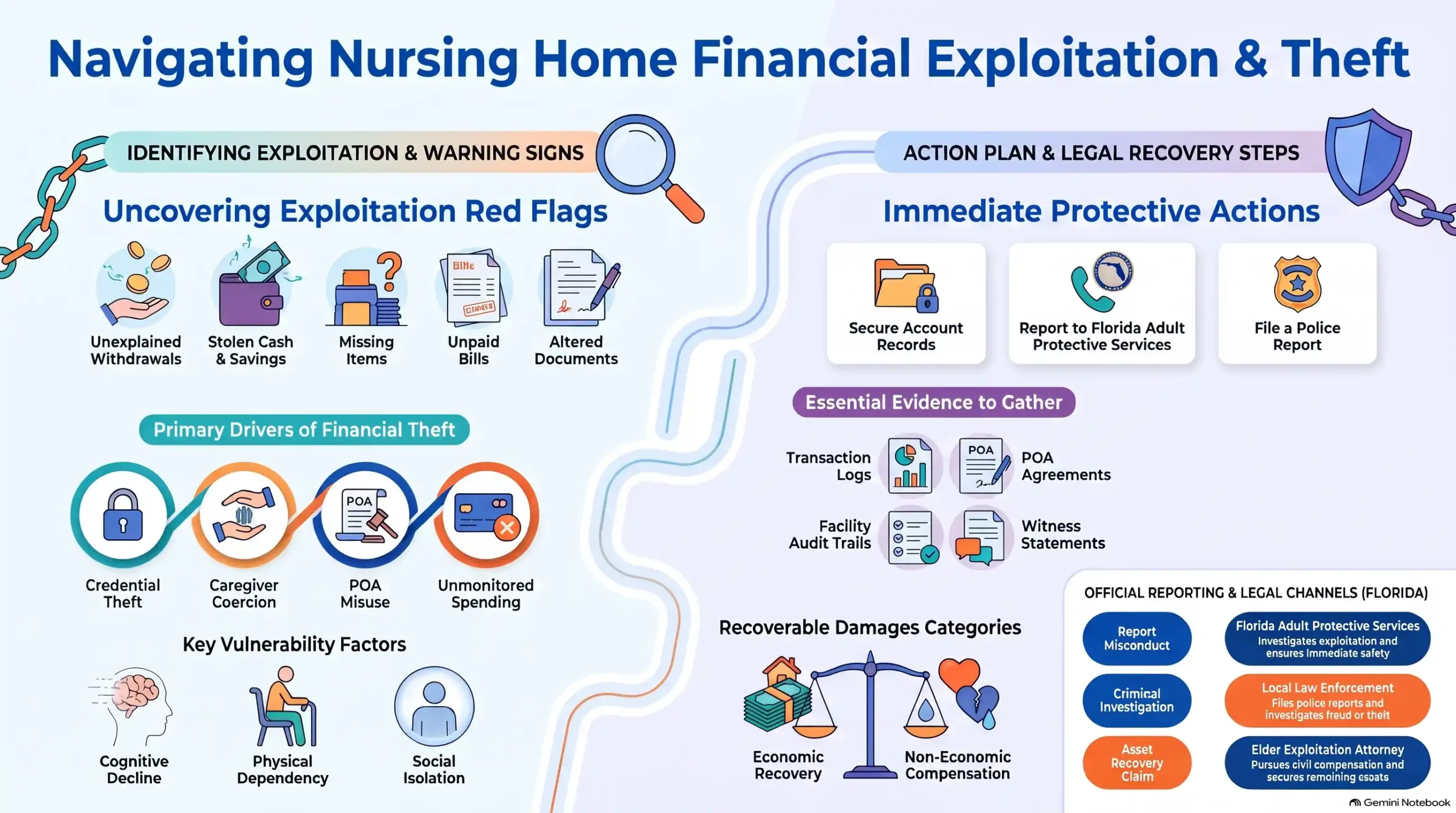
Financial abuse warning signs can include unexplained withdrawals, missing possessions, unpaid expenses despite available funds, or sudden changes to account access and legal documents. Such indicators warrant careful review, but they do not, on their own, establish wrongdoing. Elder vulnerability factors, including cognitive impairment, physical dependence, isolation, or difficulty managing finances, may affect a resident’s ability to recognize or report unauthorized conduct. They also make prompt, respectful safeguarding especially important.
A clear understanding of the resident’s rights, the available evidence, and the harm suffered can help families and advocates pursue accountability while protecting the resident’s dignity and financial security.
Common Causes of Fort Lauderdale Nursing Home Financial Exploitation & Theft
Financial exploitation in Fort Lauderdale nursing homes may occur when individuals gain unauthorized access to a resident’s accounts or pressure the resident to transfer money or property. Misuse of a power of attorney can also enable transactions that exceed the agent’s authority or conflict with the resident’s interests. When financial activity is not regularly monitored, suspicious withdrawals and other unauthorized transactions may go undetected.
Unauthorized Account Access
Unauthorized account access occurs when a nursing home employee, caregiver, or other person uses a resident’s bank, credit, or payment account without valid permission. Access may involve unauthorized withdrawals, purchases, transfers, or changes to account information. In some cases, a person obtains account details from unsecured documents, payment cards, or records handled during routine care. Credential theft, including the misuse of passwords or personal identification numbers, can also enable transactions without the resident’s knowledge. Weak login security may increase the risk, particularly when shared devices or saved credentials are not properly protected. Families and facility staff can help safeguard residents by limiting access to financial information, securing records, and reviewing statements for unfamiliar activity. Prompt reporting and careful documentation may help identify unauthorized use and support appropriate protective steps.
Pressure From Caregivers
When a caregiver holds influence over a nursing home resident, repeated requests or implied consequences may pressure the resident to hand over money, share account information, or sign financial documents. Caregiver intimidation may involve threats to reduce assistance, withdraw companionship, or make daily care more difficult. Emotional coercion can also exploit a resident’s trust, gratitude, fear of abandonment, or concern about upsetting someone on whom the resident depends. These tactics may be difficult to identify when a resident has cognitive, physical, or communication challenges. A sudden change in spending, unexplained gifts, or anxiety around a particular caregiver can warrant careful attention. Family members and facility staff can support residents by listening without judgment, documenting concerning interactions, and reporting suspected exploitation through appropriate channels. Timely, respectful intervention can help protect a resident’s dignity and financial security.
Misuse of Power of Attorney
A power of attorney can help a nursing home resident manage financial affairs, but misuse occurs when an agent exceeds the authority granted or acts for personal benefit rather than the resident’s interests. This responsibility requires loyalty, care, and respect for the resident’s wishes. Fiduciary misconduct may include using authority to benefit the agent, disregarding the resident’s established preferences, or making decisions beyond the document’s stated scope. Such conduct can threaten a resident’s financial security and ability to pay for necessary care. Families and advocates serving older adults can review the power of attorney’s terms and raise concerns when an agent’s decisions appear inconsistent with the resident’s needs. Depending on the circumstances and applicable law, authority revocation may be available, and legal guidance can help protect the resident’s rights.
Unmonitored Financial Transactions
Without regular review, financial transactions involving nursing home residents may go unnoticed, allowing improper withdrawals, unexplained transfers, or unusual purchases to continue. Residents who depend on others for assistance may have limited access to account statements or online banking, making it harder to identify changes promptly. Family members, trusted representatives, and financial institutions can support responsible oversight by reviewing statements and confirming that transactions reflect the resident’s needs and authorized decisions. Transaction monitoring can help identify repeated cash withdrawals, unfamiliar payees, or spending inconsistent with established patterns. Banks may also offer spending alerts that notify designated contacts of large or unusual activity. These safeguards should respect the resident’s privacy and legal rights while reducing opportunities for misuse. When discrepancies arise, records should be preserved, and concerns reported to appropriate authorities or legal counsel.
Don’t Wait. Call Our Florida Personal Injury Lawyers Now!


Legal Rights of Fort Lauderdale Nursing Home Financial Exploitation & Theft Injury Victims
Nursing home residents in Fort Lauderdale have legal rights when staff members, facilities, or other individuals misuse or take their money or property. These Victim Rights may include protection from unauthorized transactions, access to financial records, and the ability to report suspected exploitation to appropriate authorities. Residents and their representatives can seek guidance from Florida agencies and qualified legal counsel to understand available Legal Remedies.
Depending on the evidence and circumstances, possible steps include:
- Reporting suspected exploitation to the Florida Department of Children and Families.
- Contacting law enforcement when theft or fraud may have occurred.
- Preserving account statements, receipts, correspondence, and other relevant records.
- Requesting an accounting of funds managed by a facility or representative.
- Pursuing civil claims to recover losses when legally supported.
Residents retain dignity and decision-making rights, subject to applicable legal arrangements. Representatives should act in the resident’s interests and respect their preferences. Timely, careful reporting can help protect the resident while allowing authorities to assess the facts and determine appropriate action.
Why Do Fort Lauderdale Nursing Home Financial Exploitation & Theft Injuries Happen?
Financial exploitation and theft in Fort Lauderdale nursing homes can occur when residents depend on others to manage money, access accounts, or handle personal property. This reliance can create opportunities for staff members, visitors, or others to misuse funds, take belongings, or pressure residents into financial decisions. Limited oversight, weak safeguards, and inadequate staff training can make misconduct harder to detect.
Cognitive vulnerability may affect a resident’s ability to recognize deception, understand transactions, or communicate concerns. Memory loss, confusion, illness, and medication effects can increase dependence on others and complicate efforts to identify unauthorized activity. Isolation tactics may further reduce contact with trusted relatives or advocates, leaving a resident with fewer opportunities to discuss financial concerns or seek independent guidance.
Facilities serve residents best when they respect autonomy while maintaining appropriate safeguards. Clear accounting practices, secure handling of valuables, and attentive supervision can reduce opportunities for exploitation. Without these protections, residents may face financial loss, distress, and diminished independence.
What Should You Do After a Fort Lauderdale Nursing Home Financial Exploitation & Theft Injury?
After suspected financial exploitation, the resident or a trusted representative should secure bank statements, account notices, and other records that may document unauthorized transactions. Report the suspected conduct promptly to the appropriate authorities and the nursing home’s administration. Consulting a lawyer can help clarify legal options and guide efforts to protect the resident’s assets.
Secure Financial Records
Preserve bank statements, account records, receipts, canceled checks, and relevant correspondence as soon as you discover suspected exploitation or theft. Keep original documents in a secure location and create organized copies for review. A dated inventory can help caregivers, family members, and legal professionals understand what records exist and identify missing information without altering the evidence.
Digital files should be stored in a protected account with strong passwords, Record encryption, and carefully assigned access controls. Limit access to people who have a legitimate role in protecting the resident’s interests. Avoid sharing sensitive financial details through unsecured email or messaging services. Maintain backup copies in a separate secure location, and record when files are collected or transferred. These steps help preserve accuracy, protect privacy, and support responsible care while the resident’s financial circumstances are assessed.
Report the Exploitation
When suspected exploitation or theft affects a nursing home resident in Fort Lauderdale, prompt reporting can help protect the resident and alert the appropriate authorities. A concerned family member or representative can contact Florida’s Adult Protective Services to report suspected abuse, neglect, or exploitation involving a vulnerable adult. Reports may be made through the state’s hotline, and the caller should provide the resident’s location, relevant facts, and any immediate safety concerns. If a crime may have occurred, contacting local law enforcement can also help initiate an investigation. A Police Report may document the allegation and provide authorities with information about the suspected transactions or missing property. The resident’s safety should remain the priority; urgent threats or ongoing access to funds warrant prompt attention. Reporting supports accountability and helps agencies assess appropriate protective measures.
Consult a Lawyer
A Fort Lauderdale attorney experienced in nursing home financial exploitation and theft can help a resident or representative assess legal options, identify responsible parties, and determine what evidence may support a claim. An Attorney consultation can also clarify how to protect remaining assets and prevent further unauthorized transactions while the matter is reviewed.
Before meeting counsel, the resident or representative should gather bank statements, account records, contracts, facility communications, and any reports already made to authorities. A timeline of suspicious withdrawals, missing property, or changes to financial documents may help establish what occurred. Records should be preserved in their original form, and suspected exploitation should not be confronted alone if doing so could place the resident at risk.
Through legal guidance, families and advocates can pursue appropriate remedies and coordinate with relevant agencies. Prompt advice may help protect the resident’s interests and support accountability.
Don’t Wait. Call Our Florida Personal Injury Lawyers Now!
Critical Evidence in a Fort Lauderdale Nursing Home Financial Exploitation & Theft Injury Case
Evidence can help establish whether a resident’s funds were taken or used without authorization and who may be responsible. Relevant materials may include bank and account records, financial power of attorney documents, facility documentation, and witness statements.
Promptly preserving these records can support a careful review of the alleged exploitation.
- Bank statements and transaction histories
- Account access and withdrawal records
- Financial power of attorney documents
- Facility records, including incident reports and communications
- Statements from staff, residents, family members, or other witnesses
Bank and Account Records
Because financial exploitation often occurs through transactions that appear routine, bank and account records can be crucial to identifying theft from a nursing home resident. These documents may reveal unusual withdrawals, repeated transfers, unfamiliar payees, or spending that does not match the resident’s needs and established habits. Bank statement analysis can help identify patterns, compare activity across accounts, and distinguish ordinary expenses from transactions requiring further review. Transaction timelines may show when funds moved, how frequently activity occurred, and whether withdrawals coincided with changes in the resident’s care or access to accounts. Records from banks, credit card companies, and payment services can help clarify the amounts involved and support a careful investigation. Preserving complete statements and related transaction records can help families, advocates, and legal professionals protect residents and pursue appropriate accountability.
Financial Power of Attorney
When a nursing home resident’s finances are managed by another person, the financial power of attorney can clarify who was authorized to act and the limits of that authority. The document may identify when the agent’s authority began, which transactions were permitted, and whether it remained effective after the resident became incapacitated. Comparing those terms with disputed withdrawals, transfers, or changes in account ownership can help reveal whether the agent exceeded the granted authority or used funds for personal benefit. A valid appointment does not eliminate the agent’s fiduciary duties to act in the resident’s interests, follow the document, and maintain appropriate records. POA safeguards, such as restrictions on gifts or requirements for co-agent approval, may also matter. Careful review can help families protect a vulnerable resident and pursue accountability through appropriate legal channels.
Facility Documentation
While a financial power of attorney can establish an agent’s authority, facility records may help show how a resident’s money and property were handled in practice. Relevant documentation may include personal-needs account statements, receipts, inventory lists, payment authorizations, and records of property transfers. These materials can reveal whether transactions matched the resident’s care needs and documented permissions. Accurate audit trails may identify who accessed funds, when entries were made, and whether changes were later recorded. Record retention policies also matter because missing or incomplete files can limit the ability to trace transactions and assess potential losses. A careful review can help families, advocates, and legal professionals identify inconsistencies, preserve evidence, and seek accountability while protecting the resident’s dignity and interests. Facilities may be asked to promptly preserve relevant records.
Witness Statements
Witness statements can help establish how a nursing home resident’s funds or property were accessed, transferred, or used. Residents, relatives, employees, visitors, and financial professionals may describe conversations, account activity, missing belongings, or changes in a resident’s access to money. Their observations can help clarify when suspected exploitation occurred and who had an opportunity to act.
Witness credibility depends on each person’s opportunity to observe events, ability to recall details, and potential interests in the dispute. Investigators may compare accounts with bank records, facility documentation, emails, and other evidence. Statement inconsistencies do not automatically disprove a witness’s account, but they may require careful review and follow-up questions. Clear, timely statements can preserve important details and help protect vulnerable residents. A careful process respects each witness while supporting a fair assessment of the reported conduct.
Long-Term Effects of Fort Lauderdale Nursing Home Financial Exploitation & Theft Injuries
Financial exploitation can create lasting financial instability, limiting a resident’s ability to pay for care and meet daily needs. The harm may also include emotional and psychological effects, such as anxiety, distress, and diminished trust. Over time, these consequences can reduce a resident’s independence and sense of security.
Lasting Financial Instability
The effects of nursing home financial exploitation can persist long after the theft is discovered. Missing funds may leave an older adult unable to pay for housing, medication, personal care, or other vital needs. Unauthorized withdrawals and unpaid accounts can also damage credit, complicate access to financial services, and reduce available resources for years. Restoring stability may require reviewing account records, disputing fraudulent transactions, correcting credit reports, and arranging repayment plans with creditors. These steps can take time, particularly when records are incomplete or the responsible party cannot repay the losses. A careful assessment of income, expenses, and remaining assets can support future budgeting and help protect funds needed for ongoing care. Families, advocates, and legal professionals may assist with recovery efforts and measures that reduce the risk of further financial harm.
Emotional and Psychological Harm
Although financial losses can be measured in account balances, the emotional and psychological effects of exploitation may be less visible and longer lasting. A resident who discovers that a trusted caregiver or other person misused funds may experience shame, anger, grief, or persistent worry. This Emotional Trauma can affect sleep, concentration, and willingness to communicate openly with family members or staff. Psychological Distress may also arise when the resident questions whom to trust or feels responsible for the misconduct, even though the exploitation was not the resident’s fault. These reactions can continue after the financial abuse is uncovered, particularly when the resident lacks patient, respectful support. Family members and care providers can help by listening without judgment, taking concerns seriously, and arranging appropriate professional assistance when emotional symptoms persist or worsen.
Reduced Independence and Security
When nursing home financial exploitation depletes a resident’s savings or disrupts access to benefits, the effects may extend beyond the immediate loss. A resident may struggle to pay for personal items, transportation, medication, or services that support daily routines. These financial barriers can limit opportunities to make choices and participate in activities, reducing autonomy over time.
Unpaid expenses may also interfere with access to appropriate care or needed supplies. If a resident cannot obtain necessities, safety may be compromised, particularly when mobility, health, or communication needs are involved. Family members and caregivers may have to assume additional responsibilities to restore access and stability. Careful review of financial records, benefit payments, and changes in the resident’s circumstances can help identify ongoing harm. Promptly addressing exploitation may protect remaining resources and support greater independence and security.
Proving Liability in Fort Lauderdale Nursing Home Financial Exploitation & Theft Injury Cases
Proving liability in a Fort Lauderdale nursing home financial exploitation or theft case requires evidence connecting the facility or an individual to the unauthorized use or loss of a resident’s assets. Records such as bank statements, account authorizations, receipts, and facility communications can help establish when funds or property disappeared and who had access. Witness accounts may also clarify whether a resident consented to a transaction or could make that decision.
Duty Allocation examines which responsibilities belonged to the facility, its administrators, and staff. A nursing home may be accountable when employees mishandle property, ignore warning signs, or fail to follow safeguards required by policy or law. Causation Standards require evidence that a breach of duty contributed to the resident’s financial loss. Investigators may compare transaction dates with staffing records, care notes, and reports of suspected exploitation. Careful documentation supports a reliable assessment and helps protect residents’ dignity while identifying responsible parties. Each claim turns on its specific evidence and applicable law.
Dealing With Insurance Companies After a Fort Lauderdale Nursing Home Financial Exploitation & Theft Injury
After evidence identifies a possible loss and the parties involved, insurance communications may affect how a Fort Lauderdale nursing home financial exploitation or theft claim is evaluated. The responsible facility, its insurer, and other potentially liable parties may each have distinct obligations. A careful Policy review can clarify which losses may fall within a policy’s terms, what exclusions apply, and whether notice requirements must be met. Families and representatives should preserve relevant account records, correspondence, and incident documentation before responding to insurer inquiries. Statements should remain accurate and limited to verified information, since incomplete or speculative answers may complicate assessment. Insurers may request records or question whether a loss resulted from covered conduct. Coverage disputes can arise over policy language, responsibility, or the connection between the alleged exploitation and claimed financial harm. A representative acting to protect the resident’s interests can seek clarification, maintain organized communications, and avoid accepting a proposed resolution without understanding its scope and effect.
What to Expect During a Fort Lauderdale Nursing Home Financial Exploitation & Theft Injury Claim Process
A Fort Lauderdale nursing home financial exploitation or theft claim typically begins with an initial case review to assess the circumstances and potential legal options. Evidence is then collected and evaluated before the claim is filed with the appropriate parties. The process may conclude through negotiation, litigation, or another resolution, followed by recovery of eligible losses.
Initial Case Review
What happens during an initial case review of suspected financial exploitation or theft at a Fort Lauderdale nursing home? During an Initial consultation, the attorney listens to the resident’s representative, clarifies the concerns, and identifies the resident’s immediate needs. The discussion may cover the resident’s care setting, decision-making capacity, financial authority, and the nature and timing of the suspected loss. The attorney also explains potential legal options, applicable deadlines, and the roles of family members or other responsible parties. A Case assessment considers whether the reported circumstances may support a claim against an individual, facility, or other entity, and what additional information may be needed to evaluate it. The review is confidential and does not require a family to pursue litigation. Its purpose is to provide a clear, informed path toward protecting the resident’s interests and seeking accountability.
Evidence Collection
When suspected financial exploitation or theft occurs in a Fort Lauderdale nursing home, evidence collection helps establish what happened, when the loss occurred, and who may be responsible. Relevant records may include bank statements, account authorizations, receipts, facility billing documents, and communications with staff or financial institutions. Investigators may compare transaction dates and amounts with the resident’s care needs, decision-making capacity, and access to funds. Forensic accounting can help trace transfers, identify irregular withdrawals, and estimate losses. Digital forensics may preserve emails, text messages, electronic records, and access logs that clarify who handled accounts or changed information. Witness interviews and care records may provide context about the resident’s vulnerability and the facility’s oversight. Careful preservation of evidence supports a reliable assessment while respecting the resident’s privacy and dignity.
Claim Filing
After relevant records and other evidence have been preserved, a claim may be filed to seek recovery for losses tied to suspected financial exploitation or theft. The filing process generally begins with identifying the responsible parties and determining the appropriate legal basis for the claim. Depending on the circumstances, a family member, authorized representative, or other eligible person may act on the resident’s behalf. Claim documentation can include account statements, facility records, transaction histories, correspondence, and information showing the resident’s authority or capacity. Accurate, organized materials help explain the alleged conduct and its financial impact. Filing deadlines vary by claim and applicable law, so timely review is important. An attorney can assess procedural requirements, prepare necessary filings, and communicate with relevant parties while protecting the resident’s interests and dignity throughout the process.
Resolution And Recovery
Resolution of a Fort Lauderdale nursing home financial exploitation or theft claim depends on the evidence, the parties involved, and the losses established. After a claim is filed, investigators may review financial records, interview witnesses, and trace transfers to determine how funds or property were taken. The facility, responsible individuals, insurers, or financial institutions may dispute responsibility, so negotiations can take time. If the parties reach an agreement, settlement terms may provide repayment and address documented losses. When negotiations fail, litigation may be necessary, with a court determining liability and available relief. Asset recovery can involve locating misused funds or property and pursuing lawful measures to return them. Depending on the circumstances, restitution options may include repayment, recovered assets, or other compensation. Careful documentation helps families and advocates pursue accountability while protecting the resident’s interests.
Compensation for Fort Lauderdale Nursing Home Financial Exploitation & Theft Injury Damages
What compensation may be available if a Fort Lauderdale nursing home resident suffers financial exploitation or theft? Depending on the evidence and applicable law, recovery may address money or property wrongfully taken, unauthorized transfers, and losses caused by misuse of the resident’s funds. Compensation eligibility may depend on who committed the conduct, the resident’s legal rights, and whether the facility or another responsible party failed to protect the resident or respond appropriately.
A careful damage valuation can help establish the amount and source of the loss. Relevant records may include bank statements, account histories, receipts, contracts, facility documentation, and communications concerning the resident’s finances. Evidence of repayment or recovered property may also affect the claim. In some cases, applicable statutes may permit additional remedies, including attorney’s fees or other relief, subject to legal requirements.
Prompt reporting and preservation of financial records can support a thorough review. A qualified attorney can assess potential claims, identify responsible parties, and explain available remedies while protecting the resident’s interests.
Economic vs. Non-Economic Damages in Fort Lauderdale Nursing Home Financial Exploitation & Theft Cases
Economic damages may include stolen funds, unauthorized charges, and other measurable financial losses resulting from exploitation. Non-economic damages can address related harm, such as emotional distress or loss of dignity, when supported by the facts and applicable law. Establishing both categories generally requires records and other evidence that connect the losses and harm to the alleged misconduct.
Economic Losses
Financial exploitation or theft from a nursing home resident can create measurable losses, including missing funds, unauthorized charges, and the cost of restoring compromised accounts or property. Economic damages may also include fees for credit monitoring, legal assistance, replacement documents, or professional accounting needed to trace transactions. Lost savings can reduce a resident’s ability to pay for care, medication, and personal necessities. Credit damage may result from unpaid obligations, fraudulent accounts, or misuse of identifying information, requiring time and expense to correct. In Fort Lauderdale cases, records such as bank statements, invoices, account histories, and receipts can help establish the amount and cause of financial loss. A careful review may identify additional expenses directly connected to the exploitation, supporting a claim for compensation and helping protect the resident’s remaining assets.
Non-Economic Harm
Beyond documented financial losses, exploitation can cause non-economic harm that affects a resident’s dignity, security, and peace of mind. A resident may experience anxiety, embarrassment, or fear after discovering that someone misused money or personal property. These effects can be especially serious when the conduct involves a caregiver or another person entrusted with daily support. Dignity violations may leave residents feeling powerless, exposed, or uncertain about their ability to make personal choices. Financial misconduct can also damage family trust, creating tension between relatives and the resident or among family members who disagree about what occurred. Such harm is distinct from the amount taken or the cost of restoring an account. In Fort Lauderdale cases, non-economic damages may address the personal consequences of exploitation and the disruption it causes to a resident’s sense of safety and well-being.
Proving Damages
To recover damages in a Fort Lauderdale nursing home exploitation or theft case, the resident or representative must support each claimed loss with credible evidence. Economic damages may include stolen funds, unauthorized charges, missing property, and expenses incurred to protect or restore the resident’s assets. Bank statements, account records, receipts, contracts, and inventory lists can help establish the amount and timing of each loss. Forensic accounting may identify suspicious transactions, trace funds, and distinguish exploitation from ordinary spending. Damage valuation should also address documented costs of care or services made necessary by the misconduct.
Non-economic damages may reflect emotional distress, loss of dignity, or reduced quality of life. Medical records, witness accounts, and evidence of behavioral changes may support these claims. Careful documentation helps guarantee the resident’s harm is presented accurately and responsibly. Each category requires evidence connecting the claimed loss to the conduct at issue.
Don’t Wait. Call Our Florida Personal Injury Lawyers Now!
When a Fort Lauderdale Nursing Home Financial Exploitation & Theft Injury Case Goes to Trial vs Settlement
When a Fort Lauderdale nursing home financial exploitation or theft case cannot be resolved through negotiation, the dispute may proceed to trial, where evidence and legal arguments are presented to a judge or jury. Trial preparation may involve organizing financial records, care documents, witness accounts, and expert analysis to explain what occurred and how the resident was affected. Trial readiness can also help counsel assess the strengths and limits of the evidence before advising a family.
Settlement may resolve a claim without a courtroom decision, often reducing delay, expense, and the strain of testimony. The terms may address financial losses and other claimed harm, but settlement generally requires agreement by the parties and may include conditions that should be reviewed carefully. A case that proceeds to trial gives a judge or jury authority to decide disputed issues, though the result is uncertain. Careful preparation can create settlement leverage while preserving the ability to present the resident’s interests at trial. The appropriate path depends on evidence, goals, and informed client decisions.
Florida Laws That May Affect Your Fort Lauderdale Nursing Home Financial Exploitation & Theft Case
Florida law may provide several paths for addressing the unauthorized use or taking of a nursing home resident’s money or property. The applicable rules depend on the conduct, the resident’s circumstances, and the parties involved. Florida statutes may address exploitation of older adults, theft, fiduciary duties, and civil recovery. Nursing home residents also have regulatory protections intended to safeguard their rights and personal funds.
Florida law may offer remedies for unauthorized use of a nursing home resident’s funds, depending on the circumstances and parties involved.
Relevant legal considerations may include:
- Whether the resident gave informed, voluntary consent to a transaction.
- Whether a power of attorney or other fiduciary misused entrusted authority.
- Whether conduct may qualify as exploitation under Florida statutes.
- Whether the facility breached duties concerning resident funds or records.
- Whether civil claims or reports to appropriate authorities may be warranted.
A careful review of financial records, facility policies, and communications can help clarify which rules apply. Families and advocates seeking to protect a resident should preserve relevant documents and consult qualified counsel. Each matter turns on its specific evidence, and legal options may differ depending on whether a facility, caregiver, or relative is involved.
The Statute of Limitations for Fort Lauderdale Nursing Home Financial Exploitation & Theft Injury Cases
The time limit for pursuing a Fort Lauderdale nursing home financial exploitation or theft claim depends on the claim’s legal basis and the facts surrounding the loss. Florida law sets different filing deadlines for claims involving negligence, breach of fiduciary duty, conversion, or other misconduct. The applicable period may also depend on when the resident or an authorized representative discovered, or reasonably should have discovered, the financial harm.
Discovery delays can complicate the calculation. Unauthorized withdrawals or altered records may remain concealed until a review of account statements, care records, or other documents reveals a loss. However, delayed discovery does not automatically extend the deadline. Tolling exceptions may apply in limited circumstances, including certain periods of incapacity or concealment, but their availability depends on the evidence and governing law.
A missed deadline can prevent recovery, regardless of the seriousness of the exploitation. Prompt attention to suspected losses helps preserve relevant records and confirms that the resident’s interests are considered before time expires.
How a Fort Lauderdale Nursing Home Financial Exploitation & Theft Lawyer Can Help You
A Fort Lauderdale nursing home financial exploitation and theft lawyer can help residents and their families investigate suspected losses, identify potential legal claims, and protect the resident’s interests. Through a Legal Consultation, counsel can review account records, powers of attorney, facility documents, and communications to assess how funds were handled. A lawyer may coordinate with financial professionals and relevant authorities while preserving evidence and respecting the resident’s wishes.
Legal support may include:
- Tracing withdrawals, transfers, or missing personal property.
- Reviewing contracts and financial authorizations for irregularities.
- Communicating with the facility, banks, or responsible representatives.
- Seeking Asset Recovery through negotiation, civil claims, or other available remedies.
- Advising families on safeguards that can reduce further financial risk.
Counsel can also explain the resident’s legal options and help organize documentation for a clear, supported claim. Each matter depends on its evidence and circumstances. A careful, resident-centered approach can promote accountability while helping families and caregivers safeguard dignity, resources, and access to necessary care.
When to Contact a Fort Lauderdale Nursing Home Financial Exploitation & Theft Lawyer
Prompt legal guidance may be appropriate when a nursing home resident’s funds or property appear to be missing, unauthorized transactions occur, or financial records raise unexplained questions. Early warning signs may include unfamiliar withdrawals, altered account documents, unpaid bills despite available funds, or sudden changes to a resident’s financial arrangements. These concerns warrant attention even when the source of the discrepancy is uncertain.
A family member, guardian, or other concerned person may seek immediate consultation with a Fort Lauderdale nursing home financial exploitation and theft lawyer when evidence suggests that assets are being misused or access to records is being restricted. Contact may also be appropriate if a resident reports pressure to transfer money, sign documents, or disclose account information. Prompt advice can help clarify which records and details may be relevant and what steps are available under the circumstances. Document concerns carefully, including dates, transactions, communications, and names, while avoiding unsupported accusations. Timely attention can help protect the resident’s dignity, resources, and ability to meet ongoing needs.
Why You Need an Experienced Fort Lauderdale Nursing Home Financial Exploitation & Theft Lawyer
When financial exploitation or theft is suspected in a nursing home, an experienced Fort Lauderdale lawyer can help assess the available evidence and identify appropriate legal options. These matters may involve confusing financial records, disputed authorization, or concerns about a resident’s ability to make informed decisions. Careful legal review can clarify what happened and whether a facility, employee, caregiver, or other party may bear responsibility.
Attorney experience matters because nursing home financial cases can require coordination among families, financial institutions, care providers, and public agencies. A lawyer can help preserve records, request relevant information, and explain applicable deadlines and procedures. This support allows relatives to focus on the resident’s safety and dignity while pursuing accountability through appropriate channels.
Local advocacy also offers familiarity with Florida laws and Broward County processes. Counsel can communicate concerns effectively and help families consider remedies suited to the circumstances. Timely, informed guidance may protect remaining assets, support access to care, and help prevent further harm.
How to Choose the Right Fort Lauderdale Nursing Home Financial Exploitation & Theft Lawyer for Your Case
Choosing the right Fort Lauderdale nursing home financial exploitation and theft lawyer requires careful attention to the attorney’s experience with elder financial abuse, nursing home matters, and the procedures involved in pursuing a claim. A suitable attorney should understand how to investigate missing funds, unauthorized transactions, misuse of powers of attorney, and failures in facility oversight.
When reviewing Attorney Credentials, families can review licensing status, relevant case experience, disciplinary history, and familiarity with Florida laws that protect older adults. The attorney should explain how evidence may be gathered, including financial records, care documents, and witness accounts, while respecting the resident’s dignity and privacy.
Communication Style also matters. A lawyer should provide clear answers, describe potential steps and limitations, and keep the family informed without making guarantees. A thoughtful consultation can help determine whether the attorney listens carefully and recognizes the resident’s needs. Selecting counsel with sound judgment and a service-oriented approach can support accountability and help protect vulnerable residents from further financial harm.
About The Law Offices of Anidjar & Levine
The Law Offices of Anidjar & Levine represents individuals and families in matters involving nursing home financial exploitation and theft in Fort Lauderdale.
The firm assists clients seeking answers when a resident’s funds, property, or financial accounts may have been misused.
Its attorneys review available records, explain potential legal options, and work to identify responsible parties.
Each matter is approached with attention to the resident’s circumstances and the family’s concerns.
Firm history provides context for the firm’s work in personal injury and related claims.
The attorneys handle cases involving vulnerable people and pursue accountability through investigation, negotiation, or litigation when appropriate.
Their role may include gathering documentation, communicating with involved parties, and helping families understand the process.
Community involvement also reflects the firm’s connection to the people it serves.
By supporting local initiatives and engaging with community needs, the firm maintains awareness of issues affecting South Florida residents.
Families can contact the office to discuss concerns and learn whether legal assistance may be appropriate.

Frequently Asked Questions
Can a Nursing Home Retaliate Against a Resident for Reporting Suspected Financial Exploitation?
A nursing home generally may not punish or intimidate a resident for reporting suspected financial exploitation in good faith. Federal and Florida protections prohibit retaliation for raising concerns or exercising resident rights. Retaliation protections may cover threats, reduced services, isolation, or other adverse treatment. Residents and representatives should document incidents and use facility complaint procedures, while reporting suspected abuse or exploitation to Florida’s appropriate authorities. Prompt legal guidance can help protect safety and preserve evidence.
Who Can Report Suspected Financial Abuse of a Nursing Home Resident in Florida?
In Florida, anyone who suspects financial abuse of a nursing home resident may report it, including residents, relatives, facility employees, health professionals, and concerned members of the public. Reports may be made to the Florida Abuse Hotline at 1-800-962-2873 or to the Agency for Health Care Administration. Anonymous reporting is permitted, although providing contact information can help investigators with follow-up questions. Agency contacts can explain available reporting options and help direct concerns appropriately.
Can a Resident Revoke a Power of Attorney After Suspected Misuse of Funds?
A Florida resident generally may revoke a power of attorney while mentally competent, even after suspected misuse of funds. Revocation procedures usually require a signed written notice and delivery to the agent and relevant institutions, such as banks, that received the original document. Agent notification is crucial, and written proof of delivery should be retained. If capacity is disputed or exploitation is suspected, the resident or a supporter should promptly seek legal guidance and report concerns to authorities.
What Happens if the Suspected Exploiter Is a Family Member or Legal Guardian?
If a family member or legal guardian is suspected of exploiting a resident, concerns may be reported to Adult Protective Services, law enforcement, or the court overseeing the guardianship. Civil guardianship oversight can require financial records, restrict a guardian’s authority, or appoint a replacement when the resident’s interests are at risk. Investigators may pursue criminal exploitation charges if evidence supports them. Promptly preserving account statements and documenting transactions can help protect the resident and support a thorough review.
Are Nursing Homes Required to Protect Residents’ Personal Funds in Separate Accounts?
Yes. Under federal rules, nursing homes must safeguard residents’ personal funds entrusted to the facility. Separate Account Requirements apply when a resident’s funds exceed $100: the facility must keep them in an interest-bearing account separate from its operating funds, with individual accounting. Resident Fund Safeguards also require accurate records, protection from loss or misuse, and regular statements to residents or representatives. Residents retain control of their money and may request access at any time.
—————————
Financial exploitation or theft in a nursing home can jeopardize a resident’s security, dignity, and financial stability.
If you suspect unauthorized transactions or misuse of property, preserve relevant records and seek prompt legal guidance.
An experienced attorney can assess the circumstances, explain available options, and help pursue accountability when supported by the evidence.
The Law Offices of Anidjar and Levine can review the case and discuss practical next steps with affected residents and families.
Learn more about a Fort Lauderdale Personal Injury Lawyer.

