

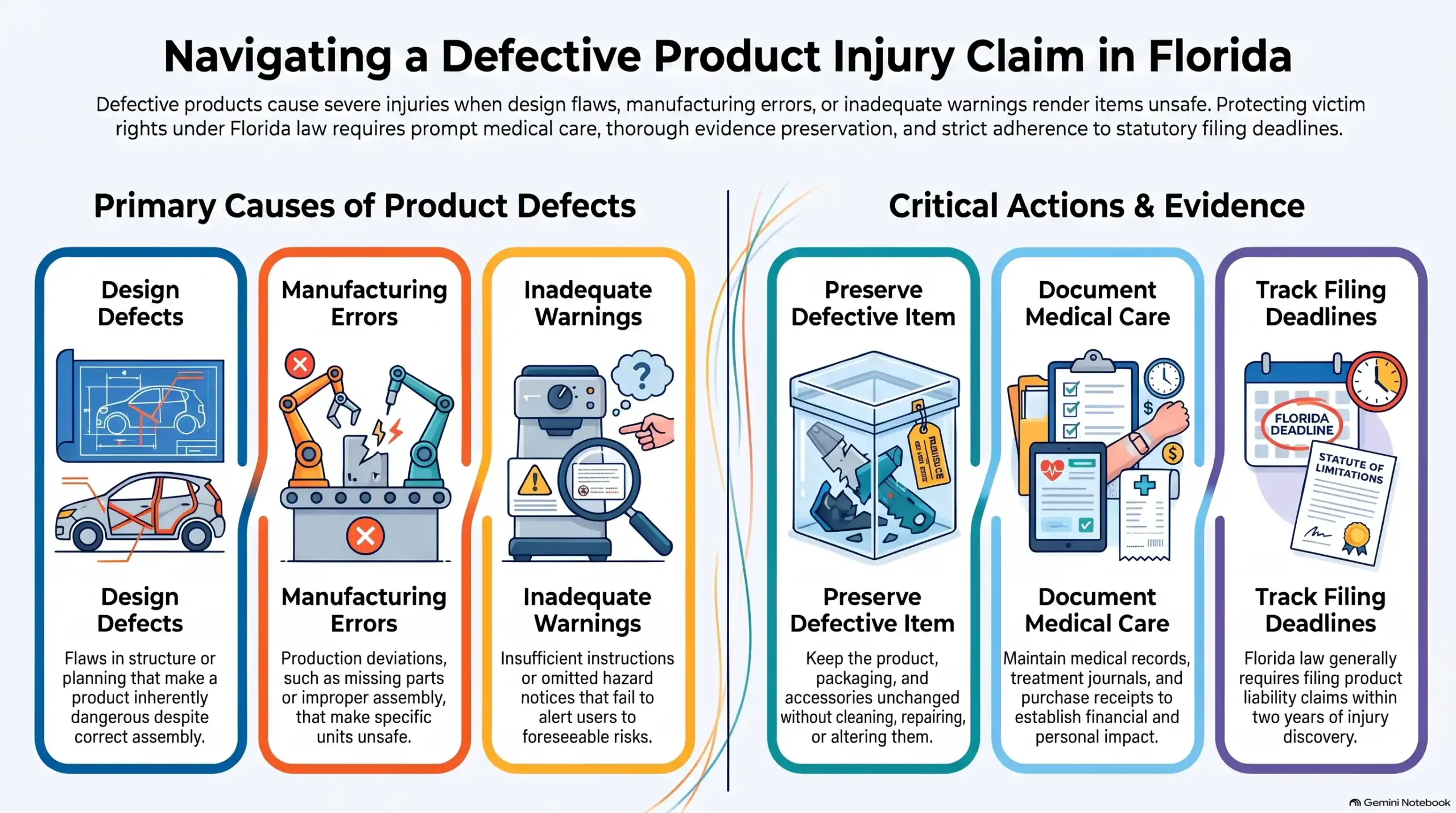
The Law Offices of Anidjar and Levine can investigate whether a dangerous product caused an injury and identify potentially responsible manufacturers, distributors, or sellers. Product liability claims may involve design flaws, manufacturing errors, or inadequate warnings, and require evidence connecting a defect to the harm. Preserving the product, medical records, photographs, and purchase documents may support an evaluation. Florida law and filing deadlines can affect available options. Learn more from a Fort Lauderdale Personal Injury Lawyer. The following information explains essential steps, evidence, and considerations for pursuing a claim.
Main Takeaways
- A Fort Lauderdale defective products lawyer can investigate whether a design flaw, manufacturing error, or inadequate warning caused your injury.
- Potentially responsible parties may include manufacturers, component makers, distributors, and sellers.
- Preserve the product, packaging, instructions, purchase records, photographs, and medical documentation as evidence.
- A lawyer can coordinate expert inspections, communicate with insurers, explain Florida filing requirements, and track deadlines.
- A claim’s options depend on the evidence, how the product was used, and the circumstances of the injury.


How We Can Help With Your Fort Lauderdale Defective Products Product Injuries Injury Claim
A Fort Lauderdale defective products lawyer can investigate how a product caused an injury, identify potentially responsible manufacturers or sellers, and pursue compensation on the injured person’s behalf. The legal team may gather records, preserve relevant product evidence, and coordinate with qualified experts to assess the matter. These steps can help clarify available options and support an informed decision about how to proceed.
Counsel can also explain filing requirements, communicate with insurers and opposing parties, and manage case-related deadlines. By handling these responsibilities, the firm may reduce the administrative burden on an injured person and allow that person to focus on recovery and family needs. The approach can reflect a commitment to serving clients with care and respect.
A lawyer may monitor Product recall alerts and share relevant information that could affect a client’s safety or claim. Through consumer safety advocacy, legal professionals can also encourage accountability and help individuals understand practical steps for reporting concerns. Each matter receives attention based on its circumstances, evidence, and the client’s goals.
OUR CONSULTATIONSARE FREE
START YOUR FREE CASE REVIEW

Understanding Fort Lauderdale Defective Products Product Injuries Injury Cases
When a consumer product causes harm because of a design flaw, manufacturing error, or inadequate warning, the resulting injury may support a product liability claim under Florida law. Product liability basics include identifying the responsible parties, establishing that a product was defective, and showing that the defect caused injury while the product was being used as intended or in a reasonably foreseeable way. The injured person may need to preserve the product, medical records, purchase information, and other evidence relevant to the claim.
Consumer safety standards can help explain whether a product’s design, manufacture, or warnings met applicable expectations. However, a standards violation does not automatically establish liability, and compliance does not necessarily resolve every issue. Each case depends on its facts, the available evidence, and Florida law. A careful review can clarify potential legal options and support accountability while helping protect other consumers from preventable harm. Prompt guidance may also help preserve evidence and meet filing deadlines.
Common Causes of Fort Lauderdale Defective Products Product Injuries
Product-related injuries commonly arise from design defects, manufacturing errors, inadequate safety warnings, or faulty components. Each issue can make a product unreasonably dangerous during ordinary or foreseeable use. Identifying the cause helps clarify how the defect contributed to the injury.
Design Defects
Design defects arise when a product’s intended design creates an unreasonable risk of injury, even if the item was manufactured according to its specifications. A product may expose users to danger because its structure, materials, or safety features were poorly planned. Unsafe geometry, such as sharp edges, pinch points, or an unstable center of gravity, can make ordinary use hazardous. Stability failures in furniture, ladders, or equipment may cause falls, while inadequate guards can leave moving parts accessible. A safer alternative design may reduce these risks without preventing the product from serving its intended purpose. When evaluating a potential claim, investigators may consider foreseeable uses, available design options, and whether warnings could adequately address the danger. Identifying a design flaw can help injured consumers seek accountability and encourage safer products for others.
Manufacturing Errors
Unlike a design defect, a manufacturing error occurs when a product departs from its intended specifications during production or assembly. Such flaws may affect a single item, a production batch, or an entire product line. Production line mistakes can include using the wrong material, omitting a component, or allowing contamination to enter a product. Assembly process failures may leave parts loose, incorrectly positioned, or improperly secured. These deviations can cause products to break, malfunction, or create unexpected hazards during ordinary use. In Fort Lauderdale, people injured by a defective product may need to preserve the item and document the circumstances of the incident. Records, expert inspections, and production information can help establish how the product differed from its specifications and whether that departure contributed to the injury.
Inadequate Safety Warnings
When a product presents a risk that users may not reasonably recognize, inadequate safety warnings or instructions can contribute to serious injuries. A warning may fail when it omits a foreseeable danger, understates the severity of harm, or does not explain how to use the product safely. Hazard specificity matters because general statements may not alert consumers to the particular precautions needed to avoid injury. Warning placement also affects whether users notice important information before operating or handling an item. Instructions that are difficult to read, incomplete, or poorly positioned may leave consumers without practical guidance. Manufacturers and sellers may have responsibilities to provide clear warnings for risks that cannot be eliminated through reasonable design. When a warning appears insufficient, a careful review can help determine whether better information could have prevented the injury and protected users.
Faulty Product Components
A defective component can cause a product to malfunction even when the rest of the item appears properly made and maintained. In Fort Lauderdale, faulty parts in vehicles, appliances, medical devices, or tools may expose users and nearby people to preventable injuries. Component fatigue can develop when a part repeatedly bears stress beyond its intended limits, eventually causing cracks, breakage, or loss of control. Material incompatibility may also weaken a product when parts react poorly to heat, moisture, chemicals, or one another. These failures can result from poor design, substandard materials, or manufacturing errors. Identifying the cause may require preserving the product and examining its components, maintenance history, and warnings. A careful investigation can help establish whether a manufacturer, supplier, or other responsible party contributed to the failure and resulting harm.
Don’t Wait. Call Our Florida Personal Injury Lawyers Now!


Legal Rights of Fort Lauderdale Defective Products Product Injuries Injury Victims
Fort Lauderdale residents injured by defective products may have the right to seek compensation from manufacturers, distributors, or sellers whose products caused harm. These Consumer Rights may include pursuing payment for medical expenses, lost income, pain, and other legally recognized losses. A claim can also support safer practices that protect other consumers.
In evaluating available options, injured people may consider:
- Preserve the product, packaging, receipts, and instructions when possible.
- Keep medical records and document expenses and effects on daily activities.
- Check whether Product Recalls or safety notices apply to the item.
- Seek legal guidance promptly because deadlines and evidence requirements may affect a claim.
The responsible parties and available remedies depend on the product, evidence, and circumstances of the injury. A lawyer can explain potential claims, communicate with involved businesses, and assess whether settlement or court action is appropriate. Clear records help establish the harm and losses involved. By understanding their rights, victims can make informed decisions while contributing to accountability and greater consumer safety across the community.
Why Do Defective Product Injuries Happen in Fort Lauderdale?
Why do defective product injuries occur in Fort Lauderdale? They often happen when a product’s design, manufacture, or warnings fail to protect people from foreseeable risks. A poorly designed item may remain dangerous even when produced as intended, while a manufacturing error can make one unit unsafe despite an otherwise sound design. Missing or unclear instructions may also prevent consumers from recognizing hazards or using products safely.
These failures can affect household appliances, vehicles, children’s products, medical equipment, and other goods used in daily life. In a busy community, defective items may reach many households before a danger is identified. Companies may overlook testing, quality controls, or known safety concerns, allowing preventable hazards to persist. Strong Product safety practices help reduce these risks by addressing problems before products reach the public. Consumer protection depends on accurate warnings, responsible manufacturing, and timely attention to reported defects. Understanding common causes can help communities support safer products and reduce harm to consumers.
What Should You Do After a Fort Lauderdale Defective Products Injury?
After an injury involving a potentially defective product, the injured person should seek prompt medical care and follow the provider’s recommendations. Preserve the product and its packaging in their current condition, since testing or alteration may affect evidence. Photographs, receipts, medical records, and a clear account of the incident can help document what occurred.
Seek Medical Care
Because some product-related injuries are not immediately apparent, prompt medical evaluation is an important first step. A person who has been hurt should seek Emergency evaluation for severe pain, breathing difficulty, burns, significant bleeding, loss of consciousness, or other urgent symptoms. For less severe concerns, a timely appointment with a qualified healthcare provider can identify injuries that may worsen without treatment. The provider should receive an accurate account of how the incident occurred and what symptoms followed. Following medical advice, completing recommended tests, and attending follow-up visits can support recovery and create a clear record of the injury and care received. Symptom monitoring is also important, since changes may indicate a need for reassessment. Prompt attention helps protect the injured person’s health and enables caregivers to make informed decisions about appropriate support and treatment.
Preserve the Product
If a product may have caused an injury, the injured person should preserve it in its current condition whenever it is safe to do so. Do not repair, clean, alter, or discard the product, since those changes may affect a later evaluation. If it presents an ongoing danger, it should be moved only as needed to protect people from harm. Secure storage can help prevent damage, loss, or unauthorized access while the matter is reviewed. The injured person should retain relevant parts, packaging, accessories, and instructions when available. A responsible person should limit handling and maintain a chain of custody log identifying who possessed or moved the item and when. These steps can help preserve reliable evidence and support a fair assessment of whether the product contributed to the injury. If safe preservation is not possible, qualified guidance may help.
Document the Incident
A clear record of the incident can help establish how the product was used, what failed, and when the injury occurred. As soon as practical, the injured person or a witness should write down the date, time, location, and circumstances. An incident timeline can note what happened before, during, and after the failure, including any warnings, unusual sounds, or changes in the product’s operation.
Photographs or video may document the product, its surroundings, visible damage, and any remaining hazards. A scene sketch can show where the product, injured person, and relevant objects were positioned. Names and contact details for witnesses should also be recorded, along with statements in their own words when possible. Document and retain medical visits, reported symptoms, and communications with the seller or manufacturer. These records may assist investigators and help protect others from similar harm.
Don’t Wait. Call Our Florida Personal Injury Lawyers Now!
Critical Evidence in a Fort Lauderdale Defective Products Product Injuries Injury Case
Strong evidence can help establish how a defective product caused an injury and support a compensation claim.
Essential materials include:
1. the product and its packaging, 2. photographs of injuries and medical treatment records, 3. receipts and other purchase records, and 4. witness information and qualified expert assessments. Promptly preserving these items can help prevent important details from being lost or altered.
Preserve the Defective Product
Preserving the product involved in an injury can provide vital evidence in a Fort Lauderdale defective product case. The item may help show how it was designed, manufactured, assembled, or used before the incident. Do not repair, alter, clean, or discard it, because changes may affect its condition and limit later examination. If immediate safety concerns require moving it, limit handling and record it carefully.
Secure storage can protect the product from weather, damage, or unauthorized access. Photographs of the item and its location may document its condition, but they should not replace preservation of the original. A clear chain-of-custody record should identify each person who handled or stored it and when. These steps can support a reliable investigation and help those seeking accountability for preventable harm.
Document Injuries and Treatment
Alongside preserving the product, document injuries and medical treatment to show how the incident affected the injured person. Prompt medical evaluation creates a record of observed injuries, symptoms, diagnoses, and recommended care. The injured person should describe the incident and symptoms accurately to each provider, even when discomfort seems minor or develops later. Consistent follow-up can help clinicians monitor recovery and adjust treatment when needed.
A Symptom Timeline can record when pain, limitations, or other effects began, how they changed, and which activities became difficult. A Treatment Journal can track appointments, medications, procedures, and instructions, while noting questions or concerns to raise with providers. Keeping these records organized may help clarify the course of recovery for those evaluating the claim. Accurate documentation also supports a clearer account of the person’s needs and the care required after the incident.
Gather Purchase Records
Purchase records can help establish where and when a product was obtained, identify the seller, and connect the specific item to an injury claim. Retailer receipts, order confirmations, bank statements, and online account histories may preserve details if the original receipt is missing. These records can also show the purchase price, date, product description, and transaction number. Such information may help distinguish the item involved from similar models or versions.
Warranty documentation, packaging, instruction manuals, and product labels should also be retained when available. They may identify the manufacturer, model, serial number, or applicable safety instructions. If records are stored electronically, save copies in a secure location. Keeping these materials organized can support a careful review of the claim and help those responsible for evaluating it understand the product’s history.
Identify Witnesses and Experts
Records can establish a product’s history, while witness accounts may clarify how it was used and what happened when the injury occurred. Identifying witnesses promptly can help preserve accurate details before memories fade. Eyewitness accounts may describe the product’s condition, the actions taken before the incident, and the immediate effects of the injury. Their observations can help explain events without speculation.
Experts may also assess whether a product’s design, materials, or warnings contributed to the harm. Qualified professionals can examine the item, review relevant records, and provide expert testimony about defects and causation. Their analysis may help clarify technical issues for a court or insurer. Witnesses and experts should be selected based on relevant knowledge and impartiality. Careful documentation of their observations can support a fair evaluation of the claim and help those affected pursue accountability.
Long-Term Effects of Fort Lauderdale Defective Products Product Injuries
Defective product injuries may lead to chronic pain or lasting disability that affects a person’s ability to work and manage daily activities. Some individuals also experience lasting emotional trauma, including anxiety or distress related to the injury. Continuing treatment and rehabilitation can create substantial medical expenses long after the initial incident.
Chronic Pain and Disability
When a defective product causes serious injury, the effects may continue long after the initial treatment ends. Persistent pain can limit mobility, disrupt sleep, and make routine tasks difficult. Some injured people require ongoing medical care, including medication, physical therapy, or procedures to manage symptoms. Pain management plans may help reduce discomfort and support safer participation in daily activities, though results vary by person and injury.
Lasting physical limitations can also affect work, caregiving, and independence. Disability adaptation may involve assistive devices, home modifications, accessible transportation, or changes to job duties. These measures can help individuals maintain function and contribute to their households and communities. Medical records, treatment plans, and evaluations of functional limits may document continuing needs. A qualified legal professional can explain how evidence of chronic pain, disability, and related expenses may be relevant to a defective product claim.
Lasting Emotional Trauma
Physical recovery does not always resolve the emotional effects of a serious product injury. A defective product incident may leave an injured person with anxiety, sleep disruption, or persistent fear of using similar items. These reactions can affect relationships, work, and participation in ordinary activities long after the immediate danger has passed. Post-traumatic stress may develop, particularly when the event involved sudden harm or a perceived threat to life. Emotional recovery can require patience, support from trusted people, and guidance from qualified mental health professionals. Family members and caregivers may also need to understand how trauma changes a person’s behavior and sense of security. Acknowledging these effects helps injured individuals receive compassionate support and communicate their needs. Their emotional well-being merits consideration alongside the physical consequences of a defective product injury.
Ongoing Medical Expenses
Although an injured person may complete initial treatment, serious product-related injuries can require ongoing medical care. A defective product may cause lasting pain, reduced mobility, nerve damage, or complications that develop over time. These effects can lead to recurring expert visits, medication, rehabilitation, assistive devices, or additional procedures. Future care needs should be assessed with input from qualified medical professionals who understand the injury and its likely progression. Treatment projections can help estimate the type, frequency, and duration of necessary services, while accounting for uncertainty in long-term recovery. Accurate records of appointments, prescriptions, and recommendations can clarify the continuing burden of an injury. When evaluating a product injury claim, documented medical needs may help show how future expenses relate to the defect and support a fair assessment of compensation.
Proving Liability in Fort Lauderdale Defective Products Product Injuries Injury Cases
Proving liability in a Fort Lauderdale defective product injury case requires evidence that the product was unreasonably dangerous and that its defect caused the injury. The injured person generally must identify how the product failed and connect that failure to the harm suffered. Liability may arise from a design flaw, a manufacturing error, or inadequate warnings or instructions.
Useful evidence can include the product itself, medical records, photographs, purchase documents, and witness accounts. Product testing may help determine whether the item departed from accepted safety standards or whether a safer design was practical. Qualified experts can examine the product and explain how its condition contributed to the injury.
Records showing who designed, manufactured, distributed, or sold the item may establish supply chain accountability. Preserving the product and related packaging is important because changes or disposal can complicate an investigation. A careful review of these facts can clarify responsibility and support an accurate assessment of the claim. The evidence should also document the injury’s timing and progression.
Dealing With Insurance Companies After a Fort Lauderdale Defective Products Product Injuries Injury
After a defective product causes an injury, insurance companies may contact the injured person to investigate the incident and assess potential liability. Their representatives may request statements, photographs, medical information, or access to the product. A careful, factual response can help preserve an accurate record, while speculation or unsupported conclusions may complicate discussions. The injured person may keep relevant packaging, receipts, instructions, and correspondence, and should avoid discarding or altering the product.
Insurers represent their policyholders’ interests, so their evaluations may not reflect the injured person’s needs or the full impact of the harm. A Claim denial may rely on disputed facts, alleged misuse, or questions about product responsibility. Settlement tactics can include requesting a quick resolution before the extent of injuries is clear or presenting an offer that does not account for continuing care. Reviewing communications and proposed terms with a qualified attorney can help clarify options. Careful consideration supports informed decisions and protects the ability to pursue fair compensation.
What to Expect During a Fort Lauderdale Defective Products Product Injuries Injury Claim Process
A defective product injury claim typically begins with an initial case review to assess the circumstances, potential liability, and available legal options. The process then involves collecting evidence and negotiating with the responsible parties or their insurers. If negotiations do not resolve the claim, the matter may proceed to trial.
Initial Case Review
During an initial case review, a Fort Lauderdale defective products lawyer examines how the product allegedly caused the injury and what evidence may support a claim. This Initial Consultation gives the injured person an opportunity to describe the incident, resulting harm, and concerns about recovery. The lawyer may ask focused questions about the product’s intended use, the circumstances of the injury, and any communications with manufacturers or sellers. A Case Assessment then considers whether the known facts may support a product liability claim and identifies issues that could affect the available legal options. The review may also address deadlines, potential responsible parties, and the process for seeking compensation. By clarifying these matters early, counsel can help the injured person make informed decisions while pursuing accountability and protecting others from similar harm. The assessment remains preliminary until further review.
Evidence Collection
What evidence can help establish that a defective product caused an injury? A Fort Lauderdale product injury claim may rely on the product itself, photographs of the injury and scene, purchase records, packaging, instructions, and maintenance history. Medical records can document the harm and treatment, while witness accounts may clarify how the incident occurred.
The product should be preserved in its post-incident condition whenever possible. Altering, repairing, or discarding it may limit later evaluation. A documented Evidence Chain records who handled the item, when it changed hands, and how it was stored, helping protect its reliability.
Qualified professionals may conduct Expert Testing to assess whether a design, manufacturing, or warning defect contributed to the injury. Investigators may also gather relevant product specifications and safety notices. Careful collection allows the claim to be evaluated on dependable information and supports accountability that can help protect others from similar harm.
Claim Negotiations
Once the evidence has been reviewed, claim negotiations may begin with the insurer or other responsible party. The injured person or their representative may present a demand describing the product defect, resulting harm, medical costs, lost income, and other documented losses. The opposing party may request records, question aspects of the claim, or propose a different valuation. Negotiation tactics can include evaluating supporting evidence, responding to disputed issues, and explaining how the injury has affected daily responsibilities and the ability to serve family or community. Settlement timing varies according to the seriousness of the injuries, the availability of records, and the parties’ willingness to communicate. Careful review of any proposed terms helps confirm that the amount and conditions reflect the documented claim. Negotiations may involve several exchanges before the parties reach agreement.
Resolution or Trial
If negotiations do not produce an agreement, the claim may proceed to trial, where a judge or jury evaluates the evidence and determines liability and damages. Before trial, the parties may consider mediation, a structured process in which a neutral mediator helps them explore settlement options. A thoughtful Mediation Strategy can clarify disputed issues and identify solutions that address the injured person’s needs while supporting fair accountability. If settlement remains out of reach, Trial Preparation becomes crucial. Counsel may gather medical records, product documents, expert opinions, and witness testimony to present a clear account of how the defect caused harm. The injured person may need to answer questions and explain the effects of the injury. A court’s decision can resolve responsibility and compensation, though outcomes depend on the evidence and applicable law.
Compensation for Fort Lauderdale Defective Products Product Injuries Injury Damages
Compensation for injuries caused by a defective product may cover medical expenses, lost income, reduced future earning capacity, pain and suffering, and other losses supported by the evidence. A claim may also account for rehabilitation, prescription costs, necessary medical equipment, and other expenses linked to the injury. Records, bills, and professional assessments can help establish the extent of these losses.
Lost income may include wages missed during recovery, while diminished earning capacity may reflect lasting limits on a person’s ability to work. The injured person’s occupation, work history, and medical outlook may help clarify how the injury affects future employment. Compensation can also recognize physical discomfort, emotional strain, and disruption to daily activities, when supported by the facts.
A careful evaluation considers how the product-related injury has affected the person’s health, responsibilities, and ability to support others. The amount available depends on the evidence, applicable law, and circumstances of the case. No specific recovery can be guaranteed.
Economic vs. Non-Economic Damages in Fort Lauderdale Defective Products Product Injuries Cases
Defective product injury claims may include economic losses, such as medical expenses, lost income, and future care costs. They may also involve non-economic harm, including pain, emotional distress, and loss of normal activities. Establishing damages generally requires reliable evidence linking the losses to the injury and supporting their extent.
Economic Losses
Economic losses in a Fort Lauderdale defective products case are measurable financial harms caused by an injury, such as medical expenses, lost wages, and reduced future earning capacity. These damages may include emergency treatment, surgery, medication, rehabilitation, and other reasonable care costs related to the defective product. Lost Wages can account for income missed while an injured person recovers, including documented time away from work. Reduced Earning Capacity may apply when lasting limitations prevent a person from performing prior duties or earning at the same level. Other recoverable expenses can include travel for treatment, assistive devices, and necessary home modifications. Records such as pay statements, tax returns, medical bills, and expert assessments can help establish the amount and connection between the injury and each claimed financial loss. Careful documentation supports accurate evaluation and fair compensation.
Non-Economic Harm
Beyond measurable financial losses, a defective product injury may cause significant non-economic harm. These losses concern the personal effects of an injury rather than bills or reduced earnings. Persistent pain, emotional distress, anxiety, and limitations on daily activities can alter a person’s sense of independence and well-being. A serious injury may also prevent participation in hobbies, family routines, or community service that once provided purpose. This Loss of Enjoyment can affect both the injured person and those who relied on shared activities. Changes in mood, mobility, or caregiving needs may create strain within a household, contributing to Damaged Relationships. In Fort Lauderdale defective product cases, non-economic damages may recognize these human consequences. They reflect the injury’s impact on dignity, connection, and quality of life, beyond its measurable financial costs.
Proving Damages
To recover damages after a product-related injury in Fort Lauderdale, the injured person must support each claimed loss with evidence. Economic damages include measurable expenses and income losses, such as medical bills, rehabilitation costs, lost wages, and reduced earning capacity. Receipts, employment records, tax documents, and medical reports can provide reliable documentation of damages. When treatment or disability may continue, medical opinions and vocational assessments can help establish future losses and their likely value.
Non-economic damages address harm without a precise price, including pain, emotional distress, physical impairment, and reduced enjoyment of daily activities. Treatment notes, personal accounts, and testimony from people familiar with the injured person’s life may help demonstrate these effects. Careful, consistent records allow decision-makers to evaluate the full impact and support a fair claim while preserving resources for others.
Don’t Wait. Call Our Florida Personal Injury Lawyers Now!
When a Fort Lauderdale Defective Products Product Injuries Injury Case Goes to Trial vs Settlement
Whether a defective-product injury case settles or proceeds to trial depends on the strength of the evidence, the extent of the injuries, and the parties’ willingness to agree on fair compensation. Settlement can provide a more predictable resolution and avoid the time, expense, and uncertainty of a courtroom proceeding. Negotiations may address medical costs, lost income, and other established losses, while allowing the injured person to focus on recovery and family responsibilities. Settlement timing varies; discussions may begin before a lawsuit is filed or continue after evidence is exchanged.
A trial may be necessary when the parties dispute whether the product was defective, how the injury occurred, or what compensation is appropriate. Each side presents evidence and witnesses, and a judge or jury evaluates the claims. Jury deliberations follow the presentation of the case, but the outcome cannot be guaranteed. The decision between settlement and trial depends on the circumstances, the available proof, and the injured person’s priorities. Careful preparation supports informed choices and helps pursue accountability while seeking resources for recovery.
Florida Laws That May Affect Your Fort Lauderdale Defective Products Product Injuries Case
Florida law sets important rules for defective-product injury claims, including how liability is established, what deadlines apply, and how fault may affect compensation. These rules help injured consumers seek accountability while encouraging safer products for the wider community.
- Florida strict liability may apply when a product’s defect makes it unreasonably dangerous and causes injury during foreseeable use. A claimant generally must show the defect and its connection to the harm.
- Negligence may also support a claim when a manufacturer, distributor, or seller failed to use reasonable care in designing, producing, inspecting, or warning about a product.
- Comparative negligence can reduce compensation if the injured person’s own conduct contributed to the injury. Florida’s modified system may bar recovery when that person is found more than 50 percent at fault.
- Product claims may involve state statutes, federal safety standards, and evidence about warnings or recalls. Careful review of these factors can clarify responsibility and support safer practices for consumers and businesses alike.
The Statute of Limitations for Fort Lauderdale Defective Products Product Injuries Injury Cases
How long an injured person has to file a defective-product claim can determine whether the case proceeds. In Florida, a product liability lawsuit generally must be filed within two years after the injury is discovered, or should have been discovered through reasonable diligence. This deadline makes prompt attention important, particularly when an injury affects a person’s ability to work, care for family, or contribute to the community.
The Discovery rule may affect when the filing period begins if the injury or its connection to a product was not immediately apparent. However, delayed awareness does not necessarily extend the time without limit. Florida also imposes a repose deadline, which can bar a claim based on the time elapsed since the product was delivered, subject to statutory exceptions. The applicable period may depend on the facts, the product’s history, and the nature of the harm. Missing a controlling deadline can prevent recovery, so the relevant dates should be assessed carefully and without delay.
How a Fort Lauderdale Defective Products Product Injuries Lawyer Can Help You
When a defective product causes an injury, a Fort Lauderdale lawyer can help identify the parties responsible and determine which legal claims may apply. With attorney guidance, counsel can explain the injured person’s rights and coordinate the steps needed to support a claim. A lawyer may also help protect evidence and communicate with manufacturers, insurers, and other involved parties.
A lawyer’s work may include:
- Reviewing the product, instructions, and available records to assess whether a defect contributed to the injury.
- Identifying potentially responsible parties, such as manufacturers, distributors, or retailers.
- Gathering medical records, witness accounts, and expert opinions to document the harm and its causes.
- Developing Case Strategy, evaluating settlement proposals, and presenting the claim in negotiations or court.
This assistance can reduce the burden on an injured person and family while ensuring that concerns are addressed through a structured legal process. Careful preparation may also help promote accountability and encourage safer products for others in the community.
When to Contact a Fort Lauderdale Defective Products Product Injuries Lawyer
Prompt legal guidance may be important as soon as a product appears to have caused an injury, particularly if the product remains in use or evidence could be lost. A person should consider contacting a Fort Lauderdale defective products lawyer promptly after receiving medical care, especially when an injury is serious, symptoms worsen, or the cause is uncertain. Early Warning Signs may include overheating, breakage, leakage, unexpected movement, or repeated malfunctions. These concerns can affect other users, so reporting them to the manufacturer or appropriate safety agency may help prevent further harm.
Product Recall Alerts should also prompt careful review of whether the item, model, or batch is included. A recall does not necessarily resolve an injured person’s legal questions, and a product not listed may still warrant investigation. Preserve the product, packaging, receipts, instructions, photographs, and relevant communications when safe to do so. Timely contact can help clarify deadlines and practical next steps before evidence or records become difficult to obtain.
Why You Need an Experienced Fort Lauderdale Defective Products Product Injuries Lawyer
An experienced Fort Lauderdale defective products lawyer can assess whether a product defect may have caused an injury and identify the evidence needed to support a claim. This review may involve examining the product, instructions, purchase records, medical documentation, and reports of similar incidents. Experienced counsel can help preserve relevant evidence before a damaged item is discarded or altered and determine whether expert analysis is necessary.
Product liability claims may involve challenging questions about design, manufacturing, warnings, and the parties responsible for placing an item in the marketplace. A lawyer can investigate these issues, explain available legal options, and manage communications with manufacturers and insurers. This support allows injured people and their families to focus on recovery while seeking accountability.
Counsel may also monitor Product Recalls and assess whether a recall relates to the reported hazard. Through Consumer Advocacy, legal action can help identify safety concerns and encourage responsible practices, potentially protecting other consumers from preventable harm.
How to Choose the Right Fort Lauderdale Defective Products Product Injuries Lawyer for Your Case
Choosing the right Fort Lauderdale defective products lawyer requires more than reviewing advertisements or settlement claims. A careful selection process helps an injured person identify counsel prepared to investigate the product, explain available options, and pursue accountability in a manner that supports safer outcomes for others.
Relevant experience should be assessed alongside Attorney credentials, including licensing, disciplinary history, and demonstrated work with product injury claims. A prospective client can ask how the lawyer evaluates evidence, identifies responsible parties, and handles expert review. Clear answers may indicate a disciplined approach rather than reliance on broad promises.
Assess relevant experience, credentials, and investigative methods to find counsel prepared to handle product injury claims responsibly.
The lawyer’s communication style also matters. Counsel should explain procedures in understandable terms, respond within reasonable timeframes, and provide realistic updates about risks and possible outcomes. The injured person should understand who will manage the case and how decisions will be made.
Before signing an agreement, the client should review fees, expenses, and representation terms. Comparing several qualified lawyers can help identify a professional whose approach, experience, and expectations align with the case.
About The Law Offices of Anidjar & Levine
The Law Offices of Anidjar & Levine represents injured people in claims involving defective products and other serious injuries.
The firm assists clients in Fort Lauderdale and throughout Florida, including individuals seeking answers after a product causes harm.
Its attorneys evaluate the circumstances of an injury, explain available legal options, and pursue claims for compensation when the facts support them.
This work can help people address medical expenses, lost income, and other losses while they focus on recovery.
Firm history provides context for the firm’s approach to client representation.
Since its founding, the practice has handled personal injury matters and developed procedures for reviewing evidence, communicating with clients, and managing claims.
Each case requires an assessment of the product, the injury, and the parties potentially responsible.
Community involvement also reflects the firm’s connection to the people it serves.
Through local outreach and support, the firm contributes to community needs beyond its legal work.
Its role is to provide informed guidance and attentive representation to injured individuals and families.

Frequently Asked Questions
Can I File a Claim if I Was Injured by a Product Purchased Secondhand?
Yes, an injured person may be able to file a claim after buying a product secondhand. Secondhand Product Ownership does not automatically prevent recovery, but the claim depends on evidence that a defect caused the injury and that a responsible party may be legally liable. Used Item Defects: The product’s condition, its age, and any changes made after sale can affect the case. Preserving the product and purchase records may help establish relevant facts.
Are Product Manufacturers Responsible for Injuries Caused by Inadequate Warning Labels?
Product manufacturers may be responsible for injuries when inadequate warnings fail to explain a product’s foreseeable risks or safe use. Warning Label Adequacy depends on whether the information is clear, prominent, and sufficient for users to make informed decisions. Manufacturer Liability may arise if a stronger warning could have prevented the injury, subject to applicable law and evidence. A careful review of the product, warning, and circumstances can help determine whether a claim is available.
Can Multiple Companies Be Liable for One Defective Product?
Yes. Multiple companies may share responsibility when a defective product causes injury. Manufacturer liability can arise from a design flaw, manufacturing error, or inadequate warning, while distributor responsibility may apply when a company mishandles the product or fails to address a known danger. Retailers, component makers, and other entities may also face claims, depending on their roles and applicable law. Evidence helps determine each company’s contribution and potential legal responsibility.
What if a Recalled Product Injured Me Before the Recall Was Announced?
A person injured before a product recall was announced may still have a claim; the later announcement does not automatically remove responsibility for an earlier injury. Recall timing can help establish when a manufacturer or seller knew, or should have known, of a danger. The injured person should preserve the product, purchase records, medical records, photographs, and other injury documentation, and seek legal advice promptly because deadlines and available remedies vary.
Can a Product Liability Claim Involve a Child Injured by a Defective Toy?
Yes. A product liability claim may arise when a child is injured by a defective toy, including one with unsafe design, manufacturing flaws, or inadequate warnings. Toy safety standards can help assess whether the product presented an unreasonable risk and whether the manufacturer or seller failed to meet applicable duties. The child’s representative may seek compensation for documented losses. Parental liability may be considered if caregiver conduct contributed to the injury, depending on the circumstances and governing law.
—————————
A defective product injury can lead to lasting medical, financial, and personal consequences.
Identifying responsible parties and preserving evidence may be important to protecting a claim.
An experienced Fort Lauderdale Personal Injury Lawyer can review the circumstances, explain available legal options, and pursue compensation supported by the evidence.
The Law Offices of Anidjar and Levine represent injured people and can assess whether a product defect contributed to an injury.
Prompt legal guidance can help victims understand the steps ahead.

