

A Fort Lauderdale nursing home neglect and care settings lawyer can review records, investigate whether inadequate supervision, missed care, or unsafe conditions caused an injury, and explain potential legal options. The Law Offices of Anidjar and Levine may help preserve medical charts, care plans, incident reports, staffing information, and other relevant evidence while communicating with the facility or insurers. Prompt medical attention and careful documentation can support the resident’s interests. Learn more about a Fort Lauderdale Personal Injury Lawyer. The sections below explain warning signs, evidence, legal rights, and when to seek qualified guidance.
Main Takeaways
- A Fort Lauderdale nursing home neglect lawyer can review records, communicate with the facility, and explain potential legal options.
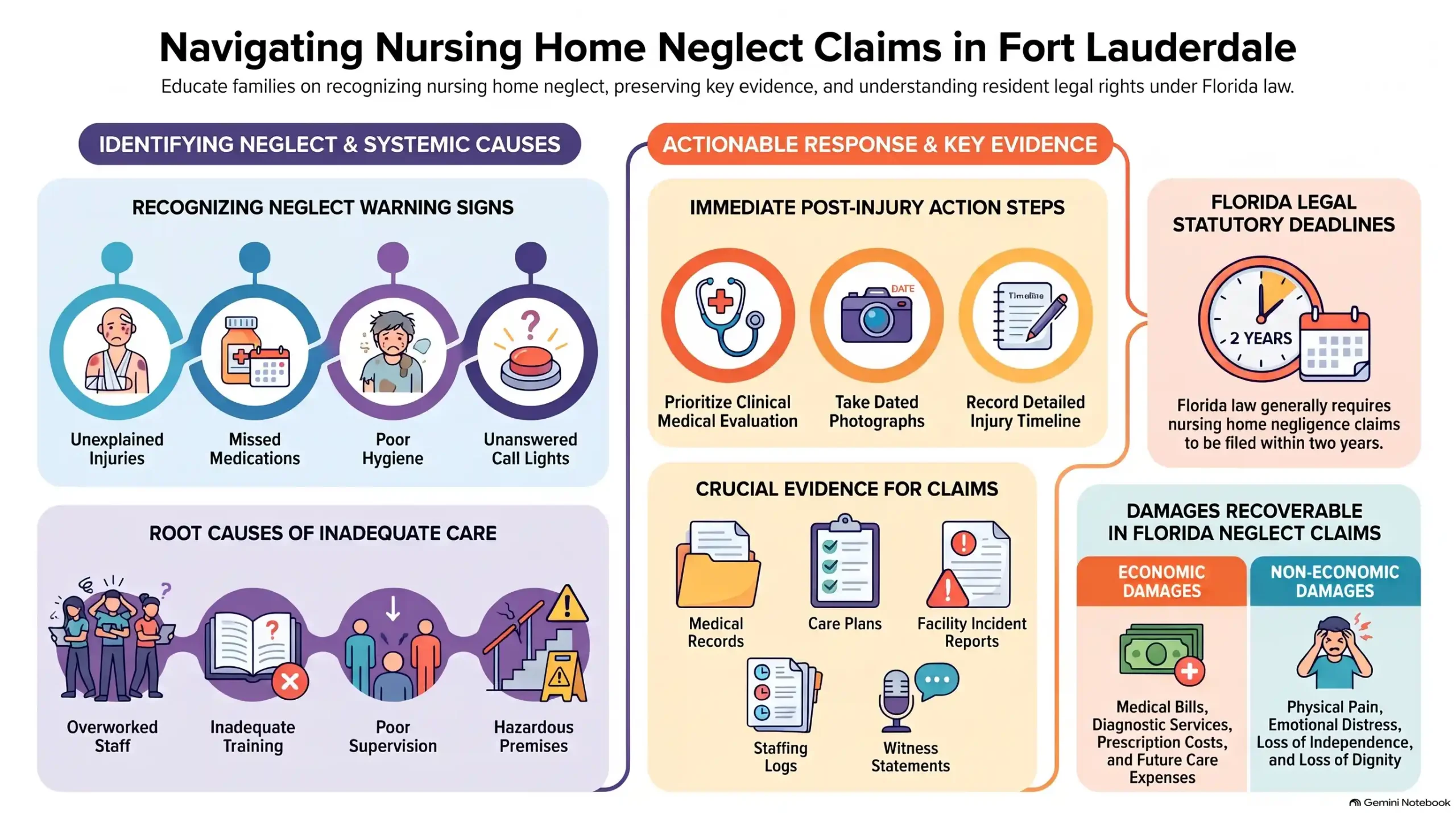
- Possible warning signs include unexplained injuries, missed medications, poor hygiene, inadequate nutrition, and delayed responses to call lights.
- Evidence may include care plans, medical records, incident reports, staffing records, photographs, and witness statements.
- A claim may require showing that a facility failed its duty of care and that the failure caused harm.
- Legal options and deadlines depend on the circumstances; preserve relevant records and seek qualified Florida legal guidance.


How We Can Help With Your Fort Lauderdale Nursing Home Neglect & Care Settings Injury Claim
When a nursing home resident suffers harm because of neglect or inadequate care, the circumstances may be difficult to investigate while the resident remains vulnerable. Legal counsel can help families take practical steps to protect the resident’s interests and seek answers. An attorney may review available records, communicate with the facility, and identify information needed to understand how the injury occurred.
A claim may involve examining staffing practices, care plans, incident reports, and relevant policies. This review can clarify whether caregivers followed required procedures and whether management responded appropriately to known risks. Caregiver accountability and facility oversight are important considerations when evaluating how care was delivered and what corrective measures may be warranted.
Counsel can also explain available legal options, organize supporting documentation, and handle communications with insurers or other parties. The process should respect the resident’s dignity and privacy while keeping family members informed. Each matter depends on its facts, and an attorney can outline potential next steps without promising a particular outcome. This guidance helps families make informed decisions during a difficult period.
OUR CONSULTATIONSARE FREE
START YOUR FREE CASE REVIEW

Understanding Fort Lauderdale Nursing Home Neglect & Care Settings Injury Cases
Fort Lauderdale nursing home neglect and care-setting injury cases involve evaluating whether a resident’s harm resulted from inadequate supervision, unmet care needs, unsafe conditions, or another failure to provide appropriate care. Each matter requires careful attention to the resident’s circumstances, the expected level of care, and the information available about the injury. Records, care plans, staff observations, and communications with family members may help establish what occurred and when.
Neglect warning signs can include unexplained injuries, changes in hygiene or nutrition, missed medications, or a resident’s sudden withdrawal. Such indicators do not prove neglect on their own, but they may warrant prompt review and compassionate attention. A thorough assessment considers whether the facility followed applicable standards and responded appropriately to the resident’s needs.
Facility accountability may involve examining policies, staffing practices, supervision, and the steps taken after concerns were reported. The process can help clarify whether a preventable failure contributed to harm and what remedies may be available. Families and advocates can support residents by preserving relevant records and seeking qualified guidance.
Common Causes of Fort Lauderdale Nursing Home Neglect & Care Settings
Nursing home neglect may arise from understaffing and overworked employees, which can limit the time available for residents’ daily needs. Inadequate training and poor supervision may also contribute to missed care, unsafe decisions, or delayed responses. Unsafe facility conditions, including hazards that are not promptly addressed, can further place residents at risk.
Understaffing and Overwork
Understaffing and excessive workloads can prevent nursing home employees from providing residents with timely, attentive care. When too few caregivers are assigned to a unit, necessary tasks may be delayed, including assistance with meals, mobility, hygiene, and responding to call lights. Residents may then face avoidable risks such as falls, dehydration, missed medications, or worsening health concerns.
Facilities may rely on mandatory overtime to cover staffing gaps, leaving employees fatigued and less able to maintain consistent attention. Persistent pressure can contribute to staff burnout, absenteeism, and turnover, further reducing the time available for each resident. These conditions can undermine dignity and safety, even when employees are committed to serving others. Families who observe recurring delays, unanswered requests, or unmet care needs may document concerns and seek information about staffing practices and resident protections.
Inadequate Staff Training
When staff members lack adequate training, residents may not receive care that meets their individual needs or safety requirements. Nursing home employees need practical instruction in safe transfers, infection prevention, medication procedures, and recognizing changes in a resident’s condition. Without this preparation, a caregiver may overlook warning signs, use equipment incorrectly, or fail to follow an established care plan. These errors can increase the risk of falls, illness, medication complications, and other preventable harm. Effective training protocols should address residents’ physical and cognitive needs, emergency response, and respectful communication. Competency assessments can help determine whether staff members understand and can apply required procedures before providing care independently. Facilities that invest in ongoing education support safer, more dignified care and help reduce preventable neglect across their resident population.
Poor Supervision Practices
Poor supervision can leave nursing home residents exposed to preventable injuries, unmet needs, and unsafe conditions. In Fort Lauderdale care settings, effective oversight requires staff to remain attentive to residents’ individual needs, mobility, and care plans. Inadequate resident monitoring may allow changes in health or behavior to go unnoticed, delaying assistance when a resident needs help. Missed safety checks can also increase the risk of falls, wandering, or prolonged periods without necessary support. These failures may occur when staffing assignments are unclear, workloads are excessive, or supervisors do not verify that required observations are completed. Consistent communication and documented checks help facilities identify gaps and respond promptly. Families concerned about supervision may review care records and raise specific concerns with facility administrators or appropriate authorities to support residents’ well-being and dignity.
Unsafe Facility Conditions
Unsafe facility conditions can create serious risks even when residents receive attentive supervision. In Fort Lauderdale nursing homes, hazards may include wet floors, poor lighting, damaged flooring, and cluttered walkways that increase the likelihood of falls. Broken handrails can make stairs and corridors difficult to traverse, particularly for residents with limited mobility. Faulty call systems, inadequate heating or cooling, and poorly maintained bathrooms may also compromise safety and dignity. Contaminated water can expose residents to illness and may indicate failures in sanitation, testing, or maintenance. Facilities are responsible for inspecting their premises, promptly addressing hazards, and documenting repairs. Staff should report unsafe conditions and take reasonable steps to protect residents while problems are corrected. When management ignores known risks, residents and families may have grounds to seek legal guidance about possible neglect.


Legal Rights of Fort Lauderdale Nursing Home Neglect & Care Settings Injury Victims
Fort Lauderdale nursing home residents and others injured in care settings may have legal rights when neglect or inadequate care causes harm. Resident Rights include respectful treatment, appropriate services, and protection from abuse. When those rights are violated, an injured resident or authorized representative may seek accountability under applicable Florida law. Depending on the circumstances, a claim may address medical expenses, pain, disability, or other losses.
Families and advocates can help protect a resident’s dignity by documenting concerns and seeking qualified legal guidance. Family Advocacy may include preserving records, communicating with decision-makers, and ensuring the resident’s wishes remain central.
Legal options vary according to the facts, deadlines, and responsible parties.
- A resident merits to be heard when care falls short.
- Families may pursue answers about preventable harm.
- Documentation can help preserve a vulnerable person’s account.
- Accountability may support safer, more compassionate care for others.
A lawyer can assess the available evidence, explain potential remedies, and identify steps for protecting the resident’s interests without promising a particular outcome.
Don’t Wait. Call Our Florida Personal Injury Lawyers Now!
Why Do Fort Lauderdale Nursing Home Neglect & Care Settings Injuries Happen?
Nursing home and other care-setting injuries often occur when staffing, supervision, or basic care falls below a resident’s needs. Residents may depend on staff for mobility, hygiene, meals, medication, and timely attention to changing health conditions. When caregivers are stretched too thin, vital tasks can be delayed or missed, increasing the likelihood of falls, dehydration, pressure injuries, infections, or medication errors.
Risk factor patterns may include inadequate training, high staff turnover, poor communication, and weak oversight. These conditions can make it harder to recognize a resident’s risks, follow an individualized care plan, or respond promptly to warning signs. Environmental hazards, such as cluttered walkways or poorly maintained equipment, may also contribute to injuries, particularly for residents with limited balance or cognition.
Many injuries are not an inevitable consequence of aging or illness. Consistent staffing, careful monitoring, safe surroundings, and respectful communication can reduce preventable harm. Understanding how these failures arise helps clarify why attentive, compassionate care is vital in nursing homes and other care settings.
What Should You Do After a Fort Lauderdale Nursing Home Neglect & Care Settings Injury?
After a suspected nursing home injury, the resident should receive prompt medical care to address immediate risks and establish a clear record of the harm. Caregivers or family members should document visible injuries, symptoms, and relevant events, preserving photographs and records when possible. They may also contact a nursing home lawyer to understand their options and protect the resident’s interests.
Seek Immediate Medical Care
When a nursing home resident suffers an injury or shows signs of neglect, prompt medical evaluation should take priority, even if the harm initially appears minor. A fall, unexplained pain, dehydration, or a sudden change in behavior may indicate a serious condition that requires timely attention. If symptoms are severe, worsening, or potentially life-threatening, emergency treatment should be sought immediately by contacting emergency services. For less urgent concerns, the resident should still receive prompt assessment from a qualified medical professional. A hospital evaluation may be necessary to identify injuries or complications that are not readily apparent, particularly when the resident cannot clearly describe what happened. Caregivers and facility staff should provide clinicians with relevant health information and follow medical instructions. Prioritizing treatment protects the resident’s health and helps prevent avoidable complications.
Document the Injury
Documenting the injury can help preserve an accurate account of the resident’s condition and the circumstances surrounding it. Records created soon after an incident may clarify what was observed and when, supporting careful communication among family members, caregivers, and medical professionals.
Photo documentation can show visible injuries, changes in skin condition, or the surrounding environment. Photographs should be dated when possible, taken with the resident’s privacy and dignity in mind, and stored securely. They should not delay medical attention or involve moving a resident who may be seriously injured.
A written injury timeline can record when the injury was discovered, who was present, what the resident reported, and any care provided. Notes should distinguish direct observations from information received from others. Copies of relevant facility communications and medical records may also help maintain a clear, factual account for those responsible for the resident’s care.
Contact a Nursing Home Lawyer
A Fort Lauderdale nursing home neglect lawyer can help families assess whether an injury may be linked to inadequate care and explain the options for addressing it. After documenting the injury, a family may arrange an attorney consultation to review relevant records, photographs, care plans, and communications with facility staff. Prompt legal guidance can help preserve evidence and clarify whether the circumstances warrant further investigation. Families should provide accurate information and avoid altering or discarding documents related to the resident’s care. A Free case evaluation may help them understand potential next steps, applicable deadlines, and the information needed to assess a possible claim. The attorney can also explain how to raise safety concerns through appropriate channels while prioritizing the resident’s immediate medical needs and continued dignity. Legal advice can support informed decisions without disrupting vital care.
Critical Evidence in a Fort Lauderdale Nursing Home Neglect & Care Settings Injury Case
In a Fort Lauderdale nursing home neglect or care-setting injury case, evidence can reveal what happened and whether warning signs were ignored.
Essential records may include:
1. Medical records documenting injuries and treatment; 2. Care plans showing required assistance; 3. Incident reports describing the event; and 4. Witness statements that may preserve otherwise unheard accounts.
Medical Records
Medical records can reveal whether a Fort Lauderdale nursing home recognized a resident’s injury, responded appropriately, and followed required care plans. Progress notes, physician orders, medication records, test results, and hospital transfer documents may help establish when symptoms appeared and what actions followed. Families seeking accountability should consider Record preservation early, since routine retention practices may affect how long documents remain available. A lawyer can request relevant materials through proper channels and assess whether entries are complete, consistent, and contemporaneous. Access authorization may be required before a representative can obtain protected health information. Careful review can help identify unanswered questions, preserve evidence, and support a fair assessment of the resident’s treatment and resulting harm.
Care Plans
Care plans connect a resident’s assessed needs to the care a Fort Lauderdale nursing home is expected to provide. They may address mobility, nutrition, medication support, fall prevention, and assistance with daily activities. In a neglect case, the plan can help show what services were identified as necessary and whether staff followed those directions.
Care Plan Reviews may reveal changes in a resident’s condition, updated risks, or revised care instructions. Comparing dated versions with other records can help clarify whether the facility responded appropriately to known needs. Resident Preferences also matter because individualized plans should reflect relevant choices, routines, and goals when feasible. A plan that omits important needs or is not updated may raise questions about assessment and supervision. Careful review can help families and advocates identify gaps while supporting safer, more respectful care.
Incident Reports
Incident reports can provide an important account of injuries, falls, medication errors, or other events in a Fort Lauderdale nursing home. These records may identify when an event occurred, the response provided, and whether staff followed facility procedures. A careful review can help families and legal representatives assess whether the resident received timely attention and whether preventable risks were addressed.
Access to reports may require a written request or legal process, and facilities may limit disclosure to protect private information. Prompt action can help preserve records before they are misplaced or altered. Applicable reporting deadlines may also affect when concerns must be raised with regulators or when a legal claim must be filed. Because requirements vary by circumstance, qualified counsel can explain the relevant rules and help secure records while supporting accountability and safer care for residents.
Witness Statements
While incident reports document a facility’s account of an event, witness statements can add firsthand detail about what occurred before, during, and after a resident’s injury. Residents, staff members, visitors, and other people present may describe hazards, delayed assistance, changes in a resident’s condition, or care provided afterward. Their observations can help clarify timelines and identify differences between accounts.
Witness credibility depends on factors such as the person’s opportunity to observe, consistency, and ability to recall events. A statement should distinguish direct observation from information heard from others and avoid speculation. Prompt preservation of statements can protect details that may fade as time passes. Written accounts should be dated, attributed, and stored securely, with follow-up questions documented. Respectful, careful interviews can support a fair review while protecting the resident’s dignity and the accuracy of the evidence.
Don’t Wait. Call Our Florida Personal Injury Lawyers Now!
Long-Term Effects of Fort Lauderdale Nursing Home Neglect & Care Settings Injuries
Neglect-related injuries can have lasting consequences that continue well beyond the initial harm. Residents may experience chronic physical pain and emotional trauma, including persistent fear or distress. These effects can also reduce independence, making daily activities and personal care increasingly difficult.
Chronic Physical Pain
Chronic physical pain can persist long after an injury or illness linked to inadequate nursing home care has occurred. Residents may experience ongoing discomfort after falls, untreated wounds, infections, or delayed medical attention. Pain can interfere with sleep, personal care, and participation in daily activities, reducing independence and quality of life. Mobility limitations may develop when an injury affects balance, strength, or joint function, and reduced movement can further complicate recovery. Appropriate Pain management requires careful assessment, timely treatment, and regular review by qualified health professionals. Care plans should account for each resident’s medical needs and responses to treatment, while staff monitor changes and promptly communicate concerns. When neglect contributes to lasting pain, medical records and other evidence may help clarify its causes, effects, and the support required for ongoing care.
Lasting Emotional Trauma
Lasting emotional trauma may follow nursing home neglect or a care-related injury, particularly when a resident experiences fear, pain, or a loss of trust in caregivers. A resident may develop Persistent anxiety, become unusually watchful, or feel unsafe during routine care. Emotional flashbacks can cause distress when a sound, touch, or setting recalls a frightening event. These reactions may disrupt sleep, concentration, and relationships with family or staff. Some residents withdraw from activities or show changes in mood, appetite, or communication. Such symptoms merit careful attention rather than dismissal as ordinary aging. Compassionate caregivers can listen without judgment, document changes, and help connect residents with appropriate mental health support. When neglect is suspected, families may seek professional guidance to protect the resident’s well-being and understand available legal options.
Declining Independence
Emotional distress after nursing home neglect can also contribute to a resident’s declining independence. Fear, pain, or reduced confidence may lead an older adult to avoid walking, personal care, or social activities that were once manageable. When staff fail to provide appropriate support, preventable injuries and prolonged inactivity can further weaken mobility and daily living skills.
These changes may create lasting Identity changes as residents become less able to make choices or maintain familiar routines. Loss of autonomy can affect dignity and relationships with family members, especially when assistance is provided without respect for individual preferences. A resident may increasingly depend on others for decisions and basic tasks, even after the immediate injury has recovered. Families and caregivers can support recovery by recognizing changes, encouraging safe participation, and seeking appropriate medical evaluation. Careful documentation may help clarify whether neglect contributed to the decline.
Proving Liability in Fort Lauderdale Nursing Home Neglect & Care Settings Injury Cases
Proving liability in a Fort Lauderdale nursing home neglect or care-setting injury case requires evidence that the facility failed to meet its legal duty and that the failure caused harm. The Duty of Care may involve providing adequate supervision, assistance with daily needs, safe premises, and appropriate medical attention. Records can show whether staff followed care plans, monitored known risks, and responded promptly to changes in a resident’s condition.
Evidence may include medical charts, incident reports, staffing records, photographs, and statements from residents, family members, or employees. A Causation Analysis connects a specific failure, such as an untreated injury or missed fall precautions, to the resulting harm. It also considers whether another condition or event contributed to the injury. The facility’s policies and applicable standards can help establish what reasonable care is required. Careful review by qualified professionals may clarify how the injury occurred and whether different actions could have prevented it, supporting an evidence-based assessment of responsibility.
Dealing With Insurance Companies After a Fort Lauderdale Nursing Home Neglect & Care Settings Injury
After a Fort Lauderdale nursing home neglect or care-setting injury, an insurer may contact the resident or family to discuss the incident, review records, or request a statement. These communications can concern the facility’s insurance coverage, the resident’s injuries, and the steps taken to provide care. A family member focused on protecting the resident’s well-being should approach requests carefully and keep copies of correspondence.
Before answering detailed questions or signing documents, the resident or authorized representative may seek guidance from a qualified attorney. Recorded statements can be used to assess or dispute the account of events, so answers should be accurate and limited to what the person knows. Medical authorizations should also be reviewed because broad releases may allow access to unrelated health information.
An insurer may discuss Policy limits, but that information alone does not establish the value of a claim or resolve responsibility. Careful communication helps preserve accurate information while the resident’s needs remain the priority.
What to Expect During a Fort Lauderdale Nursing Home Neglect & Care Settings Injury Claim Process
A Fort Lauderdale nursing home neglect or care settings injury claim typically begins with an initial case review to assess the circumstances and potential legal issues. Evidence is then collected and evaluated before a claim is filed with the responsible parties. Depending on the facts and available options, the matter may be resolved through negotiation, mediation, or litigation.
Initial Case Review
During an initial case review, a Fort Lauderdale nursing home neglect lawyer typically examines the resident’s injuries, care history, and available records to assess whether neglect or another failure in care may have contributed to the harm. The review also considers the resident’s needs, the facility’s responsibilities, and the impact on the resident’s health and daily life. A lawyer may explain potential legal options and identify questions that require further evaluation, without promising a particular outcome. An eligibility assessment helps determine whether the resident or an authorized representative may pursue a claim and whether the circumstances support further legal action. The review timeline can vary depending on the intricacy of the situation and the information already available. This early discussion gives families a clearer understanding of possible next steps and how accountability may help protect others in care settings.
Evidence Collection
Once an initial review identifies issues that warrant further evaluation, evidence collection helps clarify how the resident’s injuries occurred and whether the facility met its care obligations. A careful process may include obtaining medical records, care plans, medication logs, staffing schedules, incident reports, and photographs of injuries or unsafe conditions. Witness accounts from residents, family members, and staff can help establish a timeline and identify gaps in care. Evidence preservation is important because records may be altered, lost, or routinely deleted. Where relevant, digital forensics may help examine electronic health records, facility communications, surveillance footage, or device data. Qualified professionals can assess medical findings and explain whether injuries are consistent with the documented care. Each item should be handled lawfully and securely, with attention to privacy and accuracy, so the circumstances can be evaluated fairly.
Claim Filing
After the evidence has been reviewed, filing a claim may begin the formal process of seeking compensation for injuries linked to nursing home neglect or unsafe care. The injured resident, an authorized representative, or another eligible party may submit the required paperwork to the appropriate insurer or court, depending on the circumstances. Careful claim documentation can include medical records, facility reports, witness statements, and details of the harm and related expenses. Accurate information helps explain how the facility’s conduct may have contributed to the injury and supports a clear account of the resident’s needs. Filing deadlines vary by claim and parties involved, so prompt attention is important. Counsel can identify applicable requirements, prepare submissions, and communicate with relevant parties while safeguarding the resident’s interests throughout the filing process.
Resolution Options
How a Fort Lauderdale nursing home neglect or care-related injury claim is resolved depends on the evidence, the parties’ positions, and the resident’s needs. After reviewing medical records, care plans, witness accounts, and financial losses, the parties may negotiate a settlement. A settlement can address treatment costs, other documented damages, and steps intended to protect the resident’s ongoing care. Mediation options may help the parties discuss disputed issues with a neutral facilitator while retaining control over whether to agree. If negotiations fail, the claim may proceed to court, where evidence and legal arguments are presented for a decision. Some admission agreements contain arbitration clauses that may affect where disputes are heard. Their applicability depends on the wording, circumstances of signing, and governing law. Each resolution path should account for the resident’s safety and dignity.
Compensation for Fort Lauderdale Nursing Home Neglect & Care Settings Injury Damages
Compensation for nursing home neglect in Fort Lauderdale may address the financial and personal harms a resident suffers because of inadequate care. A claim may seek recovery for injuries linked to missed medication, unsafe conditions, poor supervision, or failure to provide necessary assistance. The available remedy depends on the evidence, the resident’s circumstances, and the applicable law.
A resident may pursue damages for physical pain, emotional distress, loss of dignity, and the effects of lasting impairment. Compensation may also account for treatment needs and changes in the resident’s ability to participate in daily life. When neglect causes death, eligible family members or representatives may bring a wrongful death claim for losses recognized by law.
In cases involving especially serious misconduct, Punitive damages may be available to address conduct beyond ordinary negligence and discourage similar behavior. Their availability is limited and depends on the facts and legal standards. Careful review of records, incident reports, and witness accounts can help clarify what compensation may be pursued.
Economic vs Non-Economic Damages in Fort Lauderdale Nursing Home Neglect & Care Settings Cases
Damages in Fort Lauderdale nursing home neglect cases generally fall into economic and non-economic categories. Economic damages may include medical expenses and other measurable financial losses, while non-economic damages address harm such as pain, suffering, or loss of dignity. Establishing these losses typically requires reliable records and evidence linking them to the neglect.
Economic Damages
Economic damages address the measurable financial losses caused by nursing home neglect, including medical expenses, rehabilitation costs, and additional care needs. These losses may include hospital bills, medication, diagnostic services, and treatment required to address injuries or prevent further decline. Records such as invoices, care plans, and medical reports can help establish the connection between neglect and the expenses claimed.
A resident’s injuries may also affect the ability to work. Past wage loss may be recoverable when evidence shows that the harm caused missed work or reduced earnings. Future care expenses may include ongoing nursing support, therapy, specialized equipment, or a more suitable living arrangement. Their projected amount may depend on professional assessments and the resident’s anticipated needs. Careful documentation helps families and advocates seek compensation that supports the resident’s continued care and recovery.
Non-Economic Damages
While economic damages measure financial losses, non-economic damages address the personal effects of nursing home neglect, such as pain, emotional distress, loss of dignity, and reduced quality of life. These harms can affect a resident’s sense of safety, independence, and connection with others. Pain and suffering may include physical discomfort, fear, anxiety, or distress associated with inadequate care. Loss of dignity can arise when a resident’s privacy, personal choices, or need for respectful treatment is disregarded. In Fort Lauderdale nursing home neglect cases, non-economic damages recognize that the consequences of neglect extend beyond medical bills and other measurable expenses. They reflect the human impact on residents and their families, while acknowledging the importance of compassionate, attentive care. The value of these damages depends on the circumstances and applicable law.
Proving Your Losses
Establishing the full impact of nursing home neglect requires evidence of both measurable financial losses and personal harm. Economic damages may include medical bills, rehabilitation expenses, medication costs, and income lost by a family member providing necessary care. Medical Expense Tracking helps organize invoices, insurance statements, pharmacy records, and payment receipts to show how neglect affected the resident’s finances. Future Care Costs may also be considered when injuries require continuing treatment, specialized equipment, or additional support. Qualified providers can document expected needs and their projected expense.
Non-economic damages address harm that cannot be measured through bills alone, such as pain, emotional distress, loss of dignity, or reduced independence. Medical records, care notes, witness accounts, and testimony may help establish these effects. A clear, consistent record enables a careful assessment of losses and supports accountability while respecting the resident’s needs and circumstances.
When a Fort Lauderdale Nursing Home Neglect & Care Settings Injury Case Goes to Trial vs Settlement
Whether a Fort Lauderdale nursing home neglect or care-setting injury case proceeds to trial or settles depends on the evidence, the parties’ willingness to resolve the dispute, and the risks each side faces in court. A settlement may provide a more predictable resolution and avoid the time, expense, and uncertainty of a trial. It can also let families focus on a resident’s care rather than prolonged litigation. However, an offer should be assessed against documented losses, future needs, and the strength of the available evidence.
Settlement leverage often grows when records, witness accounts, and qualified assessments clearly support the claim. If negotiations do not produce an acceptable outcome, trial preparation becomes critical. Counsel may organize evidence, prepare witnesses, and present a clear account of how the injury occurred and affected the resident. A judge or jury then evaluates the evidence and determines the outcome. Each path involves trade-offs, and the appropriate choice depends on the case’s facts and the injured resident’s circumstances.
Don’t Wait. Call Our Florida Personal Injury Lawyers Now!
Florida Laws That May Affect Your Fort Lauderdale Nursing Home Neglect & Care Settings Case
The choice between settlement and trial is shaped in part by Florida laws governing nursing home care, resident rights, and injury claims. These rules establish standards for care, accountability, and respectful treatment. They may help families and advocates understand which records, decisions, and safeguards matter when a resident has been harmed.
Florida nursing home laws can clarify care standards, resident protections, and accountability when harm occurs.
- Resident rights laws protect dignity, access to information, and freedom from abuse or neglect.
- Facility licensing requirements set operational standards and permit state oversight when a home falls short.
- Care regulations address staffing, assessments, treatment plans, and responses to changing health needs.
- Injury laws may affect available remedies and how responsibility is evaluated.
Resident privacy also matters: facilities must safeguard personal information while maintaining records relevant to care and safety. For people committed to serving older adults, these protections provide a framework for seeking answers without losing sight of the resident’s needs. A careful review of applicable rules can clarify whether conduct violated required standards and inform decisions about resolving a claim through negotiation or court.
The Statute of Limitations for Fort Lauderdale Nursing Home Neglect & Care Settings Injury Cases
When a Fort Lauderdale nursing home resident suffers an injury linked to neglect, Florida’s filing deadlines can determine whether a civil claim may proceed. The applicable Limitations Period depends on the legal basis of the claim and the facts surrounding the injury. Florida law generally sets a two-year deadline for negligence claims, including many cases involving nursing home care. Different rules may apply when a claim alleges medical malpractice, involves a wrongful death, or concerns a government-operated facility.
The Discovery Rule may affect when the deadline begins. In certain cases, the period starts when the injury was discovered, or reasonably should have been discovered, rather than on the date the harm occurred. This rule does not automatically extend time, and statutory limits may restrict how long a claim can be brought. Records, incident reports, and medical documentation may help establish when the injury and its cause became known. Because missed deadlines can bar recovery, prompt attention to the dates is important.
How a Fort Lauderdale Nursing Home Neglect & Care Settings Lawyer Can Help You
A Fort Lauderdale nursing home neglect lawyer can investigate the circumstances of a resident’s injury, identify potentially responsible parties, and explain the legal options available to the resident or family. The lawyer may review care plans, medical records, staffing documents, and facility policies to determine whether required standards were followed.
This work can support caregiver accountability and help families seek meaningful answers.
- Documenting overlooked symptoms or unsafe conditions can clarify how harm occurred.
- Identifying gaps in supervision may reveal whether a facility failed to protect a vulnerable resident.
- Consulting qualified medical professionals can help explain the injury’s causes and effects.
- Organizing evidence and communicating with responsible parties can reduce the burden on families.
Through family advocacy, counsel can present the resident’s needs and circumstances with care, while pursuing appropriate remedies under applicable law. A lawyer may also assess potential claims involving a facility, employees, or outside providers. Each case depends on its evidence, the resident’s condition, and the duties owed by those involved.
When to Contact a Fort Lauderdale Nursing Home Neglect & Care Settings Lawyer
Prompt legal guidance may be appropriate if a nursing home resident develops an unexplained injury, shows signs of declining health, or experiences changes that staff cannot adequately explain. Warning signs may include repeated falls, untreated wounds, dehydration, sudden weight loss, poor hygiene, medication errors, or fear around particular caregivers. These conditions do not automatically establish neglect, but they warrant careful attention and timely questions.
Family concerns should be taken seriously, especially when facility explanations are inconsistent, records are unavailable, or requests for care go unanswered. A relative or other advocate may document observations, preserve relevant communications, and seek medical assessment when the resident’s health may be at risk. If concerns persist, contacting a Fort Lauderdale nursing home neglect and care settings lawyer can help clarify whether the circumstances warrant further review and what steps may be available. Prompt consultation is particularly important when injuries are serious, health is worsening, or the resident may face continuing harm. A timely response can support the resident’s safety and dignity.
Why You Need an Experienced Fort Lauderdale Nursing Home Neglect & Care Settings Lawyer
An experienced Fort Lauderdale nursing home neglect and care settings lawyer can help determine whether a resident’s injuries or declining health may reflect inadequate care. This assessment can bring structure to a difficult situation and help families focus on the resident’s safety, dignity, and immediate needs.
An attorney familiar with Florida facility regulations can explain the standards that apply to staffing, supervision, medication, nutrition, and other aspects of care. The lawyer may review medical records, care plans, incident reports, and facility documentation to identify gaps or inconsistencies. This work can help clarify whether a preventable failure contributed to harm and what steps may protect the resident from further risk.
Experienced counsel can also communicate with facility representatives, preserve relevant evidence, and explain available legal options. Families seeking to serve and protect an older loved one may benefit from guidance connecting legal concerns with appropriate elder advocacy resources. With informed support, they can make considered decisions, raise concerns through proper channels, and pursue accountability while keeping the resident’s well-being central.
How to Choose the Right Fort Lauderdale Nursing Home Neglect & Care Settings Lawyer for Your Case
Choosing the right Fort Lauderdale nursing home neglect and care settings lawyer requires careful attention to the attorney’s experience with elder care cases, knowledge of Florida law, and ability to explain the legal process clearly. Families seeking to protect an older adult should also consider whether counsel approaches the matter with patience, respect, and a commitment to the resident’s safety and dignity.
A review of Attorney Credentials can help identify relevant experience, professional standing, and familiarity with nursing home records, inspections, and injury claims. The lawyer should describe how evidence may be gathered, which deadlines apply, and what outcomes may be available without promising a particular result. Clear communication matters, especially when relatives are coordinating care and legal decisions.
Before proceeding, prospective clients should ask about Fee Structures, case expenses, and how costs are handled if a claim does not succeed. Carefully comparing these terms, communication practices, and case strategy can help families choose representation suited to their circumstances.
About The Law Offices of Anidjar & Levine
For families evaluating legal representation, The Law Offices of Anidjar & Levine handles injury claims, including matters involving alleged nursing home neglect in Fort Lauderdale.
The firm represents individuals and families seeking accountability after preventable harm, and its attorneys assess records, care concerns, and available legal options.
Each matter depends on its specific facts, so outcomes cannot be guaranteed.
Firm history can help families understand a law office’s experience and approach.
The firm’s work includes personal injury cases, with legal services focused on investigating claims and communicating case developments to clients.
In nursing home matters, that process may involve reviewing facility records and examining whether care fell below accepted standards.
Community involvement also reflects how a firm engages with the people it serves.
The Law Offices of Anidjar & Levine describes community outreach as part of its broader work.
Families considering counsel can ask about relevant experience, communication practices, fees, and the steps involved in evaluating a claim before deciding whether the firm suits their needs.

Frequently Asked Questions
Can Family Members Visit a Florida Nursing Home Without Advance Notice?
Family members generally may visit a Florida nursing home without advance notice, subject to applicable Visitor access rights and reasonable facility policies. Federal rules protect residents’ rights to receive visitors of their choosing at reasonable times, including immediate access for certain representatives and support persons. A facility may impose safety, infection-control, or other lawful restrictions, but should explain them and apply them consistently. Residents may also decline visits or set their own visitation preferences.
How Can I Check a Fort Lauderdale Nursing Home’s Inspection History?
A person can check a Fort Lauderdale nursing home’s inspection history through the Florida Agency for Health Care Administration’s online facility search. Search by facility name, city, or license number, then review inspection reports, complaint investigations, and enforcement actions. These Florida nursing home inspection records can identify recurring deficiencies and whether corrective measures were required. For Fort Lauderdale facility citations, the agency’s records provide dates, findings, and outcomes, helping families assess care quality and advocate responsibly for residents.
Who Can Report Suspected Nursing Home Abuse in Florida?
Anyone who suspects nursing home abuse in Florida may report it, including residents, relatives, staff, visitors, and concerned community members. Mandated reporters, such as health care professionals and facility employees, must report suspected abuse under state law. Reports can be made to the Florida Abuse Hotline by phone or online; anonymous complaints are accepted. A report should provide specific observations, dates, and the facility’s location, while immediate danger requires contacting 911.
What Protections Do Nursing Home Residents Have Against Retaliation for Complaints?
Florida law provides nursing home residents Protection from Retaliation when they raise concerns about care or exercise their rights. Facilities may not punish, threaten, intimidate, or discriminate against residents for making complaints or participating in investigations. A Confidential Complaint Process may help protect the identity of a person reporting suspected violations. Residents and representatives can contact the Florida Long-Term Care Ombudsman Program or state regulators, document any alleged retaliation, and seek prompt assistance.
Can Residents Bring Personal Belongings or Choose Their Own Daily Routines?
Residents generally may bring Personal Belongings and help shape their Daily Routines, subject to reasonable safety, space, and care requirements. Facilities should respect residents’ preferences regarding clothing, personal items, activities, and schedules while ensuring that necessary care is provided. Any limits should be explained and applied fairly, not used to punish or disregard a resident. Residents or representatives may raise concerns with facility staff or appropriate oversight agencies when restrictions appear unjustified.
—————————
When neglect or unsafe conditions injure a nursing home resident, timely action can help protect the resident and preserve important evidence.
A careful review of care records, facility practices, and medical findings can help determine whether the facility failed to meet its responsibilities.
The Law Offices of Anidjar and Levine can assess the circumstances, explain available legal options, and pursue accountability when the facts support it.
Families can also learn about a Fort Lauderdale Personal Injury Lawyer.
Seek guidance promptly, as deadlines and evidence requirements may affect a claim.

