
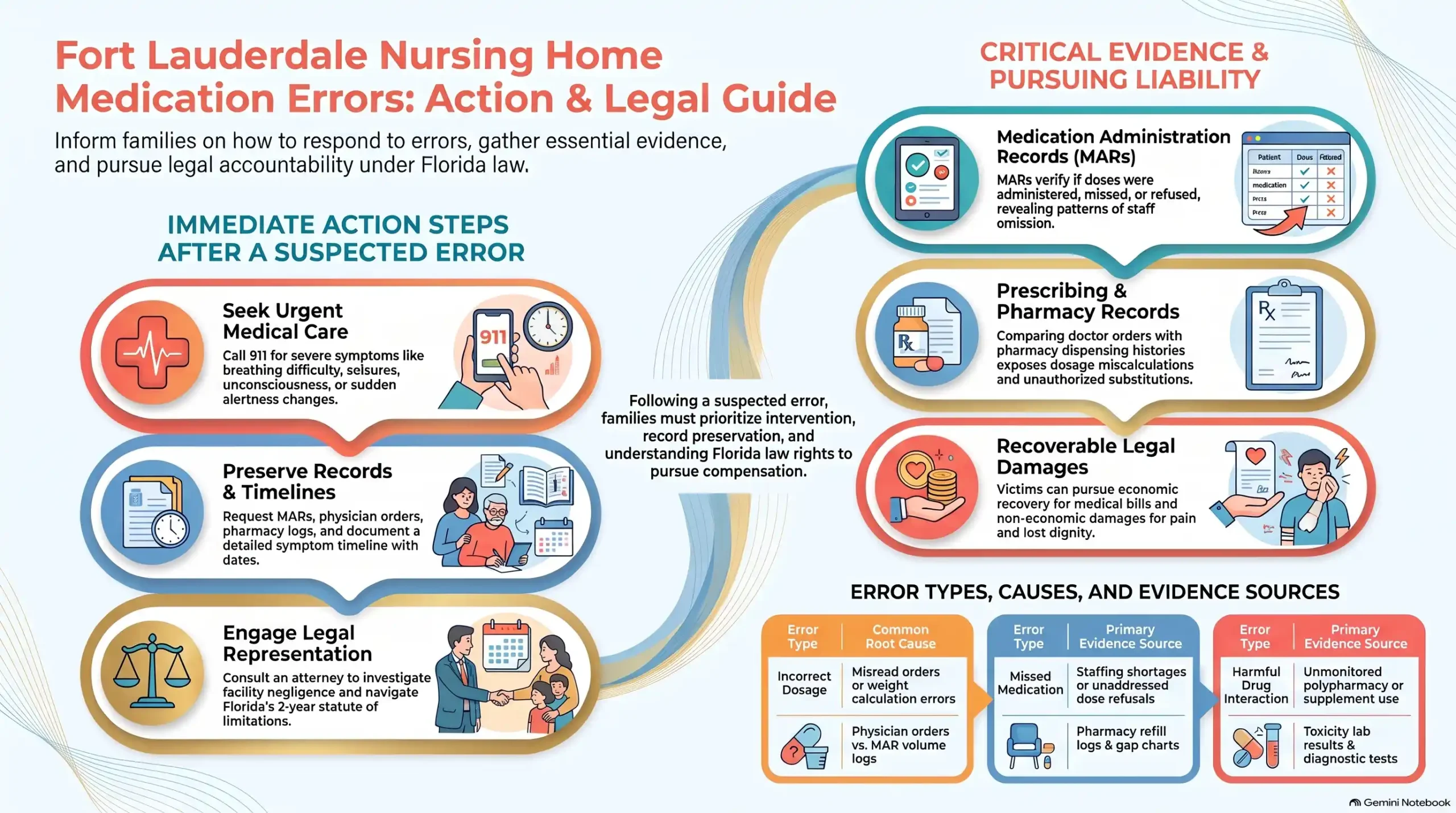
A Fort Lauderdale nursing home medication errors lawyer can investigate whether a prescribing, dispensing, administration, or monitoring mistake caused a resident’s injury. Potential errors include incorrect doses, missed medications, harmful drug interactions, and inadequate responses to symptoms. Prompt medical care should come first, while records of medications, symptoms, treatment, and staff communications may help clarify what happened. The Law Offices of Anidjar and Levine can review evidence, explain potential legal options, and identify applicable deadlines. Learn more from a Fort Lauderdale Personal Injury Lawyer. The following sections describe common causes, resident rights, and available legal support.
Main Takeaways
- A Fort Lauderdale nursing home medication error lawyer can assess whether negligent prescribing, dispensing, administration, or monitoring caused harm.
- Seek urgent medical care for serious symptoms, and call 911 for breathing difficulty, seizures, unconsciousness, or sudden changes in alertness.
- Preserve medication administration records, physician orders, pharmacy records, medical records, incident reports, and communications with facility staff.
- Document symptoms, treatment, medication details, missed or refused doses, and when concerns were reported to the nursing home.
- Depending on the evidence, an injured resident may pursue compensation for medical expenses, additional care, pain, and other losses.


How We Can Help With Your Fort Lauderdale Nursing Home Medication Errors Injury Claim
When a medication error harms a nursing home resident, a careful legal review can help identify what went wrong and who may be responsible. A Fort Lauderdale attorney can examine available records, explain potential legal options, and help families make informed decisions about pursuing a claim.
The review may include medication administration records, physician orders, incident reports, and communications with facility staff. A Care Plan Review can help determine whether the resident’s needs were assessed and whether staff followed appropriate instructions. When further investigation is warranted, legal counsel may consult qualified medical professionals to evaluate the connection between the error and the resident’s injuries.
Family Advocacy also involves clear communication and respectful attention to the resident’s interests. Counsel can help gather relevant documentation, coordinate responses to questions, and address concerns about ongoing care without disrupting necessary support. Throughout the process, the family can receive updates about important developments and guidance on available choices. This focused assistance helps families seek accountability while prioritizing the resident’s dignity, safety, and well-being.
OUR CONSULTATIONSARE FREE
START YOUR FREE CASE REVIEW

Understanding Fort Lauderdale Nursing Home Medication Errors Injury Cases
Understanding a Fort Lauderdale nursing home medication error injury case begins with identifying the medication involved, how it was administered, and the harm that followed. A careful review may consider medical records, care plans, pharmacy documentation, and statements from staff or witnesses. These materials can help establish what the resident was prescribed, what was given, and whether the resulting injury required treatment or caused lasting effects.
The evaluation also considers the facility’s responsibilities and the standards relevant to resident care. A strong Medication Safety Culture includes clear procedures for documenting medication decisions and responding promptly when a resident’s condition changes. Evidence may show whether the facility recognized the injury, notified appropriate parties, and arranged necessary medical attention.
Resident Advocacy remains central throughout the review. Families and representatives may seek accurate answers while protecting the resident’s dignity and well-being. Each case depends on its specific facts, including the connection between the medication event and the documented harm. A qualified legal review can clarify available options.
Common Causes of Fort Lauderdale Nursing Home Medication Errors
Medication errors in Fort Lauderdale nursing homes may result from incorrect dosages or missed medications, potentially disrupting a resident’s care. Poor recordkeeping can make it difficult to track prescriptions and confirm that each dose was administered. Staff communication failures may further increase the risk of these errors, particularly during shift changes or changes to a resident’s treatment plan.
Incorrect Dosage
Incorrect dosage is a common cause of nursing home medication errors in Fort Lauderdale and may expose residents to serious harm. A resident may receive too much or too little medication when staff misread an order, select the wrong strength, or administer an incorrect volume. Dosage calculation errors can occur when instructions are converted or adjusted, particularly for residents with complicated prescriptions. Weight-based dosing mistakes may arise when a resident’s current weight is unavailable or recorded inaccurately, leading to an unsuitable amount. These errors can cause adverse reactions, worsen existing conditions, or require emergency treatment. Facilities are responsible for maintaining clear medication records, verifying orders, and training staff to follow prescribing instructions. When a dosage error occurs, prompt medical assessment and careful documentation can help protect the resident and clarify how the mistake happened.
Missed Medications
When a nursing home resident does not receive a prescribed dose, the omission may interrupt treatment and worsen an existing condition. Missed medications can result from staffing shortages, rushed care routines, unclear instructions, or a failure to obtain refills promptly. A resident may also experience Medication refusal because of swallowing difficulties, confusion, side effects, or concerns about treatment. Staff should respond by identifying the reason, notifying the appropriate clinician, and following authorized guidance rather than simply leaving the dose unaddressed. Depending on the medication and the resident’s health, missed dose symptoms may include pain, changes in blood pressure or blood sugar, worsening infection, or behavioral changes. Timely assessment and appropriate follow-up can reduce avoidable harm. Families who notice a treatment interruption may ask the facility how the resident’s care was addressed.
Poor Recordkeeping
Accurate records help nursing home staff confirm which medications a resident received, when doses were given, and whether treatment instructions changed. Poor recordkeeping can obscure a resident’s medication history and make it difficult to determine whether prescribed care was properly provided. Incomplete charts may omit dose times, dosage amounts, or documented reasons for withholding a medication. Missing signatures can also leave uncertainty about who administered a drug or verified an entry. These gaps may delay recognition of an error, complicate efforts to assess its effects, and hinder appropriate follow-up care. Consistent, timely documentation supports accountability and helps protect residents from avoidable harm. When records are unclear or incomplete, families and caregivers may struggle to understand a resident’s treatment history, while care providers may lack the reliable information needed to evaluate medication-related concerns.
Staff Communication Failures
Clear communication among nursing home staff is essential to safe medication administration. When caregivers, nurses, and prescribers do not share accurate information, residents may receive incorrect doses, miss scheduled medications, or experience harmful drug interactions. Shift handoffs require particular care because staff must clearly report recent doses, medication changes, allergies, and observed side effects. Incomplete or rushed updates can leave incoming workers unaware of important instructions.
Language barriers may also prevent staff from understanding orders or confirming details with colleagues. Facilities should use clear written protocols, qualified interpreters when needed, and reliable methods for verifying medication instructions. Staff members who notice inconsistencies should seek clarification before administering a drug. These safeguards support residents’ well-being and help facilities identify communication breakdowns that may contribute to medication errors.


Legal Rights of Fort Lauderdale Nursing Home Medication Errors Injury Victims
Fort Lauderdale nursing home residents harmed by medication errors may have legal rights under Florida law, including the right to seek compensation when negligent care causes injury. These rights can support residents and families seeking accountability while protecting dignity and well-being.
Florida residents harmed by nursing home medication errors may seek compensation and accountability when negligent care causes injury.
- Pursue compensation: An injured resident may seek damages for medical expenses, additional care, pain, and other losses when evidence establishes negligence and causation.
- Review care and records: Residents or authorized representatives may request relevant medical records to understand treatment decisions and document the injury.
- Protect informed choices: Resident consent and medication autonomy matter. Residents generally have rights concerning treatment decisions, subject to applicable law and decision-making capacity.
- Report concerns: Residents, families, and advocates may raise concerns with facility administrators or appropriate state agencies, helping protect others from harm.
A claim’s strength depends on the facts, available evidence, and applicable deadlines. Prompt guidance from a qualified Florida attorney can help preserve records, assess legal options, and make certain the resident’s interests remain central throughout the process.
Don’t Wait. Call Our Florida Personal Injury Lawyers Now!
Why Do Fort Lauderdale Nursing Home Medication Errors Happen?
Medication errors in Fort Lauderdale nursing homes can occur when staff fail to prescribe, dispense, administer, or monitor medications as required. These failures may result from understaffing, inadequate training, rushed routines, or poor communication among caregivers, physicians, and pharmacists. When a resident’s medication list is outdated or incomplete, staff may give an incorrect drug, dose, or schedule. Similar medication names and packaging can also contribute to selection mistakes.
Medication Storage practices can create risks when drugs are mislabeled, kept at improper temperatures, or accessible to unauthorized people. Errors may also occur when staff overlook allergies, medical conditions, or changes in a resident’s health. Drug Interactions can develop if caregivers do not review all prescribed medicines, over-the-counter products, and supplements collectively. Inadequate monitoring may allow harmful reactions or missed doses to continue. Clear records, careful verification, and consistent supervision help protect residents, particularly those who depend on others for safe, reliable medication management in daily care.
What Should You Do After a Fort Lauderdale Nursing Home Medication Error Injury?
After a suspected medication error, the resident should receive prompt medical care to assess and address any resulting harm. The family should document the incident by recording symptoms, treatment, medication details, and communications with nursing home staff. A nursing home lawyer can review the available information and explain potential legal options.
Seek Immediate Medical Care
Seek emergency medical care promptly if a nursing home resident shows signs of harm after receiving the wrong medication, an incorrect dose, or a missed dose. A rapid response can reduce complications and help clinicians identify the treatment the resident needs. Staff or family members should call 911 for severe symptoms, including difficulty breathing, loss of consciousness, seizures, or sudden changes in alertness. For less urgent concerns, they should contact the resident’s physician or arrange prompt evaluation at an emergency department. Medical professionals can provide Emergency stabilization, assess possible drug interactions, and determine whether monitoring or treatment is necessary. The resident’s care team should also seek expert consultation when the medication or resulting symptoms require focused knowledge. Prompt, coordinated care places the resident’s safety first and supports informed decisions about ongoing treatment.
Document the Medication Error
Once the resident’s immediate medical needs are addressed, preserving accurate records can help clarify what happened and support decisions about further care. A family member or designated representative can request copies of medication administration records, care notes, prescriptions, and relevant discharge instructions. These documents may show which medication was prescribed, what dose was given, and when staff recorded its administration. The representative should also write a symptom timeline, noting when changes began, what symptoms appeared, and how they progressed. Photographic documentation may help record visible effects, such as swelling or a rash, when appropriate and with the resident’s consent. Record staff names, reported conversations, and dates of requests promptly. Store original records and messages securely, with copies retained for continuity of care and accurate review.
Contact a Nursing Home Lawyer
When a nursing home medication error causes injury, a Fort Lauderdale nursing home lawyer can help the resident or representative understand potential legal options. After obtaining appropriate medical care, the family can share medication records, incident reports, photographs, and communications with the facility. A lawyer may review these materials, explain whether the facts suggest negligence, and identify deadlines that could affect a claim. The resident’s health and dignity should remain central throughout the process.
A Free consultation can provide an opportunity to discuss the circumstances and ask about possible next steps without an initial commitment. Families may also ask about Attorney availability, communication practices, and experience with nursing home medication cases. Legal counsel can help preserve relevant evidence and communicate with responsible parties, allowing caregivers to focus on supporting the resident’s recovery and well-being.
Critical Evidence in a Fort Lauderdale Nursing Home Medication Errors Injury Case
Evidence in a Fort Lauderdale nursing home medication error case can help establish what medication was ordered, administered, and how the resident was affected.
Essential records and accounts may include:
- Medication administration records
- Prescribing and pharmacy records
- Medical records and test results
- Witness statements and care logs
Medication Administration Records
Medication Administration Records (MARs) document which medications a nursing home resident was prescribed and whether each dose was given, withheld, or refused. These records can help establish whether staff followed the resident’s care plan and responded appropriately to missed or declined doses. Clear entries should identify the medication, scheduled time, administration status, and relevant explanation. Consistent MAR documentation standards allow reviewers to compare entries with clinical notes and identify gaps, altered records, or patterns of omission. The medication reconciliation process also matters because accurate records should reflect changes made during a resident’s care. In a Fort Lauderdale medication error case, MARs may help show when a dose was missed, duplicated, or given contrary to instructions. Preserving complete records can support a careful review of the resident’s treatment and the facility’s response to concerns.
Prescribing and Pharmacy Records
Prescribing and pharmacy records can clarify whether a nursing home resident received the correct medication, dose, and instructions. These documents may show what a physician ordered, when the prescription changed, and whether the pharmacy dispensed the medication as directed. Comparing orders with dispensing labels and refill histories can help identify discrepancies, delays, or unauthorized substitutions. Prescription audits may reveal whether staff followed current orders and whether changes were communicated to the pharmacy. Pharmacy reconciliation can help establish which medications were active at a particular time and whether discontinued prescriptions remained in circulation. For families seeking to protect a resident, these records provide a factual basis for understanding how an error may have occurred. A careful review can also help determine whether the facility, prescriber, or pharmacy failed to coordinate critical medication information.
Medical Records and Test Results
Medical records and test results can show how a medication error affected a nursing home resident and when signs of harm first appeared. Physician assessments, hospital records, and documented changes in a resident’s condition may help establish the nature and progression of an injury. Laboratory findings can reveal medication toxicity, organ damage, abnormal blood levels, or other complications requiring treatment. Diagnostic imaging may identify injuries or internal changes associated with a resident’s symptoms. These records can also help medical professionals distinguish medication-related harm from existing conditions and evaluate whether care was timely and appropriate. A careful review may clarify the resident’s needs and the consequences of an error. Preserving complete medical documentation can help families and legal representatives evaluate the evidence and pursue accountability on the resident’s behalf.
Witness Statements and Care Logs
Alongside medical records and test results, witness statements and care logs can clarify how a medication error occurred and whether staff responded appropriately. Residents, family members, aides, nurses, and other staff may describe medication administration, changes in condition, or delays in seeking help. Their observations can support timeline reconstruction by showing when a dose was given, symptoms appeared, and staff took action. Care logs may document medication rounds, refusals, missed doses, notifications, and follow-up checks. Comparing these entries with witness accounts can reveal gaps, inconsistencies, or delayed responses. Witness credibility depends on factors such as firsthand knowledge, consistency, and the ability to recall events accurately. A careful review can help establish whether facility practices met the resident’s needs and whether a preventable error contributed to injury.
Don’t Wait. Call Our Florida Personal Injury Lawyers Now!
Long-Term Effects of Fort Lauderdale Nursing Home Medication Errors Injuries
Medication errors in Fort Lauderdale nursing homes can cause lasting organ damage, particularly when harmful drugs or incorrect dosages go unrecognized. Some residents may also experience cognitive decline that affects memory, judgment, or communication. These injuries can reduce independence and create ongoing needs for supervision, treatment, or daily assistance.
Lasting Organ Damage
When a nursing home medication error causes lasting organ damage, the effects may continue long after the immediate crisis has passed. Medication toxicity can injure the kidneys, liver, heart, or other essential organs, particularly when a resident receives an excessive dose or an unsafe drug combination. Some injuries improve with prompt treatment, but severe harm may lead to chronic disease, reduced organ function, or organ failure. Ongoing care can involve specialist visits, monitoring, medication changes, and limits on daily activities. These demands may affect a resident’s independence and require added support from family members and caregivers. Accurate medication records and timely medical evaluation can help identify harm and guide treatment. When negligence is suspected, documenting symptoms, prescriptions, and care decisions may help evaluate the injury and available legal options.
Cognitive Decline
Cognitive decline may develop after a nursing home medication error disrupts brain function or worsens an existing condition. Certain drugs, incorrect doses, and harmful interactions can cause confusion, impaired attention, or changes in judgment. In some cases, these effects persist after the medication is corrected, particularly when an error contributed to oxygen deprivation, severe metabolic imbalance, or other neurological injury. Residents may experience memory changes, difficulty following conversations, or trouble recognizing familiar people and surroundings. Prompt medical evaluation can help identify possible causes and guide appropriate treatment. Cognitive screening may document changes over time and help clinicians distinguish medication-related effects from dementia or other conditions. Families and caregivers can support residents by reporting new symptoms, preserving medication records, and requesting clear explanations of treatment decisions. Careful documentation may also help establish whether negligent medication practices contributed to lasting cognitive harm.
Reduced Independence
Lasting medication-related injuries can reduce a nursing home resident’s ability to manage daily activities independently. Sedation, weakness, impaired balance, or lasting organ damage may make dressing, bathing, eating, and moving through the facility more difficult. Mobility limitations can increase reliance on staff for transfers and routine tasks, even after the original medication error has been addressed. Some residents may require mobility aids, rehabilitation, or additional supervision to reduce the risk of falls and further injury.
These changes can affect Personal autonomy, particularly when residents lose the ability to make choices or complete familiar activities without assistance. Consistent, respectful support can help preserve dignity while addressing new care needs. Facilities should reassess each resident’s abilities, update care plans, and communicate changes to families. Appropriate monitoring and rehabilitation may help residents maintain the greatest possible level of independence.
Proving Liability in Fort Lauderdale Nursing Home Medication Error Injury Cases
Proving liability in a Fort Lauderdale nursing home medication error case requires evidence that a facility or caregiver failed to meet the applicable standard of care and that the failure caused injury. Duty standards may involve following prescriptions, checking medication records, monitoring residents, and responding appropriately to reported symptoms. Evidence can include care plans, medication administration records, pharmacy documents, staff notes, and witness accounts. These records may reveal whether a dose was missed, given incorrectly, or administered despite a known risk.
A causation analysis connects the specific error to the resident’s harm. Medical records and qualified professional opinions can help establish whether the medication mistake caused or worsened an injury, illness, or decline. The review may also consider the resident’s health before the incident and other possible causes. Families and advocates can support accountability by preserving relevant documents and reporting concerns through appropriate channels. A careful investigation helps clarify responsibility and may identify changes needed to protect other residents from similar errors.
Dealing With Insurance Companies After a Fort Lauderdale Nursing Home Medication Error Injury
After a suspected medication error, an insurer may contact the resident or family to gather information and assess a potential claim. These discussions can affect how the incident is understood, so careful, accurate communication is important. The resident or representative may request questions in writing, keep copies of correspondence, and avoid guessing about unclear details. Insurer communication tactics may include requesting recorded statements, broad medical authorizations, or quick responses before the full impact is known. A family can seek legal guidance before agreeing to these requests or signing documents. Records such as medication lists, care notes, and treatment bills may help clarify the harm and related expenses. When evaluating any settlement offer, consider current losses, anticipated care needs, and whether the proposed terms require a release of future claims. A lawyer can explain the offer’s scope and identify concerns without pressuring the resident or family. Thoughtful communication helps protect the injured person’s interests while allowing caregivers to focus on support and recovery.
What to Expect During a Fort Lauderdale Nursing Home Medication Errors Injury Claim Process
A Fort Lauderdale nursing home medication error claim typically begins with an initial case review to assess the circumstances and potential legal issues. Evidence collection and claim negotiations may follow, shaped by medical records, witness accounts, and the parties’ positions. The claim may conclude through a negotiated resolution or proceed to trial if the dispute remains unresolved.
Initial Case Review
What happens during the initial review of a Fort Lauderdale nursing home medication error claim? The process begins with a Confidential consultation, during which the resident or authorized representative describes the medication issue, the resulting harm, and the facility’s response. The attorney may ask about the resident’s care needs, relevant dates, and communications with staff to understand the circumstances without reaching premature conclusions.
The review also considers case eligibility. Counsel assesses whether the reported facts may support a claim, whether the resident experienced a measurable injury, and which legal deadlines could apply. This preliminary assessment helps clarify possible next steps and whether legal representation may be appropriate. It does not guarantee a particular outcome. Families seeking accountability and safer care can use the discussion to understand their options, ask focused questions, and decide whether to proceed with a formal legal assessment.
Evidence Collection
Once the initial review indicates that a claim warrants further assessment, evidence collection helps establish how the medication error occurred and what harm followed. The process may include obtaining medication administration records, physician orders, pharmacy logs, care plans, incident reports, and relevant communications. These materials can show whether staff followed prescribed instructions and when symptoms or treatment changes occurred. Medical records from hospitals and other providers may help document the resident’s condition and the care required afterward. Evidence preservation is important because records, packaging, and electronic data may be altered or lost through routine practices. When physical items or digital files are collected, careful documentation supports a reliable chain of custody and helps identify who handled each item. Witness accounts from staff, residents, or family members may also clarify events. In combination, these sources help assess the claim’s factual and medical basis.
Claim Negotiations
When evidence supports a potential claim, negotiations may begin with a demand to the nursing home or its insurer outlining the alleged medication error, resulting injuries, and claimed losses. The demand may include medical records, expert opinions, and documentation of expenses or other harm. The insurer typically reviews the materials and may request additional information, question the extent of the injuries, or dispute responsibility. A Settlement strategy should account for the resident’s care needs, the strength of the evidence, and the full impact of the error, while protecting the resident’s dignity and interests. Negotiation timelines vary based on the complexity of the facts, the completeness of records, and the parties’ responsiveness. Careful communication and organized documentation can help keep discussions focused. A lawyer may assess proposals and advise whether they reasonably reflect the documented losses.
Resolution or Trial
If negotiations do not produce an acceptable agreement, the claim may proceed to trial, where a judge or jury evaluates the evidence and decides whether the nursing home is responsible for the medication error and resulting harm. Before trial, both sides may exchange records, question witnesses, and consult medical professionals. Careful trial preparation helps present how the error occurred, the injuries sustained, and the care required afterward. The court may also consider whether the facility followed medication policies and applicable standards. Settlement timing can vary because negotiations may continue even as trial approaches. If the parties reach an agreement, its terms should address documented losses and future needs. If the case proceeds to a verdict, the decision may determine responsibility and damages. Each outcome can support accountability and safer care for residents.
Compensation for Fort Lauderdale Nursing Home Medication Errors Injury Damages
Compensation for nursing home medication errors in Fort Lauderdale may cover the losses and harm caused by negligent care. A claim may address injury from an incorrect dose, missed medication, harmful drug interaction, or failure to monitor a resident’s response. The available recovery depends on the evidence, the severity of the harm, and the legal basis for the claim.
Damage valuation considers medical records, treatment needs, changes in the resident’s condition, and testimony from qualified professionals. Documentation can help connect the medication error to the resulting injury and establish the care required afterward. A representative may also seek recovery for harm to the resident’s dignity, comfort, or ability to participate in daily life.
Applicable compensation limits may affect the amount recoverable, depending on the type of claim and governing law. Each case requires review of its facts, records, and potential legal restrictions. Careful evaluation can support accountability and help secure resources for a resident’s continued care.
Economic vs Non-Economic Damages in Fort Lauderdale Nursing Home Medication Errors Cases
Damages in Fort Lauderdale nursing home medication error cases may include economic losses, such as medical expenses and lost income, as well as non-economic harm, including pain and diminished quality of life. Each category reflects a different impact of the error and may require distinct evidence. Establishing the value of a claim depends on carefully documenting the losses and connecting them to the medication error.
Economic Damages
When a medication error at a Fort Lauderdale nursing home causes injury, the resulting claim may include both economic and non-economic damages. Economic damages address measurable financial losses linked to the mistake. They may include emergency treatment, hospital stays, medication changes, rehabilitation, and other medical services required to address the injury. If the resident needs ongoing assistance or treatment, Future care costs may also be considered. Records such as invoices, care plans, and medical reports can help establish these expenses and connect them to the error.
A claim may also account for lost income when an injured resident or family caregiver loses earnings because of treatment or added caregiving duties. The specific losses depend on the circumstances and supporting evidence. Careful documentation can help make certain that financial needs arising from the resident’s injury are accurately presented.
Non-Economic Damages
In addition to measurable financial losses, a Fort Lauderdale nursing home medication error claim may include non-economic damages for harm that does not have a direct dollar value. These damages address the personal effects of an error, rather than expenses such as medical bills or lost income. Depending on the circumstances, they may include physical pain, discomfort, fear, or Emotional distress caused by an incorrect medication, a missed dose, or delayed treatment. A resident may also experience Loss of enjoyment when the resulting injury limits daily activities, relationships, independence, or participation in familiar routines. Such harm can affect both the resident and close family members who witness changes in well-being. Non-economic damages recognize these serious effects, although their value varies with the injury’s nature and impact under applicable Florida law.
Proving Your Losses
Proving losses in a Fort Lauderdale nursing home medication error case requires evidence connecting the facility’s conduct to the resident’s harm. Economic damages include measurable expenses, such as additional medical treatment, rehabilitation, medication costs, and necessary assistance. Financial documentation, including bills, receipts, insurance records, and employment or benefits information, can help establish these losses. Medical records and provider testimony may show how the error caused or worsened the resident’s condition.
Non-economic damages address harms that do not have a direct price, including pain, emotional distress, loss of dignity, and reduced quality of life. Family observations and clinical notes may help describe these effects. Life care planning can estimate future treatment and support needs when injury requires ongoing care. A clear, organized record of both damage categories helps accurately present the resident’s experience and supports a fair evaluation of the claim.
When a Fort Lauderdale Nursing Home Medication Errors Injury Case Goes to Trial vs Settlement
A Fort Lauderdale nursing home medication error case may resolve through settlement or proceed to trial, depending on the evidence, the extent of the resident’s injuries, and the parties’ willingness to agree on fair compensation. Settlement discussions can provide a more predictable path to compensation and avoid the time and stress of a courtroom proceeding. The parties may consider medical records, expert opinions, documented losses, and the likely cost of continued litigation when evaluating an offer. Strong, well-organized evidence may improve settlement leverage, but no outcome is guaranteed.
If the parties cannot reach an acceptable agreement, the case may go to trial. A judge or jury would assess the evidence and determine responsibility and damages. Trial uncertainty includes the possibility of an unfavorable decision, a different valuation of injuries, or delays before resolution. The resident’s family may weigh these risks against the potential benefits of presenting the case publicly. Each option requires careful review of the resident’s needs and the available evidence.
Don’t Wait. Call Our Florida Personal Injury Lawyers Now!
Florida Laws That May Affect Your Fort Lauderdale Nursing Home Medication Errors Case
Although the facts of each case differ, Florida law sets standards that may shape a Fort Lauderdale nursing home medication error claim. These requirements can help protect residents and guide families seeking accountability after preventable harm.
Relevant rules may include:
- Resident rights: Florida law protects residents’ dignity, safety, and right to appropriate care, including medication services consistent with their needs.
- Facility duties: Florida regulations require nursing homes to maintain qualified staff, follow care plans, and properly administer and document medications.
- Negligence principles: A claim may examine whether a facility or caregiver failed to meet the applicable standard of care and whether that failure caused injury.
- Federal standards: Federal oversight establishes additional requirements for facilities participating in Medicare or Medicaid, including medication-management and resident-protection obligations.
The applicable rules depend on the resident’s circumstances and the nature of the alleged error. Records, care plans, and medication logs may help clarify whether required safeguards were followed and support efforts to improve care for others.
The Statute of Limitations for Fort Lauderdale Nursing Home Medication Errors Injury Cases
How much time a resident or family has to pursue a nursing home medication error claim depends on the case’s legal basis and the circumstances of the injury. Florida law generally imposes a two-year deadline for medical negligence claims, measured from when the injury was discovered or should have been discovered through reasonable diligence. A separate deadline may apply if the claim is based on another legal theory, so the applicable period cannot be assumed.
The discovery rule may affect when the filing period begins, particularly when a medication error or resulting harm was not immediately apparent. However, this rule does not automatically extend every deadline. Florida also sets an outside limit on many medical negligence claims, subject to statutory exceptions. Deadline calculation can depend on the resident’s age, the date of the error, when its effects became known, and required pre-suit procedures. Because missing a filing deadline can bar recovery, families should promptly preserve records and determine which time limits apply to their circumstances.
How a Fort Lauderdale Nursing Home Medication Errors Lawyer Can Help You
When a nursing home medication error causes harm, a Fort Lauderdale nursing home medication errors lawyer can investigate the events, identify potentially responsible parties, and explain the legal options available to the resident or family. The lawyer’s work can support accountability while helping protect other residents from preventable harm.
- Reviewing records: The lawyer may examine medication administration logs, care plans, medical records, and facility policies to determine how the error occurred.
- Identifying responsibility: Depending on the evidence, responsibility may involve facility operators, staff members, pharmacies, or other parties whose actions contributed to the injury.
- Assessing losses: The lawyer can evaluate medical expenses, additional care needs, pain, and other legally recognized damages, using qualified professionals when needed.
- Supporting family advocacy: Legal guidance can help families communicate concerns, understand evidence, and pursue appropriate remedies. It may also inform care planning by clarifying safety issues that need attention.
Through organized investigation and clear advice, counsel can help residents and families make informed decisions and seek fair treatment while respecting the resident’s dignity.
When to Contact a Fort Lauderdale Nursing Home Medication Errors Lawyer
Contact a Fort Lauderdale nursing home medication errors lawyer promptly when a resident suffers harm, receives an incorrect medication or dose, or faces a serious risk because prescribed medication was omitted or improperly administered. Timely guidance may also be appropriate when the cause of a sudden decline is unclear, or staff cannot explain a medication change.
Early Warning Signs can include unusual confusion, excessive sleepiness, dizziness, falls, allergic reactions, or a worsening medical condition. These symptoms do not establish an error on their own, but they warrant prompt medical attention and careful questions about the resident’s medication records and care.
Family Advocacy is important when relatives notice missed doses, conflicting explanations, repeated prescription discrepancies, or delays in responding to concerns. They can document observed symptoms, dates, conversations, and medication information, while requesting that the facility address immediate safety needs. If a resident may be in danger, medical care should come first. Legal advice can help families understand when reported concerns may require further action.
Why You Need an Experienced Fort Lauderdale Nursing Home Medication Errors Lawyer
Because nursing home medication cases can involve complicated medical records and disputed standards of care, an experienced Fort Lauderdale nursing home medication errors lawyer can help determine whether a preventable mistake caused harm. The review may involve prescription orders, medication administration records, care plans, and communications among staff and medical providers. A lawyer can identify inconsistencies, assess whether accepted procedures were followed, and connect a medication error to an injury or decline in health.
Medication safety oversight requires attention to prescribing, dispensing, administration, and monitoring. An attorney can examine whether the facility had reasonable safeguards and whether staff responded appropriately to warning signs or adverse reactions. This work can clarify facility accountability and help families understand what occurred.
When evidence supports a claim, legal guidance can help preserve records, document losses, and present the matter through appropriate channels. Pursuing accountability may also encourage safer practices that protect other residents. The process can provide families with informed support while keeping the resident’s well-being at the center.
How to Choose the Right Fort Lauderdale Nursing Home Medication Errors Lawyer for Your Case
Choosing the right Fort Lauderdale nursing home medication errors lawyer requires careful attention to the attorney’s experience with long-term care cases, understanding of medication-related evidence, and approach to client communication. A careful review can help families identify counsel prepared to protect a resident’s interests and pursue accountability.
Attorney qualifications should include experience handling nursing home negligence claims and familiarity with records such as medication administration logs, prescriptions, and care plans. The attorney should be able to explain how these materials may help establish what occurred and whether the facility failed to meet its responsibilities. Families may also ask about the lawyer’s investigation process, case strategy, and experience working with medical professionals.
Clear client communication is equally important. A suitable attorney should provide timely updates, answer questions directly, and explain legal options in understandable terms. Families should feel able to share concerns about a loved one’s care without pressure. Comparing credentials, communication practices, and proposed next steps can support an informed decision focused on the resident’s safety and dignity.
About The Law Offices of Anidjar & Levine
When medication errors raise concerns about a nursing home resident’s care, The Law Offices of Anidjar & Levine represents individuals and families pursuing answers and legal remedies.
The firm helps clients determine whether a facility’s actions or omissions contributed to harm and explains available options in clear terms.
Its work may include reviewing records, consulting qualified professionals, and building evidence-based claims.
Firm history reflects a practice focused on representing people facing serious injuries and losses.
In nursing home medication cases, that experience can help families understand complicated care records and identify questions about prescriptions, administration, monitoring, and communication.
Each matter depends on its facts, and no outcome can be guaranteed.
The firm’s attorney philosophy emphasizes attentive service, careful preparation, and accountability.
Attorneys can guide families through legal procedures while allowing them to focus on a resident’s well-being.
By pursuing responsible review and fair compensation where supported, the firm seeks to help clients protect dignity and promote safer care for others.

Frequently Asked Questions
Can a Nursing Home Resident Refuse a Prescribed Medication?
Yes, a nursing home resident generally may refuse a prescribed medication, provided the resident has decision-making capacity. Staff should explain the medication’s purpose, benefits, risks, and alternatives to support informed consent. Document the resident’s refusal and promptly communicate it to the prescribing clinician, who can assess possible consequences and discuss other options. If capacity is uncertain, staff should follow applicable care-planning procedures and involve the legally authorized representative without disregarding the resident’s expressed wishes.
How Can Families Monitor Medication Administration at a Nursing Home?
Families can monitor medication administration by reviewing the resident’s care plan and requesting regular discussions with nursing staff. They should compare Medication administration records with the prescribed medication list, note missed, delayed, or changed doses, and ask for explanations. Pharmacy dispensing logs can help confirm what was supplied and when. Families should document concerns, report discrepancies promptly to the facility’s director of nursing, and consult the resident’s clinician or pharmacist when clarification is needed.
Who Oversees Medication Safety in Florida Nursing Homes?
The Florida Agency for Health Care Administration oversees medication safety in Florida nursing homes by licensing facilities, conducting inspections, and investigating complaints. The agency evaluates whether homes follow state and federal requirements for medication handling and resident care. Within each facility, the nursing home medical director oversees clinical policies and coordinates with attending physicians. Licensed nurses and pharmacists also have defined responsibilities for safe administration, monitoring, and reporting concerns. Residents and families may submit complaints to regulators.
Can Medication Errors Be Reported to State Regulators?
Yes. Medication errors in Florida nursing homes can be reported to state regulators, including the Florida Agency for Health Care Administration, which investigates complaints involving licensed facilities. A resident, family member, or other concerned person may submit a complaint by phone or through the agency’s online process. Reporting deadlines may depend on the circumstances, so prompt action is advisable. Complaint documentation should include dates, medication details, observed effects, and relevant communications, while protecting the resident’s privacy.
What Should Families Ask During a Nursing Home Medication Review?
Families should ask which medications are prescribed, why each is needed, and whether doses or schedules have changed. During Medication List Reconciliation, they should confirm that prescriptions, over-the-counter drugs, supplements, and allergies are accurately recorded and that duplicate or conflicting medications have been addressed. A Side Effect Review should cover expected reactions, warning signs, interactions, and whom to contact. Families should also ask how staff document administration and respond to missed or refused doses.
—————————
Medication errors in nursing homes can cause serious harm and warrant careful review.
Medical records, medication orders, staffing practices, and clinical decisions may help clarify what happened and whether the facility failed to meet its obligations.
Families should preserve relevant documents and seek prompt legal guidance if they suspect an error.
The Law Offices of Anidjar and Levine can assess a potential claim, explain available options, and help families pursue accountability and compensation under Florida law.
Learn more from a Fort Lauderdale Personal Injury Lawyer.