The Law Offices of Anidjar and Levine, a Florida truck accident equipment failures lawyer, investigates whether defective, poorly maintained, or improperly repaired components caused or contributed to a collision. Potentially responsible parties may include the carrier, driver, maintenance provider, manufacturer, or parts distributor. Counsel can preserve vehicle components, electronic data, inspection records, photographs, and witness accounts before evidence disappears. Victims may seek compensation for medical care, lost income, reduced earning capacity, property damage, pain, and lasting impairment. For broader legal guidance, consult a Florida Personal Injury Lawyer.
Main Takeaways
- A Florida truck accident lawyer can investigate defective, poorly maintained, or improperly repaired equipment and identify every potentially responsible party.
- Prompt evidence preservation may secure maintenance records, inspection reports, electronic data, photographs, damaged components, and witness statements before they disappear.
- Lawyers can coordinate accident reconstruction and technical experts to determine equipment failure, causation, notice, and regulatory violations.
- Victims may seek compensation for medical expenses, lost income, reduced earning capacity, property damage, and documented pain and suffering.
- Immediate medical care, careful documentation, and timely legal action help protect injury claims and preserve access to applicable insurance coverage.
How We Can Help With Your Florida Truck Accident Equipment Failures Injury Claim
When a truck’s defective or poorly maintained equipment contributes to a collision, an experienced Florida truck accident attorney can investigate the cause, identify every responsible party, and pursue compensation for the injured person’s losses. The attorney can begin by preserving evidence before it disappears or changes. This may include Documenting Scene conditions, securing photographs, obtaining maintenance records, and requesting inspection materials from trucking companies, repair facilities, or manufacturers.


Counsel can also gather Witness Statements while recollections remain reliable and compare them with available videos, electronic data, and official reports. Building an Accident Timeline helps clarify what occurred before, during, and after impact, including equipment warnings, repairs, and operational decisions.
OUR CONSULTATIONSARE FREE
START YOUR FREE CASE REVIEW

A legal team may communicate with insurers, evaluate medical documentation, calculate financial losses, and manage required filings. When appropriate, it can coordinate with qualified investigators and technical professionals to assess responsibility. This organized approach allows the injured person and family to focus on recovery while the attorney protects their legal interests.
Understanding Florida Truck Accident Equipment Failures Injury Cases
Understanding a Florida truck accident equipment failure injury case requires looking beyond the collision itself. The central questions often involve whether a responsible party breached a legal duty, whether that breach contributed to the crash, and how the resulting injuries affected the injured person’s life. A careful review may include inspection records, repair invoices, driver reports, company policies, and electronic data preserved after the incident.


Witness statement accuracy can greatly influence how investigators reconstruct events. Collect statements promptly, compare them for consistency, and evaluate them against physical evidence and available records. Vehicle maintenance proof may help establish whether required inspections, repairs, or documentation were completed before the truck entered service. Medical records then connect the incident to diagnoses, treatment, limitations, and anticipated care.
A well-supported case also identifies applicable Florida deadlines, insurance coverage, and potentially responsible parties. Thorough preparation helps representatives serve injured individuals and their families by presenting reliable evidence, protecting legal rights, and seeking appropriate compensation through negotiation or litigation.
Common Causes of Florida Truck Accident Equipment Failures
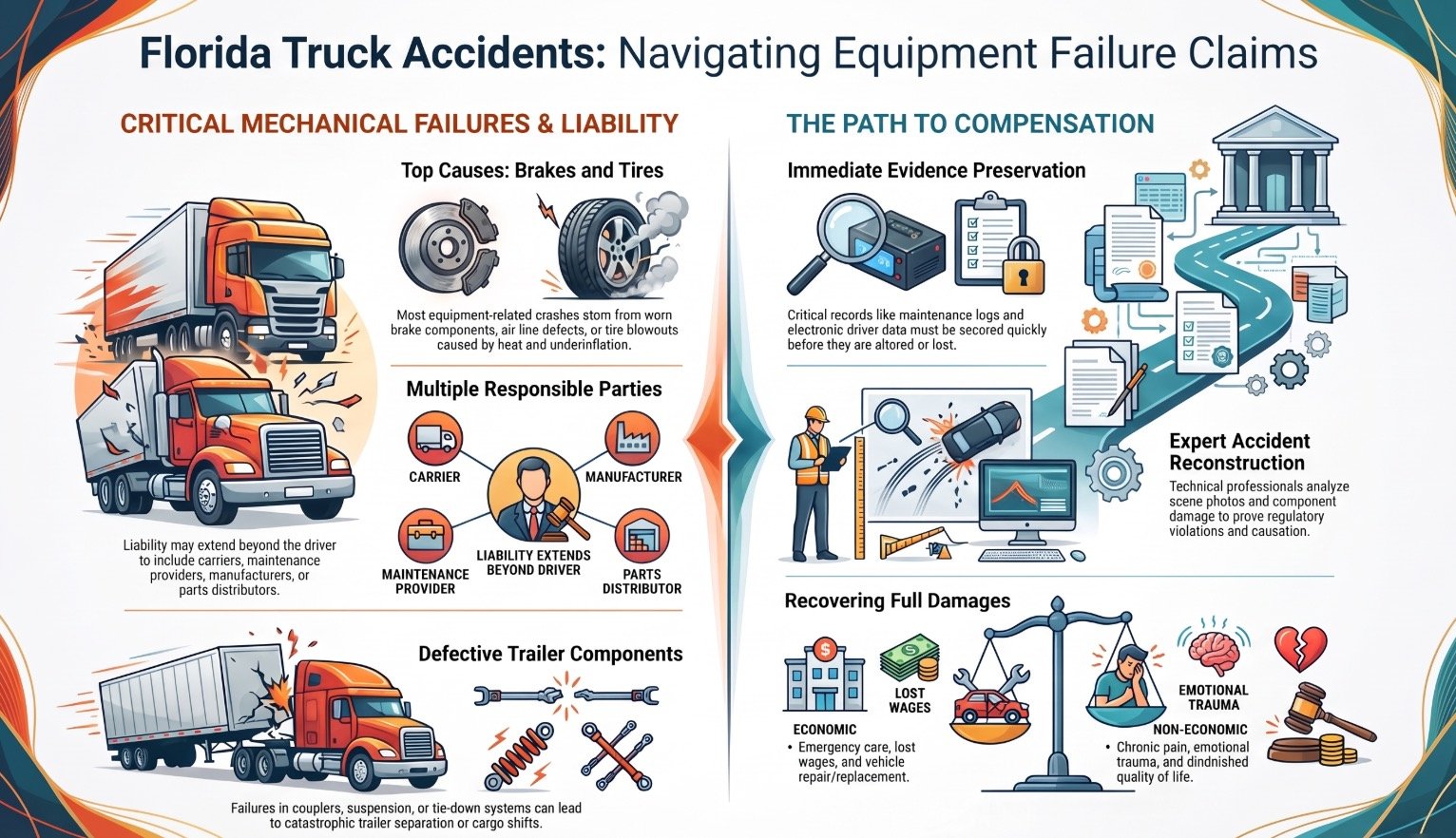
Common equipment failures in Florida truck accidents often involve brake system failures, tire blowouts, and defective trailer components. Improper equipment maintenance may also allow worn or damaged parts to remain in service, increasing the risk of a collision. Identifying the specific failure and its underlying cause is critical when evaluating liability and potential injury claims.
Brake System Failures
Brake system failures are a major cause of Florida truck accidents, especially when commercial vehicles operate with worn, damaged, or poorly maintained components. Defective air lines, depleted brake fluid, malfunctioning compressors, and improperly adjusted brakes can reduce stopping power and increase stopping distances. Federal and state safety rules require carriers to inspect and maintain braking systems, yet maintenance records may reveal neglected service or unresolved defects. Drivers and fleet operators should respond promptly to ABS warning lights, unusual pedal resistance, pulling, or delayed braking. Manufacturers and carriers may also bear responsibility when defective parts or brake related recalls are ignored. After a collision, qualified investigators can examine inspection reports, electronic data, repair histories, and component damage to identify contributing failures. This evidence may help injured individuals and families pursue accountability and support.
Tire Blowouts
Tire blowouts are a serious equipment failure in Florida truck accidents because they can cause sudden loss of control, rollover events, or collisions with nearby vehicles. These failures may result from underinflation, overinflation, excessive heat, overloaded vehicles, road hazards, or prolonged service beyond a tire’s safe lifespan. Check tire pressure before trips and during long routes, especially in Florida’s hot conditions. A tread wear inspection can identify uneven wear, exposed cords, cracking, or insufficient tread depth before a tire fails. Trucking companies and drivers must maintain tires, document inspections, and remove unsafe equipment from service. When maintenance practices are neglected, investigators may examine inspection records, loading information, tire condition, and roadway evidence to determine whether preventable equipment failure contributed to the crash and resulting injuries.
Defective Trailer Components
Defective trailer components can create sudden hazards in Florida truck accidents by impairing stability, cargo containment, or the driver’s ability to control the vehicle. Failures may involve couplers, suspension parts, landing gear, doors, tie-down systems, or structural connections. A compromised component can cause trailer separation, shifting cargo, unexpected sway, or reduced braking reliability, increasing risks for occupants and nearby motorists. A thorough Safety inspection may identify design defects, manufacturing flaws, or improper specifications before a collision occurs. After an incident, record-keeping regarding inspections, purchase documents, recalls, and component history can help establish whether the part was defective. Investigators may conduct component failure analysis, preserve damaged parts, and compare them with engineering standards. This evidence can assist injured individuals and their families in pursuing accountability while supporting safer transportation practices.
Improper Equipment Maintenance
Improper equipment maintenance can allow worn or damaged components to fail without warning, reducing a commercial truck’s ability to accelerate, guide, or stop safely. Neglected brake systems, underinflated tires, defective lights, and weakened suspension parts may create hazards for drivers, passengers, and other road users. Federal regulations require carriers to inspect, repair, and maintain equipment in safe operating condition. Records documenting inspections and repairs can help determine whether a carrier met federal compliance duties or ignored known deficiencies. Brake enforcement initiatives may identify unsafe vehicles during roadside inspections, but failures can occur before an inspection. When inadequate maintenance contributes to a collision, investigators may examine service schedules, mechanic reports, inspection logs, and company policies. This evidence can clarify responsibility and help affected individuals seek appropriate assistance after an accident.
Legal Rights of Florida Truck Accident Equipment Failure Injury Victims
After a truck equipment failure causes a collision, injured victims may have legal rights to pursue compensation from the parties whose negligence, defective products, or maintenance failures contributed to the crash. Florida law may permit recovery for medical expenses, lost income, reduced earning capacity, property damage, and documented pain and suffering. A timely claim can help preserve access to available Liability insurance coverage and identify responsible commercial entities.
- Request crash reports, inspection records, photographs, and witness information.
- Follow evidence preservation tips, including retaining damaged equipment and medical documentation.
- Identify potentially responsible carriers, employers, manufacturers, repair facilities, and contractors.
- Consult qualified counsel before providing recorded statements or signing releases.
- Monitor Florida filing deadlines and comply with required insurance procedures.
Victims may also have rights against multiple parties when separate acts combine to cause harm. Legal counsel can evaluate comparative fault, calculate long-term damages, communicate with insurers, and pursue negotiation or litigation when appropriate. Prompt, careful action supports accountability and helps protect injured individuals and their families.
Why Do Florida Truck Accident Equipment Failures Injuries Happen?
Understanding why truck equipment failures occur helps identify the parties whose conduct may have contributed to a collision and the injuries that follow. Mechanical problems may result from neglected inspections, defective parts, improper repairs, or delayed maintenance. Brake, tire, steering, lighting, and coupling failures can prevent a commercial vehicle from responding safely to traffic conditions.
Human error may arise when drivers overlook warning signs, misuse equipment, or fail to report developing defects. Fatigue factors can impair judgment and reduce the likelihood that a driver or technician will recognize a dangerous condition. Inadequate training may also leave employees unable to perform inspections, secure cargo, or operate specialized systems correctly. Road conditions, including potholes, flooding, debris, and construction zones, can accelerate wear or expose existing weaknesses. Responsibility may extend to trucking companies, maintenance providers, manufacturers, or other parties when unsafe practices, defective components, or insufficient oversight contributed to the equipment failure and resulting harm.
What Should You Do After a Florida Truck Accident Equipment Failure Injury?
After a Florida truck accident involving equipment failure, the injured person should seek immediate medical care, even if symptoms seem minor at first. Document the accident scene with photographs, witness information, vehicle details, and any available maintenance or equipment evidence. A truck accident lawyer can then evaluate potential liability, preserve vital records, and protect the injured person’s legal interests.
Seek Immediate Medical Care
When a Florida truck accident involves equipment failure, the injured person should obtain immediate medical care, even if symptoms initially appear minor. An Emergency room evaluation can identify internal bleeding, head trauma, spinal injuries, or other conditions that may worsen without prompt treatment. Medical professionals should receive a complete account of pain, dizziness, numbness, and any changes in mobility. Following discharge, the injured person should attend recommended appointments, follow treatment instructions, and avoid activities that could aggravate the condition. Preserve medical records, including examination notes, diagnostic results, prescriptions, bills, and rehabilitation documentation. These materials help healthcare providers coordinate appropriate care and establish how the injuries developed. Prompt treatment also supports a clear medical history for those assisting with an injury claim, while prioritizing recovery and long-term well-being.
Document The Accident Scene
If safe, document the truck accident scene before moving vehicles or debris. Scene safety first: stay away from traffic, leaking fluids, fire hazards, and unstable equipment while awaiting emergency personnel. If conditions permit, photo documentation should capture vehicle positions, roadway conditions, skid marks, cargo, damaged components, warning devices, and visible injuries. Images should include wide views and close details, with timestamps preserved when available. Witness contact information, including names, telephone numbers, and brief descriptions of what each person observed, may help clarify how the equipment failure occurred. The person should avoid arguing about fault or disturbing evidence. It is also important to preserve digital records, including dashcam footage, phone videos, photographs, GPS data, and relevant messages. Notes should record weather, lighting, and conditions.
Contact A Truck Accident Lawyer
Prompt consultation with a Florida truck accident lawyer can help preserve essential evidence and clarify the legal consequences of an equipment failure. Counsel may arrange inspections, secure maintenance records, and identify responsible parties before evidence disappears or repairs alter the vehicle. An attorney can also help injured individuals and their families organize Witness statements, photographs, medical records, and police reports into a consistent account of the collision. Early legal guidance is particularly important because insurance deadlines may limit available remedies, while inaccurate or incomplete claim communications can affect settlement evaluations. A lawyer may communicate with insurers on the claimant’s behalf, protect the person from pressured statements, and coordinate necessary investigations. Seeking qualified representation also allows an injured person to focus on recovery and supporting others while the claim proceeds.
Critical Evidence in a Florida Truck Accident Equipment Failures Injury Case
Critical evidence can establish whether inadequate maintenance, defective equipment, or driver conduct contributed to the Florida truck accident. Investigators may evaluate inspection records, equipment documentation, electronic driver data, and expert accident analysis to clarify liability and causation.
Promptly preserving these materials is essential because records may be altered, lost, or overwritten.
- Maintenance and inspection records
- Defective equipment documentation
- Electronic logging and driver data
- Photographs, video, and scene measurements
- Expert accident reconstruction analysis
Maintenance and Inspection Records
When a truck’s brakes, tires, handling system, lights, or other equipment may have contributed to a collision, maintenance and inspection records can provide essential evidence of what the carrier or owner knew and when corrective action was required. These documents may show scheduled inspections, reported defects, repair orders, parts replaced, and work completed before the trip. They can help determine whether a dangerous condition was identified but ignored, whether repairs were delayed, or whether recurring problems were inadequately addressed. Records may also clarify responsibilities among the carrier, vehicle owner, maintenance provider, and driver, while distinguishing equipment-related failures from driver negligence. Comparing entries with federal and state requirements can reveal gaps in safety compliance. Prompt preservation of these materials allows an investigation to evaluate timelines accurately and supports fair treatment for injured people and their families.
Defective Equipment Documentation
Defective equipment documentation can establish whether a truck’s failed component caused or contributed to a Florida crash and whether responsible parties had notice of the danger. Relevant materials may include manufacturer recalls, service bulletins, warranty claims, replacement invoices, repair photographs, and internal defect reports. These records can reveal repeated failures, improper parts, inadequate repairs, or warnings that were overlooked. Evidence preservation should begin promptly because damaged components may be discarded, altered, or returned to service. A qualified investigator may secure the failed part, document its condition, and obtain chain-of-custody information. Witness statements from drivers, mechanics, fleet personnel, and responding officers can clarify when symptoms appeared and how the equipment was handled. Careful documentation helps injured individuals and their families pursue accountability while supporting reliable, service-oriented legal analysis.
Electronic Driver Data
Electronic driver data can help establish how a truck was operated before an equipment-related collision in Florida. Electronic logging devices, engine-control records, and onboard safety systems may show speed, braking, steering inputs, hours of service, and warnings involving crucial components. These records can clarify whether the driver received alerts, continued operating after a malfunction, or followed required safety procedures. Investigators may compare the data with Maintenance documentation, inspection reports, dispatch communications, and repair invoices to identify relevant timing and notice. Some carriers also use AI driver coaching platforms that preserve alerts, intervention records, and performance trends. Prompt preservation requests can help prevent overwriting or alteration of this information. Properly collected electronic records may support injured individuals and their families while public-serving advocates seek accountability from responsible parties.
Expert Accident Analysis
Expert accident analysis can help determine how a truck’s equipment failure contributed to a collision in Florida. Qualified investigators examine photographs, roadway evidence, inspection records, electronic driver data, and vehicle components to identify the timing and cause of the failure. They may compare Vehicle maintenance checklists with service histories, manufacturer recommendations, and required inspection standards. This comparison can reveal neglected repairs, defective parts, improper installation, or inadequate maintenance practices. Analysts may also evaluate Driver fatigue detection records, hours-of-service compliance, and related performance data to determine whether fatigue affected the driver’s response or worsened the incident. Their findings can clarify responsibility among the driver, carrier, maintenance provider, manufacturer, or other parties. A carefully documented opinion may support injury claims, preserve essential evidence, and help decision-makers pursue fair compensation for affected individuals and families.
Long-Term Effects of Florida Truck Accident Equipment Failures Injuries
Florida truck accident equipment failure injuries may produce chronic pain, permanent disability, or limitations that affect daily activities and independence. Survivors may also experience emotional and psychological trauma, including anxiety, depression, or post-traumatic stress. These lasting conditions can create substantial financial and lifestyle impacts through medical expenses, lost income, and reduced quality of life.
Chronic Pain and Disability
When truck equipment failures cause serious injuries, affected individuals may experience chronic pain, reduced mobility, and permanent disability long after the initial collision. These conditions can limit employment, self-care, transportation, and participation in family responsibilities. Medical evaluation may identify nerve damage, spinal injuries, fractures, or other conditions that require ongoing care. Treatment options can include surgery, physical therapy, prescription medication, assistive devices, and coordinated rehabilitation. Effective pain management may require consultants who monitor medication use and adjust care as symptoms change. Individuals unable to work may qualify for disability benefits, depending on medical evidence, employment history, and applicable program requirements. Documentation of treatment, limitations, expenses, and lost income can support legal and benefits claims. A structured plan for long term recovery helps preserve independence and secure necessary services.
Emotional and Psychological Trauma
Although physical injuries may receive immediate attention, emotional and psychological trauma can persist long after a Florida truck accident involving equipment failure. Survivors may experience traumatic stress, heightened alertness, fear of travel, irritability, or difficulty concentrating. These reactions can emerge immediately or develop weeks after the collision, particularly when the event involved serious danger or unexpected mechanical failure.
Sleep disruption is also common, with nightmares, recurring memories, and anxiety interfering with restorative rest. Such symptoms may affect recovery and daily functioning, even when physical restoration progresses. Post-accident counseling can help survivors process the event, identify coping strategies, and address persistent distress. Compassionate mental health support from qualified professionals may include trauma-focused therapy and coordinated medical care. Recognizing these effects allows families, caregivers, and advocates to respond appropriately while protecting each survivor’s dignity and well-being.
Financial and Lifestyle Impacts
The effects of injuries caused by Florida truck accident equipment failures often extend beyond medical treatment and emotional recovery. Lasting impairments may limit work capacity, reduce household income, and create continuing costs for rehabilitation, medication, transportation, and adaptive equipment. Some injured individuals may require changes to housing, employment, or daily routines, placing additional responsibilities on family members and caregivers.
A careful assessment of these consequences can help establish the full scope of a claim. Medical documentation should describe diagnoses, treatment needs, functional limitations, and anticipated future care. Employment records, financial statements, and testimony regarding changed responsibilities may further demonstrate economic losses and lifestyle disruption. A thorough fault investigation can identify defective components, inadequate maintenance, or inspection failures that contributed to the crash. Such evidence supports fair compensation and informed assistance for affected families.
Proving Liability in Florida Truck Accident Equipment Failures Injury Cases
Proving liability in a Florida truck accident involving equipment failure requires evidence showing that a defective, poorly maintained, or improperly inspected component caused or contributed to the collision. Identifying fault elements begins with determining the responsible parties, which may include the trucking company, driver, maintenance contractor, manufacturer, or parts distributor. Investigators examine inspection reports, repair invoices, maintenance schedules, driver logs, electronic data, photographs, and witness accounts. Evidence preservation steps should begin promptly because damaged components may be repaired, discarded, or altered after the crash. A qualified investigator may document the vehicle, secure relevant records, and arrange a mechanical inspection by an appropriate expert. Establishing negligence generally requires proof of a duty, a breach, causation, and measurable harm. Federal and Florida safety requirements may help demonstrate whether inspections or repairs fell below accepted standards. Careful documentation allows injured individuals and their families to seek accountability while supporting a fair evaluation of the collision’s causes.
Dealing With Insurance Companies After a Florida Truck Accident Equipment Failure Injury
Once you identify potential sources of equipment failure, you must manage communications with insurance companies carefully. Insurers may request recorded statements, medical releases, photographs, employment records, and detailed crash accounts. An injured person should provide accurate information while avoiding speculation about liability, future limitations, or the full worth of losses before treatment and investigation are complete.
A careful review of settlement offers is particularly important when injuries involve permanent impairment, reduced earning capacity, or ongoing caregiving needs. Early offers may not reflect continuing medical care, rehabilitation, adaptive equipment, or household assistance. Families addressing fatal crashes should also recognize that wrongful death claims can involve funeral expenses, lost financial support, and other legally recognized damages.
Promptly preserving correspondence, bills, wage records, and medical documentation can support clear communication. A qualified representative may handle insurer contacts, protect the injured person from pressure, and help ensure that information provided remains consistent with the available evidence and the family’s service-centered needs.
What to Expect During a Florida Truck Accident Equipment Failure Injury Claim Process
A Florida truck accident equipment failure claim typically begins with an initial case evaluation to assess liability, injuries, and available legal options. The process may then involve collecting evidence and investigating, followed by negotiations with insurers over compensation. If the parties cannot reach a fair resolution, the case may proceed through court hearings, settlement discussions, or trial.
Initial Case Evaluation
When a Florida truck accident involves failed brakes, defective tires, malfunctioning lights, or other equipment problems, the initial case evaluation examines how the failure occurred and whether it contributed to the collision. The reviewing attorney typically discusses the crash, reported injuries, medical treatment, and resulting limitations with the prospective client. This consultation helps determine whether the facts may support a claim against the driver, trucking company, maintenance provider, manufacturer, or another responsible party. Medical documentation preservation is important because treatment records can clarify the nature, extent, and probable cost of the injuries. Witness statement collection may also help establish what occurred and how the equipment problem affected the event. The evaluation may address applicable deadlines, potential insurance coverage, and practical next steps while respecting the client’s needs and recovery.
Evidence And Investigation
Because equipment failures can be repaired, replaced, or overlooked after a crash, preserving evidence is central to investigating a Florida truck accident injury claim. Investigators may document the truck, damaged components, roadway conditions, and visible injuries through photographs, measurements, and professional inspections. They may also seek maintenance records, inspection reports, repair invoices, driver logs, onboard data, and training materials to identify whether defective equipment or inadequate maintenance contributed to the collision. A preservation request can notify responsible parties that they must retain relevant evidence, supporting spoliation preservation efforts when records or parts could otherwise disappear. Eyewitness testimonies, police reports, medical documentation, and employment records may provide additional context. Counsel may coordinate with qualified experts who evaluate braking systems, tires, handling components, lighting, loading practices, and other potentially significant equipment.
Insurance Claim Negotiations
Insurance claim negotiations typically begin after the available evidence establishes how the equipment failure may have caused or contributed to the collision. The injured person’s representative may present medical records, repair documentation, inspection reports, photographs, witness accounts, and other materials supporting liability and damages. Effective evidence preservation strategies can strengthen the demand by protecting maintenance histories, electronic data, and damaged components before they are altered or discarded. Insurers may request additional information, question the extent of injuries, or evaluate whether another party shares responsibility. Careful communication remains vital, including avoiding recorded statements before reviewing the claim’s facts and legal implications. Negotiators generally address medical expenses, lost income, future care, property damage, and related losses while seeking a fair settlement that serves the injured person’s recovery and long-term needs.
Litigation And Resolution
Litigation may become necessary if claim negotiations do not produce a fair resolution or if the parties dispute liability, damages, or the role of the equipment failure. The process generally begins with filing a complaint, serving the responsible parties, and exchanging evidence through discovery. Records involving inspections, maintenance, repairs, driver conduct, and company policies may help establish whether negligence caused or worsened the crash. Medical documentation and expert opinions can clarify injury severity, future care, and financial losses. The Settlement timeline varies based on case complexity, disputed facts, and court scheduling. A mediation strategy may encourage productive negotiations before trial, allowing informed representatives to evaluate risks and settlement terms. If mediation fails, preparation continues for motions, witness testimony, and trial, where a judge or jury determines responsibility and compensation.
Compensation for Florida Truck Accident Equipment Failures Injury Damages
Compensation for injuries caused by defective or failed truck equipment may include medical expenses, lost income, reduced earning capacity, property damage, and pain and suffering. The recoverable amount depends on the injury’s severity, treatment requirements, prognosis, and effect on the individual’s ability to work and participate in daily activities. Documentation such as medical records, employment information, repair estimates, and witness statements can help establish the claimed losses.
When equipment failure causes a fatal collision, surviving relatives may pursue wrongful death damages permitted under Florida law. These damages can address qualifying losses connected to the death and its consequences for the family. In cases involving conduct showing conscious disregard for safety, punitive liability exposure may also arise, although such damages require additional proof and are subject to statutory limits. A careful investigation can identify responsible parties, including trucking companies, maintenance providers, manufacturers, or distributors, while preserving evidence needed to support fair compensation and meaningful accountability for those harmed.
Economic vs Non-Economic Damages in Florida Truck Accident Equipment Failures Cases
Economic damages may include medical expenses, lost income, property damage, and other documented financial costs resulting from a truck’s equipment failure. Non-economic losses, such as pain and suffering, emotional distress, and diminished quality of life, require careful evaluation based on the injury’s impact. Establishing both categories typically depends on medical records, financial documentation, expert testimony, and evidence connecting the equipment failure to the claimed harm.
Economic Damages Explained
When a truck accident results from defective, worn, or improperly maintained equipment, Florida law distinguishes between economic and non-economic damages. Economic damages represent measurable financial losses supported by bills, records, estimates, and other documentation. They may include Medical treatment costs, such as emergency care, hospitalization, medication, rehabilitation, and anticipated future treatment reasonably connected to the equipment failure. A claimant may also seek compensation for loss of earning capacity when injuries reduce the ability to work, limit hours, or prevent a return to the prior occupation. Property damage totals can cover vehicle repairs and damaged personal items. When repair is impractical, vehicle replacement may be included, subject to evidence of fair market value and applicable insurance payments. Careful documentation helps establish the amount and causal connection of each claimed loss.
Non-Economic Losses Evaluated
Non-economic losses address the human consequences of a truck accident that cannot be calculated solely through invoices or financial records. In Florida equipment-failure cases, evaluation may consider pain, disability, disfigurement, and limitations affecting ordinary activities. The Medical treatment impact may include discomfort, invasive procedures, disrupted sleep, and reduced independence. A person’s long term recovery can also influence the assessment when symptoms, mobility restrictions, or permanent impairment continue beyond initial care. Quality-of-life losses may include reduced participation in family responsibilities, employment-related activities, recreation, or community service. Emotional distress may arise from fear, anxiety, depression, or diminished confidence after a collision. These damages recognize that recovery involves more than restoring finances. Their value depends on the injury’s nature, duration, severity, and effect on the individual’s daily life and relationships.
Proving Equipment-Failure Damages
Establishing equipment-failure damages in a Florida truck accident case requires proof of both the financial losses and the personal harm caused by the collision. Economic damages may include emergency treatment, rehabilitation, prescription costs, lost wages, reduced earning capacity, vehicle repairs, and future medical care. Records, expert testimony, employment documentation, and repair estimates help connect these losses to the defective equipment and resulting crash.
Non-economic damages address pain, emotional distress, disability, disfigurement, loss of enjoyment, and diminished quality of life. Medical evaluations and testimony from relatives or caregivers may clarify these effects. Preserving maintenance logs, inspection reports, electronic data, and damaged parts is critical; spoliation of evidence can undermine a claim or support an adverse inference. Clear documentation strengthens negotiations when attorneys negotiate settlement amounts or present damages at trial.
When a Florida Truck Accident Equipment Failures Injury Case Goes to Trial vs Settlement
A Florida truck accident equipment failure injury case may resolve through a negotiated settlement or proceed to trial, depending on the strength of the evidence, the severity of the injuries, and the parties’ willingness to accept the associated risks. Settlement negotiation tactics may include presenting maintenance records, expert opinions, medical documentation, and carefully calculated damage assessments. A settlement can provide predictable compensation and reduce the time, expense, and emotional demands of litigation.
Trial becomes more likely when insurers or defendants dispute responsibility, causation, or the extent of harm. A Jury trial strategy may involve presenting clear testimony about the failed component, the resulting collision, and the continuing effects on the injured person’s health, work, and family responsibilities. The trial process allows witnesses and evidence to be examined publicly, but outcomes remain uncertain. Counsel generally evaluates settlement offers throughout the case while preparing for trial, seeking a resolution that supports the injured person and protects the interests of those depending on them.
Florida Laws That May Affect Your Florida Truck Accident Equipment Failures Case
Florida laws affecting a truck accident equipment failure case may determine who can be held responsible, what evidence must be presented, and how much time an injured person has to pursue compensation. Several legal principles may shape investigation, negotiation, and trial preparation without resolving the separate question of filing deadlines.
- Comparative Fault Rules may reduce recovery when an injured party shares responsibility.
- Evidentiary Standards govern admissible maintenance records, inspection reports, photographs, and expert opinions.
- Negligence laws may apply to drivers, carriers, repair facilities, manufacturers, or parts suppliers.
- Federal and Florida trucking regulations can help establish expected safety practices.
- Vicarious liability principles may connect an employer to conduct performed within job duties.
A careful review can identify regulatory violations, preserve essential evidence, and clarify each participant’s potential obligations. Counsel serving injured people may also evaluate product-liability theories, spoliation concerns, insurance requirements, and applicable procedural rules. Because outcomes depend on specific facts, legal guidance should reflect the vehicle’s condition, ownership structure, maintenance history, and available witness testimony.
The Statute of Limitations for Florida Truck Accident Equipment Failure Injury Cases
Deadlines can determine whether an injured person may pursue a truck accident equipment-failure claim in court. Florida law generally requires filing a personal injury lawsuit within a specified period after the crash. The applicable period may depend on the injury, the parties involved, and whether a government entity bears responsibility. Waiting too long can lead to dismissal, even when evidence shows defective brakes, tires, coupling systems, or other equipment contributed to the collision.
Different claim filing deadlines may apply when a surviving family member seeks damages after a fatal crash. Wrongful death eligibility and filing deadlines can depend on statutory relationships, the date of death, and the representative pursuing the estate’s claim. Additional rules may affect claims involving minors, delayed injury discovery, or governmental defendants. Because limitation periods can be short and exceptions intricate, timely attention to accident records, medical documentation, and potential defendants helps preserve lawful options for injured individuals and grieving families.
How a Florida Truck Accident Equipment Failures Lawyer Can Help You
When a truck’s brakes, tires, steering components, or coupling systems fail, legal counsel can investigate the equipment, identify responsible parties, and pursue compensation for the resulting injuries. A Florida truck accident equipment failures lawyer may coordinate technical inspections, review maintenance histories, and evaluate whether manufacturers, carriers, mechanics, or drivers contributed to the incident.
The lawyer can also:
- Secure inspection reports, electronic logging data, and repair invoices.
- Collect witness statements while recollections remain reliable.
- Consult engineers and medical professionals regarding causation and damages.
- Handle insurer communications and preserve the injured person’s legal interests.
- Assist with preserving essential screenshots, photographs, videos, and online records.
This work supports injured individuals and their families by clarifying what occurred and documenting the losses that followed. Counsel may calculate medical expenses, rehabilitation costs, lost earnings, and other recoverable damages, then present an organized claim to responsible parties. Through careful evidence management and informed advocacy, legal representation helps keep accountability and fair compensation central to the recovery process for affected people and communities.
When to Contact a Florida Truck Accident Equipment Failures Lawyer
Prompt legal guidance is important after a truck crash involving suspected equipment failure, particularly when the cause remains uncertain or the trucking company controls the relevant evidence. A lawyer should be contacted promptly when brakes, tires, steer components, lighting, cargo restraints, or maintenance practices may have contributed to the collision. Early consultation can help preserve photographs, inspection reports, electronic data, repair records, and witness information before those materials disappear or are altered.
Legal assistance is also appropriate when injuries are serious, treatment is ongoing, or delays in medical records complicate documentation of the claimant’s condition. A lawyer can identify necessary records and organize information for potential claims without interfering with medical care. Insurance coverage questions often arise when multiple policies, commercial carriers, contractors, or vehicle owners are involved. Contacting counsel before giving recorded statements or accepting settlement funds may help protect the injured person’s interests. Prompt attention is especially important when deadlines, disputed fault, or insurer pressure threaten a fair evaluation of available remedies.
Why You Need an Experienced Florida Truck Accident Equipment Failures Lawyer
An experienced Florida truck accident equipment failures lawyer can determine whether defective parts, inadequate maintenance, improper inspections, or regulatory violations contributed to a collision. This analysis may reveal responsibilities that are not apparent from the initial crash report. Counsel can coordinate Evidence Preservation by securing maintenance logs, electronic data, repair invoices, inspection records, and damaged components before they are altered, discarded, or lost.
An experienced advocate may also locate Hidden Witnesses, including mechanics, former employees, roadside responders, and nearby business personnel who observed conditions before or after the crash. Such testimony can clarify whether a carrier ignored warnings or placed an unsafe vehicle into service. Knowledge of Insurance Manipulation helps identify attempts to minimize losses, shift blame, obtain premature statements, or undervalue legitimate claims. A thorough Vehicle Inspection can further connect a mechanical defect to the collision and resulting injuries. This work supports accountability and helps protect injured individuals, families, and communities from preventable harm.
How to Choose the Right Florida Truck Accident Equipment Failures Lawyer for Your Case
Several factors should guide your choice of a Florida truck accident equipment failures lawyer, including experience with commercial vehicle investigations, knowledge of state and federal trucking regulations, and access to qualified mechanical and accident-reconstruction experts. A suitable attorney should explain how the firm will preserve evidence, evaluate maintenance records, and identify whether defective brakes, tires, steering systems, or other components contributed to the collision.
Prospective clients should ask about experience handling similar claims, communication practices, investigative resources, and the lawyer’s approach to documenting losses. The attorney should promptly pursue Witness statements, electronic logging data, driver records, inspection reports, and photographs before evidence disappears or becomes altered. Independent inspections can help determine whether a mechanical failure resulted from negligent maintenance, improper loading, manufacturing defects, or ordinary wear.
A careful consultation should also clarify potential defendants, applicable deadlines, litigation strategy, and expected responsibilities. Choosing counsel who values thorough preparation and client service can strengthen efforts to protect injured individuals and their families.
About The Law Offices of Anidjar & Levine
The Law Offices of Anidjar & Levine represents individuals and families pursuing compensation after truck accidents involving equipment failures. The firm assists clients whose injuries may result from defective brakes, tire blowouts, inadequate maintenance, lighting failures, or other preventable conditions.
Its legal team evaluates available evidence, identifies potentially responsible parties, and clarifies how a malfunction contributed to the collision. Services may include Crash scene documentation, witness interviews, vehicle and maintenance-record review, and consultation with qualified experts. This process helps preserve facts that could otherwise become unavailable.
The firm also develops an insurance claim strategy tailored to each case. Attorneys may communicate with insurers, assess settlement proposals, and pursue litigation when negotiations do not provide fair compensation. Throughout the matter, the firm’s work focuses on protecting injured clients and supporting their families as they address medical expenses, lost income, and other consequences. Its approach emphasizes diligent preparation, clear communication, and accountable representation.

Frequently Asked Questions
Can I Afford a Florida Truck Accident Equipment Failures Lawyer Without Paying Upfront?
A person may be able to receive representation through a contingency fee arrangement, whereby the lawyer is paid only if compensation is recovered. Many firms offer no upfront costs, allowing an injured individual to pursue a claim without paying retainers or hourly charges at the beginning. The agreement should clearly explain the percentage, case expenses, and potential obligations if the claim is unsuccessful. Comparing qualified attorneys helps ensure clear terms and responsible advocacy for all affected parties.
Will Hiring a Lawyer Require Me to Appear in Court?
Hiring a lawyer does not automatically require court attendance. In many truck accident claims, counsel handles negotiations, filings, and procedural matters while the client remains informed. If testimony becomes necessary, the attorney explains hearing schedules and prepares the individual thoroughly. Courts may permit video testimony or remote depositions, depending on the circumstances and applicable rules. The lawyer’s role is to protect the client’s interests while minimizing avoidable burdens and uncertainty.
Can Family Members File Claims After a Fatal Truck Equipment Failure Accident?
Yes, eligible relatives may file claims after a fatal truck equipment failure accident, although wrongful death eligibility depends on state law, family relationships, and the decedent’s estate plan. Surviving family claims may seek compensation for medical expenses, funeral costs, lost financial support, and emotional damages. An appointed personal representative often files on behalf of beneficiaries. Prompt legal review can preserve evidence, identify responsible parties, and protect the family’s rights.
What Happens if the Truck Driver or Company Is Located Outside Florida?
Out-of-state drivers or trucking companies may still face claims in Florida when the crash, injuries, or significant conduct occurred there. Jurisdiction challenges can involve service of process, venue, and conflicting state laws. Out-of-state liability may extend to employers, owners, manufacturers, or maintenance providers. Federal oversight can affect safety standards and records. Attorneys may need to preserve evidence abroad, coordinate with distant witnesses, and pursue proceedings in multiple jurisdictions when necessary.
Can Equipment Failure Claims Involve Multiple Trucking Companies or Manufacturers?
Equipment failure claims can involve multiple trucking companies, maintenance contractors, parts suppliers, and manufacturers. Jurisdictional Liability depends on each entity’s role, contractual relationships, location, and control over inspection, maintenance, or operation. Manufacturer Defendants may face claims when defective design, manufacturing, or warnings contributed to the collision. Careful investigation can identify responsible parties, preserve evidence, and coordinate claims across state lines, helping affected individuals obtain accountability and appropriate compensation.
—————————
Equipment failures in Florida truck accidents can raise important questions about maintenance, inspections, manufacturers, carriers, and other potentially responsible parties. An injured person may need prompt medical care, evidence preservation, and a thorough evaluation of available compensation. The Law Offices of Anidjar and Levine can investigate the collision, identify applicable liability, and protect the victim’s legal interests. Consulting a qualified Florida truck accident equipment failures lawyer may help prevent important deadlines from expiring or evidence from being overlooked. For additional legal guidance, contact a Florida Personal Injury Lawyer.