The Law Offices of Anidjar and Levine, a Florida truck accident driver behavior violations lawyer, investigates whether speeding, distraction, fatigue, impairment, or other unsafe actions contributed to a collision. Counsel may preserve electronic logs, vehicle data, video, dispatch records, reports, and witness accounts before information is lost. The attorney can assess comparative negligence, identify responsible parties, track filing deadlines, and negotiate with commercial insurers. Legal guidance also helps document medical expenses, lost income, future care, and lasting limitations. For additional information, visit a Florida Personal Injury Lawyer to learn more about the process and available legal considerations.
Main Takeaways
- A Florida truck accident lawyer can investigate whether distraction, speeding, fatigue, impairment, or reckless driving caused the collision.
- Counsel may preserve electronic logs, vehicle data, dispatch records, surveillance footage, and witness accounts before evidence disappears.
- Attorneys can evaluate trucking company responsibility for inadequate training, supervision, scheduling, or enforcement of safety requirements.
- Legal representation may handle insurers, assess commercial coverage, document damages, and negotiate a supported settlement.
- Prompt consultation helps address Florida filing deadlines, comparative negligence, evidence preservation, and available legal remedies.
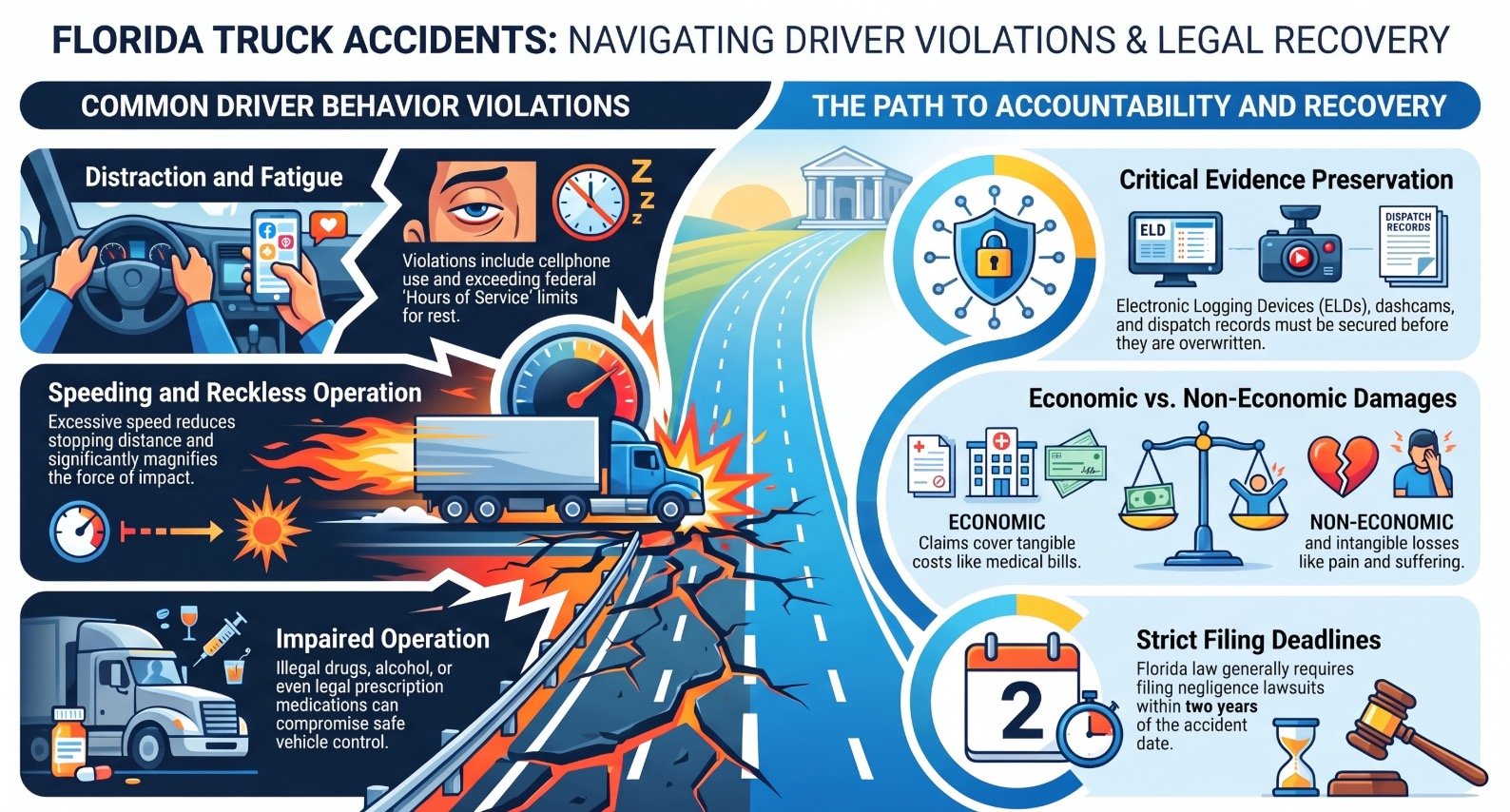
How We Can Help With Your Florida Truck Accident Driver Behavior Violations Injury Claim
When a commercial truck collision results from driver behavior violations, an injured person may face substantial medical expenses, lost income, and long-term physical limitations. Legal assistance can help organize the claim and pursue accountability through a structured, service-focused process.
An attorney may review available records, identify potentially responsible parties, and preserve evidence relevant to the collision. This work can include examining reports, vehicle data, witness information, and employment records without requiring the injured person to manage every detail alone. Counsel may also coordinate communications with insurers, address disputed liability positions, and evaluate documented losses to support a demand.
Consistent Client communication updates help the injured person understand progress, outstanding needs, and significant decisions. Careful filing deadline tracking reduces the risk that procedural requirements will affect available legal remedies. Throughout representation, the legal team can remain attentive to medical treatment, financial pressures, and practical concerns while pursuing an appropriate resolution. The objective is dependable guidance that protects the client’s interests and supports informed decisions.
Don’t Wait. Call Our Florida Personal Injury Lawyers Now!
Understanding Florida Truck Accident Driver Behavior Violations Injury Cases


Truck accident injury cases involving driver behavior violations often require examining both the collision and the conduct that preceded it. A legal review may assess whether a commercial driver breached safety duties and whether that breach contributed to the injuries. Liability investigations require gathering collision reports, witness accounts, electronic driving records, company policies, and available vehicle data. The analysis may also consider the trucking company’s responsibility for supervision, training, or enforcement of applicable safety standards, without assuming fault before evidence is evaluated.
OUR CONSULTATIONSARE FREE
START YOUR FREE CASE REVIEW

Injury cases commonly involve medical documentation, treatment projections, lost income, reduced earning capacity, and the effect of permanent limitations on daily activities. A careful damages calculation should distinguish documented losses from reasonably anticipated future expenses and account for the severity of the injury. Attorneys serving injured individuals may coordinate with medical and financial professionals to present a clear claim. The objective is an accurate, evidence-based resolution that supports recovery while preserving the injured person’s dignity and legal rights.
Common Causes of Florida Truck Accident Driver Behavior Violations
Common causes of Florida truck accident driver behavior violations include distracted driving, speeding, reckless driving actions, fatigue, and impaired operation. These behaviors can result from improper attention, pressure to meet delivery schedules, inadequate rest, or alcohol and drug use. Identifying the specific violation is critical when evaluating how a truck driver’s conduct contributed to a collision.
Distracted Truck Driving


Distracted truck driving occurs when a commercial driver diverts attention from the roadway, traffic conditions, or vehicle operation, increasing the risk of a serious collision. Cellphone distraction may involve texting, dialing, reading messages, or handling navigation applications while the vehicle is moving. Other distractions include adjusting radios, eating, reaching for objects, reviewing paperwork, or engaging with passengers. Even brief inattention can prevent a driver from recognizing stopped traffic, roadway hazards, or changing signals. A distracted driver may drift across lane markings, causing lane deviation and placing nearby motorists, cyclists, and pedestrians in danger. Commercial carriers may also face scrutiny when training, supervision, scheduling, or communication practices encourage unsafe device use. Witness observations, electronic records, and available video can help injured individuals seek accountability and support after a truck collision.
Speeding And Reckless Driving
Speeding and reckless driving can substantially increase the severity and likelihood of a Florida truck accident. Excessive speed reduces stopping distance, limits a driver’s response time, and magnifies the force transferred during a collision. Aggressive lane changes, tailgating, improper passing, and ignoring signals may further endanger motorists, pedestrians, and passengers.
Investigators may compare the driver’s conduct with Common Traffic Laws and applicable commercial-driving requirements. Enforcement Practices, including citations, crash reports, camera footage, and witness accounts, can help establish whether a violation contributed to the event. Affected individuals should preserve Injury Documentation, photographs, repair estimates, and Medical Records that describe treatment, limitations, and recovery needs. Careful evidence collection supports accurate insurance evaluations and may help a legal representative seek appropriate compensation while promoting accountability and safer roadway practices for the broader community.
Fatigued Driving Violations
Fatigued driving violations present a significant risk in Florida truck accidents because commercial vehicles require sustained attention, sound judgment, and sufficient reaction time. Federal and state rules limit driving hours and require rest periods designed to protect every road user. Violations may occur when a driver exceeds permitted hours, falsifies logs, skips required breaks, or continues operating despite clear exhaustion. Sleep-related safety concerns also arise when irregular schedules, inadequate rest, or untreated sleep disorders impair alertness. Carriers and drivers should monitor schedules, maintain accurate records, and address warning signs before fatigue causes a collision. CDL medical limits may require evaluation of conditions affecting alertness and safe operation. Evidence of fatigue can include electronic logging data, dispatch records, surveillance footage, and witness statements, helping injured parties seek accountability and support.
Impaired Truck Operation
When alcohol, illegal drugs, or impairing prescription medications affect a commercial driver, truck operation can become unsafe and violate Florida and federal transportation rules. Alcohol impairment may reduce judgment, coordination, reaction time, and the ability to recognize roadway hazards. Marijuana, stimulants, analgesics, sedatives, and other substances can similarly compromise safe vehicle control, even when a medication is legally prescribed. Federal motor carrier regulations generally prohibit operating a commercial vehicle while impaired and require drug testing in specified circumstances, including pre-employment screening, random testing, and post-crash situations. Evidence of impairment may include erratic driving, failed testing, admissions, witness observations, or medical findings. Prompt reporting and careful investigation can help protect injured individuals, preserve evidence, and support accountability. Legal guidance may clarify available remedies and regulatory violations following a collision.
Legal Rights of Florida Truck Accident Driver Behavior Violations Injury Victims
Victims injured by a truck driver’s negligent or unlawful behavior may have the right to pursue compensation under Florida law. Available remedies can address medical expenses, lost income, reduced earning capacity, property damage, and pain and suffering when supported by evidence.
A careful legal response may include:
- Evidence preservation steps: Accident reports, photographs, vehicle data, medical records, and trucking-company logs can help establish responsibility and the extent of harm.
- Witness statement importance: Promptly recorded accounts may preserve observations about unsafe driving, traffic conditions, and events before impact.
- Insurance claims: Victims may seek payment from applicable commercial policies, although insurers often examine liability and damages closely.
- Legal representation: A qualified attorney can investigate the collision, identify responsible parties, communicate with insurers, and pursue litigation when necessary.
Florida’s comparative negligence rules may affect recovery if a victim shares responsibility. Because filing deadlines apply, injured individuals should obtain medical care, document losses, and consult counsel promptly. Supportive legal guidance helps protect victims’ rights while promoting fair accountability and recovery.
Why Do Florida Truck Accident Driver Behavior Violations Injuries Happen?
Truck accident injuries in Florida often occur because a commercial driver violates traffic laws, disregards roadway conditions, or fails to operate the vehicle with reasonable care. Common behavior violations include speeding, distracted driving, following too closely, unsafe lane changes, and driving while fatigued. Some crashes result from alcohol or drug impairment, aggressive driving, or failure to inspect and control a heavily loaded vehicle. Commercial pressures, inadequate training, and unrealistic delivery schedules may encourage unsafe decisions, although responsibility depends on the specific facts.
When driver conduct contributes to a collision, the resulting injuries can be severe because tractor-trailers carry substantial weight and require greater stopping distance. Victims may face fractures, spinal trauma, brain injuries, or fatal harm. Determining causation often requires reviewing electronic logging data, surveillance footage, dispatch records, maintenance materials, and witness accounts. Evidence preservation can also be important. Clear documentation may also affect insurance disputes, particularly when insurers challenge fault, injury severity, or the commercial driver’s compliance with safety requirements.
What Should You Do After a Florida Truck Accident Driver Behavior Violations Injury?
After a Florida truck accident involving alleged driver behavior violations, the injured person should seek immediate medical care, even if symptoms seem minor at first. Report the accident to law enforcement, and preserve relevant medical records, photographs, and witness information. Consulting a truck accident lawyer can help protect legal rights and assess potential claims against responsible parties.
Seek Immediate Medical Care
Prompt medical evaluation is important following a Florida truck accident involving alleged driver behavior violations, even when an injured person believes the condition is minor. A qualified healthcare professional can identify internal injuries, concussions, fractures, or soft-tissue damage that may not appear immediately. Treatment should follow medical instructions, including recommended imaging, physician referrals, prescriptions, and follow-up appointments. If symptoms develop or worsen, the injured person should seek additional care without delay. Medical records can establish the timing, nature, and progression of the injuries, creating reliable medical documentation for later review. Individuals should also describe all symptoms accurately, including pain, dizziness, numbness, or emotional distress. Although distracted driving and other violations may raise safety concerns, immediate care should focus on injury recovery and preventing complications through timely, appropriate treatment.
Report The Accident
After medical attention, promptly report the Florida truck accident to law enforcement. An official report can preserve critical facts, identify potential driver behavior violations, and support a clear record for everyone affected. The injured person or a responsible companion should provide accurate information without speculating about fault or minimizing symptoms. If circumstances permit, identify witnesses and provide their contact information to responding officers. Document insurance details for every involved vehicle, including the trucking company’s information, policy numbers, and carrier identification. When it is safe, photograph road debris, vehicle positions, traffic signals, lane markings, visible damage, and surrounding conditions. Keep copies of the crash report, photographs, and medical documentation securely. Prompt, accurate reporting helps authorities protect victims and promotes accountability.
Consult A Truck Accident Lawyer
When a Florida truck accident involves suspected driver behavior violations, consulting a qualified truck accident lawyer can help protect the injured person’s legal interests. Counsel can explain reporting duties, preserve evidence, and identify deadlines that may affect a claim. The lawyer may obtain driver logs, company policies, electronic data, inspection records, and available video before those materials disappear. Witness interviews can clarify speeding, distraction, fatigue, impairment, unsafe lane changes, or other conduct contributing to the collision. Medical documentation and employment records may also support an accurate assessment of damages. After evaluating liability and insurance coverage, counsel can develop a settlement strategy suited to the injured person’s needs. A lawyer may negotiate with insurers while protecting the client from premature statements. If necessary, legal counsel can pursue litigation to seek fair compensation.
Don’t Wait. Call Our Florida Personal Injury Lawyers Now!
Critical Evidence in a Florida Truck Accident Driver Behavior Violations Injury Case
Critical evidence can establish whether a truck driver’s conduct violated safety rules and contributed to the collision or resulting injuries.
Relevant materials may include:
- Driver logbook violations
- Dashcam and surveillance footage
- Electronic data records
- Witness statements and testimony
Together, these sources can help clarify the driver’s actions, timing, and compliance with applicable requirements.
Driver Logbook Violations
Driver logbook violations can provide pivotal evidence in a Florida truck accident driver behavior violations injury case because they may reveal whether a commercial driver complied with federal hours-of-service requirements. Records may show excessive driving, inadequate rest, or inaccurate duty-status entries. Federal Hours of Service rules limit driving time and require qualifying off-duty periods, making violations relevant when fatigue or overwork may have contributed to a collision. Electronic Logging Devices can automatically record vehicle movement, duty status, and potential inconsistencies between reported activities and operational data. Investigators may compare logs with fuel receipts, dispatch records, toll information, and delivery documents to identify omissions or falsifications. Preserving these records promptly can help establish timelines, support accountability, and protect injured individuals seeking fair compensation through a careful, service-oriented legal process.
Dashcam And Surveillance Footage
Dashcam and surveillance footage may provide direct evidence of a truck driver’s conduct before, during, and after a Florida collision. Video can reveal speeding, unsafe lane changes, distracted driving, tailgating, failure to yield, or conduct suggesting fatigue or impairment. Footage from nearby businesses, traffic signals, toll facilities, and other vehicles may establish timing, road conditions, and the sequence of events. Attorneys can preserve recordings promptly because systems may overwrite data or retain it only for a limited time. Investigators may compare video evidence with witness accounts, police reports, driver log reviews, and black box data to identify inconsistencies and clarify disputed facts. Properly authenticated footage can assist injured individuals, families, and communities by supporting accurate claims and encouraging accountability for preventable truck crashes. Its value depends on obtaining complete, unaltered copies and establishing a reliable chain of custody.
Electronic Data Records
When available, electronic data records can provide objective evidence of a commercial truck driver’s actions and the vehicle’s operating conditions before a Florida collision. Electronic logging devices may show driving hours, rest periods, speed, braking, and other compliance information. Engine control modules can preserve data concerning throttle application, vehicle speed, and mechanical performance shortly before impact. GPS records may help establish routes, stops, and timing, while dispatch communications can clarify scheduling pressures or assigned tasks. Prompt evidence preservation is critical because records may be overwritten, altered, or lost through routine maintenance. A careful review can strengthen witness credibility by confirming or challenging reported events without relying solely on memory. These records may also support insurance negotiations and damages documentation by connecting unsafe conduct, collision severity, medical consequences, and financial losses through a clearer factual record.
Witness Statements And Testimony
Witness statements and testimony can provide crucial evidence of a commercial truck driver’s conduct before, during, and after a Florida collision. Independent observers may describe speeding, distraction, fatigue, aggressive tactics, improper lane changes, or other behavior violations that electronic records do not fully capture. Prompt evidence preservation helps protect accurate recollections, contact information, photographs, and written accounts before memories fade or witnesses become unavailable. Investigators and attorneys may assess witness credibility by examining consistency, vantage point, potential bias, and agreement with physical evidence. Testimony can also clarify how the crash affected an injured person’s mobility, employment, daily activities, and relationships, supporting efforts toward proving damages. Statements from family members, coworkers, emergency personnel, and treating providers may complement medical documentation, creating a more complete record of injury severity, treatment needs, and continuing limitations.
Long-Term Effects of Florida Truck Accident Driver Behavior Violations Injuries
Florida truck accident injuries caused by driver behavior violations may produce chronic pain, permanent disability, or other limitations that affect daily functioning. Emotional and psychological trauma, including anxiety, depression, and post-traumatic stress, may continue long after physical wounds have mended. These lasting effects can also create substantial financial burdens and require significant changes to employment, family responsibilities, and lifestyle.
Chronic Pain and Disability
Chronic pain and disability can become lasting consequences of injuries caused by truck driver behavior violations, including speeding, distracted driving, impaired driving, and inadequate rest. Fractures, spinal damage, nerve injuries, and traumatic joint conditions may restrict movement, reduce strength, and interfere with ordinary activities. Some injured individuals require continuing medical evaluations, physical therapy, assistive devices, or workplace modifications. Treatment plans may involve prescription medication, creating concerns about Medication Side Effects, dependency, and safe participation in daily responsibilities. Severe impairment can prevent a return to previous employment and diminish earning capacity. Families may also face long-term care expenses for home assistance, rehabilitation, transportation, and specialized equipment. Careful documentation of symptoms, diagnoses, limitations, and anticipated treatment helps establish the scope of damages and supports efforts to secure appropriate resources for ongoing recovery and independence.
Emotional and Psychological Trauma
Emotional and psychological trauma may develop after injuries caused by truck driver behavior violations, including reckless speeding, distracted driving, impaired driving, or violations of required rest periods. Survivors may experience anxiety, depression, nightmares, irritability, difficulty concentrating, or fear of driving. Some symptoms emerge immediately, while others appear months later, especially when physical recovery remains difficult. Professional evaluation can identify post-traumatic stress and establish appropriate counseling or psychiatric care. Trauma documentation, including treatment records and symptom journals, may help explain the condition’s onset, severity, and connection to the collision. Consistent reporting and timely treatment may also support witness credibility when testimony describes behavioral changes after the crash. Compassionate assistance from family, clinicians, and legal professionals can help survivors communicate their experiences while preserving dignity, privacy, and informed decision-making throughout recovery.
Financial and Lifestyle Consequences
Often, injuries caused by truck driver behavior violations create financial and lifestyle consequences that extend well beyond initial medical treatment. Victims may face continuing rehabilitation, prescription costs, home modifications, and reduced earning capacity. Some cannot return to their previous occupations, while others need help with transportation, household responsibilities, or personal care. These changes can affect family stability, education plans, and long-term financial security.
Promptly investigating liability may help identify negligent driving, inadequate training, or employer responsibility. Preserving evidence, including electronic logs, vehicle data, medical records, and witness accounts, can support a clearer evaluation of damages. A careful legal assessment may also account for future treatment, lost benefits, diminished earning potential, and non-economic harms. By addressing these consequences thoroughly, advocates can help injured individuals and families pursue resources needed to rebuild their lives with dignity.
Proving Liability in Florida Truck Accident Driver Behavior Violations Injury Cases
Proving liability in a Florida truck accident involving driver behavior violations requires evidence establishing the driver’s misconduct, the resulting collision, and the injuries or losses the victim sustained. Relevant violations may include speeding, distracted driving, impaired operation, fatigue, unsafe lane changes, or failure to follow traffic controls. Investigators often examine crash-scene photographs, vehicle damage, surveillance footage, witness statements, and police reports to identify how the collision occurred. Electronic logging devices, dispatch records, cellular data, and onboard monitoring systems may reveal excessive hours, unlawful conduct, or disregard for Safety compliance requirements. Evidence preservation is critical because vehicles, digital records, and roadway conditions can change or disappear. Medical records, treatment documentation, employment information, and expert evaluations may connect the crash to physical, financial, and functional harm. A careful liability analysis can also determine whether the trucking company contributed through negligent hiring, training, supervision, maintenance, or pressure that encouraged unsafe driving. Document and present each finding consistently.
Dealing With Insurance Companies After a Florida Truck Accident Driver Behavior Violations Injury
After identifying liability evidence, communication with insurance companies becomes an important part of protecting a Florida truck accident injury claim. Policyholder Communication should remain accurate, limited, and documented, particularly when adjusters request recorded statements, medical authorizations, or descriptions of the collision. A representative may help ensure that responses do not unintentionally minimize injuries or concede disputed facts.
Insurance carriers may investigate driver behavior violations, including speeding, distraction, fatigue, impairment, or unsafe lane changes. Their goal, however, may include reducing the value of a settlement. The injured person should avoid discussing fault casually, signing broad releases, or accepting an early payment before the full impact of the injury is understood.
Proof of Damages should include medical records, invoices, wage documentation, repair estimates, photographs, and evidence of continuing treatment or limitations. Organized documentation supports a complete demand and helps demonstrate how the collision affected daily responsibilities. Respectful, timely communication can preserve cooperation while protecting the claimant’s legal and financial interests.
Don’t Wait. Call Our Florida Personal Injury Lawyers Now!
What to Expect During a Florida Truck Accident Driver Behavior Violations Injury Claim Process
The claim process typically begins with an initial case evaluation to assess the injuries, available evidence, and potential legal issues. Evidence collection then focuses on driver conduct, regulatory violations, vehicle records, witness accounts, and other facts relevant to establishing liability. After evaluating fault and damages, the matter may proceed through settlement negotiations or, if necessary, trial.
Initial Case Evaluation
During an initial case evaluation, a Florida truck accident attorney examines the driver’s alleged behavior violations, the collision circumstances, and the resulting injuries to determine whether a viable claim exists. The review may address speeding, distraction, fatigue, impaired driving, unsafe lane changes, or violations of commercial safety rules. The attorney typically discusses medical treatment, work limitations, insurance communications, and the client’s immediate concerns without promising a particular outcome. Evidence preservation tips may include avoiding social media commentary, retaining relevant correspondence, and following medical recommendations. A preliminary liability investigation considers whether the driver, trucking company, or another responsible party may be legally responsible. The attorney also explains potential deadlines, claim procedures, and the client’s role in supporting an orderly process designed to protect recovery and serve affected families.
Evidence Collection Process
When a Florida truck accident claim involves alleged driver behavior violations, evidence collection begins with preserving records that may establish how the collision occurred and who may be responsible. Investigators may document vehicle positions, roadway conditions, traffic controls, weather, and visible damage before conditions change. Accident Scene Photos can preserve skid marks, debris patterns, signage, injuries, and other details for later review. Eyewitness Identification may help locate individuals who observed the truck’s movements, driver conduct, or events immediately before impact. Relevant materials can also include police reports, medical records, electronic logging data, dispatch communications, onboard camera footage, and maintenance documentation. Attorneys may issue preservation requests to prevent routine deletion or alteration of potentially important information. Careful organization of these materials supports an accurate evaluation while respecting the injured person’s needs and privacy.
Liability And Violations
Liability and violations are evaluated by connecting the collected evidence to the truck driver’s conduct, applicable traffic laws, and federal or state trucking regulations. Investigators may examine speeding, distracted driving, fatigue, impairment, unsafe lane changes, and hours-of-service records to determine whether a violation contributed to the collision. Responsibility can also extend to the trucking company when dispatch practices, inadequate supervision, or poor vehicle maintenance contributed to the incident. Records related to negligent hiring may show whether the employer reasonably reviewed qualifications, licensing, training, and prior safety history before assigning driving duties. Safety Audits, inspection reports, electronic logging data, and disciplinary records can further clarify compliance failures. Claims typically require organized documentation, medical evidence, and witness accounts. Legal professionals may communicate with insurers and responsible parties while protecting the injured person’s interests.
Settlement Or Trial
Settlement or trial generally depends on the strength of the evidence, the extent of the injuries, and the parties’ willingness to accept a fair resolution. After evaluating liability, counsel may present medical records, violation reports, witness accounts, and financial losses during settlement discussions. Negotiation tactics can address disputed fault, future treatment, lost earnings, and insurance limits while protecting the injured person’s interests. A settlement may provide certainty and faster compensation, but it should reflect the full impact of the collision rather than immediate needs alone. If negotiations fail, trial strategy planning becomes critical. Attorneys may prepare testimony, expert opinions, exhibits, and arguments concerning driver conduct and employer responsibility. The court then determines liability and damages based on admissible evidence. Throughout the process, informed decisions should prioritize recovery, dignity, and fair service to affected families.
Compensation for Florida Truck Accident Driver Behavior Violations Injury Damages
Compensation for injuries caused by a truck driver’s unlawful or unsafe behavior may include medical expenses, lost income, reduced future earning capacity, property damage, and pain and suffering. A claim may also address rehabilitation, necessary transportation, household assistance, and other losses supported by reliable records. The available recovery depends on the evidence linking the driver’s violation, such as speeding, distracted driving, impairment, or hours-of-service violations, to the crash and resulting harm.
Florida’s comparative fault rules may reduce compensation when an injured person is assigned some responsibility. Insurers may challenge liability, medical necessity, treatment duration, or the seriousness of claimed injuries, creating insurance disputes that require careful documentation and focused negotiation. Evidence can include crash reports, electronic logging data, vehicle records, medical evaluations, employment documentation, witness accounts, and expert analysis. A legal representative serving the injured person’s interests may pursue payment from applicable commercial policies and other responsible parties while protecting the claim from premature settlement or unsupported reductions. Documentation should be preserved promptly.
Economic vs Non-Economic Damages in Florida Truck Accident Driver Behavior Violations Cases
Florida truck accident claims may include economic damages such as medical expenses, lost income, and future treatment costs. Non-economic losses can include pain, emotional distress, and diminished quality of life, which require different methods of evaluation. Establishing the truck driver’s negligence, including behavior violations, is pivotal to connecting these damages to the collision.
Economic Damage Categories
Economic damages in a Florida truck accident involving driver behavior violations generally cover documented financial losses caused by the crash. These losses may include emergency treatment, hospital services, prescription medication, follow-up appointments, and necessary long-term rehabilitation. Medical documentation helps connect each expense to the collision and establishes the scope of continuing care. Lost income may also qualify when injuries prevent work, reduce earning capacity, or require missed time for treatment. Property-related losses commonly include vehicle repairs, replacement costs, towing, storage, and damage to personal items. Vehicle maintenance records can help distinguish accident-related damage from preexisting mechanical conditions, while property damage estimates provide support for repair or replacement values. A careful claim should organize invoices, wage records, receipts, and insurance information so responsible parties can evaluate financial losses accurately and respond appropriately.
Non-Economic Losses
Non-economic losses address the personal effects of a truck collision that do not have a fixed price or direct invoice. In Florida cases involving driver behavior violations, these damages may reflect physical pain, Emotional distress, mental anguish, loss of enjoyment, and disruption of ordinary relationships or activities. Bodily impairment can limit mobility, independence, household participation, and the ability to provide care or companionship. Unlike medical bills or lost wages, such losses require an individualized assessment of how the collision changed the injured person’s daily life. Family members may also experience significant relational effects when an injury alters shared responsibilities and emotional connection. A careful evaluation helps present these hardships respectfully, recognize the person’s dignity, and seek compensation that supports recovery without reducing suffering to financial figures alone.
Proving Driver Negligence
When a truck driver’s behavior violation contributes to a collision, the injured party must establish that the driver owed a duty of care, breached that duty, and caused legally compensable harm. Evidence may include electronic logging data, surveillance footage, driver statements, police reports, maintenance records, and testimony from accident reconstruction professionals. Begin evidence preservation promptly, including requests to retain vehicle data, inspection materials, and communications. Economic damages can include medical expenses, rehabilitation costs, lost wages, reduced earning capacity, and future care needs. Non-economic damages may address pain, emotional distress, disability, disfigurement, and diminished enjoyment of life. An Insurance claim strategy should present organized proof of liability and losses while accounting for comparative fault arguments. Careful documentation enables fair evaluation and supports service to injured individuals and families.
When a Florida Truck Accident Driver Behavior Violations Injury Case Goes to Trial vs Settlement
A Florida truck accident driver behavior violations injury case may settle or proceed to trial, depending on the strength of the evidence, the parties’ willingness to negotiate, and the extent of the victim’s damages. Settlement can provide compensation sooner, reduce uncertainty, and spare an injured person and family from the demands of courtroom testimony. Negotiations may address medical expenses, lost income, rehabilitation, pain, and ongoing care.
Trial may become necessary when insurers deny responsibility, undervalue losses, or dispute whether the driver’s conduct caused the collision. Counsel may present witness accounts, vehicle data, employment records, medical opinions, and other evidence to establish liability and damages. Comparative fault may affect the amount recovered if the defense claims the injured person contributed to the event. Potential damage caps may also influence evaluation, depending on the parties involved and the claimed losses. A careful case assessment helps determine whether accepting a fair resolution serves the injured person’s long-term interests or whether trial better protects those interests.
Florida Laws That May Affect Your Florida Truck Accident Driver Behavior Violations Case
Several Florida laws may shape a truck accident driver behavior violations case, including rules governing commercial driver conduct, employer responsibility, comparative fault, insurance coverage, and the time allowed to file a claim. These rules help clarify duties and support fair treatment for injured people.
Florida laws shape truck accident cases by addressing driver violations, employer responsibility, comparative fault, insurance coverage, and filing deadlines.
- Commercial standards: Federal trucking regulations and Florida statutes may address hours of service, drug testing, licensing, vehicle inspection, speeding, and distracted driving. Violations can provide evidence of negligence.
- Employer responsibility: Florida agency principles may make a motor carrier accountable for an employee’s conduct within the employment relationship. Independent-contractor classifications and negligent hiring claims may require separate analysis.
- Comparative fault: Florida’s modified comparative negligence system may reduce recovery when an injured party shares responsibility. Evidence concerning each person’s conduct accordingly remains important.
- Coverage and damages: Insurance coverage issues can involve mandatory policies, commercial limits, multiple insurers, and available liability benefits. Investigators and attorneys may preserve records, identify responsible parties, and pursue compensation for medical care, lost income, and other documented losses.
The Statute of Limitations for Florida Truck Accident Driver Behavior Violations Injury Cases
The statute of limitations sets the deadline for filing a Florida truck accident injury lawsuit, making timely legal evaluation important after evidence of driver behavior violations emerges. In many Florida negligence cases, an injured person generally has two years from the crash date to file. However, the applicable period may differ when a government entity is involved, a wrongful death claim arises, or statutory exceptions apply. Missing the deadline can bar recovery, regardless of the seriousness of the injuries or the apparent strength of the evidence.
Prompt action also supports accurate case development. Evidence preservation may be necessary because electronic logging data, dispatch records, vehicle systems, surveillance footage, and inspection materials can be lost or routinely overwritten. Conduct witness interviews while recollections remain reliable, especially when identifying speeding, distraction, fatigue, impairment, or other conduct violations. Secure medical documentation and accident reports promptly. Understanding the precise deadline helps protect injured people and their families while allowing claims to be evaluated responsibly and efficiently.
How a Florida Truck Accident Driver Behavior Violations Lawyer Can Help You
When truck driver behavior violations may have contributed to a crash, legal counsel can evaluate the available evidence and identify potentially responsible parties.
A Florida truck accident driver behavior violations lawyer may support injured individuals and their families through several critical services:
- Liability investigation: Counsel can examine crash reports, driver logs, electronic data, dispatch records, training files, and surveillance footage to determine whether speeding, fatigue, distraction, impairment, or unsafe actions played a role.
- Evidence preservation: The lawyer may send preservation requests and coordinate qualified professionals to document vehicle damage, roadway conditions, medical consequences, and other facts before evidence disappears.
- Claim development: Counsel can organize medical records, lost-income documentation, rehabilitation needs, and testimony describing the injury’s effect on daily responsibilities and family support.
- Negotiation tactics: The lawyer can present a documented demand, address insurer arguments, assess settlement proposals, and pursue appropriate compensation from drivers, motor carriers, maintenance providers, or other liable entities.
This assistance helps protect claimants’ interests while promoting accountability and meaningful recovery for those affected.
When to Contact a Florida Truck Accident Driver Behavior Violations Lawyer
Prompt legal guidance can be important after a truck crash involving suspected driver behavior violations, particularly when injuries are serious, fault is disputed, or multiple parties may share responsibility. A consultation should occur promptly when a commercial driver may have been speeding, distracted, fatigued, impaired, or otherwise inattentive. Early advice can help preserve information about logs, vehicle systems, phone records, surveillance footage, and witness observations before evidence disappears.
Contact becomes especially important when Passenger vehicle injuries require emergency treatment, extended rehabilitation, lost income, or continuing assistance. Families may also seek guidance after a fatal collision, particularly when insurance representatives request statements or releases. A lawyer can explain applicable deadlines and identify whether the driver, carrier, contractor, maintenance provider, or another entity may warrant investigation.
Prompt involvement also supports broader highway safety education by clarifying recurring conduct that places motorists at risk. A consultation does not require a filed lawsuit; it provides an informed opportunity to understand available options, responsibilities, and practical next steps.
Why You Need an Experienced Florida Truck Accident Driver Behavior Violations Lawyer
Although truck crash claims may appear straightforward, driver behavior violations often require a detailed investigation by an experienced Florida truck accident lawyer. Such conduct may include speeding, distracted driving, fatigue, impairment, or unsafe vehicle operation. Establishing what occurred requires reviewing records that may be incomplete, disputed, or quickly lost.
An experienced attorney can coordinate a focused liability investigation involving crash reports, electronic logging data, dispatch communications, surveillance footage, witness accounts, and employer policies. The review may also require medication documentation, toxicology information, training records, and prior disciplinary evidence to determine whether a driver or company violated safety obligations.
This knowledge helps identify responsible parties, preserve essential evidence, and present a reliable account of the harm suffered. It also supports communication with insurers and opposing counsel while protecting a vulnerable family from premature conclusions. By examining both immediate conduct and organizational oversight, counsel can pursue accountability and help affected individuals obtain resources needed for medical care, recovery, and stability.
How to Choose the Right Florida Truck Accident Driver Behavior Violations Lawyer for Your Case
Selecting the right Florida truck accident driver behavior violations lawyer requires careful attention to the attorney’s experience with commercial vehicle cases and disputed driver conduct. A qualified lawyer should understand federal and state trucking regulations, including rules involving fatigue, distraction, speeding, impaired driving, and electronic logging records. The lawyer’s investigative approach also matters. Effective counsel should be prepared to examine driver histories, company policies, inspection reports, vehicle data, witness accounts, and available surveillance footage.
Prospective clients should ask how the attorney evaluates liability, preserves evidence, and communicates case developments. Address client communication preferences early, including preferred contact methods, response expectations, and accessibility during significant proceedings. Fee schedule transparency is equally important. A written agreement should explain contingency terms, litigation expenses, potential costs, and circumstances that could affect recovery.
The attorney should demonstrate patience, integrity, and respect for injured individuals and their families while providing realistic assessments rather than unsupported promises. References, professional standing, and courtroom experience may also help with comparison.
About The Law Offices of Anidjar & Levine
The Law Offices of Anidjar & Levine represents individuals and families pursuing compensation after truck accidents involving alleged driver behavior violations. The firm’s attorneys examine whether speeding, distracted driving, fatigue, impairment, or other conduct contributed to a collision. Their work may include reviewing records, identifying witnesses, consulting qualified experts, and evaluating compliance with applicable Safety Regulations.
The firm assists clients seeking compensation for medical expenses, lost income, property damage, pain, and other accident-related losses. When a fatal crash occurs, its legal team may also represent surviving relatives in a Wrongful Death claim, subject to Florida law and applicable deadlines. Attorneys explain legal options, communicate with insurers, and develop case strategies based on documented evidence.
The Law Offices of Anidjar & Levine emphasizes client service throughout the legal process. Its approach is intended to help injured individuals and families understand their rights while pursuing accountability from responsible parties. Case evaluations can clarify potential claims, supporting evidence, and available remedies.

Frequently Asked Questions
Can I File a Claim if the Truck Driver Received No Traffic Citation?
Yes, an injured person may file a claim even when the truck driver received no traffic citation. A citation is not required to establish negligence, because civil claims rely on evidence showing unsafe conduct caused the collision and resulting losses. Evidence gathering may include photographs, witness statements, vehicle data, medical records, and driver logs. An attorney can investigate compliance with safety regulations, preserve key records, identify responsible parties, and pursue compensation for medical expenses, lost income, and other damages.
What Happens if I Was Partially at Fault for the Florida Truck Accident?
Partial fault does not necessarily prevent recovery after a Florida truck accident. Under comparative negligence principles, compensation generally decreases according to the injured person’s percentage of responsibility, provided the claim remains legally viable. Comparative fault impacts both damages and case evaluation, making accurate evidence critical. Settlement negotiation strategies may include presenting medical records, crash analysis, witness testimony, and proof of the truck driver’s violations. An attorney can help assess liability and protect the claimant’s interests.
Can Family Members Pursue a Claim After a Fatal Truck Accident?
Family members may pursue a wrongful-death claim after a fatal truck accident, depending on Florida law, their relationship to the deceased, and statutory eligibility. The personal representative typically files the action for surviving beneficiaries. Important wrongful death evidence may include crash reports, driver records, vehicle data, medical findings, and witness testimony. During the insurance claim process, qualified counsel can protect beneficiaries’ interests, assess damages, and address disputed liability or comparative fault.
Will My Immigration Status Affect My Florida Truck Accident Injury Claim?
Immigration status generally does not prevent an injured person from pursuing a Florida truck accident claim. Eligibility usually depends on proving negligence, injuries, and damages, rather than citizenship or lawful presence. The claimant should preserve medical records, accident reports, employment information, and other Documentation requirements, while avoiding inaccurate statements. Qualified counsel can explain confidentiality, deadlines, and evidence preservation. Language assistance should be available when needed, ensuring the claimant understands each decision and legal document.
Can I Afford a Truck Accident Lawyer Without Paying Upfront Fees?
A truck accident lawyer may be affordable without upfront payment because many attorneys accept contingency fees. Under this arrangement, the client generally pays no attorney fee unless the case produces a recovery, though the attorney should clearly explain case expenses and the fee percentage. During an initial consultation, the lawyer can review potential claims, discuss costs, and identify financial obligations. The client should obtain the agreement in writing before proceeding.
—————————
Truck accidents caused by driver behavior violations can result in severe injuries, complex investigations, and substantial financial losses. Victims may have the right to pursue compensation when negligence—such as distracted driving, speeding, fatigue, or impaired operation—contributes to a collision. An experienced Florida truck accident lawyer can evaluate the evidence, identify all responsible parties, and protect an injured person’s interests throughout the claims process. The Law Offices of Anidjar and Levine offer informed guidance to help victims seek accountability and appropriate compensation. Learn more from a Florida Personal Injury Lawyer.