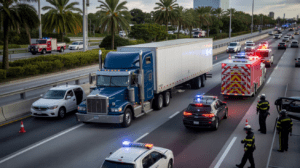
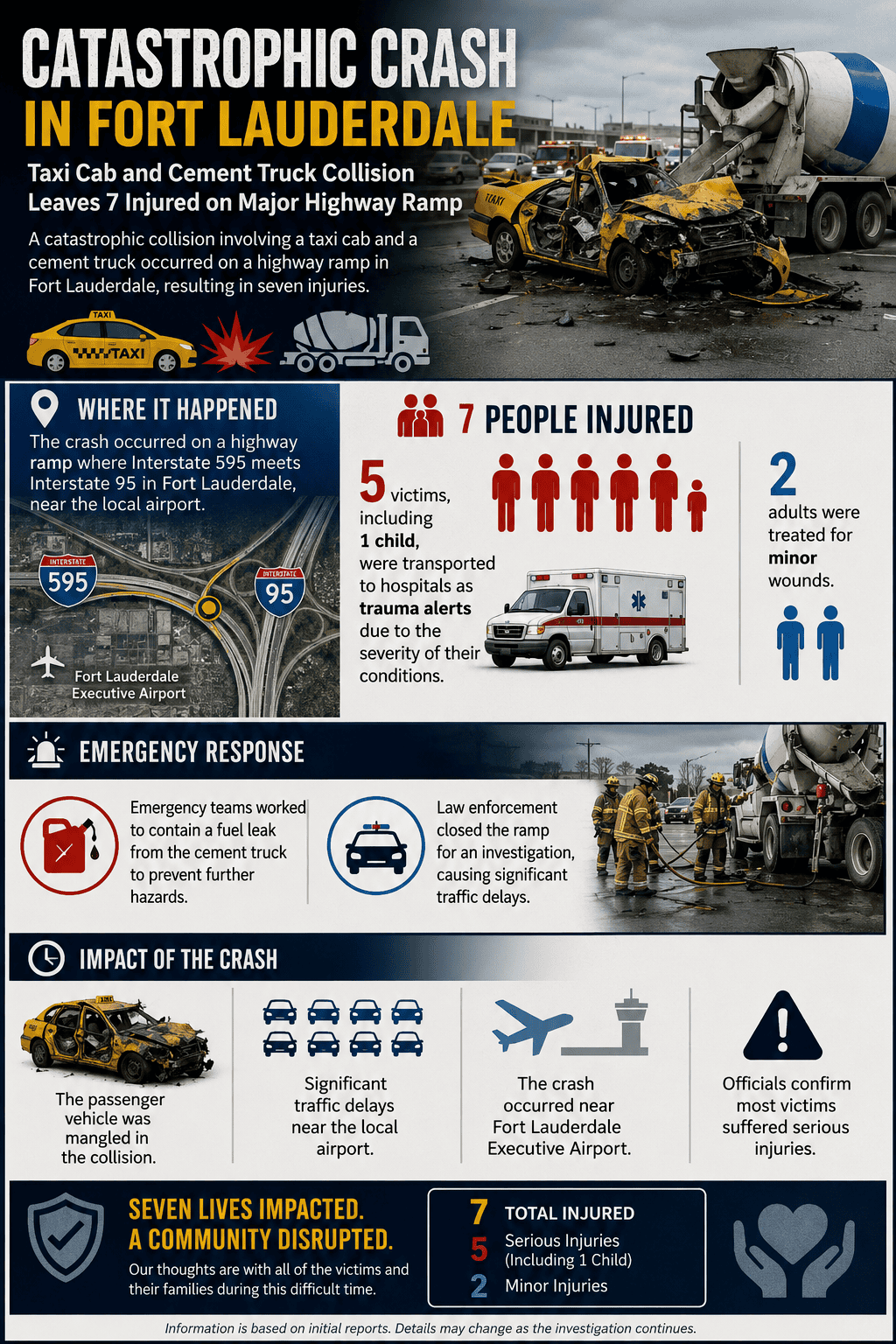
A Fort Lauderdale crash involving a cement truck and a taxi cab on the I-595 ramp near I-95 injured seven people and prompted a rapid emergency response. First responders treated victims at the scene, managed debris and traffic hazards, and transported occupants for further medical evaluation.
Investigators are reviewing speed, visibility, and driver actions before impact, but no final fault determination has been announced. Additional details explain possible causes, injury risks, and what may follow after this serious highway collision.
Contact a Fort Lauderdale Truck Accident Lawyer now if you were involved in a cement truck accident!
Highlights
- A cement truck and taxi cab collided on the I-595 ramp near I-95 in Fort Lauderdale, injuring seven people.
- First responders treated victims at the scene and transported occupants for further medical evaluation.
- Emergency crews managed debris, stabilized the area, and controlled traffic to reduce the risk of secondary crashes.
- Investigators are reviewing speed, visibility, and driver actions, but no final fault determination has been released.
- The ramp’s heavy traffic, narrow design, and the cement truck’s weight increased the risk of collision and injury severity.
What Happened in the Fort Lauderdale Cement Truck and Taxi Cab Crash?
According to early reports, the Fort Lauderdale crash occurred when a cement truck and a taxi cab collided, leaving seven people injured and prompting an emergency response. First responders arrived quickly, assessed the scene, and provided medical aid to those hurt in the impact. Authorities indicated that multiple occupants required transport for further evaluation, while crews worked to stabilize conditions and protect nearby motorists.
Investigators began reviewing how the collision unfolded, including vehicle movement, speed, visibility, and possible driver actions before impact. At this stage, officials had not released a final determination regarding fault or contributing factors. Emergency personnel also managed traffic hazards created by damaged vehicles and debris, helping reduce the risk of secondary crashes. For community members focused on serving others, the incident underscored the value of attentive driving, prompt reporting, and cooperation with emergency crews.
Such crashes can change lives quickly, making roadway caution and preparedness essential for everyone.

Where the I-595 and I-95 Highway Ramp Collision Occurred


Near the interchange connecting I-595 and I-95 in Fort Lauderdale, the collision occurred on a highway ramp that directs traffic between the two major routes. This connector is part of a heavily traveled corridor used by commuters, commercial vehicles, airport traffic, and local service drivers moving through central Broward County each day.
Reports placed the crash on the ramp area near State Road 84 and the I-95 junction, where merging patterns, lane adjustments, and changing speeds require sustained driver attention. The location is known for heavy traffic, especially during peak travel periods, making safe following distances and controlled vehicle movement especially important. Because ramps compress traffic into narrower, transitional spaces, emergency response access and lane management can become more difficult after a major incident. For those focused on public safety and community care, the crash site underscores the risks present at busy interchanges where large trucks and passenger vehicles share limited roadway space daily.
How Cement Truck Accidents Can Cause Catastrophic Injuries
Cement truck accidents can produce catastrophic injuries because these vehicles carry extreme weight, which greatly increases crash force on highway ramps and merge points. In a collision such as the Fort Lauderdale ramp incident, high-impact forces can crush passenger vehicles and expose occupants to life-threatening trauma. Common risks include traumatic brain injuries, spinal damage, internal bleeding, and multiple fractures, underscoring the serious safety hazards involved.
Extreme Vehicle Weight


Because a fully loaded cement truck can weigh many times more than a passenger vehicle, any collision in Fort Lauderdale can generate crushing forces that lead to catastrophic injuries. On I-595 near I-95, that weight disparity likely increased the risk to occupants of smaller vehicles, even at ordinary highway speeds. Greater mass places extraordinary stress on frames, doors, roofs, and seating systems, raising the risk of severe trauma.
Safety reviews often examine whether cargo weight, load distribution, braking condition, and stopping distance contributed to the event. In crashes involving cement trucks, victims may suffer spinal damage, traumatic brain injuries, internal organ trauma, multiple fractures, or fatal complications because smaller vehicles absorb far less force. Understanding the role of extreme vehicle weight helps families, responders, and investigators focus on prevention, accountability, and community protection.
High-Impact Collisions
Strike forces in a high-impact collision involving a cement truck can overwhelm vehicle safety systems within seconds, turning a roadway crash into a mass-casualty event. On I-595 near I-95, such force likely magnified damage across multiple lanes, increasing the number of injured and complicating rescue access for first responders and passing Good Samaritans.
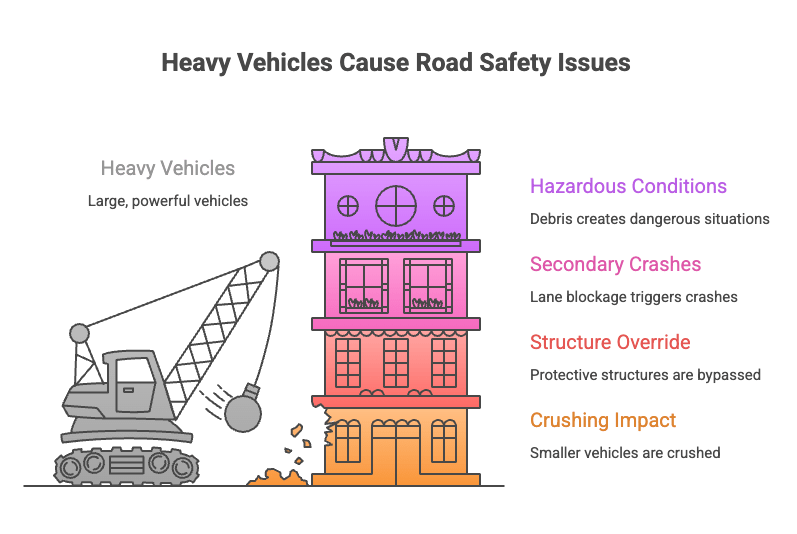
- Heavy momentum can crush smaller vehicles before drivers can evade impact.
- Elevated ride height can override protective structures in passenger cars.
- Sudden lane blockage can trigger secondary crashes behind the initial collision.
- Debris and spilled materials can create hazardous conditions for rescuers.
In Fort Lauderdale, these dynamics help explain why a single cement truck crash can endanger many people at once, requiring rapid scene control, coordinated emergency care, and stronger prevention efforts from carriers and roadway users alike.
Severe Trauma Risks
When a fully loaded mixer collides with passenger vehicles at highway speed, the risk of catastrophic injury rises immediately due to extreme weight, crush force, and abrupt deceleration. Occupants may suffer traumatic brain injuries, spinal cord damage, internal bleeding, multiple fractures, crush injuries, and severe lacerations, especially when smaller vehicles are pinned, underridden, or struck broadside.
In a Fort Lauderdale I-595 crash near I-95, seven reported injuries underscore how quickly survivable impacts can become life-threatening events. The rotating drum and elevated chassis can increase intrusion into occupied space, while shifting concrete loads may worsen instability during braking or rollover. Emergency responders typically watch for hidden trauma, delayed shock, and complications requiring rapid transport.
For those focused on helping others, early medical evaluation and careful scene management remain essential after any collision involving a cement truck.
Common Causes of Cement Truck and Commercial Vehicle Crashes in Fort Lauderdale
Investigators often examine driver fatigue, improper cargo loading, and brake system failures after crashes involving cement trucks and other commercial vehicles in Fort Lauderdale. Fatigue can slow reaction time, shifting or overloaded material can destabilize a heavy truck, and defective brakes can sharply reduce stopping ability in traffic. These recurring hazards are central to evaluating how a serious collision involving multiple injuries may have occurred.
Driver Fatigue Risks
During long shifts on Fort Lauderdale roads, driver fatigue remains a significant factor in crashes involving cement trucks and other commercial vehicles. On corridors such as I-595 and I-95, exhausted drivers may experience slower reaction times, reduced awareness, and impaired judgment, especially in heavy traffic or changing weather.
Public safety reviews often examine whether fatigue contributed to:
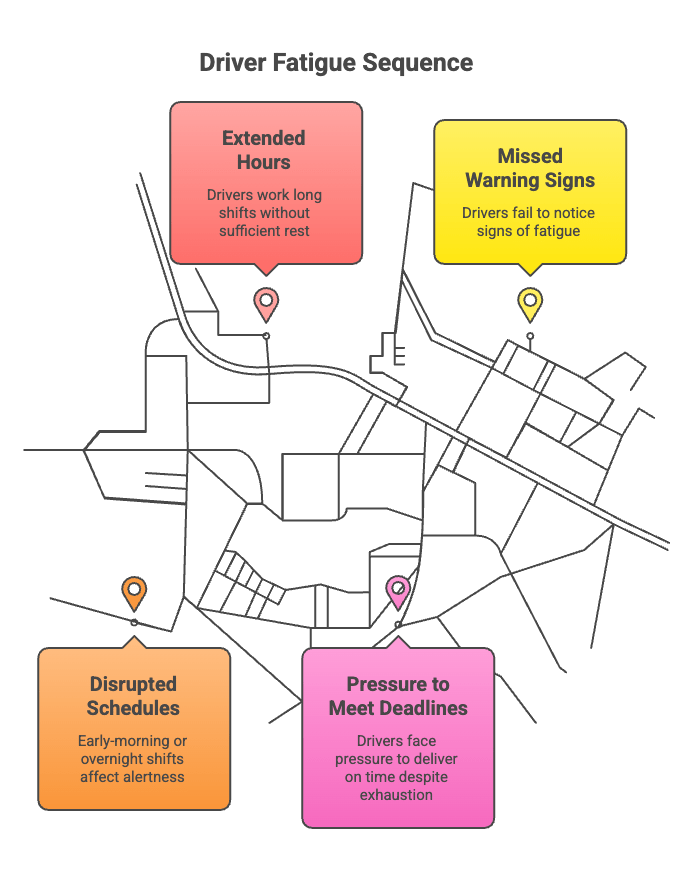
- Extended hours behind the wheel without adequate rest
- Early-morning or overnight schedules disrupt alertness
- Missed warning signs, including drifting or delayed braking
- Pressure to meet delivery deadlines despite physical exhaustion
For those committed to protecting others, fatigue prevention is a practical concern, not a minor issue. Rest compliance, realistic scheduling, and prompt reporting of drowsiness can reduce preventable harm and help safeguard motorists, passengers, and roadway workers in Broward County daily.
Improper Cargo Loading
Improper cargo loading presents another serious hazard in cement truck and commercial vehicle crashes across Fort Lauderdale. When concrete, aggregate, or construction materials are unevenly distributed, a truck’s center of gravity can shift unexpectedly during merges, curves, or sudden traffic changes near corridors such as I-595 and I-95. That instability may increase the risk of rollovers, lane departures, spilled loads, or collisions with nearby motorists.
Safety reviews often examine whether the vehicle exceeded weight limits, whether materials were secured correctly, and whether loading procedures matched manufacturer and roadway requirements. Even small errors can reduce steering control and lengthen stopping distance in congested conditions. Careful loading practices, accurate weight checks, and thorough pre-trip inspections help protect drivers, passengers, emergency responders, and the broader Fort Lauderdale community from preventable harm during heavy commercial transport.
Brake System Failures
When a cement truck’s brake system is worn, overheated, or poorly maintained, the vehicle may be unable to slow safely in Fort Lauderdale traffic or construction zones. On corridors such as I-595 near I-95, repeated stopping, heavy loads, and sudden congestion can quickly expose weak brake components.
Investigators often review several failure points:
- Thin brake pads or damaged rotors reduce stopping power
- Air brake leaks, lowering the pressure needed for controlled braking
- Overheated brakes are causing fade during extended travel or delays
- Missed inspections allowed defects to remain undetected
For public safety, fleets are expected to inspect brakes before dispatch, monitor maintenance records, and remove unsafe trucks from service. These precautions help protect drivers, passengers, road crews, and the families who depend on them.
Who May Be Liable for a Fort Lauderdale Cement Truck Accident?
Determining liability for a Fort Lauderdale cement truck accident often requires a close review of how the crash occurred, the truck’s condition, and the actions of everyone involved. Depending on the evidence, responsibility may extend beyond the driver. A cement truck operator may be liable for speeding, distraction, unsafe lane changes, fatigue, or failing to account for stopping distance in congested I-595 traffic near I-95.
The trucking company may also bear liability if it hired an unqualified driver, ignored maintenance needs, violated service-hour rules, or pressured drivers to meet unsafe schedules. In some cases, a maintenance contractor, parts manufacturer, or cargo-loading party may share fault if poor repairs, defective components, or improper loading contributed to the collision. Another motorist may also be partly responsible if sudden or reckless driving caused a chain reaction. Police reports, black box data, inspection records, dashcam footage, and witness statements often help clarify fault and support accountability for everyone affected.
What Types of Injuries Are Common in High-Impact Truck Collisions?
High-impact truck collisions, such as a Fort Lauderdale cement truck crash, often produce severe injuries because of the vehicle’s weight and crash forces. Common outcomes include traumatic brain injuries, spinal trauma, and internal damage that may not be immediately visible at the scene. These injury patterns typically require prompt medical evaluation to identify hidden complications and reduce the risk of further harm.
Traumatic Brain Injuries
Violent head motion and blunt-force impact make traumatic brain injuries a serious concern in crashes involving large commercial vehicles such as cement trucks. In the Fort Lauderdale I-595 near I-95 incident, occupants may have faced rapid acceleration-deceleration forces, contact with windows, airbags, or interior surfaces, and secondary impacts during multi-vehicle involvement.
Brain trauma can range from a mild concussion to life-threatening bleeding, with symptoms sometimes delayed for hours.
- Concussions may cause confusion, headache, dizziness, nausea, or light sensitivity.
- Contusions can result from direct blows and require prompt evaluation.
- Diffuse axonal injury may follow sudden rotational movement at highway speeds.
- Intracranial bleeding can create rising pressure and urgent neurological decline.
Quick assessment, imaging when indicated, and careful observation help responders and families protect injured people and support timely treatment decisions.
Spinal And Internal Damage
Along with head trauma, spinal and internal injuries are a major concern after a cement truck crash because the force of impact can compress the spine, twist the torso, and damage organs without obvious external wounds. On I-595 near I-95, occupants may suffer herniated discs, fractured vertebrae, or spinal cord damage that impairs movement, sensation, or bladder control.
Internal harm can include bleeding, punctured lungs, ruptured spleens, liver damage, and abdominal trauma caused by seat belts, crushed vehicle frames, or sudden deceleration. These injuries may not be immediately visible, making prompt imaging, monitoring, and trauma evaluation essential after a Fort Lauderdale collision. First responders and medical teams typically prioritize stabilization, rapid transport, and careful assessment to reduce complications. Early recognition supports better outcomes and helps injured people receive timely, appropriate care and rehabilitation.
What Victims Should Do After a Serious Fort Lauderdale Truck Accident
After a serious Fort Lauderdale truck accident, victims should prioritize emergency medical care, even if injuries do not appear severe at first. Collisions involving heavy cement trucks on I-595 near I-95 can cause delayed symptoms, hidden trauma, and dangerous roadway conditions.
Once first responders arrive, victims should follow instructions carefully, remain calm, and avoid unnecessary movement if neck, back, or internal injuries are suspected.
- Call 911 and request police and paramedics immediately.
- Accept evaluation, transportation, and follow-up treatment recommendations.
- Document the scene, vehicle damage, and visible injuries when it is safe to do so.
- Report the crash facts accurately to law enforcement and insurers.
Victims should also notify family members, preserve medical records, and keep receipts for emergency expenses. If a vehicle is disabled, it should move to a secure area only when it can be done without increasing risk. In multi-vehicle incidents, witness names and contact details may later help clarify what occurred.
Can Victims Recover Compensation After a Cement Truck Crash?
Victims injured in a Fort Lauderdale cement truck crash may be able to recover compensation when another party’s negligence contributed to the collision. After a serious wreck on I-595 near I-95, injured motorists, passengers, and families may face emergency treatment, hospitalization, lost income, and ongoing rehabilitation. Florida law may allow recovery of medical expenses, lost wages, reduced earning capacity, property damage, and pain and suffering when injuries are significant.
Potentially responsible parties can include the cement truck driver, the trucking company, a maintenance provider, a cargo-loading party, or another motorist whose unsafe actions helped cause the chain-reaction crash. Compensation can also extend to future medical care and other long-term needs if the injuries create lasting limitations.
Because commercial truck crashes often involve severe trauma and multiple vehicles, a careful review of liability and damages is important. Timely legal guidance can help victims understand their options and pursue financial support that protects recovery, stability, and family well-being.
How Evidence Can Strengthen a Fort Lauderdale Truck Accident Claim
In the aftermath of a cement truck collision in Fort Lauderdale, strong evidence can play a core role in showing how the crash occurred, who contributed to it, and the full extent of the resulting harm.
Following a serious crash on I-595 near I-95, timely documentation may help preserve critical facts before they disappear.
- Police reports can identify responding officers’ observations, roadway conditions, citations, and witness names.
- Photos and videos may capture vehicle damage, skid marks, debris patterns, lane positions, and traffic conditions.
- Medical records can link injuries to the impact and show the care needed after the collision.
- Truck data and maintenance logs may reveal braking issues, speed, inspection gaps, or driver-hours violations.
Witness statements can also support a clearer timeline, especially when several vehicles and injured people are involved. In service to injured neighbors and families, careful evidence collection promotes accountability, supports safer roads, and helps ensure claims reflect the real physical, emotional, and financial consequences.
Why Call The Law Offices Of Anidjar and Levine After a Fort Lauderdale Cement Truck Accident?
A Fort Lauderdale cement truck crash can trigger urgent legal and practical questions about liability, insurance coverage, medical costs, and lost income. Calling The Law Offices of Anidjar and Levine may help injured people and families understand what steps protect health, finances, and evidence after a serious I-595 collision near I-95.
Their role typically includes investigating driver logs, maintenance records, black box data, roadway conditions, witness accounts, and police findings. This can be important in crashes involving heavy commercial vehicles, where multiple parties may share responsibility, including the driver, trucking company, maintenance provider, or cargo-related contractors. Prompt legal involvement can also help preserve time-sensitive evidence and support communication with insurers.
For people focused on recovery and caring for others, legal guidance may reduce avoidable stress. The firm may assist with documenting losses, coordinating claim information, and pursuing compensation for treatment, rehabilitation, wage loss, and other accident-related damages while keeping the case organized and moving forward.
Conclusion
This Fort Lauderdale cement truck crash on the I-595 ramp near I-95 highlights the serious risks commercial vehicle collisions pose to motorists.
With seven people reportedly injured, the incident underscores the importance of careful investigation, prompt medical care, and preservation of evidence.
Determining how the crash occurred and who may be responsible is essential for any resulting injury claim. In serious truck accident cases, timely legal guidance can help victims protect both their health and their rights.
Contact a Fort Lauderdale Truck Accident Lawyer now if you were involved in a cement truck accident!