The Law Offices of Anidjar and Levine can investigate whether overloaded cargo, improper weight distribution, inadequate securement, defective equipment, or violations of trucking regulations contributed to a Florida collision. Counsel may preserve driver logs, electronic data, inspection reports, loading documents, photographs, and witness accounts before evidence is lost. The investigation can identify liability among drivers, carriers, brokers, shippers, loaders, and maintenance providers while documenting medical expenses, lost income, property damage, and continuing limitations. Learn more about legal protections and claim strategies from a Florida Personal Injury Lawyer.
Main Takeaways
- A Florida truck accident lawyer investigates trucking regulation violations, unsafe loading, cargo securement failures, and defective equipment.
- Evidence may include driver logs, electronic data, inspection reports, weigh-station records, shipping documents, photographs, and witness accounts.
- Potentially responsible parties include truck drivers, motor carriers, brokers, cargo loaders, maintenance providers, and other companies.
- Trucking violations can contribute to crashes through excessive weight, improper distribution, inadequate restraints, fatigue, defective brakes, or unsafe tires.
- Preserve medical records, income documentation, property-damage evidence, photographs, and insurer communications, and seek prompt legal guidance.
How We Can Help With Your Florida Truck Accident Trucking Regulations & Loading Injury Claim
A Florida truck accident lawyer can investigate whether violations of federal and state trucking regulations, improper loading practices, or inadequate cargo securement contributed to the collision and resulting injuries. The legal team may identify responsible parties, including carriers, drivers, brokers, maintenance providers, or cargo handlers, while preserving records that could clarify how the incident occurred. Evidence preservation can include obtaining photographs, video footage, electronic logging data, inspection reports, dispatch communications, and available vehicle information before it is lost or altered.


Counsel can also help document medical treatment, lost income, property damage, and continuing limitations, creating a clear record of the claim’s consequences. An informed insurance claim strategy may address communications with adjusters, coverage issues, liability disputes, and settlement evaluations without sacrificing the injured person’s interests. Through careful preparation and professional communication, the firm can help families pursue accountability and access appropriate compensation while treating every client with diligence, respect, and a commitment to serving those affected by serious truck collisions.
Understanding Florida Truck Accident Trucking Regulations & Loading Injury Cases
OUR CONSULTATIONSARE FREE
START YOUR FREE CASE REVIEW

When a commercial truck collision involves alleged regulatory or loading violations, the case requires careful analysis of how legal duties intersected with the crash. Florida injury cases may involve federal motor-carrier standards, state requirements, company policies, and evidence concerning the truck’s condition and operation. Investigators typically examine inspection records, shipping documents, driver logs, photographs, electronic data, and witness accounts to determine whether a violation occurred and whether it contributed to the injuries.
Load Securement Basics include selecting appropriate tie-downs, blocking, bracing, and keeping cargo secure throughout transport. Cargo Weight Limits require attention to gross vehicle weight, axle distribution, and posted restrictions. Compliance questions may thereby involve both the amount of cargo and its placement. A successful claim generally requires proof of duty, breach, causation, and damages, supported by reliable records and qualified testimony. Careful legal review helps protect injured individuals, clarify accountability, and promote safer transportation practices without assuming fault before evaluating the evidence.
Common Causes of Florida Truck Accident Trucking Regulations & Loading


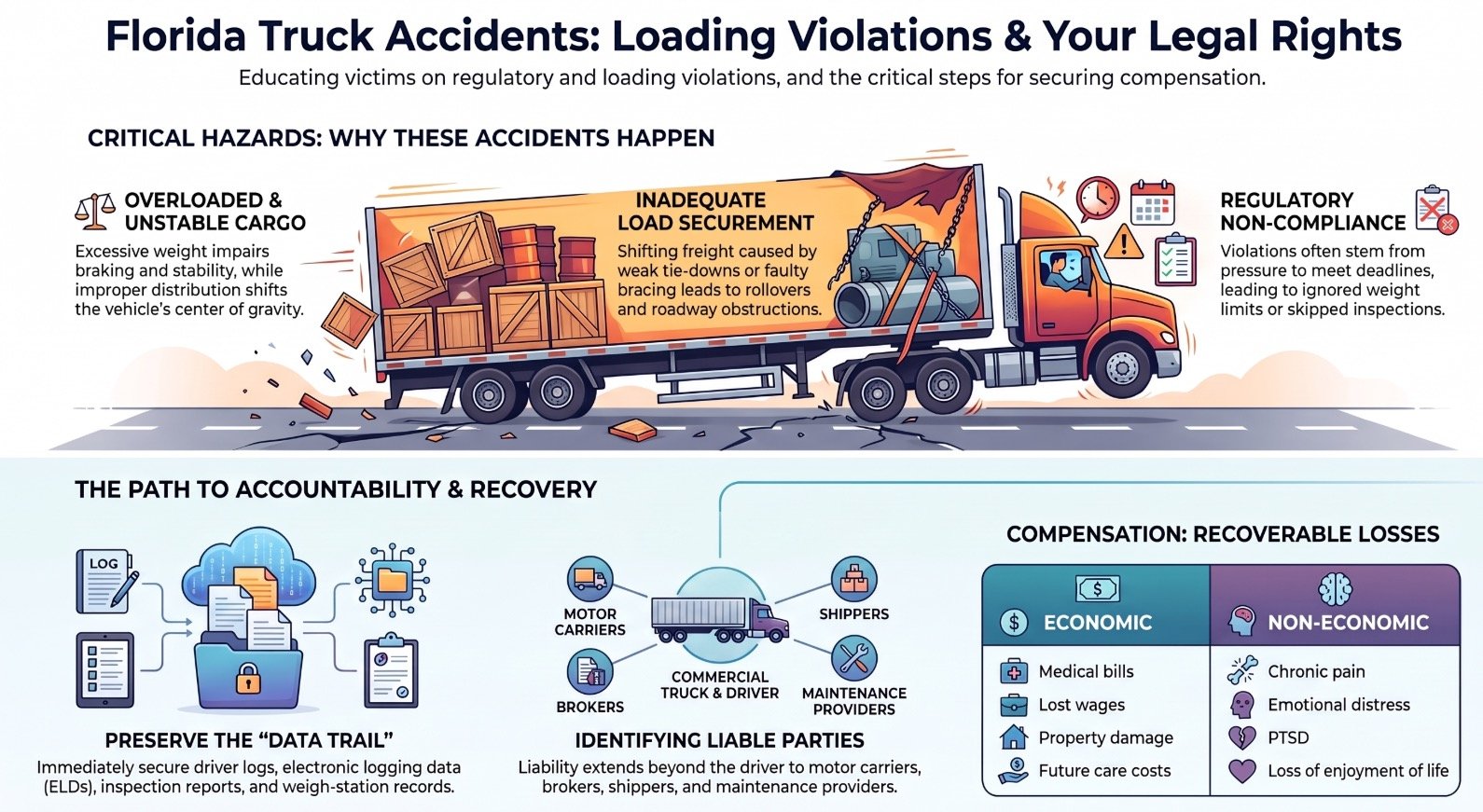
Common causes of Florida truck accidents involving trucking regulations and loading include overloaded cargo, improper weight distribution, and inadequate load securement. Violations of federal or state trucking regulations may further increase the risk of cargo shifts, loss of control, and roadway collisions. These factors warrant careful examination when determining how a loading practice or regulatory violation contributed to an accident.
Overloaded Cargo
Because excessive weight can impair braking, guidance, and vehicle stability, overloaded cargo presents a significant risk under Florida trucking regulations. Carriers and drivers must observe applicable weight limits established by state and federal authorities, including restrictions based on vehicle type, axle capacity, and roadway classifications. Exceeding those limits can increase stopping distances, accelerate mechanical wear, and contribute to tire or brake failure. A thorough cargo inspection before departure can identify excessive loads, inaccurate shipping information, or cargo that must be removed before travel. Proper scales and reliable records help trucking companies confirm compliance and protect other road users. When a commercial vehicle operates while overloaded, investigators may examine loading records, weigh station results, maintenance documentation, and driver procedures. Accountability supports safer transportation and helps injured individuals understand whether regulatory violations contributed to a collision.
Improper Weight Distribution
Improper weight distribution can create hazards even when a truck’s total load remains within legal limits. Cargo placed unevenly may shift the vehicle’s center of gravity, reducing handling control and increasing rollover risk during turns, lane changes, or sudden braking. Excessive weight over one axle can also strain suspension components, impair braking performance, and accelerate tire wear. Drivers and carriers should review loading plans, axle limits, and manufacturer specifications before departure. Routine tire pressure checks are important because uneven loading can magnify handling problems when tires are inflated inconsistently or operate beyond recommended conditions. Fueling practices may also affect balance, particularly when fuel levels change during long trips. Proper distribution supports safer transportation and helps protect motorists, passengers, and communities from preventable collisions caused by unstable vehicles.
Inadequate Load Securement
Inadequate load securement occurs when cargo is not restrained against movement during acceleration, braking, turns, or changes in road conditions. Shifting freight can alter vehicle balance, obstruct visibility, fall onto roadways, or strike occupants and nearby motorists. Common contributing factors include insufficient tie-downs, worn straps, improperly positioned blocking, unsecured containers, and failure to match restraint equipment to the cargo’s size and weight. Effective Cargo securement methods may include tie-down assemblies, chains, straps, dunnage, blocking, and bracing, selected according to the load’s characteristics. Drivers and loading personnel should verify that restraints remain tight and that cargo cannot slide, roll, tip, or separate. Pre-trip inspection checklists can help identify damaged equipment, loose connections, and movement before departure, supporting safer transportation and reducing preventable hazards for the public.
Violated Trucking Regulations
When a trucking company, driver, or loading professional violates federal or Florida safety requirements, the resulting hazard may contribute directly to a collision. Common violations include exceeding weight limits, operating with defective brakes or tires, ignoring hours-of-service restrictions, and failing to inspect equipment before departure. Improper loading may leave cargo unstable, allowing cargo to shift during sudden braking or turns. A carrier that pressures a driver to meet unrealistic deadlines may also encourage unsafe decisions and regulatory noncompliance. Evidence of these violations can support an injured person’s effort to establish negligence and pursue appropriate compensation. Relevant claim documentation may include inspection reports, electronic logging data, maintenance records, bills of lading, photographs, and witness statements. Prompt preservation helps clarify responsibility and protects the interests of affected individuals and families.
Legal Rights of Florida Truck Accident Trucking Regulations & Loading Injury Victims
Florida truck accident victims injured by regulatory breaches or unsafe loading may have the right to seek compensation from the responsible parties. A claim may address medical expenses, lost income, reduced earning capacity, property damage, and pain-related losses. Surviving family members may also possess rights under Florida’s wrongful-death laws.
Florida truck accident claims may cover medical expenses, lost income, property damage, pain-related losses, and wrongful-death damages.
Potential avenues of recovery include:
- Claims against the trucking company, carrier, owner, loader, or other negligent parties
- Access to applicable insurance coverage, including commercial policies and additional insured benefits
- Representation during liability investigations, settlement negotiations, or litigation
Victims generally should preserve photographs, medical records, employment documentation, witness information, and communications with insurers. An attorney can evaluate whether regulatory records, inspection materials, electronic logging data, and loading documentation support the claim. Florida’s comparative fault rules may reduce recovery when an injured person is assigned some responsibility, although the effect depends on the applicable facts and law. Prompt legal guidance can protect evidence, identify all responsible entities, and help ensure that an insurer’s evaluation reflects the full scope of legally compensable harm.
Why Do Florida Truck Accident Trucking Regulations & Loading Injuries Happen?
Truck-regulation and loading injuries often occur because trucking companies, drivers, loaders, and maintenance personnel fail to follow safety requirements designed to control weight, balance, securement, and driver conduct. Overloaded trailers can reduce braking performance, strain tires, and make a vehicle difficult to control. Improperly distributed cargo may shift during travel, causing rollovers or sudden lane departures. Inadequate tie-downs, damaged equipment, and incomplete inspections can allow freight to fall onto surrounding vehicles or create dangerous instability. Some collisions result from driver fatigue violations, including excessive hours, falsified logs, or insufficient rest. Training deficiencies and pressure to meet delivery schedules can encourage unsafe decisions. Distracted driving crashes may arise when operators use mobile devices, adjust technology, or focus on paperwork instead of traffic. Poor maintenance, defective brakes, and ignored safety complaints can further increase risk. These failures often reflect preventable breakdowns in supervision, communication, and accountability across the transportation chain, endangering drivers, passengers, and communities.
What Should You Do After a Florida Truck Accident or Trucking Regulations & Loading Injury?
After a Florida truck accident, the injured person should seek immediate medical care, even if symptoms seem minor at first. Document the accident scene with photographs, witness information, official reports, and records of visible injuries or property damage. Consulting a truck accident lawyer can help preserve evidence, assess potential trucking regulation violations, and protect the injured person’s legal rights.
Seek Immediate Medical Care
Prompt medical evaluation should follow any injury involving a commercial truck, even when symptoms initially appear minor or absent. Some conditions, including concussions, internal bleeding, and spinal trauma, may worsen without immediate attention. Request emergency services if serious symptoms, impaired movement, breathing difficulty, or loss of consciousness occur. Otherwise, prompt evaluation at an appropriate medical facility remains important, particularly when pain, dizziness, weakness, or numbness develops. Medical professionals can identify injuries, establish treatment needs, and create records connecting symptoms to the collision. Following prescribed care and attending recommended appointments supports recovery and demonstrates responsible attention to health. Those assisting an injured person should Identify Immediate Safety Concerns, encourage professional care, and Avoid Wrongful Statements about the accident or the person’s condition before medical findings are available.
Document the Accident Scene
Once medical needs are addressed, documenting the accident scene can help preserve evidence about the truck’s position, roadway conditions, visible damage, cargo, and surrounding circumstances. If safety permits, injured parties or their companions should take photos from several angles without entering traffic or disturbing debris. Images may show skid marks, damaged vehicles, license plates, warning signs, lane markings, weather conditions, and apparent cargo displacement. Collect names, telephone numbers, and concise Witness statements from people who observed the collision, loading activity, or events immediately beforehand. Inform officers of relevant details so police reports accurately describe the incident and any suspected regulatory concerns. Preserving cargo receipts, shipping records, and delivery documents may also help clarify what was transported, how it was loaded, and whether the contents shifted during the crash.
Consult a Truck Accident Lawyer
Because trucking regulations and loading practices can determine liability, an injured person should consult a Florida truck accident lawyer promptly, particularly when the crash involves serious injuries, disputed fault, or apparent cargo violations. Hiring legal counsel immediately can support preserving key evidence, including driver logs, inspection records, electronic data, surveillance footage, and cargo documentation. Counsel may also identify regulatory breaches involving securement, weight limits, maintenance, or driver qualifications. Until representation is established, the injured person should avoid early recorded statements to an insurer, since incomplete descriptions may be taken out of context. A lawyer can assist with medical documentation, communications, and deadlines while protecting the person’s interests. Understanding insurance defense tactics helps explain why adjusters may seek quick settlements or favorable admissions before the full extent of injuries and liability is known.
Critical Evidence in a Florida Truck Accident Trucking Regulations & Loading Injury Case
Critical evidence can establish whether trucking regulations, loading requirements, or inspection duties were violated in a Florida truck accident.
Key evidence may include:
- Driver logs and records, including hours-of-service documentation
- Loading and weight documents, along with truck inspection reports
- Accident scene evidence, such as photographs, measurements, and witness accounts
Preserving these materials promptly can help clarify liability, regulatory violations, and the extent of the resulting injuries.
Driver Logs and Records
Driver logs and related records can provide crucial evidence in a Florida truck accident involving alleged trucking-regulation or loading violations. These records may show driving hours, rest periods, duty-status changes, and electronic logging device entries. Investigators can compare the information with dispatch messages, fuel receipts, toll data, and video footage to identify inconsistencies or possible falsification. Under Federal trucking rules, carriers and drivers must maintain accurate records that help demonstrate compliance with service-hour requirements. Such documentation can support fatigue detection by revealing whether a driver remained on the road beyond permitted limits or lacked required rest. Preservation requests may prevent routine data loss, while qualified reviewers can interpret entries in context. Careful review may clarify responsibility and help injured individuals seek fair treatment without relying on separate loading and weight documents.
Loading and Weight Documents
Loading and weight documents can provide key evidence in a Florida truck accident involving alleged trucking-regulation or loading violations. Bills of lading, scale tickets, cargo manifests, and axle-weight records may show what the vehicle carried, how much it weighed, and whether distribution complied with applicable limits. A careful review of the weight docket can help identify overloaded axles, inconsistent entries, or changes made after the collision. These records may also clarify whether another party secured, transferred, or accepted the cargo before transportation. Establishing a reliable Chain of Custody is important because altered, incomplete, or improperly preserved documents can weaken their evidentiary value. Counsel may compare records from shippers, carriers, weigh stations, and freight brokers to identify discrepancies. Accurate documentation can help injured individuals and their families pursue accountability and fair compensation.
Truck Inspection Reports
Truck inspection reports can provide important evidence in a Florida truck accident involving alleged trucking-regulation or loading violations. These records may identify mechanical defects, unsafe conditions, inspection dates, corrective measures, and the personnel who reviewed the vehicle. A cargo inspection may document whether freight was secured, distributed properly, and contained within applicable limits before departure. Brake check logs can show whether required braking-system examinations occurred and whether reported deficiencies were repaired promptly. Periodic, pre-trip, and post-trip reports may also reveal recurring problems or discrepancies between company policies and actual practices. Preserving these documents can help clarify whether maintenance failures or loading violations contributed to the collision. Attorneys and investigators may compare inspection entries with maintenance records, driver statements, and regulatory requirements while protecting relevant evidence for affected individuals and families.
Accident Scene Evidence
When a Florida truck accident involves suspected trucking-regulation or loading violations, accident-scene evidence can help establish how the collision occurred. Photographs should document vehicle positions, roadway conditions, skid marks, debris, cargo displacement, visible damage, and nearby signs or signals before the scene changes. Dashboard camera footage from involved vehicles or surrounding businesses may reveal traffic movements, driver conduct, and conditions immediately before impact. Prompt witness statement collection can preserve independent accounts while memories remain fresh, including observations about speeding, swerving, unsecured cargo, or unusual truck handling. Investigators may also identify surveillance systems, obtain event data, and record weather and lighting conditions. Preserving this information supports a careful evaluation of compliance, causation, and injuries, helping affected individuals pursue accountability and protect their ability to serve others through informed legal decisions.
Long-Term Effects of Florida Truck Accident Trucking Regulations & Loading Injuries
Florida truck accident injuries caused by regulatory violations or improper loading may result in chronic pain, reduced mobility, and lasting limitations on daily activities. Emotional and psychological effects, including anxiety, depression, and trauma-related symptoms, may also continue long after the accident. Ongoing treatment, rehabilitation, lost income, and related expenses can create substantial medical and financial burdens for injured individuals and their families.
Chronic Pain and Mobility Loss
Chronic pain and mobility loss can become enduring consequences of injuries sustained in a Florida truck accident involving unsafe loading or violations of trucking regulations. Spinal damage, fractures, nerve injuries, and joint trauma may restrict walking, lifting, driving, or completing ordinary personal tasks. Persistent symptoms can require coordinated care from physicians, rehabilitation experts, and other providers who evaluate functional limitations and establish measurable treatment goals. Physical therapy options may include strengthening, stretching, balance training, gait assistance, and adaptive techniques designed to preserve independence. Pain management clinics can assess medication, injections, and other appropriate interventions while monitoring effectiveness and safety. Assistive devices, home modifications, and occupational therapy may further support daily activities. Documented limitations and continuing medical expenses can be important when evaluating damages and securing resources for long-term care.
Emotional and Psychological Effects
Emotional and psychological effects may persist alongside the physical limitations caused by a Florida truck accident involving improper loading or regulatory violations. Survivors may experience emotional stress, anxiety, depression, irritability, or withdrawal after a serious collision. PTSD symptoms can include intrusive memories, nightmares, heightened alertness, avoidance of driving, and distress near commercial vehicles. These reactions may interfere with sleep, concentration, family relationships, employment, and participation in ordinary community activities. Some individuals may feel guilt, helplessness, or fear that another crash will occur, even when physical recovery progresses. Compassionate support from family, counselors, physicians, and community organizations can help survivors recognize these effects and seek appropriate care. Documenting changes in mood, behavior, and daily functioning may also help professionals evaluate the accident’s lasting consequences.
Ongoing Medical and Financial Burdens
When injuries from a Florida truck accident involving improper loading or regulatory violations require extended treatment, the resulting medical and financial burdens may continue long after the initial emergency care. Ongoing expenses can include surgeries, rehabilitation, prescription medications, assistive equipment, transportation, and necessary home modifications. Some injured individuals may also face reduced earning capacity or permanent disability, creating hardship for dependents and caregivers. Accurate medical documentation helps connect continuing symptoms, treatment needs, and future costs to the collision. Records should include diagnostic findings, treatment plans, bills, work restrictions, and professional opinions regarding prognosis. During settlement negotiations, these materials can support a thorough evaluation of past and anticipated losses. Careful preparation allows legal representatives to pursue resources that help injured people obtain appropriate care, preserve stability, and address long-term needs responsibly.
Proving Liability in Florida Truck Accident Trucking Regulations & Loading Injury Cases
Proving liability in a Florida truck accident involving trucking regulations or improper loading requires evidence connecting a specific violation or negligent act to the collision and resulting injuries. Relevant records may include driver logs, inspection reports, maintenance files, cargo securement documentation, training materials, and electronic control data. These materials can show whether a carrier, driver, loader, or maintenance provider failed to follow federal or Florida safety requirements.
Negligence claims may include negligent hiring, inadequate supervision, hours-of-service violations, distracted driving, defective maintenance, overweight cargo, or insufficiently secured freight. Photographs of the scene, vehicle damage, cargo placement, skid marks, and roadway conditions can help establish how the crash occurred. Eyewitness testimony details should identify what each person observed, including vehicle movement, falling cargo, speed, lane position, and driver conduct. Qualified accident reconstruction professionals may analyze physical evidence and regulatory records to connect the breach with the injuries. Medical documentation then helps demonstrate the nature and extent of resulting harm.
Dealing With Insurance Companies After a Florida Truck Accident Trucking Regulations & Loading Injury
After a Florida truck accident involving regulatory violations or improperly loaded cargo, insurance companies may promptly seek statements, records, and settlement discussions that affect the injured person’s claim. An injured person should provide accurate information while avoiding speculation, admissions, or recorded statements without informed legal guidance. Insurers may question whether cargo placement, weight violations, driver conduct, or another condition caused the collision. Preserving photographs, inspection materials, medical records, witness information, and communications can help protect the claim. Medical care should remain consistent, with providers accurately documenting injuries, symptoms, treatment limitations, and anticipated needs. When an insurer issues a denial, Claim denial responses should address each stated reason with relevant evidence and applicable Florida law. A lawyer can communicate with adjusters, identify missing records, evaluate coverage, and help prevent premature settlement decisions. Careful communication serves the injured person’s interests while promoting a fair, evidence-based resolution. It also helps family members and advocates coordinate support without compromising important legal rights.
What to Expect During a Florida Truck Accident Trucking Regulations & Loading Injury Claim Process
A Florida truck accident injury claim typically begins with an evaluation of liability, damages, and applicable trucking regulations. The process then involves gathering evidence and documentation, followed by negotiations with the trucking company’s insurer. If settlement efforts do not resolve the claim, the injured party may consider pursuing the matter at trial.
Initial Claim Evaluation
When does an initial claim evaluation begin in a Florida truck accident involving trucking regulations or loading practices? It begins when counsel or a qualified representative reviews the incident’s basic circumstances, injuries, potential parties, and applicable legal duties. The evaluation considers whether the carrier, driver, shipper, loader, or maintenance provider may have contributed to the collision through regulatory violations, unsafe weight distribution, or inadequate securement.
A preliminary damages assessment addresses medical needs, lost income, property loss, and anticipated long-term effects. The review also supports an insurance strategy by identifying coverage issues, claim deadlines, and appropriate communication with insurers. Potential liability defenses are considered early, including comparative fault or disputes concerning loading responsibility. Counsel may recommend evidence preservation, while avoiding premature conclusions. The claimant should receive a clear explanation of likely steps, decision points, and available support.
Evidence And Documentation
Accurate evidence and documentation form the foundation of a Florida truck accident claim involving trucking regulations or loading practices. During the claim process, counsel may gather the crash report, photographs, medical records, vehicle damage assessments, and inspection findings. Driver witness statements can clarify traffic conditions, cargo placement, speed, and actions taken before impact. Video surveillance footage from nearby businesses, traffic systems, or onboard cameras may reveal events that witnesses cannot recall. Investigators may also request bills of lading, loading records, weight tickets, maintenance logs, driver qualification materials, and electronic logging data. These records can help determine whether federal or Florida requirements were followed and whether improper loading contributed to the collision. Promptly preserving evidence is crucial because records may be overwritten, lost, altered, or discarded.
Insurance Company Negotiations
During insurance company negotiations, the insurer typically evaluates liability, regulatory compliance, cargo loading practices, and the extent of the injured party’s losses before making or responding to a settlement offer. Representatives may scrutinize crash reports, inspection records, driver logs, and photographs to identify disputed facts or alleged policy violations. Evidence preservation remains critical because missing or altered materials can weaken a claim. Counsel may conduct witness interviews to clarify vehicle movements, loading conditions, and statements made after the collision. Medical billing records, treatment notes, and prognosis information help document necessary care and future expenses. Damage valuation may also include lost income, diminished earning capacity, property damage, and non-economic harm. Clear, organized documentation allows negotiations to address supported losses while protecting the injured person’s interests and promoting a fair process.
Settlement Or Trial Options
A Florida truck accident injury claim may conclude through a negotiated settlement or proceed to trial if the parties cannot resolve liability and damages. During negotiations, evidence concerning loading violations, driver conduct, medical treatment, and financial losses supports the injured person’s position. The parties may consider mediation options, where a neutral facilitator helps identify practical solutions without deciding the dispute. Settlement timelines vary based on the investigation, medical stabilization, insurer cooperation, and the complexity of contested issues. Before accepting an agreement, the claimant generally evaluates compensation, future care needs, liens, and the effect of releasing further claims. If settlement efforts fail, litigation may proceed through discovery, depositions, expert testimony, and trial. A judge or jury then determines responsibility and damages under applicable Florida law, while counsel continues protecting the claimant’s interests.
Compensation for Florida Truck Accident Trucking Regulations & Loading Injury Damages
Compensation for injuries caused by trucking-regulation violations or improperly loaded cargo may include medical expenses, lost income, property damage, and non-economic losses such as pain and suffering. A thorough claim should connect each requested amount to the crash, the responsible conduct, and the resulting harm.
Medical bills documentation can include invoices, payment records, treatment notes, prescription costs, and projected care recommendations. Wage statements, employment records, and evidence of missed work may support income-related losses. Repair estimates, photographs, and valuation records can help establish property damage.
An injured person may also present emotional distress evidence, including counseling records, personal observations, and testimony from family members or coworkers. Witness accounts, inspection materials, shipping records, and photographs may clarify whether poor loading, unsecured cargo, or regulatory violations contributed to the collision. Legal counsel can organize this evidence, communicate with insurers, and seek a resolution that addresses the injured person’s needs while promoting accountability and responsible service to the community.
Economic vs Non-Economic Damages in Florida Truck Accident Trucking Regulations & Loading Cases
Florida truck accident claims may include economic damages, such as medical expenses, lost income, and future financial losses. Non-economic damages can address pain, emotional distress, diminished quality of life, and other intangible harm. Proving trucking-related losses generally requires organized records, medical evidence, employment documentation, and facts demonstrating how regulatory or loading violations contributed to the injuries.
Economic Damages
Economic damages in a Florida truck accident case are intended to reimburse an injured person for measurable financial losses caused by the collision. These losses may include emergency treatment, hospitalization, surgery, medication, rehabilitation, transportation to medical appointments, and anticipated future care. A careful Medical bills review can identify crash-related charges, distinguish covered services, and support a demand for full reimbursement. Economic damages may also include income lost during recovery, reduced earning capacity when injuries limit future work, and necessary property repairs or replacement. Wage loss documentation, such as payroll records, tax returns, employer statements, and disability certifications, can help establish the amount claimed. Attorneys may gather employment and medical evidence to present an organized calculation, while insurers and opposing parties may challenge unsupported figures or unrelated expenses.
Non-Economic Damages
Although non-economic damages do not arise from itemized bills or financial records, they may reflect significant harm caused by a Florida truck accident. These damages can address physical pain, suffering, inconvenience, and limitations that alter ordinary daily activities. They may also include Emotional distress, anxiety, depression, sleep disruption, and diminished enjoyment of life. In appropriate circumstances, an injured person may seek compensation for changes in family relationships, loss of companionship, or reduced ability to participate in meaningful pursuits. Such recovery damages recognize consequences that monetary reimbursement alone cannot fully measure. Florida law permits eligible claimants to pursue legal remedies for these personal losses, subject to applicable liability rules and statutory limitations. Careful evaluation helps ensure that compensation reflects the individual’s lived experience while preserving dignity throughout recovery.
Proving Trucking-Related Losses
Proving trucking-related losses requires evidence that connects the crash to specific financial costs and personal harms. Economic damages may include emergency treatment, rehabilitation, prescription expenses, lost wages, reduced earning capacity, property damage, and necessary future care. Medical records, invoices, employment documentation, tax materials, and expert opinions can establish these amounts with reasonable certainty.
Non-economic damages address harms without a fixed market price, including pain, emotional distress, disfigurement, disability, loss of enjoyment, and effects on family relationships. Daily journals, treatment notes, Witness statements, and testimony from relatives or colleagues may demonstrate how injuries changed ordinary activities. Surveillance evidence can corroborate physical limitations or reveal inconsistencies, making careful interpretation vital. In loading-related cases, photographs, inspection records, driver logs, and expert analysis may connect improper cargo practices to both injury and resulting losses. This documentation supports fair recovery and responsible service to injured individuals.
When a Florida Truck Accident Trucking Regulations & Loading Injury Case Goes to Trial vs Settlement
When a Florida truck accident involves alleged violations of trucking regulations or improper loading, the decision to pursue settlement or proceed to trial depends on the strength of the evidence, the extent of the injuries, and the parties’ willingness to accept reasonable terms. Settlement may provide earlier compensation, reduce litigation uncertainty, and spare injured individuals and their families the demands of courtroom proceedings. Negotiations can address medical expenses, lost income, rehabilitation needs, and other documented losses while preserving resources for recovery.
Trial may become necessary when liability is disputed, the responsible parties undervalue the claim, or essential evidence requires presentation before a judge or jury. A careful trial strategy evaluates witness credibility, vehicle records, loading documentation, photographs, and expert opinions. Deposition preparation helps ensure that testimony is accurate, consistent, and responsive to contested issues. Counsel may recommend trial when the anticipated benefit justifies additional time, expense, and emotional strain. Each decision should remain guided by the injured person’s needs, informed consent, and the pursuit of a fair resolution.
Florida Laws That May Affect Your Florida Truck Accident Trucking Regulations & Loading Case
Florida laws governing commercial vehicles, roadway safety, insurance, and evidence may materially affect a truck accident case involving alleged regulatory violations or improper loading. Florida statutes and federal motor-carrier rules can establish duties concerning inspection, maintenance, cargo securement, driver qualifications, and hours of service. Their application may depend on the vehicle, carrier, shipment, and roadway circumstances.
Florida and federal trucking laws may establish critical duties involving vehicle safety, cargo securement, driver qualifications, and hours of service.
Relevant issues may include:
- Florida traffic laws and negligence standards can address unsafe operation, defective equipment, or overloaded cargo.
- Commercial vehicle paperwork, including inspection reports, bills of lading, electronic logs, and training records, may support or challenge liability.
- Federal preemption disputes can determine whether federal requirements limit state claims or permit additional protections.
Insurance and financial-responsibility laws may influence available coverage, while evidentiary rules govern authentication, preservation, and admissibility of photographs, electronic data, and maintenance records. A careful review can identify responsible parties, clarify disputed facts, and help protect injured people and their families. Legal guidance also helps witnesses and service providers present accurate, useful information.
The Statute of Limitations for Florida Truck Accident Trucking Regulations & Loading Injury Cases
Because filing deadlines can determine whether a claim proceeds, the statute of limitations is a critical issue in Florida truck accident cases involving alleged trucking-regulation violations or improper loading. Under Florida law, personal injury claims generally must be filed within two years after the accident. A different deadline may apply to wrongful-death claims, claims against governmental entities, or circumstances involving delayed discovery. The precise period can depend on the parties, the injury, and the legal theory asserted.
Waiting may jeopardize recovery, even when the underlying conduct appears clear. Witness memories fade, vehicles may be repaired, and electronic logs, inspection records, dispatch communications, and loading documentation can disappear. Prompt evidence preservation therefore supports a fair evaluation of causation and responsibility. Comparative negligence may also affect damages if an injured person is found partly responsible, but it generally does not eliminate the need to meet the applicable filing deadline. Because exceptions and deadline calculations are fact-specific, timely attention helps protect injured people and their families while promoting an orderly legal process.
How a Florida Truck Accident Trucking Regulations & Loading Lawyer Can Help You
A Florida truck accident trucking regulations and loading lawyer can evaluate the circumstances of a collision, identify potentially responsible parties, and determine whether violations involving driver conduct, vehicle maintenance, cargo securement, or weight limits contributed to the injuries. The lawyer can serve injured individuals and families by coordinating a focused investigation, communicating with insurers, and developing a claim based on reliable facts.
Key services may include:
- Securing electronic logs, inspection records, photographs, loading documents, and witness accounts through evidence preservation.
- Analyzing carrier policies, contracts, maintenance histories, and applicable Florida and federal regulations.
- Anticipating Liability defenses and responding with documentation, expert opinions, and legally supported arguments.
Counsel can also assess damages involving medical care, lost income, reduced earning capacity, property loss, and continuing support needs. When multiple businesses, contractors, drivers, or insurers are involved, the lawyer can clarify each party’s role and pursue appropriate accountability. This assistance helps protect injured people’s interests while promoting fair treatment, accurate investigations, and responsible trucking practices.
When to Contact a Florida Truck Accident Trucking Regulations & Loading Lawyer
Prompt consultation is generally advisable after a Florida truck collision, particularly when injuries, disputed fault, or significant property damage are involved. Contact a lawyer promptly if you need medical treatment, symptoms develop later, or an insurance representative requests a recorded statement. Early guidance can help preserve relevant materials before they disappear, including photographs, vehicle data, maintenance records, dispatch information, and loading documentation.
Contact is also appropriate when a collision may involve Driver fatigue symptoms, hours-of-service concerns, improper cargo securement, excessive weight, or unsafe loading practices. These circumstances can require timely investigation while vehicles, documents, and electronic records remain accessible. Identify individuals who observed the crash quickly, and take immediate witness statements to clarify traffic conditions, vehicle movement, lighting, and driver conduct.
A consultation may further assist families managing hospitalization, lost income, property damage, or arrangements for dependents. Prompt communication helps address deadlines and preservation requests without pressuring an injured person into premature decisions.
Why You Need an Experienced Florida Truck Accident Trucking Regulations & Loading Lawyer
When a Florida truck collision involves disputed liability, important injuries, or potential violations of trucking regulations, experienced legal counsel can provide key investigative and strategic support. A knowledgeable attorney can examine driver qualifications, inspection histories, electronic logs, maintenance records, cargo securement, and company policies before key evidence disappears. These Evidence collection tips help preserve photographs, witness accounts, surveillance footage, and vehicle data that may clarify how the crash occurred.
Experience also helps identify improper loading, excessive hours, mechanical defects, or unsafe supervision that may contribute to a collision. Counsel can communicate with insurers, coordinate qualified experts, and evaluate medical and financial consequences without allowing pressure to undermine a claim. Careful legal analysis may prevent comparative fault mistakes, such as accepting an unsupported percentage of responsibility or overlooking another responsible party. By protecting the injured person’s interests and presenting organized evidence, an experienced lawyer supports accountability and helps families pursue appropriate compensation while serving the broader goal of safer Florida roads.
How to Choose the Right Florida Truck Accident Trucking Regulations & Loading Lawyer for Your Case
Selecting the right Florida truck accident attorney requires more than reviewing general personal injury experience. A qualified lawyer should know federal and Florida trucking regulations, including driver qualification rules, hours-of-service requirements, inspection duties, cargo securement, and loading practices. This experience can help identify violations that contributed to a collision and establish responsibility among drivers, carriers, brokers, maintenance providers, or shippers.
When evaluating case jurisdiction, the attorney should explain which court and governing laws may apply, particularly when an interstate carrier, out-of-state business, or multiple defendants are involved. Careful review and evidence preservation are equally important. Counsel should promptly identify electronic logging data, dash-camera footage, onboard computer records, inspection reports, bills of lading, loading photographs, and witness accounts that could disappear or be altered.
Prospective clients should ask how the lawyer evaluates causation, communicates developments, manages litigation costs, and serves injured individuals with diligence. A careful selection process supports informed decisions, promotes accountability, and protects the client’s legal interests throughout the claim.
About The Law Offices of Anidjar & Levine
The Law Offices of Anidjar & Levine represents individuals injured in truck crashes involving regulatory violations, unsafe loading, and other forms of negligence. The firm examines crash evidence, driver conduct, carrier practices, and cargo securement to identify responsible parties and applicable legal claims. Its experienced attorneys explain procedural requirements, insurance issues, and potential recovery options in clear terms.
Client communication remains central to the firm’s approach. Legal professionals provide case updates, answer questions, and help clients understand each stage of the process while respecting their individual circumstances. This support can help injured people and families pursue accountability and access resources for medical care, lost income, and other damages.
The firm offers a Free case evaluation to discuss the incident and possible next steps. The consultation is obligation-free, allowing individuals to make informed decisions without pressure. Representation may involve investigation, negotiations with insurers, and, when appropriate, litigation designed to protect the client’s interests.

Frequently Asked Questions
Can I Recover Damages if Improperly Loaded Cargo Damaged My Vehicle Without Causing Physical Injuries?
A person may recover vehicle-repair costs and related economic losses when improperly loaded cargo causes damage, even without physical injuries. Cargo Damage Claims generally require proof that the shipper, carrier, or loading contractor breached a duty of reasonable care and that the breach caused the loss. Negligence Without Injury can support property-damage compensation, although evidence, insurance coverage, comparative fault, and Florida’s deadlines may affect recovery. Prompt documentation and legal evaluation are advisable.
Are Trucking Companies Required to Disclose Electronic Logging Device and Cargo Inspection Records?
Yes, trucking companies generally must retain and produce electronic logging device data and cargo inspection records when required by regulators, litigation, or lawful requests. ELog disclosure may include driving hours, duty status changes, and supporting edits, while inspection recordkeeping may document cargo securement, vehicle condition, and corrective action. Access can depend on subpoenas, discovery rules, privacy protections, and retention periods. A qualified representative can help preserve relevant records and protect affected parties’ interests.
Who Regulates Commercial Truck Weight Limits and Cargo Securement in Florida?
Florida commercial truck weight limits and cargo securement are regulated primarily by the Florida Department of Transportation (FDOT), which enforces state size, weight, and safety requirements. The Federal Motor Carrier Safety Administration (FMCSA) establishes nationwide cargo securement standards for interstate carriers, while Florida applies compatible rules to intrastate operations. Florida Highway Patrol officers conduct roadside DOT inspections, review vehicle weights, and may issue citations or require corrective action when loads violate applicable regulations.
Can a Truck Driver Face Criminal Penalties for Transporting Overloaded or Unsecured Cargo?
A truck driver can face criminal penalties for transporting overloaded or unsecured cargo when the conduct violates Florida statutes or causes a hazardous condition. Criminal liability may depend on knowledge, intent, negligence, and whether the violation contributed to injury or property damage. Some transportation offenses are strict-liability matters, allowing prosecution without proof of intent. Depending on the circumstances, misdemeanor penalties may include fines, court costs, probation, or incarceration, while serious harm can support greater charges.
Does Cargo Insurance Cover Losses Caused by Improperly Loaded Freight in Florida?
Cargo insurance may cover losses from improperly loaded freight, but coverage depends on the policy’s cargo liability provisions and applicable policy exclusions. Insurers commonly examine whether the shipper or carrier violated securement standards, used unsuitable equipment, or concealed material facts. Proof of loading, inspection records, photographs, bills of lading, and witness statements can influence the determination. A careful review of policy language and Florida law is hence crucial before evaluating responsibility or pursuing payment.
—————————
Florida truck accidents caused by regulatory violations or improper loading can result in serious, preventable injuries. Victims may face medical expenses, lost income, property damage, and long-term physical limitations. Understanding applicable trucking standards and preserving evidence are essential when evaluating potential liability. An experienced Florida truck accident attorney can investigate driver conduct, carrier practices, cargo securement, and other contributing factors while protecting the injured party’s legal rights. The Law Offices of Anidjar and Levine can help pursue accountability and appropriate compensation through a Florida Personal Injury Lawyer.