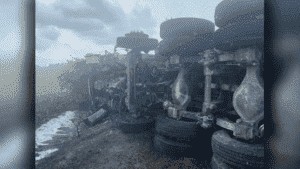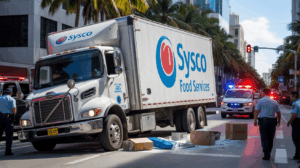
Florida truck accident causes may include driver fatigue, speeding, distraction, improper cargo loading, inadequate maintenance, defective equipment, or hours-of-service violations. The Law Offices of Anidjar and Levine investigates crash reports, electronic logs, inspection records, maintenance documents, vehicle data, company policies, and witness accounts to identify responsible parties. A Florida Personal Injury Lawyer can help preserve evidence, manage insurer communications, evaluate liability and causation, and pursue compensation for medical care, lost income, property damage, pain, and continuing needs.
Main Takeaways
- Florida truck accidents may result from driver fatigue, speeding, distraction, improper loading, or inadequate vehicle maintenance.
- A trucking violations lawyer can investigate driver logs, inspection records, dispatch communications, vehicle data, and company policies.
- Crash reports, witness accounts, photographs, and medical records can help establish causation, liability, and injury-related damages.
- Potentially responsible parties may include truck drivers, trucking companies, cargo loaders, maintenance providers, and other negligent entities.
- Consult a lawyer before speaking with insurers, and preserve medical records, evidence, and relevant crash or company documents promptly.
How We Can Help With Your Florida Truck Accident Causes & Trucking Violations Injury Claim
When a Florida truck accident results from a trucking violation, an injured person may face significant medical expenses, lost income, and long-term physical limitations. A legal team can provide steady guidance while protecting the claimant’s interests throughout the injury claim process.
Counsel may explain legal options, identify responsible parties, and communicate with insurers so an injured person is not pressured into an inadequate settlement. The Insurance claim timeline can involve reporting requirements, investigation periods, medical evaluations, and settlement negotiations. Careful management helps preserve deadlines and supports informed decisions.
Medical records collection is another crucial service. Attorneys may obtain hospital records, treatment notes, diagnostic results, and physician opinions that document the injury’s severity and expected impact. They can also organize wage documentation, employment information, and other evidence relevant to financial losses.
Understanding Florida Truck Accident Causes & Trucking Violations Injury Cases


Understanding the causes of a Florida truck accident and the trucking violations that may contribute to it is an important part of evaluating an injury case. A careful review may clarify how the collision occurred, which parties owed duties of care, and whether unlawful conduct or unsafe equipment played a role. Relevant evidence can include crash reports, vehicle inspection records, driver qualification materials, electronic logging data, and witness accounts.
OUR CONSULTATIONSARE FREE
START YOUR FREE CASE REVIEW

Legal analysis may also address responsibility beyond the truck driver. Vehicle defect liability could apply when a defective component, inadequate design, or manufacturing problem contributed to the injuries. Similarly, traffic light violations may establish evidence of negligence when a commercial vehicle enters an intersection unlawfully. Each case requires attention to causation, fault allocation, insurance coverage, and the full measure of resulting harm. A thorough evaluation helps injured individuals and their families understand available remedies while supporting a fair process for everyone affected by the crash.
Common Causes of Florida Truck Accident Causes & Trucking Violations
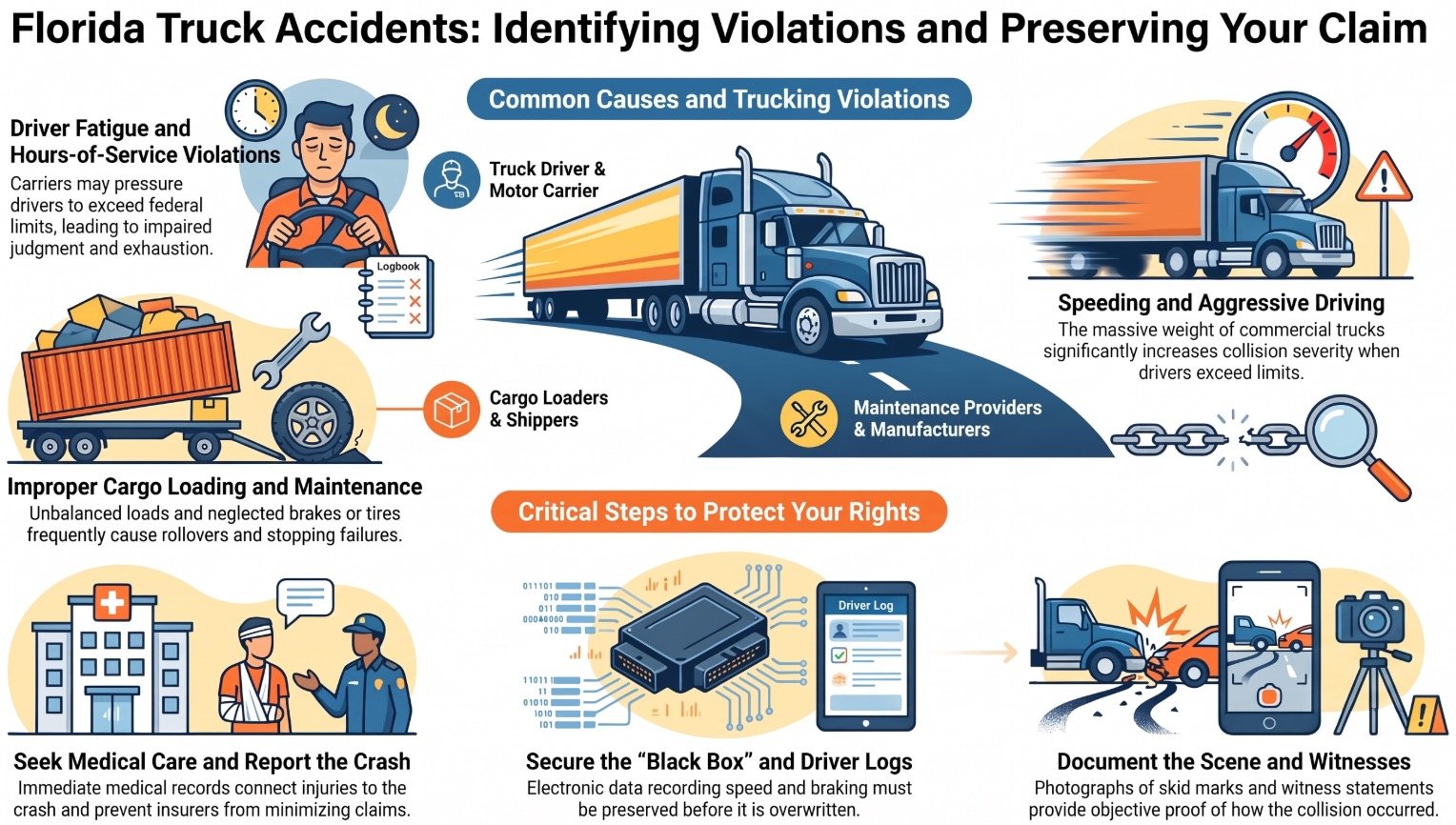
Common causes of Florida truck accidents include driver fatigue and drowsiness, speeding, and reckless driving. Improper cargo loading can also impair vehicle stability or cause falling debris, while hours-of-service violations may place dangerously fatigued drivers on the road. Each violation can increase crash risks and may provide important evidence when determining liability.
Driver Fatigue And Drowsiness


Driver fatigue and drowsiness significantly contribute to Florida truck accidents, especially when commercial drivers operate vehicles beyond safe limits or fail to get adequate rest. Exhaustion can impair judgment, reduce reaction time, and cause brief episodes of sleep that place nearby motorists, pedestrians, and passengers in danger. Federal hours-of-service requirements are designed to limit these risks, yet violations may occur when carriers pressure drivers to meet delivery schedules, or records are inaccurately maintained. Fatigue is especially hazardous at night, when reduced Nighttime Visibility can compound a driver’s inability to recognize hazards. Drowsy operation may also undermine intersection safety by delaying responses to signals, turning vehicles, and crossing traffic. Investigators may review logs, electronic records, dispatch communications, and witness accounts to determine whether fatigue contributed to a collision.
Speeding And Reckless Driving
When commercial truck operators exceed posted speed limits or drive aggressively, the size and weight of their vehicles can substantially increase the severity of a Florida collision. Speeding reduces reaction time and lengthens stopping distances, while unsafe lane changes, tailgating, and road rage can create hazards for motorists, pedestrians, and emergency responders. Trucking companies may face scrutiny when drivers disregard safety policies, traffic laws, or required training. After a crash, prompt evidence preservation can help establish vehicle speed, driver conduct, and roadway conditions. Available sources may include electronic control module data, surveillance footage, dispatch records, police reports, and eyewitness statements. A careful investigation can clarify whether excessive speed or reckless behavior contributed to the collision and support efforts to protect injured individuals, assist families, and promote accountability throughout Florida’s transportation community.
Improper Cargo Loading
Improper cargo loading can make a commercial truck unstable, especially when freight is unevenly distributed, inadequately secured, or heavier than permitted. Poor weight distribution may reduce steering control, increase stopping distances, or cause a rollover during sudden turns. Effective Cargo securement requires appropriate tie-downs, blocking, bracing, and regular checks to prevent shifting while the vehicle is moving. Federal and Florida requirements also establish limits for axle weight, total load, and the condition of securing equipment. Evidence such as bills of lading, loading procedures, maintenance records, and photographs may help determine whether a carrier or shipper followed required practices. Inspection violations, including defective restraints or overloaded compartments, can indicate negligence. Attorneys serving injured individuals may evaluate these records and identify responsible parties after a collision.
Hours-Of-Service Violations
Because commercial motor vehicle operators must remain alert and able to respond to changing roadway conditions, federal hours-of-service rules limit how long they may drive and work without adequate rest. Violations occur when drivers exceed driving limits, falsify logs, skip required breaks, or continue operating after reaching mandatory duty thresholds. Fatigue can impair drivers, including slower reactions, poor judgment, and difficulty maintaining lane position. Motor carriers may also share responsibility when commercial supervision fails to monitor schedules, enforce rest requirements, or respond to repeated logbook violations. Electronic logging devices help identify excessive driving and inconsistent records, but oversight remains crucial. Evidence may include logs, dispatch messages, fuel receipts, employment records, and onboard data. A careful review can clarify whether unlawful scheduling contributed to a Florida collision and resulting injuries.
Don’t Wait. Call Our Florida Personal Injury Lawyers Now!
Legal Rights of Florida Truck Accident Causes & Trucking Violations Injury Victims
Florida truck accident victims injured by driver negligence, unsafe maintenance, overloaded cargo, or other trucking violations may have legal rights to pursue compensation. Those rights can include recovery for medical treatment, lost income, reduced earning capacity, property damage, pain, and continuing care. A qualified attorney can evaluate liability and protect the victim’s interests.
Florida truck accident victims may pursue compensation for injuries, lost income, property damage, pain, and continuing medical care.
- The right to consult counsel before speaking with insurers
- The right to seek compensation from responsible parties
- The right to obtain relevant crash and company records
- The right to preserve evidence under an Evidence preservation timeline
- The right to pursue claims consistent with trucking safety standards
Victims should document injuries, treatment, expenses, and communication with insurers. Counsel may investigate driver qualifications, maintenance records, electronic logs, cargo documentation, and company policies without assuming liability prematurely. Florida deadlines can limit the time available to file a lawsuit, making prompt legal review important. Families serving injured individuals can help by preserving records and supporting informed decisions. Each claim depends on its facts, available evidence, and applicable law.
Why Do Florida Truck Accident Causes & Trucking Violations Injuries Happen?
Why do Florida truck accident causes and trucking violations injuries happen? These injuries commonly result from preventable conduct, including speeding, distracted driving, fatigue, improper loading, inadequate vehicle maintenance, and insufficient driver training. Federal and Florida safety rules require trucking companies and drivers to manage these risks, yet violations may increase the likelihood and severity of a collision. Poorly secured cargo can shift, causing rollovers or falling debris, while defective brakes or tires can prevent timely stopping. Hours-of-service violations may leave drivers dangerously tired, impairing judgment and reaction time. Some crashes also arise when employers prioritize delivery schedules over public safety or fail to supervise drivers appropriately.
Determining causation requires careful examination of available evidence. Collecting witness statements and interviewing witnesses can clarify traffic conditions, driver behavior, and the sequence of events. Investigators may also review inspection reports, electronic logs, dispatch communications, vehicle data, and company policies. Medical documentation and treatment records help establish the nature, timing, and extent of injuries connected to the collision.
What Should You Do After a Florida Truck Accident Causes Injury & Trucking Violations?
After a Florida truck accident causes injury, the injured person should seek immediate medical care, even if symptoms initially appear minor. Report the accident to law enforcement, and preserve all medical records, photographs, witness information, and other crucial evidence. These steps can support health-related needs and help establish the circumstances of the collision and any trucking violations.
Seek Immediate Medical Care
Prompt medical evaluation is essential after a Florida truck accident causes injury, even if symptoms initially seem minor. Some conditions, including internal bleeding, concussions, and spinal trauma, may worsen without immediate attention. An injured person should allow qualified medical professionals to conduct a complete examination and follow all recommended treatment. Medical records can connect the diagnosed condition to the collision and document pain, limitations, medications, and required care. Preserving discharge instructions, bills, prescriptions, and appointment records supports Evidence preservation tips and helps address insurance claim deadlines. Consistent treatment also strengthens Liability proof steps by demonstrating that the person acted responsibly after the crash. When possible, a trusted companion may help with transportation and collecting witness statements, while the injured individual focuses on recovery and follows medical guidance.
Report The Accident
Once you address immediate medical needs, report the accident promptly to the appropriate authorities. In Florida, calling 911 allows law enforcement and emergency personnel to respond, assess hazards, and prepare an official crash report. A person involved should provide accurate facts without speculating about fault, minimizing injuries, or signing statements from other parties. If the truck driver, carrier, or insurer requests information, the injured individual may provide basic identification and collision details while directing substantive questions to legal counsel. Reporting also helps protect other motorists and ensures that potentially dangerous roadway conditions receive attention. When safe and lawful, preserving dashcam footage and collecting witness statements may help investigators understand the event. Prompt cooperation with officers and medical responders supports accountability and the community’s safety.
Preserve Critical Evidence
Because trucking evidence can disappear, be altered, or become hard to obtain, preserve it as soon as safety and medical needs permit. When safely possible, the injured person or a designated representative should photograph vehicles, roadway conditions, traffic controls, visible injuries, and property damage. Organize medical records, discharge instructions, repair estimates, employment records, and communications with insurers chronologically. Witness statement collection should occur promptly, while recollections remain reliable; names, contact information, and specific observations should be recorded without speculation. An attorney may send preservation letters requiring the trucking company to retain electronic logging data, onboard computer information, inspection reports, driver qualification materials, dispatch records, and surveillance footage. Maintaining a detailed Insurance claim timeline can identify inconsistencies, protect deadlines, and assist professionals serving the injured person effectively throughout the claim.
Critical Evidence in a Florida Truck Accident Causes & Trucking Violations Injury Case
Critical evidence can establish how a Florida truck accident occurred and whether trucking violations contributed to the injuries. Relevant materials may include electronic black box data, driver logbook records, accident scene documentation, and maintenance violation documents. Prompt preservation of these records can help clarify responsibility and support a thorough injury claim.
- Truck black box data, including speed, braking, and vehicle-operation information
- Driver logbook records showing hours of service and compliance history
- Accident scene evidence, such as photographs, debris patterns, and roadway conditions
- Maintenance violation documents identifying inspection, repair, or equipment failures
- Witness statements, medical records, and official crash reports supporting the claim
Truck Black Box Data
Truck black box data can provide important evidence in a Florida truck accident involving alleged trucking violations. Electronic control modules may record speed, braking, acceleration, seatbelt status, and other vehicle-performance information before and during a collision. When preserved properly, these records can help clarify disputed events, identify unsafe operation, and support accountability for affected individuals and families.
Evidentiary preservation should begin promptly because data may be overwritten, altered, or lost through routine maintenance. A qualified attorney may issue a preservation demand and seek forensic imaging by an appropriate professional. Spoliation threats can arise when a carrier fails to protect relevant electronic evidence after receiving notice of a potential claim. Black box findings may influence liability evaluations, damages negotiations, and the settlement timeline. Access generally requires cooperation, subpoenas, or court orders, depending on the circumstances and applicable Florida procedure.
Driver Logbook Records
Driver logbook records can help establish whether a commercial driver complied with federal hours-of-service requirements before a Florida truck accident. These records may show driving time, rest periods, duty status changes, and potential fatigue-related violations. Investigators can compare paper logs or electronic logging device data with dispatch information, fuel receipts, delivery schedules, and payroll records to identify inconsistencies. Missing entries, altered information, or repeated violations may support claims that a trucking company failed to supervise its driver or enforce safety policies. Records may also reveal deficiencies in Driver training, including whether personnel understood logging requirements and fatigue-management responsibilities. During compliance audits, regulators and attorneys may evaluate whether the carrier maintained accurate records and responded appropriately to violations. Promptly preserving these materials helps clarify responsibility and supports an injured person’s pursuit of fair compensation.
Accident Scene Evidence
Beyond logbook records, physical evidence preserved at the accident scene can help explain how a Florida truck collision occurred and identify potential trucking violations. Photographs may document vehicle positions, skid marks, roadway damage, debris patterns, traffic controls, lighting, and weather conditions before the scene changes. Investigators can use these details to evaluate speed, following distance, lane movements, visibility, and possible driver errors. Witness statements may provide independent accounts of events, including observations about unsafe actions, distraction, or unusual vehicle behavior. Promptly collected testimony can be especially valuable when memories fade or witnesses cannot later be located. Accurate scene diagrams can show travel paths, points of impact, and final resting positions. This evidence may also help establish causation, support fair treatment, and help an injured person seek appropriate compensation.
Maintenance Violation Documents
Maintenance violation documents can provide crucial evidence in a Florida truck accident and trucking violations injury case. Inspection reports, repair invoices, service schedules, driver defect reports, and parts replacement records may reveal neglected maintenance or repeated mechanical warnings. Brake failures, tire defects, steering problems, and lighting issues can matter when determining whether a carrier violated federal or Florida safety requirements. These records may also identify responsible personnel, establish notice, and demonstrate whether corrective work was delayed or improperly completed. Evidence preservation tips include requesting records promptly, securing electronic data, photographing relevant vehicle components, and documenting all communications. Careful witness statement collection may clarify when defects were observed and reported. A qualified legal professional can examine these materials, protect their integrity, and help affected individuals pursue accountability and appropriate compensation.
Long-Term Effects of Florida Truck Accident Causes & Trucking Violations Injuries
Florida truck accident injuries caused by trucking violations may produce chronic physical pain that interferes with work, mobility, and daily activities. Survivors may also experience emotional trauma, including anxiety, depression, or post-traumatic stress, while facing substantial financial hardship from medical expenses and lost income. These long-term effects can shape the severity of damages and the legal remedies available in a Florida injury claim.
Chronic Physical Pain
When injuries from a Florida truck accident or trucking violation fail to heal properly, victims may develop chronic physical pain that persists for months or years. This pain may involve the back, neck, joints, nerves, or previously injured muscles, limiting mobility and interfering with work, household responsibilities, and necessary daily activities. Persistent symptoms can require continuing medical evaluation, physical therapy, prescription medication, injections, or other Pain management options recommended by qualified providers. Consistent treatment records may help document the condition, its progression, and the care required to maintain function. Long-term recovery planning can address future medical needs, rehabilitation, assistive equipment, and potential changes in employment. A careful assessment of these lasting effects allows injured individuals and their families to pursue appropriate support while protecting their health and independence.
Emotional Trauma
Following a Florida truck accident or trucking violation, emotional trauma may persist long after visible injuries have begun to heal. Survivors may experience anxiety, intrusive memories, nightmares, irritability, depression, or heightened fear around traffic. Some become withdrawn, while others struggle to concentrate, sleep, or resume ordinary activities. These symptoms can affect relationships and a person’s ability to participate confidently in community, family, or service responsibilities. Early recognition can support recovery and reduce the risk that distress becomes entrenched. Mental health professionals may recommend stress counseling options, trauma-focused therapy, medical evaluation, or support groups, depending on the individual’s needs. Helpful coping strategies after trauma may include maintaining routines, practicing relaxation techniques, accepting trusted support, and following treatment guidance. Documenting persistent symptoms can also help healthcare providers coordinate appropriate care.
Financial Hardship
Emotional trauma may be accompanied by financial hardship that continues well after a person leaves the hospital. Truck accident injuries can create Budget constraints as treatment, rehabilitation, medication, transportation, and household expenses accumulate. A person may also face reduced earnings or a prolonged inability to work, making wage-loss recovery an important part of evaluating the claim. Careful organization of insurance paperwork can help preserve deadlines, document communications, and identify coverage issues involving commercial carriers and multiple policies. Medical bill planning may help families prioritize immediate care while accounting for future procedures, assistive equipment, and long-term rehabilitation. Legal guidance can help an injured individual and supportive family members assess available compensation, challenge improper claim denials, and pursue resources that protect stability. Timely action may reduce preventable financial strain and support sustained recovery.
Proving Liability in Florida Truck Accident Causes & Trucking Violations Injury Cases
Proving liability in a Florida truck accident requires establishing that a negligent act, including a trucking violation, caused the collision and resulting injuries. Liability may involve the truck driver, motor carrier, cargo handler, maintenance provider, or another responsible party. Evidence can include crash reports, photographs, electronic logging data, inspection records, driver qualification files, dispatch communications, vehicle maintenance histories, and witness statements.
Evidence preservation is critical because electronic records may be overwritten, vehicles may be repaired, and physical conditions can change. Investigators may analyze skid marks, impact points, surveillance footage, and accident reconstruction data to determine how the collision occurred. Medical records and expert opinions can connect the crash to documented injuries and future limitations.
Florida’s comparative negligence rules may reduce recovery if an injured person is found partly responsible. A careful liability analysis thus addresses every contributing factor, identifies applicable safety regulations, and distinguishes unsupported allegations from verifiable proof. Prompt, thorough investigation helps protect injured individuals and supports fair accountability.
Dealing With Insurance Companies After a Florida Truck Accident Causes & Trucking Violations Injury
When an insurance company becomes involved after a Florida truck accident, its representatives may quickly seek statements, medical authorizations, or settlement discussions before the full extent of liability and injuries is known. A claimant should provide accurate basic information but avoid guessing, minimizing symptoms, or accepting responsibility. Communications should remain focused on documented facts, treatment, employment impact, and property damage.
Commercial trucking policies can involve multiple insurers, including the truck carrier, motor carrier, cargo interests, or other responsible parties. Coverage questions may require careful review of policy limits, exclusions, and applicable Florida law. Uninsured motorist claims may also provide protection when an at-fault driver lacks sufficient coverage, although timely notice and compliance with policy requirements remain important.
Counsel may help preserve evidence, address insurer requests, and evaluate settlement proposals without sacrificing future medical needs. Medical lien negotiation can reduce repayment obligations from a recovery, helping preserve funds for ongoing care and household stability. A measured, documented approach supports fair treatment and service to injured individuals.
What to Expect During a Florida Truck Accident Causes & Trucking Violations Injury Claim Process
A Florida truck accident injury claim typically begins with an initial investigation into the crash, applicable trucking violations, and the resulting damages. Investigators gather evidence to establish liability and support compensation negotiations, including records, witness statements, and expert assessments. If the parties cannot reach a fair resolution, the claimant may need to prepare for litigation.
Initial Claim Investigation
Because evidence can disappear quickly after a commercial truck collision, the initial claim investigation typically begins with preserving records, identifying witnesses, and documenting the scene. A legal team may promptly confirm the involved companies, insurers, drivers, and applicable reporting agencies. Collecting witness statements helps establish what individuals observed, heard, or understood before memories change. Electronic evidence preservation may include timely requests concerning onboard systems, dispatch communications, camera recordings, and relevant digital records. The investigation also generally identifies potential legal issues, including deadlines, insurance coverage, and whether the claim involves federal or Florida trucking requirements. A claimant may be asked to provide basic incident information, medical documentation, and authorization for necessary communications. This organized beginning helps protect the claimant’s interests and supports informed decisions throughout the process.
Gathering Evidence
How evidence is gathered can greatly influence the evaluation of a Florida truck accident injury claim. After an initial investigation, representatives may collect photographs, traffic-camera footage, medical records, and electronic logging data. Witness statements can clarify vehicle movements, road conditions, driver behavior, and the timing of events. Investigators may also request maintenance files, cargo records, dispatch communications, and employment documentation to identify potential trucking violations. A truck inspection can reveal brake defects, tire damage, mechanical failures, or improper loading that may have contributed to the collision. Accident reports and reconstruction analysis can further establish how the crash occurred. Preserving this information promptly is important because evidence may be altered, lost, or destroyed through ordinary business practices. Careful documentation helps protect the injured person’s ability to present a complete claim.
Negotiating Compensation
When negotiating compensation, the injured person’s representatives typically present documented evidence of liability, trucking violations, medical expenses, lost income, and other damages to the insurer or responsible parties. They may prepare a demand package explaining how the collision affected the individual and family, then evaluate settlement offers against anticipated medical needs and applicable coverage. Insurers may request additional records, question causation, or assign comparative fault. Careful responses help preserve credibility while addressing each issue with verified information. Insurance claim denial appeals may be necessary when an insurer improperly rejects coverage or undervalues documented losses. Representatives also handle medical lien negotiation, seeking reasonable reductions so more of the settlement can support the injured person’s recovery. Negotiations may involve several written offers before the parties reach a fair, informed agreement.
Preparing for Litigation
Preparing for litigation in a Florida truck accident claim requires organized evidence, realistic expectations, and careful compliance with court procedures. Counsel may investigate driver qualifications, inspection records, electronic logging data, maintenance histories, medical documentation, and witness accounts. Early evidence preservation helps prevent the loss or alteration of information, including vehicle data and surveillance footage. The injured party may participate in interviews, medical evaluations, depositions, and written discovery. Each response should remain accurate, consistent, and supported by available records. Settlement discussions may continue while preparation proceeds, although trial readiness strengthens the claimant’s position. If the case reaches trial, counsel will present evidence, question witnesses, address trucking violations, and explain the damages’ impact. Patience, cooperation, and informed decision-making help protect the claimant’s interests while supporting a fair resolution for everyone affected.
Don’t Wait. Call Our Florida Personal Injury Lawyers Now!
Compensation for Florida Truck Accident Causes & Trucking Violations Injury Damages
Compensation for injuries caused by Florida truck accidents and trucking violations may include medical expenses, lost income, property damage, and non-economic losses such as pain and emotional distress. The recoverable amount depends on the evidence connecting the violation or negligent conduct to the injury and resulting harm.
A careful claim may account for current treatment, reasonably anticipated care, damaged belongings, and income affected by the collision. Organize documentation promptly, including medical records, invoices, employment information, photographs, witness details, and relevant crash reports. Evidence preservation tips include requesting available vehicle data, identifying surveillance footage, and preserving damaged equipment without alteration.
Settlement negotiation strategies may involve presenting a clear demand supported by verified records, liability evidence, and an explanation of continuing consequences. A representative serving an injured person should evaluate insurer communications cautiously and avoid premature releases. If negotiations do not produce a fair resolution, litigation may provide a path to pursue compensation through formal legal proceedings and court review.
Economic vs Non-Economic Damages in Florida Truck Accident Causes & Trucking Violations Cases
Economic damages may include medical expenses, lost income, property damage, and other measurable financial losses caused by a truck crash or trucking violation. Non-economic damages address less readily calculated harm, including pain, emotional distress, disability, and diminished quality of life. Establishing both categories generally requires reliable financial records, medical evidence, and testimony connecting the physical and emotional effects to the incident.
Economic Damages Explained
In a Florida truck accident case involving alleged trucking violations, economic damages represent the measurable financial losses caused by the collision. These losses may include emergency treatment, hospitalization, surgery, medication, rehabilitation, and other reasonable medical expenses. Medical records help establish which services were necessary, when they occurred, and how they relate to the truck accident. Economic damages may also cover future healthcare, provided qualified professionals support the projected costs and duration of treatment. Lost wages can be calculated from payroll records, employment documentation, and evidence of missed work. If injuries reduce a person’s future earning capacity, vocational and financial testimony may help measure that loss. Receipts, invoices, insurance statements, and expert analysis can strengthen the claim and help ensure fair assistance for injured individuals and their families.
Non-Economic Losses Assessed
Non-economic losses address the human consequences of a Florida truck accident that do not come with a precise invoice or wage statement. They may include physical pain, emotional distress, disfigurement, disability, loss of companionship, and reduced enjoyment of life. These damages recognize how serious injuries can alter family relationships, daily independence, and personal dignity. Their assessment depends on the injury’s nature and duration, the medical prognosis, and the disruption experienced by the injured person and family. Trucking violations, including negligent hiring, may strengthen the liability analysis when unsafe employment practices contributed to the collision. Employer liability can also arise when a company’s conduct or supervision connects the driver’s actions to the harm. Non-economic compensation is separate from financial losses and addresses consequences that cannot be reduced to documented expenses.
Proving Financial And Emotional Harm
A truck accident claim in Florida may involve both financial losses and personal harms, each requiring different proof and legal analysis. Economic damages may include emergency care, rehabilitation, medication, property damage, lost wages, and reduced future earning capacity. Records such as invoices, pay statements, tax documents, employment evaluations, and medical opinions can help establish these amounts. Non-economic damages address pain, emotional distress, disability, disfigurement, loss of enjoyment, and diminished relationships. Testimony from the injured person, family members, therapists, and treating physicians may demonstrate how symptoms affect daily life. Documentation of Emotional support options and workplace adjustment needs can further clarify ongoing consequences. A careful claim also connects each harm to the truck driver’s negligence or trucking violation, while distinguishing preexisting conditions from accident-related injuries and losses.
When a Florida Truck Accident Causes & Trucking Violations Injury Case Goes to Trial vs Settlement
When a Florida truck accident injury claim involves alleged trucking violations, the parties must decide whether settlement or trial is the better path to resolution. Settlement can provide a faster, more predictable result, helping an injured person obtain compensation for medical care, lost income, and related needs without the uncertainty of a courtroom. Negotiations may also preserve privacy and reduce litigation costs. However, a fair settlement requires sufficient evidence regarding the collision, the driver’s conduct, company practices, and the full effect of the injuries.
Trial may become necessary when liability is disputed, damages are minimized, or the opposing party refuses reasonable compensation. Trial timeline planning should address discovery, expert evaluations, motions, preparation, and potential delays. Although a verdict can provide accountability, it also carries risks, expenses, and no guaranteed outcome. Mediation strategy options may include early mediation, structured negotiations, or a later session after pivotal evidence is developed. Careful evaluation allows counsel to recommend the path that best serves the injured person’s recovery and long-term interests.
Florida Laws That May Affect Your Florida Truck Accident Causes & Trucking Violations Case
Florida laws may affect nearly every aspect of a truck accident case involving alleged trucking violations, including liability, evidence, insurance coverage, and recoverable damages. Florida negligence rules may require proof that a driver, carrier, maintenance provider, or shipper breached a duty and caused harm. Comparative fault can reduce recovery when an injured person shares responsibility. Evidence may include inspection records, electronic logging data, dispatch communications, and training files.
Florida trucking laws shape liability, evidence, insurance coverage, comparative fault, and recoverable damages after an accident.
Relevant considerations include:
- negligent hiring or retention claims based on inadequate screening
- trucking compliance with federal and state safety requirements
- vicarious liability for employees acting within assigned duties
- commercial insurance policies and required financial responsibility
- damages for medical care, lost income, and lasting impairment
Florida law may also recognize claims involving defective maintenance, unsafe loading, or hours-of-service violations. Promptly preserving records can support an accurate investigation and fair treatment. Because trucking cases often involve multiple parties and layered regulations, a qualified legal professional can help injured individuals and families understand their rights while pursuing accountability and serving community safety.
The Statute of Limitations for Florida Truck Accident Causes & Trucking Violations Injury Cases
Prompt attention to the statute of limitations is crucial in Florida truck accident and trucking violations injury cases because a missed filing deadline can prevent an otherwise valid claim from proceeding. Florida generally allows two years to file a wrongful death action and two years for negligence claims arising from accidents occurring after March 24, 2023, although applicable law and claim classification may alter that period. Older incidents may involve different deadlines. Claims against governmental entities can require additional notice and shorter time limits, making early legal evaluation important.
The filing period may depend on the date of injury, discovery rules, the injured person’s age, or other legally recognized exceptions. Comparative Negligence can affect recoverable damages, but it does not extend the limitations period. Preserving Evidence should begin promptly, including securing medical records, crash reports, electronic logging data, maintenance documents, photographs, and witness information. Families and injured individuals benefit from recording deadlines carefully and avoiding assumptions that settlement discussions automatically suspend statutory requirements.
How a Florida Truck Accident Causes & Trucking Violations Lawyer Can Help You
A Florida truck accident and trucking violations lawyer can provide structured legal guidance from the initial investigation through settlement negotiations or trial. Counsel may protect an injured person’s interests while coordinating evidence review, medical documentation, and communication with insurers.
- Investigating crash reports, vehicle data, maintenance records, and driver qualifications
- Identifying violations involving hours of service, loading procedures, inspections, or substance use
- Consulting medical and vocational professionals to evaluate long-term effects
- Documenting lost wages, reduced earning capacity, treatment expenses, and related financial losses
- Presenting emotional distress damages and other supported elements of a civil claim
A lawyer can also identify responsible parties, including carriers, contractors, manufacturers, or maintenance providers, and assess applicable insurance coverage. Counsel may handle required filings, organize witness testimony, and challenge incomplete or misleading statements. Through careful negotiation, the lawyer can pursue compensation that reflects the person’s injuries and obligations to dependents. If a fair resolution cannot be achieved, counsel can prepare the matter for trial while treating the injured individual and family with diligence, respect, and professional accountability.
Don’t Wait. Call Our Florida Personal Injury Lawyers Now!
When to Contact a Florida Truck Accident Causes & Trucking Violations Lawyer
When should an injured person contact a Florida truck accident causes and trucking violations lawyer? Contact should occur as soon as possible after a collision, particularly when injuries require medical care, a fatality occurs, or the truck driver or carrier may have violated safety rules. Early legal attention can help preserve evidence, identify witnesses, and clarify whether driver fatigue, inadequate training, overloaded cargo, maintenance failures, or other conduct contributed to the crash.
Prompt guidance is also appropriate when liability is disputed, multiple vehicles are involved, or a commercial insurer requests statements or records. Truck accident misconceptions can cause injured people to underestimate their rights or assume a settlement offer is fair without reviewing the full impact of their losses. Insurance claim delays may create financial pressure while treatment continues, making timely advice important for protecting documentation and communicating accurately. A lawyer can help a person serving family members or community understand available legal options before deadlines expire and important evidence becomes unavailable.
Why You Need an Experienced Florida Truck Accident Causes & Trucking Violations Lawyer
Because commercial truck collisions often involve layered regulations and multiple potentially responsible parties, an experienced Florida truck accident causes and trucking violations lawyer is pivotal for a thorough investigation. Such counsel can examine driver qualifications, hours-of-service records, vehicle maintenance, cargo loading, dispatch practices, and electronic data before evidence disappears. The investigation may also identify negligent carriers, manufacturers, maintenance providers, brokers, or insurers whose conduct contributed to the collision.
Knowledge of Comparative fault rules is necessary when opposing parties attempt to shift blame onto an injured person. A qualified lawyer can organize medical records, employment losses, crash evidence, and witness accounts to present a clear, supported claim. Understanding independent contractor liability can likewise help determine whether a trucking company remains responsible despite contractual labels.
How to Choose the Right Florida Truck Accident Causes & Trucking Violations Lawyer for Your Case
Selecting the right Florida truck accident causes and trucking violations lawyer requires careful evaluation of the attorney’s experience with commercial vehicle cases, regulatory violations, and complicated liability disputes. A suitable lawyer should understand federal and Florida transportation rules, including hours-of-service requirements, maintenance duties, cargo securement, and driver qualification standards. The attorney should also have resources to examine electronic logging data, inspection records, surveillance footage, and accident reports.
Potential clients should evaluate the lawyer’s record of handling cases involving trucking companies, insurers, and multiple responsible parties. Clear Client communication is crucial, particularly when serious injuries, lost income, or family hardships create urgent legal needs. During an initial consultation, the lawyer should explain possible claims, evidence needs, procedural deadlines, and realistic case strategies without promising a specific result.
Fee transparency is equally important. The representation agreement should identify contingency terms, litigation expenses, liens, and who is responsible for costs. A careful selection process helps injured individuals obtain informed, ethical, and dedicated representation.
About The Law Offices of Anidjar & Levine
With experience in Florida personal injury litigation, the Law Offices of Anidjar & Levine represents individuals and families affected by serious truck accidents and other negligence-related injuries. The firm assists clients pursuing accountability after collisions involving commercial vehicles, including cases involving driver conduct, unsafe maintenance, overloaded cargo, and trucking violations.
Its legal team evaluates accident circumstances, identifies potentially responsible parties, and develops claims supported by reliable documentation. Understanding Truck accident timelines can be important because evidence may change, records can be lost, and legal deadlines may restrict available remedies. The firm consequently emphasizes prompt investigation and evidence preservation, including securing photographs, medical records, electronic logging information, vehicle data, witness statements, and applicable company records.
Through direct communication and case-focused representation, the firm helps injured people and their families make informed decisions. Its services reduce administrative burdens while pursuing compensation for medical expenses, lost income, rehabilitation, pain, and other legally recognized losses after a devastating crash.

Frequently Asked Questions
Can I File a Claim if the Truck Driver Received a Traffic Citation?
Yes, a traffic citation doesn’t bar an injured person from pursuing compensation; you can still claim if the evidence supports legal liability. The citation may help establish driver negligence, but it does not automatically prove every element of the case. Evidence matters, including crash reports, witness statements, medical records, photographs, and vehicle data. A qualified attorney can assess causation, damages, applicable deadlines, and whether trucking-company conduct also contributed to the collision.
Are Trucking Companies Required to Conduct Post-Accident Drug and Alcohol Testing?
Generally, yes. Under federal regulations, covered commercial motor carriers must conduct post-accident drug and alcohol testing when a qualifying crash involves a fatality, or when the driver receives a citation for a moving violation connected to required medical treatment or disabling vehicle damage. Testing must occur promptly, and strict timing rules apply. Counsel may request evidence preservation, including testing records, driver logs, surveillance, and vehicle data, to evaluate compliance and protect affected individuals.
What Happens if a Truck Involved in My Crash Crosses State Lines?
When a truck involved in a crash crosses state lines, jurisdiction rules may permit the claim in the state where the collision occurred, where the trucking company operates, or where the defendant can be served. Federal trucking regulations may govern driver hours, maintenance, cargo securement, and drug testing, while state laws affect deadlines and damages. A qualified attorney can identify the proper court, preserve evidence, and coordinate claims across jurisdictions.
Can a Truck Manufacturer Be Liable for Defective Equipment?
A truck manufacturer may be liable when defective design, manufacturing errors, or inadequate warnings cause equipment failure and injury. Product defect cases generally require evidence that the equipment was unreasonably dangerous, reached the user without substantial alteration, and contributed to the crash. Manufacturers must also satisfy applicable federal safety duties, including testing, certification, and recall obligations. Investigators typically preserve failed parts, maintenance records, engineering data, and expert opinions to establish causation and responsibility.
Does Weather Affect Liability in a Florida Truck Accident?
Weather can affect liability in a Florida truck accident, but it does not automatically excuse negligent conduct. Commercial drivers must adjust speed, following distance, visibility practices, and vehicle operation to roadway conditions. Evidence may show whether the driver, carrier, or manufacturer failed to meet reasonable Weather Safety standards. Under Comparative Negligence, fault may be allocated among the truck driver, trucking company, passenger-vehicle operator, and other responsible parties based on each party’s conduct.
—————————
Florida truck accidents may result from driver negligence, hours-of-service violations, improper loading, inadequate maintenance, or other trucking violations. Victims should preserve evidence, seek medical attention, and consult a qualified Florida Personal Injury Lawyer promptly to protect their legal rights. An experienced Florida truck accident attorney can investigate the collision, identify responsible parties, evaluate damages, and pursue appropriate compensation. The Law Offices of Anidjar and Levine provide knowledgeable guidance and determined representation for individuals and families affected by serious commercial vehicle crashes.