

The Law Offices of Anidjar and Levine can investigate whether defective design, poor maintenance, improper installation, inadequate training, or unsafe supervision caused an equipment-related accident.
An attorney may preserve machinery, obtain inspection and repair records, interview witnesses, evaluate medical evidence, and identify employers, contractors, manufacturers, or property owners whose conduct contributed to the harm.
Potential compensation may include medical expenses, lost income, rehabilitation, pain, and future losses.
Learn more from a Brevard County Personal Injury Lawyer about available legal protections and important case considerations.
Main Takeaways
- A Brevard County equipment-failure injury lawyer investigates defective design, manufacturing flaws, poor maintenance, improper installation, and unsafe operation.
- Counsel identifies potentially responsible employers, manufacturers, contractors, property owners, supervisors, and other negligent parties.
- Attorneys preserve damaged equipment and secure maintenance records, training documents, inspection reports, witness statements, and other crucial evidence.
- Legal claims may seek compensation for medical expenses, lost income, rehabilitation, pain and suffering, and future injury-related needs.
- Prompt legal advice helps protect deadlines, manage insurers, evaluate settlements, and pursue litigation when necessary.


How We Can Help With Your Brevard County Equipment Failure Injury Claim
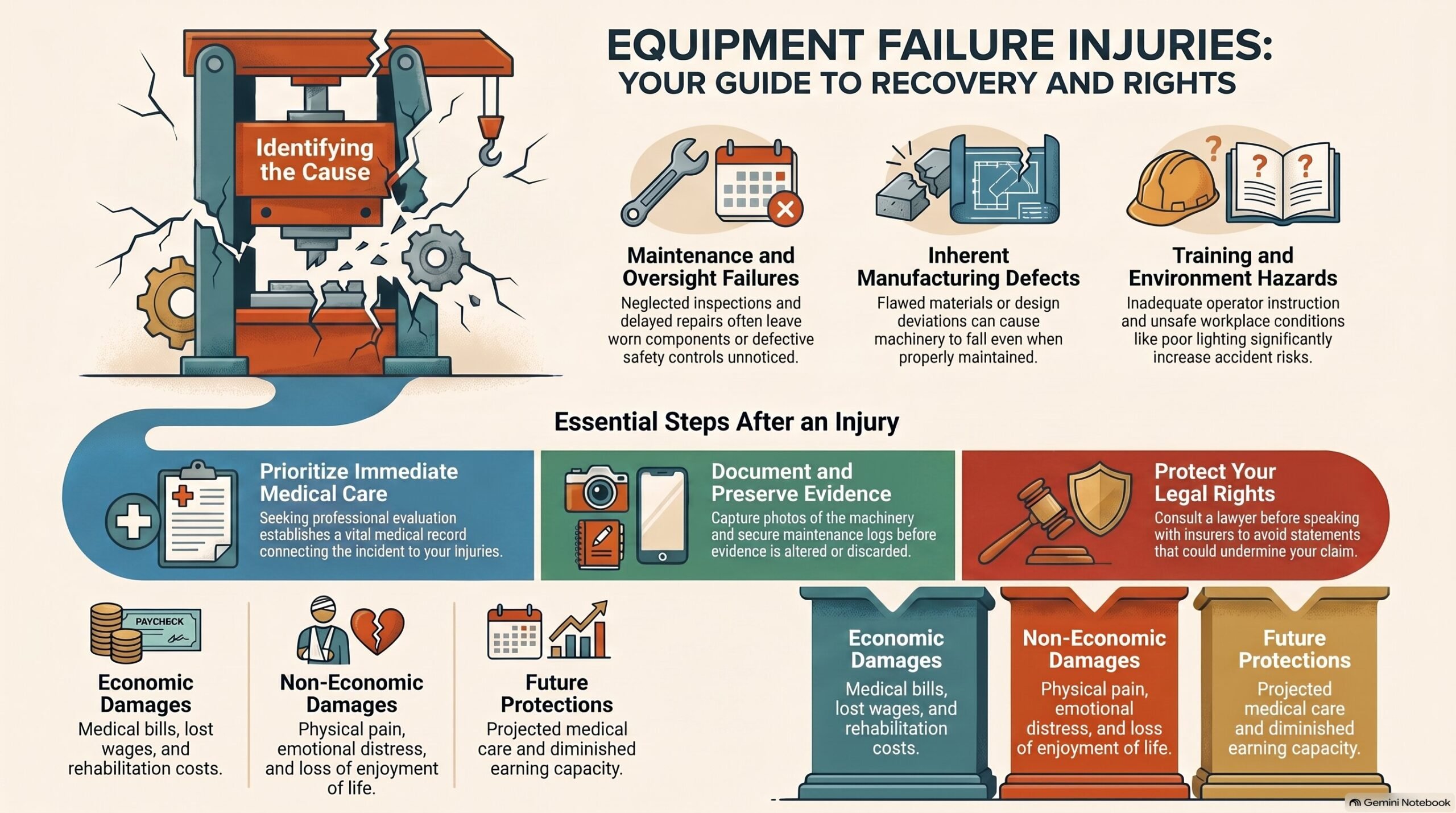
When an equipment failure causes injury, an experienced Brevard County personal injury lawyer can investigate the incident, identify the responsible parties, and pursue compensation for medical expenses, lost income, rehabilitation, pain and suffering, and other legally recoverable damages. Counsel may preserve damaged equipment, request maintenance records, interview witnesses, and coordinate inspections before evidence is altered or discarded. Safety compliance audits can reveal whether an employer, manufacturer, contractor, or property owner failed to follow applicable precautions.
An OSHA training review may also clarify whether workers received appropriate instruction, supervision, and warnings before the incident. The legal team can communicate with insurers, evaluate settlement proposals, and prepare documentation supporting the injured person’s needs. When liability is disputed, counsel may consult engineers, safety professionals, and medical experts to present a clear claim. This assistance allows injured individuals and their families to focus on recovery while a qualified advocate works to protect their rights and pursue accountability.
OUR CONSULTATIONSARE FREE
START YOUR FREE CASE REVIEW

Understanding Brevard County Equipment Failures Injury Cases
Equipment failure injury cases involve more than the occurrence of an accident; they require a careful examination of how the equipment was designed, manufactured, maintained, operated, and supervised. In Brevard County, this review may involve workplace records, training materials, inspection histories, and testimony from employees or safety professionals. The central question is whether a responsible party failed to meet a legal duty and whether that failure contributed to the injury.
Worksite safety obligations can arise from federal standards, state law, company policies, and generally accepted industry practices. OSHA enforcement records may provide useful evidence, although an inspection or citation does not automatically establish liability. Employer negligence may be shown through inadequate training, supervision, warnings, or response to known risks. Hazard documentation, including incident reports and written safety assessments, can help establish notice and causation. A careful evaluation also considers medical evidence, lost income, rehabilitation needs, and the services required for recovery. Each claim depends on its specific facts, available evidence, and applicable deadlines.
Common Causes of Brevard County Equipment Failures
Common causes of equipment failures in Brevard County include poor maintenance, manufacturing defects, operator training errors, and unsafe workplace conditions. Each factor can impair equipment performance, increase operational risks, or contribute to serious injuries. Determining the specific cause is critical when evaluating responsibility and potential legal claims.
Poor Equipment Maintenance
Although regular maintenance is essential to safe operation, neglected inspections and delayed repairs are common contributors to equipment failures in Brevard County. Without a consistent preventive maintenance program, worn components, fluid leaks, electrical problems, and defective safety controls may remain unnoticed. Equipment inspections should follow manufacturer recommendations, workplace procedures, and the demands of the operating environment.
When personnel overlook warning signs or postpone necessary repairs, machinery can malfunction, exposing workers, visitors, and the public to preventable harm. Employers and property operators may also face regulatory compliance concerns when required servicing is undocumented or incomplete. Regular safety audits can identify maintenance gaps, verify that corrective measures are completed, and support safer working conditions. Prompt attention to these responsibilities helps organizations protect others and reduce the likelihood of serious equipment-related injuries.
Manufacturing Defects
Manufacturing defects can cause machinery to fail even when it has been properly installed, operated, and maintained. These defects may arise from flawed materials, incorrect assembly, design deviations, or inconsistent production processes. A weakened component can fracture without warning, while an improperly calibrated safety mechanism may fail to prevent severe injury. Manufacturers are expected to follow quality control standards that identify and correct dangerous conditions before equipment reaches consumers or workplaces.
When a defect causes harm, affected individuals may examine purchase records, inspection reports, recall notices, and medical documentation to determine whether a product liability claim is available. Product liability limits can affect recovery, including restrictions involving causation, filing deadlines, or available damages. Legal review may help injured parties identify responsible parties, preserve evidence, and seek appropriate assistance.
Operator Training Errors
Operator training errors can lead to equipment failures when personnel lack instruction in proper operation, hazard recognition, or emergency procedures. In Brevard County, inadequate onboarding, incomplete refresher courses, or assignments made without verifying competency may increase the likelihood of misuse, delayed shutdowns, and preventable injuries. A safety protocol breakdown can occur when supervisors provide inconsistent guidance or fail to confirm that workers understand manufacturer instructions and warning indicators.
Training records may help establish whether the required instruction was delivered, but errors in witness documentation can obscure what occurred before a malfunction or incident. Accurate statements should identify the equipment involved, the operator’s assigned duties, observed training, and immediate response. Attorneys and safety professionals may review these details to determine whether deficient instruction contributed to the failure and to support injured individuals seeking appropriate assistance.
Unsafe Workplace Conditions
Unsafe workplace conditions can contribute to equipment failures when cluttered work areas, inadequate lighting, unstable surfaces, or blocked access routes interfere with safe operation and maintenance. These hazards may cause machinery to malfunction, prevent timely inspections, or increase the likelihood of operator mistakes. Effective Workplace Safety programs require employers to identify environmental dangers and correct them before workers or visitors are exposed to unnecessary risks.
A documented Risk Assessment can evaluate flooring, ventilation, electrical connections, storage practices, and equipment placement under normal operating conditions. Regular housekeeping, adequate illumination, clear walkways, and stable work surfaces support reliable equipment performance and safer responses to developing problems. When management ignores known conditions or fails to provide reasonable safeguards, resulting injuries may raise questions concerning negligence, accountability, and the employer’s duty to protect personnel.
Don’t Wait. Call Our Florida Personal Injury Lawyers Now!


Legal Rights of Brevard County Equipment Failure Injury Victims
When equipment failure causes an injury in Brevard County, the victim may have legal rights to pursue compensation from parties whose negligence, defective products, or failure to maintain safe conditions contributed to the incident. Potential recovery may cover medical expenses, lost income, rehabilitation costs, pain, and other documented losses.
A careful legal review can identify responsible entities and preserve evidence before it disappears.
- Investigation strategies may include securing maintenance records, incident reports, photographs, product information, and qualified technical assessments.
- Witness credibility can influence how insurers, employers, and courts evaluate conflicting accounts of the event.
- Insurance claim timelines require prompt attention because notice requirements, filing deadlines, and evidence preservation obligations may limit recovery.
A lawyer may communicate with insurers, protect the victim from premature statements, and organize supporting documentation. During settlement negotiations, counsel can assess the claim’s value and pursue terms reflecting the injury’s present and future consequences. When settlement is inadequate, the victim may retain the right to seek relief through litigation. These protections help injured individuals and their families make informed decisions while supporting accountability and fair treatment.
Why Do Brevard County Equipment Failures and Injuries Happen?
Understanding why equipment failures occur can help identify the parties responsible for an injury and determine whether unsafe conditions were preventable. In Brevard County workplaces, failures may result from defective design, inadequate maintenance, worn components, improper installation, or misuse. Manufacturing defects can cause machinery to malfunction even when workers follow instructions. Employers may also overlook inspections, delay repairs, or permit damaged equipment to remain in service.
Effective Safety training helps personnel recognize hazards and operate machinery correctly, but instruction alone cannot correct unsafe systems. Equipment standards establish requirements for design, guarding, maintenance, and performance; violations may increase the likelihood of serious harm. Negligent supervision can allow inexperienced workers to operate intricate machinery without adequate oversight. Similarly, unclear or poorly enforced Workplace policies may contribute to unauthorized modifications, skipped inspections, and unsafe procedures.
These conditions can intersect, creating preventable risks for employees, contractors, and visitors. A careful evaluation of maintenance records, training practices, inspection schedules, and management decisions may clarify how the failure occurred and whether responsible parties breached their obligations.
What Should You Do After a Brevard County Equipment Failure Injury?
After an equipment failure injury, the injured person should seek immediate medical care, even if symptoms initially appear minor. They should document the defective equipment, accident scene, injuries, and related records while preserving available evidence. Promptly contacting a personal injury lawyer can help protect legal rights and evaluate potential claims.
Seek Immediate Medical Care
Prompt medical attention should be obtained following an equipment-related injury, even if the person believes the condition is minor. A qualified medical professional can identify hidden trauma, provide First aid guidance, and perform an urgency assessment based on observed symptoms and potential complications. The injured person should follow recommended treatment instructions and disclose all relevant circumstances to support safe, effective care.
Medical documentation, including examination findings, diagnoses, and treatment recommendations, may help establish the injury’s seriousness and guide continuing care. Symptom tracking can reveal worsening pain, swelling, dizziness, weakness, or other changes that require prompt reevaluation. If emergency symptoms arise, the individual should contact emergency services rather than attempt to transport themselves alone. Supervisors, coworkers, and family members can assist by encouraging timely care while respecting the injured person’s medical decisions and privacy.
Document The Equipment Failure
When an equipment failure causes an injury, the affected person should document the condition of the machinery and the surrounding area as soon as it is reasonably safe to do so. Photographs or video may show broken guards, exposed wiring, leaks, warning labels, control settings, and the location of debris. Witnesses’ names, contact information, and brief accounts should be recorded while memories remain clear. The injured person should preserve relevant instructions, maintenance records, Safety training materials, and equipment identification details when available.
Incident reporting should be completed in accordance with workplace procedures, using factual descriptions rather than speculation about fault. Copies of reports, photographs, medical documentation, and communications should be stored securely. The machinery should not be altered, repaired, or discarded before responsible parties have had an opportunity to preserve evidence.
Contact A Personal Injury Lawyer
A Brevard County equipment-failure injury may involve complex questions concerning workplace safety, product defects, maintenance responsibilities, and available insurance coverage. A personal injury lawyer can evaluate the incident, identify potentially responsible parties, and explain legal rights without pressuring the injured person. Prompt consultation may help preserve evidence, including photographs, maintenance records, medical reports, and Witness documentation from coworkers or other observers.
Counsel can also communicate with employers, manufacturers, and insurers, reducing the risk of statements that could undermine a claim. An informed insurance strategy may address liability coverage, workers’ compensation benefits, and potential third-party recovery. Legal guidance can further support respectful cooperation with investigators while protecting the injured individual’s interests. Serving others responsibly includes helping injured workers obtain accurate information, appropriate treatment, and fair consideration of their losses.
Critical Evidence in a Brevard County Equipment Failure Injury Case
Critical evidence can establish how the equipment failed, whether responsible parties knew of dangerous conditions, and the extent of resulting injuries.
Relevant materials may include:
- Equipment inspection records and maintenance or repair logs
- Witness statements and testimony concerning the incident
- Photos, videos, medical records, and other incident documentation
Together, these records can help clarify liability, support injury claims, and preserve facts that may otherwise become unavailable.
Equipment Inspection Records
Although inspection records may appear routine, they can provide decisive evidence in a Brevard County equipment-failure injury case. These documents may show when machinery was examined, which components were evaluated, and whether required inspection procedures were followed. They can also identify recurring safety concerns, incomplete checks, or warnings that were available before an injury occurred. Investigators may compare inspection records with workplace safety programs to determine whether established protocols were implemented consistently.
Records created after an incident may further support or contradict incident investigation reports, particularly concerning the equipment’s condition and the timing of reported hazards. Preserving original documents, electronic entries, photographs, and related communications can help maintain their evidentiary value. Careful review may clarify responsibility and support injured workers seeking fair treatment through appropriate legal channels.
Maintenance And Repair Logs
Maintenance and repair logs can provide vital evidence in a Brevard County equipment-failure injury case by documenting the machinery’s service history and reported defects. These records may identify recurring malfunctions, delayed repairs, replacement parts, and personnel responsible for corrective work. They can also show whether technicians followed manufacturer instructions, internal policies, or regulatory requirements. When compared with Workplace inspections and compliance checklists, the logs may reveal discrepancies between documented conditions and actual maintenance practices.
Entries on safety training can indicate whether employees received instruction on equipment operation, inspection, or shutdown procedures. Hazard reporting records may further establish when a dangerous condition was recognized and how management responded. Preserving original logs, electronic metadata, work orders, and service invoices can help clarify responsibility and support a thorough, service-oriented evaluation of the injured person’s claim.
Witness Statements And Testimony
Witness statements and testimony can help establish how an equipment failure occurred, what conditions existed beforehand, and whether warning signs were observed. Coworkers may describe unusual sounds, malfunctioning controls, inadequate training, or prior complaints that maintenance records do not capture. Supervisors may provide relevant supervisory advisories concerning inspections, repairs, safety instructions, or known operational risks. Investigators should promptly identify each witness, record contact information, and preserve accounts before memories change.
Witness credibility may depend on personal knowledge, consistency, impartiality, and the witness’s clear opportunity to observe the events. An employee may also know about overlooked footage or explain who controlled video preservation, without replacing separate documentation analysis. Careful interviews can assist injured individuals and their families while helping counsel present an accurate, service-oriented account of the incident.
Photos, Videos, And Documentation
When an equipment failure causes an injury, photographs, videos, and related documentation can provide objective evidence of the machine’s condition, the surrounding work area, and the events leading to the incident. Images should capture damaged components, warning labels, guards, controls, lighting, and any hazards present at the Incident Scene. Videos may preserve equipment sounds, operating conditions, or demonstrations of the malfunction before repairs alter the evidence.
Maintenance logs, inspection reports, purchase records, and employee training materials can help evaluate Safety Compliance and identify prior warnings or neglected repairs. Medical Documentation should describe the injuries, symptoms, and initial findings, while Treatment Records establish ongoing care, limitations, and related expenses. Preserving original files, dates, and sources strengthens reliability. A legal professional can organize this evidence, maintain its chain of custody, and help present it respectfully for the benefit of an injured person.
Long-Term Effects of Brevard County Equipment Failures and Injuries
Equipment failure injuries may cause ongoing physical pain, reduced mobility, or lasting limitations that affect daily activities. Emotional and psychological effects, including anxiety, depression, and trauma-related symptoms, may also persist long after the incident. These conditions can create long-term financial strain through medical expenses, rehabilitation costs, lost income, and diminished earning capacity.
Ongoing Physical Pain
Persistent physical pain is a common long-term consequence of injuries caused by defective or malfunctioning equipment in Brevard County. Such pain may involve the back, joints, nerves, or soft tissue and can persist despite initial treatment. It may limit lifting, walking, standing, reaching, or other tasks required at work and home. Ongoing symptoms often require expert evaluations, medication, physical therapy, injections, or corrective procedures. Consistent medical documentation can establish the pain’s duration, severity, treatment needs, and effect on daily activities.
Workplace witnesses may describe visible limitations, changes in job performance, repeated complaints, or the need for assistance after the incident. A careful record of appointments, restrictions, and expenses can help clarify the injury’s continuing consequences. Legal review may identify responsible parties and support recovery for reasonable medical costs, lost earnings, and related physical impairment.
Emotional And Psychological Effects
Emotional and psychological effects may develop after an equipment failure injury, particularly when the incident causes severe pain, permanent limitations, or uncertainty about returning to work. Post-incident trauma can affect concentration, confidence, and a person’s willingness to use similar machinery or enter the same workplace. Workplace stress may intensify when injured individuals face changes in duties, strained relationships, or concerns about being perceived as unreliable.
Some develop anxiety disorders, persistent fear, irritability, or depressive symptoms that interfere with daily responsibilities and recovery. Sleep disruption is also common, especially when pain, intrusive memories, or heightened alertness prevent restful sleep. These effects may remain long after visible wounds mend. A qualified mental health professional can assess symptoms, provide treatment, and document how the injury has altered emotional well-being.
Long-Term Financial Strain
Financial strain may persist after the immediate effects of an equipment-failure injury have subsided. Lost wages, reduced earning capacity, rehabilitation, transportation, and continuing treatment can affect household stability for months or years. These burdens may also limit a person’s ability to support family members, maintain housing, or serve others through work and community responsibilities.
Accurate medical expense documentation helps establish the full financial impact. Records should include hospital bills, prescriptions, therapy costs, equipment purchases, mileage, and projected future care. Employment records and evidence of missed opportunities may further demonstrate economic losses.
During Settlement negotiations, a clear accounting of past and anticipated expenses can support a more informed resolution. Legal guidance may help identify overlooked damages, evaluate proposed compensation, and protect against agreements that fail to address long-term needs or future medical complications.
Proving Liability in Brevard County Equipment Failure Injury Cases
When equipment failure causes an injury in Brevard County, proving liability requires evidence connecting the defective condition or unsafe conduct to the harm suffered. Negligence standards generally require showing that a responsible party owed a duty, breached that duty, and caused measurable injuries. Maintenance records, inspection reports, training materials, photographs, witness statements, and expert evaluations may help establish what failed and why.
Contractor responsibility can arise when a contractor selects, installs, maintains, or operates equipment improperly. Property owners, employers, manufacturers, and other parties may also share liability when their decisions contributed to unsafe conditions. A careful investigation can identify applicable safety rules, contractual duties, prior complaints, and opportunities to prevent the incident.
Medical documentation is important because it connects the accident to treatment, disability, and related losses. Legal counsel may organize this evidence, preserve vital records, and present a coherent claim. Although each settlement timeline differs, liability findings and complete documentation often influence negotiations and litigation strategy.
Dealing With Insurance Companies After a Brevard County Equipment Failure Injury
After liability evidence has been gathered, communications with insurance companies must be handled carefully. Insurance adjusters may request statements, medical records, photographs, employment information, and other materials. Injured individuals should respond accurately, but they should avoid speculation, minimizing symptoms, or making comments that could be taken out of context. Documentation requests should be reviewed carefully to determine whether each item is relevant and properly authorized.
A qualified representative can help protect privacy, organize records, and communicate the effect of the injury without exaggeration. Settlement discussions should account for medical expenses, lost income, rehabilitation needs, and the continuing impact on the injured person’s ability to serve family, coworkers, or the community. If an insurer issues a Claim denial, the affected party should request the stated reasons in writing and promptly examine appeal options. Deadlines, policy provisions, and supporting evidence can affect available remedies. Careful, respectful communication helps preserve credibility while ensuring the claim receives fair consideration.
What to Expect During a Brevard County Equipment Failure Injury Claim Process
A Brevard County equipment failure injury claim typically begins with an initial case evaluation to assess liability, injuries, and available legal remedies. The process may then involve collecting records, photographs, witness statements, and other evidence, followed by negotiations with the relevant insurance companies. If settlement discussions do not produce a fair resolution, the matter may proceed to trial.
Initial Case Evaluation
The initial case evaluation gives an injured person an opportunity to understand whether an equipment failure claim may be viable under Florida law. During a client consultation call, an attorney may ask about the incident, resulting injuries, medical treatment, workplace conditions, and potentially responsible parties. Emergency medical priorities remain central, and immediate care should never be delayed for legal discussions. The evaluation may also address available insurance coverage, filing deadlines, and whether negligence, defective design, inadequate maintenance, or another theory could apply.
Counsel can explain evidence-preservation steps without conducting the broader evidence-collection process, including the importance of retaining relevant records and avoiding statements that could undermine the claim. After reviewing the available information, the attorney may outline next legal steps, potential challenges, and appropriate resources for pursuing accountability and support.
Evidence Collection Process
Once an initial evaluation identifies a potentially viable claim, evidence collection begins to establish how the equipment failure occurred and who may bear responsibility. Counsel may obtain incident reports, maintenance records, inspection logs, purchase documents, training materials, photographs, and medical records. The equipment itself may require secure storage and examination by qualified professionals before repairs, disposal, or alteration occur.
Failure to preserve evidence can weaken an otherwise supportable case, so preservation requests may be sent promptly to employers, manufacturers, contractors, and other custodians. Investigators may identify witnesses, record statements, and track witness availability timelines because memories can change and contact information may become outdated. Relevant evidence also helps address questions raised by insurers, including denials of insurance claims, while documenting the factual basis for continued evaluation and protecting the interests of injured individuals.
Insurance Claim Negotiations
When insurance negotiations begin, the insurer typically reviews liability evidence, medical records, wage documentation, and the claimed losses before evaluating settlement. A workplace investigation may identify operational failures, training gaps, or safety violations relevant to responsibility. Repair documentation can show whether equipment defects were reported, ignored, or inadequately corrected before the incident. The insurer may request recorded statements, authorizations, photographs, incident reports, and employment records to test the claim’s accuracy and extent.
Liability defenses may include alleged misuse, comparative negligence, preexisting conditions, or questions concerning employer responsibility. Counsel typically responds with organized evidence and a clearly supported demand, while addressing inconsistencies without overstating the facts. An expert evaluation may clarify equipment performance, maintenance standards, medical causation, or future care needs, helping to keep negotiations informed, fair, and focused on documented losses.
Settlement Or Trial
Settlement or trial depends on the strength of the liability evidence, the severity of the injuries, the documented financial losses, and the parties’ willingness to reach a fair resolution. When to choose settlement may become clear when an insurer offers compensation that fairly reflects medical expenses, lost income, future care, and other proven damages. Settlement can provide timely assistance while avoiding the uncertainty, expense, and delay of courtroom proceedings.
If negotiations fail or liability remains disputed, the claimant may proceed to trial. Trial preparation strategies include preserving equipment records, identifying responsible parties, consulting qualified experts, organizing medical documentation, and preparing witnesses to explain how the failure caused harm. A legal representative evaluates risks, advises on realistic outcomes, and protects the claimant’s interests throughout litigation. This careful process supports accountability and helps injured individuals pursue meaningful recovery.
Compensation for Brevard County Equipment Failures Injury Damages
Compensation for Brevard County equipment failure injury damages may include medical expenses, lost income, reduced future earning capacity, and other losses supported by the evidence. A claim may also address necessary rehabilitation, transportation for treatment, and expenses arising from permanent restrictions when documentation establishes their connection to the incident. Determining responsibility requires careful review of equipment records, training materials, inspection reports, witness statements, and applicable safety requirements.
Workplace negligence may exist when an employer fails to maintain machinery, provide adequate instruction, or correct known hazards. Employee negligence, third-party conduct, defective products, and OSHA violations may also affect liability and the available recovery. Evidence that safety regulations were ignored can help demonstrate a preventable failure, although the legal significance depends on the facts and governing law. An attorney may assist an injured worker and their family by preserving evidence, identifying responsible parties, and clearly presenting damages. Compensation generally depends on causation, documented losses, insurance coverage, and applicable deadlines.
Don’t Wait. Call Our Florida Personal Injury Lawyers Now!
Economic vs Non-Economic Damages in Brevard County Equipment Failure Cases
Economic damages may include medical expenses, lost wages, rehabilitation costs, and other measurable financial losses resulting from an equipment failure. Non-economic damages address less tangible harms, such as pain and suffering, emotional distress, and diminished quality of life. Calculating total compensation requires evaluating both categories, supported by evidence concerning the injury’s severity, duration, and effect on the claimant’s future.
Economic Damage Categories
When an equipment failure causes injury in Brevard County, damages are generally evaluated by separating measurable financial losses from non-economic harm. Economic damages document the direct financial consequences of an injury and may be supported through records, invoices, and employment documentation. Medical Bills can include emergency care, hospitalization, physician visits, medication, rehabilitation, and necessary medical devices.
Future Treatment expenses may also be considered when qualified professionals establish that continued care is reasonably expected. Lost Wages reflect income missed during recovery, while diminished earning capacity may apply if lasting limitations affect employment. A Job Interruption can create additional financial effects, including missed advancement opportunities or reduced work hours. Careful evidence collection helps present an accurate claim and supports fair compensation for injured individuals and their families.
Non-Economic Damage Types
Beyond documented financial losses, an equipment-failure injury claim may include non-economic damages that reflect the personal impact of the harm. These damages can include physical discomfort, diminished mobility, disfigurement, and loss of independence following an injury. Pain suffering damages may address the ongoing discomfort and limitations experienced during recovery or after a permanent condition develops. Emotional distress claims may involve anxiety, depression, fear, sleep disruption, or trauma connected to the incident and its consequences.
A claim may also recognize loss of enjoyment of life when injuries prevent participation in family activities, hobbies, or community service. Loss of consortium can concern the effect of an injury on a spouse’s companionship or relationship. Each category focuses on lived impact rather than bills, wages, or other directly documented financial losses.
Calculating Total Compensation
Total compensation in a Brevard County equipment failure case generally combines economic and non-economic damages to reflect both measurable losses and the injury’s broader personal consequences. Economic damages may include emergency treatment, rehabilitation, medication, transportation, property damage, and projected future care. Medical expense documentation, including invoices, records, and expert estimates, helps establish the value of past and anticipated treatment.
Income records, employment history, and vocational evidence may support claims for reduced earning capacity or long-term wage loss when injuries limit the ability to continue working. Non-economic damages address pain, emotional distress, disfigurement, loss of enjoyment, and diminished quality of life. Calculating a fair total requires examining liability evidence, recovery prospects, and the injury’s effect on family responsibilities. A careful assessment can promote accountability while supporting the injured person’s long-term needs.
When a Brevard County Equipment Failure Injury Case Goes to Trial vs Settlement
The decision to resolve a Brevard County equipment failure injury case through settlement or trial depends on the strength of the evidence, the parties’ assessment of liability, and the extent of the injured person’s damages. Early preservation of evidence can clarify how the equipment operated, whether maintenance occurred, and which parties controlled the relevant conditions. Witness credibility also matters because consistent, detailed testimony may substantially influence the case’s value and direction.
Settlement may provide a faster, more predictable resolution, allowing an injured person and their family to address medical needs, lost income, and ongoing care without the uncertainty of the courtroom. A careful negotiation strategy evaluates documented losses, disputed facts, and the opposing party’s willingness to accept responsibility. Strong proof can create leverage in settlement, although no outcome is guaranteed.
Trial may become appropriate when compensation is inadequate, liability remains contested, or meaningful negotiations fail. Counsel typically prepares exhibits, testimony, and legal arguments while helping clients understand possible delays, expenses, and risks. The choice should reflect informed priorities and the person’s long-term welfare.
Florida Laws That May Affect Your Brevard County Equipment Failures Case
Florida statutes may govern an equipment failure claim’s filing deadline, liability standards, available damages, and the responsibilities of manufacturers, employers, property owners, or other involved parties. Florida’s product liability rules may apply when defective design, manufacturing, or inadequate warnings contributed to an injury. Negligence principles can also require evidence that a responsible party breached a duty and caused foreseeable harm.
Florida law may govern equipment failure claims, including deadlines, liability standards, damages, and responsibilities among manufacturers, employers, and property owners.
Important considerations may include:
- Workers’ compensation coverage, which may provide benefits for job-related injuries while limiting certain claims against an employer.
- Comparative negligence defenses, which can reduce a recovery if the injured person’s conduct contributed to the incident.
- Premises liability requirements, including whether an owner knew or should have known about a hazardous condition.
Other laws may address contractor responsibility, employer safety obligations, wrongful death damages, and evidence preservation. Governmental defendants may receive special protections and notice requirements. Because statutory duties differ by case, an attorney can evaluate applicable rules, protect an injured person’s interests, and help pursue accountability while supporting affected families and communities.
The Statute of Limitations for Brevard County Equipment Failure Injury Cases
Because filing deadlines can determine whether a claim proceeds, injured individuals should address the statute of limitations promptly after an equipment-related incident. In Florida, personal injury claims generally must be filed within two years after the injury, although exceptions may alter that period. Claims involving wrongful death, government entities, workers’ compensation, or defective products can involve different deadlines, notice requirements, or procedural rules.
The date an injury occurred may not always establish the final deadline, particularly when the harm was discovered later or resulted from repeated exposure. Preserving incident reports, medical records, maintenance documents, and witness information can help clarify when the claim accrued and which deadline applies. Workplace safety obligations and reporting duties may also affect the availability of records and the development of facts, but internal reports do not necessarily extend a statutory deadline. Because missed limitation periods can bar recovery, affected individuals should identify potentially responsible parties and promptly evaluate applicable Florida law with qualified legal guidance before time expires.
Don’t Wait. Call Our Florida Personal Injury Lawyers Now!
How a Brevard County Equipment Failure Injury Lawyer Can Help You
After preserving the claim and identifying applicable deadlines, an equipment failure injury lawyer can evaluate how the incident occurred and determine which parties may be legally responsible. Counsel may coordinate a workplace investigation, review maintenance records, training materials, safety policies, and inspection reports, and consult qualified engineers when equipment design or maintenance is disputed. The analysis may also address Employer negligence, contractor conduct, manufacturer responsibility, or other contributing factors.
A lawyer can further:
- Arrange witness preservation through interviews, statements, and documentation of changing recollections.
- Organize medical records and explain how treatment relates to the claimed injuries.
- Develop a compensation timeline that accounts for medical care, wage loss, rehabilitation, and case developments.
Counsel can communicate with insurers, challenge incomplete assessments, and present organized evidence in support of the injured worker’s interests. This assistance allows the individual and family to focus on recovery and service responsibilities while the legal process is handled with diligence, accuracy, and respect for everyone affected by the incident.
When to Contact a Brevard County Equipment Failure Injury Lawyer
Prompt legal consultation is important when an equipment failure causes injury, particularly if the incident involves serious medical treatment, lost income, disputed facts, or uncertain responsibility. Early guidance can help preserve relevant evidence and protect a worker’s ability to seek appropriate compensation while serving personal recovery and family obligations.
A consultation may be appropriate when an employer, manufacturer, contractor, or insurer denies responsibility. It can also be useful when Medical treatment delays complicate the injury record, benefits are interrupted, or requested documentation appears incomplete. Post-accident documentation should include incident reports, photographs, maintenance records, medical bills, and communications concerning the event.
Injured individuals should record Witness contact information promptly because recollections may change and employment relationships may shift. Records concerning Workplace safety training, equipment inspections, warnings, and prior complaints may also clarify whether preventable conditions contributed to the incident. Contacting a lawyer before signing releases, accepting payment, or giving detailed statements can help preserve informed decision-making and avoid preventable mistakes during the claims process.
Why You Need an Experienced Brevard County Equipment Failure Injury Lawyer
An experienced Brevard County equipment failure injury lawyer can evaluate the incident from both legal and factual perspectives, identifying responsible parties, applicable claims, and the evidence needed to support recovery. Equipment accidents may involve defective design, inadequate maintenance, operator instruction, unsafe premises, or violations of federal safety requirements. An experienced advocate can preserve photographs, inspection records, training materials, medical documentation, and witness accounts before evidence disappears or conditions change.
Such counsel can also examine whether an employer, contractor, manufacturer, supplier, or property owner contributed to the injury. Understanding Worksite Safety principles and OSHA Compliance requirements may reveal overlooked hazards and support a clearer explanation of how the incident occurred. Careful legal analysis helps protect an injured worker’s interests while promoting accountability and safer practices for colleagues and the broader community. By handling communications and investigating applicable insurance coverage, counsel allows the injured person to focus on medical treatment, recovery, and continued service to others without unnecessary administrative burdens during a difficult period.
How to Choose the Right Brevard County Equipment Failures Injury Lawyer for Your Case
Selecting the right Brevard County equipment-failure injury lawyer requires careful consideration of the attorney’s experience with complex workplace and product-liability claims. A qualified lawyer should understand machinery hazards, employer duties, manufacturer responsibility, and the evidence needed to establish negligence or defective design.
During an initial Client consultation, prospective clients can assess whether the attorney listens carefully, explains legal options clearly, and demonstrates respect for the injured person’s needs. Questions about staffing, communication, and anticipated involvement may also clarify whether the relationship will support a constructive, service-focused process.
Fee transparency is equally important. The lawyer should provide a clear explanation of contingency fees, litigation expenses, and circumstances that could affect recovery. Familiarity with local court timelines can help set realistic expectations regarding investigations, filings, negotiations, and trial preparation.
Finally, the attorney should describe a practical case-building strategy, including evidence preservation, witness interviews, medical documentation, and consultation with qualified experts. Comparing credentials, communication practices, and proposed methods can help identify appropriate representation.
About The Law Offices of Anidjar & Levine
The Law Offices of Anidjar & Levine represent individuals injured by equipment failures and other hazardous conditions in Brevard County.
Its attorneys evaluate accident circumstances, identify potentially responsible parties, and explain legal options in terms clients can understand.
The firm may assist with investigating defective machinery, unsafe maintenance practices, inadequate warnings, and workplace or property hazards.
During the Personal Injury Process, the legal team can help preserve evidence, communicate with insurers, assess medical documentation, and pursue compensation for medical expenses, lost income, rehabilitation, and other legally recognized damages.
Clients may also receive guidance regarding deadlines, liability questions, and settlement considerations.
Preparing Florida Claim Forms and supporting records accurately can be important to protecting a claim.
The firm’s approach centers on attentive communication, careful preparation, and advocacy tailored to each person’s circumstances.
Individuals seeking to serve their families and communities after a serious injury may benefit from promptly consulting qualified counsel.
The firm generally offers case evaluations to discuss available remedies and procedural next steps.
Frequently Asked Questions
Can I Afford a Brevard County Equipment Failure Injury Lawyer Without Upfront Payment?
A person may obtain legal assistance without upfront payment when a qualified attorney accepts the case on a contingency fee basis. Under this arrangement, the attorney generally receives payment only if compensation is recovered, with fees calculated as a percentage of the settlement or judgment. Costs and obligations vary, so prospective clients should request a written agreement explaining percentages, expenses, and possible outcomes. This structure can provide Affordable Representation while allowing injured individuals to pursue accountability and necessary support.
What Happens if Defective Equipment Caused My Injury at a Temporary Job Site?
A worker injured by defective equipment at a temporary job site may pursue workers’ compensation and, where appropriate, a third-party injury claim. Investigators will examine site safety procedures, equipment maintenance, warnings, OSHA violations, and whether temporary staffing arrangements obscured responsibility. Evidence should be preserved promptly, including photographs, medical records, witness information, and incident reports. Employer negligence, manufacturer defects, or contractor failures may affect available compensation and legal options.
Can Family Members Pursue Claims After a Fatal Equipment-Related Accident?
Family members may pursue a wrongful death claim after a fatal equipment-related accident, provided they meet applicable family standing requirements under Florida law. Eligible survivors commonly include a spouse, children, or parents, depending on the decedent’s circumstances. The claim may seek compensation for lost support, services, companionship, medical expenses, funeral costs, and other legally recognized losses. A careful investigation can identify defective equipment, negligent parties, insurance coverage, and deadlines governing available remedies.
Are Equipment Manufacturers Responsible for Injuries Caused by Recalled Products?
Manufacturers may be responsible for injuries caused by recalled products when they knew or reasonably should have known about a dangerous defect and failed to provide adequate warnings, repairs, or replacements. Manufacturer liability may depend on the product’s design, manufacturing process, distribution, and the injured person’s use of the equipment. Evidence such as recall notices, maintenance records, medical documentation, and expert opinions can help establish responsibility and support affected families.
Can Undocumented Workers File Brevard County Equipment Failure Injury Claims?
Undocumented workers may file injury claims in Brevard County, and immigration status generally does not eliminate legal eligibility. They may pursue compensation for medical expenses, lost wages, disability, and other damages when equipment failures result from negligence, unsafe conditions, or defective products. Injury claim options depend on workers’ compensation rules, third-party liability, available evidence, and filing deadlines. A qualified attorney can confidentially assess the circumstances, protect applicable rights, and help connect injured workers with crucial services.
—————————
Equipment failure injuries can create significant medical, financial, and legal challenges for Brevard County victims.
Promptly identifying responsible parties, preserving evidence, and understanding applicable deadlines may help protect a claim’s value.
The Law Offices of Anidjar and Levine evaluates each case, explains available legal options, and pursues compensation for qualifying losses.
Individuals injured by defective or poorly maintained equipment can consult a Brevard County Personal Injury Lawyer before speaking with insurers or accepting a settlement that may not reflect their full damages.

