

The Law Offices of Anidjar and Levine can help injured individuals assess liability, preserve evidence, and pursue compensation after trucking regulation violations or loading injuries.
Cases may involve drivers, motor carriers, shippers, brokers, warehouse operators, or loading contractors.
Attorneys may examine inspections, cargo securement, weight limits, hours-of-service records, photographs, video, witness accounts, and medical documentation.
Prompt medical care and legal consultation can protect important rights before filing deadlines expire.
Learn more by speaking with a Brevard County Personal Injury Lawyer.
Main Takeaways
- A Brevard County trucking injury lawyer can evaluate liability under federal safety rules, Florida law, and applicable commercial-vehicle regulations.
- Legal review may examine inspections, driver qualifications, cargo securement, hours-of-service compliance, and safety documentation.
- Preserve photographs, medical records, witness information, loading records, electronic logs, dispatch messages, and available video promptly.
- Seek medical care, report the incident, avoid recorded statements, and continue follow-up treatment after a trucking or loading injury.
- Timely consultation can protect potential claims involving chronic pain, permanent impairment, ongoing medical expenses, lost income, or wrongful death.


How We Can Help With Your Brevard County Trucking Regulations & Loading Injury Claim
At a pivotal stage following a trucking regulation or loading injury, experienced legal guidance can help protect an injured person’s rights and establish how the incident occurred. A qualified legal team can listen carefully, identify immediate concerns, and explain available options without adding unnecessary pressure. Through an organized accident investigation, representatives may examine photographs, incident reports, witness accounts, loading records, and relevant communications. This work can help preserve evidence before it is lost or altered and clarify the responsibilities of each involved party. The team can also assist with medical documentation by gathering treatment records, diagnostic findings, provider opinions, and information concerning future care.
Accurate records may demonstrate the injury’s seriousness and connect medical needs to the reported event. Legal professionals may communicate with insurers, address requests for information, and pursue appropriate compensation while the injured person focuses on recovery. Their service can provide families with informed support, careful preparation, and a dependable advocate throughout the claim process.
OUR CONSULTATIONSARE FREE
START YOUR FREE CASE REVIEW

Understanding Brevard County Trucking Regulations & Loading Injury Cases
Understanding a Brevard County trucking regulations or loading injury case requires examining how federal safety rules, Florida law, and the conduct of each responsible party contributed to the incident. The analysis may include vehicle inspections, driver qualifications, cargo securement, and compliance with applicable hours-of-service requirements. CRS compliance can provide an important framework for evaluating whether required commercial-vehicle standards were followed, although the specific facts determine its relevance.
Investigators typically review bills of lading, inspection reports, training records, electronic logs, photographs, and medical documentation. These documentation requirements help establish what occurred, when responsibilities shifted, and whether warnings or corrective measures were available. Liability may involve a carrier, shipper, broker, loading contractor, equipment owner, or another entity, depending on contractual duties and operational control. A careful review also considers Florida negligence principles, comparative fault, and applicable filing deadlines. Accurate evidence preservation allows injured individuals, families, and responsible advocates to pursue informed resolutions while promoting safer transportation practices throughout Brevard County.
Common Causes of Brevard County Trucking Regulations & Loading
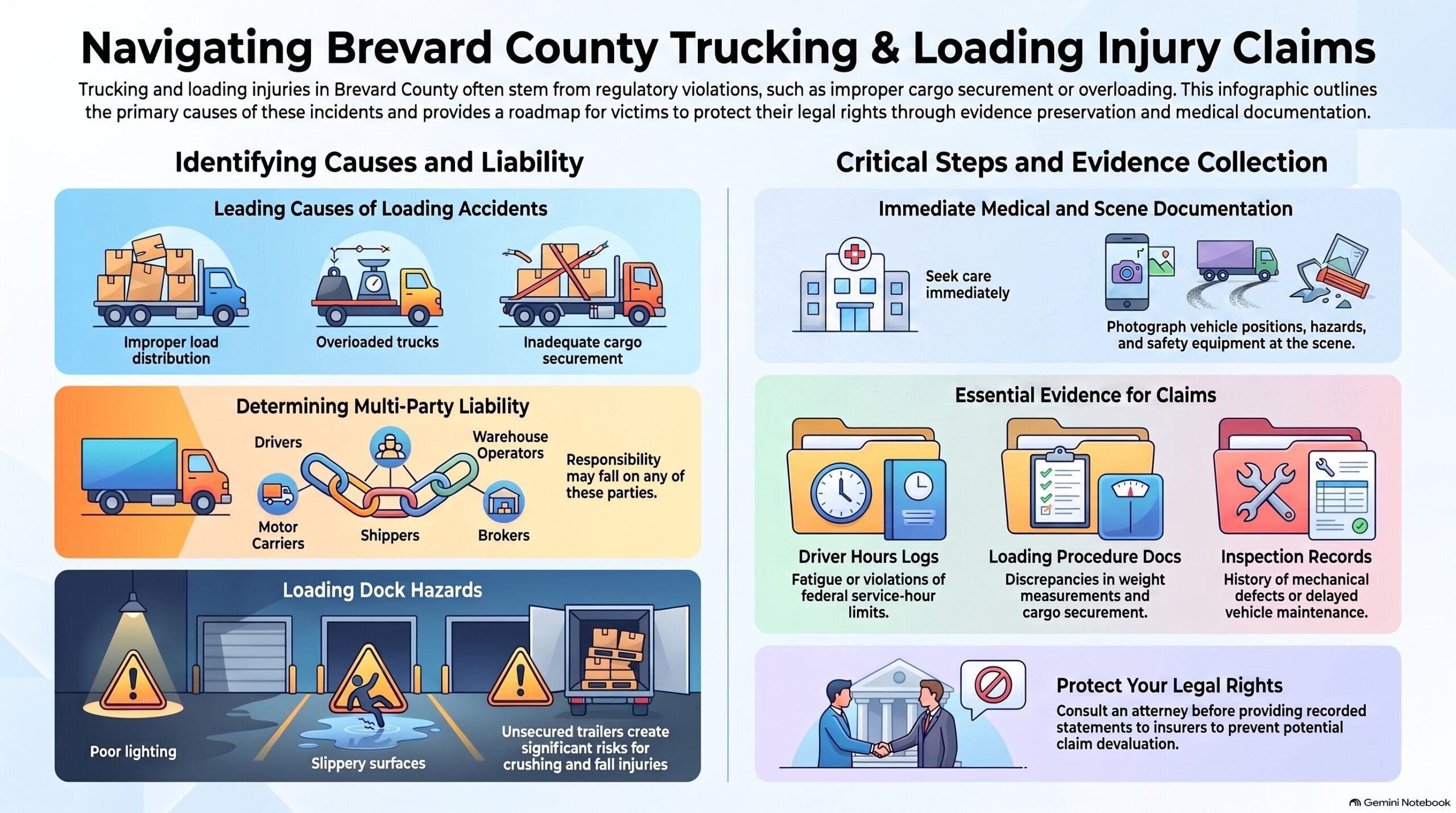
Common causes of trucking and loading incidents include improper load distribution, overloaded trucks, and inadequate cargo securement, each of which can compromise vehicle stability and increase the risk of cargo shifting. Loading dock hazards, including uneven surfaces, insufficient lighting, and unsafe equipment, may also create serious risks for workers and visitors. Identifying these conditions is necessary when evaluating compliance with applicable regulations and determining potential liability.
Improper Load Distribution
Improper load distribution occurs when cargo is placed, secured, or balanced in a manner that affects a commercial truck’s stability, handling, or braking performance. Uneven placement may shift the vehicle’s center of gravity, increasing the risk of swaying, rollover, jackknifing, or delayed stopping. These conditions can develop when workers misunderstand weight placement requirements, fail to inspect restraints, or disregard manufacturer and carrier instructions. Loading teams should coordinate carefully, document inspections, and use appropriate equipment to protect drivers, motorists, and nearby workers.
Crane safety practices are especially important when lifting materials because uncontrolled movement can place cargo off-center or damage securing devices. During unloading procedures, personnel should confirm that the truck remains stable before removing restraints or transferring materials. Supervisors who identify unsafe distribution should stop operations and correct the condition before travel or handling continues.
Overloaded Trucks
When a commercial truck carries cargo beyond legal or manufacturer-imposed limits, its braking, steering, suspension, and structural systems may be subjected to unsafe stress. Overloaded trucks can require longer stopping distances, reduce maneuverability, and increase the likelihood of tire, axle, or brake failure. Federal and Florida rules establish weight limits based on vehicle classification, axle configuration, roadway restrictions, and manufacturer specifications. Violations may result from accepting excessive freight, inaccurate weighing, altered documentation, or pressure to meet delivery schedules.
Weight distribution remains important because concentrating excessive mass on one axle can damage roads and destabilize the vehicle, even when total weight appears compliant. Cargo securement is also relevant to overall loading safety, although separate defects may create distinct risks. Investigators may review scale records, manifests, inspection reports, and maintenance histories to determine whether overloading contributed to a crash.
Inadequate Cargo Securement
Cargo that is not properly restrained can shift, fall, or extend from a commercial vehicle, creating hazards for the truck operator and other roadway users. Defective tie-downs, inadequate blocking, uneven weight distribution, and rushed inspections may allow freight to move during acceleration, braking, or lane changes. Falling materials can trigger fender benders, parking lot crashes, or more serious collisions when drivers react suddenly. Unsecured cargo may also damage equipment, obstruct visibility, or contribute to roadside breakdowns, exposing motorists and responders to additional danger.
Commercial carriers generally must select appropriate restraints, inspect them before travel, and monitor cargo when conditions warrant. Drivers and companies that disregard these responsibilities may endanger people who depend on safe transportation. Careful securing practices help protect workers, passengers, pedestrians, and everyone sharing Brevard County roads.
Loading Dock Hazards
Loading docks present significant risks when trucks, trailers, workers, and powered equipment operate in confined areas. Common hazards include inadequate lighting, slippery surfaces, damaged dock plates, unsecured trailers, and insufficient space for pedestrians. Drivers or warehouse personnel may suffer falls, crushing injuries, struck-by incidents, or cargo-related harm when equipment shifts unexpectedly. Federal and state trucking requirements may impose responsibilities concerning vehicle securement, inspection, signaling, and safe loading procedures.
Preventing dock injuries requires regular inspections, clearly marked walkways, wheel chocks, working alarms, and communication between drivers and loading crews. Effective employee training programs should address backing procedures, fall prevention, forklift operation, load distribution, and emergency response. Businesses that disregard these safeguards may expose workers, visitors, and carriers to serious harm and potential legal liability. Prompt incident reporting and corrective action can also protect affected individuals.


Legal Rights of Brevard County Trucking Regulations & Loading Injury Victims
Brevard County trucking and loading injury victims may have legal rights to pursue compensation when negligent loading practices, regulatory violations, or unsafe transportation procedures cause harm. Depending on the circumstances, a claim may address medical expenses, lost income, rehabilitation, property damage, pain, and other documented losses.
Families may also have rights when an injury causes permanent impairment or death.
- A timely consultation can preserve important options before filing deadlines expire.
- Evidence Collection Steps may include securing photographs, medical records, witness information, delivery documents, inspection reports, and available video footage.
- What To Do Next may include obtaining medical care, reporting the incident, avoiding recorded statements, and consulting a qualified injury attorney.
Potentially responsible parties may include drivers, motor carriers, warehouse operators, loading contractors, or other entities whose conduct contributed to the event. Legal review can clarify liability, applicable regulations, insurance coverage, and the damages reasonably supported by evidence. Prompt, compassionate assistance can help victims protect their rights while pursuing accountability and necessary support.
Don’t Wait. Call Our Florida Personal Injury Lawyers Now!
Why Do Brevard County Trucking Regulations & Loading Injuries Happen?
Trucking and loading injuries in Brevard County often occur when freight is improperly secured, weight limits are exceeded, or required inspection and transportation procedures are disregarded. These failures can cause cargo to shift, vehicles to overturn, or workers to suffer crushing and lifting injuries. Inadequate training may leave drivers, loaders, and supervisors unaware of weight-distribution requirements, securing methods, or hazardous conditions.
Workplace traffic also creates risks when trucks, forklifts, pedestrians, and delivery vehicles share confined areas without effective markings, communication, or traffic controls. Poor dock safety can contribute to falls, struck-by incidents, trailer movement, and unexpected gaps between loading platforms and vehicles. Defective equipment, rushed schedules, inadequate lighting, and insufficient supervision may further increase the risk of harm.
Some injuries result from violations of federal or Florida transportation standards, while others arise from negligent maintenance or unsafe company policies. Identifying these contributing conditions helps clarify how preventable loading hazards develop and why responsible organizations must prioritize worker protection, regulatory compliance, and reliable safety practices.
What Should You Do After a Brevard County Trucking Regulations & Loading Injury?
After a Brevard County trucking or loading injury, the injured person should seek immediate medical care, even if symptoms initially appear minor. Accident details, injuries, photographs, witness information, and related records should be documented promptly to preserve important evidence. Consulting a truck injury lawyer can help protect the person’s rights and evaluate potential claims.
Seek Immediate Medical Care
Prompt medical evaluation should follow any trucking or loading injury, even when symptoms initially appear minor. First responders can assess immediate dangers, provide emergency treatment, and determine whether transportation to a hospital is necessary. A person should clearly explain all symptoms, including pain, dizziness, numbness, weakness, difficulty breathing, or changes in alertness. Some injuries worsen after adrenaline subsides, making timely care important for protection and recovery.
Medical follow-up should continue as directed by healthcare professionals. Missed appointments or delayed treatment can complicate recovery and make injury severity tracking more difficult. The injured individual should maintain symptom documentation, noting changes in pain, mobility, sleep, concentration, and daily functioning. These records can help medical providers adjust treatment and identify complications promptly. Prompt attention also supports responsible care for those affected by workplace transportation hazards.
Document The Accident
Accurate accident documentation should begin as soon as the injured person is medically stable. A responsible person should photograph vehicle positions, roadway conditions, loading areas, visible damage, safety equipment, warning signs, and any apparent hazards, provided doing so is safe. Written notes should record the date, time, location, weather, sequence of events, and statements made by drivers, loaders, supervisors, or witnesses. A Witness contact list should include names, telephone numbers, email addresses, and brief descriptions of what each person observed.
The injured person or representative should request relevant incident reports and retain medical records, receipts, employment documentation, and photographs in an organized file. If available, preserve GPS data, electronic logging records, dispatch messages, and delivery information before routine retention procedures remove them. Original files should remain unaltered.
Consult A Truck Injury Lawyer
When a trucking or loading injury may involve regulatory violations, negligent supervision, defective equipment, or improper cargo handling, consulting a Brevard County truck injury lawyer can help protect the injured person’s legal rights. A lawyer can evaluate medical records, photographs, witness accounts, and incident-reporting materials to identify responsible parties and applicable insurance coverage. The attorney may also examine whether a Safety checklist was completed, whether load securement complied with federal and state requirements, and whether dock safety procedures were reasonably implemented.
Prompt legal guidance can preserve evidence, prevent harmful statements, and support informed decisions about medical care and compensation. Those assisting an injured worker should encourage timely consultation rather than attempting to resolve sophisticated claims independently. A qualified lawyer can coordinate investigations and advocate for accountability while respecting the injured person’s recovery and dignity.
Critical Evidence in a Brevard County Trucking Regulations & Loading Injury Case
Critical evidence may determine whether a loading injury claim establishes negligence, regulatory violations, and responsibility.
The injured party’s attorney may examine:
- Truck inspection records and loading procedure documentation, which can reveal preventable safety failures.
- Driver hours logs, which may show fatigue or violations that increase the risk of harm.
- Accident scene evidence, including photographs, witness statements, and physical conditions, may preserve facts before they disappear.
Truck Inspection Records
Because truck inspection records document whether a commercial vehicle was examined and maintained in compliance with applicable safety requirements, they can provide critical evidence in a Brevard County trucking regulations and loading injury case. These records may show inspection dates, identified defects, corrective measures, and the personnel responsible for approving the vehicle’s operation. Maintenance logs can reveal recurring mechanical problems, delayed repairs, or failures to follow required inspection intervals.
Safety audits may further indicate whether a carrier consistently monitored compliance or disregarded known risks. Preserving these materials can help clarify whether a preventable vehicle defect contributed to an injury and whether company policies were properly enforced. Attorneys may seek records from the carrier, inspection facilities, drivers, or regulatory agencies. Careful review supports accurate fact-finding and helps protect injured individuals seeking responsible assistance.
Loading Procedure Documentation
Loading procedure documentation can establish how cargo was selected, positioned, secured, and inspected before a commercial vehicle entered service. These records may include bills of lading, loading checklists, photographs, seal information, weight measurements, and corrective-action reports. They can show whether personnel followed written Loading training policies and whether the company provided adequate instruction for particular cargo, equipment, or route conditions.
Driver compliance records may further indicate whether required inspections, securement checks, and defect reports were completed before departure. In an injury investigation, discrepancies between documented procedures and physical evidence may help identify improper distribution, unsecured materials, or inadequate supervision. Preserving original electronic files, timestamps, signatures, and revisions can help establish authenticity. Such documentation may assist injured individuals and their representatives in evaluating responsibility and pursuing appropriate safety-related remedies.
Driver Hours Logs
Driver hours logs can help establish whether a commercial driver complied with applicable service-hour limits before a collision or loading-related incident. These records may show driving periods, off-duty intervals, required rest, and potential discrepancies between reported activity and other business records. Electronic logging data, supporting documents, and employer retention practices can also help evaluate fatigue management and logbook compliance.
Investigators may compare the entries with dispatch instructions, fuel receipts, delivery schedules, and payroll records to determine whether a driver exceeded permitted hours or failed to receive adequate rest. Such evidence can also clarify whether a carrier monitored compliance and responded to apparent violations. Preserving these records promptly helps protect injured individuals, supports an accurate reconstruction of work schedules, and allows legal professionals to assess potential regulatory breaches without relying solely on recollection.
Accident Scene Evidence
At the accident scene, photographs, measurements, vehicle positions, skid marks, debris patterns, and damaged cargo can provide vital evidence in a Brevard County trucking or loading injury case. Such documentation may clarify how a collision occurred, whether cargo shifted, and whether safety procedures were followed. Investigators should record weather, lighting, road conditions, warning signs, and visible equipment defects before conditions change. Witness statement preservation is also important because recollections may become incomplete or inconsistent.
Names, contact information, and contemporaneous accounts should be collected lawfully and securely. Dashcam video retrieval can reveal vehicle speed, driver actions, traffic conditions, and events preceding impact. Electronic logging data, inspection records, and loading documents may further connect scene evidence to regulatory violations. Prompt preservation efforts help protect injured individuals and support accurate, fair evaluation of responsibility.
Long-Term Effects of Brevard County Trucking Regulations & Loading Injuries
Brevard County trucking and loading injuries may result in chronic pain conditions that affect a person’s daily activities and ability to work. Permanent mobility limitations can require rehabilitation, assistive devices, or changes to living arrangements. Ongoing medical expenses, including treatment and monitoring, may continue long after the initial injury.
Chronic Pain Conditions
Chronic pain often develops when loading injuries damage muscles, joints, nerves, or the spine and fail to recover properly. Such pain may persist for months or years, affecting sleep, concentration, mood, and the ability to perform ordinary work or caregiving responsibilities. Repetitive lifting, unsafe equipment, inadequate assistance, and insufficient recovery time can worsen symptoms. Workplace safety practices are therefore crucial for preventing additional strain and supporting injured workers during recovery.
Medical professionals may recommend pain management plans involving medication, physical therapy, counseling, activity changes, or other appropriate treatments. Consistent documentation of symptoms, appointments, limitations, and treatment responses can help clarify the condition’s continuing effects. When an injury arose from loading duties or regulatory violations, legal guidance may help affected individuals understand available benefits, accountability, and options for serving their families and communities.
Permanent Mobility Limitations
Persistent pain may eventually be accompanied by permanent mobility limitations when a loading injury causes lasting damage to the spine, joints, muscles, or nerves. Affected individuals may lose the ability to walk, stand, lift, balance, or perform routine tasks without assistance. Some may require wheelchairs, braces, walkers, or other mobility devices, while others may experience reduced endurance and impaired coordination. These limitations can affect employment, family responsibilities, and participation in community activities.
Transportation, entrances, restrooms, and work areas may require modifications to ensure wheelchair accessibility and support safe, independent movement. Employers may also need to provide workplace accommodations, such as modified duties, accessible equipment, flexible scheduling, or remote work when appropriate. Accurate documentation of functional restrictions can help clarify the injury’s lasting impact and support informed decisions about safety, dignity, and continued service to others.
Ongoing Medical Expenses
When a loading injury produces lasting damage, medical care may continue long after the initial treatment has ended. Ongoing expenses can include expert visits, rehabilitation, prescription medication, diagnostic testing, mobility equipment, and future procedures. These costs may arise even when symptoms appear manageable, particularly when permanent mobility limitations require assistance or adaptive services. Pain treatment planning should address both current relief and anticipated care, while documenting how symptoms affect daily activities and work capacity.
Coverage verification forms, insurer correspondence, treatment records, and provider estimates can help establish which services are covered and which expenses may remain unpaid. A careful accounting of past bills and projected needs supports informed decision-making and fair compensation considerations. Legal counsel may assist injured individuals in preserving records, identifying responsible parties, and clearly presenting long-term medical expenses.
Proving Liability in Brevard County Trucking Regulations & Loading Injury Cases
In Brevard County trucking regulations and loading-injury cases, liability is established by linking the crash or injury to a specific legal violation, negligent act, or unsafe loading practice. Evidence may include the police report, photographs, surveillance footage, witness statements, driver logs, inspection records, training materials, and cargo documentation. These records can show whether the driver exceeded legal limits, failed to inspect equipment, or operated without required care.
A qualified investigation may also identify the trucking company’s responsibility. Employers can face liability when inadequate hiring, training, supervision, maintenance, or scheduling contributes to the incident. Cargo owners, loading contractors, and other parties may share responsibility if improper securing or weight distribution results in cargo shifting, equipment failure, or loss of control.
Comparative fault must also be evaluated. A defendant may argue that the injured person contributed to the harm, potentially reducing the injured person’s recovery under Florida law. Careful analysis of each person’s conduct, applicable regulations, and causal evidence helps clarify responsibility and supports a fair resolution for affected individuals and families.
Dealing With Insurance Companies After a Brevard County Trucking Regulations & Loading Injury
After a Brevard County trucking regulations and loading injury, insurance companies may quickly seek statements, medical records, and other information that could affect the value of a claim. An injured person should provide accurate basic information while avoiding speculation about fault, medical recovery, or ability to work. Recorded statement issues often arise when adjusters use casual language to suggest inconsistent accounts or to minimize symptoms. Before signing releases or authorizing broad medical access, the individual may benefit from reviewing the request with qualified counsel. Documentation should include photographs, incident reports, treatment records, wage information, and communications with insurers.
Policy limits planning is also important because trucking collisions may involve multiple commercial policies, excess coverage, or separate responsible parties. Early identification of available coverage helps protect the interests of seriously injured people and their families. A representative can communicate with adjusters, preserve evidence, and address improper settlement pressure while the injured person concentrates on treatment and recovery. Insurers should receive only relevant, verified information.
What to Expect During a Brevard County Trucking Regulations & Loading Injury Claim Process
The claim process generally begins with an initial case evaluation to assess the incident, applicable trucking regulations, and potential legal issues. Evidence collection may include medical records, loading documentation, inspection reports, photographs, witness statements, and other materials relevant to liability and damages. After responsibility and losses are evaluated, the matter may conclude through settlement negotiations or proceed to trial.
Initial Case Evaluation
When a trucking or loading injury is reported in Brevard County, the initial case evaluation establishes whether the facts support a viable legal claim and identifies the parties who may be responsible. A legal professional typically discusses the incident, resulting injuries, medical treatment, employment circumstances, and the client’s immediate concerns. This conversation helps clarify potential claims involving drivers, trucking companies, loading contractors, property owners, or insurers.
It also addresses Worried timelines, including filing deadlines and the practical duration of a potential resolution. Insurance communication may be reviewed so the injured person understands what statements, forms, or settlement proposals require caution. The evaluation does not guarantee recovery. Instead, it provides a reasoned assessment of legal options, likely challenges, and appropriate next steps while protecting the individual’s interests throughout the process.
Evidence Collection Process
Because trucking and loading injury claims often involve multiple parties, the evidence-collection process focuses on preserving records that clarify how the incident occurred and who may be responsible. Counsel may request photographs, video footage, inspection materials, shipping documents, loading instructions, driver logs, and electronically stored communications. Witness statement collection can document observations while memories remain reliable, including accounts from employees, motorists, passengers, and emergency personnel.
A trailer damage assessment may record the location, severity, and apparent cause of damage before repairs or disposal alter important details. Medical records and incident reports may also be gathered to establish the injury’s timing and treatment history. Investigators generally organize these materials chronologically, identify missing information, and preserve original files. Prompt preservation efforts help protect accurate evidence for later review and informed claim preparation.
Liability And Damages
Liability and damages in a Brevard County trucking or loading injury claim depend on the available evidence, applicable regulations, and each party’s role in causing the incident. Evidence preservation may include photographs, inspection records, cargo documentation, driver logs, witness statements, and medical records. Investigators may examine whether improper loading, inadequate securement, unsafe driving, equipment failure, or regulatory violations contributed to the injury.
Comparative negligence can reduce an injured person’s recovery if that person’s conduct also contributed to the event. Potentially responsible parties may include drivers, trucking companies, brokers, loaders, maintenance providers, and cargo owners. Insurance coverage often involves multiple policies, whose limits and exclusions require careful review. Damages may include medical expenses, lost income, rehabilitation, pain, and future care needs. Settlement negotiations evaluate these factors and document liability.
Settlement Or Trial
Settlement or trial in a Brevard County trucking or loading injury claim typically depends on the strength of the evidence, the parties’ willingness to negotiate, and the extent of the injured person’s damages. A Settlement vs trial strategy should account for medical documentation, lost income, safety violations, witness testimony, and applicable insurance coverage. Early settlement may provide timely resources for treatment and household needs, while a trial can become necessary when liability is disputed or compensation offers remain inadequate.
Negotiation leverage factors include clear records, credible experts, preserved loading evidence, and demonstrated compliance failures. Attorneys may exchange demand letters, conduct discovery, and participate in mediation before recommending litigation. If negotiations fail, a court evaluates fault, causation, and damages through admissible evidence. Throughout the process, counsel generally explains risks, protects the claimant’s interests, and supports a resolution that serves long-term recovery.
Compensation for Brevard County Trucking Regulations & Loading Injury Damages
Compensation for trucking regulation and loading injuries in Brevard County may cover medical expenses, lost income, reduced future earning capacity, and pain and suffering when another party’s negligence caused the harm. Recoverable truck accident damages may also include rehabilitation, necessary transportation, household assistance, and property losses connected to the incident. The available recovery depends on evidence showing how a carrier, driver, loading company, warehouse, or other responsible party violated a safety duty and caused the injury. Documentation such as medical records, employment information, photographs, inspection reports, and witness accounts can help establish liability and the extent of resulting harm.
In fatal cases, surviving relatives may pursue wrongful death claims for losses permitted under Florida law, including funeral expenses and the family’s financial and relational losses. A legal review can identify responsible parties, preserve evidence, and explain procedural deadlines. Pursuing compensation may help injured individuals and families obtain necessary support while promoting safer transportation and loading practices throughout Brevard County.
Don’t Wait. Call Our Florida Personal Injury Lawyers Now!
Economic vs Non-Economic Damages in Brevard County Trucking Regulations & Loading Cases
In Brevard County trucking and loading injury cases, economic damages may cover medical expenses, lost income, and other measurable financial losses. Non-economic damages address harms such as pain, emotional distress, and diminished quality of life, which lack a fixed monetary value. Establishing total losses generally requires organized records, credible evidence, and a careful assessment of both present and future impacts.
Economic Damages
Economic damages in Brevard County trucking and loading injury cases generally include measurable financial losses resulting from the incident, such as emergency treatment, ongoing medical care, lost wages, reduced earning capacity, property damage, and necessary rehabilitation. Economic damages calculations typically rely on invoices, medical records, employment documentation, repair estimates, and expert evaluations. Wage loss proof may include pay statements, tax records, timekeeping reports, employer statements, and evidence of missed work.
When an injury affects future employment, vocational and financial professionals may assess the individual’s reduced earning capacity by considering work restrictions, career history, age, and expected earnings. Careful documentation helps present an accurate claim and supports fair compensation for losses. Attorneys and families can use this process to protect injured individuals and promote responsible treatment throughout the recovery and resolution process.
Non-Economic Damages
When a trucking or loading incident causes pain, emotional distress, disfigurement, or a diminished ability to enjoy daily activities, non-economic damages may compensate for losses that cannot be measured by bills or wage records. In Brevard County cases, these damages can reflect physical discomfort, mental anguish, inconvenience, scarring, loss of companionship, and reduced quality of life. Florida pain and suffering law generally requires a fact-specific evaluation rather than a fixed schedule, and the burden of proof rests with the injured person.
Credible testimony, treatment observations, photographs, and statements from family members may help present the human impact without overstating it. Alternative theories of damages may apply when negligence affects multiple aspects of life. Careful evidence packaging organizes these materials for fair consideration, while remaining distinct from calculations of medical expenses, lost income, or other economic losses.
Proving Total Losses
Establishing total losses in a Brevard County trucking or loading case requires separating documented economic damages from non-economic harm while showing how both resulted from the incident. Economic losses may include emergency treatment, ongoing medical care, rehabilitation, prescription costs, lost wages, reduced earning capacity, property damage, and necessary household assistance. Each item should be supported by invoices, employment records, medical opinions, and other reliable documentation.
Non-economic damages address pain, disability, emotional distress, disfigurement, loss of enjoyment, and disruption of family relationships. A careful damages calculation connects these effects to the crash or loading failure and accounts for future consequences. Evidence preservation is critical and includes photographs, incident reports, medical records, electronic logs, loading documents, and witness information. Consistent testimony and credible expert analysis can clarify disputed losses and support fair compensation.
When a Brevard County Trucking Regulations & Loading Injury Case Goes to Trial vs Settlement
A Brevard County trucking regulations and loading injury case may resolve through settlement or proceed to trial, depending on the strength of the evidence, the parties’ willingness to negotiate, and the extent of the claimed damages. Settlement discussions can provide a faster, more predictable resolution while reducing the demands placed on an injured person and family. Trial may become necessary when liability, medical causation, or damages remain genuinely disputed. Trial settlement expectations should account for negotiation history, available insurance, documented losses, and the uncertainty of a courtroom decision.
Evidence of crucial differences often determines the path: photographs, loading records, witness accounts, medical documentation, and expert assessments may encourage resolution or support presentation before a jury. A trial permits testimony and formal evaluation of contested facts, but it can involve delay, expense, and emotional strain. A settlement can offer certainty, though it requires accepting negotiated terms. Legal counsel can assess these considerations and help pursue an outcome that serves the injured person’s recovery and long-term needs.
Florida Laws That May Affect Your Brevard County Trucking Regulations & Loading Case
Florida law may affect a Brevard County trucking regulations and loading injury case through rules governing commercial vehicle operation, cargo securement, employer responsibility, and personal injury claims. Federal trucking standards may also apply to interstate carriers operating in Florida, creating additional safety obligations.
Florida and federal trucking regulations may shape liability in Brevard County loading injury cases involving cargo securement, vehicle operation, and employer responsibility.
- Florida statutes can influence liability for injury by addressing negligence, comparative fault, negligent hiring, and an employer’s responsibility for conduct within the scope of employment. These rules may determine how responsibility is divided among a driver, carrier, loader, shipper, or maintenance provider.
- Cargo records, inspection reports, training materials, electronic logs, photographs, and witness accounts can support evidence requirements. Preserving these materials may help clarify whether unsafe loading or regulatory violations caused the incident.
- A careful legal review can protect injured people whose physical limitations, lost income, or emotional burdens are overlooked. Counsel serving the community may coordinate medical documentation and investigate each responsible party while presenting the facts with accuracy, dignity, and compassion. Applicable statutes and federal requirements should be evaluated in concert rather than in isolation.
The Statute of Limitations for Brevard County Trucking Regulations & Loading Injury Cases
Time limits may determine whether a Brevard County trucking regulations and loading injury claim can proceed, even when evidence suggests that unsafe cargo handling or regulatory violations caused the harm. Statutes of limitations generally require an injured person to file within a defined period after the incident, but the applicable period can vary depending on the injury, defendant, and legal theory.
Florida tolling rules may pause or extend the deadline in limited circumstances, such as a claimant’s legal incapacity or a defendant’s absence from the state. Claims involving governmental entities may also require earlier notice. Wrongful death claims have separate timing rules, typically measured from the date of death rather than the underlying loading incident.
Equitable estoppel may prevent a party from relying on a deadline when its conduct reasonably caused another person to delay filing. Because missed deadlines can bar recovery entirely, records should identify the incident date, the date of death, and any communications affecting the filing. These rules protect orderly resolution while preserving valid claims.
Don’t Wait. Call Our Florida Personal Injury Lawyers Now!
How a Brevard County Trucking Regulations & Loading Injury Lawyer Can Help You
When a trucking regulations or loading injury claim involves disputed facts, a Brevard County trucking regulations and loading injury lawyer can investigate the incident, identify responsible parties, and determine whether safety rules were violated.
Counsel may coordinate inspections, interview witnesses, preserve photographs, and obtain employment, maintenance, cargo, and training records before evidence disappears.
- A Black box investigation can reveal speed, braking, navigation, hours of operation, and other information that clarifies how a collision occurred.
- The lawyer can analyze loading procedures, weight distribution, securement methods, and carrier policies to determine whether preventable hazards contributed to a person’s injuries.
- Experience with noncommercial vehicle accidents can help counsel distinguish driver error, defective equipment, unsafe cargo handling, and third-party negligence.
The lawyer may also communicate with insurers, organize medical and financial documentation, and present a fact-based demand supported by applicable regulations. This work helps protect injured individuals, families, and community members seeking accountability while ensuring responsible parties are identified fairly.
When to Contact a Brevard County Trucking Regulations & Loading Injury Lawyer
Prompt legal guidance may be appropriate as soon as a trucking regulation or loading-related incident causes injury, property damage, or uncertainty about fault. A Brevard County trucking regulations and loading injury lawyer may be contacted before statements are provided to insurers, carriers, or other involved parties. Early consultation can help preserve relevant records, identify reporting deadlines, and clarify immediate responsibilities.
Contact is particularly important when injuries appear minor but may develop, when cargo shifted or fell, or when the truck, trailer, or loading area was altered after the event. Assistance may also be warranted in cases of delayed medical treatment, disputed fault, missing surveillance footage, or incomplete post-accident reporting. A lawyer can assess whether vehicle maintenance records, driver logs, inspection materials, or shipping documents require prompt preservation.
When an incident involves commercial vehicles, federal compliance checks or related regulatory questions may affect the available evidence. Prompt contact allows the circumstances to be organized accurately while witnesses, records, and physical conditions remain identifiable.
Why You Need an Experienced Brevard County Trucking Regulations & Loading Injury Lawyer
Because early action can affect the preservation and evaluation of evidence, selecting an experienced Brevard County trucking regulations and loading injury lawyer may greatly influence the handling of a claim. Such counsel can examine driver qualifications, inspection records, electronic logs, cargo securement practices, and loading procedures to identify regulatory violations and responsible parties. Experience also helps connect medical findings with the mechanics of a loading incident, creating a clearer account of liability and damages.
A disciplined Client interview strategy allows counsel to gather consistent facts, identify witnesses, and understand how injuries affect daily responsibilities and service to others. The lawyer can coordinate evidence collection while communicating with insurers and opposing representatives, reducing the risk that important statements or documentation will be misunderstood. Effective settlement negotiation tips are grounded in documented losses, applicable trucking standards, and realistic assessment of future needs. Experienced representation, as a result, supports informed decisions, protects an injured person’s interests, and promotes accountability without sacrificing fairness during resolution.
How to Choose the Right Brevard County Trucking Regulations & Loading Injury Lawyer for Your Case
How should an injured person evaluate a Brevard County trucking regulations and loading injury lawyer before proceeding with a claim? A careful review should begin with the lawyer’s experience handling commercial vehicle collisions, improperly secured cargo, loading failures, and regulatory violations. The attorney should explain applicable deadlines, potential responsible parties, available evidence, and the steps required to protect the claim without promising a particular result.
A qualified lawyer should also demonstrate an organized approach to investigating the incident. This may include preserving electronic logs, inspection records, loading documents, surveillance footage, witness accounts, and photographs. Clients should ask how to document medical symptoms, missed work, household limitations, and treatment recommendations. Clear communication is important, particularly when injuries require long-term rehabilitation or continuing care.
Professional reputation, relevant trial experience, accessibility, and transparent fee arrangements also merit consideration. A lawyer who listens carefully and treats the injured person with respect can help coordinate legal and practical support while pursuing accountability from negligent parties.
About The Law Offices of Anidjar & Levine
The Law Offices of Anidjar & Levine represents individuals who have suffered injuries in commercial trucking collisions, including incidents involving improperly loaded or secured cargo.
The firm examines whether drivers, carriers, shippers, or loading personnel followed applicable safety requirements and maintained responsible transportation practices.
Its attorneys may investigate inspection records, cargo securement, driver conduct, company policies, and evidence from the collision scene.
This review can help identify failures involving truck safety or loading compliance and clarify how those failures contributed to a client’s injuries.
The firm’s approach centers on listening to injured individuals, explaining available legal options, and pursuing accountability when negligence causes harm.

Frequently Asked Questions
Can I Pursue a Claim if Defective Loading Equipment Caused My Trucking Injury?
An injured truck worker may pursue a claim when defective loading equipment causes harm, provided there is evidence linking the defect or maintenance failure to the incident. Negligent maintenance liability may apply to an owner, employer, or contractor responsible for inspections, repairs, or safe operation. Product defect evidence can support claims against a manufacturer or distributor. Medical records, photographs, witness statements, maintenance logs, and prompt legal evaluation can help preserve rights and identify responsible parties.
Are Independent Contractors Covered by Trucking Company Safety Policies?
An independent contractor may be subject to a trucking company’s safety policies when contractual terms, federal regulations, or operational control require compliance. Those policies commonly address safety training, equipment inspections, loading procedures, and reporting obligations. However, classification alone does not eliminate potential liability protections or establish complete protection from responsibility. Determining coverage requires reviewing the contract, supervision, and actual working relationship. Legal guidance can clarify available claims and defenses.
Can Undocumented Workers File Claims for Loading Injuries in Florida?
Undocumented workers may file claims for loading injuries in Florida, and their immigration status generally does not eliminate legal standing. They may pursue workers’ compensation benefits when covered by Florida law, or other remedies when negligence or third-party conduct caused the injury. Each situation depends on employment classification, insurance coverage, and the facts of the incident. An experienced attorney can protect the worker’s rights, preserve evidence, and confidentially explain available procedures.
What Workplace Safety Agencies Investigate Trucking Loading Accidents?
Workplace safety agencies that may investigate trucking loading accidents include the federal Occupational Safety and Health Administration and the corresponding state workplace safety authorities. OSHA investigations examine hazardous conditions, training, equipment, and employer compliance with federal standards. State accident reviews may address additional workplace rules, transportation requirements, or serious-injury reporting obligations. Depending on the circumstances, the Federal Motor Carrier Safety Administration, local law enforcement, or transportation agencies may conduct separate investigations and preserve relevant evidence.
Can a Pre-Existing Condition Affect My Trucking Loading Injury Claim?
A pre-existing condition can affect a trucking loading injury claim, but it does not automatically defeat it. Liability may arise when the incident repairs an existing condition or causes additional limitations, a principle often referred to as Aggravation liability. Medical records, prior health effects, diagnostic testing, and expert opinions may help distinguish the earlier condition from accident-related worsening. The injured worker should accurately disclose their medical history and promptly seek care, preserving records for a fair evaluation.
—————————
Victims of trucking regulation violations and loading injuries in Brevard County may face substantial medical bills, lost wages, and long-term physical limitations.
Establishing liability may require a detailed review of loading procedures, safety violations, driver actions, and compliance with state and federal trucking regulations.
A Brevard County Personal Injury Lawyer can help preserve critical evidence, identify liable parties, and seek fair compensation through settlement negotiations or litigation.
The Law Offices of Anidjar and Levine provide knowledgeable guidance to help injured individuals understand their legal rights and pursue an appropriate resolution.

