




< span style=”font-weight: 400;”>If you suspect a Fort Lauderdale nursing home is using physical restraints improperly, you need to act fast to protect your loved one and preserve proof.
You can demand immediate medical care, request removal unless a doctor’s order justifies it, and notify the administrator in writing. Photograph marks and room conditions, save messages, and request care plans, restraint orders, incident reports, and staffing logs.
You can also report concerns to Florida’s Abuse Hotline and the Ombudsman.
The Fort Lauderdale Nursing Home Abuse and Neglect Lawyer team at the Law Offices of Anidjar and Levine can review what happened, explain your legal options, and help you pursue accountability and compensation.



Key Takeaways
- Get the resident medically evaluated immediately and demand the removal of any restraints unless a physician orders and monitoring justifies their use.
- Report suspected restraint abuse to the Florida Abuse Hotline (1-800-96-ABUSE) and contact the Long-Term Care Ombudsman if staff resist.
- Document injuries and restraint devices with dated photos, preserve messages, and keep a written timeline of symptoms, staff names, and witness details.
- Request and secure facility records fast, including care plans, physician orders, nursing notes, incident reports, restraint assessments, and staffing logs.
- A Fort Lauderdale restraints abuse lawyer can preserve evidence, coordinate experts, stop unsafe practices, and pursue damages while protecting filing deadlines.
How We Can Help With Your Fort Lauderdale Nursing Home Physical Restraints Abuse Claim
In the wake of suspected restraint misuse, you need a legal team that can move quickly and protect your loved one. You’ll get immediate guidance on urgent steps, including documenting injuries, preserving records, and coordinating safer care so your relative isn’t further harmed.
We’ll listen to your goals, explain options in plain language, and keep you informed at every turn.
You can count on us to investigate the facility’s actions, request charts and incident reports, interview witnesses, and work with qualified experts to strengthen your claim. We’ll handle communications with the nursing home and insurers, so you can stay focused on supporting your family.
We’ll also help you prepare for Family meetings by organizing questions, timelines, and needed accommodations. If you’re worried about costs, we’ll connect recovery to Financial planning by outlining potential compensation, liens, and next-step care expenses. You’ll serve your loved one with confidence.
Understanding Fort Lauderdale Nursing Home Physical Restraints Abuse Cases
A strong case focuses on whether the facility respected resident autonomy and followed consent policies. You’ll look for care plans, physician orders, nursing notes, incident reports, and family communications that show who authorized the use of restraint, for how long, and under what monitoring.
You can also compare records to witness accounts from visitors or staff. When the paperwork doesn’t match what you observe, that gap can reveal neglectful or abusive restraint practices.


Common Causes of Fort Lauderdale Nursing Home Physical Restraints Abuses
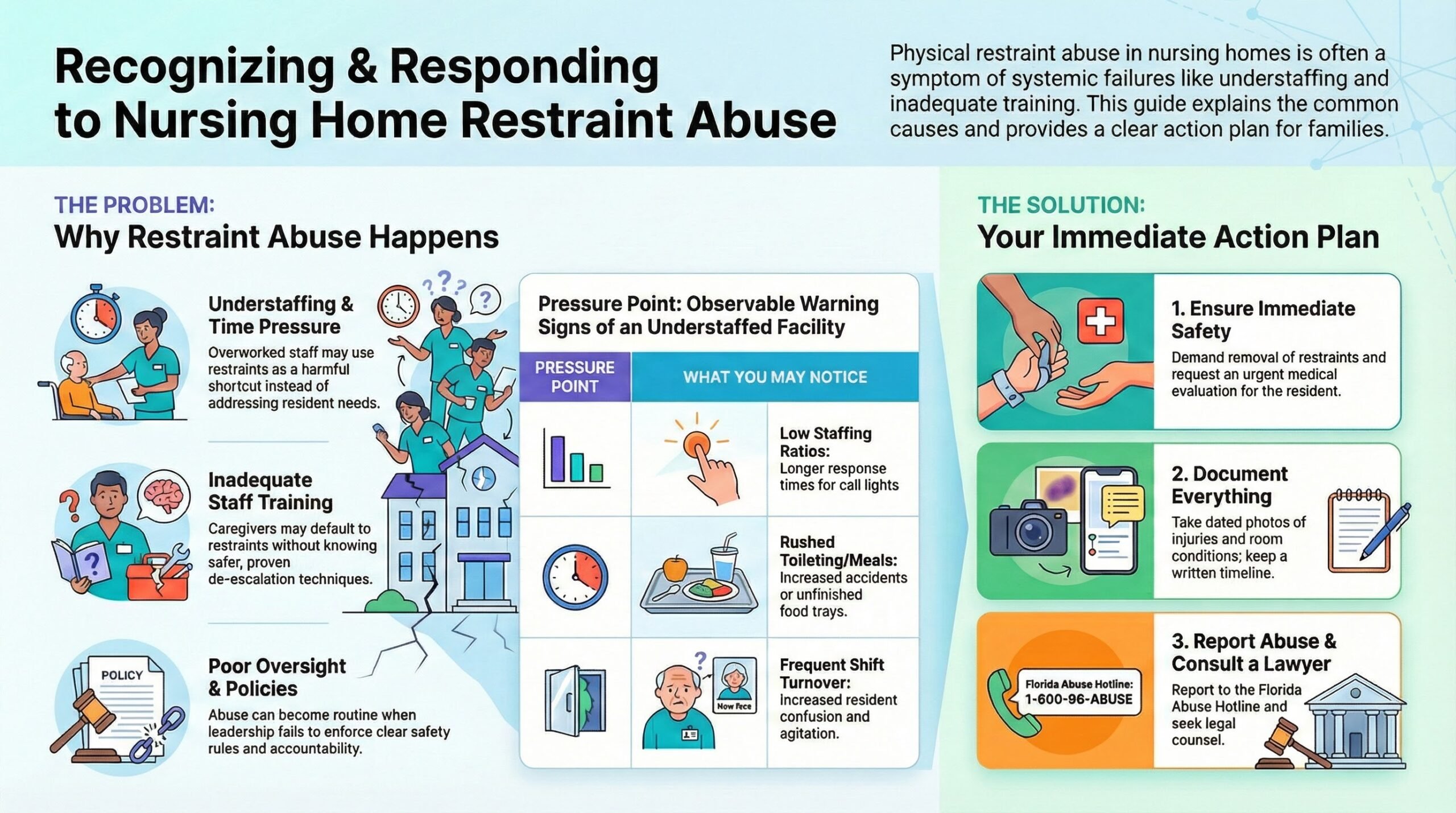
When you investigate why physical restraints get misused in Fort Lauderdale nursing homes, you’ll often see understaffing and constant time pressure push staff toward quick, harmful shortcuts.
You may also find inadequate training and improper behavior management that lead caregivers to restrain residents rather than use safer alternatives.
And when oversight is weak, and policies are unclear or ignored, restraint abuse can become routine.
Understaffing And Time Pressure
Although most facilities promise attentive, individualized care, chronic understaffing and relentless time pressure often push staff to resort to physical restraints as a shortcut rather than addressing a resident’s real needs. When staffing ratios fall, you may see call lights ignored, toileting delayed, and meals rushed, so a restraint becomes the “quick fix” to prevent wandering or falls.
High shift turnover also breaks continuity, leaving residents unsettled and caregivers scrambling. If you’re devoted to protecting elders, watch for these workload signals and speak up early.
| Pressure point | What you may notice |
|---|---|
| Low staffing ratios | Longer response times |
| Overbooked rounds | Missed repositioning |
| Rushed toileting | Increased accidents |
| Meal-time crunch | Unfinished trays |
| Frequent shift turnover | Confusion, agitation |
Inadequate Staff Training
Without proper training, staff may mistake a resident’s confusion, pain, or agitation for “noncompliance” and reach for restraints instead of proven, safer interventions.
When you serve older adults, you need practical skills: safe transfers, fall-risk awareness, dementia communication basics, and how to spot medication side effects that mimic “behavior.”
If your facility doesn’t build staff competencies through ongoing coaching and scenario-based drills, shortcuts can become routine, and residents can get hurt.
You can push for clear restraint policies taught during onboarding and reinforced in refreshers, rather than burying them in a binder.
Demand training audits that verify who completed courses, how skills were checked, and whether staff can apply them on the floor.
Better training protects dignity, reduces injuries, and strengthens trust with families.
Improper Behavior Management
Because some facilities treat “difficult” behavior as a disciplinary issue rather than a clinical warning sign, staff may resort to physical restraints rather than addressing the underlying trigger.
You often see this when agitation, wandering, or calling out stems from pain, infection, dehydration, medication side effects, loneliness, or fear. Instead of evaluating and comforting, workers may default to control.
That’s not care—it’s convenience.
If you’re serving an older adult, you can advocate for humane behavior modification that’s person-centered, not punitive.
Ask the team to identify patterns, adjust routines, offer toileting and hydration, and use calming communication. Request restraint alternatives, such as supervised walks, activity engagement, sensory tools, music, or environmental changes, to reduce stress.
When staff manage behavior properly, you protect dignity and prevent avoidable harm.
Poor Oversight And Policies
Person-centered behavior support only works when the facility backs it with strong oversight and clear, enforceable policies.
When leadership stays hands-off, shortcuts creep in, and restraints become the default rather than a last resort.
You see it when care plans aren’t updated, de-escalation steps aren’t documented, and supervisors don’t review incidents in real time.
You can’t protect residents without staff accountability. If no one tracks who authorized a restraint, why it happened, and what alternatives were tried, harm repeats. Weak training and inconsistent discipline also signal that safety rules are optional.
Regular policy audits help you spot gaps, fix workflow problems, and align practice with state and federal standards. With clear reporting lines and consistent follow-through, you support dignity, reduce trauma, and keep residents safer every shift.
Legal Rights of Fort Lauderdale Nursing Home Physical Restraints Abuse Victims
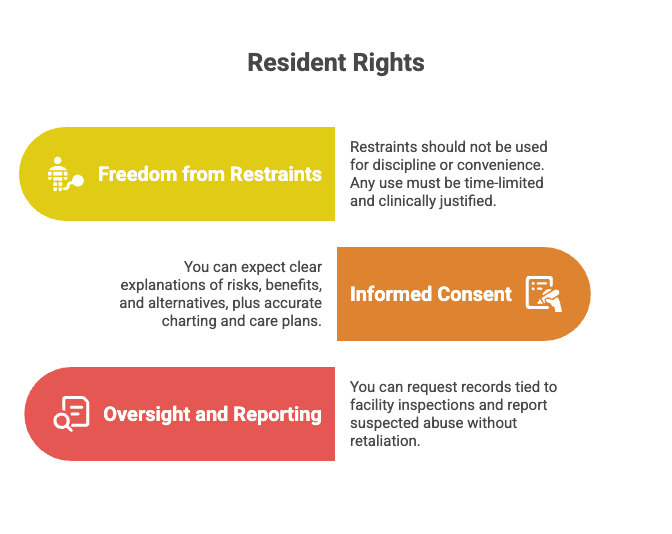
When a Fort Lauderdale nursing home uses physical restraints to control a resident instead of addressing a medical need, Florida and federal law give you clear rights to demand accountability. You’re entitled to care that protects dignity, promotes mobility, and uses the least restrictive alternatives. Restraints can’t replace attentive staffing, and they shouldn’t silence behaviors that signal pain, fear, or unmet needs.
- Freedom from unnecessary restraints: You can insist that restraints aren’t used for discipline or staff convenience, and that any use is time-limited and clinically justified.
- Informed consent and truthful records: You can expect clear explanations of risks, benefits, and alternatives, plus accurate charting and care plans that match what happens.
- Oversight and reporting protections: You can request records tied to facility inspections and report suspected abuse without retaliation, helping safeguard other residents, too.
These rights let you serve your loved one with courage and compassion.


Steps to Take After a Fort Lauderdale Nursing Home Physical Restraints Abuse
You should first ensure the resident’s safety by requesting immediate medical care and removing any improper restraints.
Next, you’ll want to document everything—photos, dates, staff names, and visible injuries—while details are fresh.
Then report the abuse to the facility and appropriate authorities, and consult a Fort Lauderdale nursing home restraints lawyer to protect your loved one’s rights.
Ensure Immediate Resident Safety
Although the shock can hit hard, your first priority after suspected physical restraints abuse in a Fort Lauderdale nursing home is securing the resident’s immediate safety.
Stay calm, move with purpose, and request immediate intervention from the charge nurse or administrator.
Ask staff to remove any restraints unless a physician’s order and proper monitoring justify them, and insist on humane, least-restrictive care.
If the resident appears distressed, call 911 and remain with them until help arrives.
You can also request a different room, unit, or caregiver assignment to reduce risk. Confirm the facility follows its safety protocols for fall prevention, supervision, hydration, toileting, and skin checks.
Reach out to the resident’s physician for urgent medical guidance. If staff resists, contact Florida’s Long-Term Care Ombudsman immediately.
Document Evidence And Injuries
Once the resident’s safe, start documenting everything you can before details fade or evidence disappears.
Use your phone to document marks, bruises, abrasions, bedrails, straps, wheelchair belts, and the room setup. Take wide shots and close-ups, and note the date, time, and lighting.
Ask staff for copies of medical records, including nursing notes, care plans, medication logs, and restraint assessments.
Keep a simple notebook that tracks injury timelines: when you first noticed changes, what the resident said, and how symptoms progressed.
If other residents, visitors, or staff observed restraint use or distress, request witness statements in writing, signed and dated.
Save voicemails, emails, and facility notices.
Store everything securely, and don’t edit images or rewrite notes later.
Report Abuse And Consult Counsel
After you’ve gathered crucial documentation, report suspected restraint abuse right away to the Florida Abuse Hotline (1-800-96-ABUSE) and notify the facility administrator in writing so there’s a clear record of your complaint.
Request the resident’s care plan, restraint orders, and incident reports, and schedule prompt family meetings to address safety and dignity.
| Do this now | Why it matters |
|---|---|
| Call the hotline | Triggers oversight |
| Write the administrator | Creates proof |
| Request records | Exposes policy breaches |
| Seek medical review | Documents harm |
| Contact a lawyer | Protects rights |
Consult counsel early to avoid intimidation or delayed disclosures. You’ll also help your loved one access emotional support, advocacy services, and, if needed, a safer placement.
How a Fort Lauderdale Nursing Home Physical Restraints Abuse Lawyer Can Help You
When you suspect a nursing home used physical restraints to control your loved one, a Fort Lauderdale physical restraints abuse lawyer can step in fast to protect them and preserve evidence.
You don’t have to carry this burden alone; you can act with compassion while holding a facility accountable and restoring resident dignity.
Your lawyer identifies consent issues, reviews care plans, and challenges “safety” excuses that mask convenience or understaffing.
They also coordinate with medical providers to ensure your loved one receives a proper evaluation without delay.
- Secure proof quickly: obtain incident reports, staffing logs, camera footage, care notes, and photos before they’re changed or lost.
- Stop ongoing harm: send preservation letters, demand immediate care meetings, and push for safer alternatives to restraints.
- Pursue a claim: calculate damages, negotiate firmly, and file suit if needed, so your family can focus on healing and service.
Long-Term Effects of Fort Lauderdale Nursing Home Physical Restraint Abuse Injuries
When staff misuse physical restraints, you can face chronic mobility problems and pain that don’t fade with time.
You may also carry psychological trauma and fear long after the incident ends.
Even worse, you can be left with lasting skin breakdown and nerve damage that complicates daily life and recovery.
Chronic Mobility And Pain
| Lasting effect | How it develops | What helps |
|---|---|---|
| Joint stiffness | prolonged immobility | range-of-motion therapy |
| Muscle wasting | disuse | guided strengthening |
| Nerve injury | pressure/compression | medical evaluation |
| Falls risk | deconditioning | mobility aids, training |
Psychological Trauma And Fear
Physical restraints don’t just weaken a resident’s body over time—they can also leave lasting psychological wounds. When you’re tied down or confined, your brain learns to expect danger, even in ordinary caregiving moments.
You may see hypervigilance, nightmares, panic, and post-traumatic stress that lingers long after the restraints are removed.
You might also notice Attachment disruption: the resident stops trusting staff, pulls away from family, or clings desperately to the first person who feels safe. Shame and helplessness can replace dignity, making bathing, meals, and medical care feel like threats. If you serve older adults, you can help by documenting triggers, insisting on trauma-informed care, and pushing for restraint-free alternatives. When fear becomes a daily reality, accountability and compassionate advocacy matter.
Lasting Skin And Nerve Damage
Enduring pressure from belts, cuffs, or tightly tucked sheets can break down fragile skin and irritate nerves, long after a restraint is removed.
You may see slow-healing sores, bruising, and tears that invite infection, especially when staff delay cleaning or repositioning.
When circulation gets cut off, tissue ischemia can starve areas of oxygen, leaving serious damage that doesn’t match what you see on the surface.
Nerves compressed at the wrists, ankles, hips, or shoulders can trigger burning, numbness, and weakness; over time, this can lead to skin neuropathy that limits mobility and independence.
You can best serve your loved one by documenting marks, requesting wound and neuro checks, and insisting on restraint-free care plans that protect dignity, comfort, and long-term health outcomes.
Proving Liability in Fort Lauderdale Nursing Home Physical Restraints Abuse Cases
Because restraint abuse often happens behind closed doors, proving liability in a Fort Lauderdale nursing home case starts with showing the facility chose convenience over safety.
You do that by gathering objective proof that restraints weren’t clinically necessary, weren’t properly monitored, or were used as punishment or staffing shortcuts.
Request the resident’s chart and compare orders to actual practice. Look for missing or altered restraint documentation, late entries, or vague “agitation” notes that don’t justify immobilization.
Secure incident reports, care plans, fall logs, and staffing schedules to show patterns of understaffing or repeated restraint use. Interview residents, families, and former employees, and preserve photos of bruising, pressure marks, or wrist abrasions.
Use medical records and forensic analysis to connect the timing, placement, and severity of injuries to specific restraint methods. You’ll also rely on Florida regulations and facility policies to show breaches in training, supervision, and reporting.
Compensation for Fort Lauderdale Nursing Home Physical Restraints Abuse Damages
Accountability often starts with making the nursing home pay for every harm its restraint misuse caused. You can seek compensation that restores dignity and supports your loved one’s healing, while also protecting other residents from repeat misconduct.
During the compensation process, you’ll document physical injuries like bruises, fractures, pressure sores, and loss of mobility, plus emotional trauma, fear, and humiliation. You’ll also pursue reimbursement for hospital visits, medications, therapy, mobility aids, and increased care needs.
If restraints worsened existing conditions, you can include that aggravation as well. Your damages calculation should reflect both economic losses (bills, future care, replacement services) and non-economic losses (pain, suffering, loss of enjoyment of life).
When misconduct was reckless or profit-driven—like understaffing that leads to restraints—you may also pursue punitive damages to deter future harm. You’re not just seeking money; you’re insisting on safer, compassionate care.
The Statute of Limitations for Fort Lauderdale Nursing Home Physical Restraints Abuse Cases
Even if you’ve just uncovered that a facility used physical restraints improperly, Florida’s statute of limitations can cut off your right to file a lawsuit if you wait too long.
You’ll want to act with purpose, because your ability to protect a loved one—and help prevent future harm to other residents—depends on meeting strict filing deadlines.
In Fort Lauderdale nursing home abuse matters, the time limit can turn on statute nuances like when the injury occurred, when you reasonably discovered it, and whether the conduct involved concealment or records issues.
If the resident has passed away, different timelines may apply, and the clock can start sooner than families expect. Don’t rely on verbal assurances from a facility or slow internal investigations.
Preserve incident notes, photos, care plans, and restraint documentation, and request records promptly. By moving quickly, you honor the resident’s dignity and keep your legal options open while memories and evidence remain fresh.
Why You Need an Experienced Fort Lauderdale Nursing Home Physical Restraints Abuse Lawyer
Meeting Florida’s filing deadlines is only the first step—what you do next can decide whether a restraint abuse claim gains traction or gets buried in paperwork and facility narratives.
You need an experienced Fort Lauderdale nursing home physical restraints abuse lawyer to secure records fast, preserve video, and lock in witness statements before memories shift or logs “disappear.”
You’ll also need someone who can translate medical charts into proof of harm and connect restraint use to preventable injuries.
An experienced lawyer can cut through defenses that misuse Staff Rights to justify excessive control, while still respecting lawful workplace protections.
You can push for Restraint Alternatives that protect residents’ dignity and safety, not convenience.
With skilled Family Advocacy, you’ll communicate clearly with regulators, doctors, and the facility without getting sidelined.
You’ll also gain Emotional Support—steady guidance that helps you keep serving your loved one with resolve.
How to Choose the Right Fort Lauderdale Nursing Home Physical Restraints Abuse Lawyer for Your Case
Choosing the right Fort Lauderdale nursing home physical restraints abuse lawyer can feel overwhelming, but a few concrete criteria will help you move fast and protect your loved one’s case.
Start by prioritizing compassion and accountability: you want counsel who treats your family with dignity and pursues safer care for others, too. Ask how they investigate restraint use, preserve records, and coordinate medical review.
| What to Evaluate | What You Should Look For |
|---|---|
| Experience | Specific nursing home restraints and neglect litigation |
| Client interviews | Listens, explains options, and respects your goals |
| Fee structures | Clear terms, written costs, and no surprise billing |
| Communication | Fast updates, direct access, and a defined timeline |
During your consult, bring incident notes, photos, and facility paperwork, then ask who handles the case day to day. Choose the lawyer who answers plainly, acts quickly, and aligns with your mission to protect vulnerable residents.
About the Law Offices of Anidjar and Levine
Once you’ve identified what you need in a nursing home restraints abuse lawyer, you’ll want to know who you’re trusting with your loved one’s case.
At the Law Offices of Anidjar and Levine, you’ll work with a team that treats advocacy as service, focused on protecting dignity and safety in long-term care facilities.
You won’t get lost in the process. You’ll have direct communication, clear updates, and help gathering records, speaking with witnesses, and documenting injuries linked to improper restraints.
The firm’s office history reflects a commitment to Florida injury victims and a practical approach: investigate quickly, build the case, and push for accountability.
You can also review client testimonials to see how others felt supported, informed, and respected during hard moments.
If you’re driven to stand up for your loved one and prevent future harm, you’ll find guidance that matches your mission and priorities.
Frequently Asked Questions
What Is the Difference Between Restraints and Medically Necessary Immobilization?
Restraints limit your movement primarily for staff convenience or behavior control, often without clear clinical benefit.
Medically necessary immobilization supports healing or safety as directed by a provider, based on an assessment and ongoing monitoring.
You use the least restrictive method, set time limits, and document goals.
With physical immobilization, you must justify the necessity and reassess frequently.
Voluntary positioning involves your consent and comfort, using pillows or supports to prevent harm.
Can I Move My Loved One Without Harming the Legal Case?
Yes, you can move your loved one without harming the legal case if you act carefully.
You should prioritize safety and continuity of care while preserving evidence.
Request complete medical and facility records before transfer, and ask staff to keep restraint logs intact.
Take dated photos, save communications, and focus on documenting injuries with independent medical evaluations.
Don’t sign broad releases or waivers.
You’ll also want to notify the facility in writing.
Will Reporting to the State Trigger Retaliation Against My Loved One?
Reporting to the state can increase the risk of retaliation, but you can reduce it by acting quickly and staying observant.
Watch for retaliation signs like sudden isolation, rough handling, withheld care, medication changes, unexplained injuries, or staff hostility.
Take protective steps: document dates and photos, request a care-plan meeting, keep frequent visits/calls, notify the administrator in writing, ask the state to keep your report confidential, and escalate to ombudsman or police if needed.
How Do I Obtain Surveillance Footage From the Nursing Home?
You obtain surveillance footage by sending a written request to the nursing home administrator and requesting immediate preservation of all relevant camera footage, along with the dates and times.
You should also request the facility’s retention policy and incident reports.
If they refuse or delay, you can pursue a legal subpoena through an attorney or the court. Act quickly, since footage often overwrites within days. Keep copies of everything you send.
Can Medicaid or Medicare Affect Any Settlement or Recovery?
Yes—Medicaid or Medicare can reduce what you ultimately keep. If they paid for related care, you may face Medicaid liens and Medicare offsets that must be resolved from any settlement or judgment.
You’ll need to identify coverage, request payment ledgers, and negotiate, where allowed, to protect your loved one’s recovery. Handle these repayment claims early, document every expense, and coordinate approvals before you distribute funds to beneficiaries.
—————————
If you suspect a loved one has suffered physical restraint abuse in a Fort Lauderdale nursing home, you don’t have to face it alone.
You can take steps to protect their safety, document what happened, and pursue accountability.
A skilled Fort Lauderdale Nursing Home Abuse and Neglect Lawyer can help you understand your rights, meet pivotal deadlines, and seek compensation for medical costs, pain, and emotional harm.
When you’re ready, the Law Offices of Anidjar and Levine can help.


We Can Help.