



If you suspect nursing home physical abuse in Fort Lauderdale, you need the Law Offices of Anidjar and Levine to protect your loved one quickly and build a strong claim.
You can secure medical care, photograph bruises or fractures, and request incident reports, medication logs, and care plans before evidence disappears.
An attorney can preserve surveillance footage, interview witnesses, deal with administrators and insurers, and pursue compensation for medical bills, relocation costs, and emotional harm.
Learn more about your legal options by speaking with a Fort Lauderdale Nursing Home Abuse and Neglect Lawyer and see the crucial steps, deadlines, and what to expect.
Key Takeaways
- A Fort Lauderdale nursing home physical abuse lawyer can act fast to protect your loved one, stop harm, and preserve critical evidence.
- They obtain records, incident reports, medication logs, care plans, and surveillance footage before it’s lost or altered.
- They document injuries with photos, timelines, witness statements, and medical expert input to link harm to facility failures.
- They handle reporting, communications, and negotiations so families aren’t dismissed while meeting deadlines and building leverage.
- They pursue compensation for medical bills and care changes, and challenge facility excuses blaming falls, aging, or preexisting conditions.
How We Can Help With Your Fort Lauderdale Nursing Home Physical Abuse Claim
If you suspect a loved one has suffered physical abuse in a Fort Lauderdale nursing home, we can step in quickly to protect them and build a strong claim. You’ll get a clear action plan, fast communication, and help arranging immediate safety measures so your loved one isn’t left at risk.
You can rely on us to preserve evidence, request records, interview witnesses, and coordinate with qualified professionals when needed. We’ll handle calls, letters, and negotiations so you can stay focused on caregiving and on making steady decisions.
If family conflict is rising, you’ll have a calm advocate who keeps everyone aligned around your loved one’s well-being.



You’ll also get guidance that supports long-term stability, including how a potential recovery fits into financial planning for ongoing care. When litigation becomes necessary, you’ll have a prepared team that files on time, presents your story clearly, and fights for accountability with compassion and resolve.
Understanding Fort Lauderdale Nursing Home Physical Abuse Cases
Physical abuse in a Fort Lauderdale nursing home often hides behind vague explanations, rushed chart notes, or “accidents” that don’t add up, so taking quick action is only part of protecting your loved one. You also need to understand what a physical abuse case looks like under Florida law and facility rules, so you can respond with steady, informed care.
You’ll typically focus on observable harm and the story around it: unexplained bruises, fractures, restraint marks, sudden fearfulness, or pain during care. You can support your concerns by requesting records, incident reports, medication logs, and care plans, and by documenting injuries with dates, photos, and witness names.
Ask direct questions about supervision, reporting steps, and staff training requirements, and insist on clear answers.
Through family advocacy, you can push for immediate safety measures, appropriate medical evaluation, and a thorough internal review while preserving evidence for a potential claim.
Common Causes of Fort Lauderdale Nursing Home Physical Abuses
When you’re looking at why physical abuse happens in Fort Lauderdale nursing homes, you’ll often see chronic understaffing that leaves workers overworked and residents unprotected.
You’ll also run into inadequate training and poor hiring and screening, which put unprepared or unsafe caregivers in direct contact with vulnerable seniors.
You can’t ignore the role of weak oversight, because when no one monitors care or enforces rules, misconduct can spread and injuries can follow.
Understaffing And Overwork
Cutting corners on staffing can turn a Fort Lauderdale nursing home into a pressure cooker, and residents often pay the price.
When you’re caring for too many people at once, you’re forced to rush showers, transfers, and toileting, and that’s when grips get too tight, tempers flare, and preventable falls happen. Exhaustion also erodes patience, making rough handling more likely.
You can often trace abuse risk to broken shift patterns—double shifts, skipped breaks, and constant call-ins that leave residents waiting.
As workloads rise, staff morale drops, and small frustrations can spill into harmful contact. If you notice repeated bruises, sudden fear, or frantic call lights, you’re seeing warning signs of a system pushed past its limits.
Inadequate Staff Training


Too often, nursing homes put hands-on caregivers on the floor without enough training to move, bathe, and reposition residents safely. When you’re taught shortcuts instead of proper transfer techniques, you can unintentionally cause bruises, skin tears, or painful falls. Training gaps also show up in de-escalation: without clear guidance, a stressed aide may respond with rough handling rather than calming words and safe redirection.
You can push for stronger staff development that includes practical drills, supervised shadowing, and refresher sessions on residents’ care plans. You can also insist on routine competency assessments, not just check-the-box videos, so every caregiver proves they can lift, support, and protect vulnerable residents. With consistent coaching, you help prevent harm and preserve dignity.
Poor Hiring And Screening
Rushed hiring and weak screening can put the wrong people in direct contact with fragile residents. When a facility fills shifts fast, you may see staff hired without meaningful background checks or careful reference verification.
That shortcut can miss prior violence, theft, or patterns of intimidation. It can also overlook burnout, substance misuse, or poor conflict skills that escalate routine care into rough handling.


If you’re committed to dignified care, you expect employers to screen for patience, empathy, and steady judgment, not just a warm body. You can watch for warning signs: frequent turnover, workers who dodge questions about experience, or aides who speak harshly to residents. When hiring fails, residents pay the price in fear, bruises, and broken trust.
Lack Of Proper Oversight
When a nursing home doesn’t monitor its staff closely, physical abuse can happen in plain sight. You may see bruises explained away, call lights ignored, or rough handling during transfers because no supervisor checks routines, reviews incident logs, or responds promptly to complaints.
Weak training follow-ups and absent leadership let harmful behavior repeat.
You can help prevent this by asking who’s on duty, how cameras and rounds are used, and how discipline works when rules are broken. Push for transparent documentation, timely medical evaluations, and clear reporting channels. Regulatory audits matter, but they can’t replace consistent daily supervision. Family oversight also matters: visit at varied times, talk with residents, and document concerns in writing. If the facility won’t act, you should report it and seek help quickly.
Legal Rights of Fort Lauderdale Nursing Home Physical Abuse Victims
Although physical abuse in a Fort Lauderdale nursing home can leave you feeling powerless, Florida law gives you clear rights and strong legal options. You’re entitled to live free from harm, neglect, intimidation, and unreasonable restraint.
You can also insist that the facility respect your dignity, capacity for consent, and privacy rights, even when you rely on others for daily care. When you speak up, you protect not only yourself but also other residents who may be afraid to ask for help.
Your legal rights commonly include:
- Safe, humane care with proper supervision and staffing
- Freedom from physical punishment, threats, and retaliation
- Access to medical attention, records, and truthful explanations
- The ability to pursue damages for injuries, pain, and related losses

You can hold the nursing home and responsible staff accountable when they violate these protections. By acting with compassion and resolve, you help restore safety and honor in your community.
Steps to Take After a Fort Lauderdale Nursing Home Physical Abuse
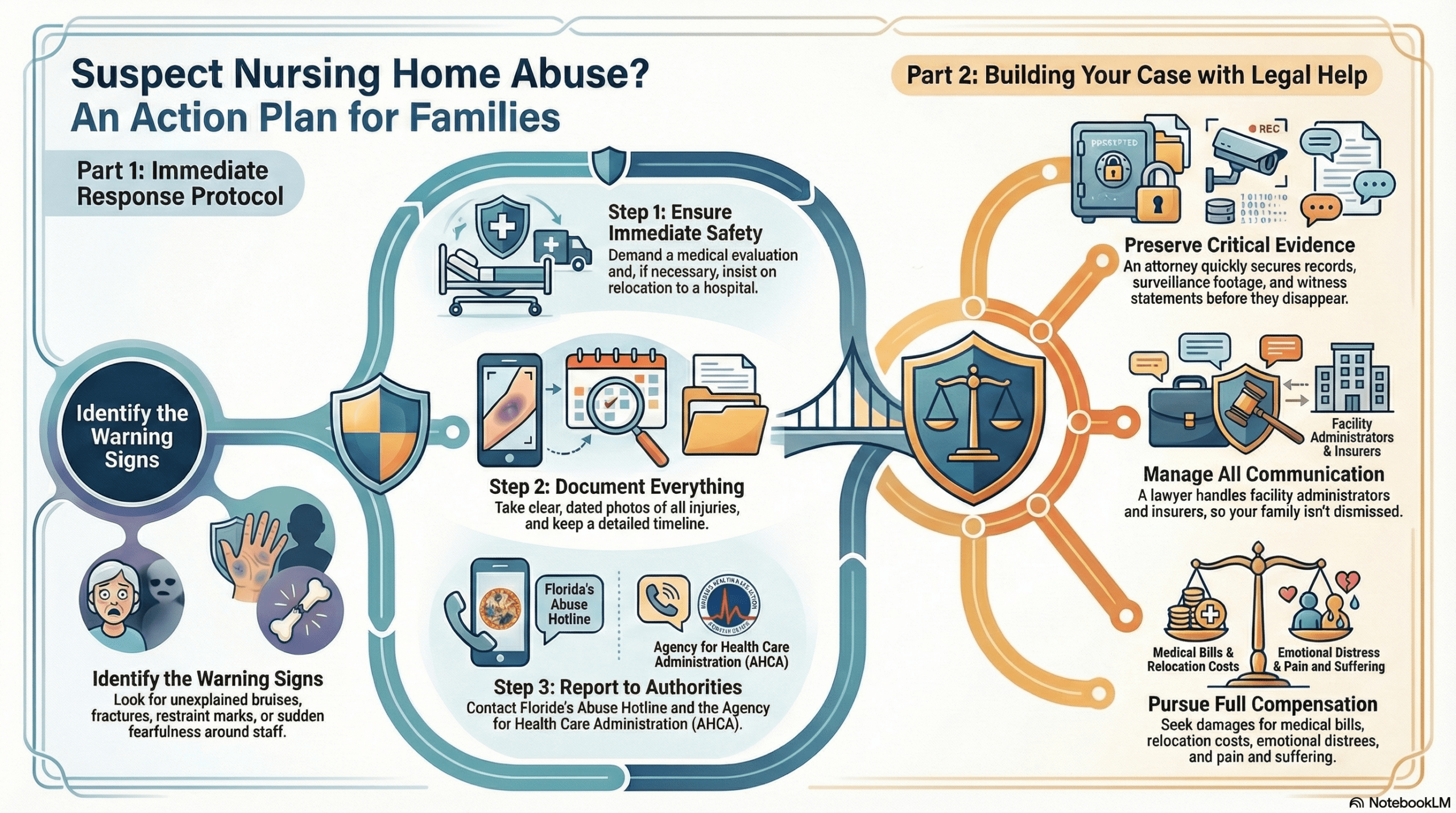
After you suspect physical abuse in a Fort Lauderdale nursing home, you need to secure your loved one’s immediate safety by requesting medical care and, if necessary, moving them out of harm’s way.
You should document everything—photos of injuries, medical records, witness names, and dates—so you preserve crucial evidence.
You also need to report the abuse to the proper authorities right away to trigger an investigation and protect others.
Ensure Immediate Safety
Start by removing your loved one from immediate danger and demanding medical attention right away.
If you believe staff can’t keep them safe, insist on Emergency relocation to a hospital, another unit, or a different facility. Stay calm but firm, and don’t accept delays.
Ask the charge nurse for an immediate Safety assessment, including supervision levels, room placement, and who has access to your loved one. Request that alleged aggressors have no contact with the facility while the facility addresses the risk.
If your loved one can communicate, listen closely, and reassure them that they’re not to blame. Bring a trusted family member or advocate so you’re not handling this alone. Your steady presence protects them and honors their dignity while you secure safer care.
Document Injuries And Evidence
Once you’ve gotten your loved one to safety, lock in the facts by documenting every injury and red flag before it can disappear. Take clear, well-lit photos of bruises, cuts, swelling, torn clothing, and unsafe room conditions. Capture wide shots for context and close-ups for detail, then note dates, times, and who was present.
Practice careful wound cataloging: size, color, location, pain level, and any changes day to day. Save medical records, discharge papers, medication lists, and billing statements, and request copies of care plans and incident notes.
Keep a simple timeline of what you saw and what staff said, using exact quotes when possible. Use photo authentication by keeping original files, avoiding filters, and backing them up securely.

Report Abuse To Authorities
Even if the facility promises it’ll “handle it internally,” you should report suspected physical abuse right away so a neutral agency can investigate and stop further harm.
Call 911 if there’s immediate danger, then contact Florida DCF’s Abuse Hotline and the Agency for Health Care Administration (AHCA) to start the reporting process.
Ask for a confirmation number, write down who you spoke with, and share dates, times, witnesses, and your documented injuries and photos.
Notify the resident’s physician and request an exam to protect their health and create an independent record.
Don’t confront the accused staff alone; let authorities preserve evidence and conduct proper interviews.
Your steady family advocacy can safeguard other residents, too.
If you’re unsure, a lawyer can help you report accurately and follow up.
How a Fort Lauderdale Nursing Home Physical Abuse Lawyer Can Help You
Although nursing home facilities have a duty to keep residents safe, physical abuse can still happen behind closed doors, and you may not know what to do next. A Fort Lauderdale nursing home physical abuse lawyer helps you act with purpose, protect your loved one, and honor your commitment to their dignity. You’ll get clear guidance that respects Family dynamics while keeping the focus on safety and accountability.
Your lawyer can:
- Coordinate reporting steps and communicate with administrators so you don’t get brushed off
- Drive Evidence preservation by securing records, photos, witness statements, and surveillance requests quickly
- Arrange interviews with staff and residents and consult medical professionals to clarify what happened
- Handle insurers and deadlines, then pursue compensation for medical bills and necessary care changes

You don’t have to carry this alone. With steady legal support, you can advocate effectively, reduce conflict, and move forward with a plan that protects your loved one’s rights.
Long-Term Effects of Fort Lauderdale Nursing Home Physical Abuse Injuries
When you or your loved one suffers physical abuse in a Fort Lauderdale nursing home, the harm can linger long after the bruises fade.
You may face chronic pain and lasting disability, along with cognitive and emotional decline that affects daily life.
As injuries accumulate, you can lose mobility and independence, making even routine tasks harder to manage.
Chronic Pain And Disability
Lasting harm often shows up long after the bruises fade. When abuse causes fractures, nerve damage, or untreated wounds, you may live with chronic pain that limits walking, dressing, or eating without help. You’ll often need ongoing Pain management, and you should insist on a thorough Functional assessment to document mobility loss, assistive-device needs, and changes in daily care.
If the facility ignores these needs, your condition can worsen, making you dependent on others for basic tasks.
You can serve your loved one best by tracking pain levels, noting missed therapies, and requesting timely medical follow-ups. You should also preserve records and photos, because clear proof of escalating disability can support accountability and secure resources for safer, dignified care.
Cognitive And Emotional Decline
Because physical trauma and neglect can disrupt the brain as much as the body, you may notice cognitive and emotional decline even after visible injuries heal.
You might struggle to focus, follow conversations, or make familiar decisions, and Memory loss can appear as missed appointments, misplaced items, or confusion about names and dates.
Abuse-related fear and sleep disruption can also reshape how you feel and respond.
You may experience Mood swings, irritability, withdrawal, or sudden tears that don’t match the moment.
If you serve others, these changes can feel especially unsettling, because you’re used to showing patience and steadiness.
Still, you can honor your role by naming what’s happening, documenting incidents, and asking for medical and psychological evaluation.
Early support helps protect dignity and prevent further harm.
Reduced Mobility And Independence
Physical abuse can take away more than comfort—it can chip away at how you move through daily life. When injuries heal poorly, you may lose strength, balance, and confidence, making transfers, bathing, and walking unsafe. You might rely on mobility aids sooner than expected, and even then, fatigue and pain can limit outings, therapy, and social connections.
Reduced independence often forces hard choices, such as needing help with meals, dressing, or toileting, or moving to a higher level of care. Families and caregivers who want to serve you well may need to plan for home modifications like ramps, grab bars, widened pathways, and safer flooring. With the right supports and consistent rehabilitation, you can regain function, but abuse-related setbacks can slow progress and increase fall risk.
Proving Liability in Fort Lauderdale Nursing Home Physical Abuse Cases
When a loved one shows signs of being hit, restrained, or otherwise harmed in a facility, you’ll need more than suspicion to hold the right parties accountable. You can serve them best by gathering clear proof, fast, before memories fade and records change.
Start with photos of injuries, dates, and notes about behavior shifts, fear, or sudden pain. Request incident reports, staffing logs, and surveillance footage, and document any refusals.
You’ll strengthen the case with witness testimony from roommates, visitors, and attentive staff, as well as a careful review of medical records to connect bruises, fractures, or medication changes to specific events. Look for patterns: repeated injuries, delayed treatment, or conflicting explanations.
You can also show negligence by comparing the facility’s policies to what actually happened, including training gaps and inadequate supervision. When you build this timeline, you help protect your loved one and prevent harm to others.
Compensation for Fort Lauderdale Nursing Home Physical Abuse Damages
Strong evidence doesn’t just help you prove what happened—it also shapes the compensation you can pursue for the harm your loved one suffered. When you act as their advocate, you can seek damages that restore safety, dignity, and daily care after abuse.
You may recover medical costs for ER visits, hospital stays, medications, therapy, and follow-up evaluations. You can also pursue reimbursement for relocation expenses, increased supervision, and assistive services needed to prevent further harm.
If your loved one missed out on activities or independence, you can request compensation for reduced quality of life and physical pain.
Abuse often leaves deep psychological wounds, so you can claim damages for emotional distress, fear, humiliation, and sleep disruption. When staff or a facility acted with gross disregard for resident safety, you can ask for punitive damages to hold them accountable and deter future mistreatment.
The Statute of Limitations for Fort Lauderdale Nursing Home Physical Abuse Cases
Although you may feel pressure to focus on your loved one’s immediate care first, you can’t ignore Florida’s statute of limitations for nursing home physical abuse claims because it sets a strict deadline to file suit—and missing it can block recovery no matter how clear the evidence is.
You’ll often have a limited window from the date of injury, but Statute nuances can shift when the clock starts, especially if the abuse was concealed or your loved one couldn’t reasonably discover it right away.
To protect them and help prevent future harm, you should document injuries, request incident reports, and preserve photos, medical records, and witness names as soon as you can. Those steps support timely decisions and keep you aligned with filing deadlines.
Also track any changes in condition, transfers, or internal investigations, because they may clarify when you learned crucial facts. If a resident passes away, different deadlines may apply, so you must quickly confirm which timeline governs your claim.

Why You Need an Experienced Fort Lauderdale Nursing Home Physical Abuse Lawyer
Because nursing home physical abuse cases can turn on a single incident report, medical notation, or deadline, you need an experienced Fort Lauderdale lawyer who knows how to move fast and build proof before it disappears.
Nursing home physical abuse cases can hinge on one report, notation, or deadline—an experienced Fort Lauderdale lawyer acts fast to preserve proof.
You’re protecting someone who may be unable to speak up, so you can’t afford delays, lost footage, or incomplete charts.
An experienced lawyer helps you secure records, preserve surveillance, interview witnesses, and connect injuries to the facility’s actions or failures.
You also get guidance on documenting patterns of Elder neglect, not just one visible bruise.
When a facility blames “falls” or “normal aging,” your lawyer can work with medical professionals and investigators to challenge that narrative and show preventable harm.
You want accountability that improves care, not just paperwork.
With strong Family advocacy, you can push for safer staffing, proper supervision, and consequences that deter future abuse for other residents, too.
How to Choose the Right Fort Lauderdale Nursing Home Physical Abuse Lawyer for Your Case
Hiring the right attorney matters just as much as acting fast, since nursing home physical abuse cases often depend on records, timelines, and proof that can disappear.
Start by choosing a lawyer who routinely handles abuse claims, understands medical documentation, and knows how to preserve evidence through prompt letters, photos, and witness outreach.
Ask how they’ll keep you informed. Strong Client communication means clear updates, fast callbacks, and plain-language explanations you can share with concerned family members.
You’ll serve your loved one best when you never have to guess about next steps.
Compare Fee structures before you sign. You should know whether the case works on contingency, what costs may be advanced, and how expenses affect any recovery.
Request the agreement in writing and review it carefully.
Finally, look for a team that treats your relative with dignity, listens without rushing, and builds a case that protects others from harm.
About the Law Offices of Anidjar and Levine
Turn to the Law Offices of Anidjar and Levine when you need a Fort Lauderdale nursing home abuse team that moves quickly and treats your family with respect.
You’ll get clear updates, honest timelines, and a strategy designed to protect your loved one and prevent future harm.
| What you receive | Why it matters |
|---|---|
| Rapid investigation | You preserve records, witnesses, and leverage early. |
| Direct attorney access | You make informed decisions without guesswork. |
You can review client testimonials to see how others felt supported, heard, and guided through difficult choices. You’ll also notice a service mindset: the firm’s community outreach reflects a commitment to safer care for seniors beyond any single case.
When you’re ready to act, you can call, share what happened, and let the team handle communications, evidence requests, and next steps while you focus on your family’s well-being and dignity.
Frequently Asked Questions
Can I Move My Loved One Without Harming the Legal Case?
Yes, you can move your loved one without harming the case, as long as you plan carefully. Focus on the timing of the relocation to ensure you don’t lose access to witnesses, records, or the scene.
Prioritize evidence preservation by requesting full medical charts, incident reports, care plans, photos, and facility communications before the transfer. Document injuries and condition changes promptly.
Notify the key parties in writing, and keep copies of everything so you can continue serving them.
Will Medicaid or Medicare Affect the Settlement or Lawsuit Proceeds?
Yes—Medicare or Medicaid can affect what you keep from a settlement or verdict. Medicare may require reimbursement for related medical bills, and Medicaid recovery can seek repayment from proceeds, depending on state rules and what the funds cover.
You don’t have to face this alone; you can still protect your loved one while honoring the program’s requirements. Careful documentation and Settlement netting strategies help maximize your family’s share.
Are Nursing Home Arbitration Agreements Enforceable in Florida Abuse Cases?
Yes, nursing home arbitration agreements can be enforceable in Florida abuse cases, but you can challenge them.
You’ll look closely at binding clauses, whether the resident had capacity, and whether staff explained terms clearly.
You can also argue procedural fairness—like rushed signing, unequal bargaining power, or hidden fees—makes the agreement unconscionable.
If the clause violates Florida law or federal nursing home rules, you may still go to court.
Can Family Members Recover Damages for Emotional Distress in These Cases?
Yes, you can sometimes recover damages for your own emotional distress, but Florida limits these claims.
You usually must show a direct injury, qualify under the “impact rule” exceptions, or prove you witnessed the abuse and suffered verifiable harm.
In many cases, you pursue emotional recovery through the resident’s claim, plus seek punitive damages when misconduct was intentional or grossly negligent.
You’ll help protect others by holding facilities accountable.
How Confidential Is My Report, and Will the Facility Be Notified Immediately?
Your report is generally confidential, but privacy concerns depend on who you tell and what details you share.
When you file with state regulators or Adult Protective Services, they usually protect your identity as much as the law allows.
The facility often gets notice during the reporting timeline—sometimes quickly if residents face immediate risk, or later during an investigation.
You can ask how and when they’ll notify the facility.
———————–
You don’t have to face a Fort Lauderdale nursing home physical abuse claim alone.
If you suspect abuse, act quickly to protect your loved one, document what you’ve seen, and report it to the proper authorities.
An experienced Fort Lauderdale Nursing Home Abuse and Neglect Lawyer can help you investigate the facility, preserve crucial evidence, and pursue compensation for medical costs, pain and suffering, and other losses.
Contact the Law Offices of Anidjar and Levine to discuss your next steps.


We Can Help.