



If you suspect a Fort Lauderdale nursing home medication overdose, you can act fast to protect your loved one and your claim.
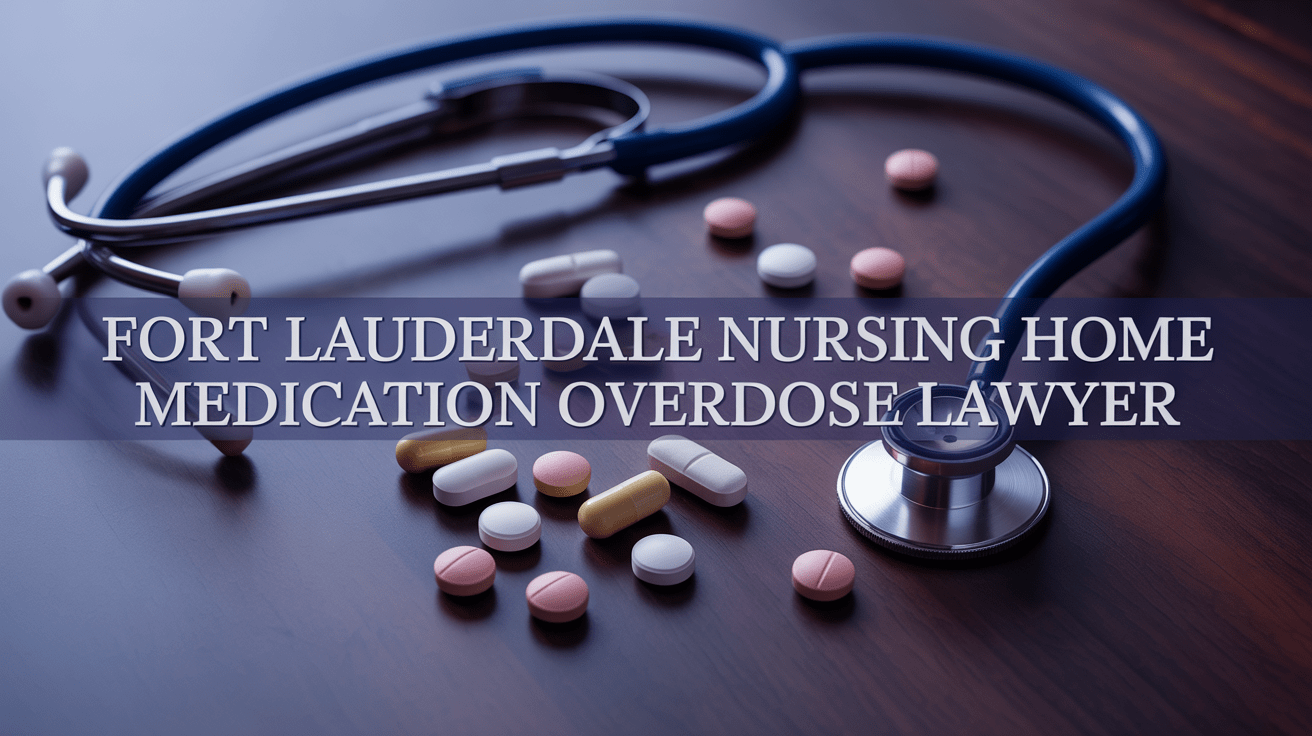
Call 911 for sudden sleepiness, weak breathing, or slurred speech, then demand that the facility document the incident with the exact drug, dose, time, and staff involved.
You should also request MARs, physician orders, pharmacy logs, and an EHR audit trail before records change.
Next, you can report concerns and explore compensation options with the Law Offices of Anidjar and Levine.
Learn more about your rights and possible next steps by speaking with a Fort Lauderdale Nursing Home Abuse and Neglect Lawyer.
Key Takeaways
- Seek emergency care first; call 911 for sudden sleepiness, weak breathing, blue lips, or slurred speech after suspected medication overdose.
- A Fort Lauderdale nursing home overdose lawyer can investigate who ordered, dispensed, administered, and monitored medications, and identify process failures.
- Request and preserve evidence immediately: MARs, physician orders, incident reports, pharmacy logs, pill packaging, photos, and EHR audit trails.
- Report the event to the administrator and Director of Nursing, and consider notifying Florida AHCA and the Long-Term Care Ombudsman.
- Compare facility records with hospital labs and transfer notes to prove causation and support claims for negligence, injury, or wrongful death.
How We Can Help With Your Fort Lauderdale Nursing Home Medication Overdose Claim
If you suspect a medication overdose happened in a Fort Lauderdale nursing home, we can step in quickly to protect your loved one and your claim.
If you suspect a Fort Lauderdale nursing home medication overdose, we can act quickly to protect your loved one and your claim.
You’ll get clear guidance on urgent steps, including requesting records, preserving evidence, and communicating with staff so you don’t get pressured into unfair explanations or paperwork. We’ll coordinate with medical professionals to document harm and connect you with supportive resources, because serving your family’s well-being comes first.



You’ll also have a steady advocate for family meetings, so everyone stays informed, aligned, and focused on your loved one’s needs. We’ll handle insurer and facility calls, calculate losses, and build a demand that reflects medical costs, pain, and future care. If you’re weighing financial planning decisions, we’ll outline likely timelines and options so you can plan responsibly.
When negotiation won’t protect your loved one, we’ll prepare to file suit and push for accountability.
Understanding Fort Lauderdale Nursing Home Medication Overdose Cases
Because medication routines in nursing homes involve multiple handoffs, overdoses in Fort Lauderdale facilities often stem from preventable breakdowns like misread orders, incorrect dosing, missed allergies, dangerous drug interactions, or failure to monitor a resident after administration.
When you’re trying to protect an older adult, it helps to understand what makes these cases distinct: records live across charts, pharmacies, and shift reports, and small errors can compound quickly. You’ll often need to track who ordered the drug, who dispensed it, who administered it, and what follow-up occurred.
Strong medication reconciliation can reveal discrepancies between what was prescribed and what was given, especially during care handovers such as hospital discharges or unit changes.


You can also look for whether staff training matched the resident’s needs and high-risk medications. Through steady family advocacy, you help surface symptoms early, request prompt evaluations, and insist on clear documentation that supports accountability and safer care for everyone involved.
Common Causes of Fort Lauderdale Nursing Home Medication Overdoses
You can often trace a Fort Lauderdale nursing home medication overdose to preventable process breakdowns.
You’ll see prescription mismanagement errors, dosage calculation mistakes, and drug interaction oversights when staff don’t follow orders or coordinate care.
You can also spot monitoring and documentation failures that let warning signs slip by until it’s too late.
Prescription Mismanagement Errors
Prescription mismanagement can turn a routine medication pass into a dangerous overdose. You can help protect residents by watching for gaps in medication reconciliation and pushing for clear pharmacy communication after hospital returns, consultant visits, or formulary swaps. Overdoses often follow duplicate active orders, outdated MAR entries, or PRN meds continued past the stop date.
You serve best by verifying discontinuations, tracking allergy updates, and ensuring handoffs document last administered times.
| Error source | What you’ll see | Safer response |
|---|---|---|
| Duplicate orders | The same drug listed twice | Request one active order |
| Unstopped meds | Old med still on MAR | Confirm stop and document |
| Care transition gaps | New discharge list conflicts | Reconcile before giving |
| Pharmacy delays | Refill/clarification missing | Escalate and record calls |
Dosage Calculation Mistakes


When staff miscalculate a dose, a safe medication can become an overdose within minutes. You may see errors when nurses convert milligrams to milliliters, misread decimals, or use the wrong concentration from the medication cart.
Weight-based dosing can go wrong if a resident’s weight is outdated or entered incorrectly. Rushed shifts and understaffing can push staff to skip double-checks, especially with insulin, anticoagulants, and pain medicines.
You can reduce harm by insisting the facility follows clear training protocols and uses standardized dosing tools. Strong safeguards include independent verification, barcode scanning, and routine calculation audits that catch patterns before someone gets hurt.
If a loved one shows sudden sedation, confusion, breathing changes, or dangerous bleeding, act quickly and document everything for accountability.
Drug Interaction Oversights
Even with the right dose on paper, a resident can still suffer an overdose if staff overlook dangerous drug interactions. You often see this when multiple prescribers add medications without a full review, creating a polypharmacy oversight that magnifies sedation, bleeding, or respiratory suppression.
If you’re serving vulnerable elders, you’ve got to ask how new drugs mix with pain meds, anticoagulants, antidepressants, and anti-anxiety prescriptions. You also need timely pharmacist communication, especially after hospital discharges or consultant visits, so contraindications and duplications don’t slip through.
When a facility skips interaction checks or ignores pharmacy alerts, residents can receive a “normal” dose that acts like a double dose. This preventable harm can escalate quickly, causing crisis and fear.
Monitoring And Documentation Failures
Although the medication list may look correct, monitoring and documentation failures can still turn routine administration into a dangerous overdose.
When vital signs aren’t checked after a dose change, you can miss early warning signals like low blood pressure, confusion, or slowed breathing. If staff don’t document withheld doses, PRN use, or side effects, the next shift may repeat the medication and double the exposure.
Incomplete MAR entries, late charting, and copy‑forward notes also hide patterns that call for a provider review. Even electronic systems can fail if alerts are ignored, orders aren’t reconciled, or barcode scans are bypassed.
With strong staff training, you help guarantee timely assessments, accurate records, and prompt escalation so residents stay safe and cared for.

Legal Rights of Fort Lauderdale Nursing Home Medication Overdose Victims
Because a medication overdose in a Fort Lauderdale nursing home often stems from preventable mistakes, Florida law gives you clear rights to demand answers, secure medical records, and pursue compensation for the harm your loved one suffered.
Your role in patient advocacy matters, especially when consent issues arise around medication changes, PRN dosing, or the use of sedatives.
You can insist that the facility explain who ordered the drug, who administered it, and what monitoring occurred, without accepting vague excuses.
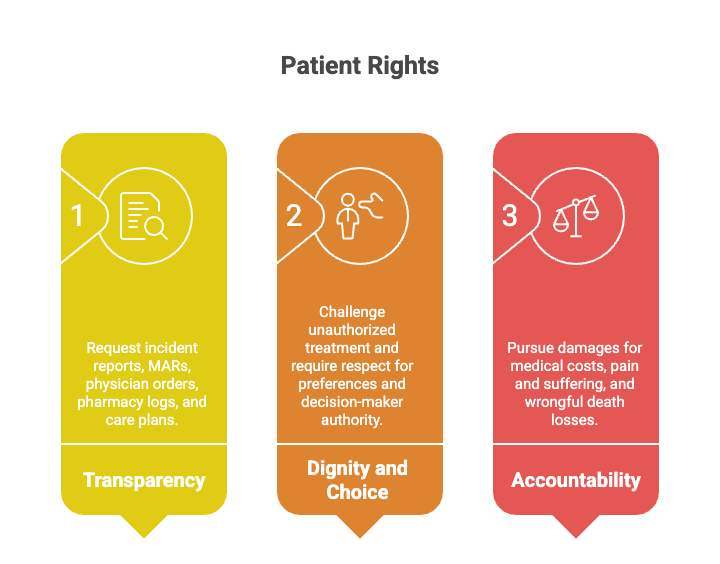
- Right to transparency: You can request incident reports, MARs, physician orders, pharmacy logs, and care plans to confirm dosing, timing, and supervision.
- Right to dignity and informed choice: You can challenge unauthorized treatment and require respect for your loved one’s preferences and decision-maker authority.
- Right to accountability: You can pursue damages for medical costs, pain and suffering, and, in fatal cases, wrongful death losses under Florida law.
Steps to Take After a Fort Lauderdale Nursing Home Medication Overdose
If you suspect a medication overdose in a Fort Lauderdale nursing home, get immediate medical care to stabilize your loved one and document the harm.
You should preserve evidence and records by securing medication lists, MARs, prescriptions, care notes, and photos of symptoms.
Then report the incident promptly to the facility administrator and appropriate authorities so an investigation starts and accountability can follow.
Seek Immediate Medical Care
| You notice | You do |
|---|---|
| Sudden sleepiness | Call 911 |
| Slurred speech | Request paramedics |
| Weak breathing | Ask for oxygen |
| Confusion | Report exact onset |
| Bluish lips | Start CPR if trained |
Preserve Evidence And Records
After you stabilize your loved one, start locking down evidence and records before they disappear or get rewritten. Ask staff to keep the medication vial, blister packs, MAR logs, pharmacy delivery slips, and any PRN notes. Photograph labels, pill counts, timestamps, and your loved one’s symptoms.
Request a complete chart copy, including orders, essential signs, progress notes, incident notes, and transfer records, and write down every name and role you speak with. Keep your own timeline: when you visited, what you saw, and what was said.
Secure voicemail, texts, and emails, and save surveillance references if mentioned. Use strict chain preservation for physical items and pursue digital forensics for EHR audit trails, edits, and access logs. You’re protecting truth and future residents.
Report The Incident Promptly
Don’t wait around—report a suspected medication overdose to the nursing home administrator and the Director of Nursing right away, and insist they document it as an incident.
Ask for the date, time, medication name, dose, and who administered it, then request a copy of the report or written confirmation that it was filed.
Next, call the resident’s physician and pharmacy, and request a medication review to prevent another error.
If the situation is urgent, contact 911.
You can also notify Florida’s Agency for Health Care Administration and the Long-Term Care Ombudsman so oversight begins quickly.
Gather witness statements from staff, roommates, or visitors while memories are fresh.
Keep your own notes to support timeline reconstruction—symptoms observed, changes in essential signs, and every conversation.
Acting fast safeguards the resident and others.
How a Fort Lauderdale Nursing Home Medication Overdose Lawyer Can Help You
When you suspect a nursing home medication overdose harmed your loved one, a Fort Lauderdale nursing home medication overdose lawyer can step in quickly to protect your family’s rights.
You don’t have to shoulder this alone; you can focus on your loved one’s comfort while your lawyer takes action with care and purpose.
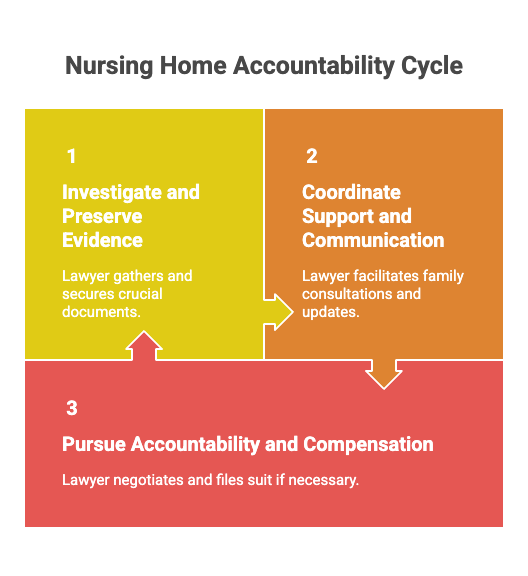
- Investigate and preserve evidence: Your lawyer requests medication administration records, MAR logs, pharmacy orders, and staff notes, then sends preservation letters to stop documents from “disappearing.”
- Coordinate support and communication: You’ll get clear guidance for family consultations, help organize questions for providers, and receive respectful updates that keep everyone aligned.
- Pursue accountability and compensation: Your lawyer calculates losses, supports financial planning, negotiates with insurers, and files suit if the facility won’t act responsibly.
Long-Term Effects of Fort Lauderdale Nursing Home Medication Overdose Injuries
After a medication overdose in a Fort Lauderdale nursing home, you may face long-term neurological and cognitive decline that changes how you think, remember, and communicate.
You can also suffer organ damage complications that create ongoing medical needs and worsen existing conditions.
As weakness and confusion persist, you’re more likely to fall and sustain serious fractures that reduce mobility and independence.
Neurological And Cognitive Decline
Although a medication overdose in a Fort Lauderdale nursing home might look like a temporary setback, it can trigger lasting neurological and cognitive decline that changes how your loved one thinks, remembers, and functions day to day.
You may notice new confusion, slowed speech, poor balance, tremors, or sudden personality shifts that make familiar routines feel impossible.
When attention and memory slip, your loved one can’t advocate for themselves, so you must watch closely and document changes.
Ask providers about brain imaging to identify medication-related injury and rule out other causes.
Then push for cognitive rehabilitation that rebuilds daily skills through structured therapy, repetition, and compassionate coaching.
Organ Damage Complications
Even if your loved one seems to “bounce back” after a medication overdose in a Fort Lauderdale nursing home, the wrong dose can quietly injure vital organs and create long-term complications that don’t show up until days or weeks later. You may notice fatigue, swelling, jaundice, or new confusion and think it’s “just aging,” but overdose-related damage can progress fast.
Sedatives can depress breathing and strain the heart; pain meds can stress the liver; antibiotics and diuretics can trigger renal failure. Repeated injury may leave permanent scarring, including organ fibrosis, and steal years of comfort you’re trying to protect.
| Organ | What you see | Why it matters |
|---|---|---|
| Kidneys | less urine, swelling | toxins build |
| Liver | yellow skin, dark urine | meds can’t clear |
| Heart/Lungs | breathlessness, racing pulse | oxygen drops |
Increased Fall And Fracture Risk
Because the wrong medication or dose can dull alertness and wreck balance, a nursing home overdose often leaves your loved one at a much higher long-term risk of falls and fractures.
You may notice lingering dizziness, slowed reflexes, low blood pressure, or confusion that makes transfers and toileting unsafe.
Even minor environmental hazards—loose rugs, cluttered hallways, poor lighting, or slick bathroom floors—can turn a misstep into a hip fracture or head injury.
You can serve them best by insisting on a falls-risk assessment, mobility supports, and documented medication timing that avoids stacking sedating drugs or giving doses before therapy.
Ask for monitoring after changes, prompt treatment of injuries, and clear incident reports.
If the facility won’t act, you can push for accountability.
Proving Liability in Fort Lauderdale Nursing Home Medication Overdose Cases
Uncovering who’s legally responsible for a nursing home medication overdose in Fort Lauderdale starts with tracing each decision—from prescribing and dispensing to administering and monitoring the drug. You’ll look for breakdowns in medication reconciliation, unclear physician orders, pharmacy labeling errors, or nurses giving the wrong dose, route, or timing.
You can also compare the MAR, chart notes, signs, and lab results to see whether staff recognized toxicity and acted quickly.
To prove liability, you’ll connect the overdose to a specific duty and breach: the facility’s policies, state and federal regulations, and the professional standard of care. You’ll gather incident reports, shift logs, surveillance footage, and witness statements to show who knew what and when.
Patterns matter, too—poor staff training, understaffing, and missed double-checks can reveal systemic neglect. If the nursing home ignored prior errors or failed to monitor high-risk medications, you can show foreseeability and preventability.
Compensation for Fort Lauderdale Nursing Home Medication Overdose Damages
When a medication overdose harms your loved one in a Fort Lauderdale nursing home, compensation should cover more than the immediate medical crisis.
You can seek payment for emergency care, hospital stays, follow-up treatment, rehabilitation, and needed medical equipment. If the overdose worsens existing conditions, you may recover for added therapies, medical consultant visits, and future care planning.
You can also pursue damages that honor the human cost: pain and suffering, emotional distress, loss of enjoyment of life, and the dignity stolen by confusion, falls, or lasting injury.
If you’ve had to step in as a caregiver, compensation may include your out-of-pocket expenses, travel, missed work, and the value of household help you now provide.
When the facility’s conduct shows reckless disregard—like falsified medication logs or ignored physician orders—you may request punitive damages to promote safer practices and protect other residents.
The Statute of Limitations for Fort Lauderdale Nursing Home Medication Overdose Cases
Even if you’re still piecing together how the overdose happened, you can’t wait to learn your deadline to sue, since Florida’s statute of limitations can bar your claim if you file late. In nursing home medication overdose matters, the clock often starts when the injury occurs, but it can also begin when you reasonably should’ve discovered the harm and its cause.
That’s where discovery tolling may matter if records were hidden, symptoms were masked, or the facility’s conduct delayed what you could know.
You’ll also want to ask about deadline exceptions. A case involving a wrongful death, a minor, or an incapacitated resident may follow different time limits or pause the running of time in limited circumstances.
Because deadlines can differ by legal theory and facts, you should gather medication logs, MARs, incident reports, and hospital records now, so you can act quickly and protect the resident’s dignity and voice.
Why You Need an Experienced Fort Lauderdale Nursing Home Medication Overdose Lawyer
Missing a filing deadline can end your case, but meeting it’s only the start—nursing home medication overdose claims in Fort Lauderdale also demand fast, skilled investigation and precise legal framing.
You need an experienced lawyer who can secure MARs, pharmacy logs, physician orders, and incident reports before they “disappear,” then compare them to lab results and hospitalization records to prove causation.
You’ll also need someone who can spot pattern problems: staffing gaps, sloppy handoffs, ignored allergies, or dangerous drug interactions.
An overdose may signal Elder abuse through neglect or reckless administration, and your lawyer can push for accountability beyond a simple “mistake.” If the facility billed for meds not given, diverted prescriptions, or pressured you into unnecessary charges, the case may also involve Financial exploitation.
With skilled counsel, you can protect your loved one, compel corrective action, and pursue damages that support safer care for everyone.
How to Choose the Right Fort Lauderdale Nursing Home Medication Overdose Lawyer for Your Case
Although many attorneys advertise nursing home cases, you should choose a Fort Lauderdale medication overdose lawyer based on what they can prove—and how fast they can move. Ask how they’ll secure MARs, pharmacy logs, signs, and incident reports, and whether they use medical experts to connect the overdose to harm.
You’re advocating for your loved one, so pick counsel who treats your goals like a mission, not a file number.
During your consult, listen for a clear plan: immediate preservation letters, witness outreach, and preparation for family meetings with the facility. You should also ask who’ll handle your case day to day, how often you’ll get updates, and how they measure progress.
Review attorney fees in writing, including contingency percentages and costs, so you can focus on care, not surprises.
Finally, choose a lawyer who explains options plainly and respects your timeline and values.
About the Law Offices of Anidjar and Levine
Turn to the Law Offices of Anidjar and Levine when you need a Fort Lauderdale nursing home medication overdose lawyer who acts quickly to protect evidence and push your case forward.
Turn to the Law Offices of Anidjar and Levine for fast action to protect evidence and move your nursing home overdose case forward.
You’ll work with a team that treats your loved one’s safety as the mission, not a file number.
You can count on prompt updates, clear next steps, and practical help with records, witnesses, and facility communications.
You’ll also see who’s standing with you. Review attorney biographies to understand each lawyer’s background, approach, and commitment to service.
The firm’s history shows a track record of advocating for injured Floridians and holding negligent providers accountable. When a medication error threatens a resident’s life, you shouldn’t carry the burden alone.
You can lean on a firm that prepares every case for strength, negotiates from evidence, and stays ready for trial if the facility won’t do what’s right.

Frequently Asked Questions
What if My Loved One Was Overdosed but Didn’T Show Immediate Symptoms?
If your loved one was overdosed but didn’t show symptoms right away, you can still face serious harm due to delayed onset effects and hidden interactions with other medications.
You should request an immediate medical evaluation, insist on essential monitoring, and request a full medication reconciliation.
You can document every dose, time, and staff note, and report concerns to the facility administrator.
You’ll serve them best by acting quickly and calmly.
Can We Sue a Pharmacy or Prescribing Doctor Along With the Nursing Home?
Yes, you can sue a pharmacy or prescribing doctor along with the nursing home if each contributed to the overdose.
You’ll likely pursue medical malpractice claims and argue joint liability when multiple parties’ errors combine—wrong dose, poor monitoring, bad documentation, or unsafe dispensing.
You’ll need records, expert review, and clear timelines showing who did what.
How Do We Obtain Medication Administration Records and Pharmacy Logs?
You obtain medication administration records and pharmacy logs by requesting the resident’s medical records in writing from the facility and pharmacy, using the authorized representative or executor.
You’ll include HIPAA releases and ask for MARs, eMAR audit trails, dispensing logs, and delivery manifests.
If they delay or refuse, you can use legal subpoenas through your attorney.
You should also request prescriber orders, med lists, incident reports, and chart notes.
Will Reporting the Overdose to AHCA Affect Our Legal Case?
Reporting the overdose to AHCA usually won’t hurt your legal case; it often helps by creating an official record.
You can manage reporting consequences by coordinating timing and messaging with counsel.
You’ll also support evidence preservation because AHCA inquiries can prompt the facility to secure charts, MARs, and pharmacy communications.
Still, you shouldn’t assume everything gets protected automatically—send a written preservation notice and document symptoms, conversations, and care changes right away.
Can My Loved One Be Transferred Without Jeopardizing a Future Claim?
Yes, you can transfer your loved one without jeopardizing a future claim. Prioritize patient relocation for safety and ensure care continuity by obtaining complete records, medication lists, and incident reports before the move.
Take dated photos, keep a symptom journal, and save emails or texts with staff. Request a written discharge summary and confirm that the new facility reviews it. Don’t sign releases or waivers you don’t understand without legal review.
Conclusion
If you suspect a Fort Lauderdale nursing home medication overdose harmed your loved one, you can take action now.
You’ll want medical care secured, records preserved, and the facility held accountable for preventable errors.
With the right lawyer, such as the Law Offices of Anidjar and Levine, you can investigate what happened, identify negligent staff or policies, and pursue compensation for medical costs, pain, and other losses.
Don’t wait—deadlines apply, and early steps can protect your case and your family’s rights.
Learn more about your options by speaking with a Fort Lauderdale Nursing Home Abuse and Neglect Lawyer.


We Can Help.