



If you suspect a preventable infection in a Fort Lauderdale nursing home, the Law Offices of Anidjar and Levine can help protect your loved one’s rights and build a strong claim.
You’ll get help gathering medical records, infection-control logs, staffing schedules, photos, and witness statements, then organizing them into a clear timeline.
Your attorney can work with medical experts to prove causation, negotiate with insurers, and file suit if needed.
To learn more about your legal options, see how a Fort Lauderdale Nursing Home Abuse and Neglect Lawyer can assist you, including crucial steps and deadlines.
Key Takeaways
- A Fort Lauderdale nursing home infection lawyer investigates whether poor hygiene, wound care lapses, or delayed treatment caused a preventable infection.
- They secure medical records, lab results, infection-control logs, staffing schedules, incident reports, photos, and witness statements to build a clear timeline.
- Medical experts can link facility protocol failures to the infection and resulting harm, countering claims that the decline was due only to age.
- Your lawyer negotiates with insurers, reports serious gaps to oversight agencies when appropriate, and files suit if fair compensation isn’t offered.
- Choose counsel who explains the plan and timeline, communicates promptly, and provides written contingency fee terms and costs upfront.
How We Can Help With Your Fort Lauderdale Nursing Home Infection Claim
If you suspect a nursing home’s poor hygiene or delayed medical care caused an infection, we can step in quickly to protect your rights and build a strong claim. You’ll get a clear plan, steady communication, and support that honors your loved one’s dignity.
We listen to your goals and keep the focus on safety, accountability, and better care for others.
You can count on us to gather medical records, facility logs, witness statements, and photos, then organize them into a persuasive timeline.
We’ll perform a practical risk assessment of staffing, wound care, isolation practices, and response times, and we’ll coordinate with qualified reviewers when needed.
We guide family advocacy so you can speak up without feeling overwhelmed, and we’ll handle calls and paperwork.
When it’s time, we lead settlement negotiations with insurers and counsel, press for fair compensation, and prepare to file suit if they won’t do what’s right.
Understanding Fort Lauderdale Nursing Home Infection Cases
After you’ve taken steps to protect your loved one and preserve evidence, it helps to understand what these cases usually involve in Fort Lauderdale. You’re typically showing how an infection emerged during care, how it worsened, and how that harm changed your family’s life.
You’ll focus on records, timelines, and whether the facility followed its own policies and professional standards.
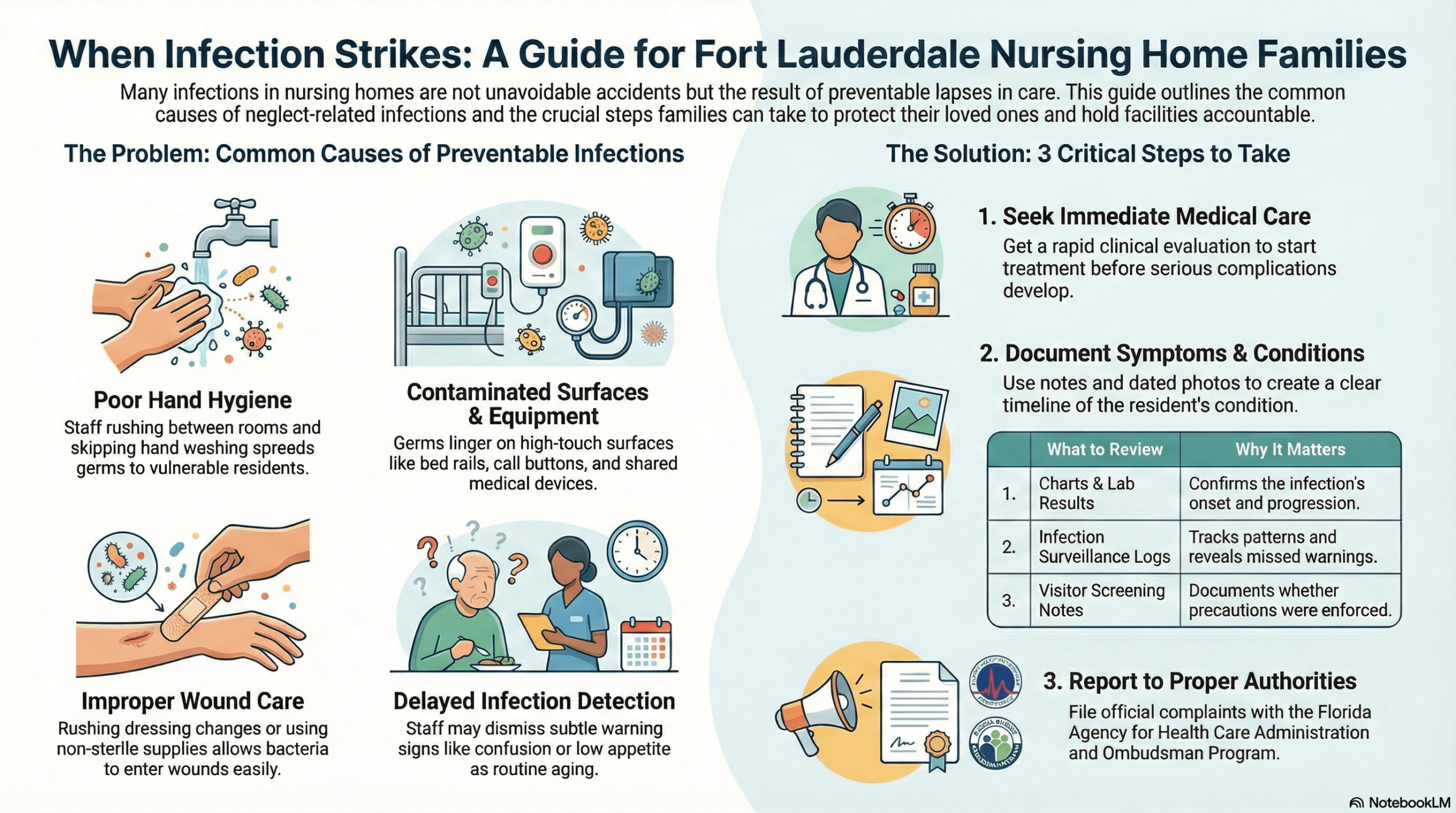
| What you review | Why it matters | What it can show |
|---|---|---|
| Charts and lab results | Confirm onset and progression | Delays, gaps, severity |
| infection surveillance logs | Track patterns and responses | Missed warnings, weak follow-up |
| visitor screening notes | Document precautions and access | Inconsistent enforcement |
You’ll often coordinate with doctors, request incident reports, and compare what staff documented against what you witnessed. Throughout, you’re not just seeking compensation—you’re advocating for safer care, accountability, and a culture that honors residents’ dignity and wellbeing.

Common Causes of Fort Lauderdale Nursing Home Infections
When you suspect an infection in a Fort Lauderdale nursing home, you’ll often find the cause in poor hand hygiene practices and contaminated surfaces or equipment.
You may also see improper wound care that gives bacteria an easy path to spread.
If staff miss early warning signs, delayed detection of infection can allow a treatable issue to become a serious, life-threatening condition.
Poor Hand Hygiene Practices
Too often, poor hand hygiene in nursing homes lets dangerous germs spread from staff to residents and from one resident to another. When you’re caring for vulnerable people, every missed wash matters.
If aides rush between rooms, skip soap and water after toileting help, or forget sanitizer before feeding, you can see infections take hold fast.
You can support safer care by expecting clear routines: wash before and after every resident contact, after glove removal, and after handling bodily fluids. You should also push for training that sticks, adequate supplies, and reminders that don’t shame but reinforce service.
Strong hand hygiene protects dignity, comfort, and recovery. If leadership ignores repeated lapses, demand accountability from staff, documentation, and prompt corrective action.
Contaminated Surfaces And Equipment
Germs don’t just hitch a ride on hands—they linger on bed rails, call buttons, wheelchairs, lift slings, and shared medical devices, then spread as residents touch surfaces and staff move room to room. When you serve vulnerable elders, you’ve got to treat these high-touch areas as infection hotspots, not afterthoughts.



You can spot trouble when rooms smell “clean,” but touchpoints stay sticky, dusty, or visibly soiled. Equipment that rotates between residents—blood pressure cuffs, thermometers, mobility aids—needs consistent disinfection between uses, not end-of-shift wipe-downs.
Strong sanitation protocols include clear checklists, labeled cleaning times, approved disinfectants, and training that matches real workflows. If administrators cut staffing or supplies, you may see corners get cut, and outbreaks follow. Your vigilance helps protect dignity, comfort, and health.
Improper Wound Care
Dirty equipment and high-touch surfaces can spark an outbreak, but infections also start at the bedside through improper wound care. When you serve residents, you protect them by insisting on clean hands, sterile supplies, and gentle technique every time a wound is touched.


If staff rush a dressing change, reuse items, or skip cleansing, bacteria can enter the wound, and a wound infection can take hold. You can also reduce risk by ensuring staff follow the care plan’s dressing frequency, keep the wound dry as ordered, and dispose of soiled materials safely.
Watch for cross-contamination from gloves, bed linens, and shared ointments. Proper documentation and clear handoffs help you maintain consistent care across shifts.
Delayed Infection Detection
Because early symptoms can mimic routine aging, delayed detection of infection often occurs when staff miss subtle changes in a resident’s condition. You may notice new confusion, sleepiness, reduced appetite, shakiness, or a slight fever that comes and goes.
When caregivers don’t track signs, pain, wounds, or urine changes, they can dismiss these warning signs and create a delayed diagnosis.
You serve residents best by speaking up fast and requesting a clear assessment, culture tests, and prompt antibiotics when appropriate. Push for timely lab work and documentation, because testing delays let infections spread to the bloodstream, lungs, or skin.
Ask who reviewed the results, when the provider was notified, and what follow-up is scheduled. Quick action protects dignity, comfort, and life.
Legal Rights of Fort Lauderdale Nursing Home Infection Victims


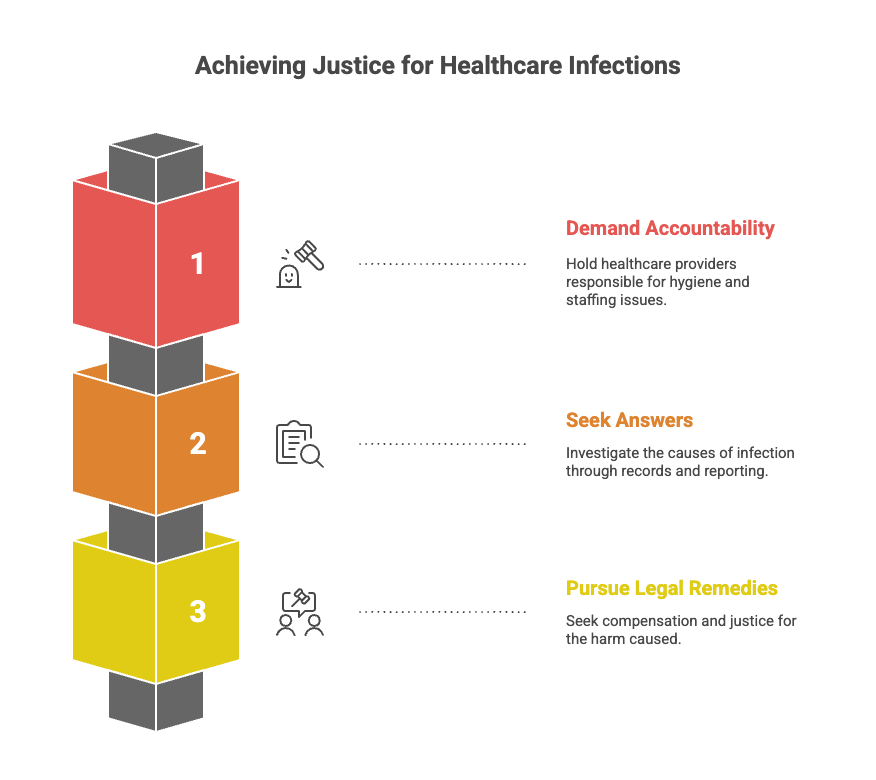
Even if a nursing home tries to brush off an infection as “unavoidable,” you still have enforceable legal rights in Fort Lauderdale when negligent care leads to preventable harm. You can insist that a facility honor Resident rights, provide safe staffing, sanitation, timely medical attention, and dignity. When they fail, you’re not just protecting your loved one—you’re helping safeguard other residents who can’t speak up.
Preventable nursing home infections aren’t “unavoidable”—Fort Lauderdale families can enforce resident rights, demand safe care, and protect others.
- Demand accountability when poor hygiene, understaffing, or missed symptoms cause infection
- Seek answers through records, policies, and honest reporting, not excuses
- Pursue Legal remedies that reflect the harm, costs, and loss of quality of life
Florida law lets you hold facilities and caregivers responsible for breaches of duty, including negligent supervision, medication errors, and inadequate infection control. You can also act when retaliation or intimidation occurs, because advocacy is service. Your voice can drive change and restore trust in care.
Steps to Take After a Fort Lauderdale Nursing Home Infection
If you suspect a nursing home infection in Fort Lauderdale, get immediate medical care to prevent it from worsening.
Document your symptoms and the facility conditions with notes, photos, and dates to preserve crucial evidence.
Then report the issue to the nursing home’s administrator and the proper authorities so there’s a record and prompt action.
Seek Immediate Medical Care
| What you do now | Why it helps |
|---|---|
| Get a rapid clinical evaluation | Starts treatment before complications |
| Ask about cultures/antibiotics | Targets the right infection fast |
| Make sure follow-up care is scheduled | Prevents relapse and missed warning signs |
Document Symptoms And Conditions
In the days after an infection shows up, start documenting your loved one’s symptoms and living conditions right away. Write down fever, confusion, cough, wounds, pain, appetite loss, and any changes in mobility or mood. Use symptom tracking in a notebook or phone app, and note the time, severity, and what helped or worsened symptoms.
Take dated photos of rashes, bedsores, IV sites, bandages, and room conditions like soiled linens or missed hygiene. Keep copies of discharge papers, medication lists, lab results you receive, and follow-up instructions. Ask staff for names and roles during each interaction, and record what you observe without arguments. Build clear condition timelines so clinicians can adjust care quickly, and you can advocate with accuracy later.
Report To Proper Authorities
Once you suspect the infection stems from poor nursing home care, report it to the appropriate authorities right away so the problem can be investigated and your loved one stays safer.
Call the Florida Agency for Health Care Administration and file a complaint with the Long-Term Care Ombudsman Program.
If you believe there’s immediate danger, contact local law enforcement or dial 911.
Ask the facility for its infection-control plan and report gaps to the county health department.
Use anonymous reporting if you fear retaliation, and encourage other families to speak up, too.
Your report can trigger inspections, corrective action, and mandatory audits that protect every resident, not just your family.
Keep the complaint number, dates, and names, and follow up until you see documented changes and safer routines.
How a Fort Lauderdale Nursing Home Infection Lawyer Can Help You
When a preventable infection in a Fort Lauderdale nursing home leaves your loved one hospitalized, worsened, or gone too soon, a nursing home infection lawyer can step in quickly to protect your family’s rights. You don’t have to face administrators, insurers, and intricate medical records alone.
Your attorney gathers charts, lab results, staffing logs, and infection-control policies to show where infection prevention failed and who’s responsible.
- Get immediate guidance on what to document, preserve, and request
- Bring in medical experts to connect the breach to the infection and harm
- Push for fair compensation and stronger accountability for other residents
You’ll also get steady family advocacy: your lawyer communicates with the facility and insurers, handles deadlines, and keeps you informed so you can focus on care, dignity, and service to your loved one.
If the home tries to shift blame, your lawyer challenges the narrative with evidence and persistence.
Long-Term Effects of Fort Lauderdale Nursing Home Infection Injuries
After a nursing home infection, you may face chronic health complications that don’t fully resolve and keep resurfacing.
You can also end up with permanent functional impairments that reduce your mobility, independence, or ability to communicate.
On top of that, you’re often left paying ongoing medical care costs for follow-up visits, medications, therapy, and long-term support.
Chronic Health Complications
Although some nursing home infections clear with treatment, they can still leave your loved one with chronic health complications that don’t fade once the fever breaks. You may notice lingering fatigue, recurring respiratory issues, or worsening heart and kidney strain that makes everyday care more complicated.
Infections can also accelerate mental decline, especially after sepsis, dehydration, or prolonged inflammation. When staff add antibiotics, steroids, or pain medicines, medication interactions can trigger confusion, bleeding risks, dangerous blood-sugar swings, or irregular heart rhythms.
If your loved one already manages diabetes, COPD, or dementia, an infection can destabilize those conditions and lead to repeat hospitalizations and new care plans. You can serve them best by documenting changes, requesting follow-up testing, and insisting on coordinated provider communication.
Permanent Functional Impairments
Watch for the ways a serious nursing home infection can permanently change how your loved one moves, eats, and functions day to day.
After sepsis, pneumonia, or wound infections, you may notice weakness that doesn’t resolve, making transfers, walking, and self-care harder. Mobility decline can mean they need help standing, using a walker, or staying safe in the bathroom.
Swallowing problems may persist, increasing the risk of choking and limiting food choices. You might also see sensory loss, including reduced hearing, changes in vision, or numbness that affects balance and grip.
These impairments can diminish independence and increase the risk of falls, skin breakdown, and isolation. When you serve and advocate for them, document changes, request therapy evaluations, and push for accountability for infection prevention and safer routines.
Ongoing Medical Care Costs
Even when your loved one survives a serious nursing home infection, you can still face months—or years—of ongoing medical expenses that don’t taper off.
You may need repeated doctor visits, lab work, wound care, IV antibiotics, and hospital readmissions when complications flare.
Prescriptions can change often, and durable medical equipment may become a daily necessity.
As you continue to meet their needs, you might also incur costs for therapy, transportation, and higher-acuity placement.
At home, safety upgrades add up fast, from bathroom rails to ramps and other home modification projects.
If you’re stepping into a hands-on role, caregiver training can be vital to prevent reinfection and manage medications correctly.
Tracking every bill helps you show the real cost of recovery and plan support.
Proving Liability in Fort Lauderdale Nursing Home Infection Cases
When a nursing home infection harms your loved one in Fort Lauderdale, you can’t rely on suspicion—you need proof that the facility’s failures caused the illness. You’ll build your case by connecting the infection to specific breakdowns in care, not just bad luck.
Start with records: care plans, wound logs, medication charts, and hospital admission notes. Use infection tracing to map when symptoms began, who’d contact, and whether isolation protocols were followed. Compare what staff did to required liability standards, including state regulations, internal policies, and CDC guidance.
Start with care plans and hospital notes, trace symptom onset and contact, and compare actions to regulations, policies, and CDC guidance.
Look for missed hand hygiene, improper catheter care, delayed physician notification, understaffing, or ignored lab results. Secure surveillance footage, staffing schedules, cleaning checklists, and incident reports before they disappear.
Interview family members and roommates and document any changes you observe.
When you show duty, breach, causation, and harm with concrete evidence, you serve your loved one by turning concern into accountability.
Compensation for Fort Lauderdale Nursing Home Infection Damages
Calculate the full cost of a nursing home infection in Fort Lauderdale before you talk settlement, because the damages often extend far beyond the first hospital bill.
You can seek payment for emergency care, IV antibiotics, wound treatment, rehab, follow-up visits, and the medical devices that keep your loved one safe. Include out-of-pocket costs like transportation, special nutrition, and upgraded care needs after discharge.
You should also document missed work and the value of time you spend coordinating care, advocating at the facility, and supporting recovery.
Don’t overlook long-term impacts: increased fall risk, mobility setbacks, or shortened life expectancy can change the entire care plan.
Compensation can also address pain, anxiety, and loss of dignity through emotional damages.
During settlement negotiation, you’ll push for a number that restores stability, honors your loved one’s suffering, and reinforces safer standards for other residents in the community.
The Statute of Limitations for Fort Lauderdale Nursing Home Infection Cases
After you’ve added up medical bills, lost income, and the personal toll an infection caused, you still have to act within the legal time limit to recover those damages. Florida’s statute of limitations can bar your claim if you wait too long, even when the harm feels obvious and urgent.
Even with clear harm and mounting costs, Florida’s statute of limitations can erase your claim if you delay.
In nursing home infection cases, the clock may start when the infection occurs, when it’s diagnosed, or when you reasonably should’ve discovered that neglect contributed. Those Statute nuances matter if symptoms appeared gradually, records were delayed, or the facility downplayed risks.
Different rules can apply when the resident can’t advocate for themselves, when a wrongful death occurs, or when notice requirements affect timing.
You can honor your loved one’s dignity by tracking crucial dates, requesting records promptly, and treating filing deadlines like a care priority. Acting early preserves evidence, supports accountability, and protects others from preventable infections.
Why You Need an Experienced Fort Lauderdale Nursing Home Infection Lawyer
Although a nursing home may blame “age” or “underlying conditions,” an experienced Fort Lauderdale nursing home infection lawyer can cut through that narrative by pinpointing where the facility failed—missed wound care, poor hygiene protocols, delayed treatment, understaffing, or ignored warning signs—and then tying those failures to the infection with records, expert support, and a strategy built to withstand aggressive insurer defenses.
You’re often grieving, juggling medical decisions, and trying to protect a vulnerable loved one. A seasoned lawyer helps you act quickly, preserve evidence, and demand complete charts, incident reports, staffing logs, and infection-control policies before they disappear.
You get patient advocacy that keeps the resident’s dignity at the center while holding the facility accountable.
Your lawyer also calculates the full harm—hospital bills, future care, pain, and loss of quality of life—so you don’t accept a low offer. With firm settlement negotiation, you can pursue fair compensation or prepare for trial without being pushed into silence.
How to Choose the Right Fort Lauderdale Nursing Home Infection Lawyer for Your Case
Once you know why experience matters, the next step is choosing a Fort Lauderdale nursing home infection lawyer who can prove what happened and push the case forward fast. Start by asking how they’ll secure medical records, infection-control logs, staff schedules, and witness statements, and whether they work with qualified medical experts.
You need someone who can connect the infection to lapses in care, not just describe the harm.
Next, evaluate communication. You’ll serve your loved one best with a lawyer who returns calls quickly, explains options plainly, and gives you a clear plan and timeline. Review client testimonials to confirm they treat families with respect and follow through.
Finally, discuss attorney fees upfront. Ask for a written breakdown of contingency terms, costs, and what happens if the case doesn’t resolve. Choose the lawyer who pairs compassion with disciplined case-building and steady advocacy throughout.
About the Law Offices of Anidjar and Levine
Turn to the Law Offices of Anidjar and Levine when you need a Fort Lauderdale nursing home infection lawyer who’s ready to investigate quickly and build a negligence case from the ground up.
You’ll get a team that listens to your family’s concerns, gathers medical records, and holds facilities accountable for preventable harm.
You won’t have to shoulder the process alone. You can expect clear updates, prompt callbacks, and support with paperwork, insurance communications, and scheduling so you can focus on your loved one’s recovery and dignity.
Your case strategy stays centered on accountability and safer care for other residents, too.
You can review client testimonials to see how the firm treats people with respect and urgency.
You’ll also find firm accolades that reflect consistent advocacy and results.
When you’re ready, you can reach out for a consultation and learn your options without pressure or confusion.
Frequently Asked Questions
Do Nursing Home Infection Cases Usually Settle or Go to Trial?
Most nursing home infection cases settle more often than they go to trial, but you can’t count on it.
You’ll see settlement trends favor resolution when records are clear and damages are well documented. Trial likelihood rises if the facility denies fault, disputes causation, or offers too little.
If you serve a loved one, you’ll want strong medical proof, expert support, and firm advocacy to push fair accountability.
Can I Switch Facilities While Pursuing an Infection Claim?
Yes, you can switch facilities while pursuing an infection claim. You should prioritize safety and care, and you can change providers without giving up your rights.
Plan transfer timing carefully: secure a new placement, arrange transport, and guarantee continuity of treatment.
Request complete medical records, photos, and incident reports before you move, and keep a timeline of symptoms and expenses.
You’ll strengthen your case by documenting everything promptly and clearly.
Will Filing a Claim Affect My Loved One’s Medicaid or Medicare Benefits?
Filing a claim usually won’t reduce your loved one’s Medicare or Medicaid coverage, but you should watch for any benefits impact if a settlement includes medical-payment reimbursements or changes in assets.
Medicaid may trigger an eligibility review and require reporting funds, especially for long-term care.
You can often protect coverage by structuring proceeds properly, using trusts when appropriate, and coordinating with a benefits advisor to keep care uninterrupted.
Can My Family Stay Anonymous When Reporting an Infection to Regulators?
Yes, you can often stay anonymous when you report an infection to regulators, but it depends on the agency and the details you share. You should ask for anonymous reporting options up front and avoid including identifying facts.
If you’re a staff member, you may also qualify for whistleblower protection against retaliation. You can still help protect other residents while limiting exposure. Keep records of what you reported and when.
How Long Does a Nursing Home Infection Lawsuit Typically Take to Resolve?
You can expect a nursing home infection lawsuit to take about 6–18 months, though intricate cases can run 2+ years.
Your timeline expectations depend on evidence, insurance negotiations, and court schedules.
You’ll move through crucial case phases: investigation, filing, discovery, expert review, settlement talks, and trial if needed.
If you’re serving a loved one, stay organized, respond promptly, and document care issues—you’ll help move things forward.
—————–
You don’t have to face a nursing home infection claim in Fort Lauderdale on your own.
If you suspect neglect contributed to your loved one’s illness, you can take action to protect their health, dignity, and rights.
By documenting what happened, getting proper medical care, and speaking with an experienced nursing home infection lawyer, you can pursue accountability and compensation.
The Fort Lauderdale Nursing Home Abuse and Neglect Lawyer team at the Law Offices of Anidjar and Levine can guide you through each step and fight for results.


We Can Help.