



If your loved one in a Fort Lauderdale nursing home shows bedsores, dehydration, missed meds, infections, or repeated falls, you can take action fast with a failure-to-provide-basic-care lawyer.
You’ll help secure medical attention, document injuries, and preserve crucial records before they disappear.
Your attorney can interview staff and witnesses, report concerns to Florida agencies, and pursue compensation for medical bills, added care, and pain and suffering.
The Fort Lauderdale Nursing Home Abuse and Neglect Lawyer team at the Law Offices of Anidjar and Levine can guide you through your next steps.
Key Takeaways
- A Fort Lauderdale basic-care neglect lawyer can act fast to protect your loved one, preserve evidence, and prevent facilities from shifting blame.
- They investigate missed hygiene, turning, nutrition, hydration, mobility help, and medications by gathering records, photos, and witness statements.
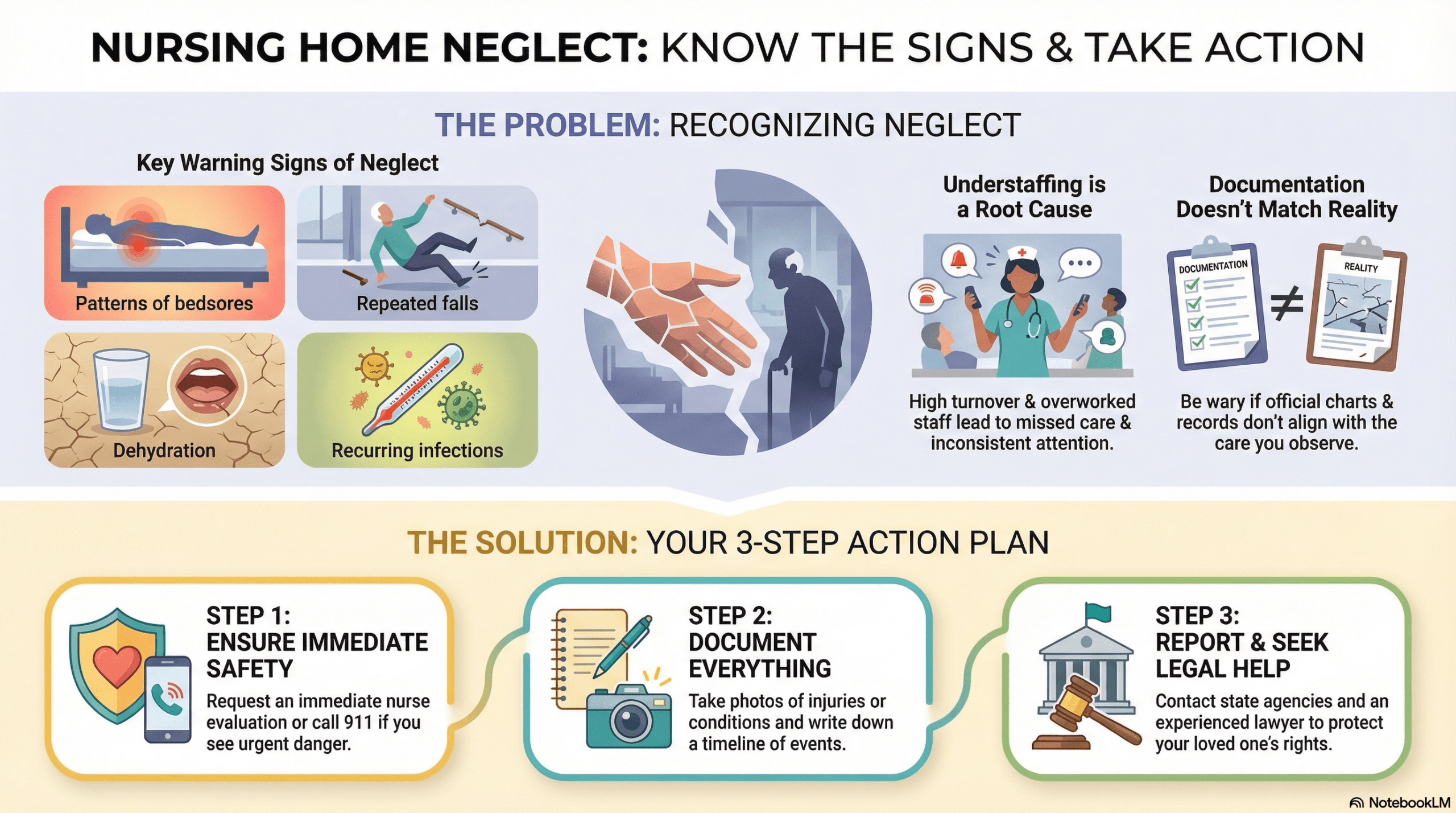
- Common warning signs include pressure sores, dehydration, weight loss, recurring infections, unexplained falls, and documentation that doesn’t match observed care.
- Attorneys work with medical experts to link care failures to injuries, prove duty and breach under Florida regulations, and identify responsible owners and insurers.
- They handle reporting to state agencies and ombudsmen, manage deadlines, and pursue compensation for medical bills, required services, and related damages.
How We Can Help With Your Fort Lauderdale Nursing Home Failure to Provide Basic Care Claim
Take action quickly if you suspect a Fort Lauderdale nursing home failed to provide basic care—our team can step in to protect your loved one and your legal rights. You’ll get a clear plan, steady communication, and compassionate advocacy focused on safety first.
Act quickly if basic care failed—we’ll protect your loved one and your rights with a clear, safety-first plan.
You can count on us to gather records, interview staff and witnesses, document injuries, and coordinate with qualified medical professionals. We’ll handle calls, letters, and deadlines so you don’t carry the burden alone.
When you need alignment, we’ll lead family meetings to set priorities, assign tasks, and keep everyone informed without conflict. If costs and long-term needs feel overwhelming, we’ll help you organize financial planning questions, preserve benefits, and pursue compensation that supports better care.
You’ll stay in control while we push for accountability, dignity, and practical solutions that serve your loved one’s well-being and your family’s peace.
Understanding Fort Lauderdale Nursing Home Failure to Provide Basic Care Cases



When a Fort Lauderdale nursing home skips basic care, the harm often shows up quickly—and it’s rarely “just aging.” Failure-to-provide-basic-care cases usually involve preventable breakdowns in everyday needs like hygiene, nutrition and hydration, medication support, mobility assistance, turning and repositioning, toileting, and timely medical attention.
If you’re serving a loved one, you can spot these cases by watching for pressure sores, sudden weight loss, dehydration, recurring infections, unexplained falls, missed meds, or a sharp decline in mood and alertness. You don’t need medical jargon—patterns matter: repeated lapses, delayed responses, and care plans that aren’t followed.
You’ll often see signs that staff training isn’t translating into safe routines, or that documentation doesn’t match what you observe.
Strong family advocacy helps: ask clear questions, request care-plan updates, keep a dated log, and document concerns promptly so your loved one’s dignity and safety stay first.
Common Causes of Fort Lauderdale Nursing Home Failure to Provide Basic Cares
You’ll often see basic care failures start with understaffing and high turnover, leaving residents without consistent attention.
You might also notice poor hygiene and sanitation, missed medications and monitoring, and gaps in nutrition and hydration that quickly lead to serious harm.
You can use these common causes to spot warning signs early and understand how negligence takes root.
Understaffing And High Turnover
Although nursing homes promise attentive, round-the-clock care, chronic understaffing and high turnover often undermine those basic obligations in Fort Lauderdale facilities.
When staffing falls short, you can’t get timely assistance for mobility, toileting, meals, hydration, or medication cues, and small delays compound into serious harm.
Overworked aides juggle too many residents, increasing missed call lights, skipped repositioning, and incomplete documentation.
Staff burnout then fuels resignations, forcing facilities to rely on rotating agency workers who don’t know your loved one’s routines, risks, or preferences.
Recruitment challenges make it harder to hire and retain trained caregivers, so continuity breaks down and accountability blurs.
If you notice frequent unfamiliar faces, rushed care, or unanswered needs, you may be seeing systemic neglect, not isolated mistakes.
Poor Hygiene And Sanitation
Chronic understaffing and constant turnover often show up first in the basics—dirty rooms, missed baths, and lax infection control. When you visit, you might notice odors, sticky floors, overflowing trash, or residents left in soiled clothing.
These aren’t minor issues; they increase the risk of skin breakdown, respiratory illness, and outbreaks that can sweep through a unit quickly.
You serve your loved one best by watching for patterns: skipped handwashing, shared equipment left uncleaned, and bathrooms without soap or paper towels. Ask how often rooms are disinfected and who documents Infection control checks.
Pay attention to Linen maintenance, too—stained sheets, reused washcloths, or delayed bedding changes can signal deeper neglect. If staff dismiss your concerns, document what you see and escalate it promptly.
Missed Medications And Monitoring


Too often, missed doses and poor monitoring happen quietly until a resident crashes or lands in the hospital. When you entrust a loved one to a facility, you expect every prescription to be given on time, at the right dose, and with clear documentation. Breakdowns occur during shift changes, pharmacy deliveries, or when staff overlook allergies and drug interactions. Proper medication reconciliation should occur at admission, upon hospital discharge, and whenever orders change.
You should also see consistent essential checks and symptom tracking, especially for diabetes, heart conditions, and anticoagulant use. Effective monitoring technology can flag overdue meds, abnormal readings, and escalating side effects before they become emergencies.
If you notice unexplained confusion, falls, swelling, or missed refills, you may be seeing signs of neglect that demand action.
Neglected Nutrition And Hydration
Letting meals go untouched, and water cups sit empty, can push a nursing home resident into rapid decline.
When you serve an older adult, you protect their dignity by ensuring staff assist with eating, offer fluids often, and document intake every shift.
If the facility skips Meal planning, residents may miss needed calories, protein, and safe textures, leading to weight loss, weakness, and falls.
Watch for signs of dehydration, such as dry mouth, dark urine, dizziness, confusion, constipation, and sudden fatigue.
You should expect prompt responses to swallowing issues, nausea, dental pain, and medication side effects that reduce appetite.
If staff ignore these risks, report concerns, request a care conference, and preserve notes and photos so you can hold the home accountable.
Legal Rights of Fort Lauderdale Nursing Home Failure to Provide Basic Care Victims


Even if a Fort Lauderdale nursing home says understaffing or “policy” caused the lapse, you still have enforceable rights when a resident doesn’t receive basic care like food, hydration, hygiene, medication, mobility assistance, or timely medical attention.
You can insist on dignity, safety, and Patient autonomy, including informed choices about care and the right to be free from neglect.
You also have power through Family advocacy: you can question care plans, demand truthful records, and speak up without retaliation.
When a facility fails, your rights may include pursuing accountability for harm, pain, worsening conditions, or preventable hospitalization.
Key protections you can rely on include:
- The right to adequate supervision and timely assistance
- The right to proper medication administration and monitoring
- The right to clean living conditions and basic hygiene support
- The right to report concerns and seek remedies without intimidation
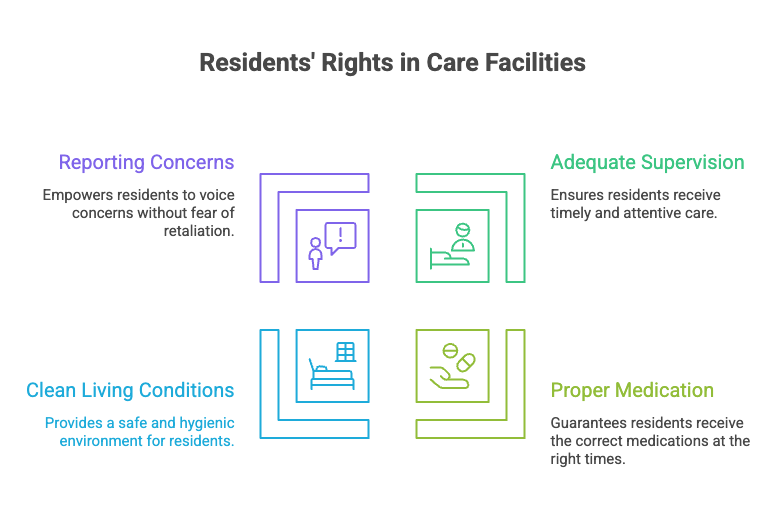
Serving your loved one means using these rights to restore respect and prevent further suffering.
Steps to Take After a Fort Lauderdale Nursing Home Failure to Provide Basic Care
First, you’ve got to secure the resident’s immediate safety by getting medical help and demanding proper care right away.
Next, you should document the neglect by taking photos, saving records, and writing down dates, names, and what you observed.
Then, you can report the situation to the right authorities, including Florida’s long-term care ombudsman and state regulators.
Ensure Immediate Resident Safety
Act quickly to protect your loved one the moment you suspect a Fort Lauderdale nursing home isn’t providing basic care.
Go in person if you can, assess their condition, and request a nurse evaluation right away.
If you see urgent danger—breathing trouble, severe dehydration, uncontrolled pain, unsafe restraints—call 911 and insist on transport to the ER.
Ask the facility to follow its emergency protocols, and don’t accept delays or excuses.
If conditions remain unsafe, arrange immediate evacuation to a hospital, another facility, or your home with appropriate medical support.
Contact the resident’s physician and update close family so everyone stays aligned.
Stay calm, speak firmly, and keep your focus on compassionate protection and dignity.
Document Neglect And Evidence
Once your loved one is stable, start building a clear record of what went wrong and when.
Write a timeline with dates, times, staff names, room numbers, and specific care failures, like missed turning, dehydration signs, or untreated sores.
Ask for copies of care plans, medication logs, incident reports, and discharge or transfer notes, and keep them in one folder.
Use photographic documentation to capture injuries, bedding conditions, unsafe equipment, and hygiene concerns, and note who took each photo and the time.
Gather witness statements from roommates, visitors, and attentive staff; request that they describe what they saw, heard, and reported.
Save voicemails, emails, and bills, and document every conversation in writing, immediately after it happens.
Report To Proper Authorities
After you’ve documented the warning signs and gaps in care, report the neglect to the proper authorities so an independent agency can investigate, and the facility can’t quietly rewrite the narrative. You’ll protect your loved one and help other residents who can’t speak up. File regulatory complaints promptly, then follow up and keep confirmation numbers.
| Who to contact | What you provide |
|---|---|
| Florida AHCA | dates, photos, care-plan failures |
| Long-Term Care Ombudsman | resident details, immediate concerns |
| Local law enforcement | threats, assault, missing meds |
| Facility administrator (in writing) | concise timeline, requested fixes |
When you contact oversight agencies, stay factual, calm, and specific. Ask for an intake report, the investigator’s name, and the next steps. If danger is immediate, request emergency intervention and a welfare check.
How a Fort Lauderdale Nursing Home Failure to Provide Basic Care Lawyer Can Help You
When a nursing home cuts corners on basics like hygiene, nutrition, hydration, mobility assistance, or timely medication, you don’t have to fight the facility alone.
A Fort Lauderdale nursing home failure to provide basic care lawyer helps you protect your loved one with compassion and clear action, so you can focus on dignity and safety. They gather records, interview witnesses, and preserve evidence before it disappears, then press the facility to correct problems fast. They’ll also guide you through family meetings and safer care handoffs without letting administrators shift blame.
They can help you:
- Document neglect with charts, photos, and staff logs.
- Coordinate medical reviews to connect care gaps to harm.
- Report and follow up with state agencies and ombudsmen.
- Pursue compensation for medical bills and necessary services.
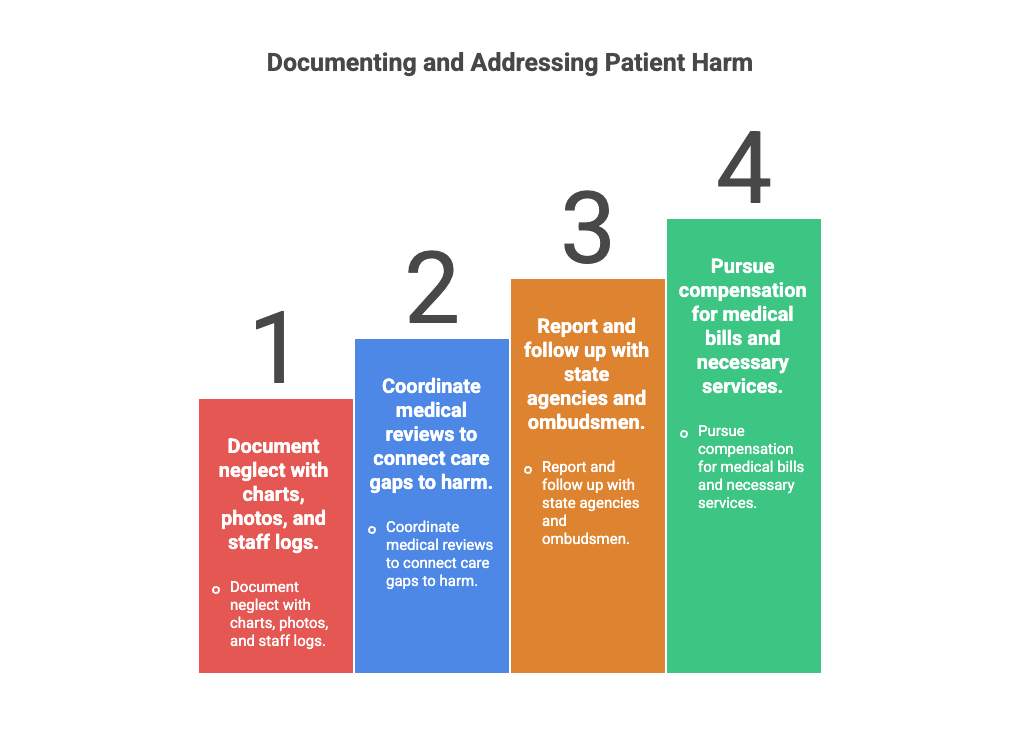
You’ll get a plan, strong advocacy, and a voice that insists on basic care standards.
Long-term Effects of Fort Lauderdale Nursing Home Failure to Provide Basic Care Injuries
When a Fort Lauderdale nursing home fails to provide basic care, you can face chronic medical complications that don’t resolve with a quick fix.
You may also experience cognitive and emotional decline as neglect compounds stress, confusion, and depression.
Over time, reduced mobility can limit your independence and make daily life harder than it should be.
Chronic Medical Complications
Living with the fallout of a nursing home’s failure to provide basic care can turn a “simple” injury into a chronic medical complication that follows you for months or years.
When staff ignore wounds, hygiene, or turning schedules, you can develop pressure sores that don’t heal, chronic infections that spread, and repeated hospitalizations that drain your strength. Poor nutrition and dehydration can worsen diabetes, kidney disease, and circulation problems, making recovery slower and relapse more likely.
If records are sloppy, you may face dangerous medication interactions, duplicate prescriptions, or missed doses that trigger falls, bleeding, or organ damage.
You earn care that protects your health and dignity. By acting quickly, you can seek medical help, document changes, and advocate for safer routines that prevent compounding harm.
Cognitive And Emotional Decline
Although an untreated injury may start in the body, a facility’s failure to provide basic care can also speed up cognitive and emotional decline. When staff ignore pain, dehydration, or infection, your loved one’s brain may struggle to heal, and confusion can deepen into Memory loss.
Missed medications and poor supervision can trigger delirium, sleep disruption, and worsening dementia symptoms, leaving you watching personality changes that don’t match who they are.
You may also see Emotional withdrawal when residents aren’t engaged, spoken to with respect, or helped to stay oriented to time and place. Isolation, fear, and untreated distress can fuel anxiety and depression, reducing trust and participation in daily life. By documenting changes, asking for care-plan updates, and demanding timely medical attention, you protect dignity and keep compassionate support at the center.
Reduced Mobility And Independence
Independence can fade fast after a facility ignores basic care needs.
When staff skip turning, walking assistance, or safe transfers, your muscles weaken, joints stiffen, and balance slips.
A small decline can become a long-term loss of mobility, leaving you unable to toilet, dress, or reach the dining room without help.
You may start relying on assistive devices sooner than necessary, and you might need home adaptations like grab bars, ramps, or widened pathways just to live safely.
That shift can limit how you serve others, attend worship, or stay connected with family.
You deserve care that preserves strength and dignity. If negligence caused your decline, document changes, request evaluations, and seek guidance.
Proving Liability in Fort Lauderdale Nursing Home Failure to Provide Basic Care Cases
When a nursing home fails to provide basic care—like adequate hygiene, nutrition, hydration, mobility assistance, or medication management—you can’t rely on suspicion alone to hold it accountable. You’ll need proof that the staff breached the required standards and that your loved one suffered harm as a result.
Start with evidence preservation: request records, photos, care plans, medication logs, staffing schedules, and incident reports before they disappear. Then build a timeline reconstruction that tracks symptoms, missed turns, weight loss, falls, or infections against documented care.
| What you prove | How do you prove it |
|---|---|
| Duty and breach | Policies, regulations, chart gaps, witness statements |
| Causation and foreseeability | Medical records paired with causation analysis |
You can strengthen the case with expert testimony from nursing and medical professionals who explain what competent care is required and how failures triggered the decline. Keep your focus on truth and safety—you’re protecting others by demanding accountability.
Compensation for Fort Lauderdale Nursing Home Failure to Provide Basic Care Damages
After a nursing home’s basic-care lapses harm your loved one, you can pursue compensation that matches the full scope of the damage—not just the immediate medical bills. You’ll often seek repayment for hospital care, wound treatment, medications, rehabilitation, and future medical monitoring tied to infections, falls, or dehydration.
A clear compensation breakdown may also include costs for replacement caregiving, transportation to appointments, and necessary medical equipment. If neglect forced a transfer, you can claim relocation expenses and the higher cost of safer long-term care. When the facility’s failures caused bedsores, malnutrition, or preventable injuries, you can pursue pain-and-suffering damages that recognize daily discomfort and lost independence.
You can also request emotional restitution for fear, humiliation, isolation, and the strain your family carries while advocating, visiting, and rebuilding trust. By documenting changes in health and quality of life, you help guarantee the recovery reflects real harm and supports healing.
The Statute of Limitations for Fort Lauderdale Nursing Home Failure to Provide Basic Care Cases
Because the clock starts running quickly in Florida nursing home neglect claims, you need to identify the right statute of limitations early or you can lose your right to recover damages—no matter how clear the failure to provide basic care may. In many cases, Florida applies a two-year deadline for negligence, but statute nuances can change the analysis when the claim involves medical negligence standards, wrongful death, or conduct that qualifies as abuse.
You should also track when you first knew, or reasonably should’ve known, that a resident suffered harm from missed hydration, hygiene, turning, nutrition, or medication. That timing matters because discovery tolling may pause the deadline when pivotal facts stay hidden despite diligent effort. However, tolling isn’t automatic, and it won’t excuse waiting after you’ve uncovered the problem.
If you’re trying to protect a vulnerable resident and hold a facility accountable, calendar every possible deadline and preserve records immediately.
Why You Need an Experienced Fort Lauderdale Nursing Home Failure to Provide Basic Care Lawyer
Missing a filing deadline can wipe out even the strongest neglect claim, so you need a lawyer who can move fast and build the case the right way from day one.
Miss one filing deadline, and even a strong neglect claim can vanish—act fast and build the case right from day one.
When a loved one suffers from missed meds, poor hygiene, dehydration, or untreated wounds, you’re not just seeking money—you’re protecting dignity and preventing the same harm to others.
An experienced Fort Lauderdale nursing home failure to provide basic care lawyer knows how to secure records before they “disappear,” interview staff and residents, and work with medical experts to connect neglect to injuries.
Experience matters when facilities deny wrongdoing, blame “underlying conditions,” or pressure families to accept quick, unfair settlements.
You’ll also need someone who understands Florida nursing home regulations, corporate ownership structures, and insurance tactics, so your claim targets every responsible party.
With proven results, your lawyer can demand accountability, push for safer care, and help your family focus on healing while the case moves forward.
How to Choose the Right Fort Lauderdale Nursing Home Failure to Provide Basic Care Lawyer for Your Case
Start by looking for a lawyer who’s handled Florida nursing home “basic care” failures before—cases involving dehydration, malnutrition, missed medications, poor hygiene, falls, or untreated bedsores—and who can show you real results, not just promises. You’re advocating for a loved one, so choose someone who listens, explains, and treats residents’ dignity as the mission.
| What to check | What you ask | What you want |
|---|---|---|
| Track record | “Have you tried these cases?” | Specific outcomes and references |
| Process | “How do you investigate?” | Fast records, expert support |
| Costs | “How do Attorney fees work?” | Clear, written terms |
During Client interviews, notice whether you feel rushed. You should hear a practical plan: preserving evidence, interviewing staff, and documenting injuries. Ask who will handle your case day to day and how often you’ll get updates. If they dodge timelines or pressure you to sign, keep looking.
About the Law Offices of Anidjar and Levine
Choosing the right lawyer means finding a team that treats your loved one’s safety as the priority and backs that commitment with action.
At the Law Offices of Anidjar and Levine, you get attorneys who listen closely, move quickly, and keep you informed so you can focus on protecting your family.
You’ll work with a responsive staff that returns calls, explains next steps, and helps you gather records, photos, and witness details without adding stress.
You can also draw confidence from the firm’s history of advocating for injured Floridians and holding negligent facilities accountable.
Your case gets practical support, from investigating care failures to negotiating firmly with insurers and preparing for trial when needed.
When you want proof, you can review client testimonials that highlight communication, compassion, and follow-through.
If service matters to you, you’ll appreciate a team that treats dignity as nonnegotiable and fights for safer care for others, too.
Frequently Asked Questions
Can I Switch Nursing Homes While the Case Is Ongoing?
Yes, you can switch nursing homes while your case is ongoing.
You should prioritize your loved one’s safety and dignity and change facilities if care falls short.
You’ll want to document the reasons, preserve records, and notify your legal team, since the move can affect evidence and timelines.
Ask for complete medical charts, care plans, and incident reports.
Plan the transfer carefully to reduce stress and avoid legal implications.
Will Pursuing a Claim Affect My Loved One’s Medicaid Eligibility?
Pursuing a claim usually won’t automatically affect your loved one’s Medicaid eligibility, but any settlement could count as an asset or income. You’ll want asset protection planning so funds don’t disrupt benefits.
Use spend-down strategies—like paying for approved medical needs or setting up a special-needs trust—before money hits the wrong accounts. Coordinate with your attorney and a Medicaid planner early on to protect care and dignity.
How Do I Obtain My Loved One’s Full Nursing Home Chart in Florida?
You obtain your loved one’s full nursing home chart in Florida by submitting a written medical records request to the facility’s records custodian.
Include patient authorization signed by your loved one or proof you’re the legal representative (health care surrogate, guardian, or POA with HIPAA authority).
Ask for “entire chart,” care plans, MARs, progress notes, incident reports, and billing.
Request electronic copies and a fee estimate.
Follow up in writing and document deadlines.
Can I Report the Facility Anonymously to Florida Regulators?
Yes, you can report the facility anonymously to Florida regulators. You can file a complaint with the Florida Agency for Health Care Administration (AHCA) online or by phone and request anonymous reporting.
If you’re a staff member or contractor, you may also have whistleblower protections against retaliation under state and federal rules. Share specific dates, names, and facts so investigators can act quickly and protect residents and others.
What if My Loved One Cannot Communicate or Testify?
If your loved one can’t communicate or testify, you can still build a strong case by relying on proxy testimony from family, caregivers, and staff who observed changes and conditions.
You’ll also gather documentary evidence like medical charts, medication logs, incident reports, care plans, photos, and regulator findings.
You can request records, document timelines, and ask physicians for opinions.
———————–
When a Fort Lauderdale nursing home fails to provide basic care, you don’t have to handle it alone.
You can protect your loved one, document what’s happening, and demand accountability.
By acting quickly, you’ll preserve evidence, meet deadlines, and strengthen your claim for the harm caused.
An experienced Fort Lauderdale Nursing Home Abuse and Neglect Lawyer from the Law Offices of Anidjar and Levine can guide you through every step, deal with the facility and insurers, and fight for the compensation your family deserves.


We Can Help.