



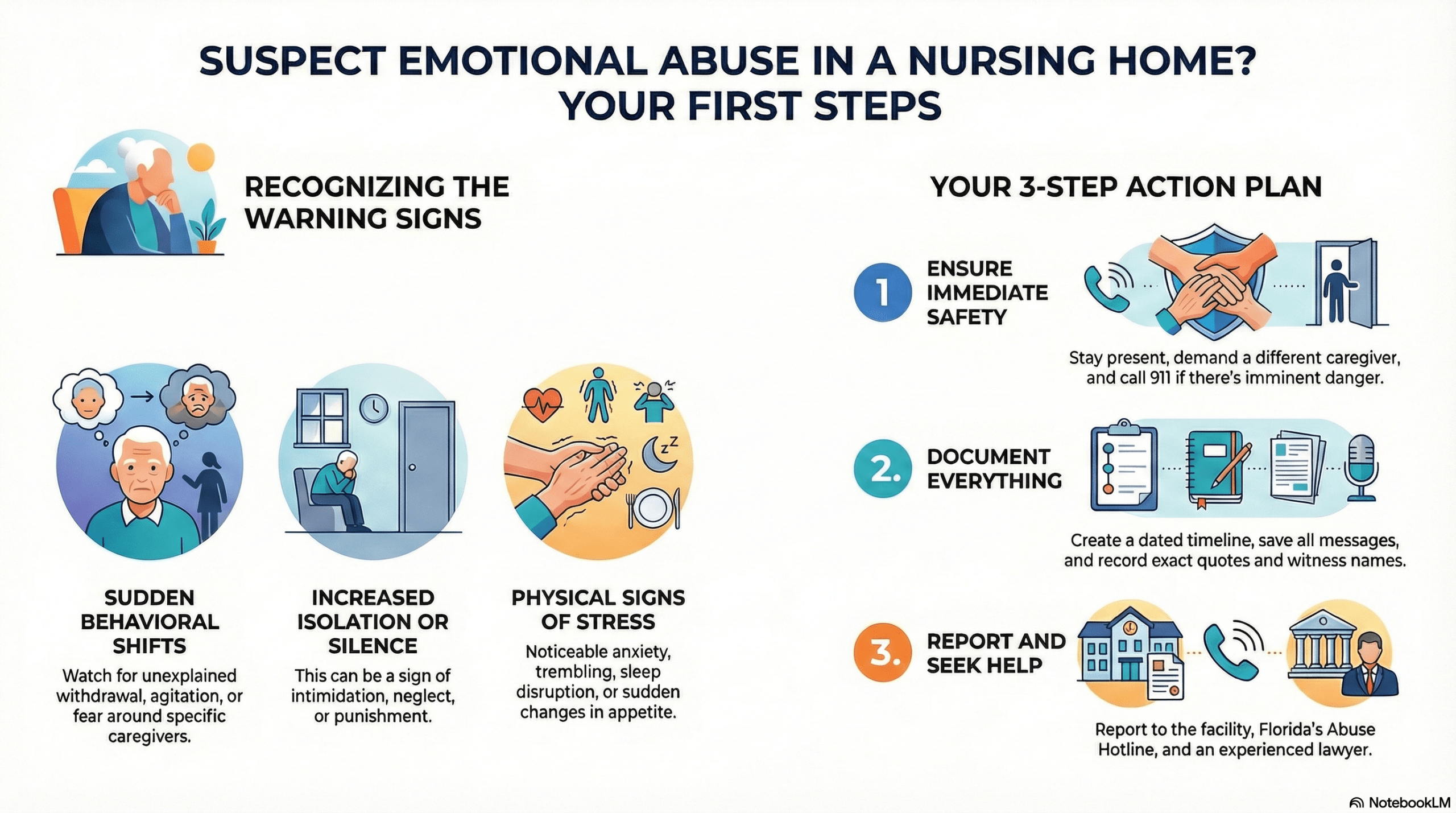
If you suspect nursing home emotional abuse in Fort Lauderdale, you can’t wait—you need to protect your loved one and preserve proof fast. Stay present, demand immediate supervision and staff changes, and request care-plan updates and facility records before video or logs disappear.
Document behavior shifts, fear of specific caregivers, and missed call-light responses with dates and exact quotes. Then report it to the facility, Florida’s Abuse Hotline, and the ombudsman.
To understand your legal options and how the Law Offices of Anidjar and Levine can help, speak with a Fort Lauderdale Nursing Home Abuse and Neglect Lawyer as soon as possible.
Key Takeaways
- An emotional abuse lawyer in Fort Lauderdale helps stop ongoing harm by demanding immediate safeguards, staff reassignment, and urgent care-plan changes.
- They guide families in reporting to Florida’s Abuse Hotline, AHCA, the ombudsman, and the police, while securing written confirmations and case numbers.
- Counsel preserves critical evidence fast—care logs, staffing schedules, incident reports, surveillance video, and witness statements—before records disappear or are overwritten.
- They document psychological and medical impacts through providers, building proof of trauma, cognitive decline, sleep disruption, and related physical health consequences.
- A lawyer can pursue compensation and accountability for negligent facilities, address retaliation, and negotiate relocation or court orders when safety cannot be guaranteed.
How We Can Help With Your Fort Lauderdale Nursing Home Emotional Abuse Claim
When you suspect emotional abuse in a Fort Lauderdale nursing home, we can step in quickly to protect your loved one and start building a strong claim.
You’ll get a clear action plan: secure safety, preserve records, and document changes in mood, appetite, and sleep.
We’ll request care logs, staffing schedules, complaint histories, and video where available, then work with qualified professionals to assess harm.
You won’t have to steer this alone.
We’ll use respectful communication strategies to gather accurate statements from family, residents, and staff without escalating conflict.
We’ll also practice cultural sensitivity so your loved one’s background, language needs, and faith practices are honored during interviews and care discussions.
We’ll calculate losses, demand accountability from the facility and insurers, and negotiate firmly.
If they won’t do what’s right, you’ll be ready to file suit and pursue justice.
Understanding Fort Lauderdale Nursing Home Emotional Abuse Cases



Although emotional abuse doesn’t always leave visible bruises, it can cause serious psychological harm and accelerate physical decline for nursing home residents in Fort Lauderdale. When you step in to protect a loved one, you’ll often rely on patterns, not a single incident. Watch for emotional indicators like sudden withdrawal, fear around specific staff, unusual agitation, or a flat mood after visits. You’ll also want to account for communication barriers—dementia, speech limits, hearing loss, or language differences can hide what’s happening and make reporting harder.
| What you notice | Why it matters | What you can do |
|---|---|---|
| Isolation or silence | Possible intimidation | Document dates and triggers |
| Anxiety, trembling, shame | Ongoing psychological stress | Request care-plan review |
| Reluctance to speak | Communication barriers | Ask for an advocate/interpreter |
You serve best by listening patiently, keeping notes, and escalating concerns through administrators and proper reporting channels quickly.
Common Causes of Fort Lauderdale Nursing Home Emotional Abuses
You often see emotional abuse start when a facility is understaffed, and burned-out workers take out their stress on residents.
You can also trace it to poor training and weak oversight or policies that let intimidation, threats, and humiliation go unchecked.
When residents sit isolated or neglected, you’re more likely to spot the warning signs and connect them to these underlying causes.
Understaffing And Burnout
Understaffing can turn a Fort Lauderdale nursing home into a pressure cooker, and burned-out caregivers sometimes take that stress out on residents through harsh words, threats, or humiliating treatment.
When Patient ratios climb, you’ll see rushed care, short tempers, and fewer moments for dignity, listening, and reassurance. You may notice call lights ignored, residents scolded for needing help, or sarcasm used instead of compassion.
If you’re devoted to serving seniors, watch for warning signs: sudden withdrawal, fear around certain staff, or comments like “I’m a burden.” Low Staff morale often fuels a cycle where frustration replaces kindness.
You can speak up, document what you observe, and insist on safe staffing so residents receive respect—not emotional harm.
Poor Staff Training
When a Fort Lauderdale nursing home skimps on thorough training, staff often fall back on impatience and control rather than on calm, respectful communication. You’ll see residents spoken over, rushed, or mocked because caregivers don’t learn de-escalation, dementia-friendly cues, or trauma-informed care. Without clear coaching, good intentions can still cause emotional harm, and staff competency becomes guesswork.
| Training gap | What you notice | Better approach |
|---|---|---|
| Dementia communication | arguing, correcting, scolding | validate feelings, redirect |
| Stress skills | snapping, threats, sarcasm | pause, breathe, ask for help |
| Resident rights | dismissing choices | explain options, honor consent |
You can push for role-play practice, mentoring, and refreshers tied to real scenarios. Ask whether training audits track completion and understanding, not just signatures, so kindness stays consistent.
Inadequate Oversight And Policies
Even with caring aides on the floor, weak oversight and sloppy policies let emotional abuse slip through the cracks. When no one tracks tone, boundaries, and complaint patterns, hurtful remarks can get dismissed as “stress” or “personality.”
You can’t serve residents well if leadership doesn’t set clear expectations and follow through.
You’ll see problems when supervisors rarely round, incident reports stay vague, and discipline feels inconsistent. Strong facilities run regular policy audits, update scripts for respectful communication, and document coaching after every concern.
They also empower oversight committees to review grievances, spot repeat offenders, and ensure rules apply to everyone, including managers. If you suspect gaps, ask how the home measures civility, investigates reports, and protects whistleblowers from retaliation.
Resident Isolation And Neglect
Weak oversight doesn’t just excuse harsh words—it also allows residents to be quietly pushed to the margins through isolation and neglect. When you see missed check-ins, unanswered call lights, or meals left untouched, you may be witnessing emotional abuse in disguise.
Social isolation can start with “just for today” and become a pattern that robs a resident of dignity, community, and hope. Neglect also fuels sensory deprivation: no conversation, no outdoor time, no stimulation beyond a TV left on mute.
| Warning sign | What you can do |
|---|---|
| Doors kept closed | Ask for rounding logs |
| Fewer activities | Request a care conference |
| Unwashed clothing | Document dates and photos |
| Sudden withdrawal | Speak with the charge nurse |
| Unreturned calls | Escalate to administration |
Legal Rights of Fort Lauderdale Nursing Home Emotional Abuse Victims
Although emotional abuse often leaves no visible injuries, Florida law still gives you powerful rights if a Fort Lauderdale nursing home humiliates, threatens, isolates, or intimidates your loved one.
Even without visible injuries, Florida law protects your loved one from humiliation, threats, isolation, or intimidation in Fort Lauderdale nursing homes.
You can demand dignity, safe care, and freedom from retaliation, and you can hold the facility accountable when staff misuse power or ignore complaints.
You also have rights that support service-minded Victim advocacy and smart Compensation strategies, including the ability to pursue remedies for the harm done to your loved one’s well-being.
Depending on the facts, you may seek recovery for mental anguish, related medical care, and other losses.
Your core legal protections commonly include:
- The right to respectful treatment and humane living conditions
- The right to communicate privately and receive visitors without punishment
- The right to request records and enforce standards through civil claims

Steps to Take After a Fort Lauderdale Nursing Home Emotional Abuse
After you suspect emotional abuse in a Fort Lauderdale nursing home, you need to act fast to protect the resident’s immediate safety.
You should document what happened and preserve all evidence, including dates, witness names, and any messages or records.
Then you’ll report the abuse to the proper authorities and seek legal help to hold the facility accountable.
Ensure Immediate Resident Safety
Act quickly to protect your loved one by removing them from the situation and ensuring they’re supervised in a safe place.
If you can, stay with them, or ask a trusted family member, friend, or advocate to remain present until you confirm the risk has passed.
Request an on-duty supervisor and insist on immediate intervention, including separating the resident from the staff member involved and arranging a different caregiver team.
If the facility can’t guarantee safety, pursue emergency relocation to another unit, a hospital, or a vetted alternative facility.
Make sure your loved one has access to comfort, hydration, meals, and any prescribed medications without interruption.
If there’s imminent danger, call 911.
You’re serving their dignity by acting with calm urgency and firm boundaries.
Document Abuse And Evidence
Once you’ve calmed the immediate situation, start building a clear paper trail that shows what happened and when.


Write a dated timeline of what you observed, what your loved one said, and any staff responses. Save voicemails, emails, texts, and care-plan notes. Take photos of room conditions or posted schedules that support your account, and note the time and location.
Ask others who saw or heard the conduct to share brief, factual witness statements, signed and dated. If your loved one describes emotional harm, record their words verbatim and note their demeanor.
Keep originals secure, make copies, and log who handled each item to preserve a reliable chain of custody. Stay calm, respectful, and consistent so your documentation reflects your commitment to compassionate care.

Report And Seek Legal Help
Next, bring the situation to the appropriate authorities and seek legal guidance so your loved one remains protected. Use the facility’s administrator or corporate hotline first, then move to outside reporting channels, such as Florida’s Abuse Hotline, the Agency for Health Care Administration, local law enforcement, and the long-term care ombudsman.
Ask for a written confirmation of your report and record the case number.
Then, contact a Fort Lauderdale nursing home emotional abuse lawyer who’ll act quickly and compassionately. You can request an emergency care plan, demand staff changes, and push for safer supervision.
Your attorney can preserve records, interview witnesses, and stop retaliation. If the home violated state or federal rules, you may pursue legal remedies such as compensation, injunctions, or a negligence claim. Keep advocating, and don’t delay.
How a Fort Lauderdale Nursing Home Emotional Abuse Lawyer Can Help You


Although emotional abuse in a nursing home can be harder to spot than bruises or broken bones, it can be just as damaging—and you don’t have to handle it alone. A Fort Lauderdale nursing home emotional abuse lawyer helps you protect your loved one and honor their dignity while you keep showing up with compassion.
- Listen and document: You’ll get guidance on what to record, how to request care notes, and which communication strategies help you speak with staff and administrators without escalating conflict.
- Investigate and report: Your lawyer can gather witness statements, preserve facility records, and coordinate reports to the right agencies, so concerns don’t get ignored.
- Demand accountability: You can pursue compensation and corrective action, using cultural competence to respect your family’s values, language needs, and faith-based priorities.
You’ll regain clarity, reduce stress, and focus on advocating with steadiness and care.
Long-Term Effects of Fort Lauderdale Nursing Home Emotional Abuse Injuries
When you’re facing emotional abuse in a Fort Lauderdale nursing home, you can carry lasting psychological trauma long after the mistreatment stops.
You may also notice cognitive and memory decline that makes daily life harder and undermines your independence.
Over time, you can even develop physical health consequences as chronic stress strains your sleep, immune system, and overall well-being.
Lasting Psychological Trauma
Even if the yelling stops and the threats disappear, emotional abuse in a Fort Lauderdale nursing home can leave deep psychological scars that don’t fade on a normal timeline. You may notice persistent anxiety, shame, and hypervigilance, even in safe settings.
Sleep can be disrupted, appetite can change, and you might withdraw from community, faith, or service roles that once sustained you.
You can also see intergenerational impacts when family members absorb fear, mistrust, or guilt, reshaping how they connect and care for one another. To keep serving well, you’ll need coping strategies that restore dignity: trauma-informed counseling, supportive routines, calming breath work, and trusted advocates who help you set boundaries.
When you document incidents and seek accountability, you protect your loved one—and you strengthen safety for other residents too.
Cognitive And Memory Decline
Because emotional abuse keeps the brain in a constant stress response, it can speed up cognitive and memory decline in a Fort Lauderdale nursing home resident who already feels vulnerable. You may notice increased confusion, trouble finding words, repeated questions, or missed routines that used to feel automatic.
When staff use intimidation or humiliation, you can’t relax enough to encode new information, and familiar memories can become harder to retrieve.
You can serve your loved one by documenting changes and requesting a prompt memory assessment through their care team. Ask for trauma-informed supports and consistent, respectful communication.
Encourage gentle cognitive stimulation—conversation, music, simple games, and reminiscence activities—so their mind stays engaged without pressure.
If the facility dismisses concerns, you can seek outside advocacy and legal guidance to protect dignity.

Physical Health Consequences
Chronic emotional abuse can quietly wear down a Fort Lauderdale nursing home resident’s physical health over time. You may notice sleep disruption that leaves them exhausted, unsteady, and more prone to falls.
Ongoing stress hormones can drive immune suppression, so minor infections linger, and wounds heal slowly. You can also see changes in appetite, weight loss, dehydration, headaches, and worsening blood pressure or heart symptoms.
When you serve with vigilance, you help connect these patterns to mistreatment and push for medical evaluation and safer care.
| Physical change | What you can do |
|---|---|
| Fatigue, insomnia | Track sleep, report patterns |
| Frequent illness | Request labs, infection control |
| Weight loss, pain | Ask for nutrition, pain review |
Proving Liability in Fort Lauderdale Nursing Home Emotional Abuse Cases
Build your emotional abuse case by proving who caused the harm, how they breached their duty of care, and why your loved one suffered as a result.
Prove who caused the harm, how they breached their duty of care, and why your loved one suffered.
Start with evidence preservation: save call logs, texts, care plans, incident reports, and grievance paperwork, and request surveillance footage before it’s overwritten.
Document dates, triggers, and behavioral changes like withdrawal, fearfulness, or sudden agitation.
Then connect the conduct to specific actors. Use witness interviews with roommates, visitors, former staff, and ombudsman representatives to confirm patterns of humiliation, threats, isolation, or retaliation.
Compare their accounts to staffing schedules and training records to show who was present and whether supervision failed.
You’ll also prove foreseeability and causation by showing the facility ignored prior complaints, skipped assessments, or violated policies meant to protect residents’ dignity.
When you serve your loved one well, you build a clear timeline that points to responsibility and accountability.
Compensation for Fort Lauderdale Nursing Home Emotional Abuse Damages
Once you’ve tied the emotional abuse to specific staff actions or facility failures, the next step focuses on what that harm costs and how Florida law can compensate your loved one.
You’ll document emotional distress, anxiety, depression, sleep disruption, and loss of enjoyment, then connect those effects to needed care and daily supports.
You can pursue damages to fund access to therapy, psychiatric evaluation, medications, and trauma-informed counseling.
If the abuse worsened medical conditions, you may also seek compensation for related treatment and increased supervision needs.
Florida claims can include non-economic damages for pain and suffering, humiliation, and diminished dignity—harms that matter deeply when you’re protecting an elder’s sense of safety.
You can also request financial restitution for out-of-pocket expenses, transferred funds, or relocation costs to a safer facility.
Your careful records—care notes, incident logs, bills, and witness statements—help guarantee the recovery reflects the full impact of what happened.
The Statute of Limitations for Fort Lauderdale Nursing Home Emotional Abuse Cases
Even if you’ve documented the emotional harm in detail, Florida’s statute of limitations can still control whether you’re allowed to bring a nursing home emotional abuse claim in Fort Lauderdale, so you can’t afford to wait.
In many cases, you’ll have a limited window to file, and missing it can end the case before it begins.
Filing deadlines can shift based on Statute nuances, including when you discovered the abuse, whether the resident lacked capacity, and whether concealment delayed detection.
If the emotional abuse connects to broader neglect or results in additional injuries, different limitation periods and notice requirements may apply.
You should preserve records, witness names, facility communications, and complaint reports immediately, because timelines often run while you’re still trying to protect your loved one.
Act with the same urgency you’d want for any vulnerable resident: confirm the applicable deadline, track crucial dates, and file before time runs out.
Why You Need an Experienced Fort Lauderdale Nursing Home Emotional Abuse Lawyer
Because emotional abuse rarely leaves visible bruises, you need an experienced Fort Lauderdale nursing home emotional abuse lawyer who knows how to uncover patterns of humiliation, isolation, threats, or intimidation and turn them into a provable case. You can’t rely on a single incident; you must show a course of conduct and the harm it caused.
Emotional abuse leaves no bruises—prove the pattern of humiliation, isolation, threats, and intimidation, and the harm it caused.
An experienced lawyer moves fast with Evidence preservation, securing facility records, staffing logs, care plans, visitor sign-ins, emails, surveillance footage, and incident reports before they’re altered or lost. You’ll also benefit from purposeful Client interviews that respectfully capture what your loved one endured, what other residents observed, and what family members noticed during visits.
Your lawyer can coordinate with medical and mental health professionals to document anxiety, depression, sleep disruption, or withdrawal tied to mistreatment.
When you serve a vulnerable elder, you merit an advocate who carries their voice into the legal process and insists on accountability.
How to Choose the Right Fort Lauderdale Nursing Home Emotional Abuse Lawyer for Your Case
Although plenty of attorneys advertise nursing home cases, you need one who can specifically prove emotional abuse in a Fort Lauderdale facility by building a record of repeated mistreatment, connecting it to measurable harm, and moving quickly to lock down evidence before it disappears.
Start by asking how they document patterns: do they conduct detailed client interviews, speak with roommates and staff, and secure care logs, call-light records, and camera footage?
Choose a lawyer who treats your loved one with dignity and keeps your goals front and center. Ask how they’ll coordinate with doctors or counselors to show anxiety, withdrawal, sleep disruption, or regression tied to the abuse.
Verify they’ve handled local facilities and know Broward procedures.
Get clear answers about communication, timelines, and fee structures, including costs for experts and records.
Finally, pick counsel who’s ready to act now, not “after you think about it.”
About the Law Offices of Anidjar and Levine
Turn to the Law Offices of Anidjar and Levine when you need a Fort Lauderdale nursing home abuse lawyer who moves fast and stays focused on your loved one’s safety.
You’ll get a team that listens, explains your options, and takes action to stop harm, document emotional abuse, and pursue accountability.
You won’t have to chase updates—you’ll receive clear communication and practical guidance at every step.
You can lean on their experience handling nursing home abuse claims, from gathering records to coordinating with medical professionals and reporting concerns to the right agencies.
When you’re advocating for someone who can’t fully advocate for themselves, you need steady support that matches your values.
You’ll also see that commitment in client testimonials and in their community outreach, which reflects a service-first mindset. If you’re ready to protect dignity and demand change, you can start with a call today.
Frequently Asked Questions
Can Emotional Abuse Claims Be Pursued if the Resident Has Dementia?
Yes, you can pursue emotional abuse claims even if the resident has dementia. You’ll rely on medical records, witness accounts, and capacity assessments to show what happened and how it harmed them.
If your loved one can’t make decisions, surrogate decision-makers can authorize actions, protect their rights, and help document patterns of mistreatment. You can serve them best by reporting concerns quickly and preserving evidence through timely, compassionate advocacy.
Will Pursuing a Claim Affect My Loved One’s Placement or Quality of Care?
Pursuing a claim shouldn’t legally affect your loved one’s placement or quality of care, but you should plan for retaliation risk.
You can reduce that risk through clear documentation, frequent visits, and strong monitoring of care with the care plan team. Ask for updates in writing and involve the ombudsman if you spot changes.
You’re advocating for dignity, not causing trouble. Keep communication respectful, firm, and consistent.
How Do Attorney Fees Work in Nursing Home Emotional Abuse Cases?
You’ll usually pay nothing upfront because many attorneys use contingency arrangements, collecting only if you recover compensation.
You’ll review a clear fee breakdown showing the percentage taken from a settlement or verdict and how case costs (records, experts, filing fees) get handled—often reimbursed from the recovery.
Ask whether you owe costs if you don’t win.
Choosing a transparent agreement helps you focus on protecting your loved one.
Can We File a Claim if the Abuse Occurred in an Assisted Living Facility?
Yes, you can file a claim if the abuse occurred in an assisted living facility. You’ll document what happened, report it to the facility and state regulators, and preserve records, photos, and witness statements.
Your legal options may include a civil lawsuit for damages, a negligence claim against operators, or an action against individual staff. You can also seek protective orders and push for policy changes to safeguard other residents.
What Documents Should I Bring to the First Consultation?
Bring any medical records, facility care plans, medication lists, discharge papers, and photos of injuries or living conditions.
Gather witness statements from staff, residents, or visiting family, plus contact details.
Include incident reports, complaint filings, emails, texts, call logs, billing records, and the admission contract.
Bring a timeline of events and notes about behavior changes.
If you’re advocating for a loved one, bring guardianship or POA documents too.
———————
You don’t have to face nursing home emotional abuse in Fort Lauderdale alone.
If you suspect a loved one is being mistreated, you can act quickly to protect their safety, document what’s happening, and demand accountability.
An experienced nursing home emotional abuse lawyer can help you understand your rights, meet crucial deadlines, and pursue compensation for the harm caused.
When you’re ready, the Fort Lauderdale Nursing Home Abuse and Neglect Lawyer team at the Law Offices of Anidjar and Levine can guide you forward.


We Can Help.