



If you lost a loved one to choking or aspiration in a Fort Lauderdale nursing home, the Law Offices of Anidjar and Levine can move quickly to preserve evidence and determine what went wrong.
This can include securing hallway and dining-room video, obtaining a complete chart (care plans, diet orders, swallow evaluations, MARs, incident reports), and collecting 911/EMS and ER records that show timing and airway care.
You can also investigate supervision failures and emergency-response delays before critical records disappear.
Learn more about your legal options by visiting our Fort Lauderdale Nursing Home Abuse and Neglect Lawyer page, and keep reading to see the steps that can protect your claim.
Key Takeaways
- Act fast to preserve hallway and dining-room surveillance video, meal trays, thickened liquids, suction equipment, and witness names before evidence disappears.
- Request the full chart: care plans, swallow evaluations, diet orders, choking-risk assessments, MARs, CNA flow sheets, and facility incident reports.
- Obtain emergency records: 911/dispatch logs, EMS run sheets, ER charts, imaging, and airway-management notes that show response times and aspiration findings.
- Investigate common failures: wrong food texture, inadequate meal supervision, unsafe positioning/feeding, ignored warning signs, and delayed Heimlich/CPR or 911 activation.
- A Fort Lauderdale lawyer can use Florida resident rights, secure staffing/training logs, retain experts, and protect deadlines for wrongful death claims.
How We Can Help With Your Fort Lauderdale Nursing Home Choking & Aspiration Death Claim
From day one, we take the pressure off your family by investigating what happened, preserving essential evidence, and building a clear claim that links the facility’s failures—like unsafe feeding practices, missed swallowing-risk precautions, or delayed emergency response—to the choking or aspiration death.
From day one, we investigate, preserve key evidence, and connect facility failures to the choking or aspiration death.


You’ll get a team that moves quickly, requests records, interviews witnesses, and secures surveillance before it disappears. We translate medical details into a narrative that insurers and juries can’t ignore, then demand accountability through settlement talks or litigation.
You won’t have to steer this alone. We protect your family dynamics by reducing conflict over decisions, keeping everyone informed, and setting a respectful plan for next steps.
When you’re ready, we can connect you with grief counseling resources so you can keep serving others while you heal. You focus on your people; we handle deadlines, filings, and every hard conversation.
Understanding Fort Lauderdale Nursing Home Choking & Aspiration Death Cases
Because choking and aspiration often happen during routine meals or medication passes, these cases turn on whether the nursing home properly identified swallowing risks, followed a safe diet and feeding plan, and responded fast when a resident showed distress.
You’ll usually look at the resident’s chart for swallow evaluations, care-plan updates, and clear handoffs between shifts. Strong patient communication matters: staff must explain diet restrictions, confirm understanding, and watch for changes that warrant re-screening.
You can also examine whether the facility used consistent supervision levels, documented meal observations, and kept the needed equipment ready.
When an emergency starts, you’ll want records showing timely recognition, appropriate first aid, and prompt escalation to EMS.
Caregiver training is central because safe feeding requires technique, pacing, positioning, and knowing when to stop. If the home’s paperwork, policies, and actions don’t align, you may be able to hold it accountable and protect other residents.
Common Causes of Fort Lauderdale Nursing Home Choking & Aspiration Deaths
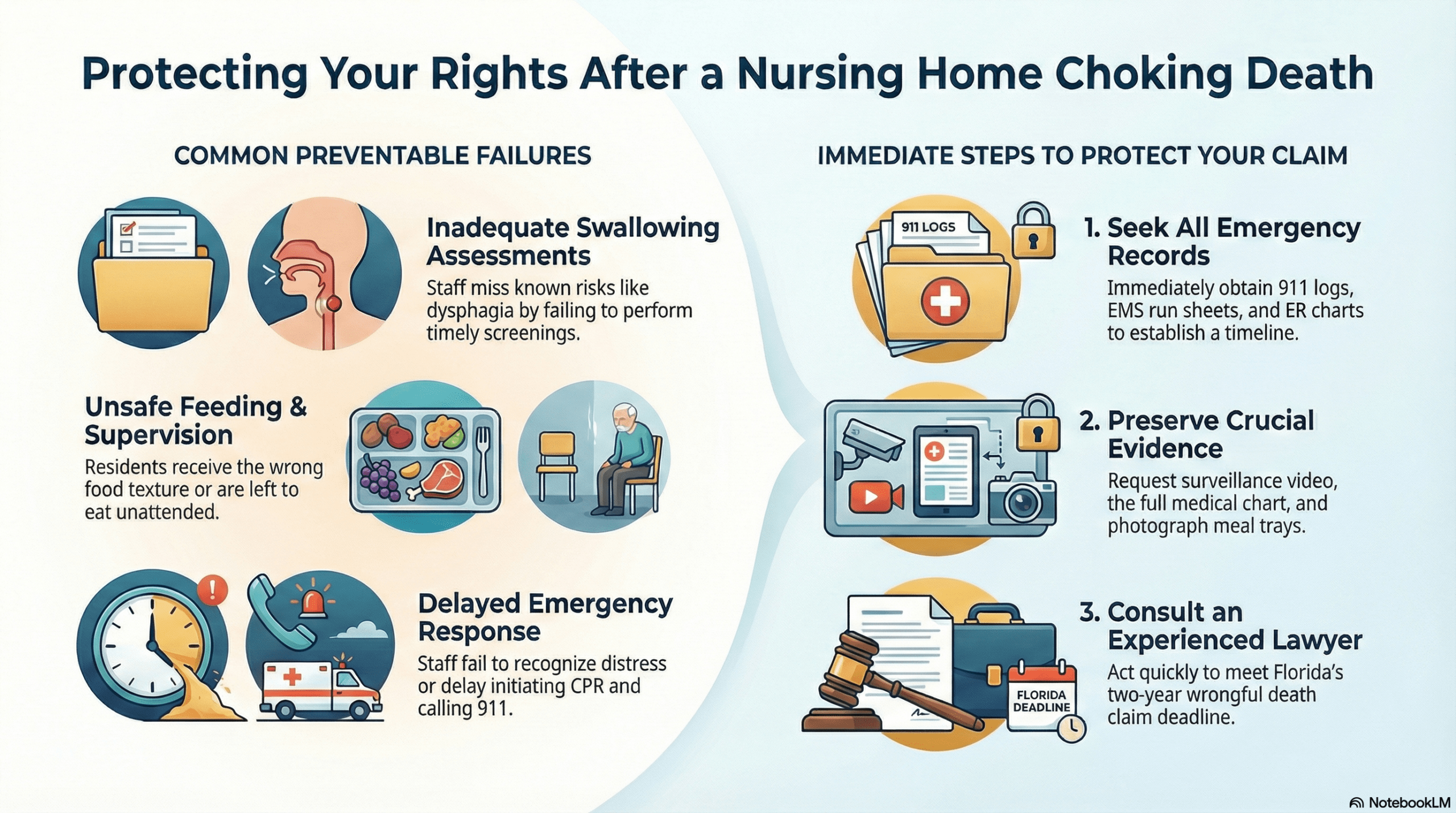
You’ll often see choking and aspiration deaths start with inadequate swallowing assessments that miss a resident’s true risk.
You may also face improper meal supervision or unsafe food textures, turning routine meals into emergencies.
When staff delay the emergency response, a preventable incident can quickly become fatal.
Inadequate Swallowing Assessments


Even when a resident seems to be eating “just fine,” an inadequate swallowing assessment can leave a dangerous condition like dysphagia unnoticed. When you serve elders, you can’t rely on appearances; you need timely screening, clear documentation, and follow-up when coughing, wet voice, weight loss, or recurrent pneumonia show up.
| What you should confirm | Why it matters |
|---|---|
| Recent swallow screen and risk note | Flags choking/aspiration risk early |
| Referral to speech therapy | Guides safe textures and techniques |
| Updated care plan + caregiver training | Keeps every shift consistent |
If the facility skips evaluations after medication changes, strokes, or dental issues, you may see silent aspiration and rapid decline. You can advocate by requesting reassessment, care-plan updates, and family notification whenever risk indicators arise.
Improper Meal Supervision
Too often, choking and aspiration happen when staff leave a high-risk resident to eat unattended or rush meals without watching for trouble signs. When you serve elders, you know mealtime isn’t “down time”—it’s care.
Improper supervision can mean no one checks posture, breathing, pacing, or whether the resident is pocketing food. With insufficient supervision, a cough, a wet voice, or sudden fatigue can go unnoticed until it becomes an emergency.
You can prevent harm by insisting on clear assignments, steady meal monitoring, and immediate response when a resident struggles. You should also make sure staff stay within arm’s reach for those with prior choking episodes, dementia, or sedating medications. Dignity and safety go hand in hand.
Unsafe Food Texture


Often, choking and aspiration start with the wrong food texture—when a resident who needs puréed, minced, or thickened foods gets regular meals, thin liquids, or mixed textures that they can’t chew or control. You can prevent tragedy by insisting the care plan matches what’s served, every time, on every tray.
When staff skip texture modification, small risks compound: dry meats crumble, bread clumps, rice scatters, and pills hide in thin liquids. Sensory changes from stroke, dementia, Parkinson’s, or medication can blunt taste and swallow cues, so a resident may keep eating despite pooling food or a wet voice. You help by requesting a swallow evaluation, confirming diet orders at handoff, and watching for coughing, pocketing, or fatigue during meals.
Delayed Emergency Response
Wrong food texture can start a choking episode, but a delayed emergency response can turn it into a death. When seconds matter, you need staff who recognize distress, initiate the resident’s care plan, and start lifesaving steps immediately.
If no one calls 911, retrieves suction, or performs the Heimlich or CPR, oxygen loss escalates to brain injury or death.
You often see delayed response when call lights go unanswered, hallways aren’t monitored, or aides hesitate to escalate concerns. Staffing shortages can leave one nurse covering too many rooms, forcing dangerous triage.
You can serve residents best by insisting on clear escalation protocols, regular drills, accessible emergency equipment, and documented supervision during meals. When a facility cuts corners, your vigilance can help protect a life and support accountability later, too.

Legal Rights of Fort Lauderdale Nursing Home Choking & Aspiration Death Victims
When a Fort Lauderdale nursing home resident dies from choking or aspiration, Florida law can give you clear legal rights to demand answers and pursue compensation. You can seek accountability not to blame, but to protect other elders and honor the life you loved.
Resident rights include safe dining assistance, proper screening for swallowing, and timely medical care. You’re also entitled to a family consultation, so the facility can’t shut you out of care planning or incident details.
Florida law gives families rights after choking or aspiration deaths—demand answers, safe care standards, and consultation in every step.
You can use these rights to request records, challenge negligent policies, and pursue a wrongful death claim when preventable failures caused the loss, including inadequate supervision, unsafe food textures, or poor staffing.
- Request care plans, diet orders, incident reports, and 911/EMS logs
- Demand explanations for staffing levels, training, and monitoring practices
- Seek damages for medical bills, funeral costs, and your family’s loss of support and companionship
Steps to Take After a Fort Lauderdale Nursing Home Choking & Aspiration Death
After a Fort Lauderdale nursing home choking or aspiration death, you should request and secure all emergency records right away.
You’ll want to preserve evidence and documentation, including care plans, incident reports, medication logs, and any communications with the facility.
Then you should consult a nursing home lawyer to protect your rights and take action before crucial deadlines pass.
Seek Emergency Records
Start by tracking down all emergency records related to the choking or aspiration event, including 911 call logs, EMS run sheets, emergency room charts, imaging reports, and airway management notes. Request certified copies of all medical records and ask for the full timeline of calls, interventions, vital signs, and medications administered.
These documents help you serve your loved one by clarifying what happened minute by minute, without relying on memory. Ask the hospital and EMS how to obtain any audio files and triage notes, and note any referenced staff statements for later follow-up.
| Record to request | Why it matters |
|---|---|
| 911/dispatch logs | Confirms timing and reported symptoms |
| EMS run sheet | Shows on-scene actions and oxygen/airway care |
| ER chart/imaging | Documents aspiration, obstructions, and treatment |
| Airway notes | Details suctioning, intubation, and complications |
Preserve Evidence And Documentation
Although you may feel pressure to “let the facility handle it,” you should preserve evidence and documentation immediately so the facts don’t disappear.
Request the complete chart: care plan, choking risk assessments, diet orders, swallow evaluations, MARs, CNA flow sheets, incident reports, and EMS notes.
Ask for video preservation from hallways and dining areas, and note the cameras’ locations and time ranges.
Photograph the room setup, meal trays, thickened liquids, suction equipment, and any warning signage.
Write a timeline while memories are fresh, and collect names of witnesses, including residents’ families who were present.
Keep originals safe and track every transfer to maintain a clear chain of custody.
Your careful documentation protects your loved one’s story and supports safer care for others.
Consult A Nursing Home Lawyer
In the hours and days that follow a choking or aspiration death, you should consult a Fort Lauderdale nursing home lawyer who can take control of the investigation before crucial records vanish.
You’ll protect your loved one’s dignity and help prevent similar harm to others by securing charts, care plans, diet orders, staffing logs, and incident reports, then demanding answers in writing.
Your lawyer can coordinate family consultations, speak with witnesses, and work with medical experts to confirm whether neglect, unsafe feeding, or delayed emergency response played a role.
You won’t have to face the facility’s insurer alone or risk statements being used against you.
Acting fast also preserves your rights under strict legal timelines for claims, notices, and probate steps.
You’ll move forward with purpose and compassion.
How a Fort Lauderdale Nursing Home Choking & Aspiration Death Lawyer Can Help You
Take control of what happens next by working with a Fort Lauderdale nursing home choking and aspiration death lawyer who can step in immediately, preserve vital evidence, and push back when a facility tries to minimize what happened. You don’t have to carry the burden alone while you’re trying to honor your loved one and protect other residents.
Work with a Fort Lauderdale choking and aspiration death lawyer to preserve evidence, confront coverups, and protect your loved one’s legacy.
Your lawyer investigates staffing, supervision, diet orders, swallow precautions, and emergency response, then builds a clear timeline from records, witness statements, and video. They handle tough conversations so you can focus on your family communication and support. They also review whether advanced careplanning was followed or ignored, including care plans, DNRs, and consent.
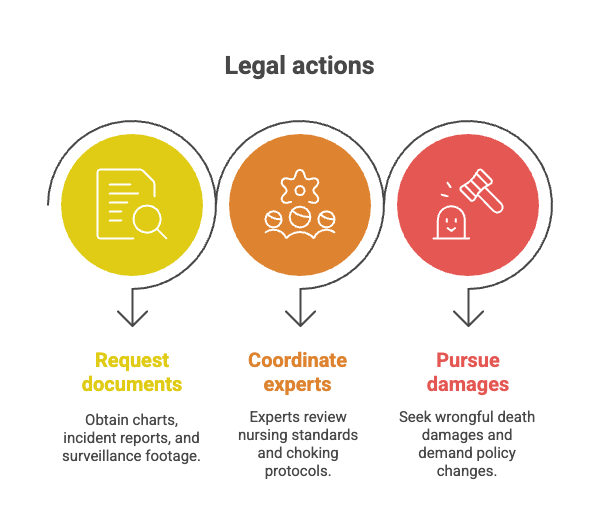
- Request and secure charts, incident reports, and surveillance footage
- Coordinate experts to review nursing standards and choking protocols
- Pursue wrongful death damages and demand policy changes for safer care
You’ll get updates, guidance, and a strategy rooted in service, accountability, and truth.
Long-Term Effects of Fort Lauderdale Nursing Home Choking & Aspiration Death Injuries
When a nursing home choking or aspiration event happens, you may face long-term harm that doesn’t end after the emergency.
You can see chronic lung damage, recurrent aspiration pneumonia, and lasting breathing limits that change daily life.
If your loved one went without oxygen, you may also be dealing with neurological injury after hypoxia, including permanent cognitive and mobility problems.
Chronic Lung Damage
Although a choking or aspiration episode might look like a one-time crisis, it can leave lasting harm that doesn’t show up until days or weeks later. If food, liquid, or stomach contents reach the lungs, you may face ongoing inflammation and repeated infections that scar delicate tissue.
Over time, you can develop airway remodeling, which narrows breathing passages and makes coughing and clearing mucus harder. In severe cases, scarring progresses into pulmonary fibrosis, reducing oxygen exchange and leaving you winded with simple tasks.
You might notice persistent wheezing, frequent pneumonia, chest tightness, or a lingering wet cough. When you serve an older loved one, you can watch for subtle breathing changes and insist on prompt evaluation, swallow precautions, and respiratory follow-up. Early intervention can limit permanent damage and preserve comfort.
Neurological Injury After Hypoxia
Chronic lung damage isn’t the only long-tail threat after a choking or aspiration event—minutes without adequate oxygen can also injure the brain. If your loved one survives, you may notice new confusion, slowed thinking, or personality changes that weren’t there before. These cognitive deficits can make it harder to follow conversations, manage medications, or remember names, creating daily safety risks. You might also see motor impairment: weakness, poor coordination, tremors, or trouble swallowing and walking.
When you serve an elder, you’ll often become the steady translator between doctors, therapists, and care staff. Ask for neurologic testing, rehab referrals, and a clear care plan. Document symptoms, timelines, and staffing gaps, so you can advocate for dignity, recovery support, and accountability.
Recurrent Aspiration Pneumonia
Often, a resident who survives a choking or aspiration episode goes on to develop recurrent aspiration pneumonia—lung infections triggered by food, liquid, or saliva repeatedly slipping into the airway.
You may not see dramatic choking; silent aspiration can cause fever, wheezing, fatigue, or confusion that looks like “just aging.” Each infection weakens breathing, reduces mobility, and can lead to sepsis or respiratory failure, especially when antibiotics stop working.
You can serve residents best by spotting risk factors early: swallowing disorders, dementia, stroke, sedation, poor oral care, GERD, and improper feeding positions.
You’ll want timely swallow evaluations, diet modifications, upright meals, slow pacing, oral hygiene, and staff supervision.
When a facility ignores warning signs, your advocacy can protect dignity and prevent another avoidable hospitalization or death.
Proving Liability in Fort Lauderdale Nursing Home Choking & Aspiration Death Cases
Because choking and aspiration can happen quickly, proving liability in a Fort Lauderdale nursing home death case comes down to showing the facility ignored known risks or broke basic safety rules. You’ll focus on whether staff followed the resident’s care plan, diet orders, swallowing precautions, and supervision requirements during meals, medications, or tube feeding.
Start by gathering records: care plans, speech-therapy notes, incident reports, staffing logs, and surveillance footage. Look for missed reassessments, delayed response, improper positioning, unsafe food consistency, or failure to monitor oxygen and coughing. Compare what happened to what policies required and what state and federal regulations demand.
You can also show gaps in staff training, especially on aspiration precautions, Heimlich response, and feeding assistance. With expert testimony from nursing, geriatric, or speech-language consultants, you’ll connect those failures to the choking event and explain how a reasonably careful facility would’ve prevented it.
Compensation for Fort Lauderdale Nursing Home Choking & Aspiration Death Damages
Pursue full, fair compensation by documenting every way a choking or aspiration death changed your family’s life and exposed the nursing home’s failures. You’ll honor your loved one by naming the true costs: final medical care, emergency transport, funeral and burial expenses, and the income or benefits your household lost. You can also seek damages for the guidance, companionship, and practical help your loved one provided, because service and presence matter.
Build your claim with records, receipts, care plans, diet orders, swallow evaluations, incident reports, and witness statements. When you pursue Financial compensation, you’re not being vindictive—you’re protecting your family and pushing safer care for other residents. You may also recover for mental pain and suffering and the loss that reshaped daily life, supporting your Emotional recovery. A focused damages presentation can drive meaningful accountability and real change within the facility.
The Statute of Limitations for Fort Lauderdale Nursing Home Choking & Aspiration Death Cases
While you’re grieving a choking or aspiration death, Florida’s filing deadlines keep moving, and missing them can erase your right to hold a Fort Lauderdale nursing home accountable.
In most cases, you must bring a wrongful death claim within two years of the date of death, and the clock doesn’t pause just because you’re overwhelmed or waiting for answers. If the case involves negligence in care, preserve records and request incident reports quickly so you can act within the legal window.
Still, nuances in the statute can affect how the deadline applies. For example, if you’re dealing with an estate that hasn’t been opened yet, disputes over who serves as personal representative can burn valuable time. Claims tied to government-run facilities may require special notice steps with shorter timeframes.
When you serve others by seeking accountability, treat the calendar as urgent: document what happened, track crucial dates, and act before time runs out.
Why You Need an Experienced Fort Lauderdale Nursing Home Choking & Aspiration Death Lawyer
When a loved one dies from choking or aspiration in a Fort Lauderdale nursing home, you don’t just need sympathy—you need a lawyer who knows how to prove exactly where the facility’s care failed and how that failure caused the death.
An experienced attorney moves fast to secure records, meal plans, swallow assessments, and incident reports before they’re “lost” or rewritten. You need someone who can spot red flags like missing supervision, ignored diet orders, delayed CPR, or poor airway management.
You’re also fighting systems designed to minimize responsibility. A seasoned lawyer understands staffing policies, staff training standards, and how to compare them to what actually happened on the floor.
They’ll work with medical experts to connect aspiration risk, negligence, and causation in plain terms. Just as important, they’ll elevate your family advocacy into focused action, so your case honors your loved one and protects others from the same preventable tragedy.

How to Choose the Right Fort Lauderdale Nursing Home Choking & Aspiration Death Lawyer for Your Case
An experienced attorney can move quickly and spot the care failures that lead to choking or aspiration—but you still have to choose the right one for your family’s case. Start by looking for a lawyer who routinely handles nursing home neglect and wrongful death claims, not just general injury work.
Ask how they investigate staffing, diet orders, swallow assessments, and emergency response.
Choose someone who communicates clearly and respects your family dynamics, including disagreements about next steps or who’ll serve as the decision-maker. You’ll do better with counsel who can guide you toward unity and a service-minded outcome that honors your loved one.
Discuss cost considerations upfront. Request a written fee agreement, ask about case expenses, and learn how liens or medical bills may be handled.
Finally, review results, references, and availability, and make sure you feel heard and supported.
About the Law Offices of Anidjar and Levine
Turn to the Law Offices of Anidjar and Levine for hands-on guidance after a Fort Lauderdale nursing home choking or aspiration death.
You’ll work with a team that treats your case as a mission to protect residents and honor a life lost, not just a file number.
You can expect clear communication, timely updates, and a plan that fits your goals.
You’ll benefit from a Firm history rooted in advocating for people harmed by negligence, with a focus on accountability and safer care.
You can share what happened, and they’ll act—gather records, consult qualified experts, preserve evidence, and pursue responsible facilities and insurers.
You won’t have to shoulder calls, paperwork, or pressure tactics alone.
You can also review Client testimonials to see how others describe the firm’s responsiveness, respect, and steady support.
When you’re ready to serve your loved one’s memory, you’ll have committed advocates beside you.
Frequently Asked Questions
What Medical Experts Are Used to Evaluate Aspiration or Choking Deaths?
You’ll typically rely on forensic pathologists to confirm the cause of death through autopsy findings, airway obstruction evidence, and medical records. You’ll also consult speech pathologists to assess swallowing function, diet recommendations, and whether proper precautions were followed.
Pulmonologists can explain aspiration-related lung injury, while gastroenterologists evaluate reflux risks. Crucial care or emergency physicians clarify resuscitation timelines. You’ll coordinate these experts to honor the person’s life with truth.
Can a Case Proceed if the Resident Had a DNR Order?
Yes, you can still proceed even if the resident had a DNR order. A DNR limits resuscitation, not the duty to provide safe feeding, monitoring, and timely medical care.
You’ll examine capacity issues related to signing the DNR and whether the resident gave informed consent or whether a surrogate acted properly. If neglect caused choking or aspiration, you can pursue accountability to protect vulnerable residents and support better care.
How Are Confidential Nursing Home Records Obtained During a Lawsuit?
You obtain confidential nursing home records through formal discovery: your attorney subpoenas the facility, doctors, pharmacies, and labs for charts, care plans, incident reports, and billing.
You’ll usually sign privacy waivers or provide estate authority so releases comply with HIPAA.
You can also request records via interrogatories and depositions to confirm what’s missing.
If they resist, you ask the judge to compel production so you can protect residents and improve care.
Will Filing a Claim Affect Medicaid or Medicare Eligibility?
Filing a claim usually won’t change your Medicare eligibility, so Medicare implications are minimal.
Your Medicaid impact depends on how any settlement gets paid and whether you must report it as income or a resource. You’ll need to structure proceeds carefully, especially if you receive needs-based Medicaid.
You can often protect benefits with a special needs trust or spend-down planning. Work with counsel so you serve your loved one responsibly.
Can Families Pursue Claims for Emotional Distress After a Choking Death?
Yes, you can sometimes pursue claims for emotional distress after a choking death, but it depends on your state’s wrongful death and negligence rules.
You’ll typically need to show a close relationship and clear harm, and some states limit standalone emotional damages.
You can also document costs like bereavement counseling to support your losses.
You should act promptly, preserve records, and seek guidance to protect your family.
——————
You don’t have to face a Fort Lauderdale nursing home choking or aspiration death alone.
When a facility fails to monitor swallowing risks, follow diet orders, or respond quickly, you can pursue accountability and compensation.
Act fast to protect evidence, request records, and meet Florida’s deadlines.
With the right Fort Lauderdale Nursing Home Abuse and Neglect Lawyer, you’ll understand your options, build a strong claim, and demand safer care for others.
Contact the Law Offices of Anidjar and Levine to discuss your case today.


We Can Help.