A Miami Gardens property claim storm and weather damage lawyer at The Law Offices of Anidjar and Levine can review your policy, applicable deadlines, exclusions, and the insurer’s assessment of your loss. Counsel may help organize photographs, inspection reports, repair estimates, and expense records, and address delays, underpayments, or denials with the insurer. Storm-related hazards may also cause injuries; seek prompt medical care and document unsafe conditions. For injury-related guidance, visit a Miami Gardens Personal Injury Lawyer. Your options depend on your policy, the facts, and Florida law. The following sections explain essential steps and considerations.
Main Takeaways
- A Miami Gardens storm-damage lawyer can review your policy, coverage limits, exclusions, and claim deadlines.
- Preserve photos, repair estimates, receipts, weather records, and insurer communications to support your claim.
- Counsel can challenge delayed, underpaid, or denied claims and request a clear explanation of the insurer’s decision.
- Independent inspections may help assess roof, water, hail, wind, lightning, or power-surge damage.
- Liability claims involving storm-related injuries require evidence linking a responsible party’s conduct to the harm.
How We Can Help With Your Miami Gardens Property Claim Storm & Weather Damage Injury Claim
After a storm damages a home or business in Miami Gardens, a property claim can involve urgent repairs, disputed coverage, and substantial financial losses. A lawyer can help property owners understand their options and pursue a fair response from an insurer. The process may begin with a Policy review to assess relevant terms, deadlines, exclusions, and documentation requirements. Counsel can organize records, examine estimates, and communicate with the insurer while the owner focuses on safety and necessary repairs.
When coverage disputes arise, legal guidance can clarify the insurer’s position and identify questions requiring further support. A lawyer may challenge an inadequate assessment, address delays, and present evidence of covered damage. Clear communication and careful recordkeeping can help prevent avoidable setbacks and support an informed resolution. Each claim depends on its policy language and evidence, so advice should reflect the specific circumstances. By explaining available steps and managing claim-related communications, counsel can help owners protect their interests and restore affected property responsibly.
Understanding Miami Gardens Property Claim Storm & Weather Damage Injury Cases


Miami Gardens property claim storm and weather damage cases often turn on whether the reported loss resulted from a covered event and whether reliable evidence supports the damage. A careful review may compare the policy’s terms with inspection records, photographs, repair estimates, and other documentation. Policy interpretation can determine how the insurer applies definitions, conditions, and limits to the claimed loss. Coverage exclusions also require close attention because their wording and relationship to other provisions may affect whether particular damage qualifies for payment.
OUR CONSULTATIONSARE FREE
START YOUR FREE CASE REVIEW

These cases may involve questions about notice requirements, proof of loss, valuation, and the insurer’s explanation for its decision. Clear, organized records can help establish the property’s condition and the scope of requested repairs. When disputes arise, an independent assessment may clarify whether the insurer’s evaluation reflects the available evidence and policy language. A thorough understanding of these issues can support fair claim handling and help property owners make informed decisions while protecting the interests of their households and communities.
Don’t Wait. Call Our Florida Personal Injury Lawyers Now!
Common Causes of Miami Gardens Property Claim Storm & Weather Damage
Storm-related property claims in Miami Gardens commonly arise from hurricane-force winds that damage roofs, windows, and exterior structures. Heavy rainfall can cause flooding, while hail may compromise roofing materials and allow water intrusion. Lightning strikes and resulting power surges can also damage electrical systems and household equipment.
Hurricane-Force Winds


When hurricane-force winds move through Miami Gardens, they can lift shingles, damage roof structures, break windows, and drive rain into a property. Wind uplift may loosen roofing materials or expose vulnerable sections, while flying debris can puncture siding, shatter glass, and damage exterior equipment. The resulting openings can let water enter and damage ceilings, walls, insulation, and personal property. Even when damage is not immediately visible, displaced materials or weakened connections may create safety concerns and require prompt professional inspection. Property owners can help protect occupants and support a clear claim by documenting visible damage, keeping records of repair costs, and taking reasonable steps to prevent further loss. A qualified contractor can assess structural conditions, while an attorney can explain policy requirements and address disputes over covered wind damage.
Heavy Rainfall Flooding
Heavy rainfall can cause flooding in Miami Gardens even without hurricane-force winds, particularly when drainage systems are overwhelmed or water accumulates in low-lying areas. Streets, yards, and buildings may take on water when storm drains are blocked, canals rise, or runoff exceeds the capacity of local systems. Flooding can damage flooring, drywall, electrical equipment, and personal belongings, while prolonged moisture may contribute to mold growth. Floodwater contamination is another concern because runoff can carry sewage, chemicals, and debris into homes and businesses. Water may also weaken soil around structures, leading to foundation erosion and costly repairs. Property owners who document damage, protect occupants from unsafe conditions, and promptly notify their insurers can support an orderly claim review. Clear records help responsible decision-makers assess losses and determine appropriate coverage under the policy terms.
Hail and Roof Damage
Although hail is less common in Miami Gardens than wind-driven rain, severe storms can produce hail capable of damaging roofs and other exterior surfaces. Roof shingle impact may crack, loosen, or dislodge shingles, exposing the underlying roof system to further weather damage. Hail can also dent metal flashing, vents, and gutters, weakening areas that help direct water away from the home. Even when damage is not visible from the ground, compromised materials may allow water to enter during later rainfall. Attic moisture intrusion can stain ceilings, damage insulation, and encourage mold growth if left unaddressed. A careful inspection after a hailstorm can help identify affected areas and document conditions for a property claim. Timely repairs can limit additional damage and help preserve safe, dry housing for residents and families.
Lightning and Power Surges
Beyond roof and hail damage, thunderstorms can affect Miami Gardens properties through lightning strikes and the power surges they cause. Lightning strike damage may include burned wiring, damaged appliances, fires, and harm to electrical panels or connected equipment. A surge can also travel through utility lines and disrupt computers, security systems, and critical building operations, even when lightning does not hit the structure directly. Surge protection systems may reduce exposure, but they cannot prevent every loss or replace careful inspection after a severe storm. Property owners should document visible damage, preserve damaged equipment when safe, and obtain qualified assessments of electrical systems before restoring affected areas. Prompt reporting and accurate records can help insurers evaluate a claim and support a thorough review of repairs needed to protect occupants and serve the wider community.
Legal Rights of Miami Gardens Property Claim Storm & Weather Damage Injury Victims
Miami Gardens property owners and occupants affected by storm or weather damage may have legal rights when an insurer delays, underpays, or wrongfully denies a covered claim. The policy, evidence of loss, and Florida law help determine available remedies. A careful review can clarify obligations and support fair treatment, particularly when claimants seek to protect households, tenants, and community members.
Depending on the circumstances, claimants may be entitled to:
- Receive a timely, good-faith investigation and a clear explanation of the insurer’s decision.
- Submit photographs, repair estimates, receipts, and other records supporting the claimed damage.
- Challenge Policy exclusions that are applied incorrectly or conflict with the policy’s terms.
- Address appraisal disputes through procedures permitted by the policy or applicable law.
Claimants should preserve relevant records, meet policy deadlines, and avoid altering damaged property before documenting it, when safe. Legal counsel can assess coverage, explain procedural options, and communicate with the insurer. Each claim depends on its specific facts, policy language, and applicable deadlines; prompt, informed action can help secure a fair resolution while respecting the needs of everyone affected.
Why Do Miami Gardens Property Claim Storm & Weather Damage Injuries Happen?
Why do storm-related property claim injuries occur in Miami Gardens? Severe rain, wind, and flooding can damage roofs, windows, electrical systems, and structural supports, creating hazards for residents, visitors, and workers. Loose roofing materials, broken glass, exposed wiring, and standing water may cause falls, cuts, or other serious harm. Some dangers arise during the storm, while others develop when weakened structures fail afterward.
The extent of damage may depend on property maintenance, construction quality, and preparation for local weather conditions. Inadequate drainage or neglected repairs can worsen water intrusion, while poor installation may leave buildings vulnerable to high winds. Building code enforcement helps guarantee properties meet safety requirements, but gaps in compliance can increase risks. Contractor negligence, including careless repairs or substandard materials, may also contribute to preventable damage and injuries. These failures can affect entire households and communities, underscoring the importance of safe, resilient buildings that protect those who live, work, and gather in Miami Gardens.
What Should You Do After a Miami Gardens Property Claim Storm & Weather Damage Injury?
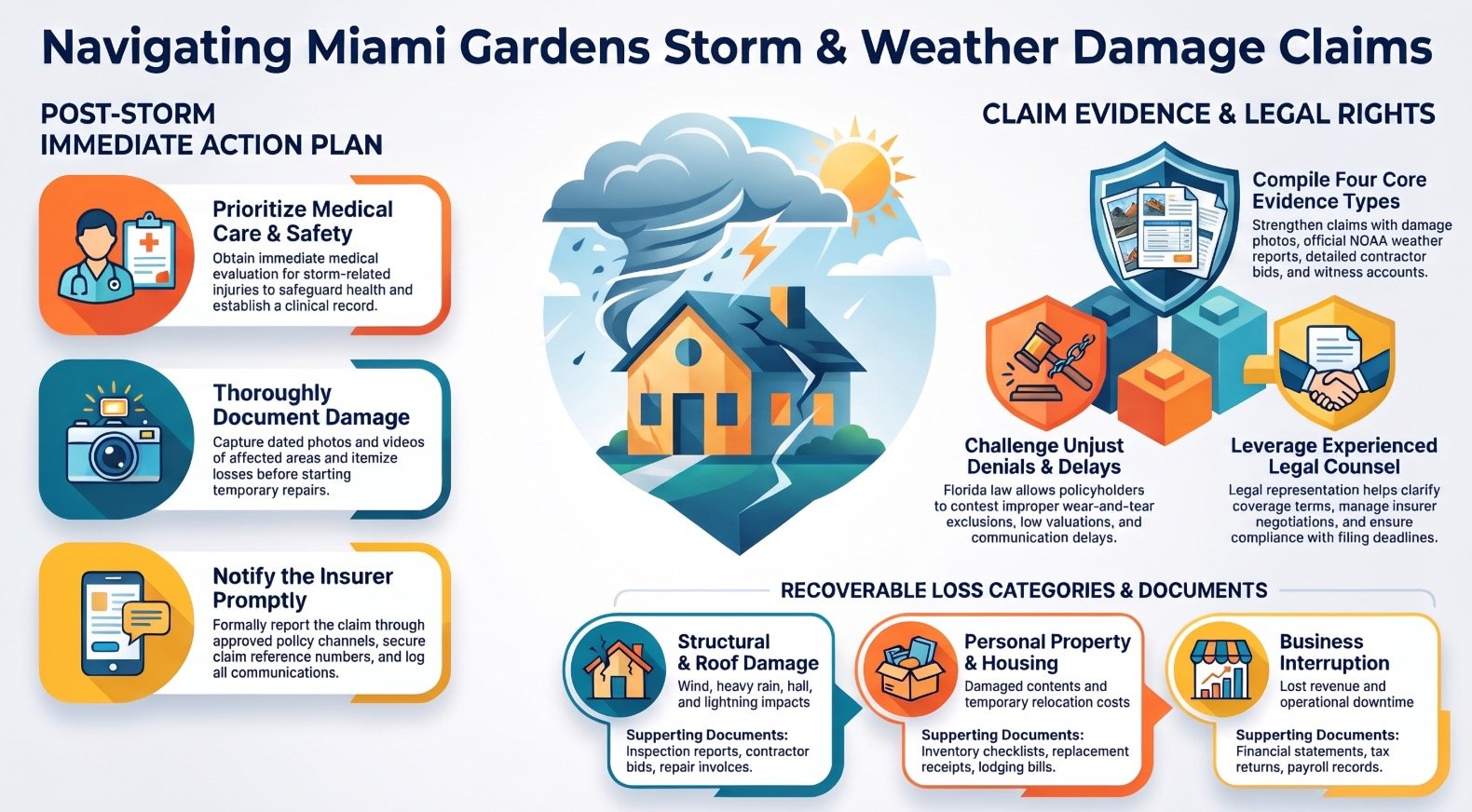
After a storm-related injury, the affected person should seek medical care promptly, even if symptoms appear minor. They should document property damage with dated photographs, videos, and records of related expenses. Once immediate safety and medical needs are addressed, they should notify their insurer and retain copies of all communications.
Seek Medical Care
When a storm-related incident causes an injury on a Miami Gardens property, prompt medical care should take priority, even if the symptoms initially seem minor. An injured person should contact emergency services for severe pain, heavy bleeding, difficulty breathing, loss of consciousness, or suspected head, neck, or spinal injury. Emergency evaluation can identify conditions that may not be immediately apparent and help determine appropriate treatment. For less urgent concerns, the person should promptly consult a qualified healthcare provider and follow the provider’s instructions. They should explain how the incident occurred and describe all symptoms, including those that develop later. Symptom tracking can help the provider assess changes over time; noting when discomfort begins or worsens supports accurate care. Timely treatment protects health and creates a reliable clinical record of the injury.
Document The Damage
Documenting the storm damage can help preserve evidence relevant to a Miami Gardens property claim. Once conditions are safe, the property owner should photograph and video affected rooms, exterior areas, and damaged belongings before cleanup or repairs begin. Images should show both close details and the broader location of each problem, with dates and brief notes recorded when possible. An Inventory checklist can identify damaged items, including their descriptions, approximate age, and replacement cost. Receipts, repair estimates, and records of emergency expenses may also help explain the extent of the loss. If immediate action is needed to prevent further harm, the owner may arrange temporary protection, such as covering a damaged roof, while keeping records of the work and costs. Safety should remain the priority throughout documentation and mitigation.
Contact Your Insurer
Prompt notice can help preserve a Miami Gardens property owner’s ability to pursue a storm damage claim. After documenting visible damage, the owner should contact the insurer through the method specified in the policy, such as a claims hotline or online portal. Policyholder notification should include the date and apparent cause of the loss, the affected areas, and any immediate steps taken to prevent further damage. The owner should provide accurate information without guessing about repair costs or the full extent of the loss. Request a claim acknowledgment, including a claim number and adjuster contact details, and keep it with all related records. Review the insurer’s deadlines and instructions carefully. Prompt, organized communication can help the process proceed efficiently and support a fair assessment of the property’s needs.
Critical Evidence in a Miami Gardens Property Claim Storm & Weather Damage Injury Case
A well-supported Miami Gardens storm damage claim depends on evidence that documents the loss and helps establish its cause and extent.
Relevant records may include:
- Photographs of property damage
- Reports documenting local weather conditions
- Estimates for necessary repairs
- Statements from witnesses who observed the damage or storm effects
Together, these materials can help clarify the circumstances and scope of the claim.
Damage Photographs
When storms damage a home or business in Miami Gardens, clear photographs can help establish the property’s condition and the extent of the loss. Images should document affected rooms, roofing, windows, personal property, and visible water intrusion from several angles. Wide views can show where damage occurred, while close-ups reveal specific conditions such as cracks, stains, or broken materials. Photographs taken before cleanup or repairs may help preserve evidence, provided immediate safety needs are addressed. Photo metadata, including timestamps and location details, can support an accurate record of when and where images were captured. Image preservation matters: retain original files, back them up securely, and do not alter them. A consistent photographic record can help insurers, contractors, and legal representatives evaluate the claim and identify appropriate next steps.
Weather Reports
Because storm conditions can change rapidly, reliable weather reports may help establish what occurred at a Miami Gardens property and when. Official records can document rainfall, wind speed, hail, lightning, and the timing of severe weather near the site. NOAA archives may provide historical observations and alerts that help clarify whether a reported event matches the damage described. Radar interpretation can add context by showing a storm’s movement, intensity, and proximity, though radar data may require careful review to avoid drawing unsupported conclusions. These sources can help property owners, insurers, and professionals assess the circumstances fairly and preserve an accurate account for everyone affected. Reports should match the property’s location and relevant dates, then be considered alongside photographs, witness accounts, and other available evidence.
Repair Estimates
How much storm damage a property sustained may depend on the scope and cost of necessary repairs. Repair estimates can help establish the financial impact of wind, rain, or hail damage and support a property claim. A detailed estimate should identify affected areas, describe the work required, and separate labor from materials. Contractor bids may provide useful comparisons, particularly when they explain the proposed repairs and reflect the property’s actual condition. Current material pricing also matters because replacement costs can change, affecting the amount needed to restore damaged structures. Photographs, inspection findings, and itemized estimates can help connect repair costs to storm-related damage. Incomplete or unusually low estimates may leave necessary work unaddressed. Careful review of repair documentation can help property owners present a clear, accurate claim and pursue a fair assessment.
Witness Statements
Witness statements can provide important firsthand evidence in a Miami Gardens property claim involving storm or weather damage. Neighbors may describe when severe weather began, what conditions they observed, and whether damage appeared before or after the event. Neighbor accounts can also help establish the sequence of events and identify changes to the property that occurred over time.
Contractors who inspected or repaired the property may offer relevant observations about damaged materials, moisture intrusion, and the apparent source of deterioration. Contractor observations are most useful when tied to specific inspection dates, photographs, or written estimates. Their statements should distinguish direct observations from conclusions based on later information.
A careful record of each witness’s name, contact details, and account can support a clear claim review. Consistent, factual statements can help insurers and decision-makers assess the damage and determine the right next steps.
Don’t Wait. Call Our Florida Personal Injury Lawyers Now!
Long-Term Effects of Miami Gardens Property Claim Storm & Weather Damage Injuries
Storm-related injuries may cause chronic pain and mobility limitations that persist long after the immediate damage is addressed. Lasting emotional distress can also affect daily life and may require continued care. These conditions can lead to ongoing medical expenses, which should be documented when evaluating a property claim.
Chronic Pain and Mobility
After a property-related storm injury in Miami Gardens, pain and limited mobility may persist long after the immediate damage has been addressed. Persistent discomfort can interfere with walking, lifting, household tasks, and participation in community activities. A qualified medical provider can assess the injury, recommend appropriate treatment, and monitor changes over time. Pain management may include prescribed medication, physical therapy, or other supervised approaches tailored to the person’s condition. When movement remains restricted, mobility aids such as canes, walkers, or braces may support safer daily activity and reduce strain. Recovery needs can vary, and ongoing symptoms may require follow-up care or adjustments to a treatment plan. Clear records of medical visits, functional limits, and related expenses can help document the lasting effects of an injury when a property damage claim is evaluated.
Lasting Emotional Distress
Lasting emotional distress can develop when a storm-related injury or property damage disrupts a person’s sense of safety and daily routine. In Miami Gardens, severe weather may leave residents coping with fear, grief, or persistent anxiety long after immediate danger has passed. Injuries, damaged homes, and displacement can also strain family relationships and make ordinary responsibilities difficult. Sleep disruption, recurring memories, heightened alertness, or avoidance of storm warnings may signal that distress is affecting daily life. These responses are not signs of weakness, and their effects can vary from person to person. Trauma counseling may help individuals understand their reactions and develop strategies for restoring stability. Support from family, community organizations, and qualified professionals can also assist recovery. Recognizing lasting emotional effects helps affected residents seek appropriate support and document how an incident has changed their lives.
Ongoing Medical Expenses
Storm and weather injuries can require ongoing medical care, creating expenses that continue well beyond the initial emergency. In Miami Gardens, residents injured by severe weather may need follow-up appointments, rehabilitation, diagnostic testing, or expert care. These services can be vital to recovery, but their costs may place sustained pressure on household finances.
Future treatment needs can include procedures or therapy recommended after a physician evaluates the injury’s progression. Prescription costs may also continue when medication is needed to manage pain, prevent complications, or support recovery. Keeping medical records, bills, and treatment recommendations can help document these expenses and clarify how the injury affects daily life.
When a property claim involves storm-related harm, careful review of current and reasonably anticipated medical costs can support a more complete assessment of the losses and the resources required for continued care.
Proving Liability in Miami Gardens Property Claim Storm & Weather Damage Injury Cases
Proving liability in a Miami Gardens property claim involving storm or weather damage requires evidence that connects the loss to a responsible party’s conduct or failure to act. The analysis may consider whether a property owner, manager, or other responsible party took reasonable steps to protect visitors before and after severe weather. Relevant evidence can include photographs, incident reports, weather data, witness statements, and records showing when hazards appeared and what actions followed.
Maintenance records may reveal whether roofs, drainage systems, walkways, or trees were inspected and repaired. Building codes and applicable safety standards can help establish expected precautions, although a violation alone may not prove liability. The evidence must also show that a failure to act contributed to the injury and that the resulting harm was foreseeable.
Prompt documentation can preserve important details and support a clear account of events. A careful investigation helps identify responsible parties and assess whether reasonable safety measures could have prevented the injury. This process can also clarify disputed facts.
Dealing With Insurance Companies After a Miami Gardens Property Claim Storm & Weather Damage Injury
After a storm-related injury at a Miami Gardens property, insurance companies may investigate the circumstances, review policy terms, and assess whether the claimed losses are covered. Their representatives may request records, photographs, repair estimates, or statements from injured people and witnesses. Careful, accurate communication helps protect the integrity of a claim while supporting a fair review.
Policy interpretation can affect whether coverage applies to property damage, medical expenses, or other documented losses. Policyholders should compare insurer explanations with the policy language and preserve relevant correspondence. They should avoid speculating about how an injury occurred and promptly correct any factual errors. When a question is unclear, seeking guidance before responding may reduce misunderstandings.
A thoughtful negotiation strategy relies on organized evidence, consistent records, and a clear account of the harm suffered. Respectful, direct communication can help keep discussions focused on the available facts and applicable coverage. For people seeking to support injured neighbors, informed assistance can encourage accountability without promising an insurer’s decision.
What to Expect During a Miami Gardens Property Claim Storm & Weather Damage Injury Claim Process
A storm damage claim generally begins with promptly reporting the loss to the insurer and documenting affected property, repair needs, and related expenses. The insurer may then inspect the property to assess the damage and compare the findings with the policy’s coverage. After reviewing the evidence and policy terms, the insurer issues a decision and explains any proposed payment or denial.
Reporting the Damage
When a storm or other weather event damages a property in Miami Gardens, prompt reporting helps establish when the loss occurred and gives the insurer an opportunity to inspect the affected areas. The policyholder should contact the insurer or its designated claims representative as soon as reasonably possible, using the reporting method stated in the policy. Prompt documentation of the report, including its date, the claim number, and the representative’s instructions, can support clear communication throughout the process. The policyholder should provide accurate, concise information and avoid speculation about the cause or extent of damage. Claim deadlines may apply to initial notice, forms, inspections, or later submissions, so review the policy terms carefully. Timely cooperation can help the insurer assess the claim and address property needs without unnecessary delay.
Documenting Your Losses
Thorough documentation helps establish the extent of storm or weather damage and supports a clear assessment of a Miami Gardens property claim. Property owners can preserve dated photographs and videos of affected rooms, belongings, and exterior areas, along with receipts for emergency repairs and protective materials. A Personal property inventory should identify damaged or missing items, their approximate purchase dates, values, and available proof of ownership. Clear records help insurers and other reviewers understand the claimed losses and may reduce disputes about the condition or value of property. Owners should also retain temporary housing records, including lodging receipts, meal expenses when applicable, and dates away from home. Keeping copies of communications, estimates, and claim-related expenses in one organized file can support accurate reporting and help those assisting the household respond responsibly.
Insurer Property Inspection
During an insurer’s property inspection, the adjuster typically examines reported storm damage, documents affected areas, and gathers information to assess the claim. Inspection scheduling should allow the property owner or a trusted representative to be present, provide access, and point out concerns identified during earlier documentation. Before the visit, the owner may ask about adjuster credentials and confirm the inspector’s role with the insurer. The inspection may include interior rooms, roofing, exterior surfaces, and personal property affected by wind or water. The adjuster may take photographs, measurements, and notes, and ask when damage occurred or what repairs have been made. Clear, factual answers can help make observations are accurately recorded. The owner should identify areas that remain unsafe and avoid disturbing damaged materials when possible. A written record of the visit can support organized communication afterward.
Claim Review and Resolution
After the inspection, the insurer reviews the available evidence to determine whether the reported storm or weather damage is covered and what payment may be owed under the policy. During this Claim review, the adjuster may compare photographs, repair estimates, inspection findings, and policy terms. The insurer may request additional records or clarification before issuing a written decision. That decision may approve the claim, provide partial payment, or deny coverage, with reasons stated in the notice. If the property owner disagrees with the assessment, they can submit supporting documents and request reconsideration. Dispute resolution may involve further discussions with the insurer, a formal appeal, or an independent appraisal, depending on policy provisions and applicable rules. Careful recordkeeping and timely responses can help keep the process organized and support a fair evaluation for everyone affected.
Compensation for Miami Gardens Property Claim Storm & Weather Damage Injury Damages
Compensation for storm and weather damage to a Miami Gardens property may cover reasonable repair or rebuilding costs, damaged personal belongings, and additional living expenses when the home cannot be safely occupied. The available amount depends on the policy, documented losses, and applicable limits. A thorough claim should identify damaged structures, such as roofs, windows, and interior finishes, and include estimates from qualified contractors.
Coverage may also address debris removal when storm materials must be cleared to permit safe repairs, subject to policy terms. Additional living expenses can include necessary temporary lodging and related costs while the residence remains uninhabitable; records and receipts help substantiate these requests. Personal property claims benefit from inventories, photographs, purchase records, and clear descriptions of each item’s condition.
A property owner seeking a fair resolution can preserve evidence, prevent further damage where safely possible, and promptly submit complete documentation. These steps help insurers assess the loss accurately and support a practical recovery for residents and families.
Economic vs Non-Economic Damages in Miami Gardens Property Claim Storm & Weather Damage Cases
Storm and weather damage claims may involve economic losses, including repair costs, damaged belongings, and temporary housing expenses. Non-economic harm, such as disruption to daily life or loss of use of a property, may also be relevant depending on the claim and applicable law. Clear records and supporting evidence help establish the nature and extent of claimed damages.
Economic Losses
Economic losses are the measurable financial costs that may follow storm or weather damage to a Miami Gardens property. They can include reasonable repair or replacement expenses, emergency mitigation, debris removal, and costs to protect the building from further damage. A claim may also involve temporary housing or relocation expenses when the property cannot be safely occupied, subject to applicable policy terms and supporting documentation.
For commercial properties, Lost income and business interruption losses may arise when physical damage forces a business to suspend or reduce operations. Records such as invoices, payroll data, tax returns, repair estimates, and receipts can help establish the amount and cause of claimed losses. A property owner or business operator may benefit from carefully documenting damage and expenses, while a qualified professional can assess whether the insurer’s evaluation accounts for covered financial impacts.
Non-Economic Harm
Beyond repair bills and other measurable costs, property damage may create personal hardships that are harder to quantify, such as stress, disruption, or loss of use of a home. In Miami Gardens, storm or weather damage can interfere with routines, privacy, and a family’s sense of security. Emotional anguish may arise when residents face displacement, uncertainty, or repeated disruptions while their property remains damaged. A home that once offered comfort may become a source of concern, and diminished enjoyment can affect daily life even after immediate repairs begin. These non-economic effects differ from expenses such as repair costs or temporary lodging, which can be measured financially. Their significance depends on the circumstances and applicable insurance policy or law. Recognizing these hardships helps present a fuller account of how property damage affects those who rely on the home.
Proving Your Damages
To support a Miami Gardens property claim, the policyholder generally needs evidence connecting the covered weather event to the claimed losses. Economic damages may include repair costs, damaged belongings, temporary housing, and other documented expenses allowed by the policy. Photographs, videos, receipts, contractor estimates, invoices, and maintenance records can help establish the property’s condition before and after the storm. Damage valuation should account for necessary repairs and applicable policy limits, while distinguishing storm-related damage from preexisting conditions. Depreciation disputes may arise when an insurer reduces payment based on age, wear, or an initial actual-cash-value calculation. Non-economic harm, such as disruption and stress, may be harder to document and may not be covered under a property policy. Organized records and timely reporting can help claims professionals assess losses fairly and support a clear, complete claim.
When a Miami Gardens Property Claim Storm & Weather Damage Injury Case Goes to Trial vs. Settlement
Whether a Miami Gardens storm-damage property claim settles or proceeds to trial often depends on the strength of the evidence, the extent of the loss, and the parties’ willingness to resolve disputed issues. Settlement negotiations may provide a practical way to address repair costs, temporary housing needs, and other documented losses without the uncertainty of a courtroom decision. A resolution can also allow property owners to focus sooner on restoring safe, functional homes and supporting affected household members.
If the insurer and claimant cannot agree on responsibility or the value of the damage, trial may become necessary. Trial preparation typically includes organizing photographs, repair estimates, inspection reports, and testimony from relevant witnesses. Each side presents its position, and a judge or jury evaluates the evidence before reaching a decision. The process can require additional time and resources, so the choice between settlement and trial depends on the claim’s circumstances and the parties’ objectives. Careful preparation supports informed decisions at either stage.
Florida Laws That May Affect Your Miami Gardens Property Claim Storm & Weather Damage Case
Florida law can shape how a Miami Gardens property owner reports, documents, and pursues a storm-damage claim. The policy’s terms and applicable insurance statutes may affect covered losses, insurer duties, and the evidence needed to support a payment request. Careful records can also help owners protect homes and maintain safe spaces for family members, tenants, and neighbors.
Key considerations may include:
- Prompt notice to the insurer and reasonable steps to prevent further damage, consistent with policy requirements.
- Documentation such as photographs, repair estimates, receipts, and a detailed inventory of damaged property.
- A policyholder appraisal process, when available under the policy, to address disagreements about the amount of a covered loss.
- Ordinance coverage, which may help pay increased costs required to bring repairs into compliance with current building codes.
Coverage depends on policy language, exclusions, facts, and applicable law. An insurer’s decision may be challenged through available procedures, and qualified legal guidance can clarify obligations and help preserve a fair review for those relying on the property.
The Statute of Limitations for Miami Gardens Property Claim Storm & Weather Damage Injury Cases
Because filing deadlines can determine whether a claim may proceed, Miami Gardens property owners should identify the limitations period that applies to storm or weather damage as early as possible. Florida law sets deadlines for filing property insurance lawsuits, and the applicable period may depend on the loss date, policy terms, and claim circumstances. Missing a deadline can prevent recovery, even when damage is substantial and documented.
Policy filing deadlines may also require prompt notice to the insurer, while contractual provisions can set separate requirements for submitting proof of loss or requesting review. These obligations are distinct from the statute of limitations and may arise sooner. Appraisal clause timelines can likewise affect when a dispute must be raised or completed, depending on the policy language and applicable law.
Owners who maintain properties for tenants, employees, or community members should preserve records of the damage, communications, and repair expenses. Timely attention to each deadline helps protect available remedies and supports an orderly resolution of the claim.
Don’t Wait. Call Our Florida Personal Injury Lawyers Now!
How a Miami Gardens Property Claim Storm & Weather Damage Lawyer Can Help You
When storm or weather damage leads to a disputed insurance claim, a Miami Gardens property claim lawyer can assess the policy, organize evidence, and explain the owner’s available options. The lawyer’s work can help property owners pursue a fair review while protecting resources needed to maintain safe homes and serve their families or communities.
A Miami Gardens property claim lawyer can clarify coverage, organize evidence, and help owners pursue a fair review.
Support may include:
- Policy interpretation to clarify covered losses, duties, deadlines, and documentation requirements.
- Reviewing coverage exclusions and insurer explanations to identify disputed policy terms.
- Organizing photographs, repair estimates, inspection findings, and claim correspondence into a clear record.
- Communicating with the insurer, presenting supporting information, and addressing requests or settlement proposals.
A lawyer can also compare the insurer’s damage assessment with available evidence and explain how repair costs, temporary housing expenses, or other documented losses may affect the claim. Where appropriate, counsel may negotiate with the insurer or pursue available legal remedies. This assistance provides a structured process, allowing owners to make informed decisions and focus on restoring their property and supporting those who depend on them.
When to Contact a Miami Gardens Property Claim Storm & Weather Damage Lawyer
Prompt legal guidance may be appropriate if a storm-damage claim is delayed, denied, or valued below the documented cost of repairs. A property owner may also consider contacting counsel when an insurer requests additional records, disputes the cause of damage, or offers a settlement that does not reflect necessary work. Early review can help clarify Policy deadlines, notice requirements, and the documents needed to support a claim. These timelines may vary by policy and circumstances, so waiting until repairs are complete or negotiations have stalled can create avoidable risks.
A lawyer may be consulted before signing a release or accepting payment, particularly when the scope of damage remains uncertain. If the insurer’s estimate differs substantially from contractor findings, the owner can ask about appraisal options and other procedures available under the policy. Timely advice may help property owners make informed decisions while preserving resources for household recovery and community responsibilities. Each claim’s facts and applicable policy terms should guide the timing of consultation.
Why You Need an Experienced Miami Gardens Property Claim Storm & Weather Damage Lawyer
An experienced Miami Gardens property claim storm and weather damage lawyer can help a property owner assess policy requirements, organize evidence, and respond to disputes over the cause or extent of damage. This support can be valuable when severe weather disrupts a household, business, or community service and timely repairs are needed to protect people and property.
Policy interpretation requires close attention to coverage terms, exclusions, notice deadlines, and documentation obligations. A lawyer can explain how these provisions may apply to reported damage and identify records that could support a claim, such as photographs, repair estimates, inspection reports, and correspondence with the insurer.
Coverage disputes may arise when an insurer questions whether a storm caused particular damage or challenges the cost of necessary repairs. Experienced legal assistance can help present a clear, evidence-based response and address procedural concerns. By managing claim communications and clarifying available options, counsel can help property owners pursue fair consideration while focusing on restoring safe, functional spaces for those who depend on them.
How to Choose the Right Miami Gardens Property Claim Storm & Weather Damage Lawyer for Your Case
Choosing a Miami Gardens property claim storm and weather damage lawyer requires more than comparing fees or proximity. The right professional should understand Florida insurance practices and the documentation needed to support a property loss. Reviewing an Attorney’s credentials can help you identify relevant experience, licensing, disciplinary history, and familiarity with storm damage disputes. A lawyer’s communication style also matters, especially when clients need clear updates while managing repairs and family responsibilities.
Prospective clients should ask how the lawyer evaluates damage, handles insurer negotiations, and prepares a claim if a dispute continues. References and written explanations of the proposed strategy may clarify whether the lawyer’s experience fits the specific loss. Fee structures should be explained before representation begins, including any costs the client may owe and how fees are calculated. Comparing these terms alongside experience and service can support an informed decision. A careful selection process helps property owners pursue fair treatment while preserving time and resources for their households and community.
About The Law Offices of Anidjar & Levine
The Law Offices of Anidjar & Levine represents clients in property insurance disputes, including claims involving storm and weather damage in Miami Gardens. The firm works with property owners seeking fair consideration of losses caused by severe weather, wind, or water intrusion. Its role may include reviewing policy terms, documenting damage, communicating with insurers, and addressing disputes over coverage or payment.
Firm history provides context for how a legal practice develops its approach to client service. The firm has represented people facing a range of legal challenges and emphasizes responsive communication and practical guidance. For homeowners, clear information can help them understand available options and make informed decisions during a difficult claims process.
Attorney credentials are also relevant when evaluating legal representation. The firm’s attorneys handle insurance-related matters and assess each claim according to its specific facts, policy language, and supporting evidence. Their work focuses on helping clients pursue accountability and recover benefits they are entitled to under applicable coverage.
Frequently Asked Questions
Does Homeowners Insurance Cover Flood Damage Caused by a Miami Gardens Storm?
Homeowners insurance generally does not cover flood damage caused by a Miami Gardens storm. Standard policies may cover wind or rain entering through storm-created openings, but rising water typically requires a separate Flood Policy. Coverage depends on the policy’s definitions, exclusions, and the source of the water. Surge Exclusions may limit or bar payment for storm surge losses. Policyholders should review their documents promptly and seek qualified guidance to clarify coverage and protect affected residents’ interests.
Can I File a Claim if My Storm-Damaged Property Is a Rental Home?
A property owner can file a claim for storm damage to a rental home if the applicable policy covers the loss. Landlord Coverage generally protects the building, while coverage for furnishings, lost rental income, and temporary repairs depends on policy terms and exclusions. The owner should document damage, prevent further harm when safe, and notify the insurer promptly. Tenant Liability may apply separately if a tenant’s actions contributed to the damage.
What Happens if My Insurer Says Storm Damage Was Caused by Wear and Tear?
If an insurer attributes storm damage to wear and tear, it may deny coverage under Policy exclusions for deterioration, but that conclusion can be challenged. The property owner should request the written decision, review the policy, and promptly document the damage. Photographs, repair records, inspection reports, and weather data can provide Evidence distinguishing storm damage from wear. An independent professional assessment may clarify the cause and support an appeal or further claim review.
Can I Reopen a Property Damage Claim After Receiving an Initial Payment?
Yes, a property damage claim may often be reopened or supplemented after an initial payment, depending on the policy terms, deadlines, and claim status. The policyholder should document newly discovered damage, obtain repair estimates, and promptly notify the insurer in writing. A request for supplemental payments should explain why the original settlement did not cover the full loss. If the insurer disputes the request, the policyholder may seek guidance from a qualified claims professional or attorney.
Should I Hire a Public Adjuster for My Miami Gardens Storm Damage Claim?
Hiring a public adjuster may benefit a Miami Gardens homeowner when storm damage is extensive, disputed, or difficult to document. The adjuster can assess losses, prepare Claim Documentation, and negotiate with the insurer, allowing the homeowner to focus on household needs and community responsibilities. Before signing, the homeowner should review Adjuster Fees, services, and contract terms, then compare them with the claim’s complexity. A qualified professional cannot guarantee a particular settlement or outcome.
—————————
Storm and weather damage can cause significant property losses and, in some cases, injuries that need prompt attention. Miami Gardens residents should document the damage, review their insurance policy, and understand a settlement’s full impact before accepting it. An experienced property claim lawyer can assess the available evidence, explain legal options, and address disputes with an insurer. The Law Offices of Anidjar and Levine can help claimants evaluate their circumstances and pursue compensation supported by the facts and applicable law. For help with an injury claim, contact a Miami Gardens Personal Injury Lawyer.