

The Law Offices of Anidjar and Levine can help property owners document storm losses, review policy terms, and address disputes over denied or underpaid claims. Storm damage may involve wind, hail, heavy rain, flooding, or related water intrusion, while unsafe conditions can also cause injuries. Prompt photographs, repair estimates, medical records, and insurer communications may support an evaluation. Legal guidance can clarify deadlines, coverage questions, and potential responsibility. Learn more about a Fort Lauderdale Personal Injury Lawyer and the options and next steps available.
Main Takeaways
- A Fort Lauderdale property claim lawyer can review policy coverage, exclusions, limits, notice deadlines, and dispute procedures.
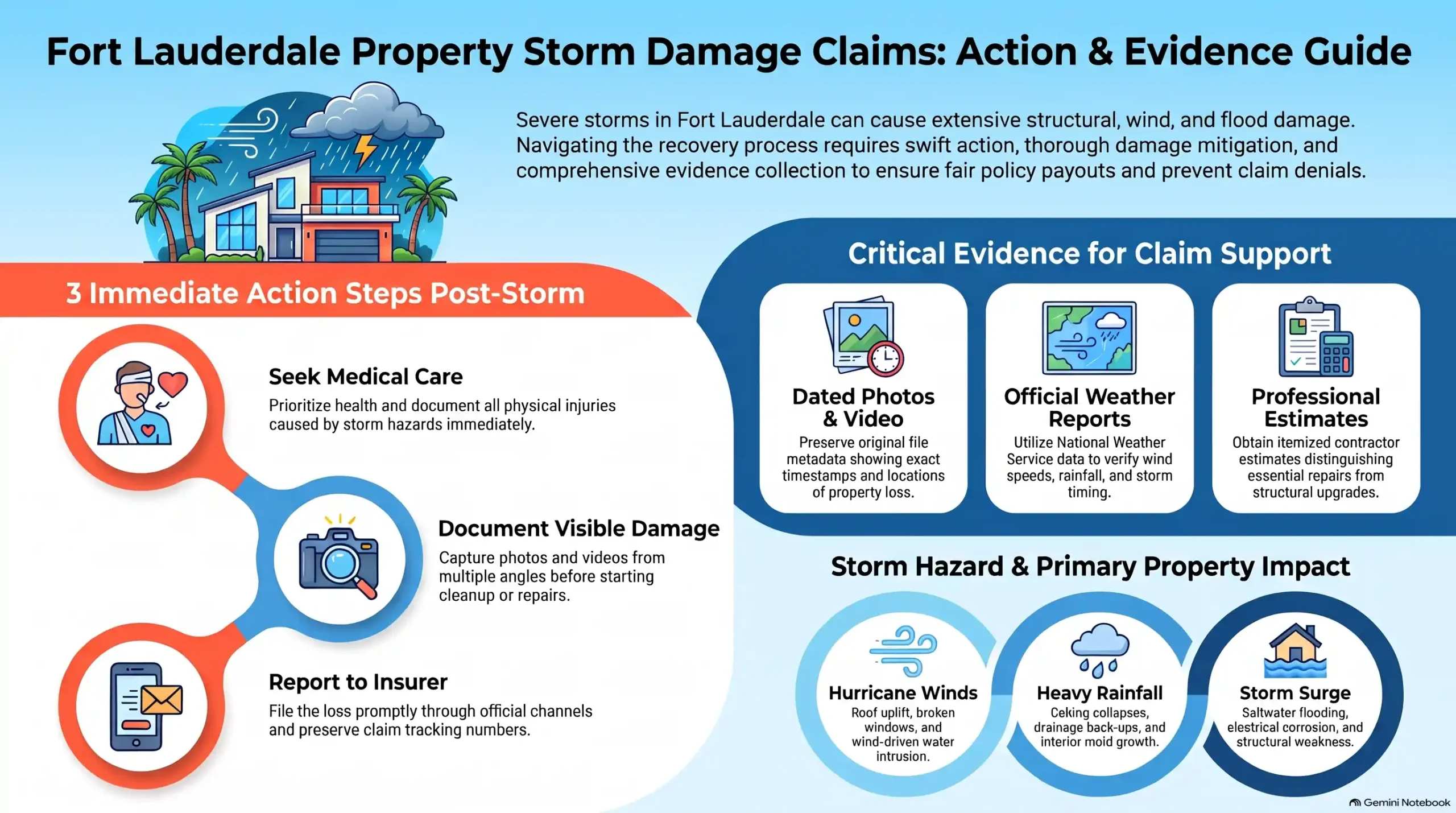
- Document storm damage promptly with dated photos, inventories, inspection reports, repair estimates, and insurer communications.
- Report the loss through your insurer’s designated channel and keep the claim number, submission date, and representative’s instructions.
- Take reasonable steps to prevent further damage, preserve receipts, and avoid unsafe areas during cleanup or repairs.
- If the insurer denies or underpays a claim, seek an independent assessment and legal guidance before accepting a settlement or signing a release.


How We Can Help With Your Fort Lauderdale Property Claim Storm & Weather Damage Injury Claim
When a storm damages a home or business in Fort Lauderdale, the resulting insurance claim can involve disputed coverage, delayed payments, or disagreements about repair costs. A property claim lawyer can help policyholders understand available options and communicate with insurers while they focus on protecting their families, employees, tenants, or customers.
Legal support may include reviewing policy language, organizing photographs and repair estimates, and tracking correspondence and deadlines. When a property becomes unsafe or uninhabitable, counsel can help clarify whether Emergency housing expenses may be covered and what documentation the insurer requires. Contractor coordination can also help keep repair estimates, invoices, and project updates organized for the claim.
If an insurer questions the scope or value of damage, a lawyer can assess the dispute, explain potential next steps, and pursue a response supported by the policy and available evidence. This guidance can reduce confusion and help property owners make informed decisions during a difficult recovery. Each claim depends on its facts and policy terms.
OUR CONSULTATIONSARE FREE
START YOUR FREE CASE REVIEW

Understanding Fort Lauderdale Property Claim Storm & Weather Damage Injury Cases
Understanding a Fort Lauderdale storm or weather damage property claim begins with identifying the cause of the loss, the damage sustained, and the policy provisions that may apply. A careful review helps determine whether the insurer must cover repairs, temporary housing, or other losses under the contract. The policy’s limits, deadlines, documentation requirements, and Policy exclusions can affect the outcome, so each provision should be considered in context.
Evidence is central to evaluating a claim. Photographs, repair estimates, inspection reports, and records of communications can help establish the extent of damage and support a clear account of events. When a dispute arises, an independent assessment may clarify whether the insurer’s decision reflects the available evidence and policy terms. Questions about contractor negligence may also require review when repair work contributes to additional property damage. A thorough, fair evaluation can help property owners pursue appropriate benefits while preserving accurate records and meeting claim obligations. Legal guidance may assist in addressing disagreements and protecting the interests of affected households.
Common Causes of Fort Lauderdale Property Claim Storm & Weather Damage
Fort Lauderdale properties can sustain storm and weather damage from several distinct hazards, each affecting buildings in different ways. Hurricane winds may tear roofing and damage exterior structures, while heavy rainfall can cause leaks and flooding. Storm surge and hail can also damage buildings and belongings, making the source of loss important to a property claim.
Hurricane Winds
Hurricane winds can damage Fort Lauderdale properties through roof uplift, torn shingles, broken windows, and wind-driven debris, allowing rain to enter and harm interiors. These forces may also displace roof materials, damage exterior walls, and compromise doors or protective coverings. Windborne debris, including branches and unsecured objects, can strike buildings and create openings that expose property to further damage. The severity of loss depends on wind intensity, building condition, and the location of affected components. Property owners serving their families, tenants, or communities may need to document visible damage promptly and take reasonable steps to protect the structure from additional harm. Photographs, repair records, and relevant policy documents can help clarify the extent and cause of damage. A qualified professional can assess the loss and explain available claim options under the applicable policy.
Heavy Rainfall
When heavy rainfall overwhelms drainage systems or enters through damaged building components, it can cause significant property damage in Fort Lauderdale. Rainfall intensity and drainage capacity influence how quickly water accumulates around a property and whether it can be carried away safely. Clogged gutters, blocked drains, poorly graded grounds, and inadequate roof drainage may allow water to collect near foundations or enter through windows, doors, and roof openings. Inside, water can damage ceilings, walls, flooring, electrical systems, and personal belongings. Prolonged moisture may also encourage mold growth and weaken building materials. Property owners and managers who document affected areas, preserve damaged materials when practical, and promptly report losses can support a clear insurance review. A qualified claim professional can assess policy terms and help identify whether covered rainfall damage has been properly evaluated.
Storm Surge
Storm surge can push seawater inland, flooding properties and damaging structures along Fort Lauderdale’s coast and waterways. Strong winds and low atmospheric pressure during tropical storms or hurricanes can drive ocean water toward shore, raising water levels beyond normal tides. This surge may enter homes, businesses, garages, and shared community spaces, damaging walls, flooring, electrical systems, and personal property. Saltwater intrusion can corrode metal components, contaminate building materials, and leave residue that requires careful cleanup. Tidal flooding may worsen surge impacts, particularly in low-lying areas and neighborhoods near canals or the Intracoastal Waterway. Property owners and managers can document visible damage, take reasonable steps to limit further loss, and promptly review policy requirements. A qualified claim professional can assess coverage and help affected property owners understand available options.
Hail Damage
Although hail is less common in Fort Lauderdale than in many inland regions, severe thunderstorms can produce hail capable of damaging roofs, skylights, windows, and exterior surfaces. Hailstone formation occurs within strong storm clouds, where rising air currents carry water droplets into freezing layers. The resulting stones can vary in size and strike with enough force to crack roofing materials, dent metal components, and break fragile glazing. Roof impact patterns may reveal the direction and concentration of hail, helping distinguish storm damage from ordinary wear. A careful inspection can document affected areas, identify hidden water entry, and support accurate repair planning. Property owners who promptly preserve photographs, inspection findings, and repair records can provide clearer information to insurers and professionals, helping communities restore safe, serviceable buildings after severe weather events.
Don’t Wait. Call Our Florida Personal Injury Lawyers Now!


Legal Rights of Fort Lauderdale Property Claim Storm & Weather Damage Injury Victims
Fort Lauderdale property owners and occupants affected by severe weather may have legal rights when storm damage causes physical injury or loss. Florida law and applicable insurance terms may provide avenues to seek compensation, depending on the facts, deadlines, and responsible parties. A careful review can help protect affected people and support fair treatment.
Severe weather losses may involve legal rights under Florida law and insurance terms, depending on the facts.
Potential rights may include:
- Requesting prompt, reasonable claim handling from an insurer.
- Seeking covered repair costs for eligible property damage.
- Pursuing compensation for documented injury or related expenses when another party is legally responsible.
- Challenging a denial or underpayment through available review procedures.
- Obtaining legal guidance before signing releases or accepting a settlement.
Policy interpretation can determine how a policy applies to the reported loss, while coverage exclusions may limit payment for particular damage. Claimants should preserve relevant records, follow notice requirements, and avoid overstating losses. An attorney can assess evidence, explain options, and help individuals pursue lawful remedies while respecting the needs of others affected by the event.
Why Do Fort Lauderdale Property Claim Storm & Weather Damage Injuries Happen?
Why do storm and weather-related injuries occur during property damage events? In Fort Lauderdale, intense rain, tropical winds, and flooding can damage buildings and create hazards for occupants, visitors, and emergency responders. Roof failures, broken glass, falling branches, and shifting structural components may cause injuries during or after a storm.
Some risks arise when properties are poorly maintained or inadequately prepared for severe weather. Loose roofing, blocked drains, deteriorated walkways, and unsecured outdoor objects can become dangerous when exposed to heavy rain or high winds. Floodwater may conceal uneven surfaces, electrical hazards, or contaminated debris, increasing the chance of falls and other harm.
Broader conditions can also contribute. Coastal building code enforcement affects whether structures meet safety requirements suited to local weather risks. Neighborhood stormwater planning influences how effectively communities manage runoff and reduce flooding around homes and businesses. When these protections are insufficient, property damage may expose people to preventable hazards. Understanding these causes helps communities prioritize safer buildings and more resilient infrastructure for residents and visitors.
What Should You Do After a Fort Lauderdale Property Claim Storm & Weather Damage Injury?
After a storm-related injury, the affected person should seek prompt medical care and follow the treating provider’s recommendations. They should document the injury and property damage with photographs, records, and receipts when it is safe to do so. The person should also notify the insurer promptly and keep copies of all communications and claim documents.
Seek Medical Care
Anyone injured by storm or weather damage at a Fort Lauderdale property should seek medical care promptly, even if the injury initially seems minor. A qualified medical professional can assess the condition, identify injuries that may not be immediately apparent, and recommend appropriate treatment. Prompt symptoms such as dizziness, pain, confusion, or difficulty breathing warrant timely evaluation, particularly after a fall or impact. For severe injuries or signs of a medical emergency, emergency treatment should be obtained without delay by contacting emergency services or going to an emergency department. Following a clinician’s instructions and attending recommended follow-up appointments can support recovery and help prevent complications. Medical providers can also explain activity restrictions and warning signs that require further attention. Seeking care protects the injured person’s health and enables them to make informed decisions during recovery.
Document the Damage
Once immediate medical needs have been addressed, documenting the storm-related damage can help preserve an accurate record of the incident. Photographs and video should show affected rooms, structural problems, water intrusion, and damaged Personal belongings from several angles. Images should be taken before cleanup or repairs when conditions permit, without entering unsafe areas. A written inventory can identify damaged items, approximate purchase dates, and estimated values; receipts, warranties, and proof of ownership may provide useful support. Records should also note when the damage was discovered and any steps taken to prevent further harm. If displacement is necessary, retain receipts and records related to Temporary housing and other necessary expenses. These materials can help clarify the extent of losses and assist those evaluating the property damage, while preserving information for later review.
Contact Your Insurer
Prompt notice to the insurer can help establish a clear record of a storm-related property loss. After documenting visible damage, the policyholder should contact the insurer through the designated claims channel and provide the date, location, and known circumstances of the event. Policyholder notice deadlines vary by policy and may affect coverage, so the policyholder should review the contract and report the loss promptly. The initial report should describe damage accurately without speculation and identify urgent needs, such as preventing further harm or protecting residents. The policyholder should record the claim number, submission date, representative’s name, and instructions received. Claim acknowledgment requirements may govern how quickly an insurer confirms receipt or communicates next steps. Keeping copies of messages and following up in writing can support an orderly review and help the insurer assess the claim efficiently.
Critical Evidence in a Fort Lauderdale Property Claim Storm & Weather Damage Injury Case
Reliable evidence can help establish the cause, extent, and value of storm-related property damage.
Essential records may include:
- Official weather reports
- Dated photographs of damage
- Contractor repair estimates
- Witness statements
- Receipts and records of completed repairs
Weather Reports
When a storm damages a Fort Lauderdale property, official weather reports can help establish when the event occurred and what conditions affected the area. Records from the National Weather Service may document rainfall, wind speeds, storm warnings, and other conditions relevant to a property claim. Historical forecasts can also show what officials predicted before the event and when alerts were issued. These records may help clarify whether damage followed a particular storm and whether conditions were consistent with the reported cause. Insurers, property owners, and legal representatives can compare weather data with incident timelines, maintenance records, and repair assessments. Accurate documentation supports a fair review and helps those involved understand the circumstances. Because reports may cover broad areas, their limits should be considered alongside property-specific evidence when evaluating a claim.
Damage Photographs
Photographs can provide a time-sensitive record of storm damage to a Fort Lauderdale property. Images taken soon after an event may document roof openings, fallen trees, water intrusion, damaged belongings, and affected areas before conditions change. A careful record can help property owners explain what occurred and support a fair review of their claim.
Photographs should show both wide views and clear details, with dates and locations recorded when possible. Photo metadata preservation can retain information about when and where images were captured; original files should be kept unaltered. An image backup strategy, such as storing copies in a secure cloud account and on a separate device, can reduce the risk of loss. Property owners should also photograph temporary protective measures and keep people safe while documenting damage. Organized, accurate images can help others understand the property’s condition and evaluate the reported loss.
Repair Estimates
Repair estimates can help establish the scope and cost of storm damage to a Fort Lauderdale property. A detailed estimate identifies affected areas, necessary repairs, and projected expenses, giving the insurer a basis to evaluate the claim. Property owners may obtain estimates from qualified professionals who can assess damage and explain the proposed work. Contractor credentials matter because relevant licensing, experience, and insurance support the reliability of an estimate. The document should distinguish repairs from upgrades and explain why each recommended task is necessary. Material pricing should reflect current local costs and specify quantities, grades, and replacement requirements. Clear estimates can help identify gaps between the insurer’s assessment and the work needed to restore the property. Organized records and supporting invoices can further clarify costs and assist with a fair, informed claim review.
Witness Statements
Witness statements can provide important evidence in a Fort Lauderdale property claim involving storm damage or related injuries. People who saw the storm, building conditions, or events immediately afterward may help establish when damage occurred and how it affected occupants. Neighbor observations can be especially useful when nearby residents noticed roof leaks, fallen trees, flooding, or unsafe conditions before repairs began. Their accounts may also clarify whether a hazard existed before the weather event.
A careful credibility assessment considers each witness’s opportunity to observe, consistency, and possible bias. Statements should identify dates, locations, and specific details rather than rely on assumptions. Photographs, messages, or maintenance records may support an account and help resolve conflicting recollections. Promptly recording contact information and preserving statements can prevent important evidence from being lost. Reliable testimony can assist insurers and decision-makers in evaluating responsibility and the needs of affected residents.
Don’t Wait. Call Our Florida Personal Injury Lawyers Now!
Long-Term Effects of Fort Lauderdale Property Claim Storm & Weather Damage Injuries
Storm and weather-related injuries may have effects that continue long after the immediate damage is addressed. Chronic pain and lasting mobility issues can interfere with daily activities, while emotional distress may affect a person’s overall well-being. Documenting these ongoing effects can help clarify the full impact of an injury in a property claim.
Chronic Pain
Chronic pain can persist long after storm or weather damage has been repaired, particularly when a person suffers an injury from a fall, falling debris, or unsafe property conditions. Persistent discomfort may interfere with work, household responsibilities, and participation in community or caregiving activities. Affected individuals may benefit from consistent medical evaluation to identify contributing conditions and guide appropriate treatment. Keeping a pain journaling record can help document symptom patterns, treatment responses, and changes in daily functioning. This information may also assist healthcare providers in evaluating the injury’s ongoing effects. Sleep disruption is another concern, as pain can make rest difficult and contribute to fatigue, reduced concentration, or heightened discomfort. When symptoms continue, organized medical records and clear documentation of their impact can help explain the need for care and support a property damage injury claim.
Lasting Mobility Issues
How can storm-related injuries affect mobility long after property damage has been repaired? Severe falls, collapsing structures, and debris-related accidents may damage bones, joints, or nerves, limiting a person’s ability to walk, climb stairs, or complete daily tasks. Recovery can require extended rehabilitation, and some individuals experience permanent restrictions that affect work, transportation, and independence.
A lasting mobility impairment may also require changes to the home. Ramps, wider doorways, bathroom modifications, or accessible housing can help reduce barriers and support safe movement. Assistive devices, including canes, walkers, or wheelchairs, may be necessary, depending on the injury and medical assessment. These needs can create ongoing costs beyond immediate treatment and property repairs. Documented medical evaluations, rehabilitation plans, and estimates for necessary accommodations can help establish the long-term impact of storm-related injuries when a property claim is reviewed.
Emotional Distress
Even after physical injuries recover and property repairs are complete, storm-related accidents can leave lasting emotional effects. Survivors may experience Emotional trauma, including persistent fear, sleep disruption, or distress when severe weather returns. These reactions can affect concentration, relationships, and the ability to resume ordinary responsibilities. Some individuals also face anxiety about entering damaged buildings or traveling through areas affected by flooding.
Timely support can help people recognize these effects and pursue appropriate care. Counseling and anxiety management strategies may reduce symptoms and strengthen coping skills. Family members, caregivers, and community volunteers can provide practical assistance while respecting each person’s privacy and choices. When emotional distress follows a storm-related injury, documenting symptoms and treatment may also help clarify the harm involved in a property claim. Professional guidance can support recovery and help affected individuals understand available options.
Proving Liability in Fort Lauderdale Property Claim Storm & Weather Damage Injury Cases
When storm or weather damage causes an injury on someone else’s property in Fort Lauderdale, proving liability requires more than showing that an accident occurred. The injured person generally must establish that a responsible party owed a duty of care, failed to meet it, and caused the injury through that failure. Negligence standards consider whether the property owner or manager knew, or reasonably should have known, about a dangerous condition and had a fair opportunity to address it.
Evidence may include dated photographs, maintenance records, inspection reports, witness accounts, and documentation of the weather event. These materials can help show whether a hazard, such as loose roofing, standing water, or fallen debris, was foreseeable and left uncorrected. Contractor accountability may also matter when repair or cleanup work was incomplete, unsafe, or performed without reasonable precautions. Responsibility can depend on who controlled the area and created or managed the hazard. Careful investigation helps clarify these questions and supports a fair assessment of each party’s conduct.
Dealing With Insurance Companies After a Fort Lauderdale Property Claim Storm & Weather Damage Injury
After liability and the source of a storm-related hazard have been investigated, communication with insurers can affect how an injury claim is evaluated. Insurers may request statements, records, photographs, and other information concerning the incident and resulting harm. A claimant should provide accurate, consistent details while avoiding speculation about fault or the full extent of injuries before medical evaluation is complete. Keeping copies of correspondence and submitted materials can help maintain a clear record.
Policy terms, exclusions, notice requirements, and evidence of property conditions may shape an insurer’s response. Claim denial can occur when an insurer disputes responsibility, questions the connection between the storm hazard and injury, or finds that documentation is insufficient. Coverage disputes may also arise over which policy applies or whether particular losses fall within its terms. Careful review of the insurer’s explanation can identify issues requiring clarification. For people focused on helping others, measured communication and organized records support a fair assessment while preserving attention to recovery and community responsibilities.
What to Expect During a Fort Lauderdale Property Claim Storm & Weather Damage Injury Claim Process
A Fort Lauderdale storm or weather damage claim typically begins with an initial review of the policy, reported losses, and available evidence. The process then involves documenting damage and injuries while the insurer investigates coverage, causation, and the claimed costs. Depending on the findings and any dispute over compensation, the claim may resolve through settlement or proceed to litigation.
Initial Claim Review
During the initial claim review, a Fort Lauderdale property claim lawyer examines the policy, damage records, and insurer correspondence to assess how a storm or severe weather event affected the property. This review helps clarify the insurer’s stated position and identify questions that may require further attention.
Policy interpretation focuses on relevant provisions, notice requirements, deadlines, and coverage limits. The lawyer also considers coverage exclusions and whether the insurer has applied them consistently with the policy language and reported circumstances. This assessment can help property owners understand available options and make informed decisions about responding to the insurer.
The review may reveal gaps in the claim’s handling or disagreements about how policy terms apply. By explaining these issues in clear terms, counsel can support a fair process and help clients pursue a resolution that protects their property and household interests.
Damage Documentation
Thorough damage documentation helps establish how a storm or severe weather event affected a Fort Lauderdale property and supports the details of an insurance claim. Property owners can record damage promptly through dated photographs and videos showing affected rooms, exterior surfaces, and personal belongings. A written Inventory checklist can identify damaged items, their approximate age, purchase details, and condition before the event. Receipts, repair estimates, and emergency service records may further clarify the scope of losses. For water intrusion, moisture mapping can help document damp areas and the extent of moisture within building materials. Records should distinguish observed damage from prior conditions and note when each issue was discovered. Organized, accurate documentation helps claim representatives understand reported losses and allows property owners to communicate clearly while seeking a fair assessment and supporting necessary repairs.
Insurer Investigation
After a storm or severe weather event, the insurer investigates the reported damage to assess coverage and determine the value of a Fort Lauderdale property claim. The process may include reviewing the policy, inspecting the property, examining repair estimates, and comparing the reported damage with available weather records. An adjuster may ask the owner about the event, prior repairs, and the condition of affected areas. Clear, consistent answers help the investigation remain focused on the documented facts. However, adjuster interview tactics can vary, and questions may address details that are difficult to recall precisely. Recorded statement risks include misunderstood answers or comments later viewed without context. The property owner may request clarification, review relevant records, and seek guidance before responding. Keeping communication organized supports a fair, accurate assessment and helps protect the interests of everyone affected.
Settlement or Litigation
Once the insurer completes its investigation, the property owner may receive a settlement offer or face a dispute over coverage or the amount of the loss. The owner should compare any offer with repair estimates, documented damage, policy limits, and applicable deductibles before deciding whether it is adequate. If negotiations stall, the parties may use the appraisal process to resolve disagreements about the value of covered damage, subject to the policy’s terms. Mediation preparation can help clarify disputed issues, organize supporting records, and identify practical settlement options. If these efforts do not resolve the claim, litigation may be considered to seek a court decision. Throughout either path, accurate documentation and timely responses can support a fair review. A lawyer may explain procedural requirements and help protect the owner’s interests while pursuing a resolution that supports recovery.
Compensation for Fort Lauderdale Property Claim Storm & Weather Damage Injury Damages
What compensation may be available when a storm damages property in Fort Lauderdale? A policy may provide payment for covered repairs or replacement, subject to its limits, deductible, and terms. Eligible damage can include harm to a home’s structure, roof, or attached features caused by wind or other covered weather events. Contents coverage may apply to personal belongings damaged inside the property, while additional living expense coverage may help with temporary housing when the home is uninhabitable.
The amount available depends on the policy’s valuation method and the evidence supporting the claim. Insurers may assess repair estimates, photographs, inventories, and proof of ownership when evaluating losses. Policy exclusions, including provisions addressing flooding or delayed maintenance, may restrict recovery, and separate coverage may be required for certain risks. A careful review of the policy and claim decision can identify disputed items or underpaid damage. A property claim lawyer may help document losses, interpret coverage provisions, and pursue benefits owed under the contract, supporting owners as they restore safe, usable homes and serve their communities.
Economic vs Non-Economic Damages in Fort Lauderdale Property Claim Storm & Weather Damage Cases
Storm and weather damage claims may involve economic losses, such as repair costs, temporary housing expenses, and damaged personal property. Non-economic harm may also be relevant when the event causes substantial disruption or distress, though its availability depends on the claim and applicable law. Clear records and credible evidence help establish the nature and extent of claimed damages.
Economic Losses
Property damage claims after a storm or other severe weather event may involve both economic and non-economic losses, though insurance coverage often treats these categories differently. Economic losses are measurable financial costs tied to physical damage and its consequences. They may include repair expenses, replacement costs for damaged belongings, temporary housing, debris removal, and reasonable mitigation measures. Owners of rental properties may seek lost rental income when storm damage makes units uninhabitable, subject to policy terms and supporting records. For businesses, business interruption losses may arise when property damage forces a temporary closure or limits operations. Claimants generally benefit from preserving invoices, contracts, photographs, repair estimates, and financial statements to document amounts claimed. A Fort Lauderdale property claim lawyer may review coverage language, assess evidence, and help present a clear accounting of eligible losses to insurers.
Non-Economic Harm
Although storm damage can disrupt daily life, non-economic harm is distinct from measurable financial losses such as repair costs or lost income. In Fort Lauderdale property claim cases, this harm may involve emotional suffering caused by displacement, uncertainty, or the loss of a safe and familiar home environment. It can also include diminished enjoyment when damaged living spaces prevent residents from carrying out ordinary routines or welcoming family and community members. These effects differ from economic damages, which are calculated through expenses and lost earnings. Non-economic harm concerns the personal consequences of property damage rather than its direct financial cost. A careful assessment of a claim may recognize that restoring a home serves more than a practical purpose; it can help residents regain stability and continue supporting those who depend on them.
Proving Damages
Establishing damages in a Fort Lauderdale property claim requires evidence that connects the storm or weather event to the losses being claimed. Economic damages may include repair costs, temporary housing expenses, damaged belongings, and lost rental income. Contractors’ estimates, invoices, photographs, inventories, and proof of payment can help document these amounts. Contents valuation should account for each item’s condition, age, and replacement cost, supported by receipts or comparable pricing when available. Insurers may apply depreciation, making depreciation disputes important when settlement calculations do not reflect policy terms or the property’s actual loss. Non-economic harm, such as disruption, stress, or loss of use, may also be relevant, but recovery depends on the policy and applicable law. Clear, organized records help claimants present accurate evidence and support fair review of every claimed loss.
When a Fort Lauderdale Property Claim Storm & Weather Damage Injury Case Goes to Trial vs Settlement
When a Fort Lauderdale storm or weather damage claim cannot be resolved through negotiation, the dispute may proceed to trial, where a judge or jury evaluates the evidence and determines liability and damages. A trial can provide a formal opportunity to present repair records, photographs, expert assessments, and testimony. The decision-maker then determines whether the insurer must pay and, if so, the amount owed. Trial preparation may require substantial time, careful organization, and participation from property owners, contractors, and other witnesses.
Settlement advantages include greater control over the outcome, a potentially faster resolution, and reduced uncertainty about a court decision. A negotiated agreement may also limit the expense and demands of continued litigation. However, settlement requires both sides to accept agreed terms, and the amount offered may not reflect the claim’s full documented value. The appropriate path depends on the evidence, disputed issues, and the owner’s priorities. Counsel can explain likely risks and options, helping property owners make informed decisions while protecting resources needed for recovery and community responsibilities.
Don’t Wait. Call Our Florida Personal Injury Lawyers Now!
Florida Laws That May Affect Your Fort Lauderdale Property Claim Storm & Weather Damage Case
Florida law can shape nearly every stage of a Fort Lauderdale storm or weather damage claim, from the policyholder’s duties after a loss to the deadlines for filing suit. State statutes and policy terms may affect how insurers investigate, evaluate, and pay covered damage. Important considerations include:
Florida law and policy terms can shape storm damage claims, from reporting requirements to deadlines for filing suit.
- Prompt notice: Policyholders generally must report losses as their policies require and provide requested information.
- Proof of loss: Insurers may require a signed statement describing damage, costs, and supporting records.
- Claim cooperation: Access for inspections and accurate documentation can help establish the scope of damage.
- Hurricane deductible rules: Florida law governs when a hurricane deductible applies and how it is calculated under qualifying policies.
- Florida policyholder protections: State requirements address insurer conduct, claim communications, and certain payment obligations.
These rules can influence disputes involving roof damage, flooding, wind, or delayed repairs. A careful review of the policy, claim file, and applicable statutes can clarify responsibilities and identify unresolved issues. Clear guidance may also help property owners protect homes and support families or communities affected by severe weather.
The Statute of Limitations for Fort Lauderdale Property Claim Storm & Weather Damage Injury Cases
How long does a property owner have to file a lawsuit over storm damage in Fort Lauderdale? The answer depends on the type of claim and the date the loss occurred. Florida law generally allows five years to bring a breach-of-contract action under a property insurance policy, subject to statutory changes and the policy’s terms. A separate deadline may apply to a claim against another party whose conduct caused the damage.
The Filing deadline is not always measured from the date an insurer denies coverage. The applicable limitation period, notice requirements, and any contractual provisions can affect when a case must be filed. Disputes may also arise over when damage was discovered, whether it resulted from a covered storm, and whether later events contributed to the loss.
Property owners who support tenants, neighbors, or community organizations should preserve records and note important dates promptly. Missing a legal deadline can prevent a court from considering the claim, regardless of its substance. Because deadlines vary, the governing rules should be confirmed for each loss.
How a Fort Lauderdale Property Claim Storm & Weather Damage Lawyer Can Help You
A Fort Lauderdale property claim storm and weather damage lawyer can help property owners assess coverage, document losses, and respond to an insurer’s decision. The lawyer reviews policy language, explains Policy interpretation, and identifies coverage exclusions that may affect payment. This guidance can help owners protect homes, businesses, and the people who depend on those properties.
A Fort Lauderdale storm damage lawyer can clarify coverage, document losses, and help property owners respond to insurer decisions.
Legal support may include:
- Organizing photographs, repair estimates, receipts, and other claim records.
- Comparing reported damage with policy terms and applicable endorsements.
- Reviewing an insurer’s estimate for missing repairs or disputed costs.
- Preparing clear written responses to claim questions or denial reasons.
- Communicating with adjusters and seeking a fair evaluation of covered losses.
A lawyer can also explain available options for resolving disagreements and help make certain that claim submissions are accurate and supported. Careful assistance may reduce confusion for property owners managing repairs, while helping preserve safe, usable spaces for families, employees, tenants, and community members. The lawyer’s role is to provide informed representation grounded in the policy and documented facts.
When to Contact a Fort Lauderdale Property Claim Storm & Weather Damage Lawyer
When storm or weather damage raises questions about coverage, repair costs, or a claim decision, a Fort Lauderdale property claim storm and weather damage lawyer may help clarify the available options. Early Consultation can be useful when a policyholder is unsure how to document losses, communicate with an insurer, or respond to a request for information. Prompt guidance may also help prevent avoidable delays while repairs and recovery needs are being assessed.
Legal advice may be appropriate after an insurer denies a claim, offers an amount that appears insufficient, or disputes the cause or extent of damage. A lawyer may also help explain Claim Deadlines, which can arise under an insurance policy or applicable law. Because deadlines and notice requirements vary, policyholders should review their documents and seek clarification without unnecessary delay. Those managing damage to homes, businesses, or community-serving properties may benefit from understanding available steps early, before records become harder to gather or important response periods pass.
Why You Need an Experienced Fort Lauderdale Property Claim Storm & Weather Damage Lawyer
An experienced Fort Lauderdale property claim storm and weather damage lawyer can help policyholders assess coverage disputes, organize supporting evidence, and respond to insurer requests. This guidance can be especially valuable when a storm damages a home, business, or community facility that serves local residents.
Experienced counsel can review policy language, exclusions, deadlines, and claim requirements to clarify what documentation may support a request for benefits. Careful Policy interpretation can help identify whether an insurer’s position reflects the contract terms and the available facts. When coverage disputes arise, a lawyer can present repair estimates, photographs, inspection findings, and other relevant records in an organized manner.
A lawyer may also communicate with the insurer on the policyholder’s behalf, explain procedural options, and help preserve important records. This support can reduce confusion during a demanding recovery period and help property owners make informed decisions. By addressing claim issues with care and precision, counsel can assist individuals and organizations seeking to restore safe, useful spaces for others.
How to Choose the Right Fort Lauderdale Property Claim Storm & Weather Damage Lawyer for Your Case
Choosing the right Fort Lauderdale property claim storm and weather damage lawyer involves evaluating the attorney’s experience with similar disputes, familiarity with Florida insurance law, and ability to explain the claim process clearly. A careful selection can help property owners pursue fair treatment while protecting resources needed to restore homes, businesses, and community services.
Prospective clients should review attorney credentials, including licensing, relevant practice experience, and any disciplinary history. They can ask how the lawyer investigates storm damage, documents losses, communicates with insurers, and responds when a claim is delayed or disputed. Clear answers help reveal whether the attorney can address the case’s specific needs.
The fee structure should also be explained in writing, including any contingency arrangements, expenses, and circumstances that may affect payment. Before signing an agreement, clients should understand who will handle communications and what updates to expect. Comparing several qualified lawyers allows property owners to assess responsiveness, practical guidance, and professional judgment before entrusting someone with a significant insurance claim.
About The Law Offices of Anidjar & Levine
For property owners evaluating legal representation, The Law Offices of Anidjar & Levine provides counsel on insurance disputes involving storm and weather damage in Fort Lauderdale.
The firm assists clients seeking to understand policy requirements, document losses, and address insurer decisions that may affect recovery.
Its work can include reviewing claim records, communicating with insurance companies, and pursuing available legal remedies when a dispute remains unresolved.
Firm history offers context for evaluating a law office, but prospective clients should also consider its approach to service and communication.
The firm’s attorneys assess each matter based on the available evidence, applicable policy terms, and the client’s circumstances.
These steps can help property owners make informed decisions while managing the demands of a damaged home or business.
Attorney values are reflected in clear guidance, responsive communication, and attention to clients’ concerns.
For individuals and families focused on restoring their property and supporting others who depend on them, practical legal counsel may help clarify options and next steps after severe weather.
Frequently Asked Questions
Does Homeowners Insurance Cover Mold Caused by Storm-Related Water Intrusion?
Homeowners insurance may cover mold caused by storm-related water intrusion when the storm creates a covered opening or sudden water discharge, and the homeowner takes reasonable steps to limit damage. Coverage is not automatic; policies often exclude flooding, gradual leaks, neglect, or mold remediation costs above a stated limit. The insurer will review the cause, policy terms, and evidence. Prompt reporting, photographs, and professional assessment can help clarify whether coverage applies.
Can I File a Claim if My Property Was Damaged by a Named Hurricane?
A property owner may file an insurance claim for damage caused by a named hurricane, provided the policy covers the loss and notice is given within required Hurricane claim deadlines. The insurer will inspect the damage and assess coverage, deductibles, and documentation. Excluded property losses, such as certain flooding or maintenance-related damage, may not be covered. Promptly reporting the loss, preserving evidence, and reviewing the policy can help support an accurate, fair claim decision.
What Should I Do if My Insurer Invokes a Hurricane Deductible?
If an insurer invokes a hurricane deductible, the policyholder should request the policy language and a written explanation of the hurricane deductible calculation, including the applicable coverage limit, percentage, and storm designation. The policyholder should preserve photographs, repair estimates, receipts, and all claim correspondence, then compare the insurer’s figures with the policy and loss records. If errors or unclear terms remain, deductible dispute options may include submitting supporting evidence, using the insurer’s appeal process, or consulting a qualified professional.
Can I Hire a Public Adjuster to Inspect My Storm-Damaged Property?
Yes, a property owner can hire a public adjuster to inspect storm damage and assist with an insurance claim. The adjuster may document losses, review policy terms, and communicate with the insurer on the owner’s behalf. Before hiring, the owner should verify adjuster licensing requirements with Florida’s Department of Financial Services and review the written service agreement. Public adjuster inspection costs and fees vary, so the owner should confirm charges and payment terms in advance.
Will Filing a Property Damage Claim Affect My Future Insurance Premiums?
Filing a property damage claim may affect future insurance premiums, but an increase is not automatic. Premium Impact depends on factors such as the insurer’s rating practices, the claim’s cause and cost, and applicable state rules. Claim Frequency can also influence underwriting decisions, particularly when several claims occur within a short period. Policyholders should review their coverage, ask the insurer how a claim may be recorded, and consider repair costs before filing.
—————————
Storm and weather damage claims can involve complex policy terms, disputed losses, and strict deadlines.
Property owners should document damage, preserve relevant records, and seek qualified legal guidance before accepting a settlement or making decisions that could affect coverage.
Fort Lauderdale Personal Injury Lawyer The Law Offices of Anidjar and Levine can review the circumstances, explain available options, and address disputes with insurers.
Prompt, informed action can help protect a claim and support a fair resolution under Florida law.