

The Law Offices of Anidjar and Levine can review your insurance policy, damage records, repair estimates, and insurer correspondence to assess a water or pipe damage coverage dispute. A lawyer may help document the water source, organize evidence, explain relevant deadlines and policy terms, and respond to requests for information. Coverage depends on the policy, evidence, exclusions, limits, and Florida law. Learn more about a Fort Lauderdale Personal Injury Lawyer. The following sections explain common causes, claim rights, and when legal guidance may help.
Main Takeaways
- A Fort Lauderdale property claim lawyer can review your policy, damage records, repair estimates, and insurer correspondence.
- Coverage for water or pipe damage depends on policy wording, the cause, exclusions, deductibles, limits, and filing deadlines.
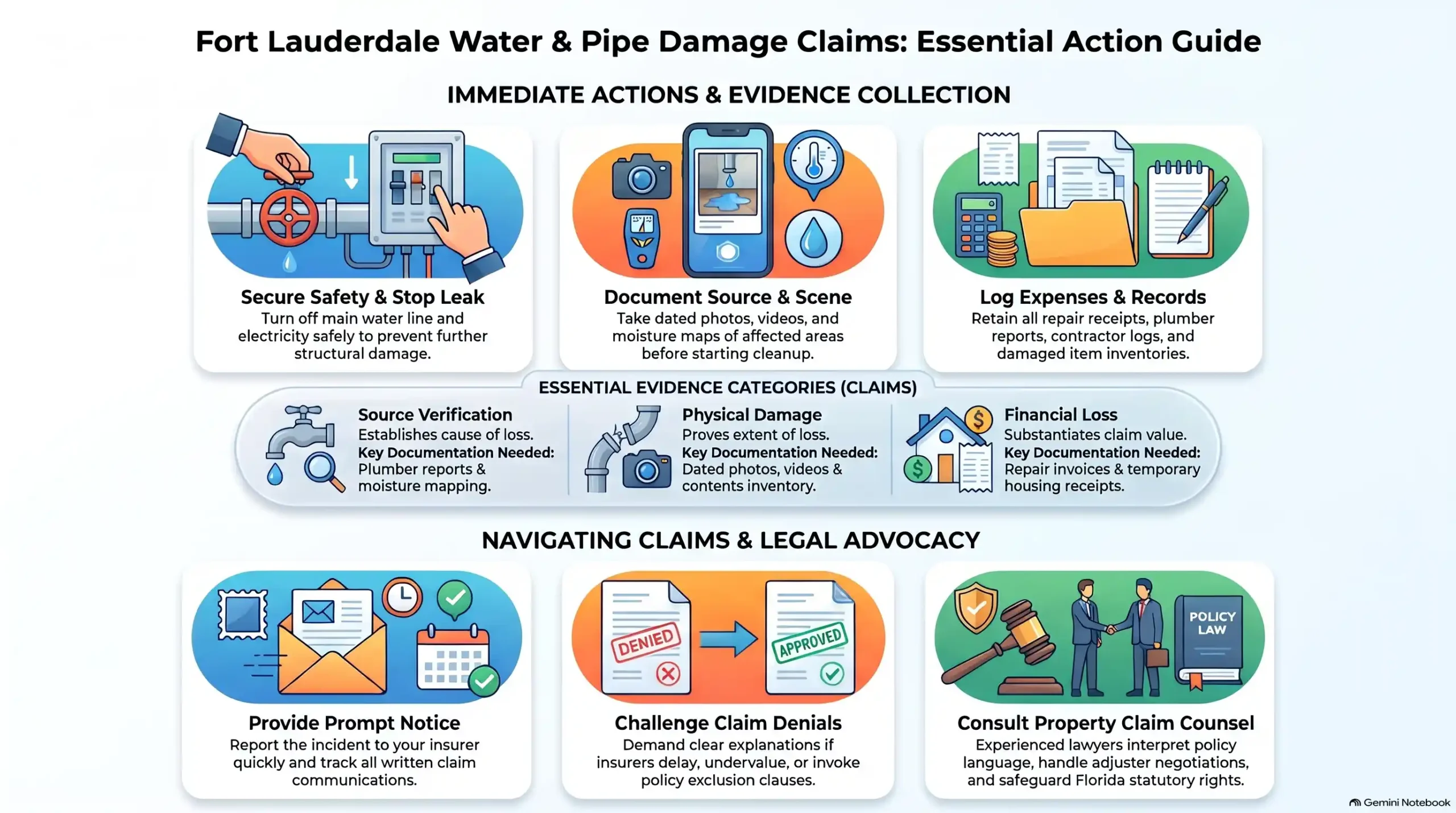
- Document the leak source, affected areas, belongings, cleanup, repairs, expenses, and communications; submit requested information promptly.
- Take immediate safety steps, stop the water if safe, and address moisture to reduce further damage and mold risks.
- If the insurer delays, denies, or undervalues your claim, ask for a clear explanation and seek qualified Florida legal guidance.


How We Can Help With Your Fort Lauderdale Property Claim Water & Pipe Damage Injury Claim
Water and pipe damage can disrupt a Fort Lauderdale property and lead to costly disputes over insurance coverage. A lawyer can help property owners address these challenges with careful attention to their needs and responsibilities. The process may begin with a review of the policy, damage records, photographs, repair estimates, and insurer correspondence. This review can clarify Claim eligibility and identify information needed to support a request for coverage.
Through policy interpretation, counsel can explain relevant terms, exclusions, conditions, and deadlines in clear language. The lawyer may help organize supporting documents, prepare communications, and respond to requests for additional information. If an insurer disputes the claim or delays a decision, counsel can assess available options and communicate the owner’s position professionally.
This assistance can reduce confusion during a demanding period and help owners make informed decisions. By providing responsive guidance and focused advocacy, a lawyer can support property owners seeking a fair review while helping them protect their interests and meet applicable policy obligations.
OUR CONSULTATIONSARE FREE
START YOUR FREE CASE REVIEW

Understanding Fort Lauderdale Property Claim Water & Pipe Damage Injury Cases
Understanding a Fort Lauderdale property claim involving water or pipe damage begins with identifying the source and extent of the loss and the policy provisions that may apply. A careful review connects documented damage to the coverage language, exclusions, deductibles, and deadlines stated in the policy. Water Damage Classification may help describe the category and severity of affected materials, while photographs, repair estimates, and inspection records can support an accurate account of the loss.
The property’s condition and maintenance history may also matter when an insurer evaluates a claim. Records concerning the Plumbing System Lifespan can provide context about the building’s age and the condition of its components, without determining coverage on their own. Clear, organized documentation helps property owners communicate their circumstances and assess the insurer’s decision. For individuals responsible for protecting households, tenants, or community spaces, understanding these claim elements can support timely, informed action and help preserve safe, usable property while the claim is reviewed.
Common Causes of Fort Lauderdale Property Claim Water & Pipe Damage
Water and pipe damage in Fort Lauderdale properties commonly results from burst pipes, plumbing leaks, and appliance failures. Storm-driven water intrusion can also cause significant damage, particularly when heavy rain or wind exposes weaknesses in a building’s exterior. Identifying the source of the water is an important first step in evaluating the damage and evaluating a property claim.
Burst Pipes
When a pipe bursts, water can spread through walls, ceilings, flooring, and personal property before the damage becomes visible. In Fort Lauderdale, sudden failures may result from corrosion, excessive water pressure, shifting building materials, or deterioration in aging pipes. Although freezing temperatures are uncommon, exposed plumbing can still require Freeze Prevention measures during unusual cold snaps, particularly in vulnerable properties. A burst may also follow accidental impact or a pipe joint failure under stress. Promptly shutting off the water supply can limit further damage while qualified professionals assess affected areas and document conditions. Depending on the pipe’s age and condition, Pipe Replacement may be necessary to reduce the risk of another rupture. Property owners who serve tenants, customers, or community members should act quickly, preserve relevant records, and review policy requirements when seeking coverage for resulting damage.
Plumbing Leaks
Unlike a sudden pipe rupture, plumbing leaks may develop gradually and remain hidden behind walls, beneath floors, or inside cabinets. In Fort Lauderdale properties, aging connections, shifting foundations, mineral buildup, and worn seals can allow water to escape slowly. Hidden pipe corrosion may weaken metal lines over time, while small cracks in plumbing beneath a concrete foundation can cause persistent moisture and structural damage. Early slab leak detection can help identify the source before water affects flooring, framing, or neighboring areas. Warning signs may include unexplained increases in water bills, damp spots, discoloration, musty odors, or reduced water pressure. Property owners who notice these indicators should document the conditions and arrange a prompt professional assessment. Timely action can limit damage and support accurate evaluation of a resulting insurance claim.
Appliance Failures
Appliance failures are a common source of property water damage in Fort Lauderdale homes and businesses. Washing machines, dishwashers, refrigerators, and water heaters can release substantial amounts of water when hoses rupture, seals wear out, or internal valves stop working. An Appliance malfunction may result from ordinary wear, poor installation, inadequate maintenance, or defective components. Even a slow leak behind an appliance can damage flooring, cabinets, walls, and nearby belongings before it becomes visible. Property owners who promptly shut off the water supply and arrange qualified repairs can help limit further damage and protect occupants. They should also document affected areas, preserve damaged parts when practical, and report the loss to their insurer without delay. Careful records and timely action can support a thorough, fair review of a water damage claim.
Storm-Driven Water Intrusion
Severe storms can drive rainwater into Fort Lauderdale properties through damaged roofs, compromised windows, poorly sealed doors, or overwhelmed drainage systems. Wind-driven rain may enter even when a building appears secure, especially if seals have deteriorated or exterior materials have been damaged. Water can spread into walls, ceilings, flooring, and electrical systems, creating additional repair needs and disrupting safe occupancy.
Hurricane Shutters can help protect windows, but they do not prevent every form of storm-related intrusion. Improper installation, gaps, or damage may leave openings exposed during severe weather. Blocked gutters and inadequate drainage can also direct water toward foundations and interior spaces. Property owners who document visible damage, preserve repair records, and take reasonable steps to limit further harm can support a clear claim review and help protect occupants and neighboring communities.
Don’t Wait. Call Our Florida Personal Injury Lawyers Now!


Legal Rights of Fort Lauderdale Property Claim Water & Pipe Damage Injury Victims
When water or pipe damage injures someone or harms property in Fort Lauderdale, the affected person may have legal rights under Florida law and the terms of an applicable insurance policy. Those rights may include seeking payment for covered losses, requesting a clear explanation of claim decisions, and challenging an insurer’s handling when it fails to follow policy terms or legal duties. Policyholder rights depend on the policy language, available evidence, and applicable deadlines. Coverage disputes may require careful review of exclusions, limits, and the insurer’s stated reasons for denying or reducing benefits.
Affected individuals may consider these steps:
- Review the policy, claim correspondence, and records documenting damage, expenses, or injury.
- Submit requested information promptly and keep copies of communications with the insurer.
- Seek qualified legal guidance if a denial, delay, or settlement offer appears inconsistent with the policy or Florida law.
A lawyer can explain available options and help protect the claimant’s interests while supporting a fair resolution. Clear records and timely action can also help representatives assess the claim responsibly.
Why Do Fort Lauderdale Property Claim Water & Pipe Damage Injuries Happen?
Understanding the source of water or pipe damage can help explain both the resulting injuries and the scope of a property claim. In Fort Lauderdale, leaks and sudden pipe failures may follow corrosion, age, pressure changes, or inadequate maintenance. The Pipe Material can affect how quickly a line deteriorates, particularly when older components are exposed to moisture, heat, or mineral buildup. Installation Defects, including poorly joined sections or improper fittings, may also allow water to escape behind walls, beneath floors, or near electrical systems.
These conditions can create hazards beyond damage to belongings. Standing water may cause slips and falls, while persistent moisture can contribute to mold growth and respiratory irritation. A ceiling weakened by a hidden leak may collapse, and water near wiring can increase the risk of electric shock. For property owners and those responsible for maintaining safe buildings, identifying contributing causes helps clarify how damage developed and which resulting injuries may be connected to the incident.
What Should You Do After a Fort Lauderdale Property Claim Water & Pipe Damage Injury?
After water or pipe damage, occupants should first address immediate safety risks, including electrical hazards and unstable areas. They should document visible damage and affected belongings with photographs and written notes before cleanup, when safe to do so. Promptly notifying the insurer and following its instructions can help preserve the property claim record.
Ensure Immediate Safety
Prioritize personal safety before addressing water or pipe damage at a Fort Lauderdale property. Anyone injured should move away from standing water, unstable flooring, and areas where ceilings or walls appear weakened. Electrical hazards require particular caution: occupants should not touch wet outlets, appliances, or wiring, and should leave the building if water may have reached electrical systems. Shut off power only from a dry, safe location; otherwise, a qualified professional or emergency responder should handle it. Contaminated water may contain sewage, chemicals, or other harmful substances, so avoid contact. People assisting others should not enter unsafe areas or attempt rescues without proper training and equipment. Call 911 for serious injuries, immediate danger, or suspected contamination, and follow instructions from emergency personnel before reentering the property.
Document Water Damage
Once the property is safe to enter, the owner or occupant should document the water damage before cleanup or repairs alter the scene. Photographs and video can show affected rooms, standing water, damaged materials, and the apparent source of the leak. Images should include wide views and close details, with dates recorded when possible. A written log can note when the damage was discovered, observed changes, and steps taken to protect people and belongings. Moisture mapping by a qualified professional may help identify damp areas that are not visible and track drying conditions. A contents inventory should list damaged items, their approximate age, purchase price, and condition, supported by receipts or other records when available. Careful documentation can help clarify the extent of loss and support accurate repairs that restore a safe environment for occupants and neighbors.
Contact Your Insurer
Prompt notice to the insurer can help preserve a Fort Lauderdale property water damage claim and begin the review process. The property owner should report the incident promptly through the insurer’s designated phone line, online portal, or written notice. A clear account should identify when the damage was discovered, its apparent source, affected areas, and any emergency steps taken to limit further loss. The owner should retain confirmation of the report and record the claim number, adjuster’s contact details, and next instructions. A careful Policy review can clarify reporting duties, documentation requirements, exclusions, and applicable coverage limits. The insurer should receive photographs, repair estimates, and relevant receipts as they become available. Accurate, timely communication helps the review proceed efficiently while enabling the owner to coordinate repairs and protect occupants and neighbors.
Critical Evidence in a Fort Lauderdale Property Claim Water & Pipe Damage Injury Case
A strong water and pipe damage claim depends on evidence that establishes the water source, the extent of the damage, and the response taken.
Essential records may include:
1. documentation identifying the water source; 2. photographs and videos of affected areas; and 3. repair and mitigation records, supported by expert inspection reports.
Water Source Documentation
Because the cause of water damage can determine which policy provisions apply, documenting the water source is a critical step in a Fort Lauderdale property claim involving pipe damage. Source tracing can help distinguish a sudden pipe failure from a roof leak, appliance malfunction, or gradual seepage. A qualified plumber or building professional may identify the point of origin, inspect affected plumbing, and record findings in a written report. Moisture mapping can show how far water traveled through walls, floors, and other building materials, helping clarify the scope and progression of damage. Relevant records may include repair invoices, maintenance history, and notes about when the leak was discovered and what steps were taken to limit further harm. Clear, timely documentation supports accurate claim review and helps property owners address hazards that could affect occupants or neighboring units.
Photographs And Videos
Photographs and videos can preserve visible evidence of water and pipe damage before repairs alter the scene. Images may show the affected rooms, damaged materials, standing water, and the apparent path of moisture. Wide views establish the setting, while close-ups can document cracks, stains, and other details relevant to the claim. A consistent record from multiple angles may help insurers and decision-makers assess the reported loss fairly.
Photo metadata and video timestamps can help establish when images were created, although device settings should be checked for accuracy. Captions identifying locations and visible conditions can provide useful context without speculation. The person documenting the scene should avoid moving objects or entering unsafe areas solely to obtain images. Clear, organized visual evidence can support a reliable account and assist those evaluating the claim.
Repair And Mitigation Records
Repair and mitigation records can establish how water or pipe damage was addressed and what costs were incurred. In a Fort Lauderdale property claim, invoices, receipts, service agreements, and payment records may document emergency extraction, drying, plumbing work, and repairs. A clear Work order chronology can show when each task began, what conditions prompted it, and whether mitigation proceeded without unreasonable delay. A contractor communication log may preserve instructions, scheduling changes, reported conditions, and discussions about additional work. These records can help distinguish necessary mitigation from unrelated improvements and connect claimed expenses to the reported loss. Organized documentation also supports accurate insurer review and helps property owners account for funds spent to protect occupants and limit further damage. Complete records may clarify disputed charges and demonstrate responsible steps taken after the incident.
Expert Inspection Reports
Expert inspection reports can provide an independent assessment of the source, extent, and effects of water or pipe damage in a Fort Lauderdale property claim. Independent assessors may examine plumbing, building materials, and affected rooms to determine how water entered and whether damage remains hidden. Their findings can help distinguish sudden pipe failure from gradual deterioration and identify conditions that require prompt attention. Moisture mapping records damp areas and supports a clearer understanding of water migration behind walls, beneath flooring, or within ceilings. Photographs, measurements, and testing results may document the property’s condition before repairs alter the evidence. A detailed report can help insurers, property owners, and restoration professionals evaluate the loss and plan appropriate work. When conclusions are disputed, the assessor’s methods and supporting observations can help clarify the basis for each position.
Don’t Wait. Call Our Florida Personal Injury Lawyers Now!
Long-Term Effects of Fort Lauderdale Property Claim Water & Pipe Damage Injuries
Water and pipe damage can produce lasting consequences, including chronic respiratory problems linked to prolonged moisture or mold exposure. Even after repairs, hidden deterioration may leave structural damage that affects a property’s safety and value. Ongoing remediation, medical care, and repair costs can also create significant financial strain for affected property owners.
Chronic Respiratory Problems
When water or pipe damage leaves a building damp, lingering moisture can support mold growth and prolong exposure to airborne irritants. For occupants, repeated exposure may contribute to airway inflammation, persistent coughing, wheezing, or shortness of breath. People with asthma may experience an asthma exacerbation, while children, older adults, and individuals with existing respiratory conditions can face heightened risks. Symptoms may continue after visible water has been removed if damp materials or mold remain untreated. Affected individuals may benefit from prompt medical evaluation and clear records of symptoms, treatment, and exposure conditions. Property owners and insurers should take reports seriously, arrange qualified assessment, and address moisture sources without delay. These steps can help protect residents and support informed decisions about care and appropriate property claim documentation when respiratory problems persist.
Persistent Structural Damage
Beyond respiratory concerns, water and pipe damage can leave structural problems that persist long after surfaces appear dry. Moisture may weaken framing, floor supports, and other materials hidden behind walls or beneath flooring. Over time, prolonged exposure can contribute to foundation settlement, uneven floors, cracked masonry, or wall bowing. These changes may affect doors, windows, and room stability, creating safety concerns for occupants and visitors. A careful inspection can help identify concealed damage and distinguish cosmetic defects from conditions that threaten the building’s integrity. Photographs, repair records, and professional assessments may also document how the damage developed and what work is needed. Prompt attention can protect residents and others who rely on the property, preserve evidence relevant to a water damage claim, and support a thorough evaluation of the affected structure.
Lasting Financial Strain
Although visible repairs may restore a property, water and pipe damage can create financial strain that continues for months or years. Even after cleanup, owners may face uncovered repair costs, temporary housing expenses, replacement purchases, and higher utility bills. These obligations can divert funds from household needs, caregiving, or community responsibilities. Budget disruption may persist when insurance payments are delayed, reduced, or disputed, leaving families to cover costs while a claim is reviewed. Some owners use savings or borrow money to keep repairs moving, which can create credit pressure and increase long-term debt. Unresolved moisture may also require additional work, adding expenses beyond the initial estimate. Careful records of damage, payments, and communications can help clarify the financial impact. Legal guidance may help owners understand policy terms and pursue benefits available under their coverage.
Proving Liability in Fort Lauderdale Property Claim Water & Pipe Damage Injury Cases
Proving liability in a Fort Lauderdale water or pipe damage claim requires evidence connecting the loss to a responsible party’s conduct or failure to act. The source may involve a failed pipe, defective installation, neglected maintenance, or another preventable condition. Identifying who controlled the property or system helps clarify which duties applied and whether those duties were breached.
Useful evidence can include photographs, repair invoices, inspection reports, witness accounts, and records showing when the damage began. Maintenance logs may reveal repeated leaks, delayed repairs, or ignored warnings. Building plans and code compliance records can help determine whether plumbing work met applicable requirements. A qualified professional may inspect the affected area, trace the water’s path, and explain how the failure caused specific property damage.
The claim also requires documentation of resulting losses, such as damaged belongings, necessary repairs, or temporary displacement. Clear records allow decision-makers to assess the connection between the responsible party’s actions and the harm. Careful evidence preservation supports a fair and accountable resolution.
Dealing With Insurance Companies After a Fort Lauderdale Property Claim Water & Pipe Damage Injury
When a Fort Lauderdale property suffers water or pipe damage, the insurance process often depends on timely notice, clear documentation, and careful review of the policy. Owners should report the loss promptly and preserve photographs, repair records, invoices, and communications that show the damage and its effects. Accurate information helps insurers assess the claim and supports efforts to restore safe, usable spaces for residents, employees, or visitors.
Claim Communication should remain factual, organized, and consistent. Written updates can help create a reliable record of what was reported, when access was provided, and which expenses were submitted. Before signing forms or accepting payment, property owners should review the terms and consider whether the proposed amount addresses documented losses.
Coverage Disputes may arise over exclusions, maintenance concerns, the source of water, or the scope of necessary repairs. A qualified property claim lawyer can explain policy language, identify disputed issues, and communicate with the insurer. Careful advocacy can help owners seek fair treatment while prioritizing those who rely on the property.
What to Expect During a Fort Lauderdale Property Claim Water & Pipe Damage Injury Claim Process
A Fort Lauderdale water or pipe damage claim typically begins with an initial review of the policy, reported losses, and available evidence. The property owner is generally expected to document the damage, while the insurer investigates the cause and scope of the loss. The process may conclude with a settlement or proceed to litigation if the parties cannot resolve the dispute.
Initial Claim Review
During the initial claim review, the insurer examines the reported water or pipe damage, the available evidence, and the policy terms that may govern coverage. This assessment helps determine Coverage eligibility and whether the circumstances fall within the protections purchased by the property owner. The adjuster may consider when the damage occurred, its apparent cause, and whether the policy was active at that time. The insurer also reviews policy exclusions because certain causes or conditions may limit or prevent payment. The insurer may request clarification about the incident or seek additional information before reaching a decision. A careful review supports a fair, consistent evaluation and helps guarantee that valid claims receive appropriate consideration. Property owners can review policy language and respond promptly to reasonable inquiries, while keeping communication focused on the claim’s scope and applicable terms.
Damage Documentation
After the insurer’s initial review, thorough damage documentation can help clarify the scope and cause of water or pipe damage. Property owners may be asked to provide dated photographs and videos showing affected rooms, surfaces, plumbing fixtures, and personal belongings. Records should capture visible damage before cleanup or repairs begin, when it is safe to do so. Moisture mapping can identify damp areas that are not readily apparent and help establish the extent of water intrusion. A detailed contents inventory should list damaged items, their age, condition, and approximate value, supported by receipts or other available records. Repair estimates, mitigation invoices, and notes describing when the damage was discovered can also support the claim file. Organized documentation helps all parties assess losses and address the property owner’s needs more accurately.
Insurer Investigation
Insurers typically investigate water and pipe damage claims by reviewing the reported circumstances, inspecting the property, and evaluating supporting records. An adjuster may examine affected rooms, identify the apparent source of water, and document visible damage. The independent adjuster’s role is to assess the loss on the insurer’s behalf, not to represent the property owner. The adjuster may ask how the event occurred, when it was discovered, and whether repairs or emergency measures have been completed. Clear, consistent answers and access to relevant records can help the review proceed efficiently.
The claim investigation timeline varies based on the extent of damage, access to the property, and the availability of information. The insurer may request photographs, invoices, maintenance records, or contractor assessments. Prompt responses can reduce avoidable delays. Property owners should retain copies of communications and note inspection dates and requests.
Settlement or Litigation
Once the insurer completes its investigation, the claim may proceed to settlement discussions or, if the parties disagree, litigation. During negotiations, the property owner may receive Settlement Offers based on documented repairs, damaged belongings, and related expenses. Each offer should be reviewed against the evidence and the full scope of the loss. A qualified representative can explain available options and help the owner make an informed decision while protecting resources needed to restore the property and support affected occupants.
If negotiations do not resolve the dispute, a lawsuit may be filed. Litigation can involve exchanging records, obtaining expert assessments, and presenting evidence in court. Litigation Costs, time, and uncertainty should be weighed against the potential recovery. Throughout either path, clear communication and careful documentation help the owner pursue a fair outcome and maintain safe, serviceable housing.
Compensation for Fort Lauderdale Property Claim Water & Pipe Damage Injury Damages
Compensation for water and pipe damage to a Fort Lauderdale property depends on the policy’s coverage, the cause and extent of the damage, and the evidence supporting the claim. A careful assessment can help property owners identify covered losses and present a complete, well-supported request to the insurer.
Depending on policy terms, compensation may include reasonable repair or rebuilding costs, water removal, drying, and restoration of damaged areas. Coverage may also extend to replacing or repairing personal belongings affected by the water. If the residence cannot be safely occupied during repairs, some policies provide benefits for Temporary housing and related additional living expenses, subject to limits and documentation requirements.
Insurers may require photographs, repair estimates, receipts, inventories, and records showing when the damage occurred. Prompt steps to prevent further harm can also support a claim, while preserving damaged materials when practical may assist review. Because exclusions, deductibles, and coverage limits vary, the amount payable cannot be assumed from the damage alone. A qualified property claim lawyer can review the policy and help clarify available benefits.
Economic vs Non-Economic Damages in Fort Lauderdale Property Claim Water & Pipe Damage Cases
Economic losses may include repair costs, damaged belongings, temporary housing, and other expenses tied to water or pipe damage. Non-economic harm can involve disruption to daily life or loss of use of the property, though coverage depends on the policy and applicable law. Clear records, including invoices, photographs, and repair estimates, help document both the financial loss and its effects.
Economic Losses
When water or pipe damage affects a Fort Lauderdale property, the resulting claim may involve both economic and non-economic losses, though insurance coverage and legal recovery depend on the policy and circumstances. Economic losses are measurable financial costs tied to the damage and its consequences. They may include repair expenses, damaged contents, water extraction, drying, and necessary replacement materials. A business forced to suspend operations may also document Lost Revenue, supported by accounting records and evidence of the interruption. Relocation Costs can arise when residents or operations must move temporarily while repairs make the property unsafe or unusable. Receipts, estimates, invoices, photographs, and financial statements can help establish the amount and cause of these losses. Careful documentation enables insurers and decision-makers to assess claims accurately and supports a fair resolution that helps affected people and businesses recover.
Non-Economic Harm
Beyond measurable financial costs, water or pipe damage may cause non-economic harm, such as emotional distress, disruption to daily life, or loss of use and enjoyment of a home. Residents may experience anxiety, frustration, or uncertainty while vital rooms remain unusable or household routines are interrupted. Emotional Distress can also arise when damage threatens a family’s sense of safety, privacy, or stability. In a property claim, non-economic damages differ from repair expenses and other financial losses because they concern personal effects rather than direct monetary costs. Loss of enjoyment of a home may reflect reduced access to living spaces, diminished comfort, or inability to use the property as intended. The relevance and availability of compensation for these harms depend on the policy, applicable law, and specific circumstances of the claim. A careful legal review can clarify those limits.
Damage Documentation
Photographs, repair estimates, invoices, and dated notes can help establish the extent and cost of water or pipe damage in a Fort Lauderdale property claim. Organized records allow insurers and other reviewers to assess economic losses, including emergency services, repairs, damaged materials, and temporary housing expenses. Moisture mapping can document affected areas and support decisions about drying or remediation. A contents inventory should identify damaged belongings, their condition, age, and estimated replacement value, with receipts or other proof where available.
Documentation may also preserve evidence of non-economic harm, such as disruption to daily routines or loss of use of a home. Dated descriptions can explain these effects without overstating them. Clear, consistent records help claimants present a reliable account, help evaluators assess the claim, and support fair consideration of both financial costs and personal impacts.
When a Fort Lauderdale Property Claim Water & Pipe Damage Injury Case Goes to Trial vs Settlement
Whether a Fort Lauderdale water or pipe damage claim settles or proceeds to trial depends on the strength of the evidence, the extent of the loss, and the parties’ ability to agree on coverage and compensation. Settlement negotiation may provide a practical resolution when both sides can assess repair costs, damaged belongings, and related losses using reliable records. A negotiated outcome can reduce delay and uncertainty, allowing property owners to focus on restoring safe, functional spaces for their families, tenants, or customers.
If the insurer disputes responsibility, questions the damage assessment, or offers compensation that does not address documented losses, litigation may become necessary. Trial preparation can include organizing photographs, invoices, inspection findings, repair estimates, and testimony from relevant witnesses. At trial, each side presents evidence, and a judge or jury evaluates the dispute. The appropriate path depends on the claim’s circumstances, the available proof, and the parties’ willingness to resolve disagreements. Careful evaluation helps owners pursue a fair result while limiting disruption to those who rely on the property.
Don’t Wait. Call Our Florida Personal Injury Lawyers Now!
Florida Laws That May Affect Your Fort Lauderdale Property Claim Water & Pipe Damage Case
Florida law can shape how a Fort Lauderdale property owner reports, documents, and pursues a water or pipe damage claim. Policy terms and state requirements may affect notice, inspections, proof of loss, and payment disputes. A careful process can also help owners protect tenants, employees, and others who rely on a safe, usable property.
Florida law and policy terms shape how property owners document water damage claims and protect those who rely on a safe, usable property.
- Prompt notice and records: The policy may require timely notice and cooperation with inspections. Photographs, repair invoices, plumber reports, and mitigation records can help establish the cause and extent of damage.
- Repair and matching issues: Florida matching rules may affect whether an insurer must replace undamaged materials to achieve a reasonably uniform appearance. Coverage depends on applicable law, policy language, and the specific evidence.
- Dispute procedures: Some policies provide appraisal to resolve disagreements about the amount of loss. Appraisal deadlines and procedural requirements can be important, so owners should review policy terms and seek qualified guidance before acting.
These rules may influence claim handling, but each property claim depends on its facts and coverage.
The Statute of Limitations for Fort Lauderdale Property Claim Water & Pipe Damage Injury Cases
Beyond policy deadlines for reporting and documenting damage, a Fort Lauderdale water or pipe damage claim may also be subject to a statutory filing period. Florida law sets time limits for filing certain property insurance lawsuits, and the applicable deadline can depend on the claim’s facts and the governing law. Missing a filing deadline may prevent a policyholder from pursuing court relief, even when water intrusion or a burst pipe caused substantial damage.
The date that starts the limitations period is not always obvious. The loss date, discovery of damage, insurer decisions, and changes in Florida law may affect the analysis. Policy deadlines imposed by an insurance contract are separate from statutory filing limits, so meeting one does not necessarily satisfy the other. Statutory exceptions may apply in limited circumstances, but they should not be assumed to extend a deadline. Property owners seeking to protect their households and restore safe conditions should preserve relevant records and promptly confirm which time limits govern their claim.
How a Fort Lauderdale Property Claim Water & Pipe Damage Lawyer Can Help You
A Fort Lauderdale property claim water and pipe damage lawyer can help a property owner evaluate coverage, document the loss, and respond to an insurer’s requests. This support can help preserve resources needed to restore a home or business and maintain services for tenants, employees, or community members.
A lawyer may assist by:
- Reviewing the policy’s terms, exclusions, and limits to identify potentially applicable coverage.
- Organizing photographs, repair estimates, invoices, and other records that explain the damage and its financial effects.
- Preparing communications with the insurer, reviewing its decision, and addressing disputes over payment or covered repairs.
An Attorney consultation can clarify the owner’s responsibilities and the information required to substantiate the claim. Counsel can also develop a claim strategy based on the policy, available evidence, and the property’s repair needs. When appropriate, the lawyer may negotiate with the insurer or explain available dispute-resolution options. Clear guidance can help property owners make informed decisions while focusing on safe repairs and the needs of those who depend on the property.
When to Contact a Fort Lauderdale Property Claim Water & Pipe Damage Lawyer
When should a property owner contact a Fort Lauderdale property claim water and pipe damage lawyer? Contact is appropriate soon after water or pipe damage occurs, particularly when the insurer questions the cause, delays a decision, or offers less than the documented repair costs. Early guidance can help the owner understand policy obligations while keeping records organized for a fair review.
A lawyer may also be consulted before signing a settlement or accepting a denial. Policy exclusions can affect whether a loss is covered, and the wording may require careful review alongside inspection findings and repair estimates. Owners should note claim deadlines, including notice requirements and any time limits for challenging an insurer’s decision. Waiting until a deadline is near can restrict available options.
Prompt consultation can be especially important when damage affects a home, rental property, or business serving the community. The owner can gather photographs, invoices, correspondence, and mitigation records, then seek advice about the next steps without delaying urgent repairs or safety measures.
Why You Need an Experienced Fort Lauderdale Property Claim Water & Pipe Damage Lawyer
An experienced Fort Lauderdale property claim water and pipe damage lawyer can help property owners address coverage disputes with a clear understanding of policy terms, claim procedures, and local conditions. Water losses may involve hidden leaks, sudden pipe failures, or damage that develops over time, and insurers may assess these events differently. Skilled legal guidance can clarify how Policy interpretation applies to the facts and whether Coverage exclusions are being used appropriately.
A lawyer can review policy language, organize repair records and photographs, and identify information needed to support a claim. This work may help owners respond to requests, challenge an unsupported denial, or seek payment for covered repairs and related losses. Clear advocacy also allows property owners to focus on restoring safe, functional spaces for families, tenants, employees, or community members affected by the damage.
Because claim deadlines and documentation requirements can affect recovery, experienced counsel can help protect the owner’s rights while pursuing a fair resolution through negotiation or, when necessary, formal legal proceedings.
How to Choose the Right Fort Lauderdale Property Claim Water & Pipe Damage Lawyer for Your Case
Choosing the right Fort Lauderdale property claim water and pipe damage lawyer requires careful attention to experience, communication, and familiarity with insurance disputes involving local properties. A careful selection can help property owners pursue fair treatment while protecting the interests of families, tenants, and others affected by water damage.
A prospective client should review Attorney credentials, including licensing, relevant training, and a record of handling property insurance claims. Experience with pipe failures, resulting water damage, claim documentation, and disputed coverage can indicate whether counsel understands the issues that may arise. The lawyer should also explain how evidence, policy terms, deadlines, and insurer responses may affect a case.
Communication style matters throughout a claim. A suitable lawyer provides clear updates, answers questions directly, and explains available options without promising a particular result. Prospective clients may ask who will manage the matter, how often they can expect updates, and what documents they should preserve. Comparing these factors can help identify counsel prepared to serve clients responsibly and pursue a well-supported resolution.
About The Law Offices of Anidjar & Levine
The Law Offices of Anidjar & Levine represents individuals in property insurance disputes, including claims involving water and pipe damage.
The firm assists policyholders seeking a fair review of covered losses and guidance through the claims process.
Its attorneys can examine policy terms, assess insurer decisions, and explain available options when a claim is delayed, underpaid, or denied.
Firm history reflects a practice focused on representing people facing consequential legal and financial challenges.
In property matters, that work may involve helping homeowners document damage, communicate with insurers, and pursue benefits supported by their policies.
Each claim depends on its facts, policy language, and available evidence, so careful evaluation is important.
Community involvement is also part of the firm’s public profile, reflecting an interest in serving people beyond individual legal matters.
For property owners coping with water intrusion or pipe failures, the firm provides information about potential next steps and legal representation.
Its role is to help clients understand their rights and make informed decisions.

Frequently Asked Questions
Does Homeowners Insurance Cover Mold Caused by a Sudden Pipe Leak?
Homeowners insurance may cover mold caused by a sudden pipe leak when the resulting water damage is covered, and the homeowner took reasonable steps to limit further harm. The policy may pay for Mold remediation, subject to limits, deductibles, and Coverage exclusions. Gradual leaks, delayed reporting, or neglected maintenance may lead to denial. The homeowner should document the damage, prevent additional water intrusion, and promptly review the policy and claim requirements with the insurer.
Can I Stay in My Home While Water-Damage Repairs Are Underway?
A resident may remain in a home during water-damage repairs if the affected areas are safely contained and vital services remain available. The decision should depend on the extent of damage, repair methods, and Indoor air quality, particularly if mold, dust, or chemical odors are present. A qualified restoration professional can assess safety and explain necessary precautions. If conditions pose health or access risks, Temporary relocation may be appropriate while repairs are completed.
Should I Hire a Public Adjuster for a Water-Damage Claim?
A homeowner may benefit from hiring a public adjuster when a water-damage claim is complicated, disputed, or substantial, but representation is not necessary for every loss. The adjuster can assess damage, prepare claim documentation, and negotiate with the insurer on the homeowner’s behalf. Before signing, the homeowner should review Public adjuster fees, services, and contract terms, confirm the adjuster’s licensing, and compare the expected benefit with the cost. The insurer retains its own adjuster.
What Should I Do if My Insurer Requires a Recorded Statement?
An insured should confirm the request, identify the topics and purpose, and review relevant documents before providing a recorded statement. Preparing before giving a recorded statement includes organizing a factual timeline, checking dates, and distinguishing personal knowledge from estimates. The policy may require cooperation, but the insured should avoid guessing or signing an inaccurate transcript. Understanding your right to consult an attorney first can clarify obligations and support accurate communication during a fair claim review.
Can a Water-Damage Claim Affect My Future Homeowners Insurance Premiums?
Yes, a water-damage claim can affect future homeowners insurance premiums and renewal eligibility. Insurers may consider the claim’s cost, cause, frequency, and the property’s overall loss history when setting rates or deciding whether to renew coverage. A single claim does not automatically lead to a Premium increase or nonrenewal, but repeated or severe losses may raise concern. Careful documentation and prompt repairs can help demonstrate responsible property maintenance and support future coverage decisions.
—————————
Water and pipe damage can disrupt a property, create costly losses, and raise difficult questions about insurance coverage and responsibility.
A Fort Lauderdale property claim lawyer can review the policy, assess the available evidence, and explain potential next steps.
Prompt documentation and careful communication with the insurer may help protect a claimant’s position.
The Law Offices of Anidjar and Levine can evaluate a property claim and discuss available options, helping property owners make informed decisions about pursuing recovery.
Learn more about a Fort Lauderdale Personal Injury Lawyer.