

Fort Lauderdale Property Claim Disputes & Process Lawyer
The Law Offices of Anidjar and Levine review policy terms, claim records, repair estimates, and insurer communications to identify coverage issues, delayed payments, and available options. Disputes may involve water intrusion, storm damage, repair costs, exclusions, or differing assessments of the loss. Counsel can explain policy duties, deadlines, appraisal procedures, and potential remedies under Florida law without guaranteeing an outcome. Organized evidence and clear timelines can support claim review. For help with another type of claim, visit our Fort Lauderdale Personal Injury Lawyer page.
Main Takeaways
- A Fort Lauderdale property claim lawyer can review your policy, insurer communications, estimates, and evidence to explain coverage issues and options.
- Disputes may involve damage causes, repair scope, claim value, deductibles, exclusions, or disagreements over policy language.
- Report damage promptly through the insurer’s designated channel, follow policy instructions, and keep dated records of notices and responses.
- Preserve photos, videos, receipts, inspection notes, repair estimates, and work orders to document damage and repair history.
- A lawyer can assess delays or disputed claim decisions and explain potential remedies without guaranteeing a particular outcome.
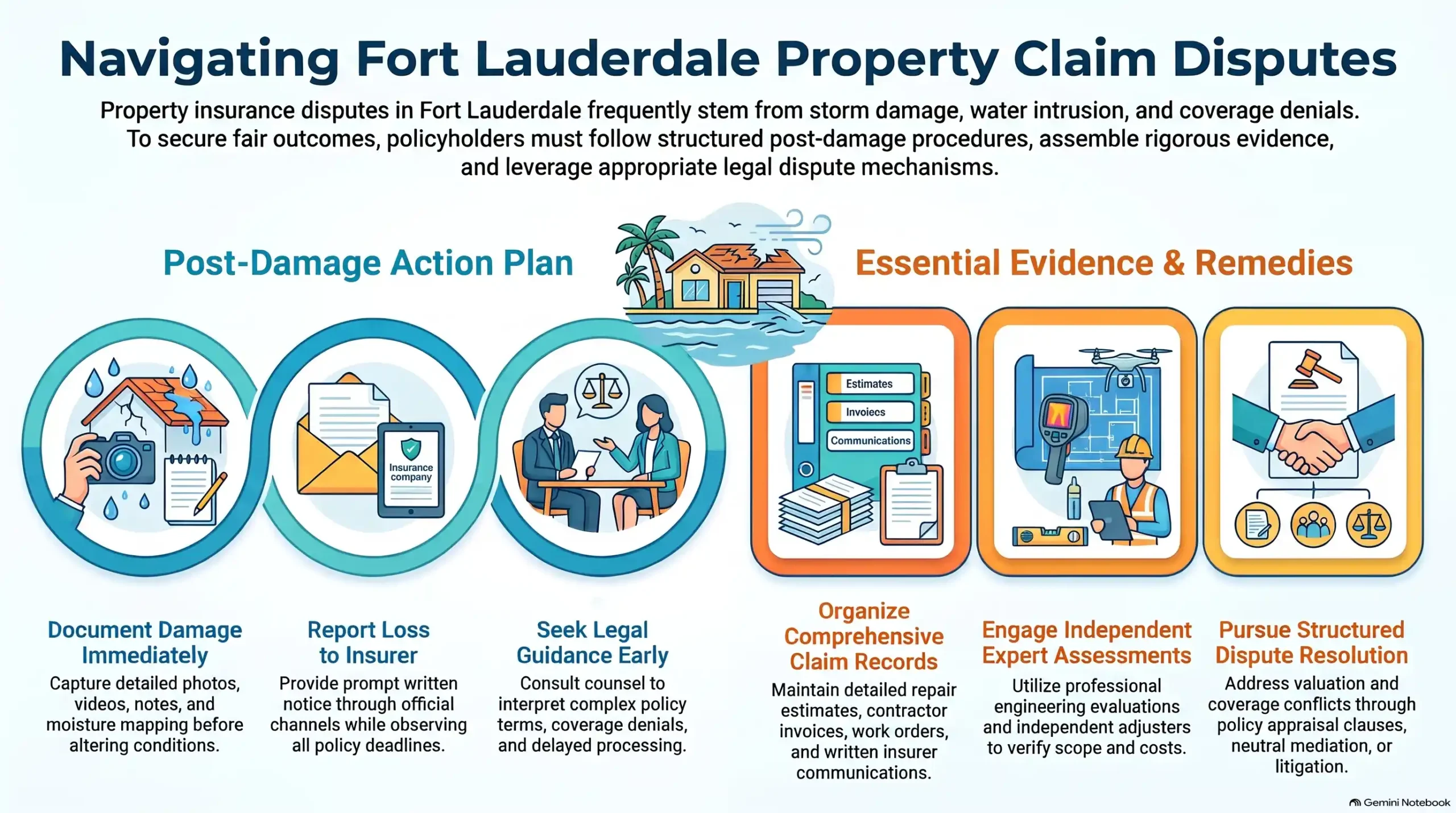


How We Can Help With Your Fort Lauderdale Property Claim Disputes & Process Injury Claim
When a property insurance claim is delayed, underpaid, or denied, a Fort Lauderdale property claim disputes and process lawyer can help the policyholder understand available options and pursue a fair resolution. The lawyer can review the policy, claim correspondence, estimates, and supporting records to identify coverage issues and unanswered questions. Careful Policy interpretation helps clarify relevant duties, exclusions, deadlines, and benefits without promising a particular outcome.
Legal assistance may also include organizing evidence of the property damage, documenting repair costs, and communicating with the insurer on the policyholder’s behalf. When appraisal is an available option, appraisal preparation can help make certain that estimates, photographs, invoices, and other materials are presented in an orderly and complete manner. The lawyer can explain the process, assess whether it fits the circumstances, and help the policyholder make informed decisions.
This work supports individuals and organizations seeking to restore damaged property and serve their communities. Clear guidance can reduce confusion, preserve important records, and help advance a well-supported claim through appropriate channels.
OUR CONSULTATIONSARE FREE
START YOUR FREE CASE REVIEW

Understanding Fort Lauderdale Property Claim Disputes & Process Injury Cases
Property claim disputes and process injury cases involve distinct legal issues, even when both arise from damage to a building or its contents. A property claim dispute generally concerns the meaning or application of an insurance policy and the benefits available for covered damage. Policy interpretation may require careful review of definitions, exclusions, limits, and the insurer’s stated reasons for its decision. Appraisal clauses may provide a method to resolve disagreements about the amount of a loss, although they do not necessarily decide whether coverage exists.
A process injury case may involve harm connected to a legal process affecting property, such as service or enforcement actions, and requires analysis of the duties and procedures involved. These matters can affect owners, occupants, businesses, and others who depend on safe, stable property. Clear documentation and timely attention help preserve relevant information and support informed decisions. Understanding the legal distinction allows affected people to seek appropriate remedies while respecting all parties’ interests.
Common Causes of Fort Lauderdale Property Claim Disputes & Process
Property claim disputes in Fort Lauderdale commonly arise after storms damage roofs, structures, or personal property. Water intrusion claims may also lead to disagreements over the cause of damage, policy coverage, or the insurer’s decision to deny a claim. Delayed claim processing can further complicate recovery and create disputes over the insurer’s handling of the loss.
Storm Damage Disputes
How do storm damage disputes arise in Fort Lauderdale? Disagreements often begin when an insurer and property owner differ over whether a storm caused reported damage, how extensive it is, or what repairs are necessary. Wind mitigation features, such as roof attachments and protective coverings, may affect both the extent of damage and the insurer’s coverage assessment. Disputes can also involve policy exclusions, deductibles, documentation, or estimates that do not account for the full scope of repairs. After a storm, property owners may arrange roof tarping to limit further exposure while preserving evidence of the initial condition. Insurers may request inspections, photographs, maintenance records, and contractor estimates before deciding a claim. Clear records and timely communication can help affected owners pursue fair evaluations and support their communities’ recovery.
Water Intrusion Claims
When water enters a building, disputes may arise over its source, duration, and the resulting damage. In Fort Lauderdale, heavy rain, plumbing failures, roof leaks, and drainage problems can allow water to spread through walls, floors, and ceilings. The visible damage may not reveal the full extent of a loss. Hidden moisture can remain behind finishes or beneath flooring, creating conditions for deterioration and mold growth. A careful assessment helps identify affected areas, determine the likely cause, and document necessary repairs. Property owners may need to preserve photographs, maintenance records, and repair estimates while coordinating inspections and limiting further damage. Mold remediation may require expert evaluation and controlled removal to protect occupants and restore the property. Clear records and timely communication can help parties address water intrusion claims responsibly and efficiently.
Coverage Denials
Coverage denials can arise when an insurer concludes that a loss falls outside the policy’s terms, results from an excluded cause, or lacks sufficient supporting documentation. In Fort Lauderdale, disputes may involve storm damage, water intrusion, or disagreements about whether damage occurred suddenly or developed over time. Policy exclusions can limit payment for certain causes, while unclear policy language may create competing interpretations. Insurers may also deny claims when records, photographs, repair estimates, or expert findings do not adequately establish the loss or its value. A careful review of the denial letter and applicable policy provisions can help property owners identify the insurer’s stated basis and determine what evidence may address it. When the disagreement concerns the amount of covered damage, an appraisal clause may offer a policy-based process for resolving valuation disputes. Professional guidance can support informed decisions.
Delayed Claim Processing
Delays in property claim processing can leave Fort Lauderdale owners uncertain about repairs, expenses, and the status of their insurance claim. Several operational and documentation issues may contribute to these delays. Limited Adjuster staffing can slow inspections, damage assessments, and follow-up communications, particularly after storms when many policyholders submit claims at once. Administrative backlogs may also postpone file reviews, payment decisions, or requests for additional information.
Incomplete claim forms, missing receipts, and unclear damage records can require repeated exchanges between the insurer and property owner. Disagreements about the scope of repairs may further extend review. Keeping organized records, responding promptly to reasonable requests, and documenting communications can help clarify the claim’s progress. When delays persist without explanation, owners may seek guidance on policy deadlines, insurer obligations, and steps to address unresolved processing concerns.
v


Legal Rights of Fort Lauderdale Property Claim Disputes & Process Injury Victims
Property owners and injured individuals involved in Fort Lauderdale property claim disputes may have legal rights under Florida law, depending on the facts and the applicable insurance policy. Policyholder rights may include receiving a timely decision, a clear explanation of coverage, and payment for covered losses. Injured people may also pursue compensation when a legally responsible party caused harm, subject to applicable evidence and deadlines.
Understanding these protections can help claimants make informed decisions while preserving resources for their families and communities.
- Claimants may request relevant policy information and written reasons for a denial or reduced payment.
- Appraisal options may help resolve disagreements about the amount of property loss, when the policy permits appraisal.
- Legal counsel can review deadlines, communications, and available remedies, then explain practical next steps.
Each matter depends on its documents and circumstances. Promptly organizing records, keeping insurer correspondence, and documenting losses can support a careful review. A qualified attorney can assess whether the insurer followed applicable requirements and whether further action is appropriate. These steps may help claimants seek fair treatment without compromising their ability to serve others.
Why Do Fort Lauderdale Property Claim Disputes & Process Injuries Happen?
Fort Lauderdale property claim disputes and related injury claims often arise when severe weather, water intrusion, fire, or unsafe conditions cause damage or harm. The region’s heavy rainfall, hurricanes, and humidity can weaken roofs, flood interiors, and encourage mold growth. Disagreements may follow when an insurer questions the cause, scope, or value of covered damage, or interprets policy exclusions differently from the property owner.
Injuries can occur when damaged structures, standing water, exposed wiring, or falling debris create hazards for residents, workers, and visitors. Delayed repairs may allow unsafe conditions to worsen, affecting people who depend on a property for shelter, services, or employment. Building code violations, inadequate maintenance, and contractor negligence can also contribute to property damage or preventable harm. In some cases, several causes overlap, making responsibility difficult to determine. These disputes can involve both financial losses and safety concerns, particularly when damage disrupts vital community spaces or homes.
What Should You Do After a Fort Lauderdale Property Claim Disputes & Process Injury?
After a property claim dispute or related injury, the claimant should promptly document the damage with photographs, records, and a clear account of events. Notify the insurer without delay, and retain all communications and claim documents. If the claim is denied, delayed, or disputed, consulting a lawyer can help clarify available options and protect the claimant’s interests.
Document the Damage
Photograph and record all visible damage as soon as it is safe to do so. A careful record can help property owners explain the loss and support a fair assessment. They should take wide shots showing each affected area, then close-ups that capture specific damage, including damaged belongings and structural features. A Photo Inventory can organize images by room, date, and item, making details easier to review later.
Written notes should describe when damage was discovered, where it appears, and any changes observed. Receipts, repair estimates, and records of damaged possessions may also help establish the extent of the loss. For water intrusion, qualified professionals can perform Moisture Mapping to identify hidden dampness and document affected materials. Owners should preserve damaged items when practical and avoid repairs that could erase useful evidence, while addressing urgent safety concerns.
Notify Your Insurer
Once immediate safety concerns are addressed, the property owner should notify the insurer promptly through the designated claims channel. Prompt notice helps the company begin its review and may reduce delays in arranging inspections or evaluating covered losses. The owner should provide the date, location, and general nature of the damage, while distinguishing confirmed facts from details that remain uncertain. Photographs, repair records, and a copy of the initial notice can support a clear claim file. The owner should review the policy deadlines and reporting instructions, since requirements vary by coverage and circumstances. Any requested forms should be completed accurately and returned within the stated period. If conditions change or additional damage becomes apparent, the insurer should be notified. Timely, factual communication can help preserve the claim process and support affected occupants.
Consult a Lawyer
When an insurer delays, denies, or undervalues a property claim, consulting a Fort Lauderdale property claim lawyer can help the owner understand the policy, applicable deadlines, and available options. An Attorney consultation can also clarify what evidence may support the claim, including photographs, repair estimates, inspection reports, and correspondence with the insurer. The owner should bring relevant documents and provide a clear account of the damage, reporting history, and communications received. During a case evaluation, the lawyer can identify potential coverage issues, explain dispute procedures, and discuss practical next steps. Legal guidance may help preserve important records and prevent missed deadlines, allowing the owner to make informed decisions while pursuing a fair resolution. A careful review can also help the owner determine whether further documentation or independent assessments are needed before responding to the insurer’s position.
Don’t Wait. Call Our Florida Personal Injury Lawyers Now!
Critical Evidence in a Fort Lauderdale Property Claim Disputes & Process Injury Case
Reliable evidence can help establish the extent of property damage and support a disputed claim. Relevant materials include dated photographs, qualified expert assessments, repair records, and written communications with the insurer.
Organized documentation may clarify the loss, the repair history, and the insurer’s handling of the claim.
- Photographs and videos documenting damage over time
- Expert assessments and contractor repair records
- Claim correspondence, including emails and letters
Damage Documentation
Damage documentation can determine whether a Fort Lauderdale property claim is supported by clear, verifiable evidence. A careful record helps property owners explain what happened and supports a fair review of repair needs. It can also help prevent disagreements about the location, extent, and timing of damage.
A photo inventory should show affected areas from wide and close perspectives, with dates and brief descriptions where possible. Images of damaged belongings, building materials, and visible water intrusion can preserve details that may change during cleanup. Receipts, repair records, and written notes about when damage was discovered can further clarify the claim.
Moisture mapping can document where water has spread and identify areas requiring attention. Consistent records help owners, insurers, and restoration teams communicate more effectively, reducing confusion and helping ensure decisions reflect the property’s actual condition.
Expert Assessments
Expert assessments can provide crucial evidence in a Fort Lauderdale property claim dispute by clarifying the cause, scope, and likely cost of damage. Qualified professionals may distinguish storm-related harm from wear, faulty construction, or other causes, helping ensure a claim reflects the available evidence. Independent adjusters can review the insurer’s damage estimate independently and identify areas that may require further investigation. Engineering evaluations may assess structural conditions, building components, and the effects of water or wind intrusion. Their findings can help property owners, insurers, and representatives evaluate disagreements on a consistent factual basis. Clear expert opinions also support fair decisions that protect residents, workers, and other affected people. Experts should explain their methods and conclusions in accessible terms, so decision-makers can understand the basis for each assessment.
Repair Records
Repair records can help establish when property damage occurred, what work was performed, and whether later problems may relate to earlier conditions or repairs. In a Fort Lauderdale property claim, dated photographs, work orders, material receipts, and inspection notes can create a useful timeline. Repair invoices should identify the location addressed, the materials used, and the work completed, allowing reviewers to compare repairs with reported damage. Contractor warranties may clarify the scope of promised work and the period during which defects could be addressed. Organized records can also help distinguish preexisting conditions from damage that developed after a repair. When property owners preserve these documents, they support a more accurate assessment of the loss and help those involved evaluate the claim fairly. Complete records may reduce uncertainty about repair history and remaining damage.
Claim Correspondence
When a property claim is disputed, written correspondence can show what was reported, when notice was given, and how the insurer responded. Emails, letters, and claim portal messages may document inspection requests, explanations of coverage, or concerns about delayed payment. Adjuster communications can clarify what information the insurer sought and whether the policyholder supplied it. Keeping complete records, including dates, attachments, and delivery confirmations, helps establish a reliable timeline and reduces uncertainty about prior discussions.
Settlement correspondence may reveal proposed amounts, stated reasons for an offer, and any conditions attached to payment. Careful review can identify unanswered questions or differences between the insurer’s position and the documented loss. A clear, respectful written record supports fair consideration of the claim and helps representatives assess whether further information, negotiation, or legal guidance may be appropriate.
Long-Term Effects of Fort Lauderdale Property Claim Disputes & Process Injuries
Property claim disputes and related injuries may have effects that continue long after the initial incident. Lingering physical injuries can require ongoing care, while unresolved claims may contribute to sustained financial strain. The experience may also have lasting emotional effects that influence daily life and well-being.
Lingering Physical Injuries
Lingering physical injuries can complicate a Fort Lauderdale property claim long after the initial incident, particularly when symptoms worsen or require ongoing treatment. Some people experience chronic pain, reduced strength, or mobility limitations that affect ordinary tasks and their ability to assist family members or others in their community. These effects may persist even after visible damage to the property has been repaired. Medical evaluations and treatment records can help document how an injury developed, what care is needed, and whether symptoms continue to interfere with daily activities. A careful account of these limitations may also clarify the connection between the incident and the person’s current condition. Because recovery can change over time, injured individuals may benefit from following medical guidance and preserving relevant records while their property claim is being reviewed.
Ongoing Financial Strain
Ongoing financial strain can develop as injuries from a property incident require continued care or limit a person’s ability to work. Medical appointments, rehabilitation, medication, and transportation may create expenses that continue long after the incident. At the same time, reduced hours or missed work can lower household income and make routine obligations harder to meet. Mortgage payments, utilities, and other necessary costs may compete with care expenses, increasing pressure on available savings. If bills are delayed or accounts become overdue, credit damage may affect future borrowing and housing options. A disputed property claim can further complicate planning when compensation is delayed or denied. Careful records of treatment costs, lost income, and related expenses can help clarify the financial impact and support a more complete claim review.
Lasting Emotional Effects
Even after physical injuries begin to recover, the effects of a property incident and a disputed claim may continue to affect a person’s emotional well-being. Uncertainty about repairs, coverage, and financial recovery can contribute to persistent stress, disrupted sleep, or difficulty concentrating. These responses may affect work, decision-making, and the ability to support others at home or in the community.
Family relationships may also experience strain when responsibilities shift or claim delays prolong uncertainty. Clear communication and practical support can help relatives understand changing needs without minimizing the person’s concerns. Anxiety management may involve counseling, structured routines, and guidance from qualified health professionals. Keeping records of emotional symptoms and related care may also help explain the broader impact of an incident. Timely legal guidance can clarify claim procedures and reduce avoidable uncertainty during recovery.
Proving Liability in Fort Lauderdale Property Claim Disputes & Process Injury Cases
Proving liability in a Fort Lauderdale property claim or injury case requires evidence that connects the responsible party’s conduct to the harm suffered. Premises liability principles may apply when a property owner or occupier fails to address a dangerous condition or provide an adequate warning. The injured person generally must show that the responsible party knew, or reasonably should have known, of the hazard and had a fair opportunity to correct it.
Negligence standards also require proof that a duty of care was breached and that the breach caused measurable injury. Useful evidence can include photographs, incident reports, maintenance records, witness accounts, and medical documentation. Collectively, these materials may establish how the condition arose, how long it existed, and how it contributed to the harm. Prompt, careful documentation can preserve important details and support a fair review of the claim. A clear factual record helps decision-makers assess responsibility and recognize the needs of those affected by unsafe property conditions.
Dealing With Insurance Companies After a Fort Lauderdale Property Claim Disputes & Process Injury
After a property-related injury in Fort Lauderdale, communication with an insurance company can influence how a claim is evaluated. Injured people who depend on property owners and insurers to address unsafe conditions may face questions about notice, responsibility, and the extent of harm. Clear, accurate communication helps preserve a reliable record and supports a fair review.
An insurer may assign an adjuster to inspect the location, review records, and assess reported losses. Understanding the Independent adjuster role can help claimants recognize that an adjuster’s findings inform the insurer’s decision but do not replace independent legal advice. Claimants should provide truthful information, retain copies of correspondence, and avoid speculation about disputed facts. They may also request clarification when a question or coverage position is unclear.
Florida law imposes duties on insurers, and bad faith standards may apply when an insurer handles a claim improperly. A lawyer can explain relevant rights, address disputed communications, and help make certain the injured person’s interests receive careful consideration.
What to Expect During a Fort Lauderdale Property Claim Dispute & Process Injury Claim Process
A Fort Lauderdale property claim typically begins with a review of the policy, reported damage, and the insurer’s initial assessment. Evidence collection and dispute resolution may follow if the parties disagree about coverage or the amount of the loss. The process concludes with a claim outcome, which may involve payment, denial, or further review.
Initial Claim Review
During the initial claim review, the insurer examines the reported damage, policy terms, and available evidence to determine how the claim will proceed. This stage helps establish the claim’s scope and identify the policy provisions that may apply. A Policy review considers coverage limits, exclusions, deadlines, and any duties the policyholder must meet. The insurer may also conduct a deductible analysis to clarify the amount the policyholder would pay before eligible benefits become available. These preliminary decisions can affect how the insurer evaluates the claim and whether it requests additional information. A policyholder seeking a fair resolution may review the insurer’s explanations and ask for clarification when terms or calculations are unclear. Careful attention at this stage can help all parties understand the process, address questions promptly, and support an orderly assessment of the claim.
Evidence Collection
As the claim moves beyond its initial review, evidence collection helps establish the nature, extent, and possible cause of the reported property damage. Relevant records may include the insurance policy, repair estimates, invoices, maintenance histories, inspection reports, and communications about the loss. Clear documentation helps all parties understand what occurred and what work may be needed to restore the property. Evidence preservation is important because cleanup or repairs can alter conditions before they are fully documented. When urgent work is required to protect occupants or prevent further damage, photographs and written records can capture the condition beforehand. Forensic photography may show the location, scope, and progression of damage, while expert inspections can address questions about materials, building systems, or likely causes. Organized evidence supports an accurate assessment and helps guarantee the property owner’s concerns are carefully considered.
Dispute Resolution
When a property claim remains unresolved, dispute resolution provides a structured way to address disagreements about coverage, damage, or repair costs. The process may begin with direct communication between the policyholder and insurer, supported by the records and estimates gathered during evidence collection. Clear explanations of disputed items can help both sides understand the basis for their positions and identify points requiring further review.
Mediation options may offer a neutral setting where a trained mediator helps the parties discuss concerns and explore possible areas of agreement. The mediator does not decide the dispute. Some policies also contain appraisal clauses, which may establish a procedure for resolving disagreements over the amount of a loss. A careful review of policy terms and applicable procedures helps confirm that each party understands its responsibilities and participates constructively.
Claim Outcome
What happens after a property claim dispute is resolved depends on the policy terms, the evidence, and the outcome of the review or dispute-resolution process. If the insurer accepts the claim, it generally issues payment according to the covered loss, applicable limits, and any deductible. A Settlement negotiation may produce an agreed amount, but the parties should confirm in writing what the payment covers and whether further claims remain open. When appraisal applies, an appraisal award may determine the amount of loss, subject to policy conditions and any remaining coverage questions. If payment is delayed or the insurer disputes its obligation, the policyholder may need to pursue available remedies and observe applicable deadlines. Clear records of repairs, expenses, and communications help support follow-up. A prompt, fair resolution can also help property owners restore safe conditions and serve affected occupants.
Compensation for Fort Lauderdale Property Claim Disputes & Process Injury Damages
Compensation in a Fort Lauderdale property claim dispute depends on the policy terms, the documented damage, and the insurer’s handling of the claim. A recovery may cover reasonable costs to repair or replace damaged structures and personal property, subject to applicable limits, deductibles, and exclusions. Replacement cost coverage may pay the amount needed to restore property with comparable materials, while actual cash value generally accounts for depreciation. The policy and claim records determine which measure applies.
Some disputes involve diminished value when repairs do not fully restore a property’s market worth. Evidence may include inspection reports, repair estimates, photographs, invoices, and qualified appraisals. Clear documentation helps the insurer assess the loss and allows property owners to identify disagreements about scope, pricing, or coverage.
A careful claim review can also address additional covered damage discovered during repairs. Property owners who support neighbors or community members through a difficult loss can help them preserve records and seek a fair evaluation under the policy.
Economic vs Non-Economic Damages in Fort Lauderdale Property Claim Disputes & Process Cases
Economic damages may include repair costs, replacement expenses, and other measurable financial losses arising from a property claim dispute. Non-economic harm, such as disruption, inconvenience, or emotional distress, may also be relevant when supported by the circumstances and applicable law. Clear documentation of both categories helps establish the nature and extent of the claimed damages.
Economic Losses
Property claim disputes in Fort Lauderdale may involve both economic and non-economic damages, though the losses available depend on the policy, the facts, and applicable law. Economic losses are measurable financial costs tied to covered property damage. They may include repair or replacement expenses, reasonable costs to prevent further damage, and the value of personal property affected by a covered event. A business owner may also seek lost profits or Business interruption losses when damage temporarily prevents operations, subject to policy terms and proof of the amount claimed. Property owners who lease damaged premises may document lost rental income and necessary repair expenses. Receipts, estimates, contracts, tax records, and financial statements can help substantiate these figures. Careful records support accurate evaluation and may help insurers and claimants resolve disputes based on documented losses and applicable coverage.
Non-Economic Harm
Beyond measurable financial costs, property damage can cause personal disruption, stress, or loss of use. Non-economic harm concerns effects that do not have a direct price, such as Emotional Distress, inconvenience, and loss of enjoyment when a damaged home or business cannot be used as intended. These consequences may affect daily routines, privacy, comfort, and a person’s ability to care for family members or serve the surrounding community. Their significance depends on the circumstances and the extent of the disruption. In a Fort Lauderdale property claim dispute, non-economic harm is distinct from repair expenses, temporary housing costs, or lost income. Whether such harm is recoverable depends on the applicable policy terms and Florida law. Clear communication about the practical impact can help claim discussions address the full nature of the loss.
Damage Documentation
When documenting a property claim, organized evidence helps distinguish measurable financial losses from personal effects that may not have a direct monetary value. Photographic Documentation should capture each affected area, damaged item, and relevant condition before repairs or disposal alter the evidence. Dated images, receipts, repair estimates, and contractor reports can support claims for economic damages, including restoration costs, replacement expenses, and temporary housing. A detailed Damage Inventory should identify each item, describe its condition, and record its estimated value and supporting proof of ownership. Non-economic effects, such as disruption to household routines or loss of meaningful personal belongings, may also be documented through clear descriptions and consistent records. This careful process helps insurers and decision-makers assess the full impact of the loss and supports fair, informed claim resolution.
Don’t Wait. Call Our Florida Personal Injury Lawyers Now!
When a Fort Lauderdale Property Claim Disputes & Process Injury Case Goes to Trial vs Settlement
Although many Fort Lauderdale property claim disputes resolve through settlement, some proceed to trial when the parties cannot agree on liability, damages, or the value of covered losses. Settlement negotiations may involve reviewing repair estimates, photographs, inspection findings, and other records to clarify the scope of the dispute. A negotiated resolution can provide a more predictable outcome and avoid the time and expense associated with courtroom proceedings. However, settlement terms should be assessed carefully to make certain they address the documented losses and any continuing obligations.
When negotiations do not produce an acceptable agreement, trial allows each side to present evidence and arguments to a judge or jury. Trial timelines vary based on case complexity, court scheduling, and the need for additional evidence or testimony. Preparation may include organizing records, identifying witnesses, and explaining how the damage affected the property and its occupants. The decision to settle or proceed to trial depends on the evidence, the available remedies, and the parties’ willingness to resolve the claim.
Florida Laws That May Affect Your Fort Lauderdale Property Claim Disputes & Process Case
Florida law can shape how a Fort Lauderdale property claim is reported, investigated, and resolved. Florida statutes and insurance regulations establish duties for policyholders and insurers, including requirements for timely communication, fair claim evaluation, and supporting documentation. The specific policy also governs coverage, exclusions, deductibles, and procedures for resolving disputes. Understanding these rules can help property owners pursue a claim responsibly while preserving resources needed by families, employees, and neighbors affected by the loss.
Relevant considerations may include:
- Notice and cooperation: Policyholders generally must report damage promptly and provide reasonable access and information for the insurer’s investigation.
- Coverage interpretation: Policy language and applicable Florida statutes may determine whether particular damage is covered and what proof is required.
- Dispute resolution: A policy appraisal may help resolve disagreements about the amount of a covered loss, but it does not necessarily settle disputes over coverage.
Because each claim depends on its facts and contract terms, careful review can clarify available options and support a measured response. Professional guidance may help protect the claimant’s interests while encouraging an orderly resolution.
The Statute of Limitations for Fort Lauderdale Property Claim Disputes & Process Injury Cases
The deadline for filing a property insurance lawsuit can affect a Fort Lauderdale claimant’s ability to challenge a denial or pursue payment for covered damage. Florida law sets time limits for certain property insurance actions, and the applicable period may depend on the claim type and the date of loss. Missing a deadline can prevent a court from considering an otherwise valid dispute.
Limitations calculation requires careful attention to the policy, claim history, and current statutes. The filing period may differ for breach of an insurance contract and for claims involving a property loss, while notice requirements and claim-related events can also matter. A claimant should not assume that negotiations with an insurer automatically pause or extend the deadline.
Some statutory exceptions may alter how a limitation period applies, but their availability depends on specific facts and legal requirements. Promptly preserving records, documenting damage, and identifying relevant dates can support an accurate assessment. Timely action helps protect the claimant’s ability to seek a fair resolution and maintain resources needed to restore the property.
How a Fort Lauderdale Property Claim Disputes & Process Lawyer Can Help You
When a property insurer disputes coverage or payment, a Fort Lauderdale property claim lawyer can assess the policy, investigate the loss, and explain the claimant’s options. Through careful Policy interpretation, counsel can identify relevant coverage terms, exclusions, deadlines, and duties after a loss. The lawyer can also organize records and communicate with the insurer so the claim is supported by clear, consistent evidence.
A lawyer may help by:
- Reviewing estimates, inspection findings, photographs, and repair invoices to evaluate the insurer’s position.
- Coordinating qualified professionals whose assessments can clarify the cause and extent of damage.
- Developing an appraisal strategy when a disagreement concerns the amount of loss and appraisal is available under the policy.
This work can help property owners pursue a fair resolution while preserving resources for household, business, or community needs. Counsel can explain procedural choices, prepare responses to insurer requests, and present documented arguments in negotiations or other available dispute-resolution processes. The approach remains grounded in the policy language and evidence gathered for the claim.
When to Contact a Fort Lauderdale Property Claim Disputes & Process Lawyer
Early legal guidance can be valuable when an insurer delays a property claim, denies coverage, offers less than the documented damage supports, or requests information that may affect the outcome. A policyholder may also seek counsel when the scope of covered repairs is unclear or when the insurer’s explanation conflicts with policy language. Policy interpretation can help clarify relevant duties, deadlines, exclusions, and coverage limits before a response is submitted.
Prompt attention matters because policies may impose notice requirements, proof-of-loss deadlines, or other conditions. A lawyer can review correspondence and claim records to identify questions that should be addressed promptly. If the parties disagree about the amount of damage, appraisal clauses may provide a process for evaluating that dispute, subject to the policy’s terms and applicable law.
Property owners managing repairs for tenants, family members, or community organizations may benefit from understanding their options early. Seeking advice before signing a release or accepting a final payment can help you make an informed decision.
Why You Need an Experienced Fort Lauderdale Property Claim Disputes & Process Lawyer
Because property insurance disputes can involve policy deadlines, technical damage assessments, and competing interpretations of coverage, an experienced Fort Lauderdale property claim disputes and process lawyer can help a policyholder evaluate the available evidence and understand the steps required to pursue a claim. Careful Policy interpretation can clarify which losses may be covered, what exclusions apply, and what documentation the insurer may require. A lawyer can organize records, assess repair estimates, and identify gaps in the insurer’s investigation, helping ensure the claim is presented accurately and completely.
When damage assessments differ, counsel may explain appraisal strategy and the potential benefits and limits of available dispute-resolution procedures. The lawyer can also communicate with the insurer, track procedural requirements, and respond to requests for information while protecting the policyholder’s interests. This guidance can reduce avoidable delays and support a fair review of the loss. By managing complicated claim steps, experienced counsel allows property owners to focus on restoring their homes and serving their families and communities.
How to Choose the Right Fort Lauderdale Property Claim Disputes & Process Lawyer for Your Case
Choosing the right Fort Lauderdale property claim disputes and process lawyer requires more than reviewing credentials; property owners should assess the lawyer’s experience with similar insurance disputes, knowledge of Florida law, and ability to explain the claim process clearly. A lawyer should also communicate promptly, listen carefully, and treat the property owner’s concerns with respect. These qualities help clients make informed decisions while protecting resources needed for family, employees, or community responsibilities.
Attorney credentials can help confirm a lawyer’s licensing, relevant training, and professional standing, but they should be considered alongside practical experience. Property owners may ask how the lawyer approaches disputed damage assessments, delayed payments, or claim denials, and what documentation will support the case. Clear answers can indicate whether the lawyer can guide the matter effectively.
Before retaining counsel, clients should review fee structures, including any contingency arrangement, costs, and circumstances that could create additional charges. Comparing written terms and expectations can help guarantee the representation is transparent and appropriate for the claim.
About The Law Offices of Anidjar & Levine
The Law Offices of Anidjar & Levine represents clients in property insurance disputes, including matters involving denied, delayed, or underpaid claims.
The firm helps property owners understand policy terms, document losses, and respond to insurer decisions.
Its attorneys can review claim records, explain available options, and help clients pursue benefits they believe are owed under their coverage.
Firm history provides context for the firm’s approach to legal representation.
Since its founding, the firm has served individuals and families facing difficult legal issues, including disputes that can disrupt housing, finances, and daily routines.
Its work in property claims reflects a broader commitment to helping clients address consequential problems with informed guidance.
Community involvement is also part of the firm’s public-facing work.
Through service and outreach, the firm supports people and organizations across Florida.
For property owners, this focus on service may offer reassurance that their concerns will be heard, their circumstances considered, and their claim handled with attention and care.

Frequently Asked Questions
Can I Reopen a Property Insurance Claim After Accepting a Settlement?
A property insurance claim may sometimes be reopened after settlement, but the Settlement Release usually determines whether further recovery is barred. Its wording, applicable law, and the circumstances of payment matter. If previously unknown damage emerges, the policyholder may seek Supplemental Damages, particularly when the release preserves that right or the insurer has not fully performed. Prompt review of the settlement documents and claim records by qualified counsel can clarify available options and deadlines.
What Happens if My Insurer Becomes Insolvent While My Claim Is Pending?
If an insurer becomes insolvent while a property claim is pending, the claim may transfer to Florida’s guaranty association, which can evaluate eligible losses and issue payment subject to statutory limits and conditions. Florida guaranty fund coverage is not automatic for every policy or expense, so the claimant should confirm eligibility, preserve supporting records, and promptly review insolvency claim deadlines. Timely, accurate filing helps protect available recovery and reduces delays for affected households and communities.
Can My Mortgage Lender Receive Part of My Property Insurance Payment?
Yes, a mortgage lender may receive part of a property insurance payment when the policy or mortgage agreement names it as a loss payee. Mortgage Lienholder Rights commonly allow the lender to be included on the claim check, particularly for substantial structural damage. An Insurance Check Endorsement may consequently require the lender’s approval before funds are released. The lender may hold or disburse repair proceeds, subject to the loan terms and applicable law.
Will Filing a Property Claim Affect My Future Insurance Premiums?
Filing a property claim can affect future insurance premiums, but an increase is not automatic. Insurers may consider the claim’s type, severity, frequency, and applicable state rules when setting renewal rates or deciding whether to continue coverage. Premium Impact Factors also include local loss trends and the property’s risk profile. Claim History Reporting can influence how insurers assess future applications, so accurate documentation and prompt reporting support fair, informed decisions.
Can I Dispute an Appraisal Award if I Believe It Is Unfair?
An appraisal award may be disputed, but the available options depend on the policy terms and applicable law. Challenging appraisal findings generally requires evidence of misconduct, bias, a material mistake, or an award beyond the appraisers’ authority; mere dissatisfaction with the amount may not suffice. A timely review of the appraisal award can identify procedural defects and potential remedies. The policyholder should preserve relevant records and seek qualified legal guidance before deciding how to proceed.
—————————
Property claim disputes may involve complex policy terms, deadlines, and disagreements about the value or cause of damage.
A Fort Lauderdale property claim lawyer can review the available evidence, explain potential options, and communicate with insurers or other responsible parties.
Prompt attention may help preserve records and protect a claimant’s ability to pursue available remedies.
The Law Offices of Anidjar and Levine can assess the circumstances and provide guidance tailored to the claim and its procedural requirements.
For related legal assistance, see our Fort Lauderdale Personal Injury Lawyer page.