A Fort Lauderdale property claim roof and structural damage lawyer can help policyholders document storm losses, interpret insurance provisions, and address disputes over repairs, coverage, or claim handling. The Law Offices of Anidjar and Levine can also assess whether a property owner or another party may be responsible when a collapse, falling debris, or another unsafe condition causes injury. Prompt medical care, safe inspections, and organized records can support an informed evaluation.
Learn more about a Fort Lauderdale Personal Injury Lawyer and the claims process, potential liability, and ways to assess legal options.
Main Takeaways
- A Fort Lauderdale property claim lawyer can review your policy, damage evidence, and the insurer’s coverage decision.
- Document roof and structural damage with dated photographs, inspection reports, repair records, and contractor estimates.
- Preserve evidence of wind, hail, debris, flooding, or water intrusion, and promptly report damage to your insurer.
- Seek qualified inspections and medical care when damage or collapse creates unsafe conditions or causes injury.
- Coverage and dispute options depend on policy terms, exclusions, claim deadlines, and the facts of the loss.


How We Can Help With Your Fort Lauderdale Property Claim Roof & Structural Damage Injury Claim
When roof or structural damage leads to an injury, a Fort Lauderdale property claim lawyer can help determine who may be responsible and what compensation may be available. Counsel can review the insurance policy, assess relevant correspondence, and explain how coverage provisions may apply to the reported loss. Careful policy interpretation can clarify notice requirements, exclusions, deadlines, and the documents needed to support a claim.
A lawyer may also organize records, communicate with the insurer, and address requests for additional information. If the insurer disputes coverage or issues a Claim denial, counsel can evaluate the stated reasons, identify potential errors, and explain available options for challenging the decision. This assistance can help property owners pursue a fair review while preserving resources for people affected by unsafe conditions.
The legal team can coordinate with qualified professionals when further assessment is needed and keep clients informed about significant developments. By handling claim-related tasks with diligence, counsel allows injured individuals and property owners to focus on recovery and responsible care for others.
OUR CONSULTATIONSARE FREE
START YOUR FREE CASE REVIEW

Understanding Fort Lauderdale Property Claim Roof & Structural Damage Injury Cases
Fort Lauderdale roof and structural damage injury cases may involve separate questions about property coverage, personal injury liability, and the cause of the unsafe condition. These issues require careful evaluation because a damaged building may affect both an owner’s financial interests and the safety of residents, visitors, or workers.
Property claims generally turn on the policy language, the reported damage, and the insurer’s response. Policy interpretation can determine which losses are covered, what exclusions apply, and whether notice or documentation requirements were met. Coverage disputes may arise when the parties disagree about the scope of repairs, the value of the loss, or how policy terms apply.
An injury claim raises distinct questions about responsibility and resulting harm. Evidence may need to establish who controlled the property, whether reasonable safety measures were taken, and how the condition contributed to an injury. Coordinating these issues can help affected people seek fair treatment while preserving accurate records and supporting a careful review of each claim.
Common Causes of Fort Lauderdale Property Claim Roof & Structural Damage
Roof and structural damage in Fort Lauderdale may result from hurricane winds, which can dislodge roofing materials and weaken building components. Heavy rainfall and flooding, along with hail or falling debris, can cause additional roof and interior damage. Foundation shifting and settlement may also create cracks or structural instability that affect a property’s safety and value.
Hurricane Wind Damage
Hurricane-force winds can damage a property’s roof and structure through uplift, pressure changes, and flying debris. As wind moves over a building, it can loosen shingles, tear away roofing materials, and strain connections between the roof, walls, and foundation. Vulnerable areas include roof edges, corners, soffits, and openings where wind pressure may increase. Hurricane shutter failures can leave windows and doors exposed, allowing wind to enter and intensify interior pressure. Windborne debris impacts may crack glazing, puncture roofing, or damage exterior walls, creating openings that compromise structural stability. The extent of damage depends on wind speed, construction quality, maintenance, and protective measures. Prompt documentation of visible damage and professional assessment can help property owners identify affected components and present a clear, accurate claim for necessary repairs.
Heavy Rainfall And Flooding
Beyond wind-related damage, heavy rainfall and flooding can place substantial stress on a property’s roof and structural components. In Fort Lauderdale, prolonged downpours may overwhelm gutters, drains, and stormwater systems, allowing water to collect around foundations or enter through vulnerable roof areas. Drainage failures can contribute to leaks, ceiling damage, weakened framing, and shifting foundations when water remains against the structure. Floodwater intrusion may also saturate walls, flooring, and insulation, creating concealed damage that worsens if not promptly assessed. Property owners serving tenants, customers, or community members may need to take reasonable steps to protect occupants and limit further harm. A careful inspection, photographs, repair records, and timely notice to the insurer can help document the loss. Coverage may depend on policy terms, exclusions, and the source of the water.
Hail And Falling Debris
Although hail is less common in Fort Lauderdale than severe rain or wind, it can still damage roofs, windows, and exterior surfaces. Hail impact may crack shingles, dent metal panels, break skylights, or weaken protective coatings, allowing later rain to enter the building. The extent of damage can depend on hail size, storm intensity, roof materials, and prior wear. Falling branches and other debris hazards can puncture roofing, damage gutters, or strike exterior walls during severe weather. These events may also compromise doors, windows, and attached structures, creating safety concerns for occupants and visitors. Prompt documentation, including photographs and professional inspection findings, can help property owners identify visible and less obvious damage. A careful claim review can clarify which repairs are supported by policy terms and the available evidence.
Foundation Shifting And Settlement
Foundation shifting and settlement can place stress on a property’s walls, floors, and roof, sometimes leading to cracks, uneven surfaces, or structural movement. In Fort Lauderdale, changing moisture levels, drainage problems, and unstable soils may contribute to this damage. Soil erosion can remove support beneath a structure, while prolonged saturation or drought may cause soil to expand or contract. These conditions can result in slab movement and affect connected framing, creating damage that extends beyond visible floor cracks.
A careful inspection can help identify the cause, scope, and progression of settlement. Photographs, repair records, and reports from qualified professionals can help document the condition for an insurance claim. Policy terms and the cause of loss influence coverage, so property owners should review applicable provisions and report damage promptly. Clear documentation also supports timely repairs that protect occupants and preserve the building’s stability.
Don’t Wait. Call Our Florida Personal Injury Lawyers Now!


Legal Rights of Fort Lauderdale Property Claim Roof & Structural Damage Injury Victims
When roof or structural damage injures someone at a Fort Lauderdale property, the injured person may have legal rights separate from any insurance claim for building damage. Depending on the circumstances, a claim may seek compensation from a responsible property owner or another liable party. Prompt, careful documentation can help protect the injured person’s interests and support a fair review.
Roof-related injuries may support a separate legal claim against a responsible property owner or another liable party.
- Seek medical care. Timely evaluation creates a record of injuries and helps guide appropriate treatment.
- Preserve evidence. Photographs, incident reports, witness information, and related records may help establish what occurred.
- Review available coverage. A lawyer can assess potential claims, policy terms, Coverage disputes, and policy exclusions without assuming that insurance resolves every issue.
- Observe legal deadlines. Florida filing limits and notice requirements may affect the ability to pursue compensation, so qualified legal advice can be important.
A claim may address documented losses, including medical expenses and other legally recoverable damages. Careful advocacy can also help injured people obtain support while protecting their rights throughout the process.
Why Do Fort Lauderdale Property Claim Roof & Structural Damage Injuries Happen?
Roof and structural damage injuries at Fort Lauderdale properties can result from severe weather, deteriorating building materials, poor maintenance, or unsafe repair work. High winds and heavy rain may loosen roof coverings, break windows, or weaken supports, creating hazards for residents, visitors, and workers. Persistent moisture can also cause wood rot, corrosion, and mold, while damaged ceilings or walls may collapse without warning.
Some dangers originate in design or construction. A Construction Error, such as inadequate fastening or improper installation, can leave a roof unable to withstand ordinary weather. A hidden defect in materials or structural connections may go unnoticed until a storm or routine use exposes the weakness. Neglected inspections and delayed repairs can allow small problems to become serious safety risks.
These conditions can affect people who rely on a property for shelter, care, or vital services. Understanding common causes helps explain how preventable building hazards arise and why sound construction, maintenance, and timely attention matter to community safety.
What Should You Do After a Fort Lauderdale Property Claim Roof & Structural Damage Injury?
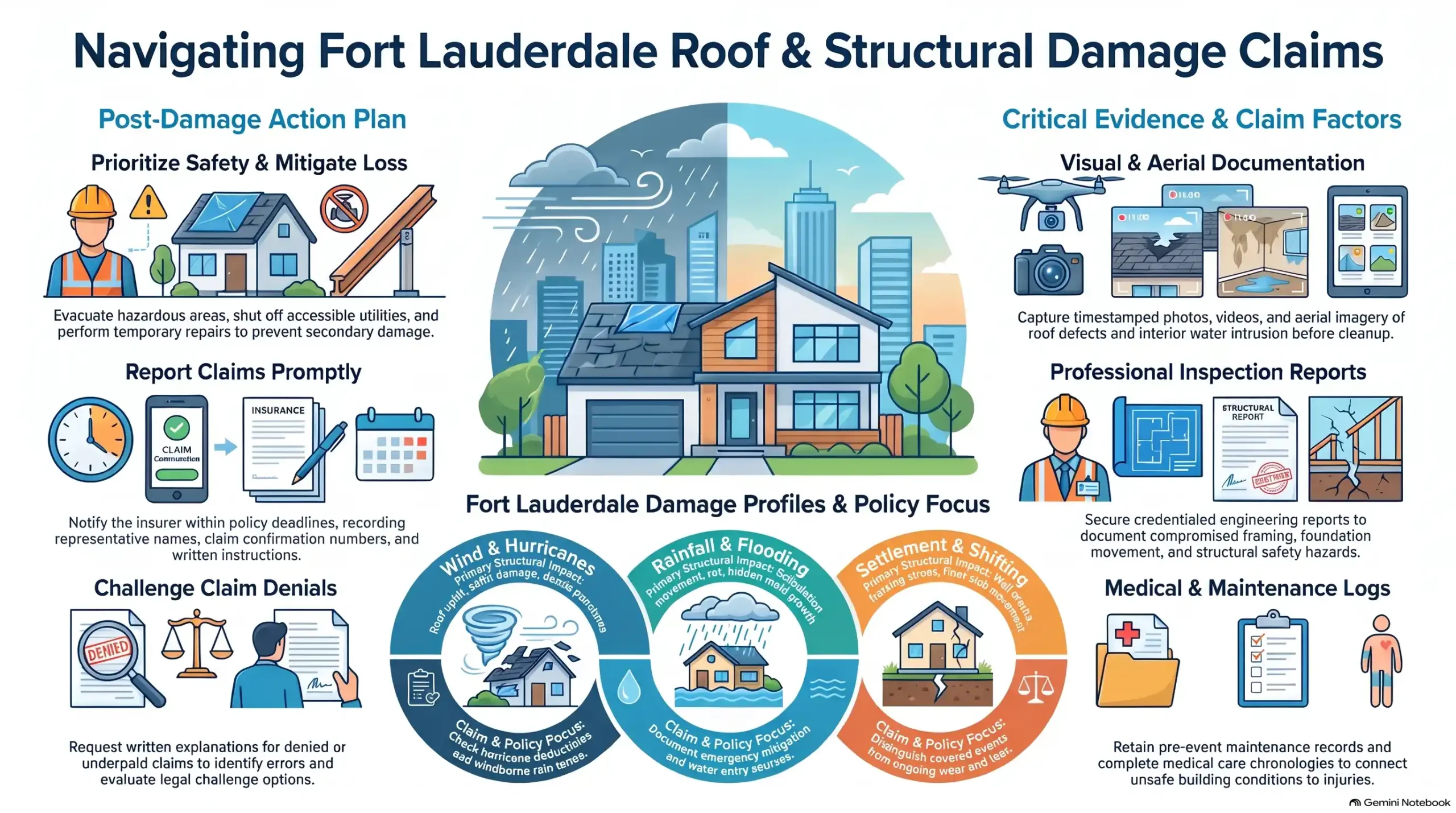
After roof or structural damage, occupants should first move to a safe location and avoid unstable areas. They should document visible damage with photographs and notes, provided it is safe to do so. The property owner should then promptly notify the insurance company and keep a record of all communications.
Prioritize Immediate Safety
Structural damage can create immediate hazards, including falling debris, unstable floors, exposed wiring, and further collapse. Occupants should leave affected areas promptly and avoid reentering until qualified emergency personnel determine that conditions are safe. Evacuation Planning should account for children, older adults, people with disabilities, and anyone who may need assistance moving to a secure location. If a safe exit is unclear, occupants should contact emergency services rather than cross unstable areas. Utility Shutoff may reduce risks from damaged gas, electrical, or water systems, but only when controls are accessible without entering a hazardous space. If a gas leak, sparking wires, or fire is suspected, everyone should move away and alert responders. Property owners and visitors can support one another by following official instructions and keeping access routes clear for emergency crews.
Document Roof And Structural Damage
Once the area is safe to approach, the property owner should document roof and structural damage before cleanup or repairs alter the evidence. Photographs and video should show affected areas from several angles, including roof surfaces, ceilings, walls, framing, and visible water intrusion. Images should include wide views that establish location and close-ups that capture specific defects. A written Damage inventory can identify each damaged room, building component, and personal item, noting the date observed and any changes over time. Receipts, maintenance records, and prior photographs may help establish the property’s condition before the incident. If temporary measures are needed to prevent further harm, the owner should document their condition and keep related receipts. Written contractor estimates can describe proposed work and anticipated costs, supporting a clear, organized record for later review.
Contact Your Insurance Company
With initial photographs, notes, and repair records organized, the property owner should promptly contact the insurance company to report the roof or structural damage. This Policy notification should follow the method and deadlines stated in the policy, whether by telephone, online portal, or written notice. The owner should provide the date, location, and known circumstances of the loss, while distinguishing confirmed facts from estimates. The insurer should be asked to explain required forms, inspection procedures, and steps needed to prevent further damage. The owner should record the representative’s name, the time of contact, and any instructions received. Request and retain a claim confirmation number and written acknowledgment with all related documents. Clear, timely communication helps the insurer assess the claim and supports a fair, orderly resolution for everyone affected.
Don’t Wait. Call Our Florida Personal Injury Lawyers Now!
Critical Evidence in a Fort Lauderdale Property Claim Roof & Structural Damage Injury Case
A Fort Lauderdale property claim involving roof or structural damage and injury may depend on clear, well-organized evidence. Relevant records can help establish the damage, its history, and the connection between the incident and reported injuries.
Essential evidence includes:
- Photographs documenting roof damage
- Structural inspection reports
- Repair and maintenance records
- Injury and medical documentation
Roof Damage Photographs
Clear photographs can preserve crucial evidence of roof damage in a Fort Lauderdale property claim involving structural harm or injury. Images taken promptly after a storm, impact, or other event may document missing shingles, punctures, displaced materials, and water entry points before repairs or weather alter the scene. Photographs should show both close details and wider views that establish the location and extent of visible damage. Roof photo metadata, including timestamps and device information, may help establish when images were captured, though it should be preserved without alteration. Aerial roof imagery can provide useful context for documenting affected sections that are difficult or unsafe to reach. Careful, accurate images can help insurers, property owners, and legal representatives evaluate a claim and support a fair resolution, while prioritizing occupant and responder safety during documentation.
Structural Inspection Reports
Photographs can show visible roof damage, while structural inspection reports assess how that damage affects the building’s stability and safety. In a Fort Lauderdale property claim, a qualified inspector can document compromised framing, shifting walls, weakened connections, or water intrusion that threatens structural components. The report may help establish the extent of damage and explain whether conditions create safety concerns for occupants, visitors, or workers.
A persuasive report identifies the inspector’s engineering credentials and explains the report methodology, including the areas examined, testing performed, and limits of the assessment. Clear observations, measurements, and supporting diagrams can help insurers and decision-makers evaluate the findings. When conclusions distinguish observed damage from possible causes, the report offers a more reliable basis for reviewing a claim. Such evidence can also support timely decisions that protect building users and the wider community.
Repair And Maintenance Records
When roof or structural damage leads to an injury, repair and maintenance records can help establish the property’s condition before the incident. These documents may show whether an owner or manager identified hazards, arranged timely repairs, or allowed known problems to persist. Maintenance logs can record routine inspections, reported leaks, loose materials, or earlier signs of deterioration. Contractor invoices may identify the work performed, the date of service, materials used, and any recommendations for further repairs. Collectively, these records can help clarify whether the damage developed suddenly or followed a pattern that required attention. They may also support a fair assessment of responsibility and help protect people who rely on safe, well-maintained premises. Organized, dated records are more useful than incomplete notes, particularly when questions arise about prior warnings or repair decisions.
Injury And Medical Documentation
In a Fort Lauderdale property claim involving roof or structural damage, injury and medical records can connect the incident to the harm suffered. Prompt evaluation helps identify injuries and establish whether they may relate to a collapse, falling debris, water intrusion, or unsafe conditions. Medical recordkeeping should include emergency care, physician visits, diagnostic results, prescribed treatment, and follow-up instructions. A clear treatment chronology can show when symptoms began, how they developed, and whether care followed medical advice. Claimants should retain bills, medication records, work restrictions, and documentation of missed appointments or delayed treatment, with explanations where available. Accurate records help insurers and legal professionals assess the nature and duration of harm. They also support coordinated assistance for injured residents while preserving reliable evidence for the property claim.
Long-Term Effects of Fort Lauderdale Property Claim Roof & Structural Damage Injuries
Roof and structural damage injuries may cause persistent pain and mobility limitations that continue long after the initial incident. Prolonged exposure to moisture and mold can contribute to respiratory problems, while the disruption and uncertainty may lead to lasting emotional distress. These effects can influence daily functioning and may require ongoing medical care and documentation.
Persistent Pain And Mobility
Persistent pain and limited mobility can continue long after a roof or structural failure causes an injury on a Fort Lauderdale property. Fractures, spinal injuries, and damaged joints may restrict walking, lifting, or completing ordinary tasks. These limitations can affect a person’s ability to work, care for family members, and participate in community responsibilities. Treatment may involve rehabilitation, medication, or other forms of Pain management tailored to the injury and its lasting effects. Some individuals also rely on mobility aids, such as canes or walkers, to move more safely and maintain independence. Recovery can require ongoing appointments and adjustments to daily routines. Medical records documenting symptoms, treatment, and functional restrictions can help explain the injury’s continuing impact when a property claim seeks compensation for related losses.
Respiratory Problems From Mold
Mold growth after roof or structural damage can expose occupants to airborne particles that irritate the respiratory system. Mold exposure may cause coughing, wheezing, nasal congestion, throat irritation, or shortness of breath. Symptoms can persist as long as damp materials remain untreated, and people with asthma, allergies, or other respiratory conditions may experience more severe effects. A qualified medical professional can assess ongoing respiratory symptoms and recommend appropriate care. Property owners and insurers may need to arrange prompt inspections, moisture control, and safe remediation to limit continued exposure. Records of medical visits, symptoms, repair efforts, and indoor conditions can help establish the scope and duration of harm. When damage is disputed, clear documentation may assist a property claim review and support efforts to address health concerns responsibly, while protecting other occupants.
Lasting Emotional Distress
Structural damage and prolonged displacement can leave property occupants with lasting emotional distress, including anxiety, sleep disruption, heightened vigilance, or difficulty feeling secure at home. These effects may continue after repairs are completed, particularly when residents have faced uncertainty, financial strain, or repeated interruptions to daily routines. Persistent symptoms can affect concentration, relationships, work, and the ability to manage ordinary responsibilities. Some individuals may benefit from counseling, medical evaluation, or structured anxiety management strategies tailored to their circumstances. Supportive communication from family, neighbors, and service providers can also help restore a sense of stability without minimizing the person’s experience. When distress is connected to a property loss, documenting symptoms, treatment, and related expenses may help evaluate the claim. Timely professional support can address needs and clarify available options.
Proving Liability in Fort Lauderdale Property Claim Roof & Structural Damage Injury Cases
Proving liability in a Fort Lauderdale property claim involving roof or structural damage requires evidence that links the harm to a responsible party’s conduct or failure to act. Relevant parties may include property owners, contractors, developers, or maintenance providers, depending on who controlled the work or had a duty to address a known hazard. Inspection records, repair requests, construction plans, and maintenance records can help establish what was known and when action was required.
Qualified professionals may examine the building to identify the source of failure and determine whether the damage resulted from poor workmanship, inadequate maintenance, or unsafe design. Negligent Contractor Oversight may be shown through deficient supervision, incomplete repairs, or failure to follow approved plans. Building Code Violations can also support a liability claim when evidence connects a violation to the roof or structural harm.
Photographs, witness accounts, and dated reports may preserve important details. Clear documentation helps establish responsibility and supports efforts to protect affected occupants and restore safe conditions.
Dealing With Insurance Companies After a Fort Lauderdale Property Claim Roof & Structural Damage Injury
After roof or structural damage causes an injury, insurance companies may investigate the event, assess the claimed losses, and determine whether coverage applies. Their review may include policy terms, inspection findings, photographs, repair estimates, and medical records. A property owner seeking to protect injured visitors and support a fair resolution should provide accurate information and preserve relevant documents.
An insurer’s adjuster may request statements or propose a settlement. Careful adjuster negotiations can help clarify disputed repair costs, injury-related expenses, and the scope of available coverage. Any response should be consistent with the evidence and policy language; unsupported assumptions or incomplete records may complicate evaluation.
A Claim denial may cite exclusions, alleged maintenance issues, or disagreement about the cause or extent of damage. The policyholder can request the insurer’s reasons in writing and review them against the policy and supporting evidence. When significant injuries or structural losses are involved, legal counsel may help assess coverage questions and communicate with the insurer while keeping the injured person’s needs in view.
What to Expect During a Fort Lauderdale Property Claim Roof & Structural Damage Injury Claim Process
A Fort Lauderdale roof and structural damage claim typically begins with an initial review of the policy, reported losses, and available evidence. The process then involves documenting damage and injuries, followed by the insurer’s investigation into coverage, cause, and claim value. Depending on the findings and any disputed issues, the matter may conclude with a settlement or proceed to litigation.
Initial Claim Review
During the initial claim review, the insurer evaluates the reported roof or structural damage, the policy terms, and the evidence submitted to determine whether coverage may apply. This stage typically begins with claim acknowledgment and confirmation of basic information, including the property address, reported event, and applicable policy period. Coverage verification helps establish whether the policy was active and which provisions may govern the reported loss. Policy interpretation may address exclusions, deductibles, limits, and conditions that affect eligibility or payment. The insurer may assign an adjuster or request clarification about the claim’s circumstances before making an initial decision. A claimant can review communications carefully and respond to reasonable requests within stated deadlines. For property owners seeking to protect their households and restore safe conditions, understanding this review helps clarify next steps without assuming that coverage has been accepted.
Damage Documentation
Clear damage documentation can help establish the scope and cause of roof or structural loss during a Fort Lauderdale property claim. The property owner should photograph and record affected areas before temporary repairs alter visible conditions, when it is safe to do so. Images should show both close details and the broader location, with dates and brief notes identifying observed changes. Evidence Preservation may include retaining damaged materials, receipts, maintenance records, and communications about the loss. A written timeline can clarify when symptoms appeared and what steps were taken to protect occupants or prevent further damage. Contractor Estimates should describe proposed work, materials, and costs in enough detail to compare with the documented damage. Organized records can support an accurate claim presentation and help property owners address repair needs responsibly while safeguarding the interests of residents and others affected.
Insurer Investigation
What should property owners expect when an insurer investigates roof or structural damage in Fort Lauderdale? The insurer typically assigns an adjuster to inspect the property, review photographs and repair estimates, and ask questions about the damage, its timing, and any prior conditions. The inspection may include a roofing or engineering consultant, especially when the cause or extent of structural harm is uncertain. Property owners can provide relevant records and point out affected areas, while keeping copies of communications and noting inspection dates. Adjuster tactics may include focusing on wear, maintenance, or limited damage when evaluating the claim. These findings can lead to coverage disputes over exclusions, causation, or the scope of repairs. A careful review of the policy, inspection notes, and supporting evidence helps clarify the insurer’s position and identify unresolved factual issues.
Settlement or Litigation
Once the insurer completes its investigation, a Fort Lauderdale property claim may resolve through settlement or proceed to litigation if the parties disagree about coverage, causation, or repair costs. During settlement negotiations, the parties may compare estimates, review policy terms, and consider evidence such as photographs, inspection reports, and contractor assessments. A carefully planned Mediation strategy can help clarify disputed issues and support a fair resolution without a trial. Any proposed agreement should account for covered roof and structural repairs, applicable deductibles, and other documented losses. If negotiations do not produce an acceptable outcome, litigation may allow a court to evaluate the evidence and determine the insurer’s obligations. Throughout either path, organized records and timely legal guidance can help property owners protect their interests while restoring safe homes and serving their families and communities.
Compensation for Fort Lauderdale Property Claim Roof & Structural Damage Injury Damages
When roof or structural damage makes a Fort Lauderdale property unsafe or unusable, the resulting losses may extend beyond repair costs. Depending on the policy and evidence, compensation may address reasonable expenses caused by the covered damage and resulting displacement. Temporary housing, additional meals, and necessary storage may be relevant when residents cannot safely remain at home. Damaged personal belongings may also be considered, subject to policy limits, exclusions, and documentation.
A claim may include costs to protect the property from further harm, such as emergency tarping or securing exposed areas, when those measures are reasonable and permitted by the policy. Receipts, photographs, contractor assessments, and records of communications with the insurer can help establish the nature and extent of claimed losses. Prompt notice and compliance with policy duties may also affect review.
Compensation is not automatic, and the available amount depends on coverage terms, causation, valuation rules, and supporting proof. A careful assessment can help ensure relevant losses are presented accurately and that residents receive fair consideration.
Economic vs Non-Economic Damages in Fort Lauderdale Property Claim Roof & Structural Damage Cases
Economic damages in Fort Lauderdale roof and structural damage claims may include repair costs, temporary housing expenses, and other documented financial losses. Non-economic losses may involve disruption to daily life or loss of use of the property, depending on the claim and applicable policy. Clear records, expert assessments, and other supporting evidence can help establish the scope and value of claimed damages.
Economic Damage Categories
Roof and structural damage claims can involve both economic and non-economic losses, though property insurance generally focuses on measurable financial harm. Economic damages include documented costs caused by covered roof or structural damage. These may include reasonable repair or rebuilding expenses, debris removal, emergency measures to prevent further harm, and the replacement of damaged building materials or personal property, subject to policy terms and limits. When a home becomes unsafe or uninhabitable, Temporary housing and related additional living expenses may also be recoverable if the policy provides coverage. Business owners may seek compensation for repair costs and lost income when physical damage interrupts operations, provided the loss meets applicable policy requirements. Receipts, estimates, invoices, photographs, and financial records can help establish the amount and cause of claimed expenses, supporting accurate review and fair resolution.
Non-Economic Losses
Although roof or structural damage can disrupt daily life, property insurance claims generally distinguish those effects from measurable financial losses. Economic damages may include repair costs, temporary housing, and damaged belongings, while non-economic losses concern personal effects that do not have a direct price. Residents may experience Emotional suffering when unsafe conditions, displacement, or uncertainty affect their sense of security. They may also face diminished enjoyment of their home, particularly when rooms become unusable or ordinary routines are interrupted. These consequences can matter to households seeking stability and a safe place to care for family members or welcome others. However, standard property policies typically cover physical loss and related expenses, not compensation for distress or reduced enjoyment. The policy language and applicable law determine whether any non-economic recovery is available.
Proving Your Damages
To support a Fort Lauderdale property claim involving roof or structural damage, the policyholder generally needs evidence connecting the covered damage to specific losses. Repair estimates, contractor reports, photographs, invoices, and inspection records can document physical damage and anticipated costs. Damage valuation should distinguish covered repairs from maintenance, upgrades, or unrelated deterioration. A causation analysis can help establish whether a storm or other insured event caused the reported conditions, rather than a preexisting defect or excluded cause.
Economic damages may include reasonable repair expenses, temporary housing, debris removal, and other documented out-of-pocket costs, subject to policy terms. Records should show how each expense relates to the loss. Non-economic effects, such as disruption or distress, may require separate support and may not be covered under every policy. Organized, consistent evidence helps insurers and decision-makers assess the claim fairly and accurately.
Don’t Wait. Call Our Florida Personal Injury Lawyers Now!
When a Fort Lauderdale Property Claim Roof & Structural Damage Injury Case Goes to Trial vs Settlement
When a Fort Lauderdale property claim involving roof or structural damage reaches an impasse, the parties may resolve it through settlement or proceed to trial. A settlement can provide a defined payment and avoid the uncertainty, delay, and expense of a courtroom dispute. It may also allow property owners to direct resources toward repairs and community responsibilities sooner. Any proposed agreement should be reviewed carefully to confirm which losses it covers and whether payment terms are clear.
Trial may be appropriate when the insurer disputes responsibility, the scope of damage, or the value of the claim, and negotiations do not produce a fair resolution. Trial preparation can involve organizing repair records, expert assessments, photographs, and witness testimony to present the dispute clearly. A judge or jury then evaluates the evidence and determines the outcome. If a judgment is entered, verdict enforcement may be needed to pursue payment when the insurer does not comply voluntarily. The choice between settlement and trial depends on the evidence, practical needs, and informed assessment of risk.
Florida Laws That May Affect Your Fort Lauderdale Property Claim Roof & Structural Damage Case
Florida law can shape how a Fort Lauderdale property claim for roof or structural damage is reported, investigated, and resolved. Several legal and policy provisions may influence the evidence required, the insurer’s response, and the options available when a dispute arises.
Understanding these rules can help property owners make informed decisions while protecting the safety and stability of their homes.
- Policy terms: Coverage depends on the contract, including covered causes of loss, duties after damage, and Policy exclusions. Owners should preserve records and provide requested information accurately.
- Claim handling: Florida law sets standards for insurers’ investigation and communication. Clear documentation of damage, repairs, and expenses can support a fair, timely review.
- Dispute procedures: Some policies contain appraisal clauses, which may provide a process for resolving disagreements about the amount of loss. Appraisal generally does not decide every coverage dispute.
- Building requirements: Local codes and permitting rules can affect repair scope and costs. Qualified professionals can help identify necessary work and support safe, code-compliant repairs for occupants and the wider community.
The Statute of Limitations for Fort Lauderdale Property Claim Roof & Structural Damage Injury Cases
A property claim involving roof or structural damage may also raise questions about injuries caused by the condition or during repair work. In Florida, the deadline to file a personal injury lawsuit generally depends on when the injury occurred and the applicable statute of limitations. Different deadlines may govern property damage claims, insurance disputes, and injury actions, so the nature of each claim matters.
Missing a statutory deadline can prevent recovery, even when the damage or injury is well documented. Some circumstances may affect when the filing period begins or pause it. These tolling exceptions are limited and fact-specific; they should not be assumed to apply. Promptly preserving records of the incident, medical treatment, repairs, and communications can help clarify relevant dates.
Policy deadlines are separate from court filing limits. An insurance policy may require timely notice, proof of loss, or other submissions, and late compliance can jeopardize coverage. Because deadlines vary, affected owners and injured people should verify the rules applicable to their circumstances without delay.
How a Fort Lauderdale Property Claim Roof & Structural Damage Lawyer Can Help You
After identifying applicable deadlines, property owners can benefit from legal guidance in evaluating roof or structural damage claims. A lawyer can help organize evidence, explain policy terms, and communicate with the insurer while keeping the property owner’s practical responsibilities in view.
This support may also help owners protect safe housing and maintain spaces used by employees, tenants, or community members.
- Policy interpretation: Counsel reviews coverage provisions, exclusions, deductibles, and claim requirements to clarify how the policy may apply.
- Damage documentation: The lawyer helps gather inspection reports, photographs, repair estimates, and other records that describe the loss and its effects.
- Coverage disputes: When an insurer questions the cause, scope, or value of damage, counsel can assess the stated reasons and present relevant evidence.
- Claim communications: Legal guidance can help prepare responses, track requests, and explain available options, supporting informed decisions without disrupting necessary property operations.
With organized records and clear communication, owners can better evaluate proposed settlements and pursue a fair resolution consistent with policy terms and documented damage.
When to Contact a Fort Lauderdale Property Claim Roof & Structural Damage Lawyer
When an insurer disputes the cause or extent of roof or structural damage, delays a decision, or offers less than documented repairs may require, a property owner may benefit from contacting a lawyer. Early legal guidance can help clarify what information the insurer needs and what steps may preserve a fair review. A lawyer may be contacted after a Claim denial, when the insurer cites an exclusion, or when its estimate does not address documented damage. Questions about policy interpretation may also warrant review, particularly if the policy language appears unclear or the insurer applies it in a way the owner disputes.
Prompt attention is useful when damage threatens safety, permits further deterioration, or affects a property used by tenants, customers, or community members. Owners should keep photographs, repair estimates, inspection reports, and insurer correspondence organized. Seeking advice before accepting a settlement or signing a release can help an owner understand the decision’s implications and consider available options.
Why You Need an Experienced Fort Lauderdale Property Claim Roof & Structural Damage Lawyer
Because roof and structural damage claims can involve disputed inspections, policy exclusions, and detailed repair estimates, experienced legal guidance may help property owners assess the insurer’s position. A lawyer familiar with Fort Lauderdale property claims can review inspection findings, compare them with available evidence, and identify questions that may affect the claim’s value. This support can be important when damage threatens a building’s safety or disrupts housing, business operations, or community services.
Policy interpretation requires careful attention to the contract’s terms, limits, duties, and deadlines. Counsel can explain how those provisions may apply to reported roof or structural damage and evaluate whether the insurer’s cited coverage exclusions are relevant. A lawyer may also organize repair documentation, communicate with the insurer, and challenge unsupported conclusions through appropriate claim procedures.
Experienced representation can help property owners pursue a fair review while maintaining clear records and meeting policy requirements. This guidance may reduce avoidable errors and support informed decisions about repairs, recovery, and obligations to others.
How to Choose the Right Fort Lauderdale Property Claim Roof & Structural Damage Lawyer for Your Case
Selecting the right Fort Lauderdale property claim lawyer for roof or structural damage requires more than reviewing a firm’s general experience. A careful evaluation can help property owners protect their homes and preserve resources needed for family or community responsibilities.
Relevant experience matters. The lawyer should understand property insurance policies, claim documentation, damage assessments, and disputes involving delayed, underpaid, or denied claims. Prospective clients can review attorney credentials, including Florida licensure, disciplinary history, and experience handling comparable roof or structural damage cases. They should also ask who will manage the claim and how the lawyer will communicate important developments.
A clear fee structure is equally important. Before signing an agreement, clients should understand how fees are calculated, whether case expenses are separate, and when payment is due. Initial discussions should allow time for questions about deadlines, evidence, and possible next steps. Comparing these details can help property owners select counsel whose approach, experience, and communication practices align with their claim’s needs.
About The Law Offices of Anidjar & Levine
The Law Offices of Anidjar & Levine represents clients in property insurance disputes, including claims involving roof and structural damage.
The firm assists policyholders seeking a fair review of losses and a clear explanation of their options.
Its work may include examining policy terms, organizing supporting records, communicating with insurers, and pursuing appropriate remedies when a claim is delayed, underpaid, or denied.
Firm History can help prospective clients understand the practice’s background, services, and approach to representing individuals and families.
The firm’s public materials describe its legal work and provide information about matters it handles.
Attorney Profiles offer details about the lawyers’ experience, practice areas, and professional qualifications, allowing clients to evaluate who may address their circumstances.
For property owners facing damage, careful legal guidance can help clarify responsibilities and next steps.
The firm evaluates each matter based on its facts and applicable coverage.
Clients can contact the office to discuss their concerns and learn whether representation may be suitable.
Frequently Asked Questions
Does Homeowners Insurance Cover Roof Damage Caused by Hurricanes in Fort Lauderdale?
Homeowners insurance may cover hurricane-related roof damage in Fort Lauderdale when wind or debris causes sudden physical harm, subject to policy terms. Coverage isn’t automatic, and insurers may dispute whether damage resulted from a covered event or an excluded maintenance issue. Policyholders should review Hurricane deductible limits and wind-driven rain exclusions, which can affect payment. Promptly documenting damage, preventing further loss, and reporting the claim can help households secure appropriate assistance and protect affected residents.
Can I File a Property Claim if My Roof Damage Was Discovered Months After a Storm?
A property claim may be filed when roof damage is discovered months after a storm, but coverage depends on the policy, proof of storm-related damage, and applicable reporting deadlines. Insurers may question delayed reports, so the homeowner should document the damage, preserve repair records, and arrange a prompt professional inspection. Early review can identify hidden structural deterioration and clarify roof damage timelines, helping the homeowner present accurate information and protect the interests of everyone relying on the property.
What Should I Do if Emergency Repairs Are Needed Before the Insurer Inspects My Property?
When urgent work is necessary, the property owner should take reasonable steps to prevent further harm without waiting for the insurer’s inspection. Temporary damage mitigation may include covering exposed areas or stopping active leaks, while avoiding permanent repairs until the insurer has documented the damage, when feasible. Emergency repair documentation should include dated photographs, videos, receipts, contractor notes, and records of damaged materials. The owner should promptly notify the insurer and preserve removed items for review.
Can a Public Adjuster Help Document Roof or Structural Damage?
Yes. A public adjuster can document roof and structural damage by photographing affected areas, recording measurements, identifying visible defects, and organizing repair estimates and supporting records. This Public adjuster damage documentation can help present a clear, consistent claim to the insurer. A structural damage assessment may also identify concerns requiring review by a qualified engineer or contractor. The adjuster should distinguish observed damage from expert conclusions and preserve evidence before temporary repairs alter conditions.
Will Filing a Roof Damage Claim Affect My Homeowners Insurance Premiums?
Filing a roof damage claim may affect homeowners insurance premiums, but an increase is not automatic. Insurers consider factors such as claim frequency, the cause of the damage, repair costs, and state regulations. A paid claim may also affect eligibility for claim-free discounts or renewal terms. Before filing, the homeowner can review the policy deductible and consult the insurer or a qualified professional to understand likely consequences and confirm accurate damage documentation.
—————————
Roof and structural damage claims can involve complicated policy terms, disputed inspections, and significant repair costs.
Property owners in Fort Lauderdale should document damage, preserve relevant records, and carefully review insurer communications.
When a claim is delayed, underpaid, or denied, legal guidance can help clarify available options and protect important deadlines.
The Law Offices of Anidjar and Levine assist property owners in evaluating claims and pursuing appropriate recovery under Florida law, based on the facts and policy terms.
Learn more about a Fort Lauderdale Personal Injury Lawyer.