

The Law Offices of Anidjar and Levine can investigate whether inadequate coverage, missed checks, or poor oversight contributed to a nursing home resident’s injury. The review may include care plans, staffing records, incident reports, medical documentation, witness accounts, and expert input when appropriate. Legal counsel can explain potential claims, help preserve important evidence, and assess documented losses. Prompt guidance may clarify deadlines and available options. Learn more about working with a Fort Lauderdale Personal Injury Lawyer. The sections below explain important warning signs, evidence, and legal considerations.
Main Takeaways
- A Fort Lauderdale nursing home negligence lawyer can assess whether inadequate staffing or supervision contributed to a resident’s injury or decline.
- Warning signs include missed care, unexplained injuries, delayed assistance, and unaddressed changes in a resident’s condition.
- Preserve care plans, medical records, incident reports, staffing schedules, communications, photographs, and witness details.
- Arrange prompt medical care and request preservation of surveillance footage and other records that may be lost.
- Ask lawyers about nursing home negligence experience, availability, communication practices, and applicable legal deadlines.
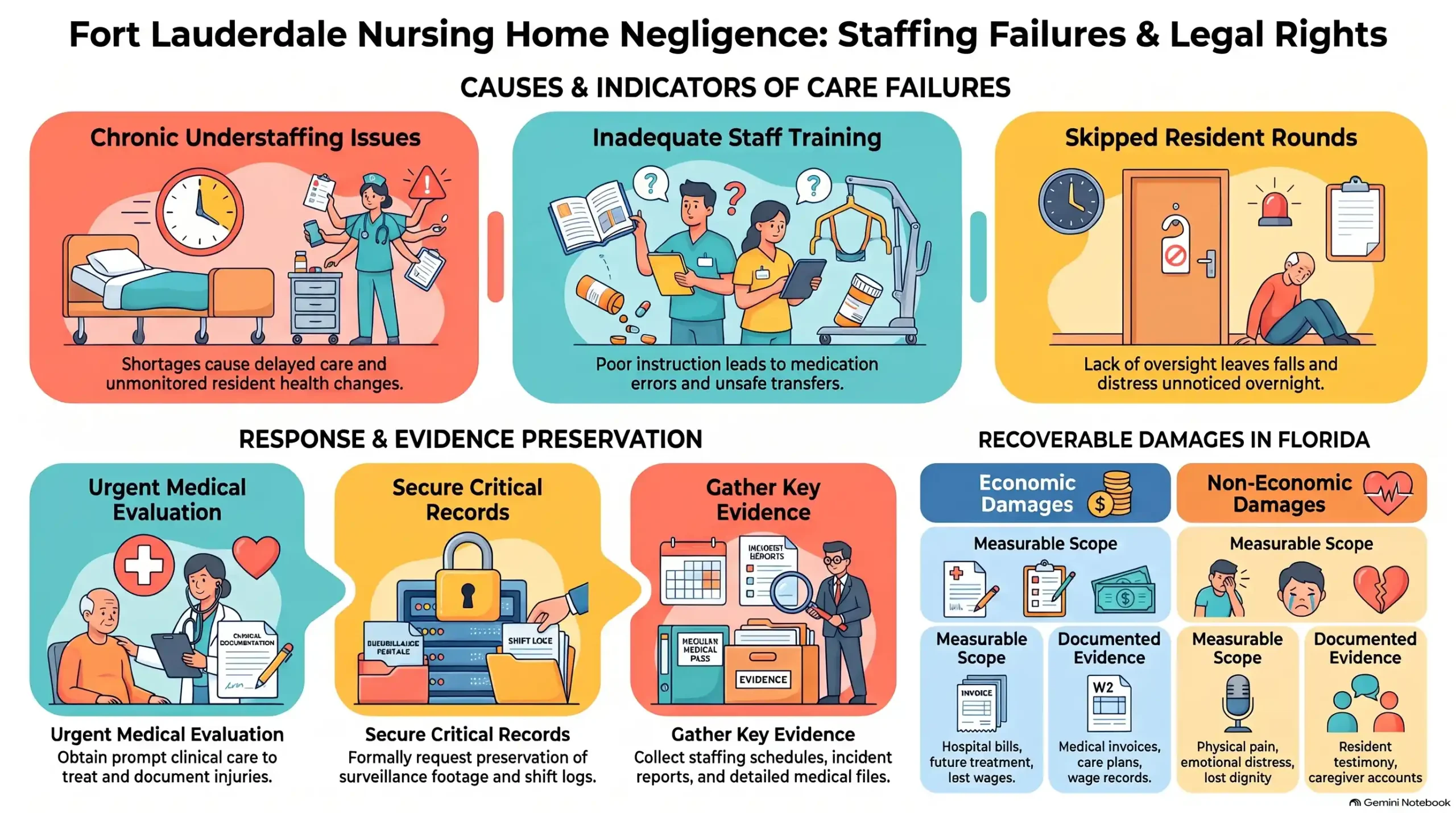


How We Can Help With Your Fort Lauderdale Nursing Home Staffing & Supervision Failures Injury Claim
When inadequate staffing or supervision at a Fort Lauderdale nursing home causes an injury, a lawyer can investigate the circumstances and identify who may be legally responsible. The legal team can explain available options, answer questions, and help families make informed decisions without adding unnecessary pressure during a difficult period.
A careful Claim Evaluation may include reviewing medical records, care plans, facility policies, and communications related to the resident’s treatment. The lawyer can organize relevant information, consult qualified professionals when appropriate, and assess potential losses, including medical expenses and the effects of the injury on daily life. This process helps clarify whether a claim may be pursued and what steps could follow.
Family Advocacy also involves managing communications with the nursing home and its representatives, preserving important records, and presenting the resident’s interests clearly. Counsel can provide updates, discuss settlement proposals, and prepare for litigation if negotiations do not resolve the matter. Through attentive guidance, the legal team can help families seek accountability while respecting the resident’s dignity and needs.
OUR CONSULTATIONSARE FREE
START YOUR FREE CASE REVIEW

Understanding Fort Lauderdale Nursing Home Staffing & Supervision Failures Injury Cases
Staffing and supervision failures occur when a Fort Lauderdale nursing home does not provide adequate personnel or oversight to meet residents’ needs and protect them from foreseeable harm. An injury case examines whether the facility’s care fell below applicable standards and whether that failure contributed to a resident’s harm. Relevant evidence may include care plans, staffing records, incident reports, and observations documented by residents, families, or staff.
Warning signs can include unmet personal care needs, unexplained injuries, missed assistance, or changes in a resident’s condition that receive no timely response. These concerns warrant careful review, since a single observation may not establish negligence, but a documented pattern can help clarify what occurred.
Facility accountability depends on the specific facts, the resident’s needs, and the care the nursing home was expected to provide. A thorough assessment can identify whether inadequate oversight or delayed assistance caused injury and what records may support a claim. This process helps families seek answers while preserving the resident’s dignity and safety.
Common Causes of Fort Lauderdale Nursing Home Staffing & Supervision Failures
Staffing and supervision failures in Fort Lauderdale nursing homes may stem from chronic understaffing, high employee turnover, or inadequate staff training. Weak shift supervision can leave care needs unaddressed, while missed resident checks may delay assistance or allow preventable hazards to persist. These conditions can overlap and contribute to resident injuries or declining health.
Understaffing and High Turnover
Understaffing and high employee turnover can leave Fort Lauderdale nursing homes without enough experienced caregivers to meet residents’ daily needs. When too few workers are available, residents may wait longer for help with meals, mobility, hygiene, or other routine care. Staff members may also struggle to respond promptly to changing needs, increasing the risk that important concerns go unnoticed.
Recruitment Challenges can arise from competition for qualified caregivers, demanding schedules, and limited staffing resources. Frequent departures can disrupt familiar relationships between residents and caregivers, while placing additional pressure on remaining employees. Nursing homes can address these concerns through practical Retention Strategies, such as competitive compensation, manageable workloads, and supportive supervision. Consistent staffing helps preserve continuity of care and allows employees to provide attentive assistance. Families who notice repeated delays or unmet needs may document their observations and raise concerns with facility leadership.
Inadequate Staff Training
Even when a nursing home has enough employees on duty, inadequate training can leave caregivers unprepared to meet residents’ needs safely. Staff may lack instruction in safe transfers, infection prevention, medication procedures, or recognizing changes in a resident’s condition. Without practical guidance, even well-intentioned caregivers can make errors that cause preventable injuries or delay needed care.
Effective preparation requires more than a brief orientation. Facilities should provide role-specific instruction, hands-on practice, and regular Competency assessments to confirm that employees can perform necessary duties. Dementia education is also important because residents with cognitive impairment may communicate distress through behavior or require individualized approaches to daily care. Training should help staff respond respectfully, preserve dignity, and follow each resident’s care plan. When facilities fail to prepare employees adequately, residents may face avoidable risks, and families may have grounds to question whether reasonable care was provided.
Poor Shift Supervision
Poor shift supervision can allow care problems to go unnoticed or unresolved, even when a nursing home has enough employees on duty. Supervisors help coordinate responsibilities, clarify priorities, and support staff when resident needs change. When they are unavailable, distracted, or slow to address concerns, caregivers may receive conflicting direction or lack timely guidance. This supervisor inattention can weaken communication between departments and make it harder to maintain consistent, respectful care. Facilities should establish clear procedures for escalating concerns and make sure supervisors have the authority and time to respond. Leadership accountability also matters: administrators must review supervision practices, address recurring gaps, and provide adequate oversight across shifts. Families and residents may seek answers when poor supervision contributes to harm, while records and staffing policies can help clarify how management responded to known concerns.
Missed Resident Checks
Missed resident checks can leave changes in a nursing home resident’s condition unnoticed, delaying needed care or assistance. Facilities may miss required observations when staffing levels are inadequate, responsibilities are unclear, or staff members are diverted to competing tasks. These gaps can prevent timely recognition of pain, falls, dehydration, or sudden confusion, increasing the risk of avoidable harm.
Consistent monitoring is especially important for residents who need help moving safely or who may leave their rooms without assistance. Individual care plans should guide wandering prevention and specify how often staff must observe each resident. Reliable overnight rounds can help identify distress, unsafe conditions, or unmet needs during quieter hours. When checks are skipped or poorly documented, supervisors may not recognize recurring failures. Clear procedures, adequate staffing, and accountable oversight support attentive care and resident safety.


Legal Rights of Fort Lauderdale Nursing Home Staffing & Supervision Failures Injury Victims
When inadequate staffing or supervision contributes to a nursing home injury, the resident may have legal rights to seek compensation and hold responsible parties accountable. Florida law and federal standards protect Resident rights, including dignified care, appropriate assistance, and access to records. Regulatory oversight may also provide a path for reporting concerns, though an agency investigation does not replace a civil claim.
Potential legal options may include:
- A negligence claim against a facility or other responsible party when evidence shows a duty was breached and that breach caused injury.
- A complaint to the appropriate state agency, which may review compliance and take regulatory action.
- A request for compensation for documented losses, such as medical expenses, pain, or reduced quality of life, subject to applicable law.
Families and advocates can help protect residents by preserving records, documenting concerns, and seeking qualified legal guidance. Prompt review can clarify deadlines, identify responsible parties, and support a fair process focused on the resident’s safety, dignity, and recovery.
Don’t Wait. Call Our Florida Personal Injury Lawyers Now!
Why Do Fort Lauderdale Nursing Home Staffing & Supervision Failures Injuries Happen?
Understanding how staffing and supervision failures occur can help explain why residents may suffer preventable injuries. Nursing homes must provide enough trained personnel to meet residents’ needs and monitor changes in their condition. When staffing levels are inadequate, workers may be rushed, vital care may be delayed, and warning signs such as weakness, confusion, or declining mobility may go unnoticed.
Insufficient training or poor communication can also contribute to harm. Unsafe transfers may occur when staff members lack proper equipment, assistance, or knowledge of a resident’s mobility limits. Medication errors can result when workers are distracted, schedules are unclear, or required checks are missed. Inadequate supervision may leave residents vulnerable to falls, wandering, dehydration, or other avoidable risks, especially when they need help with daily activities.
These failures may reflect broader problems, including weak scheduling, poor oversight, or ineffective care planning. Consistent staffing, clear procedures, and attentive supervision help protect residents’ dignity, safety, and well-being.
What Should You Do After a Fort Lauderdale Nursing Home Staffing & Supervision Failure Injury?
After a suspected injury caused by inadequate staffing or supervision, the resident should receive prompt medical care, even if the harm initially appears minor. The family should document the incident by recording relevant details, preserving photographs and records, and noting any witnesses. They may also contact a lawyer experienced in nursing home injury claims to discuss the circumstances and potential next steps.
Seek Immediate Medical Care
A resident injured by inadequate staffing or supervision at a Fort Lauderdale nursing home should receive prompt medical evaluation, even if the injury initially appears minor. A fall, medication error, or prolonged period without assistance can cause complications that are not immediately visible. Staff should contact emergency services when the resident has severe pain, breathing difficulty, altered awareness, bleeding, or suspected head or spinal injury. Emergency stabilization should take priority over routine facility procedures, and hospital transport may be necessary for diagnostic testing or treatment. If symptoms are less urgent, a qualified clinician should still assess the resident promptly and determine whether further care is needed. The resident’s representative can help make sure medical providers receive relevant health information and understand the circumstances affecting the resident’s care, while respecting the resident’s needs and dignity.
Document the Incident
Once the resident’s immediate medical needs are addressed, the representative should create a clear record of the incident and the care provided. The representative can note the date, time, location, observed injuries, and any changes in the resident’s condition. A factual account should distinguish direct observations from information reported by others. Witness recollections may help clarify how the event occurred, when staff responded, and whether supervision was available. Names and contact details should be recorded when possible. The representative should also preserve relevant communications, care plans, photographs, and medical records, keeping copies in a secure place. A written request can ask the facility to preserve surveillance footage and other records that may be routinely overwritten or discarded. Accurate, timely documentation can support continuity of care and help protect the resident’s interests.
Contact a Lawyer
When should a representative contact a lawyer about a nursing home staffing or supervision injury in Fort Lauderdale? A representative should seek legal guidance promptly after a resident is harmed or faces a serious risk because staff shortages or inadequate oversight may have contributed. Early advice can help preserve records, identify witnesses, and clarify what information the facility must retain. The representative should continue documenting the incident and requesting relevant medical records, while avoiding assumptions about fault before the facts are reviewed.
During an Initial consultation, an attorney can assess the available evidence, explain potential legal options, and discuss deadlines that may affect a claim. The representative can ask about attorney availability, experience with nursing home negligence matters, and communication practices. A careful review may help protect the resident’s interests and support accountability, while allowing the family to make informed decisions.
Critical Evidence in a Fort Lauderdale Nursing Home Staffing & Supervision Failures Injury Case
Evaluating a staffing and supervision failure claim requires records that can show what care was available, what oversight occurred, and how the injury was addressed.
Crucial evidence includes:
1. staffing schedules; 2. supervision records and incident reports; and 3. medical documentation.
Collectively, these materials may help establish whether inadequate staffing or oversight contributed to the resident’s harm.
Staffing Schedules
Staffing schedules can reveal whether a Fort Lauderdale nursing home assigned enough qualified personnel to meet residents’ care and supervision needs during the periods when an injury occurred. These records may identify each employee’s shift, role, and assigned unit, helping establish who was expected to provide assistance. A careful review can uncover Schedule gaps, including understaffed shifts, overlapping absences, or insufficient coverage during busy hours. Comparing planned assignments with staffing ratios may show whether the facility allocated enough personnel for residents’ needs and applicable requirements. Schedules can also clarify whether qualified staff were available to respond promptly when residents required help. When compared with payroll records, time sheets, and facility policies, they may reveal differences between planned coverage and actual staffing. This evidence can help assess whether staffing decisions contributed to preventable harm.
Supervision Records
Beyond scheduled coverage, supervision records can show whether staff monitored residents and responded to their individual care needs. Rounding logs may document when employees checked on residents, what they observed, and whether required monitoring occurred at appropriate intervals. Observation records can also reflect changes in mobility, alertness, nutrition, or other conditions that called for attention. When entries are missing, inconsistent, or copied without individualized detail, they may raise questions about whether supervision matched a resident’s care plan. These records can be compared with staffing schedules, care instructions, and medical documentation to assess whether staff followed established procedures. A careful review may help identify gaps in oversight and clarify whether residents received attentive, respectful support. Preserving accurate records is vital to understanding the care provided and evaluating potential failures.
Incident Reports
When a nursing home resident is injured, an incident report may provide an early account of what happened and how staff responded. The report may identify when the event occurred, which employees were present, and what actions followed. These details can help establish an Incident chronology and show whether staff followed facility procedures for reporting and escalation. The timing and completeness of the document may also matter, particularly when entries were made well after the event or lack specific observations. Comparing the report with other available records can reveal report discrepancies, such as conflicting times, omitted witnesses, or differing descriptions of supervision. Such inconsistencies may warrant closer review of staffing practices and the facility’s response. Preserving incident reports can help clarify how an injury occurred and support accountability for resident safety.
Medical Documentation
Medical records can help verify or challenge the account documented in an incident report. In a Fort Lauderdale nursing home staffing and supervision case, these records may show when an injury was first observed, what symptoms were reported, and how promptly staff responded. Medication records can reveal missed doses, delayed treatment, or changes that may have affected a resident’s condition. Wound documentation, including measurements, photographs, and progress notes, may help establish when an injury developed and whether it worsened over time. Review entries alongside staffing schedules, care plans, and witness accounts to identify gaps in monitoring or follow-up. Inconsistent, incomplete, or late entries may raise questions about care practices, though they do not, on their own, prove negligence. Careful review can clarify what happened and support accountability for residents.
Don’t Wait. Call Our Florida Personal Injury Lawyers Now!
Long-Term Effects of Fort Lauderdale Nursing Home Staffing & Supervision Failures: Injuries
Injuries linked to inadequate staffing or supervision may cause lasting physical impairments, including reduced mobility and chronic pain. Residents may also experience emotional distress or cognitive changes that affect independence and daily functioning. These effects can create ongoing care needs, requiring continued medical attention, rehabilitation, or additional support.
Lasting Physical Impairments
Staffing and supervision failures in a Fort Lauderdale nursing home can leave residents with physical impairments that persist long after the immediate injury has been treated. Falls, untreated wounds, and delayed medical attention may cause fractures, nerve damage, or complications that limit daily activities. Some residents experience Permanent mobility limitations, requiring wheelchairs, walkers, or assistance with transfers and personal care. Others develop chronic pain that interferes with sleep, movement, and routine tasks. These lasting conditions can reduce independence and increase the need for rehabilitation, medical equipment, and ongoing support. Families may need to coordinate care across providers and assess whether the facility can safely meet the resident’s needs. When preventable failures contribute to lasting impairment, careful documentation of treatment, functional changes, and future care requirements can help clarify the consequences.
Emotional and Cognitive Effects
Beyond physical harm, preventable staffing and supervision failures can have lasting emotional and cognitive effects on nursing home residents. Emotional trauma may follow neglect, falls, medication errors, or prolonged periods without assistance. Residents may develop anxiety, depression, fear of caregivers, or withdrawal from activities and relationships. These changes can diminish dignity and make a person feel unsafe in a place intended to provide support.
Cognitive decline may also emerge or worsen when residents experience untreated distress, isolation, disrupted routines, or inadequate attention to changing needs. Confusion, memory difficulties, and reduced concentration can affect communication and decision-making. Families and care teams may notice changes in mood, behavior, or engagement that persist after the initial incident. Prompt, attentive supervision and respectful care can help protect residents’ emotional well-being and preserve their sense of security and connection.
Ongoing Care Needs
When nursing home neglect causes a serious injury, a resident may require ongoing care long after the immediate crisis has passed. A fall, untreated infection, or medication error can lead to lasting pain, reduced mobility, or changes in daily functioning. These effects may require rehabilitation, expert visits, assistive equipment, or help with basic activities such as bathing and eating.
A thorough Care Plan should identify the resident’s needs, set practical goals, and assign clear responsibilities to caregivers. It may need revision as the resident’s condition changes or new complications arise. Ongoing Monitoring helps staff recognize warning signs, track recovery, and respond promptly to setbacks. Families and care providers can work jointly to confirm that services remain appropriate and consistent. When staffing or supervision failures contribute to injury, documenting ongoing needs can clarify the support required to protect the resident’s safety and dignity.
Proving Liability in Fort Lauderdale Nursing Home Staffing & Supervision Failures Injury Cases
Proving liability in a Fort Lauderdale nursing home staffing and supervision case requires evidence that the facility failed to meet its legal duties and that this failure caused a resident’s injury. Records can show whether staffing levels, staff training, and supervision practices met the resident’s needs and applicable requirements. Breach standards may be assessed through care plans, schedules, incident reports, and facility policies, alongside testimony from employees and qualified experts. These materials can help establish whether staff overlooked known risks, delayed assistance, or failed to follow required precautions.
A careful causation analysis connects the alleged failure to the specific harm. Medical records, witness accounts, and timelines may clarify how an injury occurred and whether timely care could have prevented or reduced it. The resident’s condition, prior risks, and treatment history also require review to distinguish facility-related harm from unrelated causes. Families and advocates can preserve relevant records and document concerns, helping ensure the resident’s experience is examined fairly and responsible parties are identified.
Dealing With Insurance Companies After a Fort Lauderdale Nursing Home Staffing & Supervision Failures Injury
After evidence identifies possible staffing or supervision failures, the nursing home’s insurer may contact the resident or family to discuss the injury and evaluate a claim. Its representatives may request records, statements, or authorization to obtain medical information. Review these requests carefully, since statements about the incident or the resident’s condition may affect how the insurer assesses responsibility and damages.
Recorded calls can preserve important details, but the resident or family should understand who is recording and how the conversation may be used. They may ask for questions in writing and take time to verify facts before responding. A prompt, courteous exchange can help maintain clear communication without requiring immediate agreement or speculation.
The insurer may also discuss coverage and policy limits. Those limits can affect available compensation, but they do not establish the value of the resident’s losses. Careful documentation of treatment, expenses, and care needs can support accurate evaluation while protecting the resident’s interests.
What to Expect During a Fort Lauderdale Nursing Home Staffing & Supervision Failures Injury Claim Process
A Fort Lauderdale nursing home staffing and supervision failure claim typically begins with an initial case review to assess the circumstances and potential legal issues. The process may then involve gathering medical records, facility documents, witness statements, and other evidence before a claim is filed. Resolution may occur through settlement negotiations or, when necessary, litigation.
Initial Case Review
During an initial case review, a Fort Lauderdale nursing home staffing and supervision claim is assessed to determine whether inadequate care may have contributed to a resident’s injury. The process commonly begins with an Initial Consultation, where the resident or a representative describes the circumstances, the harm involved, and the assistance the family seeks. The attorney may explain the legal process, answer questions, and identify information needed to evaluate the matter. Case Eligibility depends on factors such as the resident’s condition, the facility’s responsibilities, the nature of the alleged staffing or supervision failure, and applicable legal deadlines. The review also considers whether pursuing a claim could support accountability and help protect other residents. No outcome is guaranteed at this stage; the purpose is to determine whether the matter warrants further legal evaluation before additional steps are considered.
Evidence Gathering
What evidence can show whether inadequate staffing or supervision contributed to a resident’s injury? A careful investigation may examine medical records, care plans, staffing schedules, incident reports, and facility policies. These materials can help establish the resident’s needs, the care required, and whether staff were available to provide it. Evidence preservation is important because records, electronic messages, surveillance footage, and call-system logs may be altered or lost over time. A timely request can help protect relevant information. Witness interviews may include conversations with residents, family members, nurses, aides, and other people familiar with the events or routine care. Their accounts can clarify what happened, identify warning signs, and explain whether supervision was consistent with the resident’s condition. Combined, reliable records and firsthand observations can help assess how staffing practices affected the injury.
Claim Filing
Once evidence has been gathered, filing a nursing home injury claim generally begins with reviewing the resident’s records, identifying the parties responsible for care, and evaluating how staffing or supervision failures may have contributed to the injury. The resident or an authorized representative may then submit a claim to the appropriate insurer or responsible organization. Claim documentation can include medical records, care plans, incident reports, and information showing the resident’s losses. Accurate, organized materials help explain the alleged failures and their effects. Filing deadlines depend on the circumstances and applicable Florida law, so prompt review is important. The process may also require notices or other procedural steps before a lawsuit can be filed. Legal counsel can help assess the claim, preserve relevant records, and make sure required filings are completed correctly and on time.
Resolution Process
After a claim is filed, the resolution process typically involves investigating the alleged staffing or supervision failures, reviewing medical and facility records, and evaluating the resident’s injuries and losses. The findings help establish how the facility’s conduct may have contributed to harm and what compensation may be appropriate.
The parties may exchange evidence, question witnesses, and consult qualified professionals regarding care standards and the resident’s condition. Mediation preparation can include organizing records, identifying disputed issues, and evaluating the strengths and risks of each position. During settlement negotiation, the parties may discuss payment without proceeding to trial, while considering the resident’s needs and the family’s concerns.
If no fair agreement is reached, the claim may proceed through litigation. Throughout the resolution process, careful documentation and clear communication support accountability and help protect the resident’s interests.
Compensation for Fort Lauderdale Nursing Home Staffing & Supervision Failures Injury Damages
Compensation for injuries caused by inadequate staffing or supervision at a Fort Lauderdale nursing home may cover medical expenses, rehabilitation, pain and suffering, and other losses supported by the evidence. Medical expense recovery may include costs for emergency treatment, hospital care, medication, therapy, and services needed to address continuing health needs. A claim may also include assistance with daily activities when an injury leaves a resident needing additional support. The available compensation depends on the facts, the harm sustained, and the records connecting the injury to failures in care.
Families pursuing accountability may seek compensation for a resident’s losses while helping protect other people in care. When neglect results in a death, eligible survivors may pursue wrongful death compensation under applicable Florida law. Recoverable damages can depend on the relationship to the deceased and the circumstances of the loss. Careful review of medical records, facility documentation, and other evidence can help establish the extent of harm and the compensation supported by the claim.
Economic vs Non-Economic Damages in Fort Lauderdale Nursing Home Staffing & Supervision Failures Cases
In Fort Lauderdale nursing home staffing and supervision failure cases, damages may include economic losses such as medical expenses and ongoing care costs. Non-economic damages may address pain, emotional distress, and loss of dignity. Establishing these losses generally requires reliable records and other evidence linking them to the facility’s failures.
Economic Damages
Staffing and supervision failures at a Fort Lauderdale nursing home can cause financial losses as well as physical and emotional harm. Economic damages cover measurable expenses and lost income linked to inadequate care. They may include hospital bills, physician services, rehabilitation, medication, medical equipment, and transportation for treatment. When an injury requires additional assistance, reasonable costs for home health aides or other necessary care may also be considered.
A resident or family member may incur Lost Wages when time away from work is needed to provide support or manage care arrangements. Future treatment and support costs can require careful Financial Forecasting, based on medical recommendations and the resident’s anticipated needs. Records such as invoices, employment documentation, and care plans can help establish these amounts. A clear accounting can support a claim for compensation and help preserve resources for the resident’s ongoing care.
Non-Economic Damages
While economic damages cover measurable financial losses, non-economic damages address the personal harm a resident experiences after a nursing home staffing or supervision failure. These damages may reflect physical discomfort, emotional distress, and changes to the resident’s daily life. Pain and suffering can include the effects of injuries, fear, or ongoing discomfort associated with inadequate care. A resident may also experience loss of enjoyment when an injury or emotional harm limits participation in familiar activities, relationships, or routines. Unlike medical bills or lost income, these losses do not have a direct price tag, yet they can substantially affect dignity and well-being. In Fort Lauderdale cases, non-economic damages may be considered alongside economic losses, recognizing that responsible care includes protecting residents’ comfort, independence, and quality of life. Their availability and value depend on the circumstances and applicable law.
Proving Your Losses
To prove losses after a nursing home staffing or supervision failure, a resident or representative generally needs evidence connecting the facility’s conduct to the harm and its consequences. Medical records, care plans, incident reports, and staffing schedules may help establish how inadequate supervision contributed to an injury or decline. Economic damages can include past and projected medical expenses, rehabilitation costs, lost income, and the cost of Future care. Bills, provider assessments, and expert opinions can clarify these amounts and the expected duration of treatment. Non-economic damages address losses such as pain, emotional distress, and reduced independence, which may require testimony from the resident, family members, or caregivers. Combined, this evidence can show the full financial impact and personal consequences, supporting a fair assessment of the harm and resources needed for recovery.
When a Fort Lauderdale Nursing Home Staffing & Supervision Failures Injury Case Goes to Trial vs Settlement
In a Fort Lauderdale nursing home staffing and supervision failure case, settlement may resolve the claim without a trial, but the decision depends on the evidence, the extent of the resident’s injuries, and the parties’ assessment of liability and damages. Settlement negotiations may involve reviewing care records, witness accounts, medical information, and documented losses. A resolution can provide compensation without the uncertainty, time, and public proceedings associated with a trial. Any proposed agreement should be evaluated in light of the resident’s needs and the claim’s full value.
If the parties cannot agree, the case may proceed to trial. Trial preparation can include organizing evidence, preparing witnesses, and presenting how staffing or supervision failures contributed to harm. A judge or jury then considers the evidence and determines responsibility and damages. The process may take longer, and its outcome cannot be guaranteed. Families seeking accountability may weigh these considerations with counsel, while keeping the resident’s well-being and future care central to each decision.
Don’t Wait. Call Our Florida Personal Injury Lawyers Now!
Florida Laws That May Affect Your Fort Lauderdale Nursing Home Staffing & Supervision Failures Case
The choice between settlement and trial is also shaped by Florida laws governing nursing home care and injury claims. These rules establish duties that protect residents’ dignity, safety, and access to appropriate care.
A careful review may help clarify whether a facility’s staffing or supervision practices fell below required standards.
- Florida staffing regulations require nursing homes to meet applicable staffing requirements and maintain sufficient personnel to provide necessary care. Records may show whether staffing levels contributed to an injury or an unmet need.
- Resident supervision standards arise from state and federal requirements, care plans, and residents’ individual needs. Evidence of missed checks, unsafe conditions, or delayed assistance may help assess compliance.
- Florida law provides residents with rights to receive adequate and appropriate health care and to be free from neglect. A facility’s policies, training, and incident documentation may help establish how those duties were carried out.
These legal principles can guide evaluation of responsibility and potential damages while supporting accountability and safer care for residents.
The Statute of Limitations for Fort Lauderdale Nursing Home Staffing & Supervision Failures Injury Cases
Time limits can affect whether an injured nursing home resident or the resident’s representative may pursue a claim over staffing or supervision failures. Florida law sets deadlines for negligence claims, and the applicable period may depend on the facts and legal basis of the case. Missing a filing deadline can prevent a court from considering the claim, even when the alleged harm is serious.
The date of claim accrual is important. A claim generally accrues when the injury occurs, though the discovery rule may affect the analysis when an injury or its cause was not reasonably apparent. The resident’s condition, available records, and circumstances surrounding the alleged failure may accordingly matter.
Deadline exceptions can apply in limited situations, including certain cases involving delayed discovery or a legally incapacitated person. These rules are fact-specific and may not extend the time to file. Because deadlines can be short and exceptions narrow, prompt review of the relevant dates can help preserve a resident’s opportunity to seek accountability.
How a Fort Lauderdale Nursing Home Staffing & Supervision Failures Lawyer Can Help You
A Fort Lauderdale nursing home staffing and supervision failures lawyer can investigate whether inadequate staffing, poor oversight, or missed warning signs contributed to a resident’s injury. The lawyer may review care plans, staffing records, incident reports, and facility policies to identify gaps and determine whether required standards were followed. This work can help families understand how the facility’s practices affected a resident’s safety and dignity.
A focused legal review may include:
- Duty assessment: examining the facility’s responsibilities, the resident’s needs, and whether staff provided appropriate supervision and timely care.
- Evidence analysis: comparing records, witness accounts, and expert opinions to clarify how a failure may have caused harm.
- Counsel selection: evaluating experience with nursing home negligence, communication practices, and the ability to pursue accountability.
A lawyer can also explain available legal options and organize information for a clear claim. By addressing both the resident’s circumstances and the facility’s conduct, counsel can support families seeking safer care and responsible treatment for others.
When to Contact a Fort Lauderdale Nursing Home Staffing & Supervision Failures Lawyer
When should a family contact a Fort Lauderdale nursing home staffing and supervision failures lawyer? A family may seek legal guidance as soon as warning signs suggest that inadequate staffing or supervision has placed a resident at risk or caused harm. Prompt attention can help clarify available options while relevant information remains accessible.
Warning signs may include unexplained falls, repeated injuries, missed medications, dehydration, pressure sores, poor hygiene, or a noticeable decline in a resident’s condition. Long delays in answering calls for help, frequent staff shortages, and inconsistent explanations about care may also warrant attention. These concerns do not prove wrongdoing, but they should not be dismissed.
Families can document dates, observations, conversations with facility staff, and changes in the resident’s health. Medical records, photographs, and written responses from the nursing home may help preserve a clear account of events. If a resident faces immediate danger, the family should first seek urgent medical care and notify appropriate authorities. Legal consultation can then help assess the circumstances and determine appropriate next steps.
Why You Need an Experienced Fort Lauderdale Nursing Home Staffing & Supervision Failures Lawyer
An experienced Fort Lauderdale nursing home staffing and supervision failures lawyer can help families determine whether warning signs reflect preventable lapses in care and what legal options may be available. These cases often require careful review of staffing records, care plans, incident reports, and facility policies. An attorney can identify whether inadequate staffing, insufficient training, or weak supervision contributed to a resident’s injury or decline.
Legal accountability can encourage facilities to address unsafe practices and protect other residents from similar harm. Counsel may gather relevant evidence, consult qualified professionals, and explain how Florida law applies to the circumstances. This work can be especially important when a resident has difficulty describing events or records appear incomplete.
A lawyer can also communicate with the facility and insurers, helping families pursue answers while they focus on supporting their loved one. Effective facility oversight depends on accurate information and meaningful scrutiny. Experienced legal guidance can clarify responsibilities, preserve evidence, and help families seek appropriate remedies without assuming that every poor outcome proves negligence.
How to Choose the Right Fort Lauderdale Nursing Home Staffing & Supervision Failures Lawyer for Your Case
Choosing the right Fort Lauderdale nursing home staffing and supervision failures lawyer requires more than reviewing credentials; families should assess the attorney’s experience with facility records, staffing practices, and Florida elder-care claims. A qualified attorney should understand how inadequate coverage, weak supervision, or ignored care plans can contribute to preventable harm. Families may ask how the lawyer investigates staffing schedules, incident reports, inspection findings, and relevant medical records.
Board certification can indicate advanced training in a particular legal field, though it should be considered alongside practical experience and case preparation. The attorney should explain potential claims, deadlines, and evidence needs clearly, without promising a particular outcome. Communication style also matters. Families should look for respectful, timely responses and explanations that help them make informed decisions while protecting a vulnerable resident’s interests.
A careful comparison of qualifications, investigative approach, and client communication can help families select counsel prepared to pursue accountability and support safer care for others. The choice should reflect the case’s needs and family’s priorities.
About The Law Offices of Anidjar & Levine
Families evaluating legal representation may also consider the background and approach of the Law Offices of Anidjar & Levine.
The firm represents people and families facing serious harm, including concerns involving nursing home care.
Its work may involve reviewing records, examining staffing practices, and determining whether supervision failures contributed to an injury.
These steps can help families understand their options and pursue accountability through appropriate legal channels.
Firm history can offer context about a practice’s experience and stated priorities.
Prospective clients may review the firm’s background, case focus, and communication process before deciding whether to seek assistance.
Attorney recognition, where applicable, may provide additional information about professional standing, though awards or distinctions do not guarantee a particular outcome.
For families seeking to protect an older adult’s dignity and safety, clear information matters.
A consultation can help clarify relevant facts, potential claims, and next steps.
The firm’s role is to explain legal considerations and advocate for clients based on each case’s circumstances.

Frequently Asked Questions
Can Families Request Nursing Home Staffing Records in Florida?
Families may request nursing home staffing records in Florida, but access depends on the record type and the requester’s legal authority. A resident or authorized representative can seek relevant records through the facility’s records process, while detailed personnel information may be restricted for privacy reasons. Access to staffing schedules and employee shift assignments may require a formal request or legal process. Families concerned about care should document concerns and consult Florida regulators or an attorney about available options.
Who Oversees Nursing Home Inspections in Fort Lauderdale?
Nursing home inspections in Fort Lauderdale are primarily overseen by the Florida Agency for Health Care Administration (AHCA), which licenses facilities and investigates complaints. The Florida Department of Health may also become involved when professional conduct or public health concerns arise. Families seeking Florida inspection agencies can contact AHCA’s complaint line or review facility inspection reports online. For Broward oversight contacts, AHCA’s regional office can identify the appropriate staff and explain how to submit concerns or request records.
Can a Resident Be Transferred for Reporting Unsafe Care?
A resident generally cannot be transferred solely because they or someone acting on their behalf reported unsafe care. Federal nursing home rules protect residents from retaliation and require facilities to follow lawful transfer and discharge procedures, including written notice and, in many cases, an opportunity to appeal. These transfer protections may apply when a complaint is made to regulators. If retaliation is suspected, the resident or representative can document events and seek help from the ombudsman, regulators, or counsel to pursue retaliation remedies.
What Happens if a Nursing Home Retaliates Against a Complainant?
A nursing home that retaliates against a complainant may face regulatory investigation, penalties, and civil liability, depending on the conduct and applicable law. Retaliation protections generally prohibit punishment for raising good-faith concerns about care, including threats, reduced services, or improper transfer. The resident or representative can document events, preserve records, and report the conduct to state regulators or an ombudsman. Available complaint remedies may include corrective action, restored services, and legal relief.
Can Residents Choose Their Own Doctors and Care Providers?
Residents generally may choose their own physician and other qualified care providers, subject to applicable law, facility policies, and the provider’s willingness to serve. A Resident physician must meet licensing and participation requirements, and the facility may require coordination with its care team. Provider choice does not remove the nursing home’s duty to provide appropriate care, communicate with chosen clinicians, and address urgent medical needs without unreasonable delay.
—————————
Staffing and supervision failures can put nursing home residents at risk of preventable harm.
When neglect causes an injury, reviewing staffing records, care plans, and facility practices may help clarify what happened and who may be responsible.
Families should preserve relevant documents and seek qualified legal guidance promptly, since deadlines and evidence requirements may affect a claim.
The Law Offices of Anidjar and Levine can assess the circumstances and explain options for pursuing accountability and compensation, including guidance from a Fort Lauderdale Personal Injury Lawyer.

