

A Fort Lauderdale defective products compensation and damages lawyer at The Law Offices of Anidjar and Levine can investigate whether a product defect caused an injury and identify manufacturers, distributors, or retailers who may be legally responsible. Potential claims may involve unsafe design, manufacturing or assembly errors, inadequate warnings, or faulty packaging. Compensation may include medical expenses, lost income, reduced future earning capacity, and pain or limitations on daily activities. Preserving the product, records, and other evidence can support an evaluation of the claim. Learn more from a Fort Lauderdale Personal Injury Lawyer.
Main Takeaways
- A Fort Lauderdale defective-products lawyer can investigate design, manufacturing, assembly, warning, or packaging defects and identify potentially responsible parties.
- Compensation may cover medical expenses, lost income, reduced earning capacity, pain and suffering, and other losses, depending on the evidence and applicable law.
- Claims generally require evidence connecting a product defect to the injury and showing intended or reasonably foreseeable use.
- Preserve the product, packaging, instructions, purchase records, photographs, and medical records; avoid altering or discarding potential evidence.
- Counsel can assess damages, consult qualified experts, handle insurer communications, and pursue settlement or court proceedings.


How We Can Help With Your Fort Lauderdale Defective Products Compensation & Damages Injury Claim
A Fort Lauderdale defective products lawyer can investigate how a product caused an injury, identify potentially responsible manufacturers or sellers, and pursue compensation supported by the evidence. Counsel can help an injured person preserve the product, packaging, receipts, and medical records before important evidence is lost or altered. They may arrange inspections, consult qualified experts, review applicable safety standards, and assess whether design, manufacturing, or warning issues contributed to the harm.
A careful review also helps clarify Claim Value Factors, including the available proof, the severity of the injury, and the parties’ potential responsibility. The lawyer can communicate with insurers and opposing counsel, organize supporting documentation, and explain options for resolving the claim. If negotiations do not produce a fair outcome, counsel may prepare the matter for court and represent the client through the legal process.
The Recovery Timeline depends on evidence gathering, medical progress, and case intricacy. Throughout, clear guidance can help clients make informed decisions while protecting their interests and supporting accountability.
OUR CONSULTATIONSARE FREE
START YOUR FREE CASE REVIEW

Understanding Fort Lauderdale Defective Products Compensation & Damages Injury Cases
Understanding compensation in a Fort Lauderdale defective products case begins with identifying the losses linked to the injury and the evidence supporting them. Recoverable damages may include medical expenses, rehabilitation costs, lost income, and reduced future earning capacity. Compensation may also address pain, emotional distress, and limitations on daily activities when supported by the facts and applicable law.
A careful assessment considers the injury’s duration, treatment needs, and effects on the person’s ability to work and participate in family or community life. Records such as bills, employment documents, and medical evaluations can help establish the extent of these losses. The injured person’s circumstances matter, so a claim should reflect individual needs rather than rely on a standard estimate.
Product Recalls may provide relevant information about known safety concerns, but a recall alone does not determine liability or damages. Consumer Safety remains an important consideration as claims are evaluated, helping clarify the broader impact of an injury and the need for fair, evidence-based compensation.
Common Causes of Fort Lauderdale Defective Products Compensation & Damages
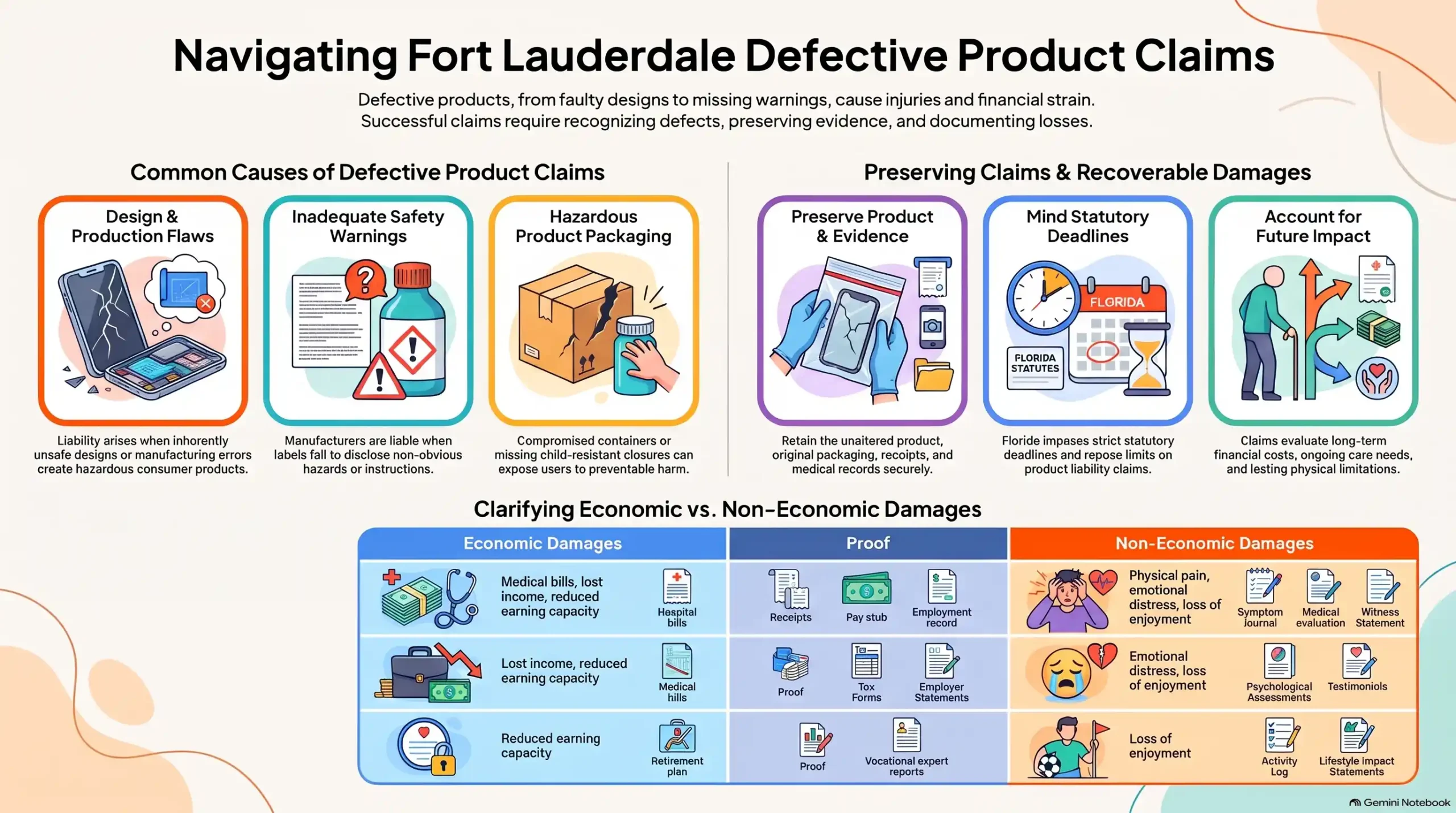
Defective product claims commonly arise from design defects, manufacturing errors, inadequate warnings, or unsafe packaging. Each issue may expose consumers to foreseeable risks that could have been reduced through reasonable design, production, labeling, or packaging practices. Identifying the cause can help clarify whether compensation may be available for resulting injuries and losses.
Design Defects
When a product’s underlying design creates an unreasonable safety risk, injuries may occur even when the item is manufactured as intended. A Design flaw may involve inadequate guards, unstable construction, or controls that allow foreseeable misuse to cause harm. The danger can affect consumers, workers, children, and others who encounter the product during ordinary use. Ergonomic hazards, such as poorly positioned handles or excessive force requirements, may also contribute to strains, falls, or other preventable injuries. A safer alternative design may reduce the risk without undermining the product’s intended function. In evaluating a claim, relevant considerations can include the product’s purpose, available design options, foreseeable uses, and the seriousness of potential harm. Clear documentation of injuries and product use may help establish how the design contributed to the incident.
Manufacturing Errors
Manufacturing errors occur when a product departs from its intended design during production or assembly, creating a safety risk even if the design itself is sound. Production flaws may arise from contaminated materials, faulty components, inconsistent quality control, or equipment that fails to meet specifications. Assembly mistakes can leave parts loose, improperly fitted, or missing, making a product unsafe during ordinary use. These defects may affect a single item or an entire batch, depending on where the failure occurred. In Fort Lauderdale, an injured person may need to show that a manufacturing error existed when the product left the manufacturer’s control and caused harm. Records, product testing, and expert analysis can help identify the defect. A careful investigation can support accountability and help protect others from similar injuries.
Inadequate Warnings
A product may be unsafe not because of a flaw in its construction, but because users receive inadequate warnings or instructions about foreseeable risks. Manufacturers and distributors may have a duty to explain hazards that ordinary users would not readily recognize and to provide clear directions for safe use. Warning adequacy depends on whether the information is understandable, noticeable, and sufficiently specific to help prevent injury. A hazard disclosure that omits a serious risk, understates its likelihood, or fails to explain necessary precautions may leave consumers unable to make informed decisions. Warnings may also be insufficient when instructions are confusing or do not address foreseeable ways people use the product. In a compensation claim, evidence may include the product’s labeling, available instructions, and the circumstances of the injury.
Unsafe Product Packaging
Unsafe product packaging can create a risk of injury even when the product itself is properly made. Containers that leak, break, or open unexpectedly may expose consumers to chemicals, sharp contents, or other hazards. Packaging can also fail to provide adequate protection during ordinary handling, storage, or transport, increasing the chance of harm to users and others nearby.
For products that could endanger children, child-resistant closures may help prevent accidental access, while remaining usable by adults. Tamper-resistant packaging can also alert consumers when a product may have been opened or altered before purchase. These safeguards must be designed and tested for the product’s specific risks. When packaging lacks appropriate protections or fails during foreseeable use, resulting injuries may raise questions about defective design, manufacturing, or warnings. Careful investigation can identify relevant evidence.
Don’t Wait. Call Our Florida Personal Injury Lawyers Now!


Legal Rights of Fort Lauderdale Defective Products Compensation & Damages Injury Victims
When a defective product causes injury, victims in Fort Lauderdale may have the right to seek compensation from parties legally responsible for its design, manufacture, or sale. These Legal Rights may allow an injured person to pursue payment for medical expenses, lost income, pain, and other documented losses. A claim may involve a manufacturer, distributor, or retailer, depending on the evidence and applicable law. Legal guidance can help clarify available options and support informed decisions throughout the process.
Potential remedies may include:
- Compensation for treatment costs, rehabilitation, and related medical needs.
- Recovery for income lost during treatment and for reduced earning capacity.
- Damages for physical pain, emotional distress, and lasting impairment.
Evidence such as medical records, purchase information, product documentation, and photographs may help establish a claim. Claim Deadlines apply, and the time to file can depend on the circumstances and governing law. Prompt attention to legal requirements can preserve options and help victims pursue accountability while focusing on recovery and the support of their families and communities.
Why Do Fort Lauderdale Defective Products Compensation & Damages Injuries Happen?
Defective product injuries in Fort Lauderdale often occur when a product’s design, manufacture, or safety warnings fail to protect consumers from foreseeable risks. A design flaw may make an item unsafe even when it is produced as intended. Manufacturing errors can introduce defects in individual units, such as weak components, faulty wiring, or contamination. Inadequate instructions or warnings may leave users unaware of hazards that could have been reduced through clear guidance.
These failures can affect household appliances, vehicles, medical devices, children’s products, and industrial equipment. Some hazards emerge only after repeated use, while others cause harm immediately. In each situation, effective Product safety depends on careful testing, quality control, and communication of known risks throughout a product’s life cycle. When companies overlook these responsibilities, consumers and their families may face preventable injuries. Corporate accountability helps encourage safer practices by requiring manufacturers and other responsible businesses to answer for defects that cause harm and to prioritize public well-being.
What Should You Do After a Fort Lauderdale Defective Products Compensation & Damages Injury?
After a suspected defective product causes an injury, prompt medical care should be the first priority, even when symptoms initially appear minor. The injured person should preserve the product and its packaging in their current condition, since these items may help establish how the incident occurred. Maintaining records of medical expenses, missed work, and other related losses can also support a compensation claim.
Seek Medical Care
Prompt medical care is vital after an injury involving a potentially defective product, even if the symptoms initially seem minor. A healthcare professional can assess the injury, provide treatment, and identify complications that may not be immediately apparent. Timely evaluation also creates a medical record that can help explain the nature and progression of the harm.
For severe pain, difficulty breathing, loss of consciousness, or other Emergency symptoms, the injured person should call 911 or go to the nearest emergency department. If exposure to a potentially harmful substance is suspected, contacting poison control can provide immediate guidance while arranging appropriate care. Patients should describe how the product was used, what happened, and when symptoms began. Following medical instructions and attending recommended follow-up appointments supports recovery and helps prevent avoidable complications. These steps also enable caregivers to coordinate informed, compassionate support.
Preserve the Product
If it is safe to do so, the injured person should preserve the product involved in the incident in its current condition. The item may provide important evidence about how the incident occurred and whether a defect contributed to the injury. It should not be repaired, altered, cleaned, or discarded, even if it appears damaged or unusable. If the product presents a continuing hazard, others should be kept away, and appropriate safety professionals should be contacted before it is moved. Secure storage in a dry, protected location can help prevent further damage or loss. Any packaging, components, or instructions associated with the product should also be retained. Careful handling and a documented chain of custody can help establish who controlled the item and when, supporting a reliable review by qualified professionals and, when appropriate, the court.
Document Your Losses
Preserving the product can help clarify how an incident occurred, while careful records can show how the injury affected the person’s health and finances. The injured person should retain medical bills, treatment records, prescriptions, and receipts for related purchases. These documents can help establish the care received and the costs incurred.
Expense tracking should include transportation to appointments, medical equipment, home assistance, and other injury-related spending. Pay stubs, tax records, and employer statements may help document missed work or reduced earnings. A dated journal can record symptoms, limitations, and changes in daily responsibilities, including effects on caregiving or community service.
Organized records support loss valuation by connecting documented expenses and income changes to the injury. Copies should be stored securely and shared with counsel for review. Accurate documentation can help guarantee that relevant losses are considered during a claim.
Don’t Wait. Call Our Florida Personal Injury Lawyers Now!
Critical Evidence in a Fort Lauderdale Defective Products Compensation & Damages Injury Case
Strong evidence can help establish how a defective product caused an injury and support a claim for compensation. The injured person should preserve the product, document injuries and treatment, and retain purchase records.
Witness accounts and qualified expert analysis may also clarify how the product failed.
- Keep the product and its packaging in their current condition, if possible.
- Save medical records, photographs, receipts, and other purchase documentation.
- Record witness contact information and identify experts who can assess the defect.
Preserve the Defective Product
After a product causes an injury, it should be kept in its original condition whenever possible. The item may help show how a defect contributed to an incident, so it should not be repaired, cleaned, altered, or discarded. Retain its packaging, instructions, accessories, and any broken or detached parts when available.
Safe storage can reduce the risk of further damage or unauthorized handling. The product should be placed in a secure location, with access limited to those responsible for preserving evidence. Photographs may record its condition and position before it is moved, but they do not replace the item itself.
Careful chain documentation should identify each person who handles or transfers the product, along with the date, purpose, and storage location. These precautions can help qualified investigators assess the evidence and support a fair review of the claim.
Document Injuries and Treatment
Accurate records of injuries and medical care can help establish how a defective product incident affected a person and what treatment was required. Prompt medical evaluation can identify injuries that may not be immediately apparent and create a reliable record of symptoms and findings. The injured person should describe the incident and all symptoms accurately to each provider, including changes over time. A Symptom journal can record pain, limitations, sleep disruption, and the effect of injuries on daily activities. Copies of examination notes, test results, prescriptions, discharge instructions, and specialist referrals can help document the course of care. Consistent follow-up and adherence to medical recommendations may also clarify recovery needs. These records can help others assess the harm, treatment, and related expenses without relying solely on later recollections.
Gather Purchase Records
Purchase records can help identify the product involved in an injury and establish when, where, and from whom it was acquired. These details may help clarify the product’s history and support a compensation claim. Relevant materials may include store receipts, online order confirmations, credit card statements, invoices, and delivery records. If the original receipt is unavailable, receipt retrieval may be possible through the retailer’s account history or customer service department. Warranty records, product registration documents, manuals, and packaging may also help confirm the model, serial number, purchase date, or seller. Keeping these materials organized and preserving digital copies can make them easier to review. Records should be retained in their original form when possible, with notes about where each item came from. Accurate documentation can assist those evaluating the claim and seeking accountability.
Identify Witnesses and Experts
Alongside purchase records, identifying people with direct knowledge of the product or incident can help clarify how an injury occurred and whether a defect may have contributed. Witnesses may include anyone who saw the incident, handled the product, observed its condition beforehand, or noticed changes in the injured person afterward. Prompt Witness interviews can preserve specific details, including how the product was used, whether warnings were followed, and what happened immediately after the failure. Their accounts may also help distinguish firsthand observations from assumptions.
Qualified experts can assess product design, manufacturing, warnings, and medical effects. Reviewing expert credentials helps determine whether a proposed witness has relevant education, training, and experience. An engineer may examine the product, while a medical professional may explain the injury and its likely cause. Careful selection supports a reliable evaluation and helps present clear evidence in a Fort Lauderdale claim.
Long-Term Effects of Fort Lauderdale Defective Products Compensation & Damages Injuries
Defective product injuries may cause chronic pain and lasting physical limitations that affect a person’s ability to work and manage daily activities. Some conditions require ongoing treatment, rehabilitation, or medication, creating continuing medical needs. These effects can also produce lasting financial losses through reduced earnings and recurring care expenses.
Chronic Pain And Limitations
When a defective product causes lasting pain, the effects may extend well beyond the initial injury. Persistent discomfort can interfere with work, household responsibilities, and community service, limiting a person’s ability to support others. Pain flare patterns may be unpredictable, with symptoms worsening after particular movements, extended activity, or routine tasks. These changes can make planning difficult and require adjustments to daily schedules.
Activity restrictions may prevent a person from lifting, standing for long periods, driving comfortably, or participating in valued activities. Such limitations can affect independence and place additional responsibilities on family members or colleagues. The impact may also include frustration, reduced social engagement, and concern about future capabilities. When evaluating a defective product injury claim, the lasting effects of chronic pain and practical limitations may help explain how the injury has changed a person’s everyday life.
Ongoing Medical Care
Persistent pain and activity limitations may require continuing medical care long after a defective product injury occurs. Depending on the nature of the harm, treatment may include follow-up visits, diagnostic testing, medication management, rehabilitation, or expert care. A consistent medical record can help providers monitor changes, adjust treatment, and identify complications before they worsen. Care coordination among physicians, therapists, and other professionals may be important when several services are needed. Clear communication helps guarantee that each provider understands the patient’s history, current limitations, and treatment goals. Future treatment may also involve procedures or ongoing therapy if symptoms persist or new medical concerns arise. By following professional guidance and attending scheduled appointments, injured individuals can support their recovery and help clinicians make informed decisions about appropriate care over time.
Lasting Financial Impact
The financial consequences of a defective product injury may continue long after the initial treatment ends. Reduced earning capacity, missed work, and the need to change occupations can affect Lifetime earnings, particularly when an injury limits a person’s ability to perform established duties. Ongoing expenses for rehabilitation, medication, assistive equipment, and transportation may also place sustained pressure on household finances. These costs can affect savings, retirement planning, and the resources available for dependents or community responsibilities. A careful assessment should account for both documented losses and reasonably anticipated future expenses. Employment records, medical evaluations, and financial documentation may help show how the injury has altered long-term stability. In a product liability claim, evidence of these continuing effects can inform the damages sought and support a fair evaluation of the injured person’s needs.
Proving Liability in Fort Lauderdale Defective Products Compensation & Damages Injury Cases
Establishing liability in a Fort Lauderdale defective products case requires evidence that a product’s defect caused the injury and that the injured person used it as intended or in a reasonably foreseeable way. Claims may involve a design flaw, a manufacturing error, or inadequate warnings or instructions. Under Strict liability, an injured person may seek to hold a manufacturer or seller responsible for a qualifying defect without proving carelessness, though the evidence must still connect the defect to the harm.
Relevant proof can include the product itself, photographs, medical records, purchase documents, and witness accounts. In some cases, qualified experts examine how the product was made, whether safer alternatives were practical, and how the defect contributed to the injury. Notices of product recalls, prior complaints, or safety testing may also help establish a pattern or identify known risks, but their significance depends on the facts and applicable law. Preserving the product and related records can support a careful, fair evaluation of the claim.
Dealing With Insurance Companies After a Fort Lauderdale Defective Products Compensation & Damages Injury
After documenting a suspected product defect and its connection to an injury, an injured person may need to communicate with insurers representing the manufacturer, seller, or another responsible party. These discussions can affect how the insurer evaluates the loss and whether it accepts responsibility. Careful, factual communication helps protect the injured person’s interests while supporting a fair resolution.
An insurer may request records, photographs, the product itself, or a recorded statement. Before responding, the injured person should understand what is being requested and avoid guessing about technical causes or minimizing symptoms. Preserving the product and related packaging can help prevent evidence from being lost or altered. Medical records and expense documentation should remain organized and accurate.
Adjuster tactics may include pressing for a quick statement or offering an early payment before the full impact of an injury is known. A Claim denial should be reviewed alongside its stated reasons and supporting evidence. Legal guidance can help clarify available options and promote accountability without compromising a claim.
What to Expect During a Fort Lauderdale Defective Products Compensation & Damages Injury Claim Process
A defective product claim typically begins with an evaluation of the injury, the product, and the circumstances of its use. Evidence collection then helps establish liability and damages, while settlement negotiations may resolve the claim without litigation. If the parties cannot reach an agreement, the case may proceed to trial or another resolution.
Initial Case Evaluation
What happens during an initial case evaluation? During an initial consultation, a Fort Lauderdale defective products lawyer reviews the injured person’s account, the product involved, the reported harm, and the assistance already received. The discussion helps clarify how the incident affected daily activities, work, and family responsibilities. It also gives the person an opportunity to ask questions and understand possible next steps without assuming that a claim will succeed.
The lawyer may explain the general legal issues, applicable deadlines, and potential sources of compensation. A preliminary case valuation considers the known injuries, related expenses, lost income, and other documented effects, while recognizing that estimates may change as the matter develops. The evaluation also considers whether representation is appropriate and what additional information may be needed. This early review supports informed decisions and helps injured people pursue accountability responsibly.
Evidence Collection
When a defective product causes an injury, preserving reliable evidence can help establish how the incident occurred and whether the product contributed to the harm. The injured person should retain the product, packaging, instructions, receipts, and any damaged components without attempting repairs or alterations. Photographs of the product, the injury, and the location can document relevant conditions before they change. Medical records and witness contact information may also help explain the event and its effects.
A lawyer may arrange an inspection by qualified experts and request records from manufacturers or sellers. Careful Chain of Custody documentation identifies who handled the product and when, reducing questions about its condition. Evidence Authentication may involve confirming that an item or record is genuine and has not been materially changed. Secure storage and organized records help protect evidence for evaluation of the claim.
Settlement Negotiations
Once the evidence has been gathered and the claim evaluated, settlement negotiations may begin with the manufacturer, seller, or their insurer. The injured person’s representative presents a demand that explains how the product caused harm and documents medical costs, lost income, and other supported losses. A sound Demand strategy accounts for both current expenses and reasonably anticipated needs, while grounding the requested amount in available evidence. The manufacturer or insurer may respond with questions, request records, or make an offer that does not reflect the claim’s documented value. Careful review helps determine whether further information or a measured counteroffer is appropriate. Counteroffer timing can affect the exchange, so responses should allow time for evaluation without unnecessary delay. Throughout negotiations, the injured person’s interests and recovery remain central to communications and decisions.
Trial and Resolution
If settlement negotiations do not resolve a defective products claim, the case may proceed to trial, where the injured person must present evidence supporting liability and damages. The process typically includes discovery, expert testimony, and pretrial motions that define which evidence the court may consider. During Jury selection, attorneys and the court identify impartial jurors who can evaluate the facts fairly. At trial, each side presents evidence, questions witnesses, and explains how the product’s alleged defect caused injury and resulting losses. The judge instructs the jury on applicable law before deliberations begin. A verdict may determine responsibility and, if liability is established, the compensation owed. Further proceedings may address a challenge or appeal. If the award stands, verdict enforcement may involve collection measures when the responsible party does not pay voluntarily.
Compensation for Fort Lauderdale Defective Products Compensation & Damages Injury Damages
Compensation in a Fort Lauderdale defective products case may cover medical expenses, lost income, reduced earning capacity, and pain and suffering caused by the injury. The damages sought depend on the harm, its documented effects, and the evidence connecting the product defect to the injury. A careful Damage calculation considers treatment already received, anticipated care, time away from work, and lasting limits on daily activities. Records from healthcare providers, employers, and other relevant sources can help establish the extent of these losses.
The injured person may also seek compensation for the effect of the injury on family responsibilities and the ability to contribute to the community. These claims require clear evidence and a reasoned account of how the injury changed ordinary life. Applicable compensation limits, including any legal restrictions or case-specific constraints, may affect recovery. The available amount can depend on liability findings, proof of damages, and the circumstances of the case. An attorney can assess the evidence, identify potential damages, and explain the process without promising a particular result.
Economic vs. Non-Economic Damages in Fort Lauderdale Defective Products Compensation & Damages Cases
Economic damages in defective product cases may include medical expenses, lost income, and other measurable financial losses. Non-economic damages address harm such as pain, emotional distress, and reduced quality of life. Comparing these categories helps clarify the types of compensation that may be available and the evidence needed to support each claim.
Economic Damages in Product Cases
In Fort Lauderdale defective product cases, economic damages cover measurable financial losses caused by an injury, while non-economic damages address harms such as pain, emotional distress, and loss of enjoyment of life. Economic damages may include medical bills, rehabilitation costs, prescription expenses, and lost income. Records such as invoices, pay statements, and employment documents can help establish the amount and connection between the injury and each claimed loss. When an injury affects a person’s ability to work, wage projections may help estimate reduced future earnings, supported by relevant employment and medical evidence. Future expenses, including ongoing treatment or necessary assistive equipment, may also be considered when reasonably anticipated and substantiated. Careful documentation helps clarify the financial impact and supports a fair assessment of compensation, allowing injured individuals and their families to plan for practical needs.
Non-Economic Harm and Losses
Although economic damages account for measurable financial losses, non-economic damages address the personal harm a defective product injury may cause. These losses may include physical pain, emotional distress, and the disruption of ordinary routines. A person may also experience anxiety, reduced independence, or difficulty maintaining relationships while recovering from an injury. Loss of enjoyment can arise when a condition prevents participation in hobbies, family activities, or community service that once gave life meaning. In Fort Lauderdale product liability claims, the nature and extent of these effects depend on the individual circumstances and available evidence. Medical records, testimony from the injured person, and observations from family members may help explain how the injury has changed daily life. Careful documentation can support a clear account of these personal consequences and their lasting impact.
Comparing Compensation Categories
How damages are classified can affect how compensation is evaluated in a Fort Lauderdale defective product claim. Economic damages address measurable financial losses, such as medical bills, rehabilitation costs, lost wages, and reduced earning capacity. Records, invoices, and employment information can help establish these amounts. Non-economic damages concern losses without a fixed market value, including pain, emotional distress, disability, and diminished quality of life. Evidence about the injury’s effects may help explain these harms. Both categories can reflect the full impact of a product-related injury, while serving the injured person’s needs and supporting recovery remain central considerations. Damage caps may limit certain awards under applicable law, and their effect depends on the claim and circumstances. Punitive awards are distinct from compensatory damages and may be considered only when legal standards for punishment or deterrence are met.
Don’t Wait. Call Our Florida Personal Injury Lawyers Now!
When a Fort Lauderdale Defective Products Compensation & Damages Injury Case Goes to Trial vs Settlement
Whether a defective products injury case settles or proceeds to trial depends on the evidence, the parties’ positions, and the risks each side is willing to accept. A settlement can resolve a claim without a courtroom decision, often allowing injured people and their families to obtain compensation sooner and avoid the uncertainty of trial. Negotiations may address medical costs, lost income, future needs, and other documented losses. The parties must assess whether proposed terms adequately reflect the harm and available proof.
If negotiations do not produce an acceptable resolution, the case may proceed to trial. Each side presents evidence and arguments, and a judge or jury evaluates the claim. Jury deliberations can determine whether the product caused the injury and what compensation, if any, is appropriate. A trial may provide a formal decision, but it can require more time and involve an uncertain result. Afterward, verdict appeals may extend the dispute. Careful preparation helps support a fair outcome and protect the injured person’s interests.
Florida Laws That May Affect Your Fort Lauderdale Defective Products Compensation & Damages Case
Florida law can influence whether an injured person recovers compensation in a Fort Lauderdale defective products case and how damages are calculated. Product liability claims may involve defects in design, manufacturing, or warnings. The evidence must connect the alleged defect to the injury, while applicable legal standards shape the parties’ responsibilities.
Florida product liability claims depend on proving how a design, manufacturing, or warning defect caused an injury under applicable legal standards.
Several rules may affect a claim:
- Comparative negligence may reduce a claimant’s damages if the claimant’s own conduct contributed to the injury. Florida’s current framework generally bars recovery when a claimant is found more than 50 percent at fault, subject to statutory exceptions.
- Product recalls can provide relevant safety information, but a recall alone does not establish that a product caused a particular injury or prove liability.
- Damages may include documented medical expenses, lost income, reduced earning capacity, and pain and suffering. Evidence of the injury and its effects helps support these requests.
These rules can influence settlement discussions and trial outcomes. Careful review of product records, medical documentation, and applicable statutes can help clarify the issues and protect the interests of injured people and their families.
The Statute of Limitations for Fort Lauderdale Defective Products Compensation & Damages Injury Cases
Time limits can determine whether an injured person may pursue compensation in a Fort Lauderdale defective products case. Under Florida law, the deadline generally depends on the type of claim and when the injury occurred. Product liability claims are commonly subject to a two-year statute of limitations, measured from when the injured person knew or should have known that the injury was caused by the product. This timing may involve the discovery rule, which can matter when harm or its connection to a product is not immediately apparent.
Separate deadlines may apply to claims for wrongful death or property damage. Florida law also imposes a statute of repose that can bar certain product claims after a specified period, even if an injury is discovered later. Limitations exceptions may affect how a deadline applies, but they are fact-specific and not automatic. Preserving records of the product, medical treatment, and purchase can help clarify relevant dates. Prompt attention to applicable deadlines supports fair consideration of claims and protects the interests of injured people and their families.
How a Fort Lauderdale Defective Products Compensation & Damages Lawyer Can Help You
A Fort Lauderdale defective products lawyer can help an injured person evaluate a claim, identify responsible parties, and address deadlines that may affect the right to seek compensation. The lawyer can review medical records, purchase information, product instructions, and other evidence to assess how a defect may have caused harm. This work can support Manufacturer accountability and help clarify whether a manufacturer, distributor, retailer, or another party may be liable.
Legal counsel may also coordinate the investigation and explain available options without overstating likely results.
Assistance can include:
- Preserving the product and related records for inspection and analysis.
- Reviewing safety notices and product recalls to determine whether warnings or corrective actions apply.
- Calculating documented losses, such as treatment costs, lost income, and other legally recoverable damages.
A lawyer can communicate with insurers and opposing parties, organize supporting evidence, and present a reasoned demand for compensation. This guidance can help injured people pursue fair treatment while supporting safer products for the wider community.
When to Contact a Fort Lauderdale Defective Products Compensation & Damages Lawyer
When a product-related injury occurs, prompt legal guidance can help preserve evidence and clarify the steps needed to protect a potential claim. A Fort Lauderdale defective products lawyer may be contacted as soon as the injured person has received necessary medical care and can discuss the incident. Early Consultation can help identify records to retain, such as the product, packaging, receipts, photographs, and medical documentation. The product should not be altered or discarded, since its condition may be relevant to understanding what happened.
Contact may also be appropriate when a manufacturer, retailer, or insurer requests statements, offers payment, or asks that the product be returned. Before responding, an injured person can seek advice about the request and its possible effect on a claim. Claim Deadlines vary according to the circumstances and applicable law, so waiting may limit available options. A timely discussion can help clarify relevant time limits and practical next steps, including how to preserve information that may assist others reviewing the incident.
Why You Need an Experienced Fort Lauderdale Defective Products Compensation & Damages Lawyer
Because defective product claims can involve complicated questions about design, manufacturing, warnings, and responsibility, experienced legal guidance may help clarify how the evidence applies. A lawyer can identify relevant records, preserve the product and other evidence, and coordinate qualified technical review when needed. These steps can help establish how a product failure caused an injury and which parties may bear responsibility.
An experienced attorney can also assess the full scope of losses. Damage valuation may account for medical expenses, lost income, future care, and other documented effects, rather than focusing only on immediate costs. Careful evaluation supports a claim that reflects the injured person’s needs and the resources required for recovery.
A considered settlement strategy can help assess an offer against the available evidence and potential damages. Counsel can explain procedural requirements, communicate with insurers, and present a clear account of the harm. This guidance may reduce avoidable delays and help injured consumers pursue accountability while protecting their ability to seek appropriate compensation.
How to Choose the Right Fort Lauderdale Defective Products Compensation & Damages Lawyer for Your Case
Choosing the right Fort Lauderdale defective products lawyer requires evaluating the attorney’s experience with product liability claims, approach to investigating technical evidence, and ability to explain legal options clearly. A careful selection can help an injured person pursue accountability while supporting safer products for the wider community.
Attorney credentials should include relevant Florida licensure, a record of handling defective product cases, and familiarity with expert analysis, manufacturing records, and applicable safety standards. During a consultation, the attorney should describe how the claim may be investigated, identify potential challenges, and explain what evidence could establish responsibility and damages. Clear answers help clients make informed decisions and understand their role in the process.
Prospective clients should also compare fee structures, including contingency arrangements, case expenses, and any costs that may remain payable if recovery is unsuccessful. The written agreement should explain these terms without ambiguity. Communication practices matter as well: clients should know who will provide updates, how questions are handled, and what timelines may affect the claim. Careful comparison helps identify counsel whose experience, transparency, and approach align with the case’s needs.
About The Law Offices of Anidjar & Levine
The Law Offices of Anidjar & Levine represents individuals in personal injury matters, including claims involving allegedly defective products.
The firm assists people seeking answers and accountability after a product-related injury, while recognizing that each matter depends on its specific facts and evidence.
Firm history provides context for the firm’s work in injury law, including its representation of clients facing the practical consequences of serious harm.
In defective product cases, that work may involve reviewing product information, examining how an injury occurred, and identifying potentially responsible parties.
The firm’s attorneys can explain available legal options and the steps involved in pursuing a claim.
The attorney philosophy emphasizes attentive service, clear communication, and careful preparation.
These principles support clients who may be managing medical needs, financial concerns, and uncertainty about what comes next.
By addressing questions and explaining the process, the firm seeks to help individuals make informed decisions.
Its role is to advocate for clients while treating their circumstances with respect and professionalism.

Frequently Asked Questions
Can I File a Defective Product Claim if I Bought the Item Secondhand?
Yes, a person may be able to file a defective product claim after buying an item secondhand. Secondhand Product Ownership does not automatically prevent recovery, but eligibility depends on the product’s defect, the cause of the injury, and applicable law. Used Item Defect Claims may require evidence that the defect existed before the injury and that the product was used as intended. A qualified attorney can assess the facts, identify responsible parties, and explain available options.
Does a Product Need to Be Recalled Before I Can Pursue a Claim?
No, a product does not need to be recalled before an injured person may pursue a claim. Product recalls and safety notices can provide evidence that a manufacturer or seller knew of a hazard, but their absence does not establish that a product was safe. A claim may depend on whether the product was defective, caused injury, and resulted in losses. Preserving the item, records, and medical documentation can help assess the matter.
Can I Bring a Claim if the Product Was a Gift?
Yes. A person may generally pursue a product liability claim even if the product was received as a gift rather than purchased personally. Gift Recipient Rights can depend on whether the product was defective, caused injury, and was used as intended or in a reasonably foreseeable way. Proof of Product Use, including the item’s condition and circumstances of use, may help establish the claim. Preserving the product and related records can support a careful investigation.
What Happens if a Defective Product Injured Multiple People?
When a defective product injures multiple people, each injured person may pursue an individual claim, while related cases may be coordinated as Mass Tort Claims. This process can streamline evidence gathering and address common questions about the product without merging each person’s circumstances or damages. Shared Liability may involve manufacturers, distributors, or retailers, depending on their roles and applicable law. Injured individuals should preserve the product and records, document losses, and seek prompt legal guidance.
Can a Product Manufacturer Be Held Responsible if It Has Gone Out of Business?
Yes, a manufacturer may remain legally responsible after going out of business, depending on how the company closed and who assumed its obligations. A manufacturer’s successor may inherit liability through a merger, asset purchase, or other transaction, although the outcome depends on applicable law and the agreement’s terms. Dissolved company liability can also involve remaining assets, insurance coverage, or responsible owners. Injured people should preserve product evidence and seek prompt legal review.
—————————
Defective product injuries can lead to lasting medical, financial, and personal consequences.
If a dangerous design, manufacturing flaw, or inadequate warning caused harm, victims may have legal options.
Preserving the product, documenting losses, and seeking prompt legal guidance can help protect a claim.
The Law Offices of Anidjar and Levine can review the circumstances, explain potential compensation, and pursue accountability when supported by the evidence.
Learn more from a Fort Lauderdale Personal Injury Lawyer.
Each case depends on its facts, applicable law, and available proof.

