

A Lauderhill car accident at-fault parties lawyer can review crash reports, photographs, witness accounts, and medical records to assess who may be responsible. Potentially liable parties may include another driver, a vehicle owner, or an employer, depending on the evidence. Florida’s comparative negligence rules may reduce compensation based on an injured person’s share of fault, but shared responsibility does not automatically prevent recovery. The Law Offices of Anidjar and Levine can explain potential claims, help preserve evidence, and outline the steps to pursue compensation. Learn more from a Lauderhill Personal Injury Lawyer.
Main Takeaways
- A Lauderhill car accident lawyer can investigate the crash and identify drivers or other parties who may share responsibility.
- Potentially liable parties may include a driver, vehicle owner, employer, or another party whose conduct contributed to the collision.
- Evidence such as crash reports, photos, witness accounts, medical records, and vehicle data can help establish fault and causation.
- Florida comparative negligence may reduce compensation based on an injured person’s share of fault, but shared fault does not automatically bar recovery.
- A police report is not a final legal determination of fault; an attorney can review inaccuracies and assess possible claims.
How We Can Help With Your Lauderhill Car Accident At-Fault Parties Injury Claim
When a car accident in Lauderhill causes injuries, identifying every potentially responsible party can be vital to pursuing compensation. A lawyer can help an injured person manage the claim, protect their interests, and reduce the burden of dealing with insurers on their own.
Legal support may include reviewing accident records, organizing medical documentation, and communicating with insurance representatives. A careful Claim value assessment considers documented losses, treatment needs, missed work, and other relevant effects of the injuries. This process helps confirm that settlement discussions reflect the available evidence rather than unsupported assumptions.
Treatment coordination can also help keep care and claim records organized. Counsel may help obtain records, track appointments, and respond to information requests, while medical professionals remain responsible for treatment decisions. Clear communication can reduce avoidable delays and help the injured person focus on recovery.
With informed guidance, claimants can make considered decisions, understand important deadlines, and evaluate proposed resolutions. The goal is practical, respectful service that supports a fair process and preserves the injured person’s ability to seek appropriate compensation.
Don’t Wait. Call Our Florida Personal Injury Lawyers Now!
Understanding Lauderhill Car Accident At-Fault Parties Injury Cases


Lauderhill car accident injury cases involving disputed fault require a careful review of how the collision occurred and who may have contributed. Determining responsibility involves evaluating available evidence, applicable law, and each party’s role in the events leading to the crash. This process can affect whether an injured person may seek compensation and how any recovery is calculated.
OUR CONSULTATIONSARE FREE
START YOUR FREE CASE REVIEW

Florida fault standards generally require a fact-based assessment of negligence and causation. Relevant records may include crash reports, photographs, witness accounts, medical documentation, and expert analysis. These materials can help clarify disputed details and distinguish established facts from assumptions.
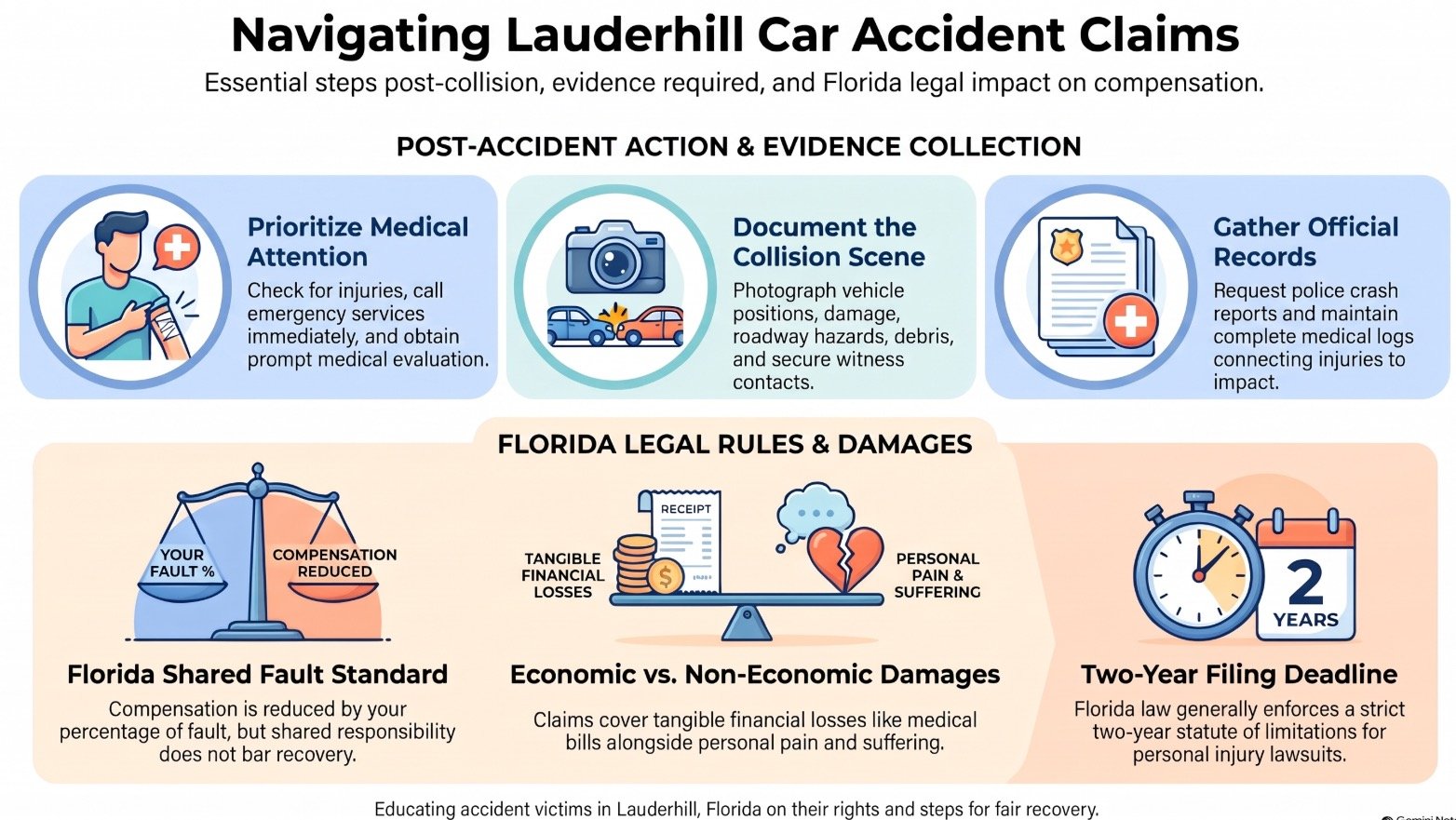
Under Florida’s comparative negligence rules, responsibility may be assigned among multiple parties, and an injured person’s share of fault can reduce recoverable damages. The specific outcome depends on the evidence and the circumstances of the case. A careful, impartial review supports fair decisions, helps protect injured people’s interests, and promotes accountability while recognizing the needs of everyone affected by a collision.
Common Causes of Lauderhill Car Accident At-Fault Parties


Common causes of Lauderhill car accidents include distracted driving, speeding, and other reckless behavior that can prevent drivers from responding safely to road conditions. Impaired driving may also compromise judgment and reaction time, increasing the risk of a collision. Failure to yield, particularly at intersections, can lead to crashes and may be relevant when determining fault.
Distracted Driving
Distracted driving is a common cause of collisions and can help establish fault in a Lauderhill car accident. A driver may divert attention from the road to read or send a message, make a call, or use navigation. Phone distraction can impair awareness of traffic signals, pedestrians, and nearby vehicles, even when the driver looks away briefly. Dashboard interfaces may also draw attention when drivers adjust music, maps, or other controls while moving. Evidence such as witness accounts, phone records, vehicle data, and nearby camera footage may help clarify whether inattention contributed to a crash. Establishing this cause can support a fair assessment of responsibility and help injured people seek appropriate assistance. Attentive drivers protect passengers and others sharing Lauderhill’s roads. અકસ્માત investigations should consider all relevant evidence.
Speeding and Reckless Driving
When a driver exceeds a safe speed or operates a vehicle recklessly, the resulting loss of control can cause serious collisions and help establish fault in a Lauderhill car accident. Speed Limit Violations reduce the time available to respond to traffic signals, pedestrians, and changing road conditions. Higher speeds can also increase stopping distances and impact force, raising the risk of severe injuries. Reckless conduct may include Aggressive Actions such as unsafe lane changes, tailgating, or passing where visibility is limited. These actions can endanger passengers, other motorists, cyclists, and pedestrians. Evidence such as witness accounts, vehicle damage, roadway marks, and available camera footage may help clarify how a crash occurred. A careful review can identify responsible parties and support injured people seeking fair compensation and recovery.
Impaired Driving
Impaired driving can make a motorist an at-fault party in a Lauderhill car accident by reducing judgment, coordination, and reaction time. Alcohol, cannabis, prescription medications, and other substances may affect a driver’s ability to respond safely to changing road conditions. A driver may be impaired even when the substance was legally obtained or consumed, and impairment can contribute to serious harm for passengers, pedestrians, and other motorists.
Evidence of impairment may include toxicology results, witness accounts, officer observations, or video recordings. DUI checkpoints are one tool law enforcement may use to identify suspected impaired drivers. Florida law also provides for penalties that can include license consequences and, in some cases, ignition interlocks. After a collision, investigators and insurers may assess whether impairment contributed to the crash and the resulting injuries.
Failure to Yield
Failure to yield can make a driver an at-fault party in a Lauderhill car accident when the driver does not give another road user the right of way required by traffic laws. Intersection right-of-way rules guide drivers approaching stop signs, traffic signals, and uncontrolled crossings. A driver who turns across oncoming traffic, enters an intersection without stopping, or fails to yield to pedestrians may create a serious collision risk. Similar conduct can occur when merging or entering a roadway. Police may issue failure-to-yield citations, but a citation alone does not determine civil liability. Investigators may also consider witness accounts, vehicle damage, traffic camera footage, and applicable laws. Careful review helps identify responsible parties and supports injured people seeking fair compensation for their losses.
Legal Rights of Lauderhill Car Accident At-Fault Parties Injury Victims
Even a driver who may have caused a Lauderhill car accident retains important legal rights after suffering injuries. Fault does not erase the right to seek medical care, understand available insurance benefits, or obtain legal advice. A careful review of the evidence can clarify each person’s responsibility and identify options for addressing injury-related losses.
- Comparative negligence rules may reduce compensation according to a claimant’s share of fault, but they do not automatically bar recovery.
- Uninsured motorist coverage may provide benefits when an at-fault driver lacks sufficient insurance, subject to policy terms and applicable law.
- An injured driver may challenge inaccurate fault findings and pursue a claim against another responsible party.
Prompt medical attention and accurate records can support an informed claim. Drivers should preserve relevant documents, communicate cautiously with insurers, and avoid signing releases before understanding their effect. A lawyer can assess liability, explain deadlines, and help protect the injured person’s rights while pursuing a fair resolution.
Why Do Lauderhill Car Accident At-Fault Parties Injuries Happen?
Lauderhill car accident injuries occur when the forces of a collision harm a driver or passenger, regardless of who caused the crash. Injury severity depends on factors such as impact speed, collision angle, vehicle size, and whether occupants are properly restrained. Sudden deceleration can cause the body to strike interior surfaces or move sharply, stressing the head, neck, spine, and limbs.
Crashes may result from distracted driving, speeding, impaired driving, unsafe turns, tailgating, or failure to yield. Poor visibility and adverse weather can further reduce a driver’s ability to respond. Roadway design may contribute when intersections, signs, lighting, or lane markings create hazards or limit sightlines. In some cases, vehicle defects, including faulty brakes, tires, or safety equipment, may affect crash risk or injury severity.
Understanding these contributing factors can help clarify how harm occurred and which parties may bear responsibility. Careful evaluation supports accountability and safer roads for Lauderhill residents.
What Should You Do After a Lauderhill Car Accident At-Fault Party Injury?
After a Lauderhill car accident, injured individuals should first check for injuries and seek emergency medical care when needed. They should document the scene by recording relevant details and preserving photographs or witness information. A lawyer can help identify potential at-fault parties and explain available legal options.
Check For Injuries
Check for injuries before addressing vehicle damage or other concerns. The driver should assess personal condition and ask passengers whether anyone feels pain, dizziness, confusion, or difficulty breathing. Emergency symptoms, including heavy bleeding, loss of consciousness, chest pain, or suspected spinal injury, require an immediate call to 911. If another person appears hurt, the driver should offer calm reassurance and avoid moving them unless remaining in place presents an immediate danger. First aid should be limited to actions the helper can safely perform, such as applying gentle pressure to bleeding with a clean cloth. The driver should follow emergency dispatchers’ instructions and remain available to assist responders. Injuries may not be obvious immediately, so anyone involved should seek prompt medical evaluation, even when symptoms initially seem minor.
Document The Scene
Once you address immediate safety and medical needs, documenting the collision scene can help preserve important evidence. If it is safe to do so, a person at the scene can photograph the vehicles, their damage, nearby traffic signals, road markings, and visible debris. Images should show both broad scene conditions and close details, including vehicle positions before moving vehicles, when possible. Also record roadside hazards, such as obstructed signs, poor lighting, or damaged pavement, because they may help explain how the collision occurred. You may ask witnesses for their names and contact information, and note their observations while memories are fresh. Write down the date, time, location, weather, and direction of travel. Documentation should never delay emergency assistance or require anyone to enter danger.
Contact A Lawyer
When should an injured person contact a lawyer after a Lauderhill car accident? An injured person may benefit from seeking legal guidance promptly, particularly when fault is disputed, injuries require ongoing treatment, or several parties may share responsibility. Early advice can help preserve evidence, organize medical records, and prevent avoidable communication errors with insurers.
A qualified attorney can review the collision circumstances, explain potential claims, and identify deadlines that may affect recovery. The injured person should provide accurate details and retain relevant documents, including photographs, witness information, and treatment records. A Free consultation may allow the person to discuss available options and understand how legal representation could support a fair process. When choosing counsel, consider attorney availability, experience with local accident claims, and clear communication. Timely contact can help protect the injured person’s interests while allowing time to focus on recovery and family needs.
Critical Evidence in a Lauderhill Car Accident At-Fault Parties Injury Case
Evidence can help establish how a Lauderhill crash occurred, who may be responsible, and the extent of the resulting injuries. Preserve relevant records and firsthand accounts promptly, since details may become harder to verify over time.
Crucial evidence often includes:
- Crash scene photos showing vehicle damage, road conditions, and traffic signs
- Witness statements and the police crash report documenting observations and reported facts
- Medical records connecting the injuries to the collision and documenting treatment and recovery
Crash Scene Photos
Photographs taken at a crash scene can help establish how a collision occurred and which parties may be at fault. Images of vehicle positions, damage, skid marks, traffic signals, road conditions, and nearby signs may preserve details that change once vehicles are moved or debris is cleared. Photo angles should include wide views showing the scene’s layout and closer images documenting specific damage or hazards. Timestamp preservation can help establish when images were captured and support their connection to the collision. Clear, unaltered files are generally more useful than edited or compressed copies. When safe, a person documenting the scene should avoid entering traffic or interfering with emergency responders. These records may help clarify responsibility and support fair treatment of injured people, but they are only one part of a broader evidence review.
Witness Statements
Alongside scene photographs, witness statements can help clarify how a Lauderhill car accident occurred and which parties may bear responsibility. Independent observers may describe vehicle movements, traffic signals, road conditions, or conduct immediately before impact. Their accounts can help identify conflicting versions of events and support a fair assessment of each party’s actions.
Witness credibility depends on factors such as the person’s opportunity to observe, consistency, and possible bias. Prompt interviews may preserve details that could fade over time, while collecting names and contact information allows later follow-up. Statement preservation is also important: store written accounts, recorded interviews, and dated notes securely, and keep them in their original form. A careful process respects witnesses and helps make certain their observations can be considered accurately when evaluating an injury claim and serving the interests of those affected.
Police Crash Report
A police crash report can provide an important early account of a Lauderhill car accident and the circumstances surrounding it. It may record the collision’s location, date, involved vehicles, road conditions, and statements gathered at the scene. Investigators and attorneys can use these details to identify potentially responsible parties and evaluate how the crash occurred. However, a report is not a final legal determination of fault, and its conclusions may rely on information available during the initial investigation.
Report accuracy matters because errors or omissions can affect later assessments. An injured person or other concerned party may request a copy and check it for incorrect names, vehicle details, or descriptions. With reliable information, you may request report amendments through the appropriate law enforcement agency. Careful review can help preserve a clearer account for everyone affected.
Medical Records
When a Lauderhill car accident causes injuries, medical records can help establish the nature, timing, and severity of the harm. Records from emergency departments, physicians, therapists, and pharmacies may document symptoms, diagnoses, treatment, and recovery. They can also link reported injuries to the collision and show whether care followed medical advice.
Medical record organization helps present this evidence clearly. A complete file may include visit notes, test results, prescriptions, referrals, and billing statements. The treatment timeline can show when symptoms began, how providers responded, and whether gaps in care require explanation. Accurate records may help identify the parties whose conduct contributed to the crash and resulting losses.
Injured people can request copies and preserve them securely. A lawyer may review the materials for missing information and relevant inconsistencies.
Long-Term Effects of Lauderhill Car Accident At-Fault Parties Injuries
Long-term injuries from a Lauderhill car accident may cause chronic pain and limit a person’s mobility, affecting daily activities and independence. Some individuals also experience lasting cognitive challenges, including difficulties with memory, concentration, or information processing. Emotional and psychological effects, such as anxiety or trauma-related distress, may persist and require ongoing care.
Chronic Pain And Mobility
Chronic pain and reduced mobility can persist long after a Lauderhill car accident, limiting a person’s ability to work, drive, sleep, or manage daily tasks. Injuries to the back, joints, or limbs may require ongoing treatment, and symptoms can fluctuate with activity or weather. A consistent Pain management plan may include medical evaluations, prescribed therapy, medication, and practical adjustments to daily routines. When walking or standing becomes difficult, mobility aids such as canes, braces, or wheelchairs can support safer movement and greater independence. Family members, employers, and caregivers may help by accommodating treatment schedules and accessible environments. Documented medical care and records of functional limitations can clarify how injuries affect everyday life. With appropriate support, injured people may preserve dignity and participate more fully in family, work, and community responsibilities.
Lasting Cognitive Challenges
After a Lauderhill car accident, a traumatic brain injury may cause cognitive challenges that continue after other injuries begin to recover. A person may experience difficulty concentrating, processing information, planning tasks, or recalling recent conversations. These changes can interfere with work, education, household responsibilities, and efforts to support family or community members. The effects may not be immediately apparent, so consistent medical assessment can help identify needs and guide appropriate care. Cognitive rehabilitation may help an injured person strengthen attention, reasoning, and daily problem-solving skills. Therapists can also teach memory strategies, such as using written reminders, calendars, and structured routines, to support independence. Progress varies according to the injury and individual circumstances. Documented evaluations and treatment records may also help establish how lasting cognitive limitations affect daily activities and future care requirements.
Emotional And Psychological Effects
Cognitive changes are not the only lasting effects a Lauderhill car accident injury may cause; some injured people also experience persistent emotional and psychological difficulties. Anxiety, depression, or post-traumatic stress may develop after a collision and interfere with daily responsibilities. Some individuals become fearful of driving or traveling near the crash location, limiting work, caregiving, and community involvement. Sleep disruption can intensify fatigue and make emotional symptoms harder to manage. Ongoing pain, financial concerns, and uncertainty about recovery may also contribute to distress. These effects can strain relationships when family members misunderstand changes in mood, behavior, or independence. Support from loved ones and qualified mental health professionals may help injured people address these challenges. Recognizing emotional harm as part of recovery can guide compassionate care and help families respond with patience and practical assistance.
Don’t Wait. Call Our Florida Personal Injury Lawyers Now!
Proving Liability in Lauderhill Car Accident At-Fault Parties Injury Cases
Proving liability in a Lauderhill car accident injury case requires evidence that identifies the responsible party and shows how that party’s conduct caused the collision and resulting harm. The Negligence elements generally include a duty of care, a breach of that duty, causation, and damages. Evidence may include crash-scene photographs, vehicle damage, witness accounts, traffic camera footage, and the responding officer’s report. Medical records can document injuries and help connect them to the collision. In some cases, vehicle data or testimony from an accident reconstruction professional may clarify how the crash occurred.
A careful investigation can also identify whether another driver, vehicle owner, employer, or other party contributed to the harm. Florida’s comparative fault rules may reduce a claimant’s recovery when that person shares responsibility, so you should assess the available evidence objectively. Promptly preserving records and identifying witnesses can support a fair evaluation. Establishing liability helps injured people pursue accountability and obtain resources for treatment, recovery, and other documented losses.
Dealing With Insurance Companies After a Lauderhill Car Accident At-Fault Parties Injury
When a Lauderhill car accident causes injury, insurance companies may investigate the collision, assess fault, and decide whether to pay a claim. Injured people can protect their interests by keeping communications accurate, organized, and focused on documented facts. Insurer communication strategies include recording the date and substance of each exchange, providing requested information carefully, and avoiding speculation about fault or the extent of injuries. Medical records, repair estimates, photographs, and witness details can help support a clear account of the losses. A person should not sign a release or accept payment without understanding how it affects future recovery, especially when treatment is ongoing. Settlement offer evaluation should consider medical expenses, lost income, property damage, and other supported losses, rather than the initial amount alone. An attorney may review policy terms, explain possible consequences, and communicate with the insurer on the injured person’s behalf. Careful, respectful exchanges can help preserve a fair opportunity to address the claim.
What to Expect During a Lauderhill Car Accident At-Fault Parties Injury Claim Process
A Lauderhill car accident injury claim typically begins with a case evaluation and an assessment of the available evidence. The process then involves identifying all potentially at-fault parties and gathering records, witness statements, and other relevant documentation. After assessing liability and losses, the parties may negotiate compensation to resolve the claim.
Initial Case Evaluation
An initial case evaluation helps determine which parties may be legally responsible for a Lauderhill car accident and what evidence may support an injury claim. During an Initial Consultation, the injured person can describe the collision, injuries, treatment, and immediate concerns. Counsel may ask focused questions and review available records, such as photographs, medical documents, insurance correspondence, and the crash report. This early Case Assessment clarifies the claim’s status, identifies missing information, and explains possible next steps without promising a particular outcome. The evaluation may also address deadlines, insurance procedures, and the documentation needed to present an accurate account of losses. By organizing facts carefully, legal counsel can help the injured person pursue a fair process while protecting the interests of others affected by the collision. Further investigation may be recommended before conclusions are reached.
Identifying At-Fault Parties
Identifying the parties who may have contributed to a Lauderhill car accident requires a careful review of the available evidence. Responsibility may extend beyond the driver whose actions immediately preceded the collision. Depending on the circumstances, another motorist, a vehicle owner, an employer, or a maintenance provider may also bear legal responsibility. When a crash involves a delivery truck or other business vehicle, Commercial vehicle liability may require examining the driver’s work duties and the company’s role in the trip. A manufacturer or repair business could be involved if defective vehicle components or negligent repairs contributed to the crash. Courts must assess each potential party’s connection to the collision under applicable law. This process helps injured people pursue accountability from responsible parties and supports fair compensation for resulting losses.
Gathering Evidence
What evidence can establish who caused a Lauderhill car accident? A careful investigation may bring together records and observations that clarify how the collision occurred. Photographs of vehicle damage, road conditions, traffic signals, and visible injuries can preserve details that may change quickly. Witness statements can provide independent accounts of vehicle movements, while the police report may document initial observations and involved parties.
Vehicle telematics, including available event data, may show speed, braking, or guiding shortly before impact. Nearby businesses or residences may have surveillance footage that captures the crash or the vehicles approaching the scene. Medical records can connect reported injuries to the collision, and repair assessments may help explain the force and direction of impact. Preserving relevant evidence promptly can support an accurate review and help protect everyone’s interests during the claim process.
Negotiating Compensation
Negotiating compensation after a Lauderhill car accident typically begins once the injured person’s losses and the available evidence have been reviewed. The claim may include medical expenses, lost income, property damage, and documented effects on daily activities. A careful Demand Letter Strategy presents the facts, explains how the at-fault parties contributed to the collision, and supports the requested amount with records and other evidence.
After receiving the demand, an insurer may request additional documentation or respond with a settlement offer. Settlement Offer Evaluation involves comparing the proposal with current bills, anticipated treatment, income losses, and the strength of liability evidence. A prompt offer may not account for future needs, so the injured person should understand its terms before accepting. Negotiations can continue through counteroffers, with clear records helping the parties assess a fair resolution and preserve resources for recovery.
Compensation for Lauderhill Car Accident At-Fault Parties Injury Damages
When another driver’s negligence causes a crash in Lauderhill, injured people may seek compensation for losses supported by the evidence. Damages should reflect how injuries affect recovery, daily responsibilities, and the ability to provide for dependents. Medical expenses may include emergency treatment, hospital care, medication, rehabilitation, and reasonably anticipated future treatment. Records and professional assessments can help establish the connection between these costs and the collision.
An injured person may also seek payment for Lost income when injuries prevent work or reduce hours. If lasting limitations interfere with future employment, diminished earning capacity may be considered, supported by evidence about the person’s health, occupation, and work prospects. Documentation from employers, medical providers, and financial professionals can clarify the extent of these losses.
Compensation may address necessary assistance with household tasks or other practical needs during recovery. Each claim depends on the specific injuries, available evidence, and applicable law. Careful evaluation can help ensure a settlement or award reflects documented needs without overstating the harm.
Economic vs Non-Economic Damages in Lauderhill Car Accident At-Fault Parties Cases
In Lauderhill car accident cases, damages generally include economic losses, such as medical expenses and lost income, and non-economic harm, such as pain and reduced quality of life. Each category requires evidence suited to the loss, including bills, employment records, and testimony about the injury’s effects. Careful documentation helps establish the nature and extent of the compensation sought.
Economic Damages
Economic damages compensate an injured person for measurable financial losses caused by a Lauderhill car accident, including medical expenses, lost income, and the cost of future care. These losses may include emergency treatment, hospital stays, medication, rehabilitation, and medical equipment supported by bills or other records. Lost wages can cover income missed during recovery, while diminished earning capacity may reflect a lasting reduction in your ability to work or earn at your prior level. Future expenses may include ongoing treatment, assistive devices, or necessary changes to a home or vehicle. Documentation such as invoices, pay records, medical opinions, and employment information can help establish the amount and connection to the crash. A careful assessment supports fair compensation and helps injured people maintain financial stability while addressing their needs.
Non-Economic Damages
Beyond documented financial losses, a Lauderhill car accident claim may include non-economic damages for harm without a precise dollar value. These damages address the personal effects of an injury rather than bills or lost income. Pain and suffering may include physical discomfort, emotional distress, and the strain of adapting to lasting limitations. Loss of enjoyment may apply when injuries prevent a person from taking part in family activities, community service, or other meaningful pursuits. The impact can extend to relationships and daily routines, even when no separate expense arises. Non-economic damages differ from economic damages because they reflect diminished well-being, not a readily calculated financial loss. Recognizing them allows an injured person’s broader experience to be considered alongside measurable costs when assessing responsibility for a Lauderhill collision.
Proving Your Losses
When a Lauderhill car accident claim involves disputed responsibility, clear evidence helps show both the financial costs of an injury and its effects on daily life. Economic losses may include medical bills, rehabilitation expenses, lost income, and Future care costs. Invoices, treatment records, and wage documentation can establish these amounts and connect them to the collision. When injuries limit future work, employment records and professional assessments may help explain the expected income loss.
Non-economic damages address consequences that do not carry a direct price, such as pain, emotional distress, and reduced ability to participate in ordinary activities. Consistent medical notes, personal accounts, and statements from people familiar with the injured person’s daily life can support these claims. Careful documentation helps decision-makers assess the full impact and recognize the resources needed for recovery and continued responsibilities.
When a Lauderhill Car Accident At-Fault Parties Injury Case Goes to Trial vs Settlement
A Lauderhill car accident injury case may resolve through settlement or proceed to trial, depending on the evidence, the parties’ positions, and the claim’s strength. Settlement can provide a defined resolution without the uncertainty, expense, and demands of a courtroom hearing. The injured person and responsible parties may negotiate through their representatives, considering documented losses and the available evidence. Settlement timing varies; discussions may begin after the extent of injuries and likely future needs become clearer.
If the parties cannot agree on fair compensation, the case may proceed to trial. A judge or jury then evaluates testimony, records, and other evidence before deciding responsibility and damages. Trial preparation can involve organizing medical documentation, preparing witnesses, and presenting a clear account of how the collision affected the injured person. This process requires time and careful attention. Whether pursuing settlement or trial, a well-supported claim can help seek accountability and resources that support recovery and the injured person’s ability to serve others.
Florida Laws That May Affect Your Lauderhill Car Accident At-Fault Parties Case
Florida law can shape how fault and compensation are determined after a Lauderhill car accident. Florida no-fault coverage generally requires an injured person to seek initial medical benefits through their own personal injury protection insurance, regardless of who caused the collision. These benefits are limited and may not cover every loss.
Florida no-fault coverage provides initial medical benefits through your own PIP insurance, but it may not cover every loss.
Several rules can affect whether another party may be held responsible:
- You may be able to file a claim against an at-fault driver when injuries meet Florida’s serious-injury threshold.
- Under comparative negligence rules, a person’s compensation may be reduced by their share of responsibility for the crash.
- Drivers must carry required insurance, while additional coverage may influence available recovery.
Evidence such as crash reports, witness accounts, medical records, and vehicle damage can help establish how the collision occurred. Identifying every responsible party, including an employer or vehicle owner when the facts support it, may help protect an injured person’s interests. Carefully reviewing these laws can also support fair treatment for everyone affected and clarify which insurance sources may apply.
The Statute of Limitations for Lauderhill Car Accident At-Fault Parties Injury Cases
After a Lauderhill car accident, the deadline for filing an injury lawsuit can determine whether an injured person may pursue compensation from those responsible. Florida generally allows two years from the date of a negligence-based crash to file a personal injury lawsuit. Missing this deadline may result in dismissal, even when the evidence supports the injured person’s account and another party caused the harm. A separate deadline may apply to wrongful death claims, generally measured from the date of death.
Deadline exceptions can affect when the filing period begins or whether it is paused. For example, a defendant’s absence from Florida or concealment may affect the calculation under specific circumstances. Minor claimants may be subject to different timing rules, although a parent or guardian may need to act sooner to protect related claims or preserve evidence. The applicable period depends on the facts and claim type. Timely attention to these limits helps protect the rights of injured people and their families.
How a Lauderhill Car Accident At-Fault Parties Lawyer Can Help You
When fault is disputed, or several parties may share responsibility, a Lauderhill car accident at-fault parties lawyer can investigate the crash, identify potentially liable individuals or businesses, and explain available legal options. The lawyer may review police reports, witness accounts, photographs, medical records, and other evidence to assess how the collision occurred. This work can help injured people pursue accountability while protecting their ability to focus on recovery and family responsibilities.
Legal support may include:
- Examining whether drivers, employers, vehicle owners, or other entities contributed to the crash.
- Organizing evidence and consulting qualified professionals when technical analysis is needed.
- Communicating with insurers, opposing counsel, and relevant parties about claims and settlement proposals.
Attorney qualifications matter: experience with injury claims and shared-fault disputes can inform case strategy. Clear case communication helps clients understand developments, decisions, and potential outcomes. Counsel can also explain how comparative fault may affect compensation and identify documentation needed to support the claim. By coordinating these tasks, a lawyer can help clients seek a fair resolution while treating all parties with professionalism and care.
When to Contact a Lauderhill Car Accident At-Fault Parties Lawyer
Timely legal guidance can help preserve evidence and clarify options before a disputed car accident claim becomes more difficult to resolve. Early consultation is especially important when injuries are serious, fault is uncertain, several drivers may share responsibility, or an insurer questions the account of events. A lawyer can review available information while witnesses’ recollections remain fresh and relevant records are easier to obtain.
Don’t delay contact until treatment ends or you know every loss. Medical care and recovery remain priorities, but prompt legal advice can help a person understand what information to retain and how to respond to claim-related requests. Legal deadlines may limit the time available to pursue compensation, and the applicable period can depend on the circumstances. Waiting may also make it harder to locate witnesses or document vehicle damage.
A person who has questions about responsibility, insurance communications, or filing time limits can seek a consultation soon after the collision, once immediate safety needs are addressed.
Don’t Wait. Call Our Florida Personal Injury Lawyers Now!
Why You Need an Experienced Lauderhill Car Accident At-Fault Parties Lawyer
Because fault disputes can involve conflicting accounts, insurance rules, and complicated evidence, an experienced Lauderhill car accident lawyer can help identify the parties who may be legally responsible and assess how their conduct contributed to the collision. This work may include reviewing crash reports, medical records, photographs, witness statements, and available video to clarify how the incident occurred. A lawyer can also examine whether a driver, vehicle owner, employer, or another party may bear responsibility under applicable law.
Accurate fault analysis helps protect injured people from accepting an incomplete account or overlooking a potential source of recovery. It also supports a case strategy grounded in evidence, deadlines, and the specific losses involved. Through legal advocacy, counsel can communicate with insurers, address disputed claims, and present relevant facts in negotiations or court. This guidance lets clients and their families focus on recovery while the legal process is handled carefully and their interests are represented diligently.
How to Choose the Right Lauderhill Car Accident At-Fault Parties Lawyer for Your Case
Choosing the right Lauderhill car accident at-fault parties lawyer requires evaluating the attorney’s experience with disputed liability, access to resources for investigating a crash, and ability to explain the legal process clearly. A careful Attorney Selection process also considers how counsel communicates, responds to questions, and treats the injured person’s priorities with respect. The lawyer should be prepared to identify potentially responsible drivers, employers, vehicle owners, or other parties and explain how evidence may affect each claim. Prospective clients can ask about experience handling similar cases, investigation methods, and the steps involved in pursuing compensation. Clear answers help individuals make informed decisions while preserving time and attention for family, work, and community responsibilities. Lawyers should explain fee structures before representation begins, including how they calculate fees and whether they charge case expenses separately. Review the written agreement and ask questions about costs to prevent confusion later. A suitable lawyer should offer realistic guidance, professional communication, and a clear plan tailored to the case.
About The Law Offices of Anidjar & Levine
The Law Offices of Anidjar & Levine represents people injured in car accidents, including cases involving disputed fault or multiple potentially responsible parties. The firm helps clients understand their legal options, identify who may be responsible, and pursue compensation supported by the available evidence. Its attorneys can review accident records, communicate with insurers, and explain important decisions throughout a claim.
Firm history provides context for the firm’s approach to injury cases, while each matter requires attention to its own facts and applicable law. In collisions involving several drivers, employers, or other entities, careful investigation may help clarify how each party contributed to the harm. The firm’s work focuses on helping injured people and their families address practical concerns after a crash.
Community involvement reflects an interest in serving people beyond individual cases. Prospective clients may review the firm’s experience, services, and communication practices when deciding whether its approach fits their needs. A consultation can help explain possible next steps and responsibilities.

Frequently Asked Questions
Can I File a Claim if the At-Fault Driver Was Uninsured?
Yes, an injured person may still pursue compensation when the at-fault driver is uninsured. Florida uninsured motorist coverage may help pay for losses, depending on the policy terms and circumstances. The injured person may also file personal injury protection claims for eligible medical expenses and lost wages, subject to coverage limits. Promptly notifying the insurer, preserving records, and reviewing all available coverage can help protect the claim while the person focuses on recovery and supporting others.
What Happens if Multiple Drivers Share Responsibility for the Crash?
When multiple drivers share responsibility, insurers or a court may assign each a percentage of fault through fault apportionment. Comparative negligence rules can reduce an injured person’s compensation by that person’s share of responsibility; some circumstances may also limit recovery. Evidence such as crash reports, witness accounts, photographs, and vehicle data can help establish each driver’s role. A careful review supports a fair assessment and helps injured parties understand potential claim options.
Can I Recover Damages if I Was a Passenger in the Vehicle?
A passenger may recover damages for injuries caused by a driver’s negligence, even when multiple drivers contributed to the collision. Passenger injury damages may include medical expenses, lost income, and compensation for pain and suffering, subject to applicable insurance coverage and Florida law. Shared fault defenses may affect which parties or insurers must pay, but a passenger is not automatically barred from recovery because the vehicle’s driver shares responsibility. Records and prompt legal guidance can clarify available claims.
Does a Hit-And-Run Accident Affect My Ability to Seek Compensation?
A hit-and-run accident does not automatically prevent an injured person from seeking compensation. Recovery may depend on available insurance, including Uninsured Motorist Coverage, which can apply when the responsible driver cannot be identified or located. Promptly reporting the crash, obtaining medical care, and preserving hit-and-run evidence, such as photographs, witness details, and nearby camera footage, can support a claim. Policy terms and deadlines should be reviewed carefully.
Can I Pursue a Claim if the At-Fault Driver Was Driving a Rental Car?
Yes, an injured person may pursue a claim when the at-fault driver was operating a rental car. The claim generally proceeds against the driver and applicable auto insurance policies, including the rental vehicle’s coverage, if available. Insurance Coverage Limits can affect the amount recoverable. Rental Company Liability is usually limited, but may arise in specific circumstances, such as negligent vehicle maintenance. Reviewing the rental agreement, insurance policies, and accident evidence can clarify potential sources of compensation.
—————————
Determining who caused a Lauderhill car accident may require reviewing police reports, witness accounts, medical records, and other evidence. Injured people may have legal options, but deadlines and Florida insurance rules can affect a claim. A qualified Lauderhill car accident lawyer can assess potentially at-fault parties, explain available remedies, and handle communications with insurers. The Law Offices of Anidjar and Levine can review the circumstances and help injury victims understand practical next steps toward pursuing compensation. Learn more from a Lauderhill Personal Injury Lawyer.

