

If you were injured in a Town ’N’ Country crash, The Law Offices of Anidjar and Levine can review who may be at fault and how Florida’s comparative negligence rules could affect your claim. Shared responsibility doesn’t automatically prevent recovery, though your compensation may be reduced by your percentage of fault. We can assess available evidence, medical records, insurance coverage, and deadlines, then explain your legal options. Learn how crash causes, evidence, and insurance decisions may shape your next steps with a Town ‘N’ Country Personal Injury Lawyer.
Main Takeaways
- A Town ‘N’ Country car accident lawyer can investigate who caused the crash and whether multiple parties share responsibility.
- Liability evidence may include police reports, photos, witness accounts, vehicle inspections, and traffic or road-condition records.
- Florida comparative negligence rules may reduce compensation based on your share of responsibility, but fault does not automatically bar recovery.
- An initial legal review can assess your injuries, losses, evidence, insurance coverage, and applicable deadlines.
- A lawyer can communicate with insurers, pursue an evidence-supported settlement, and take the claim to trial if negotiations fail.
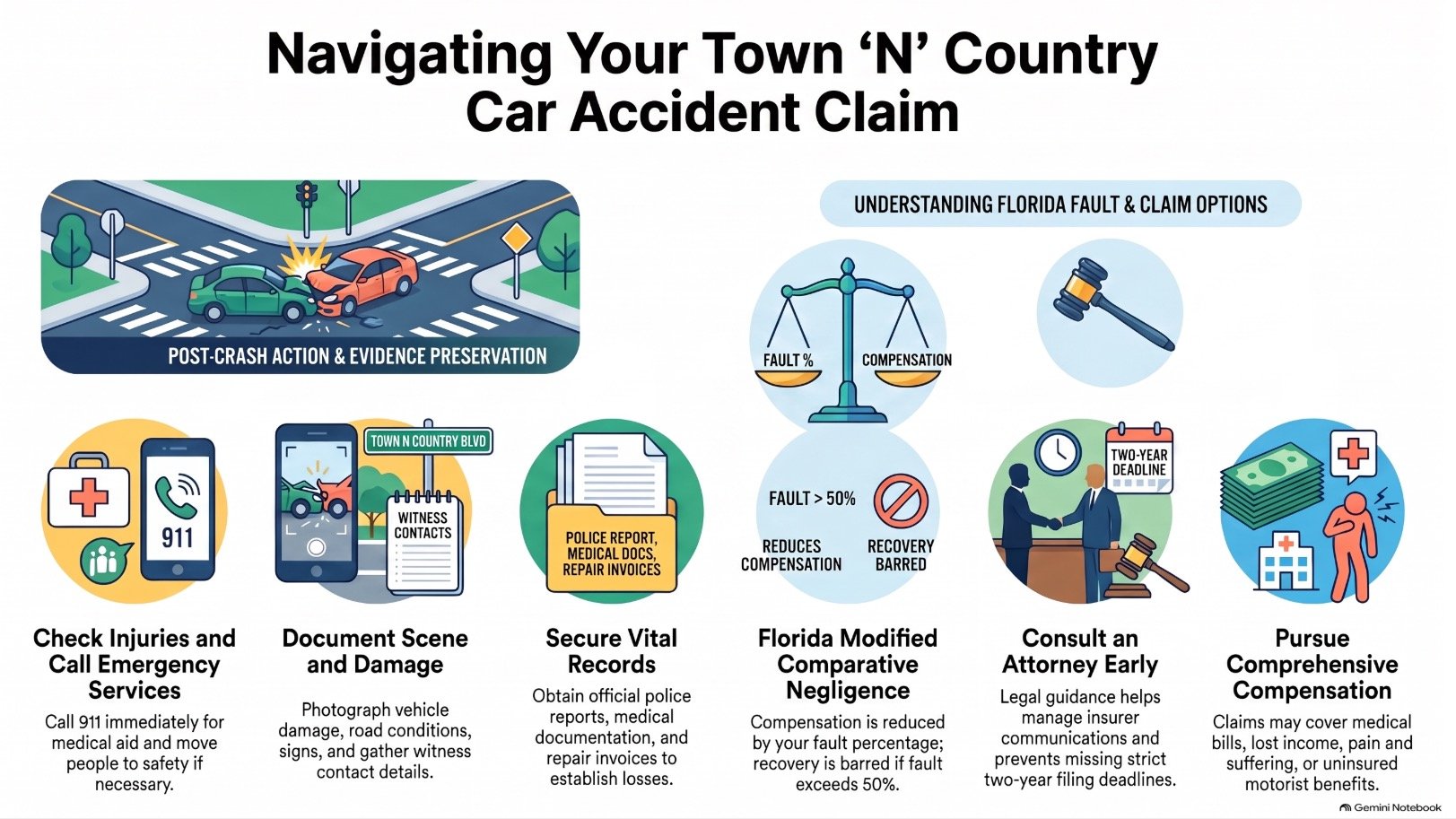
How We Can Help With Your Town ‘N’ Country Car Accident At-Fault Parties Injury Claim
When another driver’s negligence causes a Town ‘N’ Country crash, we help you pursue compensation for your injuries and related losses. We listen to your concerns, explain your options, and organize the information needed to move your claim forward. Our team can review available records, communicate with insurers, and help you understand what to expect at each stage.
A legal consultation gives you an opportunity to discuss the collision, your injuries, and how they affect your daily responsibilities. We’ll answer your questions in clear terms and outline practical next steps without pressure. We also assess Claim eligibility by considering relevant facts and deadlines, then explain how those factors may affect your ability to seek compensation.
As you focus on recovery and the people who depend on you, we can handle claim-related tasks and keep you informed. We’ll work to protect your interests, address requests for information, and pursue a resolution supported by the available evidence. Our guidance helps you make informed decisions.
Don’t Wait. Call Our Florida Personal Injury Lawyers Now!
Understanding Town ‘N’ Country Car Accident At-Fault Parties Injury Cases


Understanding a Town ‘N’ Country car accident injury case begins with identifying who caused the crash and how their actions contributed to your injuries. We examine available evidence, including photographs, vehicle damage, witness accounts, and official reports, to establish a clear account of what happened. When the facts are disputed, Accident Scene Reconstruction may help explain vehicle movements and the sequence of events. We also assess how the crash affected your health, work, and daily responsibilities, using medical records and other documentation to connect your injuries to the collision.
OUR CONSULTATIONSARE FREE
START YOUR FREE CASE REVIEW

More than one person may share responsibility. Through Comparative Fault Analysis, we evaluate each party’s conduct and consider how Florida’s fault rules may affect your ability to recover compensation. We’ll explain the evidence and legal issues in direct terms, so you can make informed decisions while focusing on recovery and the people who depend on you. A careful review helps us pursue accountability based on facts, not assumptions.
Common Causes of Town ‘N’ Country Car Accident At-Fault Parties
We often find that at-fault crashes in Town ‘N’ Country involve distracted driving, speeding, or other reckless behavior. Impaired driving can also compromise a driver’s judgment and reaction time, increasing the risk of a collision. We’ll also consider whether a driver failed to yield when required, since that mistake can lead to serious crashes.
Distracted Driving


Distracted driving is a common cause of preventable car accidents in Town ‘N’ Country, often leaving injured people to deal with serious consequences. A driver who looks away, reaches for an item, or focuses on something other than traffic may fail to notice a hazard in time. Phone Distraction includes texting, reading messages, or using apps while driving. Even a brief glance can take a driver’s attention from changing road conditions and nearby vehicles. Dashboard Multitasking, such as adjusting navigation, selecting music, or entering an address, can also divert attention from safe driving. When a distracted driver causes a collision, we can help you understand what evidence may establish fault, including phone records, witness accounts, and available video. By identifying the cause, we can support your efforts to seek accountability and pursue compensation for your injuries.
Speeding and Reckless Driving
Beyond distraction, speeding and reckless driving can cause serious collisions on Town ‘N’ Country roads. When drivers exceed posted limits, they have less time to respond to traffic, pedestrians, and sudden hazards. Speed Limit Compliance helps protect everyone sharing the road, including families, workers, and people traveling to serve their communities. Reckless conduct can also include tailgating, unsafe passing, and Aggressive Lane Changes that force others to brake or swerve. These choices may lead to severe injuries and raise questions about who caused a crash. We can help you review available evidence, such as crash reports, witness accounts, and vehicle damage, to understand how a driver’s actions contributed to the crash. If another motorist’s speed or conduct harmed you, we’ll explain your options and help you pursue accountability and compensation.
Impaired Driving
When alcohol, prescription medication, or other drugs impair a driver, they can slow reaction time, weaken judgment, and increase the risk of a serious collision on Town ‘N’ Country roads. Even medications used as directed can affect alertness, so drivers should review warnings and avoid driving if they feel impaired. Law enforcement uses DUI checkpoints and sobriety testing to identify suspected impaired drivers, but these measures can’t prevent every crash. If an impaired driver injures you or someone you care for, we can help you understand what evidence may establish fault, including police reports, witness accounts, and toxicology results. Prompt documentation can preserve important details and support a fair claim for medical expenses, lost income, and other losses. We’ll explain your options and help you pursue accountability with care.
Failure to Yield
Impaired driving is one source of serious crashes, but drivers may also cause collisions by failing to yield the right of way. In Town ‘N’ Country, these crashes may occur when a driver turns left across oncoming traffic, enters a busy road from a driveway, or ignores a stop sign. Drivers who misunderstand right-of-way rules can put others at risk, including pedestrians and cyclists.
Intersection visibility can also affect a driver’s decisions. Parked vehicles, overgrown vegetation, poor lighting, or weather may obscure approaching traffic, but drivers must still proceed cautiously and yield when required. We can help you examine the circumstances, identify the parties whose actions contributed to a collision, and understand your options for pursuing compensation. A careful review can support accountability and help protect everyone affected by the crash.
Legal Rights of Town ‘N’ Country Car Accident At-Fault Parties Injury Victims
Even if you’re found at fault for a Town ‘N’ Country car accident, you may still have legal rights after the crash. We can help you understand your options while you focus on recovery and responsibilities to those who depend on you. Fault doesn’t automatically erase your ability to seek compensation or challenge an insurer’s decision.
- Question fault allocation. Florida’s comparative negligence rules may reduce your recovery based on your share of responsibility, but the other party’s conduct may also matter.
- Review available coverage. Your policy may provide benefits for medical expenses or other losses, subject to its terms and applicable law.
- Consider uninsured motorists coverage. If an uninsured driver contributed to the collision, your policy may offer a path to compensation, depending on coverage and circumstances.
- Protect your claim. Preserve records, meet deadlines, and avoid giving recorded statements until you understand their potential impact.
We can assess the evidence, explain your rights, and help you make informed decisions that support your well-being and your family’s needs.
Why Do Town ‘N’ Country Car Accident At-Fault Parties Injuries Happen?
At-fault drivers in Town ‘N’ Country may suffer injuries because a collision’s force can harm everyone involved, regardless of who caused the crash. A driver who misjudges speed, follows too closely, or fails to yield may still be seriously harmed when another vehicle strikes their car. Seat belts and airbags reduce some risks, but they can’t prevent every injury.
Several conditions can contribute to a crash and its consequences. Road design, including limited sightlines, confusing intersections, or narrow lanes, may leave drivers less time to respond. Weather hazards such as heavy rain can reduce visibility and traction, making a vehicle harder to control. Traffic congestion, distracted driving, fatigue, and vehicle defects can also increase collision risks.
We can recognize that responsibility for a crash doesn’t make someone immune to injury. Understanding these factors helps us speak with care and serve injured people fairly, without assuming fault alone explains how a collision happened or how severely someone was hurt.
What Should You Do After a Town ‘N’ Country Car Accident At-Fault Parties Injury?
After a Town ‘N’ Country car accident, we should first check for injuries and call emergency services when needed. Document the crash by photographing the scene, gathering witness information, and keeping copies of relevant records. We should also contact a car accident lawyer to understand our options and protect our interests.
Check for Injuries
First, check yourself and anyone else involved for injuries, but don’t move someone who may have a serious neck or back injury unless an immediate danger requires it. Ask whether anyone feels pain, dizziness, numbness, or difficulty breathing, and look for visible bleeding or signs of shock. Call 911 promptly if anyone is injured, unconscious, trapped, or experiencing severe symptoms. Give the dispatcher the crash location, the number of people who need help, and any urgent hazards. Follow the dispatcher’s instructions, and don’t attempt treatment beyond your training. If there’s an immediate threat, such as fire or moving traffic, help people move to safety only when you can do so without worsening an injury. Use emergency contacts to notify loved ones, and stay with injured people until responders arrive, offering calm reassurance and practical support.
Document the Crash
Once emergency help is on the way, document the crash scene if it’s safe to do so. We can help protect everyone involved by recording details accurately and sharing information respectfully. Photograph vehicle positions, damage, license plates, road conditions, traffic signs, and visible injuries. Include wide views and close-ups, but don’t enter traffic or delay medical care to get a picture. Note the time, location, weather, and what you remember about the collision while details remain clear. Get names and contact information for witnesses, and exchange insurance and driver information with the other parties. Secure dashcam footage and save relevant phone recordings or messages without editing them. Preserve clothing and personal items that show damage or blood; place them in separate bags. Keep copies of records and avoid speculating about fault when describing events.
Contact a Lawyer
With the crash details and records preserved, consider contacting a Town ‘N’ Country car accident lawyer, especially if anyone was injured or fault is disputed. We can help you understand your options, identify responsible parties, and determine what evidence may support your claim. Ask about a Free consultation to discuss the collision, injuries, and immediate concerns before deciding how to proceed. Confirm attorney availability and whether the lawyer can review your matter promptly, particularly if insurers have contacted you or deadlines may apply. Bring your crash report, photographs, medical records, repair estimates, and insurer correspondence to the meeting. We can also explain how legal representation may reduce your burden while you focus on recovery and caring for those who depend on you. Don’t sign a release or accept a settlement before understanding its effect.
Critical Evidence in a Town ‘N’ Country Car Accident At-Fault Parties Injury Case
To support your injury claim, we’ll help you identify and preserve evidence that clarifies how the crash happened and documents your losses.
Essential records may include:
- Police accident reports
- Witness statements
- Photographs and videos
- Medical and repair records
Police Accident Reports
How can we establish who caused a Town ’N Country car accident? We can begin by reviewing the police accident report, which may document the crash location, road conditions, vehicle damage, and the officer’s initial assessment. These details can help us identify issues that require further investigation, but the report doesn’t automatically determine legal fault. We should compare its information with photographs, medical records, and other available evidence to build a reliable account.
Report access matters because you’ll need the document to understand what the officer recorded. We can explain how to request it from the appropriate law enforcement agency and review it for missing or inaccurate details. If you find an error, report corrections may be possible through the agency’s process. We can help you submit supporting information and preserve a clear record as you pursue a fair outcome for everyone affected.
Witness Statements
Witness statements can clarify what happened before, during, and after a Town ’N Country car accident, especially when the police report leaves questions about fault. We can speak with people who saw the collision or its immediate aftermath and ask what they observed, heard, and understood. Their accounts may help establish a driver’s actions, the sequence of events, or whether anyone offered an explanation at the scene.
Witness credibility matters. We consider each person’s opportunity to observe, ability to recall details, and possible relationship to those involved. We also assess statement consistency across accounts and compare testimony with other available evidence. Differences do not automatically make a witness unreliable, but significant conflicts may require careful follow-up. By gathering accounts promptly and respectfully, we can preserve useful information and help you pursue a fair assessment of responsibility.
Photographs And Videos
Photographs and videos can preserve details of a Town ’N’ Country car accident that may change or disappear before investigators review the scene. Use clear images to document vehicle positions, roadway conditions, traffic signs, debris, and visible damage. If you can, take photos from several angles without entering traffic or disturbing the scene. Your safety and others’ well-being come first.
Record the surrounding area, including sight lines, lighting, and nearby cameras. Photo metadata may help establish when and where images were captured, so keep original files and avoid editing them. Save dashcam footage promptly because devices may overwrite recordings. We can review these materials alongside witness accounts to assess how the collision occurred and identify responsible parties. Share copies with your lawyer, and preserve the originals for careful review.
Medical And Repair Records
Because medical and repair records can document the consequences of a Town ’N’ Country car accident, we treat them as important evidence when evaluating injuries, vehicle damage, and fault. We encourage you to seek prompt medical care and keep records of diagnoses, treatment plans, prescriptions, and expenses. These documents can connect your injuries to the collision and show how they affect your daily life. Repair estimates, invoices, photographs, and final bills can help establish your vehicle’s damage and support the value of a claim. Through careful Invoice organization, we can track costs and identify missing documentation. Strong record retention also matters: keep copies of correspondence, receipts, and updated medical records in a secure place. When we review these materials jointly, we can help present a clear account of your losses and serve your interests responsibly.
Long-Term Effects of Town ‘N’ Country Car Accident At-Fault Parties Injuries
When we assess the long-term effects of a Town ‘N’ Country car accident injury, we consider how chronic pain or limited mobility may affect your daily life. We also examine lasting cognitive changes that can interfere with memory, concentration, or work. Ongoing treatment can create substantial medical expenses, which we’ll factor into our evaluation of your injuries’ full impact.
Chronic Pain and Mobility
After a Town ‘N’ Country car accident, injuries caused by an at-fault driver can lead to chronic pain and lasting mobility problems. Back, neck, joint, or nerve injuries may make walking, lifting, and routine tasks difficult. We can help you understand how these limitations affect your daily life and ability to care for others.
Consistent treatment can support recovery and document an injury’s effects. Your medical team may recommend physical therapy, medication, or other Pain management options tailored to your condition. When movement remains restricted, mobility aids such as canes or walkers may improve safety and independence. Follow your providers’ guidance and keep records of symptoms, appointments, expenses, and changes in your abilities. If an at-fault driver caused your injuries, we can explain potential legal options for seeking compensation for ongoing care and related losses.
Lasting Cognitive Effects
A traumatic brain injury in a Town ‘N’ Country car accident can cause lasting changes in memory, concentration, processing speed, or decision-making. These effects may disrupt work, relationships, and the daily responsibilities you have to support others. Memory impairment can make it difficult to retain conversations, follow instructions, or recall important details. Executive dysfunction may affect planning, organizing tasks, controlling impulses, and adapting when circumstances change. You might notice these challenges yourself, or family members and coworkers may observe changes before you do. We encourage you to document symptoms and discuss them with a qualified medical professional, even when they seem subtle or appear later. A clear record can help connect cognitive changes to the crash and explain how they affect your life. We can help you understand your legal options and protect your interests.
Ongoing Medical Expenses
How long will medical care continue after a serious Town ‘N’ Country car accident? The answer depends on your injuries, recovery, and need for ongoing support. Some people require follow-up appointments, prescription medication, physical therapy, or additional procedures long after emergency treatment ends. We can help you document these needs and understand how they may affect a claim against an at-fault party.
Future treatment costs can include care for lasting pain, reduced mobility, or cognitive effects. Your doctors’ recommendations, treatment history, and prognosis can help establish what care you may need. We can also review medical bill projections with qualified professionals to estimate future expenses. Accurate records help us present a clearer account of your losses and pursue compensation that reflects your ongoing medical needs, not just bills you’ve already received.
Proving Liability in Town ‘N’ Country Car Accident At-Fault Parties Injury Cases
Proving liability in a Town ‘N’ Country car accident case requires evidence that another party’s negligence caused the crash and your injuries. We can help you identify who owed you a duty of care and how that person’s conduct breached it. Evidence may include police reports, photographs, witness statements, vehicle damage, and records showing traffic or road conditions. Promptly preserving this information can protect details that might otherwise disappear.
Traffic camera analysis may reveal vehicle movements, signals, and timing before impact. When the facts remain disputed, accident reconstruction can help explain how the collision occurred and whether a driver’s actions contributed to it. We also gather medical records and consult qualified professionals to connect your injuries to the crash and document their effects.
Our careful investigation provides a clear account of what happened and recognizes those affected. By organizing reliable evidence and examining each potential cause, we can build a stronger foundation for seeking accountability and pursuing compensation for your losses.
Dealing With Insurance Companies After a Town ‘N’ Country Car Accident At-Fault Parties Injury
After a Town ‘N’ Country car accident, insurance companies may contact you quickly to discuss the crash or request a recorded statement. We can help you respond carefully while protecting your health and your right to fair treatment.
Before speaking with Claim Adjusters, gather basic information about the collision, your injuries, and any medical care you’ve received. Don’t guess at details or accept blame when the facts are unclear. If you’re unsure how to answer, ask for time to review your records or consult an attorney.
Recorded Calls can preserve your words, so listen closely to each question and answer truthfully without speculation. Don’t sign documents or accept a settlement before you understand what it covers. An early offer may not account for continuing treatment or other losses.
We can communicate with insurers on your behalf, clarify requests, and help prevent misunderstandings. By approaching these conversations with care, we can focus on your recovery and protect the interests of those who depend on you.
Don’t Wait. Call Our Florida Personal Injury Lawyers Now!
What to Expect During a Town ‘N’ Country Car Accident At-Fault Parties Injury Claim Process
We’ll begin with an initial case review to assess your injuries, losses, and legal options. Next, we’ll gather evidence and negotiate liability with the at-fault party or insurer. We’ll explain whether settlement is appropriate or, if negotiations fail, prepare to take your claim to trial.
Initial Case Review
During an initial case review, we’ll assess how the Town ‘N’ Country crash happened, the injuries you sustained, and the evidence available to identify potentially at-fault parties. We’ll listen carefully as you explain what occurred and how the collision has affected your health, work, and ability to care for others. This conversation helps us understand your priorities and determine which legal issues may shape your claim.
We’ll also review the basic facts, including when and where the crash happened, who was involved, and whether you’ve received medical care. Our Initial Case Review can help us evaluate Claim Eligibility, identify possible responsible parties, and explain the options available to you. We’ll discuss important deadlines and answer your questions in clear terms. After reviewing the circumstances, we’ll outline practical next steps so you can make informed decisions about pursuing compensation.
Evidence Collection
What evidence can show how a Town ‘N’ Country crash occurred and who may be responsible? We’ll gather records and accounts that help you understand the events and protect your ability to seek recovery. Evidence preservation matters because vehicle damage, road conditions, and other details can change quickly. We may photograph the scene, inspect the vehicles, and request surveillance footage from nearby businesses or traffic cameras before it disappears. We’ll also obtain the crash report, collect witness contact information, and review medical records that document your injuries and treatment. If needed, we can consult qualified professionals to interpret physical evidence or explain how the collision unfolded. Keep relevant documents and messages, and tell us about any new information. Careful collection creates a reliable record of your claim.
Liability Negotiations
Once we’ve assembled the evidence, we’ll present a clear account of how the Town ‘N’ Country crash occurred and why the at-fault party is responsible. We’ll send the insurer a demand outlining the facts, your injuries, treatment, expenses, and other documented losses. Our Demand strategy will connect each claimed loss to the collision and address arguments the insurer may raise about fault or the seriousness of your injuries. We’ll review any response with you, explain what it means, and identify information that could strengthen your position. If the insurer disputes responsibility, we’ll use records and applicable traffic rules to support your account. We’ll also guide you through mediation preparation, organizing important documents and clarifying your priorities. Throughout these discussions, we’ll keep you informed and protect your interests while you focus on recovery and responsibilities.
Settlement Or Trial
After liability negotiations, we’ll help you evaluate whether a settlement fairly accounts for your injuries, expenses, and other documented losses. We’ll explain the offer, discuss settlement timing, and consider whether it addresses future care, lost income, and how your injuries affect your daily responsibilities. You can weigh these factors before deciding whether to accept.
If the insurer won’t make a fair offer, we can prepare your claim for trial. We’ll organize evidence, identify witnesses, and explain what to expect in court. A judge or jury may assess fault and damages, and Jury deliberations follow the presentation of evidence and closing arguments. Trial can take longer and carries uncertainty, so we’ll discuss the risks and potential benefits with you. Throughout the process, we’ll keep your priorities central and help you make informed decisions that support your recovery and responsibilities to others.
Compensation for Town ‘N’ Country Car Accident At-Fault Parties Injury Damages
Even if you’re found at fault for a Town ‘N’ Country car accident, you may still recover compensation for your injuries if another party’s negligence contributed to the crash. Florida’s comparative fault rules may reduce your recovery based on your share of responsibility, but fault doesn’t always prevent you from pursuing a claim. We can review how each driver’s actions contributed and identify evidence that supports your account.
Compensation may address medical care, rehabilitation, and other reasonable treatment costs related to your injuries. You may also seek payment for lost wages if your recovery kept you from working, as well as diminished earning capacity if lasting limitations affect your ability to earn income. Keep records of treatment, missed work, and changes in your duties so we can assess the crash’s impact.
We’ll listen carefully to your concerns and explain your options in clear terms. By building an evidence-based claim, we can help you seek fair recovery while respecting your responsibilities to your family and community.
Economic vs. Non-Economic Damages in Town ‘N’ Country Car Accident At-Fault Parties Cases
We can distinguish economic losses, such as medical bills and lost income, from non-economic harm, including pain and reduced quality of life. To support your claim, we’ll explain how records, testimony, and other evidence can establish both types of damages. These distinctions help us assess the full impact of a Town ‘N’ Country car accident caused by another party.
Economic Losses
Economic losses are the measurable financial costs a person incurs because of a car accident, and they differ from non-economic damages such as pain and emotional distress. When another driver causes a collision, we can help you identify the documented expenses that may support a claim. These losses can include medical bills, rehabilitation costs, prescription expenses, and necessary transportation to appointments. Lost income may also be recoverable when injuries prevent you from working, whether temporarily or for an extended period. If your injuries limit the work you can perform or reduce your future earnings, reduced earning capacity may form part of your claim. Keep bills, pay records, employer statements, and treatment documentation organized. We can review these records with you, assess how the crash affected your finances, and pursue compensation for eligible losses.
Non-Economic Harm
When a crash causes lasting pain, emotional distress, or limits your daily activities, those effects may support a claim for non-economic damages. These losses don’t come with receipts, but they can profoundly affect your well-being and relationships. We help you understand how Florida law may recognize physical discomfort, anxiety, sleep disruption, and reduced enjoyment of activities you once valued. A serious injury can also change how you care for family members or participate in your community. In some cases, a spouse may seek damages for loss of companionship when an injury harms the marital relationship. Non-economic damages differ from medical bills and lost income because they address personal consequences rather than measurable expenses. By considering the full impact of the collision, we can pursue compensation that reflects your experience and supports your recovery.
Proving Your Damages
To prove damages after a Town ‘N’ Country car accident, we connect the at-fault party’s conduct to your documented financial losses and personal harm. Economic damages include medical bills, rehabilitation costs, lost wages, and reduced future earning capacity. We gather invoices, employment records, treatment notes, and receipts to support each amount. This Damage documentation helps us explain how the collision affected your finances and what expenses may continue.
Non-economic damages address pain, emotional distress, and limits on daily activities or relationships. These losses don’t come with fixed price tags, so we use medical evidence, your account, and observations from people who know you to show their impact. Through careful loss valuation, we present a supported claim that reflects both measurable costs and personal harm. Clear evidence helps insurers and decision-makers assess your needs fairly and pursue appropriate compensation.
When a Town ‘N’ Country Car Accident At-Fault Parties Injury Case Goes to Trial vs Settlement
After a Town ‘N’ Country car accident, the decision to settle or take an injury case to trial depends on the evidence, the extent of your losses, and the at-fault parties’ willingness to offer fair compensation. We’ll assess the available proof and your needs, then explain the benefits and risks of each path.
A settlement can provide compensation sooner and avoid the uncertainty of a courtroom. It also lets you resolve the claim without asking a jury to decide what happened or what your injuries are worth. We’ll review any offer carefully and won’t recommend accepting one that fails to account for your documented losses.
If the parties can’t agree, trial may be necessary. Trial testimony, records, and other evidence help present your account to the jury. Jury deliberations follow, and the verdict may differ from either side’s expectations. We’ll prepare your case thoroughly and keep your goals in view, including your ability to support yourself and continue serving those who depend on you.
Florida Laws That May Affect Your Town ‘N’ Country Car Accident At-Fault Parties Case
Florida law can shape who bears responsibility for a Town ‘N’ Country car accident and what compensation an injured person may recover. We can help you understand how these rules apply while keeping your recovery and your family’s needs in view.
Florida’s fault and insurance rules can affect your recovery after a Town ‘N’ Country car accident.
- No-fault coverage: Florida drivers generally turn first to their own personal injury protection insurance for covered medical expenses and lost income, regardless of fault. This coverage has limits and may not address every loss.
- Comparative negligence: If you share responsibility, Florida’s modified comparative negligence rule may reduce your damages by your percentage of fault. Recovery may be barred if your share exceeds 50 percent.
- Evidence and fault: Police reports, witness accounts, photographs, and medical records can help establish how the crash happened. We can assess this evidence and respond to disputed claims.
- Other responsible parties: A negligent driver, vehicle owner, or employer may bear responsibility depending on the circumstances. Identifying each liable party can help protect your ability to pursue available compensation and support those who rely on you.
The Statute of Limitations for Town ‘N’ Country Car Accident At-Fault Parties Injury Cases
How long do you have to bring a claim after a Town ‘N’ Country car accident? In Florida, you generally have 2 years from the crash date to file a lawsuit for personal injury compensation. Missing this deadline can prevent you from pursuing damages in court, even when another driver caused the collision. Acting promptly also helps preserve evidence and supports an accurate account of what happened.
Deadline exceptions may change the time available. For example, different rules can apply when an injured person is a minor, a defendant cannot be located, or the claim involves a government entity. Claims for property damage may also have a different limitations period. These exceptions depend on specific facts, so we shouldn’t assume an extension applies.
Filing requirements matter as well. Florida law may require timely notice or other steps before certain claims proceed. We can help you understand which deadlines apply to your situation and encourage you to keep records, follow required procedures, and protect your ability to seek accountability. Don’t wait to confirm the applicable dates.
How a Town ‘N’ Country Car Accident At-Fault Parties Lawyer Can Help You
When another driver’s negligence causes a crash, a Town ‘N’ Country car accident lawyer can help you pursue compensation and protect your interests. We’ll investigate the collision, explain your options, and handle the details of your claim so you can focus on your health and responsibilities.
- We gather crash reports, photographs, witness accounts, and medical records to build a clear account of what happened.
- We assess your losses, including treatment costs, lost income, and other documented effects, then calculate a fair compensation demand.
- We examine Fault allocation and comparative negligence issues, respond to arguments that you share responsibility, and explain how those findings may affect your recovery.
- We communicate with insurers, review settlement offers, and negotiate for terms that reflect the evidence and your needs.
Throughout the process, we’ll keep you informed and answer questions in plain language. Our work aims to support your recuperation while treating everyone involved with care and respect. We can also coordinate information from your providers and help present your needs accurately, without overstating the facts.
When to Contact a Town ‘N’ Country Car Accident At-Fault Parties Lawyer
The timing of legal guidance can affect how well we preserve evidence and respond to insurers after a crash. Contact a Town ‘N’ Country car accident at-fault parties lawyer as soon as you’re able, particularly if anyone suffered injuries, fault is disputed, or another driver’s insurer has contacted you. An early consultation helps us understand important deadlines and identify records, photographs, witness details, and other information that may become harder to obtain over time.
We don’t need to wait until treatment ends or every fact is known. We can seek guidance while focusing on medical care and our responsibilities to family, coworkers, and others who depend on us. If we’re unsure whether a conversation with an insurer could affect a claim, we can ask a lawyer before responding or signing documents.
Attorney availability may vary, so reaching out promptly gives us time to arrange a discussion and learn what information to gather. A timely call helps us make informed decisions without delaying necessary care.
Don’t Wait. Call Our Florida Personal Injury Lawyers Now!
Why You Need an Experienced Town ‘N’ Country Car Accident At-Fault Parties Lawyer
An experienced Town ‘N’ Country car accident at-fault parties lawyer can help us assess disputed fault, preserve relevant evidence, and respond carefully to insurers. When responsibility is unclear, we can explain how each driver’s actions may affect your claim and identify records that support your account. Prompt attention matters because vehicle damage, witness recollections, and roadway conditions can change or become harder to document.
Attorney experience helps us recognize common insurer tactics, evaluate conflicting statements, and present a clear, evidence-based position. We can also explain how Florida’s comparative fault rules may affect your potential compensation, so you can make informed decisions while focusing on your recovery and responsibilities to others.
Local knowledge can add practical value. Familiarity with Town ‘N’ Country roads, traffic patterns, and nearby procedures helps us consider relevant circumstances and communicate effectively with involved parties. With informed guidance, we can protect your interests, address disputed allegations, and pursue a fair resolution without losing sight of your well-being.
How to Choose the Right Town ‘N’ Country Car Accident At-Fault Parties Lawyer for Your Case
Choosing the right Town ‘N’ Country car accident at-fault parties lawyer starts with evaluating whether the attorney can investigate disputed responsibility and explain your options clearly. Look for relevant experience handling crashes with multiple drivers, conflicting accounts, or questions about shared fault. Ask how the lawyer gathers evidence, identifies responsible parties, and keeps your claim moving while protecting your interests.
Review Lawyer credentials, including Florida licensure, professional standing, and experience with injury claims. Then consider communication style. We merit direct answers, timely updates, and explanations that help us make informed decisions without pressure. During an initial consultation, we can ask who will handle our case, how often we’ll hear from the legal team, and what challenges may affect the claim.
A careful choice supports our ability to focus on recovery and family responsibilities. We should compare answers, assess whether the attorney listens, and select someone whose approach reflects diligence, respect, and a commitment to pursuing fair accountability.
About The Law Offices of Anidjar & Levine
When we evaluate legal representation after a Town ‘N’ Country car accident, we can consider how The Law Offices of Anidjar & Levine approaches injury claims and client communication. We work to help injured people understand their options, pursue compensation, and manage the demands that follow a collision. Our team can explain the claims process, answer questions, and keep you informed as your case progresses.
A firm’s history can provide useful context when you’re choosing counsel. The firm represents people harmed in accidents and handles matters involving insurance claims and injury-related losses. We can review the facts of your crash, identify potential at-fault parties, and discuss practical next steps without promising a particular outcome.
Community involvement also reflects how a law office engages with the people it serves. We value service, respect, and clear communication with clients and families facing difficult circumstances. If you’re considering legal help, we encourage you to ask about experience, case handling, and how the firm will keep your interests central.
Frequently Asked Questions
Can I Recover Damages if I Was a Passenger in the Crash?
Yes, you may recover damages as a passenger if another party’s negligence caused the crash and your injuries. We can help you pursue Passenger Injury Claims against one or more responsible drivers, including the driver of your vehicle. Shared-fault rules may affect recovery if you contributed to the collision, though passengers are often not at fault. We’ll review the evidence, insurance coverage, and deadlines to clearly explain your options.
What Happens if the At-Fault Driver Was Uninsured?
If the at-fault driver was uninsured, we can help you review your compensation options. Your own Uninsured motorist coverage may pay for covered injuries and losses, subject to policy terms and limits. We can also assess whether a Personal injury lawsuit against the driver is practical, though recovery may depend on their available assets. As a passenger, you may have claims under applicable policies, and we can help identify the responsible insurers.
Can I File a Claim if the At-Fault Driver Fled the Scene?
Yes, you can pursue compensation even if the at-fault driver fled. Reporting a hit-and-run promptly helps law enforcement investigate and creates an official record for your insurer. We can help you review your policy and determine whether Uninsured motorist coverage may pay for eligible injuries or losses. Preserve photos, witness details, medical records, and repair estimates, and avoid discussing fault with insurers before you understand your rights and available options.
Does a Car Accident Claim Affect My Health Insurance Coverage?
A car accident claim generally won’t cancel your health insurance or change your eligibility, but it may affect how medical bills are paid. We can help you understand Health Insurance Coordination, including whether your plan expects repayment if an auto insurer later covers treatment costs. Coverage Renewal Impacts are usually limited, though policy terms and state rules vary. We recommend reviewing your plan documents and promptly reporting accident-related treatment to your insurer.
Can Family Members Pursue Compensation After a Fatal Car Accident?
Yes, eligible family members may pursue compensation after a fatal car accident through a Wrongful Death claim. We can help you determine who may file under applicable state law and identify losses, such as funeral expenses, lost financial support, and loss of companionship. Survivor Benefits may also be available through insurance or government programs. We’ll review the circumstances, explain deadlines, and help your family understand its options while protecting your rights.
—————————
If another driver caused your Town ‘N’ Country crash, you shouldn’t have to manage the insurance process alone while recovering. We can investigate the collision, identify potentially responsible parties, and pursue compensation for your documented losses. Acting promptly can help preserve evidence and protect your legal options. At The Law Offices of Anidjar and Levine, we’ll explain the next steps and answer your questions. Contact us to discuss your circumstances and learn how we may assist with your injury claim. For more information, visit our Town ‘N’ Country Personal Injury Lawyer page.

