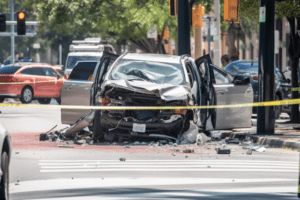
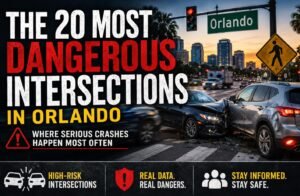
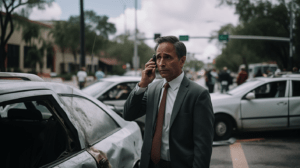
The Law Offices of Anidjar and Levine, an Orlando Personal Injury Lawyer firm, investigates collision evidence to identify every potentially responsible driver, employer, vehicle owner, manufacturer, or maintenance provider. The investigation may include crash reports, medical records, photographs, witness accounts, vehicle data, and insurance communications. Legal counsel evaluates negligence, comparative fault, and available compensation for medical expenses, lost income, property damage, pain, and long-term limitations. Early guidance also helps preserve evidence and meet claim deadlines.
Main Takeaways
- An Orlando car accident lawyer can identify all potentially liable parties, including negligent drivers, employers, vehicle owners, manufacturers, and maintenance providers.
- Liability may involve distracted driving, speeding, impairment, reckless conduct, defective vehicles, poor maintenance, or unstable commercial-truck loads.
- Attorneys review crash reports, medical records, vehicle data, photographs, witness statements, employment documents, and insurance communications.
- Florida comparative negligence may reduce compensation, making accurate evidence and careful evaluation of each party’s conduct important.
- Prompt medical care, evidence preservation, and legal guidance can protect injury claims, deadlines, and recovery for medical expenses and other losses.
How We Can Help With Your Orlando Car Accident At-Fault Parties Injury Claim
When an Orlando car accident involves multiple potentially responsible parties, determining liability requires a careful review of the collision, each party’s conduct, and the available evidence. A legal team can help an injured person identify relevant insurance policies, communicate with insurers, and organize a claim supported by clear documentation. Counsel may coordinate accident reports, medical records, photographs, vehicle damage information, witness statements, and other materials before evidence is lost or altered. This evidence preservation can strengthen negotiations and help clarify how the injuries developed.
An attorney can also evaluate claims involving drivers, employers, vehicle owners, manufacturers, or other entities without assuming that every potential defendant shares equal responsibility. When insurers raise Comparative negligence defenses, counsel can examine whether those arguments are supported by reliable facts and applicable law. The representation may include calculating medical expenses, lost income, continuing care needs, and other legally recoverable losses. By managing communications and deadlines, the legal team lets the injured person focus on recovery while pursuing a fair, accountable resolution.
Understanding Orlando Car Accident At-Fault Parties Injury Cases


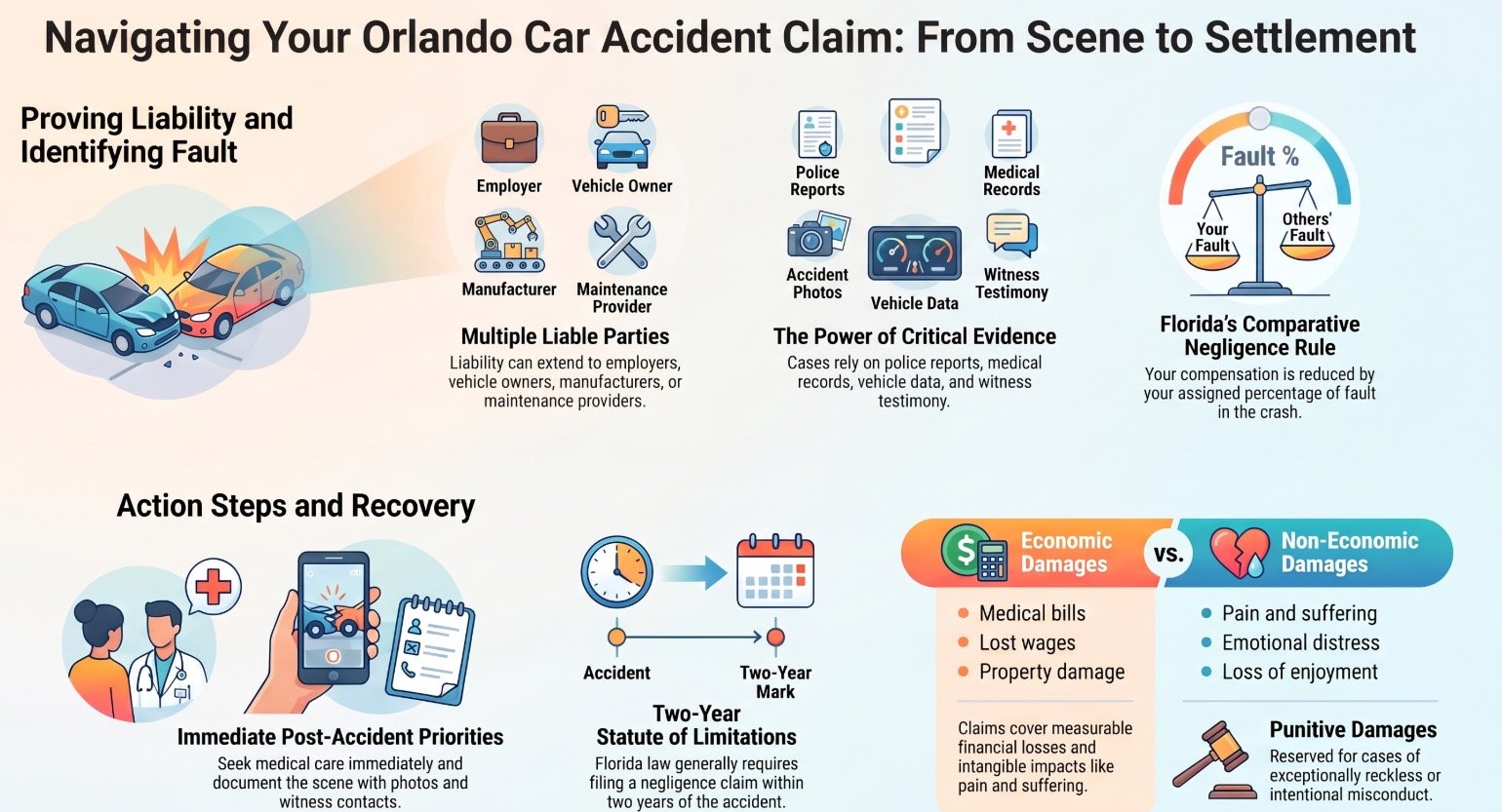
Orlando car accident injury cases begin with identifying the parties whose conduct, ownership interests, or business relationships may have contributed to the collision. Potentially responsible parties can include drivers, vehicle owners, employers, commercial transportation companies, manufacturers, and maintenance providers. Each case requires careful evaluation of evidence, applicable duties, and the connection between a party’s actions and the reported injuries.
OUR CONSULTATIONSARE FREE
START YOUR FREE CASE REVIEW

A thorough review may include crash reports, medical records, vehicle data, photographs, employment documents, and witness interviews. Accurate witness statement editing should preserve the speaker’s meaning rather than alter material facts, because credibility can greatly affect settlement discussions and trial presentation. Insurance communications also warrant careful attention. Insurance bad faith may arise when an insurer unreasonably delays, undervalues, or denies a covered claim, although the legal standard depends on the circumstances and applicable law.
A service-oriented legal team helps injured individuals and families understand these distinctions, protect their rights, and hold every legally responsible party accountable.
Common Causes of Orlando Car Accident At-Fault Party Injuries
Don’t Wait. Call Our Florida Personal Injury Lawyers Now!
Common causes of Orlando car accidents include distracted driving, speeding, reckless conduct, and impaired driving. Vehicle maintenance failures, such as defective brakes or worn tires, may also contribute to collisions and raise questions about responsibility. Identifying the underlying cause is critical when determining which parties may be legally at fault.
Distracted Driving


Distracted driving is a significant cause of Orlando car accidents, particularly when motorists divert their attention from traffic, road conditions, or vehicle operation. Distracted texting can remove a driver’s visual, manual, and cognitive attention from the roadway, leaving insufficient time to recognize hazards or respond appropriately. Mobile app negligence, including checking navigation, adjusting social media, or interacting with delivery platforms while moving, may create similar risks. Other distractions include conversations with passengers, eating, grooming, and reaching for objects inside the vehicle. When such conduct contributes to a collision, investigators may examine phone records, witness statements, vehicle data, and surrounding circumstances to identify responsibility. Establishing the cause can help injured individuals understand available options and pursue appropriate support, while encouraging motorists to protect other road users through attentive, lawful driving.
Speeding And Reckless Driving
When motorists exceed posted speed limits or operate vehicles with conscious disregard for safety, their conduct can substantially increase the risk and severity of Orlando car accidents. Speeding reduces reaction time, lengthens stopping distances, and increases impact force. Reckless behavior may include aggressive lane changes, following too closely, racing, or weaving through congested traffic. Traffic signal violations can place drivers, pedestrians, and cyclists in immediate danger, particularly at busy intersections. Evidence such as surveillance footage, vehicle data, witness statements, and collision-scene measurements may help establish whether these actions caused a crash. Determining fault requires careful review of the roadway, weather, vehicle positions, and applicable traffic laws. An Orlando car accident lawyer can help injured individuals and families pursue accountability while supporting safer transportation practices for the broader community.
Impaired Driving
Impaired driving is a significant cause of Orlando car accidents, particularly when alcohol, illegal drugs, prescription medications, or other substances reduce a motorist’s ability to operate a vehicle safely. Impairment may slow reaction times, distort judgment, and prevent a driver from recognizing hazards or controlling the vehicle. When a collision occurs, investigators may examine witness statements, vehicle locations, toxicology results, and admissions concerning substance use. Law enforcement officers may also apply sobriety testing procedures, including field evaluations, breath testing, blood analysis, or other authorized methods. A driver found impaired can face criminal charges, license consequences, and substantial impaired driving penalties. Civil liability may additionally arise when negligent conduct causes injuries, property damage, or wrongful death. Legal guidance can help affected individuals preserve evidence, understand available remedies, and pursue accountability while supporting their recovery.
Vehicle Maintenance Failures
Vehicle maintenance failures can create hazardous conditions that make a driver or vehicle owner responsible for an Orlando car accident. Neglected inspections may allow defective brakes, worn tires, broken lights, or steering problems to compromise roadway safety. Brake failure causes can include worn pads, leaking fluid, damaged rotors, and inadequate servicing. Similarly, excessive tire tread wear reduces traction, especially during rain, and can contribute to skidding or blowouts. A vehicle owner who knowingly operates an unsafe automobile may face liability when that condition causes a collision. A driver may also be responsible for ignoring warning signs or failing to get prompt repairs. Maintenance records, inspection reports, photographs, and repair invoices can help show whether a preventable defect contributed to the crash and identify the parties responsible for the resulting injuries.
Legal Rights of Orlando Car Accident At-Fault Parties Injury Victims
Orlando accident victims retain important legal rights even when another party may be considered at fault for causing the collision. Florida law permits injured individuals to seek appropriate compensation, while comparative negligence factors may affect the amount recoverable.
Orlando accident victims may pursue compensation, while comparative negligence considerations can influence the amount ultimately recoverable.
- Victims may obtain medical evaluation and pursue compensation for reasonable treatment, lost income, and other documented damages.
- They may preserve evidence, including photographs, witness information, vehicle records, and insurance correspondence.
- They may review settlement offers carefully and decline agreements that do not reflect their injuries or future needs.
- They may consult a qualified attorney who can protect deadlines, communicate with insurers, and present a claim objectively.
Accurate medical records are crucial because consistent documentation can clarify diagnosis, treatment, prognosis, and limitations. Victims should provide complete information to healthcare professionals and retain related bills and reports. Even when fault is disputed, respectful legal guidance can help injured people understand available remedies and make informed decisions while preserving the ability to restore their families and communities responsibly.
Why Do Orlando Car Accident At-Fault Parties Injuries Happen?
Understanding the causes of these injuries helps clarify how liability may arise and why fault can remain disputed after a collision. Orlando crashes often result from distracted driving, speeding, unsafe lane changes, impaired driving, or failure to yield. In other cases, defective vehicle components, inadequate maintenance, or poor roadway design may contribute to harmful impacts, complicating an assessment of each party’s responsibility.
Truck rollover hazards present additional dangers when commercial vehicles carry unstable loads, travel too quickly through curves, or respond improperly to sudden traffic changes. Weather-related crashes may occur when rain reduces visibility and traction, while standing water increases hydroplaning risks. Driver conduct remains relevant, but roadway conditions and vehicle operation may also require careful examination.
Injuries can accordingly arise from several connected factors rather than one clear mistake. Witness accounts, collision evidence, vehicle data, and medical records may help distinguish negligent conduct from unavoidable conditions while supporting a fair evaluation of those affected.
What Should You Do After an Orlando Car Accident At-Fault Party Injury?
After an Orlando car accident injury, the injured person should seek immediate medical care, even if symptoms initially appear minor. Document the accident scene with photographs, witness information, police records, and other relevant evidence. An injury lawyer can then evaluate potential claims, identify at-fault parties, and protect the injured person’s legal interests.
Seek Immediate Medical Care
Prompt medical evaluation should be a priority for anyone injured in a car accident, even when symptoms initially appear minor or absent. An emergency room visit can identify hidden injuries, including concussion, internal bleeding, or spinal trauma, that may worsen without timely treatment. Individuals should follow first responder care instructions and accept transportation for evaluation when recommended. A physician can establish an appropriate treatment plan, manage pain, and explain warning signs that require immediate attention. Medical records may also help clarify the injury’s nature and progression. Patients should communicate all symptoms accurately, including stiffness, dizziness, numbness, headaches, or emotional distress. Documenting symptoms through provider records and personal notes can support continuity of care. Prompt follow-up appointments remain important because some accident-related conditions develop gradually after the initial examination.
Document The Accident Scene
At the accident scene, individuals should document conditions carefully, as long as doing so does not compromise safety or medical care. Scene safety steps include moving away from traffic, activating hazard signals, and avoiding damaged vehicles or spilled fluids. If conditions permit, individuals should photograph evidence showing vehicle positions, roadway markings, traffic signals, weather, visible damage, and relevant debris. Take images from several distances and angles without interfering with emergency responders. Those who observed the collision may provide valuable information, so individuals should call witnesses and record their names, telephone numbers, and brief recollections. Statements should be gathered respectfully and without suggesting answers. Individuals should also document injuries by noting pain, visible marks, limitations, and the time symptoms appeared. Preserving these details can support accurate accounts for those needing assistance.
Contact An Injury Lawyer
Consulting an injury lawyer can help an injured person understand legal rights, identify potentially at-fault parties, and preserve evidence supporting a claim. After an Orlando collision, prompt legal guidance may clarify whether another driver, employer, vehicle owner, manufacturer, or governmental entity contributed to the injuries. A lawyer can review the crash report, medical records, photographs, witness accounts, and insurance communications while directing ongoing evidence preservation. This assistance helps protect an injured person from statements or settlements that could weaken recovery. Counsel can also explain available damages, applicable deadlines, and the documentation needed to establish responsibility. When insurers dispute liability or minimize losses, an informed negotiation strategy may support a fair resolution. If litigation becomes necessary, the lawyer can coordinate experts and present the claim systematically, serving the injured person’s interests responsibly.
Critical Evidence in an Orlando Car Accident At-Fault Parties Injury Case
Critical evidence can help establish liability and document the extent of injuries in an Orlando car accident case, including:
- Police accident reports
- Medical treatment records
- Eyewitness testimony
- Vehicle damage evidence
A careful review of these materials may clarify how the collision occurred and which parties may be legally responsible.
Police Accident Reports
When a collision occurs, the police accident report can provide an objective foundation for determining which parties may be legally responsible for resulting injuries and losses. Officers typically document vehicle positions, apparent damage, roadway conditions, traffic controls, citations, and statements from involved drivers. These observations may help clarify whether speeding, distraction, impairment, unsafe lane changes, or other conduct contributed to the crash. Although a report is important, it does not conclusively establish liability. Investigators may compare its contents with dashcam footage, photographs, vehicle data, and testimony from independent witnesses. Obtaining the report promptly can also preserve details that might otherwise become difficult to verify. Careful review may identify inconsistencies, additional responsible parties, or evidence requiring further investigation. A qualified legal professional can evaluate the report in light of the broader facts and applicable Florida law.
Medical Treatment Records
Medical treatment records can establish the nature, severity, and duration of injuries claimed after an Orlando car accident, and document the care required to address them. These records may include emergency evaluations, diagnostic imaging, physician notes, prescriptions, therapy reports, and discharge instructions. Consistent treatment documentation helps connect reported symptoms to the collision and demonstrates whether recommended care was followed. Gaps, delayed appointments, or unrelated medical conditions may affect how insurers evaluate causation and damages. Consequently, complete records can substantially affect an insurance claim by supporting requests for medical expenses, continued treatment, lost income, and related losses. Medical providers may also explain functional limitations and prognosis, allowing the injured person’s legal representative to present a clearer account of necessary assistance and long-term needs while protecting the claim’s accuracy.
Eyewitness Testimony
Eyewitness testimony can provide an independent account of how an Orlando car accident occurred and help identify the parties responsible. Begin collecting witness statements promptly, while observations remain clear and details are less likely to change. A witness may describe traffic signals, vehicle movements, roadway conditions, driver conduct, and events immediately before impact. Such accounts can clarify disputed facts and help determine whether negligence contributed to the collision. Investigators may obtain names, contact information, written statements, recorded interviews, or testimony regarding what each person personally observed. Corroborating timeline evidence, including emergency calls, business surveillance, and dispatch records, can strengthen a consistent account without replacing firsthand testimony. Careful evaluation also considers visibility, distance, attention, potential bias, and differences between initial and later recollections.
Vehicle Damage Evidence
Vehicle damage evidence can help establish how an Orlando car accident occurred and identify the parties whose conduct may have caused it. Collision photos should document vehicle positions, impact points, crushed panels, broken glass, skid marks, and roadway conditions before repairs or removal. Repair estimates, inspection reports, towing records, and event data may further clarify impact severity, direction, and vehicle movement. Prompt evidence preservation can prevent important details from disappearing and may support a fair negligence evaluation. An attorney may compare damage patterns with driver statements, eyewitness accounts, and traffic records to identify inconsistencies. Organized records also strengthen the claim timeline, connecting the collision to medical treatment, property loss, and reported injuries. If an insurer denial relies on disputed causation, thorough vehicle evidence may help challenge that conclusion and protect affected individuals.
Long-Term Effects of Orlando Car Accident At-Fault Parties Injuries
Long-term injuries from Orlando car accidents may cause chronic pain, reduced mobility, or permanent disability that affects daily functioning. Victims may also experience emotional and psychological effects, including anxiety, depression, or trauma-related symptoms. These conditions can create lasting financial and lifestyle consequences through medical expenses, lost income, and limitations on personal and professional activities.
Chronic Pain And Disability
Chronic pain and disability can develop after an Orlando car accident, particularly when injuries involve the spine, joints, nerves, or brain. Symptoms may persist despite initial medical care, limiting mobility, strength, concentration, or the ability to perform routine tasks. Whiplash treatment can include physical therapy, prescribed medication, activity modification, and follow-up evaluations when neck injuries remain painful or restrict movement. Other conditions may require injections, surgery, assistive devices, or ongoing rehabilitation. Medical providers can document functional limitations and explain whether impairment is temporary, permanent, or likely to require future care. Pain management options should be coordinated with qualified professionals and tailored to the diagnosed injury. An injured person may need help with employment, transportation, household responsibilities, and personal care while pursuing appropriate compensation from responsible parties.
Emotional And Psychological Impact
Emotional and psychological effects may continue long after physical injuries from an Orlando car accident have stabilized. Survivors may experience anxiety, depression, irritability, sleep disruption, or diminished concentration, particularly when reminders of the collision trigger distress. Some develop PTSD symptoms, including intrusive memories, avoidance, heightened alertness, and intense reactions to traffic or medical settings. These conditions can affect relationships, confidence, and a person’s ability to resume ordinary activities, even when outward recovery appears complete. Trauma restoration often requires coordinated support from physicians, mental health professionals, family members, and trusted community advocates. Prompt evaluation can document symptoms and help identify appropriate counseling or treatment. Compassionate assistance is especially important because psychological injuries may be misunderstood or minimized. Legal guidance can help preserve evidence concerning these lasting effects without replacing necessary clinical care.
Financial And Lifestyle Consequences
Although physical recovery may progress, injuries caused by an Orlando car accident can produce substantial financial and lifestyle consequences. Medical expenses may continue through rehabilitation, follow-up treatment, medication, and necessary home modifications. Lost wages or reduced earning capacity can affect housing stability, education, and family responsibilities. Some injured individuals require assistance with transportation, childcare, or daily activities, creating additional burdens for relatives and community caregivers.
Long-term limitations may also prevent participation in employment, recreation, or service-oriented commitments. Proper documentation helps establish how injuries alter a person’s routine and financial outlook. Teen driving policies may influence household transportation decisions and insurance considerations after a crash involving a younger driver. If an accident occurred during employment, workplace injury reporting can preserve important records and coordinate benefits. Legal guidance may help affected parties identify responsible insurers, evaluate damages, and pursue fair compensation while supporting recovery and future independence.
Don’t Wait. Call Our Florida Personal Injury Lawyers Now!
Proving Liability in Orlando Car Accident At-Fault Parties Injury Cases
Proving liability in an Orlando car accident injury case requires evidence showing that another party owed a duty of care, breached that duty, and caused the resulting injuries and losses. Relevant proof may include police reports, photographs of vehicle damage, traffic signals, road conditions, and visible injuries. Collecting witness statements promptly can preserve accounts of speeding, distracted driving, unsafe lane changes, or other conduct that contributed to the collision. Investigators may also review vehicle data, phone records, maintenance histories, and roadway design when those sources clarify what occurred. Preserving video footage from nearby businesses, traffic cameras, vehicles, or residences is important because recordings may be overwritten or deleted. Medical records and testimony can connect the crash to diagnosed conditions, treatment, and functional limitations. Documentation of lost work and necessary services may establish additional damages. A careful evidence-gathering process helps identify every responsible party and supports a fair presentation of the injured person’s claims. Witness credibility and consistent timelines can further strengthen the liability analysis.
Dealing With Insurance Companies After an Orlando Car Accident At-Fault Parties Injury
After an Orlando car accident, injured parties may face insurance companies seeking statements, medical authorizations, and documentation before the full extent of the injuries is known. Claimants should provide accurate information while avoiding speculation, recorded statements, or broad authorizations that could expose unrelated medical history. Review insurer requests carefully, especially when adjusters minimize symptoms, dispute treatment, or suggest prior conditions caused current limitations. A policy limits evaluation can help determine available coverage and whether multiple responsible parties or policies may affect potential recovery. Injured individuals may also benefit from preserving medical records, bills, wage documentation, photographs, and communications with insurers. Legal counsel can communicate with adjusters, protect confidential information, and identify unfair denial tactics or unsupported efforts to shift blame. A representative’s involvement may allow injured parties to focus on medical care and community responsibilities while ensuring that insurance communications remain accurate, measured, and consistent with the documented circumstances of the collision.
What to Expect During an Orlando Car Accident At-Fault Party Injury Claim Process
An injury claim typically begins with an assessment of the accident, injuries, available insurance coverage, and potential at-fault parties. The process then involves gathering evidence, communicating with insurers, and negotiating compensation supported by medical records, damage documentation, and other relevant proof. Resolution may occur through a settlement or, when necessary, further legal action to pursue an appropriate outcome.
Initial Claim Assessment
During the initial claim assessment, an Orlando car accident attorney reviews the available evidence to identify the parties who may bear legal responsibility for the collision and evaluate the strength of the injured person’s case. The attorney may assess whether another driver, vehicle owner, employer, manufacturer, or governmental entity could share fault. Reviewing medical diagnoses, reported injuries, insurance coverage, and applicable deadlines helps set realistic claim objectives. If a report reflects faulty police protocol, the attorney can consider how that issue may affect responsibility without treating the report as conclusive. The attorney also explains the insurance dispute timeline, including notice requirements, insurer responses, negotiations, and possible litigation. This assessment allows the legal team to provide organized guidance while protecting the injured person’s interests throughout the process.
Gathering Accident Evidence
A thorough evidence-gathering process follows the initial claim assessment and helps establish how the Orlando collision occurred, who may be responsible, and how the injuries resulted. The legal team may collect crash reports, photographs, traffic-camera footage, vehicle damage records, and witness statements. Medical records and treatment notes can connect the reported injuries to the collision and document their progression. Investigators may inspect roadway conditions, vehicle systems, signage, and relevant driver histories when those details affect liability determination. Evidence preservation is important because surveillance footage, electronic vehicle data, and physical conditions can change or disappear. The injured person may be asked to provide photographs, insurance information, medical documentation, and a detailed account of events. Through this review, attorneys may also identify additional at-fault parties, such as employers, manufacturers, or property owners.
Negotiating With Insurers
When insurers evaluate an Orlando car accident injury claim, they typically review liability evidence, medical documentation, lost-income records, and the requested compensation before extending a settlement offer. Adjusters may request recorded statements, additional authorizations, or independent medical examinations while evaluating exposure. Claimants should provide accurate information, preserve relevant records, and avoid minimizing symptoms or speculating about fault. An insurer’s initial offer may not reflect documented damages, and careful review can identify omitted treatment costs, wage losses, or future care needs. Claim denial tactics may include disputing causation, alleging delayed treatment, or asserting comparative negligence. When the responsible driver lacks sufficient coverage, counsel may examine underinsured motorist coverage options under the claimant’s policy. Professional communication helps protect the claimant’s interests while allowing informed evaluation of available evidence and applicable policy provisions.
Resolving Your Injury Claim
Once liability, medical evidence, and damages have been evaluated, an Orlando car accident injury claim may proceed toward settlement, litigation, or another negotiated resolution. During settlement negotiations, the claimant’s representative may present medical records, wage information, repair estimates, and pain documentation supporting the requested compensation. The insurer may respond with questions, counteroffers, or a denial, and the claimant must review any response carefully before accepting an agreement. If the parties reach a fair resolution, they sign written settlement documents, and payment follows, typically after addressing required liens and expenses. If negotiations fail, the claimant may file a lawsuit, participate in discovery, and present evidence in court. Throughout the process, organized records, timely medical care, and informed decisions help preserve the claimant’s interests while supporting a constructive resolution for all affected parties.
Compensation for Orlando Car Accident At-Fault Parties Injury Damages
Compensation for injury damages in an Orlando car accident generally depends on the severity of the injuries, the financial losses incurred, and the degree of fault assigned to each party. A responsible party may be required to compensate an injured person when negligence, recklessness, or another legally recognized basis establishes liability. Comparative fault, insurance coverage, settlement terms, and applicable legal deadlines can also affect available recovery.
A lawyer may help identify all potentially responsible parties, preserve evidence, communicate with insurers, and present documentation supporting the claim. When a collision causes a fatality, surviving relatives may pursue wrongful death claims for losses recognized under Florida law. In limited punitive damages scenarios, additional compensation may be considered when conduct was particularly intentional or egregious, rather than merely careless.
Each case requires individualized evaluation. Careful guidance can help protect an injured person’s rights while promoting a fair resolution and preserving resources needed for medical care, recovery, and family stability.
Economic vs Non-Economic Damages in Orlando Car Accident At-Fault Parties Cases
Economic damages may include medical expenses, lost wages, property damage, and other measurable financial losses resulting from the collision. Non-economic losses, such as pain and suffering, emotional distress, and diminished quality of life, require evidence demonstrating the accident’s broader effects. To recover either category of damages, you must establish the responsible party’s liability.
Economic Damage Categories
In an Orlando car accident claim, economic damages generally represent the measurable financial losses caused by the collision, while non-economic damages address less tangible harm. Economic categories commonly include emergency transportation, hospital care, physician visits, medication, rehabilitation, medical equipment, and other reasonable treatment expenses. Property damage may include vehicle repairs, diminished value, towing, storage, and replacement transportation. Income losses can include wages missed during recovery, reduced work hours, and employment benefits forfeited because of the injury. Reliable lost-wage proof may include pay statements, employer records, tax documents, and medical work restrictions. When injuries affect future employment, a future earnings calculation may consider age, occupation, earning history, work-life expectancy, and documented limitations. Organized records help establish causation, necessity, and the financial amount requested from responsible parties.
Non-Economic Losses
When a crash causes pain, emotional distress, or a diminished quality of life, non-economic damages may address losses without a fixed price. In Orlando cases, these damages can reflect physical discomfort, anxiety, depression, sleep disruption, loss of enjoyment, and reduced ability to participate in family or community activities. They may also include scarring, disfigurement, inconvenience, and the impact of lasting limitations on personal relationships. Unlike medical bills or documented lost wages, non-economic losses require an individualized assessment of how the injury changed a person’s daily experience. Punitive damages are different because they punish exceptionally reckless or intentional misconduct rather than compensate for suffering. A careful evaluation can help ensure that injured individuals and their families receive fair consideration while preserving resources for recovery, stability, and continued service to others.
Proving At-Fault Liability
Establishing at-fault liability in an Orlando car accident case requires evidence showing that another party’s negligence caused the crash and resulting harm. Relevant proof may include police reports, photographs, traffic-camera footage, witness statements, vehicle damage assessments, and medical records. An attorney may also consult accident-reconstruction experts when disputed facts involve speed, visibility, roadway conditions, or vehicle positioning. The injured person generally must demonstrate that the responsible party owed a duty of care, breached that duty, and caused legally recognizable damages. Comparative negligence rules may reduce recovery if the injured person contributed to the collision, making accurate evidence especially important. Once liability is established, damages calculation methods distinguish economic losses, such as medical expenses and lost income, from non-economic losses, including pain, emotional distress, and diminished quality of life.
When an Orlando Car Accident At-Fault Parties Injury Case Goes to Trial vs Settlement
Whether an Orlando car accident injury case proceeds to trial or ends in settlement depends on the strength of the evidence, the extent of the injuries, the parties’ willingness to negotiate, and the insurance coverage available. A settlement may provide faster financial assistance, greater privacy, and more predictable results. It can also help injured individuals focus on medical care and personal recovery while preserving resources for ongoing needs.
When negotiations stall, or the responsible parties dispute liability or damages, trial may become necessary. Trial strategy involves organizing testimony, medical records, accident evidence, and expert opinions to present a persuasive claim. Settlement leverage may increase when documentation clearly establishes fault and long-term harm. Mediation can offer a structured opportunity to compromise before trial, with a neutral mediator helping the parties evaluate risks. If no agreement is reached, a judge or jury determines responsibility and compensation. Verdict outcomes remain uncertain, so informed guidance can help individuals pursue fair resolutions while protecting their interests.
Florida Laws That May Affect Your Orlando Car Accident At-Fault Parties Case
Florida laws governing negligence, insurance coverage, comparative fault, and filing deadlines may markedly affect an Orlando car accident claim involving multiple at-fault parties.
Crucial considerations include:
- Comparative Negligence: Florida generally reduces an injured person’s recovery according to that person’s assigned percentage of fault. Evidence concerning each driver’s conduct can thereby influence compensation.
- Traffic Signal Violations: Disregarding a red light or other signal may support a negligence claim, particularly when photographs, witnesses, traffic-camera records, or crash reconstruction evidence establish the violation.
- Insurance Requirements: Florida’s no-fault system may require an injured motorist to seek personal injury protection benefits first. Serious injuries can permit claims against responsible drivers, while bodily injury coverage and additional policies may affect available recovery.
- Evidence and Allocation: Multiple defendants may share responsibility, but their legal and financial obligations can differ. An attorney serving injured individuals can identify applicable policies, preserve records, and present a clear allocation of fault.
These rules demonstrate why careful investigation and coordinated legal guidance are important in complex Orlando collision cases.
The Statute of Limitations for Orlando Car Accident At-Fault Parties Injury Cases
Although multiple at-fault parties may complicate an Orlando car accident claim, the statute of limitations still imposes a strict deadline for filing an injury lawsuit. Florida law generally gives you two years from the accident date to file a negligence claim for personal injuries. Certain circumstances may shorten, extend, or otherwise alter that period, including claims involving governmental entities, delayed discovery, or wrongful death. Missing the applicable deadline can permanently bar recovery, even when liability appears clear.
Prompt attention also helps preserve evidence effectively. Witness accounts, photographs, vehicle data, crash reports, and roadway conditions may become harder to verify over time. Consistent medical documentation helps connect diagnosed injuries to the collision and demonstrates treatment progression. These records can materially affect settlement value and inform a negotiation strategy when several defendants, insurers, or comparative-fault issues are involved. Because deadlines and exceptions are fact-specific, an injured person should identify all potentially responsible parties and promptly investigate the governing limitations period. Early organization supports informed decisions and protects everyone’s interest in a fair resolution.
How an Orlando Car Accident At-Fault Parties Lawyer Can Help You
An Orlando car accident at-fault parties lawyer can investigate the collision, identify every potentially responsible person or entity, and pursue compensation from the appropriate insurance carriers. The lawyer’s work may help injured individuals serve their families and communities while protecting their legal interests.
An Orlando car accident lawyer can identify responsible parties and pursue compensation while protecting injured individuals’ legal interests.
- Review crash reports, photographs, medical records, witness accounts, and available vehicle or roadway evidence.
- Evaluate negligence involving drivers, employers, vehicle owners, manufacturers, contractors, or governmental entities.
- Manage Insurance claim timelines, required documentation, negotiations, and communications with multiple carriers.
- Advise clients about preserving evidence, documenting losses, and avoiding recorded statements that could be misunderstood or used against them.
A lawyer can also calculate economic and non-economic damages, coordinate information from medical providers, and present a clear, evidence-supported demand. If insurers dispute responsibility or undervalue the claim, counsel can develop a litigation strategy and handle procedural requirements. This support lets injured people focus on recovery and responsibilities while their claims receive organized, informed attention.
When to Contact an Orlando Car Accident At-Fault Parties Lawyer
Prompt contact with an Orlando car accident at-fault parties lawyer can be important when injuries, disputed responsibility, multiple vehicles, or significant property damage complicate a claim. Early guidance may help an injured person preserve records, identify involved drivers, and communicate with insurers without making statements that could affect recovery. Contact is also appropriate after an insurer delays payment, offers inadequate compensation, or issues a denial. Counsel can evaluate an Insurance denial strategy and clarify whether additional documentation, negotiation, or formal action may be warranted. Florida evidence timelines make prompt preservation especially important because vehicle data, photographs, surveillance recordings, medical records, and witness recollections may become difficult to obtain. A lawyer should be consulted when treatment remains ongoing, fault is shared or contested, or a settlement release is presented. Timely assistance can help protect available claims while supporting a fair resolution for those affected by the collision and their families.
Don’t Wait. Call Our Florida Personal Injury Lawyers Now!
Why You Need an Experienced Orlando Car Accident At-Fault Parties Lawyer
Experienced legal counsel can be key when a Florida car accident claim involves disputed fault, serious injuries, or multiple potentially responsible parties. An experienced Orlando attorney can investigate collision evidence, identify negligent drivers or entities, and address defenses that may reduce an injured person’s recovery. This support becomes especially important when medical expenses, lost income, rehabilitation needs, or permanent impairment complicate negotiations.
In Rear-End Claims, liability may seem straightforward, but evidence can reveal sudden stops, distracted driving, defective equipment, or shared responsibility. Counsel can preserve records, consult qualified experts, and present a clear account of how the crash occurred. When a fatal collision creates a Wrongful Death claim, the legal process may involve family losses, estate interests, and damages requiring careful documentation. Skilled representation also helps you communicate with insurers and opposing parties while protecting your rights. By managing intricate procedural and evidentiary demands, counsel can help families and injured individuals pursue accountability and meaningful compensation with greater confidence.
How to Choose the Right Orlando Car Accident At-Fault Parties Lawyer for Your Case
Selecting the right Orlando car accident at-fault parties lawyer requires careful consideration of the attorney’s experience, investigative resources, and approach to disputed liability. A suitable lawyer should understand Florida negligence standards, identify every potentially responsible party, and evaluate evidence without premature conclusions. Experience with collision reports, witness interviews, vehicle data, medical records, and insurance communications can support a thorough assessment of the claim.
Prospective clients should ask how the lawyer will explain legal options, provide updates, and respond to questions. Reliable Client communication helps injured individuals and families make informed decisions while managing the practical effects of a crash. Fee transparency is equally important. The engagement agreement should clearly describe contingency arrangements, case expenses, responsibility for costs, and circumstances that may affect recovery.
Reviews, professional credentials, and consultations may help compare attorneys, but no single factor should control the decision. A lawyer’s willingness to listen, investigate diligently, and serve the client’s interests with integrity can be especially valuable when liability remains contested.
About The Law Offices of Anidjar & Levine
The Law Offices of Anidjar & Levine represents individuals injured in motor vehicle collisions throughout Florida, including Orlando. The firm assists clients facing medical expenses, lost income, property damage, and uncertainty about which parties may bear legal responsibility. Its attorneys evaluate collision evidence, investigate potentially negligent drivers, employers, vehicle owners, manufacturers, and other responsible entities, then explain available legal options.
A case may involve insurance disputes, comparative fault allegations, or questions concerning multiple contributing causes. The firm’s legal team organizes records, consults appropriate professionals, and presents claims consistent with the Florida Evidence Rules. This preparation can support Proving Damages by documenting treatment, financial losses, ongoing limitations, and the accident’s effect on daily activities.
The firm also handles communications with insurers and opposing parties, allowing injured individuals to focus on recovery. Its approach emphasizes informed decision-making, careful case preparation, and respectful service throughout the legal process, while pursuing compensation supported by the facts and applicable law.
Frequently Asked Questions
Can I Pursue Compensation if the At-Fault Driver Fled the Accident Scene?
A person may pursue compensation after a hit-and-run, although recovery depends on identifying the driver or accessing uninsured-motorist coverage. Prompt medical evaluation, Evidence preservation, witness information, photographs, and surveillance footage can strengthen the claim. The injured person should report the incident immediately and request police report retrieval to document the investigation. Insurance policies, deadlines, and Florida law may affect available remedies, so qualified legal guidance can help protect applicable rights.
What Happens if Multiple Drivers Share Responsibility for My Orlando Car Accident?
When multiple drivers share responsibility, each party’s insurance liability may depend on the percentage of fault assigned after investigators determine the cause of the crash. Under Florida’s modified Comparative negligence system, an injured person may recover damages if found no more than 50 percent responsible, although compensation is reduced by that percentage. To establish shared fault, you may need evidence such as reports, photographs, witness statements, and medical records. Legal guidance can help protect the injured person’s interests.
Can Passengers File Separate Claims After an Orlando Car Accident?
Yes, passengers can generally file Separate Claims for their own injuries and losses after an Orlando car accident. Their rights do not depend on which driver caused the collision, although responsibility and available coverage may affect recovery. Passengers may pursue Passengers’ Damages, including medical expenses, lost income, and pain and suffering. Review insurance rights carefully before accepting Joint Settlements, especially when multiple injured individuals compete for limited policy proceeds.
Will My Car Accident Claim Affect My Immigration Status?
A car accident claim generally does not affect a person’s immigration status, particularly when it seeks compensation for legitimate injuries or property damage. Filing a claim is typically a civil matter, separate from immigration enforcement. Immigration consequences may arise only from unrelated issues, such as fraud, criminal conduct, or misrepresentation. Claim eligibility depends on evidence, applicable insurance rules, and fault. Consult an immigration attorney when status concerns or unusual circumstances exist.
Can Family Members File a Claim for a Deceased Orlando Car Accident Victim?
Family members may file a claim for a deceased Orlando car accident victim through Florida’s wrongful-death process. Wrongful death eligibility generally depends on statutory relationships, such as a surviving spouse, children, or parents, and the appointed personal representative typically brings the lawsuit for eligible survivors. Potential compensation may include medical expenses, funeral costs, lost financial support, and emotional damages. Insurance claim limits can restrict recovery, making prompt legal evaluation important for protecting every beneficiary’s rights.
—————————
Determining fault after an Orlando car accident can be challenging, particularly when multiple parties, insurers, or disputed evidence are involved. Injured individuals may have legal rights to pursue compensation for medical expenses, lost income, property damage, and other losses. An experienced Orlando car accident lawyer can evaluate the facts, identify responsible parties, protect relevant evidence, and handle negotiations or litigation. Orlando Personal Injury Lawyer services from The Law Offices of Anidjar and Levine can provide informed guidance tailored to each claim.