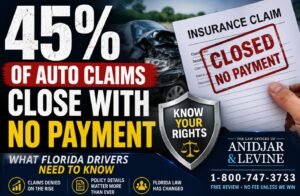
The Law Offices of Anidjar and Levine help people injured in car accidents protect their rights, investigate liability, and pursue compensation for medical expenses, lost income, and long-term effects such as chronic pain or reduced earning capacity. A Tallahassee Personal Injury Lawyer can preserve evidence, manage insurer communications, and address low settlement offers or bad faith conduct. Florida comparative negligence rules and claim deadlines can affect recovery, making early legal guidance important. The sections below explain how these cases are evaluated, documented, and pursued effectively.
Main Takeaways
- A Tallahassee car accident injury lawyer investigates fault, preserves evidence, and identifies all liable parties after a crash.
- Early legal guidance helps protect your rights, avoid harmful statements from insurers, and keep your claim on track.
- Strong claims rely on medical records, police reports, witness statements, photos, and proof of lost income and expenses.
- Florida comparative negligence can reduce compensation if you share fault, making careful case evaluation especially important.
- A lawyer can negotiate for fair compensation covering medical bills, lost wages, pain, and future treatment needs.


How We Can Help With Your Tallahassee Car Accident Injury Injury Claim
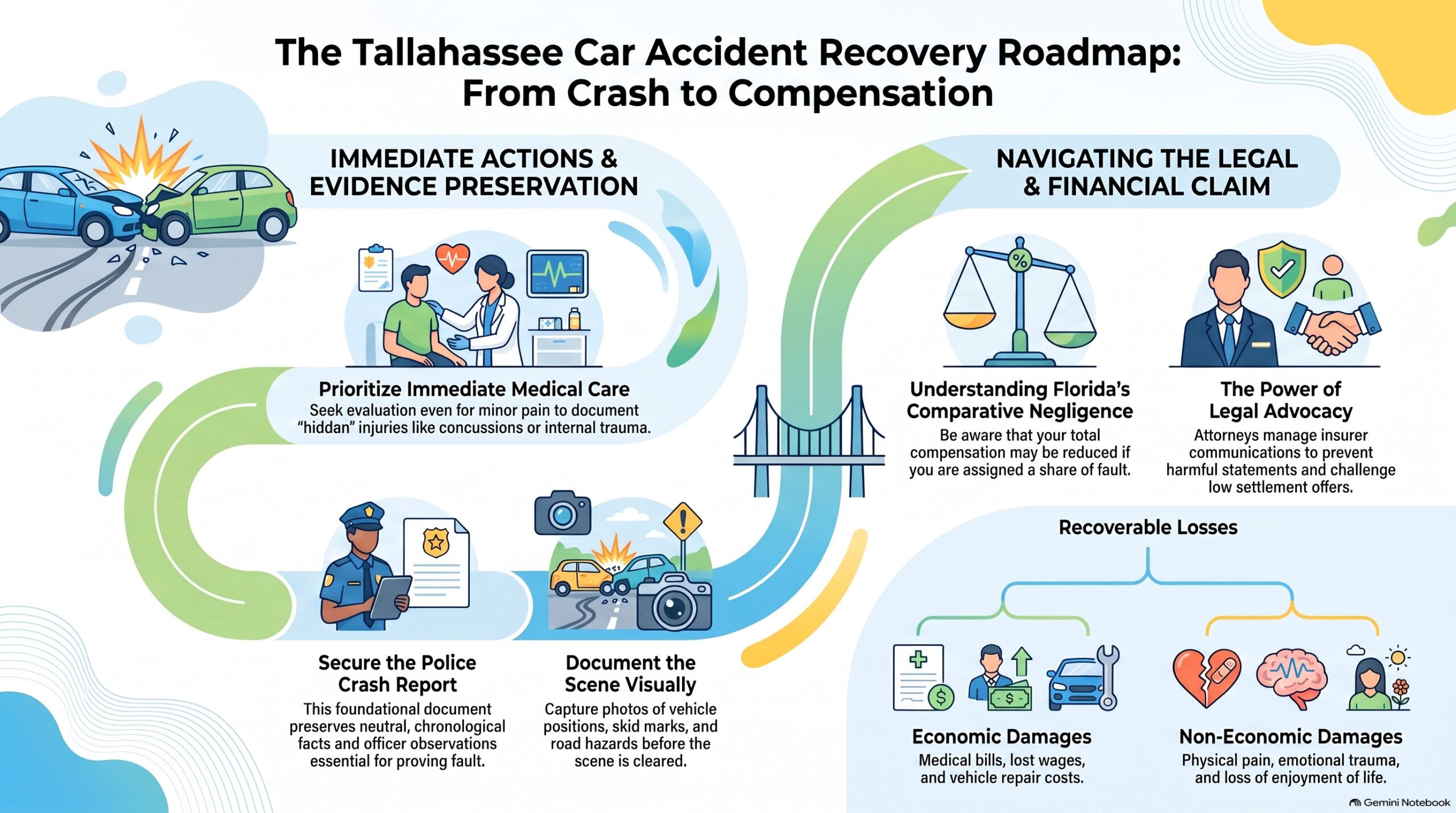
When a person is injured in a Tallahassee car accident, legal representation can provide structure, advocacy, and a clear path toward pursuing compensation. A law firm serves by organizing urgent tasks, protecting the client’s interests, and reducing burdens that often distract from recovery and family responsibilities. Early evidence preservation helps secure photographs, witness statements, records, and other materials before they are lost or challenged. A careful liability investigation also clarifies how the collision occurred and identifies all responsible parties.
Counsel then develops a settlement strategy tailored to the client’s losses, priorities, and long-term needs. Effective Negotiation tactics support productive discussions with insurers while resisting efforts to minimize harm or shift blame. Throughout the claim, the legal team communicates deadlines, prepares documentation, and presents the matter accurately and professionally. This support allows injured people and those who care for them to focus on recovery while their claim is advanced with diligence and respect.
OUR CONSULTATIONSARE FREE
START YOUR FREE CASE REVIEW

Understanding Tallahassee Car Accident Injury Cases
Beyond the practical help a law firm provides, a clear understanding of Tallahassee car accident injury cases helps explain how these claims are evaluated and why outcomes can vary. In many matters, the central questions involve liability, damages, documentation, and whether the injured person pursued appropriate medical care after the collision.
A careful review often includes police reports, witness statements, treatment records, employment losses, and related expenses. Insurance claim timelines can affect negotiations, because delayed reporting or incomplete submissions may weaken a file or postpone payment. Florida’s comparative negligence laws also affect damages, since compensation may be reduced when an injured person is assigned a share of fault.
For individuals committed to supporting family members and protecting community well-being, understanding these legal standards can encourage timely action and informed decisions. That knowledge helps people cooperate with counsel, preserve evidence, and approach the claims process with realism, patience, and a service-minded perspective.
Common Causes of Tallahassee Car Accident Injury
Several recurring factors contribute to car accident injuries in Tallahassee, and each presents distinct risks for motorists and passengers. Distracted driving, speeding and reckless driving, and drunk driving collisions remain leading causes of serious crashes, often resulting in substantial physical, financial, and legal consequences. Hazardous road conditions may also increase the likelihood of injury, particularly when poor visibility, roadway defects, or adverse weather reduce a driver’s ability to respond safely.
Distracted Driving Risks
Distracted driving remains one of the most persistent causes of car accidents in Tallahassee, because it diverts a driver’s attention from the road at pivotal moments. Even a brief texting distraction can prevent a motorist from noticing traffic signals, pedestrians, or sudden lane changes ahead. Driver inattention can also arise from using navigation systems, conversing with passengers, eating, or adjusting vehicle controls.
These preventable behaviors often leave innocent people facing painful injuries, financial strain, and difficult recovery periods. Communities that value service and public safety benefit when drivers adopt attentive habits and put others’ well-being first. Careful observation, hands-free preparation before travel, and a commitment to undivided focus can reduce unnecessary harm. In accident claims, evidence of distraction may play an important role in establishing fault and supporting accountability.
Speeding And Reckless Driving
Speeding and reckless driving also contribute significantly to car accidents in Tallahassee, often turning ordinary traffic conditions into serious collision hazards. Excessive speed reduces stopping distance, shortens reaction time, and increases impact force in crashes. Reckless conduct, including abrupt lane changes, tailgating, and ignoring traffic controls, places drivers, passengers, and pedestrians at unnecessary risk.
From a service-minded legal perspective, these cases often require careful investigation to identify preventable choices and their consequences. Serious injuries may demand extensive treatment, long-term support, and precise Damages Valuation. In the most devastating incidents, families may face losses that support a Wrongful Death claim. A Tallahassee car accident injury lawyer can help injured parties pursue accountability while protecting resources needed for recovery, stability, and continued care and compassion.
Drunk Driving Collisions
On Tallahassee roads, drunk driving collisions remain a persistent source of catastrophic injury and preventable death. Alcohol and drugs reduce reaction time, distort perception, and produce impaired judgment, placing every nearby driver, passenger, cyclist, and pedestrian at serious risk. These crashes often involve high speeds, delayed braking, lane departures, and devastating secondary impacts.
From a public service perspective, understanding liability in Florida helps injured people and their families pursue accountability and financial recovery. Evidence may include chemical test results, officer observations, witness statements, surveillance footage, and crash reconstruction findings. In some cases, liability may extend beyond the impaired driver when another party knowingly contributed to the danger. Careful legal evaluation can clarify available claims, protect crucial evidence, and support those seeking justice after a preventable collision.
Hazardous Road Conditions
Across Tallahassee, hazardous road conditions contribute to serious crashes by reducing traction, limiting visibility, and leaving drivers with less time to respond to sudden dangers. Potholes, uneven pavement, poor drainage, missing signs, malfunctioning signals, and obstructed intersections can place careful drivers and passengers at significant risk.
In many cases, failures in road maintenance allow preventable hazards to persist long after public agencies or contractors should have addressed them. Weather can worsen these conditions, especially when standing water, fallen debris, or faded lane markings make travel more uncertain. Vehicle defects may also intensify the danger when tires, brakes, or guidance systems cannot compensate for unsafe surfaces. When these factors combine, collisions often become more severe, and injured individuals may need informed guidance to protect their rights and support recovery.
Don’t Wait. Call Our Florida Personal Injury Lawyers Now!


Legal Rights of Tallahassee Car Accident Injury Victims
After a car accident in Tallahassee, injured victims retain important legal rights that may affect their medical care, financial recovery, and ability to hold a negligent party accountable. These rights often include access to treatment, the ability to pursue compensation, and protection from unfair claims practices, including denials of insurance coverage. In some cases, defects in a vehicle may also support a separate product liability claim, which can promote accountability and public safety for others.
Key protections commonly available include:
- the right to seek prompt medical evaluation and preserve records supporting injury claims
- the right to recover damages for losses, subject to applicable Florida law and filing deadlines
- the right to challenge low settlement offers or improper insurer conduct through legal counsel
A careful review of evidence, policies, and damages helps ensure that injured individuals are treated fairly. By asserting these rights responsibly, victims may secure resources needed for healing while advancing justice in service to their families and communities.
Why Do Tallahassee Car Accident Injury Injuries Happen?
Why do serious car accident injuries occur so often in Tallahassee? Several conditions combine to increase risk. High traffic volume near government offices, universities, and medical centers places many drivers, cyclists, and pedestrians in close proximity. Congested corridors, frequent lane changes, distracted driving, speeding, and impaired operation all contribute to violent collisions. Sudden storms and poor visibility can further reduce reaction time and roadway control.
In many cases, injury severity increases because larger vehicles share roads with smaller passenger cars, motorcycles, and pedestrians. Intersections often present elevated danger, especially when signals are ignored or turns are misjudged. For those committed to helping injured neighbors, understanding these causes supports prevention, compassionate advocacy, and informed community safety efforts. It also explains why cases may require careful Settlement negotiation strategies and thoughtful Long term rehab planning, particularly when fractures, spinal trauma, or brain injuries create lasting physical, financial, and caregiving burdens.
What Should You Do After a Tallahassee Car Accident Injury?
After a car accident in Tallahassee, the priority is to obtain immediate medical care, both to protect health and to document the extent of the harm. It is also important to gather evidence from the crash scene, including photographs, witness information, and any available official reports, as these materials may help establish how the collision occurred. Prompt contact with a car accident lawyer can help protect legal rights and ensure proper handling of insurance and injury claims.
Seek Immediate Medical Care
Because some car accident injuries are not immediately apparent, prompt medical evaluation is essential to protect both health and any future injury claim. Even when pain seems minor, conditions such as internal trauma, concussion, or a Neck Injury may worsen without timely treatment. Immediate care also creates a clear medical record that connects symptoms to the collision.
Those who wish to serve their families and communities well should recognize that responsible recovery begins with qualified medical attention. Emergency care, urgent care, or a primary physician can identify hidden injuries and recommend appropriate treatment. Following medical advice, attending every doctor follow-up, and monitoring new symptoms demonstrate a serious commitment to recovery. This practical step supports physical stability, preserves important documentation, and helps prevent avoidable complications during the subsequent healing process.
Gather Crash Scene Evidence
When conditions allow, gathering evidence at the crash scene can greatly strengthen a later injury claim and preserve facts that may otherwise be lost. Helpful actions include photographing vehicle positions, skid marks, roadway debris, weather conditions, visible injuries, and nearby signage. Names and contact information for witnesses should be collected carefully, since neutral observations often clarify disputed events.
A prompt request for the police report number is also useful. If practical, a person may note the apparent sequence of events, the direction of travel, and any unusual road hazards. Attention to details such as traffic signal timing, malfunctioning lights, or obstructed views can be important. Later, related materials, including Vehicle maintenance records, repair invoices, and towing receipts, may help create a more complete, service-oriented account of what occurred.
Contact A Car Accident Lawyer
Why does early legal guidance matter so much following a Tallahassee car accident injury? Prompt contact with a car accident lawyer helps protect the injured person’s rights, preserve key evidence, and prevent harmful statements to insurers. An attorney can evaluate liability, explain deadlines, and identify the full scope of losses, including future medical needs and reduced earning capacity.
For those committed to caring for family and community, timely counsel also supports responsible decision-making. Legal representation can organize records, communicate with carriers, and negotiate settlement terms that reflect the real impact of the collision. If an insurer delays, underpays, or misrepresents coverage, counsel can address possible insurance bad faith. Early action often strengthens a claim and reduces avoidable setbacks during recovery and the financial rebuilding process ahead.
Critical Evidence in a Tallahassee Car Accident Injury Case
In a Tallahassee car accident injury case, the strength of a claim often depends on the quality and preservation of key evidence gathered soon after the collision.
Important materials commonly include:
- Police crash reports and witness statements
- Scene photographs showing vehicle damage, road conditions, and traffic controls
- Medical treatment records that connect the injuries to the accident
Police Crash Report
Few documents carry more immediate evidentiary value after a Tallahassee car accident than the police crash report. Prepared soon after the collision, it preserves observations that may otherwise fade, including roadway conditions, driver statements, witness identities, and any citations issued. For families focused on service, accountability, and recovery, this report often becomes a foundational record.
In many claims, the report assists in proving fault by organizing facts in a neutral, chronological manner. Insurers and attorneys review it closely when evaluating liability, injuries, and disputed events. If litigation follows, Police Officer Testimony may further explain the report’s findings, investigative steps, and conclusions. Although not always conclusive on its own, a thorough crash report can strongly support a fair evaluation of the harm suffered and the help needed afterward.
Scene Photo Evidence
Scene photo evidence often works alongside the police crash report by showing the collision environment as it appeared before vehicles were moved and conditions changed. Images can document lane markings, debris patterns, skid marks, weather, lighting, and roadway obstructions with clarity that supports careful evaluation.
When preserved promptly, photographs may help advocates, insurers, and investigators understand how the event unfolded and identify facts that serve all involved parties fairly. They can be compared with GPS data, vehicle telemetry, surveillance footage, and a dashcam recording to confirm timing, direction, and points of impact. Wide-angle views and close-up images may reveal traffic control devices, property damage, and sightline limitations. In a Tallahassee car accident injury case, this visual record can strengthen accountability by providing objective, scene-specific details.
Medical Treatment Records
Accurate medical treatment records often become some of the most important evidence in a Tallahassee car accident injury case because they connect the collision to the injuries, the care provided, and the patient’s recovery course. These records may include emergency evaluations, imaging results, physician notes, prescriptions, therapy logs, and recommendations for future treatment.
When consistently maintained, they help establish the timing, severity, and practical impact of injuries on daily functioning. They also support fair valuation of damages by showing costs, limitations, and expected recovery needs. In many cases, medical records work alongside Crash scene documentation to create a clearer narrative of what occurred. They can also strengthen liability proof when the documented symptoms align with the mechanics of the impact. Careful recordkeeping serves injured people by preserving accurate, credible evidence for insurers and courts.
Witness Statements
Because independent recollections can confirm or challenge drivers’ accounts, witness statements often play a central role in a Tallahassee car accident injury case. Neutral observers may describe speed, traffic signals, road conditions, and conduct immediately before impact, offering facts that support fair accountability and informed decisions.
Attorneys commonly seek names, contact information, and recorded accounts as soon as possible, since memories can fade and outside influence may alter details. Prompt evidence preservation helps maintain accuracy and strengthens the overall claim. In some matters, witness protection concerns also arise, particularly when a person fears pressure, retaliation, or repeated contact. Careful handling of statements, respectful communication, and proper documentation enable these individuals to support the legal process while advancing the broader goal of justice for injured community members.
Long-Term Effects of Tallahassee Car Accident Injuries
Car accident injuries in Tallahassee may produce consequences that extend well beyond the initial medical treatment and recovery period. Many individuals face chronic pain that disrupts daily functioning, emotional trauma that affects mental health and personal stability, and financial burdens that continue through ongoing care and lost income. These long-term effects often shape the overall impact of a claim and warrant careful consideration in any injury case.
Chronic Pain Challenges
Although many collision-related injuries appear to improve within weeks, chronic pain can persist long after a Tallahassee car accident and interfere with nearly every aspect of daily life. Ongoing discomfort may limit mobility, disrupt sleep, reduce work capacity, and complicate basic household responsibilities.
For those committed to caring for family members and supporting their communities, these limitations can become especially burdensome. Medical providers often recommend Pain management options such as physical therapy, medication oversight, targeted exercise, or interventional care, depending on the injury and the patient’s response. Consistent follow-up remains important because documenting symptom progression helps physicians adjust treatment and helps establish the lasting impact of the injury. When pain becomes a daily obstacle, careful evaluation and steady support may improve function, preserve independence, and strengthen long-term recovery outcomes.
Emotional Trauma Effects
Physical injuries are often accompanied by emotional trauma that continues well after the immediate medical recovery period. Many individuals experience anxiety, depression, sleep disruption, irritability, and persistent fear when traveling. These effects can strain family relationships, reduce concentration, and limit a person’s ability to participate in daily service, work, or community responsibilities.
Care teams and legal advocates often encourage careful post-accident documentation of emotional symptoms, counseling visits, and behavioral changes. Thorough records help demonstrate the full impact of the collision while supporting appropriate care planning. In addition, informed settlement negotiation strategies may account for psychological harm, especially when trauma interferes with ordinary routines and meaningful relationships. A compassionate, organized response can promote stability, strengthen recovery, and help affected individuals regain confidence, emotional balance, and a renewed sense of purpose.
Lasting Financial Burdens
Mounting expenses often become one of the most disruptive long-term consequences of a collision injury in Tallahassee. Medical bills may continue for months or years, especially when rehabilitation, surgery, medication, or supportive care remains necessary. Lost income can intensify hardship when an injured person cannot return to prior work or must reduce hours to recover.
Financial strain may also increase due to vehicle damage, transportation costs, and ongoing household adjustments. Insurance claim timelines can delay payment, leaving families to cover urgent needs while they wait for resolution. In severe cases, diminished earning capacity limits future stability and affects a household’s ability to support others in need. Careful legal guidance often helps injured individuals pursue fair compensation, protect critical resources, and reduce avoidable setbacks during recovery and rebuilding.
Proving Liability in Tallahassee Car Accident Injury Cases
When a Tallahassee car accident injury claim is pursued, proving liability requires clear evidence that another party’s negligence directly caused the collision and the resulting harm. Useful proof often includes police reports, photographs, witness statements, medical records, and testimony from accident reconstruction professionals. These materials help establish duty, breach, causation, and damages with credible detail.
Florida’s Comparative negligence rules may reduce recovery if an injured person shares responsibility, making careful factual development crucial. A thorough review of traffic laws, roadway conditions, vehicle damage, and driver conduct can clarify how the crash occurred and who should be held accountable. Prompt action also matters because Insurance claim deadlines and other legal time limits can affect the preservation of evidence. By organizing documentation early and presenting facts accurately, a claim can better reflect the full scope of harm. This disciplined approach supports fair outcomes and helps injured individuals pursue accountability in a manner that respects community well-being.
Don’t Wait. Call Our Florida Personal Injury Lawyers Now!
Dealing With Insurance Companies After a Tallahassee Car Accident Injury Injury
After a Tallahassee car accident injury, dealings with insurance companies often shape the pace and value of a claim. Insurers may request recorded statements, broad medical authorizations, or quick settlements before the full extent of harm is known. A careful approach helps protect the injured person and supports fair treatment for all involved.
Clear communication, organized records, and prompt notice to the carrier are crucial. Claimants benefit from keeping copies of correspondence, bills, photographs, and repair estimates, and from following practical evidence-preservation tips from counsel or trusted professionals. Adjusters evaluate consistency, so inaccurate timelines or casual comments can weaken credibility. Attention to State filing deadlines also matters, because delay may affect important rights. Many families focused on service to others appreciate guidance that reduces conflict and keeps the matter factual. Legal support can help interpret policy language, respond to pressure tactics, and present losses to insurers in a disciplined, well-documented manner.
What to Expect During a Tallahassee Car Accident Injury Injury Claim Process
A Tallahassee car accident injury claim process generally begins with initial filing steps, followed by the collection of evidence and supporting documentation to establish liability and damages. The matter often proceeds into insurance company negotiations, where the value of the claim and the strength of the supporting record can materially affect the outcome. If a fair resolution is not reached, the process may advance to settlement discussions under increased pressure or, when necessary, to formal litigation.
Initial Claim Steps
Because the earliest actions can substantially affect the outcome of a claim, the process typically begins with prompt medical evaluation, careful documentation of the accident, and timely notice to the applicable insurance carrier. Early treatment supports recovery and creates crucial Medical documentation that links injuries to the collision.
After initial care, the injured person typically reports the crash to the insurer and follows the insurer’s basic claim instructions. Effective insurance communication often includes confirming policy information, identifying the parties involved, and responding accurately to reasonable requests. Many individuals also choose legal guidance at this stage so obligations are understood and avoidable mistakes are reduced. A lawyer may help coordinate notice requirements, protect the claimant’s interests, and encourage an organized, service-minded approach that respects all parties and promptly pursues fair consideration under Florida law.
Evidence And Documentation
When a car accident injury claim moves beyond the initial report, the quality of the evidence often becomes a central factor in how insurers evaluate liability, causation, and damages. Thorough documentation may include medical records, photographs of injuries and vehicle damage, repair estimates, and records showing missed work or reduced earning capacity. Statements from witnesses and police officer statements can help clarify how the collision occurred and whether traffic laws were violated. In some cases, dashcam footage, surveillance video, or electronic vehicle data may provide objective support for disputed facts. Organized evidence allows advocates and families to present the claim in a careful, service-minded manner that respects truth and promotes accountability. Prompt collection is important because memories fade, scenes change, and certain records may become harder to obtain over time.
Insurance Company Negotiations
Early negotiations with an insurance company often begin soon after medical treatment starts and basic accident records become available. Adjusters typically request statements, review repair estimates, and compare medical records with the reported mechanism of injury. Their goal is to measure exposure, verify damages, and identify any policy exclusions that may limit payment under the claim.
During this stage, careful communication serves the injured person and protects the integrity of the file. Inconsistent descriptions, missing bills, or delayed treatment may invite dispute or even a wrongful denial. A car accident injury lawyer in Tallahassee often organizes supporting records, clarifies timelines, and responds to insurers’ questions accurately. This approach promotes fair evaluation while helping families, caregivers, and community-minded individuals remain focused on recovery and practical daily responsibilities.
Settlement Or Litigation
Although many car accident claims resolve through negotiated settlement, some proceed to litigation if liability, causation, or the value of damages remains disputed. In these matters, counsel evaluates medical records, witness statements, and policy terms to determine whether an Insurance dispute can be resolved efficiently and fairly.
A careful settlement strategy often includes demand letters, continued documentation, and mediation options that encourage constructive resolution while protecting the injured person’s long-term needs. If negotiations fail, formal filing begins, followed by discovery, depositions, and motion practice. During this stage, trial preparation becomes critical, because timelines tighten and evidence must be organized with precision. Whether through agreement or courtroom proceedings, the process is designed to pursue accountability, secure appropriate compensation, and support recovery in a manner that respects everyone involved.
Compensation for Tallahassee Car Accident Injury Damages
Because Florida law permits injured motorists to pursue financial recovery beyond no-fault benefits in qualifying cases, compensation for Tallahassee car accident injury damages may include both economic and non-economic losses. In practice, the amount available often depends on the severity of harm, the strength of medical evidence, and the ability to connect losses directly to the collision.
A careful legal approach may help protect resources needed for recovery and continued service to family and community. Attorneys often assess policy limits, review records, and apply effective Negotiation tactics when dealing with insurers. They may also identify undervaluation, delays, or unfair denials that could support insurance bad faith claims under Florida law. Compensation can also be influenced by comparative fault, available coverage, and the long-term effect of injuries on daily responsibilities. By presenting organized proof and credible expert support, counsel may improve the likelihood of a result that reflects the claimant’s full legal entitlement under Florida law.
Economic vs Non-Economic Damages in Tallahassee Car Accident Injury Cases
In Tallahassee car accident injury cases, damages are generally divided into economic and non-economic categories, each addressing a different form of loss. Economic damages commonly include medical expenses, lost wages, reduced earning capacity, and other measurable financial costs, while non-economic damages often involve pain and suffering, emotional distress, and loss of enjoyment of life. Establishing the value of either category typically depends on records, expert opinions, and evidence showing how the injury has affected the claimant’s finances and daily functioning.
Types Of Economic Losses
Economic losses refer to the measurable financial harm a person suffers after a car accident, and they often form the foundation of a personal injury claim in Tallahassee. These damages usually include emergency care, hospital bills, rehabilitation costs, prescription expenses, and future medical treatment supported by records and expert review.
They also cover income lost due to injury. A careful Lost wages calculation may consider missed workdays, reduced hours, lost benefits, and diminished earning capacity when injuries limit future employment. In addition, vehicle repair or replacement costs are commonly proven through property damage estimates, towing invoices, storage fees, and rental car charges. Other recoverable losses may include out-of-pocket transportation expenses, household services the injured person can no longer perform, and necessary medical equipment. Accurate documentation helps families pursue fair financial recovery responsibly.
Common Non-Economic Harm
While financial records often show what a crash cost, non-economic harm addresses the human impact that cannot be measured by invoices or wage statements alone. These losses often include physical pain, reduced enjoyment of daily life, emotional trauma, anxiety, sleep disruption, and strain on family relationships.
In Tallahassee car accident cases, common non-economic harm reflects how an injury changes a person’s ability to live, care for others, and participate in meaningful routines. Pain severity may affect mobility, concentration, and independence, even when treatment bills capture only part of the overall burden. Lasting discomfort can interfere with parenting, community service, and ordinary tasks that once seemed simple. By recognizing these personal harms, the legal process acknowledges that recovery involves more than finances and that human dignity merits careful consideration.
Proving Damage Value
Assigning a fair damage value requires more than listing bills or describing pain, because each category of loss must be supported by credible evidence and tied to the crash itself. Economic damages often include medical expenses, lost wages, rehabilitation costs, and future care needs, all of which are documented through records, invoices, and expert opinions. Non-economic damages, such as pain, emotional distress, and diminished quality of life, require testimony, treatment history, and evidence of consistent daily impact. Video footage preservation can strengthen both categories by confirming injury severity, vehicle damage, and post-collision limitations. A clear proving-fault timeline also supports valuation, because insurers often dispute whether losses came from the collision or another cause. Careful documentation helps injured people seek resources needed for recovery, family stability, and continued service to others in their communities.
When a Tallahassee Car Accident Injury Case Goes to Trial vs Settlement
Determining whether a Tallahassee car accident injury case proceeds to trial or settles depends on several practical and legal factors, including the strength of the evidence, the extent of the injuries, the amount of disputed damages, and the parties’ willingness to negotiate in good faith.
In many cases, settlement is favored when liability is clear, and settlement valuation reasonably reflects medical losses, lost income, and future care needs. Negotiation leverage often increases when records, witness statements, and expert opinions strongly support the injured person’s position. A case may move toward trial when fault remains contested, damages are sharply disputed, or an insurer refuses fair compensation. At that stage, counsel may refine trial strategy by organizing evidence, preparing testimony, and evaluating how jury selection could affect presentation of the case. Although a trial can offer accountability and a fuller hearing of disputed facts, a settlement may provide faster closure, lower costs, and greater certainty, allowing families to focus on recovery and community responsibilities.
Don’t Wait. Call Our Florida Personal Injury Lawyers Now!
Florida Laws That May Affect Your Tallahassee Car Accident Injury Case
Several Florida laws can shape the outcome of a Tallahassee car accident injury case, affecting both the right to recover compensation and the amount ultimately available.
These rules often determine liability, available insurance benefits, and procedural obligations, making careful compliance crucial for those seeking fair results while remaining focused on others’ well-being.
- Comparative Negligence may reduce compensation when an injured person is found partly responsible for the crash.
- Florida’s no-fault framework can require injured parties to pursue Personal Injury Protection benefits before seeking broader damages.
- Statute Deadlines may affect notice requirements, insurance submissions, and other filing responsibilities tied to a claim’s progress.
Additional laws may influence recoverable damages, treatment documentation, and claims involving government entities or uninsured drivers. In service-minded communities, understanding these legal standards can help injured people act responsibly, protect financial recovery, and support accountability in a manner that respects everyone affected by the collision.
The Statute of Limitations for Tallahassee Car Accident Injury Injury Cases
Although a car accident claim may appear straightforward at first, the statute of limitations can decisively affect whether an injured person may pursue compensation in court. In Florida, filing deadlines generally limit how long a person has to bring a negligence action after a collision. Missing that window can prevent recovery, even when injuries, property damage, and fault seem clear.
This time limit matters in Tallahassee, where seasonal traffic patterns, university travel, and government commuting can complicate when injuries are discovered and documented. Prompt attention to records, treatment dates, and insurance communications helps preserve accountability and supports those seeking fair outcomes for others affected by a crash. Questions about Commuter coverage options may also arise, but policy issues do not, by themselves, extend a court deadline. Because facts vary, careful review of the crash date, later medical findings, and any statutory exceptions remains critical. Timeliness protects both legal rights and the broader goal of responsible community care.
How a Tallahassee Car Accident Injury Lawyer Can Help You
Once filing deadlines and notice requirements are understood, attention often turns to the practical steps required to build a strong injury claim. A Tallahassee car accident injury lawyer helps by organizing evidence, valuing losses, and presenting a clear demand that reflects both economic harm and pain and suffering.
A Tallahassee car accident injury lawyer helps turn evidence and losses into a clear, well-supported claim for compensation.
- Reviews crash reports, medical records, witness statements, and insurance communications to identify liability and document damages.
- Calculates current and future losses, including treatment costs, lost income, rehabilitation needs, and other effects on a family’s ability to serve others.
- Handles negotiations with insurers and opposing counsel, while preparing a persuasive case if settlement efforts do not produce fair compensation.
Counsel also helps clients avoid damaging statements, comply with procedural rules, and understand available remedies. In severe cases, guidance may extend to Wrongful death considerations, estate-related issues, and the preservation of evidence necessary to protect surviving family members and the broader interests they represent.
When to Contact a Tallahassee Car Accident Injury Lawyer
When should an injured person contact a Tallahassee car accident injury lawyer after a collision? Contact should occur as soon as practical, especially when injuries, disputed fault, or significant property damage are present. Early guidance may help preserve records, identify witnesses, and support a careful response to communications from Aftermath Insurance. Prompt action also helps families focus on recovery and on meeting obligations to employers, caregivers, and others depending on them.
An injured person should also seek legal guidance when medical treatment is ongoing, when an insurer requests statements, or when deadlines may affect a claim. Florida statutes establish time limits and procedural requirements that can influence available options. Contact may be wise if a crash involved a government vehicle, a commercial driver, an uninsured motorist, or a fatal injury affecting surviving relatives. Reaching out early can help ensure that important documents, photographs, and repair estimates are organized before details fade or evidence disappears over time.
Why You Need an Experienced Tallahassee Car Accident Injury Lawyer
Early contact with counsel is only part of protecting a car accident claim, because the value of that contact often depends on the lawyer’s level of experience. An experienced Tallahassee car accident injury lawyer understands how insurers evaluate losses, challenge liability, and limit compensation. That knowledge helps preserve evidence, frame damages properly, and prevent avoidable mistakes that can weaken a deserving claim.
Experience also matters when a case affects families, caregivers, and the broader community. Skilled counsel can apply effective Negotiation Tactics, assess medical records with care, and respond to defense strategies without unnecessary delay. Clear guidance on Settlement Timelines helps injured people make informed decisions while continuing to support those who rely on them. When litigation becomes necessary, seasoned representation improves preparation, strengthens advocacy, and promotes accountability. In serious collisions, experience is not merely helpful; it often shapes whether a claim reflects the full human and financial impact of the injury and losses.
How to Choose the Right Tallahassee Car Accident Injury Lawyer for Your Case
The right Tallahassee car accident injury lawyer should be selected based on a careful review of experience, communication, and case strategy rather than on advertising alone. A qualified attorney should understand Florida injury law, local court procedures, and the practical steps needed to protect injured people and their families after a collision.
Evaluation should include prior results in comparable cases, responsiveness, and a clear explanation of fees and expectations. Client communication is especially important because consistent updates enable families to make informed decisions while they focus on recovery and daily responsibilities. An attorney should also explain likely settlement timelines without making unrealistic promises, since each claim depends on medical treatment, insurance disputes, and available evidence.
Professionalism, preparation, and compassion for those affected should guide the decision. When a lawyer demonstrates credibility, organization, and respect for service-minded clients, that representation is more likely to support both fair compensation and a stable path forward after a serious accident.
About The Law Offices of Anidjar & Levine
Because injured drivers and passengers often need both legal guidance and practical support, The Law Offices of Anidjar & Levine offers services focused on responsive representation after serious collisions.
The firm emphasizes accessibility, timely communication, and attention to the immediate pressures clients face as they recover and care for their families.
Its approach generally includes a structured Client intake process designed to efficiently gather facts, identify urgent needs, and explain available legal options.
Through a clear case-evaluation process, the firm reviews accident details, medical records, insurance issues, and potential liability before recommending a course of action.
This method helps clients make informed decisions while preserving evidence and protecting their interests.
The Law Offices of Anidjar & Levine also highlights service-oriented advocacy, recognizing that legal representation can support broader stability for households affected by injury.
In that way, the firm positions itself as a resource for those seeking accountable counsel and practical assistance during difficult periods.
Frequently Asked Questions
Can I Switch Lawyers During My Car Accident Case?
Yes, a person may usually switch lawyers during a car accident case, provided the change does not unfairly disrupt proceedings or harm service to those affected. Before changing counsel, Conflict Resolution Options should be considered, especially if communication issues can be remedied. If replacement remains necessary, the Attorney Transfer Process typically involves notifying current counsel, signing new representation documents, and addressing fees, case files, and any court approval requirements.
Will My Case Details Remain Confidential With Your Law Firm?
Yes, case details generally remain confidential with the law firm, subject to attorney-client privilege and professional ethics rules. This Confidentiality Assurance helps protect sensitive information shared for legal guidance and advocacy. Privacy Protection measures also support secure handling of records, communications, and personal data. A reputable firm maintains strict internal practices so clients may pursue justice, support recovery, and serve their families and communities without unnecessary exposure or disclosure.
Do I Need a Lawyer for a Minor Car Accident?
A lawyer may not be necessary for every minor car accident, but legal guidance often helps protect all parties. When treating injuries, even modest ones, proper documentation by a doctor can clarify the extent of harm and future needs. Counsel may also assist with insurance negotiations, especially if fault is disputed or costs increase. Those seeking to serve others responsibly often benefit from informed advice before accepting settlements or waiving important rights.
How Are Attorney Fees Paid in a Car Accident Case?
Attorney fees in a car accident case are often paid through a contingency payment arrangement, meaning counsel receives a percentage of any settlement or verdict recovered. This structure can help injured people pursue justice while preserving resources for care and service to others. Retainer requirements are usually limited or waived in these matters, though case expenses, such as filing fees or expert costs, may be deducted according to the representation agreement.
Can I Still Pursue a Claim if I Was Uninsured?
Yes, an uninsured person may still pursue a claim after a collision, depending on fault, state law, and available policy coverage. Claim eligibility often turns on whether another driver caused the crash and whether that driver carried liability insurance. Uninsured motorist benefits may also matter if such coverage exists through a household policy. Careful review of insurance terms and accident facts helps protect rights and support a lawful recovery process.
—————————
A Tallahassee car accident injury claim may involve medical, financial, and legal concerns that require careful attention.
Injured individuals can benefit from understanding their rights, determining the cause of the collision, and promptly seeking legal guidance.
With experienced representation, they may be better positioned to pursue compensation for their losses and protect their interests throughout the claims process.
Tallahassee Personal Injury Lawyer: The Law Offices of Anidjar and Levine provides support focused on pursuing a fair and informed resolution.