

The Law Offices of Anidjar and Levine help Brevard County truck crash victims investigate whether driver fatigue, vehicle defects, overweight loads, or improper cargo securement contributed to their injuries. The team works to preserve evidence such as driver logs, maintenance records, loading documents, and witness accounts before it becomes unavailable. They can explain potential claims, responsible parties, insurance concerns, and important deadlines. Every case depends on its facts, and a trucking regulation violation alone doesn’t establish liability. Learn more from a Brevard County Personal Injury Lawyer. The sections below explain what these cases may involve.
Main Takeaways
- A Brevard County truck accident lawyer can investigate whether trucking regulations or unsafe loading contributed to the crash.
- Federal and state rules may govern driver qualifications, hours of service, vehicle maintenance, cargo securement, and truck weight.
- Improperly secured, overloaded, or unevenly distributed cargo can shift, spill, destabilize a truck, or increase stopping distance.
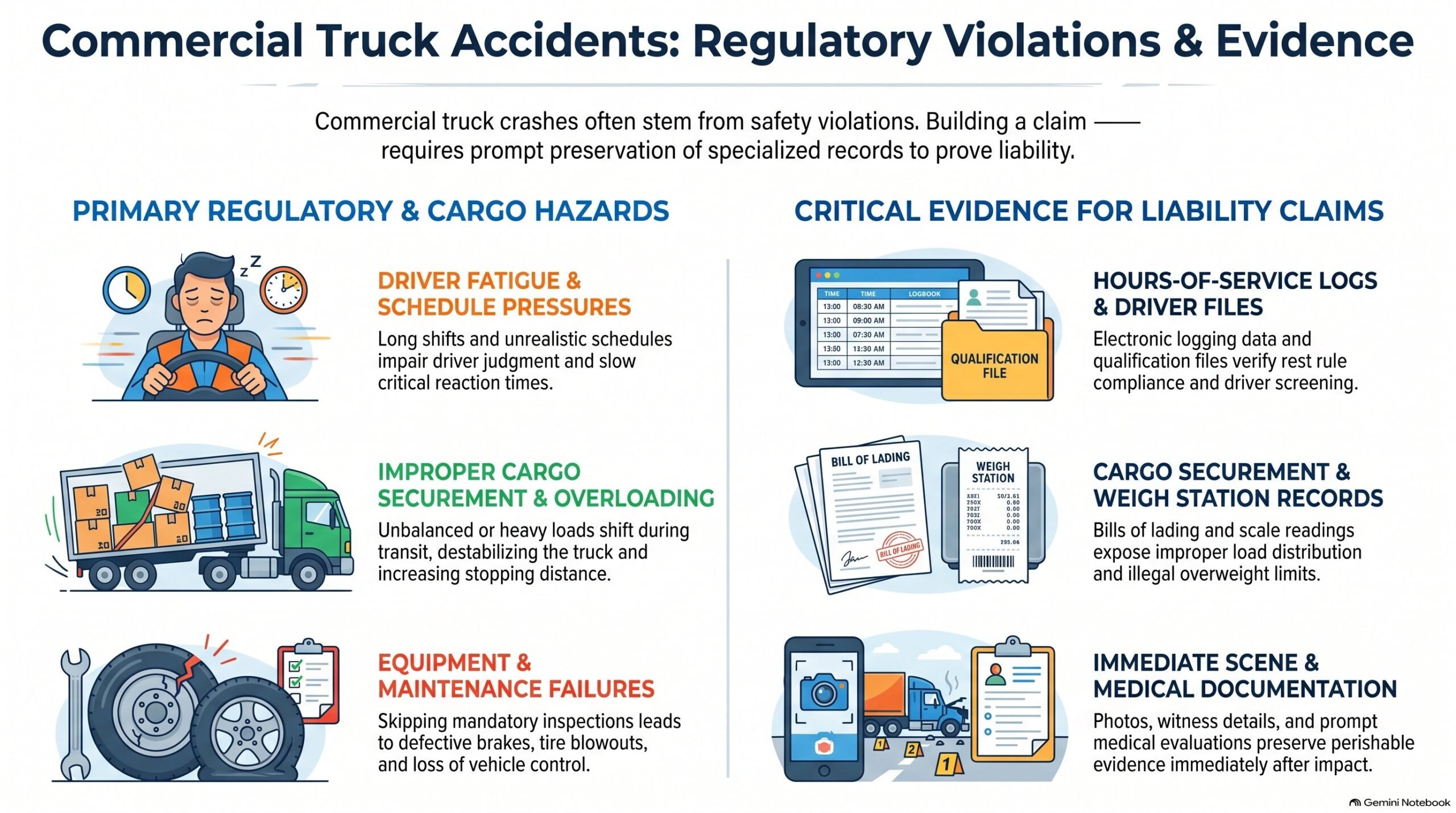
- Evidence may include driver logs, inspection and maintenance records, bills of lading, loading documents, restraint records, and weigh-station data.
- Potentially responsible parties may include the driver, carrier, cargo loader, maintenance contractor, vehicle owner, or manufacturer.


How We Can Help With Your Brevard County Truck Accident Trucking Regulations & Loading Injury Claim
We investigate whether trucking violations or unsafe cargo loading contributed to your Brevard County crash. We also assess how your injuries have affected your health, work, and ability to care for those who depend on you. Our goal is to help you pursue accountability while protecting your interests throughout the process.
We gather available records, identify witnesses, and preserve relevant evidence before it becomes harder to obtain. We communicate with insurers on your behalf and carefully review settlement proposals, explaining your options so you can make informed decisions. If a responsible party disputes your claim, we prepare a clear, evidence-based response.
During a legal consultation, we’ll listen to your concerns, discuss potential next steps, and explain how our team may assist. We’ll outline a Claim timeline based on the facts and applicable deadlines, while keeping you informed as the matter progresses. You can focus on recovery and supporting your family while we handle communications and legal tasks with diligence and respect.
OUR CONSULTATIONSARE FREE
START YOUR FREE CASE REVIEW

Understanding Brevard County Truck Accident Trucking Regulations & Loading Injury Cases
When a commercial truck crash involves suspected regulatory violations or improperly secured cargo, understanding how those factors contributed to the collision can help clarify your claim. We can examine the applicable federal and state requirements, including rules governing driver qualifications, vehicle maintenance, and cargo securement. FMCSA compliance may help show whether a carrier followed its safety responsibilities, but a violation alone does not establish liability. We must connect the evidence to the crash and resulting injuries.
In these cases, records can reveal how decisions were made and whether carrier oversight met required standards. We may review inspection reports, driver logs, bills of lading, loading documentation, and company policies. Photos, witness accounts, and expert analysis can help explain how the truck’s condition or load affected the event. Preserving relevant evidence promptly matters because records may be changed, lost, or discarded.
We’ll assess the available facts, identify potentially responsible parties, and explain how the evidence may support your claim and recovery.
Common Causes of Brevard County Truck Accident Trucking Regulations & Loading
We often find that truck crashes in Brevard County stem from driver fatigue, improperly secured cargo, or overloaded vehicles. These conditions can impair control or cause cargo to shift, increasing collision risk. Equipment failures may also contribute, so we’ll examine how these hazards arise and affect accident claims.
Driver Fatigue
Why do truck drivers become fatigued on Brevard County roads? Long shifts, overnight routes, demanding schedules, and limited opportunities for quality sleep can leave drivers less alert. Disruption of the circadian rhythm may make it especially difficult to stay focused during hours when the body naturally expects rest. Fatigue can slow reaction time, impair judgment, and make it harder to recognize changing traffic conditions on busy roads.
Federal hours-of-service rules limit driving time and require rest periods, but violations or inadequate recovery can still put everyone at risk. Employers and drivers should use fatigue countermeasures, including realistic scheduling, consistent sleep routines, and stopping when warning signs arise. When we investigate a truck crash, we can review driving logs, schedules, and other records to determine whether fatigue may have contributed. This work helps protect injured people and promote safer roads for all.
Improper Cargo Securement
Improperly secured cargo can shift, spill, or fall from a truck, creating serious hazards on Brevard County roads. When restraints are missing, damaged, or poorly applied, a sudden stop or sharp turn may cause cargo to shift, destabilizing the vehicle or sending debris into traffic. Proper load distribution and securement help keep freight stable throughout a trip. Drivers and carriers must inspect tie-downs, blocking, and other restraints before departure and during travel when conditions require. We can help you investigate whether a failure to follow safety rules contributed to a crash and identify those responsible. If you or someone you love has been injured, prompt action can preserve evidence and support a fair claim. Our focus is on protecting your rights and helping you pursue accountability.
Overloaded Trucks
When a truck carries more weight than its legal or safe limit, it may take longer to stop, strain its tires and brakes, or become difficult to control on Brevard County roads. Overloaded trucks can put nearby drivers, passengers, and pedestrians at risk, especially in heavy traffic or during sudden stops.
Florida weight limits govern how much a commercial vehicle may carry, while axle distribution affects how that weight is spread across the truck. A load may exceed a lawful limit overall or place too much weight on particular axles. Carriers and drivers should verify cargo weight, review scale records, and follow applicable rules before a trip. When we investigate a crash, we can examine loading documents, inspection records, and other evidence to determine whether excess weight contributed to the collision and identify responsible parties.
Equipment Failures
A truck’s brakes, tires, guidance system, or lights can fail, leaving the driver unable to respond safely to traffic conditions on Brevard County roads. Brake defects may prevent a truck from stopping promptly, while tire blowouts can cause a driver to lose control, especially at highway speeds. Faulty direction components, worn suspension parts, and defective lights can also contribute to collisions. Carriers and drivers must inspect equipment, address reported problems, and follow required maintenance schedules. When they neglect these responsibilities, other road users may face preventable danger. If you or someone you care about has been injured, we can help examine maintenance records, inspection reports, and repair histories. These details may show whether a mechanical failure resulted from inadequate upkeep, a missed warning, or another preventable safety violation.
div style=”background: #c8922a; padding: 8px 32px; text-align: center;”>Free Consultation — Available 24/7
Don’t Wait. Call Our Florida Personal Injury Lawyers Now!


Legal Rights of Brevard County Truck Accident Trucking Regulations & Loading Injury Victims
Federal trucking regulations govern driver hours, vehicle maintenance, cargo securement, and weight limits, and violations can contribute to serious crashes or loading injuries in Brevard County.
If you’re injured, we can help you understand your rights and pursue accountability while protecting your ability to support others who depend on you.
- You may seek compensation for medical expenses, lost income, pain, and other legally recognized losses.
- Workers may have a Right to refuse unsafe work under applicable protections, though the facts and employment circumstances matter.
- Drivers and workers may have cargo inspection authority or related duties under company policies and regulations. Records can help establish what happened.
- You can preserve evidence, report the incident, and consult an attorney before accepting a settlement or signing documents that could limit your claim.
We’ll assess available records, explain potential claims against responsible parties, and help you meet important deadlines. Prompt legal guidance can preserve options and support a fair resolution for you and your family.
Why Do Brevard County Truck Accident Trucking Regulations & Loading Injuries Happen?
Brevard County truck crashes and loading injuries often occur when companies or workers fail to follow safety rules for driver hours, vehicle maintenance, cargo securement, or weight limits. These failures can put truck occupants, nearby motorists, and roadside workers at risk. When employers pressure drivers to meet unrealistic schedules, fatigue may reduce attention and slow responses. Skipped inspections can leave worn brakes, damaged tires, or faulty lights undiscovered until a truck enters traffic.
Improperly secured cargo may shift during turns or sudden stops, while overloaded vehicles can take longer to brake and become harder to control. Loading crews also face danger when they distribute weight unevenly or leave equipment and materials in unsafe positions. Work zone hazards, including narrow lanes and changing traffic patterns, can increase collision risks, especially when drivers face poor visibility due to darkness, rain, or road spray. By understanding these causes, we can better recognize how preventable safety failures harm people who serve and travel throughout Brevard County.
What Should You Do After a Brevard County Truck Accident Trucking Regulations & Loading Injury?
After a truck accident involving a possible trucking regulation or loading violation, seek medical care promptly, even if your injuries seem minor. We can document the scene by photographing vehicles, road conditions, and visible injuries, and by collecting witness contact information. We should also contact a truck accident lawyer, who can help preserve evidence and assess our legal options.
Seek Medical Care
Even if you feel only minor pain after a truck crash, seek medical care promptly because some injuries may not become apparent right away. Call 911 if anyone needs urgent help, and follow the dispatcher’s instructions. If you can travel safely, visit an Emergency room for severe pain, head trauma, breathing problems, or other urgent symptoms. For less urgent concerns, contact a healthcare provider as soon as possible and explain that a commercial truck collision caused your symptoms. Follow the recommended treatment plan, attend follow-up appointments, and tell your provider about any changes in your condition. Ask whether you need a Specialist referral for injuries requiring focused evaluation or ongoing care. Prompt treatment supports your recovery and helps us protect your health, so we can continue caring for ourselves and those who depend on us.
Document The Scene
If it’s safe, document the truck accident scene before vehicles or cargo are moved. Use your phone to Photograph vehicle positions, damage, skid marks, debris, traffic signs, and road conditions from several angles. Include the truck’s company name, license plate, and any visible cargo or loading issues, but don’t enter unsafe areas or interfere with emergency responders. Note the time, location, weather, and anything you observed before impact while your memory is fresh. Record witness details, including names and contact information, and ask what they saw without suggesting answers. Preserve relevant messages, receipts, and other records, and keep original photos unchanged. If you’re injured or overwhelmed, ask a trusted person to help. Careful documentation can support an accurate account and help protect everyone affected.
Contact A Truck Accident Lawyer
A truck accident lawyer can help us protect our rights and identify evidence that may not remain available for long. After receiving medical care, we can contact counsel to discuss the crash, our injuries, and any concerns about trucking regulations or cargo loading. We should preserve photographs, witness details, medical records, and communications, but avoid speculating about fault or signing insurer documents before we comprehend their effect.
During a Free consultation, we can ask how the attorney will investigate driver conduct, company policies, loading practices, and potential regulatory violations. We should also consider attorney experience with commercial truck claims and the resources available to examine records and preserve evidence. By seeking guidance promptly, we can make informed decisions, protect our family’s interests, and pursue accountability while focusing on recovery and the people who depend on us.
Critical Evidence in a Brevard County Truck Accident Trucking Regulations & Loading Injury Case
To assess whether trucking rules or improper loading contributed to your injuries, we’ll examine records that can clarify the driver’s qualifications, work hours, cargo handling, and vehicle weight.
Crucial evidence may include:
1. Driver qualification records; 2. Hours-of-service logs; 3. Cargo securement evidence; and 4. Weigh station records.
We’ll compare these materials with the crash circumstances to identify potential safety violations and support your claim.
Driver Qualification Records
When a commercial truck crash in Brevard County raises questions about a driver’s training or fitness, the driver qualification file can provide important evidence. We can examine these records to determine whether the carrier followed hiring and safety requirements before placing the driver on the road. Personnel files may include employment applications, driving histories, medical certifications, training records, and documented safety concerns. License verification can show whether the driver held the proper commercial license and endorsements, and whether the carrier checked for disqualifications. These details may help us identify gaps in screening, supervision, or training that contributed to a collision. Preserving the file promptly matters because records can be lost or changed. By carefully reviewing the evidence, we can help you pursue accountability and support the injured people and families affected by the crash.
Hours-of-Service Logs
Hours-of-service logs can show whether a truck driver followed federal limits on driving and rest before a Brevard County crash. We can examine electronic logging device records, supporting documents, and dispatch communications to understand the driver’s schedule and identify possible fatigue. Discrepancies between logbook hours and other records may indicate inaccurate reporting or violations that warrant careful investigation. We can also look for signs of electronic tampering, missing data, or unexplained edits, while preserving the original records for review. These details may help establish whether a driver or carrier ignored safety requirements and whether that conduct contributed to a collision. By gathering this evidence promptly, we can help protect injured people’s ability to seek accountability and support their families as they focus on recovery and their needs.
Cargo Securement Evidence
Beyond driver schedules, cargo securement records can show whether shifting or falling freight contributed to a Brevard County truck accident. We can review bills of lading, loading instructions, inspection forms, and tie-down records to determine how cargo was arranged and restrained. These materials may reveal missing straps, damaged chains, uneven weight distribution, or failures to follow required procedures. Load photographs taken before departure or after a crash can help us compare the cargo’s position and condition. We’ll also examine Seal condition and related inspection notes for signs of tampering, damage, or an improper closure. Preserving this evidence promptly helps us better identify what happened and who may be responsible. A careful investigation supports injured people and families seeking accountability, while helping protect others from similar harm on Brevard County roads.
Weigh Station Records
Weigh station records can reveal whether a truck’s weight or load violated safety limits before a Brevard County crash. When we investigate a collision, we compare recorded weights with the truck’s permitted limits and the cargo’s distribution. An overweight or uneven load may affect braking, directing, and stability, putting everyone on the road at risk.
We also review inspection timestamps, scale readings, and any citations or warnings issued to the carrier or driver. These details can help us determine what officials observed and whether the company knew about a problem. We examine scale calibration records because inaccurate equipment may affect the reliability of a recorded measurement. Preserving these documents promptly matters; carriers and agencies may retain records for limited periods. By carefully tracing the evidence, we can help you seek accountability and support safer practices for our community.
Long-Term Effects of Brevard County Truck Accident Trucking Regulations & Loading Injuries
After a truck accident, we may see chronic pain and mobility limits disrupt your daily activities long after initial treatment ends. Lasting neurological effects can also affect memory, sensation, coordination, or concentration. We can help you assess whether you need ongoing care, rehabilitation, or other long-term support.
Chronic Pain and Mobility
A truck crash can cause injuries that continue to limit movement long after the initial treatment ends. Persistent pain may make walking, standing, lifting, or completing routine tasks difficult. When you’re focused on caring for family or contributing to your community, these limits can disrupt responsibilities and independence. We can help you understand how documented injuries affect your daily life and future needs.
Your treatment plan may include physical therapy, medication, follow-up care, or other pain management approaches. Some people also rely on adaptive equipment, such as braces, canes, or mobility aids, to move more safely. Keep records of symptoms, treatment, expenses, and changes in your abilities. These details can help show the lasting impact of the crash and support a claim for appropriate compensation. We can explain how evidence connects ongoing mobility limits to the collision.
Lasting Neurological Effects
How can trucking regulation violations or unsafe loading lead to lasting neurological effects? When a truck’s cargo shifts or falls, or a crash follows a safety violation, the impact can cause a traumatic brain injury. The consequences may extend beyond the initial recovery period, affecting how you think, communicate, and manage daily responsibilities.
Cognitive impairment can make it harder to concentrate, remember information, or make decisions. You may also experience headaches, sleep disruption, or reduced tolerance for noise and light. In some cases, personality changes can strain relationships and alter how you respond to familiar situations. These effects may be subtle at first, so documenting symptoms and seeking medical evaluation can help clarify their cause. We can help you understand how evidence of unsafe loading or regulatory violations may support a claim for the harm you’ve suffered.
Long-Term Care Needs
When trucking regulation violations or unsafe loading cause severe injuries, long-term care may become part of a person’s recovery. We can help you understand how lasting limitations may affect daily routines, independence, and family responsibilities. Some people need in-home assistance with bathing, mobility, meals, or medication management. Others may need rehabilitation, specialized equipment, or home modifications to reduce risks and support safe movement.
Care needs may shift as a person’s condition changes. We can encourage families to discuss a practical care plan with medical providers and coordinate services among relatives, aides, and therapists. Caregiver coordination can reduce gaps in support and help everyone understand their responsibilities. When another party’s negligence caused the crash, records of ongoing treatment, care expenses, and future needs may help document the injury’s long-term impact.
div style=”background: #c8922a; padding: 8px 32px; text-align: center;”>Free Consultation — Available 24/7
Don’t Wait. Call Our Florida Personal Injury Lawyers Now!
Proving Liability in Brevard County Truck Accident Trucking Regulations & Loading Injury Cases
Truck accident liability in Brevard County may depend on whether the carrier and driver followed federal safety rules and properly secured the cargo. We can investigate driver logs, inspection records, maintenance files, and loading documents to identify safety failures. Evidence may show whether a driver exceeded service limits, ignored a vehicle defect, or failed to inspect a load before departure. These facts support Negligence attribution by connecting a specific breach of duty to the crash and resulting injuries.
Responsibility may extend beyond the driver or trucking company. A cargo loader, maintenance contractor, vehicle owner, or manufacturer may have contributed to unsafe conditions. We assess third-party liability by examining contracts, work records, and applicable safety standards. Preserving physical evidence and obtaining witness accounts can help clarify each party’s role. By building a careful, evidence-based account, we can help you understand who may be accountable and pursue a fair resolution while protecting your ability to focus on recovery.
Dealing With Insurance Companies After a Brevard County Truck Accident: Trucking Regulations & Loading Injury
After identifying potential safety violations and responsible parties, we can help you respond to insurance companies carefully. An insurer may contact you soon after a truck crash, seeking details before you understand your injuries or the evidence of the loading. We can help you keep communications accurate and focused while protecting your ability to seek fair compensation.
Insurance adjuster tactics may include requesting broad medical authorizations, minimizing symptoms, or suggesting that you accept a quick payment. You don’t have to agree immediately. We can review proposed forms and settlement offers, explain their possible effects, and help you avoid statements that could misrepresent your condition or the carrier’s conduct.
Consider the risks of recorded statements before answering questions from an insurer representing another party. Your words may be compared with later medical records or evidence about cargo securement and trucking regulations. We can help you prepare a careful response and direct inquiries through appropriate channels, so you can focus on recovery and supporting those who depend on you.
What to Expect During a Brevard County Truck Accident Trucking Regulations & Loading Injury Claim Process
We’ll begin with an initial case evaluation to assess your injuries, the available evidence, and the trucking or loading issues involved. Next, we’ll investigate the crash, identify potentially responsible parties, and document your damages. We’ll then pursue a fair settlement or, if negotiations don’t resolve the claim, take the case to court.
Initial Case Evaluation
During an initial case evaluation, we’ll review how the crash happened, the injuries you sustained, and any evidence involving trucking regulations or cargo loading. At the Initial consultation, we’ll listen to your account, clarify your immediate concerns, and explain how a claim may address medical expenses, lost income, and other losses. We’ll also discuss your recovery, any ongoing treatment, and how the injuries affect your ability to work and support those who depend on you. Our Case screening helps us assess whether the available information supports a potential claim and identify important deadlines. We’ll answer your questions, outline possible next steps, and explain what working with our team involves. This conversation gives you a clearer basis for deciding how to proceed, without pressure or promises about the outcome of your case.
Evidence and Investigation
A thorough investigation can clarify how a truck crash occurred and whether trucking regulations or cargo-loading practices contributed to your injuries. We’ll begin by preserving available evidence, since vehicle data and records can be lost or altered over time. This may include the truck’s black box, driver logs, inspection reports, maintenance records, dispatch communications, and cargo documents. We’ll also seek photographs, surveillance footage, witness accounts, and information about road and weather conditions.
When needed, qualified professionals can examine the vehicles and reconstruct the scene to assess movement, impact points, and other crash details. We’ll review whether the load was secured and distributed appropriately and whether required safety procedures were followed. Throughout the process, we’ll explain what evidence matters and why, so you can make informed decisions while we work carefully to document the events.
Liability and Damages
After the investigation establishes how the crash occurred, we assess who may be legally responsible and what losses you can claim. Responsibility may extend beyond the truck driver to a carrier, cargo loader, maintenance provider, or another party whose conduct contributed to the collision. We examine trucking regulations, loading records, and other evidence to connect each party’s actions to your injuries. We also identify the full impact of your losses, including medical expenses, lost income, reduced earning capacity, and pain and suffering. If the evidence shows especially reckless or intentional misconduct, Punitive Damages may be available under applicable law. Florida’s Comparative Negligence rules may reduce compensation if your actions contributed to the crash, so we carefully evaluate any allegations against you. Our goal is to present a clear, evidence-based account of responsibility and harm.
Settlement or Litigation
Once we’ve established liability and documented your losses, we’ll evaluate whether settlement offers fair compensation or whether litigation is necessary. We’ll compare each proposal with your medical expenses, lost income, future care needs, and other documented harm. If an offer falls short, we’ll explain why and discuss the risks and potential benefits of continuing negotiations or filing suit.
Our litigation strategy will reflect your goals and the evidence, including records about trucking regulations, cargo loading, and the crash. We’ll prepare your claim carefully, meet court deadlines, and present the facts clearly if the case proceeds. You’ll receive updates and guidance at each stage, so you can make informed decisions without losing sight of your recovery and responsibilities to those who depend on you. We’ll pursue a fair resolution while protecting your right to seek full compensation.
Compensation for Brevard County Truck Accident Trucking Regulations & Loading Injury Damages
When a truck crash involves violations of federal or Florida safety rules, or cargo that was improperly loaded or secured, those facts may help establish liability and support a claim for damages. If you’ve been injured, we can help identify the losses connected to the collision and seek compensation from the responsible parties. Your claim may include medical expenses, rehabilitation costs, prescription medication, and other care needed because of your injuries. It may also cover lost income when you can’t work, as well as reduced earning capacity if your injuries limit future employment. If you’ve had to pay others to handle tasks you once performed, Household services may be part of your claimed losses. We’ll review records, bills, employment information, and evidence about your recovery to document these needs. Our goal is to pursue compensation that reflects the practical effects of the crash and helps you focus on recovering and supporting the people who depend on you.
Economic vs Non-Economic Damages in Brevard County Truck Accident Trucking Regulations & Loading Cases
When trucking regulation or improper loading contributes to a crash, we can seek economic losses such as medical bills, lost income, and future care costs. We may also pursue non-economic damages for pain, emotional distress, and reduced quality of life. To support both categories, we’ll gather records and other evidence that connect your losses to the collision.
Economic Losses
Truck accidents involving regulatory violations or improper loading can create substantial financial losses, from medical bills and lost wages to future care and reduced earning capacity. We can help you identify and document these economic damages so your claim reflects the practical costs of recovery. Keep invoices, treatment records, pay statements, and proof of missed work; these materials can connect your losses to the collision. Lost wages may include income you’ve already missed, while reduced earning capacity can address lasting limits on what you’re able to do. We’ll also consider reasonable future medical expenses, rehabilitation, and other necessary support. In Brevard County, evidence about the truck’s loading, maintenance, or regulatory compliance may help establish responsibility. Careful documentation can support a fair assessment and help protect the resources your household needs.
Non-Economic Harm
Beyond medical bills and lost income, a truck collision can cause pain, emotional distress, and lasting limits on daily activities. These non-economic harms affect your quality of life, even when they don’t appear on a bill or paycheck. You may experience ongoing discomfort, anxiety, sleep disruption, or difficulty returning to routines that once mattered. Emotional Distress can also strain relationships and make it harder to care for family, serve your community, or fulfill responsibilities at work. Lost Enjoyment may reflect your inability to pursue hobbies, attend gatherings, or take part in activities that gave your life meaning. In a Brevard County truck accident claim, we distinguish these personal losses from measurable economic damages. Both categories matter: compensation should account for how the collision has changed your daily life and well-being.
Proving Damages
To prove damages in a Brevard County truck accident case, we connect the collision to the financial losses and personal harm you’ve suffered. We gather Medical expense documentation, including treatment records, bills, prescription costs, and evidence of future care needs. Pay statements, tax returns, and employment records can show lost income and support a claim for reduced vocational earning capacity. When trucking regulations or improper loading contributed to the crash, we also examine company records and expert analysis to establish how the violation caused your losses.
Economic damages address measurable costs, while non-economic damages reflect pain, emotional distress, and limits on daily activities. We help you document these effects through medical evaluations and consistent records of how your injuries affect work, family, and community responsibilities. Clear, organized evidence lets us present the full impact of your injuries and seek fact-based compensation.
When a Brevard County Truck Accident Trucking Regulations & Loading Injury Case Goes to Trial vs Settlement
When a trucking-regulations or cargo-loading injury claim arises in Brevard County, we assess whether the evidence and the parties’ positions favor settlement or require a trial. We compare the documented harm, available records, witness accounts, and the strength of each side’s arguments. Settlement may provide a more timely, predictable resolution and spare you the demands of courtroom proceedings. We’ll help you evaluate any offer against your needs and the evidence, without pressuring you to accept.
If the parties can’t reach a fair agreement, we prepare to present your case to a judge or jury. We organize records, consult qualified witnesses, and develop a clear account of how the crash and loading practices affected you and those who depend on you. Our Jury selection strategy focuses on identifying impartial jurors, while courtroom testimony preparation helps witnesses explain events accurately and calmly. We’ll discuss the process, risks, and your priorities so you can make informed decisions at each stage. Whether we negotiate or proceed to trial, we remain focused on accountability and your recovery.
Florida Laws That May Affect Your Brevard County Truck Accident Trucking Regulations & Loading Case
Whether a claim settles or proceeds to trial, Florida law shapes how we evaluate fault, evidence, and potential compensation. We’ll examine the rules that may apply to a crash involving unsafe loading, regulatory violations, or a commercial driver’s conduct. These principles can help you understand the questions that matter as you seek accountability and work to protect your family and community.
Florida law can shape fault, evidence, and compensation after a crash involving unsafe loading or commercial trucking violations.
- Shared fault: Florida comparative negligence may reduce compensation when an injured person shares responsibility. We’ll assess the evidence carefully before assigning fault.
- Safety duties: State and federal trucking rules can inform whether a driver or company acted reasonably. Loading records, inspection reports, and logs may help clarify compliance.
- Insurance coverage: Commercial vehicle insurance may provide a source of recovery, but policy terms and coverage limits can affect available benefits.
- Evidence and damages: Florida law governs how parties present evidence and establish losses. We’ll organize relevant records, explain your options, and pursue a fair resolution grounded in the facts.
These rules don’t automatically decide every case. We’ll connect the applicable law to the specific circumstances and explain each step clearly.
div style=”background: #c8922a; padding: 8px 32px; text-align: center;”>Free Consultation — Available 24/7
Don’t Wait. Call Our Florida Personal Injury Lawyers Now!
The Statute of Limitations for Brevard County Truck Accident Trucking Regulations & Loading Injury Cases
Florida law sets deadlines for filing truck accident injury claims, and missing the applicable deadline can prevent you from seeking compensation in court. For many negligence claims, you generally have two years from the crash date to file a lawsuit. This deadline makes prompt attention important, especially when a collision involves unsafe loading, regulatory violations, or several responsible parties. We encourage you to preserve your ability to pursue accountability while focusing on your recovery and the needs of those who depend on you.
Wrongful death claims also generally must be filed within two years, but the period usually begins on the date of death. Different facts can affect when a deadline starts or which limitation period applies. Deadline exceptions may exist in limited circumstances, including certain cases involving minors or delayed discovery, but you shouldn’t assume an exception applies. Claims against government entities may also involve additional notice requirements and shorter timelines. We recommend confirming the applicable deadlines promptly, since waiting can jeopardize your legal options and your family’s ability to seek relief.
How a Brevard County Truck Accident Trucking Regulations & Loading Lawyer Can Help You
A lawyer can investigate whether a truck crash involved violations of safety rules, improper cargo loading, or failures by the driver, carrier, or another responsible party. We can examine inspection records, driver logs, maintenance files, dispatch communications, and cargo documents to identify evidence and explain how it relates to your injuries. Our work can also include reviewing Local trucking ordinances and port access restrictions that may apply to the route or delivery.
We can help you understand the parties and issues involved by:
- Preserving relevant records and seeking available video or electronic data.
- Consulting qualified professionals about loading practices, vehicle condition, and crash causes.
- Identifying potentially responsible drivers, trucking companies, brokers, or cargo handlers.
- Organizing medical, wage, and other loss documentation to support your claim.
We’ll communicate clearly, answer your questions, and pursue accountability with care. By building a well-supported case, we can help protect your interests while seeking a fair resolution and promoting safer practices for others on Brevard County roads.
When to Contact a Brevard County Truck Accident Trucking Regulations & Loading Lawyer
Contact a lawyer as soon as possible after a truck crash involving suspected safety violations or improper cargo loading. Early legal consultation can help preserve important details while they’re still available, including photographs, witness accounts, and information about the truck and its cargo. If you’re injured, seek medical attention first and keep records of your treatment and expenses. Then, share what you know with counsel, even if you’re still learning what caused the collision.
We shouldn’t wait for a complete investigation or a final diagnosis before asking about our options. Trucking records may change or become harder to obtain over time, and prompt notice can help us identify relevant evidence. Claim deadline awareness matters, too: legal time limits may apply, and waiting could affect our ability to pursue compensation. We can ask a lawyer to explain which deadlines may govern our circumstances and what steps to take next. Acting promptly helps protect our interests while we focus on recovery and our responsibilities to those who depend on us.
Why You Need an Experienced Brevard County Truck Accident Trucking Regulations & Loading Lawyer
An experienced Brevard County truck accident lawyer can help us determine whether trucking regulations or cargo-loading failures contributed to a crash. When we act on your behalf, we can examine records and evidence that may reveal preventable safety violations. A Regulatory compliance review can assess driver qualifications, inspection records, hours-of-service logs, and required maintenance documents. We can compare those materials with applicable rules and identify gaps that may have endangered everyone on the road.
A loading protocol audit can help us evaluate whether cargo was secured, balanced, and distributed properly. Improper loading may cause a truck to shift, roll over, or lose control, placing nearby motorists and passengers at serious risk. We can work to preserve relevant evidence and consult qualified professionals when technical questions arise. By investigating carefully, we can help you understand what happened and pursue accountability from responsible parties. This work can also support safer practices that protect other families and communities from similar harm.
How to Choose the Right Brevard County Truck Accident Trucking Regulations & Loading Lawyer for Your Case
Choosing the right lawyer starts with finding someone who understands both commercial trucking regulations and cargo-loading investigations. We can begin by asking how the attorney has handled cases involving overloaded trailers, shifting cargo, driver logs, and federal safety rules. Specific experience can help us identify who may have controlled the load and preserve evidence before it disappears.
Review the attorney’s credentials, including licensing, relevant trial experience, and familiarity with trucking claims in Florida. We should also ask who will manage our case, how the lawyer communicates, and what steps the team will take to investigate the crash. Clear answers help us make an informed choice while keeping our family’s needs in view.
Before signing, discuss fee structures and any case-related costs. We should understand when fees are owed, what expenses may arise, and how the agreement handles recovery. A careful consultation lets us compare options, assess the lawyer’s approach, and choose representation that supports accountability and a fair path forward.
About The Law Offices of Anidjar & Levine
The Law Offices of Anidjar & Levine represents people injured in truck crashes and their families throughout Florida.
We recognize that a serious collision can disrupt a household, affect a person’s ability to work, and create difficult questions about what comes next.
Our team provides clear guidance and practical support while pursuing accountability for harm caused by negligence.
Our Firm’s history reflects a commitment to helping injured people address challenging legal matters.
We investigate the circumstances of truck crashes, review available records, and assess whether trucking regulations or loading practices may have contributed to a collision.
We explain the process in straightforward terms so you can make informed decisions about your case.
Our attorney values include preparation, responsiveness, and respect for every client’s circumstances.
We recognize that seeking legal help can feel overwhelming, and we’ll listen carefully, answer your questions, and keep you informed. When you contact us, we’ll discuss your concerns and explain how we may assist.

Frequently Asked Questions
Which Federal Regulations Govern Cargo Securement on Commercial Trucks?
Federal Motor Carrier Safety Regulations, particularly 49 C.F.R. Part 393, govern cargo securement on most commercial trucks. We rely on the FMCSA cargo securement standards to explain how drivers and carriers must prevent cargo from shifting, falling, or leaking during transport. These rules address tiedowns, blocking, bracing, and vehicle-specific loads. They also establish cargo restraint performance criteria, including minimum strength requirements. Understanding these obligations helps us protect road users and evaluate whether cargo was secured lawfully.
Who Is Responsible for Inspecting a Truck’s Load Before Departure?
Responsibility for inspecting a truck’s load before departure rests with both the motor carrier and the driver. Federal rules require the driver to inspect cargo and its securement before driving, within the first 50 miles, and at required intervals afterward. Carriers must guarantee proper loading and securement procedures. We assess predeparture inspections and loading accountability by examining who loaded the freight, who checked it, and whether each person fulfilled applicable safety duties.
Can Improperly Loaded Cargo Cause a Truck Driver to Lose Control?
Yes, improperly loaded cargo can cause a truck driver to lose control. When cargo shifts during braking, turning, or sudden maneuvers, it can destabilize the vehicle, increase rollover risk, or impair handling and braking. Uneven load distribution effects can also overload axles and reduce traction. We should recognize these hazards because secure, balanced loads protect drivers and everyone sharing the road. If a crash occurs, investigators can examine loading practices and responsibility.
What Happens When a Trucking Company Violates Hours-Of-Service Rules?
When a trucking company violates hours-of-service rules, it can lead to driver fatigue, increased crash risk, and serious harm to others. Regulators can impose compliance penalties, including fines, audits, or operational restrictions. We can also examine whether company pressure, inaccurate logs, or inadequate oversight contributed to a collision. If a violation contributed to your injuries, we can help preserve records and assess potential claims against responsible parties.
Are Agricultural or Construction Vehicles Subject to Different Loading Requirements?
Yes, agricultural and construction vehicles may face different loading rules, but exemptions are limited and depend on the vehicle, cargo, route, and operation. We can help you determine whether Agricultural Vehicle Exemptions apply or whether standard weight and securement requirements govern. Construction Equipment Securement remains critical; operators must properly restrain machinery and account for shifting loads. When violations cause a crash, we can examine compliance and help protect those harmed.
—————————
If a truck’s regulatory violations or unsafe loading contributed to your injuries, you may have grounds to pursue compensation.
A Brevard County Personal Injury Lawyer can review the available evidence, identify potentially responsible parties, and explain your legal options under Florida law.
Preserve photographs, medical records, and other relevant documents, and avoid discussing fault with insurers until you understand your rights.
Contact The Law Offices of Anidjar and Levine to discuss your Brevard County claim and steps to protect it.

