
The Law Offices of Anidjar and Levine’s Orlando medical malpractice medication errors lawyers evaluate whether a prescribing, dispensing, administration, or monitoring mistake violated the applicable standard of care and caused injury. The legal team may review medical records, pharmacy labels, dosage documentation, communications, and treatment expenses, then consult qualified medical experts regarding breach and causation. Potential claims may involve additional medical costs, lost income, disability, emotional harm, or wrongful death. Prompt legal guidance from an Orlando Personal Injury Lawyer can help preserve evidence and address deadlines. Further information explains these claims and legal options.
Main Takeaways
- An Orlando medication error lawyer can review prescriptions, pharmacy records, discharge instructions, and medical records to identify potential negligence.
- Claims may involve incorrect prescribing, dispensing mistakes, inadequate monitoring, communication failures, or technology-related breakdowns.
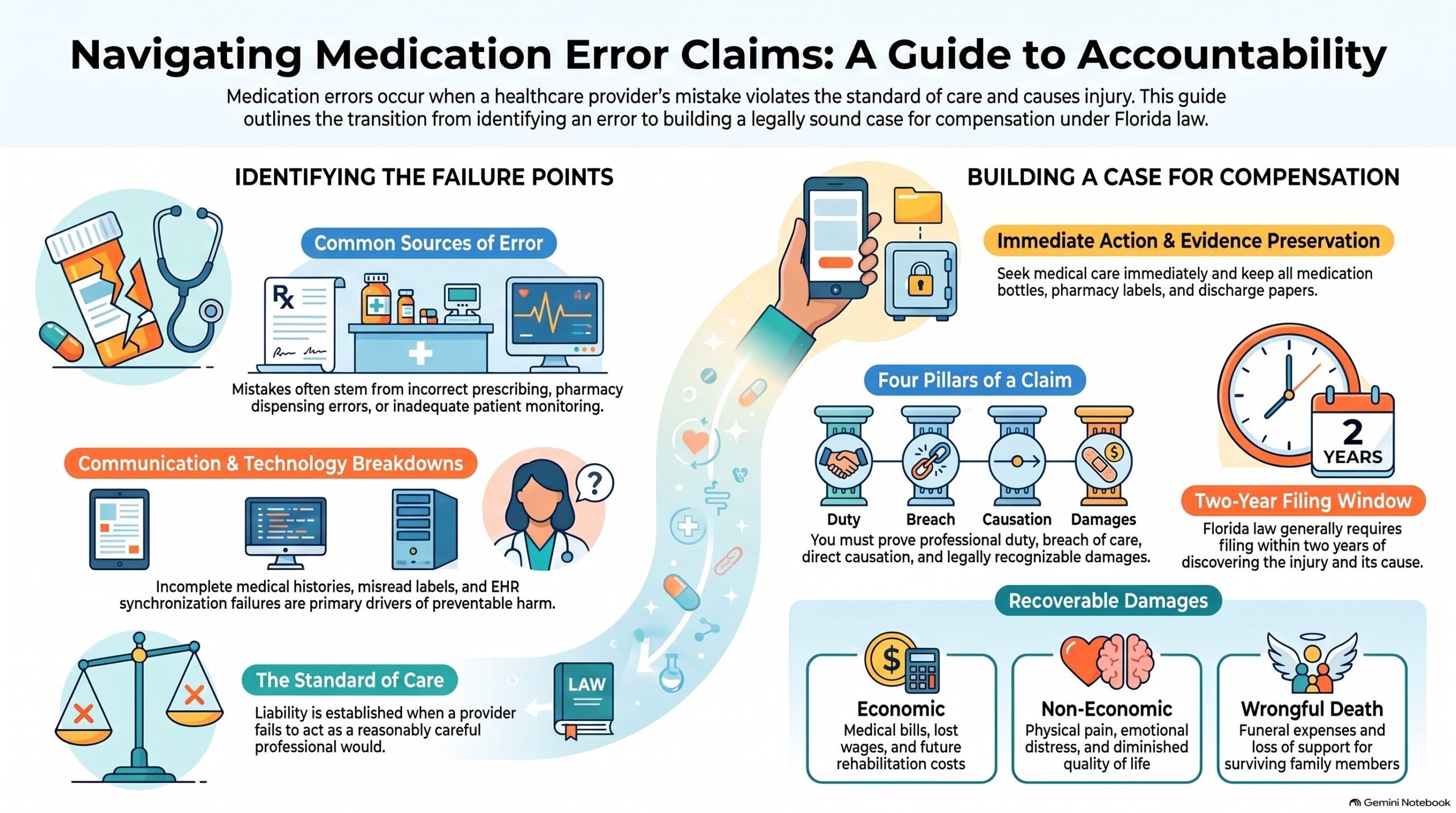
- You generally must establish professional duty, breach of the standard of care, causation, and legally recognizable damages.
- Medical experts may evaluate whether the error caused your injury and whether healthcare providers followed accepted practices.
- Preserve medication bottles, labels, instructions, communications, and medical bills, then seek advice about deadlines and potential compensation.


How We Can Help With Your Orlando Medical Malpractice Medication Errors Injury Claim
When a medication error causes serious harm, an Orlando medical malpractice attorney can help determine whether the injury resulted from a healthcare provider’s failure to meet the applicable standard of care. Assistance may begin with preserving Medication error documentation, including prescription records, pharmacy labels, discharge instructions, and communications about symptoms or treatment changes. A legal team can organize these materials and conduct a focused medical record review to identify discrepancies, delayed responses, inadequate monitoring, or failures to communicate crucial information.
The attorney may also consult qualified medical professionals to assess whether the care complied with accepted practices and whether the error contributed to the claimed injury. Additional support can include identifying responsible parties, calculating medical expenses and related losses, communicating with insurers, and preparing required legal documents. Throughout the process, careful case management can reduce confusion and protect important deadlines. This approach allows an injured patient and family to focus on recovery while the claim is evaluated responsibly and pursued with appropriate diligence.
OUR CONSULTATIONSARE FREE
START YOUR FREE CASE REVIEW

Understanding Orlando Medical Malpractice Medication Errors Injury Cases
Understanding an Orlando medical malpractice medication error case requires examining how the mistake occurred, whether it violated the applicable standard of care, and how it contributed to the patient’s injuries. The evaluation may include medical records, prescribing instructions, administration documentation, and testimony from qualified professionals. Medication dosage verification is important in determining whether clinicians selected, prepared, and administered the medication appropriately for the patient’s condition. Pharmacy labeling compliance may also help establish whether dispensing information accurately communicated the drug, strength, directions, and warnings. A claim generally requires evidence of a professional duty, a breach of that duty, a foreseeable connection between the breach and the harm, and legally recognizable damages. Injuries may include physical complications, additional treatment, extended recovery, lost income, or lasting impairment. A careful review can clarify disputed facts while supporting accountability and compassionate assistance for affected patients and families. Each case depends on its specific evidence, applicable standards, and documented consequences.
Common Causes of Orlando Medical Malpractice Medication Errors
Medication errors may arise from prescribing mistakes, including incorrect drugs, dosages, or instructions. Dispensing errors and miscommunication among providers can further disrupt treatment, particularly when medication records are incomplete or inconsistent. Inadequate patient monitoring may also allow adverse reactions, interactions, or ineffective treatment to continue without timely intervention.
Prescribing Errors
Prescribing errors occur when a healthcare provider selects the wrong medication, dosage, formulation, or treatment duration for a patient’s condition. These mistakes may arise from incomplete medical histories, overlooked allergies, inaccurate diagnoses, or failure to account for existing conditions and drug interactions. Dose mismanagement can cause a medication to be ineffective, toxic, or dangerous when combined with other treatments. Inadequate prescription verification may allow incorrect instructions, contraindications, or patient-specific risks to remain undetected. Communication failures between providers and patients can further contribute when symptoms, current medications, or prior reactions are not clearly documented. Prescribing errors may also result from fatigue, inadequate training, or reliance on incomplete records. Patients harmed by such conduct may require extensive recovery, monitoring, and legal guidance to evaluate whether the standard of care was breached.
Dispensing Mistakes
Dispensing mistakes occur when a pharmacy provides the wrong medication, strength, quantity, formulation, or instructions, even when the prescription itself was accurate. Errors may result from confusion over drug names, similar packaging, inaccurate data entry, misread labels, or inadequate verification procedures. A pharmacist or technician may also select the wrong dosage form, omit required warnings, or provide directions that differ from the prescriber’s instructions. These failures can expose patients to allergic reactions, ineffective treatment, overdose, withdrawal, or dangerous interactions. Pharmacies generally have a responsibility to review prescriptions carefully, confirm relevant patient information, and provide understandable instructions. Patient consent does not necessarily eliminate liability when consent was based on inaccurate dispensing information. Documentation, dispensing records, and pharmacy safety protocols may help establish how an error occurred and whether appropriate safeguards were followed.
Miscommunication Among Providers
Communication failures among healthcare providers can create medication errors even when a prescription is accurately written and correctly dispensed. In Orlando hospitals, clinics, and pharmacies, incomplete messages may cause a provider to overlook an allergy, contraindication, duplicate therapy, or important change in treatment. EHR communication can become unreliable when records are not updated promptly, alerts are disregarded, or information is entered inconsistently across systems. During transfers between departments or facilities, unclear verbal instructions and missing handoff documentation may leave the receiving team without critical medication details. These breakdowns can result in the wrong drug, dose, timing, or route being administered. Healthcare organizations generally have duties to maintain clear communication procedures, accurate records, and effective coordination. When a preventable error causes harm, legal review may examine whether provider communication standards were followed.
Inadequate Patient Monitoring
When patients receive medications that require observation, inadequate monitoring can allow adverse reactions, ineffective treatment, or dangerous changes in life-critical signs to go undetected. Medication safety protocols should identify which patients require frequent assessments, laboratory testing, or documented checks after administration. When staff members fail to obtain those assessments or overlook abnormal findings, treatment may continue despite escalating harm. Monitoring failures can involve missed vital sign measurements, delayed response to reported symptoms, incomplete charting, or inadequate communication during shift changes. Proper staff training programs help clinicians recognize medication-specific risks, follow observation schedules, and promptly report concerning developments. Healthcare facilities also benefit from audits, clear escalation procedures, and adequate staffing levels. When expected monitoring does not occur, the resulting injury may raise questions about whether providers departed from accepted standards of care.
Don’t Wait. Call Our Florida Personal Injury Lawyers Now!


Legal Rights of Orlando Medical Malpractice Medication Errors Injury Victims
Orlando medical malpractice medication error victims may have the right to pursue compensation when a healthcare provider’s negligent prescribing, dispensing, or administration of medication causes injury. Florida law may permit recovery for medical expenses, lost income, rehabilitation, pain, and other proven damages.
A qualified attorney can help preserve evidence, identify responsible parties, and evaluate whether professional negligence caused the harm.
- Victims may seek compensation for past and future medical treatment.
- They may request damages for reduced earning capacity and related financial losses.
- Family members could pursue Wrongful Death Claims when a medication error causes a fatality.
- Claimants should focus on Filing Before Limits expire under applicable Florida law.
Time restrictions can depend on discovery, the nature of the claim, and the defendant involved. Prompt legal review may protect a person’s ability to serve family members, patients, and communities by pursuing accountability. Medical records, pharmacy documentation, invoices, witness statements, and expert opinions may support the claim. Each case requires individualized evaluation because available remedies and deadlines vary.
Why Do Orlando Medical Malpractice Medication Errors Happen?
Medication error injuries can occur when a healthcare provider prescribes the wrong drug, dosage, or treatment for a patient’s condition. These mistakes may result from incomplete medical histories, overlooked allergies, inaccurate medication lists, or failures to recognize dangerous interactions. Communication problems between physicians, nurses, patients, and caregivers can also contribute, particularly when instructions are unclear or changes are not documented promptly.
Telehealth prescribing may create additional risks when a provider cannot perform an in-person examination or access complete records. Technology failures, misidentified patients, and misunderstood digital instructions may further complicate treatment. Within a pharmacy, a rushed pharmacy workflow, similar packaging, illegible prescriptions, staffing shortages, or inadequate verification procedures can lead to dispensing errors. Hospitals and clinics may also experience breakdowns during admission, discharge, or transfers between departments. Although safety systems are designed to prevent these events, inadequate training, fatigue, and poor supervision can allow preventable mistakes to reach patients and cause serious harm requiring continued medical care or recovery.
What Should You Do After an Orlando Medical Malpractice Medication Error Injury?
After a medication error, the injured patient should seek immediate medical care to address potential complications and establish a record of the resulting recovery. The patient should document the medication, dosage, instructions, symptoms, treatment, and communications with healthcare providers. Consulting an experienced malpractice lawyer can help determine whether negligence occurred and protect the patient’s legal rights.
Seek Immediate Medical Care
When a suspected medication error causes harm, the injured patient should seek immediate medical care, even if the symptoms initially appear minor. Prompt evaluation can identify allergic reactions, dangerous interactions, overdoses, withdrawal effects, or other complications before they become life-threatening. Emergency warning signs may include difficulty breathing, facial swelling, severe confusion, chest pain, seizures, fainting, uncontrolled vomiting, or sudden weakness. If any warning signs appear, the patient or someone nearby should act quickly and call 911. Otherwise, the patient should contact an emergency department, prescribing clinician, or poison control resource for guidance. A trusted person may assist with transportation and communication, particularly if the patient is confused or physically impaired. Medical professionals can stabilize the patient, provide appropriate treatment, and support continued safety during recovery.
Document the Medication Error
Although medical treatment takes priority, careful documentation can help establish what occurred during a suspected medication error. The injured patient or a trusted caregiver should record the medication’s name, dosage, time of administration, prescribing instructions, and any symptoms that followed. Notes should identify the healthcare personnel involved and describe conversations about the medication, including any stated explanations or corrective measures.
Copies of discharge papers, medication lists, prescription labels, pharmacy receipts, and portal messages should be preserved. Photographs may help document labels, packaging, or written instructions, while original materials should remain unaltered. A Medication timeline review can organize events from prescribing through treatment and recovery. Comparing those records may reveal Pharmacy record discrepancies, such as an incorrect dose, refill, or dispensing instruction. Personal notes should remain factual, dated, and specific, avoiding assumptions about fault or intent.
Consult a Malpractice Lawyer
With the medication error and resulting harm documented, the injured patient or an authorized caregiver should promptly consult an Orlando medical malpractice lawyer. Legal counsel can review medication error documentation, identify responsible parties, and assess whether the treatment departed from accepted medical standards. Early guidance may also help preserve records, obtain relevant pharmacy and hospital files, and protect communications with healthcare providers. A lawyer can explain applicable Florida deadlines and evaluate potential damages, including additional medical care, lost income, disability, and emotional harm. Counsel may provide support with insurance claims while preventing premature statements or settlements that could limit recovery. The patient or caregiver should provide a clear timeline, medical bills, prescriptions, discharge instructions, witness information, and correspondence with insurers. Prompt consultation allows an informed, orderly response focused on protecting the injured person’s interests.
Don’t Wait. Call Our Florida Personal Injury Lawyers Now!
Critical Evidence in an Orlando Medical Malpractice Medication Errors Injury Case
Critical evidence may establish whether a medication error occurred and how it caused injury, including:
- Medication records
- Prescribing history
- Expert medical testimony
- Damages documentation
Together, these materials can clarify the provider’s conduct, the resulting medical consequences, and the losses supporting a potential claim.
Medication Records
Medication records can provide highly important evidence in an Orlando medical malpractice medication errors injury case by documenting what drug was ordered, dispensed, administered, and monitored. These records may include electronic medication administration logs, pharmacy labels, nursing notes, dosage calculations, allergy alerts, and documentation of patient responses. Medication record accuracy can help establish whether the treatment delivered matched the authorized order and whether necessary safety procedures. Pharmacy chart discrepancies, such as conflicting quantities, strengths, or administration times, may reveal communication failures or overlooked warnings. Records can also show whether staff documented a medication’s appearance, route, timing, and subsequent monitoring. Preserving original electronic entries, audit trails, and corrected versions may help clarify when information was entered or changed. Careful review supports accountability and helps protect patients receiving necessary treatment.
Prescribing History
Prescribing history can help establish whether a medication error resulted from an inappropriate order, incomplete patient information, or a failure to account for known risks. A Medication history review may show which drugs were prescribed, when they were started, and whether dosages or instructions changed before the injury. Records can also reveal documented allergies, prior adverse reactions, contraindications, and conditions requiring additional monitoring. Prior prescription reconciliation may identify duplicate therapies, discontinued medications that remained active, or interactions that should have prompted a safer alternative. Comparing prescribing patterns with pharmacy dispensing records and clinical notes can clarify whether information was overlooked or misunderstood. This evidence may help establish the sequence of decisions and support accountability while preserving an accurate, patient-centered understanding of the harm sustained.
Expert Medical Testimony
When a medication error is disputed, expert medical testimony can help explain whether the prescribing, dispensing, or administration of a drug departed from accepted standards of care. A qualified physician, pharmacist, or other expert may review medical records, medication orders, pharmacy documentation, and clinical guidelines to identify the applicable professional standard. The expert can then clarify whether a preventable mistake occurred and whether it likely caused or contributed to the patient’s injury. This analysis, known as Medication error causation, connects the alleged lapse to the medical outcome without relying on speculation. Courts may also evaluate expert witness credibility by considering the witness’s qualifications, reasoning, independence, and familiarity with comparable clinical practices. Clear, objective testimony can help fact-finders understand complex evidence and assess whether negligence occurred.
Damages Documentation
Although liability evidence may establish that a medication error occurred, damages documentation demonstrates the extent of the patient’s resulting losses. Medical bills, pharmacy receipts, hospital records, rehabilitation invoices, and treatment estimates can help connect expenses to the injury. Complete documentation also clarifies continuing care needs, including medication changes, consultant visits, assistive equipment, and in-home support. Wage statements, employment records, tax returns, and disability documentation may establish a loss of earnings when the patient misses work, reduces hours, or is unable to return to employment. Medication record gaps should be identified and addressed through pharmacy histories, prescribing records, and testimony from treating providers. A carefully organized damages file assists the court, opposing counsel, and the legal team in evaluating past and anticipated losses. Accurate records also support fair compensation and help protect the patient’s access to necessary care.
Long-Term Effects of Orlando Medical Malpractice Medication Errors Injuries
Long-term injuries from medication errors may cause chronic health complications, including lasting organ damage, disability, or recurring medical conditions. Affected individuals may also face ongoing medical expenses for treatment, rehabilitation, prescription medication, and follow-up care. These consequences can reduce quality of life by limiting independence, employment opportunities, daily activities, and overall well-being.
Chronic Health Complications
Medication errors can produce chronic health complications that persist after the immediate injury has been remedied. Patients may experience lasting nerve damage, organ impairment, mobility limitations, cognitive changes, or recurring symptoms that alter daily activities and independence. These conditions can also require coordinated care from physicians, therapists, pharmacists, and family members who help patients maintain safety and dignity. Medication error investigations may clarify whether an incorrect prescription, dosage, dispensing practice, or administration failure contributed to the continuing condition. Patient safety audits can identify system weaknesses and reduce the likelihood of similar harm. Clinicians may recommend chronic pain management, rehabilitation, monitoring, and support for medication adherence when appropriate. A documented link between the error and ongoing complications can help affected individuals understand their legal options while supporting accountability and improved care practices.
Ongoing Medical Expenses
When a medication error causes lasting harm, ongoing medical expenses may continue long after the initial treatment concludes. Patients may require follow-up visits, prescription medications, diagnostic testing, rehabilitation, or subspecialty care to manage complications related to the error. These costs can accumulate even when each individual charge appears modest. Medication bill documentation, including pharmacy receipts, invoices, and payment records, can help establish the financial impact and support an insurance claim or legal evaluation. Treatment reimbursement may address reasonable past expenses and, when supported by medical evidence, anticipated future care. A treating physician may provide a prognosis describing necessary monitoring, therapies, and medications. Organized records, insurance statements, and written recommendations can help clarify which expenses are connected to the medication error. An attorney can review documentation and pursue compensation through appropriate channels.
Reduced Quality of Life
Although medication errors may not produce immediately visible consequences, lasting injuries can substantially reduce a patient’s quality of life. Persistent symptoms may limit mobility, concentration, employment, family responsibilities, and participation in activities that once provided independence. Medication Side Effects can also create continuing fatigue, organ damage, emotional distress, or new medical conditions requiring supervision and treatment. Some patients may need assistance with routine tasks, transportation, or personal care, placing additional burdens on family members and other caregivers. Clinicians should carefully evaluate these changes and explain available Pain Management Options, rehabilitation services, and supportive resources. When a medication error causes lasting impairment, documentation of functional limitations and prognosis can help establish the injury’s practical consequences. Legal guidance may assist affected individuals in pursuing accountability and compensation for diminished quality of life.
Proving Liability in Orlando Medical Malpractice Medication Errors Injury Cases
Establishing liability in an Orlando medical malpractice medication error case requires evidence that a healthcare provider breached the applicable standard of care and that the breach caused the patient’s injury. Relevant proof may include medication orders, pharmacy records, administration logs, electronic health records, and communications among providers. Qualified medical experts generally explain what a reasonably careful professional would have done and identify how the error departed from that expectation. The patient must also demonstrate a direct connection between the mistake and resulting harm, such as additional treatment, disability, lost income, or reduced quality of life. Witness testimony and detailed medical timelines can clarify whether the injury resulted from the error rather than an underlying condition. Legal counsel may investigate institutional policies, staffing practices, and inconsistencies in documentation. Counsel should also recognize potential Wrongful insurance practices, although those issues require separate analysis. A thoughtful jury selection strategy can help present intricate evidence clearly and fairly.
Dealing With Insurance Companies After an Orlando Medical Malpractice Medication Error Injury
After an Orlando medical malpractice medication error, communications with insurers should be handled cautiously because early statements may affect the evaluation of the claim. Injured patients or supportive family members should provide accurate, limited information and avoid speculation about responsibility, medical history, or future consequences. Insurers may request recorded statements, authorizations, and extensive documentation. Before signing releases or accepting payment, the affected individual may benefit from independent legal guidance to protect privacy and preserve available claims.
A careful review of medical records, billing materials, prescription information, and correspondence can help identify omissions or inaccurate characterizations. If an insurer minimizes the injury or refuses to pay reasonable compensation, counsel may prepare an appeal of the denial supported by medical evidence and applicable policy terms. A settlement strategy should account for ongoing treatment, lost income, rehabilitation needs, and the potential effect of complications on quality of life. Professional communication can reduce confusion while ensuring that the patient’s interests are represented fairly, with dignity, and diligently throughout interactions with insurers.
What to Expect During an Orlando Medical Malpractice Medication Errors Injury Claim Process
A medication error claim typically begins with an initial case evaluation to assess liability, damages, and applicable deadlines. The process then involves gathering medical records and related evidence, followed by negotiations with insurers regarding potential compensation. If negotiations do not produce a satisfactory resolution, the claimant may need to prepare for litigation.
Initial Case Evaluation
When a patient believes a medication error caused harm, the initial case evaluation examines the medical records, treatment history, prescription instructions, and circumstances surrounding the alleged mistake. Counsel may assess whether dosage calculation, labeling, administration, or monitoring fell below accepted standards. Timeline preservation helps establish when symptoms developed, what interventions followed, and whether delays worsened the injury. Doctor communication may clarify clinical reasoning, reported symptoms, and instructions provided before or after the medication was given. Pharmacy policies can help determine whether dispensing procedures, verification practices, or warning systems were followed. The evaluation also considers causation, documented damages, and applicable deadlines. A legal professional may explain potential options while treating the patient and family with respect, confidentiality, and careful attention to their concerns throughout this preliminary assessment.
Gathering Medical Records
Medical records provide the foundation for evaluating an Orlando medication-error claim by documenting the patient’s condition, prescribed medications, dosage instructions, administration history, and subsequent treatment. An attorney may request records from hospitals, physicians, pharmacies, emergency departments, and rehabilitation providers. Relevant materials can include nursing notes, medication administration records, laboratory results, discharge instructions, incident reports, and billing documentation. These records help establish when an error occurred, who participated in the patient’s care, and how the injury developed. Medication reconciliation documents may reveal discrepancies between a patient’s medication list and the drugs actually prescribed or administered. Reviewers also examine communication failures, including omitted warnings, unclear orders, and incomplete handoffs. Providers may need to sign authorization forms, identify all treating facilities, and preserve related correspondence, electronic messages, and personal notes.
Negotiating With Insurers
After relevant medical records are collected, negotiations with insurers generally focus on determining whether the medication error caused the claimed injuries and what compensation may be appropriate. A representative may review the prescription, administration records, treatment history, diagnostic findings, and evidence of financial losses. The claimant’s Settlement strategy should clearly explain liability, medical causation, ongoing needs, and measurable damages. Insurer documentation may include coverage positions, authorization requests, recorded statements, and proposed settlement terms. Communication records, including letters, emails, and telephone notes, can help preserve an accurate account of discussions and deadlines. Insurers may respond with questions, partial offers, or denials, requiring careful evaluation rather than an immediate decision. A qualified advocate can communicate respectfully, protect the claimant’s interests, and pursue resolution while considering the full impact of the injury.
Preparing For Litigation
Preparing for litigation requires an organized review of the medication error, the resulting injuries, and the evidence supporting the claim. An attorney may obtain pharmacy records, prescriptions, electronic health information, medical reports, and communications concerning the incident. The injured patient should preserve evidence, including medication containers, discharge instructions, billing statements, and written messages. Detailed timeline documentation can clarify when the medication was prescribed, dispensed, administered, and corrected, helping establish the sequence of events and resulting harm. Medical evaluations may be necessary to link the error to additional treatment, lost income, or ongoing impairment. The legal team may consult pharmacists, physicians, or other qualified experts regarding the applicable standard of care. If settlement efforts fail, the claim may proceed through formal pleadings, discovery, depositions, mediation, and trial.
Compensation for Orlando Medical Malpractice Medication Errors Injury Damages
When a medication error causes injury, an affected patient may be entitled to compensation for the resulting economic and non-economic damages. Recovery may depend on proving that a healthcare professional or facility breached the applicable standard of care and that the breach caused harm. A claim may address continuing treatment needs, diminished ability to work, and the disruption experienced by the patient and family. An Orlando attorney can investigate prescription records, pharmacy procedures, administration documentation, and communications among providers to identify responsibility. The legal team may also coordinate with medical professionals who evaluate causation, prognosis, and future care requirements. Patients should be cautious when communicating with an insurance company, because the company’s tactics may include minimizing symptoms, seeking broad, recorded statements, or offering early settlements before the full impact is known. Counsel can protect federal healthcare privacy requirements while obtaining relevant records and presenting the claim. Prompt legal guidance helps restore evidence and supports a fair, informed resolution.
Economic vs Non-Economic Damages in Orlando Medical Malpractice Medication Errors Cases
Medication error claims may include economic damages, such as medical expenses, lost income, and future treatment costs. Non-economic damages address less measurable harm, including pain, emotional distress, and diminished quality of life. Establishing these losses generally requires medical records, financial documentation, and evidence connecting the medication error to the claimed injuries.
Economic Damages Explained
Economic damages in an Orlando medical malpractice medication error case represent the measurable financial losses caused by negligent prescribing, dispensing, or administration of a drug. These losses may include additional medical treatment, hospitalization, diagnostic testing, recovery, rehabilitation, and transportation required after the error. They can also include prescription expenses, lost wages, reduced earning capacity, and future healthcare costs when the injury creates lasting limitations. Medication cost proof may include pharmacy receipts, insurance statements, invoices, and records of replacement prescriptions. A prescription history review can help establish what was ordered, dispensed, taken, and changed after the incident. Financial documentation should connect each claimed expense to the medication error and demonstrate its necessity. Attorneys may consult medical and economic professionals to evaluate projected costs and organize evidence to support a fair demand.
Non-Economic Damages Considered
Non-economic damages address the personal effects of a medication error that lack a precise market value. In an Orlando medical malpractice case, these damages may include physical pain, emotional distress, diminished quality of life, inconvenience, disfigurement, and loss of enjoyment. They recognize how an injury can affect relationships, independence, confidence, and daily responsibilities, even when financial losses are separately calculated. The available amount may depend on the severity and duration of harm, medical circumstances, and applicable Florida law. Comparative negligence may reduce a recovery if the injured person is found partly responsible for the outcome. Punitive damages are distinct and generally require proof of intentional misconduct or gross negligence, rather than ordinary carelessness. A qualified legal professional can explain how these categories may apply to a particular claim.
Proving Medication Error Losses
Establishing medication error losses requires evidence that connects the healthcare provider’s conduct to specific financial and personal harm. Economic damages may include emergency treatment, hospitalization, rehabilitation, prescription costs, lost income, reduced earning capacity, and necessary future care. Medical records, billing statements, employment documentation, and expert projections can help quantify these losses.
Non-economic damages address pain, emotional distress, disability, disfigurement, loss of enjoyment, and diminished quality of life. Patient causation must be distinguished from preexisting conditions or unrelated complications. An expert review may determine whether dosing negligence caused the injury and estimate continuing effects. Documentation gaps can complicate proving what occurred, but pharmacy records, medication administration logs, witness accounts, and provider communications may help establish what occurred. Careful preservation of evidence allows a claim to present losses accurately while supporting accountability and fair compensation for affected patients and families.
Don’t Wait. Call Our Florida Personal Injury Lawyers Now!
When an Orlando Medical Malpractice Medication Errors Injury Case Goes to Trial vs. Settlement
When an Orlando medication-error malpractice case cannot be resolved through negotiation, the injured patient may proceed to trial, where the parties present evidence regarding the provider’s conduct, the applicable standard of care, and the resulting harm. Trial preparation may include testimony from medical professionals, review of treatment records, and evidence addressing medical expenses, lost income, and ongoing needs. Counsel may develop jury-verdict strategies to clearly explain the medication error and connect it to the patient’s losses. A settlement, by contrast, can provide a defined result without the uncertainty, expense, and extended timeline associated with trial. Settlement negotiation leverage may increase when documented injuries, credible expert opinions, and persuasive evidence support the claim. However, settlement terms require careful evaluation, including the amount offered, release language, and anticipated future care. The appropriate path depends on the evidence, the patient’s objectives, and the risks each option presents. A careful legal assessment helps protect the patient’s interests while pursuing accountability and meaningful support.
Florida Laws That May Affect Your Orlando Medical Malpractice Medication Errors Case
Florida laws governing medical malpractice medication error claims may affect nearly every stage of an Orlando patient’s case, from proving negligence to meeting filing deadlines and establishing recoverable damages.
Critical considerations include:
- Negligence standards: Florida generally requires proof that a healthcare provider breached the professional standard of care and that the breach caused injury.
- Comparative fault: A patient’s alleged contribution to harm may reduce recoverable damages, depending on the evidence and applicable allocation of fault.
- Expert discovery: Qualified experts may evaluate prescribing, dispensing, administration, documentation, and monitoring practices, then provide opinions during discovery.
- Medical causation: Evidence must establish a link between the medication error and the patient’s specific injury, complications, or recovery needs.
Other Florida rules may govern pre-suit investigation, required notices, affidavits, evidence, and damage categories. These requirements can influence how efficiently a claim proceeds and how clearly the patient’s needs are presented. Careful preparation helps legal professionals advocate responsibly for injured patients and support safer practices throughout Orlando’s healthcare community.
The Statute of Limitations for Orlando Medical Malpractice Medication Errors Injury Cases
The statute of limitations sets the deadline for filing an Orlando medical malpractice medication error lawsuit, and missing it may prevent the injured patient from pursuing compensation. Florida generally requires a medical malpractice action to be filed within two years after the patient discovers, or reasonably should have discovered, the injury and its possible medical cause. An outside limit may also apply, generally four years after the alleged malpractice, subject to limited exceptions, including fraud, concealment, or misrepresentation. Special rules can affect minors, government defendants, and cases involving delayed discovery. Because medication injuries may develop gradually, identifying the relevant dates requires careful attention to medical events, diagnoses, and communications. Medication Records, pharmacy information, and damages documentation can help establish when the error and resulting harm became reasonably discoverable. Prompt preservation of evidence supports accurate evaluation of deadlines. Patients and families seeking to serve others through responsible advocacy should recognize that statutory requirements are fact-specific, and delay can permanently bar an otherwise valid claim.
How an Orlando Medical Malpractice Medication Errors Lawyer Can Help You
An experienced Orlando medical malpractice medication errors lawyer can evaluate whether a prescribing, dispensing, or administration mistake caused a patient’s injury and identify the parties who may be legally responsible.
The lawyer can provide disciplined guidance to individuals seeking accountability and improved safety for others.
- Review medical records, prescriptions, pharmacy files, and treatment histories for inconsistencies.
- Consult qualified medical professionals regarding applicable standards of care and causation.
- Identify potentially responsible physicians, nurses, pharmacies, hospitals, or other entities.
- Explain damages, evidence requirements, litigation options, and the Statute of limitations.
During the case evaluation steps, counsel may organize documentation, preserve relevant records, calculate financial losses, and assess how the injury affected daily functioning. The lawyer can also manage communications with insurers and opposing parties, helping restore the client’s interests while presenting a clear, evidence-based claim. By applying careful legal and medical analysis, counsel supports informed decisions and promotes accountability within healthcare systems. This representation can help affected patients serve their communities by encouraging safer medication practices.
When to Contact an Orlando Medical Malpractice Medication Errors Lawyer
Recognizing when to contact an Orlando medical malpractice medication errors lawyer can help preserve evidence and clarify whether a patient may have a viable claim. A consultation may be appropriate after a patient receives the wrong medication, an incorrect dosage, a delayed treatment, or inadequate instructions that result in injury. It may also be prudent when a healthcare provider acknowledges an error, changes the patient’s records, or offers an explanation that does not resolve serious concerns.
Prompt legal attention allows relevant medical records, prescriptions, pharmacy communications, monitoring data, and witness information to be identified before they become difficult to obtain. Patients and families should also maintain documentation of damages, including treatment bills, lost-income records, rehabilitation expenses, and written accounts of symptoms or limitations. Statute deadlines can restrict the time available to investigate and file a claim, so waiting for full restoration may create unnecessary risk. A timely consultation can help organize facts, identify responsible parties, and determine appropriate next steps without disrupting ongoing medical care.
Why You Need an Experienced Orlando Medical Malpractice Medication Errors Lawyer
Because medication-error claims often involve complicated medical and legal issues, experienced representation can be key to evaluating whether a provider’s conduct violated the applicable standard of care. An Orlando attorney with relevant experience can review medical records, prescriptions, dosage instructions, pharmacy communications, and treatment outcomes to identify how an error occurred and whether it caused compensable harm.
Skilled counsel also supports Patient advocacy by ensuring that the injured individual’s concerns receive careful attention throughout the claim. Knowledge of medication safety practices can help clarify whether inadequate communication, documentation, supervision, or follow-up contributed to the injury. In addition, an attorney can pursue healthcare accountability by presenting evidence in a structured, credible manner and addressing defenses raised by providers or insurers.
A carefully developed legal strategy may help establish liability, document financial and personal losses, and seek appropriate compensation. This guidance allows affected patients and families to focus on recovery while their interests are represented with diligence, accuracy, and respect.
How to Choose the Right Orlando Medical Malpractice Medication Errors Lawyer for Your Case
Selecting the right Orlando medical malpractice medication errors lawyer requires careful consideration of the attorney’s experience, resources, and approach to case evaluation. A qualified lawyer should understand medication-related negligence, including errors in prescribing, dispensing, administering, and monitoring. The attorney should also have access to medical experts who can assess whether professional standards were violated and clearly explain the resulting harm.
During an initial consultation, prospective clients should ask how similar claims are investigated, which evidence may be necessary, and how potential challenges will be addressed. Client communication expectations should be discussed in advance, including response times, preferred contact methods, case updates, and the person responsible for answering questions. Transparency regarding the contingency fee structure is equally important. The agreement should explain fees, litigation expenses, and any financial obligations if the case does not succeed. Careful comparison of qualifications, communication practices, and engagement terms can help injured patients select counsel prepared to pursue accountability while protecting their interests.
About The Law Offices of Anidjar & Levine
The Law Offices of Anidjar & Levine represents individuals and families pursuing compensation for injuries caused by medical negligence, including medication errors.
The firm evaluates whether healthcare providers followed Orlando healthcare regulations and accepted clinical practices when prescribing, dispensing, or administering medication.
Its attorneys may review medical records, pharmacy documentation, dosage instructions, and medication reconciliation procedures to determine how an error occurred and whether it resulted in preventable harm.
The firm’s approach emphasizes careful investigation, clear explanations, and respectful service to people facing serious consequences.
Through consistent attorney-client communication, clients receive updates about evidence, legal options, deadlines, and potential recovery.
Counsel may also consult qualified medical professionals regarding prescription liability standards, informed consent, monitoring requirements, and the relationship between negligence and injury.
Because each claim depends on specific facts, the firm assesses available documentation and applicable law before recommending a course of action.
This measured process supports informed decisions while seeking accountability and compensation for affected patients and their families.

Frequently Asked Questions
Can Medication Errors Affect My Immigration Status or Professional License?
Medication errors can affect a professional license, particularly when regulators find negligence, impairment, inadequate supervision, or failure to report the incident. Board discipline consequences may include investigation, reprimand, probation, continuing education, suspension, or revocation, depending on the facts and governing rules. Immigration status may also be affected if an error leads to criminal charges, fraud allegations, or adverse licensing findings. Immigration documentation risks should be reviewed promptly with qualified counsel.
What Happens if the Medication Error Occurred During Clinical Trials?
Medication errors during clinical trials may give rise to claims against investigators, sponsors, medical facilities, or manufacturers, depending on who caused the error and whether required safety procedures were followed. Clinical trial lawsuits can involve negligence, inadequate monitoring, undisclosed risks, or violations of informed-consent obligations. Compensation eligibility may depend on injury severity, causation, trial agreements, applicable federal protections, and state law. An attorney can review records, consent documents, and reporting requirements to identify available remedies.
Can I Remain Anonymous When Filing a Medication Error Lawsuit?
A patient generally cannot remain fully anonymous when filing a medication error lawsuit because the court, opposing parties, and medical providers must identify the claimant. However, counsel may request a confidential filing, sealed records, or limited disclosure when privacy or safety concerns justify it. An anonymous lawyer cannot represent the patient in court anonymously, but can discuss options discreetly before filing. Requirements vary by jurisdiction, so prompt legal guidance is advisable.
Are Medication Errors Involving Pets or Veterinary Treatment Covered?
Medication errors involving pets or veterinary treatment are generally not covered by medical malpractice laws, which protect human patients. However, an owner may pursue compensation from the client through claims for veterinary negligence, improper pet treatment, or pharmacy dispensing errors, depending on state law and the available evidence. Liability may involve a veterinarian, a clinic, a compounding pharmacy, or a manufacturer. An attorney can evaluate records, causation, damages, and applicable filing deadlines to determine viable remedies.
Can a Pharmacy Manufacturer Be Liable for a Defective Medication?
A pharmacy manufacturer may face liability for a defective medication when design flaws, manufacturing contamination, inadequate testing, or insufficient warnings cause patient injury. A documented Product defect must generally be linked to the harm, and applicable law may impose liability exposure on manufacturers, distributors, or pharmacies depending on their roles. Evidence may include medical records, packaging, prescriptions, expert analysis, and adverse-event reports. Legal evaluation can clarify responsible parties and available remedies.
—————————
Medication errors can cause serious, preventable harm, resulting in medical expenses, prolonged recovery, and lasting uncertainty.
An Orlando medical malpractice medication errors lawyer can evaluate the circumstances, identify potentially responsible parties, and pursue compensation supported by the evidence.
The Law Offices of Anidjar and Levine offer guidance throughout the legal process, including investigating the incident, reviewing medical records, and negotiating with insurers.
Prompt legal consultation may help preserve important evidence and protect an injured patient’s rights under Florida law.
Learn more by consulting an Orlando Personal Injury Lawyer.

