

The Law Offices of Anidjar and Levine help evaluate Orlando medical malpractice claims involving misdiagnosis or failure to diagnose. An attorney may review medical records, diagnostic testing, communications, referrals, and treatment decisions to determine whether a healthcare provider breached the applicable standard of care and caused preventable harm. Qualified medical experts can assess negligence, causation, future medical needs, and damages, including additional treatment, lost income, pain, and diminished quality of life. Prompt evidence preservation and deadline analysis are critical. For related legal guidance, visit an Orlando Personal Injury Lawyer.
Main Takeaways
- An Orlando medical malpractice lawyer can evaluate whether misdiagnosis or failure to diagnose violated the applicable standard of care.
- Qualified medical experts can assess symptoms, testing, provider decisions, causation, and whether earlier treatment could have prevented additional harm.
- Important evidence includes medical records, imaging, laboratory results, prescriptions, communications, billing statements, and witness information.
- A detailed timeline can reveal missed warning signs, delayed testing, referral failures, communication breakdowns, and untreated symptom progression.
- A strong claim must establish provider negligence, a connection to worsened health or additional treatment, and legally compensable damages.


How We Can Help With Your Orlando Medical Malpractice Misdiagnosis & Failure to Diagnose Injury Claim
When a medical provider’s misdiagnosis or failure to diagnose causes harm, an Orlando medical malpractice attorney can evaluate whether the care fell below the applicable standard and whether that error contributed to the patient’s injury. An Independent case review can examine medical records, diagnostic testing, provider communications, and relevant treatment decisions to identify potential departures from accepted practice. The attorney may coordinate qualified medical professionals who can assess causation, the extent of harm, and the patient’s future needs. Through patient advocacy, counsel can help ensure that concerns are presented accurately while protecting the individual’s legal interests. Evidence preservation is also important because records, imaging, prescriptions, billing statements, and witness information may clarify what occurred and how the injury developed. After evaluating the available proof, counsel can explain potential claims, applicable deadlines, and anticipated challenges. A carefully informed settlement strategy may then pursue fair compensation while remaining prepared for litigation if negotiations do not adequately address the patient’s losses.
OUR CONSULTATIONSARE FREE
START YOUR FREE CASE REVIEW

Understanding Orlando Medical Malpractice Misdiagnosis & Failure to Diagnose Injury Cases
Understanding Orlando medical malpractice misdiagnosis and failure to diagnose injury cases requires examining whether a healthcare provider failed to meet the accepted standard of care and whether that failure caused or worsened the patient’s recovery. This analysis generally compares the provider’s conduct with what a reasonably skilled professional would have done under similar circumstances. Medical records, test results, referral decisions, and communication with the patient may help establish the relevant timeline and identify whether appropriate evaluation occurred.
Patient safety protocols provide an important framework for evaluating the reasonableness of medical practices, including documentation, follow-up, and responses to reported symptoms. Delayed diagnosis guidelines may help determine whether a missed condition should have been recognized sooner and whether earlier treatment could have restored the outcome. A claim may involve physical harm, additional treatment, reduced recovery prospects, or other measurable losses. Because each case depends on specific facts, qualified legal and medical professionals typically review the evidence carefully to promote accountability and protect patients’ rights.
Common Causes of Orlando Medical Malpractice Misdiagnosis & Failure to Diagnose
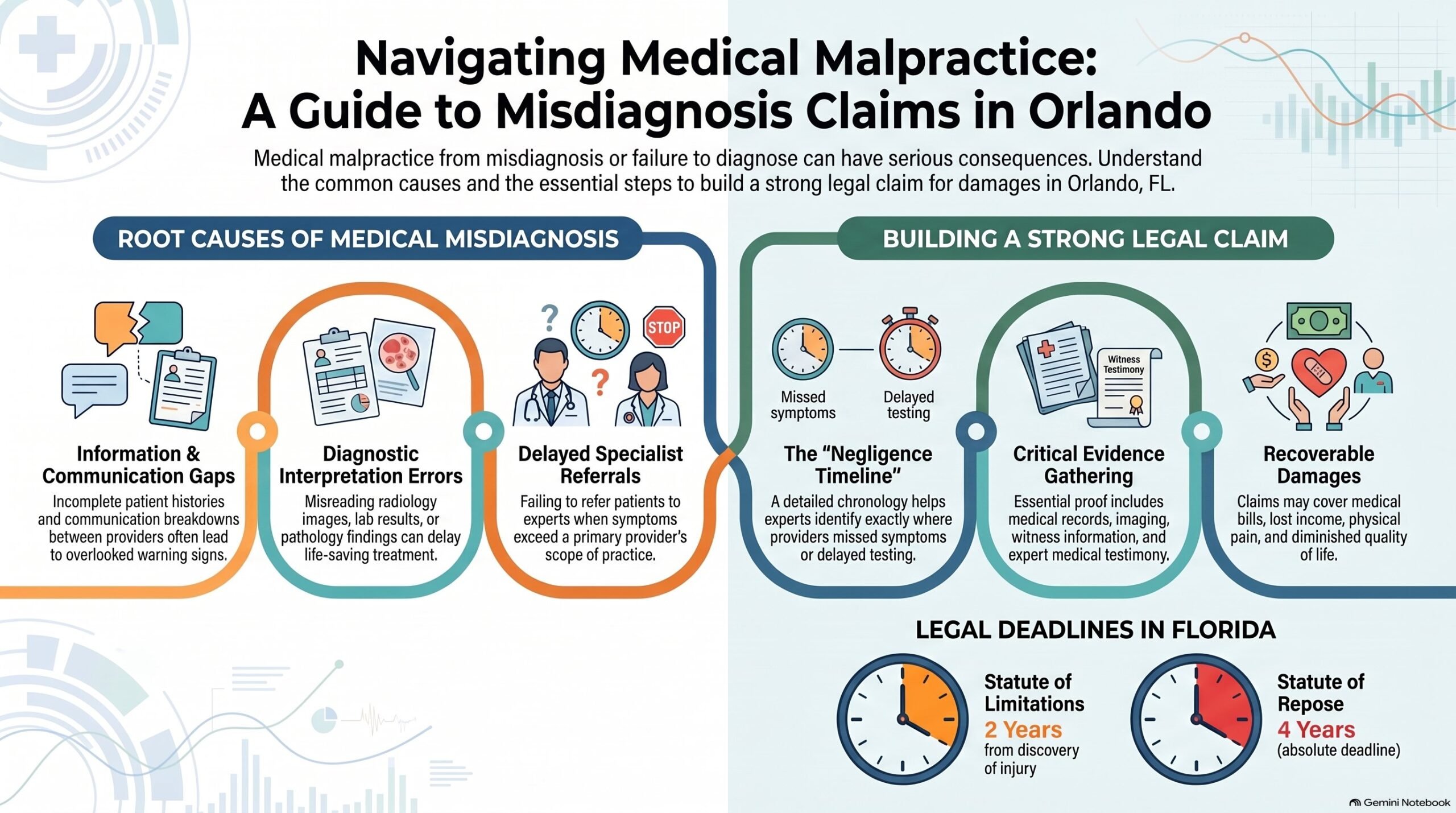
Common causes of misdiagnosis and failure to diagnose include incomplete patient histories, misinterpretation of diagnostic tests, and delays in referring patients to appropriate specialists. Communication breakdowns among providers can further prevent urgent symptoms, test results, or treatment concerns from being properly recognized. These failures may postpone necessary care and, in some cases, contribute to serious patient harm.
Incomplete Patient History
An incomplete patient history can prevent a healthcare provider from identifying important symptoms, risk factors, prior diagnoses, medications, or relevant family medical conditions. Missing information may result from rushed interviews, communication barriers, language differences, or a patient’s understandable difficulty recalling past events. In other cases, initial intake errors may cause staff to omit details, record them inaccurately, or fail to communicate them to the treating clinician. Effective symptom documentation requires focused questions, careful listening, and accurate recording of changes, duration, severity, and related concerns. Providers should also verify medication lists, allergies, prior procedures, and relevant family history when evaluating a patient. When these responsibilities are neglected, significant warning signs may be overlooked, potentially delaying appropriate care and creating grounds for a misdiagnosis or failure-to-diagnose claim.
Misread Diagnostic Tests
When diagnostic tests are misread, a patient’s condition may be incorrectly classified, overlooked, or treated as less serious than it is. Errors can involve radiology images, laboratory results, pathology findings, or cardiac studies. A provider may overlook an abnormality, misinterpret a subtle warning sign, or record an inaccurate result in the patient’s chart. These mistakes can prevent timely treatment and allow an illness to progress. Contributing factors may include inadequate training, fatigue, poor communication, unclear images, defective equipment, or failure to compare current findings with earlier studies. Healthcare organizations may use diagnostic accuracy reviews to identify recurring problems and improve interpretation practices. Treatment delay strategies should emphasize prompt reassessment, clear documentation, and appropriate follow-up when results conflict with symptoms or raise unanswered clinical concerns.
Delayed Specialist Referrals
Delayed expert referrals can prevent timely evaluation of symptoms that require focused knowledge beyond a primary provider’s scope of practice. When a physician fails to arrange a consultation with an appropriate specialist, a serious condition may remain undiagnosed or receive ineffective treatment. Referral delays can result from inadequate follow-ups, failure to recognize warning signs, limited access to specialty care, or assumptions that symptoms will resolve without further evaluation. Missed referrals may also occur when a provider does not adequately document the need for a specialty assessment or establish a reasonable timeframe for its completion. In Orlando medical malpractice cases, the issue may involve whether the provider followed accepted standards by identifying the need for referral and taking appropriate steps to facilitate timely care. Resulting harm can include disease progression, complications, increased treatment demands, and reduced recovery prospects.
Communication Breakdowns
Communication breakdowns can undermine diagnosis even when a patient receives timely medical attention or a referral is recommended. Incomplete Patient communication may prevent clinicians from learning about changing symptoms, medication use, prior diagnoses, or relevant family history. Handoff failures can also cause decisive test results, warning signs, or follow-up instructions to be omitted when responsibility moves between providers, departments, or facilities. Effective consult coordination requires accurate records, clear requests, and confirmation that the consulting clinician reviewed the necessary information. Without these safeguards, referral breakdowns may leave a patient waiting, misdirected, or unaware of recommended care. Such failures can contribute to missed diagnoses and delayed treatment. Careful documentation, closed-loop communication, and respectful listening help healthcare professionals serve patients responsibly and reduce preventable risks associated with fragmented medical care.
Don’t Wait. Call Our Florida Personal Injury Lawyers Now!


Legal Rights of Orlando Medical Malpractice Misdiagnosis & Failure to Diagnose Injury Victims
Orlando medical malpractice misdiagnosis and failure-to-diagnose victims may have legal rights when a healthcare provider’s departure from the accepted standard of care causes injury, treats an existing condition, or reduces the opportunity for effective treatment. Patient rights may include requesting medical records, obtaining independent evaluations, and pursuing a timely claim under Florida law. Legal counsel can assess whether negligence, causation, and measurable damages support recovery.
Potential compensation options may address:
- Additional medical treatment and rehabilitation
- Lost income and reduced earning capacity
- Physical pain and emotional distress
- Permanent impairment or diminished quality of life
- Wrongful death damages for eligible survivors
Victims and families should preserve records, bills, employment documentation, and communications with providers. Florida’s pre-suit requirements and filing deadlines can affect whether a claim proceeds, making prompt legal guidance important. A qualified attorney may investigate the care provided, consult appropriate medical professionals, explain available remedies, and advocate for a fair resolution while protecting the client’s dignity and interests throughout the process.
Why Do Orlando Medical Malpractice Misdiagnosis & Failure to Diagnose Injuries Happen?
Understanding why misdiagnosis and failure-to-diagnose injuries occur can help clarify whether a healthcare provider may have departed from the accepted standard of care. These injuries may arise from incomplete medical histories, rushed examinations, overlooked symptoms, or inadequate follow-up after testing. Patient miscommunication can prevent clinicians from obtaining accurate information about pain, medications, prior conditions, or changes in symptoms, particularly when language, hearing, or cognitive barriers are present. Diagnostic interpretation errors may occur when imaging, laboratory results, or pathology findings are misunderstood, delayed, or incorrectly documented. Other contributing factors include fragmented communication among providers, insufficient staffing, electronic record problems, and failure to assess less obvious conditions. A provider may also rely too heavily on an initial diagnosis or fail to update it as new evidence develops. Although an adverse outcome does not automatically establish negligence, preventable failures in evaluation, communication, or clinical judgment can delay treatment and cause serious physical, emotional, and financial harm to patients and their families.
What Should You Do After an Orlando Medical Malpractice Misdiagnosis & Failure to Diagnose Injury?
After a suspected misdiagnosis or failure to diagnose injury, the patient should seek immediate medical care to address ongoing or worsening conditions. Detailed records of symptoms, treatment, medical bills, and related communications can help document the injury and its consequences. Consulting an experienced Orlando medical malpractice lawyer may clarify available legal options and help preserve important evidence.
Seek Immediate Medical Care
Prompt medical evaluation is important when a person suspects that a critical misdiagnosis or failure to diagnose has caused an injury or allowed a condition to worsen. The individual should seek emergency care for severe pain, breathing difficulty, neurological changes, uncontrolled bleeding, or other urgent Patient symptoms. Even when symptoms appear manageable, an independent physician can assess the condition, identify complications, and recommend appropriate treatment. Patients should accurately explain the prior diagnosis, changes in symptoms, medications, and concerns about delayed care. Providers may need essential records, including medication lists, allergies, and relevant medical history, to make safe decisions. Recommended treatment should be followed carefully, and all follow-up care should be maintained. Prompt attention can reduce further harm and help healthcare professionals provide necessary support during recovery.
Document Your Injuries
Injury records can provide a clear account of how a suspected misdiagnosis or failure to diagnose affected a patient’s recovery. Patients should maintain copies of medical records, test results, prescriptions, discharge instructions, and bills in an organized file. Damage documentation tips include photographing visible injuries, recording treatment dates, and preserving receipts for medication, transportation, and related expenses. A written journal can describe pain intensity, new symptoms, physical limitations, missed work, and changes in daily activities. Symptom-tracking methods may include dated entries, medication responses, and notes on worsening or improving conditions. Patients should request corrections when records contain factual errors and retain communications with healthcare providers. Family members or caregivers can also document observed changes, supporting an accurate account of the patient’s condition and ongoing needs.
Consult a Malpractice Lawyer
When should a patient consult a malpractice lawyer after a suspected misdiagnosis or failure to diagnose? Consultation should occur promptly, particularly when delayed care worsened an illness, caused additional injury, or required more extensive treatment. A lawyer can assess whether the healthcare provider’s conduct departed from accepted standards and whether that departure caused measurable harm.
Before the meeting, the patient should request copies of medical records, including diagnostic reports, imaging, prescriptions, referrals, discharge instructions, and billing information. Timeline documentation should identify symptoms, appointments, communications, test results, treatment changes, and the point at which the condition was correctly recognized. Preserving these materials may help clarify what providers knew and when they knew it. A qualified Orlando malpractice lawyer can explain filing deadlines, protect legal rights, and identify appropriate next steps.
Don’t Wait. Call Our Florida Personal Injury Lawyers Now!
Critical Evidence in an Orlando Medical Malpractice Misdiagnosis & Failure to Diagnose Injury Case
Important evidence can establish what providers knew, when they knew it, and whether their actions contributed to the injury.
Important materials may include:
- Complete medical records and treatment notes
- Diagnostic test results and imaging
- Expert medical testimony
- A detailed timeline of suspected negligence
- Evidence linking the delay or misdiagnosis to resulting harm
Together, these records help evaluate the applicable standard of care and support a medical malpractice claim.
Medical Records
Medical records provide vital evidence in an Orlando medical malpractice case involving misdiagnosis or failure to diagnose by documenting the patient’s symptoms, examinations, test results, diagnoses, treatment decisions, and changes in condition over time. Careful review may reveal incomplete symptoms, omitted history, inconsistent assessments, or delays in responding to reported concerns. Records can also show whether clinicians explained proposed care, obtained informed permission, and addressed patient consent errors. Appointment notes, medication histories, referral records, communications, and billing documentation may help establish what services were requested, provided, or charged. Prompt record preservation is important because electronic entries, audit trails, portal messages, and paper documents may change or become unavailable. A qualified attorney can organize these materials, compare entries chronologically, and identify evidence relevant to the standard of care, causation, and resulting harm.
Diagnostic Test Results
Diagnostic test results can provide objective evidence in an Orlando medical malpractice misdiagnosis or failure-to-diagnose injury case by showing what physicians had available to review and how they responded. Imaging studies, bloodwork, pathology reports, and other findings may reveal whether warning signs were present and whether they were communicated promptly. Records can also establish when testing was ordered, completed, interpreted, and incorporated into treatment decisions. How test accuracy affected clinical judgment may require careful review of the testing method, timing, and known limitations. Laboratory errors, delayed reporting, mislabeled specimens, or incomplete documentation may support concerns about whether appropriate safeguards were followed. Comparing results with subsequent diagnoses can help identify missed abnormalities or unexplained inconsistencies. Such evidence may clarify whether reasonable follow-up occurred and whether delays contributed to worsening illness, the need for additional treatment, or lasting injury.
Expert Medical Testimony
When a misdiagnosis or failure to diagnose is alleged, expert medical testimony can explain whether the healthcare provider’s conduct departed from the applicable standard of care. A qualified physician may evaluate the symptoms, examinations, diagnostic decisions, and recognized practices relevant to the patient’s condition. This testimony can identify patterns of misdiagnosis, including overlooked warning signs, unreasonable reliance on incomplete information, or failure to order appropriate testing. Experts may also explain whether a reasonably careful provider would have reached a different conclusion or taken additional protective measures. In addition, testimony can establish causation by linking the alleged departure to a worsened condition, reduced treatment options, additional medical needs, or other compensable harm. Clear, objective opinions help fact finders understand intricate medical issues while preserving the patient’s dignity and interests.
Timeline Of Negligence
A well-documented timeline can be essential evidence in an Orlando medical malpractice case involving misdiagnosis or failure to diagnose because it shows how symptoms, examinations, test results, diagnoses, and treatment decisions developed over time. Patient symptom progression may reveal when warning signs appeared, whether they intensified, and how providers responded. Records can also identify delays in ordering tests, reviewing results, making referrals, or communicating serious findings. Comparing those events with diagnostic duty standards may help determine whether the care provided met professional expectations under similar circumstances. Relevant materials may include medical records, appointment notes, portal messages, prescription histories, imaging reports, laboratory results, and witness accounts. A clear chronology can assist medical experts in evaluating causation and help establish whether earlier diagnosis or treatment might have prevented additional injury, reduced complications, or improved the patient’s outcome.
Long-Term Effects of Orlando Medical Malpractice Misdiagnosis & Failure to Diagnose Injuries
Misdiagnosis or failure to diagnose an injury can lead to chronic health complications that persist or worsen over time. Affected individuals may require ongoing medical treatment, rehabilitation, medication, or additional procedures to manage resulting conditions. These lasting consequences can reduce quality of life by limiting physical abilities, independence, employment, and daily activities.
Chronic Health Complications
Chronic health complications can develop after a medical condition is misdiagnosed or left undiagnosed, particularly when delayed treatment allows the underlying injury or illness to progress. Patients may experience lasting pain, reduced mobility, organ damage, neurological impairment, or diminished ability to work and participate in daily activities. Some complications can also create additional health risks, requiring significant lifestyle adjustments and support from family members or caregivers. These effects may be especially serious when earlier recognition could have limited the condition’s progression. Medical providers have responsibilities to evaluate symptoms carefully, communicate relevant findings, and respond appropriately to changing conditions. Patient safety protocols and improvements in diagnostic accuracy can help reduce preventable errors. When suspected negligence contributes to enduring harm, legal guidance may help affected individuals understand their rights and available remedies.
Ongoing Medical Treatment
When a misdiagnosed or undiagnosed condition causes lasting harm, ongoing medical treatment may become necessary to manage symptoms, prevent further deterioration, and address complications that could have been avoided through timely care. Patients may require expert consultations, diagnostic monitoring, rehabilitation, procedures, or prescription medications over an extended period. Medication adherence can help maintain stable treatment outcomes, while treatment compliance enables healthcare providers to evaluate progress and adjust care as needed. Missed appointments, unclear instructions, and treatment costs may create additional challenges that should be documented carefully. Medical records, pharmacy receipts, therapy notes, and provider recommendations can help establish the scope and duration of required recovery. In Orlando malpractice matters, evidence of ongoing treatment may assist in evaluating whether a negligent delay caused continuing medical needs and related expenses that require responsible support.
Reduced Quality Of Life
Although some injuries eventually stabilize, the effects of an Orlando medical malpractice misdiagnosis or failure to diagnose may substantially reduce a patient’s quality of life. Delayed treatment can allow Symptom Progression, causing limitations that affect employment, relationships, and independence. Chronic Pain may interfere with sleep, mobility, concentration, and the ability to complete Daily Activities without assistance. Patients may also experience Mental Health challenges, including anxiety, depression, frustration, or loss of confidence after their condition remains unresolved. These consequences can require continued medical care, rehabilitation, adaptive equipment, or support from family members and caregivers. A diminished quality of life may furthermore extend beyond physical impairment, affecting a person’s financial stability and sense of purpose. Careful documentation of these long-term effects can help clarify the full scope of harm for legal evaluation.
Proving Liability in Orlando Medical Malpractice Misdiagnosis & Failure to Diagnose Injury Cases
Proving liability in an Orlando medical malpractice misdiagnosis or failure-to-diagnose case requires evidence that a healthcare provider breached the applicable standard of care and that the breach caused a compensable injury. The standard generally reflects what a reasonably prudent provider would have done under similar circumstances. Medical records, diagnostic results, treatment histories, and qualified expert testimony may show that a provider overlooked symptoms, misinterpreted findings, or failed to order appropriate testing.
Causation proof must connect the alleged mistake to a worsened condition, delayed treatment, additional medical procedures, or another legally recognized harm. Because medical outcomes can involve multiple causes, experts often explain how a timely diagnosis would likely have altered the patient’s course. A damages calculation may include past and future medical expenses, lost income, rehabilitation needs, physical pain, and reduced quality of life. Attorneys serving injured patients typically organize this evidence carefully, identify responsible parties, and present a clear, fact-based account of the injury’s consequences.
Dealing With Insurance Companies After an Orlando Medical Malpractice Misdiagnosis & Failure to Diagnose Injury
After liability and causation evidence has been gathered, communications with insurers can materially affect an Orlando medical malpractice claim involving misdiagnosis or failure to diagnose. Insurance communication strategies should protect the injured patient’s interests while preserving accurate documentation. Statements should remain factual, consistent, and limited to information supported by medical records and qualified opinions. A patient or representative should avoid recorded interviews, broad medical authorizations, and speculative explanations until they have obtained appropriate legal guidance. Insurers may request extensive records, question preexisting conditions, or propose a settlement before the injury’s full consequences are understood. Any offer should be evaluated against medical expenses, lost income, future care, and other legally recognized damages. If coverage or responsibility is disputed, claim denial appeals may require organized evidence, timely written responses, and clarification of how the policy or investigation was applied. Careful communication helps prevent misunderstandings and supports fair treatment for patients and families seeking accountability after negligent medical care. A lawyer can manage correspondence, identify harmful concessions, and preserve applicable deadlines.
What to Expect During an Orlando Medical Malpractice Misdiagnosis & Failure to Diagnose Injury Claim Process
The claim process generally begins with an initial case evaluation and a detailed review of the patient’s medical records to assess whether negligence caused harm. Because medical malpractice claims often require expert testimony, qualified medical professionals may evaluate the treatment and explain whether it met the applicable standard of care. Depending on the evidence and negotiations, the matter may resolve through settlement or proceed to trial.
Initial Case Evaluation
During an initial case evaluation, an Orlando medical malpractice misdiagnosis or failure-to-diagnose claim is examined to determine whether the available facts support a legally viable case. The evaluation generally considers the patient’s symptoms, the healthcare provider’s decisions, the timing of treatment, and the harm allegedly resulting from delayed or incorrect diagnosis. Counsel may discuss applicable Care Standards and whether the provider’s conduct appears inconsistent with what a reasonably competent professional would have done under comparable circumstances. Informed Consent may also be relevant if material risks, diagnostic options, or recommended follow-up were not adequately explained. The claimant can expect questions about the injury’s impact, treatment needs, and financial consequences. This consultation also helps identify potential defendants, applicable deadlines, and practical next steps.
Medical Record Review
A thorough review of medical records is a critical part of an Orlando medical malpractice claim involving misdiagnosis or failure to diagnose. During this stage, the legal team gathers relevant charts, test results, imaging studies, prescriptions, discharge instructions, and communications among healthcare providers. A careful review compares the documented symptoms, examinations, diagnoses, and treatment decisions with the patient’s progression over time. It may identify missed warning signs, delayed testing, radiology oversight, incomplete follow-up, or medication errors that contributed to worsening recovery harm. The review also establishes a clear timeline and distinguishes preexisting conditions from injuries that developed after the suspected mistake. Patients and families may be asked to clarify events, locate outside records, and provide authorizations. This organized process supports an accurate assessment of the claim and the assistance required.
Expert Testimony Requirements
When a medical malpractice claim involving misdiagnosis or failure to diagnose proceeds, qualified expert testimony generally helps establish whether the healthcare provider departed from the accepted standard of care. During evidence collection, attorneys may obtain medical records, imaging, laboratory results, and communications for careful review by doctors. A medical expert evaluates whether the provider acted as a reasonably competent professional would under similar circumstances. The expert may also explain whether the alleged error caused additional injury, delayed treatment, or improved recovery prospects under applicable causation standards. Experts commonly prepare written opinions and participate in deposition preparation, during which testimony, qualifications, methodology, and conclusions are examined in detail. Their testimony must remain grounded in reliable medical knowledge and the available evidence. Courts may exclude opinions that lack sufficient facts, sound reasoning, or professional support.
Settlement Or Trial
Once the medical evidence and expert opinions are developed, an Orlando medical malpractice claim involving misdiagnosis or failure to diagnose may be resolved through settlement or proceed to trial. Settlement discussions typically evaluate documented medical expenses, lost income, future care needs, and the impact on the patient’s life. An attorney may assess comparable outcomes, but no Average settlement value guarantees a particular recovery. Negotiations can involve written demands, insurer responses, mediation, and detailed review of liability and damages. If the parties cannot reach fair terms, litigation continues toward trial. Trial strategy planning may include selecting witnesses, presenting expert testimony, challenging defense opinions, and explaining how the diagnostic error caused harm. Throughout the process, counsel can help the injured person understand risks, deadlines, and potential outcomes while pursuing accountability and resources for continued care.
Compensation for Orlando Medical Malpractice Misdiagnosis & Failure to Diagnose Injury Damages
Compensation in an Orlando medical malpractice misdiagnosis or failure-to-diagnose claim may cover the full range of harm caused by a healthcare provider’s negligence. A patient may seek recovery for physical impairment, diminished quality of life, and continuing medical needs resulting from a delayed or incorrect diagnosis. Pain and suffering can reflect the patient’s physical discomfort, emotional distress, and disruption of ordinary activities. In appropriate circumstances, family members may pursue a loss-of-consortium claim for the effects of an injury on companionship and the marital relationship. Punitive damages are uncommon and generally require proof of especially wrongful conduct beyond ordinary negligence. When a misdiagnosis contributes to a patient’s death, eligible relatives may bring wrongful death claims seeking legally recognized damages. Each case requires careful evaluation of medical records, testimony, causation, and the applicable Florida deadlines. A qualified legal team can help affected individuals and families understand the available remedies, preserve evidence, and pursue accountability for preventable harm.
Economic vs Non-Economic Damages in Orlando Medical Malpractice Misdiagnosis & Failure to Diagnose Cases
Economic damages may include medical expenses, lost income, rehabilitation costs, and other measurable financial losses caused by misdiagnosis or delayed diagnosis. Non-economic damages address less tangible harm, such as pain, emotional distress, disability, and diminished quality of life. Calculating medical malpractice losses requires evidence linking each claimed damage to the negligent medical care and evaluating both current and future effects.
Economic Damages Explained
When a misdiagnosis or failure to diagnose causes injury, damages in an Orlando medical malpractice claim may include both economic and non-economic losses. Economic damages represent measurable financial harm tied to the injury and its treatment. Compensation types may include past and future medical bills, diagnostic testing, prescription costs, rehabilitation, assistive equipment, transportation, and lost wages. If the injury affects the person’s ability to work, a claim may also address reduced earning capacity and future expenses associated with continuing care or workplace limitations. Medical records, invoices, employment documentation, expert opinions, and financial projections can support these amounts. For settlement strategy, organized negotiation evidence helps demonstrate how the malpractice produced each loss. Careful documentation allows the injured individual and legal representatives to pursue fair compensation while protecting resources needed for recovery and service to others.
Non-Economic Damages
Non-economic damages address the personal impact of a misdiagnosis or failure to diagnose that cannot be measured through bills or income records. They may include physical pain, emotional distress, diminished quality of life, disfigurement, disability, and loss of companionship. In Orlando medical malpractice cases, these harms can affect a patient’s independence, relationships, confidence, and ability to participate in meaningful activities. Family members may also describe observable changes in functioning or emotional well-being when appropriate. Such damages recognize that patients command care designed to protect their dignity, not merely treatment that avoids financial loss. Evidence may include medical records, testimony, and accounts from loved ones. Strong medication error prevention efforts and patient safety protocols can reduce these injuries, but when preventable harm occurs, non-economic damages may provide recognition and accountability.
Calculating Medical Malpractice Losses
Evaluating losses in an Orlando medical malpractice case involving misdiagnosis or failure to diagnose requires separating measurable financial harm from the personal consequences of delayed or incorrect care. Economic damages may include past medical bills, rehabilitation, medication, lost wages, reduced earning capacity, and calculating future treatment costs supported by medical and vocational evidence. Non-economic damages address pain, emotional distress, disability, disfigurement, and diminished quality of life. Establishing these losses generally depends on proving the standard of care, showing causation, and connecting the provider’s conduct to the patient’s injuries. Detailed records, expert testimony, employment documentation, and life-care projections can strengthen the valuation. Understanding damage caps is also important because Florida law may limit certain non-economic awards, depending on applicable statutes and circumstances. A careful assessment helps families pursue fair compensation while supporting continued care.
Don’t Wait. Call Our Florida Personal Injury Lawyers Now!
When an Orlando Medical Malpractice Misdiagnosis & Failure to Diagnose Injury Case Goes to Trial vs. Settlement
A misdiagnosis or failure-to-diagnose injury case in Orlando may resolve through settlement or proceed to trial, depending on the strength of the evidence, the parties’ willingness to negotiate, and the extent of the alleged harm. Settlement can provide a defined recovery, greater privacy, and a more predictable conclusion without requiring an injured patient or family to testify. Negotiations may address medical expenses, lost income, future care, and the personal consequences of delayed treatment.
Trial may become necessary when liability or damages remain disputed, or when settlement offers do not fairly reflect the injury. During trial, each side presents medical records, expert opinions, and testimony concerning the provider’s conduct and the resulting harm. Settlement vs. verdict involves weighing certainty and control against the possibility of a larger or smaller award. Jury decision dynamics can be difficult to predict because jurors assess both intricate medical evidence and the credibility of the witnesses. Professional guidance helps families evaluate each path thoughtfully.
Florida Laws That May Affect Your Orlando Medical Malpractice Misdiagnosis & Failure to Diagnose Case
Florida law establishes the standards and procedural requirements that can affect an Orlando medical malpractice claim involving misdiagnosis or failure to diagnose. Florida negligence standards generally require proof that a healthcare provider breached the accepted professional standard of care and that the breach caused identifiable harm.
Other laws may shape the case:
- Pre-suit investigation requirements may require expert support and formal notice before filing.
- Comparative fault rules can reduce compensation if the patient’s conduct contributed to the injury.
- Expert testimony commonly helps establish appropriate care, breach, and medical causation.
- Damage limitations and evidentiary rules may influence the value and presentation of a claim.
- Vicarious-liability principles may affect whether a medical group or facility shares responsibility.
These provisions can determine which parties may be pursued, what evidence is necessary, and how responsibility is evaluated. Because medical records, treatment decisions, and causation issues are often complex, an attorney representing injured patients can carefully assess the facts and explain the applicable Florida requirements. Professional guidance may also help assist the patient’s interests throughout the legal process.
The Statute of Limitations for Orlando Medical Malpractice Misdiagnosis & Failure to Diagnose Injury Cases
Timely action is essential in Orlando medical malpractice misdiagnosis and failure-to-diagnose cases because Florida law imposes deadlines for filing a lawsuit. Generally, Florida requires a medical negligence claim to be filed within two years after the patient discovers, or reasonably should have discovered, the injury and its likely medical cause. An absolute four-year statute of repose may apply, subject to limited exceptions, including fraud, concealment, or misrepresentation. Special rules can affect minors, claims involving continuous treatment, and cases against governmental healthcare providers. Because determining when a diagnosis-related injury became discoverable can be complex, delay may jeopardize a patient’s ability to seek compensation. A prompt Medical records review can help establish treatment timelines, missed warning signs, and the date of discovery. It also supports a reliable damages calculation by documenting additional treatment, lost income, disability, and ongoing care needs. Preserving records and identifying applicable deadlines are crucial steps for protecting patients and families.
How an Orlando Medical Malpractice Misdiagnosis & Failure to Diagnose Lawyer Can Help You
When a patient suffers harm after a healthcare provider misdiagnoses or fails to diagnose a condition, an Orlando medical malpractice lawyer can evaluate whether the care fell below the accepted medical standard of care and caused compensable injury. The lawyer may serve patients and families by:
An Orlando medical malpractice lawyer evaluates diagnostic errors, gathers medical evidence, and helps injured patients pursue compensation for resulting harm.
- Reviewing medical records, test results, and treatment timelines
- Consulting qualified medical professionals about applicable standards
- Identifying whether delayed care worsened the patient’s condition
- Calculating medical expenses, lost income, and continuing needs
- Explaining procedural requirements and organizing supporting evidence
Effective Doctor communication strategies can help obtain accurate information from providers, clarify unanswered questions, and preserve relevant communications. Counsel may also recommend Patient advocacy steps, including requesting complete records, maintaining a symptom journal, following treatment instructions, and documenting out-of-pocket expenses. A lawyer can communicate with insurers and healthcare institutions, assess potential defendants, and present the facts in an organized manner. This assistance allows injured patients to focus on recovery while their representative develops a clear, evidence-based claim and protects their legal interests throughout the malpractice process.
When to Contact an Orlando Medical Malpractice Misdiagnosis & Failure to Diagnose Lawyer
Prompt legal consultation can be important when a patient experiences serious harm after a diagnosis is missed, delayed, or incorrect. A person or family may consider contacting an Orlando medical malpractice lawyer specializing in misdiagnosis and failure to diagnose when symptoms were dismissed, testing was not ordered, results were overlooked, or treatment began only after a condition had substantially worsened.
Prompt attention is especially appropriate when the patient required emergency intervention, experienced permanent impairment, endured unnecessary treatment, or faced significant medical expenses and lost income. Patient symptom logging can help maintain a clear timeline of complaints, appointments, communications, test results, and changes in condition. Records should be retained rather than altered or discarded.
Follow-up care urgency should remain the immediate priority, even while legal concerns are evaluated. A patient should obtain appropriate medical attention and follow professional instructions without delay. Early consultation can also help identify applicable deadlines, preserve relevant evidence, and clarify possible next steps before records or recollections become more difficult to obtain.
Why You Need an Experienced Orlando Medical Malpractice Misdiagnosis & Failure to Diagnose Lawyer
An experienced Orlando medical malpractice misdiagnosis and failure-to-diagnose lawyer can evaluate whether a healthcare provider’s conduct departed from the applicable standard of care and whether that departure caused compensable injury. Such evaluation requires careful examination of medical records, test results, treatment decisions, communications, and relevant clinical guidelines. Counsel can construct a Misdiagnosis Timeline that shows when symptoms appeared, what information providers received, which assessments were performed, and whether appropriate follow-up occurred. An experienced attorney can also coordinate an Expert Review to determine whether another reasonably careful provider would have recognized the condition, ordered additional testing, or provided timely treatment. This analysis may clarify whether delayed care worsened the illness, increased treatment needs, improved recovery, caused disability, or produced other losses. Legal guidance can further preserve important evidence, meet statutory deadlines, and accurately present the patient’s experience. By undertaking this work, counsel helps injured individuals and families pursue accountability while supporting broader efforts to promote careful, responsive medical care.
How to Choose the Right Orlando Medical Malpractice Misdiagnosis & Failure to Diagnose Lawyer for Your Case
Selecting the right Orlando medical malpractice misdiagnosis and failure-to-diagnose lawyer requires careful evaluation of the attorney’s experience, resources, and approach to detailed medical evidence. A prospective client should review the lawyer’s background in comparable claims, professional standing, trial experience, and ability to explain complex issues clearly. During consultations, preparing for the client interview can help organize medical records, treatment timelines, questions, and documented losses, allowing the attorney to assess potential negligence more accurately.
The lawyer should confirm applicable filing deadlines, explain the investigation process, and discuss how medical experts may evaluate the complexity of care and causation. Clear communication is critical, particularly when a family seeks accountability and support for an injured patient. A fee structure comparison should address contingency percentages, litigation expenses, expert-witness costs, and responsibility for case-related charges. Written terms should be reviewed carefully before representation begins. Selecting counsel based on competence, transparency, accessibility, and commitment to client service can help guarantee informed decisions throughout the claim.
About The Law Offices of Anidjar & Levine
The Law Offices of Anidjar & Levine represents individuals and families pursuing medical malpractice claims involving misdiagnosis and failure to diagnose in Orlando.
The firm examines whether healthcare providers met applicable standards of care and whether delayed or incorrect treatment caused additional harm.
Its attorneys may review medical records, consultation notes, diagnostic orders, and test interpretations to identify overlooked findings or unreasonable conclusions.
They also consider Patient Communication, including whether providers obtained relevant histories, explained results, addressed reported symptoms, and provided appropriate follow-up instructions.
This evaluation can help clarify how a diagnostic error developed and affected a patient’s health.
The firm’s approach includes investigating the medical timeline, consulting qualified experts, and evaluating available legal remedies.
Attorneys may handle communication with insurers and opposing parties while presenting evidence supporting a client’s position.
Individuals considering a claim can discuss their circumstances with the firm to understand potential issues, deadlines, and next steps.
Each matter receives case-specific review based on its facts, records, and applicable Florida law.

Frequently Asked Questions
Can I File a Complaint Against the Florida Medical Licensing Board?
Yes. An individual can file a complaint against a Florida-licensed medical professional with the Florida Department of Health, which investigates allegations and forwards them to the appropriate licensing board. The complaint process generally requires identifying the provider, describing specific conduct, and submitting supporting records or other evidence. The investigation timeline varies depending on complexity, cooperation, and agency workload. A complainant should preserve documentation, respond to requests, and understand that discipline differs from compensation.
Will My Health Insurance Cover Treatment Resulting From a Misdiagnosis?
Health insurance may cover medically necessary treatment following a misdiagnosis, but coverage depends on the policy, diagnosis codes, provider network, and authorization requirements. Insurers may deny coverage when disputed services are deemed unrelated, experimental, or improperly documented. The patient should request itemized records, consult the treating provider, and appeal promptly under the plan’s procedures. Even with coverage, deductibles, copayments, and out-of-pocket costs may remain.
Can Telemedicine Providers Be Liable for Misdiagnosis in Orlando?
Telemedicine providers can be liable for misdiagnosis in Orlando when their conduct falls below applicable telemedicine standards and causes patient harm. Liability may arise from failing to obtain an adequate medical history, recognize warning signs, order appropriate testing, or provide timely referrals. A patient generally must show provider negligence, a medical error, causation, and measurable damages. Florida law also considers informed consent, documentation, licensure, and the circumstances surrounding the delivery of virtual care.
What Happens if the Negligent Healthcare Provider Has Closed Their Practice?
If a careless healthcare provider has closed the practice, a patient may still pursue a medical malpractice claim, depending on the availability of insurance, business assets, or successor entities. An attorney’s hiring location can affect access to local resources and court procedures. During case investigation, counsel typically handles records retrieval, identifies coverage, and preserves evidence. Because statute of limitations deadlines continue to run despite closure, prompt legal review is crucial to protect the patient’s rights.
Can a Misdiagnosis Affect My Ability to Obtain Future Health Insurance?
A misdiagnosis can affect future health insurance, but its impact depends on the coverage sought and applicable law. Under current federal rules, Marketplace insurers generally cannot deny coverage or charge more because of a preexisting condition. Insurer underwriting may still occur for certain policies, including some limited or non-ACA products. Diagnosis records can influence eligibility assessments, premiums, or coverage exclusions, particularly when applications require medical-history disclosures. Legal guidance may clarify available protections and remedies.
—————————
Misdiagnosis and failure-to-diagnose cases require careful review of medical records, expert opinions, and the resulting harm.
Orlando patients who experienced worsened conditions, additional treatment, or financial losses may have legal options if negligent medical care caused their injuries.
The Law Offices of Anidjar and Levine can evaluate the circumstances, explain applicable rights, and pursue appropriate compensation.
Promptly consulting an Orlando Personal Injury Lawyer is important because evidence may become harder to preserve, and Florida deadlines can limit the time available to file a claim.

