
The Law Offices of Anidjar and Levine represent Florida clients in medical malpractice cases involving nerve damage and paralysis. A Florida Personal Injury Lawyer can evaluate whether negligent surgery, anesthesia, childbirth care, medication, monitoring, or delayed treatment caused the injury. The attorney may review medical records, diagnostic studies, treatment timelines, and expert opinions to assess breach, causation, and damages. Counsel can communicate with insurers, preserve evidence, document rehabilitation needs and lost income, and address Florida pre-suit requirements and deadlines. Further information can help victims protect their rights and evaluate potential compensation.
Main Takeaways
- A Florida medical malpractice lawyer evaluates whether negligent treatment caused nerve damage, paralysis, weakness, numbness, or impaired movement.
- Qualified medical opinions and records help establish the provider’s duty, breach of the standard of care, causation, and resulting harm.
- Preserve medical records, diagnostic studies, treatment notes, photographs, bills, communications, and documentation of symptoms and limitations.
- Recoverable damages may include medical expenses, rehabilitation, lost income, reduced earning capacity, pain, emotional distress, and diminished independence.
- Florida pre-suit procedures and filing deadlines are strict, so prompt legal evaluation helps protect potential claims.


How We Can Help With Your Florida Medical Malpractice Nerve & Palsy Injury Claim
When medical negligence causes nerve damage or palsy, an experienced Florida medical malpractice lawyer can evaluate the injury, identify the responsible parties, and pursue compensation for the resulting harm. The legal team can organize medical records, consult qualified professionals, and assess how the injury affects treatment needs, mobility, employment, and daily responsibilities. This support allows an injured person and family to focus on recovery while counsel manages the claim’s legal requirements.
Client communication updates help ensure that individuals understand significant developments, requested information, deadlines, and available decisions throughout representation. Counsel can also provide guidance on evidence preservation, including protecting medical documents, photographs, appointment records, medication information, and communications related to the injury. Careful preparation may help establish the scope of losses and support a thorough demand for appropriate compensation.
A lawyer may handle discussions with insurers and opposing parties, reducing the burden on those seeking assistance. By offering organized advocacy and respectful guidance, the firm serves clients whose injuries have disrupted their ability to work, care for others, or participate fully in everyday life.
OUR CONSULTATIONSARE FREE
START YOUR FREE CASE REVIEW

Understanding Florida Medical Malpractice Nerve & Palsy Injury Cases
Because nerve and palsy injuries may result from surgical errors, improper treatment, or delayed diagnosis, Florida medical malpractice cases require careful examination of the medical records and surrounding circumstances. Such injuries can affect movement, sensation, independence, employment, and long-term care needs. A case generally requires evidence that a healthcare provider owed a professional duty, failed to meet the applicable standard of care, and caused identifiable harm. Medical records, diagnostic studies, treatment notes, and qualified medical opinions may help clarify the nature and progression of the injury.
Florida’s Statute of Limitations and other Legal Deadlines can determine whether a claim remains available. Because these rules may depend on discovery of the injury, the provider’s conduct, and other case-specific facts, prompt review is important. A careful evaluation also considers physical limitations, treatment costs, lost income, and continuing support requirements. Legal counsel can organize the evidence, explain procedural requirements, and help injured individuals and families pursue accountability while protecting their ability to obtain appropriate compensation.
Common Causes of Florida Medical Malpractice Nerve & Palsy
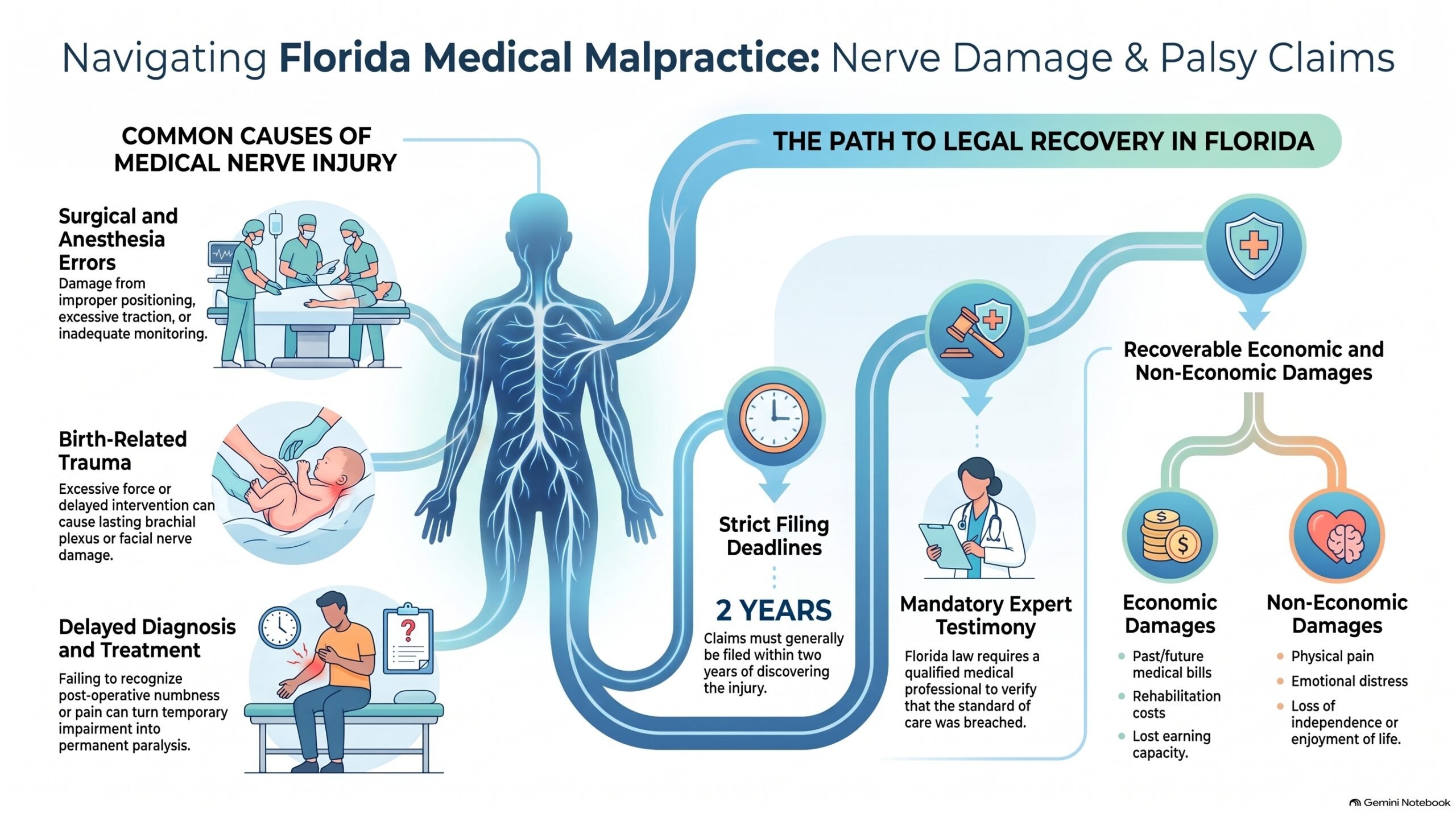
Common causes of Florida medical malpractice nerve and palsy injuries include surgical nerve damage, birth-related nerve injuries, anesthesia-related complications, and delayed diagnosis or treatment. These injuries may result from negligent surgical techniques, inadequate monitoring, improper medical decisions, or failures to recognize urgent symptoms. Identifying the underlying cause is important when evaluating whether a healthcare provider breached the applicable standard of care.
Surgical Nerve Damage
Surgical nerve damage can occur when a procedure injures, compresses, stretches, or severs a nerve, potentially causing pain, numbness, weakness, or paralysis. Peripheral nerve impairment may result from improper positioning, excessive traction, misplaced instruments, retained hardware, inadequate monitoring, or complications such as swelling and scarring. Although some nerve injuries are recognized risks, preventable harm may support a medical malpractice claim when a provider departs from accepted standards of care. Surgical consent documentation should identify material risks, reasonable alternatives, and expected outcomes, but consent alone does not excuse negligent performance. Medical records, operative reports, imaging, and postoperative examinations can help clarify how the injury developed. Prompt evaluation may support treatment and preserve evidence. Individuals seeking to serve affected patients can help connect them with qualified counsel for an objective review of potential negligence.
Birth-Related Nerve Injuries
Birth-related nerve injuries may occur when excessive force, improper positioning, delayed intervention, or inadequate monitoring during labor and delivery damages an infant’s nerves. These injuries can affect the brachial plexus, facial nerves, or other structures, potentially causing weakness, paralysis, reduced movement, or lasting functional limitations. Difficult deliveries, shoulder dystocia, large birth weight, and prolonged labor are recognized risk factors, although careful management may reduce preventable harm. When providers fail to identify distress, respond appropriately to birth complications, or document changing conditions, the resulting neonatal trauma may warrant professional review. Medical records, fetal monitoring strips, delivery notes, and expert assessment can help determine whether accepted standards were followed. Early evaluation and rehabilitation may support the infant’s development while the family considers available legal remedies.
Anesthesia-Related Nerve Injury
Anesthesia-related nerve injuries may develop when improper positioning, prolonged pressure, injection technique, equipment use, or inadequate monitoring damages a patient’s nerves during a procedure. Such harm can affect the arms, legs, face, or other areas, depending on the nerve involved and the procedure performed. Anesthesia providers and surgical teams must follow the anesthesia standard of care, including appropriate patient positioning, protective padding, careful medication administration, and continuous monitoring of critical signs and pressure points. Risk may be heightened in lengthy operations, emergency procedures, or patients with limited mobility and preexisting conditions. In pediatric cases, expert attention is crucial because children may be unable to communicate discomfort or reposition themselves. Careful documentation and evaluation can help clarify whether preventable conduct contributed to the injury and its effects on pediatric nerve outcomes.
Delayed Diagnosis And Treatment
When a nerve injury is not recognized promptly after a procedure, delayed diagnosis and treatment can allow temporary impairment to progress into lasting nerve damage, weakness, or paralysis. Providers should evaluate new numbness, severe pain, weakness, or loss of movement rather than attributing symptoms to routine recovery. Misdiagnosis timelines may reveal that warning signs were documented but not investigated, communicated, or referred to an appropriate expert. Treatment delays can prevent timely decompression, medication management, rehabilitation, or other interventions that may limit permanent harm. A careful review considers operative records, nursing notes, diagnostic studies, follow-up instructions, and the timing of each clinical decision. Florida medical malpractice claims generally require evidence that the provider departed from the accepted standard of care and that the delay substantially contributed to the patient’s injury and resulting losses.
Don’t Wait. Call Our Florida Personal Injury Lawyers Now!


Legal Rights of Florida Medical Malpractice Nerve & Palsy Injury Victims
Florida medical malpractice nerve and palsy injury victims may have the right to seek compensation when a healthcare provider’s negligent act or omission causes nerve damage, paralysis, or related impairment. Florida law generally requires proof that the provider owed a professional duty, breached applicable standards of care, and caused legally recognized harm. Patient safety concerns may support a claim, but the evidence must establish a link between the provider’s conduct and the injury and resulting losses.
Victims may pursue damages for:
- Medical expenses and rehabilitation
- Lost income or reduced earning capacity
- Pain, suffering, and diminished quality of life
- Ongoing care, assistance, or adaptive equipment
Individuals may also have rights involving medical records, informed decision-making, and timely notice of a potential claim. Florida’s presuit requirements and filing deadlines can affect whether a lawsuit proceeds, making prompt legal evaluation important. A qualified attorney can help preserve evidence, consult appropriate medical experts, and explain available remedies while treating the injured person and family with dignity, accountability, and respect.
Why Do Florida Medical Malpractice Nerve & Palsy Injuries Happen?
Nerve and palsy injuries may occur when a healthcare provider fails to recognize, prevent, or promptly treat conditions that threaten nerve function. These injuries can result from surgical positioning errors, excessive traction, lacerations, injections into vulnerable areas, or delayed responses to swelling and impaired circulation. During childbirth, excessive force, poor monitoring, or failure to address complications may damage an infant’s nerves. Medication errors and inadequate evaluation of numbness, weakness, or severe pain can also allow preventable harm to progress.
Underlying causes may include communication failures, incomplete records, inadequate training, or hospital staffing problems that contribute to rushed assessments and missed warning signs. Informed consent issues may arise when patients are not adequately told about material risks, alternatives, or the possibility of nerve damage before treatment. Equipment failures and deficient safety protocols can further increase danger. Although some nerve injuries are recognized complications, liability generally depends on whether the care departed from accepted standards and caused the injury.
What Should You Do After a Florida Medical Malpractice Nerve & Palsy Injury?
After a suspected nerve injury or palsy, the patient should seek immediate medical care to address any urgent complications and establish a record of the condition. The patient should also document symptoms, treatments, medical records, and related losses as thoroughly as possible. Consulting a qualified Florida medical malpractice attorney can help evaluate potential negligence and determine appropriate legal steps.
Seek Immediate Medical Care
Prompt medical evaluation is essential when a patient experiences numbness, weakness, paralysis, loss of coordination, or other signs of a possible nerve injury following medical treatment. A patient or caregiver should call 911 for sudden paralysis, trouble breathing, loss of bladder or bowel control, severe weakness, facial drooping, or altered consciousness. This Emergency signs checklist can help identify symptoms requiring immediate assistance rather than transportation by private vehicle. In an emergency department, staff assess vital functions, circulation, sensation, and motor control, then order appropriate tests and stabilize urgent complications. Florida ER treatment priority generally follows the severity and immediacy of the condition, so patients with potentially life-threatening neurological symptoms may receive rapid attention. Even less dramatic symptoms warrant prompt evaluation because delayed treatment can increase permanent impairment and complicate recovery.
Document Your Injury
Once immediate medical needs have been addressed, the patient or caregiver should begin creating a detailed record of the suspected injury and its effects. A dated symptom timeline should describe pain, numbness, weakness, tingling, loss of coordination, and changes in sensation. Each entry should identify when symptoms began, whether they worsened, and how they affected sleep, mobility, work, or personal care. Functional limitations should be recorded with specific examples, such as difficulty walking, grasping objects, dressing, or performing household responsibilities. Copies of medical records, imaging reports, prescriptions, discharge instructions, and provider communications should be preserved in an organized file. Photographs, medication lists, appointment dates, and names of witnesses may also provide useful context. Accurate documentation can help healthcare professionals evaluate changes and support continuity of care.
Consult a Malpractice Attorney
When a nerve or palsy injury may have resulted from negligent medical care, the patient or caregiver should consult a Florida medical malpractice attorney as soon as practical. Early legal guidance can protect evidence, identify responsible providers, and clarify whether the injury meets Florida’s malpractice requirements. The attorney may review medical records, treatment decisions, informed consent documents, and expert opinions to evaluate potential negligence and causation. Case timeline planning helps preserve key deadlines, organize symptoms and treatment changes, and coordinate necessary investigations before memories or records become difficult to obtain. Counsel can also communicate with insurers and address insurance denial strategies when carriers dispute coverage or responsibility. A qualified attorney may explain available remedies, including medical expenses, lost income, rehabilitation costs, and other damages, while supporting the patient’s interests throughout the process.
Don’t Wait. Call Our Florida Personal Injury Lawyers Now!
Critical Evidence in a Florida Medical Malpractice Nerve & Palsy Injury Case
Critical evidence helps establish whether negligent medical care caused the nerve or palsy injury and supports the full scope of the claim, including:
- Medical records review
- Expert witness testimony
- Nerve injury documentation
- Damages and losses
Each category can clarify the standard of care, the injury’s progression, and the resulting financial and personal consequences.
Medical Records Review
A thorough review of the medical records is often central to evaluating a Florida medical malpractice claim involving nerve damage or palsy. Records may document the patient’s condition before treatment, the procedure performed, the medications administered, and the symptoms documented afterward. A carefully organized Timeline of treatment can identify when weakness, numbness, paralysis, or other neurological changes first appeared and whether those findings were reported promptly. It may also reveal informed-consent discussions, diagnostic testing, referrals, follow-up instructions, and gaps in monitoring or documentation. During the expert review process, the records are examined for consistency between clinical observations and the claimed injury, while preserving relevant dates and statements. Complete records, including nursing notes and imaging reports, can clarify whether appropriate precautions were taken and support a fair evaluation of the patient’s care.
Expert Witness Testimony
Expert witness testimony can be pivotal in evaluating whether a healthcare provider’s conduct caused nerve damage or recovery in a Florida medical malpractice case. Qualified neurologists, surgeons, or rehabilitation experts may explain the applicable standard of care and whether treatment decisions departed from accepted medical practice. Their opinions can link a procedure, delayed intervention, or medication error to the resulting nerve dysfunction, while also addressing alternative causes supported by medical evidence. Experts may interpret nerve testing, describe functional limitations, and distinguish temporary symptoms from permanent injury. They may also provide impairment ratings using recognized medical guidelines, helping clarify the severity and likely duration of disability. A reliable expert should base conclusions on sufficient facts, sound methodology, and relevant professional experience. Such testimony assists courts and juries in evaluating difficult issues objectively.
Nerve Injury Documentation
When nerve damage or palsy is alleged, thorough documentation provides the factual foundation for evaluating a Florida medical malpractice claim. Medical records should identify symptoms before treatment, procedures performed, medications administered, and neurological findings afterward. A careful review of the medical timeline can reveal when weakness, numbness, pain, or impaired movement first appeared and whether providers recognized and responded to those changes. Symptom severity tracking, supported by dated examinations and consistent descriptions, helps distinguish temporary discomfort from progressive neurological impairment. Diagnostic studies, referral records, therapy evaluations, and expert opinions may further clarify the affected nerve and potential causes. Patients and families should preserve messages, discharge instructions, photographs, and personal notes without altering original entries. Accurate, chronological evidence assists counsel and medical experts in evaluating whether care met the applicable professional standard.
Damages And Losses
Documenting damages and losses is essential to evaluating the full impact of a nerve injury or palsy in a Florida medical malpractice case. Records should identify emergency treatment, surgeries, rehabilitation, medications, assistive devices, and continuing medical care. Receipts, billing statements, and insurance explanations help establish past expenses, while qualified medical and financial professionals may project future costs. Evidence should also describe lost wages, reduced earning capacity, and time spent by family members providing transportation or daily assistance. Pain, emotional distress, loss of independence, and diminished quality of life may support noneconomic damages when supported by testimony and medical documentation. A clear timeline can connect these losses to medication errors, nursing neglect, or other negligent conduct. Organized evidence helps counsel present the injured person’s needs accurately and pursue appropriate compensation.
Long-Term Effects of Florida Medical Malpractice Nerve & Palsy Injuries
Long-term nerve and palsy injuries may cause chronic pain, persistent weakness, and limitations that interfere with routine activities. Loss of mobility can require ongoing treatment, assistive devices, or personal support, while emotional distress may accompany these lasting impairments. Medical expenses, lost income, and reduced earning capacity can also create significant financial strain for affected individuals and their families.
Chronic Pain and Weakness
Persistent nerve or palsy injuries caused by medical malpractice can produce chronic pain and weakness that substantially limit a person’s mobility, independence, and ability to work. Burning, stabbing, or persistent aching may interfere with sleep, concentration, and routine self-care. Weakness can make ordinary tasks require additional effort, assistance, or adaptive equipment, even when mobility itself remains possible. Medical evaluation may identify nerve damage, impaired signaling, or muscle deterioration and help determine whether further treatment could provide relief. Care may include medication management, physical therapy, occupational therapy, and carefully monitored rehabilitation. Chronic nerve regeneration is often uncertain, making timely assessment important. Providers may also recommend strengthening and positioning strategies aimed at preventing muscle atrophy. Documentation of symptoms, treatment, and functional limitations can assist families, caregivers, and legal professionals in evaluating long-term needs.
Loss of Mobility
When nerve or palsy injuries result in substantial loss of mobility, an affected person may struggle to walk, transfer between surfaces, maintain balance, or perform basic activities without assistance. These limitations can affect personal care, transportation, and safe participation in household or community activities. Rehabilitation therapy options may include physical therapy, occupational therapy, gait training, strength development, and instruction in adaptive equipment. Treatment plans should reflect the person’s abilities, medical condition, and long-term functional goals. Mobility aids, such as braces, walkers, wheelchairs, or transfer devices, may improve safety and independence when properly fitted and used. For individuals who remain employed, workplace mobility accommodations can include accessible entrances, modified workstations, adjusted duties, flexible scheduling, or assistive technology. Ongoing evaluations help identify changing needs and support appropriate accommodations and care.
Emotional and Financial Strain
Beyond limitations on movement, nerve or palsy injuries may create substantial emotional and financial strain for affected individuals and their families. Persistent pain, dependence on caregivers, and uncertainty about recovery can contribute to emotional distress, anxiety, depression, and disrupted relationships. These effects may limit a person’s ability to work, participate in community life, or provide needed support to others. Financial consequences can include lost wages, rehabilitation expenses, adaptive equipment, transportation, in-home assistance, and continuing medical care. Families may also experience increased caregiving responsibilities and reduced household income. Careful medical documentation can help establish the injury’s progression, treatment requirements, functional limitations, and associated costs. Records from physicians, therapists, and mental health professionals may clarify long-term needs when evaluating potential negligence claims and pursuing resources intended to protect an injured person’s dignity and stability.
Proving Liability in Florida Medical Malpractice Nerve & Palsy Injury Cases
Establishing liability in a Florida medical malpractice nerve or palsy case requires evidence that a health care provider breached the accepted standard of care and that the breach caused the patient’s nerve damage, paralysis, or related impairment. The claim typically begins with medical records, diagnostic studies, treatment notes, and witness accounts documenting the provider’s decisions and the patient’s condition before and after care. Florida’s expert testimony requirements generally call for a qualified medical professional to explain the applicable standard, identify the departure, and connect that departure to the injury. Causation may involve proving that delayed treatment, surgical error, medication negligence, or inadequate monitoring substantially contributed to the impairment. Attorneys may also address comparative fault and statutory filing deadlines while developing the case. Damages calculation considers medical expenses, rehabilitation, lost income, reduced earning capacity, pain, disability, and necessary future assistance. Careful preparation can help injured individuals pursue accountability and support their families.
Dealing With Insurance Companies After a Florida Medical Malpractice Nerve & Palsy Injury
After a Florida medical malpractice nerve or palsy injury, insurance companies may seek statements, medical authorizations, and other information that could influence the evaluation of a claim. Injured individuals and their families should respond carefully, because seemingly minor inconsistencies may be used to question causation, disability, or the extent of losses. Insurance negotiation strategies may include documenting symptoms, preserving relevant records, calculating medical expenses, and presenting a clear account of how the injury affects employment, independence, and daily responsibilities. A representative may communicate with insurers to reduce unnecessary pressure and protect confidential medical information. If an insurer offers inadequate compensation, the claimant should avoid accepting or signing a release before understanding the claim’s full value. Claim denial handling requires reviewing the stated reason, identifying missing evidence, and addressing factual or policy-based errors through a structured response. Prompt legal guidance can help preserve rights, support fair treatment, and ensure that communications remain consistent with the injured person’s legitimate needs.
What to Expect During a Florida Medical Malpractice Nerve & Palsy Injury Claim Process
A Florida medical malpractice nerve and palsy injury claim typically begins with an initial case evaluation to assess liability, damages, and legal viability. The process may include a detailed review of medical records and expert testimony to determine whether professional standards were violated and whether those violations caused the injury. Depending on the evidence and negotiations, the claim may conclude through settlement or proceed to trial.
Initial Case Evaluation
During an initial case evaluation, a Florida medical malpractice attorney reviews the patient’s medical records, treatment history, symptoms, and suspected nerve or palsy injury to determine whether the evidence may support a negligence claim. The attorney may ask focused questions about symptoms, changes in function, pain, and their effects on daily responsibilities. The prospective client may also receive guidance on gathering documents, including appointment information, discharge materials, photographs, employment records, and correspondence. Early discussions commonly address insurance communications, including whether statements should be provided or documents signed before legal advice is obtained. Medical bill tracking helps assess financial impacts and identify ongoing care needs. The evaluation may also outline potential timelines, costs, professional obligations, and next steps without guaranteeing a specific outcome.
Medical Record Review
Medical record review typically provides the factual foundation for evaluating a Florida medical malpractice nerve or palsy injury claim. Counsel examines medical histories, diagnostic studies, consent forms, operative reports, medication records, nursing notes, discharge instructions, and follow-up documentation. The review may identify timeline inconsistencies, missing entries, delayed responses, or departures from documented treatment plans.
This process supports a focused Negligence Assessment by comparing the care provided with applicable professional expectations, while recognizing that an unfavorable outcome alone does not establish malpractice. Records also help organize Causation Proof by tracing symptoms, examinations, interventions, and functional changes before and after the alleged error. Hospital billing records, employment information, and rehabilitation documentation may further clarify the injury’s practical effects. A careful review enables counsel to identify relevant issues, preserve evidence, and communicate accurately with the injured person and family.
Expert Testimony Requirements
Why is expert testimony required in many Florida medical malpractice nerve and palsy claims? Because jurors generally need qualified medical professionals to explain whether a provider violated the applicable standard of care and whether that conduct caused nerve damage, paralysis, or related impairment. Florida law typically requires a verified medical opinion supporting a finding of negligence before a lawsuit proceeds. Experts may review records, imaging, treatment plans, and testimony before providing written opinions or appearing under oath. During deposition preparation, counsel and the expert organize the medical timeline, clarify opinions, and address alternative causes without overstating conclusions. Experts must remain impartial, explain complicated issues clearly, and distinguish known facts from reasonable medical judgments. Their testimony may also inform questions considered during jury selection, while preserving accuracy and respect for injured patients and healthcare professionals.
Settlement Or Trial
When evaluating a Florida medical malpractice nerve or palsy claim, the injured patient and healthcare provider may resolve the dispute through settlement or proceed to trial. During negotiations, attorneys assess medical records, expert opinions, projected treatment, lost income, and the impact of permanent impairment. A thoughtful Mediation strategy can help the parties communicate through a neutral facilitator, identify disputed issues, and pursue a private resolution without the uncertainty of a courtroom. Settlement leverage may arise from strong liability evidence, credible documentation of damages, or concerns about litigation costs and public proceedings. If negotiations fail, the case may proceed through discovery, pretrial motions, jury selection, and presentation of evidence. A trial permits a judge or jury to determine liability and damages, but it involves greater time, expense, and uncertainty. Counsel helps the patient evaluate each option responsibly.
Compensation for Florida Medical Malpractice Nerve & Palsy Injury Damages
Compensation for a Florida medical malpractice nerve or palsy injury may address the full range of losses caused by negligent diagnosis, treatment, or surgical care. A claim may seek recovery for necessary rehabilitation, assistive services, prescription needs, and other injury-related expenses. It may also account for reduced ability to work, changes in professional capacity, and ongoing support required for daily activities. The appropriate valuation depends on the injury’s severity, permanence, effect on independence, and anticipated future needs.
Payout factors can include the strength of medical records, expert opinions, documented treatment history, and testimony describing functional limitations. Evidence gathering should begin promptly, preserving operative reports, imaging, medication records, employment documentation, and communications with healthcare providers. A qualified attorney may consult neurologists, surgeons, rehabilitation professionals, and life-care professionals to evaluate causation and likely consequences. The claim must also comply with Florida’s medical malpractice procedures and filing deadlines. Careful preparation supports a resolution that reflects the injured person’s needs and protects the ability to serve others.
Economic vs Non-Economic Damages in Florida Medical Malpractice Nerve & Palsy Cases
Florida medical malpractice nerve and palsy claims may involve both economic and non-economic damages. Economic damages address measurable losses, while non-economic damages consider pain, disability, emotional distress, and diminished quality of life. Calculating total compensation requires evaluating medical expenses, lost income, future needs, and the injury’s broader effects.
Economic Damages Explained
Economic damages in a Florida medical malpractice nerve or palsy case represent the measurable financial losses caused by the healthcare provider’s negligence. These losses may include past and projected costs for medical treatment, diagnostic services, medications, assistive equipment, transportation, and rehabilitation required to address impaired function. Medical billing records can establish amounts already charged or paid, while qualified professionals may estimate future care needs and expenses. Lost income and reduced earning capacity may also qualify when the injury affects work responsibilities or career progression. Wage-loss proof, including pay statements and tax records, can support past-income claims. Employment documentation may demonstrate missed work, job restrictions, or diminished earning potential. Careful organization of these records helps present a reliable financial account and supports fair compensation for necessary services and resulting economic harm.
Non-Economic Damages Considered
When a nerve or palsy injury causes pain and lasting functional limitations, non-economic damages compensate for the personal harm that cannot be measured by bills or wage records. These damages may reflect physical discomfort, emotional distress, loss of enjoyment, disfigurement, inconvenience, and diminished independence. In Florida medical malpractice cases, evidence may show how pain affects sleep, mobility, relationships, job satisfaction, and everyday activities. Testimony from the injured person, family members, and medical professionals can help explain these effects without reducing them to financial calculations. The severity, duration, and permanence of the injury may influence the assessment. Non-economic damages also recognize anxiety about future care and the loss of confidence that may accompany dependence on others. Their purpose is to acknowledge meaningful personal consequences beyond documented expenses.
Calculating Total Compensation
Total compensation in a Florida medical malpractice nerve or palsy case generally combines economic and non-economic damages to reflect both measurable financial losses and personal harm. Economic damages may include past and future medical treatment, rehabilitation, assistive equipment, lost wages, reduced earning capacity, and necessary caregiving. Documentation, expert opinions, and a carefully developed client case timeline help establish the extent and duration of these losses.
Non-economic damages address pain, emotional distress, disability, disfigurement, loss of enjoyment, and diminished quality of life. Their value depends on the injury’s severity, permanence, and effect on daily relationships and responsibilities. Counsel may use medical evidence, testimony, and insurance negotiation strategies to present a complete valuation. Because Florida law may impose procedural requirements or limitations on damages in certain circumstances, individualized legal review remains necessary before settlement discussions or trial.
Don’t Wait. Call Our Florida Personal Injury Lawyers Now!
When a Florida Medical Malpractice Nerve & Palsy Injury Case Goes to Trial vs Settlement
The decision to take a Florida medical malpractice nerve or palsy injury case to trial or pursue settlement depends on the strength of the evidence, the extent of the injury, and the parties’ assessment of litigation risks. Settlement may provide compensation sooner, reduce uncertainty, and help an injured person focus on rehabilitation and family responsibilities. Mediation Timeline considerations may influence when negotiations occur, while Settlement Leverage can increase as medical records, expert opinions, and documented losses clarify the claim’s value.
Trial Preparation becomes necessary when negotiations fail, or liability or damages remain disputed. Attorneys may organize witness testimony, medical evidence, and expert analysis to present a coherent case. During Jury Deliberations, jurors evaluate credibility, causation, and the effect of the injury on daily life and future needs. A trial may yield greater compensation, but it also entails delay, expense, public proceedings, and an uncertain outcome. Careful counseling helps clients choose the path that best supports recovery, stability, and long-term care.
Florida Laws That May Affect Your Florida Medical Malpractice Nerve & Palsy Case
Florida law establishes specific requirements that may determine whether a medical malpractice nerve or palsy claim can proceed and how damages are evaluated. These rules help promote careful review, fair treatment, and accountability for patients and professionals.
Important considerations may include:
Florida medical malpractice claims may involve presuit notice, expert evidence, comparative fault, and collateral source considerations.
- Florida presuit requirements generally require notice to potential defendants, investigation, and an opportunity to respond before filing suit.
- The claimant must present evidence that the provider breached the applicable standard of care and caused the nerve injury or palsy.
- Comparative fault principles may reduce a patient’s recovery when the patient’s conduct contributed to the harm.
- Collateral source rules can affect how insurance payments or other benefits are considered when calculating damages.
Additional provisions may govern expert testimony, vicarious liability, and available economic or noneconomic damages. Because nerve injuries can involve treatment costs, rehabilitation, lost earning capacity, and continuing assistance, accurate documentation remains important. A qualified Florida medical malpractice attorney can evaluate the evidence, explain procedural duties, and help protect a patient’s interests while seeking a responsible resolution.
The Statute of Limitations for Florida Medical Malpractice Nerve & Palsy Injury Cases
When must a Florida medical malpractice nerve or palsy claim be filed? Florida generally requires a medical negligence action to be brought within two years after the patient discovers, or should have discovered, the injury and its reasonable connection to medical care. An outside four-year deadline may apply from the date of the alleged malpractice, regardless of when symptoms become clear. These Statutory deadlines can bar a valid claim if a complaint is not filed in a timely manner.
The discovery rule may delay commencement when nerve damage, paralysis, or another injury could not reasonably have been identified earlier. However, tolling exceptions are limited. Fraud, concealment, misrepresentation, minority, and certain mental incapacity circumstances may affect the calculation, subject to specific statutory conditions. A shorter deadline can apply when a governmental provider is involved, because pre-suit notice and additional filing requirements may control. Records, diagnostic dates, and notice history can influence the analysis. Prompt attention helps preserve legal rights and supports informed decisions for affected patients and families.
How a Florida Medical Malpractice Nerve & Palsy Lawyer Can Help You
Timely legal guidance can help protect a nerve or palsy claim before filing deadlines and presuit requirements expire. A Florida medical malpractice nerve and palsy attorney can investigate whether negligent care caused an injury, identify responsible providers, and organize evidence for a persuasive claim.
Assistance may include:
- Reviewing medical records, imaging, treatment plans, and expert opinions
- Evaluating Medication Side Effects, delayed diagnosis, surgical errors, or inadequate monitoring
- Coordinating opinions from neurologists, rehabilitation professionals, and life-care planners
- Calculating medical expenses, lost income, future care, and other recoverable damages
Counsel can also explain Florida’s pre-suit investigation process, communicate with insurers, and protect the injured person from statements that could undermine the claim. When nerve damage affects mobility, communication, or independence, careful documentation may help demonstrate the assistance required during Stroke Recovery. A lawyer may pursue compensation that supports rehabilitation, adaptive equipment, home care, and family caregivers while presenting the facts respectfully. This work can help patients and families serve one another by securing resources for necessary treatment and long-term support.
When to Contact a Florida Medical Malpractice Nerve & Palsy Lawyer
Early legal guidance may be appropriate as soon as a patient or family member suspects that negligent medical care caused nerve damage, paralysis, or another palsy-related injury. Prompt contact can help clarify potential deadlines and identify steps that protect the patient’s interests while recovery continues. This is particularly important when symptoms include persistent numbness, weakness, loss of coordination, or reduced Shoulder Mobility after surgery, childbirth, anesthesia, an injection, or other treatment.
A lawyer may recommend maintaining complete medical records, obtaining diagnostic reports, and documenting changes in strength, sensation, pain, and daily functioning. Evidence Preservation should begin before records become difficult to obtain or memories fade. Photographs, medication information, therapy notes, employment effects, and accounts from caregivers may also provide useful context.
Contact is appropriate even when the cause remains uncertain. A timely consultation can help determine whether further medical evaluation, record collection, or investigation is warranted without requiring an immediate decision to pursue litigation. Families serving an injured relative should seek guidance promptly.
Why You Need an Experienced Florida Medical Malpractice Nerve & Palsy Lawyer
An experienced Florida medical malpractice nerve and palsy lawyer can evaluate whether negligent medical care caused the injury and determine how Florida law applies to the claim. Nerve damage may result from surgical mistakes, delayed diagnosis, improper positioning, medication errors, or inadequate monitoring. Establishing responsibility requires careful review of medical records, testimony, treatment standards, and the injury’s progression.
Through a thorough Pre-Claim Investigation, counsel can identify potential defendants, consult qualified medical experts, and assess whether the evidence supports a viable action. Gathering Evidence promptly is critical because records may be incomplete, memories may fade, and Florida’s filing requirements can affect the claim. An experienced attorney also helps distinguish a malpractice injury from a known medical complication, a distinction that may be central to proving negligence.
Legal guidance can protect an injured patient’s ability to seek accountability while allowing families to focus on recovery and care. Skilled representation supports a well-founded claim that accurately presents the harm, medical consequences, and future services needed.
How to Choose the Right Florida Medical Malpractice Nerve & Palsy Lawyer for Your Case
Selecting the right Florida medical malpractice nerve and palsy lawyer requires careful consideration of the attorney’s experience with complex injury claims, medical records, and Florida’s malpractice requirements. A qualified lawyer should explain potential causes, necessary evidence, filing deadlines, and the likely challenges without promising a specific outcome.
During the Client intake process, the prospective client should receive attentive questions about treatment, symptoms, prior conditions, and losses. The lawyer should also review whether another medical professional can evaluate the alleged negligence and connect it to the nerve injury or palsy. Clear communication matters, especially when clients and families need guidance while managing serious consequences.
Fees merit equal attention. A written agreement should explain contingency fee options, case expenses, possible liens, and the client’s responsibilities if the claim does not succeed. Prospective clients may compare several lawyers by evaluating responsiveness, relevant results, professional resources, and willingness to serve the injured person’s long-term interests with honesty and care.
About The Law Offices of Anidjar & Levine
The Law Offices of Anidjar & Levine represents individuals and families pursuing compensation after medical negligence causes nerve injuries, paralysis, or other forms of palsy.
The firm evaluates whether healthcare providers breached accepted standards and whether that conduct caused measurable harm.
Its attorneys may assist clients in reviewing treatment records, consulting with qualified medical professionals, and identifying losses related to care, rehabilitation, income, and quality of life.
The Client Consultation Process generally begins with a confidential discussion of the event, diagnosis, treatment history, and current needs.
During this evaluation, legal professionals explain potential claims, procedural requirements, and available options without guaranteeing a specific outcome.
Effective preparation can support a thorough review.
Case Documentation Tips include preserving medical records, discharge instructions, billing statements, photographs, correspondence, and a dated account of symptoms and limitations.

Frequently Asked Questions
Can Medical Malpractice Nerve Injuries Affect My Ability to Obtain Future Health Insurance?
Medical malpractice nerve injuries generally do not prevent a person from obtaining future health insurance, particularly under federal protections that limit exclusions for preexisting conditions. However, an insurer may review medical history when determining eligibility, premiums, or coverage terms, depending on the policy and applicable law. Documented injuries may also affect disability claims, functional assessments, and coordination of benefits. Individuals should review policy language carefully and obtain guidance before settlement decisions potentially influence future coverage or benefits.
What Is the Difference Between Nerve Damage and Temporary Postoperative Numbness?
Temporary postoperative numbness usually results from swelling, positioning, local anesthetic, or brief nerve irritation, and it commonly improves as healing progresses. Permanent nerve injury reflects sustained or severed nerve damage and may produce persistent weakness, burning pain, loss of sensation, muscle wasting, or impaired coordination. Temporary numbness causes should be evaluated if symptoms worsen or fail to improve. Permanent nerve injury symptoms warrant prompt medical assessment, documentation, and appropriate rehabilitation planning.
Can I Pursue a Complaint Against a Florida Hospital’s Licensing or Regulatory Agency?
A patient may file a complaint against a Florida hospital with the Florida Agency for Health Care Administration, the Department of Health, or another appropriate regulator, depending on the nature of the alleged violation. The filed complaint process typically requires specific facts, supporting records, and identification of the facility or professionals involved. An agency investigation may review documentation, interview witnesses, and determine whether corrective action or discipline is warranted. Regulatory complaints differ from malpractice lawsuits and do not generally provide compensation.
Are Medical Malpractice Settlements Taxable Under Federal or Florida Law?
Medical malpractice settlements are generally excluded from federal income tax when they compensate physical injuries or illness, including related medical expenses and documented damages. Amounts allocated to punitive damages or interest are typically taxable under federal law, even when received in a settlement. Florida generally imposes no personal state income tax, so eligible Florida settlement exemptions usually do not create a state income tax liability. Proper allocation and professional tax advice remain important.
Can Family Members Claim Damages for the Emotional Impact of My Nerve Injury?
Family members may claim damages for emotional harm, but eligibility depends on Florida law, the relationship involved, and the severity of the injury. A spouse may pursue Loss of consortium for harm to marital companionship, intimacy, and support. Other relatives generally cannot recover solely for distress, although documented Caregiver stress may support certain claims under limited circumstances. Medical records, testimony, and evidence of lasting impairment are important. A qualified attorney can evaluate each family member’s potential rights.
—————————
Florida medical malpractice nerve and palsy injuries may lead to lasting physical, financial, and emotional challenges.
Victims may have legal rights when negligent diagnosis, treatment, or surgical care causes preventable nerve damage.
The Law Offices of Anidjar and Levine can evaluate the circumstances, protect applicable deadlines, and pursue compensation supported by medical evidence.
Individuals affected by these injuries should seek qualified legal guidance promptly from an experienced Florida Personal Injury Lawyer to assess liability and available remedies.