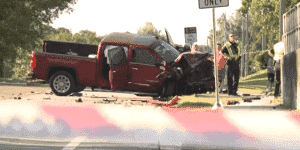
The Law Offices of Anidjar and Levine, a Jacksonville Personal Injury Lawyer firm, investigates whether fatigue, distraction, speeding, impairment, unsafe lane changes, or delayed braking caused a truck collision. Legal review may include driver logs, electronic data, dashcam footage, witness statements, testing records, dispatch communications, and maintenance files. These records can help identify safety violations, preserve evidence, and pursue compensation for medical care, lost income, pain, and long-term limitations. The sections below explain how these claims are evaluated and protected.
Main Takeaways
- A Jacksonville truck accident lawyer investigates driver behavior before, during, and after the crash to identify unsafe actions.
- Key evidence may include driver logs, electronic data, dispatch records, dashcam footage, witness statements, and company policies.
- Distracted driving, fatigue, speeding, aggression, and impairment are common behaviors reviewed in truck accident injury claims.
- Prompt legal action helps preserve electronic records, testing results, vehicle evidence, and surveillance footage before they are lost.
- Driver qualification files and post-crash testing can show whether safety duties were violated and support injury compensation claims.
How We Can Help With Your Jacksonville Truck Accident Driver Behavior Injury Claim
After a serious truck collision, questions about driver behavior often become central to proving fault and securing compensation. Legal support can help an injured person organize the claim, identify responsible parties, and protect information before it is lost. This includes obtaining Truck accident witness statements, preserving physical evidence, and reviewing records that may show fatigue, distraction, speeding, or unsafe lane changes.
In Jacksonville, a careful investigation may also address Intersection crash liability when turns, signals, or right-of-way violations are involved. Counsel can coordinate with investigators, medical providers, and insurance carriers while handling evidence timelines that affect notice requests, vehicle inspections, and electronic data preservation. This work allows the injured person to focus on recovery and serving family, the workplace, and the community. By presenting a clear record of conduct, injuries, and losses, an attorney can pursue fair compensation through negotiation or, when necessary, litigation for accountability and repair.
Understanding Jacksonville Truck Accident Driver Behavior Injury Cases


Understanding a Jacksonville truck accident driver behavior injury case begins with examining how a commercial driver acted before, during, and immediately after the collision. These cases often require a careful review of facts showing whether the driver met professional safety duties owed to others on the road. A responsible legal evaluation may include driver logs, electronic data, dispatch records, company policies, and communications that clarify decisions made during the trip.
OUR CONSULTATIONSARE FREE
START YOUR FREE CASE REVIEW

Eyewitness testimony can help establish how the truck moved, whether warnings were observed, and how the driver responded after impact. Vehicle maintenance records may also provide context, especially when mechanical condition affects how you interpret driver conduct. For injured individuals and families seeking accountability, this evidence can clarify what occurred and who may bear legal responsibility. A Jacksonville truck accident driver behavior lawyer reviews these materials with care, helping protect the truth and serve the needs of those harmed.
Common Causes of Jacksonville Truck Accident Driver Behavior
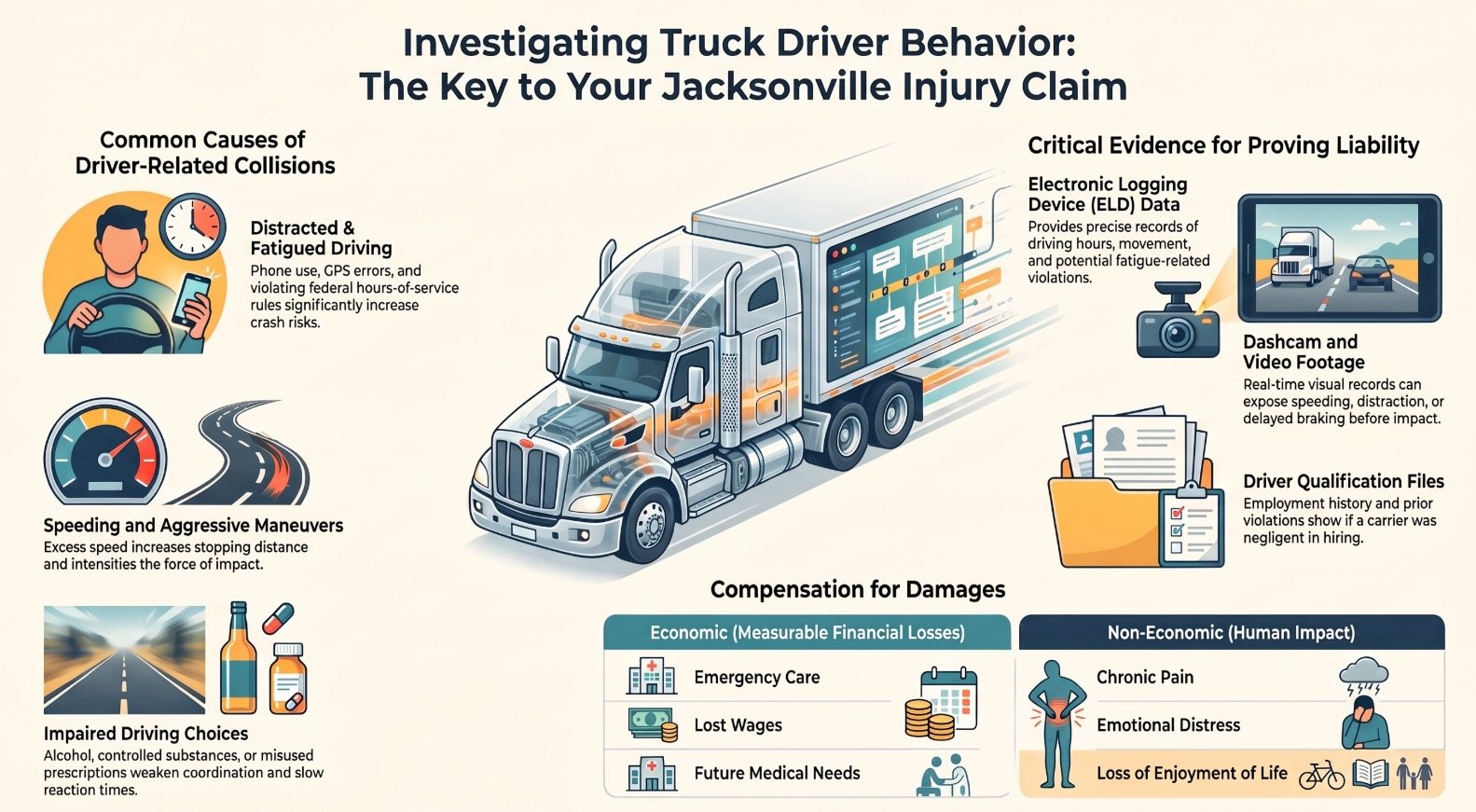
Common causes of Jacksonville truck accident driver behavior often include distracted truck driving, truck driver fatigue, speeding and aggression, and impaired driving choices. These factors can reduce reaction time, impair judgment, and increase the force and severity of a collision. Carefully reviewing driver conduct, vehicle data, and surrounding circumstances may help determine how unsafe behavior contributed to the crash.
Distracted Truck Driving


While every commercial driver is expected to maintain continuous attention on the road, distracted truck driving remains a significant cause of serious collisions in Jacksonville. Distractions can occur when a driver looks away, removes a hand from the wheel, or lets attention shift away from traffic conditions. Phone usage distractions, including texting, calls, or app notifications, can reduce reaction time and increase the risk of catastrophic impact. GPS navigation errors may also lead to sudden lane changes, missed exits, or unsafe turns, especially on busy freight routes. For those committed to protecting others, recognizing these hazards supports safer roads and stronger accountability. When distraction contributes to a crash, careful review of records, device activity, and driver conduct may help establish responsibility and guide injured parties toward appropriate legal remedies.
Truck Driver Fatigue
Because large commercial trucks require extended stopping distances and careful control, driver fatigue can quickly turn routine traffic conditions into a severe collision risk. In Jacksonville, fatigue may arise from demanding schedules, inadequate rest, overnight routes, or pressure to meet delivery deadlines. Hours-of-service violations are often central to these cases because federal rules exist to reduce exhaustion and protect the traveling public. When drivers operate beyond safe limits, sleep deprivation can cause slower reaction time, poor lane control, impaired judgment, and reduced awareness of nearby vehicles. These conditions can endanger motorists, passengers, pedestrians, and responders who serve the community after a crash. Careful review of logs, electronic records, dispatch communications, and rest periods may reveal whether fatigue contributed to unsafe driving behavior.
Speeding And Aggression
Fatigue is not the only unsafe driving behavior that can put Jacksonville motorists at risk, as speeding and aggressive actions can also make a commercial truck difficult to control. Excess speed increases stopping distance, reduces reaction time, and can intensify the force of a collision involving a tractor-trailer. Aggressive lane changes, tailgating, and unsafe passing may endanger families, workers, responders, and others who rely on careful conduct from professional drivers. These risks can grow when Nighttime Visibility is limited, since other vehicles, pedestrians, or roadway changes may be harder to detect. Weather Hazards, including heavy rain or standing water, may further reduce traction and stability. When drivers disregard safe spacing and speed limits, preventable harm may follow on Jacksonville roads.
Impaired Driving Choices
Impaired driving choices can turn a commercial truck into a severe danger on Jacksonville roads, particularly when a driver uses alcohol, controlled substances, misused prescription medication, or any substance that reduces alertness and judgment. These decisions can weaken coordination, slow reaction time, and impair the careful judgment required to protect motorists, passengers, pedestrians, and roadside workers. In truck accident cases, investigators may examine hours-of-service records, toxicology results, dispatch communications, and prior safety concerns to determine whether impairment played a role. Witness statement collection can help identify erratic lane changes, delayed braking, or unusual conduct before the collision. Surveillance footage review may also reveal inconsistent driving patterns near businesses, intersections, or loading areas. Careful evaluation supports accountability and promotes safer practices for the wider Jacksonville community.
Don’t Wait. Call Our Florida Personal Injury Lawyers Now!
Legal Rights of Jacksonville Truck Accident Driver Behavior Injury Victims
When a truck collision in Jacksonville is linked to dangerous driver behavior, injured victims may have the right to pursue compensation from the parties responsible for the crash. These rights may extend beyond the driver to employers, insurers, maintenance contractors, or cargo entities, depending on the evidence. Prompt legal action can help preserve records, address evidence spoliation, and challenge Insurance bad faith when carriers delay, deny, or undervalue valid claims.
Prompt legal action can preserve evidence, uncover responsible parties, and protect injured victims after a Jacksonville truck collision.
Victims may seek recovery for:
- Emergency care, surgery, rehabilitation, and future medical needs
- Lost wages, reduced earning ability, and household service losses
- Pain, emotional distress, disability, and diminished quality of life
- Wrongful death damages, when families lose a loved one
A legal claim can also promote accountability and help protect other motorists, passengers, and pedestrians. Through careful investigation, injured individuals may assert their rights while community-focused advocates work to restore stability, dignity, and needed support after a serious truck crash.
Why Do Jacksonville Truck Accident Driver Behavior Injuries Happen?
Why do driver behavior failures so often lead to severe truck accident injuries in Jacksonville? Commercial trucks require greater stopping distance, wider turns, and careful speed control. When a truck driver speeds, follows too closely, ignores fatigue, or makes unsafe lane changes, the size and weight of the vehicle can turn a brief mistake into catastrophic harm. Distracted driving is especially dangerous, because even a few seconds of inattention can prevent a driver from seeing traffic slowing on I-95, pedestrians near industrial routes, or vehicles merging near port areas.
These injuries often happen because preventable choices intersect with demanding roadway conditions. Tight delivery schedules, inadequate training, poor supervision, and weak safety cultures may encourage risky conduct. Electronic evidence, such as data from onboard systems, dash cameras, and communication logs, may reveal patterns of hard braking, phone use, speeding, or hours-of-service concerns. This information helps clarify how behavior contributed to the crash.
What Should You Do After a Jacksonville Truck Accident Driver Behavior Injury?
After a Jacksonville truck accident involving unsafe driver behavior, an injured person should prioritize prompt medical care, even when symptoms appear minor. You should also report the crash to law enforcement so an official record documents the scene, parties, and apparent contributing factors. Crucial evidence, including photographs, witness information, medical records, and vehicle details, should be preserved to support any later injury claim.
Seek Medical Care
In the moments following a truck accident involving unsafe driver behavior, prompt medical care is essential even if injuries are not immediately obvious. A person may feel stable while internal trauma, concussion, spinal injury, or soft tissue damage continues to develop. Medical evaluation protects health, supports recovery, and helps caregivers identify conditions that require urgent attention.
Those assisting an injured person should encourage emergency personnel or a qualified provider to assess them as soon as possible. Documenting emergency symptoms, including pain, dizziness, confusion, numbness, breathing difficulty, or loss of mobility, can guide treatment and preserve an accurate health record. Patients should also keep follow-up treatment schedules, attend referrals, and report worsening symptoms promptly. Consistent care demonstrates responsibility, promotes recovery, and helps establish the nature and progression of injuries.
Report The Crash
At the scene of a Jacksonville truck accident, report the crash to law enforcement as soon as it is safe to do so. A formal report creates an official record that may help injured people, families, insurers, and advocates understand what occurred. The responding officer can document driver conduct, roadway conditions, vehicle positions, and any apparent violations. Those assisting others should provide accurate information, avoid speculation, and remain available if clarification is needed. Witness statements may also be noted, helping preserve early observations before memories fade. If it can be done without risk, photo preservation may support the reporting process by showing the scene as officers found it. Prompt reporting promotes accountability, supports public safety, and helps ensure that vulnerable people receive appropriate attention.
Preserve Key Evidence
Once the crash is reported, begin preserving evidence as soon as safety and medical needs allow. A careful record helps protect injured people, supports accountability, and serves the broader purpose of safer roads. Photographs of vehicle positions, skid marks, cargo conditions, road hazards, and visible injuries may assist later crash reconstruction. Preserve electronic logging data, dash camera footage, inspection records, and dispatch communications before they are lost or overwritten. Collect witness statements promptly, while memories remain clear and reliable. Maintain medical records from the first examination through ongoing treatment, linking injuries to the collision and documenting recovery needs. When possible, damaged vehicles and related components should remain unchanged until qualified professionals inspect them. Timely preservation strengthens the injured person’s ability to pursue a fair claim.
Critical Evidence in a Jacksonville Truck Accident Driver Behavior Injury Case
Critical evidence in a Jacksonville truck accident driver behavior injury case often determines whether negligent conduct can be clearly established.
Critical materials may include:
- Electronic logging data
- Dashcam and video footage
- Driver qualification files
- Post-crash testing
These records can help identify hours-of-service violations, unsafe driving actions, inadequate driver screening, or impairment-related concerns.
Electronic Logging Data
After a serious truck crash, electronic logging device data can provide a precise record of a driver’s hours, vehicle movement, duty status, and potential fatigue-related violations. This information may help determine whether a driver exceeded federal limits, skipped required rest, or changed status entries to hide unsafe conduct. In a Jacksonville injury case, careful review supports accountability while serving injured people with diligence and fairness.
Electronic Log Accuracy depends on prompt preservation, comparison with dispatch records, fuel receipts, GPS reports, and maintenance documents. Proper Data Download Steps also matter, because incomplete extraction or delayed access may weaken the evidence. Counsel may seek preservation letters, subpoenas, and expert analysis to protect the data. When reviewed correctly, logging records can clarify driver behavior before impact.
Dashcam And Video
Electronic logging data may show how a truck driver’s day unfolded, but dashcam and video evidence can show what happened on the road in real time. Forward-facing cameras, cab cameras, traffic cameras, and nearby business footage may reveal speeding, distraction, unsafe lane changes, or delayed braking. This visual record can assist a careful legal review by confirming witness accounts and exposing conduct that written reports may miss. Prompt post-accident evidence preservation is essential, because many systems overwrite footage within days, and third-party recordings may disappear even sooner. Counsel can send preservation demands and seek available video from carriers, property owners, and public agencies. These efforts support identifying liable parties, including drivers, motor carriers, maintenance contractors, or others whose conduct contributed to the crash.
Driver Qualification Files
When evaluating a truck driver’s conduct before a Jacksonville collision, the driver qualification file may provide important evidence about whether the driver should have been behind the wheel at all. This file may include the driver’s employment application, license history, medical certification, road test results, prior crash information, and records of traffic violations. It may also reveal concerns involving cell phone violations, substance use history, or gaps in required documentation. For injured people and those serving them, these records can help determine whether a carrier acted responsibly when hiring, retaining, or supervising the driver. A complete file may show compliance with safety duties, while omissions may suggest preventable risk. Careful review can connect driver behavior to earlier warning signs the company should have addressed.
Post-Crash Testing
Because impairment can directly affect perception, reaction time, judgment, and vehicle control, post-crash testing may become important evidence in a Jacksonville truck accident driver behavior injury case. These tests may include alcohol screening, controlled substance testing, or related medical evaluations required after certain commercial vehicle crashes. Timely results can help determine whether a driver violated safety duties meant to protect the public. For those committed to serving injured people with diligence, preserving testing records is key. Counsel may compare test timing, collection methods, chain of custody, and employer compliance with federal rules. Combined with witness statements and scene reconstruction, post-crash testing can clarify whether unsafe conduct contributed to the collision. This evidence may support accountability and guide fair recovery for injured persons and families.
Don’t Wait. Call Our Florida Personal Injury Lawyers Now!
Long-Term Effects of Jacksonville Truck Accident Driver Behavior Injuries
Truck accident injuries caused by unsafe driver behavior may lead to lasting medical and personal consequences. Chronic pain complications and reduced mobility can interfere with work, daily routines, and long-term independence. Emotional trauma effects may also persist, requiring careful evaluation when reviewing the full scope of damages.
Chronic Pain Complications
After a serious Jacksonville truck accident, chronic pain can become one of the most disruptive long-term consequences of driver behavior injuries. Persistent neck, back, shoulder, or nerve pain may affect sleep, concentration, employment, and the injured person’s ability to care for others. These complications often require ongoing medical evaluation, medication management, physical therapy, and coordinated treatment planning. Pain may also influence emotional stability, especially when daily responsibilities become harder to manage.
In legal claims, chronic pain must be documented with consistency and care. Medical records, diagnostic findings, work restrictions, and provider opinions can help explain the injury’s ongoing impact. A lawyer may also evaluate mediation options when insurers dispute the severity or duration of pain. Careful advocacy supports fair recognition of long-term suffering and future care needs.
Reduced Mobility
Chronic pain often overlaps with reduced mobility, especially when injuries limit strength, balance, flexibility, or range of motion. After a Jacksonville truck accident, reduced mobility may affect walking, lifting, driving, working, and assisting family or community members. Spinal injuries, fractures, nerve damage, and joint trauma can require long rehabilitation, adaptive equipment, or modified duties. Careful documentation helps connect physical limitations to driver behavior, Work Zone Safety failures, or delayed Emergency Response. In some cases, Vehicle Defect Claims may also arise when braking, guiding, or visibility issues contributed to the collision. Maintenance Records can clarify whether preventable mechanical problems worsened the harm. Attorneys, medical providers, and caregivers may evaluate these facts to support practical recovery plans and fair compensation for lasting functional loss and reduced independence.
Emotional Trauma Effects
When a severe collision disrupts a person’s sense of safety, emotional trauma may persist long after physical injuries begin to stabilize. Survivors may experience PTSD symptoms, including intrusive memories, nightmares, avoidance of driving, irritability, and heightened alertness. These effects can interfere with work, caregiving, relationships, and community responsibilities, limiting a person’s ability to serve others consistently. Long-term anxiety may also develop when ordinary travel feels unpredictable or unsafe, especially after a truck accident involving reckless driver behavior. Care providers may recommend therapy options such as cognitive behavioral therapy, trauma-focused counseling, or support groups. Effective stress management can include structured routines, breathing techniques, medical guidance, and gradual exposure to feared activities. Documenting these effects may help demonstrate the full impact of crash-related injuries in a legal claim.
Proving Liability in Jacksonville Truck Accident Driver Behavior Injury Cases
Because truck accident claims often turn on the commercial driver’s conduct, proving liability requires a careful review of the actions that led to the collision. Evidence may show speeding, distraction, fatigue, unsafe lane changes, following too closely, or failure to obey traffic controls. Each fact helps identify whether the driver breached a duty of care owed to others on Jacksonville roads.
A thorough investigation may include driver logs, electronic control data, dash camera footage, police reports, maintenance records, and witness statements. These materials can confirm timelines, clarify visibility, and reveal whether safety rules were ignored. Attorneys may also examine hiring, training, and supervision practices when driver behavior reflects broader operational failures.
Comparative negligence arguments may arise when another party claims the injured person shared fault. Clear evidence helps address those claims, preserve accountability, and support fair recovery for those harmed. Accurate liability proof serves injured individuals, families, and the wider community.
Dealing With Insurance Companies After a Jacksonville Truck Accident Driver Behavior Injury
After a truck accident involving unsafe driver behavior, insurance companies often evaluate the claim quickly and closely review statements, records, and potential defenses. Their representatives may request recorded accounts, medical authorizations, or broad releases before the injured person understands the full impact of the harm. Careful review helps protect Policyholder Rights and prevents avoidable mistakes that may weaken compensation efforts.
In Jacksonville truck accident cases, insurers may examine driver logs, maintenance records, electronic data, and prior safety concerns while also looking for reasons to limit payment. Claim Denials may arise from disputed fault, alleged gaps in treatment, policy exclusions, or arguments that injuries were preexisting. A lawyer can communicate with adjusters, organize supporting documents, and challenge inaccurate conclusions. This role is especially important when the injured person’s recovery affects family, work, and community responsibilities, because fair handling supports stability and continued service to others.
What to Expect During a Jacksonville Truck Accident Driver Behavior Injury Claim Process
A Jacksonville truck accident driver behavior injury claim typically begins with an initial evaluation of the facts, injuries, insurance coverage, and potential damages. The process then focuses on investigating driver conduct, preserving evidence, and estimating liability through records, witness accounts, electronic data, and expert analysis. Depending on the evidence’s strength and the insurer’s position, the claim may move toward settlement negotiations or trial.
Initial Claim Evaluation
Usually, the initial claim evaluation in a Jacksonville truck accident driver behavior injury claim focuses on identifying how the truck driver’s actions may have contributed to the collision, including speeding, fatigue, distraction, impairment, unsafe lane changes, or violations of federal trucking regulations. During this stage, an attorney may review crash reports, medical records, photographs, and available roadway evidence to determine whether the claim can support injured people and their families. Witness statement collection may also begin, helping preserve observations from those who saw the crash or its immediate aftermath. The evaluation also considers potential defendants, available insurance coverage, and early insurance denial tactics that could delay fair resolution. This measured review clarifies legal options, protects vulnerable claimants, and promotes responsible advocacy.
Driver Conduct Investigation
During the driver conduct investigation, the focus shifts from broad claim screening to a detailed review of the truck driver’s choices before and during the collision. Investigators examine reported actions, route decisions, speed management, lane usage, lookout behavior, and responses to traffic conditions. Eyewitness interviews may help clarify how the driver appeared to operate the vehicle, including signs of distraction, fatigue, impatience, or unsafe operation. Scene reconstruction can also help clarify timing, visibility, vehicle positioning, and the sequence of events. This stage supports a careful, service-minded approach, because accurate findings help protect injured people, families, and the wider community from preventable harm. The investigation remains focused on conduct patterns, decision-making, and whether the driver acted with appropriate care under the circumstances presented.
Evidence And Liability
After the driver conduct review, the claim process turns to evidence and liability, where documented facts determine whether unsafe driver behavior caused or contributed to the crash. Investigators may review surveillance footage, witness statements, dispatch records, and electronic data to clarify timing, speed, lane changes, and driver choices. Background checks can reveal prior safety violations, licensing issues, or patterns that may affect responsibility. Medical documentation also helps connect the collision to specific injuries, treatment needs, and functional limitations. For those committed to serving injured individuals and their families, this stage requires careful organization and objective analysis. Liability may involve the driver, trucking company, maintenance provider, or other parties. Each finding should be supported by reliable proof, allowing the claim to proceed on a solid factual foundation.
Settlement Or Trial
Once evidence clarifies how driver behavior contributed to the Jacksonville truck accident, the claim may move toward settlement negotiations or, if necessary, trial preparation. During settlement, the injured person’s legal team may present records, witness accounts, expert opinions, and financial documentation to encourage fair resolution. Insurers may raise negligence defenses, arguing that another party, road conditions, or the injured person affected the outcome. Careful review helps separate valid concerns from tactics meant to reduce responsibility.
If settlement does not provide appropriate accountability, the case may proceed toward trial. Trial preparation focuses on proving damages, explaining driver conduct, and showing how the collision changed the injured person’s life. Throughout this process, counsel may help protect the client’s interests while supporting a resolution that serves recovery and justice.
Compensation for Jacksonville Truck Accident Driver Behavior Injury Damages
When a truck accident in Jacksonville results from unsafe driver behavior, the injured person may be entitled to compensation for both immediate losses and long-term harm. A careful claim considers how the driver’s choices affected the crash, including speeding, distraction, fatigue, impairment, or failure to follow traffic rules. Witness statements may help confirm what occurred and support a clear account of the collision.
Compensation often depends on the strength of the evidence, the seriousness of the injuries, and the conduct of all responsible parties. Liability disputes can arise when trucking companies, drivers, or insurers attempt to shift blame or reduce responsibility. In such circumstances, organized documentation and consistent advocacy are important.
Insurance negotiations should reflect the full impact of the accident, not pressure to resolve the matter quickly. A thoughtful settlement strategy can protect the injured person’s interests while promoting accountability and fair resolution through disciplined, service-focused legal representation.
Economic vs Non-Economic Damages in Jacksonville Truck Accident Driver Behavior Cases
Economic damages in Jacksonville truck accident driver behavior cases often include lost income recovery, medical expenses, and other measurable financial losses. Non-economic damages address harm that is harder to quantify, such as pain and suffering, emotional distress, and loss of enjoyment of life. Proving damages requires clear documentation, credible evidence, and a structured presentation of how the driver’s conduct caused both financial and personal losses.
Lost Income Recovery
After a serious truck collision caused by unsafe driver behavior, lost income may become a central part of the injured person’s economic damages claim. Recovery may include missed wages, reduced earning capacity, lost benefits, and diminished opportunities for advancement when injuries prevent steady work. A careful review of Medical Treatment records helps connect physical limitations to time away from employment. Proper Documentation Steps may include pay stubs, tax returns, employer statements, disability notes, and work restrictions from treating providers. In Jacksonville truck accident cases, this evidence helps advocates present a clear financial record for the injured person. When service-minded legal support evaluates income loss, the focus remains on restoring stability, protecting family obligations, and ensuring the responsible parties bear the economic burden.
Pain And Suffering
In the overall assessment of damages, pain and suffering addresses the human impact of a truck collision beyond direct financial loss. In Jacksonville driver behavior cases, this category may reflect physical discomfort, disrupted routines, emotional distress, and strain on family relationships. Unlike medical bills or missed wages, these losses don’t appear on an invoice, yet they can deeply affect daily life. A careful evaluation recognizes how negligent driving can limit mobility, reduce independence, and diminish a person’s ability to serve, work, or care for others. During settlement negotiations, pain and suffering may become a key issue because insurers often seek to minimize subjective harm. A balanced presentation helps ensure these non-economic damages receive fair, respectful consideration in the claims process.
Proving Damage Value
Proving the value of damages requires a structured comparison between measurable financial losses and the broader personal harms caused by unsafe truck driver behavior. Economic damages may include medical bills, rehabilitation costs, lost wages, reduced earning capacity, property damage, and future care needs supported by records, invoices, and expert review. Non-economic damages address pain, emotional distress, loss of enjoyment, and daily limitations affecting service to family, work, and community. In Jacksonville truck accident cases, Comparative fault rules may reduce recovery if injured parties share responsibility, making accurate evidence vital. Counsel may use medical opinions, employment records, photographs, and witness accounts to connect driver behavior to each loss. Effective settlement negotiation tactics present these damages clearly, encouraging insurers to evaluate both financial impact and human consequence fairly.
When a Jacksonville Truck Accident Driver Behavior Injury Case Goes to Trial vs Settlement
Whether a Jacksonville truck accident driver behavior injury case goes to trial or settles often depends on the strength of the evidence, the severity of the injuries, and the trucking company’s or insurer’s willingness to accept responsibility. Settlement may serve injured people by providing timely support for medical needs, lost income, and long-term care without the delays of courtroom proceedings. A thoughtful Mediation strategy can clarify liability, present damages clearly, and encourage fair resolution when both sides recognize the risks of continued litigation.
Trial may become necessary when the defense disputes unsafe driving conduct, minimizes harm, or offers compensation that does not reflect the evidence. In those situations, jury trial preparation is critical. Attorneys may organize witness testimony, expert opinions, driver records, crash data, and visual exhibits to show how the conduct caused the preventable injury. The decision should focus on accountability, practical recovery, and the client’s best interests.
Florida Laws That May Affect Your Jacksonville Truck Accident Driver Behavior Case
Because truck accident claims often involve overlapping safety rules, Florida law can materially affect how fault, damages, and insurance issues are evaluated after a Jacksonville collision. These rules help identify whether a driver, carrier, broker, or maintenance provider failed to protect others sharing the road. In cases centered on unsafe driver behavior, Florida trucking regulations may guide the review of licensing, vehicle condition, cargo practices, and operational duties.
- State traffic laws may show whether speeding, tailgating, distraction, or improper lane changes contributed to the crash.
- Commercial insurance requirements may affect available recovery sources for injured motorists, passengers, or families.
- Comparative fault rules may reduce compensation if another party is assigned some responsibility.
- Evidence duties may influence how logs, inspection reports, dispatch records, and electronic data are preserved.
When negligence standards apply, courts measure conduct against what a reasonably careful driver or company would have done under similar circumstances.
Don’t Wait. Call Our Florida Personal Injury Lawyers Now!
The Statute of Limitations for Jacksonville Truck Accident Driver Behavior Injury Cases
Florida law shapes how fault and insurance issues are evaluated and sets deadlines for filing a truck accident injury lawsuit in Jacksonville. In most Florida negligence cases, an injured person has two years from the date of the crash to file a lawsuit. This deadline can be pivotal when driver behavior, such as fatigue, distraction, impairment, or unsafe lane changes, must be examined carefully.
Timely action supports Evidence preservation, including driver logs, electronic control module data, dash camera footage, maintenance records, and witness statements. These materials may help clarify how the truck driver’s conduct affected those harmed, including families, caregivers, and community members seeking accountability.
Missed deadlines can limit or eliminate the ability to pursue compensation, even when injuries are severe. Delays may also complicate insurance disputes, as carriers may question causation, damages, or the link between the collision and later medical treatment.
How a Jacksonville Truck Accident Driver Behavior Lawyer Can Help You
How can a Jacksonville truck accident driver behavior lawyer assist after a serious collision? Counsel may evaluate whether speeding, fatigue, distraction, impairment, or unsafe lane changes contributed to the harm, then organize evidence carefully and purposefully.
- Conducting witness interviews to preserve accounts from motorists, passengers, responders, and nearby workers who observed the truck driver’s conduct.
- Securing records, electronic data, photos, and reports that may clarify violations, patterns, and preventable choices.
- Coordinating expert testimony from accident reconstruction, medical, or trucking safety professionals to explain conduct and consequences.
- Performing damages calculations that reflect medical needs, lost income, reduced capacity, pain, and the practical burdens placed on a household.
Through disciplined Negotiation tactics, an attorney may present the claim to insurers or opposing parties with documented facts and measured advocacy. This support allows injured people and their families to focus on recovery, caregiving, and restoring stability while legal responsibilities are handled professionally.
When to Contact a Jacksonville Truck Accident Driver Behavior Lawyer
After a serious truck collision, timing can affect the strength and organization of a driver behavior claim. Consider contacting a Jacksonville truck accident driver behavior lawyer as soon as your medical needs are stabilized and immediate safety concerns are addressed. Early communication may help preserve records involving speeding, distraction, fatigue, impairment, or unsafe lane changes before evidence becomes harder to obtain.
Contact is also appropriate when Insurance documentation begins arriving, especially requests for statements, medical releases, or recorded interviews. Families who want to serve an injured loved one responsibly may benefit from organized guidance before responding to insurers or transportation companies. Prompt review can also help track deadlines, treatment records, witness information, and repair estimates.
You may also contact a lawyer when Settlement timelines are discussed, because early offers may arrive before the full impact of injuries is known. Timely action supports orderly decision-making, careful documentation, and better preparation for later stages of the claim.
Why You Need an Experienced Jacksonville Truck Accident Driver Behavior Lawyer
Because driver behavior can determine liability in a commercial truck crash, an experienced Jacksonville truck accident driver behavior lawyer may be important in identifying facts not obvious from the police report alone. A careful review of speeding, fatigue, distraction, following distance, and compliance with safety rules can show how a crash unfolded and who could have prevented harm.
Experience also matters when evidence involves logbooks, electronic data, delivery pressures, training records, and company policies. These materials may reveal patterns that affect responsibility and support those seeking justice for injured people and their families. Comparative fault factors must be evaluated with care, especially when insurers argue that another driver, pedestrian, or road condition reduced the truck driver’s responsibility.
A lawyer familiar with witness credibility issues can also assess statements, inconsistencies, and bias. That disciplined approach helps protect valid claims and promotes accountability after serious Jacksonville truck collisions involving commercial drivers.
How to Choose the Right Jacksonville Truck Accident Driver Behavior Lawyer for Your Case
The right Jacksonville truck accident driver behavior lawyer should have a strong understanding of commercial vehicle crashes, driver-conduct evidence, and the rules that govern trucking operations. Start by reviewing case experience involving speeding, fatigue, distraction, impairment, unsafe lane changes, and hours-of-service violations. A qualified lawyer should know how to examine driver logs, electronic data, employment records, training materials, and prior safety history to identify responsible parties.
Strong Client communication is also crucial. The lawyer should explain the claim process clearly, provide timely updates, and answer questions carefully, especially when the injured person is trying to protect a family or support dependents after a serious crash. Prospective clients should also review fee structures before representation begins. Clear terms reduce uncertainty and let the client focus on recovery. The right lawyer combines legal skill, disciplined investigation, and a service-minded approach to pursuing accountability.
About The Law Offices of Anidjar & Levine
Selecting counsel also involves understanding the firm’s background, resources, and approach to client service. The Law Offices of Anidjar & Levine represents injured individuals in Jacksonville and across Florida, including those harmed in truck accidents involving unsafe driver behavior. The firm’s work emphasizes organized Client communication, so clients can remain informed while focusing on recovery, family responsibilities, and service to others.
In these cases, the firm may evaluate records, crash reports, witness statements, and carrier information to develop a case strategy tailored to the facts. Evidence gathering can include reviewing driver logs, maintenance records, inspection materials, and available electronic data. The firm also manages legal documentation, including insurance correspondence, demand materials, filings, and settlement-related records.
Through this structured approach, The Law Offices of Anidjar & Levine supports clients with diligence, accountability, and practical guidance during a demanding legal process after a serious Jacksonville truck accident.

Frequently Asked Questions
Can Truck Driver Social Media Posts Impact My Accident Claim?
Yes, truck driver Social Media posts can affect an accident claim if they reveal fatigue, distraction, substance use, unsafe conduct, or statements contradicting testimony. Investigators may preserve posts, comments, photos, timestamps, and location data. Admissibility Considerations include relevance, authenticity, privacy limits, and whether the content was lawfully obtained. Those serving injured people should review such evidence carefully, because it may clarify responsibility, damages, and credibility.
Are Trucking Companies Required to Screen Drivers for Past Violations?
Yes. Trucking companies must conduct Workplace screening under federal requirements before placing drivers on duty. This includes reviewing violation history, prior employment safety records, motor vehicle reports, and drug or alcohol testing information. Sound hiring policies should identify disqualified or unsafe drivers before harm occurs. When carriers ignore these duties, they may endanger the public and fail those they are entrusted to serve.
Can Dashcam Footage From Other Vehicles Help My Case?
Yes. Dashcam footage from nearby vehicles can provide important evidence by showing lane position, speed, braking, traffic signals, and surrounding conditions. These dashcam benefits may help establish a reliable crash timeline, clarify disputed accounts, and identify unsafe conduct. A careful review can support fair accountability while serving injured persons with accuracy and diligence. Prompt preservation requests are often necessary because recordings may be overwritten or unavailable after a delay.
Do Truck Accident Claims Differ if Hazardous Materials Were Involved?
Yes, claims often differ when hazardous materials are involved because added regulations, emergency response records, and contamination issues may affect liability and damages. Investigators may examine Wrongful Conduct such as improper labeling, unsafe loading, or driver violations. Evidence Types can include shipping papers, hazmat permits, cleanup reports, medical records, and agency findings. Those assisting injured persons should preserve records quickly, because specialized evidence may determine accountability and full recovery.
Can Prior Driver Complaints Support My Truck Accident Injury Claim?
Yes, prior driver complaints may support a truck accident injury claim when they show notice of unsafe conduct, repeated violations, or inadequate supervision. Such records can help establish negligent hiring, retention, or training by the carrier. Their value depends on relevance, documentation, and witness credibility. Medical records remain crucial to connect the crash to specific injuries. Properly presented, these materials serve justice by clarifying responsibility and promoting safer practices.
—————————
Truck accident claims involving driver behavior require careful investigation, compelling evidence, and timely legal action. Victims in Jacksonville may suffer serious injuries, financial hardship, and complex disputes with insurers or trucking companies. A qualified Jacksonville truck accident driver behavior lawyer can evaluate liability, protect your legal rights, and pursue the compensation you may deserve. The Law Offices of Anidjar and Levine provide experienced guidance to injured individuals seeking accountability and a clear path forward after a serious collision. Learn more by consulting a Jacksonville Personal Injury Lawyer.