
A Port St. Lucie truck accident driver behavior lawyer can investigate whether speeding, distraction, fatigue, impairment, or unsafe lane changes contributed to a collision. The Law Offices of Anidjar and Levine may review crash reports, witness accounts, medical records, driver logs, and electronic vehicle data. Florida law may allow injured people to seek compensation for documented losses, though shared fault can reduce recovery. Deadlines and evidence-retention concerns make prompt action important. Learn more from a Port St. Lucie Personal Injury Lawyer.
Main Takeaways
- A Port St. Lucie truck accident lawyer can review evidence to assess whether driver behavior contributed to your collision and injuries.
- Speeding, distraction, fatigue, impairment, tailgating, and unsafe lane changes may indicate negligent driving.
- Crash reports, witness statements, photographs, medical records, and truck data can help establish what happened and document losses.
- Investigators may examine driver logs, qualification records, company safety practices, and vehicle maintenance when assessing potential responsibility.
- Florida deadlines and comparative fault rules may affect recovery; prompt legal advice can help preserve evidence and clarify options.
How We Can Help With Your Port St. Lucie Truck Accident Driver Behavior Injury Claim
When a truck driver’s unsafe behavior causes a crash, an injured person may face serious harm and a complicated claim process. A Port St. Lucie truck accident lawyer can help organize the steps needed to pursue a fair resolution while allowing the injured person to focus on recovery.
Counsel can review available records, communicate with insurers, and explain how deadlines may affect a claim. This support may include gathering crash reports, medical documentation, witness statements, and other relevant evidence. A lawyer can also assess Claim eligibility by considering the circumstances of the collision, the injuries reported, and the losses supported by documentation. Each matter requires an individual review, and no outcome can be guaranteed.
A legal consultation gives an injured person a chance to describe what happened, ask questions, and understand their options. With clear guidance, the person can make informed decisions and avoid responding to insurer requests without understanding their implications. The goal is practical, respectful assistance throughout the claim process.
Don’t Wait. Call Our Florida Personal Injury Lawyers Now!
Understanding Port St. Lucie Truck Accident Driver Behavior Injury Cases


Understanding a Port St. Lucie truck accident driver behavior injury case requires examining how the driver’s conduct relates to the collision and resulting harm. An injured person may face medical expenses, lost income, and lasting physical limitations, while family members may also need practical support. A careful review helps clarify what happened and what evidence may establish responsibility.
OUR CONSULTATIONSARE FREE
START YOUR FREE CASE REVIEW

Investigators may assess roadway design, weather conditions, vehicle damage, and available records to understand the circumstances surrounding the crash. They may also consider the driver’s actions before and during the incident, along with the trucking company’s relevant procedures and documentation. Each detail can help distinguish supported conclusions from assumptions.
Injury cases often involve several parties and intricate evidence, so preserving records and obtaining timely medical care can be important. Legal guidance may help an injured person understand applicable deadlines, evaluate potential claims, and communicate with insurers. A thorough, respectful process can support accountability while protecting the dignity and needs of those affected.
Common Causes of Port St. Lucie Truck Accident Driver Behavior


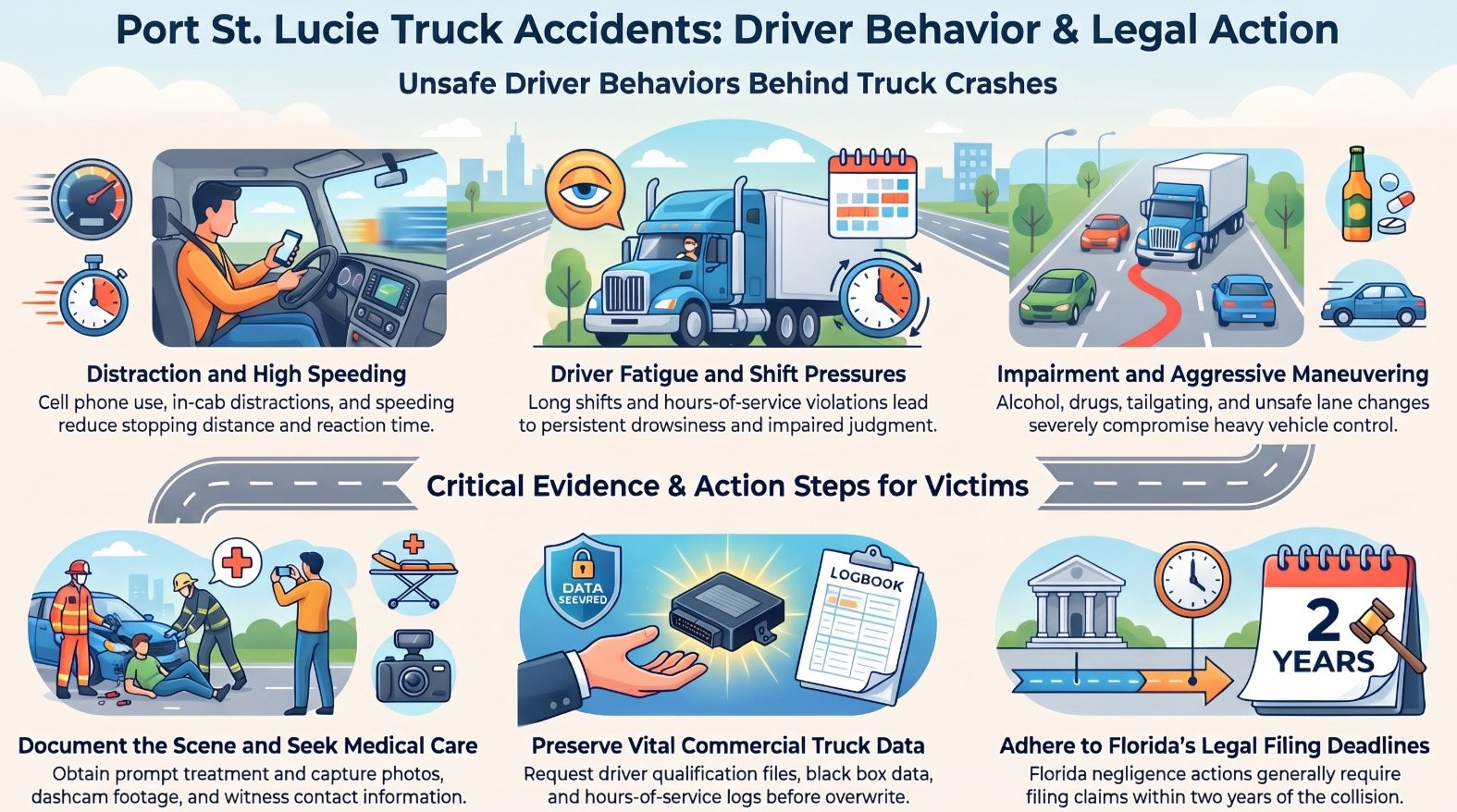
Several driver behaviors can contribute to truck accidents in Port St. Lucie, including distraction, speeding, and aggressive driving. Fatigue may impair a driver’s alertness and judgment, particularly during long shifts. Impaired driving can further compromise a truck driver’s ability to operate a vehicle safely.
Distracted Driving
How can a moment of inattention lead to a serious truck accident in Port St. Lucie? A driver who looks away from the road, even briefly, may miss changing traffic conditions or a vehicle entering the truck’s path. Because commercial trucks need substantial distance to stop and maneuver, delayed attention can leave nearby road users little time to respond.
Mobile phone use is a common source of distraction. Reading messages, making calls, or using navigation apps can divert a driver’s eyes, hands, or focus from safe vehicle operation. In-cab distractions, including adjusting controls, handling paperwork, or reaching for objects, can also interrupt attention. These behaviors may place passengers, motorists, cyclists, and pedestrians at risk. Identifying distraction as a contributing factor can help clarify how a collision occurred and support accountability for those affected.
Speeding and Aggressive Driving
When a truck driver exceeds a safe speed or drives aggressively, the vehicle may be harder to control and stop in time to avoid a collision. In Port St. Lucie, speeding can increase impact force and reduce the time available to respond to changing traffic conditions. Large trucks require greater stopping distances, particularly when carrying heavy cargo or traveling on wet roads. Aggressive conduct, including tailgating, unsafe lane changes, and Road Rage, can place nearby motorists, cyclists, and pedestrians at risk. Commercial drivers are expected to follow traffic laws and adjust their speed to road, weather, and traffic conditions. Speed Enforcement may help discourage dangerous conduct, but responsibility for safe driving remains with the driver and, in some cases, the trucking company. Evidence of these behaviors may help explain how a crash occurred.
Driver Fatigue
Driver fatigue can impair a truck driver’s attention, judgment, and reaction time, increasing the risk of a collision in Port St. Lucie. Long shifts, overnight routes, and insufficient rest may leave drivers less able to recognize hazards or respond safely to changing traffic conditions. Circadian disruption can make it harder to stay alert during hours when the body naturally wants to sleep. Sleep apnea and other untreated sleep disorders may also interfere with restorative rest, contributing to persistent drowsiness. Federal hours-of-service rules are intended to limit driving time and provide opportunities for rest, but compliance and accurate recordkeeping remain important. When a fatigued driver causes a crash, investigators may review schedules, electronic logs, dispatch records, and medical information. This evidence can help clarify how fatigue contributed to the collision and its consequences.
Impaired Driving
Impaired driving can compromise a truck driver’s judgment, coordination, and ability to respond to hazards on Port St. Lucie roads. Alcohol or controlled substances may slow reaction times, reduce attention, and impair decisions behind the wheel. Even when a driver appears capable, drug impairment can affect safe vehicle operation and increase risks for motorists, passengers, and pedestrians.
Commercial carriers are expected to follow safety requirements, including appropriate Alcohol testing and procedures for addressing suspected substance use. Investigators may review test results, driver records, witness accounts, and other evidence to determine whether impairment contributed to a collision. A careful investigation can help clarify how the crash occurred and identify responsible parties. Understanding these factors may support injured people and their families as they seek accountability and pursue appropriate compensation for resulting losses.
Legal Rights of Port St. Lucie Truck Accident Driver Behavior Injury Victims
Truck accident victims in Port St. Lucie may have legal rights when a driver’s conduct contributes to a collision and resulting injuries. Florida negligence standards generally require an injured person to establish that another party failed to use reasonable care and that this failure caused harm. A claim may seek compensation for documented losses, subject to applicable law and evidence.
Victims and families may benefit from understanding these protections:
- The right to pursue payment for medical expenses, lost income, and other legally recoverable damages.
- The right to preserve records, obtain relevant reports, and consult qualified counsel about available options.
- The right to have responsibility assessed under Florida’s comparative fault rules, which may reduce recovery when an injured person shares responsibility.
Prompt attention to deadlines and evidence can help protect a claim. Each matter depends on its facts, and no outcome is guaranteed. A careful legal review can clarify potential claims, explain procedural obligations, and support informed decisions while respecting the needs of everyone affected.
Why Do Port St. Lucie Truck Accident Driver Behavior Injuries Happen?
When a commercial vehicle operator makes an unsafe choice or fails to respond appropriately to road conditions, a collision can cause serious injuries. In Port St. Lucie, these crashes may result from speeding, distracted driving, impaired judgment, or fatigue. Truck operators face demanding schedules, but pressure to meet delivery deadlines does not excuse unsafe decisions. A driver who follows too closely or overlooks a vehicle in a blind spot can leave others with little time to avoid impact.
Some contributing factors are outside the driver’s immediate control. Roadway design, including narrow lanes, limited sightlines, or confusing intersections, can increase collision risk, especially when combined with poor driving choices. Weather conditions such as heavy rain can reduce visibility and traction, making a truck harder to control or stop. Inadequate training, vehicle maintenance problems, and unrealistic work schedules may also contribute. Identifying how these circumstances combined can clarify why injuries occurred and help protect other road users through responsible safety practices.
What Should You Do After a Port St. Lucie Truck Accident Driver Behavior Injury?
After a truck accident, injured individuals should seek prompt medical care, even if symptoms seem minor at first. They should document relevant driver behavior, including observations, photographs, and available witness information. Consulting a truck accident lawyer can help clarify legal options and preserve evidence related to the collision.
Seek Immediate Medical Care
Anyone injured in a Port St. Lucie truck accident should seek medical care promptly, even if symptoms seem minor at first. The force of a collision can cause injuries that aren’t immediately apparent, and a timely assessment can help identify conditions that require treatment. If the person has severe pain, difficulty breathing, confusion, or other urgent symptoms, contact emergency services. Otherwise, a prompt visit to an Emergency room or qualified medical provider can establish an appropriate care plan. Following medical advice, attending recommended appointments, and reporting new or worsening symptoms support recovery and reduce the risk of complications. Medical documentation can also provide a clear record of diagnoses, treatment, and recovery needs. Prioritizing health helps injured people receive necessary care and enables family members or others to offer informed, practical support.
Document Driver Behavior
Alongside medical care, documenting the truck driver’s conduct can help preserve information about how the collision occurred. If it is safe, the injured person or a companion can record the scene, vehicle positions, road conditions, and visible damage. Notes should include the time, location, weather, and any statements made by the driver or witnesses, recorded as accurately as possible. Photographs may show traffic signals, skid marks, signs, and obstructions that could clarify events. Dashcam footage from nearby vehicles or businesses may also capture relevant movements, so identify potential sources promptly before recordings are overwritten. Witness names and contact details can help preserve independent accounts. These steps can assist those evaluating the incident and support a clearer account of the driver’s behavior without speculation or confrontation.
Contact a Truck Accident Lawyer
A Port St. Lucie truck accident involving unsafe driver behavior can leave an injured person facing medical needs, lost income, and uncertainty about available options. After obtaining necessary medical care and preserving relevant records, the injured person may contact a truck accident lawyer to discuss the collision. Prompt legal guidance can help identify evidence, including driver logs, vehicle data, witness statements, and company records, before it is lost or altered.
A lawyer can explain how negligence may be established and whether the driver, trucking company, or another party could be responsible. Many firms offer Free consultations, allowing prospective clients to ask questions and understand potential next steps. Some also work on contingency fees, meaning they generally collect legal fees only if compensation is recovered. The injured person can compare terms carefully before deciding whether to proceed.
Don’t Wait. Call Our Florida Personal Injury Lawyers Now!
Critical Evidence in a Port St. Lucie Truck Accident Driver Behavior Injury Case
Evidence can help establish whether driver conduct contributed to a truck accident and the resulting injuries. Relevant records may show a driver’s qualifications, work hours, and actions before impact.
Essential sources include:
- Driver qualification records
- Hours-of-service logs and electronic data recorder information
- Witness statements
Driver Qualification Records
When a truck driver’s conduct is questioned after a crash, Driver Qualification Records can help show whether the carrier properly screened and monitored the person behind the wheel. These records may include employment applications, driving histories, license information, medical certifications, and required safety training documentation. Reviewing the file can reveal whether the driver met applicable qualifications and whether the carrier followed its own hiring standards. Personnel files may also show prior incidents, disciplinary actions, or gaps in required documentation that warrant closer examination. Such evidence can help clarify whether unsafe conduct was foreseeable and whether reasonable oversight occurred. Preserving these materials promptly matters because records may be incomplete, misplaced, or changed over time. A careful review can support a fair assessment of responsibility and help injured people pursue accountability while protecting others on the road.
Hours-of-Service Logs
Because fatigue can impair judgment and reaction time, hours-of-service logs may help explain a truck driver’s condition before a crash in Port St. Lucie. These records document driving periods, rest breaks, and off-duty time, allowing investigators to assess whether a driver followed applicable limits. A review may reveal extended shifts, insufficient rest, or inconsistencies between recorded schedules and other available evidence. Investigators may also examine possible Logbook Tampering, including altered entries or unexplained gaps, while preserving relevant records and Audit Trails that show when information was entered or changed. Careful analysis can help clarify whether fatigue contributed to unsafe conduct and identify practices that may put others at risk. Preserving these logs promptly can support a thorough, fair investigation and help injured people and their families understand the circumstances surrounding a collision.
Electronic Data Recorders
Beyond hours-of-service logs, electronic data recorders can provide a time-specific account of a truck’s operation before a crash in Port St. Lucie. Depending on the vehicle and system, recorded information may include speed, braking, throttle use, and engine activity. These details can help clarify whether driver behavior contributed to the collision and support a careful assessment of resulting injuries. Because some devices overwrite information, prompt preservation is important. Data retention policies may affect how long relevant records remain available, so a timely request can help prevent their loss. EDR data authentication is also critical; qualified review can establish whether the information is complete, reliable, and connected to the truck involved. Preserving and evaluating this evidence can help injured people and their families pursue an accurate account and fair resolution.
Witness Statements
Witness statements can provide a firsthand account of driver behavior before and during a truck crash in Port St. Lucie. Observers may describe speeding, unsafe lane changes, distraction, fatigue, or actions taken immediately before impact. Their accounts can help clarify events when physical evidence alone leaves questions unanswered. Investigators may interview passengers, nearby motorists, pedestrians, or people who saw the truck earlier. Witness Credibility depends on factors such as visibility, distance, attention, and the ability to recall events accurately. Statement Consistency across interviews and other evidence may strengthen an account, while differences can require careful review rather than automatic dismissal. Promptly recording contact information and preserving each witness’s original observations can support a thorough investigation. Reliable testimony may help establish responsibility and inform fair decisions about compensation and community safety.
Long-Term Effects of Port St. Lucie Truck Accident Driver Behavior Injuries
Driver behavior injuries in a Port St. Lucie truck accident may cause chronic pain and lasting limits on mobility. Some individuals also experience persistent cognitive or emotional effects that interfere with daily activities and work. Ongoing treatment can create substantial financial strain as medical needs and related expenses continue.
Chronic Pain and Mobility Loss
Truck accident injuries caused by negligent driving can lead to chronic pain and lasting mobility loss, even after initial treatment ends. Some survivors experience persistent back, neck, or joint pain that limits walking, lifting, and routine activities. Nerve damage or fractures may also reduce strength, balance, or flexibility, making independent movement more difficult. Ongoing Pain management may involve medication, physical therapy, injections, or other care recommended by qualified clinicians. When injuries affect daily function, mobility aids such as canes, walkers, or wheelchairs can support safer movement and preserve independence. Rehabilitation may help survivors build strength and adapt to lasting limitations, though progress varies by injury. Clear medical records can document symptoms, treatment needs, and functional changes, helping explain how driver negligence affected a person’s ability to work, care for others, and participate in community life.
Lasting Cognitive and Emotional Effects
Beyond chronic pain and mobility loss, a serious truck accident may cause lasting changes in memory, concentration, mood, or emotional well-being. These effects can follow a head injury, trauma, or the disruption of daily life after a collision. Memory lapses may interfere with appointments, instructions, or familiar responsibilities, while reduced concentration can make routine tasks more difficult. Mood changes, including irritability, anxiety, or persistent sadness, may affect relationships and a person’s ability to participate in community or family life. Some individuals also experience sleep disturbances, heightened stress, or fear when traveling near large trucks. These challenges may be subtle at first and can persist even when physical injuries improve. Careful documentation of symptoms and their effects on daily activities can help clarify the full impact of the accident and support informed legal evaluation.
Ongoing Treatment and Financial Strain
When injuries caused by negligent truck driver behavior require prolonged care, treatment costs and lost income can place sustained pressure on an injured person and their household. Recovery may involve expert visits, rehabilitation, medication, assistive equipment, or future procedures. These needs can continue after initial insurance payments end, making reliable financial planning important.
Treatment affordability may depend on the injury’s severity, available coverage, and the duration of care. Household budgeting can help families track medical bills, transportation expenses, reduced earnings, and vital costs while preserving funds for ongoing treatment. Clear records of appointments, invoices, and work absences may also help establish an accident’s financial impact.
A lawyer can review potential sources of compensation and explain applicable deadlines. This guidance may help injured people pursue support while maintaining access to necessary care and responsibilities to others.
Proving Liability in Port St. Lucie Truck Accident Driver Behavior Injury Cases
Establishing liability in a Port St. Lucie truck accident requires evidence connecting driver behavior to the injuries sustained. Investigators may examine crash reports, photographs, vehicle data, witness accounts, and medical records to determine how the collision occurred and document its consequences. Relevant conduct can include speeding, distraction, fatigue, impaired driving, or failure to follow traffic rules.
Responsibility may extend beyond the driver. A trucking company could face liability if it failed to train or supervise a driver, ignored safety requirements, or permitted unsafe practices. Evidence of negligent entrustment may also matter when an employer or vehicle owner allowed an unqualified or unsafe person to operate the truck.
Comparative fault may affect how responsibility is allocated if an injured person’s actions contributed to the crash. Careful preservation and review of records can clarify each party’s role. A thorough factual assessment helps injured people pursue accountability while supporting safer practices that protect other road users and the wider community.
Dealing With Insurance Companies After a Port St. Lucie Truck Accident Driver Behavior Injury
After evidence clarifies how driver behavior contributed to a Port St. Lucie truck accident, insurers may review the available records and assess responsibility. Their interests may differ from those of an injured person seeking fair support for medical care, lost income, and other documented losses. Clear communication can help protect the claim’s accuracy.
An insurer may request statements, authorizations, or additional records. Before responding, the injured person can review each request and seek guidance from a qualified attorney, particularly when questions concern fault or the scope of an injury. Prompt, factual responses help reduce misunderstandings, while speculation or casual comments may be used to challenge the account.
Policy limits may restrict available funds, especially when several parties or injured people are involved. If an insurer denies a claim or offers an amount that does not reflect documented harm, examine the reasons against the evidence and applicable coverage. A measured, well-supported approach can help pursue a fair resolution while preserving resources for those affected.
What to Expect During a Port St. Lucie Truck Accident Driver Behavior Injury Claim Process
A Port St. Lucie truck accident injury claim typically begins with an initial review of the circumstances, injuries, and available insurance coverage. Evidence gathering then helps establish how driver behavior contributed to the crash and document the resulting losses. The process may proceed through settlement negotiations before reaching a final resolution or, if necessary, litigation.
Initial Claim Review
During the initial claim review, the insurer examines how the truck driver’s conduct may have contributed to the crash and the claimant’s injuries. This Initial Claim Review generally considers the reported circumstances, the nature of the harm, and the available insurance coverage. The insurer may assess whether the driver’s actions, such as distraction, fatigue, or unsafe operation, could support responsibility for the collision. It also evaluates whether the injured person meets basic Claim Eligibility requirements under the applicable policy and legal rules. The claimant may be asked to provide an account of the incident, medical information, and details about resulting losses. A review does not establish that a claim will be accepted or determine its final value. The insurer communicates its position, identifies any unresolved questions, and explains the next steps in the process.
Evidence Gathering
Once the initial review identifies issues that require further examination, evidence gathering helps clarify how the truck driver’s conduct may have caused the crash and contributed to the injuries. Investigators may collect photographs, witness statements, police reports, and available video from nearby businesses or traffic cameras. Preservation letters can request that the trucking company retain driver logs, electronic control module data, inspection records, and other materials that could otherwise be lost or overwritten. Medical records and employment documentation may help establish the nature and effects of the injuries. When physical evidence or conflicting accounts require closer analysis, qualified professionals may conduct scene reconstruction to evaluate vehicle positions, stopping distance, visibility, and roadway conditions. Careful documentation supports an accurate assessment of responsibility, helps protect the injured person’s interests, and allows the claim to proceed on reliable evidence.
Settlement Negotiations
Settlement negotiations generally begin after the available evidence and the injured person’s medical condition have been reviewed. The parties assess how driver behavior, such as speeding, distraction, or inadequate rest, may have contributed to the collision and resulting harm. Negotiation timelines vary based on the complexity of the crash, the number of parties involved, and the time needed to understand ongoing treatment needs. Insurers may request records or offer an amount that does not reflect documented losses. Settlement strategies can include presenting organized evidence, explaining the basis for claimed damages, and responding to disputed facts with relevant records. A lawyer may communicate with insurers on the injured person’s behalf while keeping discussions focused on accountability and fair compensation. Careful preparation can support informed decisions throughout negotiations.
Claim Resolution
When negotiations do not resolve a truck accident injury claim, the next steps depend on the disputed facts, available evidence, and the parties involved. If the parties remain apart, mediation may provide a structured setting to review liability, injuries, and potential compensation with a neutral facilitator. Effective mediation strategies include presenting organized records, addressing weaknesses candidly, and considering proposals that reflect documented losses. If mediation does not produce an agreement, the injured person may file a lawsuit, begin formal discovery, and, if necessary, prepare for trial. Settlement timelines vary based on case complexity, medical recovery, evidence gathering, and court schedules. Throughout the process, careful documentation and timely responses can help protect the claim. Resolution may come through a negotiated settlement or a court decision, with each outcome shaped by the evidence and applicable law.
Don’t Wait. Call Our Florida Personal Injury Lawyers Now!
Compensation for Port St. Lucie Truck Accident Driver Behavior Injury Damages
Compensation for injuries caused by a truck driver’s negligent behavior in Port St. Lucie may help injured people address the consequences of a preventable collision. A claim may arise when conduct such as speeding, distraction, fatigue, or impaired driving contributes to a crash. The available recovery depends on the evidence, the nature of the injuries, and the parties legally responsible.
Claim Valuation requires careful review of medical records, treatment recommendations, crash reports, witness accounts, and other relevant documentation. This process can help establish how the driver’s behavior contributed to the collision and support a fair claim assessment. Promptly preserving available evidence may also assist those seeking accountability and help protect the interests of affected families.
Damage Caps may limit recovery in certain circumstances, depending on applicable law and the facts of the case. A qualified legal professional can explain potential limits, identify responsible parties, and guide claimants through the process accurately and carefully.
Economic vs. Non-Economic Damages in Port St. Lucie Truck Accident Driver Behavior Cases
Truck accident claims may include economic losses, such as medical expenses, lost income, and future care costs. They may also seek compensation for non-economic harm, including pain, emotional distress, and loss of normal activities. Establishing these damages generally requires reliable records and evidence connecting the losses to the crash and the driver’s conduct.
Economic Losses
In Port St. Lucie truck accident cases, economic losses are measurable financial harms linked to a driver’s conduct, such as speeding, distraction, or fatigue. These damages may include medical expenses, rehabilitation costs, prescription charges, and necessary transportation for treatment. A person unable to work during recovery may seek Lost wages, supported by payroll records, tax documents, or employer statements. When injuries limit future work or prevent a return to the same occupation, you may also be able to claim reduced earning capacity. Calculating that loss can require evidence about the person’s prior earnings, job duties, education, and likely career path. Household services or other out-of-pocket costs may qualify when documented and reasonably connected to the crash. Clear records help show the amount and cause of each claimed expense, supporting a fair assessment of financial needs and accountability.
Non-Economic Harm
Beyond documented financial losses, a Port St. Lucie truck collision may cause serious non-economic harm that affects an injured person’s daily life and relationships. Unlike medical bills or lost income, these damages address personal consequences without a fixed price. Persistent pain, emotional distress, anxiety, and reduced independence may interfere with ordinary routines and family responsibilities. A person may experience diminished enjoyment of activities that once provided fulfillment, including work, recreation, or time with loved ones. In severe cases, injuries can alter communication and shared experiences, contributing to Loss of companionship for spouses or family members. These effects may also place strain on caregivers who provide ongoing support. Florida law may permit recovery for qualifying non-economic damages, separate from economic losses, when another party’s negligence caused the harm.
Proving Damages
When a truck driver’s conduct contributes to a collision, proving damages requires evidence that connects the crash to both measurable financial losses and personal harm. Economic damages may include medical bills, rehabilitation costs, lost wages, and reduced future earning capacity. Damage documentation, such as invoices, employment records, and medical reports, helps establish the amount and cause of these losses. Future expenses may require treatment plans or professional estimates showing the expected cost of ongoing care.
Non-economic damages address effects that do not have a fixed price, including pain, emotional distress, and reduced ability to participate in daily activities. Consistent medical records and credible accounts from the injured person and those familiar with their life can support these claims. Clear evidence allows decision-makers to assess the full impact while distinguishing crash-related harm from unrelated conditions.
When a Port St. Lucie Truck Accident Driver Behavior Injury Case Goes to Trial vs Settlement
A truck accident injury claim in Port St. Lucie may settle or proceed to trial, depending on the evidence, the parties’ positions, and the injured person’s needs. Settlement can provide compensation without the delay and uncertainty of a courtroom decision. It may also allow the parties to address documented losses while avoiding the demands of public proceedings. However, an offer may not adequately reflect the harm or future care required.
When negotiations do not produce an acceptable resolution, a trial may give each side an opportunity to present evidence before a judge or jury. Trial testimony from the injured person, witnesses, and qualified professionals can help explain how driver behavior contributed to the collision and resulting injuries. After the evidence and arguments are presented, the jury deliberates, and the verdict may differ from either party’s expectations.
The choice requires careful evaluation of case strengths, potential outcomes, costs, and personal priorities. A lawyer can explain the available options and help the injured person make an informed decision.
Florida Laws That May Affect Your Port St. Lucie Truck Accident Driver Behavior Case
Florida law can shape how a Port St. Lucie truck accident driver behavior case is evaluated, including how responsibility and damages are assessed. The evidence may show whether a driver’s conduct, such as speeding, distraction, or fatigue, contributed to the collision. Florida negligence principles also require attention to the duties owed by drivers and, where relevant, trucking companies.
Florida law examines whether a truck driver’s conduct contributed to a crash and how responsibility affects potential damages.
Key considerations may include:
- Negligence: A claim generally examines whether a party failed to use reasonable care and whether that failure caused injury.
- Comparative fault: Florida’s modified comparative fault rules may reduce recoverable damages when an injured person shares responsibility. A person found more than 50 percent at fault generally cannot recover damages.
- Evidence and safety duties: Driver logs, electronic records, inspection documents, and witness accounts may help clarify conduct and compliance with applicable safety requirements.
These rules can affect negotiations and trial decisions. Careful review of the facts helps identify responsible parties and supports a fair assessment of losses, while allowing injured people and their families to focus on recovery and needed support.
The Statute of Limitations for Port St. Lucie Truck Accident Driver Behavior Injury Cases
After a Port St. Lucie truck crash involving driver behavior, an injured person may have limited time to bring a civil claim. Florida law generally sets a two-year Filing deadline for negligence actions arising from incidents on or after March 24, 2023. Claims based on earlier crashes may fall under the prior four-year period, so the accident date can affect the applicable rule. A wrongful-death claim generally also has a two-year deadline, measured from the date of death.
Missing the deadline can prevent a court from considering the claim, regardless of the seriousness of the injuries or the driver’s conduct. Tolling exceptions may apply in limited circumstances, such as when a defendant cannot be located or the injured person is a minor, but their availability depends on specific facts and statutory requirements. Different deadlines may govern claims against government entities or other parties. Prompt attention to dates and records helps preserve accountability and supports a fair process for everyone affected.
How a Port St. Lucie Truck Accident Driver Behavior Lawyer Can Help You
Investigating driver behavior in a truck crash requires timely evidence gathering and careful analysis of the events leading to the collision. A Port St. Lucie truck accident lawyer can examine records and testimony to determine whether fatigue, distraction, speeding, impairment, or unsafe decisions contributed to the harm. This work helps injured people and their families pursue accountability while supporting safer practices for others on the road.
A lawyer may coordinate a focused Case Evaluation by reviewing available evidence, identifying responsible parties, and evaluating documented losses. The resulting Legal Strategy can address the facts and applicable law without relying on assumptions.
Essential steps may include:
- Securing driver logs, electronic data, inspection records, and relevant communications.
- Comparing witness accounts, crash reports, and physical evidence to assess conduct.
- Consulting qualified experts to explain how driver actions may have caused the collision.
Counsel can also manage communications with insurers, organize supporting documentation, and present the claim clearly. Careful preparation helps guarantee that the injured person’s circumstances receive informed, respectful consideration throughout the legal process.
When to Contact a Port St. Lucie Truck Accident Driver Behavior Lawyer
Prompt legal guidance can help preserve evidence that may clarify whether a truck driver’s conduct contributed to a collision. A person involved in a Port St. Lucie truck crash may contact a driver behavior lawyer as soon as they address immediate medical needs. Early consultation can help identify records that may become harder to obtain, including electronic driving data, dispatch communications, witness accounts, and available video. Prompt attention also lets counsel assess how to document the incident while details remain fresh.
A consultation may be useful even when the cause of the collision is uncertain. Fatigue, distraction, speeding, or failure to follow safety rules may require careful review before evaluating responsibility. The injured person can share known facts and ask what information to preserve, without assuming fault.
Deadline planning is another reason to seek guidance promptly. Legal time limits and evidence-retention periods can affect available options, so early review can help prevent avoidable delays. Timely action may also support a more organized response that respects the needs of others affected by the crash.
Why You Need an Experienced Port St. Lucie Truck Accident Driver Behavior Lawyer
An experienced Port St. Lucie truck accident driver behavior lawyer can help injured people and their families understand how a driver’s conduct contributed to a collision. Truck crashes may involve fatigue, distraction, speeding, or inadequate training, while company decisions can also affect public safety. Identifying these factors requires careful review of records, policies, and available evidence.
A lawyer can examine driver logs, employment files, maintenance documents, and dispatch communications to assess whether warning signs were overlooked. Evidence of Negligent hiring or unsafe route planning may reveal that responsibility extends beyond the driver. A thorough investigation can also help preserve relevant information before it is lost and clarify how the crash has affected those involved.
How to Choose the Right Port St. Lucie Truck Accident Driver Behavior Lawyer for Your Case
Choosing the right Port St. Lucie truck accident driver behavior lawyer requires careful review of experience, communication, and case strategy. A lawyer should understand how fatigue, distraction, speeding, or other conduct may contribute to a collision and know how to investigate relevant evidence. This knowledge can help protect injured people and support accountability.
Prospective clients can review lawyer credentials, including licensing, relevant legal experience, and a record of handling truck accident claims. They should ask who will manage the case, how updates will be provided, and whether the lawyer can explain legal options in clear terms. A thoughtful approach should respect each client’s needs while pursuing a fair resolution.
The Fee Structure should also be explained before representation begins. Clients should understand how fees and case expenses are handled, when payment may be due, and what happens if the claim does not succeed. Comparing these details helps people make an informed choice and focus on recovery while their lawyer addresses the legal process.
About The Law Offices of Anidjar & Levine
The Law Offices of Anidjar & Levine represents injured people in personal injury matters, including truck accident claims. The firm helps clients facing the consequences of commercial vehicle collisions, including physical injuries, financial losses, and disrupted daily responsibilities. Its attorneys review the available evidence, explain legal options, and pursue claims based on each case’s circumstances.
The firm’s history reflects a practice focused on representing people harmed by negligence. For truck accident matters, this work may involve examining driver conduct, company practices, and records relevant to liability. The firm can also communicate with insurers and help clients understand the steps to seek compensation. Each claim requires careful attention to its facts and applicable law.
Community involvement is another part of the firm’s public presence. By supporting local initiatives and engaging with residents, the firm contributes to efforts that serve people in the communities where it works. Its role is to provide legal guidance while treating clients’ concerns with care, respect, and professional attention throughout the claims process.

Frequently Asked Questions
Can I Pursue a Claim if I Was a Passenger in the Truck?
A passenger injured in a truck crash may pursue a claim for compensation, even when the driver was a relative, coworker, or employer. Liability depends on evidence showing who caused the collision and whether another party, such as a trucking company or vehicle manufacturer, contributed. Passenger liability is generally limited, but shared fault may affect recovery if the passenger’s conduct contributed to the injuries. A lawyer can review applicable deadlines and insurance coverage.
What if the Truck Driver Was an Independent Contractor?
An independent contractor’s status does not automatically prevent an injured passenger from pursuing compensation. Independent Contractor Liability may apply when the driver’s negligence caused the crash, while Motor Carrier Responsibility may arise if the carrier controlled the work, negligently selected or supervised the driver, or violated safety duties. The specific relationship and evidence matter. A careful review of contracts, dispatch records, and crash reports can help identify responsible parties and support a claim.
Can a Family Member File a Claim After a Fatal Truck Accident?
A family member may be able to pursue a claim after a fatal truck accident, but eligibility depends on state law and the person’s relationship to the deceased. Wrongful death eligibility often includes a surviving spouse, children, or other designated relatives. In many cases, an estate representative must file the action on behalf of eligible beneficiaries. Estate representative duties may include gathering records, coordinating with counsel, and distributing any recovery as required by law.
Will My Immigration Status Affect My Ability to File a Claim?
Immigration status generally does not prevent an injured person or eligible family member from filing a truck accident claim in Florida. Claim eligibility usually depends on the facts of the collision, the claimant’s relationship to the deceased, and applicable legal requirements, not citizenship. Immigration documentation may matter for identity or certain damages, but it should not stop someone from seeking guidance. A qualified attorney can explain protections and help preserve the claim.
Can I Still Seek Compensation if I Was Not Wearing a Seat Belt?
Yes, an injured person may still seek compensation after a crash despite not wearing a seat belt. Florida’s Seat belt defense may allow the defense to argue that the failure to buckle up worsened the injuries, while comparative negligence may reduce damages based on the claimant’s share of responsibility. The outcome depends on the evidence, including how the collision occurred and whether seat belt use would have prevented or limited specific injuries. A careful investigation can clarify these issues.
—————————
Driver behavior can play a central role in a Port St. Lucie truck accident claim, but establishing fault requires careful investigation and reliable evidence. Injured victims should preserve relevant records, follow medical advice, and avoid making assumptions about their legal options. The Law Offices of Anidjar and Levine can review the facts, explain your rights, and discuss next steps. Learn more from a Port St. Lucie Personal Injury Lawyer. Prompt legal guidance may help protect evidence and ensure you don’t miss claim deadlines.