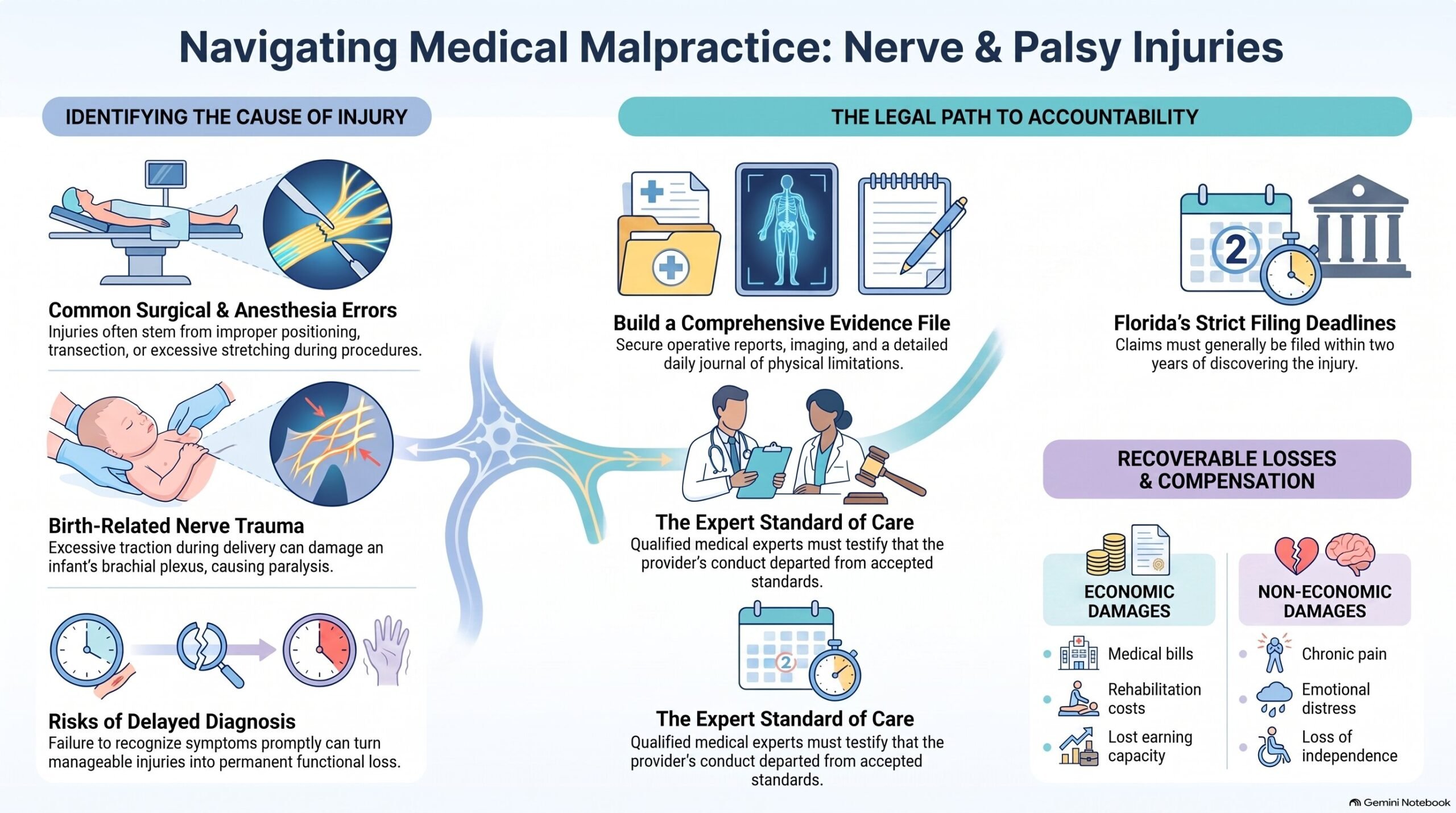
The Law Offices of Anidjar and Levine can evaluate whether negligent positioning, surgical technique, anesthesia, childbirth care, medication handling, or delayed diagnosis caused nerve or palsy injuries. A West Palm Beach Personal Injury Lawyer can preserve records, organize symptom timelines, coordinate qualified medical experts, address Florida’s procedural requirements, and pursue compensation for treatment, lost income, pain, and lasting functional limitations. Prompt evaluation is important because evidence and filing deadlines may be time-sensitive. Further information explains potential causes, legal rights, and steps for selecting counsel.
Main Takeaways
- A West Palm Beach medical malpractice lawyer can review medical records for evidence of preventable nerve or palsy injuries and identify potentially responsible providers.
- Potential causes include surgical errors, improper positioning, excessive traction, anesthesia mistakes, medication errors, and delayed diagnosis.
- Qualified medical experts typically assess the standard of care, breach, causation, disability, and prospects for future recovery.
- Relevant evidence may include operative reports, imaging, neurological examinations, informed-consent forms, treatment timelines, and rehabilitation records.
- Florida malpractice claims involve strict deadlines and detailed requirements, so prompt legal guidance can help preserve evidence and protect potential remedies.

How We Can Help With Your West Palm Beach Medical Malpractice Nerve & Palsy Injuries Claim
When medical negligence causes nerve or palsy injuries, an experienced West Palm Beach medical malpractice attorney can evaluate the circumstances and determine whether the evidence supports a claim. Legal counsel can help a prospective client organize medical records, identify relevant providers, and preserve documentation that may clarify the treatment received. The attorney may coordinate an expert review to assess whether professional standards were followed and whether the documented injury is connected to a preventable error.
Counsel can also explain procedural requirements, including filing deadlines, authorization forms, and communications with insurers or healthcare institutions. This guidance helps protect a client’s interests while reducing administrative burdens during a difficult recovery. Depending on the evidence, available compensation options may include damages for medical care, rehabilitation, lost income, future needs, and related losses. A careful case assessment can identify practical next steps, encourage informed decisions, and support a respectful process focused on accountability and the individual’s ability to move forward.
OUR CONSULTATIONSARE FREE
START YOUR FREE CASE REVIEW
Understanding West Palm Beach Medical Malpractice Nerve & Palsy Injuries Injury Cases
Medical malpractice nerve and palsy injury cases generally involve allegations that a healthcare provider’s negligent act or omission caused damage to nerves, muscles, or motor function. In West Palm Beach, evaluating such a claim requires examining medical records, treatment timelines, diagnostic findings, and the patient’s functional losses. A legal assessment must address the standard of care, whether that standard was breached, and whether the breach sufficiently caused the claimed injury.
Diagnosis Causation Proof often requires qualified medical testimony connecting the provider’s conduct with symptoms, disability, pain, or necessary recovery. The analysis may also consider prior conditions, recovery prospects, and the effect on employment or daily responsibilities. Because insurers may question liability, minimize impairment, or delay payment, counsel may develop an Insurance Denial Strategy based on documented evidence, applicable policy provisions, and persuasive medical opinions. Careful preparation helps clarify the claim and supports fair treatment for injured patients and their families throughout the legal process.
Common Causes of West Palm Beach Medical Malpractice Nerve & Palsy Injuries
Common causes of nerve and palsy injuries may include surgical nerve damage resulting from improper technique, positioning, or failure to protect surrounding tissue. Birth-related nerve injuries and anesthesia-related complications can also arise when providers fail to recognize or manage preventable risks. Misdiagnosis and delayed treatment may further worsen nerve damage by allowing an underlying condition to progress without timely intervention.
Surgical Nerve Damage
Surgical nerve damage can occur when a procedure directly injures a nerve or when surrounding tissue is handled improperly. Causes may include transection, excessive stretching, compression, misplaced hardware, inadequate protection, or complications involving scar tissue and swelling. A patient may experience numbness, burning pain, weakness, loss of coordination, or paralysis after surgery. Evaluation typically requires a review of operative records, informed-consent documents, imaging, neurological examinations, and recovery timelines.
A careful surgical delay analysis may determine whether recognition of symptoms, diagnostic testing, or corrective treatment occurred later than was permitted by reasonable medical practice. Treatment can involve observation, medication, physical rehabilitation, decompression, or Nerve repair options, depending on the injury’s location and severity. Qualified legal and medical professionals can help preserve records and assess whether negligent technique or follow-up caused preventable harm.
Birth-Related Nerve Injuries
When complications arise during labor or delivery, excessive traction, abnormal positioning, prolonged labor, shoulder dystocia, or improper use of delivery instruments can injure an infant’s nerves. These events may damage the brachial plexus, producing weakness, loss of movement, or partial paralysis in an arm. In some cases, careful monitoring and timely intervention could reduce preventable harm. Birth trauma prevention includes appropriate maternal risk screening, fetal assessment, labor planning, and adherence to established delivery protocols. Medical teams should recognize warning signs, communicate changes promptly, and obtain assistance when a difficult delivery develops. When providers fail to identify risks, respond to distress, or use reasonable techniques, families may question whether negligence contributed to the injury. A qualified attorney can review records, consult medical professionals, and help affected families understand available legal remedies.
Anesthesia-Related Injuries
Anesthesia-related nerve injuries may occur when positioning, equipment, medication, or monitoring during a procedure is handled improperly. Prolonged pressure on an arm, shoulder, or leg can compress nerves and cause weakness, numbness, or lasting palsy. Improper restraint, inadequate padding, or failure to adjust a patient’s position may increase this risk, particularly during lengthy operations. Airway damage can also occur if intubation equipment is inserted forcefully or managed carelessly, potentially affecting nerves in the throat, tongue, or vocal structures. Anesthesia monitoring should include careful attention to oxygen levels, blood pressure, nerve function, and the patient’s positioning throughout the procedure. Medication errors may further contribute to nerve injury by causing inadequate anesthesia, excessive sedation, or dangerous muscle reactions. Healthcare professionals must follow established safety procedures and respond promptly to warning signs.
Misdiagnosis and Delayed Treatment
Misdiagnosis and delayed treatment can turn an otherwise manageable nerve injury into permanent weakness, numbness, or palsy. A healthcare provider may overlook warning signs, misread imaging, dismiss reported symptoms, or fail to order timely diagnostic testing. Delays can prevent decompression, repair, medication, or rehabilitation when those interventions may have improved recovery. In a potential malpractice claim, the patient’s condition, medical history, and treatment timeline require careful evaluation. Evidence of misdiagnosis may include examination records, imaging studies, referral notes, medication histories, and testimony describing worsening symptoms.
An expert review can assess whether the provider met the applicable standard of care and whether an earlier diagnosis or treatment would probably have reduced the resulting harm. Documentation of functional limitations, lost income, and ongoing care needs may also help establish the injury’s consequences and support appropriate accountability.

Legal Rights of West Palm Beach Medical Malpractice Nerve & Palsy Injuries Injury Victims
Individuals who suffer nerve or palsy injuries because of suspected medical negligence may have legal rights under Florida law, including the right to seek compensation for additional medical care, lost income, pain and suffering, and other documented damages. A qualified attorney can explain deadlines, evidence requirements, and potential defendants while protecting the individual’s interests.
Important steps may include:
- Preserving medical records, diagnostic images, bills, and employment documentation
- Conducting a Patient timeline review to organize treatment, symptoms, communications, and losses
- Evaluating insurance denial appeals and identifying benefits or coverage disputes requiring action
Victims may also have rights to obtain relevant records, consult independent medical professionals, and pursue a claim when evidence supports a breach of the applicable standard of care. Florida claims generally involve strict filing deadlines and detailed expert-witness requirements, making prompt legal guidance important. A compassionate legal team can help families understand available remedies, communicate with insurers, and coordinate with medical providers without adding unnecessary burdens. Each case requires individualized review because damages, causation, and procedural requirements vary. Legal counsel can also explain settlement proposals and litigation risks before decisions are made.
Free Consultation — Available 24/7Don’t Wait. Call Our Florida Personal Injury Lawyers Now!
Why Do West Palm Beach Medical Malpractice Nerve & Palsy Injuries Happen?
Nerve and palsy injuries may occur when medical treatment damages, compresses, or fails to protect nerves during diagnosis, surgery, childbirth, anesthesia, or recovery. Common causes include improper positioning, excessive traction, surgical mistakes, medication errors, delayed recognition of circulation problems, and inadequate monitoring. During childbirth, excessive force or prolonged pressure may affect an infant’s nerves. Anesthesia-related injuries can result from injection errors, unrecognized complications, or failure to respond promptly to warning signs.
These injuries may also arise when clinicians overlook infection, swelling, bleeding, or other conditions that threaten nerve function. In some cases, a facility’s staffing, communication, or equipment failures contribute to preventable harm. A review of proper treatment alternatives can help identify safer approaches and foreseeable risks before care begins. Thorough patient consent documentation should reflect the proposed procedure, material risks, alternatives, and expected outcomes. When these safeguards are absent or inadequate, the resulting nerve or palsy injury may raise questions about whether accepted medical standards were followed.
What Should You Do After a West Palm Beach Medical Malpractice Nerve & Palsy Injury?
After a suspected nerve or palsy injury from medical malpractice, the individual should seek immediate medical care to address symptoms and prevent further complications. Detailed records of injuries, treatment, expenses, and communications can help establish what occurred and how it affected the individual. Consulting a qualified malpractice lawyer may clarify legal options, deadlines, and the evidence needed to pursue a claim.
Seek Immediate Medical Care
Prompt medical evaluation is essential when a person develops numbness, weakness, loss of coordination, burning pain, or paralysis following a medical procedure or treatment. Urgent symptom assessment can identify nerve damage, circulatory problems, infection, or other complications that require immediate intervention. The affected person should notify the treating provider and seek evaluation at an emergency department, particularly if symptoms are sudden, severe, or progressive, or if accompanied by breathing difficulty, facial drooping, confusion, or loss of bladder control. Emergency referral steps may include calling emergency services, avoiding driving, and providing clinicians with accurate information about the procedure, medications, and the onset of symptoms. Timely treatment may limit permanent impairment and support recovery. A trusted person can assist with transportation and communication while healthcare professionals determine the safest course of care.
Document Your Injuries
Once immediate medical concerns have been addressed, the injured person should create a detailed record of the symptoms, treatment, and resulting limitations. A Pain journal can identify pain intensity, burning, numbness, weakness, and changes in mobility over time. Daily symptom notes should include the date, duration, location, triggers, medications taken, and whether treatment provided relief. The individual should preserve discharge instructions, prescriptions, test results, therapy records, and follow-up recommendations in an organized file. Photographs may document visible swelling, bruising, surgical sites, or assistive devices, while written descriptions can explain difficulties with walking, working, sleeping, dressing, or performing household responsibilities. Family members or caregivers may also record observed changes when symptoms affect communication or memory. Accurate, consistent documentation can help healthcare providers evaluate progress and support continuity of care.
Consult a Malpractice Lawyer
Consulting a medical malpractice lawyer can help an injured person determine whether nerve or palsy injuries resulted from a healthcare provider’s negligent act or omission. The lawyer can review medical records, treatment timelines, diagnostic studies, and documentation of the injury’s effects. This assessment may identify departures from accepted standards of care, surgical errors, medication problems, or failures to monitor complications.
A lawyer can also evaluate whether Informed consent requirements were satisfied, including disclosure of material risks and reasonable alternatives. Because these claims often depend on expert medical issues, expert reviews may be necessary to assess causation, negligence, and the extent of resulting recovery. Counsel can explain filing deadlines, preserve relevant evidence, communicate with insurers, and calculate potential damages. Prompt legal guidance allows an injured person to pursue accountability while protecting important rights.
Critical Evidence in a West Palm Beach Medical Malpractice Nerve & Palsy Injuries Case
Important evidence may establish whether negligent medical care caused the patient’s nerve or palsy injury and how the condition progressed.
Vital materials often include:
- Medical records and surgical documentation
- Expert testimony regarding the applicable standard of care
- Evidence documenting injury progression, treatment, and long-term effects
Together, these records can help clarify causation, damages, and the strength of a potential claim.
Medical Records
Medical records often provide the foundation for a West Palm Beach medical malpractice nerve and palsy injury case by documenting the patient’s condition, treatment, and changes over time. Progress notes, surgical reports, medication records, imaging results, and nursing observations may reveal when weakness, numbness, paralysis, or other nerve-related symptoms first appeared. They can also show whether providers recognized warning signs, obtained informed consent, ordered appropriate testing, and responded promptly to complications. Accurate timelines help distinguish preexisting conditions from injuries developing during or after treatment. Records concerning referrals, follow-up visits, physical therapy, and prescribed exercises may clarify the patient’s nerve recovery and rehabilitation planning. Complete files can also document functional limitations, continuing symptoms, and healthcare expenses. Preserving every relevant record supports a careful evaluation of the patient’s experience and claimed losses.
Expert Testimony
When a nerve or palsy injury follows medical treatment, qualified specialist testimony can help establish whether the provider’s conduct met the applicable standard of care. Physicians and other specialists may explain what a reasonably competent professional would have recognized, performed, or communicated under comparable circumstances. Their opinions can connect a departure from accepted practice to nerve damage, weakness, paralysis, or related impairment, while addressing alternative causes. Experts may also evaluate prognosis, future treatment, functional limitations, and anticipated care needs, helping decision-makers understand the injury’s practical consequences.
In determining how we prove negligence, counsel may consult timeline experts who organize symptoms, treatment events, and recovery patterns into a medically coherent sequence. Credible testimony should remain grounded in reliable records, clinical knowledge, and transparent reasoning. It can clarify complex issues while supporting a fair, service-focused presentation of the injured person’s claim.
Surgical Documentation
Surgical documentation can provide a detailed account of the procedure, including the patient’s positioning, the techniques used, intraoperative findings, and any complications or unexpected events. In a West Palm Beach medical malpractice case involving nerve or palsy injuries, these records may help establish whether accepted surgical standards were followed. Documentation should identify the personnel involved, instruments used, and steps taken to protect nearby nerves. Records concerning informed consent may clarify which risks were explained before surgery and whether the patient received an opportunity to ask questions. Surgical timelines can help organize anesthesia, incision, nerve monitoring, and closure events. Anesthesia records and post op monitoring notes may show how the patient was assessed immediately afterward. Documentation audits can reveal omissions, inconsistencies, late entries, or unexplained alterations requiring careful legal review.
Injury Progression Evidence
Although nerve and palsy injuries may not be fully apparent immediately after a procedure, a carefully documented progression of symptoms can provide crucial evidence in a West Palm Beach medical malpractice case. Symptom timeline mapping may connect initial weakness, numbness, pain, or loss of coordination with later diagnostic findings and treatment decisions. Medical records, patient journals, therapy notes, and witness observations can help establish when symptoms appeared, whether they worsened, and how providers responded. MRI evidence review may identify nerve compression, tissue damage, or other findings consistent with an injury occurring during or after treatment. Comparing imaging reports over time can clarify progression and challenge unsupported explanations. This evidence may assist qualified professionals in evaluating causation, delayed recognition, and the patient’s need for continuing care and rehabilitation.
Long-Term Effects of West Palm Beach Medical Malpractice Nerve & Palsy Injuries
Long-term nerve and palsy injuries may cause chronic pain, weakness, and reduced physical function. As mobility and independence decline, affected individuals may require assistance with daily activities and face significant lifestyle changes. Ongoing treatment, rehabilitation, medications, and related care can also create substantial and continuing financial costs.
Chronic Pain And Weakness
Chronic pain and weakness frequently persist after a nerve or palsy injury caused by medical malpractice, limiting mobility, coordination, and the ability to perform routine activities. These symptoms may fluctuate, intensify with exertion, or interfere with sleep and concentration. Weakness can also increase the effort required for personal care, household responsibilities, and employment duties, creating ongoing physical and emotional strain. Appropriate Pain management may involve medication review, targeted therapies, counseling, and monitoring for adverse effects. Rehabilitation planning should reflect the affected nerves, the individual’s medical history, and realistic functional goals, while allowing adjustments as recovery develops. Medical records documenting symptoms, treatment recommendations, and continuing limitations can help clarify the injury’s long-term consequences. Legal guidance may assist affected individuals and their families in evaluating accountability and pursuing resources for necessary care.
Mobility And Independence Loss
When nerve injuries or palsies caused by medical malpractice impair balance, strength, or coordination, mobility and personal independence may decline substantially. Affected individuals may require assistance with walking, transfers, bathing, dressing, meal preparation, or transportation. These limitations can alter household responsibilities and restrict participation in family, community, and civic activities. Some people may need wheelchairs, braces, ramps, accessible bathrooms, or personal support to move safely through daily environments. Rehabilitation costs may include mobility training and equipment needed to maximize functional independence. At work, workplace adaptations such as modified duties, ergonomic equipment, flexible scheduling, or accessible entrances may become necessary. Such changes can affect earning capacity and self-confidence, while caregivers may assume additional responsibilities. Documenting these losses helps clarify the injury’s lasting effect on autonomy, dignity, and quality of life.
Ongoing Treatment And Costs
Nerve and palsy injuries may require ongoing treatment for months or years, including expert evaluations, physical or occupational therapy, prescription medications, injections, assistive devices, and, in some cases, additional surgery. Rehabilitation costs can include transportation, home modifications, durable medical equipment, and regular follow-up appointments. These expenses may continue even when insurance coverage is limited, or treatment progress becomes gradual. Affected individuals may also lose wages while attending therapy, managing pain, or adapting to permanent limitations.
Careful documentation of medical bills, treatment recommendations, employment disruption, and anticipated future needs can help establish the injury’s financial impact. Depending on eligibility, disability benefits may provide partial income support, although applications often require detailed medical evidence. Legal professionals may consult medical and vocational experts to evaluate projected costs and pursue appropriate compensation.
Free Consultation — Available 24/7Don’t Wait. Call Our Florida Personal Injury Lawyers Now!
Proving Liability in West Palm Beach Medical Malpractice Nerve & Palsy Injuries Injury Cases
Proving liability in West Palm Beach medical malpractice cases involving nerve and palsy injuries requires evidence that a healthcare provider breached the accepted standard of care and that the breach directly caused the patient’s impairment. Attorneys typically review medical records, imaging, surgical notes, prescriptions, and testimony from treating professionals to identify errors in diagnosis, treatment, positioning, or follow-up care. Causation proof must connect the specific conduct to the nerve damage, weakness, paralysis, or other lasting limitations, while addressing alternative causes such as preexisting conditions or unavoidable complications.
A qualified medical expert generally explains what a reasonably careful provider would have done and how the defendant’s actions departed from that standard. The witness strategy may include testimony from family members, coworkers, therapists, and independent specialists who describe symptoms, functional changes, and the patient’s progress. Promptly preserving records and documenting consistent complaints can strengthen credibility. Careful preparation helps present the patient’s experience accurately and supports accountability within the medical system.
Dealing With Insurance Companies After a West Palm Beach Medical Malpractice Nerve & Palsy Injury
Insurance companies may become involved soon after a nerve or palsy injury is reported, but their representatives generally protect the interests of the insurer or healthcare provider rather than the injured patient. Adjusters may request medical records, employment information, and detailed accounts of the incident. Patients and families should provide accurate information while avoiding speculation about fault, prognosis, or long-term limitations.
Recorded communications can influence an insurance strategy, so conversations should remain factual and respectful. A patient may benefit from consulting a medical malpractice attorney before signing releases, giving recorded statements, or accepting a settlement. Broad authorizations can expose unrelated medical history and complicate evaluation of the claim.
Claim denial letters require careful review because they may identify disputed facts, coverage positions, or alleged procedural deficiencies. Preserving correspondence, bills, treatment records, and wage documentation helps clarify the injury’s effects. Legal counsel can communicate with insurers, protect the patient’s interests, and seek fair consideration while the injured person focuses on treatment and recuperation. This support also helps families serve vulnerable patients responsibly.
What to Expect During a West Palm Beach Medical Malpractice Nerve & Palsy Injuries Claim Process
A West Palm Beach medical malpractice nerve and palsy injury claim typically begins with an initial case evaluation to assess potential negligence and damages. The process then involves a careful review of the medical record, followed by settlement negotiations based on the evidence and applicable law. If negotiations do not resolve the dispute, trial preparation may become necessary to present the claim in court.
Initial Case Evaluation
During the initial case evaluation, a West Palm Beach medical malpractice lawyer examines how the nerve or palsy injury developed, identifies the medical providers involved, and determines whether the available facts support a negligence claim. The discussion generally addresses the patient’s symptoms, treatment timeline, functional limitations, and effect on employment or daily responsibilities. Counsel may explain potential theories of liability, applicable filing deadlines, and the practical requirements for pursuing compensation. A damages checklist helps organize documented losses, including medical expenses, rehabilitation needs, lost income, and continuing assistance.
Evidence preservation is also emphasized, requiring careful protection of communications, photographs, employment records, and personal notes describing changes in functioning. The evaluation provides a structured opportunity to identify concerns, clarify objectives, and determine whether further investigation would responsibly serve the injured individual’s interests.
Medical Record Review
Once representation begins, counsel conducts a detailed medical record review to reconstruct the events surrounding the alleged nerve or palsy injury. This process may include hospital charts, physician notes, nursing documentation, imaging studies, medication records, operative reports, and discharge instructions. Counsel compares entries across providers to identify Hidden injury timelines, changes in symptoms, delayed responses, and inconsistencies in documentation. The review also examines informed consent, monitoring practices, referrals, and follow-up care for indications that accepted standards may not have been followed. Qualified medical professionals may assist with causation evidence analysis, evaluating whether treatment decisions more likely than not caused or worsened the nerve damage or palsy. The organized record helps clarify the injury’s progression, preserve significant details, and guide further investigation while protecting the individual’s interests throughout the claim process.
Settlement Negotiations
Settlement negotiations typically begin after the available medical records, expert opinions, and damages evidence have been evaluated. The injured patient’s attorney may present a demand describing the alleged negligence, nerve or palsy-related limitations, treatment needs, lost income, and other losses. The insurer or opposing counsel may respond with questions, requests for documentation, or a counteroffer.
A careful negotiation strategy relies on evidence rather than pressure. It considers liability strength, causation, anticipated medical care, functional limitations, and the likely value of comparable claims. A thorough damages assessment helps distinguish economic losses from pain, disability, emotional consequences, and reduced quality of life. Counsel generally explains each proposal, addresses risks, and protects the client’s interests throughout discussions. Settlement authority remains with the client, who may accept, reject, or continue to evaluate an offer without proceeding to court.
Trial Preparation
Preparing for trial involves organizing the medical evidence, expert testimony, and damages documentation needed to establish that negligent care caused the nerve or palsy injury. Counsel typically develops a treatment timeline, identifies departures from accepted standards, and links those departures to the patient’s physical limitations, pain, rehabilitation needs, and financial losses. A Jury selection strategy may address impartiality, medical experiences, and attitudes toward injury claims while protecting the client’s interests. Through pretrial witness prep, attorneys help witnesses review records, understand courtroom procedures, and answer questions accurately without speculation. The legal team may also challenge unreliable testimony, resolve evidentiary disputes, and prepare opening and closing arguments. Careful trial preparation allows the case to be presented clearly, supports accountability, and helps pursue resources that serve the injured patient’s recovery and future needs.
Compensation for West Palm Beach Medical Malpractice Nerve & Palsy Injuries Injury Damages
Compensation in a West Palm Beach medical malpractice nerve or palsy injury claim may include economic and noneconomic damages arising from negligent medical care. A claim may address costs connected with diagnostic evaluations, rehabilitation, assistive devices, transportation, and continuing treatment. It may also recognize diminished ability to work, household limitations, and the practical support required during recovery.
Assessment generally considers the injury’s severity, permanence, effect on independence, and anticipated medical needs. Documentation from treating professionals can explain nerve damage, functional restrictions, numbness, recovery options, and whether additional procedures may be necessary. Testimony from family members or caregivers may help describe daily challenges without overstating the consequences.
A lawyer may investigate medical records, consult qualified experts, and present a demand supported by reliable evidence. Settlement discussions can involve disputed responsibility, causation, and future needs. Because compensation payout timelines vary with treatment progress, negotiations, and litigation, informed guidance can help guard deadlines and ensure that an injured person’s interests remain represented with diligence, respect, and compassion throughout the process.
Economic vs Non-Economic Damages in West Palm Beach Medical Malpractice Nerve & Palsy Injuries Cases
Economic damages may include medical expenses, rehabilitation costs, lost income, and future financial needs resulting from nerve or palsy injuries. Non-economic damages address pain, emotional distress, reduced quality of life, and other losses that lack a fixed monetary value. Calculating total compensation requires evaluating both categories, the injury’s lasting effects, and the supporting evidence available.
Economic Damages Explained
Medical malpractice claims involving nerve or palsy injuries may include both economic and non-economic damages, each addressing a different aspect of the harm sustained. Economic damages compensate for measurable financial losses caused by the injury. They may include emergency treatment, surgery, rehabilitation, medication, assistive equipment, transportation, and necessary in-home care. Records such as invoices, medical bills, employment histories, and insurance documentation can help establish these amounts. When an injury affects the ability to work, a claim may also address past lost wages and diminished future earning capacity. Future income proof may include expert wage analyses, tax records, and testimony concerning career progression. Vocational rehabilitation planning can clarify retraining needs, workplace limitations, and likely long-term services. Careful documentation enables responsible evaluation of the assistance required to support recovery and financial stability.
Non-Economic Damages Considered
While economic damages cover documented financial losses, non-economic damages compensate for the personal effects of a nerve or palsy injury that cannot be measured by bills or wage records. These damages may reflect persistent pain, reduced mobility, loss of independence, and limitations on ordinary activities. The pain impact can affect sleep, concentration, family relationships, and participation in community life. A claimant may also experience emotional distress, anxiety, depression, embarrassment, or diminished enjoyment of meaningful experiences. Nerve damage can interfere with caregiving, employment identity, and personal goals even when physical symptoms are not visible. In West Palm Beach medical malpractice cases, testimony from the injured person, relatives, and treating professionals may help describe these consequences. The evaluation remains individualized and focuses on the injury’s enduring human effects.
Calculating Total Compensation
Determining total compensation in a West Palm Beach medical malpractice nerve or palsy injury case requires evaluating economic and non-economic damages jointly. Economic damages may include past medical bills, rehabilitation, medication, lost wages, reduced earning capacity, assistive equipment, and future medical costs. A careful damages calculation should account for expected treatment, inflation, life-care needs, and the effect of permanent limitations on employment and independence. Non-economic damages address pain, emotional distress, disfigurement, loss of enjoyment, and diminished quality of life.
Documentation from physicians, therapists, economists, and vocational professionals can help establish the injury’s present and anticipated consequences. Because Florida law may affect recoverable amounts and case valuation, the evidence must be organized carefully. A qualified medical malpractice attorney can present a thorough claim that supports fair compensation while respecting the injured person’s needs and dignity.
When a West Palm Beach Medical Malpractice Nerve & Palsy Injuries Case Goes to Trial vs Settlement
When a nerve or palsy injury claim in West Palm Beach cannot be resolved through negotiations, the case may proceed to trial, where a jury evaluates whether medical negligence caused the injury and determines the damages owed. Trial preparation requires the preservation of evidence, including medical records, testimony, imaging, and documentation of ongoing limitations. An expert review may address whether the provider’s conduct departed from the accepted standard of care and whether that departure caused the nerve injury. Settlement discussions, however, can provide a faster, more predictable resolution while reducing the demands of courtroom proceedings. Attorneys may use negotiation tactics based on liability evidence, treatment needs, lost income, and quality-of-life effects to assess settlement value. A settlement can help an injured patient obtain resources for rehabilitation and future support without waiting for a verdict. If discussions fail, trial permits the presentation of witnesses, expert testimony, and evidence of damages before an impartial jury. The appropriate path depends on case strength, priorities, and informed advice.
Florida Laws That May Affect Your West Palm Beach Medical Malpractice Nerve & Palsy Injuries Case
Florida law establishes several rules that may shape a West Palm Beach medical malpractice claim involving nerve or palsy injuries, including filing deadlines, proof requirements, and limits on potential recovery. A claimant generally must demonstrate that a healthcare provider breached the applicable standard of care and that the breach caused measurable neurological harm. Supporting opinions from qualified medical professionals are often crucial.
Key considerations may include:
- Pre-suit investigation and notice procedures can require careful coordination before litigation begins.
- Medical record timelines may help clarify treatment decisions, symptom progression, causation, and the relationship between an injury and claimed losses.
- Florida negligence limits and comparative fault principles may affect liability and the amount recoverable when multiple parties contribute to harm.
Evidence of damages can include rehabilitation costs, lost income, adaptive equipment, and anticipated care needs. Florida law may also restrict certain damages or impose requirements concerning expert testimony and pre-suit screening. A careful review promotes accountability while helping injured patients and families pursue relief responsibly. Each case depends on its medical facts, procedural posture, and available evidence.
Free Consultation — Available 24/7Don’t Wait. Call Our Florida Personal Injury Lawyers Now!
The Statute of Limitations for West Palm Beach Medical Malpractice Nerve & Palsy Injuries Injury Cases
Prompt attention to the statute of limitations is key in West Palm Beach medical malpractice cases involving nerve or palsy injuries. Florida generally requires a negligence claim to be filed within two years after the injured person discovers, or should have discovered, the injury and its reasonable medical cause. In many circumstances, an absolute four-year limit applies from the date of the alleged malpractice, although fraud, concealment, or misrepresentation may affect that period.
Statute-of-limitations deadlines can differ when the patient is a minor, the alleged negligence remains undiscovered, or required pre-suit procedures affect the filing deadline. Tolling exceptions may pause or extend the limitations period in narrowly defined situations, including certain defendant absences or concealment. Because nerve damage may develop gradually, determining the date of onset can require a careful review of medical records and treatment history. Missing a deadline can bar an otherwise valid claim, potentially preventing injured patients and their families from pursuing accountability and resources for necessary care.
How a West Palm Beach Medical Malpractice Nerve & Palsy Injuries Lawyer Can Help You
Because filing deadlines can determine whether a nerve or palsy injury claim proceeds, qualified legal guidance can help protect the patient’s rights from the outset. A West Palm Beach medical malpractice lawyer can review medical records, consult with qualified experts, and determine whether treatment deviated from accepted standards. This analysis may clarify causation, damages, and the parties potentially responsible.
Legal counsel may assist by:
- Organizing symptom documentation, diagnostic findings, treatment records, and employment information to present the injury’s progression clearly.
- Evaluating financial losses, ongoing care needs, rehabilitation expenses, and pain management requirements when calculating potential compensation.
- Communicating with healthcare providers, insurers, and opposing counsel while protecting the patient from misleading statements or premature resolutions.
A lawyer can also explain procedural requirements, preserve relevant evidence, and develop a claim that reflects the patient’s medical and personal consequences. By handling intricate legal tasks, counsel allows families and caregivers to focus on healing, support, and service to others while pursuing accountability through appropriate legal channels.
When to Contact a West Palm Beach Medical Malpractice Nerve & Palsy Injuries Lawyer
Determining when to contact a West Palm Beach medical malpractice nerve and palsy injuries lawyer can be crucial after symptoms emerge following medical treatment. Prompt consultation may be appropriate when numbness, weakness, paralysis, burning pain, or loss of coordination develops unexpectedly, worsens, or interferes with daily activities. A consultation may also be warranted when symptoms occur after surgery, anesthesia, injections, childbirth, emergency care, or a delayed diagnosis.
Early legal guidance can support the preservation of evidence before records, equipment, medication information, or witness recollections become difficult to obtain. Individuals should continue to seek necessary medical care and consider documenting symptoms, including their onset, severity, progression, and effects on work, mobility, and personal responsibilities. Photographs, appointment summaries, prescriptions, and communications with healthcare providers may also help establish a clear timeline.
Contact should not be delayed because the cause remains uncertain. A lawyer can review available information, explain potential deadlines, and identify practical next steps. This timely attention can help restore a person’s ability to pursue accountability and support others facing similar harm.
Why You Need an Experienced West Palm Beach Medical Malpractice Nerve & Palsy Injuries Lawyer
An experienced West Palm Beach medical malpractice nerve and palsy injuries lawyer can evaluate whether a healthcare provider’s conduct may have caused or contributed to nerve damage, paralysis, or related complications. Such review may identify missed warning signs, surgical errors, medication problems, inadequate monitoring, or delayed treatment. Establishing responsibility often requires careful analysis of medical records, diagnostic studies, expert opinions, and applicable standards of care.
An attorney can also help preserve evidence and organize information that may otherwise become difficult to obtain. A Client documentation checklist may include treatment records, provider communications, photographs, witness details, employment information, and expense documentation. Maintaining a timeline of nerve palsy symptoms can clarify when weakness, numbness, pain, restricted movement, or other changes began and how they progressed.
Experienced legal guidance may help affected individuals and families understand available remedies, including compensation for medical expenses, rehabilitation, lost income, future care, and diminished quality of life. This support allows injured people to focus on recovery while their concerns receive thorough, responsible attention.
How to Choose the Right West Palm Beach Medical Malpractice Nerve & Palsy Injuries Lawyer for Your Case
Choosing the right West Palm Beach medical malpractice nerve and palsy injuries lawyer requires careful consideration of the attorney’s experience with complicated neurological injury claims. A prospective client should examine whether the lawyer understands surgical errors, delayed diagnoses, medication mistakes, and the medical evidence needed to establish causation and damages.
The evaluation should also include the lawyer’s record of handling cases involving permanent weakness, loss of sensation, impaired mobility, or diminished earning capacity. Client communication expectations should be discussed at the initial consultation, including response times, available points of contact, case updates, and explanations of important decisions. Clear communication helps families participate effectively while focusing on recovery and caregiving responsibilities.
Fee structure transparency is equally important. The lawyer should explain contingency arrangements, litigation expenses, expert-witness costs, and circumstances that could affect the client’s financial obligations. References, professional standing, investigative resources, and willingness to provide a realistic assessment can further guide selection. A careful comparison allows an injured person to choose representation aligned with the case’s needs and family’s priorities.
About The Law Offices of Anidjar & Levine
The Law Offices of Anidjar & Levine represents individuals and families pursuing compensation for injuries caused by medical negligence, including nerve damage and palsy-related conditions.
Its legal team examines medical records, treatment decisions, and communication failures to determine whether a provider breached the accepted standard of care.
The firm may assist clients facing complications arising from surgical errors, delayed treatment, medication errors, Medical Billing Mistakes, or a Wrongful Diagnosis.
These matters can involve permanent weakness, loss of sensation, impaired mobility, or other disabilities that require ongoing care.
Attorneys evaluate the relationship between negligent conduct and the resulting harm and identify available sources of compensation.
The Law Offices of Anidjar & Levine also considers rehabilitation costs, lost income, future medical needs, and the effect of an injury on family responsibilities.
Through case preparation and direct communication, the firm seeks to help injured individuals make informed decisions.
Prospective clients can request a case evaluation to discuss circumstances, evidence, and potential legal options.
Frequently Asked Questions
Can I Pursue a Claim if Nerve Damage Appeared Months After Medical Treatment?
A patient may pursue a claim when nerve damage becomes apparent months after treatment, but eligibility depends on causation, evidence, and applicable deadlines. A Delayed Symptoms Timeline should document procedures, follow-up visits, symptoms, diagnoses, and when the injury was reasonably discovered. Medical records and qualified expert review can help determine whether negligence contributed. Because Statute Limitation Risks may bar otherwise valid claims, the patient should promptly consult a qualified medical-malpractice attorney for jurisdiction-specific guidance.
Will My Medical Malpractice Case Affect My Relationship With My Current Healthcare Provider?
A medical malpractice case may affect interactions with a current healthcare provider, but it does not automatically end the treatment relationship. Provider communication should remain respectful, factual, and focused on ongoing care. The patient may need to discuss records, treatment decisions, and potential conflicts with counsel. Confidentiality agreements and privacy rules generally limit disclosure, although the availability of witnesses could influence whether the provider is asked to testify. Careful coordination can support health and legal interests.
Can Family Members Attend Depositions or Medical Examinations During My Case?
Family members may attend depositions or medical examinations only when permitted by the parties, the court, the healthcare provider, or the examining professional. Confidential deposition etiquette generally limits the number of observers, especially when testimony involves private medical or financial information. Medical exam consent requires the patient’s informed consent and may restrict the number of people in the examination room. Family witness limitations can apply, while attorney presence rules vary by jurisdiction and examination type. Counsel should request permission beforehand and explain any concerns.
What Happens if the Healthcare Provider Responsible for My Injury Has Closed the Practice?
If the healthcare provider has closed the practice, the claim may still continue against the provider, insurer, or other responsible parties. Provider Records may remain with a former partner, successor practice, hospital, records custodian, or state licensing authority, and formal requests can help locate them. Case Continuation depends on identifying applicable insurance coverage, preserving evidence, and meeting filing deadlines. A qualified attorney can investigate ownership, obtain records, and protect the patient’s interests.
Can I File a Complaint With Florida Medical Licensing Authorities Separately From Pursuing Compensation?
Yes. An injured patient may file a separate complaint with Florida’s Department of Health or relevant medical licensing board while pursuing compensation through a civil claim. The disciplinary process overview includes intake, investigation, requests for records, and possible sanctions; it does not award damages. Alternative reporting options may include hospital grievance systems or professional associations. Because deadlines, confidentiality rules, and evidence requirements differ, legal and regulatory guidance can help coordinate both proceedings responsibly.
—————————
Victims of medical malpractice involving nerve and palsy injuries may face lasting pain, reduced mobility, lost income, and extensive medical needs.
Establishing liability often requires a careful review of treatment records, expert opinions, and the circumstances surrounding the injury.
A West Palm Beach Personal Injury Lawyer can evaluate potential negligence, explain available legal remedies, and pursue appropriate compensation.
The Law Offices of Anidjar and Levine provide informed legal guidance while protecting each client’s rights throughout the claims process.