

The Law Offices of Anidjar and Levine can evaluate whether negligent prescribing, dispensing, administration, or monitoring caused a medication-related injury. A review may include medical records, prescriptions, pharmacy histories, medication administration records, discharge instructions, communications, and witness accounts. Qualified medical experts may assess the applicable standard of care and causation. Potential compensation may include medical expenses, lost income, rehabilitation, pain and suffering, emotional distress, and future care. Prompt consultation with a West Palm Beach Personal Injury Lawyer may help protect evidence and statutory filing rights.
Main Takeaways
- A West Palm Beach medication-error lawyer evaluates whether negligent prescribing, dispensing, administration, or monitoring caused your injury.
- Lawyers review prescriptions, pharmacy records, medication administration records, discharge instructions, communications, and medical records for inconsistencies.
- Medical experts may explain the applicable standard of care, identify the error, and connect it to your injuries and damages.
- Preserve medication containers, records, photographs, symptom journals, bills, and communications, while seeking immediate treatment for serious symptoms.
- Statutory deadlines may limit your time to file, so prompt legal consultation can help preserve evidence and clarify your options.


How We Can Help With Your West Palm Beach Medical Malpractice Medication Errors Injury Claim
When a medication error in a West Palm Beach medical setting causes injury, an experienced medical malpractice attorney can evaluate whether the provider’s conduct fell below the applicable standard of care and contributed to the harm. Counsel may review prescriptions, pharmacy records, medication administration logs, discharge instructions, and relevant communications to identify how the error occurred. This review can help determine whether a physician, nurse, hospital, pharmacist, or other professional may be responsible.
An attorney may also consult qualified medical professionals, preserve evidence, calculate medical expenses, and assess lost income, continuing care needs, and other legally recognized damages. Where Pharmacy Negligence contributed to an incorrect medication, dosage, labeling decision, or dispensing failure, the investigation may include the pharmacy’s procedures and personnel. If the error resulted in a death, counsel can explain potential Wrongful Death Claims and identify eligible survivors. Throughout the process, legal guidance can help protect deadlines, communicate with insurers, and pursue accountability while supporting the affected individual or family.
OUR CONSULTATIONSARE FREE
START YOUR FREE CASE REVIEW

Understanding West Palm Beach Medical Malpractice Medication Errors Injury Cases
Medical malpractice medication error cases involve more than an incorrect prescription; they require an assessment of whether a healthcare provider or facility violated the applicable standard of care and caused a patient’s injury. In West Palm Beach, an injury claim may involve reviewing medical records, pharmacy documentation, Medication consent forms, and communications among treating professionals. The analysis generally considers what a reasonably careful provider would have done under comparable circumstances, whether the care fell below that standard, and whether the error caused measurable harm.
A case may involve physical complications, additional treatment, lost income, or lasting impairment. Evidence can also show whether patient safety protocols were established, communicated, and followed. Because medical outcomes may have multiple contributing factors, a qualified medical review is often necessary to link the alleged error to the claimed damages. Understanding these elements helps patients and families evaluate potential claims responsibly while supporting accountability and safer care for others.
Common Causes of West Palm Beach Medical Malpractice Medication Errors
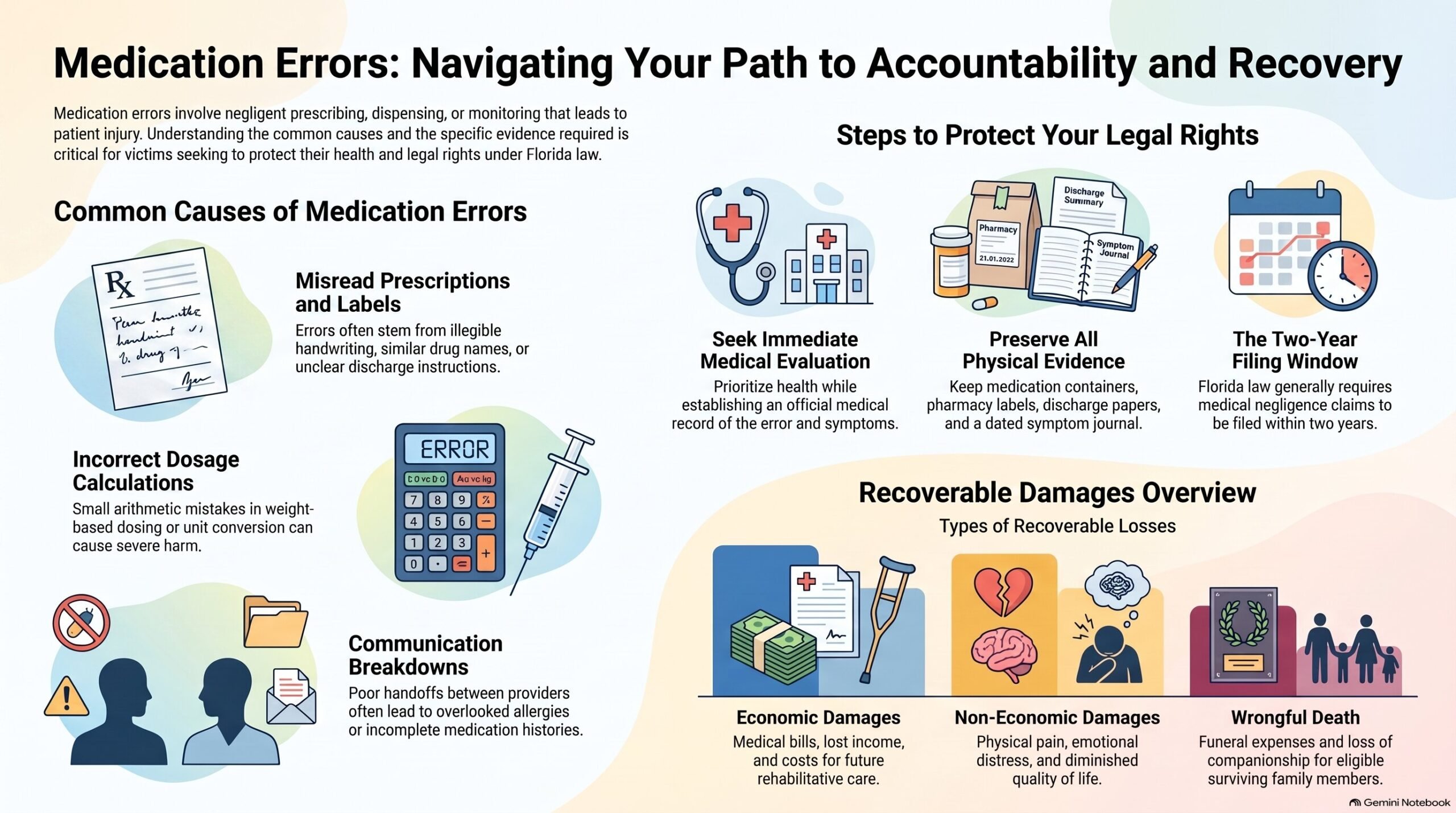
Common causes of West Palm Beach medical malpractice medication errors include misread prescriptions and incorrect dosage calculations, which may result in patients receiving the wrong medication or an incorrect dose. Poor communication among healthcare providers can also cause conflicting instructions, overlooked allergies, or incomplete medication histories. Inadequate monitoring may further allow adverse reactions, dangerous interactions, or ineffective treatment to continue without timely intervention.
Misread Prescriptions
Misread prescriptions can cause serious medication errors when a healthcare professional misinterprets a drug’s name, dosage, instructions, or duration of therapy. Illegible handwriting, similar medication names, incomplete records, and interruptions can contribute to these mistakes. Errors may occur during prescribing, transcription, dispensing, or administration, particularly when information is transferred between providers. Discharge paperwork reviews are especially important because unclear medication lists or inconsistent instructions can lead patients and caregivers to misunderstand treatment plans after discharge. Pharmacy labeling errors may also confuse patients when labels contain inaccurate directions, warnings, or drug information. Healthcare professionals should verify prescriptions against clinical records, clarify uncertainties, and communicate changes clearly. When these safeguards are neglected, a patient may suffer preventable harm, and an injured person may seek guidance regarding potential medical negligence.
Incorrect Dosage Calculations
Incorrect dosage calculations can cause medication errors even when a prescription is read correctly. These mistakes may occur when a provider converts units of measurement, calculates a weight-based dose, or determines how much medication to administer over a specified period. Drug Concentration Issues can also create risk when a liquid, injectable, or compounded medication has a different strength than expected. A small arithmetic error may result in an excessive dose, inadequate treatment, or a harmful interaction with a patient’s condition. Appropriate safeguards include standardized formulas, independent verification, calibrated equipment, and careful review of patient-specific factors. When an avoidable calculation error causes injury, Calculation Mistake Liability may depend on whether the provider followed accepted professional practices. Legal evaluation can examine records, dosage instructions, pharmacy information, and expert opinions to determine whether negligence contributed to the patient’s harm.
Poor Provider Communication
When healthcare providers fail to communicate clearly about a patient’s medications, preventable errors can occur during prescribing, dispensing, or administration. Poor communication may arise when critical information about allergies, current prescriptions, dosage changes, or treatment instructions is not shared with all members of the care team. Provider handoffs are particularly vulnerable when an outgoing clinician gives incomplete verbal information or fails to identify urgent medication concerns. Documentation gaps can create further confusion, especially when records do not accurately reflect discontinued drugs, new orders, or relevant patient statements. Pharmacists, nurses, physicians, and other professionals may then rely on inconsistent information while making care decisions. Clear, timely communication and accurate records help coordinate treatment and assist patients by preventing avoidable medication errors caused by misunderstandings or overlooked information.
Inadequate Medication Monitoring
Inadequate medication monitoring can allow harmful reactions, ineffective treatment, or dangerous drug interactions to continue without timely intervention. Healthcare professionals have a responsibility to review medication responses, laboratory results, essential signs, and reported symptoms throughout treatment. When monitoring is delayed or incomplete, a patient’s condition may deteriorate before corrective action occurs.
Medication reconciliation failures can cause clinicians to overlook discontinued drugs, duplicate prescriptions, allergies, or changes made by another provider. Nurse charting oversights may also leave important observations undocumented, preventing the treatment team from recognizing a developing complication. Inadequate follow-up after prescribing or dosage changes creates additional risk, particularly for patients with intricate conditions or limited ability to communicate symptoms. Proper monitoring requires clear documentation, timely reassessment, coordinated communication, and prompt escalation when findings suggest that a medication is unsafe or ineffective.
Don’t Wait. Call Our Florida Personal Injury Lawyers Now!


Legal Rights of West Palm Beach Medical Malpractice Medication Errors Injury Victims
West Palm Beach victims harmed by medication errors may have legal rights to seek compensation when a healthcare provider’s negligence caused their injuries. A claim may address medical expenses, lost income, rehabilitation, and the lasting effects of an unexpected injury. Damages evaluation should also consider pain and suffering, emotional distress, reduced quality of life, and future care needs.
Victims and families may benefit from preserving records, documenting symptoms, and promptly consulting a qualified medical malpractice attorney. Florida law imposes procedural requirements and deadlines that can affect whether a claim proceeds.
Preserve records, document symptoms, and consult a qualified attorney promptly to protect potential Florida medical malpractice claims.
- Accountability: A legal claim may encourage safer practices and protect future patients.
- Recovery: Compensation can help an injured person obtain treatment, stability, and necessary support.
- Recognition: A case can acknowledge the harm experienced by patients and their families.
An attorney can investigate the circumstances, obtain qualified medical opinions, communicate with insurers, and pursue a fair resolution through negotiation or litigation. Each case requires an individualized assessment based on evidence, damages, and applicable law.
Why Do West Palm Beach Medical Malpractice Medication Errors Injuries Happen?
Why do medication errors occur in West Palm Beach medical settings? Injuries may arise when prescribing, dispensing, documenting, or administering medicines is performed without adequate verification. A clinician may select the wrong drug, dose, route, or timing, particularly when similar names, urgent conditions, or heavy workloads increase the possibility of oversight. Pharmacy labeling mistakes and incomplete communication between facilities can create additional hazards.
Systemic safety failures may permit an error to pass through several checkpoints. Inadequate staffing, insufficient training, ineffective supervision, and poorly designed medication reconciliation procedures can weaken safeguards intended to protect patients. Health record inaccuracies may also list incorrect allergies, outdated prescriptions, or conflicting instructions, leading to unsafe treatment decisions.
These events do not always result from one individual’s conduct. They may reflect communication breakdowns, technology limitations, or institutional policies that fail to support careful care. Understanding these contributing factors helps clarify how preventable medication-related injuries can occur in hospitals, clinics, pharmacies, and other medical settings in West Palm Beach.
What Should You Do After a West Palm Beach Medical Malpractice Medication Error Injury?
After a medication error, the injured patient should seek immediate medical care to address potential complications and establish a record of the harm. The patient should document the medication, dosage, prescribing instructions, symptoms, treatment received, and related communications. Consulting a medical malpractice lawyer can help preserve evidence, evaluate liability, and determine appropriate legal options.
Seek Immediate Medical Care
Prompt medical evaluation is essential when a medication error causes unexpected symptoms, worsens an existing condition, or creates a critical risk of serious harm. The affected person should contact emergency services for severe breathing difficulty, chest pain, loss of consciousness, seizures, or rapidly developing swelling. For less urgent symptoms, a physician, urgent care clinic, or poison control center can provide appropriate guidance. The patient should explain the medication taken, the prescribed instructions, the timing, and any symptoms that developed, without delaying treatment to investigate possible fault. Medical professionals can stabilize the condition, identify complications, and recommend follow-up care. Timely evaluation also supports Medication safety planning by clarifying allergies, interactions, dosage concerns, and monitoring needs. Maintaining fluency in records helps caregivers understand treatment decisions while coordinating safe, continuous care.
Document the Medication Error
Once immediate medical needs have been addressed, the affected person should document the medication error and its consequences as accurately as possible. A written account should identify the medication, prescribed dosage, time of administration, symptoms, and names or roles of involved personnel. Records concerning Drug administration may clarify whether the medication, strength, route, or timing differed from the prescription. Incident documentation should include photographs of visible effects, relevant discharge instructions, and a dated symptom journal. Dosage reconciliation can help compare the prescribed regimen with medications actually received, including changes made during treatment. Pharmacy record verification may confirm dispensing details, labeling, refill history, and counseling provided. Copies of medical records, test results, bills, and communications should be preserved securely, without altering original entries or speculating about disputed facts.
Contact a Malpractice Lawyer
A West Palm Beach medical malpractice lawyer can evaluate whether a medication error resulted from negligent prescribing, dispensing, administration, monitoring, or inadequate communication. After an injury, the patient or family should arrange a prompt consultation with a lawyer before speaking extensively with insurers or accepting a settlement. During a case assessment, counsel may review medical records, prescriptions, pharmacy information, discharge instructions, witness accounts, and documented damages. This claim documentation can clarify the sequence of events and help identify responsible providers. The lawyer can also explain the applicable statute of limitations, which may limit the time available to file a claim and preserve evidence. Patients should continue appropriate medical care, follow treatment instructions, and maintain records of symptoms, expenses, and missed work. Legal guidance can support accountability while protecting the patient’s interests.
Critical Evidence in a West Palm Beach Medical Malpractice Medication Errors Injury Case
Essential evidence may determine whether a medication error claim establishes negligence, causation, and resulting harm.
Important sources include:
- Medication administration records and prescription or dosage history;
- Witness statements describing the error and its immediate consequences;
- Expert medical testimony explaining how the mistake caused the patient’s injuries.
Together, these records and accounts can clarify what occurred and support a credible case.
Medication Administration Records
Medication Administration Records (MARs) often provide essential evidence in a West Palm Beach medical malpractice medication-error injury case because they document the medications administered to a patient, including the drug name, dosage, timing, route, and the identity of the administering professional. These records may show whether staff followed Patient Safety Protocols, verified patient identity, and completed required checks before administration. They can also reveal omissions, late entries, conflicting documentation, or unexplained changes that warrant careful review. Comparing MAR entries with nursing notes, life-sign records, and treatment observations may help clarify how an error occurred and when harm developed. Properly maintained records support Cross-Department Accountability by showing which professionals participated in medication delivery and monitoring. A qualified attorney may preserve these records and consult medical professionals to assess whether documentation supports a negligence claim.
Prescription And Dosage History
When prescription and dosage history is carefully examined, it may reveal whether a healthcare professional prescribed the correct medication, strength, frequency, and duration for the patient’s condition. This evidence may include electronic prescriptions, renewal requests, medication lists, and documented dosage changes. A prior medication reconciliation can show whether clinicians identified allergies, discontinued drugs, duplicate therapies, or potentially dangerous interactions before issuing a new order. A pharmacy history review may confirm when prescriptions were filled, whether directions changed, and whether multiple providers supplied overlapping medications. Comparing these records with the patient’s diagnosis and treatment timeline can help identify an excessive dose, an inappropriate drug, or an avoidable interruption. Such documentation may clarify the sequence of prescribing decisions and assist qualified professionals in evaluating whether applicable standards of care were followed.
Witness Statements
Witness statements can supplement prescription and dosage records by explaining what occurred before, during, and after a medication error. Patients may describe the instructions they received, symptoms that developed, and any requests for clarification or assistance. Family members can identify changes in alertness, communication, mobility, or behavior, particularly when the patient could not provide a complete account. Nurses, aides, and other witnesses may recall medication handoffs, conflicting directions, delayed responses, or Treatment protocol failures. Their observations can help establish when concerns were reported and how staff responded. Statements may also reveal gaps in pharmacy records, including missing calls, unclear refill instructions, or discrepancies between labels and administered doses. Preserving names, dates, direct observations, and contemporaneous messages strengthens reliability. A legal review can organize these accounts without replacing required medical evidence.
Expert Medical Testimony
Expert medical testimony can help explain whether a medication error departed from the applicable standard of care and caused the patient’s injury. A qualified physician, pharmacist, or other expert may evaluate prescribing records, dispensing information, clinical notes, laboratory results, and applicable safety protocols. The expert can identify whether a dosage, drug selection, warning, monitoring decision, or administration procedure was unreasonable under the circumstances. Testimony may also address causation by explaining how the error produced complications or worsened an existing condition. Medication Error Proofs often require careful comparison of the patient’s treatment with accepted medical practices. Effective Expert Witness Preparation includes reviewing the complete record, identifying disputed issues, and presenting opinions supported by reliable evidence. Clear testimony can help courts and families understand complicated events while promoting accountability and safer patient care.
Long-Term Effects of West Palm Beach Medical Malpractice Medication Errors Injuries
West Palm Beach medication errors can result in chronic health complications that persist long after the initial injury. Affected individuals may require ongoing treatment, monitoring, rehabilitation, or prescription care to manage lasting recovery. These medical demands can also create substantial emotional and financial strain for individuals and their families.
Chronic Health Complications
Chronic health complications can develop when a medication error causes lasting injury or interrupts the treatment of an existing condition. Patients may experience organ damage, uncontrolled disease, nerve impairment, cognitive changes, or reduced physical function after receiving the wrong drug, dose, or combination. Some complications emerge gradually, making it difficult to connect declining health with the original mistake. Medication side effects may also become severe when contraindications, allergies, or dangerous interactions are overlooked. These consequences can affect employment, independence, family responsibilities, and overall quality of life. Careful review of medical records, pharmacy information, and expert opinions may help clarify whether negligent conduct contributed to the harm. Healthcare accountability promotes safer practices and provides a basis for seeking recognition of injuries caused by preventable medication errors.
Ongoing Treatment Needs
When medication errors cause lasting injury, patients may require ongoing treatment to manage complications, restore function, or prevent further deterioration. Care may include professional consultations, rehabilitation, corrective procedures, prescription adjustments, and routine testing to evaluate recovery. Medication monitoring strategies can help identify adverse reactions, interactions, or dosage concerns before they create additional harm. Patients may also need structured follow-up appointments so healthcare providers can assess symptoms and modify treatment plans as conditions change. Consistent records are important when an error has led to ongoing medical needs. Providers should document diagnoses, prescribed therapies, test results, functional limitations, and responses to recovery. This long-term harm documentation may help clarify the injury’s progression and the care required to address it. Coordinated, attentive treatment supports patient safety while preserving evidence of ongoing medical consequences.
Emotional And Financial Strain
Although medication-error injuries may initially appear manageable, their long-term effects can create substantial emotional and financial strain. Patients may experience compounding stress as symptoms persist, confidence declines, and daily responsibilities become more difficult. Treatment disruption can require additional appointments, medication changes, rehabilitation, or expert care, often extending recovery and complicating family routines. Ongoing medical bills may include emergency services, diagnostic testing, prescriptions, transportation, and assistance with basic activities. When an injured person cannot work, wage loss can threaten housing stability, education, and access to necessary care. Family members may also reduce their work hours to provide support, creating additional economic pressure. These burdens can affect emotional well-being and relationships over time. Careful documentation of expenses, missed work, and continuing needs may help clarify the full impact for those seeking accountability.
Proving Liability in West Palm Beach Medical Malpractice Medication Errors Injury Cases
Proving liability in a West Palm Beach medical malpractice medication error case requires evidence that the healthcare provider failed to meet the accepted standard of care and that the error caused identifiable harm. Medical records, prescribing instructions, pharmacy documentation, and testimony from qualified medical experts may establish what should have occurred and how the mistake departed from professional practice. Evidence must also connect the error to specific injuries, such as additional treatment, complications, or lasting impairment.
Potentially responsible parties may include physicians, nurses, pharmacists, hospitals, or other healthcare organizations, depending on the circumstances. A careful investigation can identify conflicting records, communication failures, incorrect dosages, or inadequate monitoring. Comparative negligence may become relevant if the defense claims that a patient’s conduct contributed to the harm, although responsibility must be evaluated through reliable evidence. During jury selection, attorneys may address impartiality and understanding of medical testimony. A qualified legal team can organize these facts to support accountability and compassionate service.
Dealing With Insurance Companies After a West Palm Beach Medical Malpractice Medication Errors Injury
Insurance companies may contact an injured patient or the patient’s family soon after a medication error is reported, often seeking statements, medical authorizations, or settlement discussions before the full extent of the harm is known. A patient-centered response should remain courteous while avoiding speculation, recorded interviews, or signed releases without informed guidance. Prompt Evidence preservation can include retaining medication containers, discharge instructions, pharmacy records, messages, and photographs of injuries. ER notification records and subsequent treatment documentation may help establish when the error was recognized and how providers responded.
Insurer claims representatives may request broad medical histories, yet authorization should generally be limited to information reasonably related to the medication error. Careful medical bill review can identify emergency services, prescriptions, rehabilitation, lost income, and continuing treatment needs, rather than relying on incomplete early estimates. Families caring for an injured person can coordinate communications, preserve correspondence, and refer substantive questions to qualified counsel while medical care remains the immediate priority.
Don’t Wait. Call Our Florida Personal Injury Lawyers Now!
What to Expect During a West Palm Beach Medical Malpractice Medication Errors Injury Claim Process
A West Palm Beach medication errors claim typically begins with an initial case evaluation to assess the circumstances, potential negligence, and available evidence. The process then involves reviewing medical records, conducting settlement negotiations, and determining whether the opposing parties will offer appropriate compensation. If negotiations fail, trial preparation may proceed, requiring organized evidence, qualified witnesses, and a clear presentation of the alleged harm.
Initial Case Evaluation
During an initial case evaluation, a West Palm Beach medical malpractice attorney reviews the medication error, resulting injuries, medical records, and potential legal claims. The attorney listens to the patient’s account, identifies the medication involved, and considers when and how the mistake occurred. A medical billing review may help measure financial losses, including emergency care, additional treatment, medication costs, and missed income. The attorney also evaluates treatment impact, such as prolonged recovery, physical limitations, emotional distress, or the need for continuing assistance. This meeting generally includes questions about healthcare providers, witnesses, insurance communications, and important dates. The attorney explains possible options, deadlines, and the information needed to proceed. No outcome is guaranteed, but a careful evaluation helps determine whether further investigation and a claim may be appropriate.
Medical Records Review
After the initial evaluation, a West Palm Beach medical malpractice attorney typically conducts a detailed review of the patient’s medical records to determine how the medication error occurred and whether the care departed from accepted standards. This review may include physician notes, nursing documentation, medication orders, discharge instructions, laboratory results, and records of follow-up treatment. Medication reconciliation is examined to identify whether healthcare providers accurately compared prescribed drugs with the patient’s existing medications, allergies, and medical history. Pharmacy documentation may reveal dispensing instructions, dosage information, refill records, or communication about potential interactions. The attorney may organize the timeline, identify inconsistencies, and consult qualified medical professionals regarding applicable standards of care. These records help clarify the cause of the injury, the providers involved, and the evidence needed to evaluate the claim responsibly and thoroughly.
Settlement Negotiations
Once the medical records and supporting evidence have been evaluated, settlement negotiations typically begin with a demand that outlines the medication error, resulting injuries, financial losses, and applicable legal grounds. The healthcare provider or insurer may accept, reject, or respond with a counteroffer. Each position is assessed against documented medical expenses, future care needs, lost income, pain, and other legally recognized damages. A Comparative fault analysis may examine whether any patient actions affected the outcome, although medication errors often involve intricate treatment circumstances. Counsel may request additional records, expert opinions, or clarification before advising on settlement value. Settlement urgency planning helps address filing deadlines, ongoing treatment, financial pressures, and the patient’s need for dependable support. Any agreement should explain payment terms, released claims, and protections for outstanding medical liens before acceptance.
Trial Preparation
When settlement negotiations do not resolve a medication error claim, trial preparation establishes how the evidence will be presented in court. Counsel organizes Evidence preservation records, including medication orders, pharmacy logs, treatment notes, and communications that may clarify what occurred. An effective deposition strategy prepares the injured patient and identifies questions for physicians, nurses, pharmacists, and other witnesses. Expert review evaluates whether the medication error departed from accepted standards and connects that departure to the patient’s injuries. The legal team also develops a damages calculation that addresses medical expenses, future care, lost income, pain, and other measurable impacts. Before trial, attorneys may file motions, exchange exhibits, and rehearse testimony. This preparation helps present the claim accurately while supporting accountability and a fair outcome for those affected.
Compensation for West Palm Beach Medical Malpractice Medication Errors Injury Damages
Compensation for medication error injuries in West Palm Beach medical malpractice cases may cover medical expenses, lost income, rehabilitation, pain and suffering, and other legally recognized losses caused by negligent prescribing, dispensing, or administration. A claim generally requires evidence that connects the medication error to the patient’s injury and establishes the responsible provider’s breach of the applicable standard of care.
Recoverable compensation may also cover ongoing treatment, necessary medical equipment, diminished earning capacity, and services required due to lasting impairment. Attorneys representing affected patients may review medical records, pharmacy records, expert opinions, and insurance information to present a complete demand.
When a medication error causes death, surviving relatives may pursue Wrongful death claims for eligible losses under Florida law, including funeral expenses and the family’s resulting damages. Deadlines and procedural requirements can affect recovery, so prompt legal review remains important.
Alternative recovery options may include negotiated settlements, mediation, or other resolution methods when litigation is unsuitable. Each case requires an individualized evaluation based on the injury, the evidence, and the applicable law.
Economic vs Non-Economic Damages in West Palm Beach Medical Malpractice Medication Errors Cases
Economic damages may include medical bills, lost income, rehabilitation costs, and other quantifiable financial losses resulting from a medication error. Non-economic damages address less tangible harm, such as pain, emotional distress, disability, and diminished quality of life. Calculating total compensation requires evaluating documented expenses and the injury’s lasting effects under applicable Florida law.
Economic Damages Explained
In West Palm Beach medical malpractice medication error cases, damages are generally divided into economic and non-economic losses, each addressing a different form of harm caused by negligent prescribing, dispensing, or administration. Economic damages represent measurable financial losses resulting from the error. They may include emergency treatment, corrective care, hospitalization, rehabilitation, prescription costs, transportation, and future medical needs. Medication billing records, pharmacy receipts, treatment notes, and insurance statements can help establish these expenses. A claimant may also seek compensation for income lost during recovery or reduced earning capacity caused by lasting impairment. A careful lost-wages calculation may examine pay records, work schedules, benefits, and projected career impacts. Attorneys typically organize this evidence to present a complete, reliable accounting of past and anticipated financial obligations for affected patients and families.
Non-Economic Damages Considered
When a medication error causes pain, emotional distress, or a diminished quality of life, non-economic damages may compensate for harms that lack a fixed monetary value. In West Palm Beach medical malpractice cases, these damages can involve physical discomfort, mental anguish, loss of enjoyment, disfigurement, disability, and disruption of family relationships. Unlike medical bills or lost income, such injuries are personal and may be supported through testimony, treatment records, statements from caregivers, and evidence describing daily limitations. Evidence Maintenance remains important because medication records, communications, photographs, and witness accounts may help establish the injury’s lasting impact. In a Wrongful Death claim, eligible survivors may pursue compensation for loss of companionship, guidance, and emotional support. A careful legal review can ensure these human consequences receive appropriate consideration.
Calculating Medication Error Compensation
A medication error compensation claim generally separates economic damages from non-economic damages to evaluate the full scope of a patient’s harm. Economic losses may include emergency treatment, corrective procedures, rehabilitation, prescription costs, lost wages, reduced earning capacity, and anticipated future medical care. Documentation such as bills, employment records, expert opinions, and life-care assessments can help establish these Medication error damages.
Non-economic damages address less tangible consequences, including physical pain, emotional distress, disability, disfigurement, diminished quality of life, and loss of companionship. Their valuation often depends on medical evidence, testimony, and the duration and severity of the injury. In limited circumstances, punitive damages may be available when conduct reflects fraud, malice, or gross negligence. Courts examine punitive damages factors, including the defendant’s misconduct, the severity of the harm, and the need for deterrence.
When a West Palm Beach Medical Malpractice Medication Errors Injury Case Goes to Trial vs Settlement
Although many West Palm Beach medication error claims resolve through settlement, some proceed to trial when the parties cannot agree on liability, damages, or the value of the injured patient’s losses. Settlement may provide a faster, more predictable resolution, allowing an injured person and family to focus on recovery without the uncertainty of testimony and a verdict. However, a trial may be necessary when an insurer disputes the medication error, minimizes the lasting harm, or asserts comparative negligence defenses.
A trial requires careful preparation, including witness testimony, expert opinions, medical records, pharmacy information, and compliance with evidentiary documentation requirements. Attorneys may explain how the error occurred, connect it to the patient’s injury, and present financial and personal consequences. A judge or jury then evaluates the evidence and determines responsibility and compensation. Whether settlement or trial better serves the patient depends on the strength of the evidence, anticipated damages, and the parties’ willingness to reach a fair resolution.
Florida Laws That May Affect Your West Palm Beach Medical Malpractice Medication Errors Case
Florida laws governing medical negligence, informed consent, comparative fault, and damages may greatly affect a West Palm Beach medication error case. These rules help determine whether a healthcare provider breached the applicable standard of care and whether that breach caused compensable harm.
They also shape how evidence is collected, evaluated, and presented.
- Medical negligence: Records, pharmacy instructions, witness testimony, and expert opinions may establish whether a preventable prescribing, dispensing, or administration error occurred.
- Consent and privacy: HIPAA consent forms may authorize access to relevant treatment information, while informed-consent principles address whether material medication risks were explained.
- Responsibility and recovery: Comparative-fault rules may reduce damages if a patient’s conduct contributed to harm. Damages can include medical expenses, lost income, disability, and suffering. Florida probate laws may affect claims when an injured patient dies, including who may pursue losses through the estate or survivors. Legal guidance can help families and caregivers protect accurate records and support accountability while serving affected patients with dignity.
Don’t Wait. Call Our Florida Personal Injury Lawyers Now!
The Statute of Limitations for West Palm Beach Medical Malpractice Medication Errors Injury Cases
Timely action is essential in West Palm Beach medical malpractice medication error cases because Florida law imposes strict deadlines for filing an injury claim. Generally, Florida medical negligence actions must be filed within two years after the patient discovered, or reasonably should have discovered, the injury and its possible medical cause. An absolute four-year statute of repose may also apply, limiting claims regardless of when the harm becomes known. Claims involving fraud, concealment, or misrepresentation may receive additional time under specific circumstances.
Statute Tolling can pause or extend a filing deadline in limited situations, such as when the negligent provider concealed the error or when statutory prerequisites affect the filing process. Tolling Exceptions are narrowly interpreted, and not every delay, continuing treatment period, or later diagnosis changes the deadline. Because medication injuries may involve complicated records and delayed symptoms, determining the applicable date requires careful attention to Florida law. Missing the deadline can permanently bar recovery and prevent accountability for preventable harm.
How a West Palm Beach Medical Malpractice Medication Errors Lawyer Can Help You
When a medication error may have caused injury, a West Palm Beach medical malpractice medication errors lawyer can evaluate the facts, determine which filing deadlines apply, and identify the parties potentially responsible. The lawyer may gather medical records, pharmacy histories, testimony, and institutional policies to clarify how the error occurred and whether professional standards were breached.
A medication errors lawyer can investigate what happened, identify responsible parties, and help protect an injured patient’s legal rights.
- By examining Patient safety systems, the lawyer can identify failures in communication, dispensing, monitoring, or documentation that placed a patient at risk.
- Reviewing prescription labeling audits and medication protocols may reveal preventable patterns rather than an isolated mistake.
- Through negotiations or litigation, the lawyer can pursue compensation for treatment costs, lost income, lasting impairment, and the personal harm experienced by the patient and family.
The lawyer may also coordinate qualified medical experts, organize intricate evidence, and communicate with insurers or healthcare organizations on the client’s behalf. This support can promote accountability while helping affected individuals protect their dignity, support their recovery, and maintain their ability to serve those who depend on them.
When to Contact a West Palm Beach Medical Malpractice Medication Errors Lawyer
Recognizing the appropriate time to contact a West Palm Beach medical malpractice medication errors lawyer can protect a patient’s legal rights and preserve evidence needed to evaluate a claim. A consultation may be appropriate when a medication is prescribed, dispensed, or administered incorrectly, particularly if the patient experiences unexpected injury, worsening symptoms, hospitalization, or additional treatment. Prompt legal guidance can also be considered when records contain conflicting information, healthcare providers offer unclear explanations, or a patient suspects that an allergy, interaction, dosage, or labeling issue was overlooked.
Individuals should retain prescription instructions, medication containers, discharge papers, billing records, and communications with healthcare professionals. A detailed timeline of events, symptoms, and follow-up care may help clarify whether prescription harm resulted from negligent care or wrongful treatment. Because legal deadlines can limit available remedies, waiting for restitution or a definitive explanation may create unnecessary risk. Contacting counsel early allows the circumstances to be reviewed while relevant records, accounts, and other evidence remain accessible.
Why You Need an Experienced West Palm Beach Medical Malpractice Medication Errors Lawyer
An experienced West Palm Beach medical malpractice medication errors lawyer can evaluate whether a prescribing, dispensing, or administration mistake resulted from a breach of the applicable standard of care. Such analysis may require reviewing medical records, medication orders, pharmacy documentation, treatment protocols, and communications among healthcare professionals. An experienced attorney can identify whether failures in medication reconciliation safety contributed to an incorrect drug, dosage, timing, or patient instructions. The lawyer can also assess whether Pharmacy standard practices were followed during dispensing, labeling, verification, and counseling.
This experience is important because medication-error cases often involve multiple providers, technical evidence, and disputed medical consequences. Counsel can help clarify the sequence of events, determine potential responsibility, and connect the error to documented harm. A careful investigation may preserve vital evidence and support communication with affected individuals and their families. By addressing these issues systematically, an experienced lawyer can promote accountability, help injured patients pursue appropriate compensation, and support safer practices within healthcare settings.
How to Choose the Right West Palm Beach Medical Malpractice Medication Errors Lawyer for Your Case
Selecting the right West Palm Beach medical malpractice medication errors lawyer requires careful consideration of the attorney’s experience, resources, and approach to case evaluation. A qualified lawyer should understand prescribing, dispensing, and administration errors and identify how those mistakes caused injury. Reviewing comparable case experience can help assess whether the attorney has handled intricate medical records and consulted appropriate medical experts.
Strong Client communication is also important. The lawyer should explain developments clearly, respond within reasonable periods, and ensure the injured person understands available options. Fee transparency deserves equal attention, including written information about contingency arrangements, case expenses, and potential obligations.
Early evidence preservation can protect medication labels, records, communications, and witness accounts before information is lost or altered. During consultations, the attorney should describe a practical trial strategy while acknowledging that outcomes cannot be guaranteed. A careful lawyer evaluates strengths, weaknesses, deadlines, and potential damages before recommending litigation, supporting informed decisions and effective service to injured individuals.
About The Law Offices of Anidjar & Levine
The Law Offices of Anidjar & Levine represents individuals injured by medication errors and other forms of medical negligence.
The firm evaluates whether failures in prescribing, dispensing, administration, monitoring, or communication contributed to a patient’s harm.
Its Legal history overview reflects experience handling personal injury and malpractice claims, while the Anidjar Levine background emphasizes legal advocacy for people and families confronting significant injuries.
The firm’s attorneys review medical records, pharmacy documentation, treatment timelines, and expert opinions to identify potential departures from accepted standards of care.
Their Case strategy insights may help clarify issues such as incorrect dosages, contraindications, inadequate warnings, and preventable delays in treatment.
Each matter receives individualized analysis based on the available evidence, applicable Florida law, and the client’s objectives.
The Client support approach includes communication about case developments, potential claims, and procedural requirements.
By coordinating with clients and relevant professionals, the firm seeks to present organized, evidence-based arguments while pursuing accountability and appropriate compensation for affected individuals and their families.

Frequently Asked Questions
Can Medication Errors Occur in Hospitals, Pharmacies, Nursing Homes, or Doctors’ Offices?
Medication errors can occur in hospitals, pharmacies, nursing homes, and a doctor’s office. Mistakes may involve prescribing, dispensing, labeling, administering, or monitoring medications, and can result from communication failures, incomplete records, inadequate training, or Pharmacy Staffing pressures. Strong Patient Safety procedures, including verification systems and clear documentation, can reduce these risks. A Nursing Home requires careful medication reconciliation and supervision because residents often use multiple drugs and have intricate medical needs.
What Types of Medications Are Commonly Involved in Medical Malpractice Errors?
Common high-risk prescriptions involved in medical malpractice errors include anticoagulants, insulin, antibiotics, narcotics, sedatives, and chemotherapy drugs. Anticoagulant mismanagement may cause preventable bleeding or clotting, while insulin dosing errors can produce severe hypoglycemia or diabetic complications. Antibiotic administration errors may involve incorrect selection, dosing, timing, or duration, potentially leading to treatment failure or resistance. Opioid and sedative errors can impair breathing, especially among older or medically fragile patients.
Can a Medication Error Worsen an Existing Medical Condition?
Yes, a medication error can worsen an existing medical condition by causing harm, reducing treatment effectiveness, or delaying appropriate care. Incorrect dosages, contraindications, and unrecognized interactions may intensify existing illnesses, while medication side effects can create additional complications. Treatment delays may allow symptoms to progress or prevent timely intervention. Careful medication review, accurate documentation, and prompt medical assessment help treat patients and support those responsible for serving their healthcare needs.
Can Family Members Pursue a Claim After a Fatal Medication Error?
Family members may pursue a claim after a fatal medication error, but eligibility depends on state law and the claimant’s relationship to the deceased. Surviving claims may continue through the estate, giving the personal representative estate standing to seek damages for losses incurred before death. A separate wrongful death action may compensate eligible relatives. Both proceedings generally require proof of causation, demonstrating that the medication error substantially caused the death and resulting damages.
Are Medication Errors Always Considered Medical Malpractice in Florida?
Medication errors are not always medical malpractice in Florida. What counts depends on whether a healthcare provider violated the applicable standard of care, rather than merely producing an unfavorable outcome. Negligence proof must show that the provider acted unreasonably under comparable circumstances, such as prescribing, dispensing, or administering medication improperly. A causation link must also connect that breach to the patient’s injury or death. Other claims may involve products liability or ordinary negligence.
—————————
Medication errors can cause serious, preventable harm and may give injured patients grounds for a medical malpractice claim.
Prompt legal guidance can help preserve evidence, evaluate medical records, identify responsible parties, and determine whether negligence occurred.
The Law Offices of Anidjar and Levine assist victims in exploring their legal options and pursuing appropriate compensation.
Individuals affected by incorrect prescriptions, dosages, or medication administration can consult a West Palm Beach Personal Injury Lawyer promptly to protect their rights.

