The Law Offices of Anidjar and Levine help policyholders evaluate coverage, exclusions, deductibles, deadlines, and documentation requirements after storm and weather-related property damage.
Legal counsel can organize photographs, inspection reports, estimates, receipts, and insurer communications to challenge improper denials or underpayments involving wind, hail, flooding, water intrusion, or structural damage.
The firm may also address appraisal, settlement releases, and available remedies.
Visit our West Palm Beach Personal Injury Lawyer page for additional legal information.
Main Takeaways
- Reviews policy coverage, exclusions, deductibles, deadlines, and documentation requirements for storm-related property losses.
- Evaluates disputes involving wind, hail, flooding, water intrusion, structural damage, and insurer-caused underpayment or denial.
- Organizes photographs, inspection reports, estimates, receipts, mitigation records, and communications into a persuasive claim presentation.
- Assesses whether damage resulted from covered weather events or alleged maintenance and preexisting conditions.
- Communicates with adjusters, responds to information requests, and pursues available remedies through negotiation or proper procedures.
How We Can Help With Your West Palm Beach Property Claim Storm & Weather Damage Injury Claim
When severe weather damages a home or commercial property, a West Palm Beach property claim storm and weather damage lawyer can help the policyholder pursue the insurance benefits available under the policy. Counsel may begin with a Policy coverage review to identify covered losses, exclusions, deductibles, deadlines, and documentation requirements. This assessment can clarify whether the insurer properly evaluated damage involving wind, hail, flooding, water intrusion, or related structural conditions.
Legal assistance may also include organizing photographs, repair estimates, inspection reports, receipts, and correspondence into a persuasive claim presentation. The attorney can communicate with adjusters, respond to information requests, and address valuation disagreements while protecting the policyholder’s interests. If the insurer rejects or underpays a valid claim, the lawyer may evaluate available remedies and pursue claim denial appeals through appropriate administrative, contractual, or judicial procedures. Throughout the process, professional guidance can reduce confusion, promote fair treatment, and help property owners make informed decisions while seeking timely benefits for necessary repairs and restoration.
Understanding West Palm Beach Property Claim Storm & Weather Damage Injury Cases


Storm and weather damage cases generally involve disputes over whether a property loss is covered, the extent of the damage, and the amount the insurer must pay under the policy. Understanding these cases requires careful review of policy language, deductibles, exclusions, notice requirements, and proof supporting the claimed loss. The Claims process may include inspections, recorded statements, repair estimates, document requests, and negotiations regarding valuation. Policyholders benefit from preserving photographs, invoices, maintenance records, correspondence, and other evidence showing the property’s condition and the resulting damage. Insurers may also consider wind mitigation features, construction details, and prior repairs when evaluating coverage or applying policy provisions.
OUR CONSULTATIONSARE FREE
START YOUR FREE CASE REVIEW

A sound evaluation distinguishes covered damage from unrelated deterioration and addresses whether the insurer conducted a complete, fair investigation. Professionals serving affected property owners can organize evidence, explain options, and flag procedural concerns while handling each claim with diligence, clarity, and respect for the policyholder’s circumstances.
Common Causes of West Palm Beach Property Claim Storm & Weather Damage
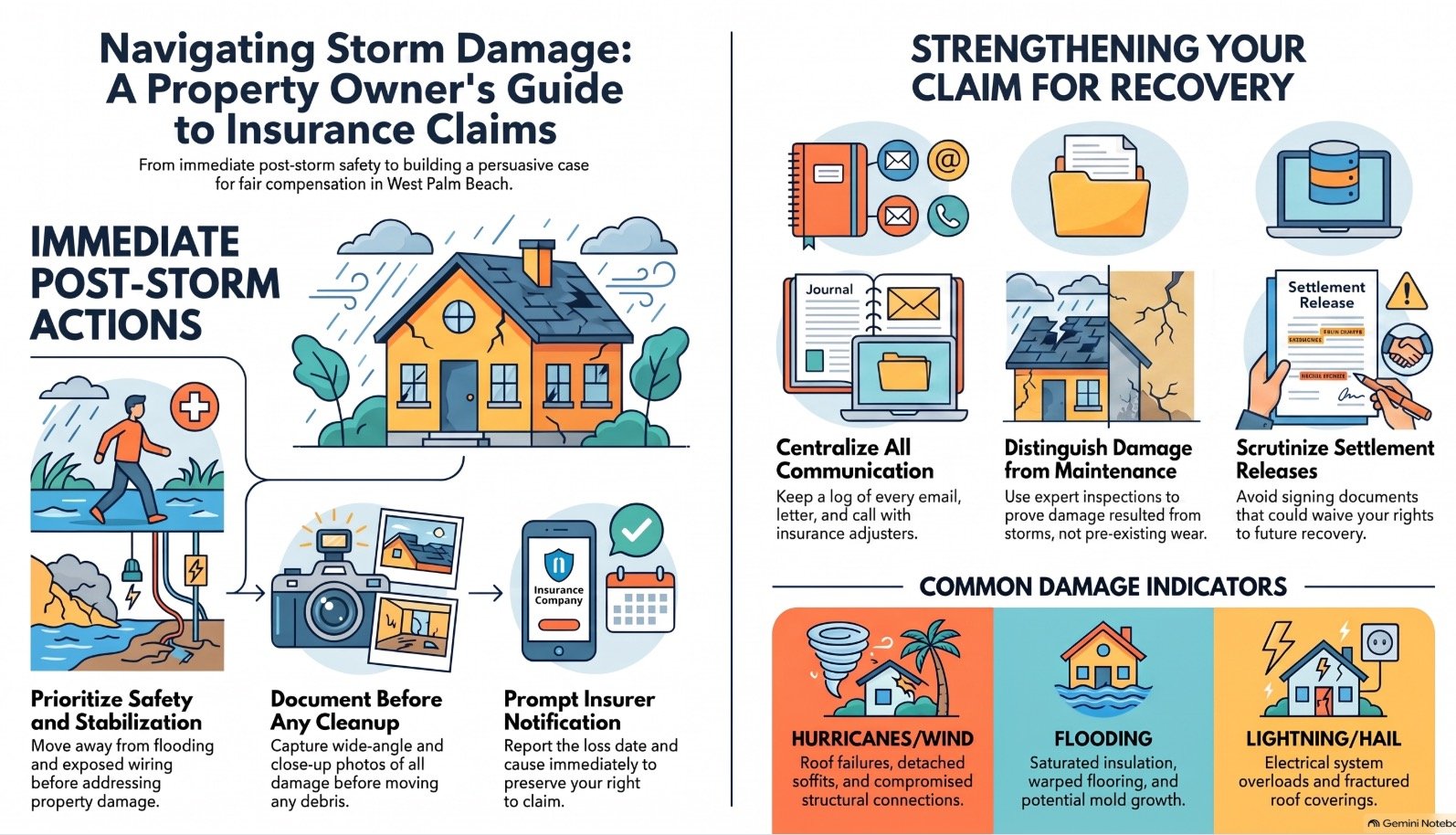
West Palm Beach property damage claims often stem from hurricanes and tropical storms, which can bring destructive winds, heavy rainfall, and prolonged exposure to severe conditions. Wind and tornado damage may compromise roofs, windows, and structural elements, while flooding and water intrusion can cause extensive interior and foundation damage. Hail and lightning strikes also present significant risks, potentially damaging roofing materials, electrical systems, and other covered property.
Hurricane And Tropical Storms


Hurricanes and tropical storms are among the most significant causes of property damage in West Palm Beach, exposing homes and commercial buildings to powerful winds, wind-driven rain, storm surge, and flooding. These systems may damage roofs, windows, exterior walls, electrical equipment, foundations, and interior finishes. Heavy rainfall can overwhelm drainage systems, while rising water may contaminate contents and create prolonged moisture problems. Property owners who practice storm preparedness and maintain mitigation planning can reduce risks, but severe losses may remain unavoidable. After an event, prompt documentation of visible damage, water intrusion, displaced contents, and emergency repairs can support an insurance claim.
Policyholders should review coverage terms, preserve damaged materials when reasonably safe, and communicate carefully with insurers. Qualified assistance may help affected owners understand deadlines, exclusions, and available recovery options.
Wind And Tornado Damage
High winds and tornadoes can cause concentrated, sudden damage to West Palm Beach properties, even when a storm system does not produce widespread flooding. Wind impact may tear shingles, detach soffits, break windows, and dislodge exterior equipment. Tornadoes can intensify these losses by creating powerful rotating forces that damage limited sections or entire structures within minutes. Roof failures often begin when sustained gusts lift coverings, weaken flashing, or compromise structural connections. Resulting openings can expose insulation, framing, electrical systems, and personal property to additional weather-related harm. Careful documentation may include photographs, repair estimates, maintenance records, and reports describing wind conditions.
Property owners and those assisting them should preserve damaged materials when safe, take reasonable steps to prevent further deterioration, and promptly review policy requirements. Qualified professionals can evaluate causation, scope, and coverage issues.
Flooding And Water Intrusion
Flooding and water intrusion can cause extensive damage to West Palm Beach properties when storm surge, heavy rainfall, overflowing drainage systems, or wind-driven rain enters through compromised roofs, windows, doors, and walls. Resulting damage may include saturated insulation, warped flooring, mold growth, electrical hazards, and deterioration of structural materials. Property owners should arrange prompt mitigation, preserve damaged materials when safe, and maintain records of emergency repairs and related expenses. Photographs, videos, contractor findings, weather reports, receipts, and policy correspondence can support document based claims by establishing the timing, source, and scope of the loss.
When an insurer disputes coverage, exclusions, causation, or the amount of damage, a careful Insurance denial strategy may involve reviewing policy language, identifying investigative shortcomings, and presenting organized evidence to pursue fair treatment for affected occupants and communities.
Hail And Lightning Strikes
Hail and lightning strikes can produce significant property damage in West Palm Beach, even when a storm causes little visible exterior disruption. Hailstorm risks include fractured roof coverings, damaged flashing, broken windows, dented air-conditioning equipment, and compromised exterior finishes. Some defects may remain concealed until subsequent rainfall reveals leaks or moisture intrusion. Lightning can ignite fires, overload electrical systems, destroy appliances, and damage in-wall wiring. A lightning injury to a structure may, consequently, involve both immediate destruction and delayed safety hazards. Property owners should document conditions promptly with photographs, repair estimates, inspection reports, and receipts for emergency mitigation.
Insurers may dispute whether damage resulted from a covered event, particularly when maintenance concerns are alleged. A careful claim review can help affected owners pursue appropriate benefits, support timely repairs, and protect occupants.
Don’t Wait. Call Our Florida Personal Injury Lawyers Now!
Legal Rights of West Palm Beach Property Claim Storm & Weather Damage Injury Victims
Property owners affected by storms or severe weather in West Palm Beach generally have the right to seek benefits under applicable insurance policies for covered damage, subject to policy terms, exclusions, deductibles, and filing deadlines. They may also request claim explanations, preserve relevant evidence, and challenge inaccurate valuations or improper denials through available procedures.
West Palm Beach property owners may pursue covered storm damage benefits while reviewing policy terms, deadlines, and available claim remedies.
- A policyholder rights checklist can identify notice requirements, appraisal provisions, complaint options, and deadlines before rights are waived.
- Thorough documentation, including photographs, repair estimates, receipts, inspection reports, and communications, can support the amount and cause of claimed losses.
- Insureds should review settlement releases carefully and avoid signing documents that could restrict additional recovery without informed consideration.
- Caution is warranted regarding public adjustment scams, including demands for substantial upfront fees or promises of likely outcomes.
A qualified professional may help interpret coverage, organize evidence, communicate with insurers, and pursue appropriate remedies. Assistance should prioritize accurate information, fair treatment, and practical support for affected property owners throughout the claim process.
Why Do West Palm Beach Property Claim Storm & Weather Damage Injuries Happen?
Understanding available rights also requires examining why storm and weather-related property claim injuries arise in West Palm Beach. Severe hurricanes, tropical storms, flooding, wind, and lightning can damage roofs, walls, electrical systems, and personal property. These conditions may create unsafe structures, falling debris, mold exposure, and dangerous electrical hazards, affecting residents, visitors, employees, and responding volunteers.
Injuries can also develop when property owners, managers, contractors, or insurers fail to address foreseeable dangers. Inadequate Hurricane preparedness may leave buildings without effective drainage, protective coverings, emergency lighting, or evacuation procedures. Delayed repairs can worsen water intrusion and structural instability, while Insurance claim delays may postpone restoration and prolong exposure to hazardous conditions. Disputes over coverage, causation, or policy exclusions can further delay assistance.
Poor documentation practices may complicate evidence preservation, making it harder to establish the damage’s origin, duration, and relationship to an injury. These combined circumstances explain why weather-related property claims can involve both immediate physical harm and ongoing risks that require careful legal evaluation.
What Should You Do After a West Palm Beach Property Claim Storm & Weather Damage Injury?
After a storm-related property injury, the affected individual should first seek immediate safety and address urgent medical needs. Then document visible storm damage with photos, videos, and written records while avoiding unsafe areas. Prompt notification to the insurer can help preserve the claim, but handle all communications and requested statements carefully.
Ensure Immediate Safety
Immediate safety takes priority when a storm or other weather event causes an injury at a West Palm Beach property. The injured person should be moved away from flooding, exposed wiring, unstable structures, broken glass, and other continuing hazards when doing so will not worsen the injury. A responsible individual should call 911 for severe bleeding, breathing difficulty, suspected spinal trauma, loss of consciousness, or other urgent conditions. Storm preparation plans may identify evacuation routes, shelter locations, utility shutoffs, and designated helpers who can assist safely. If immediate medical care isn’t needed, the property occupant should still seek an appropriate evaluation because some injuries develop gradually.
Keep emergency contact info accessible, including family members, medical providers, building personnel, and local authorities. Others should avoid entering dangerous areas until officials or qualified professionals confirm they are safe.
Document Storm Damage
When conditions are safe, the property occupant should document the storm damage before repairs, cleanup, or disposal of damaged materials alter the available evidence. Wide photographs can show the property’s overall condition, while close images should capture roof coverings, windows, siding, ceilings, flooring, furnishings, and visible water intrusion. Short videos may help show the extent and location of damage, especially where conditions are hard to describe. Organize photo timelines by date and label them by room or exterior area. When practical, the occupant should preserve damaged items and avoid discarding materials until their condition is recorded. Also retain receipts, estimates, emergency mitigation records, and written descriptions of temporary measures. Careful documentation can help professionals evaluate the property and preserve an accurate account of the loss.
Contact Your Insurer
Once the damage has been documented, the property owner or occupant should promptly notify the insurer through the designated claims channel. The report should identify the loss date, apparent causes, affected structures, and any urgent measures taken to prevent further damage. A clear description, supported by photographs, repair estimates, receipts, and witness information, can help establish the claim’s scope.
The claimant should request a claim number, adjuster’s contact information, and written instructions for inspections or temporary repairs. A documentation checklist can help organize correspondence, policy materials, invoices, and proof of ownership. Statements should remain accurate and limited to observed facts, since speculation may create unnecessary disputes. If the insurer delays, undervalues, or issues a Policy denial, the claimant should obtain the explanation in writing and consider qualified legal guidance before signing releases or accepting final payment.
Critical Evidence in a West Palm Beach Property Claim Storm & Weather Damage Injury Case
A strong West Palm Beach property claim requires organized evidence linking the storm, resulting injuries, property damage, and the insurer’s response.
Relevant materials may include:
- Storm Damage Documentation: Photographs, videos, repair estimates, and dated records showing the condition of the property before and after the event.
- Weather Injury Medical Records: Medical evaluations, treatment notes, diagnostic results, and bills linking injuries to the storm-related incident.
- Property Inspection Reports: Findings from qualified inspectors identifying damage, safety hazards, and the probable cause of loss.
- Insurance Communication Evidence: Claim forms, adjuster correspondence, recorded statements, denial letters, and documentation of settlement offers.
Storm Damage Documentation
Storm damage documentation provides crucial evidence in a West Palm Beach property claim by establishing the property’s condition, the nature and extent of the losses, and the circumstances that caused them. Photographs and videos should capture roofs, windows, walls, flooring, landscaping, and personal property from multiple angles. A written photo checklist can help guarantee that overlooked areas receive attention. Dated images, weather reports, contractor observations, repair estimates, receipts, and communications with insurers should be preserved in an organized file. Records describing prior maintenance and Wind mitigation features may clarify whether the damage resulted from the reported storm rather than preexisting conditions.
Prompt documentation also helps prevent disputed changes during emergency repairs. Property owners should avoid discarding damaged materials until they meet inspection requirements and should provide accurate, consistent descriptions.
Weather Injury Medical Records
Medical records provide separate but equally important evidence when storm-related property conditions cause physical injury. They establish the nature, severity, and timing of symptoms allegedly connected to unsafe conditions, such as flooding, falling materials, or electrical hazards. Doctor appointment records can show when treatment began, what complaints were reported, and whether medical providers identified consistent diagnoses. Emergency department notes, imaging results, prescriptions, therapy records, and physician restrictions may further document ongoing effects and necessary care. Accurate exposure timelines should correspond with medical histories, witness accounts, and documented weather events without overstating causation.
Complete records also help distinguish preexisting conditions from injuries that developed afterward. With proper authorization, these materials can support a fair evaluation of damages, treatment expenses, lost income, and future medical needs while protecting the claimant’s privacy.
Property Inspection Reports
When severe weather affects a property, inspection reports provide objective evidence of the structure’s condition, the locations of damage, and potential hazards that may contribute to an injury claim. A qualified inspector can document Roof safety concerns, including loose shingles, unstable framing, exposed wiring, and dangerous access points. A storm debris review may identify fallen trees, broken materials, blocked walkways, or concealed hazards that could injure residents, visitors, or workers. Photographs, measurements, dated observations, and diagrams help preserve conditions before repairs or cleanup alter the scene. Where moisture intrusion is suspected, humidity mold testing can evaluate environmental conditions and support documentation of potential health risks.
These reports may also distinguish storm-related damage from preexisting conditions, providing a clearer foundation for evaluating responsibility, causation, and necessary protective measures.
Insurance Communication Evidence
Insurance communications can provide crucial evidence in a West Palm Beach property claim involving storm or weather damage and a related injury. Emails, letters, text messages, and recorded calls may show when the insurer received notice, what hazards were reported, and how representatives responded. Contact Logs can establish the timing and substance of conversations concerning roof leaks, flooding, unsafe structures, or delayed inspections. Messages discussing Emergency Evacuation may help demonstrate that dangerous conditions were recognized and that residents or workers required timely warnings. Preserving original communications, attachments, claim numbers, and metadata can protect their reliability. A claimant should avoid deleting messages or altering records, even when communications appear unfavorable.
Organized documentation may help an attorney evaluate coverage, notice compliance, causation, and whether the insurer acted reasonably after the loss.
Long-Term Effects of West Palm Beach Property Claim Storm & Weather Damage Injuries
Storm and weather damage injuries may cause ongoing physical pain that requires continuing medical care and limits daily activities. Emotional and psychological effects, including anxiety, stress, or trauma, can also persist long after the event. These conditions may create long-term financial strain through treatment costs, lost income, and other related expenses.
Ongoing Physical Pain
Ongoing physical pain can become a significant long-term consequence of storm-related property damage injuries in West Palm Beach. Falls, collapsing structures, debris impacts, and exposure to unsafe conditions may produce lasting back, joint, muscle, or nerve symptoms. Some injuries become more apparent as swelling subsides, while others require continuing medical evaluation to determine their full effect.
Consistent treatment records can help document pain severity, functional limitations, prescribed care, and changes over time. Physical therapy planning may establish appropriate rehabilitation goals, identify necessary services, and support safe return to daily activities. Pain duration tracking provides a clear chronology that may help physicians, insurers, and legal representatives evaluate causation and ongoing needs. Individuals serving affected residents should encourage timely medical attention, adherence to treatment recommendations, and careful preservation of related expenses and records.
Emotional And Psychological Effects
Emotional and psychological effects may persist after storm-related property damage injuries, particularly when individuals have experienced displacement, traumatic events, financial uncertainty, or prolonged disruption of daily life. Some individuals may develop anxiety, heightened vigilance, sadness, irritability, or difficulty concentrating after the event. Trauma recovery can require counseling, medical evaluation, supportive relationships, and consistent routines that restore a sense of safety. Sleep disruption may intensify emotional distress, reduce energy, and interfere with rehabilitation or vital responsibilities. Others may avoid damaged areas, severe weather forecasts, or conversations about the incident, limiting normal activities.
Compassionate assistance can help affected individuals recognize these symptoms without shame and seek appropriate care. Documentation of diagnoses, treatment, and functional limitations may also clarify the continuing effects of storm-related injuries during a property claim.
Long-Term Financial Strain
Long-term financial strain can develop when storm-related property damage injuries create continuing medical expenses, lost income, repair costs, or temporary housing needs. These pressures may persist even after an insurer acknowledges the claim, especially when incomplete documentation or coverage disputes delay payment. Home repair delays can increase exposure to additional damage, rising contractor prices, and prolonged relocation expenses. Injured property owners may also face reduced earning capacity, transportation costs, and deductibles that complicate household budgeting. Careful insurance payout planning can help organize medical records, repair estimates, income documentation, and anticipated future needs before settlement discussions occur.
A qualified professional may evaluate whether proposed compensation addresses ongoing losses, not just immediate expenses. Timely assistance can support fair treatment, preserve available resources, and help affected families serve dependents and communities while recovery continues.
Don’t Wait. Call Our Florida Personal Injury Lawyers Now!
Proving Liability in West Palm Beach Property Claim Storm & Weather Damage Injury Cases
When a storm damages a property in West Palm Beach, proving liability requires establishing the nature and extent of the loss, identifying the responsible insurance or property-related party, and demonstrating that the claim was wrongfully denied, delayed, or undervalued. Preserve evidence immediately with photographs, videos, repair estimates, damaged materials, maintenance records, and weather reports. Causation documentation should connect the observed damage to wind, rain, flooding, hail, or another covered event while distinguishing preexisting conditions. In some cases, negligence proof may be necessary to show that a property owner, contractor, or other responsible party failed to maintain safe conditions or prevent avoidable harm.
Insurance denial analysis examines the policy language, exclusions, endorsements, notice requirements, investigative findings, and stated reasons for the insurer’s position. Independent inspections and qualified expert opinions can clarify disputed structural or coverage issues. Organized records allow a legal professional to evaluate responsibility accurately and present a well-supported claim focused on restoring the affected property and protecting the claimant’s lawful interests.
Dealing With Insurance Companies After a West Palm Beach Property Claim Storm & Weather Damage Injury
After liability and the extent of the damage have been documented, communication with the insurance company becomes a central part of protecting the property claim. A policyholder should report the loss promptly, preserve copies of every submission, and provide factual descriptions supported by photographs, repair estimates, receipts, and weather records. Consistent documentation helps reduce misunderstandings and gives the carrier a reliable basis for evaluating covered damage.
Insurance representatives may request recorded statements, inspections, or additional documents. Responses should remain accurate, focused, and limited to the known facts. Speculation about unrelated conditions or unverified repair causes can create unnecessary disputes. When coverage language is unclear, policy interpretation guidance may help identify applicable provisions, exclusions, deductibles, and required notice procedures.
If the carrier delays payment, undervalues repairs, or issues a denial, the policyholder may need a claim denial strategy grounded in the policy, evidence, and applicable Florida requirements. Careful communication can protect the interests of those seeking fair recovery.
What to Expect During a West Palm Beach Property Claim Storm & Weather Damage Injury Claim Process
A West Palm Beach storm and weather damage claim typically begins with an initial assessment documenting the property’s condition and the losses incurred. The policyholder then files an insurance claim, followed by negotiations concerning the appropriate compensation for covered damage. If coverage or payment remains disputed, the process may proceed through formal review, appraisal, mediation, or litigation.
Initial Damage Assessment
How is the initial damage assessment conducted in a West Palm Beach property claim? A qualified professional begins by reviewing visible conditions, photographs, repair estimates, weather records, and maintenance history. The assessment may include a careful inspection of roofing, windows, exterior surfaces, plumbing, electrical systems, and interior areas affected by wind or water. Safety concerns take priority, and observers may document temporary measures without disturbing important evidence.
A clear pre claim timeline helps establish when the storm occurred, when damage was discovered, and how conditions changed afterward. Observers should also watch for local adjuster tactics, including narrow inspection scopes, unsupported causation conclusions, or assumptions about preexisting deterioration. Independent documentation can provide a balanced record for those seeking to protect a property owner’s interests and support a fair evaluation before later claim-related decisions are made.
Filing Your Insurance Claim
With the initial damage assessment documented, the property owner or authorized representative can begin filing the insurance claim. The policyholder should promptly notify the insurer, provide the claim number, describe the storm or weather event, and identify affected structures and personal property. Organize required forms, photographs, repair estimates, receipts, inspection reports, and emergency mitigation records for submission. Maintaining evidence timelines helps establish when damage occurred, what actions followed, and whether conditions worsened despite reasonable protection. Insurers may schedule an adjuster inspection and request recorded statements or additional documentation. Review policy language carefully, including notice requirements, exclusions, deductibles, and proof-of-loss deadlines.
Understanding common Claim denial reasons, such as late notice, unsupported causation, excluded conditions, or incomplete documentation, allows the claimant to respond accurately and preserve relevant records.
Negotiating Claim Compensation
Once the insurer evaluates the documentation and completes its inspection, the parties may begin negotiating the amount owed for covered storm or weather damage. The policyholder or authorized representative typically reviews the adjuster’s estimate, compares repair proposals, and identifies omitted labor, materials, or necessary services. Insurance adjuster tactics may include relying on low-cost pricing data, separating related damage, or requesting additional proof before revising an offer. A careful settlement negotiation strategy uses photographs, invoices, expert opinions, maintenance records, and clear policy references to support a complete valuation. Communications should remain organized, factual, and respectful, especially when the policyholder is seeking resources to protect family members, employees, tenants, or community beneficiaries.
Negotiations may involve several written offers and counteroffers, with each position documented before any agreement is accepted.
Resolving Coverage Disputes
When an insurer disputes whether storm or weather damage is covered, the policyholder must address the disagreement through the policy’s specific terms, exclusions, conditions, and proof requirements. Carefully reviewing policy language can clarify covered perils, deductibles, causation standards, and post-loss duties. Support your claim interpretation with photographs, repair estimates, weather records, inspection reports, and timely notices. If disagreement concerns the amount rather than coverage, the appraisal process may provide a structured evaluation by qualified representatives, subject to the policy’s requirements. For broader coverage disputes, mediation, an internal appeal, or litigation may become necessary.
Effective dispute resolution depends on organized documentation, accurate deadlines, and respectful communication. Legal counsel can help protect the policyholder’s rights while pursuing a fair outcome for the affected property and community.
Compensation for West Palm Beach Property Claim Storm & Weather Damage Injury Damages
Property owners may be entitled to compensation for covered storm and weather damage, including the reasonable cost of repairs, replacement of damaged structures, removal of debris, and restoration of personal property. Recoverable amounts may also include necessary expenses incurred to prevent additional damage, such as temporary boarding, emergency water removal, and protective covering. Local debris cleanup costs should be documented through invoices, photographs, contracts, and payment records. A complete claim generally requires evidence connecting the reported condition to a covered storm event, along with timely notice and compliance with policy requirements. Detailed estimates can help establish the scope and reasonable value of covered work.
Property owners should preserve damaged materials when practical, avoid unauthorized permanent repairs, and maintain communications with the insurer. A proof of repair, including receipts, permits, contractor statements, and before-and-after photographs, may support reimbursement and demonstrate that completed work addressed the covered loss. Careful records allow representatives to present an accurate claim and help policyholders pursue benefits efficiently.
Economic vs Non-Economic Damages in West Palm Beach Property Claim Storm & Weather Damage Cases
Economic damages may include repair costs, replacement expenses, temporary housing, and other documented financial losses caused by storm or weather damage. Non-economic impacts can involve loss of use, disruption of daily life, and diminished enjoyment of the property. Recoverable damages are calculated by evaluating the evidence, policy coverage, causation, and reasonable limits of the claimed losses.
Economic Damage Categories
Because storm and weather damage can affect both the condition and use of a property, a West Palm Beach insurance claim may involve several categories of economic loss. Covered expenses may include emergency mitigation, water extraction, debris removal, temporary repairs, and permanent reconstruction. A policyholder may also seek reimbursement for damaged building materials, personal property, landscaping, or equipment, depending on policy terms and applicable limits. Additional living expenses or business interruption losses may be available when covered damage makes the premises temporarily unusable. Accurate property valuation helps establish the cost to repair, replace, or restore affected components and supports complete documentation.
Receipts, estimates, photographs, inventories, and contractor reports can strengthen insurance claims. Carefully review exclusions, deductibles, depreciation, and deadlines to present each measurable loss clearly.
Non-Economic Property Impacts
Storm and weather damage can create non-economic property impacts that are not captured fully by repair invoices or other measurable expenses. A damaged residence may cause emotional distress when occupants feel unsafe, displaced, or uncertain about whether crucial areas can be restored. Persistent leaks, mold concerns, structural disruption, and repeated claim communications can interfere with sleep, privacy, and ordinary household routines. Property owners may also experience loss of enjoyment when storm-related conditions prevent them from using living spaces, entertaining guests, maintaining cherished belongings, or participating in activities associated with the property. These effects may be especially significant for families, older residents, and individuals with health-related vulnerabilities.
Although non-economic impacts differ from financial losses, documenting changes in living conditions can help present a complete account of the storm’s consequences to insurers and decision-makers.
Calculating Recoverable Damages
A complete damages assessment separates measurable economic losses from non-economic effects arising from storm and weather damage to a West Palm Beach property. Economic damages may include reasonable repair costs, emergency mitigation, debris removal, temporary housing, lost rental income, and damaged personal property, subject to policy terms, deductibles, limits, and exclusions. Supporting invoices, photographs, contractor opinions, receipts, and a documented storm timeline can strengthen claim estimate accuracy. Non-economic effects are more difficult to value in property cases. They may include disruption of household use, loss of security, inconvenience, and stress caused by prolonged displacement or unresolved repairs.
Recoverability depends on applicable Florida law and the insurance contract. A careful evaluation distinguishes covered losses from speculative amounts, and clear evidence helps decision-makers assess the claim fairly and efficiently.
Don’t Wait. Call Our Florida Personal Injury Lawyers Now!
When a West Palm Beach Property Claim Storm & Weather Damage Injury Case Goes to Trial vs Settlement
When a West Palm Beach property claim involving storm or weather damage moves toward resolution, the policyholder and insurer may settle or present their positions at trial. Settlement timelines often depend on inspections, repair estimates, document review, and negotiations concerning coverage and valuation. A settlement can provide a predictable resolution, reduce expenses, and allow repairs to proceed without the uncertainty of courtroom proceedings.
Trial risks include delayed payment, litigation costs, disputed testimony, and the possibility that a judge or jury awards less than requested. Trial may nevertheless become necessary when the insurer denies responsibility, undervalues damage, or refuses meaningful negotiations. Throughout either path, evidence preservation remains crucial. Photographs, videos, invoices, maintenance records, communications, and expert evaluations can help establish the property’s condition and the claimed loss.
Attorney strategy typically involves evaluating strengths, weaknesses, projected costs, and the client’s practical needs. A careful approach seeks a fair result while protecting resources needed to restore safe, functional property and serve affected families.
Florida Laws That May Affect Your West Palm Beach Property Claim Storm & Weather Damage Case
Florida law can substantially affect how a West Palm Beach property claim involving storm or weather damage is evaluated, documented, and resolved. Several rules shape communications, evidence, coverage interpretation, and potential remedies. A careful review can help property owners and their representatives pursue fair treatment.
- Policy duties: The policy may require prompt notice, reasonable mitigation, photographs, estimates, and cooperation with the insurer’s investigation.
- Claims handling: Florida standards address acknowledgment, investigation, payment, and explanation requirements, creating an insurer timeline for responsive claim administration.
- Coverage interpretation: Provisions concerning wind, hail, water intrusion, exclusions, deductibles, and concurrent causes can determine which losses are covered.
- Bad-faith remedies: When an insurer allegedly fails to handle a claim fairly, Florida law may support a civil remedy process, subject to required notices and factual proof.
Because statutory requirements and policy language interact, qualified legal guidance can clarify responsibilities and protect affected owners. Accurate records, respectful communication, and timely preservation of evidence also support efficient resolution while serving the interests of families and communities.
The Statute of Limitations for West Palm Beach Property Claim Storm & Weather Damage Injury Cases
Timely action is essential in West Palm Beach property claim storm and weather damage injury cases because Florida law and the insurance policy may impose separate deadlines for filing a lawsuit and providing notice of the loss. Florida statutes can establish a time limit for bringing a breach-of-insurance-contract action, while policy provisions may require prompt reporting, sworn statements, inspections, or proof of loss. These Insurance policy nuances can materially affect whether a claim remains enforceable.
Documentation deadlines warrant equal attention. Property owners should preserve photographs, videos, repair estimates, receipts, contractor communications, weather reports, and records showing when damage was discovered. Such evidence can help establish causation, the scope of loss, and compliance with policy requirements. Delayed reporting may allow an insurer to question whether storm conditions caused the damage or whether later deterioration contributed.
Because limitation periods and contractual requirements may change based on the policy, claim type, and applicable law, affected owners should review all notices carefully and seek qualified legal guidance promptly. Responsible service includes protecting their opportunity to pursue available benefits.
How a West Palm Beach Property Claim Storm & Weather Damage Lawyer Can Help You
A West Palm Beach property claim storm and weather damage lawyer can provide structured guidance from the initial claim review through negotiations or litigation. The lawyer may help protect a policyholder’s interests by evaluating coverage, organizing evidence, and addressing insurer decisions with informed precision.
Effective representation commonly includes:
- Reviewing policy language, exclusions, deductibles, and endorsements to identify potential benefits and disputed provisions.
- Coordinating documentation, including photographs, repair estimates, invoices, weather records, and professional assessments.
- Developing a claim strategy that connects documented damage to covered causes while responding to requests for information.
- Maintaining clear Client communication so the policyholder understands significant developments, available options, and proposed resolutions.
Counsel may also communicate with adjusters, contractors, engineers, and opposing attorneys, helping reduce confusion and preserve a consistent factual record. When negotiations do not produce a fair outcome, the lawyer can assess whether formal legal action is appropriate and present the claim through established procedures. This support helps property owners make informed decisions while pursuing responsible treatment and accountability after storm-related losses.
When to Contact a West Palm Beach Property Claim Storm & Weather Damage Lawyer
Recognizing when to contact a West Palm Beach property claim storm and weather damage lawyer can help preserve evidence, clarify coverage issues, and prevent avoidable delays in the insurance process. A consultation may be appropriate immediately after a hurricane, tropical storm, wind event, or severe rainfall causes structural, water, or personal property damage. Early guidance can help organize emergency documentation, including photographs, repair invoices, inspection reports, and communications with insurers, while conditions remain observable.
Professional assistance becomes particularly important when an insurer delays an inspection, requests extensive recorded statements, issues a reservation of rights, or offers payment that appears inconsistent with the documented loss. Policyholders should also seek advice before signing releases, accepting final payments, or beginning major repairs that could affect evidence.
Flood hazard timelines require prompt attention because separate flood coverage, notice requirements, mitigation duties, and governmental deadlines may apply. Contacting counsel promptly allows the property owner to understand applicable obligations and coordinate practical next steps without compromising safety, stabilization, or recovery efforts.
Why You Need an Experienced West Palm Beach Property Claim Storm & Weather Damage Lawyer
When storm or weather damage affects a home or commercial property, an experienced West Palm Beach property claim storm and weather damage lawyer can provide the legal and practical guidance needed to evaluate coverage, document the loss, and address disputes with an insurer. Early assistance can help protect deadlines, organize communications, and reduce mistakes that may weaken a valid claim.
A lawyer may develop a pre-claim checklist addressing photographs, repair records, receipts, inventory, contractor statements, and temporary protection measures. Prompt evidence preservation helps establish the property’s condition, the source of the damage, and reasonable mitigation efforts before conditions change. Through policy language review, counsel can identify applicable coverages, exclusions, deductibles, notice requirements, and valuation provisions that may influence recovery.
If an insurer delays payment, undervalues damage, or issues a denial, legal analysis can clarify available remedies and support a claim denial appeal. This representation helps property owners and community-serving organizations pursue fair treatment while managing restoration responsibilities and protecting resources needed for occupants, employees, clients, or beneficiaries.
How to Choose the Right West Palm Beach Property Claim Storm & Weather Damage Lawyer for Your Case
Selecting the right West Palm Beach property claim storm and weather damage lawyer requires careful consideration of the attorney’s experience, communication practices, and understanding of Florida insurance law. A qualified lawyer should explain policy provisions, coverage questions, deadlines, and potential disputes in language the property owner can understand.
A Firm qualifications checklist can help compare attorneys objectively. It may include experience with hurricane, wind, flood, roof, and water-loss claims; familiarity with local courts and insurers; professional standing; available resources; and a history of serving clients responsibly. References, reviews, and disciplinary records may provide additional perspective.
Consult fee transparency is equally important. Before representation begins, the lawyer should clearly describe contingency arrangements, possible expenses, litigation costs, and circumstances that could affect the client’s financial obligations. The consultation should also establish communication expectations, document requirements, and anticipated next steps. A careful selection process helps property owners choose counsel prepared to protect legitimate interests while treating all parties with professionalism and respect.
About The Law Offices of Anidjar & Levine
The Law Offices of Anidjar & Levine represents property owners pursuing insurance benefits after storms and other weather-related events damage homes or businesses. Its attorneys evaluate reported losses, review policy provisions, and help identify whether an insurer has properly investigated and valued a claim. Through Local representation, the firm remains familiar with property conditions, weather patterns, and insurance practices affecting West Palm Beach residents and businesses.
The firm’s client-first strategy centers on understanding each property owner’s circumstances before determining an appropriate course of action. Attorneys provide experienced guidance regarding documentation, claim communications, inspections, and potential disputes over coverage or payment. This approach can help clients make informed decisions while focusing on repairs, safety, and recovery.
When insurers delay, underpay, or deny valid claims, the firm offers storm claim support designed to address the dispute directly. Its work may include negotiating with insurers or pursuing available legal remedies, subject to the facts, policy language, and applicable law.
Frequently Asked Questions
Does Homeowners Insurance Cover Flood Damage Separately From Storm Damage?
Homeowners insurance generally does not cover flood damage, even when flooding follows a hurricane or severe storm. Flood coverage typically requires a separate policy or endorsement, while standard policies may cover wind, hail, or other storm-related losses. Policy definitions control whether water damage qualifies as flooding or covered storm damage, and storm exclusions can limit protection. Policyholders should review coverage promptly, document conditions, and consider whether separate claims are necessary for distinct, covered causes.
Can I Make Temporary Repairs Before an Insurance Adjuster Inspects My Property?
Yes, a policyholder may make temporary repairs before an insurance adjuster inspects the property, especially when needed to ensure safety and limit further loss. Permanent repairs should generally wait until the insurer documents the damage or grants authorization. The policyholder should photograph and video the conditions before work begins, preserve damaged materials when practical, keep detailed records, and prioritize receipts for emergency services and supplies.
What Happens if My Insurer Says the Damage Resulted From Poor Maintenance?
An insurer may deny coverage by asserting that deterioration, neglect, or deferred upkeep caused the loss rather than a covered storm event. The policyholder should review Policy exclusion defenses, request the denial and supporting reasoning in writing, and preserve photographs, invoices, inspection reports, weather records, and repair histories through maintenance evidence collection. Temporary repairs should prevent further damage, while disputed causation may warrant a qualified contractor, engineer, or coverage attorney’s independent assessment promptly.
Can Renters File Weather-Related Property Claims Against Landlords or Insurance Companies?
Renters generally cannot file claims under a landlord’s property policy, but they may pursue compensation for personal belongings through renters insurance. Weather damage may also support claims against landlords when negligence, lease violations, or failure to meet habitability standards caused or worsened losses. Renter rights depend on state law and lease terms. Prompt landlord notice, documentation, and attention to claim timelines help preserve remedies against insurers or responsible property owners.
Are Public Adjusters Different From Property Claim Lawyers?
Yes. Public adjusters and property claim lawyers serve different roles. Public adjusters provide public, not legal, advocacy by documenting damage, valuing losses, and negotiating with insurers for policyholders. Lawyers provide legal representation, interpret policy obligations, address disputes, and pursue litigation when necessary. Their claims process differences matter: adjusters generally manage settlement preparation, while attorneys handle legal strategy, deadlines, and court proceedings. A policyholder may consult either, or both, depending on claim complexity.
—————————
Storm and weather damage can cause significant property losses, complex insurance disputes, and uncertainty about available recovery. A qualified West Palm Beach property claim lawyer can review the policy, document damage, communicate with insurers, and pursue benefits supported by the evidence.
Prompt legal guidance may help protect important rights and avoid costly mistakes during the claims process. The Law Offices of Anidjar and Levine can help affected property owners evaluate their options and pursue a fair, timely resolution.
For additional legal assistance, contact a West Palm Beach Personal Injury Lawyer.