

The Law Offices of Anidjar and Levine can assess whether negligent monitoring, delayed treatment, medication errors, or failures during birth, anesthesia, or emergency care caused brain injury or oxygen deprivation.
The evaluation may include medical records, oxygen saturation data, imaging, timelines, expert opinions, and documentation of lifelong damages.
Counsel can explain Florida deadlines, preserve evidence, communicate with insurers, and pursue compensation from responsible providers or facilities.
Learn more by speaking with a West Palm Beach Personal Injury Lawyer about legal rights, case evaluation, and qualified representation.
Main Takeaways
- Consult a West Palm Beach medical malpractice lawyer promptly to evaluate deadlines, responsible providers, and potential claims involving brain or oxygen deprivation injuries.
- Preserve medical records, imaging, monitoring data, prescriptions, billing documents, witness information, and detailed accounts of symptoms and care.
- Attorneys and medical experts can analyze timelines, standards of care, oxygen saturation, fetal monitoring, neurological findings, and treatment delays.
- Potential negligence may involve birth injuries, delayed emergency treatment, anesthesia mistakes, medication errors, or inadequate monitoring and communication.
- Possible compensation may address medical expenses, lifelong care, lost income, pain, developmental impairment, and other effects of preventable brain injury.


How We Can Help With Your West Palm Beach Medical Malpractice Brain & Oxygen Deprivation Injury Claim
When medical negligence causes brain injury or oxygen deprivation, an attorney can help an injured patient or family pursue accountability and compensation. The legal team can provide Legal consultation options that explain potential claims, procedural deadlines, and practical next steps without pressuring a family to make immediate decisions. An initial review may identify responsible providers, relevant records, and the effects of the injury on medical care, daily functioning, and household needs.
Counsel can coordinate record requests, communicate with insurers, and help protect the family from statements or agreements that could undermine a claim. An Evidence preservation checklist may include hospital charts, imaging studies, monitoring data, prescriptions, billing records, witness information, and written accounts of symptoms and care. The attorney can also consult qualified medical professionals when specialized review is necessary. Through organized guidance, respectful communication, and careful preparation, legal support can help families focus on patient needs while preserving their ability to seek appropriate accountability and financial recovery.
OUR CONSULTATIONSARE FREE
START YOUR FREE CASE REVIEW

Understanding West Palm Beach Medical Malpractice Brain & Oxygen Deprivation Injury Cases
How a medical malpractice brain or oxygen deprivation case develops depends on the medical circumstances, the provider’s responsibilities, and the evidence showing that negligent care caused or worsened the injury. The analysis typically begins by identifying the applicable standard of care and determining whether the medical team recognized, monitored, and responded to signs of neurological danger. Causation evidence must connect a specific lapse to oxygen loss, brain injury, or a measurable worsening of the patient’s condition.
Records require careful review because the accuracy of the timeline may determine whether an intervention was reasonably timely. Oxygen saturation logs, nursing notes, medication records, monitoring data, and provider communications can help establish what occurred and when. Neuroimaging findings may clarify the nature, timing, and extent of brain damage, although interpretation generally requires qualified medical experts. A complete evaluation also considers prior health conditions, prognosis, rehabilitation needs, and long-term support requirements. Families seeking to protect a loved one’s interests can benefit from promptly preserving records and obtaining informed legal guidance.
Common Causes of West Palm Beach Medical Malpractice Brain & Oxygen Deprivation
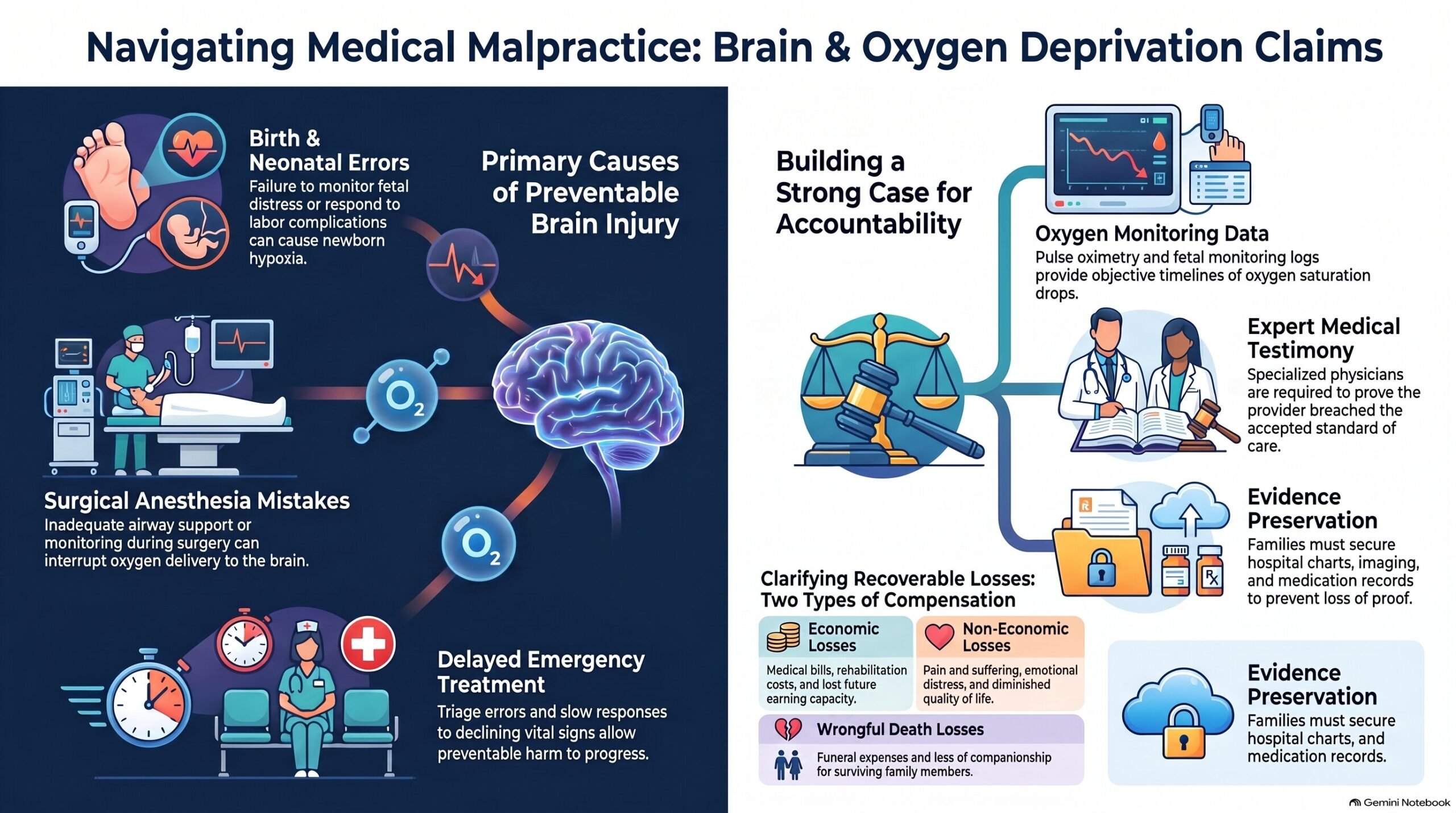
Common causes may include birth injury errors, delayed emergency treatment, and surgical anesthesia mistakes that reduce oxygen delivery to the brain. Medication errors and inadequate monitoring can also allow dangerous changes in a patient’s condition to go unrecognized. Each circumstance requires careful review of the medical records, treatment decisions, and applicable standards of care.
Birth Injury Errors
Birth injury errors may occur when medical professionals fail to identify, monitor, or respond appropriately to conditions that threaten a newborn’s oxygen supply. Contributing mistakes can include incomplete prenatal assessment, inaccurate interpretation of fetal monitoring, improper management of maternal risk factors, or failure to recognize signs of fetal distress during labor. Errors may also involve inadequate communication among obstetric, nursing, and neonatal teams, particularly when relevant history is not clearly documented. Birth defect documentation should accurately record identified conditions, evaluations, and treatment decisions to enable providers to coordinate appropriate care. The neonatal standard of care requires timely assessment of breathing, circulation, neurological status, and other indicators of oxygen deprivation after delivery. When providers overlook these responsibilities, preventable harm may result, including brain injury, developmental impairment, or persistent medical needs.
Delayed Emergency Treatment
Delayed emergency treatment can worsen brain and oxygen-deprivation injuries when providers fail to recognize a patient’s deteriorating condition or act within the time required by accepted medical standards. Emergency triage errors may cause critical symptoms, including confusion, difficulty breathing, or weakness, to be given insufficient priority. Monitoring delays can prevent staff from identifying declining Oxygen saturation, unstable vital signs, or changes in neurological status. In some cases, inadequate communication between nurses, physicians, and emergency personnel contributes to treatment postponement. Delayed oxygen support, diagnostic testing, or escalation to appropriate experts may allow preventable harm to progress. A careful review of medical records, timestamps, monitoring data, and facility protocols can help determine whether providers responded reasonably. Such evaluations support accountability and may help affected patients obtain resources for recovery.
Surgical Anesthesia Mistakes
When anesthesia providers fail to administer, monitor, or manage anesthesia appropriately, a patient may experience oxygen deprivation and preventable brain injury during surgery. Surgical anesthesia mistakes can involve inadequate preparation, improper airway support, delayed recognition of breathing complications, or failure to respond to changing physiological conditions. Anesthesia protocols should address patient history, anticipated airway challenges, positioning, and appropriate responses to unexpected events. Providers must also recognize concerning trends in oxygen saturation rather than relying on a single reading, particularly when circulation or ventilation may be compromised. If oxygen delivery is interrupted, even briefly, prompt intervention may reduce the risk of lasting neurological harm. Hospitals and surgical teams have a responsibility to maintain dependable safeguards, communicate clearly, and protect patients who entrust them with critical care during vulnerable circumstances.
Medication And Monitoring Errors
Beyond anesthesia administration, medication and monitoring errors can also interrupt oxygen delivery and contribute to preventable brain injury during medical care. Medication mismanagement may involve incorrect dosages, harmful drug interactions, missed medications, or delayed treatment of respiratory and cardiovascular problems. These mistakes can lower blood pressure, suppress breathing, or impair circulation, thereby reducing the amount of oxygen reaching the brain. Monitoring failures may occur when staff do not consistently assess oxygen saturation, heart rate, blood pressure, neurological status, or other crucial signs.
Inadequate observation can delay recognition of deterioration, particularly after surgery, childbirth, sedation, or emergency treatment. Healthcare professionals have a responsibility to follow medication protocols, verify orders, record changes, and respond promptly to abnormal findings. When preventable errors lead to oxygen deprivation, affected patients and families may seek accountability and support through a medical malpractice review.
Don’t Wait. Call Our Florida Personal Injury Lawyers Now!


Legal Rights of West Palm Beach Medical Malpractice Brain & Oxygen Deprivation Injury Victims
West Palm Beach victims who suffer brain injuries or oxygen deprivation because of medical malpractice may have the right to pursue compensation and other legal remedies. A claim may seek damages for medical treatment, rehabilitation, lost earnings, reduced future earning capacity, pain, and diminished quality of life. Surviving relatives may also possess rights under Florida’s wrongful-death laws when an injury proves fatal.
Potential legal protections include:
- Access to medical records, expert review, and an independent evaluation of the care provided.
- The opportunity to pursue claims against responsible professionals, facilities, or other legally accountable parties.
- Guidance concerning filing deadlines, required notices, evidence preservation, and settlement decisions.
Wrongful Deception, including misleading statements about treatment or outcomes, may affect a victim’s ability to make informed decisions and should be documented. Hospital Negligence may create additional grounds for relief when institutional policies, staffing, supervision, or emergency responses fall below accepted standards. An attorney can help protect procedural rights while pursuing accountability and resources that support long-term care, family stability, and dignified recovery.
Why Do West Palm Beach Medical Malpractice Brain & Oxygen Deprivation Injuries Happen?
Medical malpractice brain and oxygen deprivation injuries happen when a healthcare professional or facility fails to recognize, prevent, or promptly restore a condition that limits oxygen reaching the brain. Common oxygen loss causes include untreated breathing problems, cardiac arrest, severe blood loss, dangerously low blood pressure, and complications during labor or surgery. Harm may result when staff overlook warning signs, delay emergency treatment, misread test results, administer improper medication, or fail to monitor a vulnerable patient.
The brain depends on continuous oxygen and blood flow. When either is interrupted, the mechanisms of brain injury may include immediate cell damage, swelling, inflammation, and progressive tissue death. The severity can depend on how completely circulation is restricted, how long the deprivation lasts, and which brain regions are affected. Newborns, surgical patients, and individuals receiving intensive care may face particular risks when monitoring or communication breaks down. Preventive care requires timely assessment, appropriate escalation, accurate documentation, and coordinated attention to changing patient conditions.
What Should You Do After a West Palm Beach Medical Malpractice Brain & Oxygen Deprivation Injury?
After a suspected brain or oxygen deprivation injury, the patient should obtain immediate medical care to address urgent conditions and establish a record of the harm. Medical records, test results, treatment notes, and related communications should be preserved carefully. Consultation with a qualified medical malpractice lawyer can help evaluate potential negligence and determine appropriate legal steps.
Seek Immediate Medical Care
When a suspected medical malpractice injury causes brain damage or oxygen deprivation, prompt medical evaluation is necessary, even if symptoms initially appear mild. A responsible family member or caregiver should call 911 or seek emergency treatment for confusion, seizures, unusual sleepiness, weakness, trouble speaking, breathing difficulty, severe headache, or loss of consciousness. These emergency symptoms may indicate a developing, life-threatening condition requiring immediate intervention. Medical professionals can assess oxygen levels, neurological function, and other warning signs while providing appropriate stabilization and treatment. The affected individual should not drive, remain alone, or delay care while waiting for symptoms to improve. If possible, a trusted observer should document timeline details, including when symptoms began, what changes occurred, and when medical assistance was requested. Prompt care may protect health and support recovery.
Preserve Medical Records
Prompt medical evaluation should be followed by systematic preservation of the injured person’s medical records. Families should request complete charts, diagnostic images, laboratory results, medication lists, discharge instructions, and billing records from every involved provider. Written patient requests should identify relevant treatment dates and ask that records be supplied in a usable format. Providers generally must comply with HIPAA requirements, while families should store copies in a secure location and maintain an organized record of communications. Record preservation should include appointment notes, rehabilitation reports, photographs, and documentation describing changes in cognition, movement, speech, or daily functioning. A dated symptom journal may clarify the injury’s progression and care received. Careful document retention prevents accidental loss, supports continuity among caregivers, and helps ensure that important information remains available when the injured person needs assistance.
Consult a Malpractice Lawyer
Consulting a medical malpractice lawyer can help determine whether a brain injury or oxygen deprivation resulted from a provider’s failure to meet the applicable standard of care. During a case evaluation, counsel may review medical records, treatment timelines, witness accounts, and expert opinions to identify possible negligence. The lawyer can also explain Patient rights, including access to records, informed decision-making, and potential compensation for medical expenses, rehabilitation, lost income, and long-term care. Because malpractice claims involve strict deadlines and intricate evidence requirements, early legal guidance may help preserve crucial proof and prevent procedural errors. A lawyer may communicate with healthcare providers and insurers on the patient’s behalf, allowing families to focus on treatment and support. Each matter requires individualized analysis, and no outcome is guaranteed.
Don’t Wait. Call Our Florida Personal Injury Lawyers Now!
Critical Evidence in a West Palm Beach Medical Malpractice Brain & Oxygen Deprivation Injury Case
Key evidence may establish whether negligent medical care caused a brain or oxygen deprivation injury and clarify the resulting losses. A case evaluation generally examines medical records, oxygen monitoring data, expert medical testimony, and documentation of damages.
These materials can help identify treatment failures, establish causation, and support the full scope of compensation sought.
- Medical records review: Charts, physician notes, medication records, imaging, and discharge documentation may reveal missed warnings or delayed treatment.
- Oxygen monitoring data, including pulse oximetry, fetal monitoring, blood gas results, and ventilator records, can reveal changes in oxygen levels and the timing of medical responses.
- Expert testimony and damages documentation: Qualified experts may explain causation and standard-of-care violations, while employment records, rehabilitation costs, and life-care assessments document financial and personal losses.
Medical Records Review
Because brain and oxygen deprivation injuries can develop through a sequence of rapidly changing medical events, a thorough review of the patient’s records is essential to determining what occurred and when. Attorneys and medical consultants examine admission notes, physician orders, nursing entries, medication records, consent forms, transfer documents, and discharge summaries. The review may identify changes in condition, requests for assistance, responses to symptoms, and decisions affecting the patient’s care. Establishing a reliable timeline of documents helps clarify whether warning signs were recognized, communicated, and addressed within appropriate periods. Records must be obtained and handled in accordance with HIPAA compliance basics, protecting privacy while permitting authorized legal evaluation. Careful comparison of entries can also reveal omissions, inconsistent accounts, or delayed documentation that warrants further investigation by qualified professionals and compassionate advocates serving affected families.
Oxygen Monitoring Data
Oxygen monitoring data can provide an objective record of changes that may precede brain injury, including declining oxygen saturation, abnormal blood-gas results, or interruptions in monitoring. Pulse oximetry logs may show whether staff recognized deteriorating oxygen levels, responded promptly, and maintained continuous observation during labor, surgery, emergency care, or hospitalization. Oxygen saturation trends can reveal gradual decline, repeated desaturation episodes, or prolonged periods below expected ranges that isolated chart entries may not capture. Blood gas reports can provide information on oxygenation and carbon dioxide levels, while device records may indicate alarms, disconnections, or missing measurements. In a potential malpractice case, these materials can help establish a timeline and compare documented responses with applicable monitoring requirements. Preserving original electronic data, audit trails, and nursing notes may clarify whether important changes were recorded accurately.
Expert Medical Testimony
When brain injury or oxygen deprivation is alleged, expert medical testimony can help explain whether the care provided met accepted medical standards and whether a preventable lapse contributed to the patient’s condition. Qualified experts may review medical records, monitoring results, imaging, medication histories, and clinical decisions to reconstruct the patient’s course. Neurology evaluations can clarify the nature, timing, and likely cause of cognitive, motor, or neurological impairment. Other experts may address emergency response, anesthesia, obstetrics, or intensive care practices, depending on the circumstances. Their opinions can identify what a reasonably careful provider would have recognized and done under similar conditions. Testimony may also explain whether delayed intervention, inadequate monitoring, or failure to respond departed from the applicable oxygen standard. Reliable, impartial analysis helps courts evaluate complex medical issues and serves affected patients responsibly.
Damages Documentation
Thorough damages documentation establishes the financial, medical, and personal consequences of a brain injury or oxygen deprivation event. A Medical timeline review can connect treatment decisions, delayed interventions, and neurological changes to the claimed harm. Relevant records may include hospital charts, imaging studies, therapy evaluations, medication histories, discharge instructions, and physician opinions regarding future care. Oxygen saturation logs can help clarify whether inadequate monitoring or response preceded cognitive, motor, or developmental impairment. Documentation should also address rehabilitation expenses, assistive equipment, lost income, reduced earning capacity, and anticipated medical needs. Statements from caregivers may describe changes in communication, independence, behavior, and daily functioning. Organized evidence assists attorneys, medical experts, and families in presenting an accurate assessment of damages while supporting accountability and long-term care planning for the injured individual.
Long-Term Effects of West Palm Beach Medical Malpractice Brain & Oxygen Deprivation Injuries
Long-term brain and oxygen deprivation injuries may cause cognitive and memory impairments that affect learning, concentration, communication, and independent decision-making. Physical and motor challenges can limit mobility, coordination, strength, and the ability to perform routine activities. Emotional and behavioral changes, including mood disruption, impulsivity, or altered social functioning, may also require ongoing treatment and support.
Cognitive and Memory Impairments
Cognitive and memory impairments are among the most consequential long-term effects of brain injuries caused by oxygen deprivation or medical malpractice. Affected individuals may struggle with attention, reasoning, language, decision-making, or retaining recently learned information. These limitations can interfere with education, employment, communication, and the ability to manage ordinary responsibilities independently. Families and caregivers may need to provide consistent guidance, establish routines, and create safe systems for important tasks. Cognitive Rehab can help identify preserved abilities, develop practical strategies, and support gradual improvement in daily functioning. Memory Training may use repetition, written reminders, organizational tools, and structured exercises tailored to the individual’s needs. Medical documentation, neuropsychological evaluations, and rehabilitation records can clarify the extent of the impairment. Legal counsel may help families pursue resources that promote dignity, stability, and long-term supportive care.
Physical and Motor Challenges
When oxygen deprivation or medical malpractice damages areas of the brain that control movement, an affected individual may develop persistent physical and motor challenges. These difficulties can include weakness, paralysis, muscle stiffness, tremors, impaired balance, limited range of motion, and problems with walking or hand use. Some individuals require wheelchairs, braces, communication supports, or assistance with daily activities. The severity and progression of these limitations depend on the location and extent of the injury, as well as the effectiveness of treatment. Rehabilitation planning should address current abilities, anticipated needs, safety risks, and opportunities for greater independence. Ongoing coordination with therapists, including physical, occupational, and speech professionals when appropriate, can support measurable progress. Caregivers may also need training, adaptive equipment, and structured routines to provide dependable assistance.
Emotional and Behavioral Changes
Emotional and behavioral changes may emerge after brain injury caused by oxygen deprivation or medical malpractice, even when physical recovery appears substantial. Individuals may experience anxiety symptoms, depression, irritability, impulsivity, or difficulty regulating frustration. Personality changes can affect relationships, employment, judgment, and participation in family or community life. Some people withdraw from activities they once valued, while others display disinhibition or unpredictable reactions that require supervision. Cognitive fatigue and impaired communication may further intensify emotional distress, particularly when the individual recognizes lost abilities.
Caregivers and service providers can support stability through consistent routines, compassionate communication, counseling, medication management, and, when appropriate, behavioral therapy. Documentation of these symptoms, their frequency, and their effect on daily functioning may help medical professionals evaluate needs and clarify the long-term consequences of the injury.
Proving Liability in West Palm Beach Medical Malpractice Brain & Oxygen Deprivation Injury Cases
Proving liability in West Palm Beach medical malpractice cases involving brain and oxygen deprivation injuries requires evidence that a healthcare provider breached the accepted standard of care and that the breach directly caused the patient’s harm. The Standard of care may involve timely fetal monitoring, recognizing distress, responding to respiratory complications, or initiating emergency treatment. Medical records, monitoring strips, medication histories, and witness accounts can reveal whether appropriate procedures were followed. Causation proof must connect the provider’s specific failure to the oxygen deprivation and resulting neurological injury, while addressing other possible causes.
Because these issues often involve intricate medical judgments, expert testimony is generally indispensable. Qualified physicians may explain what reasonably careful providers would have done, identify deviations, and interpret the timing and severity of the injury. A thorough review can also establish damages, including cognitive limitations, behavioral changes, rehabilitation needs, and the need for long-term assistance. This evidence enables families and advocates to pursue accountability and protect the injured person’s future.
Dealing With Insurance Companies After a West Palm Beach Medical Malpractice Brain & Oxygen Deprivation Injury
After liability evidence has been gathered, communication with insurance companies becomes an important part of protecting a brain- or oxygen-deprivation injury claim. An insurer may request medical records, billing information, employment documentation, and statements concerning the patient’s condition. Each response should be accurate, consistent, and limited to information relevant to the claim. Families often benefit from legal guidance before signing releases or providing recorded interviews, as broad disclosures may expose private information or lead to avoidable disputes.
Careful documentation submissions can demonstrate the injury’s medical severity, ongoing treatment needs, lost income, and the need for future assistance. Records should be organized chronologically and supported by physicians, therapists, caregivers, and other qualified professionals. Denied claims handling may require examining the insurer’s written reason for denial, identifying missing evidence, and responding within applicable deadlines. Counsel can communicate with adjusters, challenge inadequate evaluations, and protect the family from pressure to settle prematurely while preserving the resources needed for compassionate, long-term care.
What to Expect During a West Palm Beach Medical Malpractice Brain & Oxygen Deprivation Injury Claim Process
The claim process generally begins with an initial case evaluation, followed by a thorough review of medical records and other evidence. Qualified medical experts may assess the care provided and offer testimony regarding negligence, causation, and resulting brain or oxygen deprivation injuries. Depending on the evidence and negotiations, the matter may conclude through settlement or proceed to trial.
Initial Case Evaluation
When a potential medical malpractice claim involves brain injury or oxygen deprivation, the initial case evaluation examines whether a medical provider’s conduct may have fallen below the accepted standard of care and caused legally recognizable harm. A West Palm Beach attorney typically discusses the patient’s condition, suspected negligence, the effects of the injury, and applicable deadlines. The consultation may address neonatal oxygen concerns, emergency responses, delayed treatment, or communication failures without reaching premature conclusions. A symptom timeline helps clarify when changes appeared, how they progressed, and whether an alternative explanation exists. Record gaps and billing errors may raise questions that require further investigation, but they do not, by themselves, establish negligence. The lawyer may also identify potential witnesses, assess the family’s immediate needs, and explain possible next steps, costs, and requirements for professional review.
Medical Records Review
A medical records review establishes the factual foundation for evaluating a brain injury or oxygen deprivation claim. Counsel examines prenatal, hospital, emergency, surgical, nursing, medication, imaging, and follow-up records to identify relevant symptoms, decisions, and changes in condition. The review develops a Chronology of care, showing when warning signs appeared, how providers responded, and whether treatment was delayed or omitted. Documentation may also clarify communications with family members, informed-consent discussions, monitoring practices, and discharge instructions. The records are compared with applicable policies and the liability standard governing the involved professionals and facility. Missing, inconsistent, or altered entries may require additional investigation, while complete records can establish important context. This careful process helps determine which facts support the claim and which require further clarification.
Expert Testimony Process
After the medical records review establishes the relevant chronology, qualified experts assess whether the care met applicable medical standards and whether any departure caused or contributed to the brain injury or oxygen deprivation. Physicians may evaluate diagnosis, monitoring, emergency response, treatment decisions, and the timing of interventions. Neurologists, neonatologists, life-care planners, and other domain experts may address causation, prognosis, and future needs. Their opinions must rest on reliable methods, sufficient facts, and medically supported reasoning. Under the Daubert standards, the court may examine an expert’s qualifications, methodology, relevance, and reliability before permitting testimony. Counsel typically prepares experts to explain complicated issues clearly without overstating conclusions. Expert credibility depends on impartial analysis, consistent opinions, and familiarity with accepted medical practices. The testimony helps clarify disputed facts for those seeking accountability and informed resolution.
Settlement Or Trial
Resolution is a central consideration in a West Palm Beach medical malpractice claim involving brain injury or oxygen deprivation. After medical records, expert opinions, and damages are evaluated, the parties may negotiate a settlement or prepare for trial. Settlement discussions can provide a faster, more predictable resolution while addressing ongoing treatment, rehabilitation, lost income, and family caregiving needs. Negotiation leverage often depends on the strength of the evidence, the clarity of the medical causation, and the documented impact on the injured person’s life. If discussions fail, trial readiness becomes crucial. Attorneys may present expert testimony, challenge defense interpretations, and explain intricate medical events to a judge or jury. The process can be demanding, but careful preparation helps protect the claimant’s interests and supports a resolution that secures meaningful, long-term care.
Compensation for West Palm Beach Medical Malpractice Brain & Oxygen Deprivation Injury Damages
When medical negligence causes brain injury or oxygen deprivation, the injured person may be entitled to compensation for the full scope of resulting losses. A careful evaluation begins with the care timeline, including prenatal events, delivery decisions, emergency responses, diagnoses, and subsequent treatment. Medical records, expert opinions, and witness accounts can help establish whether a provider’s conduct departed from accepted standards and caused the injury.
A damage calculation should account for the individual’s anticipated medical care, rehabilitation, assistive services, and supervision. It may also consider adaptations needed at home, educational support, vocational assistance, and the effects on future independence. Because brain injuries can evolve over time, qualified professionals may assess prognosis, life expectancy, functional limitations, and continuing care requirements. Attorneys commonly work with physicians, life-care planners, economists, and other experts to present a well-supported claim. Families seeking to protect an injured person’s future should preserve records, follow treatment recommendations, and obtain legal guidance promptly, while applicable filing deadlines remain in effect.
Economic vs Non-Economic Damages in West Palm Beach Medical Malpractice Brain & Oxygen Deprivation Cases
Economic damages may cover medical expenses, rehabilitation, lost income, and future care required following brain or oxygen-deprivation injuries. Non-economic damages address pain, emotional distress, disability, and diminished quality of life. Proving financial losses generally requires organized records and credible evidence concerning past expenses, earning capacity, and anticipated medical needs.
Economic Damages
Medical malpractice claims involving brain or oxygen deprivation injuries may include both economic and non-economic damages, each addressing different consequences of the harm suffered. Economic damages compensate measurable financial losses caused by the injury. They may include emergency treatment, hospitalization, rehabilitation, medications, diagnostic services, medical equipment, and ongoing personal or nursing care. A thorough economic damages calculation may also consider home modifications, transportation, educational support, and other necessary services. If the injury affects a patient’s ability to work, recoverable losses may include past wages, loss of earning capacity, and benefits. Experts may apply future lost earnings formulas that account for expected income, career progression, work-life expectancy, inflation, and present value. Attorneys typically gather medical records, employment documentation, expert assessments, and invoices to substantiate these financial claims.
Non-Economic Damages
Non-economic damages address the personal consequences of brain or oxygen deprivation injuries that cannot be measured through bills or pay records. In West Palm Beach medical malpractice cases, these damages may recognize pain and suffering, emotional distress, loss of enjoyment of life, disfigurement, and diminished independence. They can also reflect cognitive changes, communication difficulties, personality alterations, and the need for ongoing assistance with ordinary activities. Family members may describe how the injury affected relationships, routines, and the individual’s ability to participate in meaningful experiences. Courts and insurers evaluate the severity, duration, and permanence of these consequences, as well as the person’s age and prognosis. Because these losses lack a fixed price, careful documentation and compassionate testimony can help present their human significance while supporting a fair legal recovery for those affected.
Proving Financial Losses
In West Palm Beach medical malpractice brain and oxygen deprivation cases, proving financial losses requires separating measurable economic damages from non-economic harm while showing how both resulted from the alleged medical negligence. Economic damages may include calculating medical expenses, rehabilitation, medications, assistive equipment, transportation, and lost income. Wage loss records, tax returns, employment documentation, and expert testimony can establish past and reduced future earning capacity. Life-care planners and medical professionals may project future care, including therapy, supervision, residential services, and necessary technology. Non-economic damages address pain, suffering, disability, emotional distress, and diminished quality of life, which lack fixed invoices. Documenting pain through treatment records, caregiver observations, journals, and professional evaluations can support these claims. Organized evidence helps families and courts assess losses fairly while pursuing accountability and long-term support.
When a West Palm Beach Medical Malpractice Brain & Oxygen Deprivation Injury Case Goes to Trial vs Settlement
Deciding whether a West Palm Beach brain and oxygen deprivation malpractice case should proceed to trial or settle requires a careful assessment of the injury’s extent, the available medical evidence, and the strength of the negligence claim. Settlement may provide families with earlier financial assistance, privacy, and greater certainty, particularly when long-term care needs are substantial. However, a proposed amount must reasonably reflect medical treatment, rehabilitation, lost earning capacity, and continuing support.
Trial may be appropriate when liability is disputed, the offered settlement is inadequate, or testimony could clarify how a preventable event caused the injury. The process can require extensive preparation, public proceedings, and patience, while its outcome remains uncertain. Evidence preservation should begin promptly, including the collection of medical records, witness accounts, and documentation of daily limitations. Expert consultation can help evaluate causation, future care, and damages before meaningful negotiations occur. Counsel typically compares the risks, costs, timing, and potential benefits of each path while considering the family’s priorities and the injured person’s welfare.
Don’t Wait. Call Our Florida Personal Injury Lawyers Now!
Florida Laws That May Affect Your West Palm Beach Medical Malpractice Brain & Oxygen Deprivation Case
Because brain and oxygen deprivation injuries can involve substantial lifelong damages, several Florida laws may shape a West Palm Beach medical malpractice claim. Florida medical negligence generally requires proof that a healthcare provider breached the accepted standard of care and caused the injury. The evidence may include medical records, expert opinions, and testimony regarding future treatment or support needs.
Important legal considerations may include:
- Florida’s medical liability rules can affect expert corroboration, presuit requirements, and how a claim proceeds against a provider.
- Comparative fault rules may reduce a damage award if the defense proves that another person or entity contributed to the harm.
- Damage-related provisions may affect recoverable economic losses, non-economic damages, and liability among multiple defendants.
These laws can determine which parties are pursued, how responsibility is allocated, and what evidence receives weight. A careful review also helps families present their circumstances accurately while protecting an injured patient’s access to appropriate care and long-term resources. Professional guidance can assist with evaluating records, identifying responsible parties, and advancing a claim consistent with Florida law.
The Statute of Limitations for West Palm Beach Medical Malpractice Brain & Oxygen Deprivation Injury Cases
The statute of limitations establishes the deadline for filing a West Palm Beach medical malpractice claim involving brain or oxygen deprivation injuries. Florida generally requires a claim to be filed within two years after the injured person discovered, or should have discovered, the malpractice and resulting injury. An outside limit, commonly four years from the negligent act, may apply even when discovery occurs later. Exceptions can affect minors, fraud, concealment, misrepresentation, or situations involving continuous treatment, so the applicable facts require careful evaluation.
Families should begin the filing deadlines process promptly because medical records, monitoring data, witness recollections, and expert information may become harder to obtain over time. Evidence preservation timelines, for that reason, warrant immediate attention, particularly when an injury follows childbirth, surgery, anesthesia, or emergency care. A missed deadline can permanently bar an otherwise valid claim, preventing recovery for medical expenses, rehabilitation, lost support, and long-term care. Prompt attention also supports accurate investigation while records and recollections remain available.
How a West Palm Beach Medical Malpractice Brain & Oxygen Deprivation Lawyer Can Help You
When a brain or oxygen deprivation injury may have resulted from negligent medical care, a West Palm Beach medical malpractice lawyer can investigate the circumstances and identify the parties who may be legally liable. The lawyer may protect the patient’s interests by organizing records, evaluating clinical decisions, and explaining available legal remedies in clear terms.
A West Palm Beach medical malpractice lawyer can investigate suspected negligence, protect patient interests, and clarify potential legal remedies.
Key assistance may include:
- Creating a retained evidence checklist covering medical records, monitoring data, billing documents, witness information, and relevant communications.
- Managing Expert review coordination so qualified physicians can assess causation, treatment standards, and the injury’s lasting effects.
- Preserving evidence, communicating with insurers, and developing a case strategy supported by documented facts and applicable Florida law.
A lawyer may also help family members understand intricate medical information while treating the injured person’s dignity and long-term needs as central concerns. Through careful preparation, counsel can reduce administrative burdens and help guarantee that responsible institutions are evaluated fairly. This service allows families to focus on rehabilitation, caregiving, and meaningful support while legal professionals address the claim’s investigative and procedural demands.
When to Contact a West Palm Beach Medical Malpractice Brain & Oxygen Deprivation Lawyer
Prompt consultation with a West Palm Beach medical malpractice brain and oxygen deprivation lawyer may be appropriate when a patient suffers cognitive, neurological, or developmental harm after a medical procedure, delivery, emergency, or period of hospitalization. Families should seek guidance when symptoms appear suddenly, worsen, or differ from expected recovery. Call after symptoms such as seizures, impaired movement, speech changes, memory difficulties, loss of consciousness, developmental delays, or significant behavioral changes become apparent. A consultation may also be warranted when medical records suggest delayed treatment, inadequate monitoring, oxygen loss, or an unexplained complication.
Early communication allows counsel to identify important dates, preserve relevant records, and clarify potential legal deadlines without disrupting the patient’s care. During an eligibility consultation, the lawyer can review available information and explain whether further investigation may be appropriate. Caregivers caring for an injured person should document symptoms, treatments, expenses, and communications with providers while continuing recommended medical follow-up. Prompt attention supports informed decisions for the patient and family.
Why You Need an Experienced West Palm Beach Medical Malpractice Brain & Oxygen Deprivation Lawyer
Because brain and oxygen-deprivation injuries can involve complex medical evidence and permanent consequences, an experienced West Palm Beach medical malpractice brain and oxygen deprivation lawyer can provide essential legal guidance. Such counsel can examine medical records, treatment timelines, monitoring data, and communication among providers to determine whether negligent care contributed to the injury. The lawyer can also identify responsible parties and explain how professional standards may apply without placing additional burdens on the injured person or family.
Effective representation includes coordinating expert consultation with qualified physicians and life-care professionals who can assess causation, future needs, rehabilitation, and likely limitations. Counsel can organize damages evidence involving medical expenses, lost earning capacity, ongoing therapy, attendant care, and diminished quality of life. This preparation helps present a complete account of the harm and supports a claim grounded in documented facts. An experienced lawyer also manages deadlines, legal filings, and negotiations, allowing families to focus on recovery and continued care while their interests receive focused protection.
How to Choose the Right West Palm Beach Medical Malpractice Brain & Oxygen Deprivation Lawyer for Your Case
Selecting the right West Palm Beach medical malpractice brain and oxygen deprivation lawyer requires careful evaluation of the attorney’s experience, resources, and approach to complicated injury claims. A prospective client should examine the lawyer’s history handling cases involving birth injuries, surgical errors, delayed treatment, and neurological damage. Courtroom experience matters because insurers may respond differently when counsel has demonstrated readiness to present evidence before a jury.
The lawyer should also explain the investigative process, likely challenges, and potential damages in understandable terms. Effective representation often depends on attorney resources, including access to medical experts, life-care planners, economists, and professional investigators. These resources can help establish negligence, connect the error to oxygen deprivation, and document long-term care needs.
A careful consultation should address communication practices, fee arrangements, case timelines, and conflicts of interest. References to professional standing, disciplinary history, and past outcomes may provide additional context. Selecting counsel who listens attentively and prioritizes the injured person’s welfare can support a responsible, informed legal decision.
About The Law Offices of Anidjar & Levine
The Law Offices of Anidjar & Levine represents individuals and families pursuing compensation after medical negligence causes brain injury or oxygen deprivation.
Its legal team evaluates medical records, treatment timelines, witness accounts, and professional standards to determine whether preventable errors contributed to a patient’s harm.
The firm assists clients who may be managing extensive rehabilitation, lifelong care needs, lost income, or profound changes in family responsibilities.
Attorneys explain available legal options, communicate with medical professionals, and prepare claims designed to present the facts clearly.
Their work may include securing expert opinions, reviewing facility policies, and preserving relevant Court evidence before it becomes unavailable.
A careful Inquest overview can help identify unanswered questions surrounding a death or catastrophic injury and clarify how investigative findings may relate to a civil claim.
The firm’s approach emphasizes thorough preparation, respectful communication, and service to families seeking accountability.
Case evaluations generally focus on the evidence, applicable Florida law, and compensation that may support ongoing care and recovery.

Frequently Asked Questions
Can Parents File a Claim for a Child’s Brain or Oxygen Deprivation Injury?
Parents generally may pursue a child’s brain or oxygen deprivation injury claim on the child’s behalf, subject to state law and applicable deadlines. Their child guardian standing typically permits them to investigate negligence, obtain medical records, and seek compensation for medical care, rehabilitation, and related losses. The minor injury claim may also require court approval before settlement. Because limitation periods and procedural requirements vary, prompt consultation with qualified counsel helps protect the child’s legal rights.
What if the Injured Patient Died After Experiencing Brain or Oxygen Deprivation?
If the injured patient died after brain or oxygen deprivation, eligible survivors may pursue wrongful death claims when negligent medical care contributed to the death. The applicable law determines who may file, required deadlines, and recoverable losses. Damages calculation may include medical and funeral expenses, lost financial support, loss of companionship, and the patient’s conscious pain and suffering, depending on the jurisdiction. Documentation and qualified legal guidance help preserve evidence and protect surviving family members’ rights.
Can Multiple Healthcare Providers Share Responsibility for the Same Injury?
Multiple healthcare providers may share responsibility when their separate acts or omissions contribute to the same brain or oxygen-deprivation injury. Shared Negligence can arise when physicians, nurses, hospitals, or consultants fail to communicate, monitor, diagnose, or respond appropriately. Vicarious Liability may also hold an employer accountable for an employee’s conduct performed within assigned duties. Determining each provider’s responsibility requires reviewing medical records, timelines, professional standards, and the connection between each breach and the resulting harm.
Are Medical Malpractice Consultations Confidential and Free?
Medical malpractice consultations are often confidential and may be free, but policies differ by firm. During an initial discussion, HIPAA protections and professional confidentiality generally safeguard the information shared, allowing potential clients to describe suspected negligence without unnecessary exposure. Many attorneys charge no upfront fee and accept cases on a contingency basis, meaning attorney fees are collected only if compensation is recovered. However, clients should confirm consultation costs, litigation expenses, and representation terms before proceeding.
Can a Brain Injury Claim Affect Medicaid or Other Public Benefits?
A brain injury claim can affect Medicaid eligibility and other public benefits, depending on settlement size, asset limits, income rules, and the benefit program involved. A recovery may result in temporary ineligibility unless structured appropriately, for example, through a special needs trust or a pooled trust. Lien considerations also matter because Medicaid may seek reimbursement from settlement proceeds for related medical expenses. Professional guidance helps preserve critical benefits while resolving the claim responsibly and lawfully.
—————————
Families facing brain injuries or oxygen deprivation may experience overwhelming medical, financial, and emotional challenges.
Determining whether medical negligence contributed to the harm requires a thorough review of medical records, treatment decisions, and Florida law.
A West Palm Beach Personal Injury Lawyer can evaluate the circumstances, explain available legal options, and pursue compensation when negligence is established.
The Law Offices of Anidjar and Levine offer knowledgeable guidance and dedicated representation throughout this complex process.

