
The Law Offices of Anidjar and Levine help Alafaya injury victims identify every potentially at-fault party, including drivers, employers, businesses, property owners, and manufacturers.
We investigate promptly, preserve photographs, reports, surveillance footage, witness accounts, vehicle evidence, and medical records, then connect negligent conduct to your injuries and losses.
We handle insurers and pursue compensation for medical expenses, lost income, property damage, pain, and future care.
Florida’s comparative fault rules may affect recovery.
Learn more from an Alafaya Personal Injury Lawyer about how we develop and protect your claim.
Main Takeaways
- An Alafaya injury lawyer identifies responsible drivers, businesses, property owners, employers, manufacturers, or other liable parties.
- Attorneys gather crash reports, photographs, surveillance, vehicle damage, witness statements, and medical records to establish fault and causation.
- Florida comparative fault rules may reduce compensation when an injured person contributed to the incident.
- Potential compensation may include medical expenses, lost income, property damage, pain and suffering, and other legally recognized losses.
- Prompt medical care and legal guidance help preserve records, avoid insurer pitfalls, and protect rights before accepting settlement offers.


How We Can Help With Your Alafaya At-Fault Parties Injury Claim
When another party’s negligence causes your injury, we’ll identify the responsible parties, gather and preserve critical evidence, and develop a claim that accurately reflects your medical expenses, lost income, property damage, and other losses. We’ll listen carefully to your account, explain each stage of the process, and help you make informed decisions while you focus on recovery and serving those who depend on you.
Our team will investigate the incident promptly. We may review reports, photographs, surveillance footage, vehicle damage, medical records, and relevant communications. A detailed Car Accident Timeline can clarify how events unfolded and identify inconsistencies requiring further investigation. We’ll also seek witnesses and document their statements before memories fade. If there are Missing Witnesses, we’ll examine available records and other evidence to help establish what occurred.
We’ll communicate with insurers, address unreasonable requests, and pursue appropriate compensation through negotiation or litigation when necessary. Throughout your claim, we’ll treat you with respect, maintain consistent communication, and protect your interests with diligence, preparation, and integrity.
OUR CONSULTATIONSARE FREE
START YOUR FREE CASE REVIEW

Understanding Alafaya At-Fault Parties Injury Cases
Understanding an Alafaya at-fault parties injury case begins with identifying who caused the incident and establishing how that conduct led to your injuries and losses. We examine available evidence, including reports, statements, photographs, medical records, and other documentation, to connect the responsible party’s actions with the harm you’ve experienced.
Liability may involve an individual, business, property owner, employer, or another entity, depending on the facts. We also evaluate whether insurance coverage applies and whether additional parties share responsibility. Liability myths can create confusion, such as assuming an apology automatically proves fault or believing an insurance company will fairly assess every loss without scrutiny.
Florida’s comparative fault rules may reduce compensation if your actions contributed to the incident, but they don’t necessarily eliminate your claim. We’ll explain how these rules may apply, how they protect your interests during communications, and how to pursue evidence-backed compensation. By understanding the legal framework, we can serve you with diligence and help you make informed decisions throughout the case.
Common Causes of Alafaya At-Fault Parties
We commonly see Alafaya crashes arise from distracted driving, speeding, reckless conduct, and impaired driving. Failure to yield also frequently causes collisions, particularly at intersections and crosswalks. Understanding these causes helps us identify fault and evaluate the evidence supporting your injury claim.
Distracted Driving
Distracted driving is a common cause of crashes involving at-fault parties in Alafaya, particularly when motorists text, adjust navigation systems, eat, or focus on passengers instead of the roadway. These cell phone distractions can delay a driver’s reaction, obscure traffic signals, and prevent proper attention to pedestrians, cyclists, and surrounding vehicles. We help injured people understand how distraction may have contributed to their collision and identify evidence that supports accountability.
This evidence may include phone records, witness statements, vehicle data, surveillance footage, and roadside evidence such as tire marks or debris patterns. Because memories and physical conditions can change quickly, we encourage you to report the crash, seek medical care, and preserve relevant information promptly. By carefully reviewing the circumstances, we can pursue fair compensation and diligently meet your needs.
Speeding And Reckless Driving
When drivers exceed posted speed limits or operate their vehicles recklessly, they can leave themselves too little time to respond to changing traffic conditions in Alafaya. These choices may cause severe collisions, especially near intersections, schools, and busy commercial areas. We help injured people understand how evidence of speeding—such as excessive speed, unsafe lane changes, tailgating, or disregard for traffic controls—can support an at-fault claim. Police reports, witness statements, surveillance footage, vehicle data, and roadway conditions may clarify what happened.
We also work to identify every responsible party and pursue compensation for medical treatment, lost income, property damage, and other harm. During insurance liability negotiation, we present organized evidence and protect your interests against efforts to minimize responsibility. By seeking expert guidance, we can help you meet your family’s needs while ensuring fair accountability.
Impaired Driving
Impaired driving remains a serious cause of at-fault crashes in Alafaya, particularly when alcohol, prescription medication, or illegal substances reduce a driver’s judgment, coordination, or reaction time. We recognize that impaired motorists may drift across lanes, misjudge distances, or respond dangerously to ordinary traffic conditions. Substance use can also intensify road rage incidents, increasing the likelihood of aggressive acts and violent confrontations. Law enforcement uses DUI checkpoints, patrols, and chemical testing to identify suspected offenders, but crashes can occur before intervention.
If you’ve been injured by an impaired driver, we can help preserve evidence, including toxicology reports, witness statements, surveillance footage, and arrest records. Our focus is serving you with diligence while pursuing accountability and compensation for medical treatment, lost income, property damage, and lasting physical or emotional harm.
Failure To Yield
Failure to yield is a common cause of at-fault crashes in Alafaya, particularly at intersections, crosswalks, merging lanes, and traffic circles. Drivers may focus on reaching their destination rather than recognizing another person’s right of way. Negligent signaling can create uncertainty, while unsafe lane changes may force nearby motorists, bicyclists, or pedestrians to take sudden evasive action. We encourage you to document what happened, including traffic signals, lane positions, witness information, and visible injuries.
These details can help us evaluate whether another driver violated a traffic duty and caused your harm. If you’ve been injured while serving others or traveling through the community, seek prompt medical attention and preserve relevant records. We can explain your options, communicate with insurers, and pursue accountability while protecting your interests.


Legal Rights of Alafaya At-Fault Parties Injury Victims
Alafaya injury victims retain important legal rights even when an investigation identifies another party as responsible for causing the accident. We can pursue compensation for medical expenses, lost income, property damage, pain and suffering, and other legally recognized losses. Responsibility doesn’t automatically eliminate recovery;
Florida’s Comparative negligence rules may reduce compensation according to each person’s share of fault.
- We can seek prompt medical care and preserve records linking injuries to the incident.
- We can request insurance information, document damages, and avoid statements that misrepresent our condition.
- We can consult a qualified attorney before accepting a settlement or signing a release.
We should recognize Insurance claim pitfalls, including recorded statements, premature offers, and disputes over causation. A lawyer can evaluate evidence, communicate with insurers, identify all responsible parties, and protect applicable deadlines. By understanding these rights, we’re better prepared to serve our families and communities and to pursue fair treatment. Careful documentation and honest communication strengthen a claim, while informed legal guidance helps us make decisions that preserve available remedies.
Don’t Wait. Call Our Florida Personal Injury Lawyers Now!
Why Do Alafaya At-Fault Parties’ Injuries Happen?
When crashes occur in Alafaya, injuries often result from negligent driving, unsafe roadway conditions, defective vehicle components, or inadequate property maintenance. Drivers may speed, follow too closely, ignore traffic signals, drive while distracted, or operate vehicles under the influence. These choices can cause collisions that produce fractures, spinal trauma, brain injuries, and lasting emotional harm.
Our Common Cause Analysis also considers hazards beyond driver behavior. Poorly designed intersections, missing warnings, inadequate lighting, and unrepaired pavement can contribute to preventable incidents. Vehicle manufacturers, repair businesses, landlords, and other responsible parties may face accountability when defective parts, careless service, or dangerous premises create unreasonable risks.
We use liability-proof tips to examine how each event occurred, identify applicable duties, and connect the unsafe conduct to the resulting injuries. Witness accounts, surveillance footage, maintenance records, vehicle data, and professional evaluations may clarify responsibility. By understanding these causes, we can better serve injured people and pursue fair accountability from every party whose negligence contributed to their losses.
What Should You Do After an Alafaya At-Fault Party’s Injury?
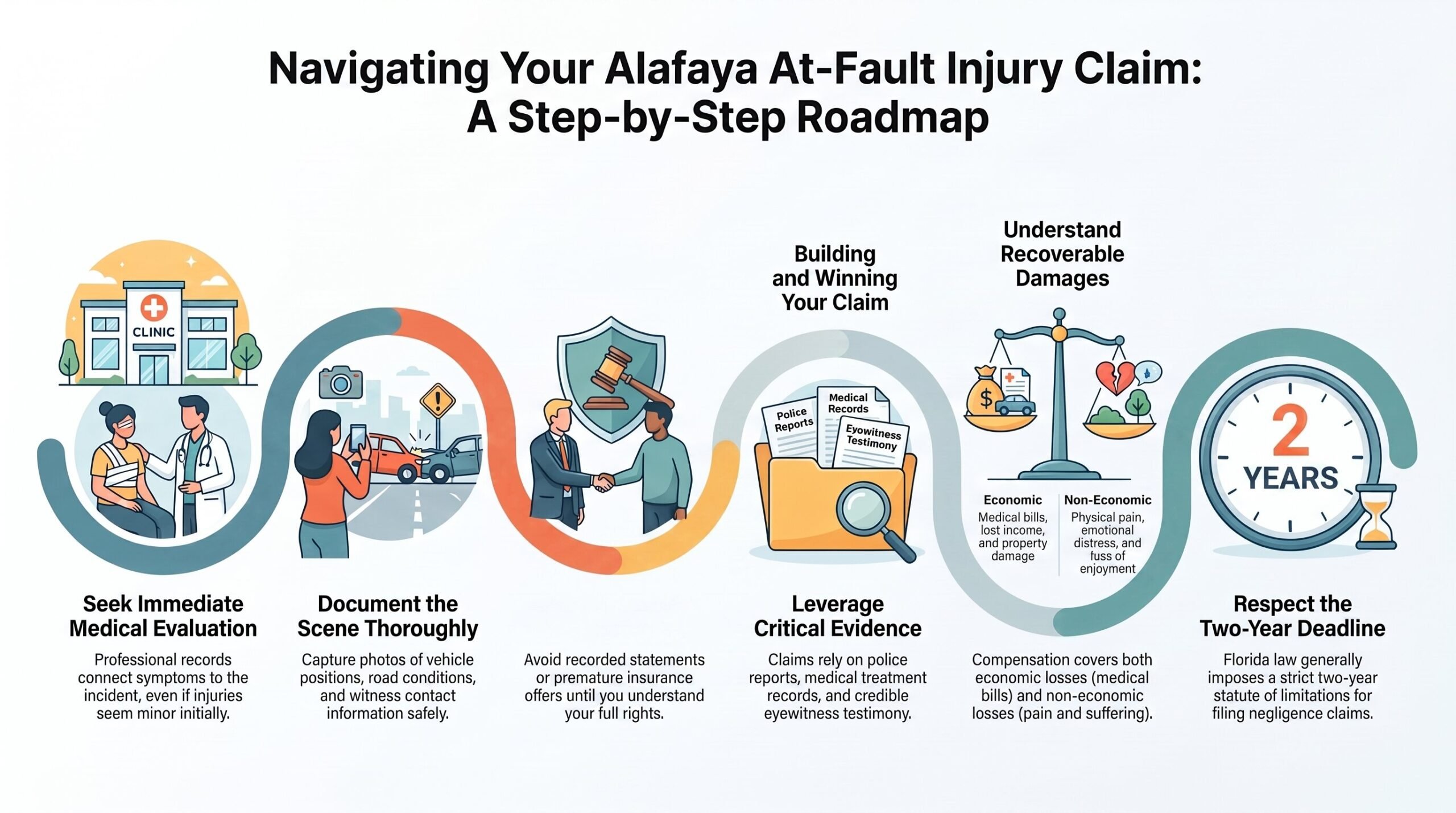
After an Alafaya at-fault party’s injury, we should seek immediate medical care, even if our symptoms seem minor at first. We should document the accident carefully by preserving evidence, recording relevant details, and obtaining witness information when possible. We should also consult an injury lawyer promptly to protect our rights and assess potential compensation.
Seek Immediate Medical Care
Seek immediate medical care, even if your injuries initially seem minor. Some conditions, including concussions, internal injuries, and soft-tissue damage, may worsen or remain unnoticed without professional evaluation. Prompt treatment protects your health and creates a medical record connecting your symptoms to the incident. We should follow every recommendation, attend scheduled appointments, and accurately describe all symptoms, including pain, dizziness, numbness, or emotional distress.
Delaying care can complicate recovery and give at-fault parties an opportunity to question whether the incident caused your injuries. If payment concerns prevent treatment, we can ask providers about Florida medical liens or other lawful arrangements, rather than postponing necessary care. Keep copies of medical records, bills, prescriptions, and instructions. We should avoid relying on accident scene documentation as a substitute for qualified medical assessment.
Document The Accident
Document the accident as thoroughly as possible while the details remain clear. If we can do so safely, we should photograph vehicle positions, road conditions, traffic signals, visible injuries, and property damage from several angles. We should exchange contact and insurance information with everyone involved, including witnesses, and record names, phone numbers, and concise statements about what they observed. We should request the responding officer’s report number and note any Traffic violation documentation, such as citations or recorded warnings.
We should preserve electronic evidence by saving dashboard-camera footage, phone recordings, photographs, location data, and relevant messages without editing them. We should write a timeline describing events before, during, and after the collision. Keeping these records organized helps us serve affected individuals responsibly and supports accurate communication with insurers and investigators.
Consult An Injury Lawyer
When injuries, disputed fault, or significant losses complicate an Alafaya collision, we should consult an experienced injury lawyer before providing detailed statements or accepting an insurance settlement. Contacting counsel early helps us preserve evidence, identify responsible parties, and understand deadlines that may affect our claim. We should bring medical records, photographs, witness information, insurance correspondence, and a clear timeline of the accident to the initial consultation.
A lawyer can assess liability, explain available compensation, and communicate with insurers while we focus on recovery and supporting our families. We shouldn’t speculate about fault, sign releases, or minimize symptoms before receiving legal guidance. If another party’s conduct caused harm, professional representation can help us pursue accountability while protecting our rights throughout negotiations or litigation. This step also promotes a fairer resolution for everyone involved.
Critical Evidence in an Alafaya At-Fault Parties Injury Case
We’ll evaluate the evidence that can establish fault and document the full extent of your injuries.
- Accident-scene photos and police-report details can clarify how the incident occurred.
- Medical treatment records and witness statements can connect your injuries to the event and support your account.
We’ll help you preserve and present this evidence effectively.
Accident Scene Photos
Clear, timely photographs of an accident scene can preserve essential evidence in an Alafaya at-fault party’s injury case before conditions change or important details disappear. We encourage you to photograph vehicle positions, damage, road conditions, traffic controls, lighting, weather, and visible hazards from several safe angles. Include wide shots that establish the location and close-ups that document specific details. Never risk additional harm; move to safety and request assistance when necessary.
We’ll also help you consider Privacy concerns before sharing images, particularly when photographs show injured people, license plates, or private property. Protect digital privacy by storing originals securely and preserving their metadata. Avoid posting photographs publicly, but save relevant social media evidence if another party shares accident-related content. We can organize these materials and explain how they may support your claim.
Police Report Details
A police report can provide essential evidence in an Alafaya at-fault party’s injury case by documenting the collision, involved individuals, observed conditions, and the officer’s preliminary account of what occurred. We should review the report carefully for the reported time, location, roadway conditions, vehicle positions, citations, and statements attributed to each driver. Traffic stop findings, such as signs of impairment, license violations, or vehicle defects, may help establish responsibility, although the report isn’t the final determination of fault.
We should also compare witness names and descriptions with available statements because witness credibility issues can affect how decision-makers evaluate conflicting accounts. If the report contains inaccuracies or omissions, we can identify supporting evidence and request appropriate corrections. Preserving this document helps us serve injured people responsibly while presenting a clear, organized account of the event.
Medical Treatment Records
Beyond the police report, medical treatment records can connect the crash to the injuries claimed in an Alafaya at-fault parties’ injury case. We can use emergency department notes, diagnostic images, physician evaluations, and rehabilitation records to document symptoms, diagnoses, and recommended care. These documents help establish treatment timelines, showing when symptoms appeared, how providers responded, and whether the condition progressed consistently with the collision.
Prescription records may further demonstrate pain management, inflammation control, or other medically necessary treatment. We should also compare records from before and after the crash to identify changes in health and function. By organizing complete, accurate records, we can present a clearer account of medical needs and future care. Promptly obtaining these materials helps protect the injured person’s ability to seek appropriate compensation and support.
Witness Statements and Testimony
Witness statements and testimony can provide important evidence in an Alafaya at-fault parties injury case by describing how the collision occurred and what followed. We’ll identify people who observed the impact, roadway conditions, traffic signals, and the parties’ conduct. Their accounts may clarify disputed facts and support a careful presentation of your injuries and losses.
We’ll also assess Eyewitness credibility by examining each witness’s vantage point, attention, consistency, and possible bias. Promptly recorded statements can preserve details before memories change, while photographs, medical records, and electronic data may confirm or challenge those accounts. If testimony conflicts, we’ll develop a focused cross-examination strategy that addresses discrepancies respectfully and exposes unsupported conclusions. By preparing witnesses thoroughly and presenting reliable evidence, we can help decision-makers understand your experience and pursue accountability for the harm you’ve endured.
Long-Term Effects of Alafaya At-Fault Parties’ Injuries
When we assess the long-term effects of an injury, we consider chronic pain, permanent disability, and how these limitations may affect your daily life and future work. We also recognize the emotional and mental trauma that can persist, including anxiety, depression, and diminished quality of life. Ongoing medical expenses may add substantial financial pressure, so we’ll evaluate treatment, rehabilitation, medication, and other anticipated care needs.
Chronic Pain and Disability
Chronic pain or permanent disability after an injury caused by an at-fault party can affect nearly every part of your life, including your ability to work, manage daily tasks, and maintain personal relationships. We can help you document these lasting limitations through medical records, treatment histories, functional evaluations, and testimony from people who understand your daily responsibilities. A careful claim should address more than immediate bills. It may include future medical care, rehabilitation, assistive equipment, reduced earning capacity, and necessary household assistance.
We can also explain chronic pain management strategies and review disability benefits options that may support your long-term needs. By identifying the responsible parties and preserving evidence, we work to seek compensation that reflects your continuing losses and protects your ability to serve others and remain as independent as possible.
Emotional and Mental Trauma
Emotional and mental trauma can persist long after physical wounds appear to have recovered, affecting your sleep, concentration, relationships, and ability to work. We recognize that these effects may emerge gradually, making them difficult to identify and explain. Anxiety, depression, irritability, fear, and post-traumatic stress can limit your independence and reduce your ability to serve family, coworkers, or community members as you once did.
We encourage you to seek qualified care rather than dismissing these symptoms. Counseling, psychiatric evaluation, support groups, and other trauma therapy options may help you regain stability and develop effective coping strategies. Trusted relatives, community organizations, crisis lines, and medical professionals can provide emotional support resources. We can also help document how the incident changed your daily life, relationships, and emotional well-being when pursuing accountability from responsible parties.
Ongoing Medical Expenses
Medical needs may continue after the initial treatment ends, particularly if your injuries require follow-up visits, prescription medication, physical therapy, diagnostic testing, or additional procedures. We’ll help you document these expenses and connect them to the harm caused by the at-fault party. Keep invoices, medical records, prescriptions, travel costs, and written recommendations from each provider. This evidence can show both current costs and reasonably expected future care.
We’ll also work with medical professionals to understand how your condition may affect your daily responsibilities and long-term quality of life. Necessary pain treatment, rehabilitation, and medical expert care may require substantial funding. During insurance negotiations, we’ll present organized documentation and pursue compensation that accounts for continuing needs, so you can focus on repairing and serving those who depend on you.
Don’t Wait. Call Our Florida Personal Injury Lawyers Now!
Proving Liability in Alafaya At-Fault Parties Injury Cases
Proving liability in an Alafaya injury case requires us to establish that another party owed you a legal duty, breached that duty, and caused your injuries and resulting losses. We’ll gather evidence that explains what happened, including photographs, witness statements, incident reports, medical records, and relevant video footage. These materials can help connect the responsible conduct to your physical harm, treatment, and financial damages.
For intersection collisions, we may examine traffic signals, right-of-way rules, vehicle positions, skid marks, and event data when available. We’ll also consider whether negligent maintenance, unsafe property conditions, defective equipment, or another person’s actions contributed to the incident. Comparative fault matters because the opposing party may argue that you share responsibility. We’ll present evidence addressing each allegation and work to protect your right to fair compensation. By carefully organizing the facts and consulting qualified experts when necessary, we can build a persuasive, evidence-based claim that serves your recovery and supports accountability.
Dealing With Insurance Companies After an Alafaya At-Fault Party’s Injury
After an Alafaya injury, we’ll handle communications with insurance companies carefully so their representatives don’t minimize your claim or use your statements against you. We’ll help you direct calls and requests through our office, preventing rushed explanations or recorded comments that could be misunderstood. Insurance adjuster tactics may include seeking broad medical authorizations, questioning treatment decisions, or emphasizing prior conditions. We’ll review each request, protect your privacy, and help repair how the injury affects your health, work, responsibilities, and ability to serve others.
We’ll also evaluate photographs, medical records, bills, witness information, and other evidence before responding. Rather than accepting pressure to resolve the matter quickly, we’ll develop a settlement offer strategy based on your documented losses and anticipated needs. If an insurer presents an offer, we’ll explain its terms, identify what it may exclude, and advise whether it fairly addresses your circumstances. Throughout these discussions, we’ll pursue respectful, informed communication while protecting your interests and preserving available legal options.
What to Expect During an Alafaya At-Fault Parties Injury Claim Process
We’ll begin with an initial case evaluation to assess liability, damages, and the available legal options. Next, we’ll gather supporting evidence and negotiate with the insurers, addressing their response with documented facts and a clear demand. If negotiations don’t produce a fair resolution, we’ll explain the process for filing a lawsuit and pursuing your claim in court.
Initial Case Evaluation
When you contact an Alafaya at-fault parties injury lawyer, we’ll begin with an initial case evaluation to understand what happened, identify potentially liable parties, and assess the strength of your claim. We’ll listen carefully to your account, discuss your injuries and losses, and explain how Florida law may apply. We’ll also review Insurance coverage options, including possible policies held by drivers, property owners, employers, or other responsible entities.
Next, we’ll outline Damages calculation basics, considering medical expenses, lost income, ongoing treatment, property damage, and legally recognized personal losses. We’ll discuss practical objectives, potential challenges, and available paths toward resolution. Our purpose is to serve you responsibly by providing clear guidance, answering your questions, and helping you make informed decisions without promising a particular outcome.
Gathering Evidence
Gathering evidence begins with preserving the information that can establish how the incident occurred and who may be responsible. We’ll help you identify witnesses, request incident reports, and document roadway conditions before memories fade or evidence disappears. Photographs should capture vehicle positions, visible injuries, property damage, signs, lighting, and surrounding hazards. We’ll also examine Speed limit evidence, including posted signs, roadway markings, and available traffic studies.
GPS data from vehicles or mobile devices may help establish location, movement, and timing. Traffic signal violations can become significant when camera records, signal cycles, or witness accounts clarify what each driver saw. If available, dashcam footage may provide an objective account of the collision. We’ll organize these materials carefully so your claim rests on reliable, verifiable facts.
Negotiating With Insurers
With the evidence organized, we’ll present a clear, well-supported claim to the at-fault party’s insurance company. Our claim documentation will explain liability, medical treatment, lost income, property damage, and the effect of the injury on your daily responsibilities. We’ll review the insurer’s response carefully, identify unsupported reductions, and respond with records, legal reasoning, and a specific settlement demand. Adjusters may request statements or additional documents, but we’ll help you communicate accurately without minimizing your losses.
Strong settlement leverage comes from credible evidence, consistent medical care, and a clear connection between the accident and your damages. Negotiations may involve several offers and counteroffers, so we’ll evaluate each proposal against your current and future needs. We’ll protect your interests while seeking a fair resolution that supports your recovery and service to others.
Filing a Lawsuit
If the insurer won’t offer a fair settlement, we may file a lawsuit against the at-fault party and pursue your claim in court. We’ll prepare the complaint, identify the parties, and formally serve the defendant. After filing, both sides exchange information through discovery, which may include written questions, document requests, medical records, and depositions.
We’ll guide you through each stage, explain deadlines, and help you prepare for testimony. Our team will also focus on evidence preservation, including photographs, witness information, incident reports, and relevant communications. The opposing side may argue comparative negligence, claiming your actions contributed to the injury. We’ll gather facts to address that defense and protect your right to fair compensation.
Many cases resolve before trial, but we’ll prepare thoroughly for court if negotiations remain unsuccessful.
Compensation for Alafaya At-Fault Parties Injury Damages
When another party’s negligence causes an injury, we’ll pursue compensation for the full scope of your losses rather than accepting an inadequate settlement. We’ll investigate how the incident occurred, identify responsible parties, and present evidence connecting their conduct to your harm. Medical documentation will help establish the diagnosis, the treatment received, the recovery process, and any continuing care your condition may require. We’ll also evaluate future damages, including anticipated medical services, rehabilitation, assistive equipment, and reduced ability to work when supported by reliable evidence and qualified professionals.
Our team will organize records, consult appropriate experts, and calculate a demand that reflects your circumstances rather than relying on assumptions. We’ll communicate with insurers and opposing counsel on your behalf, protect your interests during negotiations, and prepare thoroughly if litigation becomes necessary. By handling these responsibilities, we can help you focus on mending, supporting your family, and continuing the service you value while we seek a fair resolution for your injury.
Economic vs Non-Economic Damages in Alafaya At-Fault Parties Cases
We’ll distinguish economic damages, such as medical expenses, lost income, and future financial needs, from non-economic losses involving pain, suffering, and reduced quality of life. We’ll consider how evidence supports each category in Alafaya at-fault parties cases. By comparing these compensation types, we can clarify how Florida law may value the full impact of your injuries.
Economic Damages Explained
Economic damages compensate you for measurable financial losses caused by an injury, including medical bills, lost income, property damage, and anticipated future expenses. We help you identify each loss and connect it to the at-fault party’s conduct. Medical treatment records, invoices, prescriptions, rehabilitation costs, and transportation expenses can establish the value of necessary care. If your injury limits your ability to work, wage statements, employment records, and tax documents may support a claim for past and projected income.
We also organize insurance documentation, repair estimates, and receipts to present a complete, credible account of your financial harm. Because future expenses can be difficult to estimate, we may consult qualified professionals to evaluate ongoing treatment and earning capacity. Accurate evidence helps us pursue fair compensation.
Non-Economic Losses Considered
Although economic damages address documented financial losses, non-economic damages account for the personal impact an injury has on your life. In Alafaya at-fault-party cases, we may seek compensation for pain and suffering, emotional damages, diminished enjoyment of life, and loss of companionship. These losses can affect how you sleep, work, communicate, and participate in family or community responsibilities. We’ll help you describe those effects with specific, credible examples rather than general statements.
Medical records, treatment notes, personal journals, and testimony from people who observe your daily challenges may support this portion of your claim. We also consider whether the injury caused lasting limitations, distress, or changes in your relationships. By presenting your experience carefully, we can help decision-makers recognize the human consequences underlying your recovery and service to others.
Comparing Compensation Types
Understanding how economic and non-economic damages work in combination helps clarify the full value of an Alafaya at-fault-party injury claim. Economic damages address measurable losses, including medical treatment, rehabilitation, lost wages, reduced earning capacity, property damage, and necessary future care. We document these costs through bills, employment records, expert opinions, and credible financial projections.
Non-economic damages compensate for harms that lack fixed prices, such as physical pain, emotional distress, disfigurement, loss of enjoyment, and diminished quality of life. We present evidence showing how injuries affect your relationships, independence, responsibilities, and future plans. Both categories may support a total recovery, although insurance carriers often minimize non-economic losses.
We also examine conduct, including failures to prevent distraction or absent defensive driving habits, to establish fault. By carefully serving your interests, we pursue compensation that reflects your present and lasting needs.
When an Alafaya At-Fault Parties Injury Case Goes to Trial vs Settlement
When an Alafaya injury case involves parties whose negligence caused the harm, we’ll evaluate whether settlement or trial offers the strongest path to full compensation. We’ll consider your medical needs, financial pressures, and goals for serving your family and community as we pursue a fair resolution.
Settlement can provide greater control, privacy, and a predictable outcome. Through negotiation or mediation, we’ll present organized evidence and respond to insurers’ positions without exposing you to the uncertainty of court. Mediation vs litigation requires a careful comparison of speed, cost, risk, and the compensation reasonably supported by your claim.
If negotiations fail, we’re prepared to present your case at trial. Trial timelines explained: preparation may involve discovery, depositions, expert review, motions, and scheduling delays before a jury hears the evidence. Although a trial may require more time and emotional commitment, it can create an opportunity for a more complete award when responsible parties refuse to accept accountability. We’ll keep you informed, protect your interests, and help you make each decision confidently.
Florida Laws That May Affect Your Alafaya At-Fault Parties Case
The outcome of an Alafaya at-fault parties case may depend on Florida laws governing negligence, liability, damages, insurance coverage, and filing deadlines.
We help you understand these rules so you can protect your interests while supporting your family and community.
- Comparative negligence rules may reduce compensation when your conduct contributed to the incident. Evidence must establish each party’s responsibility and the resulting share of fault.
- No-fault PIP coverage generally pays certain medical expenses and lost income after a motor-vehicle crash, regardless of fault. Its limits and eligibility requirements can affect available benefits.
- Florida law may also restrict recoverable damages, recognize multiple liable parties, and require compliance with insurance procedures. Medical records, wage documentation, photographs, and witness statements can strengthen your position.
We’ll carefully evaluate the facts, identify responsible parties, communicate with insurers, and pursue evidence-backed compensation. Because each claim presents distinct legal and practical issues, personalized guidance remains crucial before accepting an offer or making statements that could affect your case.
Don’t Wait. Call Our Florida Personal Injury Lawyers Now!
The Statute of Limitations for Alafaya At-Fault Parties Injury Cases
Because Florida law imposes strict filing deadlines, we’ll identify the statute of limitations that applies to your Alafaya at-fault parties injury case as soon as possible. Generally, Florida allows two years to file a negligence claim arising from an injury. Different deadlines may apply to wrongful-death claims, medical negligence, claims against governmental entities, or cases involving minors. Certain events can also affect when the period begins or whether it pauses, so we shouldn’t rely on assumptions.
Missing the deadline can permanently bar recovery, even when another party clearly caused harm. We’ll also consider evidence preservation, insurance requirements, and comparative negligence rules, which may reduce compensation when an injured person shares responsibility. Decisions involving Settlement vs trial must account for the remaining time, because negotiations don’t necessarily extend the filing period. Acting promptly helps us protect claims, honor obligations to those who depend on us, and pursue an outcome grounded in Florida law. We should review all dates with qualified counsel before taking action.
How an Alafaya At-Fault Parties Injury Lawyer Can Help You
An Alafaya at-fault parties injury lawyer can manage the legal process while we focus on your medical recovery and immediate needs. We’ll investigate the collision, identify the responsible parties, and gather evidence to support a complete claim. Our work can help protect your interests while you continue serving your family, workplace, or community.
An Alafaya injury lawyer investigates your collision, protects your interests, and manages your claim while you focus on recovery and family responsibilities.
- We’ll use a Car Accident Checklist to document medical visits, property damage, witness information, photographs, and financial losses.
- We’ll conduct an Insurance Policy Review to identify available coverage, exclusions, and potential conflicts before settlement discussions begin.
- We’ll handle communications, negotiate with insurers, and present damages clearly so you don’t face pressure to accept inadequate compensation.
We’ll also coordinate records, consult qualified professionals when necessary, and explain each significant decision in understandable terms. By applying careful preparation and disciplined advocacy, we seek compensation for treatment costs, lost income, continuing care, and other legally recognized losses. Our guidance lets you make informed decisions while maintaining your responsibilities and preserving your ability to help others.
When to Contact an Alafaya At-Fault Parties Injury Lawyer
Contacting an Alafaya at-fault party’s injury lawyer promptly can protect your rights before evidence disappears or insurers attempt to limit your claim. We encourage you to seek guidance after any collision that causes injury, property damage, disputed responsibility, or uncertainty about available compensation. Knowing when to hire counsel helps us preserve records, identify witnesses, and understand how Florida law may apply to your circumstances.
Don’t wait for symptoms to worsen or bills to accumulate. Early advice can help us avoid harmful post-accident communication, such as recorded statements or releases, that may affect your claim. We should also act before insurance deadlines, which can restrict notice requirements and filing opportunities.
A consultation becomes especially important when an insurer denies liability, offers an inadequate payment, or pressures us to settle quickly. Legal guidance supports informed settlement readiness by helping us organize medical documentation, wage information, and other losses. By contacting counsel promptly, we can protect our ability to pursue fair treatment while responsibly supporting our families and communities.
Why You Need an Experienced Alafaya At-Fault Parties Injury Lawyer
When another party’s negligence causes our injuries, an experienced Alafaya at-fault parties injury lawyer can investigate the incident, establish liability, and pursue the compensation we’re entitled to under Florida law. We may face medical expenses, lost income, ongoing treatment, and uncertainty about our recovery. Skilled legal guidance helps us address these burdens while protecting our ability to serve our families and communities.
A lawyer can conduct timely Evidence preservation, including collecting photographs, reports, witness statements, medical records, and other documentation before it disappears or becomes difficult to obtain. We’ll also benefit from informed evaluation of liability, damages, and applicable deadlines. During insurance negotiation, an experienced advocate can challenge incomplete investigations, misleading statements, and settlement offers that don’t reflect our losses.
If litigation becomes necessary, our lawyer can prepare persuasive evidence, manage procedural requirements, and present our position effectively. This support allows us to focus on repairing and responsibilities while a qualified professional works to hold the responsible party accountable and pursue a fair result.
How to Choose the Right Alafaya At-Fault Parties Injury Lawyer for Your Case
Choosing the right Alafaya at-fault parties injury lawyer requires more than reviewing advertisements or selecting the first available attorney. We should evaluate each lawyer’s experience with cases involving multiple liable parties, insurance disputes, and serious injuries. Ask how the attorney investigates evidence, identifies responsible parties, and develops a practical Case strategy based on our circumstances.
We should also consider the lawyer’s approach to client communication. A reliable attorney clearly explains legal options, responds within reasonable timeframes, and keeps us informed as the claim progresses. During a consultation, we can ask who will handle our case, how the firm measures progress, and what challenges may affect recovery.
Experience matters, but so do preparation, accessibility, and professional judgment. We should choose counsel who listens carefully, treats our concerns with respect, and provides candid guidance rather than unrealistic promises. Comparing qualifications, communication practices, and proposed strategies helps us make an informed decision to protect our rights and pursue appropriate compensation.
About The Law Offices of Anidjar & Levine
The Law Offices of Anidjar & Levine represent clients who have suffered injuries because of another party’s negligence, including cases involving multiple potentially liable parties.
We recognize that determining responsibility after a crash, unsafe-property incident, or other injury can require careful investigation and coordinated legal action.
Our Anidjar Levine Background reflects years of representing injured people and families throughout Florida.
We listen to your concerns, explain your options, and work to identify every party whose conduct may have contributed to your losses.
This may include drivers, employers, property owners, manufacturers, contractors, or insurance companies.
Our Injury Law Approach centers on preparation, communication, and accountability.
We gather records, review available evidence, consult qualified professionals when necessary, and calculate the full effect of medical expenses, lost income, and continuing needs.
We’ll pursue a resolution that reflects your circumstances while preparing your case for litigation when appropriate.
By serving you diligently, we help protect your rights and support your recovery.
Frequently Asked Questions
Can I Afford an Alafaya At-Fault Parties Injury Lawyer Without Paying Upfront?
Yes, we can often help you pursue compensation without an upfront payment through contingency fee options. Under this arrangement, we generally receive a fee only if we successfully recover money for you, though costs and agreement terms should be reviewed carefully. We encourage you to ask about free consultation services, payment responsibilities, and potential case expenses before proceeding. This approach can preserve your resources while we address your injury claim.
Will My Immigration Status Affect My Alafaya Injury Claim?
Your Immigration status generally won’t determine whether you can pursue an injury claim. We’ll evaluate claim eligibility based on the defendant’s responsibility, your injuries, damages, and applicable evidence requirements, not citizenship. Legal protections may allow undocumented individuals to seek compensation, and reporting immigration status typically isn’t central to liability. We’ll protect your privacy, explain potential risks, and help preserve records, medical documentation, witness accounts, and other evidence supporting your case.
Can Family Members Pursue Damages After a Fatal Alafaya Injury?
Family members may pursue damages through a Wrongful death claim when Florida law grants them family standing. We’ll help you identify eligible survivors, understand compensation rights, and preserve evidence before deadlines expire. Recoverable damages may include funeral expenses, lost financial support, medical costs, and the survivors’ loss of companionship or guidance. Because evidence requirements and filing procedures can determine success, we recommend promptly consulting counsel and documenting relationships, losses, and relevant records.
What Happens if the At-Fault Party Has No Insurance?
If the at-fault party has no insurance, we’ll examine your Coverage alternatives, including uninsured motorist benefits, medical payments coverage, and applicable health insurance. We’ll also investigate the driver’s assets and determine whether pursuing a personal judgment is practical. Claim eligibility depends on policy language, deadlines, accident evidence, and applicable law. We’ll help preserve records, identify responsible parties, and evaluate every lawful avenue for compensation while serving your family’s interests responsibly.
Can Social Media Posts Hurt My Alafaya Injury Case?
Yes, social media posts can hurt your injury case if they contradict your claimed injuries, activities, or account of events. We should preserve relevant Evidence Preservation materials, including Social Media Records, rather than delete, edit, or conceal content, because those actions create Spoliation Risks. Even private accounts may become discoverable, so Platform Privacy settings don’t guarantee protection. We should review posts carefully, avoid discussing your claim online, and follow legal guidance before responding.
—————————
If you or a loved one has suffered injuries because of another party’s negligence in Alafaya, our Alafaya Personal Injury Lawyer team can help you understand your legal options.
We will investigate the incident, identify responsible parties, assess your losses, and pursue appropriate compensation through negotiation or litigation.
Contact The Law Offices of Anidjar and Levine promptly, as evidence and filing deadlines can affect your claim.
We are prepared to protect your rights throughout the legal process.